
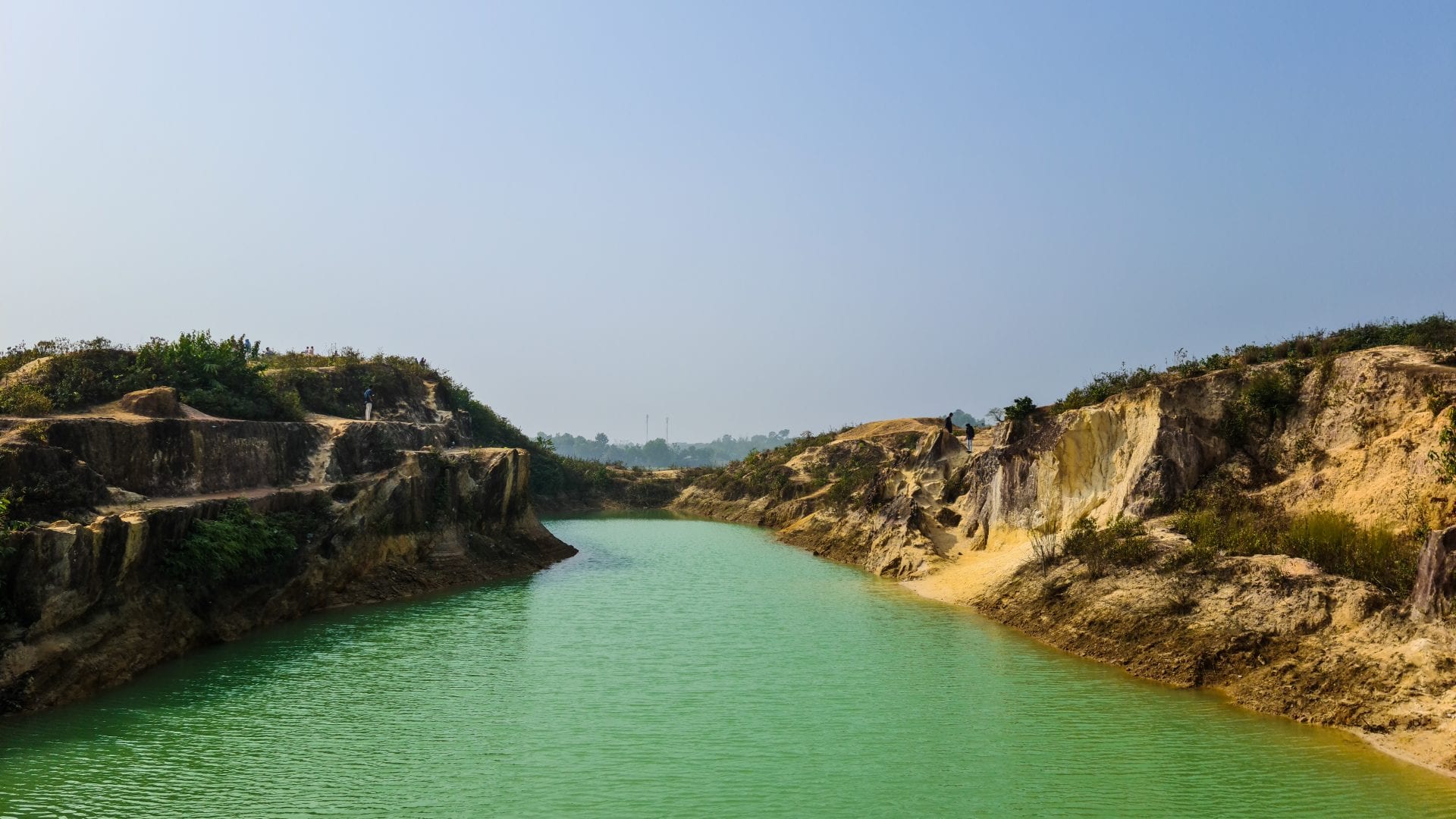
Situated in the lap of Garo and Meghalaya mountains, and blessed with Someshwari and Kangsho River, Birishiri in Bangladesh is a fantastic place to visit. Read this amazing travel diary to Birishiri to get some inspiration for visiting Beautiful Bangladesh.
If you look carefully at a map of Bangladesh, you will see that Dhaka, the capital, sits in the middle of the country. Drive 6 to 10 hours from Dhaka in almost any direction and you reach a border. I went north to Birishiri, a beautiful village in Durgapur upazila of Netrokona district, right on the border with the Indian state of Meghalaya. This post is mostly a diary and photo book of my trip in January 2021, with the practical details you need first.
In short: Birishiri is in Durgapur, Netrokona, about 170 to 180 km north of Dhaka, roughly 6 to 7 hours by road. Its best-known sights are the China clay hills of Bijoypur, with their blue-green lakes in old mining pits, the Someshwari River, and the Bijoypur zero point on the Meghalaya border. Go between November and February for dry trails and cool weather, or in the monsoon to see the river full. Stays are simple: guesthouses and rest houses rather than hotels.
Birishiri at a Glance
Where
Durgapur, Netrokona district
On the border with Meghalaya, India
From Dhaka
About 170 to 180 km
Around 6 to 7 hours by car via Mymensingh
Top sights
China clay hills and their blue-green lakes
Plus the Someshwari River and Bijoypur zero point
Best time
November to February
Monsoon for a full river, winter for easy walking
Stay
Simple guesthouses and rest houses
Patchy mobile signal
How to Get to Birishiri from Dhaka
By car: I went by car with a group, via Gazipur and Mymensingh, about 180 km in all. Leave Dhaka early, by 7am at the latest, because getting out of the city takes the longest. The full route, with stops, is below.
By bus or train: buses to Netrokona leave from Mohakhali Bus Terminal in Dhaka (around Tk 450 in 2025), and the Mohanganj Express and Haor Express trains run from Kamalapur and Airport stations to Netrokona. From Netrokona or Mymensingh, continue to Durgapur by local bus or CNG auto-rickshaw. Check current times at the terminal, as services change.
Getting around: most sights are across the Someshwari River from Durgapur. Cross by boat (or by bridge if it has opened since my visit), then hire a battery-powered three-wheeler for the day to visit the clay hills, lakes and border.
My Journey from Dhaka to Birishiri
Dhaka to Gazipur: 45 km, 2.5 hours
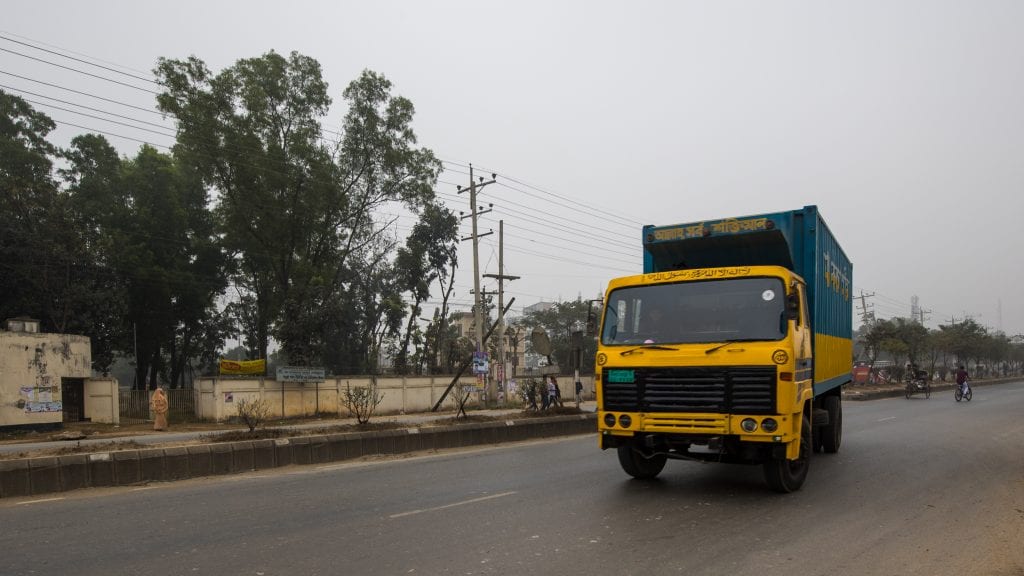
We left Dhaka at 7:30 in the morning. It was the end of January, and the temperature in Dhaka was hovering around 19°C. Getting out of Dhaka is a challenge: the road is like a narrow funnel where buses and trucks jostle and stop you picking up speed.
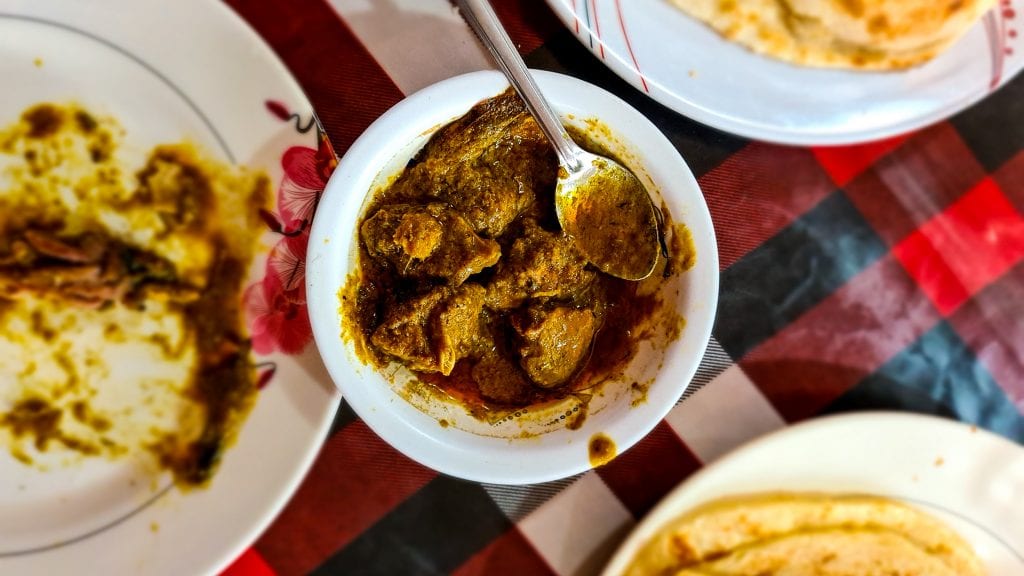
After crossing the Gazipur Chowrasta, the congestion became less, and we enjoyed the speed! As we didn’t eat anything in the morning, we were looking for a good restaurant for breakfast. We stopped at Hotel Niribili & Misty Ghar in Gazipur. It seemed to be a popular highway restaurant, as it was buzzing with people. I later understood the reason: they serve tasty food! I ate tandoori, paratha, duck curry, vegetables, sweets, and tea. It was difficult for me to move as I was full of food! They have a toilet on the premises, and it would be a good idea to use it as the journey ahead is not short.
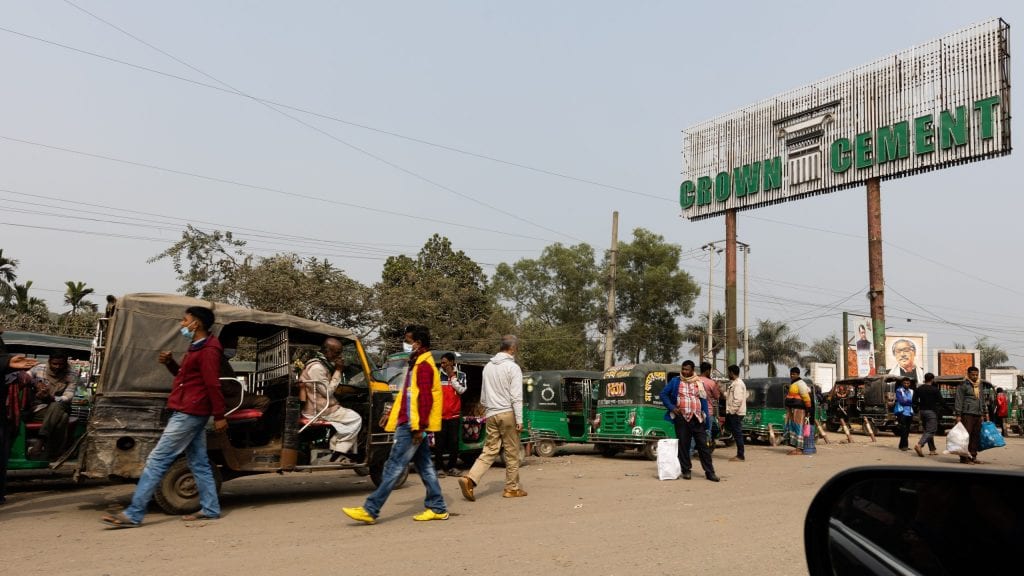
Gazipur to Mymensingh: 80 km, 2 hours
The next leg along the highway was fantastic. The road was in good condition, and the car seemed to fly faster than an aeroplane! The next big junction was Mymensingh, a divisional city. We didn’t go into the centre. Mymensingh is known for Bangladesh Agricultural University, the largest in the country, and for the Brahmaputra River, which you cross before carrying on.
Mymensingh to Birishiri: 55 km, 2 hours
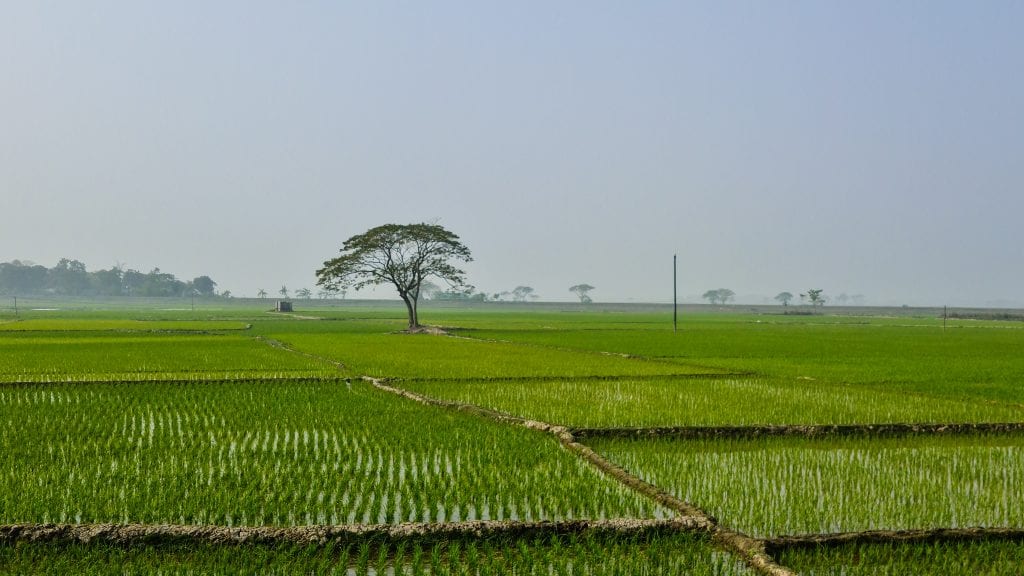
After crossing the Brahmaputra, the last leg began. The roads got narrower, but the landscape got prettier. Bangladesh is blessed with remarkably flat and fertile land, and the green villages are easy on the eye. At one point the road splits, one way to Netrokona and the other to Durgapur. We took the Durgapur road, which got narrower and bumpier.
Insaf Madrasa: Our Accommodation in Birishiri
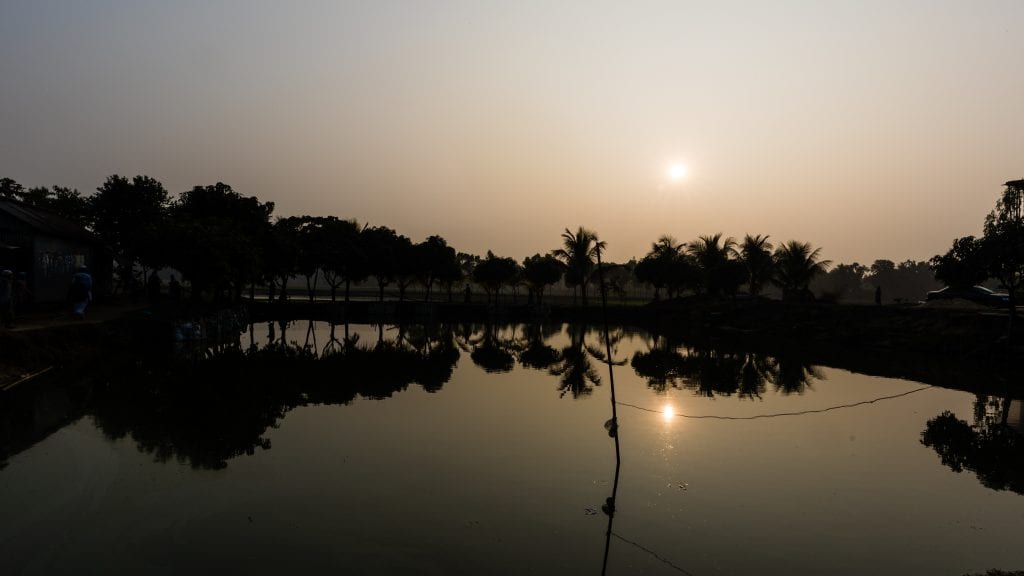
A member of our tour group had a friend in a madrasa in Birishiri. They invited us to stay there. A madrasa is a residential educational institute for studying Islam. They were generous enough to empty a room for us. It was basic accommodation; they laid futons on the floor. I had a hostel-like feeling and loved it immediately. Just out of my room, there was a pond, which gave me a sense of tranquility.
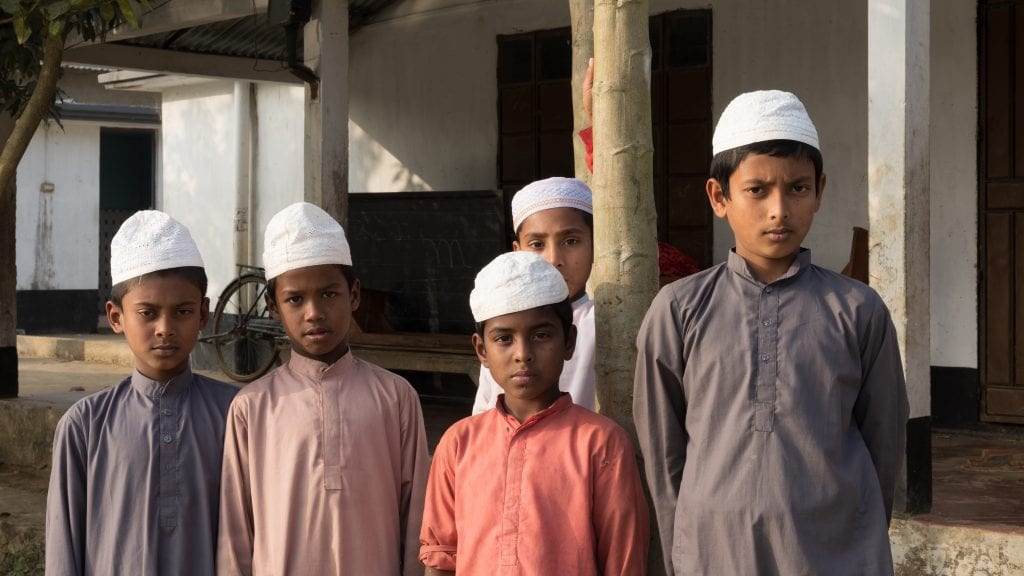
This madrasa has an interesting history. A gentleman named Syed Jaglul Waseq came to Birishiri, just like me, about six years before my visit, and fell in love with the place. He decided to build a mosque and a residential religious school here. He lives in Dhaka and has a full-time job, but he built this campus with devotion and passion. He visits at least once a month and dreams of making it bigger. When I visited, about 200 children studied here, many of them orphans.
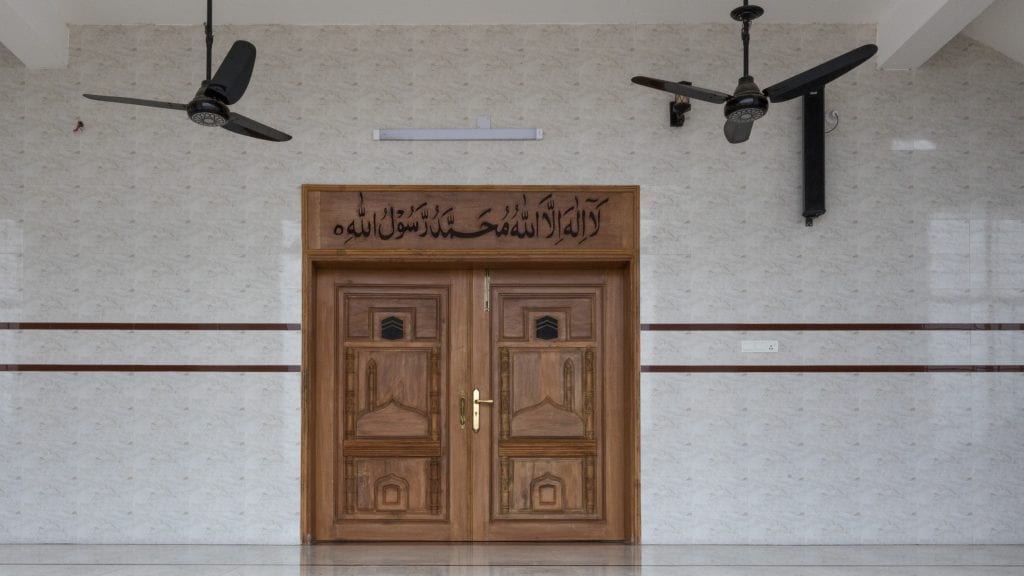
This madrasa campus has several buildings as classrooms. The classrooms are converted into accommodations at night. It also has a beautiful mosque, which is still under construction. Nevertheless, I loved the exterior and interior designs of it. The door of the mosque was exquisite, with carvings of the minaret, the Kaaba, and holy verses written in Arabic.
A Walk in the Evening
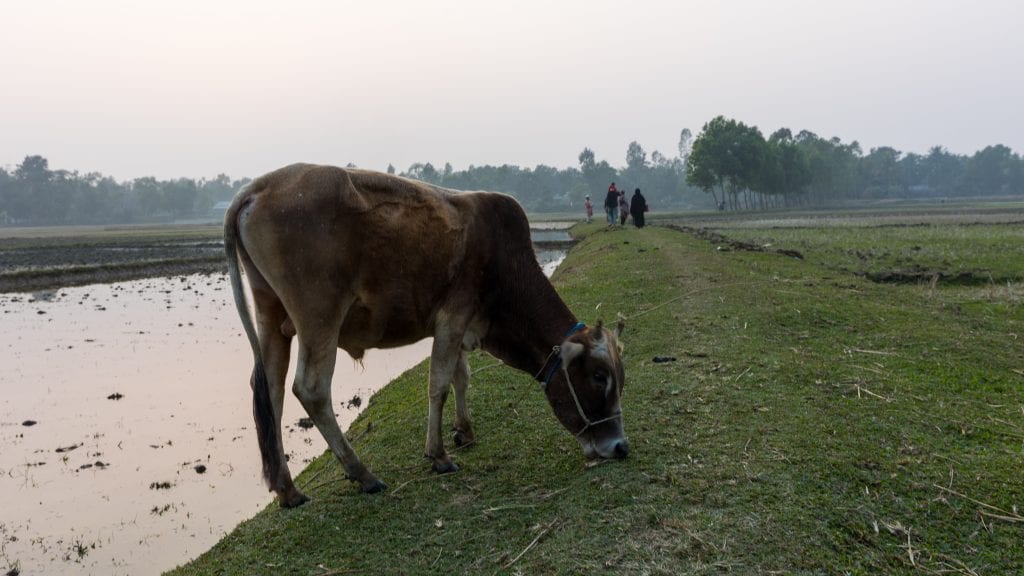
After a late lunch there wasn’t much daylight left, so we went out for a quick stroll. It was about 3°C cooler than Dhaka. Winter was nearly over, but it was still chilly. A walk through a typical Bangladeshi village is a walk through raw nature: cows grazing in the fields, and lots of trees, most of them growing wild in patches.
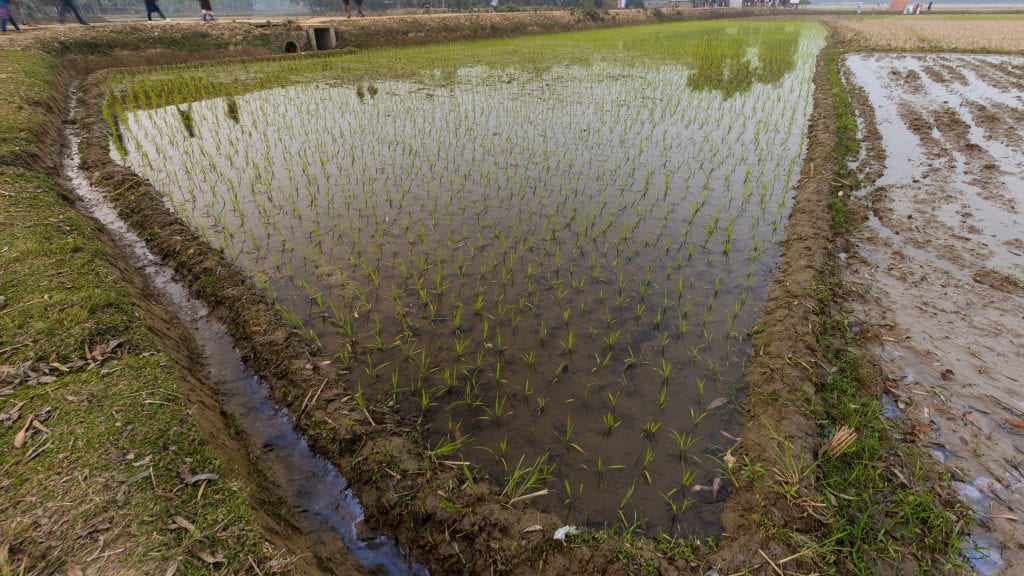
You will not find a place without a water reservoir. And you will find paddy fields in different shapes, mostly rectangular. From paddy to rice, it goes through different cycles. I saw most of them during my walk in the evening. I spent time taking in the fresh air and stayed outside as long as I was not freezing. It was already a long day. I came back to Insaf Madrasa to take some rest.
Study at Night
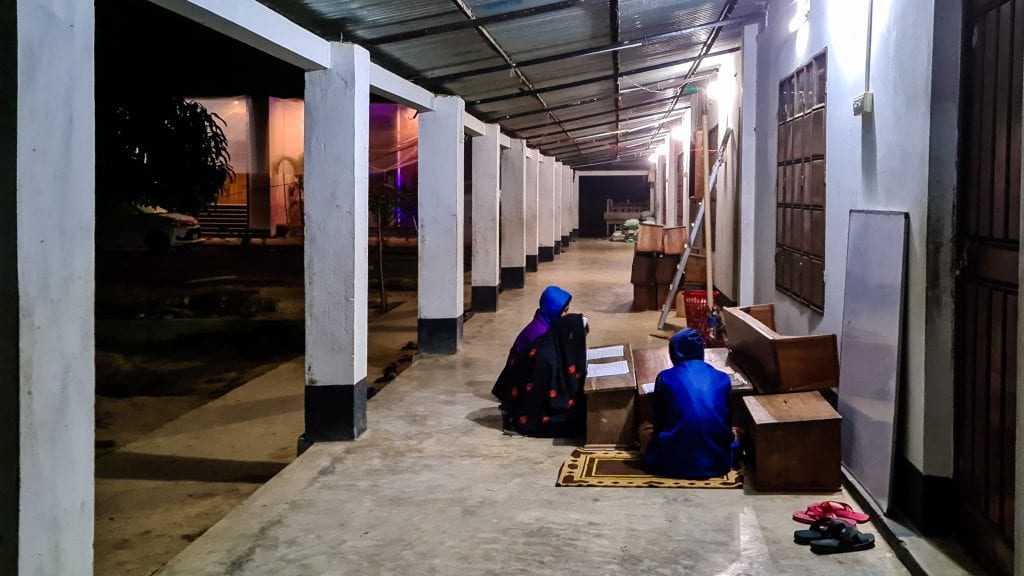
When I came back, it was already dark. I could hear loud voices of study from the young learners from different sections of the campus. I was curious about a typical day for the students. As this is a kind of institution that I am not very familiar with, I was surprised to know their routine. The day starts very early in the morning, during Fajr prayer. That’s around 5 to 6 in the morning, depending on the season. The class continues from 11:00 AM to 12:00 PM. They study on their own in the evening again. You can’t have any exceptions to this; it’s a pretty strict routine they have to follow. There is no room for a weak guy like me.
Hospitality all around!
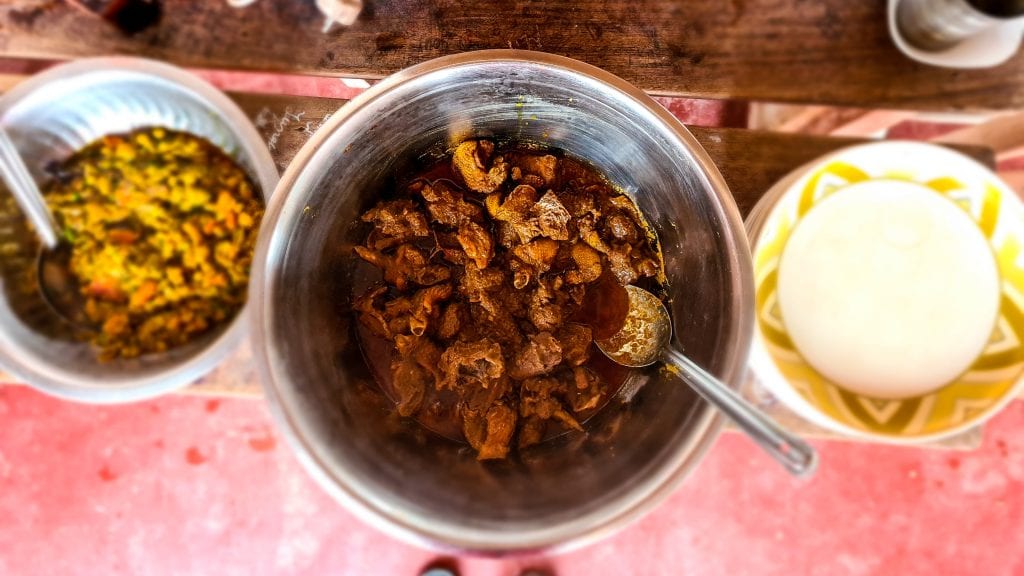
The hospitality we received there was simply mind-blowing! The students volunteered and took care of every need. When I wanted to do star trail photography in the middle of the night, one of them came with me; they simply didn’t want to leave their host alone at night.
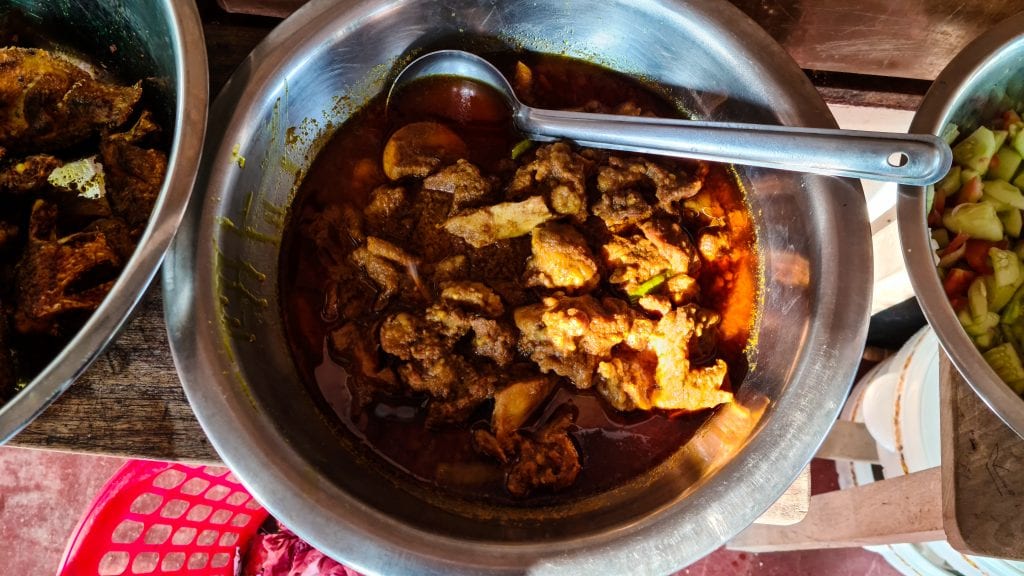
They cooked for us inside and served the food. Those are some of the most sumptuous foods I ever ate! The foods tasted even better because of their freshness. During our two nights of stay, we ate barbecued beef and chicken, beef curry, duck curry, fish fries, vegetables, salads, lentils, and cow milk. I can still taste them in my bud, and I am ever grateful to them for the hospitality they extended to strangers.
A Day Exploring Birishiri
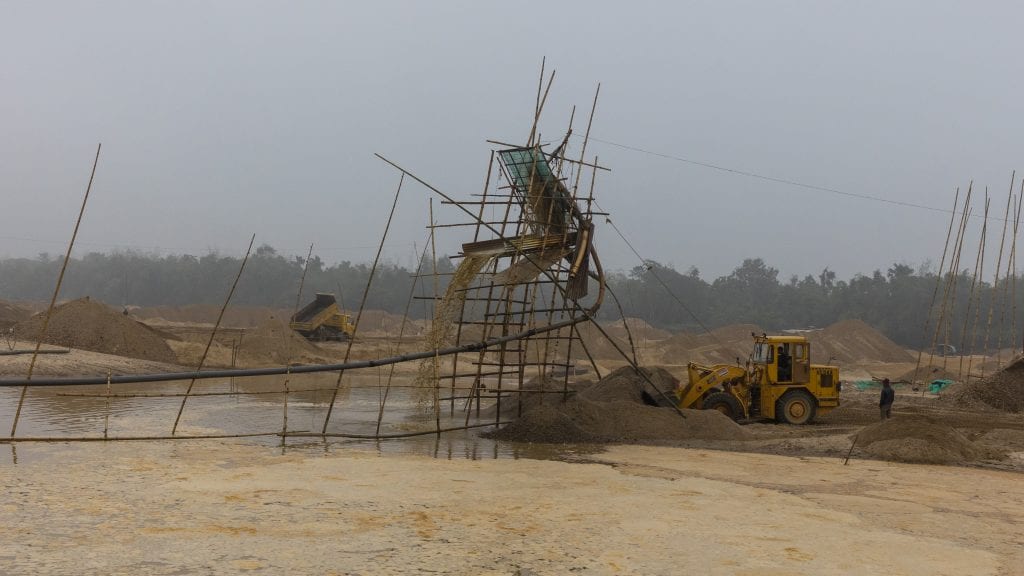
We set off early in the morning to explore. Most of the sights are on the other side of the river, the Someshwari, a name I loved. As soon as I reached the river, though, I felt sad. Its bed is full of sand and stones, and once people realised their value, they began extracting them like crazy. You will see dozens of machines pumping water from the river to pull out the sand and stones.
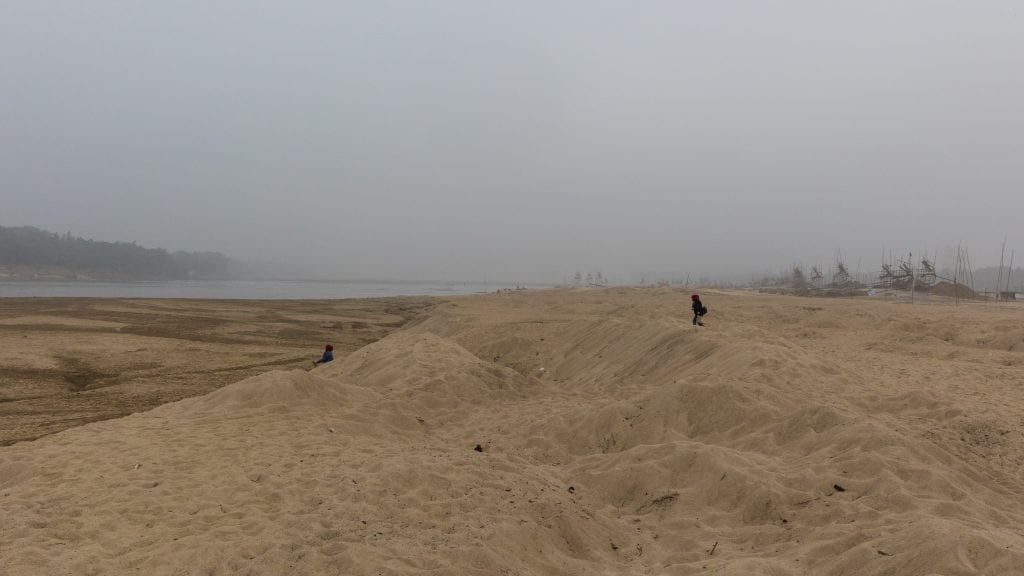
As I walked further, I was confused. I had expected a mighty river, but all I could see was endless sand. For a moment I thought I had reached Dubai. In winter the river shrinks, and in the monsoon it is full again. I hope human greed has nothing to do with it.
Crossing the Someshwari River
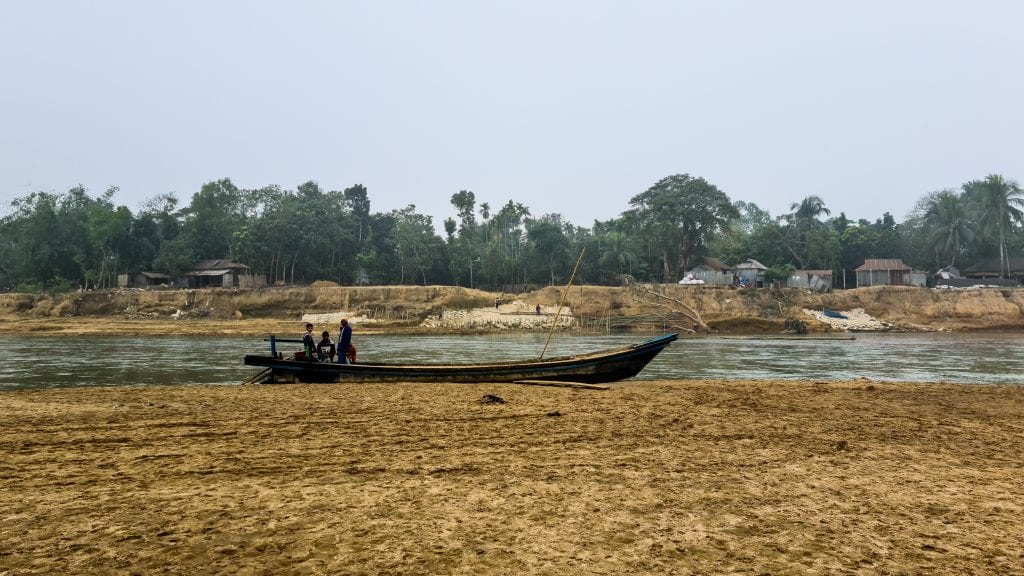
The Someshwari didn’t have much water, but the current was strong. There was no bridge when I visited, so we hired an engine boat, which took less than 10 minutes to reach the Kamarkhali boat ghat. The water was surprisingly clear. The crossing cost BDT 20 per person each way.
Renting a Three-Wheeler in Kamarkhali
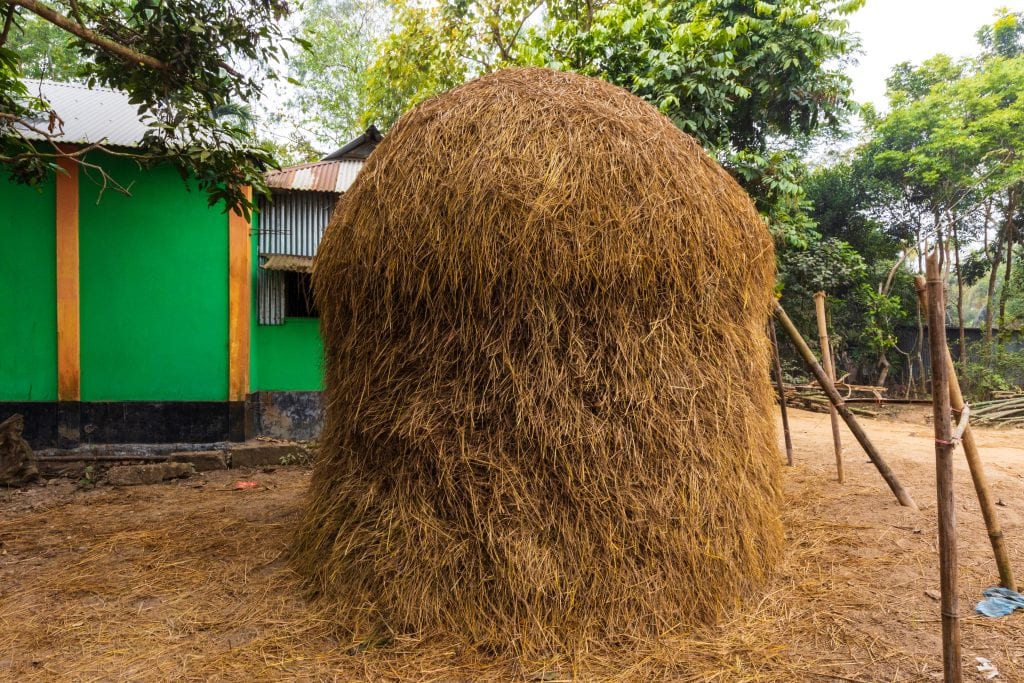
The boat dropped us in Kamarkhali village. A short walk away, several battery-powered three-wheelers were waiting. They take you to most of the famous places in Birishiri, seat six people, and cost BDT 600 to 700 for the day when I went. Agree the price with the driver before you set off.
Bijoypur Zero Point: the India and Bangladesh Border
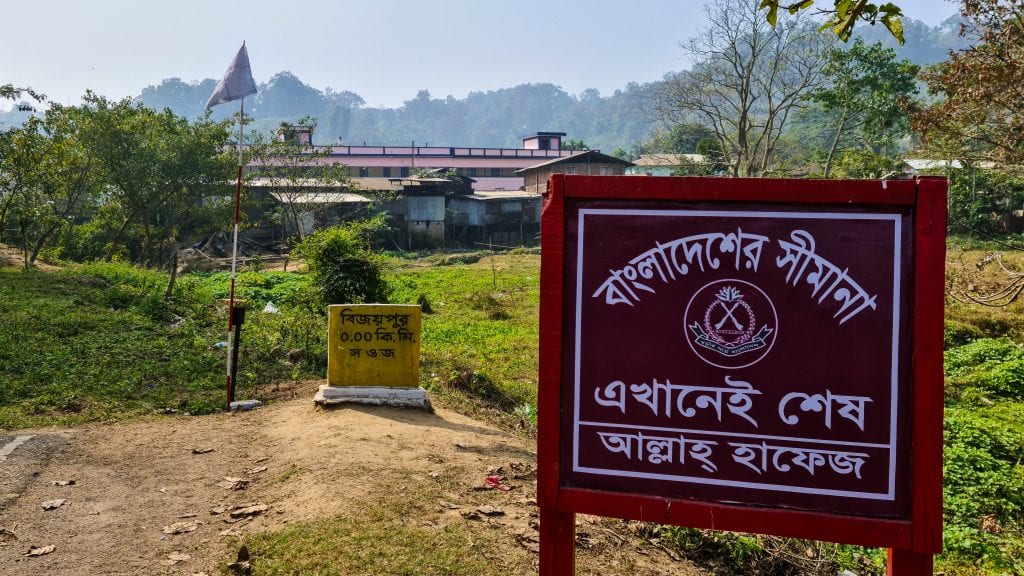
Bangladesh and India share more than 4,000 km of land border, the fifth-longest international land border in the world. Unlike borders in Europe, borders in the subcontinent mean tension. Most of this border is heavily guarded, and border shootings of people suspected of crossing illegally, including innocent people, have been widely reported. The marker above shows where Bangladesh ends; the hills beyond belong to Meghalaya.
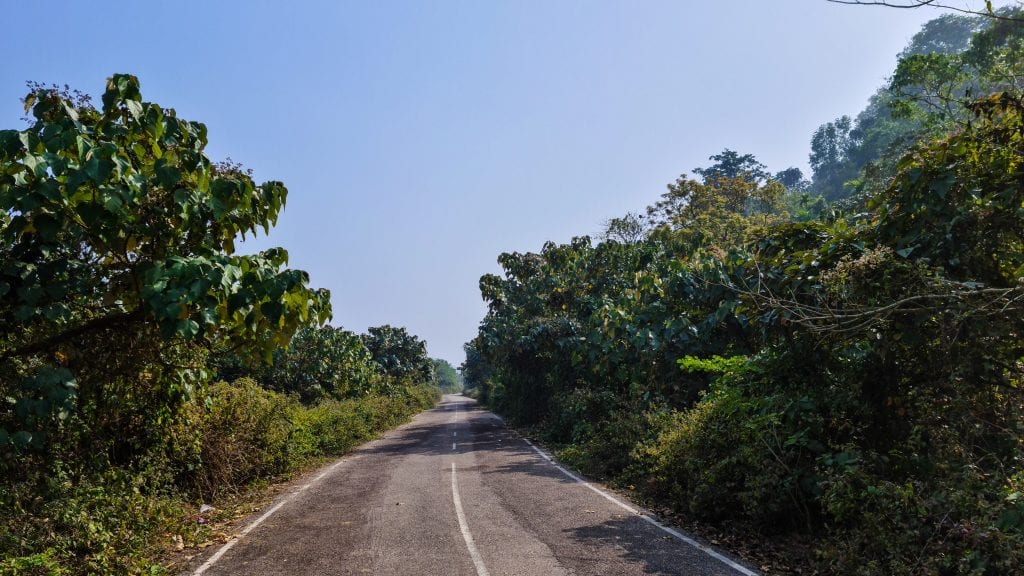
Border Guard Bangladesh (BGB) has a camp here, and you need their permission to go to the zero point. Usually someone accompanies you. The drive from the border post takes about 10 minutes along a scenic road surrounded by the green hills of Meghalaya. People aren’t allowed to cross here.
A Boat Ride on the Someshwari River
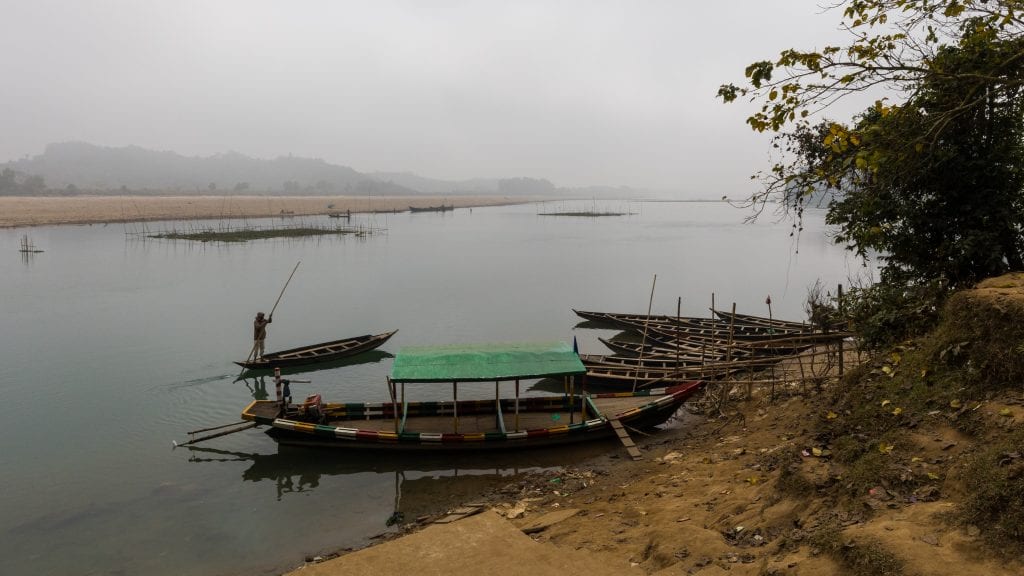
After the zero point, head to the boat ghat beside the BGB office, where you will find several small boats. Earlier we had used boats to cross the river; now it was time to relax and enjoy the Someshwari.
Short Hike to Orange Garden Hill
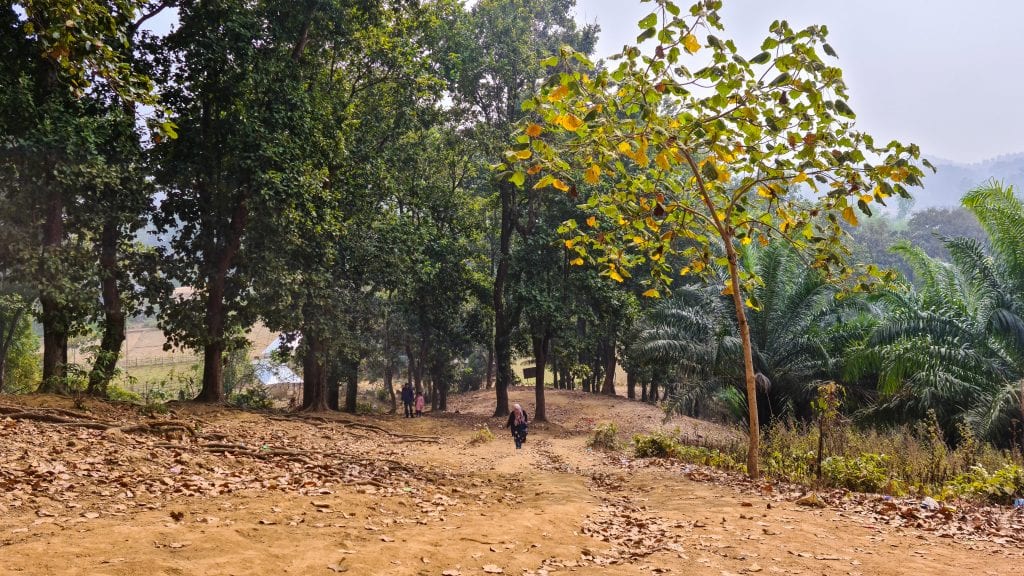
A short hike will take you to an orange garden hill. I don’t know why it is called such because I didn’t see any orange garden on top. However, when you climb up, one can expect to have a nice view. Sadly, I didn’t find the views interesting as the trees blocked the view. However, a hike is always fun, isn’t it?
Time for some shopping?
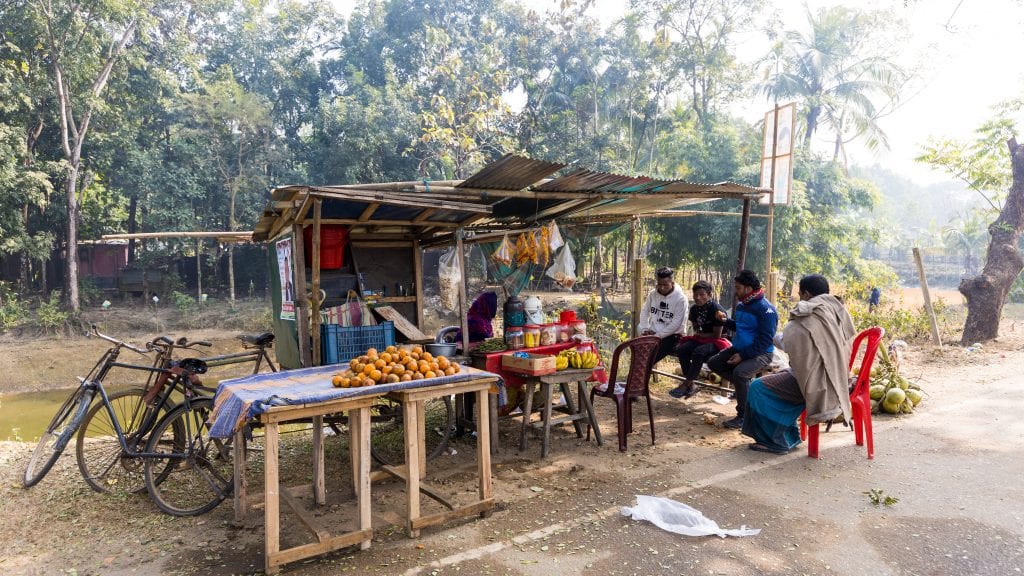
At the bottom of the hill, a few shops sell Indian products, which are popular because they are cheap. I bought some chocolates and cookies. Look out for the oranges and coconuts sold by the road: they don’t look like much, but they are delicious. Don’t miss them.
The Blue-Green Lake
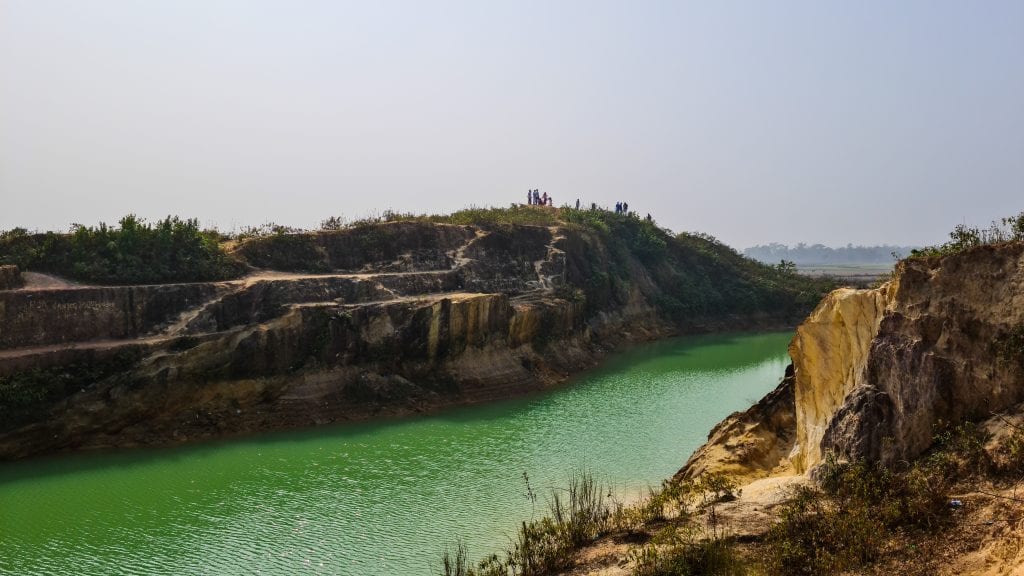
This is the most beautiful part of Birishiri, and the scene in almost every photo of the area. The lakes formed in old clay-mining pits, and their colour changes with the seasons. When I went it was emerald blue; at other times it turns a deeper blue, and if you are unlucky, it can look murky.
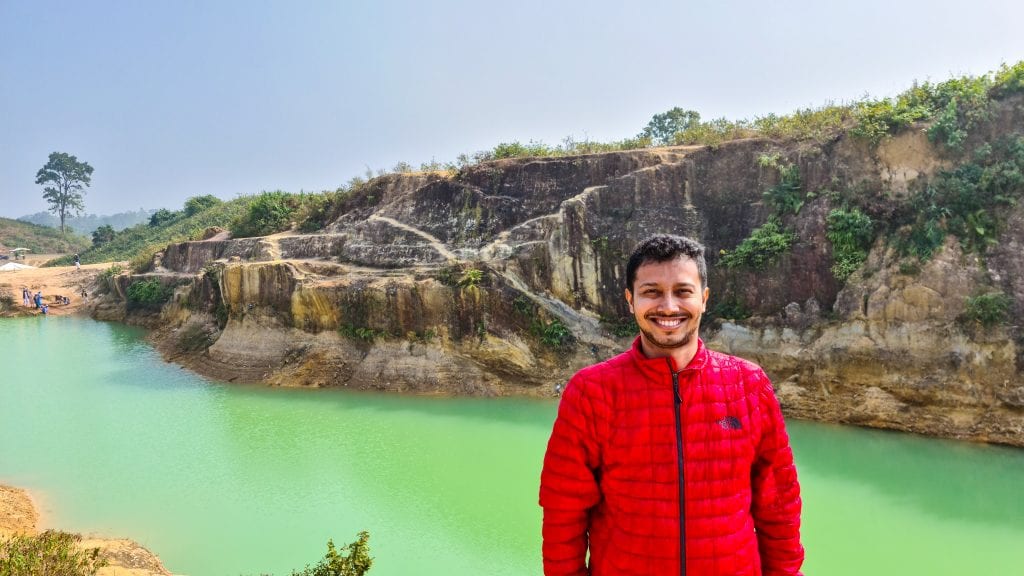
You can walk around the whole lake in less than 30 minutes. At times it isn’t easy: there are no paved paths and you have to climb without anything to hold on to, so wear good hiking shoes. I wouldn’t be surprised if you spent a whole day here watching the colour of the water change.
The Walk Continues
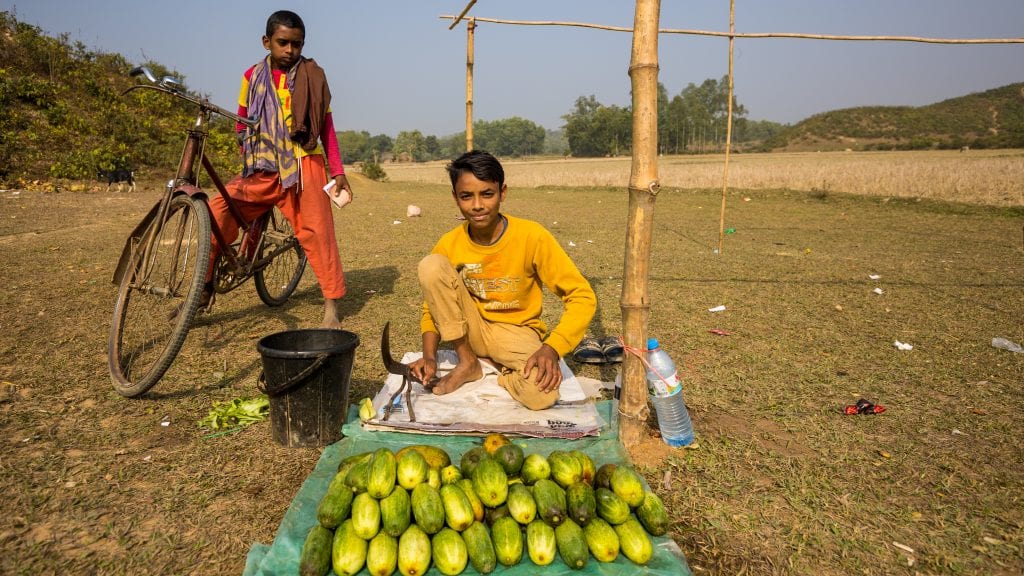
From the lake I headed towards the clay hills. On the way I enjoyed watching the local entrepreneurs: with a steady trickle of tourists, people earn money selling all kinds of things. The boy above was selling fresh cucumber, and not far away I found coconut water.
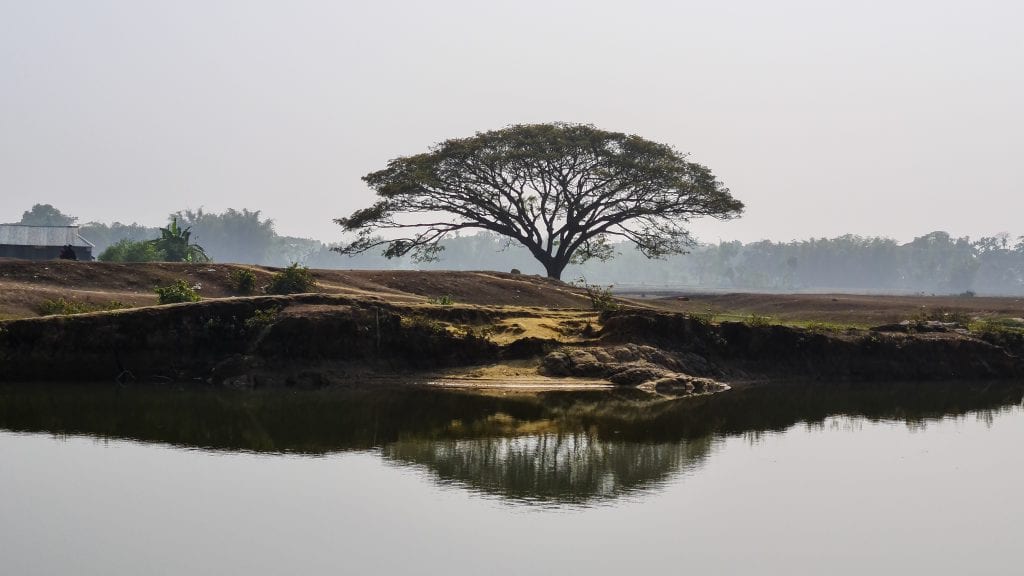
I found another lake on my way. It was calm and quiet with some gorgeous trees. You will find several small mountains adjacent to it. The tourists were having a fun time taking photos all around. I wanted to sit below the tree but I didn’t, my walk continued.
The Pink and White Clay Hills
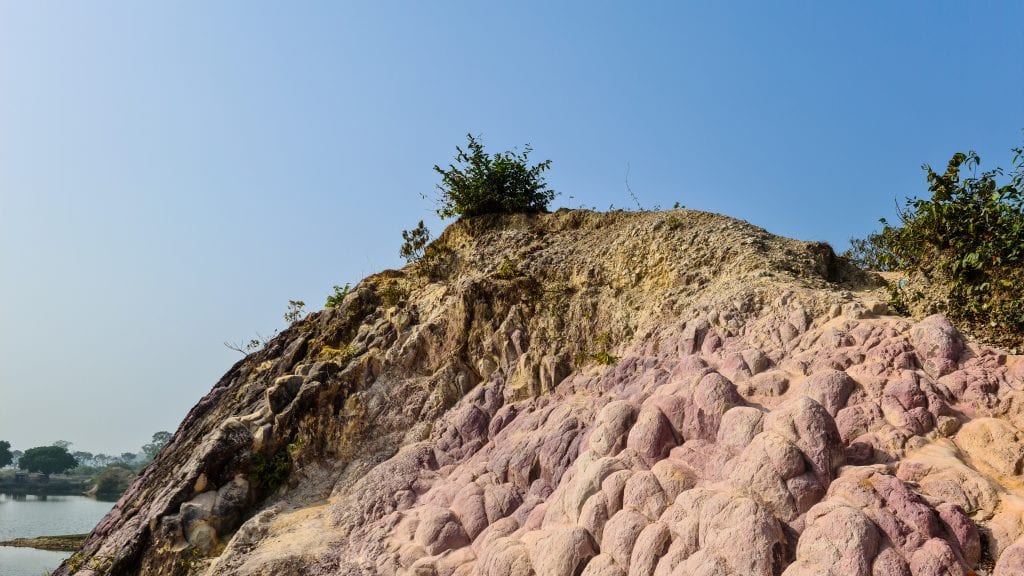
Another short walk took me to the famous clay hills, a mix of white, yellow and pink. The colours come from the clay itself: this is the white clay (kaolin) of Bijoypur, which was mined here for decades until a court order stopped extraction in 2016.
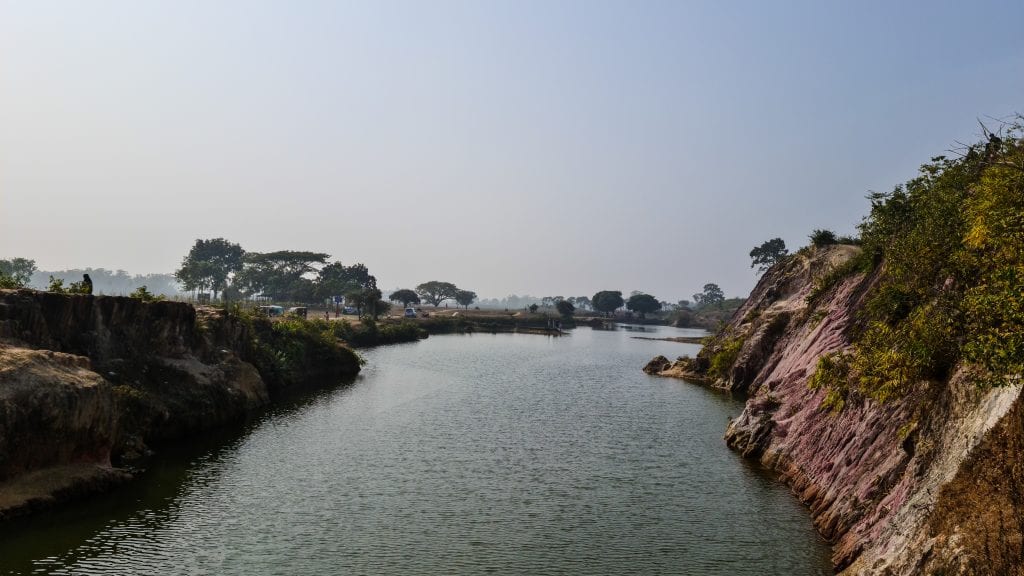
Here you will find an even bigger lake, surrounded by the pink clay hills. The water isn’t the magical colour of the first lake; it looks like an ordinary lake. That doesn’t make it any less beautiful, as the bright colours of the hills more than make up for it. After a good while there, we headed back to our base.
A Typical School in Bangladesh
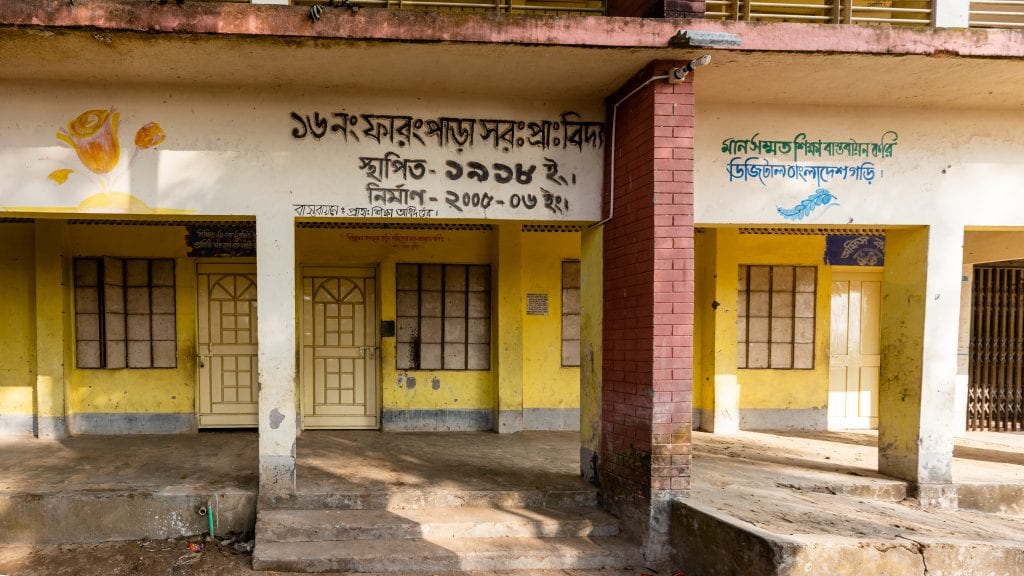
On the way back I came across a government primary school. It has been here since 1918, although it got a new building in 2006. In Bangladesh, primary school runs from class 1 to class 5, and it is free in government schools. Sadly, the school was closed when I visited, because of COVID-19.
Smile, please. Happiness in the Air
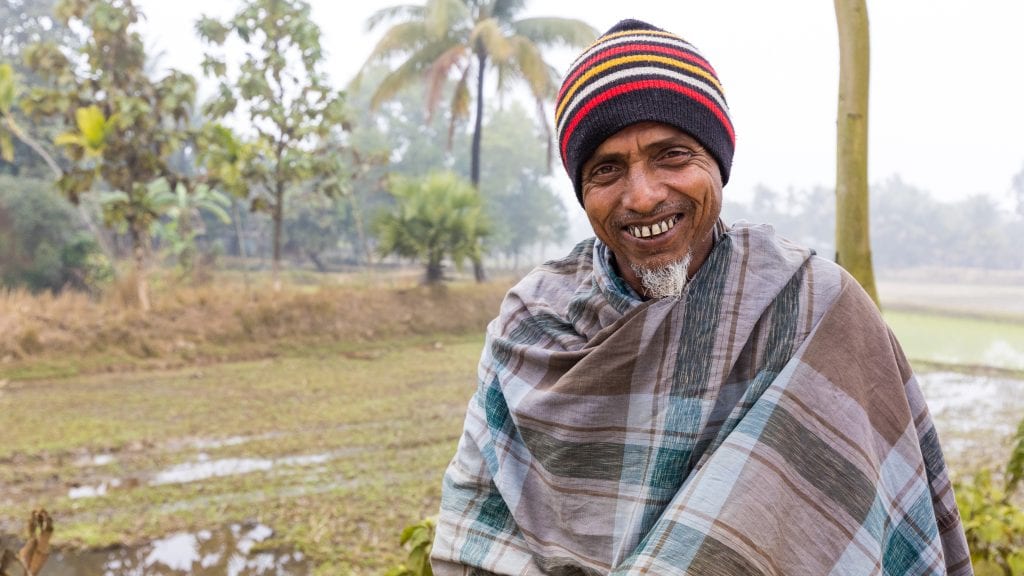
Birishiri is remote. You will not find strong cellular signals everywhere. Needless to say, the internet connectivity is patchy. People mostly live on rice and domestic animals. If you hear these, you might think them unfortunate, as you have good internet connectivity and endless sources of entertainment in the form of Netflix, YouTube, Facebook, and so on.
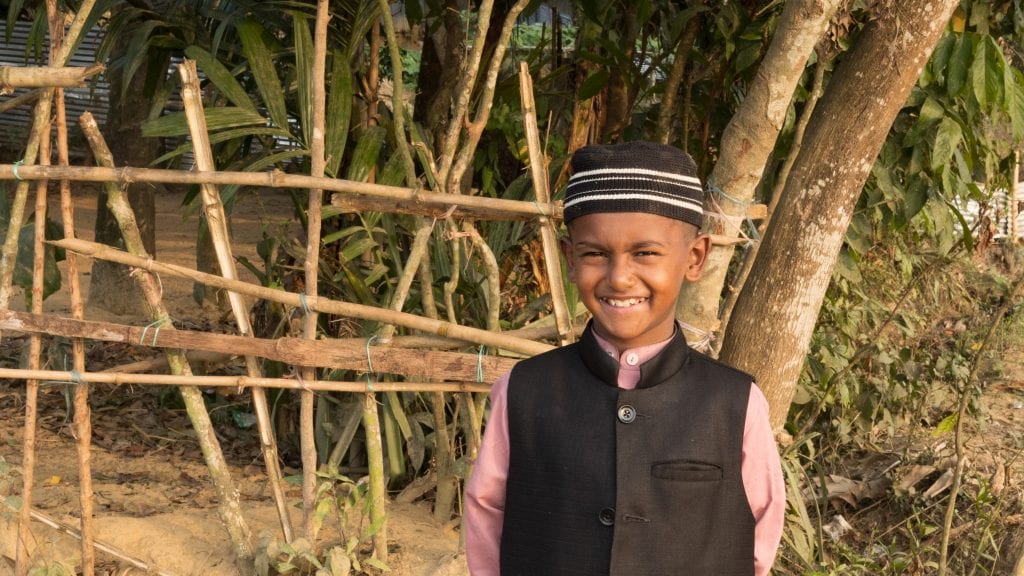
However, if you like to measure happiness just like I do, we all are wrong. I could sense happiness in the air in one of the remotest villages in Bangladesh. Their life is simple, they are not chasing happiness, it’s everywhere they go. Whenever I met someone, he greeted me with a smile. I envy them!
Prayer Time
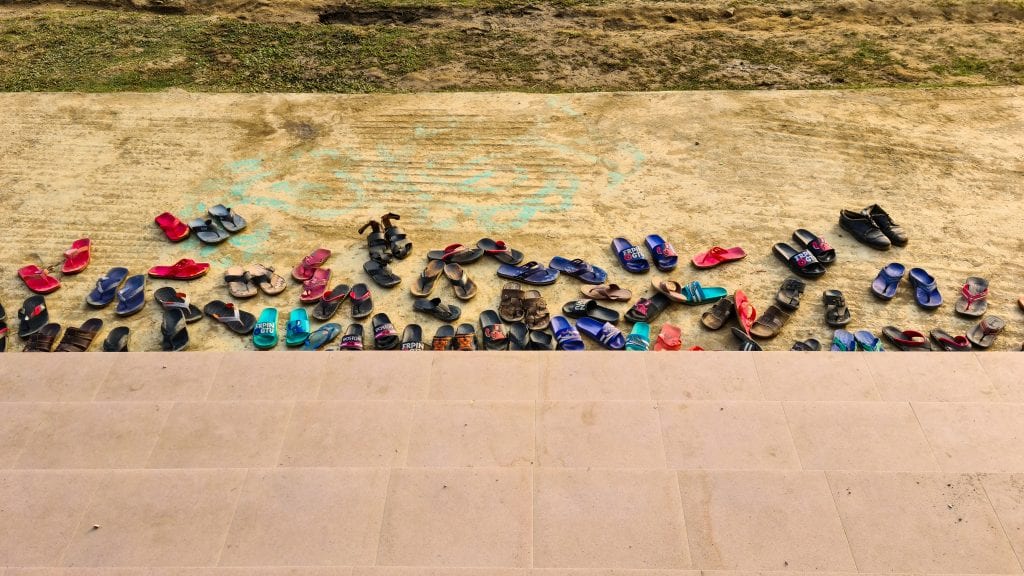
Muslims pray five times a day. Each prayer is named for its time: Fajr (before dawn), Dhuhr (after midday), Asr (afternoon), Maghrib (after sunset) and Isha (at night). A not-so-good Muslim like me prays occasionally, but the madrasa students pray five times a day. It takes real dedication and devotion to keep such a strict routine, come what may. I can’t imagine getting up on a dark, chilly winter morning!
A Hike to a Hill through Village
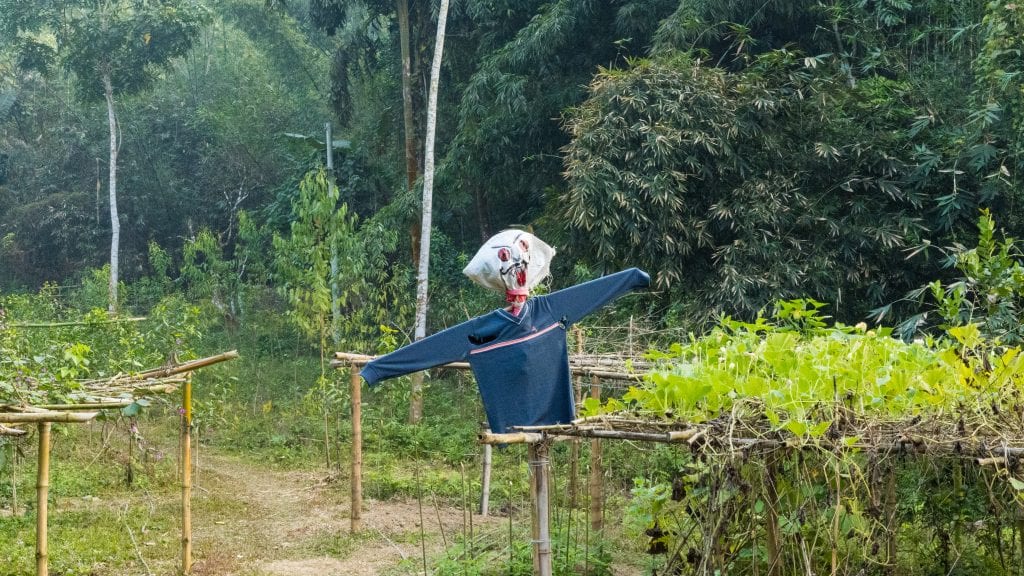
During the evening, we went out for a stroll. The objective was to climb the hill and have a walk in the village. I always love to take a walk through the villages of Bangladesh, I enjoy every little thing I see.
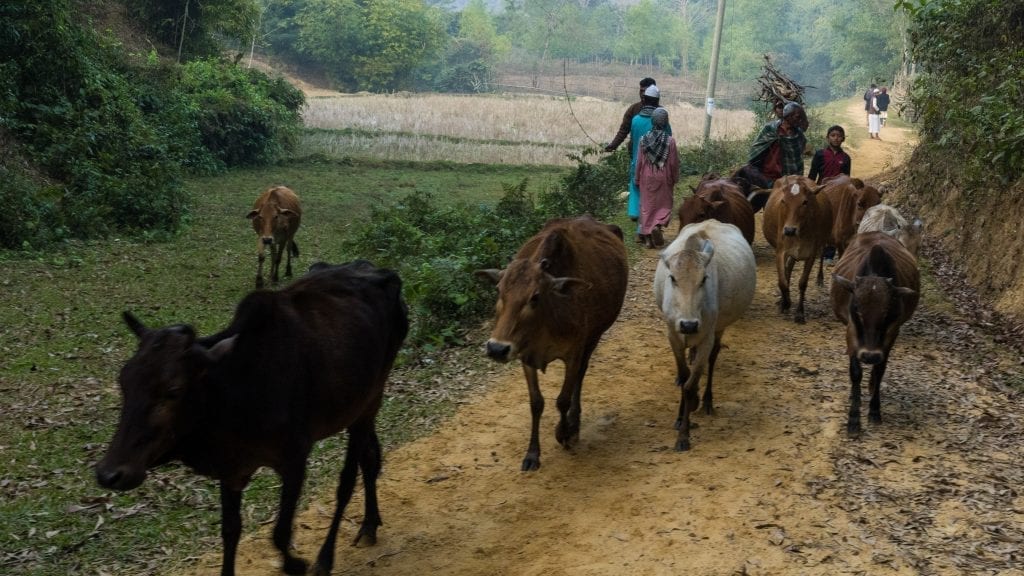
The light was fading. Herders were taking the cows home after a day of grazing, to rest under shelter. If you look carefully, it is a narrow mud path with a hill on one side!
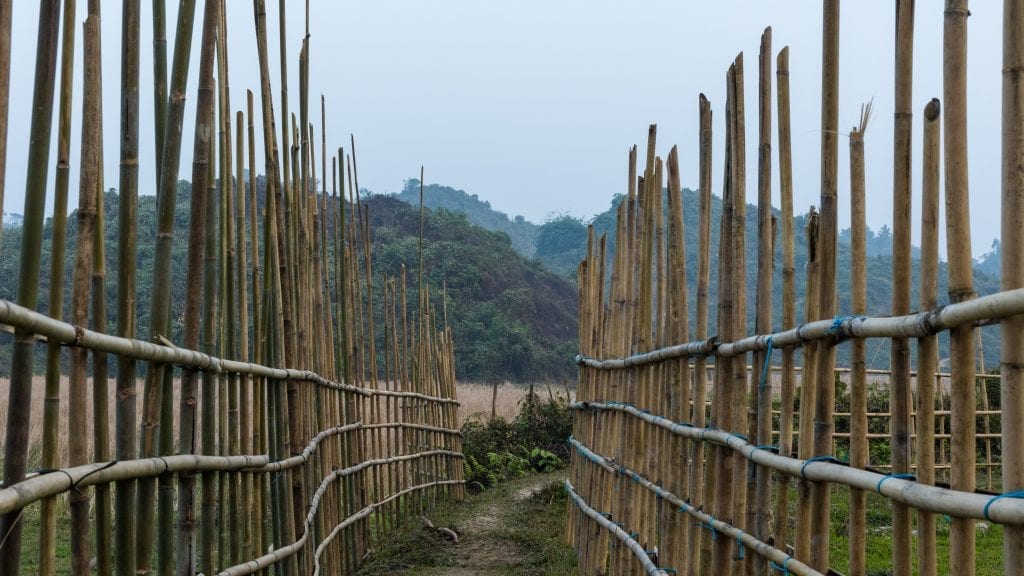
I got fascinated to see my location on the map. I was literally residing at the edge of the border between India and Bangladesh. Interestingly, it was unmarked and unguarded. My aim was to climb the little mountain at the front.
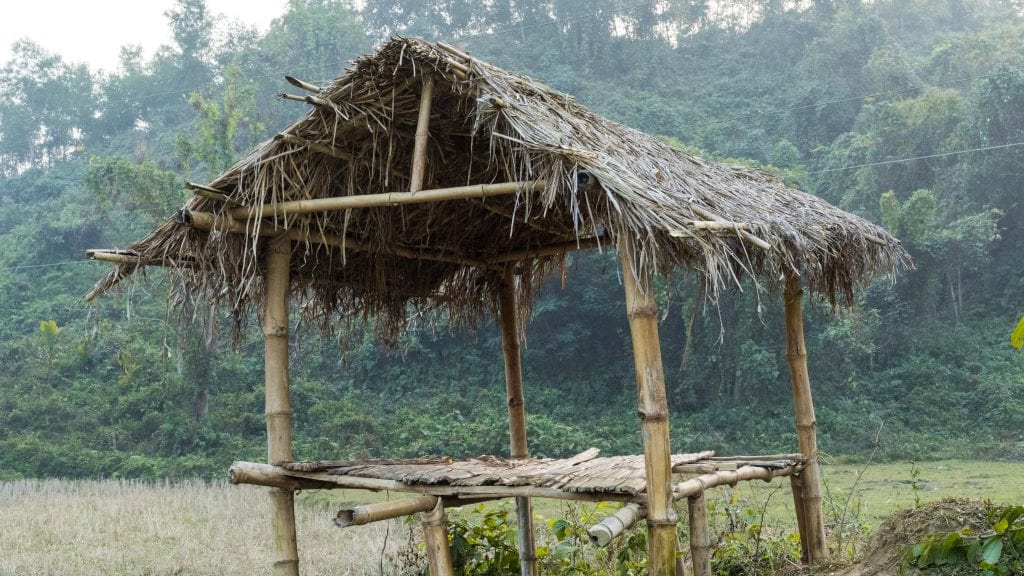
The signs of crop fields were visible everywhere. I found a shade made of bamboos and straw on my way. It gives relief to the farmers during scorching heat.
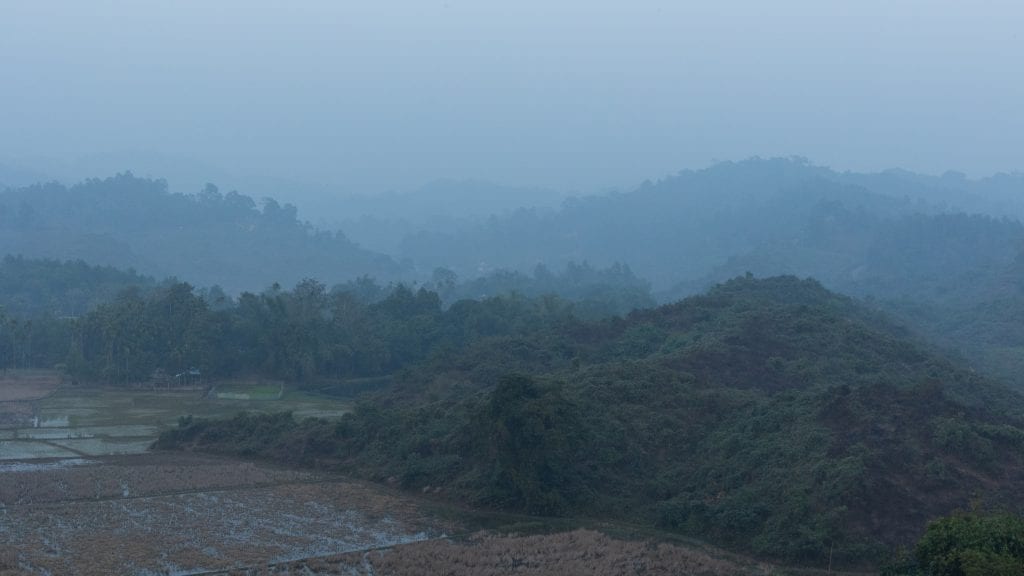
A relatively easy 15-minute hike took me to the top of a hill. I didn’t know its name; maybe it is part of the Garo Hills. The sun had already set and it was quite dark, but I could still make out the hills in the distance, which belong to India.
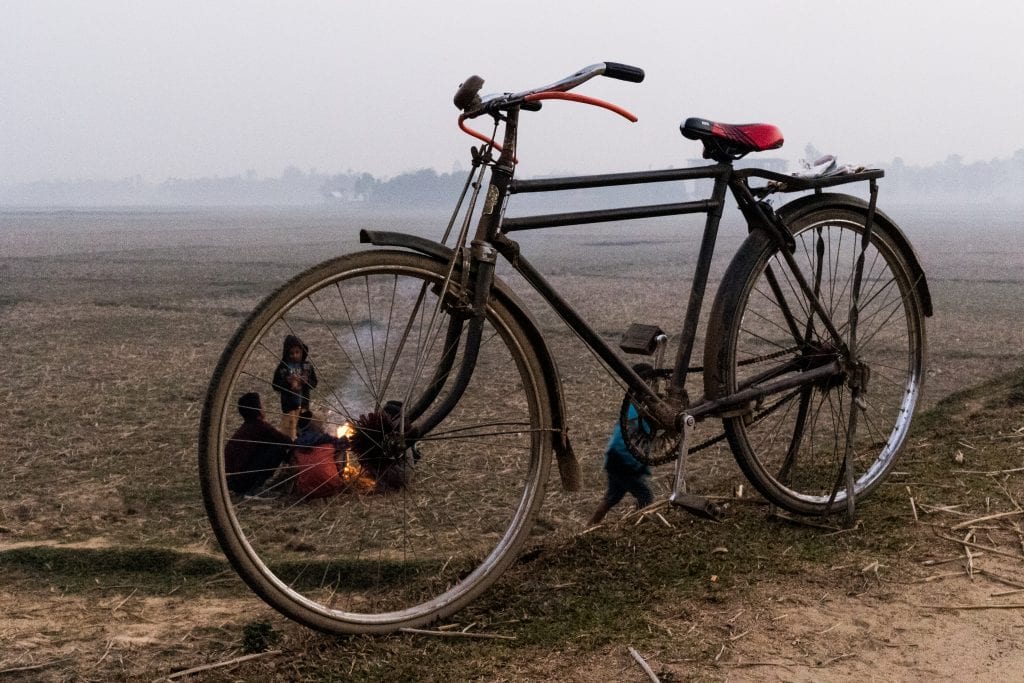
I took a circular route during the descent. It left me on the other side of the village. Although it got dark, I saw kids playing in the field. A bunch of them were lighting a fire to get some warmth in the winter. You can see a no-frills bi-cycle above; these are super cheap and of great utility to traverse the rugged terrain of the village. I was feeling a bit sad as I knew that my time in Birishiri had ended and I had to get back to Dhaka tomorrow. I tried to enjoy the last few minutes of it before it got completely dark.
On our way back to Dhaka from Birishiri
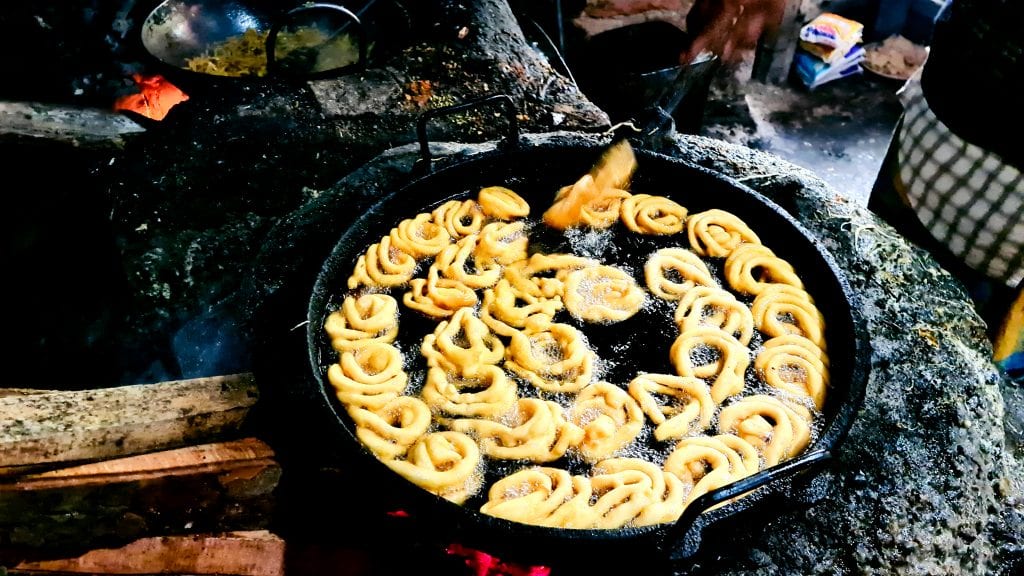
We took the same route from Birishiri to Dhaka through Mymensingh and started earlier, around 7:00 AM. In the roundabout of Mymensingh, we stopped to take our breakfast. It was an ordinary restaurant from the outside. However, in the kitchen, I found a man preparing jilapi, a traditional sweetmeat in Bangladesh. This made my breakfast delicious; God knows how many parathas I ate!
Final Words
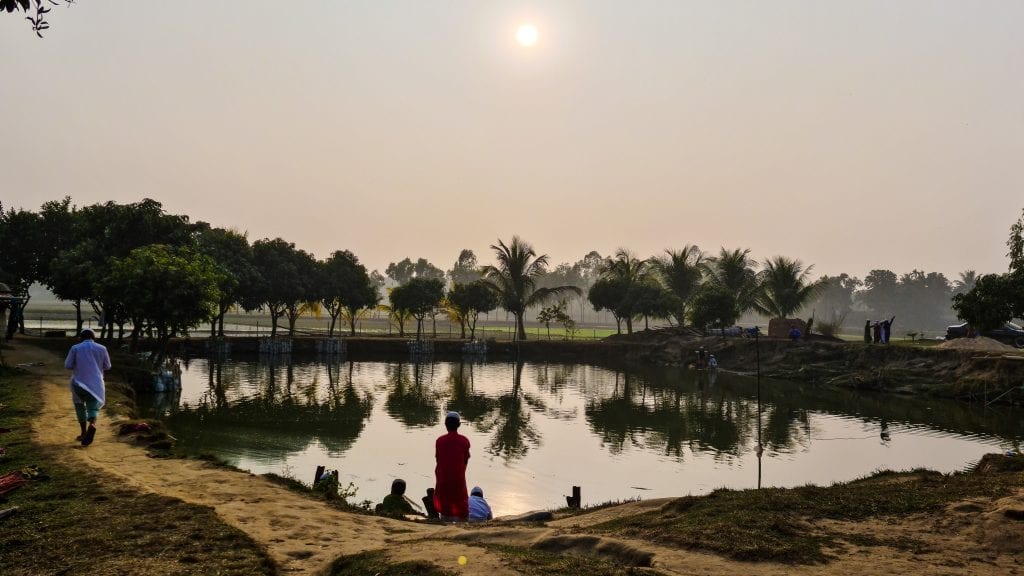
Before leaving Birishiri, Motiur, a wonderful soft-spoken lad came to say goodbye. He asked me in a low voice:
“Do you pray five times a day?”
I nodded my head from left to right.
He suggested to me with a gentle smile, “Please try!”
While I am struggling to make any marks in this life and the afterlife, fantastic people like Motiur are surely preparing for what matters most to him. My trip to Birishiri was not only a rewarding one for enjoying nature but also a mind-boggling experience of interacting with real humans. The trip to Birishiri was one of the most unforgettable trips of my life.
Where Else to Go in Bangladesh
- The longest unbroken sea beach in Cox’s Bazar
- The coral island of Saint Martin’s
- The cloud-filled hills of Sajek Valley
- The buzzing capital, Dhaka
- The National Monument of Bangladesh, an easy day trip from Dhaka
Birishiri FAQ
Where is Birishiri?
Birishiri is in Durgapur upazila of Netrokona district in northern Bangladesh, on the border with the Indian state of Meghalaya.
How far is Birishiri from Dhaka?
About 170 to 180 km by road via Gazipur and Mymensingh. By car it took me about 6 to 7 hours with a breakfast stop.
How do I get to Birishiri by public transport?
Take a bus from Mohakhali Bus Terminal or a train from Kamalapur or Airport station to Netrokona, then a local bus or CNG auto-rickshaw to Durgapur and Birishiri.
What are the main tourist spots in Birishiri?
The white, pink and yellow China clay hills of Bijoypur and their blue-green lakes, the Someshwari River, the Bijoypur zero point on the border, the orange garden hill, and the Birishiri Cultural Academy.
When is the best time to visit Birishiri?
November to February is the most comfortable, with dry trails and cool weather. In the monsoon the Someshwari River is full and boat rides are best, but the paths get muddy.
Where can I stay in Birishiri?
There are no luxury hotels. Options include simple guesthouses and rest houses in Durgapur, such as the YMCA rest house. I stayed as a guest at a local madrasa.

I know a few college friends in NYC who is from Bangladesh 🇧🇩. Thanks for sharing your journey and pictorial presentations give a better idea of your kulcha. Your story is very inspiring. Keep being a #travelexplora.
Wow, it sounds like this was quite the journey! Your pictures are amazing-I would love to visit Bangladesh one day.
That’s a great piece Fuad! Ended the blog with Motiur, and I happen to be Motiur by name! A random search just yielded your blog and it was awesome! Cheers!