
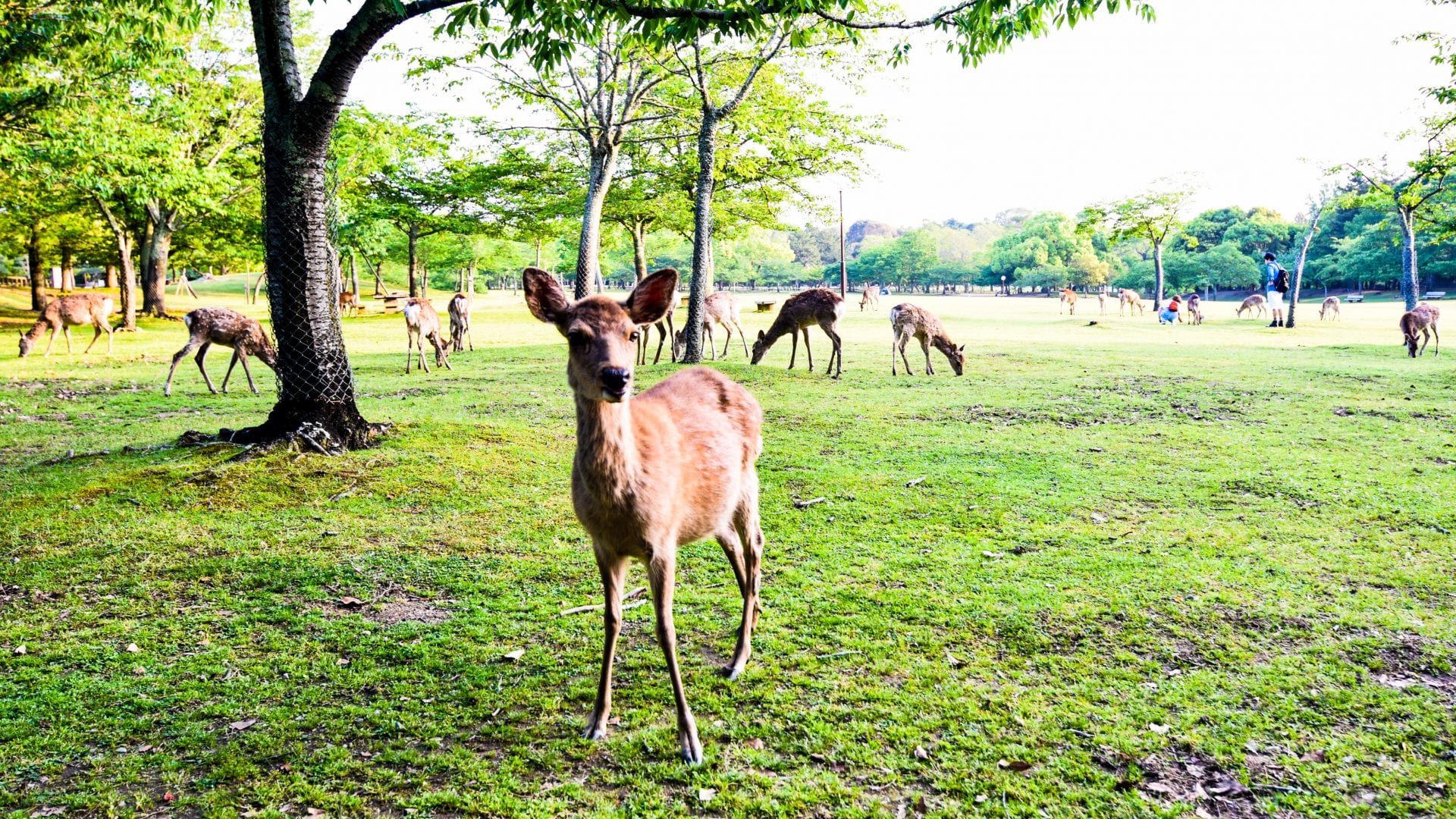
Nara is easy to underestimate. I went expecting to feed some deer and be done in a few hours. I came back having spent a full day and still felt like I’d missed things. Nara was Japan’s capital in the 8th century, before the court settled in Kyoto in 794, and it is quieter than Kyoto and less crowded than Tokyo. It has eight UNESCO World Heritage properties, one of the world’s largest bronze Buddha statues, and well over a thousand deer that roam freely and have no fear of humans.
If you searched for the deer park in Kyoto, this is it. The famous deer live in Nara Park, in the city of Nara, not in Kyoto city. Nara is about 35 to 50 minutes from Kyoto by train.
✅ SHORT ANSWER
Take the Kintetsu Limited Express from Kyoto Station to Kintetsu-Nara (about 35 minutes, ¥1,280) and give Nara 5 to 7 hours. A good route is Kofuku-ji, the deer in Nara Park, Isuien Garden, Todai-ji, Kasuga Taisha, then Nigatsudo for sunset. The JR Miyakoji Rapid is cheaper (¥720) and covered by a JR Pass, but its station is a 15 to 20 minute walk from the park.
A Nara day trip from Kyoto is one of the most popular day trips in Japan, and this guide covers the trains, the route, current fees and what to skip. If this is your first trip to Japan, my first-timer tips for Japan cover money, transport and etiquette.
Getting there
Kintetsu Limited Express
About 35 min, ¥1,280. JR Miyakoji Rapid: about 45 min, ¥720
Time needed
5 to 7 hours
Start before 10 AM, when the tour groups arrive
Deer crackers
¥200 a pack
Buy from official stalls and feed the deer nothing else
Entry fees
Todai-ji ¥800
Kofuku-ji Golden Hall ¥500, Isuien ¥1,200, Nigatsudo free
Closed Tuesdays
Isuien Garden
It closes the next day when Tuesday is a national holiday
Under repair
Kofuku-ji five-storey pagoda
Covered since July 2023, but the temple stays open
How to Get from Kyoto to Nara
There are two main options and the difference matters.
Kintetsu Line (Recommended)
The Kintetsu Railway is the faster, more convenient option. Take the Kintetsu Kyoto Line Limited Express from Kyoto Station directly to Kintetsu-Nara Station: about 35 minutes and ¥1,280 per person (¥760 base fare plus a ¥520 reserved-seat fee). Ordinary express trains take 45 to 50 minutes for ¥760, though some need a change at Yamato-Saidaiji, two stops before Kintetsu-Nara. Trains leave about twice an hour. Kintetsu-Nara Station is underground, steps from Kofuku-ji and the entrance to Nara Park. The Japan Rail Pass is not valid on Kintetsu trains.
💡 Tip: Kintetsu also runs the Aoniyoshi sightseeing train between Kyoto, Nara and Osaka. On the timetable Kintetsu published in March 2026, Kyoto to Nara departures were 10:55, 12:55, 14:55 and 16:50, and the train generally does not run on Thursdays. The Aoniyoshi charge is ¥1,490 per adult when two share a Twin seat (or three or four share a Salon seat) and ¥1,860 for one person in a Twin seat, on top of the ¥760 base fare, so about ¥2,250 to ¥2,620 in total. Check Kintetsu’s site for the current timetable and booking rules.
JR Line (If You Have a JR Pass)
The JR Miyakoji Rapid runs from Kyoto Station to JR Nara Station in about 45 minutes for ¥720, roughly every 30 minutes. The Japan Rail Pass covers it. The trade-off is that JR Nara Station is a 15 to 20 minute walk west of Kofuku-ji and Nara Park, which adds time on both ends of the day. The JR local train takes about 75 minutes, so take the Rapid.
Which should you choose?
| Kintetsu | JR | |
|---|---|---|
| Train | Limited express (reserved seat) or ordinary express | Miyakoji Rapid |
| Journey time | About 35 min (limited express), 45 to 50 min (express) | About 45 min |
| Cost | ¥1,280 (limited express), ¥760 (express) | ¥720 (covered by the Japan Rail Pass) |
| Station location | Underground, steps from Kofuku-ji and Nara Park | 15 to 20 min walk west of the park |
| Changes | None on the limited express; some express trains change at Yamato-Saidaiji | None |
| Best for | Everyone without a JR Pass | JR Pass holders |
Coming from Osaka Instead?
Nara is also an easy day trip from Osaka. Kintetsu trains from Kintetsu Namba Station take roughly 35 to 45 minutes, and the JR route from Osaka Station is a little longer. If your itinerary runs Kyoto, Nara, then Osaka (or the reverse), the trip flows naturally without backtracking.
What to Do in Nara: A Full Day Itinerary
Morning: Arrive Before 10 AM
The deer and the temples are both calmer before the tour groups arrive at mid-morning. Take the earliest convenient train from Kyoto and aim to be at Kintetsu-Nara by 9:00 to 9:30 AM. This route starts beside the station at Kofuku-ji and works east through the park, saving Nigatsudo for the late afternoon.
⚠️ CHECK THE DAY BEFORE YOU GO
Isuien Garden is closed on Tuesdays (the next day if Tuesday is a national holiday). Kofuku-ji’s five-storey pagoda is covered for repairs until March 2034. On a Tuesday, skip Isuien and spend the time at Kasuga Taisha instead.
Kofuku-ji Temple
Kofuku-ji stands next to Kintetsu-Nara Station and is often the first thing visitors see on arriving. Its origins date to 669 in what is now Kyoto, and it was moved to Nara in 710. The temple has two pagodas. The five-storey pagoda has been covered for repairs since July 2023, with work scheduled to run until March 2034, so expect scaffolding in your photos. The three-storey pagoda and the Central Golden Hall remain part of the visit.
Admission: Grounds free; Central Golden Hall ¥500, National Treasure Hall ¥900. Open 9:00 AM to 5:00 PM, last entry 4:45 PM.
Nara Park and the Deer
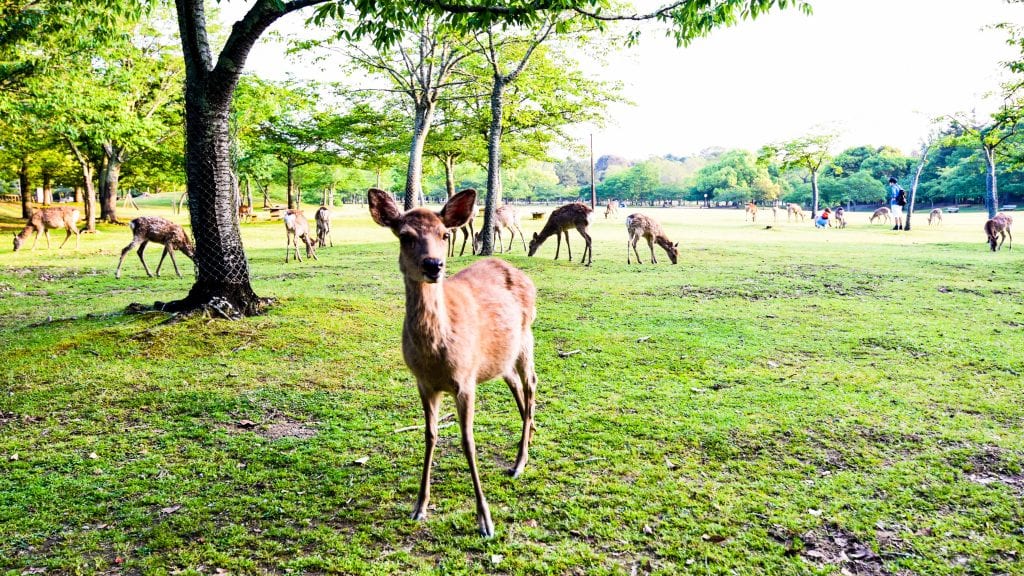
Nara Park is not really a “park” in the conventional sense. It is a vast open green space that takes in most of central Nara, and well over a thousand sika deer roam through it (the city gives a figure of about 1,300). The deer are technically wild but have lived alongside people for over 1,000 years, which has made them unafraid of people and very motivated by the prospect of food.
Deer crackers (shika senbei): Sold by official vendors in the park, ¥200 for a pack of 10 at the last price I found (2024). Feed the deer only these crackers, not human food.
Deer feeding advice:
- Once you buy crackers, nearby deer will notice. They approach, nudge and nibble at bags, clothes and maps, so keep paper and bags out of reach.
- Offer one cracker at a time.
- When your crackers are finished, hold up both empty hands with your arms spread. The deer recognise this and move on to the next person.
- Do not wave crackers above your head for photos. The deer will rear up and it becomes chaotic quickly.
- Stags can be aggressive, especially in autumn, so keep your distance and stay away from deer with fawns.
- Most encounters are charming. The deer bow in exchange for crackers, which never gets old.
This post contains affiliate links. If you book through them, I may earn a small commission at no extra cost to you.
💡 Prefer to explore on two wheels? The E-Bike Nara Highlights tour (GetYourGuide) covers Todai-ji, Kasuga Shrine, the deer park and a traditional knife-maker’s workshop by electric bike. It is a good option if you want to cover more ground without the full walking distance, or simply want a guide to add context to what you are seeing.
Isuien Garden: My Favourite Place in Nara
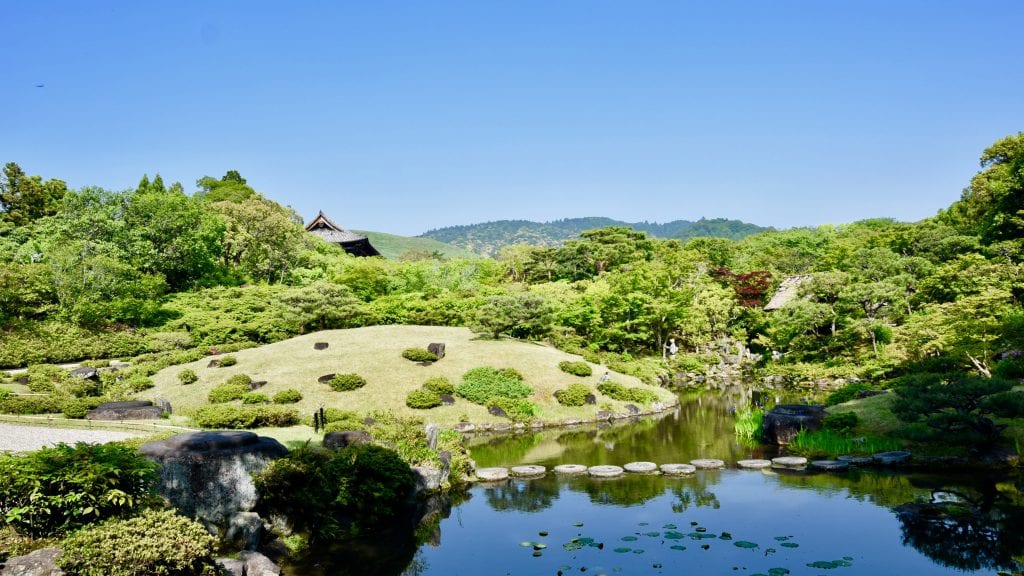
Isuien Garden is my favourite place in Nara, and possibly the most undervisited. It sits between Todai-ji and Kofuku-ji and has two parts, an Edo-period garden and a Meiji-era garden. It uses the technique of shakkei (borrowed scenery), so Mount Wakakusayama forms the natural backdrop and feels like part of the garden itself.
Ponds, carefully placed stones, clipped hedges and stone lanterns complete the picture. It is calm in a way that the more crowded temple grounds are not.
Admission: ¥1,200 (includes the Neiraku Museum within the grounds). Open 9:30 AM to 4:30 PM, last entry 4:00 PM. Closed on Tuesdays (the next day if Tuesday is a national holiday), and for maintenance from the end of December to mid-January and in the last third of September.
Todai-ji Temple: The Great Buddha
Todai-ji is the centrepiece of Nara’s UNESCO World Heritage cluster and one of the most significant Buddhist temples in Japan. Built in 752, it houses the Daibutsu (Great Buddha), a 15-metre bronze statue of Vairocana. The main hall (Daibutsuden) is one of the largest wooden buildings in the world, and the current hall is about two-thirds the size of the original after it was rebuilt following fire damage.
Standing in front of the Daibutsu is humbling. The scale is difficult to grasp until you are standing at its feet.
Admission: ¥800 for the Daibutsuden. Open 7:30 AM to 5:30 PM (April to October) and 8:00 AM to 5:00 PM (November to March). Budget 45 to 60 minutes.
💡 Tip: There is a pillar inside Todai-ji with a hole at the base the same size as one of the Buddha’s nostrils. Legend says that anyone who can squeeze through it will be granted enlightenment. Children regularly make it. Most adults do not.
Kasuga Taisha Shrine
Kasuga Taisha is one of Nara’s most important Shinto shrines, established in 768. It sits at the edge of Nara Park, approached through a forested path lined with lanterns. The shrine has about 3,000 donated lanterns, which are lit during the Mantoro lantern festivals in early February and mid-August.
The vermilion gates and lantern-lined paths make this one of the most photogenic walks in Nara, particularly in the early morning when the light filters through the ancient cedar trees. If you have been to Fushimi Inari in Kyoto you will recognise the colour, though Kasuga’s setting is a quiet forest rather than a hillside of gates.
Admission: Outer grounds free; the inner area has a separate fee (¥500 in older guides, so check at the gate). The official site lists 7:00 AM to 5:00 PM, so check seasonal hours before you go.
Nigatsudo Hall: A Sunset View Over Nara
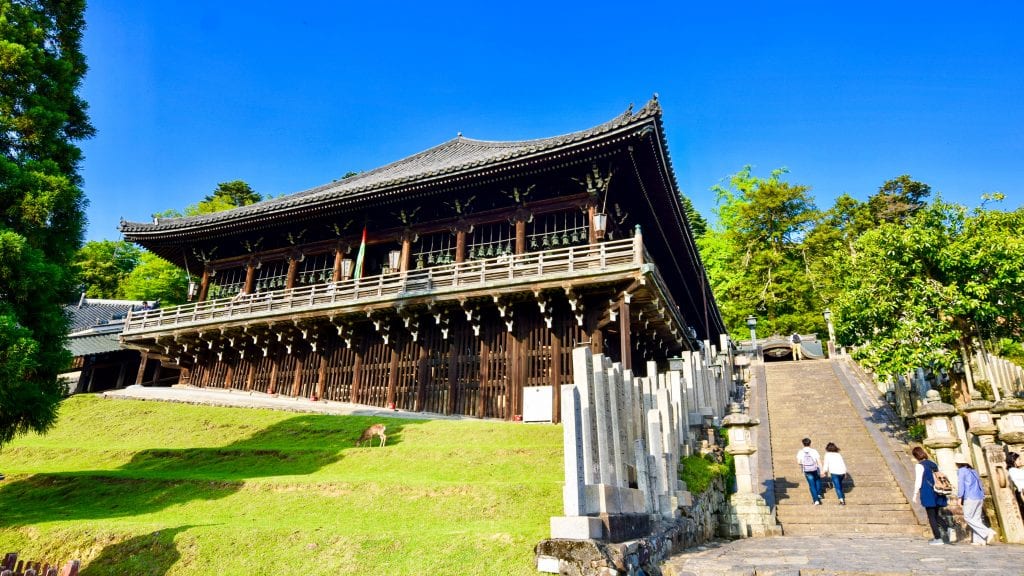
Nigatsudo is a sub-hall of the Todai-ji complex, perched on a small hill a short walk from the main Daibutsuden hall. It requires climbing a staircase, which most visitors skip as they head straight for the Great Buddha, so even on busy days Nigatsudo tends to be quiet.
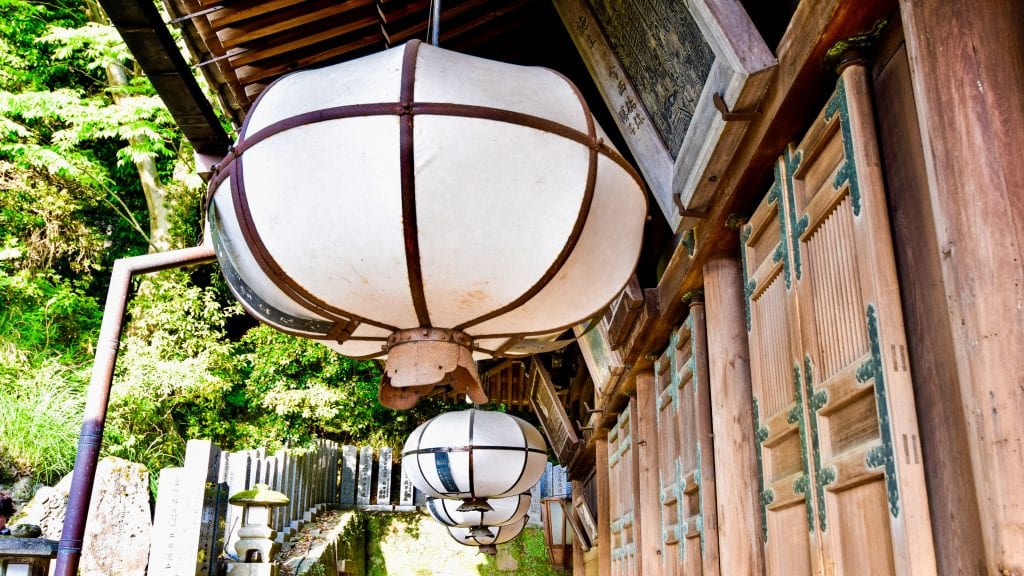
The wooden balcony looks out over Nara and is a lovely place to be in the late afternoon as the light changes. The interior is remarkable too: elaborate wooden curves and rows of hanging lanterns whose warmth transforms the space into something unexpectedly intimate.
Admission: Free. japan-guide lists it as always open, but go while there is daylight.
⏰ Tip: If you can only do one thing in Nara that most visitors miss, this is it. Arrive about 30 minutes before sunset and stay until the light is gone.
Nara Costs and Opening Hours (Checked November 2026)
| Place | Admission | Hours | Notes |
|---|---|---|---|
| Kofuku-ji | Grounds free. Central Golden Hall ¥500, National Treasure Hall ¥900 | 9:00 AM to 5:00 PM, last entry 4:45 PM | Five-storey pagoda covered for repairs |
| Nara Park deer | Free. Crackers ¥200 a pack | Open grounds | Feed only official deer crackers |
| Isuien Garden | ¥1,200, includes the Neiraku Museum | 9:30 AM to 4:30 PM, last entry 4:00 PM | Closed Tuesdays, and for maintenance in late December to mid-January and the last third of September |
| Todai-ji Daibutsuden | ¥800 | 7:30 AM to 5:30 PM (April to October), 8:00 AM to 5:00 PM (November to March) | Open every day |
| Kasuga Taisha | Outer grounds free. Inner area has a separate fee (¥500 in older guides) | 7:00 AM to 5:00 PM | Check the inner fee at the gate |
| Nigatsudo | Free | Listed as always open | Go while there is daylight |
Last checked 13 November 2026. Sources: Todai-ji, Kofuku-ji, Isuien, Kasuga Taisha, japan-guide (Todai-ji), japan-guide (getting to Nara), japan-guide (Kofuku-ji pagoda repairs), Nara City tourism (deer), Kintetsu (Aoniyoshi) and nippon.com (deer count).
What to Eat in Nara
Kakinoha sushi is Nara’s most famous local food: rice and fish (often mackerel or salmon) wrapped in persimmon leaves. The leaf adds a subtle flavour and the format is traditional to the Nara region. Available at specialist shops near Kintetsu-Nara Station.
Warabi mochi is a soft, jelly-like sweet made from bracken starch and rolled in kinako (roasted soybean flour). Different from the regular mochi found elsewhere and particularly good in Nara.
Higashimuki Shopping Street is a covered arcade close to Kintetsu-Nara Station with many restaurants, cafes and food stalls. Good for lunch midway through the day without having to plan ahead.
Cultural Experiences to Book in Advance
Beyond temples and deer, Nara has some excellent hands-on cultural experiences that can sell out:
- Kimono and Tea Ceremony: The Nara Kimono and Tea Ceremony Experience (GetYourGuide) lets you dress in a traditional kimono and take part in a formal tea ceremony, two of the most distinctly Japanese experiences in a single booking. Walking through Nara Park in a kimono, surrounded by deer, is memorable. Book in advance as slots are limited.
- Private World Heritage Tour: The Nara World Heritage Private Tour (Klook) is a private guided tour of Nara’s UNESCO sites with an English-speaking guide. A good fit if you want depth on the history of each site rather than walking through on your own.
Practical Tips for Your Nara Day Trip
Arrive early. By 10 AM, tour buses begin arriving and the main sites fill up. By 1 PM, Nara Park is crowded. The deer are calmer and the temples quieter in the morning.
Wear comfortable shoes. Everything in Nara is walkable, but you will walk several kilometres over a full day, much of it on uneven stone paths and temple stairs.
Take a full day, not a half day. Nara is often described as a “half day trip” and this undersells it. If you rush Todai-ji, Kasuga Taisha, Isuien Garden, and Nigatsudo, you will not enjoy any of them properly. Allow 5 to 7 hours.
Luggage storage: Coin lockers are available at the stations, and sizes and fees vary, so check on arrival. If you are travelling with large bags between cities, leave them at your hotel or use a luggage-forwarding service instead.
Cash: Many smaller vendors and temple admission counters still prefer cash. Bring at least ¥3,000 to ¥5,000 in yen.
Pagoda note: The five-storey pagoda at Kofuku-ji, the subject of one of Nara’s most photographed scenes at Sarusawa-ike pond, is covered for repairs until March 2034 according to japan-guide’s construction page. The site stays open.
Renting a car: If you want to visit sites beyond central Nara, particularly Horyu-ji Temple (one of the world’s oldest surviving wooden buildings, southwest of the city) or the Yoshino mountain area, a rental car is the most practical option, as public transport to these sites is less frequent. Compare car hire rates via Discover Cars, which aggregates local and international agencies for the best price.
Book a Guided Tour
If you would rather not handle the logistics yourself, several tours run from both Kyoto and Osaka:
- Kyoto/Osaka: Nara, Fushimi Inari Taisha & Arashiyama Bus Tour (GetYourGuide): combines Nara with Fushimi Inari and Arashiyama in a single full-day circuit. Good for travellers who want to cover multiple areas in one day without navigating independently.
- Kyoto and Nara day tour (Viator): includes Nijo Castle in Kyoto plus a Nara visit, with a guide. Good for first-time visitors.
- Deer Experience trip from Kyoto (Klook): includes a kimono experience and one-way transfer from Kyoto. Suited to those who want the cultural dressing-up element as part of the day.
How Long to Spend in Nara?
Half day (3 to 4 hours): Nara Park deer and Todai-ji only. Fine if you are short on time, but you will feel rushed and miss Isuien Garden and Nigatsudo, two of the most memorable parts of the visit.
Full day (5 to 7 hours): The right amount. Covers Kofuku-ji, Nara Park, Isuien Garden, Todai-ji, Kasuga Taisha and Nigatsudo at sunset without rushing.
Overnight: A good idea if you want to see the Mantoro lantern festivals (early February and mid-August), explore the quieter temple districts in the early morning, or combine Nara with nearby Yoshino or Horyu-ji temple.
Frequently Asked Questions
Is Nara worth a day trip from Kyoto?
Yes. Nara is often dismissed as the deer place, but Todai-ji, Isuien Garden and Nigatsudo fill a full day. It is quieter than Kyoto and compact enough to cover on foot, so it makes an easy break from a busy Kyoto itinerary.
How do I get from Kyoto to Nara?
The Kintetsu Limited Express from Kyoto Station to Kintetsu-Nara takes about 35 minutes and costs ¥1,280. Kintetsu express trains take 45 to 50 minutes for ¥760, and some need a change at Yamato-Saidaiji. The JR Miyakoji Rapid takes about 45 minutes for ¥720 and is covered by the Japan Rail Pass, but JR Nara Station is a 15 to 20 minute walk from the park.
Is Nara Park in Kyoto?
No. Nara Park and its deer are in the city of Nara, in Nara Prefecture. From Kyoto Station it is a train ride of about 35 to 50 minutes, plus a short walk from Kintetsu-Nara Station to the park.
How long do you need in Nara?
A full day: 5 to 7 hours on the ground. A half day (3 to 4 hours) gets you Nara Park and Todai-ji, but you will have to skip Isuien Garden, Kasuga Taisha and Nigatsudo, which are the parts that make the visit memorable rather than just ticked off. Arrive before 10 AM and stay until sunset.
Is anything closed on Tuesdays in Nara?
Isuien Garden closes on Tuesdays (the next day if Tuesday is a national holiday), and the Man'yo Botanical Garden at Kasuga Taisha is also closed on Tuesdays. Nara Park, Todai-ji, Kofuku-ji and Kasuga Taisha stay open, so on a Tuesday build the day around those.
Should I take the Kintetsu or the JR line to Nara?
Take Kintetsu unless you have a Japan Rail Pass. Its station is underground beside Kofuku-ji and Nara Park, and the limited express takes about 35 minutes for ¥1,280. The JR Miyakoji Rapid costs ¥720 and is free with a JR Pass, but you walk 15 to 20 minutes from JR Nara Station to the park. The Japan Rail Pass does not cover Kintetsu trains.
Is Nara better as a day trip from Kyoto or Osaka?
Both work. From Kyoto the Kintetsu limited express takes about 35 minutes, and from Kintetsu Namba in Osaka trains take roughly 35 to 45 minutes. Choose based on where you are staying. Many travellers also stop in Nara on the way between the two cities.
Can you see Nara in half a day?
You can, but you will feel the time pressure. Nara Park and Todai-ji alone take 2 to 3 hours if you are not rushing. Add Kasuga Taisha and the walk there, and a half day is gone before you reach Isuien Garden. If half a day is all you have, go early and prioritise Todai-ji and the deer.
Do I need to book anything in advance for Nara?
The temples and park are all walk-in. What fills up are the guided tours and cultural experiences, such as the kimono and tea ceremony, private UNESCO tours and the e-bike tour, especially during cherry blossom season (late March to mid-April) and autumn foliage (mid-November). Train tickets can be bought on the day. If you want the Aoniyoshi sightseeing train, check Kintetsu's timetable first because it does not run every day.
Are the Nara deer dangerous?
Rarely, but they are wild animals. They will nudge, nip and push if they think you have crackers, and stags can be aggressive, especially in autumn. Feed them only official deer crackers, one at a time, and show both empty hands when you run out. Do not tease them with food and do not approach deer with fawns. Most encounters are charming.
My Verdict on Nara
I went into Nara thinking it would be the “deer place”, a tick-box stop between Kyoto and Osaka. It was significantly more than that. The scale of Todai-ji is humbling. Isuien Garden is one of the most beautifully designed spaces I have ever stood in. And Nigatsudo at sunset, with almost no one else there, is the kind of experience that travels back home with you.
If you have a spare day free from your 3-day Kyoto itinerary, spend it in Nara. You will not regret it.
Nara slots in as Days 8 to 10 of my 2-week Japan itinerary, if you’re planning the wider trip.




Leave a reply