During my trip to Egypt, I was invited by a local in Luxor in their home. This is the story of the love I found in Egypt.


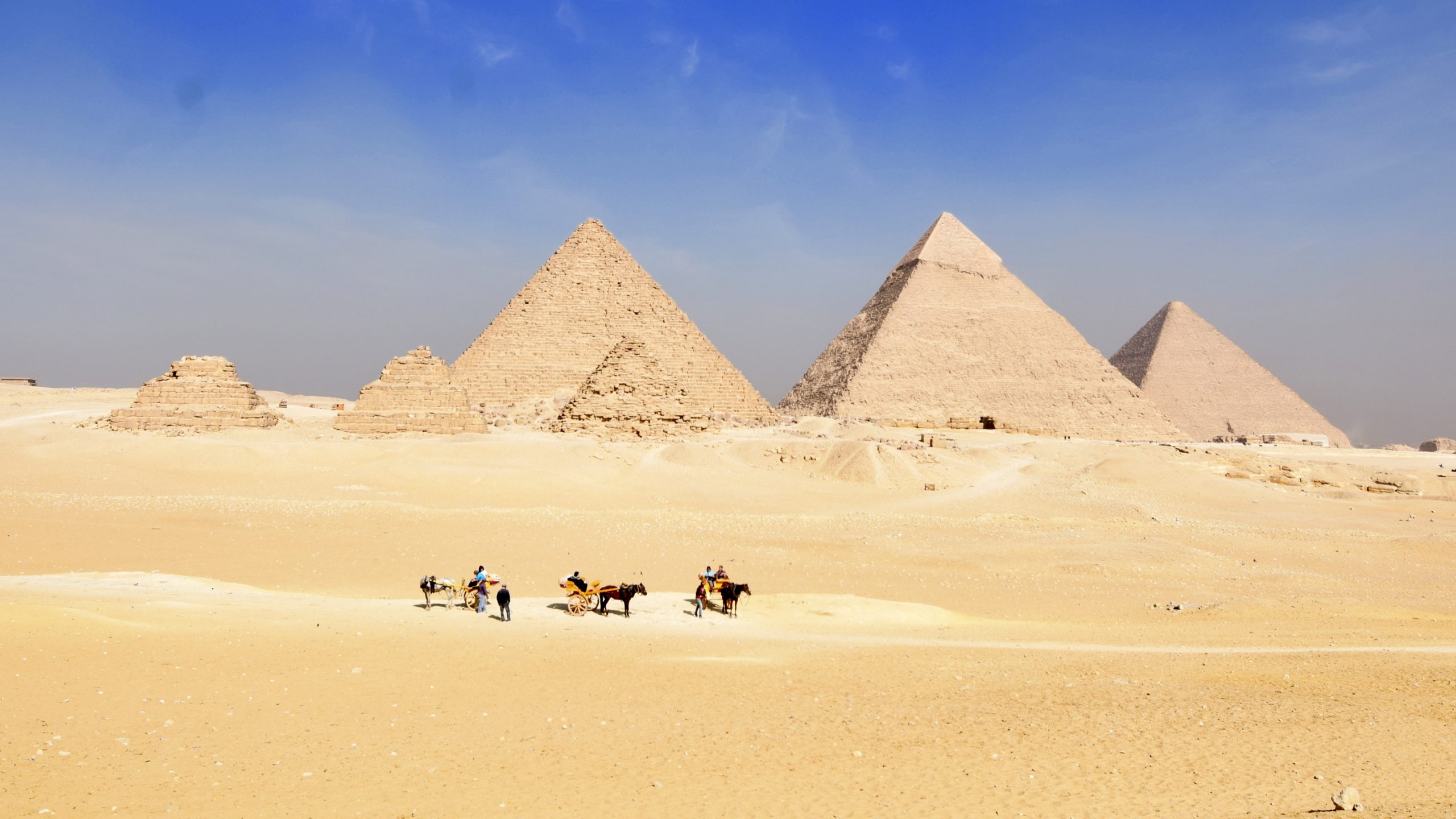
Plan Your Perfect Trip to Egypt!
From Cairo to Luxor: Field-tested itineraries, budget tips, and local cultural experiences.
Egypt rewards a route, not a checklist. The pyramids at Giza get you in the door, but the country’s real shape follows the Nile south — Cairo’s chaos, Aswan’s calm, Luxor’s open-air museum of a city — before the desert gives way to two coastlines most first-timers never get to: Alexandria on the Mediterranean, and Hurghada, Sharm El Sheikh and Marsa Alam on the Red Sea. This page is built to help you pick a route for however many days you have, and dive into the detailed city guides already written for the stretch I’ve covered myself: Giza through Luxor. My first trip to Africa was Egypt, and it’s still the country I dream about most.
Ready to book?
We earn a small commission at no extra cost to you. It keeps the guides free. Links pulled from the existing Travel Tools page — Booking.com, Trip.com/Aviasales, GetYourGuide/Viator, VisitorsCoverage, Airalo — no new affiliate partners needed for these five.
There’s no single best time for all of Egypt — the Nile Valley and the coasts run on different clocks, but the shoulder seasons (October–November, March–April) generally offer the best balance of manageable heat and lighter crowds than deep winter.
Cairo & the Nile Delta
Mild winters (Dec–Feb, 10–20°C), scorching summers (Jun–Aug, 35°C+). October–April is the comfortable window.
Upper Egypt (Aswan, Luxor)
True desert heat. Summer regularly tops 40°C — miserable for temple-hopping. October–April again, with December–February the sweet spot for the hot air balloon and Valley of the Kings.
Red Sea Coast
Hurghada, Sharm El Sheikh, Marsa Alam stay warm nearly year-round — a classic European winter-sun destination, so the popular spots book out fast for the Dec–Feb season.
Two seasonal things worth knowing before you book: the khamsin is a hot, sand-laden wind that blows through March–May and can occasionally ground flights or felucca sailing and cut visibility at outdoor sites — not common, but not rare either. And if your trip lands during Ramadan or Eid al-Adha (dates shift yearly on the Islamic calendar), expect many shops and restaurants to close during daylight hours and pick back up after sunset — evenings get livelier than usual, but plan meals around it.
Sized to how many days you actually have — mixing the route I’ve travelled with the trip-length breakdowns already validated on this site.
3 Days — Giza & Cairo
Best for: a first taste without the internal-flight logistics of the full Nile route
One day at the Giza Plateau (plus Saqqara and Dahshur if you have the energy), one day in Cairo split between the museums and Islamic Cairo. This is the front half of the 7-day route below, and both days already have full guides.
7 Days — The Big Four
Best for: first-timers who want the complete Nile Valley circuit without rushing
Giza and Cairo up front, then south to Aswan for the Nile — with Abu Simbel as a long day trip from Aswan, not a separate overnight stop — before finishing in Luxor for the Valley of the Kings and a sunrise hot air balloon. This is my actual route, elaborated in full below.
2 Weeks — + Alexandria & the Red Sea
Best for: adding the Mediterranean coast and a few beach days onto the full Nile circuit
Run the 7-day route above, then add Alexandria for its Greco-Roman history and Mediterranean pace, and a few days on the Red Sea to decompress after the temple-heavy stretch. Alexandria’s hotel prices tend to drop in winter — worth timing around if the coast is your priority over the crowds. It’s also genuinely doable as a single long day trip from Cairo rather than its own overnight leg — a private taxi is roughly 2–3 hours each way, enough time to see the Catacombs of Kom El Shoqafa, Pompey’s Pillar, the Bibliotheca Alexandrina, and the Citadel of Qaitbay before heading back.
No detailed day-by-day for Alexandria or the Red Sea leg yet, specific activities there aren’t confirmed beyond this overview, so this stays a routing suggestion rather than a full itinerary until there’s real content behind it.
Egypt for Beach Lovers & Divers researched
Best for: diving, reef time, and genuinely hot weather even outside the Oct–Apr Nile Valley window
The Red Sea and Gulf of Aqaba coastline is a different trip entirely — protected coral reserves, WWII wreck dives like the Thistlegorm off Sharm El Sheikh, and Ras Mohammed National Park’s marine life at the tip of Sinai. Marsa Alam is the base for shark diving (Elphinstone Reef) and dolphin-pod snorkeling further south at Sataya Reef, while Dahab’s Blue Hole is a serious, advanced-divers-only sinkhole dive with a real safety record to respect. For kitesurfing, the Blue Lagoon near Dahab and the gated resort town of El Gouna (close to Hurghada’s airport) are the two spots that come up repeatedly. Between the two main Sinai bases: Dahab is the laid-back, budget-friendly choice, known for shore diving, rock climbing, and a backpacker pace; Sharm El Sheikh leans resort and all-inclusive, with its own airport and easier access to Ras Mohammed National Park. Inland, Bedouin-guided treks on the Sinai Trail or Red Sea Mountain Trail run in 2–5 day segments through terrain most visitors never see.
Egypt with Kids researched
Best for: families who want the wonder of ancient history without pushing kids past their limits
Egypt’s family culture works in your favor here — locals travel in multi-generational groups as a matter of course, and kids get fussed over everywhere. The real challenge is heat and queueing, not the destinations themselves, so shoulder season and a multi-site pass to skip ticket lines (see Before You Go) matter more than usual. Cairo plus a few days at a Red Sea resort is an easy combination: gold and mummies at the Egyptian Museum, a camel ride at Giza, then patrolled beaches and beginner dive courses at Hurghada or Sharm El Sheikh. A felucca ride and the sound-and-light shows at Karnak or Abu Simbel both land well with younger kids too.
My first trip to Africa, and still one of the countries I dream about most. Four cities down the spine of the Nile, from the last surviving Ancient Wonder of the World at Giza to a sunrise hot air balloon over the Valley of the Kings in Luxor — plus a 4 AM drive to Abu Simbel and an unplanned dinner invitation into a family’s home on Luxor’s West Bank that ended up being the most memorable night of the whole trip.
Prefer it planned for you? These multi-day guided packages cover similar ground to the DIY itineraries above, with the logistics — flights, hotels, guides, entrance fees — handled. Prices and exact inclusions vary by operator, so check the listing before booking.
6 Days — Egypt Highlights
Best for: a genuinely comprehensive trip on the tightest realistic schedule
More packed than the name suggests: Giza and the Egyptian Museum, then Memphis, Saqqara and Dahshur (Bent and Red Pyramids) before flying to Luxor for Karnak, Luxor Temple, and a Nile cruise down to Aswan that still fits in the sunrise hot air balloon, Valley of the Kings, Edfu, Kom Ombo, and Abu Simbel — all inside six days.
8 Days — Cairo, Luxor & Aswan
Best for: the closest packaged match to this page’s own 7-day route
Giza, Memphis and Saqqara, then a full day split between Islamic Cairo (the Citadel, Muhammad Ali Mosque) and Coptic Cairo (the Hanging Church), before flying to Luxor for Karnak and Luxor Temple, boarding a Nile cruise, and working south through the sunrise hot air balloon, Valley of the Kings, Edfu, Kom Ombo, Abu Simbel, and Philae.
From Cairo: 8-Day Tour of Cairo, Luxor and Aswan with Cruise →
9 Days — Private Tour with Flights
Best for: adding a Mediterranean day and a Red Sea finish onto the classic Nile Valley route
Giza and the Egyptian Museum, a full day trip to Alexandria (the Catacombs, Bibliotheca Alexandrina, Qaitbay Citadel), then fly to Aswan for a Nubian village visit and a Nile cruise north through Abu Simbel, Kom Ombo, Edfu, and the Luxor West Bank — finishing with a few free days on the Red Sea in Hurghada rather than flying straight back to Cairo.
Cairo: 9-day Egypt Private Tour with Flights and Nile Cruise →
10 Days — + White Desert
Best for: adding the Western Desert’s otherworldly rock formations onto the classic route
Giza and the Egyptian Museum, then a fly-in Nile cruise from Aswan (Philae, the High Dam, a Nubian village, Abu Simbel, Kom Ombo, Edfu) up to Luxor’s West Bank and Karnak, before flying back to Cairo for Old Cairo and a genuine desert finish — an overnight camp at Bahariya Oasis and a sunrise in the White Desert’s chalk-rock formations, the landscape this page’s Regions section currently lists as “guide coming.”
10 Days Private Tour from Cairo to Nile Cruise and White Desert →
13 Days — The Full Country
Best for: seeing the country at a genuinely unhurried pace, Nile Valley plus both a Mediterranean day and a Red Sea finish
Cairo (Giza, Memphis, Saqqara, Islamic Cairo, the Egyptian Museum) plus a full Alexandria day trip, then a Nile cruise from Cairo through Abu Simbel, Kom Ombo, Edfu and the Luxor West Bank, a day trip out to the lesser-visited Abydos and Dendera temples, and a finish on the Red Sea in Hurghada.
15 Days — Everything
Best for: travelers who want the Nile Valley, the deep desert, and the Red Sea coast in a single trip, land-based rather than by cruise
Cairo and Old Cairo, a day out to the Valley of the Whales fossil site in the Fayoum, two days in the Western Desert (Bahariya Oasis, the Black and Crystal Mountains), then Aswan, Abu Simbel and Luxor’s temples and tombs, closing with four full days on the Red Sea in Marsa Alam — snorkeling trips to Dolphin House and Abu Dabab Bay included.
2 Days — Bahariya Oasis Add-On
Best for: bolting a short desert detour onto an existing Cairo-based trip
Crystal Mountain’s quartz formations in the Agabat Valley, the chalk-rock landscape of White Desert National Park, and a night camping under desert skies, plus a stop at Gebel Al Ingleez — “English Mountain” — a WWI-era British lookout post still visible from the Cairo road. A quick add-on rather than a standalone trip; worth pairing with one of the Cairo-based options above rather than booking on its own.
11 Days — Egypt + Jordan
Best for: combining Egypt with Jordan in one trip rather than two separate ones
Giza, the Grand Egyptian Museum, and Old Cairo, then a fly-in Nile cruise from Aswan through Abu Simbel, Kom Ombo, Edfu, and Luxor’s Valley of the Kings and Karnak — before flying on to Amman for Jerash, Ajloun, the Dead Sea, Petra, and a night in Wadi Rum. A flight-based route to Jordan rather than the Sinai ferry crossing mentioned in this page’s Worth Knowing section, useful if you’re weighing a fully guided combination against DIYing it yourself.
Multi-day Tour from Egypt and Jordan Tour Package, 11 Days →
The Nile Valley is fully covered; the coasts and the deep desert are still on the list — click through rather than scrolling for everything here.
Nile Valley
Cairo, Giza, Aswan, Luxor
The ancient core of the country — pyramids, temples, tombs, and the river that built them.
Guide open →Mediterranean Coast
Alexandria
Greco-Roman history at a slower, coastal pace.
Guide comingRed Sea & Sinai Coast
Hurghada, Sharm El Sheikh, Marsa Alam, Dahab, El Gouna
Diving, reef, kitesurfing, Bedouin-guided desert trails, and warm weather nearly year-round.
Guide comingWestern Desert & Interior Sinai
Siwa Oasis, White Desert, Fayoum, Mt Sinai
Salt lakes, otherworldly rock formations, the ancient Oracle of Amun (visited by Alexander the Great), Egypt’s highest peak, and St. Catherine’s Monastery — the oldest continuously operating Christian monastery in the world.
Guide comingThe last surviving Ancient Wonder of the World, and most people only see the headline act. Beyond the Great Pyramid and Sphinx, Memphis, Saqqara’s Step Pyramid, and the Red Pyramid at Dahshur are all a short drive away with a fraction of the crowds — the Red Pyramid in particular gets called out as the highlight of the day. At Saqqara, the underground Serapeum — a series of massive stone sarcophagi carved for the sacred Apis bulls — is a genuinely striking, easy-to-miss add-on if you have a guide who knows to include it.
Pro tip
Camel ride scams are real here — the classic move is a low quoted price followed by a “landing fee” demand once you’re already on the camel. Pre-book a guided tour with the ride included, and get it itemized in writing on your GetYourGuide/Viator voucher before you pay, since “included” can get reinterpreted on the day.
Chaotic, loud, and full of layered history: Islamic Cairo’s Al-Azhar Mosque and the Citadel round out an afternoon, Khan el-Khalili at night is a sensory overload worth doing at least once, and Coptic Cairo — the Hanging Church, the old Babylon Fortress walls, the Coptic Museum — is a genuinely separate stop most first-timers skip, tracing the Christian Cairo that predates the Islamic city. If you want something further off the standard route, the Cave Church carved into the hillside in Manshiyat Naser (often called Garbage City) is a genuinely striking, little-visited site worth researching before you go.
Pro tip
Cairo’s ancient treasures now live in three separate buildings, not one — know which you need before you go. The Egyptian Museum at Tahrir keeps the “old Cairo” vibe; NMEC in Fustat holds the Royal Mummies; the Grand Egyptian Museum near Giza (now fully open) has the full Tutankhamun collection. Mixing them up costs you a half-day.
Where the Nile is at its most beautiful, and the pace finally slows down. The East Bank is markets and the train station; the West Bank is quiet Nubian villages with a culture visibly shaped by the nearby Sudanese border. The Temple of Philae sits on its own island, and a sunset felucca ride here is one of the most-repeated recommendations across the whole Egypt route. Aswan is also the base for the long day trip to Abu Simbel — 4 AM departure, but worth it.
Pro tip
Sort your Abu Simbel tour the night before, not at 3 AM. Pickup is early and pre-booking avoids no-shows or on-the-spot markup.
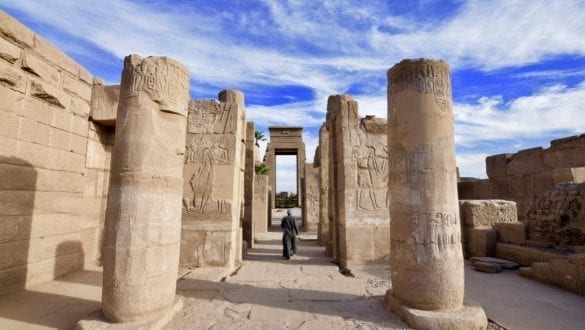
The world’s greatest open-air museum, split by the Nile into the West Bank (tombs, temples, the dead) and East Bank (the living city, markets, Karnak). The sunrise hot air balloon over the Valley of the Kings is the single most-recommended experience on this entire page. Karnak’s Great Hypostyle Hall, with its 134 columns, is described as the most fulfilling single experience of the whole Egypt trip, and Luxor Temple is worth timing for after dark (roughly 6–8pm), when it’s lit up. The two temples are connected by the Avenue of Sphinxes, a 3km processional path once lined with over a thousand sphinx statues, still being excavated in sections.
On the West Bank, the standard Valley of the Kings ticket includes entry to 3 tombs of your choice — Tutankhamun’s, along with a few others like Seti I and Ramses V/VI, cost extra on top, so it’s worth deciding in advance which ones matter to you. Don’t skip the Colossi of Memnon on the way — two 18-meter seated statues that are an easy, quick stop most itineraries drive right past.
Beyond the headline sites, Deir el-Medina (the village and tombs of the artisans who actually built the royal tombs) and the Tombs of the Nobles (officials and administrators, with scenes of everyday life rather than royal ritual) are quieter, less-crowded alternatives worth asking a guide about. If you have an extra day, Dendera Temple (dedicated to Hathor, famous for its painted ceilings, about 1.5–2 hours north), Abydos (the Temple of Seti I, one of the best-preserved in Egypt, a bit further north again), and Esna Temple (a smaller, partly underground temple with a restored zodiac ceiling, about an hour south) all work well as day trips.
Pro tip
Balloon prices vary a lot — roughly $60 to $100+ depending on how and where you book. Pre-booking guarantees a licensed pilot and a confirmed spot for a morning that regularly sells out; bargaining locally can undercut that price but comes with more uncertainty.
The country’s defining sights, wherever you end up going
Great Pyramid of Giza
Giza · Year-round, best Oct–Apr · real content here
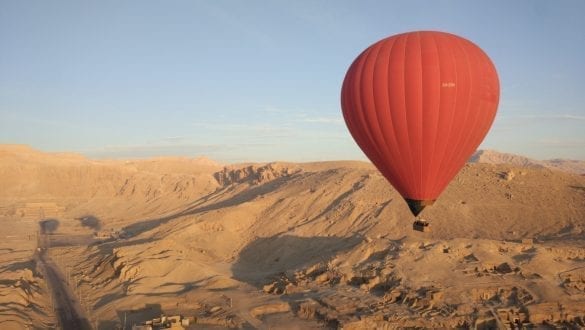
Sunrise hot air balloon, Valley of the Kings
Luxor · Best Oct–Apr · real content here
Abu Simbel
Aswan (day trip) · Best Oct–Apr, or Feb 22 / Oct 22 for the Sun Festival · real content here
Karnak Temple Complex
Luxor, East Bank · Year-round, best Oct–Apr · real content here
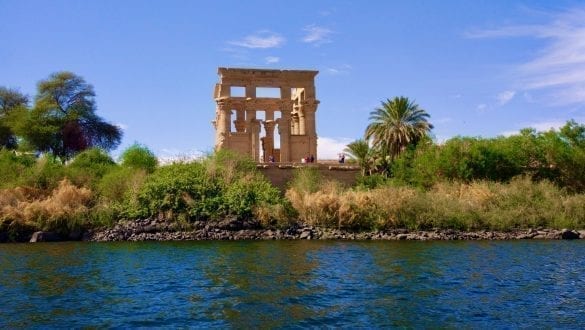
Temple of Philae, Aswan
Aswan · Year-round, best Oct–Apr · real content here
Felucca sunset on the Nile
Aswan · Year-round · real content here
The Red Pyramid, Dahshur
Giza · Year-round, best Oct–Apr · real content here
Khan el-Khalili at night
Cairo · Year-round · real content here
Valley of the Kings
Luxor, West Bank · Best Oct–Apr · real content here
Temple of Hatshepsut
Luxor, West Bank · Best Oct–Apr · real content here
A homestay dinner, Luxor West Bank
Luxor · Year-round · real content here
Coming to this list: Alexandria’s Greco-Roman coast, Red Sea diving off Sharm El Sheikh or Marsa Alam, a tanoura (whirling dervish) show in Islamic Cairo, and a Bedouin-guided trek on the Sinai Trail — once those guides exist.
The Step Pyramid at Saqqara — the first pyramid ever built — dates to around 2630 BC, roughly 4,600 years old. It kicked off a rapid design evolution: the Bent Pyramid, then the Red Pyramid (the first true smooth-sided pyramid), both at nearby Dahshur, then finally Giza’s Great Pyramid, which held the record for tallest human-made structure on Earth for roughly 4,000 years.
Abu Simbel’s entire complex was cut into 20–30 ton blocks and relocated 65 meters uphill in the 1960s to escape Lake Nasser’s flooding — a $40 million UNESCO rescue operation.
Cairo’s ancient treasures are now split across the Egyptian Museum (Tahrir), NMEC (Royal Mummies), and the Grand Egyptian Museum near Giza (Tutankhamun) — worth knowing before you plan a “one museum” day.
At Abu Simbel’s Temple of Hathor, Queen Nefertari’s statues are carved the same height as Ramses II’s — unusual for the era.
Ancient Egyptians buried their dead on the Nile’s West Bank (where the sun sets) and lived on the East Bank (where it rises) — a pattern still visible in how Luxor and Aswan are laid out today.
Before the Aswan High Dam tamed it in the 1960s, the Nile’s annual flood dictated Egypt’s farming season, religious calendar, and even its concept of the new year.
The ancient Library of Alexandria was rebuilt in 2002 as the Bibliotheca Alexandrina, a striking modern building on the same stretch of Mediterranean coast.
The last known hieroglyphic inscription ever carved is at Philae Temple, dated 24 August 394 AD — a priest’s dedication that literally hopes the words will last “for all time and eternity.” After that, the script fell out of use for over 1,400 years, until the Rosetta Stone helped decode it again.
The Sofitel Legend Old Cataract in Aswan, overlooking the Nile, is where Agatha Christie stayed while writing Death on the Nile — still operating as a hotel today.
Kom Ombo Temple, on the Aswan–Luxor route, is dedicated to Sobek, the crocodile god — and doubles as a small museum of real mummified crocodiles. One of the stranger, more memorable stops on the whole Nile Valley circuit.
Egyptian food doesn’t get the same spotlight as Lebanese or Turkish cuisine, but it’s worth seeking out beyond the hotel buffet — home-style, filling, and built around a few genuinely national dishes.
Egypt’s national dish: noodles, rice, brown lentils and chickpeas under a tangy tomato sauce, finished with garlicky vinegar and a hit of hot sauce. Worth seeking out a dedicated kushari spot rather than a hotel buffet.
A jute-leaf soup, usually made with a chicken broth base. The texture catches most first-timers off guard — genuinely divisive, worth trying once with an open mind.
Vegetables, commonly cabbage leaves, stuffed with spiced rice and stewed, often finished with samna (clarified butter).
Roast pigeon stuffed with fireek (green wheat) and spiced rice — a real local specialty that doesn’t always make it onto tourist menus.
Egypt’s answer to falafel, made from fava beans rather than chickpeas — distinctly different in taste from the version found elsewhere in the region.
Chicken or lamb sliced from the spit, wrapped with tomato, pickles and tahini.
Stewed, cumin-spiced fava beans, eaten any time of day. Cheap, filling, and everywhere.
A flaky, layered pastry sometimes called “Egyptian pizza” — served plain or stuffed, sweet or savory.
A warm baked pudding of milk, cream and flaky pastry, loaded with raisins and nuts — Egypt’s answer to bread pudding.
Rice pudding, best versions spiced with nutmeg, allspice and cinnamon.
Strong, sweet, and offered constantly as a gesture of hospitality — hard to say no twice.
The two local beers — unremarkable but refreshing. Egyptian wine is improving too, with the Beausoleil label a reasonable place to start.
Vegetarian and vegan: kushari, ta’amiyya and fuul are all naturally plant-based, and asking for “seyami” (fasting-friendly) food at a restaurant taps into dishes cooked for Coptic fasting periods, when a large share of the country eats vegan by custom.
Worth Knowing
Egypt’s Red Sea coast is also a genuine gateway to Jordan: ferries cross the Gulf of Aqaba from Taba, Sharm El Sheikh, and Dahab to Aqaba, and from there it’s a couple of hours by road to Petra — a well-established day-trip combination that plenty of operators run, and one that longer Egypt-and-Jordan package tours build entire itineraries around. Worth knowing if Petra is on your list too, though this connection runs through the Sinai/Red Sea leg of Egypt rather than the Nile Valley route covered on this page so far.
Before You Go
Nile Valley · Mediterranean Coast — coming · Red Sea & Sinai Coast — coming · Western Desert & Interior Sinai — coming
Also exploring Africa beyond Egypt? See the Kenya guides →
During my trip to Egypt, I was invited by a local in Luxor in their home. This is the story of the love I found in Egypt.
If you want to visit an African country and are not very fond of animals, Egypt must be on top of your list. My first visit to Africa was in Egypt and I still dream about this wonderful, enigmatic...
Updated February 2026 – Luxor 2 day itinerary is the perfect way to experience Egypt’s ancient wonders. After several splendid days in Giza, Cairo, and Aswan, I arrived for an...
It was early in the morning, and Cairo was still sleeping. I did not want to leave my bed, but I had a flight to catch to Aswan, the southernmost city of Egypt. Today is only my third day in Egypt. I...
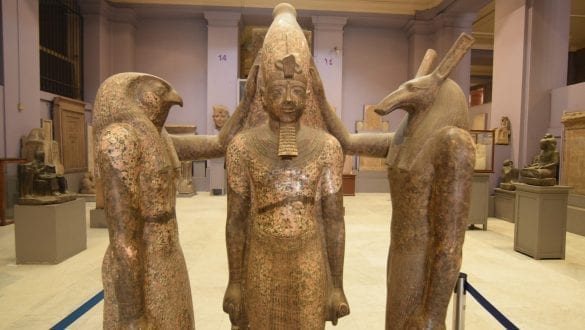
The writer takes us to his journey towards a day in Cairo - mostly in the Egypian museum.
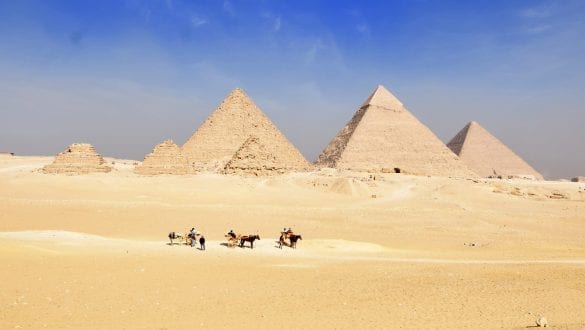
What if you have only one day to spend in Giza, Egypt? The writer gives you a jam packed itinerary for spending a day there.