Thirty-one days, thirty nights, six regions, one country I gave a full month for the first time. Every hotel and every tour below is one I actually booked and actually did.
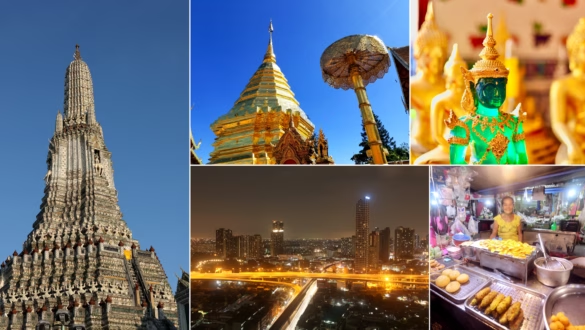

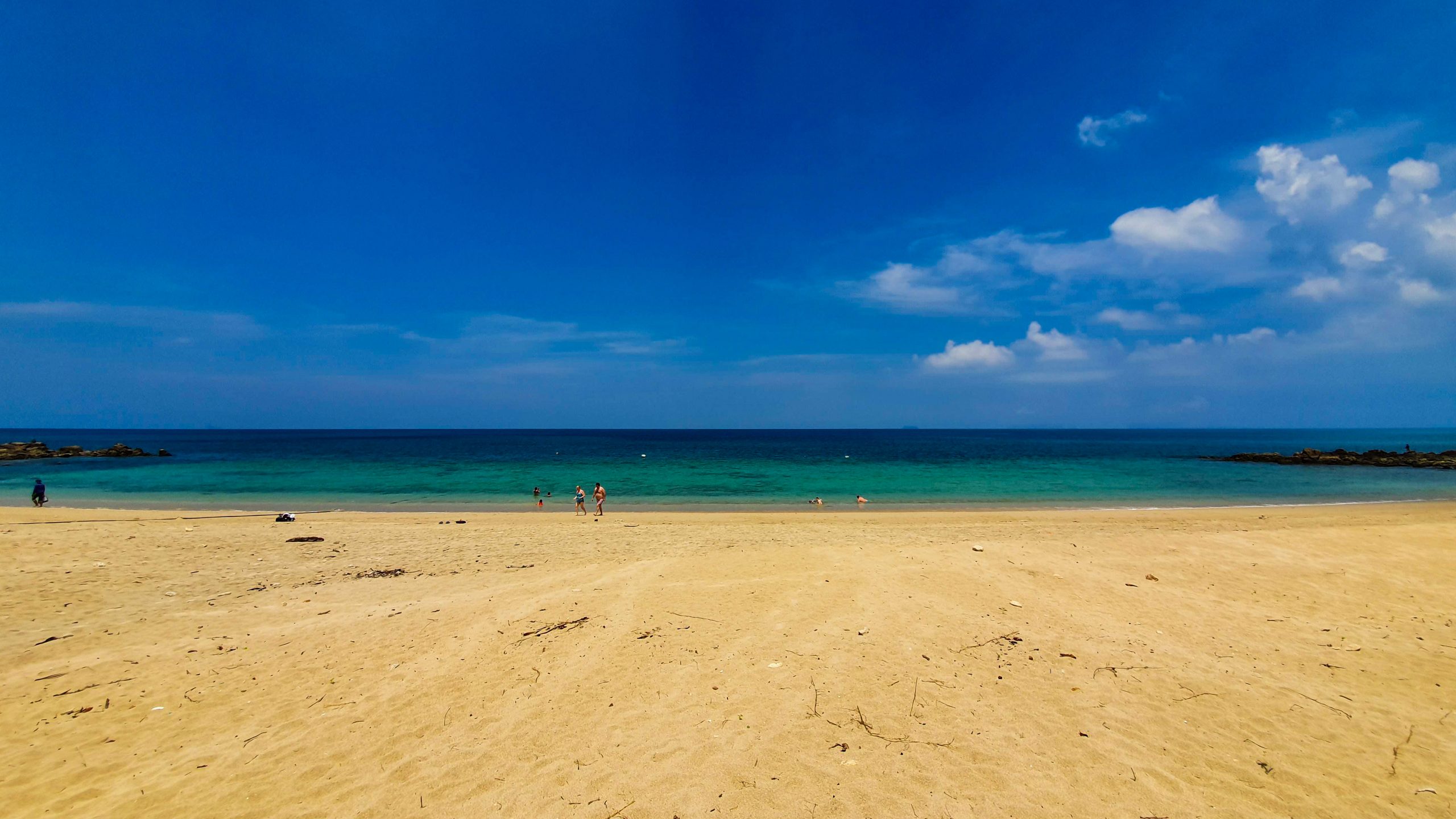
Thailand Travel Guide: Island Logistics & Urban Itineraries
Thailand offers a perfect balance of vibrant city life and tranquil island escapes. My guides focus on the practical logistics needed to navigate this popular destination, featuring an in-depth guide to the pristine island of Koh Kood. Whether you are planning a 2-day Bangkok itinerary or seeking the best things to do in Koh Lanta, these photography-driven resources provide the essential tips you need for a seamless Thai adventure.
Currency
THB
1 USD≈33.1 · 1 GBP≈44.9 · 1 EUR≈38.6 (Sep 2026)
Language
Thai
Visa
Exemption scheme in flux, check before booking →
Time zone
UTC+7, single zone
Emergency number
191 (Police) · 1155 (Tourist Police)
Budget
Mid-range ~$70–120/day
Budget ~$35–50 · Luxury $250+ (2026 est.)
Ready to book?
We earn a small commission at no extra cost to you. It keeps the guides free.
There’s no single best time for all of Thailand, four completely different calendars run at once depending on which coast, or which end of the country, you’re actually in
Andaman Coast
Phuket, Krabi, Ao Nang, Koh Lanta. Wet season runs roughly May–October, with the heaviest rain and roughest seas in September. November–April is the dry, reliable window most people picture when they picture Thailand’s beaches, daytime highs around 31°C. Rainy season doesn’t mean constant downpour though, showers typically run 20 to 30 minutes, often in the early evening, and Thailand’s geography spares it the strong typhoons that hit Vietnam and the Philippines. Even luxury Andaman resorts discount heavily May through July specifically, worth knowing if budget matters more than guaranteed sun.
Gulf Islands
Koh Samui, Koh Phangan, Koh Tao. Run on a different calendar entirely, driest roughly December–August, with their own wet spell in October–November when the Andaman side is already drying out. Check which side of the country your dates actually favor before assuming “rainy season” applies everywhere at once. September–October also brings real flooding risk further north and inland, occasionally reaching Bangkok itself in bad years, riverside areas specifically, worth checking conditions if your dates land here.
Eastern Gulf
Koh Chang, Koh Kood, Pattaya, Koh Samet, Hua Hin. Despite sitting on the Gulf, this stretch follows the Andaman coast’s timing, not the Gulf islands’, wet May–October. Easy to get wrong if you’re planning by coastline instead of by island. March–April also happens to be peak season for Thailand’s best fruit, mango, mangosteen, rambutan and Marian plum all come into season together.
The North
Chiang Mai, Chiang Rai, Pai. Cool season, November–February, is the best window by a wide margin, cool mornings, clear air, and cold at altitude, mountain temperatures drop to 13°C and frost isn’t unusual. The northeast even gets a real cherry blossom season, wild Himalayan cherry trees turning Phu Lom Lo pink, something almost nobody associates with Thailand. March–May turns hot and dry, averaging 30°C and pushing past 36°C at times, and February–April brings agricultural burning season, real haze that can affect both air quality and mountain views, worth checking before you plan a trip built around scenery.
Two festivals are worth planning around rather than just stumbling into. Songkran, Thai New Year in mid-April, turns the entire country into a nationwide water fight, one of the most famous experiences associated with Thailand specifically, and Bangkok empties out as locals head to the provinces, making it a strange, quiet time to be in the capital itself. Loi Krathong, on November’s full moon, marks the end of rainy season with candlelit krathongs floated down rivers and lanterns released into the sky, Chiang Mai’s version in particular draws visitors from around the world.
Sized to how many days you actually have, mixing the route I’ve travelled with well-researched additions
Choose your trip length
7 Days — Bangkok & Phuket
Best for: a fast first taste, temples and beach in one trip, no internal flight fatigue beyond the one hop south
Three days in Bangkok around the Grand Palace, Wat Arun, and a day trip to Ayutthaya’s ruins, then fly to Phuket for four days based on the island with a day trip out to Phi Phi and Maya Bay. This is the front half of my actual route, both pieces already have full day-by-day guides.
10 Days — add Chiang Mai
Best for: adding real mountain air and culture to the coast-and-capital combo above
Run the 7-day route above, then add three days in Chiang Mai before flying south, an ethical elephant sanctuary, Doi Inthanon’s cool-forest air, a village built into a hillside at Mae Kampong. Bangkok–Chiang Mai and Chiang Mai–Phuket are both short domestic flights, no backtracking required.
14 Days — Classic North to South
Best for: first-timers who want the full range, culture, mountains, and islands, without rushing any one part
Bangkok and Ayutthaya up front, then Chiang Rai for the White and Blue Temples and the Golden Triangle, Chiang Mai for the elephant sanctuary and Doi Inthanon, then south to one island region rather than both, the Gulf side for a calmer pace, the Andaman side for bigger scenery and Phi Phi.
Have 12 days instead? Drop Chiang Rai and go straight to Chiang Mai. Have 16? Add Ao Nang and Railay to whichever coast you picked.
3 Weeks — my route, trimmed
Best for: nearly the actual month, minus the one leg that costs the most time relative to what it adds on a shorter trip
My full route runs 31 days, so three weeks means cutting Koh Kood specifically rather than trimming evenly across the board. It’s the one stop on the whole month with a real long crossing to reach, worth every hour of it if you have the time, the first thing to cut if you don’t.
1 Month — my actual route
Best for: the trip as I actually took it, unhurried, with a real crossing to the one island most routes skip
This is my actual route at its real length, Bangkok and Ayutthaya, north to Chiang Rai and Chiang Mai, the Gulf islands, the Andaman coast, and Koh Kood, the stop I’d tell someone not to cut if they’re deciding what to trim. Every hotel and every tour on the full itinerary is one I actually booked and actually did.
Thailand with Kids researched
Best for: wildlife and easy days, without long overland stretches between stops
Safari World in Bangkok for a drive-through safari and dolphin show, Pattaya for a beach base with Nong Nooch Garden, and Chiang Mai’s ethical elephant sanctuary, already part of the real route above. Kanchanaburi and Khao Yai, both already covered above as day trips, work just as well framed as family days, and Amphawa’s evening firefly boat tours near Bangkok are a memorable, less obvious add. Booking links for the Bangkok and Pattaya attractions to come.
Bangkok (3n) → Chiang Rai (2n) → Chiang Mai (4n) → Bangkok (1n) → Koh Samui (3n) → Koh Phangan (2n) → Phuket (4n) → Koh Lanta (3n) → Ao Nang (3n) → Koh Kood (3n) → Bangkok (2n)
Thirty-one days, six regions, and I still felt like I’d only scratched the surface. Bangkok and Ayutthaya to start, north to Chiang Rai’s temples and Chiang Mai’s elephant sanctuary, south to the Gulf islands and the Andaman coast, and a crossing to Koh Kood that most first-time routes skip entirely. Golden temples, a night market in Chinatown, Maya Bay, a lagoon on Hong Island reached through a gap in the limestone, and a month that ran on domestic flights, ferries, and one long overland transfer I’d take again without hesitating.
Read the full 31-day route, day by day →Dhaka / Kathmandu / Delhi → Bangkok → Cambodia, Laos, Vietnam, Myanmar
Bangkok isn’t just where this route starts and ends, it’s one of the better-connected cities in Asia for combining trips. Siem Reap is under two hours away, Vientiane, Hanoi and Yangon all sit under two hours too, close enough that Bangkok functions as a real regional hub rather than just a stopover. On the South Asia side, Dhaka runs about two and a half hours, Kathmandu closer to three and a half, Delhi nearer four and a half depending on which Indian city you’re actually flying from, that last one’s a real range, not a single number, since India is a big country and Delhi sits further from Bangkok than its eastern cities do. If a wider Southeast Asia trip is on your list, Bangkok is a sensible place to build it around rather than fly in and out of just once.
No detailed day-by-day for a combined multi-country route yet, so this stays a routing note rather than a full itinerary until there’s real content behind it.
Five regions have real content behind them, one, the northeast, is still on the list. Click through rather than scrolling for everything here.
Central Thailand
Main hub: Bangkok
Palaces, riverside temples, and Ayutthaya’s ruins, all within day-trip range of the capital.
Guide openNorthern Thailand
Main hub: Chiang Mai
Temples, an ethical elephant sanctuary, hill tribe villages, and a hippie mountain town three hours up the road.
Guide openGulf Islands
Main hub: Koh Samui
Full moon parties, diving off Koh Tao, and a dry season that runs on its own separate calendar.
Guide openAndaman Coast
Main hub: Phuket
Limestone islands, Phi Phi and Maya Bay, and the busiest beach scene in the country.
Guide openEastern Gulf
Main hub: Pattaya
The closest beaches to Bangkok, from Koh Samet’s quiet to Pattaya’s nightlife, Hua Hin’s original 19th-century beach-town pedigree, plus the crossing to Koh Kood.
Guide openIsaan, the Northeast
Main hub: Udon Thani
A Mekong-side route through Nong Khai’s unexplained river fireballs, ancient Khmer ruins at Phanom Rung and Phimai, and a food culture distinctly its own, still mostly untouched by mass tourism.
Guide comingThree days in, and Bangkok still had more to show than I’d planned for. The Grand Palace and Wat Pho in the morning, Wat Arun across the river at golden hour, a night tuk-tuk tour on the first evening that turned out to be the right way to meet the city before the jet lag caught up. Ayutthaya makes an easy day trip north, temple ruins from four centuries of a capital that predates Bangkok itself. Come back through on a connector night and the city has an entirely different side, ICONSIAM’s floating market food court, an Apple Store on the river, a skyline modern enough that Bangkok surprises people who arrive expecting only temples. Beyond the temples and the malls, Chatuchak Weekend Market is one of the largest markets in the world, thousands of stalls, only open Saturdays and Sundays, and the Jim Thompson House Museum tells a strange story, an American businessman who built Thailand’s modern silk industry, then vanished without explanation in 1967, his antique-filled teak house preserved almost exactly as he left it.
Pro Tip
Bangkok has two airports, Suvarnabhumi and Don Mueang, and which one your flight uses depends on the airline, not a simple rule. Check the actual airport on your ticket before booking a hotel or an airport transfer. Skip the taxi touts either way, from Suvarnabhumi the Airport Rail Link connects straight into the BTS and MRT network, plus a free shuttle bus to a transport hub for cheap city buses, and Don Mueang has its own overground trains and inexpensive local buses into the city.
Pro Tip
Most of Bangkok’s monasteries are free to visit, it’s specifically Wat Pho and Wat Phra Kaew that charge tourist entry fees. Smaller wats around the city are often free, less crowded, and just as worth a look.
Read more
Ten hours with a driver covered more ground than I expected from a single day: the White Temple’s mirrored glass catching light like something underwater, the Blue Temple’s cobalt interior doing the opposite, swallowing light instead of throwing it back. The Black House, Baan Dam, is the pairing most guides skip past, forty-some teak buildings built by the artist Thawan Duchanee across four decades, read locally as the White Temple’s shadow twin. Chui Fong’s tea terraces climb a whole hillside outside town, and the Golden Triangle, where Thailand, Laos and Myanmar meet across the Mekong, is more interesting to stand in than to photograph.
Pro Tip
Chiang Rai and Chiang Mai are two different cities with confusingly similar names, roughly three hours apart by road. Don’t assume a hotel booking in one covers the other.
Read more
An ethical elephant sanctuary, no riding, was the anchor of my time here, and it’s the single experience most people ask about afterward. Doi Inthanon, Thailand’s highest point, is a full day of cool air and cloud forest that felt almost alpine, cold enough at the summit to drop below freezing, though it’s a completely different mountain from Doi Suthep, the golden temple visible from much of the city itself, which I didn’t get to on this trip and would build in as its own stop with the extra half-day. Mae Kampong, a village built into the hillside outside town, rounds out an easy few days that never felt rushed. Inside the old town itself, Wat Phra Singh houses the revered Lion Buddha, Wat Chedi Luang has stood for over 600 years right in the town center, and Wat Suan Dok is the resting place of Chiang Mai’s former royal family, three real anchors for a temple day if that’s what you’re after beyond Doi Suthep. Chiang Mai is also ringed by government-run hot springs, Pong Arng near Chiang Dao and San Kamphaeng both charge around 100 THB for pool access, camping runs 30 to 100 THB on top of that if you want to stay over. For a Thai massage with a genuine story behind it, Lila Thai Massage is staffed by graduates of the Chiang Mai Women’s Correctional Institution’s vocational training program, budget-priced and a different kind of recommendation than a hotel spa. If you have extra days, the road north keeps going, Pai’s famous 762-curve drive leads to a hippie mountain town people plan for two days and stay two weeks, and beyond it, Pang Mapha’s limestone cave systems and the misty hill town of Mae Hong Son extend the loop further still. Driving the complete Mae Hong Son Loop back to Chiang Mai runs 1,864 curves in total, and the local Chamber of Commerce actually issues a souvenir certificate to drivers who finish it. Researched, not part of my own route.
Pro Tip
Doi Inthanon and Doi Suthep get mixed up constantly because of the near-identical names. They’re not the same mountain, and one day at Doi Inthanon does not cover Doi Suthep.
Read more
The Gulf’s biggest, most developed island, with an airport of its own for anyone who wants to skip the ferry entirely. Chaweng and Lamai are the two beach hubs, Chaweng bigger and busier, Lamai smaller and, most people would say, better-looking. Ang Thong Marine National Park, already covered above as a bucket-list entry, runs as a real day trip from here, an archipelago built for snorkeling and sea kayaking. Na Muang waterfalls give a freshwater alternative to the beach, and Big Buddha, Wat Phra Yai, is the island’s own landmark temple. Samui also runs on a different dry season than the Andaman side, already covered in Climate & When to Go, worth checking before you assume the same months apply everywhere.
Pro Tip
Chaweng and Lamai aren’t interchangeable, Chaweng has the bigger nightlife and shopping scene, Lamai is calmer and generally considered the more attractive beach. Pick based on which one you actually want, not just which one comes up first.
Read more
Famous first for the Full Moon Party at Hat Rin Nok, tens of thousands of people, neon paint, buckets of whisky, a genuine bucket-list night for the right crowd, and there’s a real island beyond it too. Unspoiled coves and quiet private resorts fill most of the rest of Koh Phangan, and the hike up to Domsila Viewpoint gives a panoramic look over the whole island that most Full Moon visitors never see. Ferries connect it to both Koh Samui and Koh Tao, making it an easy add rather than a detour if you’re already island-hopping the Gulf side.
Pro Tip
Full Moon Parties run on the actual lunar calendar, not a fixed date, check the specific date before you book if that’s the reason you’re coming, and know that accommodation near Hat Rin fills up and prices spike around it.
Read more
Bigger and busier than anywhere else on the route, obvious from the moment the ferry docks. Maya Bay, the beach from The Beach, Leonardo DiCaprio and all, is as striking in person as the film made it look, and also the most crowded, most expensive stop on the whole month, I did it as a day trip rather than stay over because of exactly that. It now closes every year from August 1 to September 30 for environmental recovery, and even outside that window landing requires a booked time slot and swimming is limited to knee-deep water, check current dates and rules before you plan around it. Phang Nga Bay and James Bond Island, named for its cameo in The Man with the Golden Gun (1974), are worth the boat ride for the limestone alone, and a zipline day inland from the beaches is a change of pace from island-hopping. The Similan Islands make another real speedboat day trip from Phuket, less crowded than Phi Phi and known for some of the clearest snorkeling water on this coast, researched, not something I personally did on this route. Phuket also carries its own distinct culture, separate from mainland Thailand, Hokkien Chinese and Portuguese colonial heritage shaped the island, visible today in the Sino-Portuguese shophouses lining Phuket Old Town and in dishes that exist nowhere else in the country, Hokkien-style fried noodles, moo hong braised pork belly, o-tao oyster omelet.
Pro Tip
Patong is Phuket’s busiest, most developed beach, not representative of the island as a whole. If Patong’s crowds and nightlife aren’t what you’re after, base yourself elsewhere on the island instead of assuming it’s the only option.
Read more
After Phuket’s scale, Koh Lanta felt like the trip deliberately slowing itself back down, quieter roads, fewer resorts stacked on top of each other. No fixed plan beyond a rented scooter and the coastal road, easy to pick up and easy to ride, with roads quiet enough that it never feels like a decision you have to think twice about.
Pro Tip
There’s no bridge to Koh Lanta from Phuket, the transfer runs by speedboat or ferry, so build the crossing time into your plans rather than treating it like a short hop.
Read more
Ao Nang sits in Krabi province, though it’s a world away from Krabi Town itself, almost everything that actually draws people to this stretch of coast happens along Ao Nang instead, limestone towers rising straight out of the sea, jungle thick enough on the cliffs above that a dinosaur wouldn’t look out of place. Railay Beach, normally reached by boat from Ao Nang, and Hong Island’s lagoon, entered through a narrow gap in the rock timed to the tide, are both worth building into a stay here. Railay’s cliffs aren’t just scenery either, they’re some of the best sport climbing in Asia, routes for complete beginners up to serious multi-pitch lines, all within a short walk of the beach.
Pro Tip
Hong Island doubles as a working bird’s-nest collection point, harvested from the cave walls for bird’s nest soup, one of those small local industries you’d never notice unless someone points it out.
Read more
The island most first-time routes leave out entirely, and the one stop on the whole month I’d tell someone not to skip if they’re deciding what to cut. No big resorts stacked on the coastline, roads dark enough at night that the stars actually show, water clear enough that the boat seemed to hover rather than float above the sand. The crossing to get here is a real one, most of the country’s width in a single day, worth treating the arrival evening as a rest day rather than a sightseeing one.
Pro Tip
If the direct overland-and-ferry crossing sounds like too much, flying Krabi to Trat via a short Bangkok transit, then a road-and-ferry finish from Trat, trims it into two considerably shorter days instead.
Read more
The country’s defining sights, wherever you end up going
Maya Bay, the real Leonardo DiCaprio beach
Phuket, from The Beach (2000) · closed annually Aug 1–Sep 30, check current dates · Read the full guide →
The White Temple & the Blue Temple
Chiang Rai · Read the full guide →
Hong Island’s hidden lagoon
Krabi · Read the full guide →
A floating raft house on Cheow Lan Lake
Khao Sok National Park, one of the world’s oldest rainforests, home to bears, tapirs, gibbons, elephants, tigers, and the Rafflesia kerrii, the world’s largest flower · researched, not personally done
Doi Suthep’s golden chedi
Chiang Mai · researched, not personally done on this route
Koh Kood, the island most routes leave out
Eastern Gulf · Read the full guide →
Ayutthaya’s ruins, four centuries of history
Central Thailand · Read the full guide →
Sukhothai, Siam’s first capital, before Ayutthaya
UNESCO World Heritage, smaller and quieter than Ayutthaya · researched, not on this route
The Golden Triangle, three countries from one viewpoint
Chiang Rai · Read the full guide →
The Bridge on the River Kwai
Kanchanaburi · WWII Death Railway, the Hellfire Pass Interpretive Centre · researched, not personally done
A market that sets up on live train tracks
Maeklong Railway Market, near Bangkok · researched, not personally done
Ang Thong Marine National Park’s limestone islands
Day trip from Koh Samui · researched, not personally done
Haew Suwat Waterfall, the other Beach location
Khao Yai National Park, the cliff-jump scene from The Beach (2000) · researched, not personally done
Prang Sam Yot, the Monkey Temple
Lopburi, an ancient temple thronged with wild macaques · researched, not personally done
Thailand is the only country in Southeast Asia never colonized by a European power, a fact still visible in how differently its architecture, script and administration developed compared to its neighbors.
Split across the Gulf of Thailand and the Andaman Sea, only a small fraction are developed or even inhabited, most of the count is uninhabited rock and jungle rather than resort islands.
The ceremonial full name of Bangkok runs to 168 characters in Thai, long enough that most Thai schoolchildren learn it as a song rather than a fact.
Thailand’s National Office of Buddhism counted 44,195 registered Buddhist temples nationwide as of March 2025, and that’s before counting spirit houses, the small shrines outside nearly every home and business.
Built on soft delta clay, parts of Bangkok are sinking roughly a centimeter a year, a genuine, ongoing engineering concern for a city of over 10 million people.
Thailand’s most sacred Buddha image, housed at the Grand Palace, is carved from a single block of jade, not emerald, the name is a historical mistranslation that stuck.
Thai food travels well, but it’s a different thing eaten where it’s actually cooked, sharper, spicier, and served fresher than almost anywhere it’s exported to
Stir-fried rice noodles, egg, tamarind, and a mix of shrimp, tofu or chicken. Ubiquitous for a reason, but the versions cooked fresh at a street cart bear little resemblance to the export version.
Basil stir-fry with minced meat and a fried egg over rice. This, not pad Thai, is what most Thais actually eat for lunch most days, order it “mai phet” for mild, the standard version runs properly spicy.
A hot and sour shrimp soup built on lemongrass, galangal and kaffir lime leaf, one of the dishes Thai cooking is most recognized for internationally.
Coconut milk, green chilies, Thai basil, usually with chicken or beef. Sweeter and creamier than its color suggests.
A northern specialty, curry noodle soup topped with crispy fried noodles, the dish to look for specifically in Chiang Mai and Chiang Rai rather than further south.
Green papaya salad, pounded rather than chopped, sharp with lime, fish sauce and chilies. Order it “mai phet” if you want it actually mild, the default heat catches a lot of first-timers off guard.
Bangkok’s single best street for testing Thai street food, wok flames, charcoal grills, and queues that tell you where to eat without needing a guidebook.
The first street food vendor in Thailand to earn a Michelin star, cooking a few streets over from Yaowarat’s main strip, with an hours-long queue to match the reputation.
Bamboo worms, crickets, grasshoppers, silkworms, a real mainstream street snack rather than a novelty dare, sold from carts usually with soy sauce and pepper.
Every September or October, Yaowarat transforms for nine days of plant-based street stalls filling Chinatown, a good window to be in Bangkok if the timing lines up.
Sweet coconut-milk sticky rice with fresh mango, the dessert most people leave Thailand craving.
Strong-brewed black tea, condensed milk, served over ice, the orange color is from the tea itself, not artificial coloring.
Sold straight from the shell on nearly every beach and street corner, cheaper and better than anything bottled.
Vegetarian and vegan travelers: ask specifically for “jay” or “kin jay” food, a genuine Thai Buddhist vegan tradition, not a Western import, and widely understood at street stalls. “Mang sà wí rát” sounds like it means vegetarian but only guarantees no visible meat or fish pieces, not that fish sauce or oyster sauce weren’t used in cooking, jay is the term that actually excludes both.
Thailand has spent fifty years building a reputation few countries can match as the world’s leading destination for gender-affirming surgery, dating back to the country’s first such procedure in 1975. Patients now travel from more than 30 countries for it, drawn by the combination of decades of specialized surgical experience, JCI-accredited hospitals, and cost savings often above 40% compared to the US or UK for comparable outcomes.
That reputation shows up in everyday visibility too, not just in medical statistics. Thailand’s trans community has a long-standing, everyday presence in hospitality, retail, and especially in mainstream stage entertainment, Calypso Cabaret in Bangkok and Tiffany’s Show and Alcazar in Pattaya are real, famous, decades-old, family-marketed attractions built around transgender performers, sitting on the same tour-booking sites as everything else on this page rather than tucked into a nightlife-only corner. Most first-time visitors notice the visibility within a day or two of arriving.
A week covers Bangkok and one beach region comfortably. Two weeks is the sweet spot for first-timers who want temples, mountains, and islands without rushing any of them. A full month, the route this page is built around, is what it takes to cover north to south without cutting corners.
Mid-range travel runs roughly $70–120 a day, budget travel $35–50, and luxury from $250 up. Islands and Bangkok cost more than the north or Isaan, and national park entry and accommodation both stay affordable throughout.
There’s no single answer, the Andaman coast, Gulf islands, Eastern Gulf, and the north all run on different calendars. November through February is the safest bet across most of the country at once, full details are in Climate & When to Go above.
Thailand’s exemption scheme has been in flux, check the current rules for your passport before booking rather than assuming last year’s policy still applies.
Yes, across the parts of the country covered on this page. The far south carries a real, separate travel advisory due to an ongoing insurgency, worth knowing even though none of the regions here touch it. Otherwise, the common risks are financial scams, not safety threats, covered in full in Before You Go below.
Domestic flights connect the regions fast, the BTS and MRT cover Bangkok well, and overnight trains and buses link the north and south. Scooters are the best way to explore individual islands and towns, provided you’re properly insured, also covered in Before You Go.
Seventeen things worth knowing, grouped so the important ones don’t get lost in one long list
Roughly 90% of travel insurance policies exclude motorbikes entirely, and coverage requires a motorcycle-endorsed home license plus an International Driving Permit for motorcycles specifically. Thailand’s mandatory Por Ror Bor only covers minimal third-party costs, accidents commonly run $5,000–30,000 out of pocket.
150–400 THB a day, cheaper than taxis for island-hopping and countryside routes. Helmets are legally required for rider and passenger, and tourist-area checkpoints do check.
A “closed today” temple claim, a suspiciously cheap tuk-tuk tour, or a train-station tout redirecting you to a “travel agency” all lead to the same commission-paying gem shop or tailor. Photograph rental vehicles before you ride to avoid damage disputes.
Yala, Pattani, Narathiwat, and parts of Songkhla have faced an ongoing separatist insurgency since the 1940s, and most governments advise against travel there. None of the regions on this page touch it.
Solo travelers and couples alike may be approached in some nightlife areas, a firm no is all it takes. Certain bars operate as fronts for it, red or pink lighting and a heavy ratio of foreign male customers are the usual signals.
Criticizing or showing disrespect toward the Thai monarchy, including on banknotes and coins, carries real legal consequences here, not just a cultural sensitivity.
The 2022–2025 decriminalized era is over, since June 2025 buying legally requires a doctor’s prescription for one of five recognized conditions. Buying without one risks a fine and jail time, and bringing your own products in is illegal outright.
Covered shoulders and knees for everyone, some temples specifically require shoulders covered rather than just modest dress. A light scarf or sarong solves this without planning an outfit around it.
Palms together at chest height with a slight bow, offered instead of a handshake. Around monks, give way on footpaths and never hand one anything directly, place it down for them to pick up instead.
Bumrungrad is Southeast Asia’s largest private hospital and the first in the region to earn JCI accreditation, treating over 500,000 international patients a year. A real reason Thailand’s a genuine medical tourism destination, not just for emergencies.
Dogs, cats, and monkeys can all carry it, any bite or scratch needs prompt medical attention rather than a wait-and-see approach. Bangkok’s hospitals, above, handle this routinely.
SuperRich, two separate competing companies, and Vasu Exchange near Nana BTS both post better rates than anywhere else in the country. Skip airport counters, and bring your actual passport, not a photo.
Entry runs 200–300 THB, and official bungalows run 350–500 THB a night, camping from 30 THB. Songthaew, informal pick-up-truck buses, are the cheapest way around small towns nearby.
A couple of bottled beers can double a meal’s cost, Chang runs cheaper than Singha, and sharing whiskey with soda is the local approach to a night out. Live music bars rarely charge a cover though.
The BTS Skytrain and MRT cover the city well, and the Chao Phraya boat network adds a scenic, often faster alternative. Kids under 90cm ride free, up to 120cm discounted.
ICONSIAM has Thailand’s first official Apple Store, opened in 2018, with a second at CentralWorld since 2020, and IMAX screens are standard citywide. Worth recalibrating expectations before you land.
Bars and clubs are legally required to close by around 1am, a surprise to visitors expecting an all-night city.
Thirty-one days, thirty nights, six regions, one country I gave a full month for the first time. Every hotel and every tour below is one I actually booked and actually did.
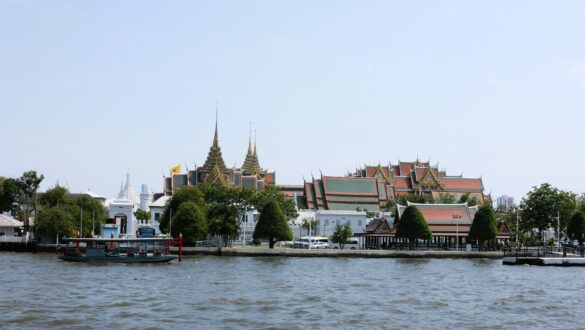
Thailand’s reputation rests on more than beaches and street food — Thai hospitality is famous in its own right, and it shows up in hotels at every price point, not only the five-star ones. What...
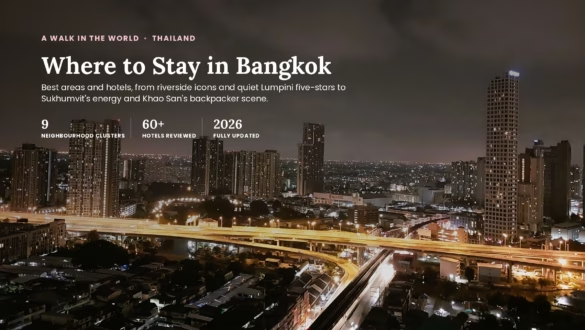
Thailand’s fame isn’t only about temples, food, and beaches — Thai hospitality has a reputation all its own, and it’s part of what makes staying almost anywhere in this city a good...
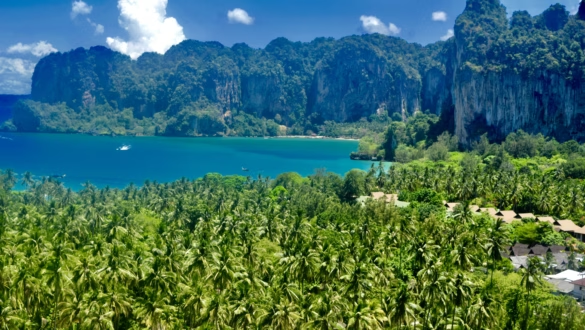
Krabi had been on my list for a long time. I had already fallen in love with Thailand’s islands. Koh Kood left me speechless, and Koh Lanta had stolen a piece of my heart. But Krabi felt...
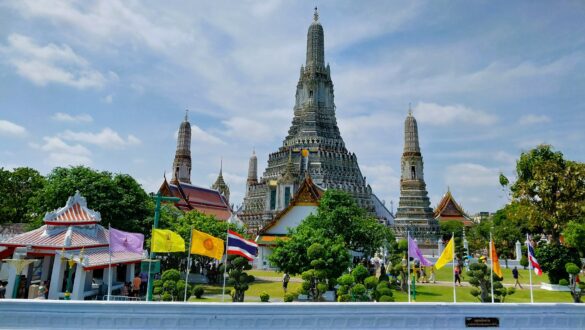
Whenever we think of Thailand, we think of pristine beaches, and exotic islands, and, I can’t blame anyone for that. Thailand has some of the best islands in the world, like Koh Lanta or Koh...
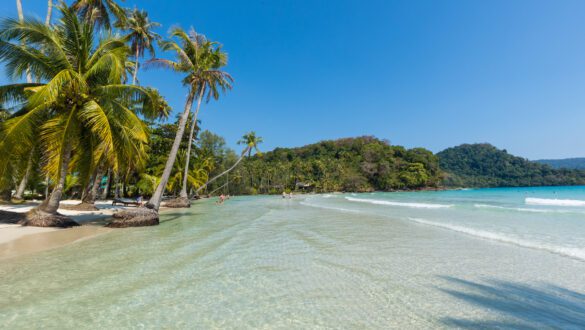
Koh Kood (Koh Kut) in Thailand is an amazingly beautiful island. It has some of the most beautiful beaches in Thailand and perceived as the most beautiful island in the country.
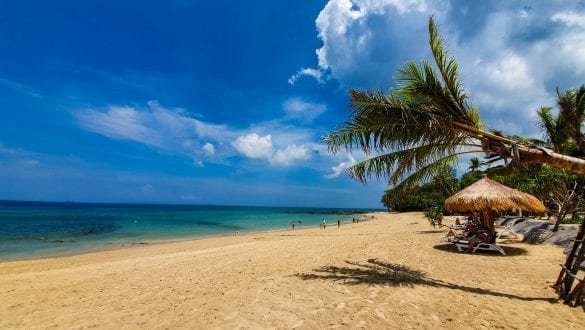
Koh Lanta or Ko Lanta is a fantastic island on the Andaman coast in Thailand. It offers beautiful beaches, rainforest, waterfalls and wildlife. It's one of the most scenic tourist destinations in...