

If you are travelling to Japan for the first time, you are bound to be amazed by its cultural diversity. When I visited for the first time, I felt as if I had entered a parallel universe. Japan works differently from most of North America, Europe and South Asia, so a little preparation goes a long way. These are the tips I wish I had known before my first trip, based on my five visits, updated for the 2026 changes to tax-free shopping, the departure tax and JR Pass prices.
Do not be put off by the length of this list. Read it once and you will arrive more confident, and you may catch yourself thinking, “Yes! I already know that!” at exactly the right moment.
Short on time? Use the quick facts below, then jump to the section you need: money, transport, hotels, food, shopping, culture or toilets.
Currency
Japanese yen (¥)
Carry some cash as well as a card
Plugs and voltage
Type A, 100 V
Most flat two-pin plugs fit
Time zone
UTC+9
No daylight saving
Local transport
Suica or Pasmo
Not valid for Shinkansen tickets
Best months
Spring and autumn
Late March to April, October to November
Visa
Often visa-free
Many nationalities get up to 90 days, so check yours
🆕 NEW FOR 2026: READ BEFORE YOU GO
- Tax-free shopping changed on 1 November 2026. You now pay the full price in the shop and claim the tax back at a terminal in the departure hall, before you check in your bag. Details are in the shopping section.
- Departure tax: the international tourist tax rose from ¥1,000 to ¥3,000 on 1 July 2026. Airlines add it to your ticket, and tickets bought before that date were charged ¥1,000.
- JR Pass: prices rose on 1 October 2026 (the 7-day Ordinary pass went from ¥50,000 to ¥53,000), but the official JR Pass website has kept the old prices for a limited time. For most first trips the pass does not pay off, as I explain below.
- Visa fees: if you need a visa, news reports say the fee rose on 1 July 2026 to ¥15,000 for a single entry and ¥30,000 for multiple entries. Check with the embassy or your agent for your nationality. For Bangladeshi passport holders, the Embassy of Japan in Bangladesh lists the visa fee as free, although a VFS service fee is charged.
- Mount Fuji: the Yoshida Trail costs ¥4,000 per climber, with a cap of 4,000 climbers a day. The climbing season runs from 1 July to 10 September.
- Gion, Kyoto: photography is banned in the private alleys, with fines of ¥10,000, and signs are posted at the entrances.
- Golden Week falls from about 29 April to early May every year. Book everything months ahead or avoid it.
Tips Before You Go and Right After You Land
Choose your airport
Most first-time visitors arrive in Tokyo, the capital and biggest city of Japan. Tokyo has two airports, Narita and Haneda. It is important to choose the right airport between the two, and I usually pick Haneda because it is much closer to the city.
Get a Japan eSIM, SIM card or pocket WiFi
Good data connectivity will be your best companion in Japan. Japan’s public WiFi is patchy outside hotels and major stations, you will need mobile data for Google Maps navigation, Google Translate (which can translate signs using your camera), train timetables, and checking restaurant menus.
The clearest option in 2026 is an eSIM, a digital SIM you install on your phone before you leave home and activate the moment you land. No SIM swap, no hunting for a vending machine, no physical card to lose. Japan eSIMs give you full data coverage across the country.
Get a Japan eSIM via Yesim, activate before boarding, works immediately on arrival.
Physical SIM cards are still sold at the airport. They are an option if your phone does not support eSIM, or if you need a local phone number (most tourists do not).
Pocket WiFi is useful for groups sharing a single connection, rent from the airport, return on departure. The downside is you must stay together to have internet access.
⚠️ Check that your phone is eSIM-compatible before ordering. Many smartphones from 2020 onwards support eSIM.
Bring proper Japan Travel Adapter
This is a no-brainer, but we often miss it. It creates not only inconvenience but also costs money. Imagine arriving at your hotel in Tokyo after traveling for 24 hours. You have got the WiFi password and all set to get into the internet. However, your phone has run out of charge and you realize that the charger is non-compatible with the socket! Yes, it happened to me and I know how painful it could be.
The standard voltage in Japan is 100 Volts. Most of the plugs having two flat parallel pins (Type A or Type B) fit into a socket.
Timezone of Japan
Japan Standard Time is UTC+9 all year, with no daylight saving.
As a child I read that Japan is the land of the rising sun, which suggested that the sun rises in Japan before anywhere else in the world. That is not true: New Zealand is further east, so the sun rises there earlier. The phrase comes from the viewpoint of neighbouring China, where Japan lies to the east, in the direction of the sunrise.
How much does a trip to Japan cost?
Japan is not the cheapest destination, but it is cheaper than many first-timers expect. As a rough guide for a budget traveller like me, plan on US$80 to US$150 per day including accommodation and food. Intercity train journeys are extra. Some cities also charge a lodging tax per person per night, usually collected at the hotel. Kyoto raised its rates on 1 March 2026 to between ¥200 and ¥10,000, depending on the room price, so check what applies to your booking.
Check Your Medications Before You Leave
Japan has strict rules about which medications can be brought into the country. Some common Western over-the-counter medicines, including certain cold medications, allergy tablets, and some pain relievers that contain pseudoephedrine or codeine, are prohibited or require advance permission.
Before you travel, check the official Japanese customs website or contact the Japanese embassy for your country to confirm your medications are permitted. If you take prescription medication, bring documentation from your doctor. Getting this wrong at customs can ruin the start of your trip.
Best Time to Visit Japan
Low Season
Mid-January to early March. It is cold and cheaper, with snow, winter illuminations and onsen. Many businesses close around New Year.
Shoulder Season
June to July, and September to early December. June is the rainy season, July and early September are hot and humid, and late October to November brings autumn colour.
Peak Season
Late March to May, and August. Cherry blossom and Golden Week crowd the spring, and August is hot and busy with domestic holidays, including Obon in mid-August.
⚠️ Avoid Golden Week. Golden Week runs from about 29 April to early May every year. It is Japan’s biggest domestic travel period: millions of Japanese travel at once, trains fill up weeks in advance, hotels raise their prices and popular sites have long queues. If your dates overlap, book everything months ahead. If you have flexibility, shift your trip by a week or two to avoid it.
💡 Cherry blossom timing: Tokyo cherry blossoms typically peak from late March to early April, and Kyoto follows a few days later. Hokkaido’s blossoms arrive three to four weeks later, around late April to early May. The exact dates change every year, so check a forecast as your trip approaches.
| Month | What to expect |
|---|---|
| December to February | Cold in Tokyo and Kyoto, snow in the north and the mountains, winter illuminations and onsen. Many shops close around New Year |
| March to April | Cherry blossom, mild weather and the biggest crowds and prices |
| May | Pleasant after Golden Week, with long daylight hours |
| June | Rainy season and humidity, but fewer crowds |
| July to August | Hot and humid, with summer festivals, Mount Fuji climbing season and the Obon holiday in mid-August |
| September | Still hot, and typhoon season |
| October to November | Comfortable temperatures and autumn colour, with Kyoto foliage usually peaking in late November |
Save the emergency numbers
In Japan, dial 110 for the police and 119 for an ambulance or the fire brigade. The Japan National Tourism Organization also runs the Japan Visitor Hotline on 050-3816-2787 (+81-50-3816-2787 from overseas). It is open 24 hours a day in English, Chinese and Korean, and helps with accidents, illness and natural disasters.
Buy an Insurance
Japan is expensive if something goes wrong, and hospital bills can add up fast. I suggest buying travel insurance that covers medical care and cancelled flights and hotels. It is a sensible investment for a Japan trip.
Accommodation Tips for Traveling to Japan for the First Time
Capsules vs Hotels
Hotels in Japan are expensive, and if you are a budget traveller like me, they will put a dent in your wallet. Capsule hotels, which you will find in Tokyo, Osaka, Kyoto and other cities, are one cheaper option. A capsule is a small cubicle where you sleep, and if you are claustrophobic it is not for you. Hostels are another budget choice, and there are many in Tokyo.
If you are not traveling solo and have someone to share a room with, you can lookout for a proper hotel. It will cost you a little more, but you will find comfort, privacy, and freedom.
I stayed in Villa Fontaine Kayabacho and Sui Kanda on past trips and had a good experience with both, but rather than going on two hotels from one visit, see my full Where to Stay in Tokyo guide for a proper area-by-area breakdown, or Best Hotels in Tokyo for a ranked shortlist by category.
Experience Ryokan
You should stay in a ryokan for at least one night during your trip. A ryokan is a traditional Japanese inn where you sleep on a futon laid out on tatami mats. You get a traditional atmosphere, often with meals served in your room, and it feels like staying in a Japanese house. Ryokans cost more than conventional hotels and are rare in Tokyo. You will find them mostly outside the capital, especially in areas with onsen.
The following are some best Ryokans in Japan, if you can afford them, you will have an amazing Japanese experience.
Book Ahead
Book your hotels ahead to save money. Large trade shows and events in Tokyo can push hotel prices up sharply, and so do cherry blossom season and Golden Week, so book as soon as you are sure about your dates.
You can leave your luggage in the counter
Japanese are strict about check-in and checkout time. Most of the hotels I found had a check-in time at 3:00 pm and checkout time at 12:00pm. If you want to stay longer, you have to pay (an option in some hotels). What if you arrive there early or have more work to do after checking out? You can leave your luggage at the counter. They are helpful about it and will give you a receipt for it.
Once I went to Nikko, an amazing place to visit in Japan during the weekend from Tokyo. I did not want to carry my luggage with me. So, I took the necessary clothes in my backpack and left my luggage at the hotel in Tokyo. All I did was booked the hotel again on Monday. So, I checked out of the hotel on Friday, leaving my luggage at the counter. When I checked in again on Monday, I found my luggage in my room; it was so sweet!
Luggage Forwarding, One of Japan’s Best Kept Secrets
If you are moving between cities (Tokyo → Kyoto → Osaka, for example), you do not have to carry your full luggage on the Shinkansen. Japan has a luggage forwarding service called Takkyubin (operated by Yamato Transport, identifiable by the black cat logo) that sends your bag to your next hotel.
Leave your bag at the hotel reception or hand it in at a participating convenience store, and it will usually be waiting at your next hotel a day or so later. The fee depends on the size of the bag and the distance, and you are quoted it when you hand the bag over. This means you travel with just a day bag on the bullet train, which is much more comfortable than dragging a suitcase up and down station stairs.
Shinkansen luggage rule: on the Tokaido, Sanyo and Kyushu Shinkansen, a bag whose three sides add up to 160 to 250 cm needs a reserved seat with an oversized baggage area, or you pay a ¥1,000 fee and may be asked to take a later train. You choose that seat option when you reserve, and reservations open one month ahead. Bags above 250 cm cannot be taken on board, which is another reason to forward large suitcases.
Be ready for a small room and bed
The hotel rooms in Japan are tiny. So are their beds. You will be able to barely move once you put your luggage in a room. Although the rooms are tiny, you will get all the amenities including slippers, a sleeping robe, combs, hairdryers, refrigerators, iron, and so on.
If you travel with your friends and are not a couple, opt for a twin bed. Check the size of the double bed from the website, measure it with a measurement tape to understand the space you are going to get before booking a hotel room.
Transportation Tips for Traveling to Japan for the First Time
Suica or Pasmo: which IC card should you get?

One of the first things to do after landing in Japan is to get an IC card, a rechargeable smart card. You can use it to pay on local trains, the subway and buses, and at convenience stores and vending machines. An IC fare usually costs slightly less than a paper ticket, and you do not have to work out the fare for each ride. Suica and Pasmo cards work across Tokyo, Kyoto, Osaka, Hiroshima and many other cities, but they do not replace Shinkansen tickets.
The most popular cards are Pasmo and Suica. Many people search for Pasmo vs Suica before buying, and I found them similar in practice, so you can buy either. The only difference is that they are sold by different companies.
Digital Suica (2026 tip):
If you have an iPhone, you can add a Suica card to Apple Wallet before you fly, or use the free Welcome Suica Mobile app made for overseas visitors, which needs no deposit. You top it up from your phone, so there is no queue at a station machine and no card to lose. Check that the payment card you plan to use works with Apple Pay before you rely on it. Android support is limited for now: JR East plans Welcome Suica Mobile for Samsung Galaxy phones sold from 2027, with the app due in the first half of 2027. Until then, if you use Android, plan to buy a physical card at the airport.
Physical Suica and Pasmo cards are on sale again at airports and stations. A standard card needs a refundable ¥500 deposit, and the red Welcome Suica tourist card needs none but is valid for only 28 days. Any balance on the tourist card is not refunded, so spend it before you leave.
Use the metro instead of Taxi

Tokyo has an extensive subway network, and I found a station within a kilometre of almost everywhere I went. It is clean and on time. Taxis, on the other hand, are very expensive over longer distances. A taxi from Narita Airport to central Tokyo can cost well over ¥20,000, while the train costs a small fraction of that. The Tokyo metro is also an experience in itself, because you see a slice of daily Japanese life.
A bus is cheaper than the subway
While I recommend the metro over a taxi, the bus is a good option for traveling around Tokyo. What makes it more interesting is the cost of travel by Bus. It’s even cheaper than the subway. However, the bus is slower. Saying so, at times, you will find a bus stoppage right in front of your hotel, so you can save your journey time. Apparently walking to the metro, going down the stairs, will take several minutes.
Don’t get afraid with the crowd in Subway
During the beginning and end of office hours, the metro becomes very crowded. Don’t be afraid to see so much crowd. Japanese are so organized and disciplined, you will find a place of your own.
Follow the mark of the waiting queue in station
On every platform, the train will stop in a specific place. If you look on the floor carefully, you will find an arrow pointing in a direction toward the train line. That is where you should stand to form a queue.
Do Not Pick Phone in Public Transportation
When you will be on a train or bus, do not take your phone and speak. You can browse the internet or play games, it’s perfectly fine, but don’t break the silence inside a train. Japanese value and respect the co-passengers. When you speak over the phone it can create annoyance to others. So, they do not speak over the phone inside public transportation. You should follow it, too.
Watch out for Women-only passenger car
In Japan, some carriages in trains are often dedicated to women only. Some of them are reserved for the women for the entire day, some of them are for a specific period. They are marked either in the car or on the platform. So if you are a man, don’t jump into any car blindly, have a look around for gender and marking.
Keep your bag in front
If you have a backpack with you, keep it in front of you on the train or bus, don’t leave it hanging on your back. If you keep on like that, chances are, you will hit people without knowing.
Squeeze into a train with your back
If during the rush hour, you see a carriage full of people, you can still get into it. The train in Japan has infinite space! All you need to do is turn around and push yourself with your back on the train. You will find yourself in! If you don’t understand what I meant, just stand in a railway station and observe, you will get it.
Should you buy a JR Pass in 2026?

The Japan Rail Pass (JR Pass) lets foreign visitors ride most JR trains, including most Shinkansen, for 7, 14 or 21 consecutive days. It sounds like the obvious choice, but it is no longer the bargain it once was.
There are two catches:
- The pass runs for 7, 14 or 21 consecutive days. If you stay for 9 days and buy a 7-day pass, you pay for the extra journeys separately.
- Prices rose on 1 October 2026. Ordinary class went from ¥50,000, ¥80,000 and ¥100,000 to ¥53,000 for 7 days, ¥84,000 for 14 days and ¥105,000 for 21 days. The Japan National Tourism Organization says buyers on the official JR Pass website keep the old prices for a limited time, so check there first and compare with overseas agents.
So should you buy one? For most first-timers doing Tokyo, Kyoto and Osaka, no.
Add up the individual tickets for your route before deciding. A Tokyo, Kyoto, Osaka and Hiroshima return by Shinkansen came to roughly ¥44,000 by my own sum, which is less than a 7-day pass. The pass tends to pay off only when you pack several long rides into the validity period.
If you only stay in Tokyo and one or two nearby places, skip it.
Driving on the left
Unlike Americans, the Japanese drive on the left side. So, if you want to rent a car and drive in Japan, keep this in mind.
Pro Tips
- The JR Pass is not valid on the Tokyo subway. You can use it only on JR trains, which are just part of the Tokyo rail network.
- Avoid taking large bags on the metro during rush hour.
- On most buses, people board through the back door and leave through the front. Watch the queue and follow the locals.
- There are plenty of restaurants in the underground passages, so the metro is a good place to grab food.
- You can use the JR Pass on the Narita Express (NEX) from Narita Airport to Tokyo.
- Most Tokyo subway lines start running around 5:00 am and stop around midnight.
- To rent a car you need an international driving permit or an official translation of your licence, depending on your country.
The Last Train Rule
One of the most important things to know about Tokyo (and all major Japanese cities): trains stop running around midnight. The last Yamanote Line train leaves major stations between 12:00 AM and 12:30 AM depending on the direction. After that, there is no service until approximately 5:00 AM.
Miss the last train and your options are: wait 4 to 5 hours at a station, find a 24-hour manga cafe (popular with Japanese who miss the last train), or take a taxi, which will be expensive from central Tokyo. Plan your evenings around this, especially if you are eating late or visiting Shinjuku or Shibuya nightlife.
Language Tips for Traveling to Japan for the First Time

Japan has its own language and alphabets. It’s called the Japanese language.
Not everything is written in Japanese
Most of the old people do not understand English. Young generations are learning it, however, they are shy at times to speak in English. When you go out of Tokyo or major cities, you will find fewer people who understand English.
In major towns, important signs like train stations are written in both English and Japanese. If you are not sure about something, you can take a photo of it on your phone and show it to the locals if you need any help.
On the ticket recharging screen, the default language is Japanese, but you will find an option to change it to English.
Learn some basic Japanese Phrases
You should learn some basic Japanese phrases before visiting Japan. I am putting here some basic ones.
| English | Japanese |
|---|---|
| Thank you very much | Arigato gozaimasta |
| Yes | Hai |
| No | Iie |
| Excuse me | Sumimasen |
| I am sorry | Gomennasai |
| Nice to meet you | Ireshko onega isimas |
| Good morning | Ohayo gozaimas |
| Good evening | Konbanwa. |
| I do not understand | Wakarimasen |
| My name is Fuad | Watashi wa namaye Fuad des |
| Please | Onega ishimas |
| Hello | Konnichiwa |
| How are you? | Ogegi des ka? |
| I am well | Genki des |
| Mr. Mr. Omar | -san Omar-san |
| Goodbye | Ja Mata |
| Water | Mizu |
Add the postfix “-san” with everyone’s name
This one is important. When you will call someone by name or write someone’s name, always add the postfix san.
For example, if someone’s name is Abe, call him Abe-san. It’s an honorary postfix (like Mr.). The only difference with Mr. is, we do not use Mr. much often, but the Japanese are very conservative about it. This postfix is gender-neutral, you can call both a man and a woman with san.
Pro Tips
- Save your hotel names in Japanese on your phone. Although you won’t understand it, people will be able to help to locate it if needed.
- Do not speak fast in English with the Japanese. Try to say words instead of large sentences.
Currency

The currency of Japan is the Japanese yen (¥). The exchange rate moves, so check a live rate before you go.
Bring Japanese Yen with you
You cannot use USD, euros or British pounds in Japan. Bring a small amount of yen from home for day one, enough for the airport train, a SIM or a first meal. After that, withdraw cash from 7-Eleven or Japan Post ATMs, which generally accept international cards and have English menus. Check the fees with your own bank before you go.
Only Cash is accepted in Some places
Japan has become much more card-friendly, and many chains, shops and hotels now take cards and IC cards. On my earlier trips, though, I could not use my credit cards in many vending machines or smaller restaurants. Small restaurants, temples and rural places can still be cash-only, so keep cash with you.
Do not pay money directly to someone’s hand
Are you done with your dining in a restaurant? Have you finished shopping in a supermarket? Now is the time to pay your bill. However, don’t take the money out of your wallet and hand it over to the cashier directly. Try to find a tray in front of him and put it there. Every Japanese store or restaurants put a small tray in front of them, where you need to put your money or card. They will take it from there, and put the changes the same way from where you need to pick up again.
Take a pouch with you for carrying coins
This one is funny but useful. Coins in Japan come in the denominations of 1 yen, 5 yen, 10 yen, 50 yen, 100 yen, and 500 yen denominations. You cannot walk away from coins! After a day of explorations, you will gather plenty of coins which will be difficult to keep in your wallet. So carry a pouch with you to accommodate Japanese coins.
Inform your Bank about your visit
This tip is especially for the first time traveler. If you want to use your credit card out of your country, inform your bank before leaving your home country. Otherwise, if they see that your card is being used in a country far from your home, they might block it because of security reasons for leaving you unprepared on foreign soil.
Pro Tips
- While buying Japanese Yen from your bank, ask for some smaller denominations.
- Whenever a bill comes, try to get rid of your coin by paying with it.
- If you are uncomfortable counting the unfamiliar coins, you can just leave it and request them to count. They will take the exact amount from there.
Tips on Foods and Restaurants for Traveling to Japan for the First Time
Don’t get fooled with the foods on display

Tokyo is a city of restaurants. Wherever you walk, you will find the smell of food. I simply love Tokyo for this. In most restaurants in Japan, you will see foods on display. Instead of putting just the name of a food, they provide a sample of food. I am pretty sure it increases their chances of selling by many folds. Whenever I saw something on the display, I wanted to eat them. However don’t get fooled by them, they are not real but artwork. It’s so vivid, I thought it was a real thing, I still do even though I know about it.
Be prepared for table Charge in a restaurant
You are in a restaurant, greeted by everyone, and got the menu in your hand. You went through it, calculated like me, and ordered food items of about 2000 Japanese Yens. When the bill came, you could only understand the number which is written in English. It’s saying 3500 Japanese Yens. You call the waiter and tell them that it’s not your bill. He might understand it, but won’t be able to explain it to you. It will create havoc in the restaurant, and every other employee will try to talk to each other about how to convey it to you.
Let me explain what happened. In Tokyo, many restaurants (not all of them) charge for taking a meal. They call it a table charge. If you want to avoid it, ask the restaurant about it beforehand and leave if you cannot afford it.
Do not leave Tip in Japan
It’s customary to keep some tips on the table after eating something in most parts of the world. However, it’s not the case in Japan. It does not have any tip culture. They might even feel offended if you leave something behind for them.
Learn how to use chopsticks
In Japan, they serve every food with no spoon. They place the chopsticks on a table or put them in a specific place to pick. The beauty of chopsticks is, you can pick everything with you. It’s a fit for all the food. You can eat rice with it, noodles, too, and even nuts. Although you might struggle at the beginning some practice beforehand can take you a long way. You can ask for spoons in the restaurant, but the chopstick can take you nearer to the heart of Japanese.
Important chopstick etiquette (DON’Ts):
- Never stick chopsticks vertically into a bowl of rice. This is a funeral ritual that the Japanese find deeply offensive.
- Never pass food from your chopsticks to someone else’s chopsticks. This is also associated with funeral customs.
- Never point chopsticks at people or wave them while talking.
- Do not spear food with a chopstick, pick it up properly or ask for a fork.
Do not be afraid to try new foods

You will find different types of cuisines which you never experience in the Western part of the world. You might only be familiar with Sushi. Do not be afraid to try something new each day. Japanese foods are delicious!
Carry a bottle and refill water from tap
You can drink tap water in Japan. So, bring a bottle with you and refill it from the tap of your hotel or from a restaurant. You need not buy expensive bottled water. It will be good for your wallet and the environment.
Try Pronto or Doutur instead of Starbucks
There are many Starbucks in Tokyo. For a change, you can try local chains such as Doutor or Pronto, which serve coffee, sandwiches and pastries at lower prices.
Try matcha ice cream and chocolates

What is matcha? It’s made of finely grind powder of green tea leaves.
How do you identify matcha? It’s green!
It tastes bitter and immensely popular in Japan. You will see many variations of it like matcha tea, matcha chocolates, matcha ice-cream, and the list will grow infinitely. I would suggest you try the matcha ice cream and chocolate. You might not like the first bite but give it some time, you will eventually be used to it and like the Japanese, might get addicted, too.
Do not eat while walking
There are many takeaway shops in Japan. However, when a Japanese person buys food from such a shop, they sit somewhere and finish their food. It’s rude in their eyes to eat the food while you walk.
Shopping Tips for traveling to Japan for the First Time
Get Travel Tax Refund
Tourists on a short visit can shop tax-free, but the system changed on 1 November 2026. You now pay the full price including tax in the shop, and the amount equal to the consumption tax is refunded when you leave Japan. Spend at least ¥5,000 before tax at one tax-free shop in one day, and carry your passport.
⚠️ How the new refund system works: keep your goods and receipts, and complete the procedure at a tax-free terminal in the departure hall before you check in your bags. A green result means you are finished. A red result means you must take the goods to a customs inspection area. You must finish within 90 days of purchase and before you board, and at major airports you can start online through Visit Japan Web. Allow extra time at the airport.
Buy clothes from UNIQLO

UNIQLO is a famous affordable clothing brand in Japan. They have some huge multi-storied showrooms in Tokyo. Among them, the UNIQLO Ginza Store in Ginza, Tokyo is the largest. It covers 12 floors. You will get clothes for men, women, and children. Whenever I visit Japan, I go to UNIQLO at least once and wear their shirts and pants regularly for a while.
UNIQLO takes part in tax-free shopping, so ask at the till if you spend ¥5,000 or more before tax.
Buy Running shoes from Harajuku
Harajuku is not a shop, it’s a place in Tokyo. If you have a fascination with running shoes, visit Harajuku. You will find large branded shops like Adidas, Nike, or Puma with the latest collection of running shoes, sneakers, and clothing. However, I would suggest you visit the Asics shop. Asics is the most popular running shoe brand in Japan. I am putting the locations of those places in Google Map below.
- Location of Asics Harajuku Flagship Store
- Location of Nike in Harajuku
- Location of Adidas in Harajuku
- Location of Puma Store in Harajuku
Those shops are very close to each other. So you can visit all of them at once. I am sure you will buy at least a pair of shoes from there just like I did!
Cheap shopping in Daiso
In a Daiso, you will get almost everything necessary in life. What I liked about Daiso is the price they offer. Some products here are as low as 100 Japanese yen. What will you get in Daiso? Actually, the question should be, what will you not get in Daiso? I found bags, umbrellas, raincoats, chopsticks, beauty creams, USB cables, cutleries, plates, nail clippers, pens, papers, headphones, the list can go on infinitely. If you want to bring gifts to many people from Japan without burning your pocket, Daiso is the place to go.
Many Daiso stores also offer tax-free shopping if you spend ¥5,000 or more before tax, so ask at the till.
Snacks from Convenience Store
If you want to grab readymade cold foods or buy some chocolate, chips, or drinks, you will always find one of the following convenience stores around the corner.
They are usually open for 24 hours and widely available throughout the country.
Yodobashi Camera
You might wonder, why am I writing about a camera shop here? Well! When you go to the Yodobashi Camera store in Akihabara, you will know why I wrote about it. This huge 9-floor building sells branded stuff and you would get almost everything ranging from mobile, laptop, camera, television, watches, headphones, speakers, toilets, bags, toys, games, shoes. I saw products from many brands there like Apple, Casio, Seiko, Samsung, Bose, LG, etc.
They close at 10 pm, offer tax-free shopping and sometimes run campaigns such as discounts on Visa cards, so check before you pay.
Pro Tips
Plan to spend at least ¥5,000 before tax in a single shop on the same day, bring your passport and tell the staff you are a tourist. Then keep the goods and receipts accessible for the departure-hall procedure.
Experience
Indulge in Onsen
Onsen is the name for hot springs in Japan. As Japan is very active with volcanoes, it has thermal springs all over the country. In an onsen, you can take a bath. However, there is a catch. You need to go there naked. You will share a pool with many naked people. It might sound embarrassing, but an onsen can be super relaxing!
Here are some important points about onsen,
- You have to take a shower or rinse your body before visiting an onsen.
- You cannot keep any cloth while you are in the pool of onsen.
- You cannot put your head underwater, only part of your body. Make sure that your hairs do not touch the water.
- If you have a tattoo, cover it with something or ask beforehand if it is acceptable to show your tattoos.
- When you get out of the water, cover your body with towels.
- Do not grab any photo without prior permission.
Tokyo Disneyland
Tokyo Disneyland opened in 1983 and was the first Disney park outside the USA. Tokyo DisneySea is next door. They are among the most popular theme parks in the world, so visit if you can spare the time.
Play Video Game
Japan is a heaven for gamers. If you love to play video games, head towards Akihabara in Tokyo. You will get many shops where you can play so many types of video games. I won’t be surprised if you end up spending an entire day there. Even if you don’t play, go there to see the faces of gamers ranging from different ages. The reactions to their faces are priceless during playing a game.
Watch a Sumo Wrestling Match
Sumo is Japan’s national sport. Two wrestlers try to force each other out of a ring or make the other touch the ground with anything but the soles of the feet. Tokyo hosts three grand tournaments a year, in January, May and September, at the Ryogoku Kokugikan arena, and tickets are sold through the Japan Sumo Association website and travel agents. Popular days sell out quickly, so book early.
Toilet tips for Traveling to Japan for the First Time
Don’t worry about Public Toilet
When I visited Europe, I found it annoying to find a toilet. I did not find them as frequently as I would have liked to and I had to pay almost everywhere. Once in Amsterdam, I had so much urgency to get lighter, I went to a McDonald’s and ordered some food to use their toilet. To my dismay, I had to pay additionally to use it.
Japan is a heaven for people like me who need to use a toilet frequently. You will find one almost everywhere. Every subway station has one. It’s completely free and clean. Such a relief!
Enjoy the Commode!

Japanese commodes are the best! They call it washlet. It’s not like a normal one, you will find many buttons there. Once you will be done, you can press a button. A nozzle will come out and spray water to you to clean with precise accuracy. You can also control the speed of the flow of water. If you go there in winter, a press of a button will make the commode warm. If you are embarrassed about the sound you make and don’t want the rest of the world to listen to it, you can simply press a button that will play music overshadowing your own sound! When I saw it for the first time, I got so obsessed, I spent about half an hour exploring everything it offered.
Keep Hand Sanitisers with you
I often ask myself, “Did I see any flaw in Japan?”. I think I found one! He he he! In many places in Japan, I did not find any soap specifically in public toilets. So, keep a hand sanitizer to clean your hand.
Tips on Packing List
Japan has 4 distinct seasons and packing list should be different for each of them. If you visit japan between mid November to early December which is Autumn/Fall, this is an extensive packing list for you.
Tips on Helpful Apps during Traveling to Japan for the First Time
Navigation Apps for Japan
Google Maps, the most widely used by tourists. Accurate to within a minute for Tokyo trains. Enter your destination, follow the directions. Does not always show the cheapest option but always shows a reliable one.
Navitime Japan, better than Google Maps for complex multi-line routing and for trains in rural areas outside Tokyo. Shows IC card fares clearly.
Japan Official Travel App, the official app by Japan Tourism Agency. Useful for offline maps and English-language guidance.
Google Translate, remains essential. Point your camera at any Japanese sign, menu, or label and it translates in real time. Download the Japanese language pack offline before you travel.
Visit Japan Web is Japan’s official digital entry service. You can complete immigration and customs declarations online before you arrive, which speeds up your entry at Narita or Haneda. It is free, and you register on the website before your flight. At major airports it also lets you start the tax-free refund procedure online.
Knowledge and Learning
Read a Japanese Book
Try to read at least one Japanese book (don’t worry, you need not learn Japanese, you can grab an English translated one) before heading towards Japan. It will give you an idea about Japanese cultures, names and so on. One of the most famous contemporary Japanese writers is Haruki Murakami. His books are easy to read. I recommend 1Q84 and Norwegian Wood. Besides, you can pick a Lonely Planet Japan, they provide in-depth helpful information.
Visit a Museum
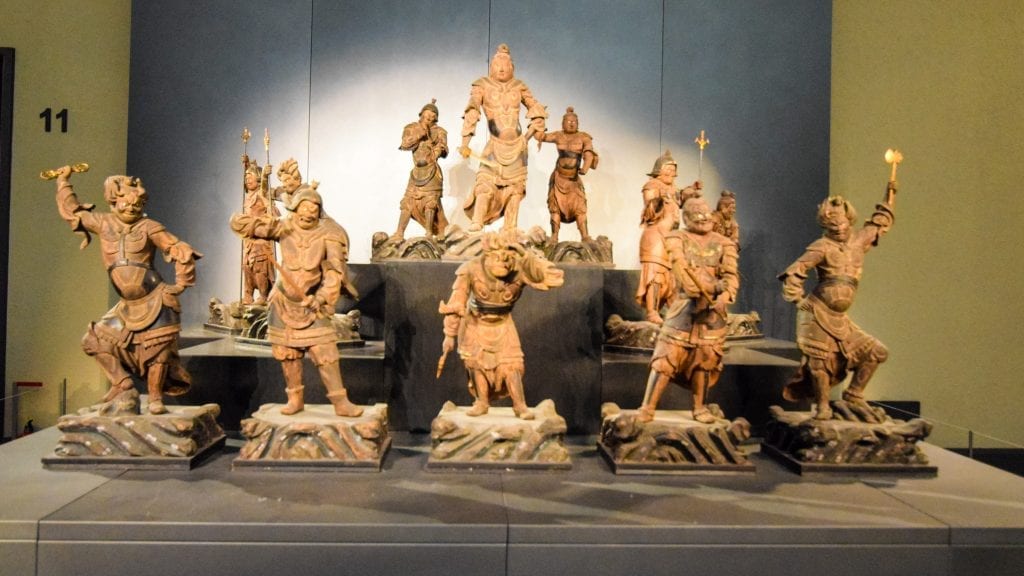
As soon as you are in Japan, try to visit a museum. You will learn so many things including Japanese histories, it is a good use of an afternoon. My recommendation is the Tokyo National Museum.
Tips on Norms and Culture
Bow
Japanese respect each other by bowing. The inclination of your kneeling can also measure the amount of respect. Let’s not complicate it. If you see Japanese, you can bow a bit and will see him doing the same. If someone bows to you, do the same. They can do it multiple times, you just work as a mirror and keep doing the same. This is important while meeting someone or the time of leaving.
Exchange business cards with both hands
Japanese give a lot of respect to business cards. They treat it like a human. While exchanging business cards, give it using both of your hands. Hold it in a way that your name is visible to the receiver. When he will grab your card, take him with both of your hands. Now that the card is in your hand, read it carefully (even if you don’t read it, pretend that you are reading with full attention). If you sit together at a table, keep the card in front of you. If you exchange your card with multiple persons, organize their cards to form a column. Put the card of the most important person to the top.
Do not show your back while leaving
Suppose you attended a meeting and left the place with an elevator. The Japanese people you met came to say goodbye. You should not just wave your hand and get into an elevator. You will face them, go backward while bowing. When the door of the elevator will open, you will walk backward and enter the elevator like that and keep your head kneeling until the door of the elevator closes. I know this is difficult but super useful!
Cover your tattoos
For a long period, the criminals, mafias, and gangsters had been covering their bodies with tattoos. Specifically, the members of a dangerous group named Yakuza use tattoos. So, it’s safer to cover your tattoos. Besides, if you have tattoos, many public places like gymnasiums or onsens will not let you in.
Wear a mask (updated for 2026)
Japan lifted its official mask guidance in 2023. In 2026, mask-wearing is optional and personal. You will still see many Japanese wearing masks voluntarily, particularly on crowded trains, in medical settings, and during cold and flu season, but it is no longer a social expectation for visitors. You will not be perceived as rude for not wearing one. If you are unwell, wearing a mask is a courteous gesture that Japanese people will appreciate.
Carry a bag for your rubbish
You will not find many bins for dumping waste in Japan. However, Japan is super clean, you won’t find any rubbish on the streets of Japan. All the Japanese people carry a bag and keep the wastes in that bag. When they go home, they put it in their own bins. So carry a bag with you to keep the waste from your travel and dump it in the hotel bins accordingly.
Do not take your hotel slippers to public space
Most of the hotels will provide you slippers. Those are nice and proper slippers, not the toy-like one given in a plane. However, do not go to public spaces like dining halls using it. Japanese perceive it as rude and unhygienic. I didn’t know it. One fine morning, I woke up, took the slipper, and went to have my breakfast in the dining hall of a hotel. A staff member immediately came over and was pointing to my foot. It was super embarrassing, I said sorry, went to my hotel room, and changed it immediately.
Think twice before taking a stranger’s help
Don’t get me wrong here. I have been to 44 countries of the world till now, and the Japanese people are the most helpful of them all. I have so much respect for them. During my initial part of a visit, I used to approach people for seeking even minor help. However, whenever I approached something, he or she became so active trying to give me solutions, I found it embarrassing. It becomes even difficult if someone does not know the way out or solution. He will search on the net, stop their countrymen, and before you realize anything, you will have a crowd of several people looking into your problem. It’s like they will sacrifice their life for you. So, before seeking help from a Japanese, see if you could solve it with a little effort by yourself.
Take off your shoes
In many places, like shrines or restaurants, you might need to take off your shoes. Similar things might take place before entering a house if you are invited. Just look around at what other people are saying or if there is any sign for putting off your shoes.
Always Smile and show gratitude
Japanese are humble and polite. Whenever you enter or leave a place like a restaurant or shops, you will hear a loud sound of greetings. It’s not a recording, the Japanese have taken customer support to a whole new level. You should always smile and give thanks or good morning/evening in Japanese whenever you receive anything such.
Standing on the left or right?
If you want to get into an elevator, or use an escalator, queue up yourself on the left, keeping the right side free. Wait, this is for Tokyo and most of the parts of Japan.
However, if you go to Osaka in the Kansai region, things reverse. In Osaka, you stand on the right and keep the left side free. Many stations now ask passengers to stand still and hold the handrail on escalators, so follow the signs and the people around you.
Did you Know?


There is an eery resemblance between the flag of Japan and the flag of Bangladesh. Both have a red circle in the middle. The only difference is the background. While Japan has a white background, Bangladesh has a green one!
Frequently Asked Questions
Is Japan easy to travel for first-timers?
Yes. Japan is one of the most comfortable countries to visit as a first-timer. The trains run exactly on time, the streets are safe, the food is excellent and the cultural norms, while different, are easy to follow once you know them. The main challenges are the language barrier outside tourist areas and the complexity of the train system, both of which are manageable with Google Maps and Google Translate.
Do I need to speak Japanese to visit Japan?
No, but a few words go a long way. In Tokyo and Kyoto, English signage is widespread and many younger staff in tourist areas speak some English. Outside major cities, English is less common, so Google Translate’s camera feature becomes essential. Learning a few basic phrases, such as thank you and excuse me, will earn you goodwill.
How much cash should I carry in Japan?
I would carry around ¥5,000 to ¥10,000 per day in cash for small restaurants, vending machines, temple entry fees and cash-only places. Hotels, department stores and chain restaurants accept cards, but smaller restaurants and traditional shops often do not. ATMs at 7-Eleven and Japan Post accept most international cards.
Should I buy a JR Pass?
For most first-timers, no. A 7-day Ordinary pass now costs ¥53,000 (from 1 October 2026, with the official website keeping the old ¥50,000 price for a limited time). A Tokyo, Kyoto, Osaka and Hiroshima return by Shinkansen came to roughly ¥44,000 by my own sum, so the pass only pays off if you add more long rides. If you only visit Tokyo, skip it.
How does tax-free shopping work in Japan now?
Since 1 November 2026, you pay the full price including tax in the shop. Spend at least ¥5,000 before tax at one tax-free shop in one day and show your passport. Before you leave Japan, complete the procedure at a tax-free terminal in the departure hall before you check in your bags, with your goods and receipts. You must finish within 90 days of purchase.
Does Suica work outside Tokyo?
Yes. Suica and Pasmo work on trains, subways and many buses in Tokyo, Kyoto, Osaka, Hiroshima and many other cities. They do not replace Shinkansen tickets, and a few rural lines and buses still accept only paper tickets.
When is the best time to visit Japan?
Spring (late March to April) for cherry blossom and autumn (October to November) for colour are the most popular times, with comfortable weather. Both are busy, so book early. Avoid Golden Week (about 29 April to early May) and the Obon holiday in mid-August if you dislike crowds, and expect rain in June and heat and humidity in July and August.
How much is the Japan departure tax?
The international tourist tax rose from ¥1,000 to ¥3,000 on 1 July 2026. It is collected through your air or sea ticket, so you usually do not pay it at the airport. Tickets bought before 1 July were charged ¥1,000.
Do I need a visa for Japan?
Many nationalities can visit visa-free for short stays, often up to 90 days, while others need a visa in advance. Check the Japanese embassy website for your passport. Visa fees rose on 1 July 2026 for many applicants, but the Embassy of Japan in Bangladesh lists the visa fee as free for Bangladeshi nationals, with a VFS service fee on top. Japan requires your passport to be valid for the length of your stay, but some airlines ask for 6 months, so check with yours.
How many days do I need in Japan?
Seven days is the minimum for Tokyo and Kyoto. Ten days lets you add Nara and a Mount Fuji day trip, and 14 days adds places such as Nikko, Osaka and Hiroshima or Hokkaido. See my 2 weeks Japan itinerary for a route.
What should I avoid doing in Japan?
Avoid eating while walking, speaking on the phone on trains and buses, leaving tips at restaurants, sticking chopsticks vertically into rice, wearing outdoor shoes inside traditional accommodation, and entering an onsen with tattoos uncovered unless the venue allows it. All of these are explained in this article.
Can I drink tap water in Japan?
Yes. Tap water is safe to drink throughout Japan. Bring a refillable bottle and fill it from hotel taps, so you do not need to buy bottled water.
Japan First-Timer Pre-Trip Checklist
Before you leave home, run through this list:
| Item | Why it matters | |
|---|---|---|
| ☐ | Passport valid for your whole stay (some airlines want 6 months) | Japan requires validity for the stay, but airlines can be stricter |
| ☐ | Visa check | Many nationalities can visit visa-free for up to 90 days, so check yours |
| ☐ | Register on Visit Japan Web | Speeds up customs and immigration, and lets you start the tax-free procedure at major airports |
| ☐ | Japan eSIM ordered and installed | Yesim Japan eSIM, activate on landing |
| ☐ | Suica or Pasmo ready | iPhone: Apple Wallet or Welcome Suica Mobile. Android: buy a physical card |
| ☐ | Decided whether a JR Pass pays off | Prices rose on 1 October 2026, so compare with individual tickets |
| ☐ | Japanese yen withdrawn | Bring ¥30,000 to 50,000 in cash for the first few days |
| ☐ | Medications checked against Japanese customs rules | Prohibited items can cause serious problems |
| ☐ | Travel insurance purchased | Japan medical costs are high |
| ☐ | Google Translate, Japanese downloaded offline | Camera translation works without WiFi |
| ☐ | Hotels booked | Cherry blossom season and Golden Week sell out fast |
| ☐ | Travel adapter packed (Type A, 100 V) | Easily forgotten, expensive to replace |
| ☐ | Coin pouch packed | You will collect coins constantly in Japan |
| ☐ | Tax-free plan | Keep receipts and goods handy, and allow time at the airport |
Suggested Japan Itinerary for First-Time Visitors
Japan is a large country and it is easy to overplan a first trip. I recommend focusing on 2 or 3 cities rather than rushing through 6. Here is the route most first-timers find most rewarding:
7 days (minimum):
- Days 1 to 4: Tokyo. The city alone takes 4 full days to cover the highlights. Read the 4-Day Tokyo Itinerary.
- Days 5 to 7: Kyoto, with temples, shrines, Arashiyama and Gion. Read the 3-Day Kyoto Itinerary.
10 days (recommended for first-timers):
- Add a Nara day trip from Kyoto, 45 minutes by train, with the deer park and UNESCO shrines
- Add a Mount Fuji or Kawaguchiko day trip from Tokyo
14 days (for those who want more):
- Add Nikko for waterfalls, UNESCO shrines and mountain onsen, plus the Karikomi Lake hike if you like walking
- Add a stopover in Nagoya with One Day in Nagoya, which sits between Tokyo and Kyoto
- Add Ashikaga Flower Park in spring (April to May only)
- Consider a flight to Sapporo and day trips across Hokkaido
💡 The golden rule: Do not try to visit more cities than you have days. Spending 3 nights in Tokyo is a better experience than spending 1 night in 7 cities. Japan rewards depth over breadth.
Not sure how to link the cities together? My 2 weeks Japan itinerary shows the route I took, from Tokyo through Nikko, Kyoto and Osaka to Hiroshima or Hokkaido, with transport costs and hotels.

What an outstanding detailed post on travel to Japan! This country is definitely on the top of my “Must Travel To Next” list from BC, Canada. I have definitely saved this post for future reference. Great job & thanks for taking the time to put this together for us. 🙂
When I was in the military I was deployed to Sasebo, and stayed there for almost a whole year. Japan is a beautiful country, and I would love to go back. I really enjoyed the cherry blossom festivals!