
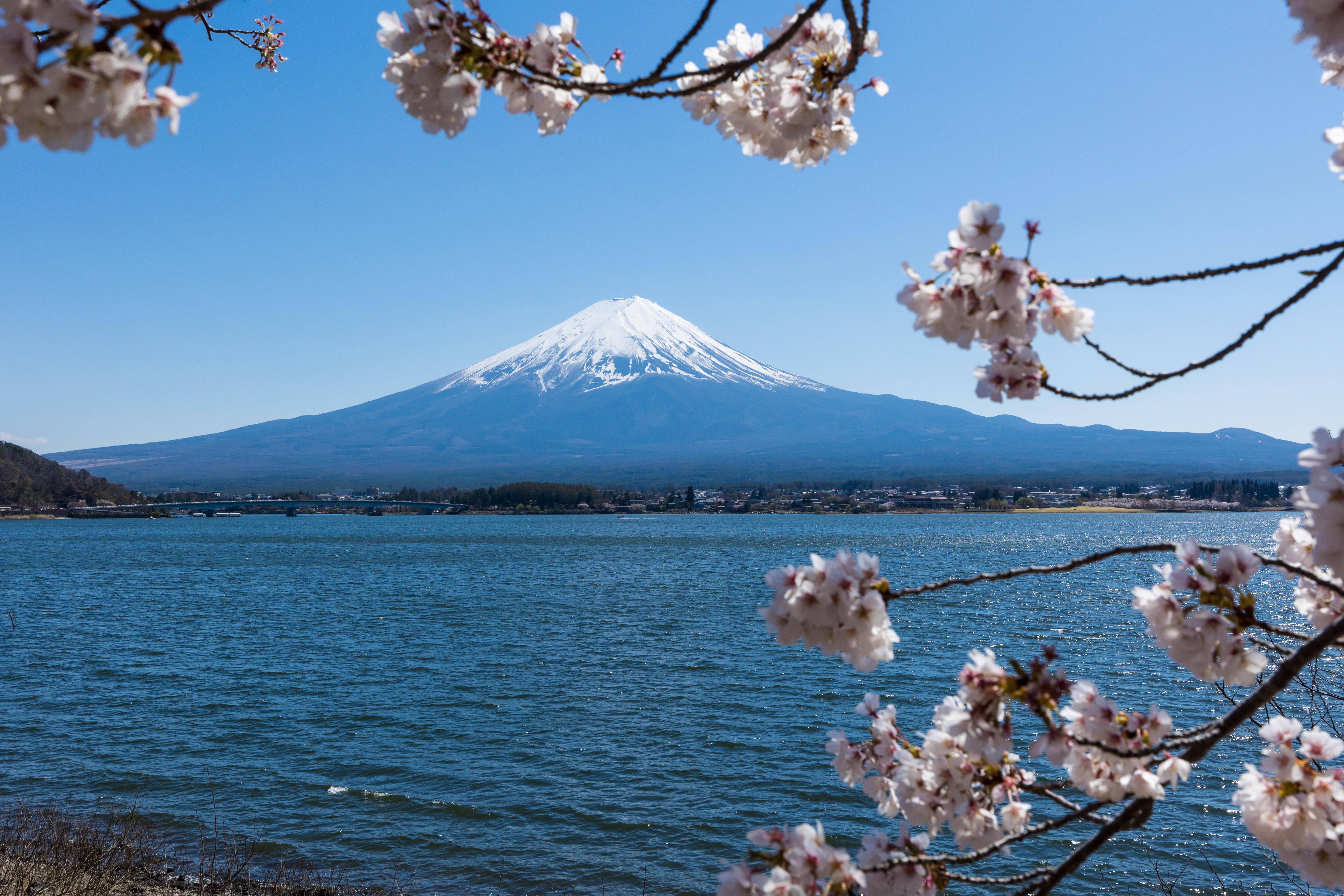
Sushi and Mount Fuji. Those are the two things I always think of when someone says Japan. One you can eat in a few bites. The other is a 3,776-metre volcano that has been inspiring artists, poets, and bewildered tourists for centuries, and that spends a frustrating amount of time hidden behind clouds. I came to Japan with the specific intention of seeing it clearly. After one cloudy false start, I did. Here is everything I learned about where to stand and when.
First time in Japan? Read my complete guide for first-timers before you go.
✅ SHORT ANSWER
The best place to see Mount Fuji is the north shore of Lake Kawaguchiko, about two hours from Tokyo, where the mountain rises over the water with nothing else in the frame. For the classic shot with a red pagoda in front, go to Chureito Pagoda in Fujiyoshida. The clearest months are November to February, and the best hours are early morning.
Best base
Lake Kawaguchiko, north shore
About 2 hours from Tokyo, with the best lake views
Best photo
Chureito Pagoda, Fujiyoshida
Free, open 24 hours, 398 steps
Best months
November to February
Fuji was fully visible on 52 to 62% of mornings in Fuji City records; June to August is the worst
Best time of day
Early morning
Usually before 9 AM, before cloud builds
Day trip or overnight?
Overnight
Two mornings give you two chances at a clear view
From Tokyo
About 2 hours
Bus from Shinjuku ¥2,200, or the Fuji Excursion train at about ¥4,200
When Is the Best Time to See Mount Fuji? (Visibility by Month)
This is the question to answer before you book anything else. Mount Fuji collects cloud, and in summer it is hidden far more often than it is seen. Fuji City in Shizuoka has recorded whether the mountain is visible at 8 AM for decades. Across 1991 to 2024 it was fully visible on about 10% of July mornings and about 62% of December mornings. Here is the full year:
| Month | Fully visible at 8 AM | What to expect |
|---|---|---|
| January | 60% | Cold, dry air and a snow-covered cone |
| February | 52% | Still very good, with a snow-covered summit |
| March | 41% | Clear days get less frequent |
| April | 36% | Cherry blossom season, a lovely gamble on cloud |
| May | 30% | Hazier days, thinner snow on the summit |
| June | 13% | Rainy season, the poorest odds of the year |
| July | 10% | The lowest figure of the year |
| August | 15% | Hazy, with little or no snow on the summit |
| September | 27% | Improving, and clear spells can follow a passing typhoon |
| October | 41% | Cooler air and the first snow on the summit |
| November | 54% | Autumn leaves around the lake, usually early to mid November |
| December | 62% | The best month in the records |
Source: Fuji City records, share of mornings when the whole mountain was visible at 8 AM, 1991 to 2024. Fuji City sits on the Shizuoka side of the mountain, so use these as a guide to the seasons rather than a forecast for Kawaguchiko.
My recommendation: aim for November to February if seeing the mountain matters most. April is a fair gamble for cherry blossom, but plan for cloud and give yourself a second morning. Avoid June to August if the view is the whole point of the trip.
Pro tip before leaving Tokyo
Use the Fujisan Watcher live webcam to check whether Mount Fuji is visible right now. It can save you a 2-hour journey to a white sky. Check it the night before and again in the morning. If the webcam shows a clear summit, go straight away.
Best time of day: early morning, ideally before 9 AM. Clouds often gather during the day even when the forecast is fair, and the late afternoon can clear again. Plan to be at your viewpoint around sunrise.
The 9 Best Places to See Mount Fuji, Ranked
| # | Viewpoint | What makes it special | Best season | Best for |
|---|---|---|---|---|
| 1 | Chureito Pagoda | Red pagoda in front of Fuji, one of the most photographed views in Japan | Mid April (blossom) or early November (foliage) | Classic photograph |
| 2 | Oishi Park, north shore | Flower fields with an open lake-and-mountain view | All year, when the sky is clear | Open lake view with flowers |
| 3 | North shore of Lake Kawaguchiko | Fuji reflected in the lake (Sakasa Fuji) | Winter and spring, calm mornings | Lake reflection |
| 4 | Oshino Hakkai | Eight spring ponds and thatched houses with Fuji behind | Any clear day | Village scenery |
| 5 | Mt. Fuji Panoramic Ropeway | A view over the lake and Fuji from the top of Mount Tenjo | Any clear day | A view from above |
| 6 | Momiji Tunnel and Maple Corridor | Maple trees on the north shore | Early to mid November | Autumn colour |
| 7 | Kawaguchiko Station | The first glimpse as the train arrives | Any clear day | An effortless first glimpse |
| 8 | Hakone, Lake Ashi | Fuji across the water from a different angle, with onsen | Winter, early morning | Combining Fuji with onsen |
| 9 | Mount Fuji 5th Station | Standing on the mountain itself, at about 2,300 metres | Spring to autumn, until snow closes the road | Standing on the mountain |
Which Town Is Best for Seeing Mount Fuji?
If you want one town to stay in, choose Fujikawaguchiko. It has the most direct views, the most hotels with Fuji outside the window, and the bus network covers the viewpoints in this guide. Fujiyoshida is the next stop along the same railway and is where Chureito Pagoda stands. Hakone is a good trip in its own right, but clouds often block the view across Lake Ashi.
| Town | Best for | From Tokyo |
|---|---|---|
| Fujikawaguchiko (Lake Kawaguchiko) | First-timers, north shore views and hotels with a Fuji view | Bus from Shinjuku in about 1 hour 45 minutes (¥2,200), or the Fuji Excursion train in about 1 hour 55 minutes |
| Fujiyoshida | Chureito Pagoda and Fuji-Q Highland | About 60 minutes by limited express to Otsuki from Shinjuku, then about 46 minutes on the Fujikyuko Line to Shimoyoshida |
| Hakone | Onsen, Lake Ashi and the ropeway, with Fuji as a bonus | Romancecar to Hakone-Yumoto from about 75 minutes (¥2,470), then about 35 minutes by bus to Lake Ashi |
| Tokyo | A free long shot when the air is very clear | Free observatories in the Tokyo Metropolitan Government Building, Shinjuku |
Sources: Fujiyoshida tourism, Ekitan and japan-guide.com.
Lake Kawaguchiko: The Best Base for Seeing Mount Fuji
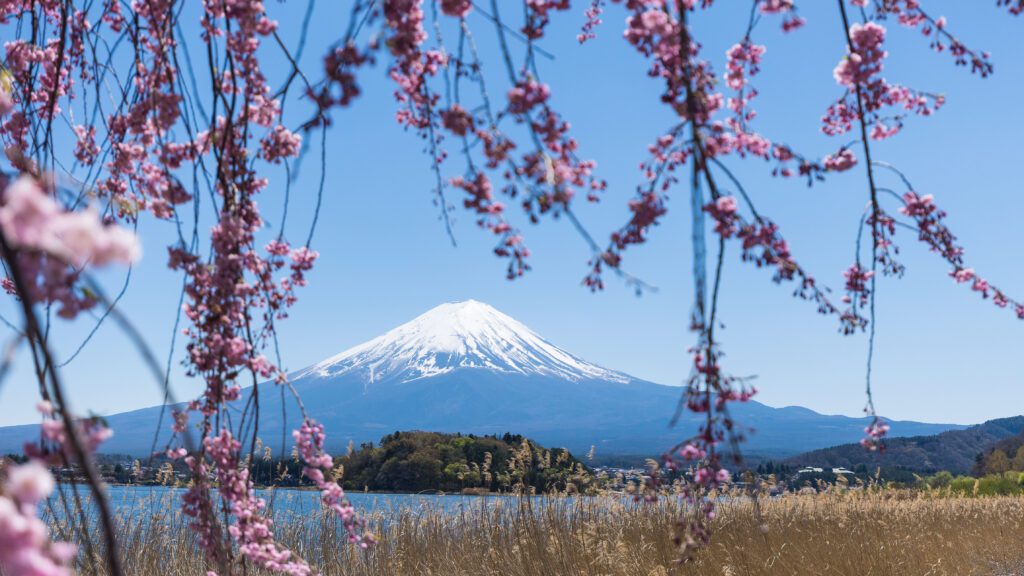
Lake Kawaguchiko is the most accessible of the Fuji Five Lakes and the best base for first-time visitors. It sits in Fujikawaguchiko town, about 2 hours from Tokyo, the natural add-on to a 4-Day Tokyo Itinerary if you have a spare day, and on a clear day Mount Fuji rises above the water in a way that looks almost theatrical, too perfect, too symmetrical, too large.
One detail most articles skip: the best views of Fuji from the lake are specifically from the north shore. The south side, where the station and most restaurants are, gives you the town in the foreground. Walking over the Kawaguchiko Ohashi Bridge and continuing along the northern bank puts the mountain directly ahead of you with the lake in the foreground. On still winter mornings you can see it reflected in the water, what locals call Sakasa Fuji (reverse Fuji). It is one of the great sights in Japan and it costs nothing to walk there.
Getting to Lake Kawaguchiko from Tokyo
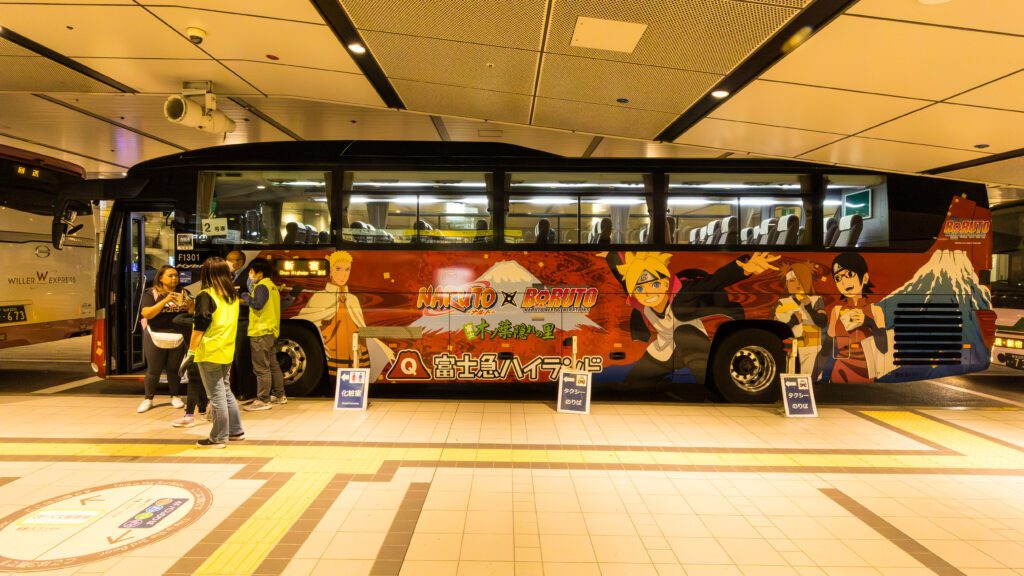
I recommend treating Kawaguchiko as at least a one-night trip. A day trip gives you one morning chance to see Fuji clearly. Staying overnight gives you two. Given how often the mountain hides in clouds, that extra chance matters more than any cost saving.
If you haven’t sorted your Tokyo arrival yet, start with which airport to fly into, see the Best Airport to Fly into Tokyo guide before booking your ticket.
By Bus: Cheapest and Usually Fastest
The bus is the best option for most travellers. All three routes depart from central Tokyo:
- Shinjuku (Busta Shinjuku, 4F): about 1 hour 45 minutes, longer in traffic, ¥2,200 one way. Take the south exit from JR Shinjuku Station. Book in advance here, because weekend morning seats sell out.
- Tokyo Station: Fujikyuko bus, about 2 hours 7 minutes, ¥2,300.
- Shibuya: Tokyu bus, about 2 hours 7 minutes, ¥2,100 to ¥2,300.
- Ikebukuro: Seibu bus, about 2 hours 12 minutes, ¥2,200.
By Train
Take the Fuji Excursion Limited Express direct from Shinjuku Station. It takes about 1 hour 55 minutes and costs about ¥4,200 one way (Ekitan, March 2026). All seats are reserved. A JR Pass only covers the JR section from Shinjuku to Otsuki, not the Fujikyuko Line beyond it, so you pay the rest separately. The alternative is a limited express on the JR Chuo Line to Otsuki (about 60 minutes), then the Fujikyuko Line to Kawaguchiko.
By Car: Best for Flexibility
Renting a car helps with the places buses reach only occasionally, such as Lake Motosu and the quieter viewpoints, and it lets you start before the first bus. The drive from Tokyo takes about 2 hours on the Chuo Expressway when traffic is light. Compare car hire rates via Discover Cars, which aggregates local and international agencies.
Navigation tip
Download your maps offline before leaving Tokyo, because mobile signal can drop in parts of the Fuji Five Lakes region. A Japan eSIM set up before you land keeps navigation apps working throughout the trip.
Book a Guided Day Tour
The easiest option, especially for a first Japan trip, is a day tour that handles all logistics and takes you to multiple viewpoints:
Chureito Pagoda: The Most Iconic View of Mount Fuji
If you have ever seen a photo of Japan with a red five-storey pagoda rising from a hillside and Mount Fuji framed behind it, most likely with cherry blossoms in front, that is the Chureito Pagoda. It is one of the most photographed views in the country, and seeing it in person is one of those moments where the real thing holds up against the photograph.
The pagoda stands in Arakurayama Sengen Park in Fujiyoshida, a short train ride from Kawaguchiko. Fujiyoshida’s tourism site gives 398 steps up to the observation deck and about 20 to 30 minutes on foot from Shimoyoshida Station. Wear proper shoes, not sandals or flip-flops. The view at the top pays you back for the climb.
How to get there from Kawaguchiko: take the Fujikyuko Line from Kawaguchiko Station to Shimoyoshida Station, then walk to the park. If you are coming from Tokyo, it is about 60 minutes by limited express from Shinjuku to Otsuki, then about 46 minutes on the Fujikyuko Line to Shimoyoshida.
Best seasons:
- Mid-April: cherry blossoms frame the pagoda, the postcard shot. It is extremely crowded, so go at sunrise.
- Early November: red maple leaves replace the blossoms. It is equally beautiful and slightly less crowded.
- Winter: snow on the summit and the most reliable skies of the year, with far fewer people than blossom week.
Admission: free. The park is open 24 hours. In the cherry blossom peak (1 to 19 April 2026) the city closed one car park and ran a temporary one about a 30-minute walk away, so check Fujiyoshida’s tourism page if you go in April.
Oishi Park: Best for Unobstructed Lake Views

Take the Red Line bus all the way to the final stop: Kawaguchiko Natural Living Center (stop 20). Cross the street and you are in Oishi Park.
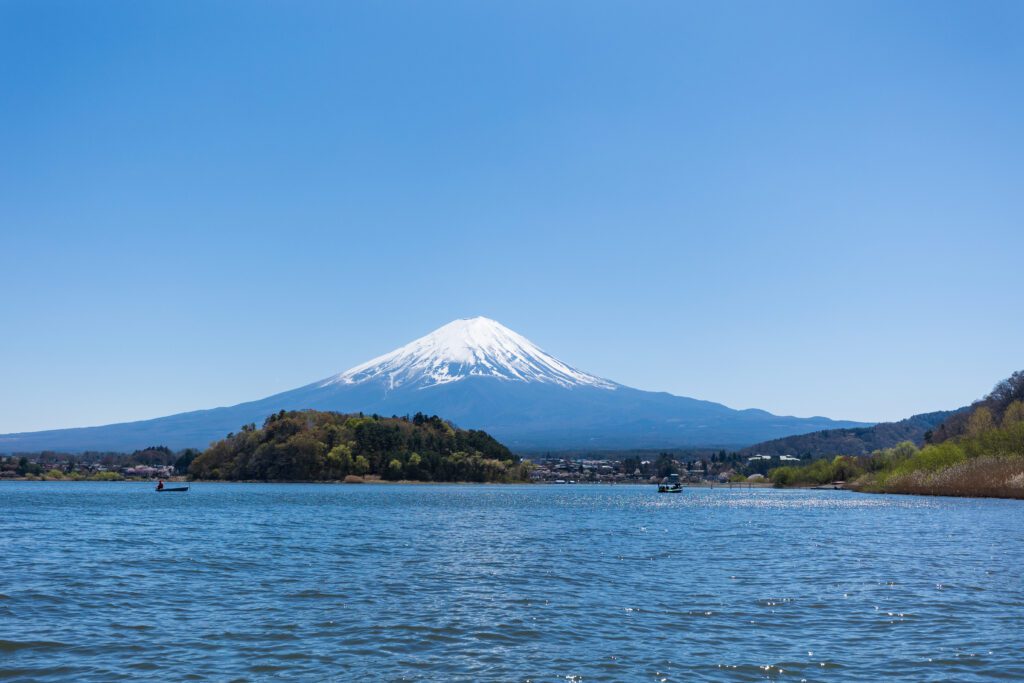
Oishi Park sits on the lake’s northern bank and gives you one of the cleanest, most open views of Mount Fuji in the area. It is free and always open. The flower beds change with the seasons, with lavender in early summer and red kochia in autumn, but the mountain behind them stays constant. Grab an ice cream, sit on the grass and look at Fuji for as long as you like. There is no other agenda here.
Lakeside Walk: North Shore of Lake Kawaguchi
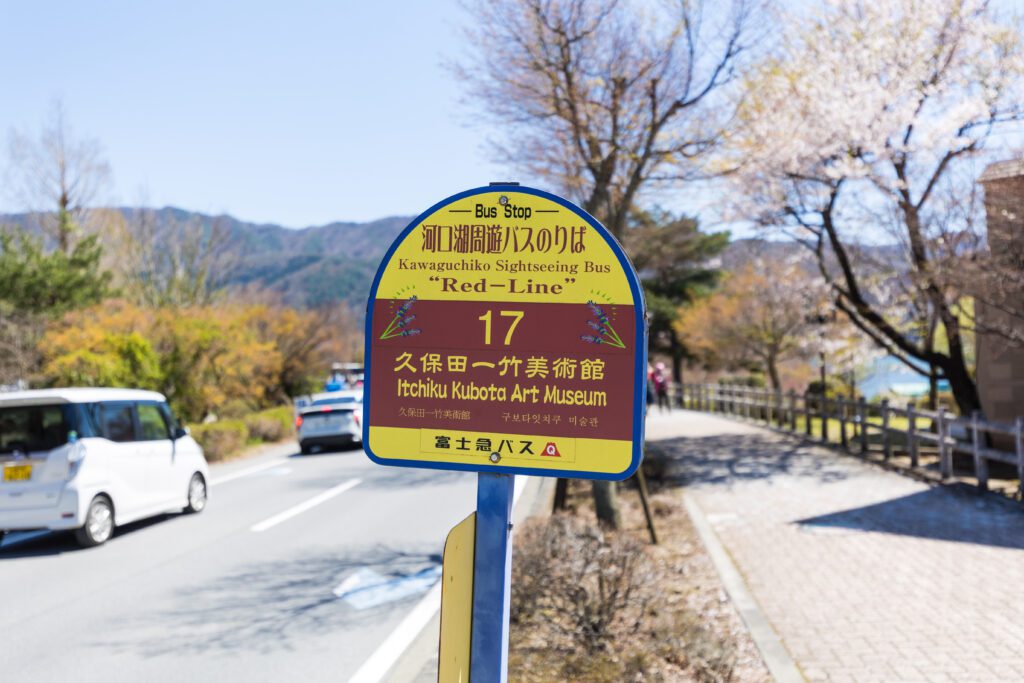
Take the Red Line bus to stop 17 and walk from there, keeping the lake to your left. The promenade follows the northern bank through trees, past a boat hire spot, and eventually leads to Oishi Park if you walk long enough. Mount Fuji appears and disappears through the branches as you move, it makes every clearing feel like a reward.
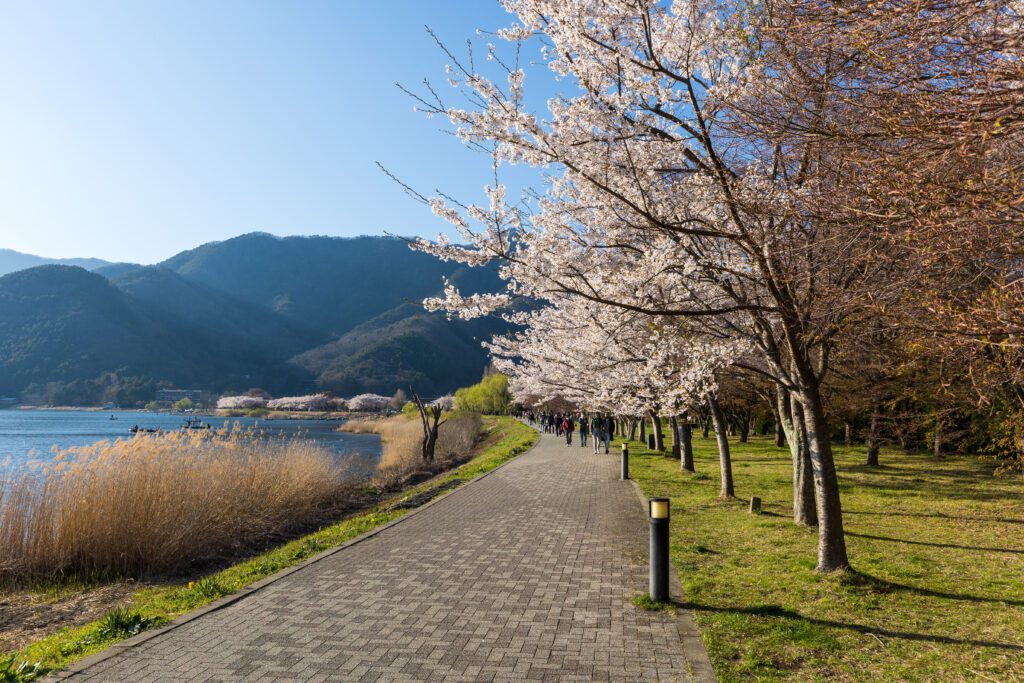
The promenade faces the lush mountains. After a while, you’ll locate a place to rest. If you arrive in April (spring), you will be able to see the beautiful cherry blossoms, all pink! If you come during autumn, you will see a completely different color of red and oranges.

Keep the lake on your left and Mount Fuji, Japan’s famed monument, sits across the water like a wise monk. In front of it lies the lovely, ever-smiling Lake Kawaguchiko, one of the five Fuji lakes.

I was fascinated by the surrounding beauty. All I did was walk on the pavement and observe the scenery.
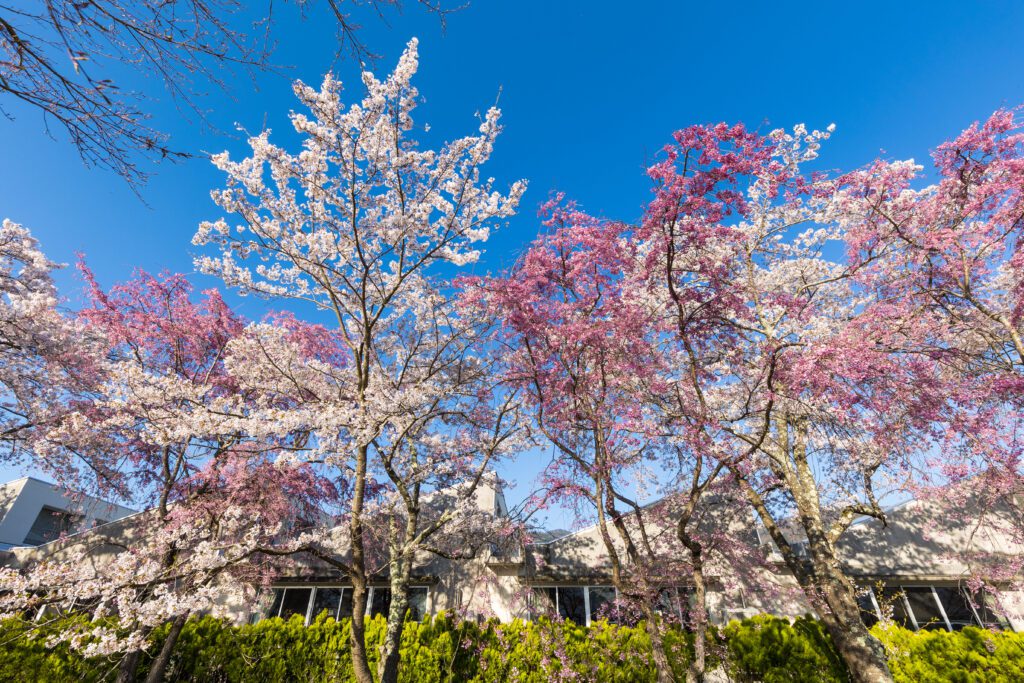
It wasn’t just about the pink cherry blossoms and ume trees; there were also some other interesting colors. When you’ve had enough of walking around the lake, return to the main road and board the red line bus, keeping the lake to your left.
Oshino Hakkai: Traditional Village with Sacred Springs
Oshino Hakkai is a short drive from Kawaguchiko and one of the most atmospheric Fuji viewpoints in the region. Eight spring ponds, fed by Fuji’s snowmelt that filters through porous lava for more than 80 years, sit among traditional thatched-roof buildings. Koi drift through water so clear it looks artificial. Mount Fuji rises behind the village on a clear day, in a view that looks more like a woodblock print than a photograph.
Most organised day tours include Oshino Hakkai precisely because it photographs so well and explains something important: the mountain is not just a backdrop, it is the source of the water these communities have depended on for centuries.
Getting there: from Kawaguchiko Station, roughly every other bus towards Gotemba (about one an hour) makes a detour via Oshino Hakkai, and Fujikko tourist buses stop there too. Get off at the “Oshino Hakkai” stop. Walking around the ponds is free. The only charge I found is ¥300 for the Hannoki Bayashi Shiryokan, an open-air museum beside the largest pond.
Mt. Fuji Panoramic Ropeway: A View From Above
The Mt. Fuji Panoramic Ropeway, also called the Kachi Kachi Ropeway, climbs Mount Tenjo in about three minutes. At the top you get a view of the lake and Mount Fuji from above, so you see the full scale of the landscape instead of just the mountain rising at you. Since 1 November 2026 a return ticket costs ¥1,200 (¥800 one way), up from ¥1,000. It normally runs from 8:30 to 17:00, closes for annual inspection in December (7 to 18 December in 2026), and wind or snow can suspend it.
Expect a queue on clear weekend mornings, so go early or late to avoid the worst of it. Book the Kawaguchiko tour with Ropeway experience via Klook.
Momiji Tunnel and Maple Corridor: Autumn Colour Beside the Lake
The Momiji Tunnel is a maple-lined stretch of road along the north shore of Lake Kawaguchiko, popular with photographers in autumn. Close to the Kubota Itchiku Museum bus stop, the Maple Corridor is a 150-metre walkway of red and gold maples, and it is the centre of the annual autumn leaves festival with evening illuminations. Japan-guide.com puts the best colour in early to mid November.
Easiest by car or rental bike, or take the Red Line bus to the Kubota Itchiku Museum stop and walk. Treat it as an autumn colour stop first and pair it with the north shore walk for the Fuji views.
Kawaguchiko Station: First Glimpse
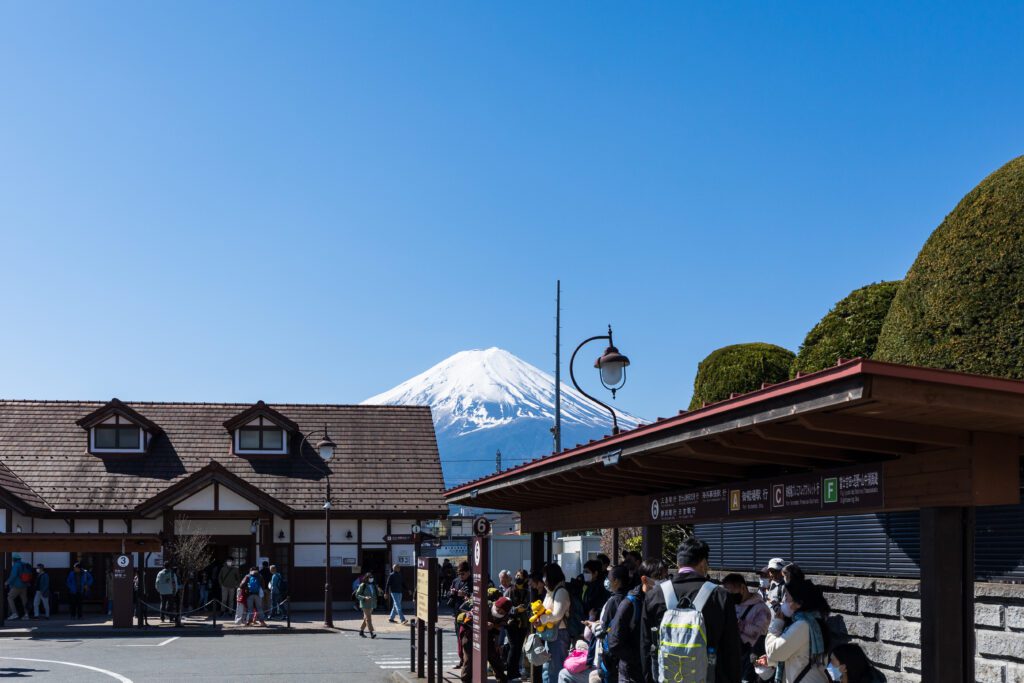
This is not a viewpoint you plan. It is the first sight of Mount Fuji as your train pulls into Kawaguchiko Station, the mountain filling the frame of the window before you have even stood up. Almost everyone on the train reaches for their camera at the same moment. It is chaotic and slightly ridiculous and completely wonderful.
A warning if you have seen the viral photo of Fuji rising behind a Lawson convenience store near the station: in 2024 the town put up a black screen, 2.5 metres high and 20 metres long, to block that view because of crowding and safety problems. It came down after about three months, and in August 2025 a lower barrier, about 1.4 metres tall, went up to stop people crossing the road while leaving the view in place (Time Out Tokyo). If you go, stay on the pavement and do not plan your trip around that shot.
Hakone: Different Angle, Onsen Setting
Hakone is about 75 minutes from Shinjuku on the Romancecar to Hakone-Yumoto (¥2,470 one way including the limited express surcharge), then about 35 minutes by bus to Lake Ashi. It gives you Fuji across the water from the south, a different angle from Kawaguchiko. The mountain is more distant here, and clouds often block the view. Japan-guide.com says the best views are from Moto-Hakone, the Hakone Detached Palace Garden and the sightseeing boats, and that visibility is better in the colder months, in the early morning or late afternoon.
Kawaguchiko vs Hakone: which is better for seeing Mount Fuji?
| Kawaguchiko | Hakone | |
|---|---|---|
| Views of Fuji | Several direct viewpoints, with the north shore reflection | Across Lake Ashi, more distant and often cloud-covered |
| Access from Tokyo | About 2 hours by bus or train from Shinjuku | About 75 minutes to Hakone-Yumoto by Romancecar, then a bus |
| Hot springs | Available, fewer options | Famous for onsen, the stronger choice |
| Best for | Photography, Chureito Pagoda, a Fuji-focused trip | Onsen, the Hakone Open Air Museum, variety |
| Budget | Generally more affordable | Ryokans can be pricey |
My verdict: Go to Kawaguchiko if Mount Fuji is your primary goal. Go to Hakone if you want onsen culture with Fuji as a bonus. If you want both in a single day without renting a car, the Mt. Fuji, Hakone Ropeway, Owakudani & Lake Ashi tour from Tokyo is the cleanest way to do it, Fuji views, volcanic valley, cable car ride, and Lake Ashi, all in one circuit.
Mount Fuji 5th Station: Closest Without Climbing
The Kawaguchiko 5th Station sits at roughly 2,300 metres on the north side of the mountain. It is where the Yoshida Trail climb begins, and sightseeing at the station is open to everyone. You are standing on the mountain rather than looking at it, so you see the slope and the view out over the valley, not the full cone. That is why it ranks last in this guide for photographs.
2026 update: Yoshida Trail climbing rules. For the 2026 season, the Yoshida Trail (the most popular climbing route) charged ¥4,000 per person, closed its gate once 4,000 climbers had passed in a day, and kept the gate closed from 2 PM to 3 AM. The 2026 season ran from 1 July to 10 September. Strolling at the 5th Station outside the gate is free. If you plan to climb, check the official Mt. Fuji climbing site for the current year’s fee, dates and reservations.
Getting there: the bus from Kawaguchiko Station takes about 50 minutes and costs ¥2,000 one way (¥3,400 return). It runs most of the year and stops when snow closes the road. During the climbing season (3 July to 10 September in 2026) private cars are barred from the Subaru Line toll road and shuttle buses run instead.
If a hike is more your pace than a viewpoint, the hike to Karikomi Lake in Nikko is the other great half-day trail near Tokyo, in a completely different mountain landscape. My full Nikko guide covers the shrines, Kegon Falls and Lake Chuzenji that sit around it.
Mount Fuji Views Beyond Kawaguchiko
Kawaguchiko and Hakone cover the classic routes, but Fuji is visible from a surprisingly wide radius, and a few of these are useful to know about even if they don’t make it into most itineraries.
From Tokyo itself, on a clear day. The Tokyo Metropolitan Government Building in Shinjuku has two free observatories, North and South, both 202 metres up. The view is not reliable: Fuji is roughly 100 km away and shows only in very clear air, mostly on early mornings in autumn and winter. If you are short on time and the sky is clear, it costs nothing to check. Each observatory closes on certain days, so check the official site first.
From the Shinkansen. The Tokaido Shinkansen between Tokyo and Osaka runs close enough to Fuji for a window-seat view, with no detour. Heading west from Tokyo, sit on the right-hand side (seat E in standard cars; check the seat map when you reserve) and watch for the mountain roughly 45 minutes into the journey, around the Shin-Fuji area. The view lasts only a few minutes. It is a fun bonus if you are already making that journey, not a reason to book it on its own.
Gotemba. On Fuji’s southeastern flank, this outlet-shopping town has clean views from several elevated points around the city. It makes a good stop if you are heading towards Hakone and want a different angle from the lake views.
The Izu coast. On the west coast of the Izu Peninsula, onsen such as Heda Onsen in Numazu are known for sunsets over Suruga Bay and, on clear days, Mount Fuji across the sea. It is a useful add-on if your Japan itinerary includes Izu.
Lake Motosuko. The westernmost of the Fuji Five Lakes is the view of Mount Fuji and cherry blossoms printed on the back of Japan’s old ¥1,000 note (2004 series). The new ¥1,000 note issued in July 2024 shows Hokusai’s Great Wave instead, so you will not find it in your wallet now, but the view is still there. Regular buses from Kawaguchiko Station take 30 to 45 minutes (¥1,470) but run only every one to two hours, so a car is easier.
A phenomenon to look for. Diamond Fuji happens a few times a year when the sun lines up with the summit at sunrise or sunset, and “Double Diamond Fuji” adds its reflection in the water. The reflection version is best known from Lake Tanuki in Shizuoka, in roughly late April to August, rather than from Kawaguchiko in winter. It depends on clear weather and on exact dates, so check a forecast for the year you travel (Tokyo Cheapo explains how it works).
Beyond the Views: More Things to Do in Kawaguchiko
Most people come to Kawaguchiko for Mount Fuji, and the viewpoints will fill your first day. If the mountain is hidden behind cloud, or you are staying two nights, which I recommend, here is what to do with the rest of your time.
Fuji-Q Highland
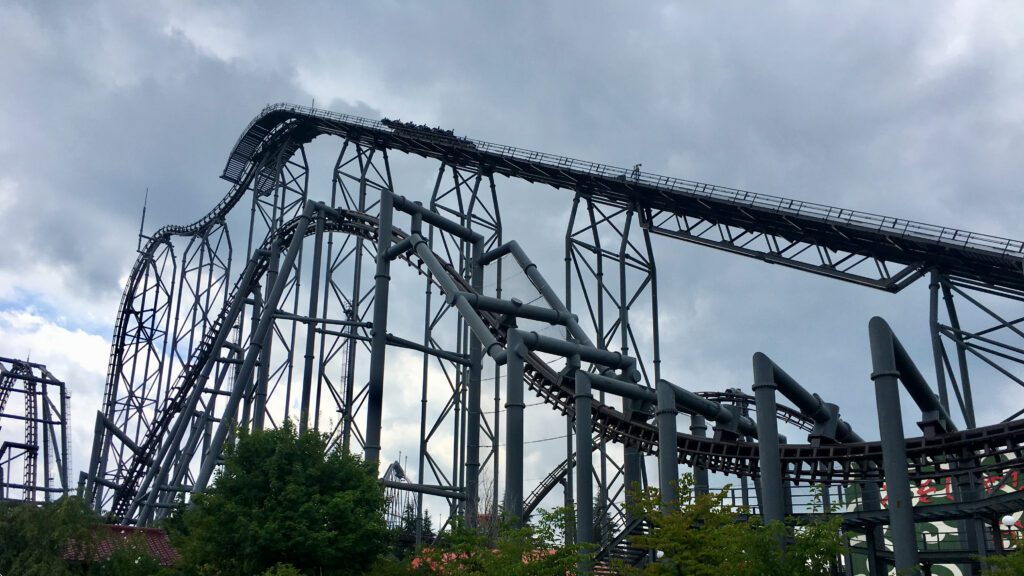
Fuji-Q Highland is an amusement park in Fujiyoshida, a short train ride from Kawaguchiko, with some of Japan’s most famous roller coasters. Fujiyama stands 79 metres tall and reaches 130 km/h, and it was the world’s tallest roller coaster when it opened in 1996. There are haunted houses, gentler rides for younger visitors, and the mountain is visible as the backdrop to the whole park. The main reason to come is a completely overcast sky and a wait for Fuji to appear. Book tickets in advance to skip the gate queue.
Eat Hoto Noodles
Before you leave Kawaguchiko, eat hoto at least once. It is the local dish, thick flat udon-style noodles simmered in a rich miso broth with pumpkin, mushrooms, and seasonal vegetables, served in a cast iron pot that stays hot at the table. Every restaurant in town does its own version and almost all of them are good. It is a warming, filling meal that makes particular sense after a cold morning walking the north shore. Ask your accommodation for the nearest restaurant, they will all have a recommendation.
Rent a Boat on the Lake
One of the quietest ways to spend an hour is out on the water. Sightseeing boats run year-round (a 20-minute circular cruise costs ¥1,000), and rowing and paddle boats are available to hire, so check the price at the shore. Being on the lake gives you a different perspective, with the lake in the foreground and Mount Fuji rising behind it. Go early in the morning when the water is still and the reflection is clearest.
Itchiku Kubota Art Museum
The Itchiku Kubota Art Museum sits near the north shore walking path and shows the kimono artwork of Itchiku Kubota, a dyeing technique he spent decades developing that recreates landscapes and seasons across panels of silk. Even if you are not usually drawn to textile art, the scale and colour of the work stand out, especially the Mount Fuji panels. The building is often described as Gaudí-inspired. Admission is ¥1,500. It opens from 10:00 to 17:00 (16:30 from December to March), and closures are irregular, so check the museum’s site before you go. Get off the Red Line bus at stop 17 (the same stop as the lakeside walk) and it is right there.
Hotels in Lake Kawaguchiko
One thing that makes Kawaguchiko different from most tourist destinations: where you stay directly affects how likely you are to see Mount Fuji. Hotels on the north shore put the mountain outside your window. Hotels near the station are more convenient but face south, you will need to walk to see it. If seeing Fuji clearly is your main reason for being here, pay a little more for a room with a view. Waking up and finding it already there, without rushing outside, changes the whole experience.
Here are options across three budgets.
Budget: Koyabashi Ryokan (my personal stay)
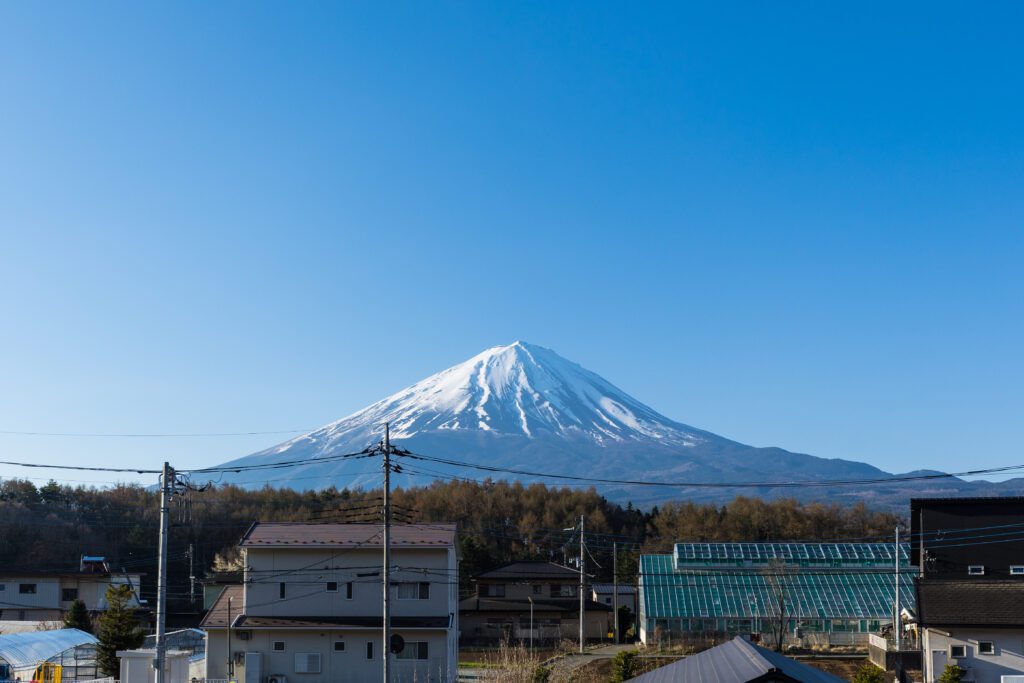
Koyabashi is the place I actually stayed, which is why I am recommending it first. It is a simple budget ryokan, nothing fancy, a little far from the station, but every room has a direct Mount Fuji view. The photo above was taken from my bed. It is one of the cheapest options in the area that still delivers the view you came for. Take the Blue Line bus to get here and check the timetable before planning your day, because it runs infrequently.
Mid-Range: Hotel New Century
Hotel New Century is right on the shore of Lake Kawaguchiko and has hot spring baths with views of the surroundings. Only some rooms have a Fuji view, so check the room type before you book. A solid choice if you want comfort and the lake without committing to full ryokan pricing.
Luxury: La Vista Fuji Kawaguchiko
La Vista Fuji Kawaguchiko is a South of France-style resort hotel overlooking Lake Kawaguchiko with Mount Fuji in front of it. It has onsen baths, and some rooms have balconies and private baths, so compare room types. If you want to watch the mountain change colour from sunrise to sunset without leaving your room, this is the kind of place to look at.
For Something Truly Special: Hoshinoya Fuji
Hoshinoya Fuji is billed as Japan’s first glamping resort, with luxury cabins looking towards Mount Fuji. It sits above the lake and is the most memorable accommodation option here, not a traditional ryokan but a very Japanese take on high-end outdoor living. If budget is not a constraint, this is the one.
Booking tip
When searching Agoda or Booking.com, filter for “Fuji view” and read recent reviews carefully. Some properties market “Mount Fuji views” that turn out to be visible only from one corner of the roof bath at a specific angle. The north shore properties are the most reliable for real room-facing views.
How to Get Around Kawaguchiko
Lake Kawaguchiko is relatively accessible on your own. Aside from walking around, you have two excellent possibilities.
Take a Bus
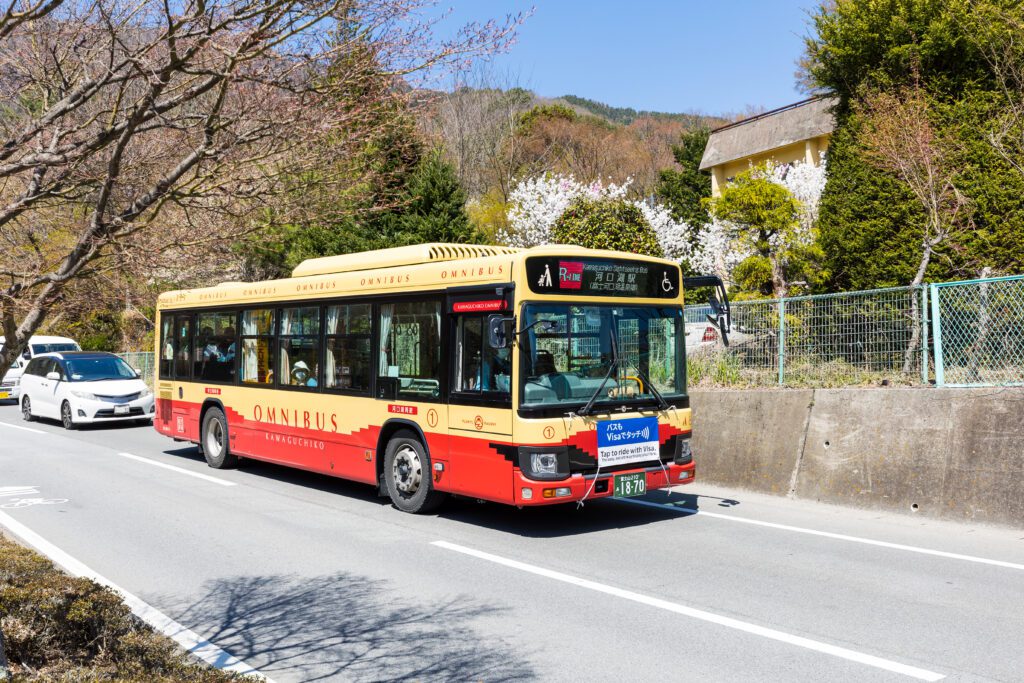
Three colour-coded lines cover the main sights. If seeing Fuji is your goal, the Red Line is the one you want:
- Red Line: roughly every 15 minutes, along the east and north shores (the one you want for Fuji views)
- Green Line: roughly every 30 minutes, along the southern shore and around Lake Saiko
- Blue Line: roughly every 1 to 2 hours, towards Lake Shojiko and Motosuko (useful for Koyabashi ryokan)
A bus pass for these lines costs ¥1,500 for one day or ¥2,000 for two days (japan-guide.com). IC cards such as Suica and Pasmo also work on these buses. Board from the back, exit from the front.
Download the timetables:
Rent a Bike
Rental shops near the station offer regular and electric bikes. Rates vary by shop and season, so treat these as a guide:
- Manual: ¥500/hour, ¥1,000 for 3 hours, ¥1,500/day, ¥2,500 for 24 hours, ¥3,000 for 1 night + 2 days
- Electric: ¥3,000 for 3 hours, ¥4,000/day, ¥5,500 for 24 hours, ¥6,500 for 1 night + 2 days
Rent a Car
For maximum flexibility, especially for Lake Motosu and early starts, a car is the best option. Book via Discover Cars to compare rates. The roads in the Fuji Five Lakes area are well signposted.
Planning the rest of your Japan trip around this? These two cover the rest:
Frequently asked questions about Mount Fuji and Lake Kawaguchiko
What is the best place to see Mount Fuji clearly?
The north shore of Lake Kawaguchiko, about two hours from Tokyo, gives the most open view with the water in the foreground. For the classic photograph with a pagoda in front, go to Chureito Pagoda in Fujiyoshida. Whichever you choose, aim for a clear winter morning.
What is the best city or town to see Mount Fuji?
Fujikawaguchiko (Lake Kawaguchiko) is the best base for most visitors. Fujiyoshida, next along the same railway, is where Chureito Pagoda stands. Hakone is a good trip in its own right, but clouds often block the view across Lake Ashi.
When is the best time to see Mount Fuji?
November to February. In Fuji City records from 1991 to 2024, the whole mountain was visible at 8 AM on about 62% of December mornings and 60% of January mornings, against about 10% in July.
What is the best time of day to see Mount Fuji?
Early morning, ideally before 9 AM. Clouds often gather during the day even on fair days, and the late afternoon can clear again.
Can I see Mount Fuji from Tokyo?
Sometimes. The free observatories in the Tokyo Metropolitan Government Building in Shinjuku are 202 metres up, and Fuji shows mainly on clear early mornings in autumn and winter. It is not reliable. The Tokaido Shinkansen towards Osaka also gives a brief view roughly 45 minutes after leaving Tokyo.
Can I see Mount Fuji without a car?
Yes. The Red Line bus covers Oishi Park and the north shore every 15 minutes, and buses reach Oshino Hakkai about once an hour. A car only helps for Lake Motosu, the quieter viewpoints and early starts.
Is one day enough to see Mount Fuji from Kawaguchiko?
One day is enough to visit the main spots. But staying overnight gives you two morning chances to see the mountain clearly, which significantly improves your odds. My 2-week Japan itinerary builds Day 4 around exactly this trade-off, if you are weighing it against a longer trip.
How can I check if Mount Fuji is visible before I leave Tokyo?
Use the Fujisan Watcher live webcam. Check it the night before and again early in the morning. If the webcam shows a clear summit, go straight away.
Can I find luggage lockers in Kawaguchiko?
Yes. Lockers are available at Kawaguchiko Station.
What are the 2026 rules for climbing Mount Fuji?
For 2026 the Yoshida Trail charged ¥4,000 per climber, closed its gate once 4,000 climbers had passed in a day and kept it closed from 2 PM to 3 AM. The season ran from 1 July to 10 September. These rules apply to the climbing route. Strolling at the 5th Station outside the gate is free.
Can I take a bus to the Mount Fuji 5th Station?
Yes. From Kawaguchiko Station it takes about 50 minutes and costs ¥2,000 one way. It runs most of the year and stops when snow closes the road.
When were the photos in this article taken?
9 April, peak cherry blossom season. One of the most beautiful times to visit, and one of the most crowded.
Mount Fuji does not owe you a clear day. That is part of the deal, you show up, you hope, and sometimes the mountain decides to hide. But when it appears, and it will if you give it enough chances, there is nothing quite like it. A perfectly symmetrical volcano rising above a lake, or framed by a red pagoda and a thousand cherry trees, or simply filling the window of your train as you pull into the station. It is one of those sights that does not shrink with familiarity. I had seen it in photos hundreds of times and it still stopped me cold the moment I saw it in person.
Give yourself at least two mornings. Check the webcam before you leave. And go to the north shore. Mount Fuji sits on Day 4 of my 2-week Japan itinerary if you’re building out the full trip, and it works equally well as a day trip from the 4-Day Tokyo Itinerary.

Leave a reply