
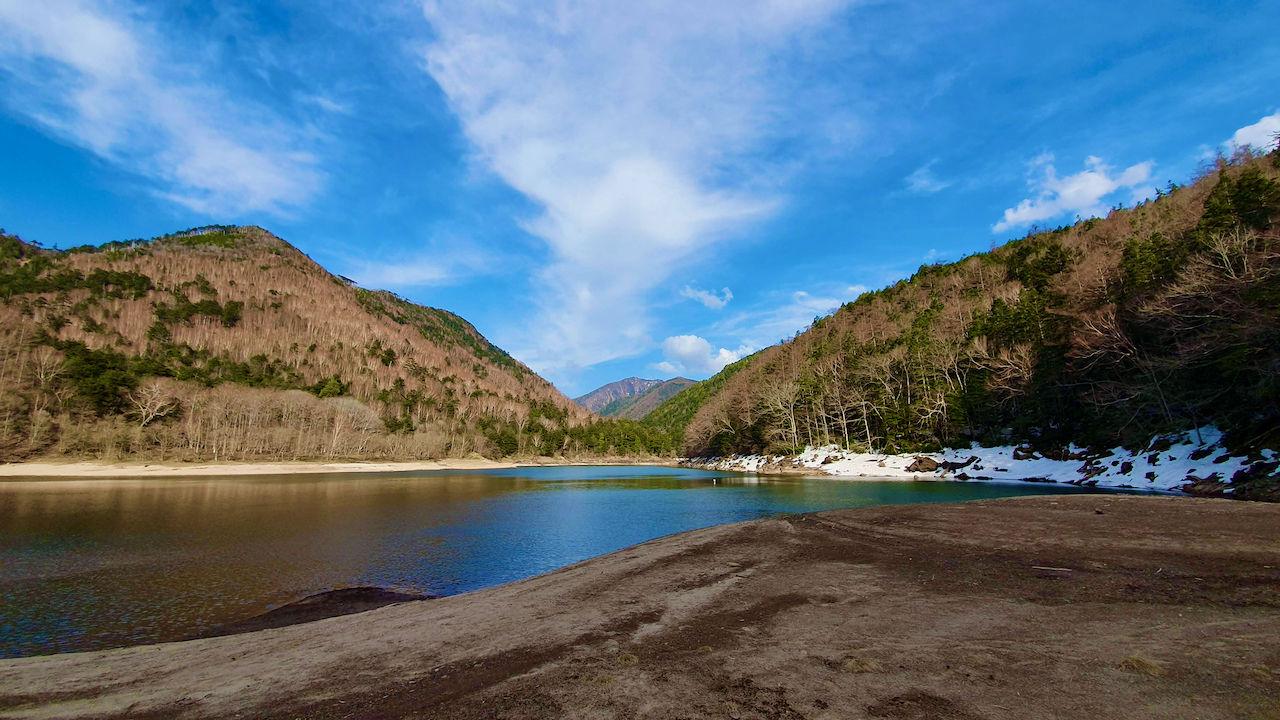
Karikomi Lake or Lake Karikomi is a hidden alpine lake in Nikko National Park, reached by a moderately challenging trail through ancient forest from Yumoto Onsen. It is one of the most remote and beautiful hiking destinations accessible from Nikko, and among the least visited despite being just a few kilometres from the onsen town.
This is also where I had one of the most memorable hiking experiences of my life in Japan, stumbling through snow in May, with no phone signal and growing concern about bears, toward a lake I could not see until I was almost standing beside it.
This article covers both: the practical trail guide you need to plan the hike, and the honest account of what it was actually like.
KARIKOMI LAKE HIKE — QUICK FACTS
- Location: Okunikko area, Nikko National Park, Tochigi Prefecture
- Trailhead: Yumoto Onsen (Yumoto Visitor Center)
- Trail type: Out-and-back to the lakes, or full through-trail to Kotoku Onsen
- Distance (out-and-back): ~6 km (return)
- Distance (full through-trail): ~10 km (one way)
- Elevation gain: ~200m (to the lake); full trail ~350m
- Time to lake (one way): 70–90 minutes
- Total round-trip time: 3–4 hours
- Difficulty: Moderate (AllTrails rated 3/5)
- Best season: May–November (trail closed in winter)
- Restrooms: None on trail
- Phone signal: None on most of the trail
- Bears: Asiatic black bears live in the park — bear bells recommended
About Karikomi Lake and Its Twin
Karikomi Lake and its neighbouring Lake Kirikomi are twin emerald lakes hidden high in the mountainous Okunikko area, far from the crowded World Heritage temples of central Nikko. They were formed thousands of years ago when lava from an ancient eruption of Mount Mitsudake blocked the valley and trapped the water. The lakes drain through underground channels rather than visible streams — one of the reasons the water stays so clear and still.
The names carry a legend. The Buddhist priest Shodo Shonin — the same monk who founded Nikko’s temples and shrines in the 8th century — heard that a giant serpent living near the lakes was terrorising the local people. He confronted it, cut it down, and laid its body to rest in the waters. The lakes were named in honour of his deed: kiri means to cut, kari means to hunt, komi means to push down.
According to the Japan National Tourism Organisation, the lakes remain remarkably quiet, surrounded by dense primeval forest and mossy volcanic rocks, the setting feeling tranquil and otherworldly.
The Trail — What You Need to Know
Starting Point
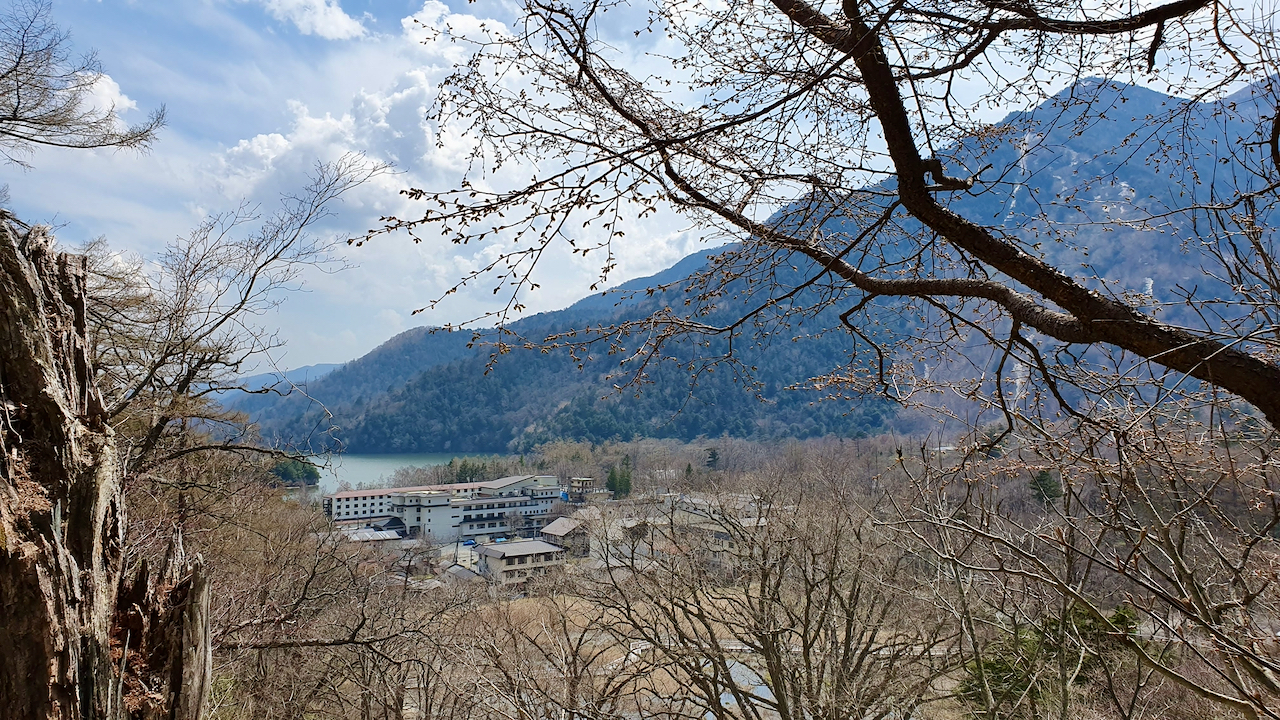
The trailhead is at Yumoto Visitor Center in Yumoto Onsen — a small visitor centre with a map board and the last toilet you will find before the lake. From Nikko Station or Tobu-Nikko Station, take a bus toward Yumoto Onsen (about 1 hour, covered by the Nikko World Heritage Area Pass). Get off at the final stop.
Two Versions of the Hike
Option 1 — Out-and-back to the lakes (recommended for most visitors):
- Distance: approximately 6 km return
- Time: 3–4 hours total
- Start and end: Yumoto Visitor Center
- Visits: Lake Karikomi (and Lake Kirikomi if you continue a little further)
Option 2 — Full through-trail to Kotoku Onsen:
- Distance: approximately 10 km one way
- Time: 4–5 hours
- Start: Yumoto Visitor Center
- End: Kotoku Onsen (different bus stop — check the return bus time before starting)
- Visits: Both lakes, Karenuma Swamp, Mt. Mitsudake slopes
- Note: The bus service departing from the end of the trail is limited, and hikers can be stranded if they arrive late. Check the Kotoku Iriguchi bus stop schedule before choosing this option.
💡 The full trail is the better experience if you have the time and fitness. It is more varied — the forests change character, Karenuma Swamp (a dry prairie-like open area) provides a dramatic contrast to the dense forest, and ending at Kotoku Onsen rather than retracing your steps feels like a proper completion. The wild monkeys sometimes seen near Kotoku Onsen are a bonus.
What the Trail is Like
The trail follows a circuitous route around Mt. Mitsudake (1,945 m). The mountain forest is primitive, with a rich variety of trees including the Japanese elkhorn cedar. Many tree roots, forced to grow horizontally by the shallow topsoil, cross the trail. Much of the route winds along the western and northern side of the mountain and remains largely in shadow.
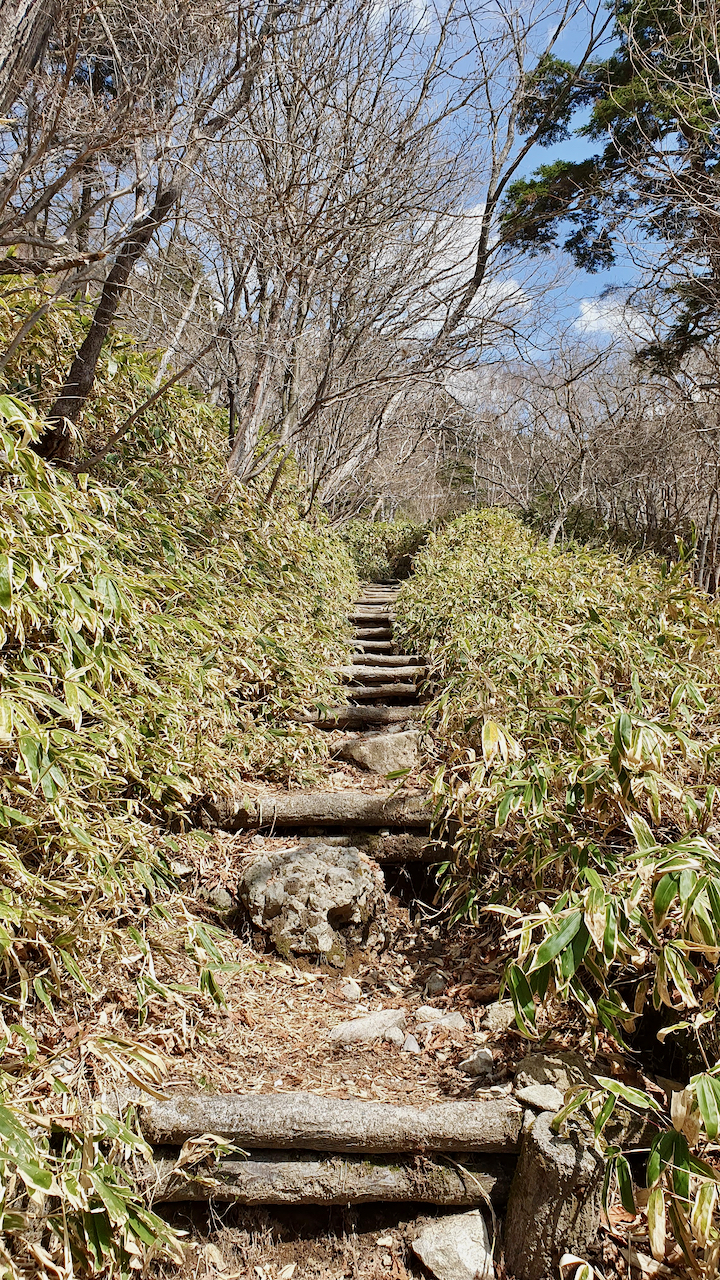
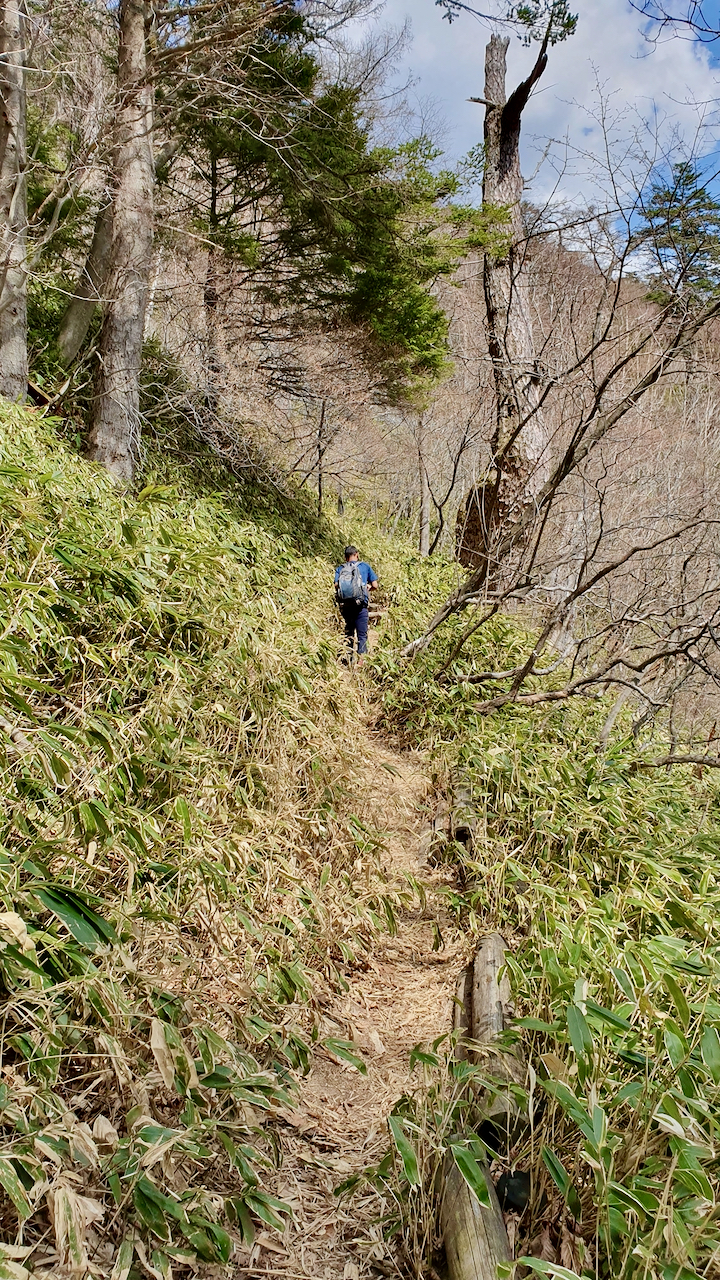
The path is generally clear and well-maintained, though the roots make footing careful work — particularly after rain or on the snow patches that persist into May. There are wooden bridges over streams and benches placed at intervals. The trail is marked but not heavily signposted — a downloaded offline map is useful.
One genuinely unusual feature of the trail: in places along the western and northern slopes of Mount Mitsudake, cool air blows from crevices and caves in the volcanic rock — a kind of natural air conditioning. In summer, these sections offer welcome relief from the heat. In spring, they explain why snow lingers on this side of the mountain long after it has melted elsewhere.
💡 Note for 2026 visitors: The Akechidaira Ropeway above Lake Chuzenji is closed for renovations until September 2027. If you were planning the ropeway as part of your Nikko day, the Karikomi Lake hike is the best alternative for experiencing Nikko’s mountain landscape from a different angle — without the cable car, this trail gives you the most immersive mountain experience available in the area.
Difficulty
Moderate. AllTrails users rate it a moderately challenging route that takes an average of 2 hours 56 minutes to complete for the standard out-and-back. Anyone with a reasonable fitness level can complete it. The terrain is uneven in places and the roots require attention, but there are no technical sections or exposed ridges.
My Personal Account — What It Was Actually Like
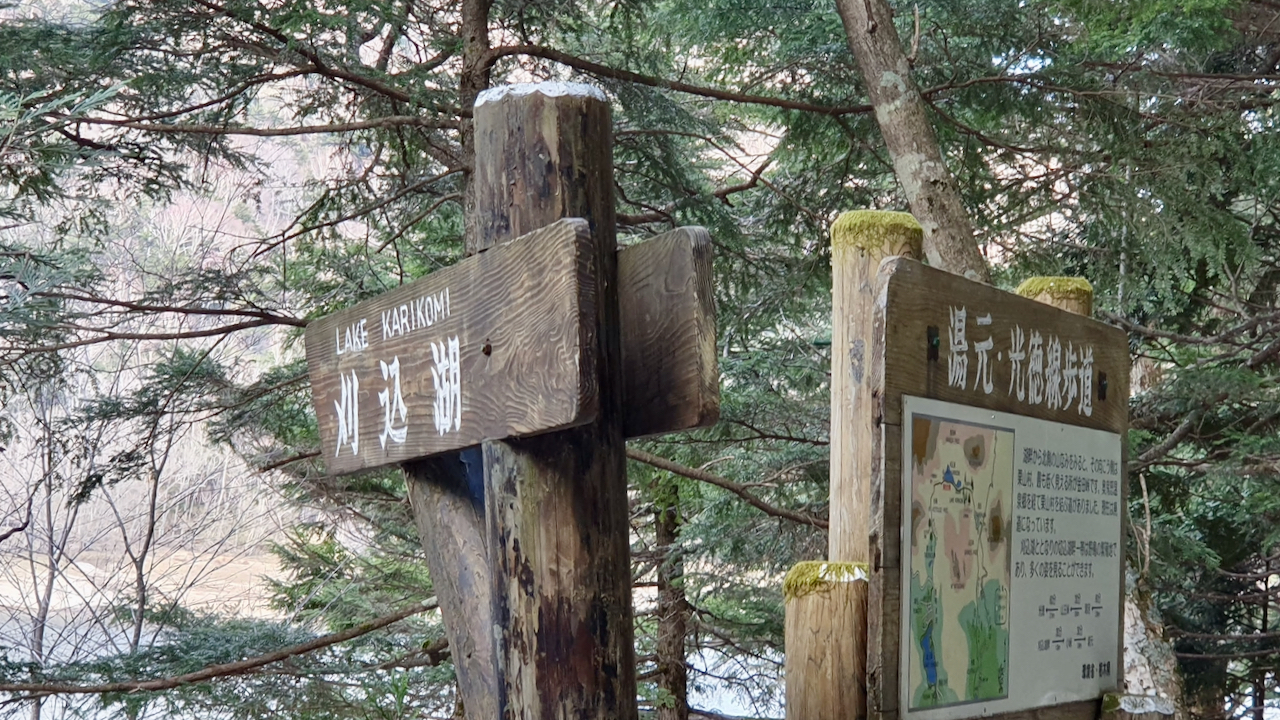
I crossed the road and looked at a steep ascend. You can expect a wooden signboard somewhere in this situation — that’s what Japan is all about — system! But this time, I didn’t find any. It was already 2 at noon. We had just completed our lunch — me and a buddy of mine. Hesitantly, we agreed to climb. This is how our hike to Karikomi Lake in Japan started.
Beginning of the Hike
For the initial 10 minutes, it was all about rising through man-made stairs. It was mid-May in Japan. Although spring, it did not look like one. To me, winter left its marks everywhere. The trees deep in the mountains were grey without leaves. The mountains themselves looked empty. I imagined them buried in snow during winter a month back. In a few months, the trees would twist in brilliant autumn colours. I was cursing my luck; I wished I were here earlier or later. But in that instance, I would have missed this desolation.
Snow During the Hike
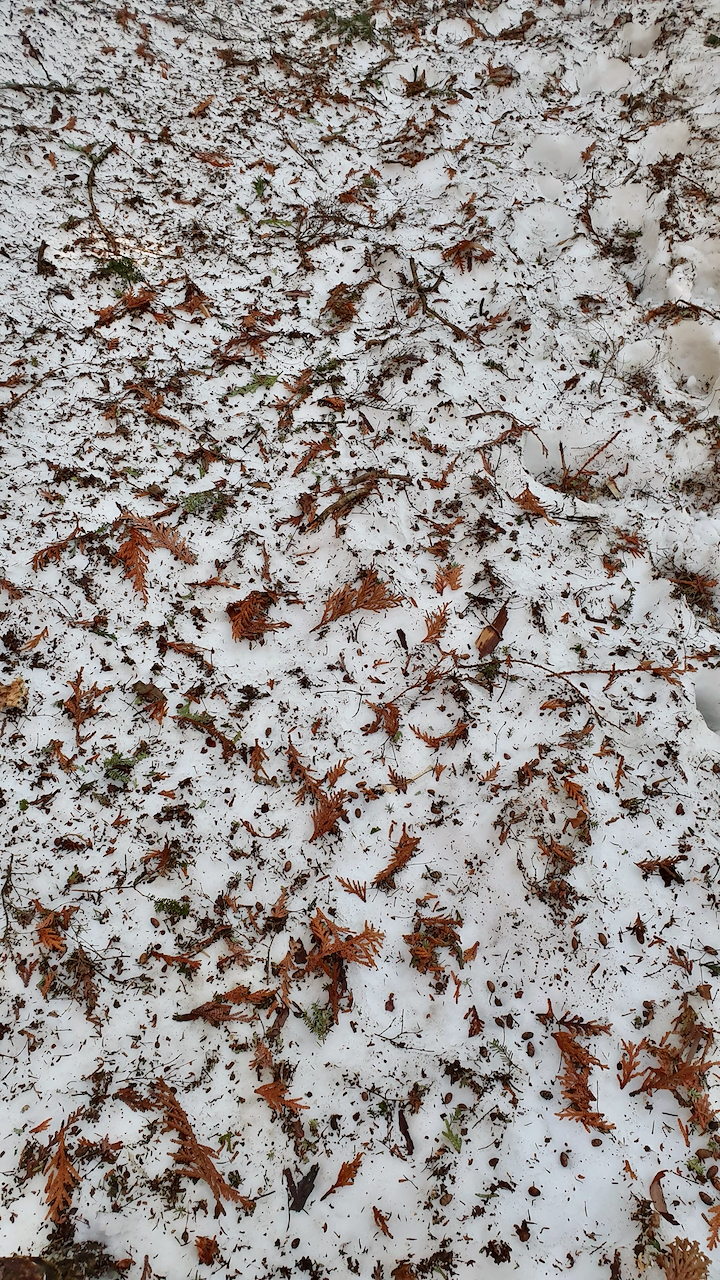
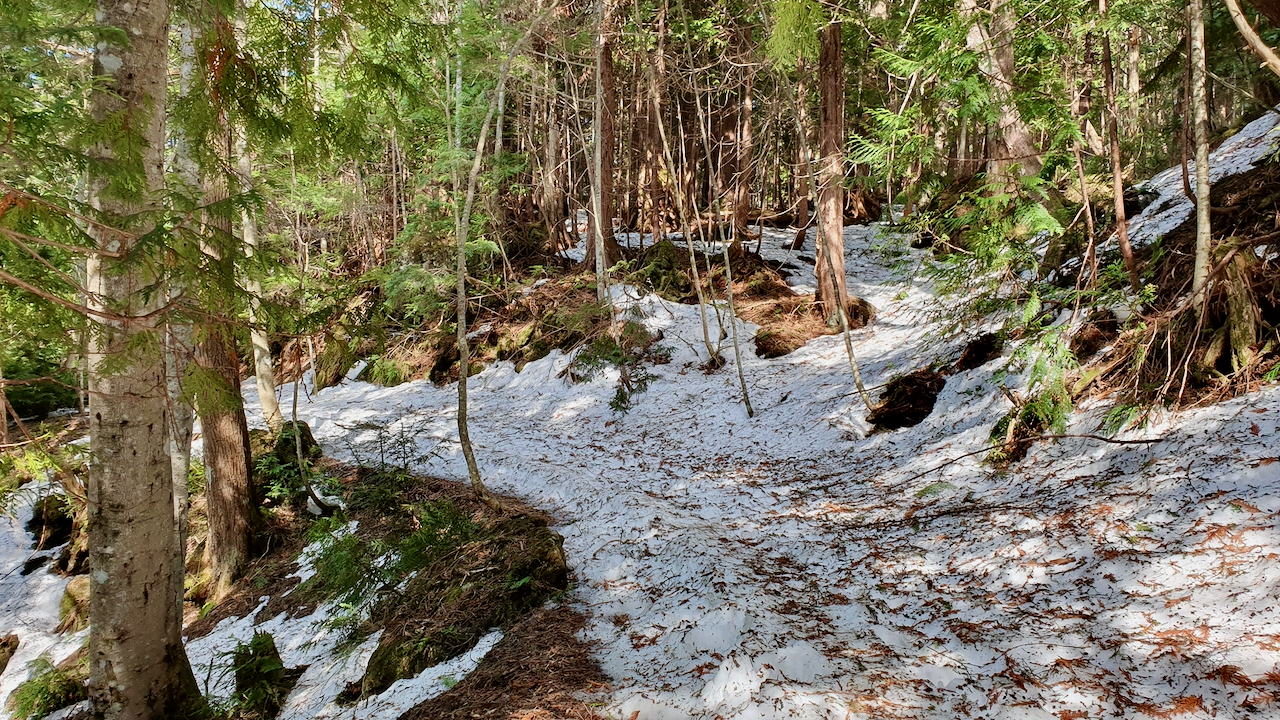
I was pondering all these and suddenly saw black patches of mud. Within the next 5 minutes, I stepped on ice. As I approached, the amount of whiteness beneath my feet increased. There was no one on the trail. My companion and I were all alone. The snow elated us — we are from a tropical country and had never experienced snowfall at home, where “bitter winter” means 10 degrees Celsius.
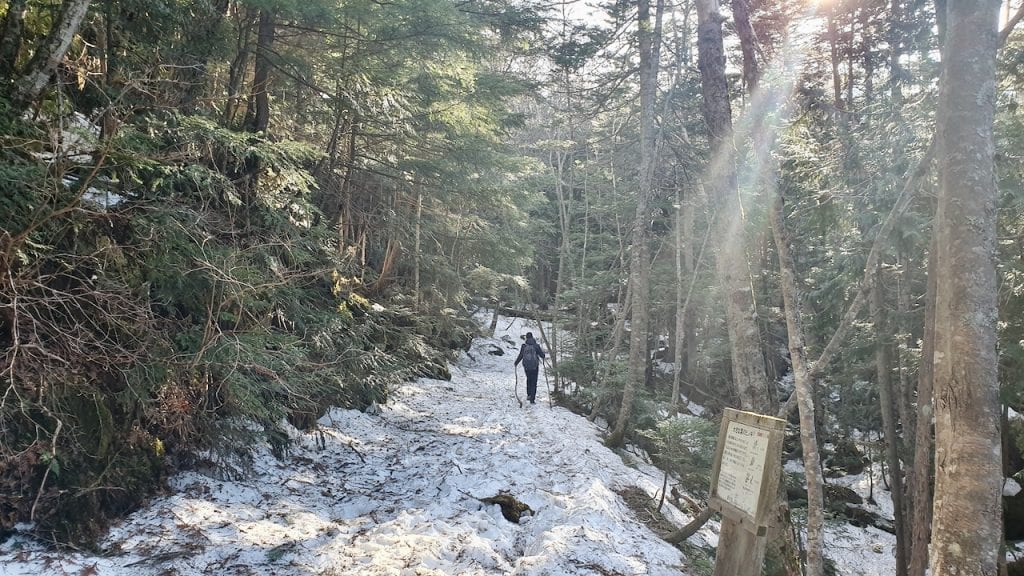
I tried to break some dead sticks to use them as a hiking pole. They were too fragile. I needed help and continued trying with fresh ones.
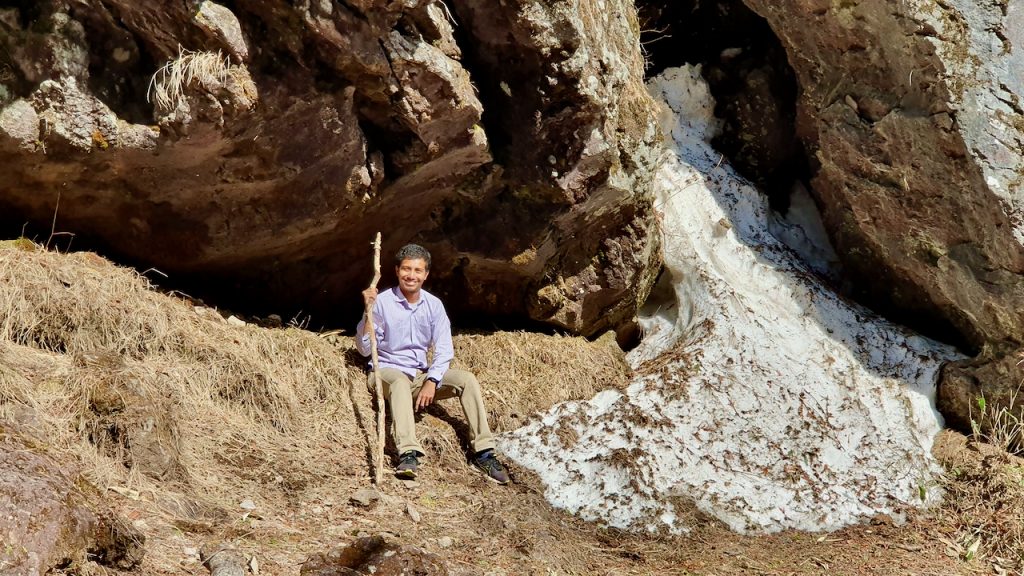
Our excitement about walking on ice receded. First, it became very slippery and made me fall down twice. As I was not expecting such a trail, my shoes did not have proper grip. Second, as the soft ice broke whenever we were striding forward, our feet went beneath it. We had to step with utmost care. Third, the pathway pointed in several confusing directions. Last, the sun started losing its glow by every minute.
Unsure how far the trail continued, we had to stop to review our plan. Should we go forward or back? Any sensible person would have chosen the first option. We had lost our minds that day, so, cursing each other and our luck, we marched forward.
To make the situation worse, I felt cold. The fancy fleece that had been sufficient an hour earlier was no longer warming me.
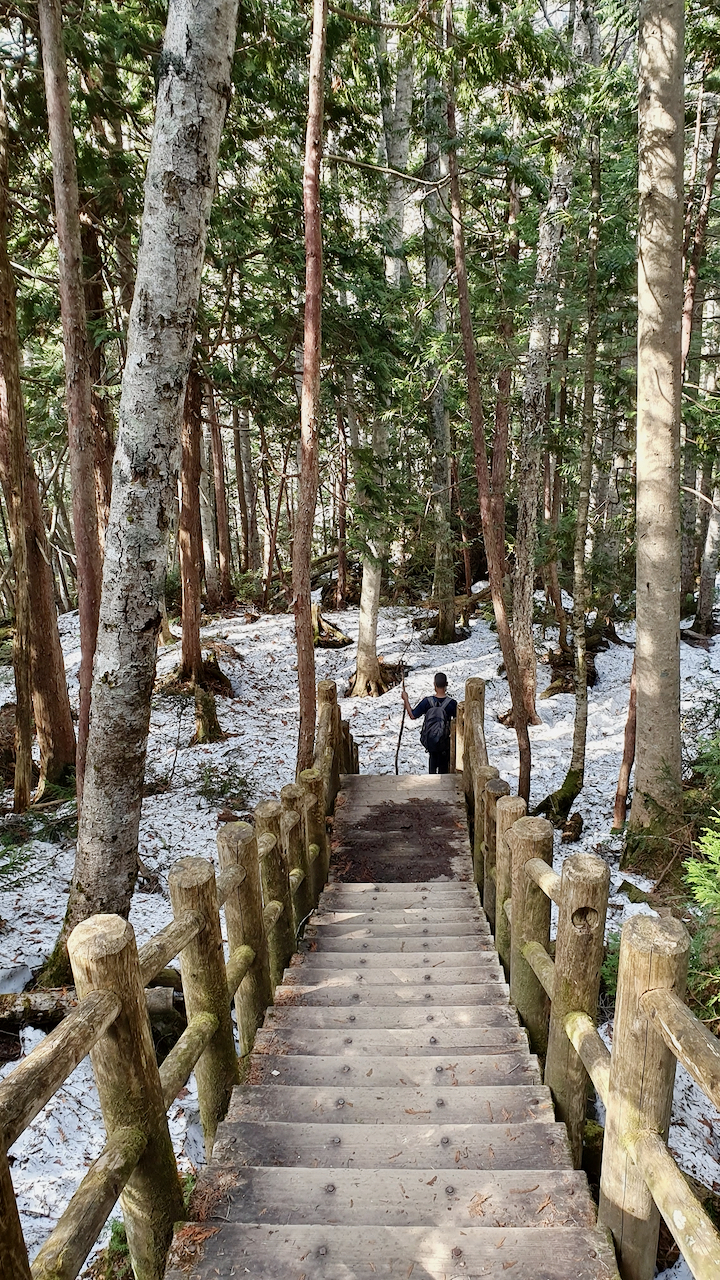
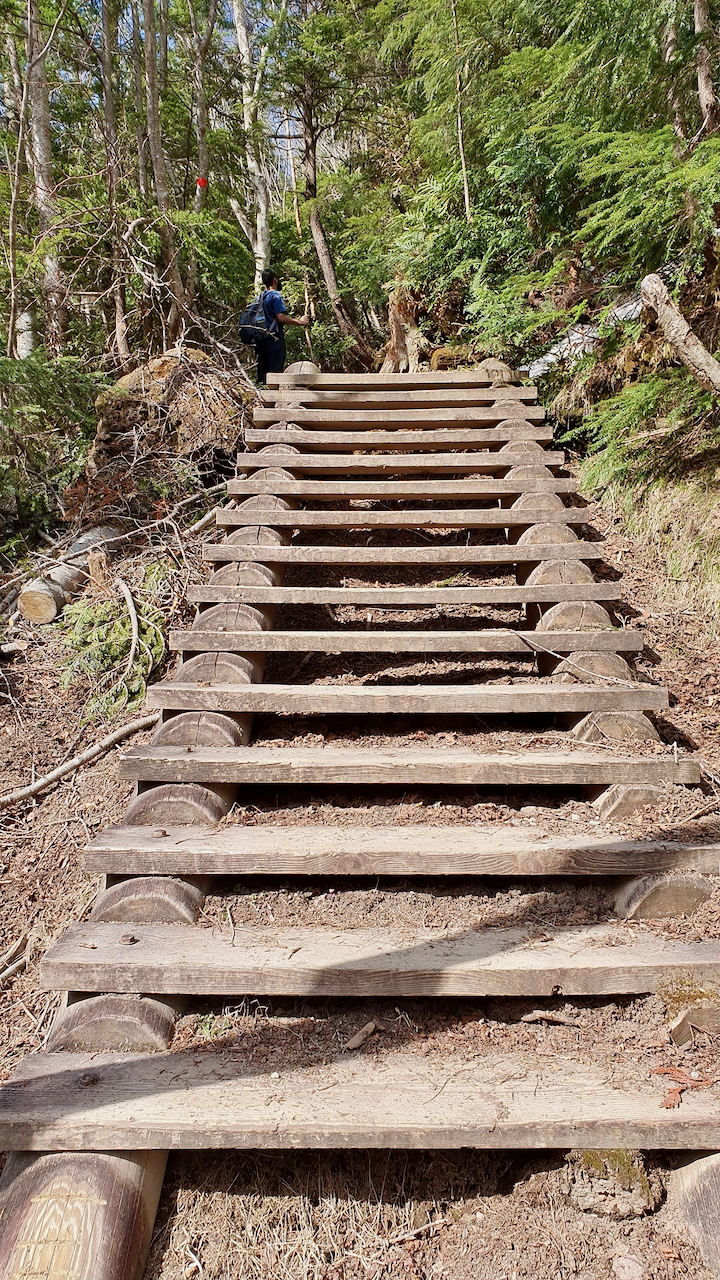
In the meantime, we crossed several wooden bridges and climbed stairs. The dead leaves on the ice created admirable natural patterns in some places.
The Final Leg
The forest became dense at some points and made it difficult to move. In films, a bear roams around in such kind of forest. It was not a film set, but the actual world. As much as I would want to see a bear coming out of the forest in a film, I was not at all interested in it happening in actual life. I panicked — a bit.
Are there bears in the forest? Any wolves?
I pulled out my phone to search on Google. But when did I ever get signal when I needed it most? My phone could not intercept any network coverage, and we were in the middle of nowhere.
💡 The honest bear answer (since my phone could not tell me): Yes, Asiatic black bears (tsuki-no-waguma) do live in Nikko National Park. Attacks on hikers are extremely rare — bears generally avoid humans. However, bear bells attached to your pack are strongly recommended, particularly for small groups. They are sold at outdoor shops in Nikko town. Making noise on the trail (talking, clapping occasionally) is the standard precaution. Wolves have been extinct in Japan since the early 20th century, so at least that concern was unfounded.
Ignorance is bliss — so we pressed on.
When I started missing my scarf too, I spotted something on the horizon — a glimpse of emptiness. And I can vouch, I had rarely appreciated emptiness so much in my life.
We descended. The trail ended. We reached our destination.
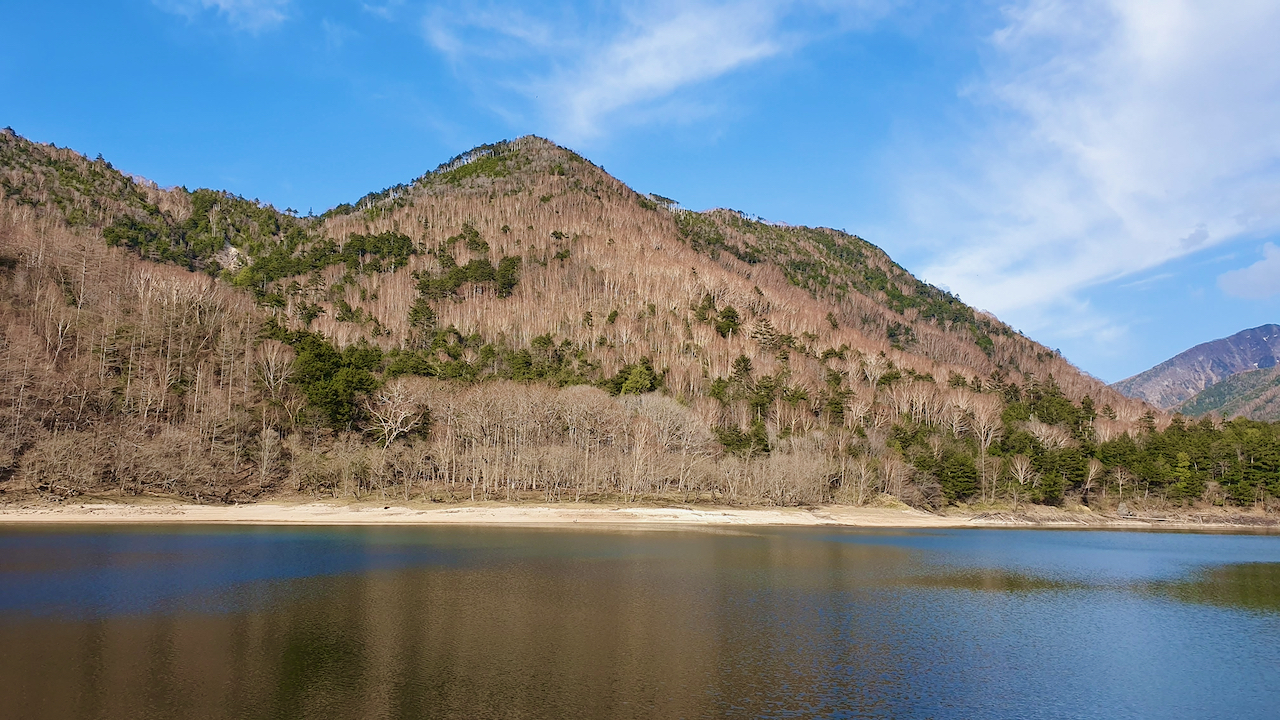
We were right beside Karikomi Lake.
A majestic panorama of mountains surrounded us. An obvious reflection of Mount Taro on Lake Karikomi dazzled our minds. The water was so calm I could not see any waves. I wanted to jump in and indulge myself. But I did not want to disturb the meditating lake. Rather, I perched on a fallen tree, staring at the mountains, the lake, and its tranquillity.
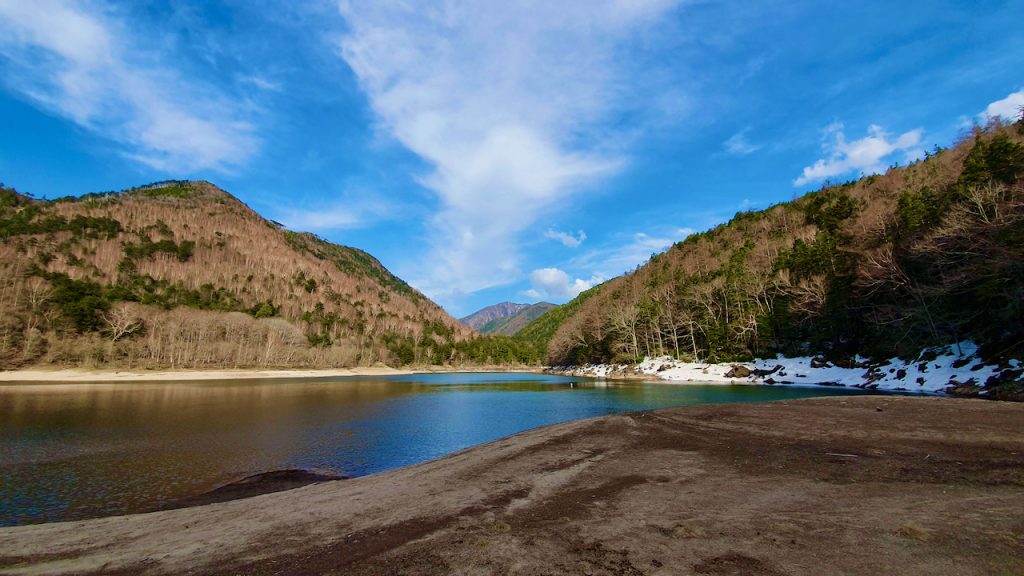
The time ceased. A pin drop of silence. Not a single human being to take away this silence. Just an hour of journey had taken me to a novel world. The actual world. A world expected to be just like this before the humans invaded.
Practical Information
Getting to Yumoto Onsen (Trailhead)
From Tobu-Nikko Station or JR Nikko Station, take the bus toward Yumoto Onsen. Journey time approximately 60–70 minutes. The Nikko World Heritage Area Pass covers this bus route — buy it at Tobu-Nikko Station before you start.
Get off at the Yumoto Onsen terminal stop. The Yumoto Visitor Center and trailhead are a short walk from the bus stop.
⚠️ Check the bus schedule. Buses from Nikko to Yumoto Onsen run infrequently — sometimes only once per hour. And if you are doing the full through-trail to Kotoku Onsen, the return bus from Kotoku Iriguchi is even less frequent. Check timetables at Tobu-Nikko Station before departure and identify your last possible return bus before starting.
💡 Nikko All Area Pass: The bus from Nikko to Yumoto Onsen costs approximately ¥1,750 one way (¥3,500 round trip) without a pass. The Nikko All Area Pass (¥4,000 for 4 days) covers this bus route in full and pays for itself on this single return journey. Buy it at Tobu-Nikko Station.
💡 Stay overnight in Yumoto Onsen: For the best experience, stay overnight in Yumoto Onsen the night before and start the hike at dawn. The forest is completely empty in the early morning and the light through the trees is extraordinary. Kyukamura Nikko-Yumoto on Agoda is the main onsen hotel at the trailhead — stepping out of the hot spring bath and onto the trail the next morning is a uniquely Japanese experience.
💡 Download your map offline. Phone signal disappears almost immediately once you enter the forest — before you even reach the first significant climb. Download the AllTrails map for this trail (or Google Maps offline) before you leave Yumoto Onsen.
💡 Japan eSIM: If you are relying on your phone for navigation throughout your Japan trip, get a Japan eSIM via Yesim before your flight — it works everywhere you have signal, which is most of Japan outside dense forest.
Best Time to Visit
| Season | What to expect |
|---|---|
| May–June | Trail opens, snow possible in May, fresh greenery from June |
| July–August | Lush green forest, comfortable temperature, clearest trail |
| September–October | Best season — autumn foliage turns the forest gold and red |
| November | Late foliage, cold, early snow possible |
| December–April | Trail closed or very difficult due to deep snow |
💡 Best season: September to mid-October for autumn foliage. The forests surrounding the trail turn gold, red, and amber — the official Nikko guide notes that from late August, the temperature fluctuates between hot days and cold nights, slowly turning the leaves a beautiful flame-red.
What to Bring
- Hiking shoes with ankle support and grip (trail can be muddy and rooted)
- Bear bell (sold in Nikko town outdoor shops — strongly recommended)
- Snacks and lunch (no restaurants on trail)
- Water (no reliable water sources on trail)
- Warm layer — temperature drops significantly at altitude
- Offline map downloaded (no phone signal on most of the trail)
- Rain jacket (weather changes quickly in the Okunikko mountains)
Restrooms
None on the trail. Use the facilities at the Yumoto Visitor Center before starting.
Extending the Hike — Lake Kirikomi
Lake Kirikomi sits just beyond Lake Karikomi — approximately 15–20 minutes further on the trail. The two lakes are connected except in periods of very low rainfall. If you have the time and energy, continuing to Kirikomi adds minimal distance but significantly enhances the overall experience — the second lake is slightly larger and the surrounding forest is even denser.
Karikomi Lake vs Other Nikko Hikes
How does Karikomi Lake compare to other hiking options in the Nikko area?
| Hike | Distance | Time | Difficulty | What makes it distinctive |
|---|---|---|---|---|
| Karikomi Lake (out-and-back) | ~6 km | 3–4 hours | Moderate | Twin emerald lakes, ancient forest, complete solitude |
| Karikomi–Kirikomi loop (full trail) | ~10 km | 4–5 hours | Moderate | Two lakes, Karenuma Swamp, ends at different onsen |
| Senjogahara Plateau | ~8 km | 3 hours | Easy | Open marshland boardwalk, panoramic mountain views |
| Lake Chuzenji north bank | ~4.6 km | 1.5 hours | Easy | Lakeside walk, closest to Kegon Falls |
| Mount Nantai | ~14 km | 6–8 hours | Hard | Summit hike, sacred mountain, requires early start |
The honest verdict: Karikomi Lake is the right choice for visitors who want genuine wilderness immersion without extreme difficulty. Senjogahara is more accessible and gives broader views. Mount Nantai is for serious hikers only. The Karikomi trail sits in the middle — rewarding and remote without being punishing.
Is the Karikomi Lake Hike Worth It?
Yes — without hesitation. But with an honest qualification.
The hike rewards effort with silence. There are no gift shops at the lake, no vending machines, no other hikers on most days. What you get is two hours of ancient forest — the kind that has been growing undisturbed for centuries, where tree roots cross the path because the topsoil is too shallow to grow downward, and where the only sound as you approach the lake is the crunch of your own footsteps.
When the lake appears at the end of the trail, still and emerald green, reflecting the forest and the sky without a single ripple, you will understand why Fuad’s description of it as “the actual world, a world expected to be just like this before the humans invaded” is not hyperbole.
If you want crowds, waterfalls, and cable cars — Kegon Falls and Lake Chuzenji are a better fit. If you want to be alone with something genuinely beautiful — walk to Karikomi Lake.
Frequently Asked Questions
How long is the hike to Karikomi Lake?
Approximately 70–90 minutes one way from the Yumoto Visitor Center trailhead. The round trip takes 3–4 hours. If you continue to Lake Kirikomi and return, add another 30–40 minutes.
Is the Karikomi Lake hike difficult?
Moderate. The trail has significant tree roots crossing the path, some steep sections, and can be slippery after rain or in early season when snow patches remain. Anyone with a reasonable fitness level can complete it. Proper hiking shoes with grip are important.
Is the trail open in winter?
No — the trail is closed or extremely challenging in winter due to deep snow. The recommended season is May to November, with the peak experience in September–October for autumn foliage.
Are there bears on the Karikomi Lake trail?
Asiatic black bears live in Nikko National Park. Attacks on hikers are very rare — bears generally avoid humans. Wear a bear bell on your pack and make noise on the trail, particularly when moving through dense forest sections. Bear bells are available in outdoor shops in Nikko town.
Can I do this hike as a day trip from Tokyo?
Yes, but it requires an early start. From Tokyo, take the Tobu Limited Express from Asakusa to Tobu-Nikko (1 hour 50 minutes), then the bus to Yumoto Onsen (another 60–70 minutes). An 8 AM departure from Tokyo gets you to the trailhead by approximately 11 AM, enough for the out-and-back hike with time for Yumoto Onsen afterward.
Can I take a guided hike to Karikomi Lake?
Yes — guided tours are available from Yumoto Onsen that cover both lakes with an English-speaking guide. These are particularly useful for solo hikers who want company on the bear-territory sections of the trail.
Other Hidden Hikes in Japan
If the Karikomi Lake trail appeals to you, these are the other hikes worth knowing about:
- Karikomi to Kirikomi loop (Nikko) — extend the same trail to the second lake and loop out at Kotoku Onsen
- Senjogahara Plateau (Nikko) — open marshland boardwalk with panoramic mountain views, easy difficulty, full contrast to the dense forest of Karikomi
- Karimomi Lake hike (Sapporo area) — if you are visiting Hokkaido, day trips from Sapporo include several mountain hiking options in different national parks
After the hike, you can relax in the free foot bath at Yumoto Onsen — the origin of boiling water, 10 minutes walk from the trailhead. After spending hours on a mountain trail, lowering your feet into the mineral-rich water is one of those simple experiences that stays with you.
If this hike is part of a wider Nikko trip, read the full Things to Do in Nikko guide… And if you are planning the broader Japan trip, start with the 4-Day Tokyo Itinerary — Nikko is an easy day trip or weekend extension from Tokyo, and slots in as Days 6–7 of my 2-week Japan itinerary.
Loved this hike? Pin it for later!

Leave a reply