
Bangladesh is one of South Asia’s most overlooked travel destinations — and Dhaka, its teeming, colourful capital, is one of the most misunderstood cities on earth. Most travellers fly over it on the way to India or Southeast Asia. That is their loss, and quietly, your gain.
Dhaka is a city of extraordinary contradictions. Narrow medieval lanes crammed with rickshaws exist three streets away from glass-fronted towers. A 17th-century Mughal fort shares a city skyline with a parliament building designed by one of America’s greatest architects. Six-thousand mosques echo the call to prayer while temple bells ring out from the same neighbourhood. You will find street food that will ruin restaurant meals for you for a year. You will find people who, despite everything — the chaos, the heat, the traffic — smile at strangers.
Come prepared for sensory overload. Leave with memories that don’t fade.
Here is your complete guide to the best places to visit in Dhaka, written by someone who lives here and has been exploring it for decades.
Quick Facts Before You Go
| Best time to visit | October – March (cool and dry) |
| Currency | Bangladeshi Taka (BDT). 1 USD ≈ 125 BDT |
| Language | Bengali (Bangla). English understood in hotels & restaurants |
| Getting around | CNG auto-rickshaws, Uber, Pathao ride-hailing app, rickshaws |
| Safety | Generally safe for tourists. Keep valuables close in crowded Old Dhaka |
| Visa | On-arrival visa available for most nationalities at Hazrat Shahjalal Airport |
| Airport to city | 40–90 minutes depending on traffic. Metered CNG ≈ BDT 300–500 |
How Many Days Do You Need in Dhaka?
2 days is the realistic minimum to cover the headline attractions. 3–4 days gives you time to slow down, explore Old Dhaka properly, catch a performance at Shilpakala, and do a day trip. 5+ days — use Dhaka as your base and explore beyond the city (see the Day Trips section below).
Suggested 2-Day Dhaka Itinerary
Day 1 — Old Dhaka & History
Morning: Lalbag Fort → Ahsan Manzil → Armenian Church → Tara Masjid Afternoon: Sadarghat (catch the boat traffic on Buriganga) → Hussaini Dalan → Nilkhet Book Market
Evening: Street food dinner in Old Dhaka
Day 2 — Modern Dhaka & Culture
Morning: National Parliament → Chandrima Uddan → Shaheed Minar Afternoon: Bangladesh National Museum → Liberation War Museum → TSC
Evening: Bashundhara City (shopping) → rooftop dinner
Where to Stay in Dhaka
Dhaka is not a typical backpacker city — budget accommodation quality varies enormously. The good news is that mid-range and above options offer excellent value compared to other Asian capitals.
Luxury Hotels in Dhaka
- Le Meridien Dhaka — the most prestigious address in the city
- Radisson Blu Dhaka — great pool and rooftop views
- The Westin Dhaka — reliable international standard
- Pan Pacific Sonargaon — iconic Dhaka landmark
- Four Points by Sheraton
- InterContinental Dhaka
Mid-Range Hotels in Dhaka
Budget Hotels in Dhaka
The 30 Best Places to Visit in Dhaka
National Parliament – An architectural Marvel
If you visit one building in Bangladesh, make it this one.
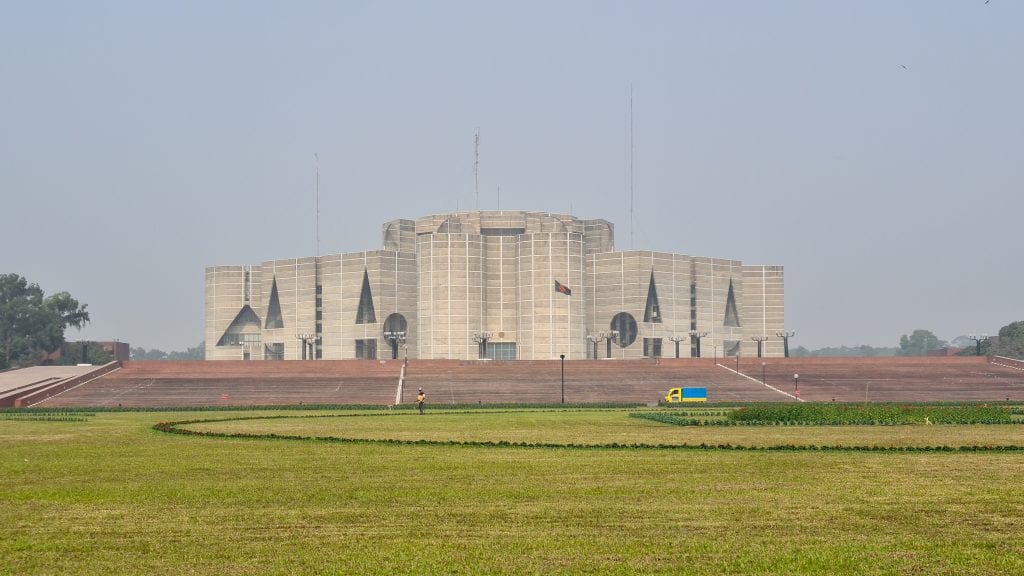
The National Parliament of Bangladesh — Jatiyo Sangshad Bhaban — is not just a government building. It is widely considered one of the greatest works of 20th-century architecture anywhere in the world. Designed by the legendary American architect Louis I. Kahn and completed in 1982, the complex sprawls across 200 acres, making it one of the largest parliament complexes on earth.
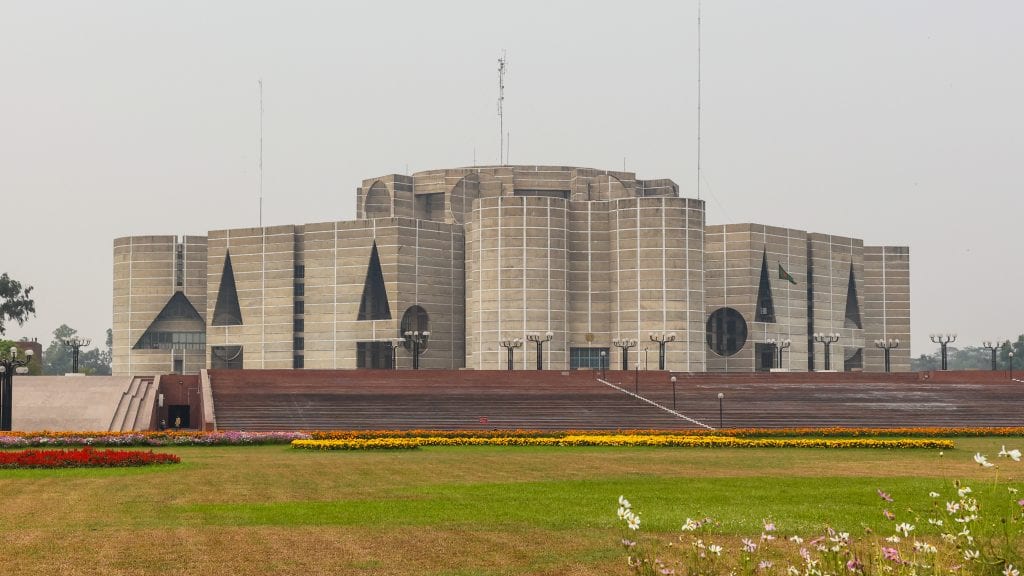
The main building is a geometric masterpiece — a central octagonal block surrounded by eight satellite wings, all clad in white marble and local brick. The interplay of light through the building’s massive geometric cutouts changes hour by hour. At dawn, shafts of light slice through the corridors. At golden hour, the entire structure glows amber over its artificial lake.
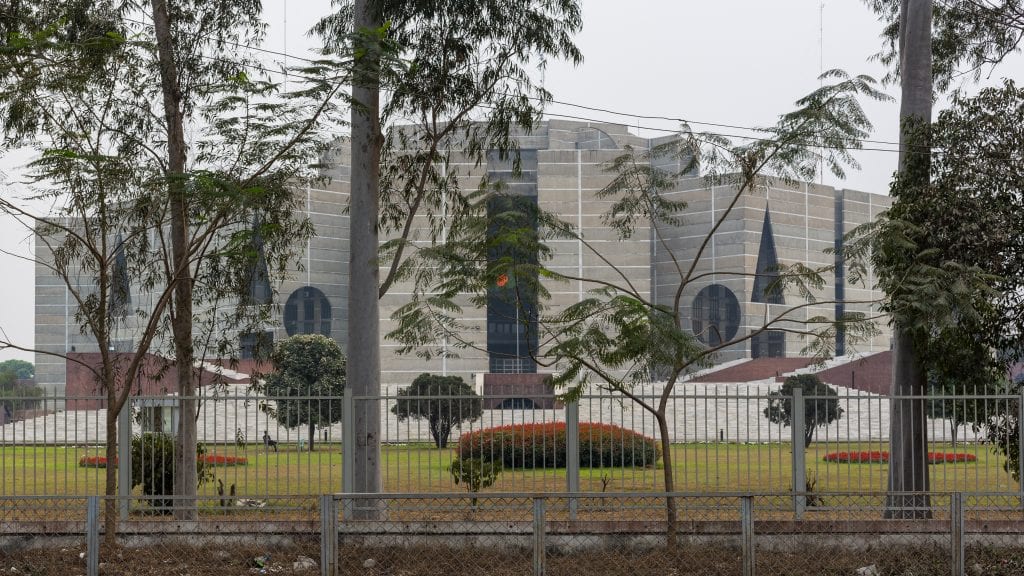
Walk around the full perimeter — it takes about 30 minutes and rewards you with entirely different perspectives at each turn. The backside, accessible via a short detour past the prime minister’s residence, reveals the water reservoirs that Kahn designed to moderate the building’s temperature naturally.
📸 Photography tip: The reflection in the lake at dawn or dusk is the shot every architecture photographer wants. Get there early before the crowds.
Entrance fee
Free (exterior), you need to seek a permission from the parliament authority.
Best time to visit
6:00–8:00 AM or 5:00–7:00 PM
Shaheed Minar – Monument to the Language Martyrs
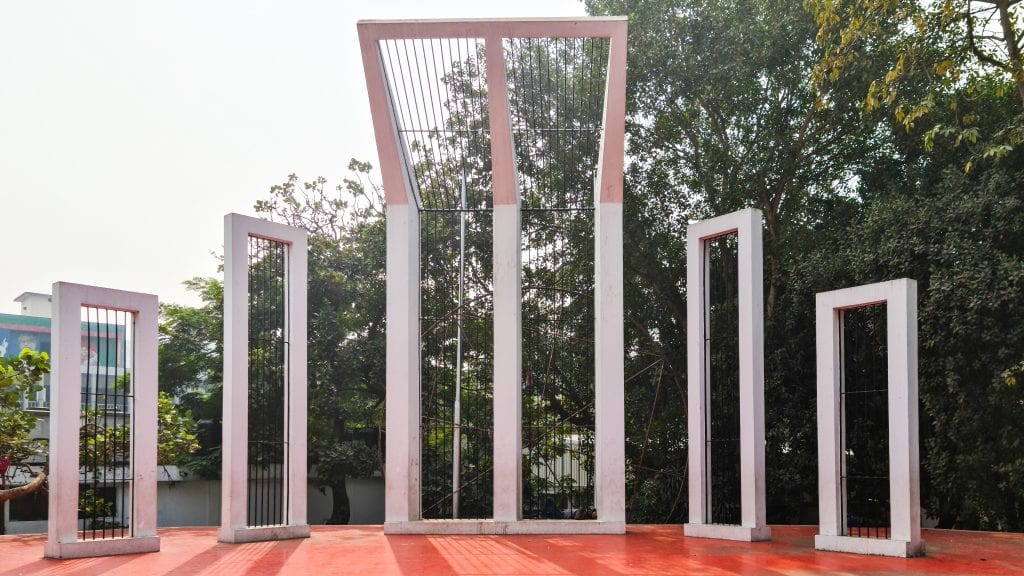
On 21 February 1952, students and activists in Dhaka were shot dead by police — not for political sedition, not for territorial resistance, but for demanding the right to speak their own language.
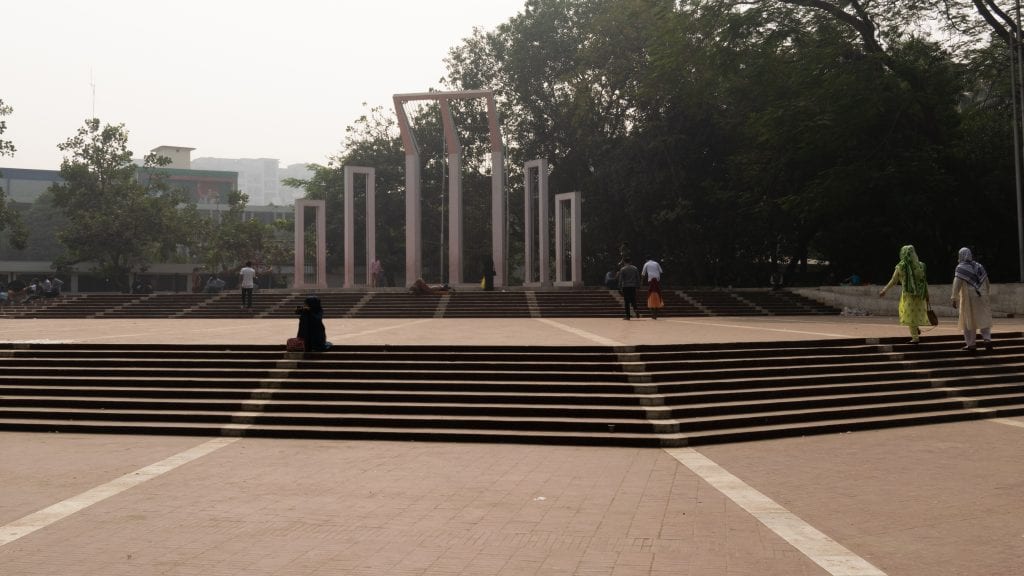
Bangladesh (then East Pakistan) had a larger population than West Pakistan, yet the ruling government in Karachi declared Urdu — spoken by a minority — as the sole national language. The people of Bengal said no. They took to the streets. The police opened fire.
That sacrifice gave the world International Mother Language Day, now observed globally on 21 February by UNESCO. The Shaheed Minar — Martyr’s Minaret — was built to honour the people who died for the right to say “আমার ভাষা” (“my language”).
The 14-metre marble structure is at its most powerful on the morning of 21 February, when tens of thousands of barefoot people walk to lay flowers — the entire platform becomes a carpet of white, orange, and red blooms before sunrise.
Entrance Fee
Free
Opening Hours
24×7
Ahsan Manzil – The Pink Palace of Old Dhaka
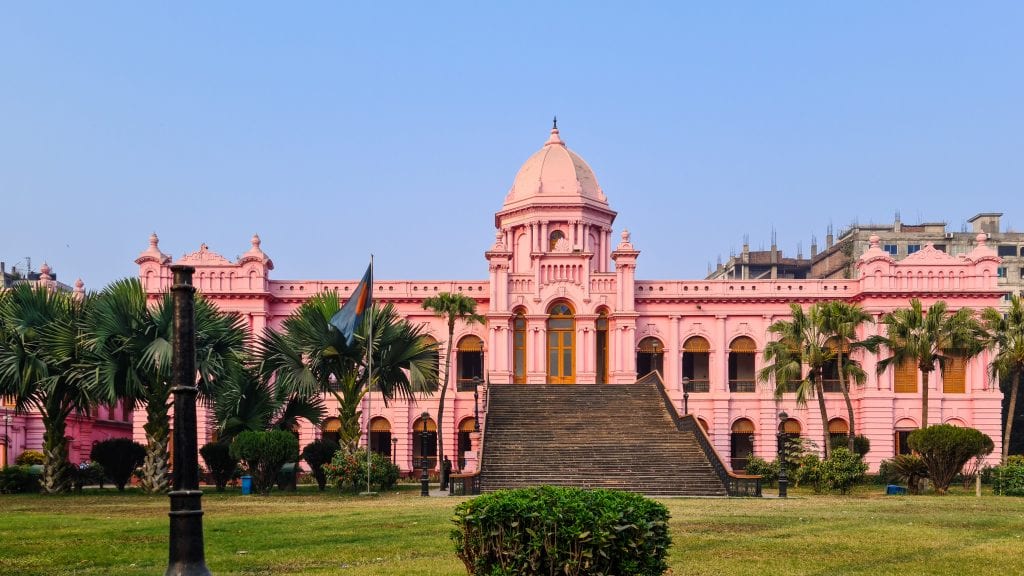
Built in 1872 and painted a distinctive dusty pink, Ahsan Manzil was the official residence of the Nawabs of Dhaka — the wealthiest Muslim landlord family of the Bengal province during British rule. Standing right on the bank of the Buriganga River, it was designed to project power and refinement, and it still does.
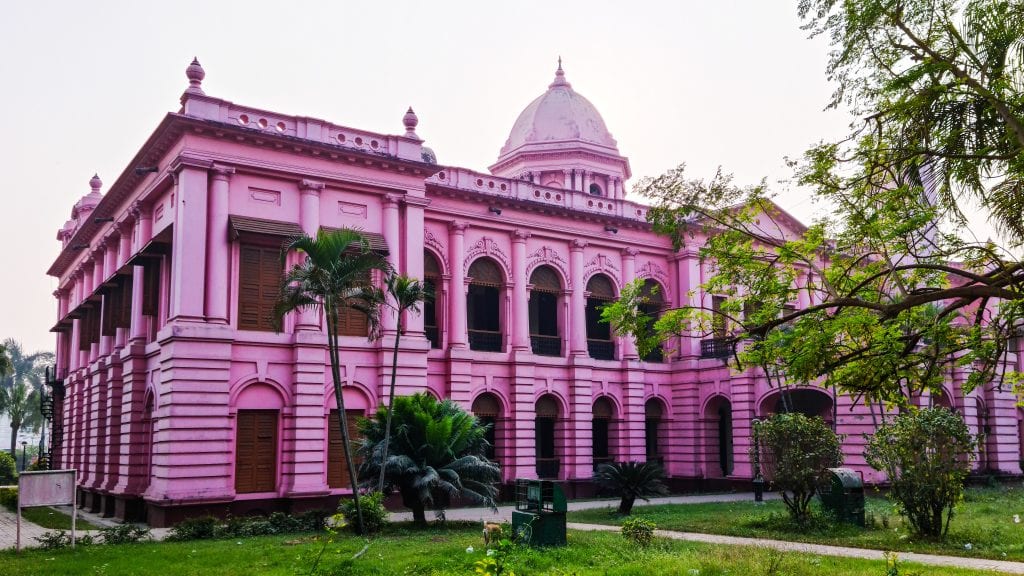
The architecture blends Mughal, Gothic, and Baroque influences in a combination that sounds chaotic on paper but is quietly beautiful in person. The grand central dome, the arched verandas, the riverside lawn — it has a faded grandeur that is deeply photogenic.
Now a museum, the interior holds furniture, portraits, and artifacts from the Nawab era. Budget one to two hours for a proper visit. The rear view from the river (best seen by taking a small boat from Sadarghat) is arguably more striking than the famous frontal view.
Entrance Fee
- BDT 20 (Bangladeshis)
- BDT 300 (SAARC nationals)
- BDT 500 (all others)
Opening Hours
- Apr–Sep: Sat–Wed, 10:30 AM–5:30 PM; Fri, 3:00–7:30 PM
- Oct–Mar: Sat–Wed, 9:30 AM–4:30 PM; Fri, 3:00–7:30 PM
- Closed Thursday and Eid days
Lalbag Fort – The Haunted Mughal Fortress
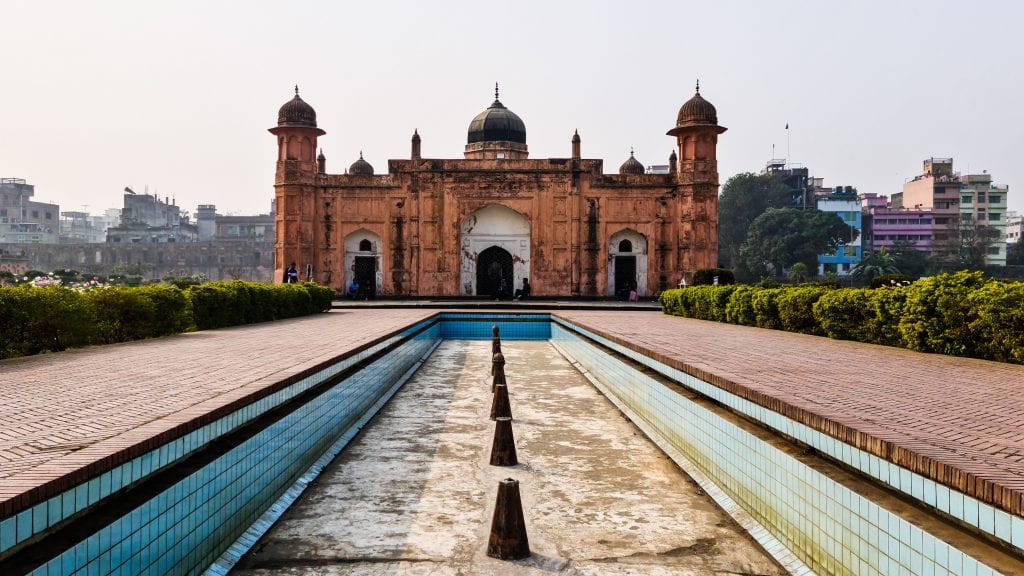
Begun in 1678 by Prince Muhammad Azam — son of the great Mughal Emperor Aurangzeb — Lalbag Fort was never completed. The reason is one of Dhaka’s most poignant stories.
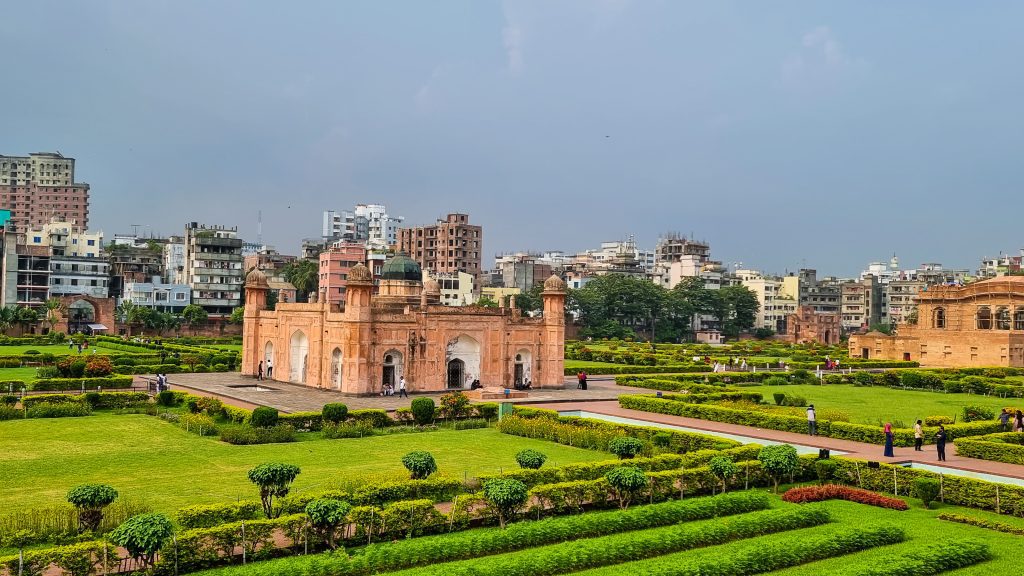
When the next governor, Shaista Khan, arrived, his beloved daughter Pari Bibi died suddenly within the fort complex. Overcome with grief and superstition, Khan declared the fort cursed and halted all construction. He buried his daughter inside the grounds — her tomb, Pari Bibir Mazar, remains one of the most visited spots within the complex today.
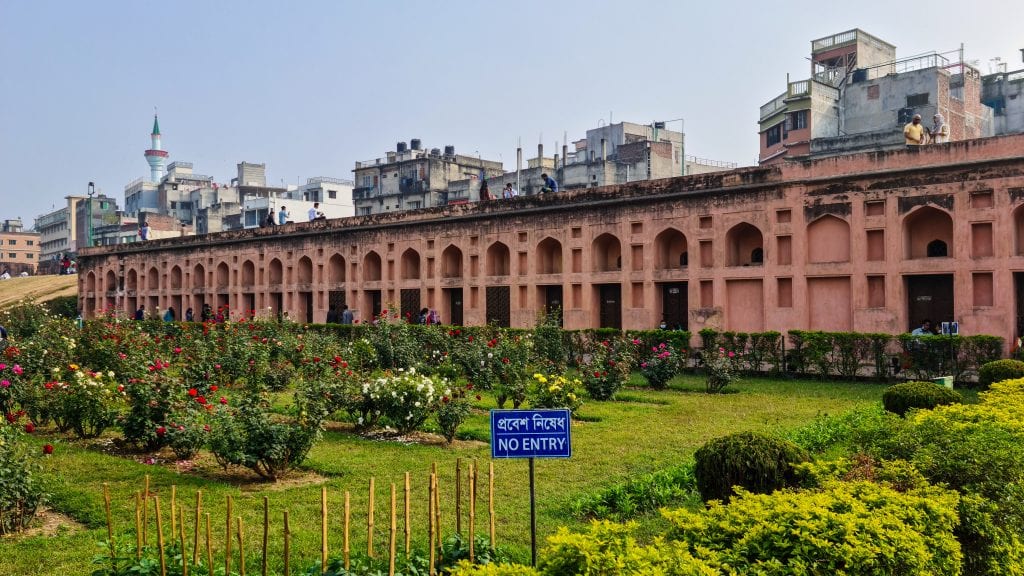
The fort has three main structures: the Mosque (1678), the Tomb of Pari Bibi, and the Diwan-i-Aam (the audience hall). Small manicured gardens with roses and marigolds fill the grounds between them.
Arrive before 10:00 AM on weekdays to beat the school groups. The fort is surprisingly photogenic when the light hits the red-brick archways in the morning.
Entrance Fee
- BDT 20 (Bangladeshis)
- BDT 100 (SAARC nationals)
- BDT 200 (all others)
Opening Hours
- Apr–Sep: Sat–Wed, 10:00 AM–6:00 PM; Fri, 10:00 AM–6:00 PM (closed 12:30–2:30 PM)
- Oct–Mar: Sat–Wed, 9:00 AM–5:00 PM
- Closed Sunday and Eid days
Curzon Hall – Where Colonial Architecture Met Bengali Rebellion
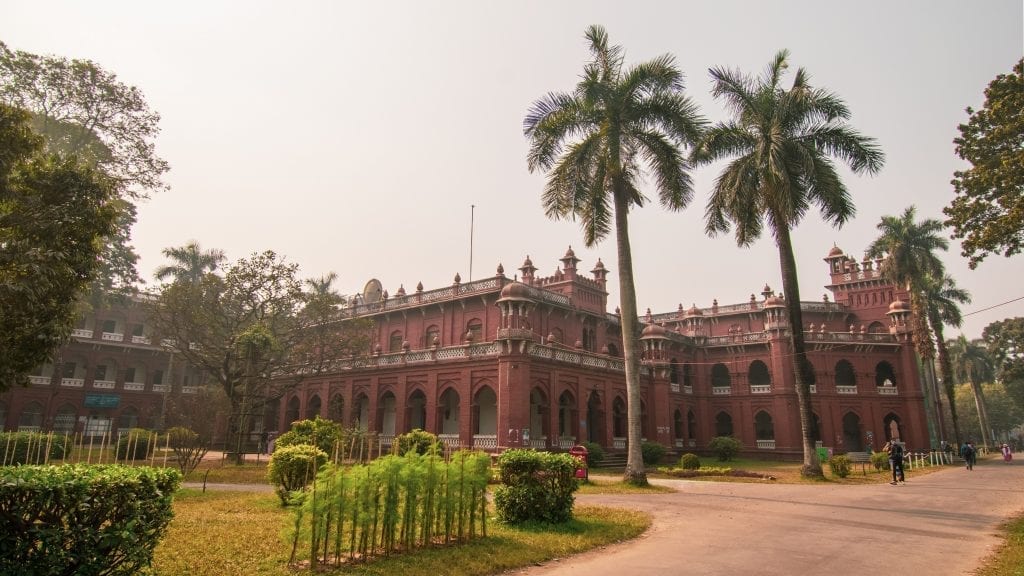
Named after Lord Curzon, the British Viceroy of India who partitioned Bengal in 1905 (a decision that still echoes in today’s map of Bangladesh), Curzon Hall is a gorgeous red-brick building that blends European Renaissance and Mughal architectural styles in an unexpectedly harmonious way.
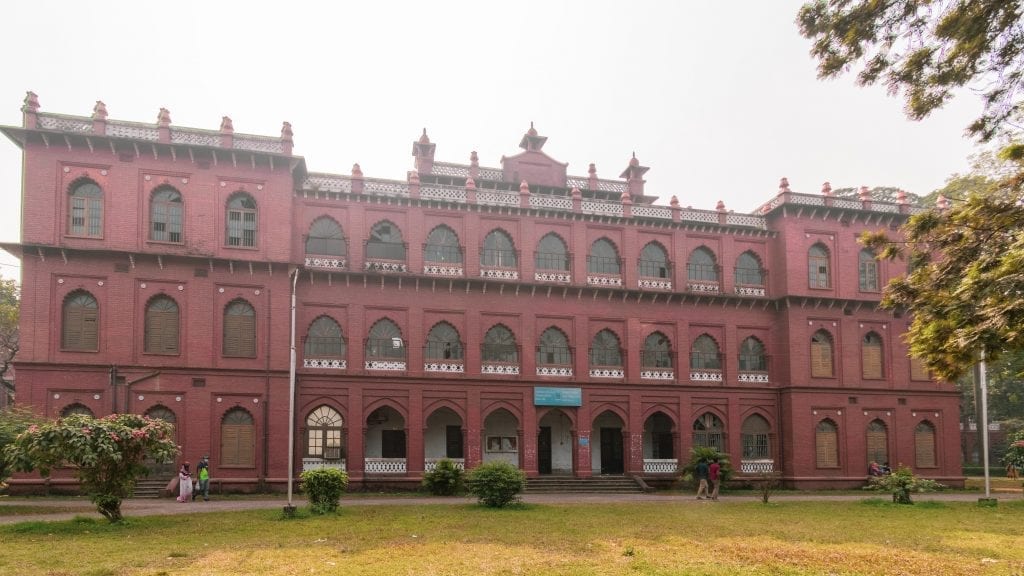
Built between 1904 and 1906 as a town hall, it is now part of the Faculty of Science at the University of Dhaka — so students study in one of the most beautiful colonial buildings in Asia. The intricate terracotta detailing, the arched cloisters, and the manicured gardens are all freely accessible.
Ironically, this building named after a British imperialist became a site of the anti-colonial Language Movement of 1952. History has a sense of humour.
Walk behind the main building to find the large pond serving the residential students — a lovely, quiet spot away from the city noise.
Entrance Fee
Free
Baitul Mukarram – The National Mosque
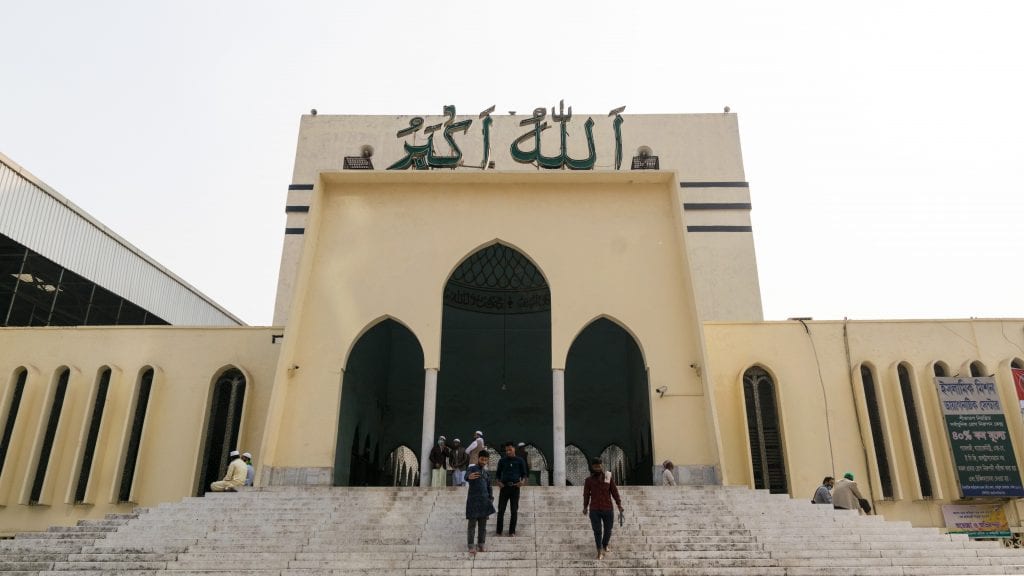
Dhaka has over 6,000 mosques — one for roughly every few hundred residents. Baitul Mukarram is the sovereign of them all: Bangladesh’s national mosque, built in 1968 and capable of accommodating up to 40,000 worshippers simultaneously.
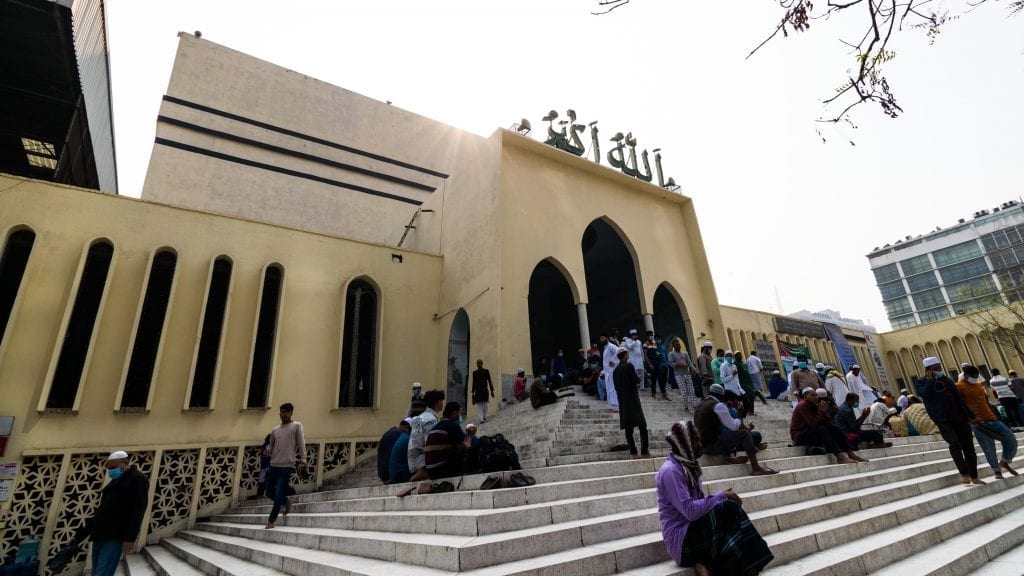
Unlike most grand mosques, Baitul Mukarram has no dome. Its cubic design was directly inspired by the Kaaba in Mecca. The eight-storey structure stands 99 feet tall. On Fridays after the midday prayer, thousands of worshippers spill out onto the surrounding streets in a sight that is simultaneously overwhelming and moving.
Non-Muslim visitors are welcome but should dress conservatively, remove shoes at the entrance, and avoid visiting during prayer times. The complex includes shops on the lower levels — it is one of the few mosques in the world with an integrated commercial zone.
Entrance fee
Free
Best time
Friday mid-morning (before the jumu’ah prayer) for atmosphere without the crowd crush
Dhakeshwari Temple – The National Temple
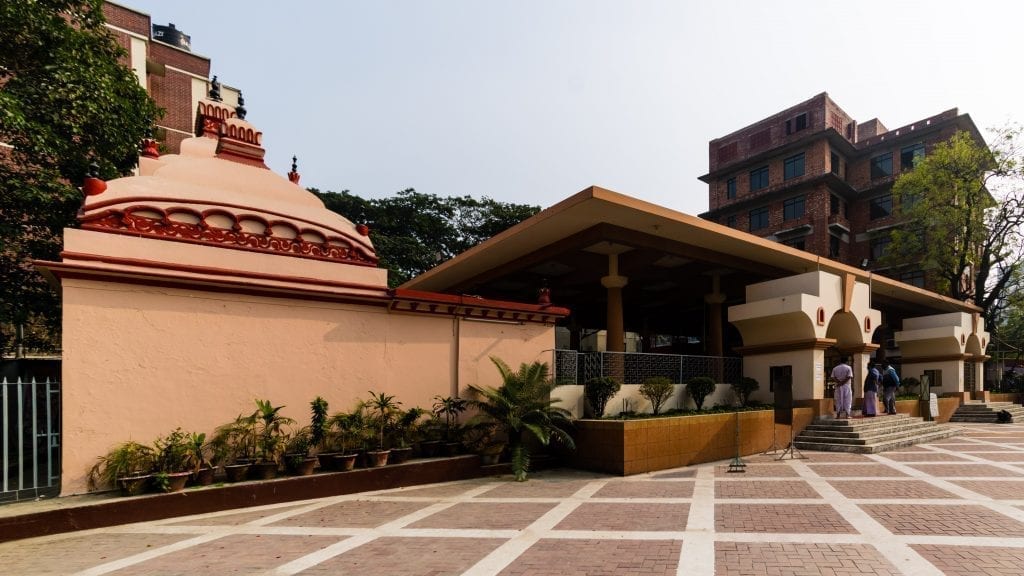
The name means “Goddess of Dhaka” — and there is a tradition that the city itself was named after this deity rather than the other way around. Dhakeshwari Temple dates to the 12th century and is Bangladesh’s national temple, the spiritual centre for the Hindu community in a nation that is 90% Muslim. The complex contains the central shrine, four smaller temples with carved deities, and a large forecourt used for major festivals.
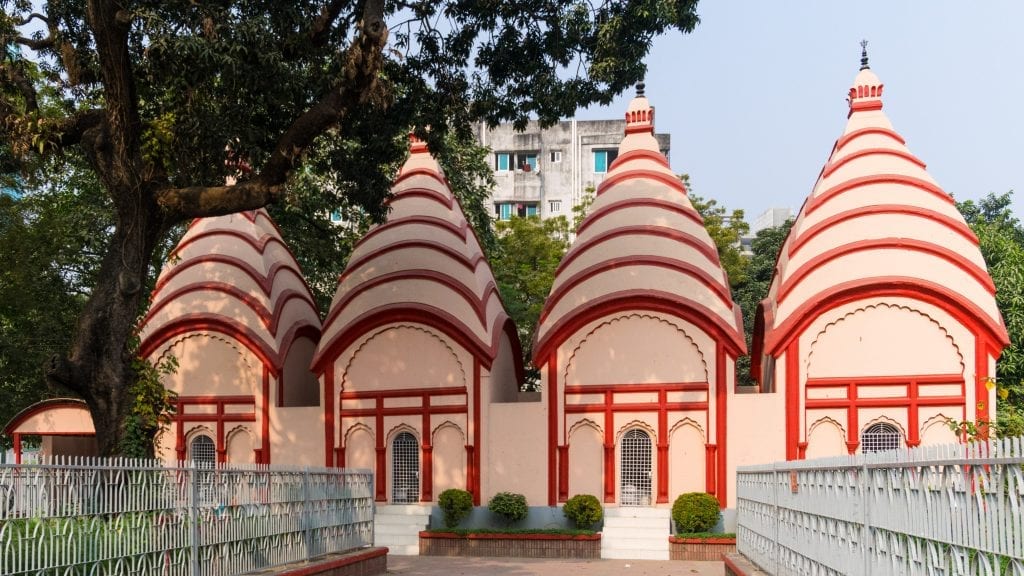
Visit during Durga Puja in October for a completely different Dhaka: thousands of devotees in bright saris, massive illuminated tableaux of the goddess, incense and drums and colour everywhere. It is one of the most spectacular religious festivals in South Asia and deeply undervisited by international tourists.
Entrance Fee
Free (BDT 10 tip for shoe custodian is customary)
Opening Hours
8:00 AM–7:30 PM (closed 2:00–4:00 PM)
TSC – The Beating Heart of Dhaka’s Youth
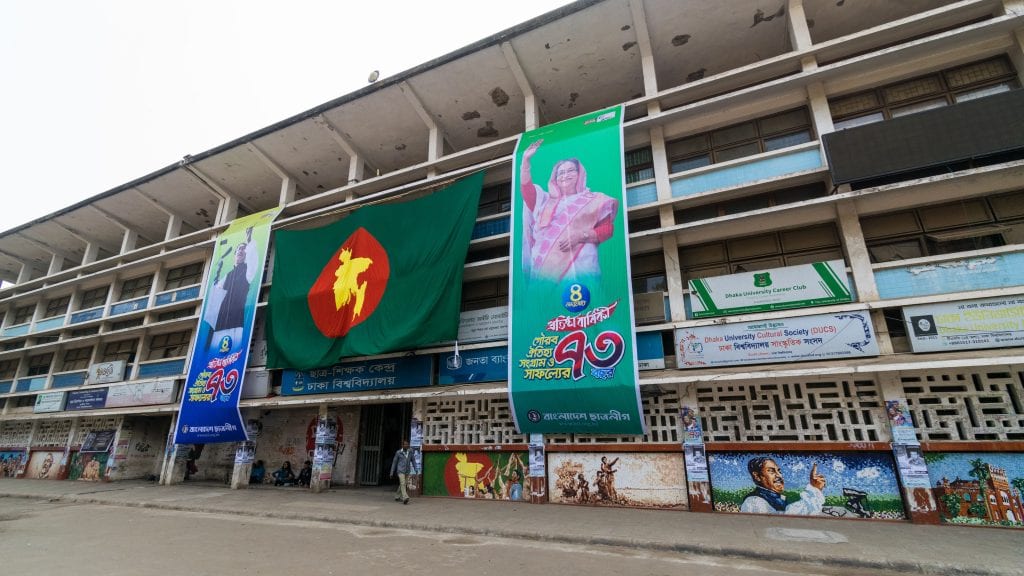
The Teacher-Student Centre of the University of Dhaka is not a tourist attraction in the conventional sense. It is something better: a window into the creative, political, and intellectual life of young Bangladesh.
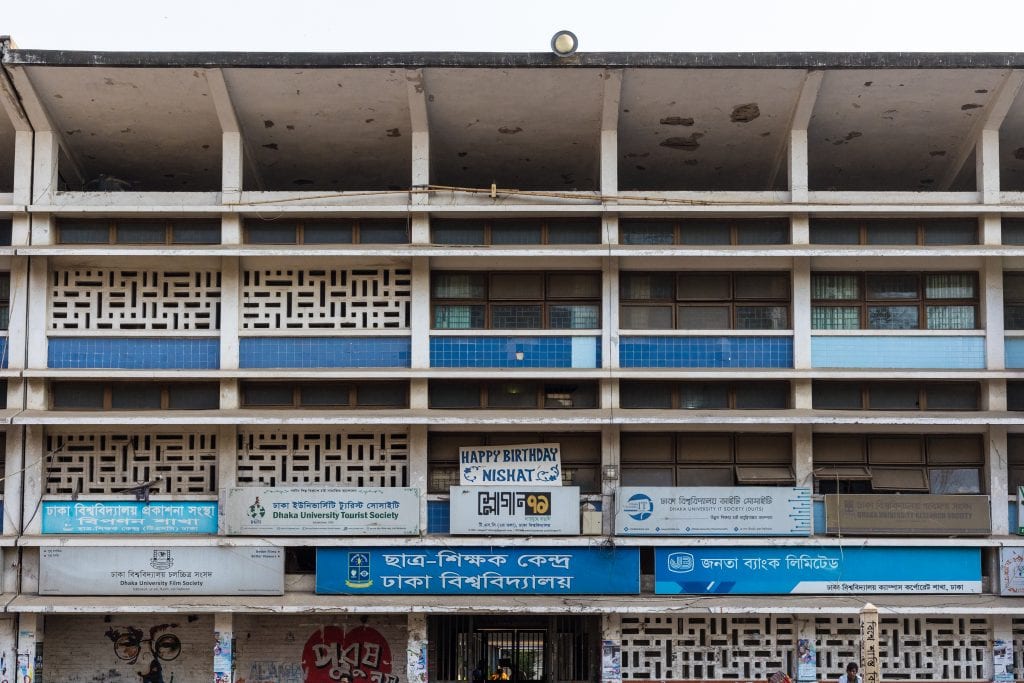
The crescent-shaped building with its long L-shaped corridor is the gathering point for Dhaka’s students, artists, musicians, and activists. On any given day you might encounter a poetry recitation, a small protest, a guitar circle, an impromptu art exhibition, or simply dozens of groups of friends in animated conversation.
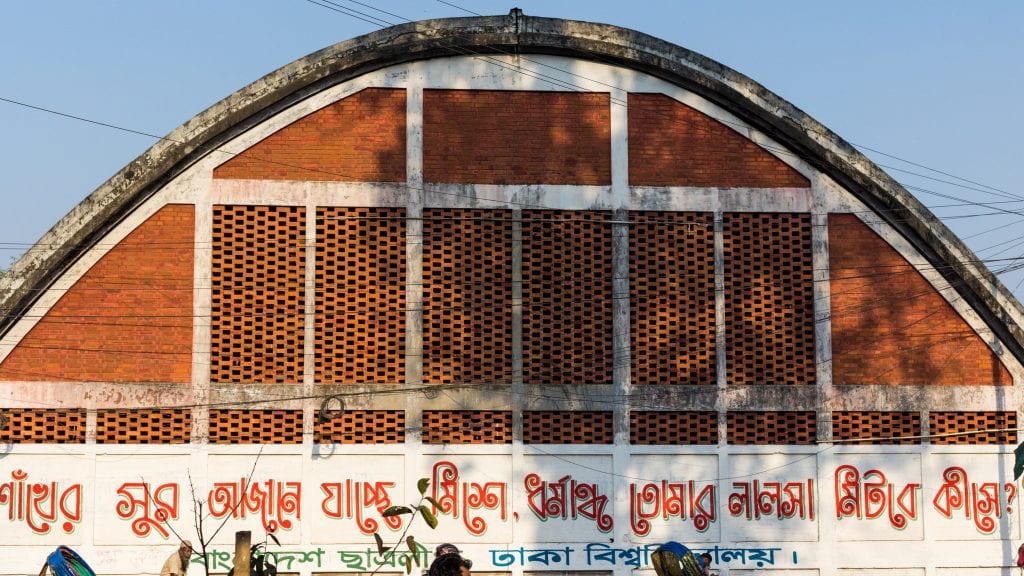
This is the place that produced many of Bangladesh’s greatest writers, filmmakers, and intellectuals. When you sit in that corridor, you are sitting in the same space where history was debated and sometimes made.
Entrance Fee
Free
Best time
Late afternoon (4:00–7:00 PM) when the energy peaks
Aparajeyo Bangla – The Unvanquished
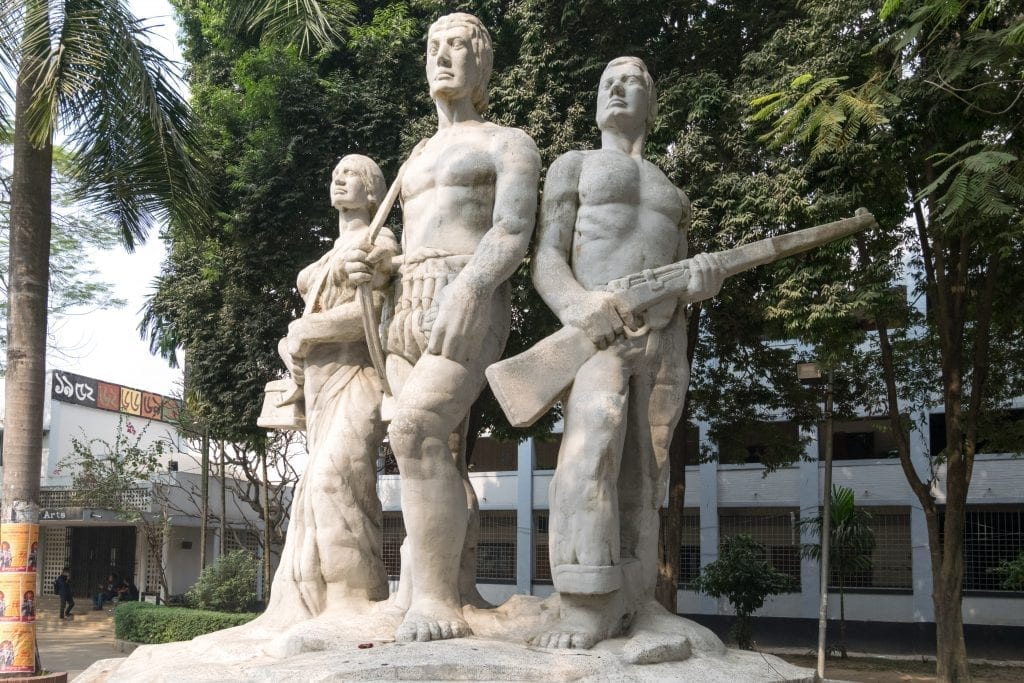
Aparajeyo Bangla — “Unvanquished Bengal” — depicts three figures side by side: a village farmer turned fighter gripping a rifle, a fellow combatant, and a woman with a first aid kit. Together they represent the Liberation War of 1971, when ordinary civilians — farmers, students, teachers, men and women — took up arms against a military far better equipped than anything they had faced before.
They won anyway.
The sculpture was created by Syed Abdullah Khalid and unveiled in 1979. To understand why Bangladesh celebrates this piece so fiercely, you need to understand 1971 — and the Liberation War Museum (listed below) will help with that.
Entrance Fee
Free
Bangladesh National Museum – Start Here
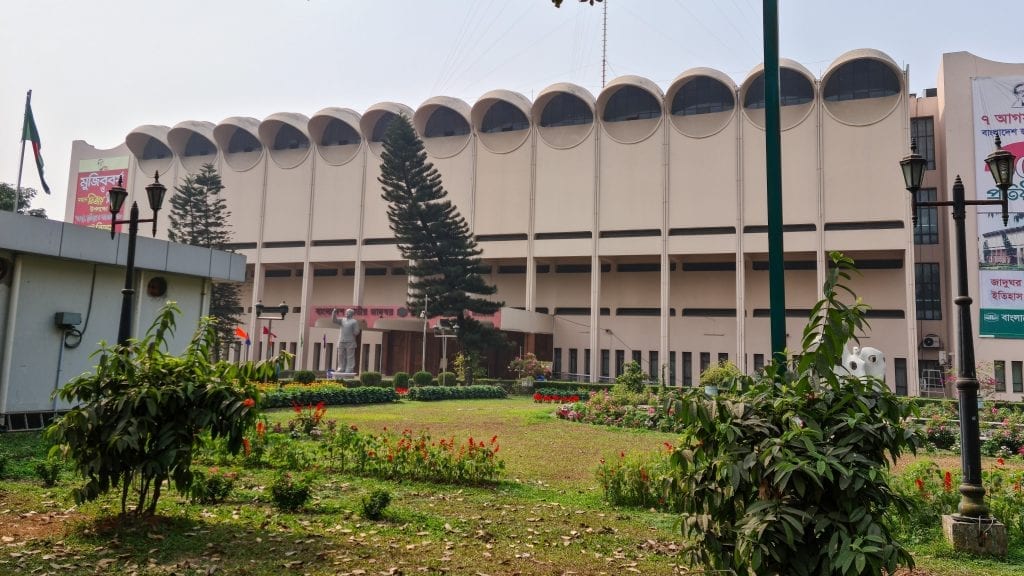
If you are new to Bangladesh, the National Museum in Shahbag should be your first stop — ideally on your first morning. Three floors of galleries take you through the country’s natural history, art, archaeology, and most importantly, its history from the ancient Pala dynasty through the Mughal era, the British colonial period, and the Liberation War of 1971.
The liberation war gallery on the ground floor is particularly moving — weapons, photographs, and personal effects of martyrs that put everything else you will see in Dhaka into context.
Entrance fee
- BDT 20 (Bangladeshis)
- BDT 200 (foreigners)
Opening hours
Sat–Wed, 9:30 AM–4:30 PM; Fri, 3:00–7:30 PM (closed Thursday)
Old Dhaka – The Chaos That Gets Under Your Skin
Old Dhaka is not a single attraction — it is an experience. The part of the city founded in the 16th century by the Mughals is still lived in, still working, still chaotic in the most spectacular way imaginable.
The streets are barely wide enough for two rickshaws to pass. Buildings lean so close together that neighbours can shake hands from their windows. Businesses that look like they occupy ten square feet are turning over more stock than a supermarket. The smell of biryani and river air and something you cannot quite name follows you everywhere.
You will be honked at. You will be gently shoved by a passing handcart. You will stop in the middle of a lane to photograph something and cause a minor traffic incident. You will eat something from a street stall and spend the next twenty minutes trying to figure out what it was and whether you can have more.
For the full photographic experience of Old Dhaka, read our dedicated piece: Old Dhaka in Photos.
Best areas to explore:
Shankhari Bazar (Hindu artisan lane), Farashganj, Islampur fabric market, Chawk Bazar (especially for iftar during Ramadan).
Sadarghat – Where the Rivers Take You
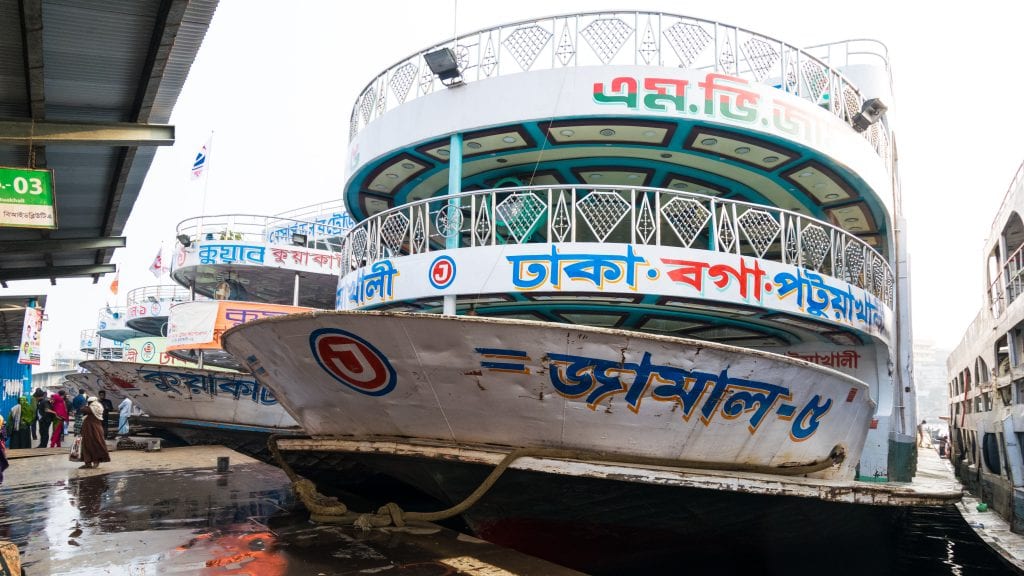
Bangladesh has 700 rivers. To understand a country of rivers, you start at Sadarghat — the main river port of Dhaka, where enormous double-decker passenger launches depart nightly for every corner of the delta.
The terminal itself is not glamorous. It is busy and loud and slightly disorganised in a way that is entirely fitting for a place that sends thousands of people off on overnight river journeys every day. Watch the launches being loaded — the combination of human carriers, hand carts, and sheer organised chaos is mesmerising.
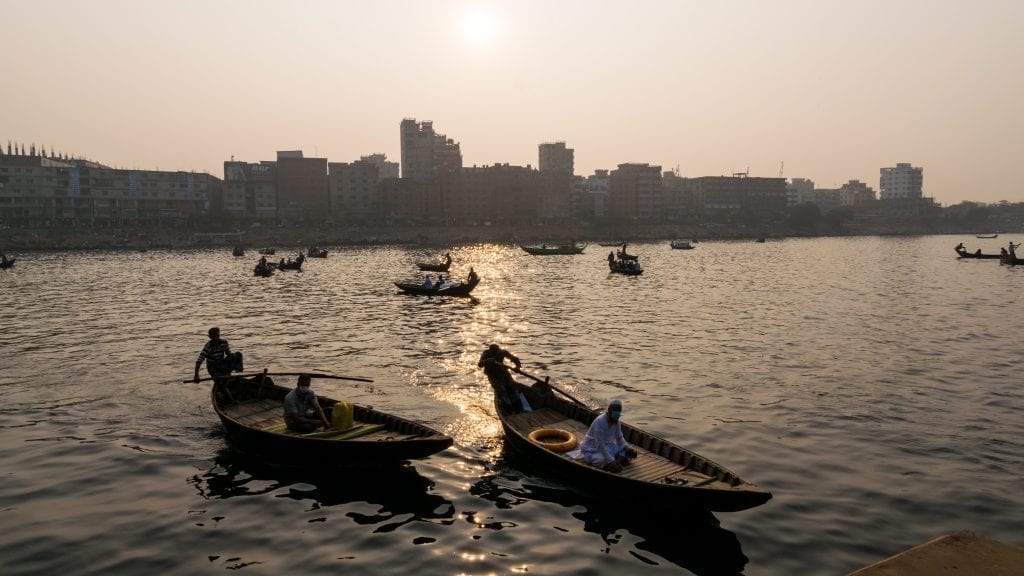
The river at Sadarghat is the Buriganga — Dhaka’s lifeline and, sadly, one of its most polluted waterways. Its dark colour is a mark of industrial waste, which makes it simultaneously heartbreaking and photogenically dramatic. Take a small wooden boat (BDT 20–30) to cross to the other side or simply drift for fifteen minutes in the late afternoon, when the setting sun turns even the murky water golden.
Entrance Fee
BDT 10.
Kamalapur Railway Station – A Geometric Icon
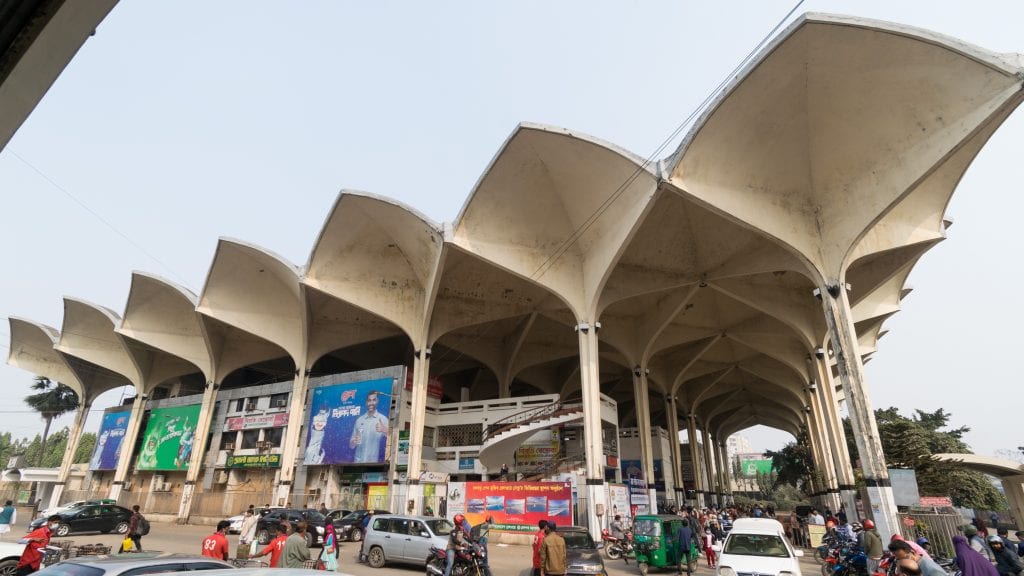
Most railway stations in the Subcontinent are colonial red-brick affairs. Kamalapur, inaugurated in 1968, breaks every convention with a design that looks more like it belongs in Brutalist Europe than in South Asia.
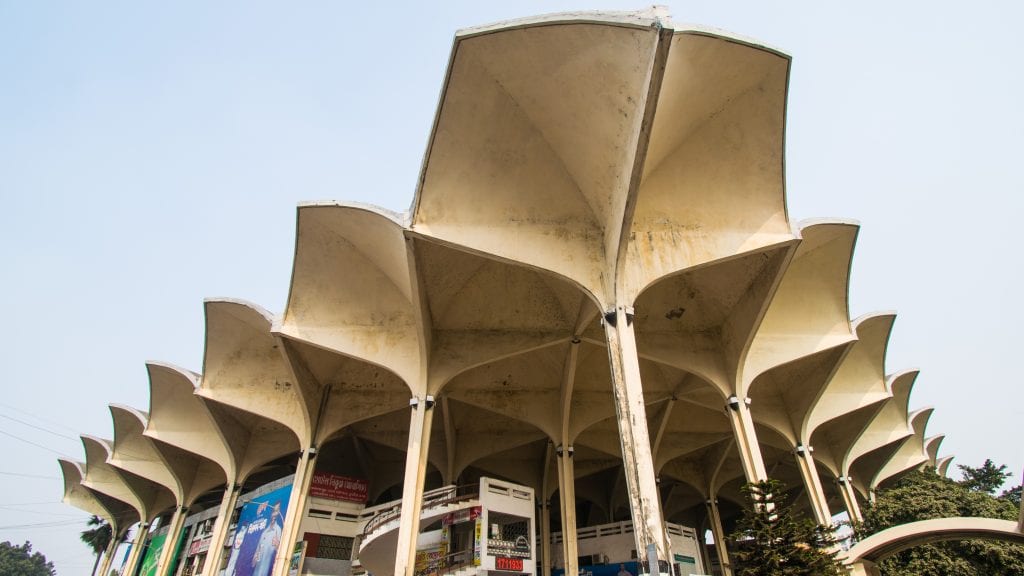
The station’s defining feature is its parabolic umbrella-shaped roof segments — a series of hyperbolic concrete shells that create a visually dramatic canopy without a single central pillar obstructing the concourse below. American architect Robert Boughey and Pakistani architect Daniel Dunham designed it as a statement of modernity for the then East Pakistan. It remains one of the finest pieces of mid-century modernist architecture in Asia.
Even if you are not catching a train, it is worth a visit for the architecture alone. If you are taking an overnight train (highly recommended), Kamalapur is your departure point for Cox’s Bazar and Sylhet.
Martyred Intellectuals Memorial – The Wound That Doesn’t Close
On 14 December 1971 — just two days before Bangladesh’s independence — the Pakistani military and their local collaborators carried out one of history’s most calculated atrocities. They abducted and murdered over 1,000 of Bangladesh’s most gifted minds: professors, doctors, engineers, journalists, lawyers, writers. The intent was surgical: destroy the new nation’s intellectual capacity before it could be born.
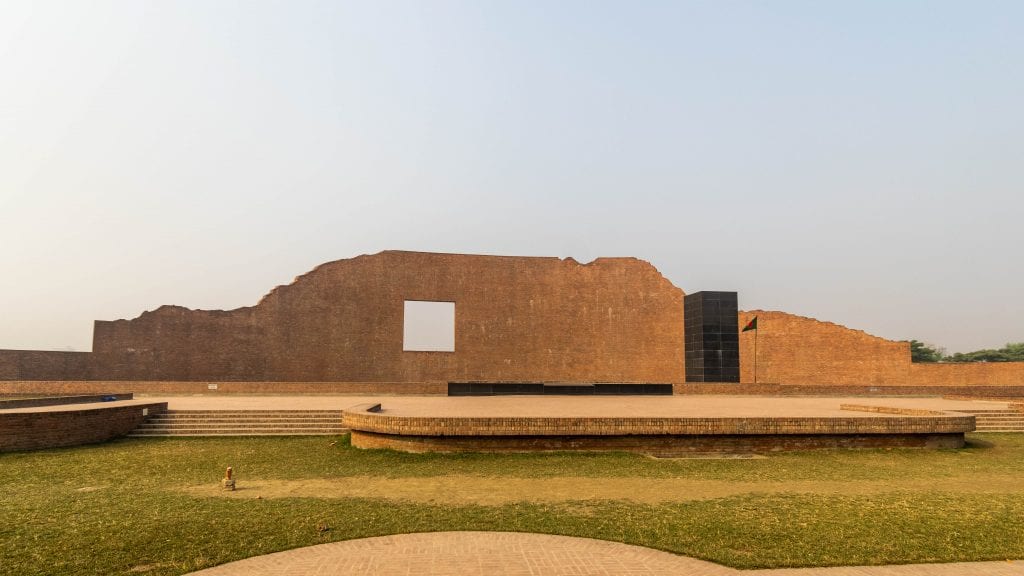
Their bodies were dumped in a marshy area called Rayerbazar. The Martyred Intellectuals Memorial stands there today.
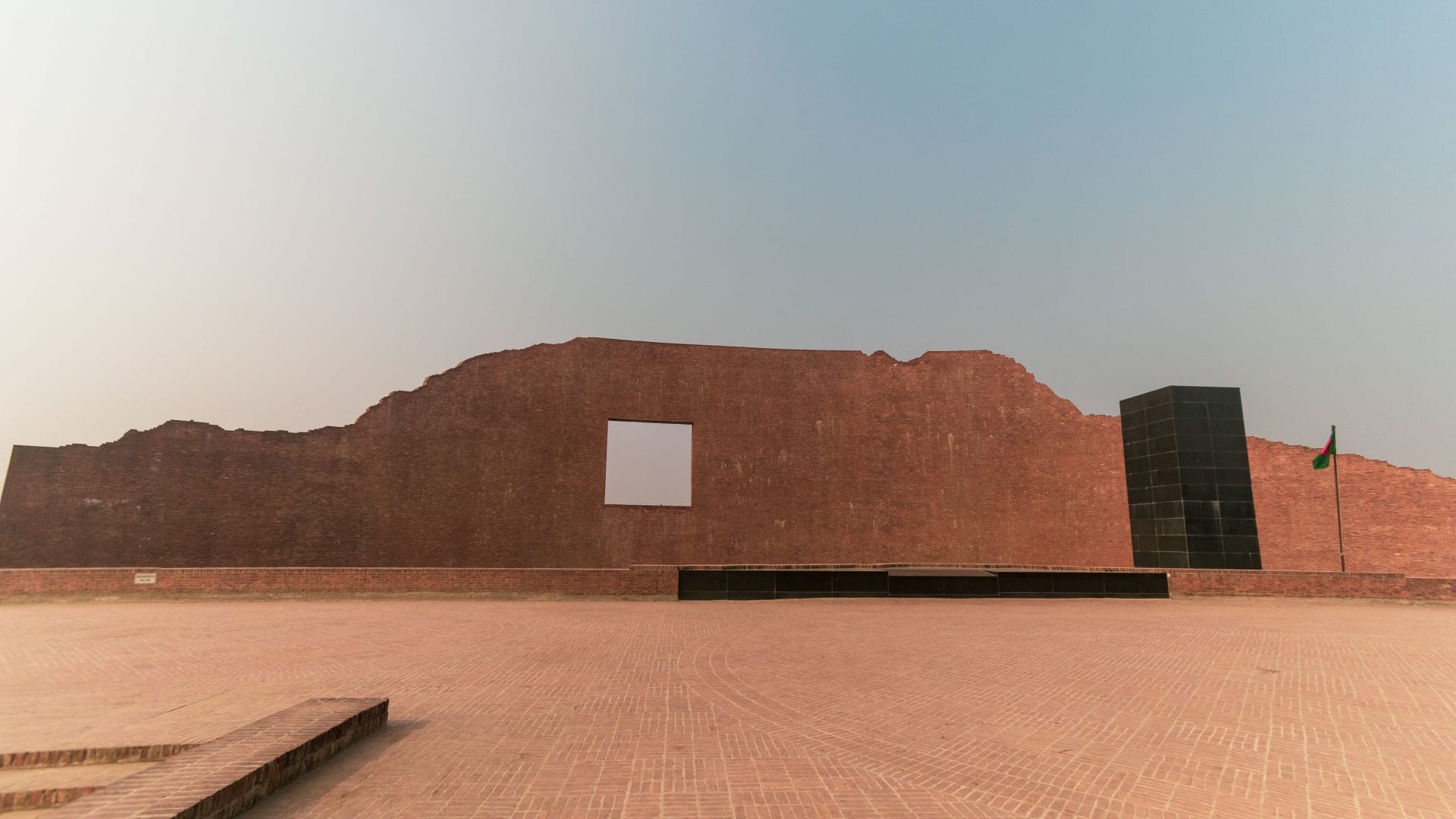
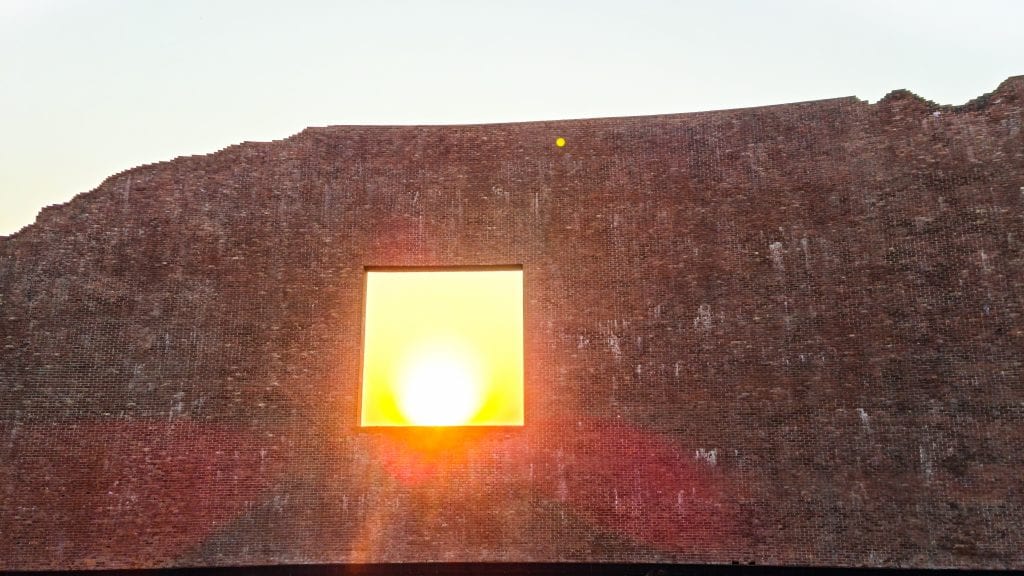
The memorial is a masterpiece of architectural grief: a large curved wall, 17.7 metres high and 115.8 metres long, deliberately broken at both ends to symbolise incompleteness — the nation forever diminished by what it lost. A square window in the wall frames the open sky, representing the freedom that cost so many their lives. A black obelisk rises from the grounds.
If you visit only one memorial in Dhaka, let it be this one.
Entrance Fee
Free
Shilpakala Academy – Culture in Performance
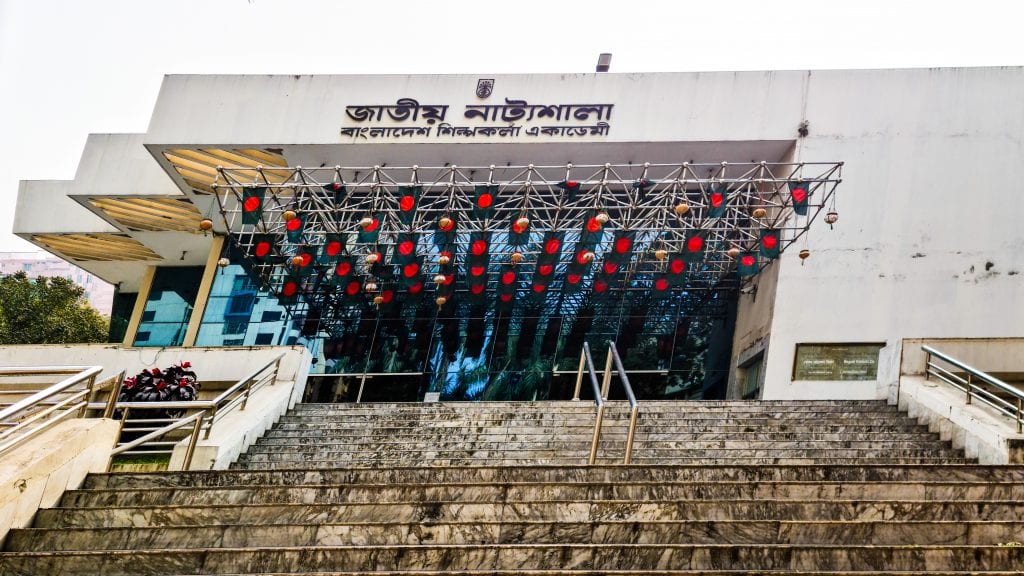
Bangladesh has a performing arts tradition of extraordinary richness — classical and folk music, jatra (Bengali folk theatre), modern drama, Manipuri and Baul performances — and Shilpakala Academy is where you are most likely to encounter it at its best.
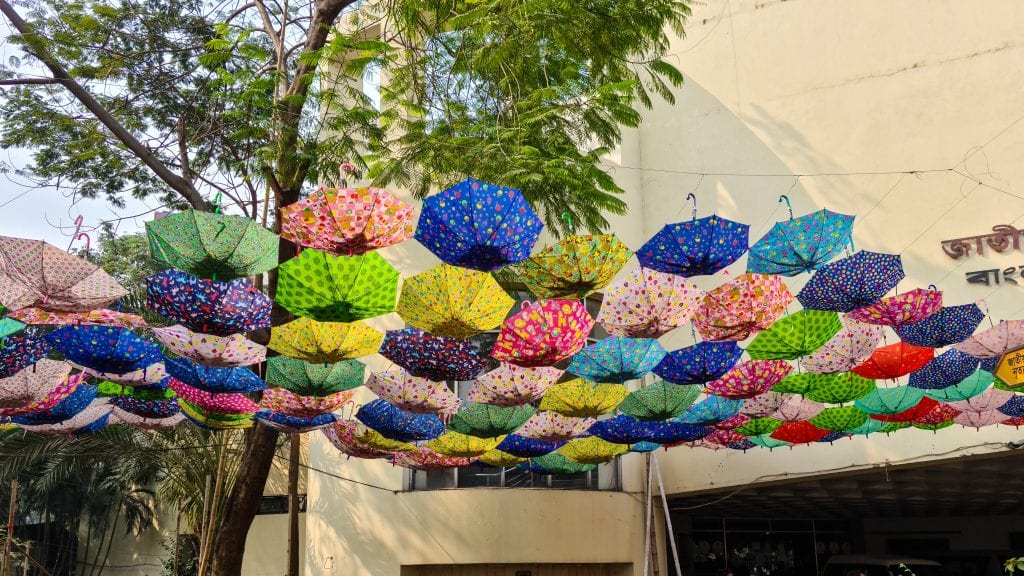
The national arts complex houses multiple performance venues, gallery spaces, and rehearsal rooms. Shows typically take place in the evening; check the notice board at the entrance for that week’s program. Even if you cannot follow a Bangla-language drama plot, the expressiveness of the acting, costumes, and music tends to transcend the language barrier.
The complex is also a wonderful place to see contemporary Bangladeshi painting and sculpture — there are regular gallery exhibitions.
Entrance Fee
Varies by show (most events are BDT 50–200)
Dhaka Newmarket – Where Dhaka Haggles
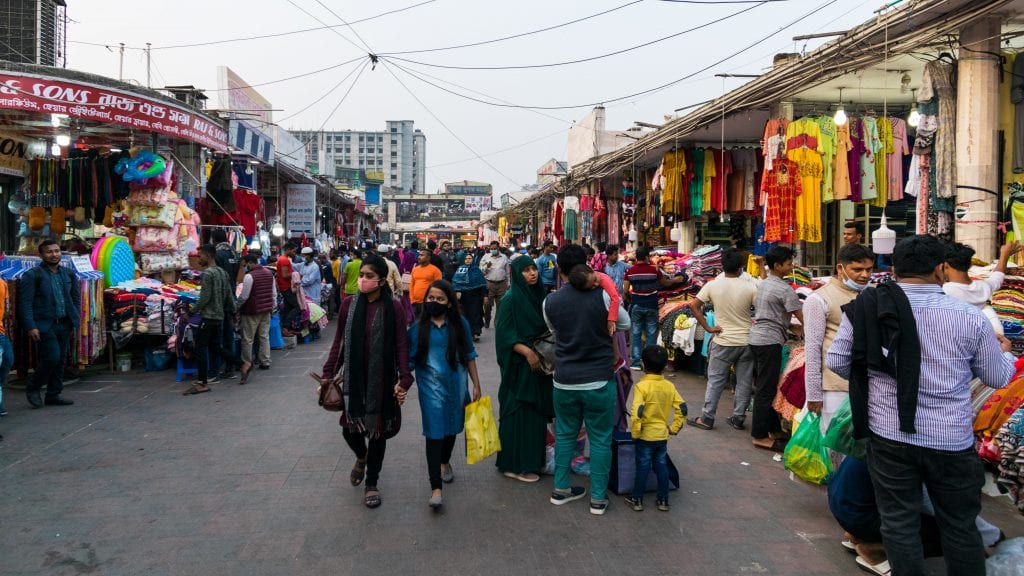
Built in 1953, Dhaka Newmarket is one of the oldest shopping complexes in the city, entered through three distinctive arched gates. It is a sprawling, open-sided market selling clothes, fabrics, household goods, cosmetics, books, and just about anything else the residents of Dhaka’s older neighbourhoods need.
The nighttime is the market’s proper hour — after 8:00 PM, the lanes fill with shoppers and the energy of competitive bargaining. Women shopping for fabrics and wedding gifts are the primary visitors; as a foreign tourist, you will be a novelty and probably get excellent deals simply from the curiosity factor.
Newmarket is best paired with a visit to the Nilkhet Book Market (a five-minute walk away) and Dhakeshwari Temple.
Entrance Fee
Free
Liberation War Museum – Four Galleries, One Story
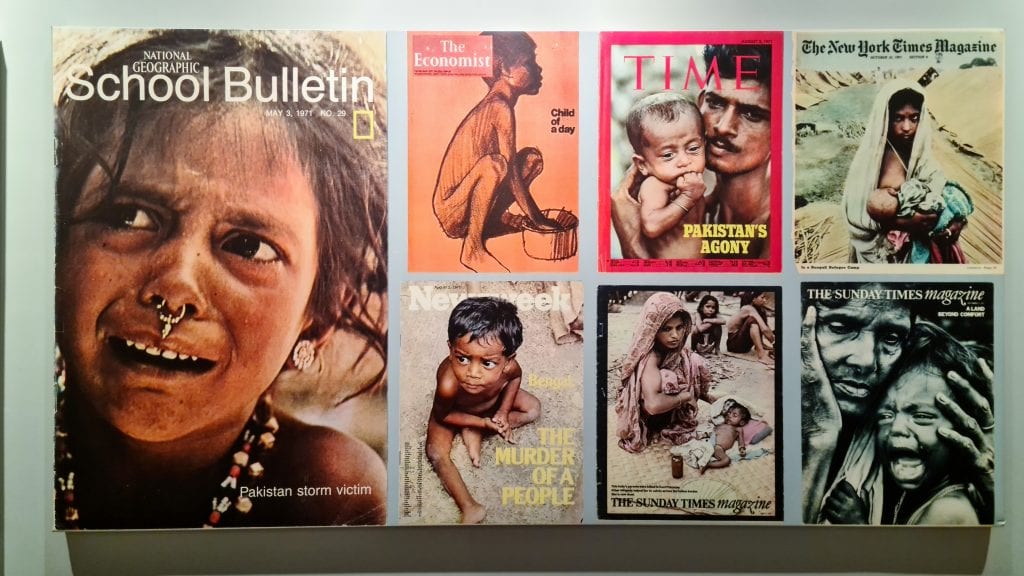
The National Museum has a liberation war gallery. This building is the liberation war gallery — all 3,500 square metres of it, across four floors.
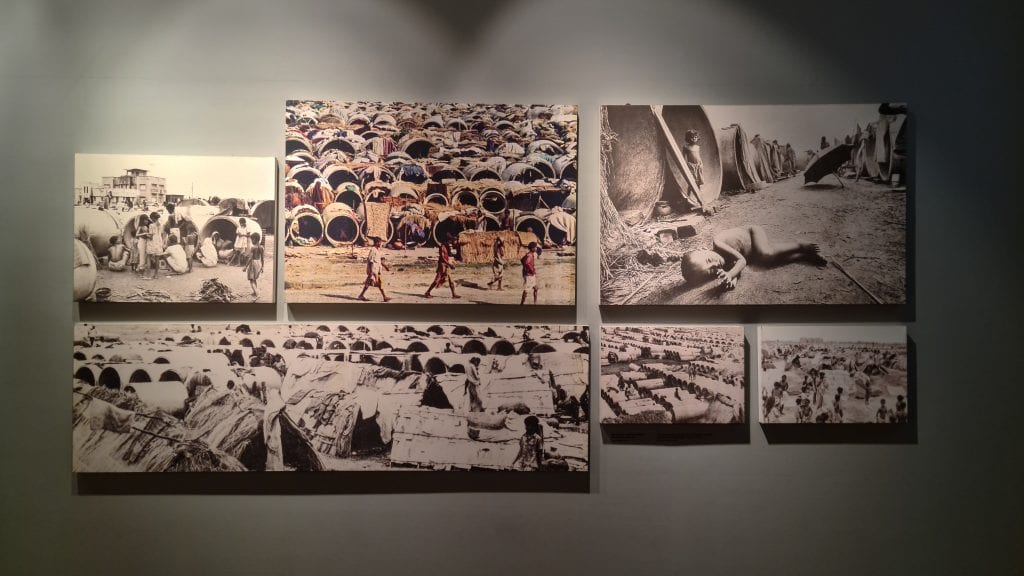
The museum tells the story of 1971 in full: the political oppression that preceded it, Operation Searchlight (the military crackdown of 25 March 1971), the nine months of guerrilla resistance by the Mukti Bahini freedom fighters, the role of India, the international response, the final victory on 16 December.
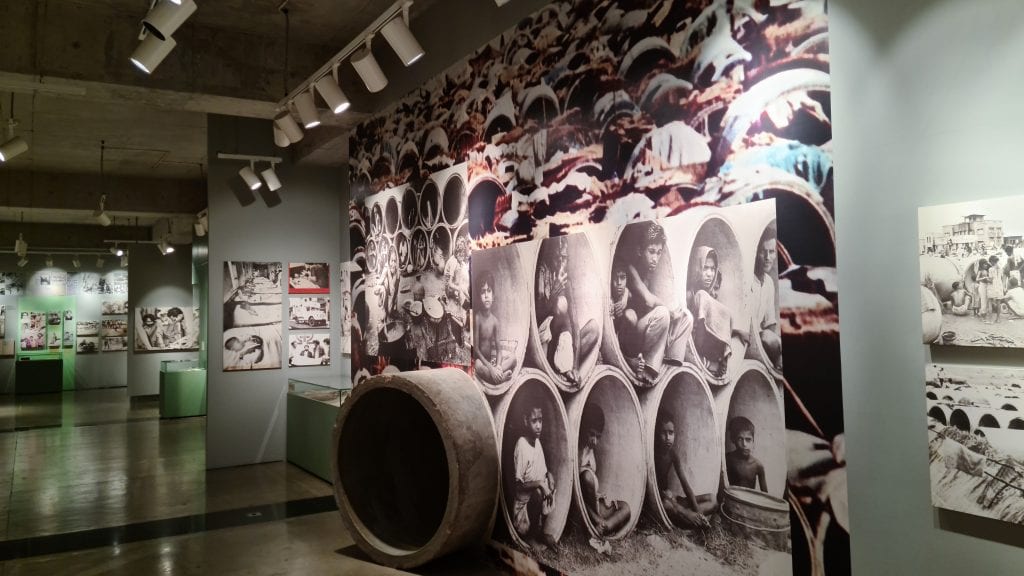
The exhibition design is exceptional — documentary photographs, newspaper front pages from around the world, personal testimonies, weapons, and incredibly moving audio-visual installations. Hollow pipes displayed in one gallery represent the pipes that became shelters for refugees fleeing to the Indian border.
Give yourself two hours minimum. Many visitors find themselves unable to rush.
Entrance fee
BDT 20 (Bangladeshis) / BDT 200 (foreigners)
Opening hours
Tue–Sun, 10:00 AM–6:00 PM (closed Monday)
Armenian Church – A 245-Year-Old Surprise
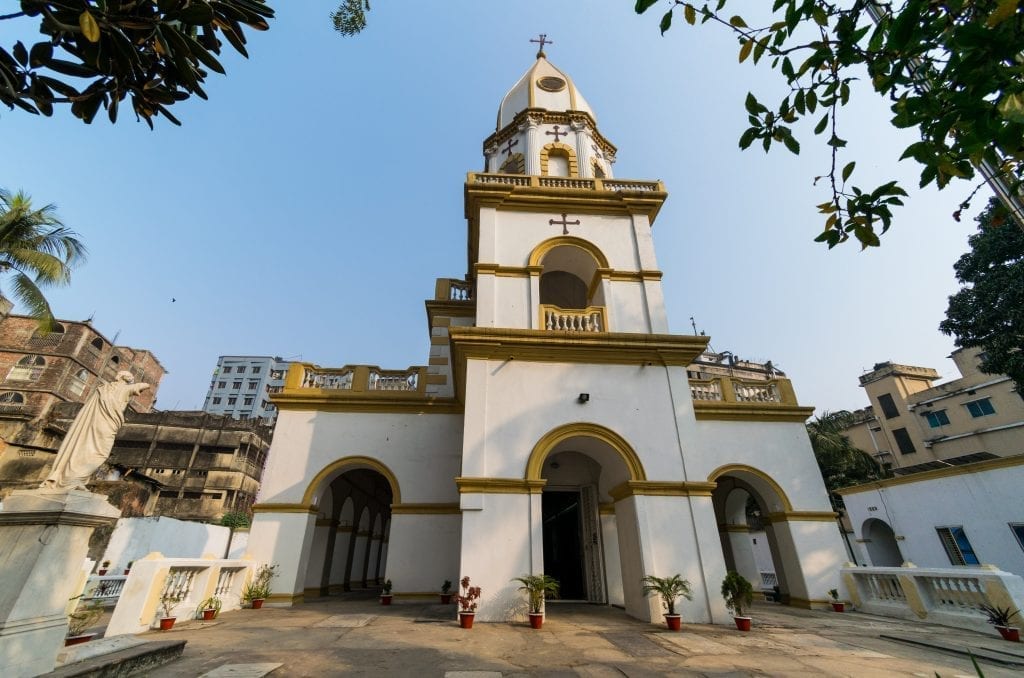
Few things in Dhaka surprise visitors as much as this one: a fully intact, beautifully maintained Armenian church, built in 1781, in the heart of a city that is over 90% Muslim.
Armenian merchants arrived in Bengal in the 17th century, travelling from Persia. Fluent in Farsi, they were welcomed by the Mughal courts and became wealthy through the jute and leather trade. At their peak, there was a thriving Armenian community in Dhaka; they built this church, established businesses, and left their mark on the city’s architecture and trade routes.
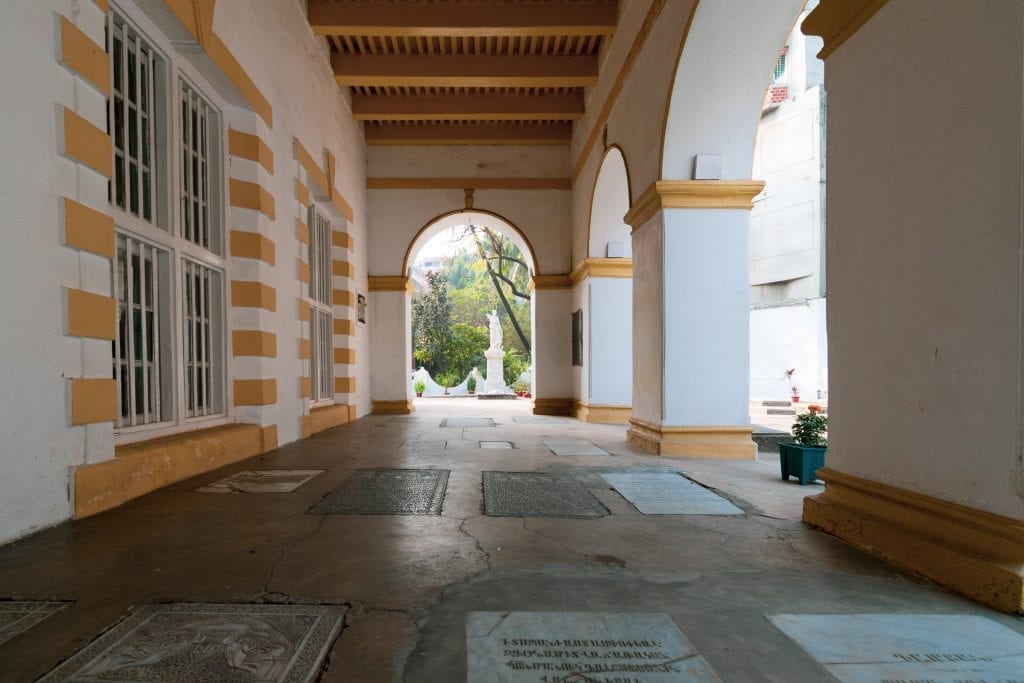
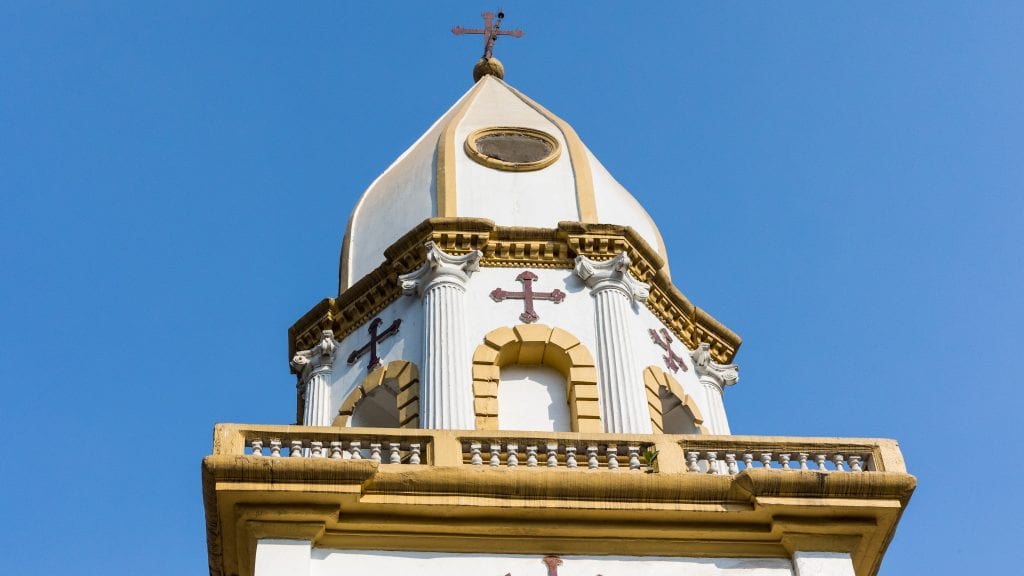
The white two-storey building with its golden trim and arched windows is strikingly beautiful. Inside, a spiral staircase leads to a gallery with fine paintings; the small congregational hall below has original wooden pews. Graves in the compound bear Armenian inscriptions stretching back three centuries.
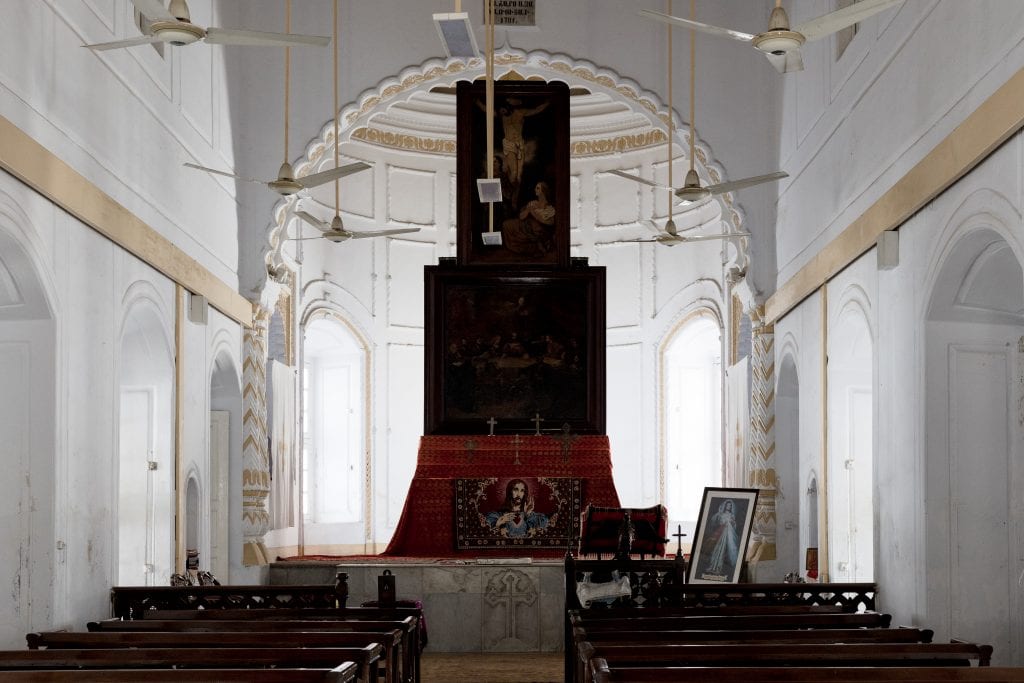
Prayer is still held every Sunday — though the congregation has dwindled to almost nothing as the Armenian community emigrated. The church is maintained largely as a heritage site.
Entrance Fee
Free, you need to register your name on a registrar.
Tara Masjid – The Star Mosque
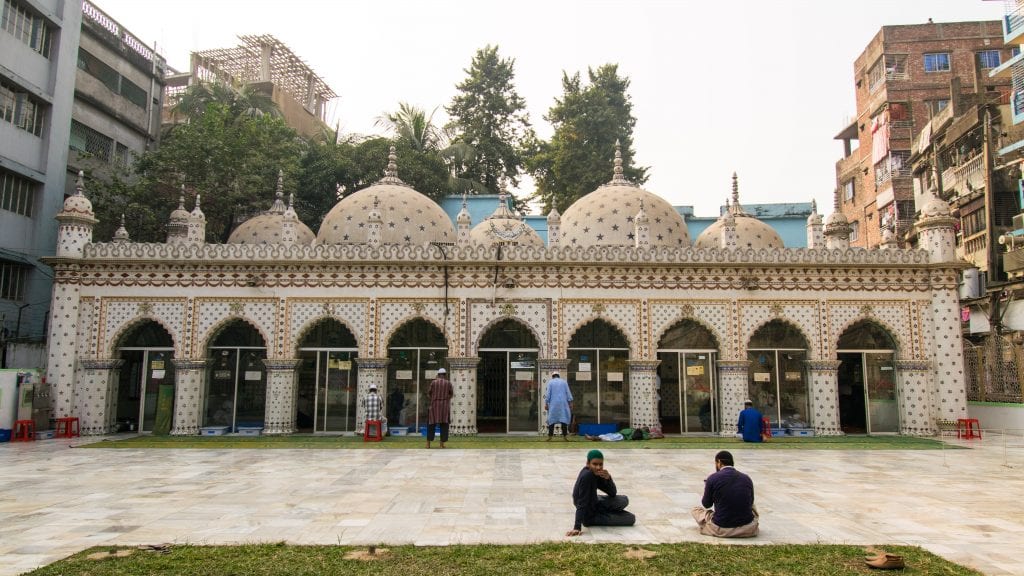
The Tara Masjid (Star Mosque) proves that you do not need to be the biggest mosque in Dhaka to be the most beautiful.
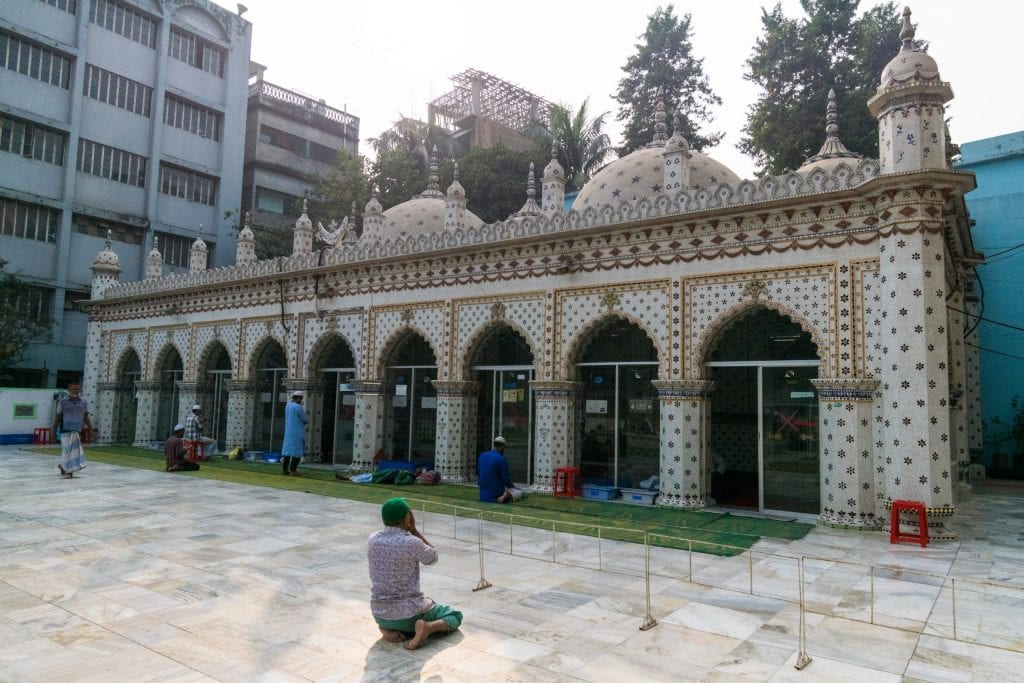
This 19th-century Mughal-style mosque in Old Dhaka is decorated with thousands of tiny blue mosaic stars on a gleaming white surface — hence its name, tara meaning star in Bengali. The stars are actually pieces of Chinese porcelain, initially imported as ballast in trading ships and later repurposed as decorative tiles by Dhaka’s craftsmen.
The effect is extraordinary — especially in the golden light of late afternoon, when the white surface glows and the blue tiles catch the sun. The mosque is still active, so visit outside prayer times and dress conservatively.
Entrance Fee
Free
Hussaini Dalan – Shia Heritage in Old Dhaka
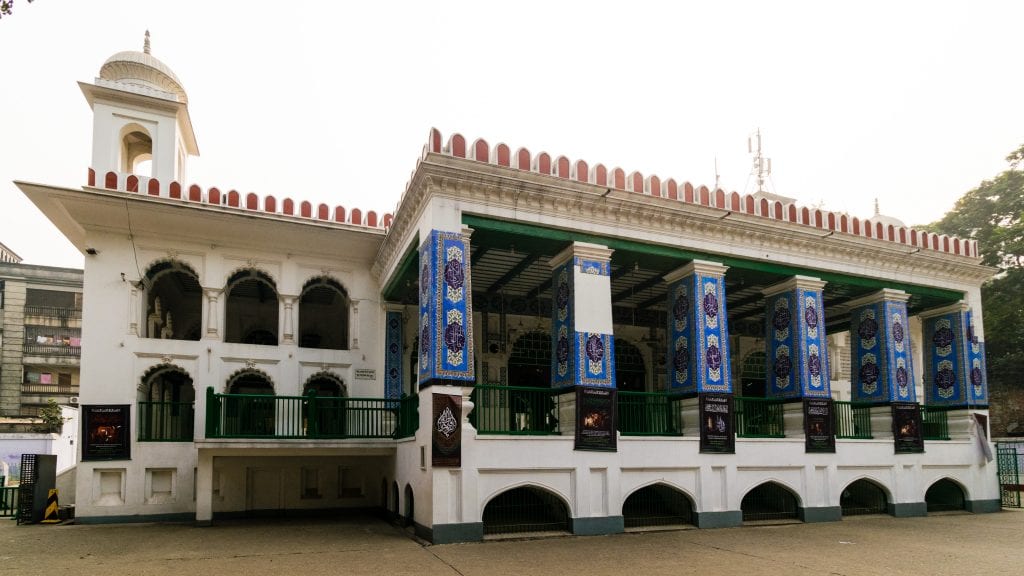
Built in the 17th century during the Mughal era, Hussaini Dalan is the primary religious and community centre for Dhaka’s Shia Muslim population — a minority within a majority Muslim city.
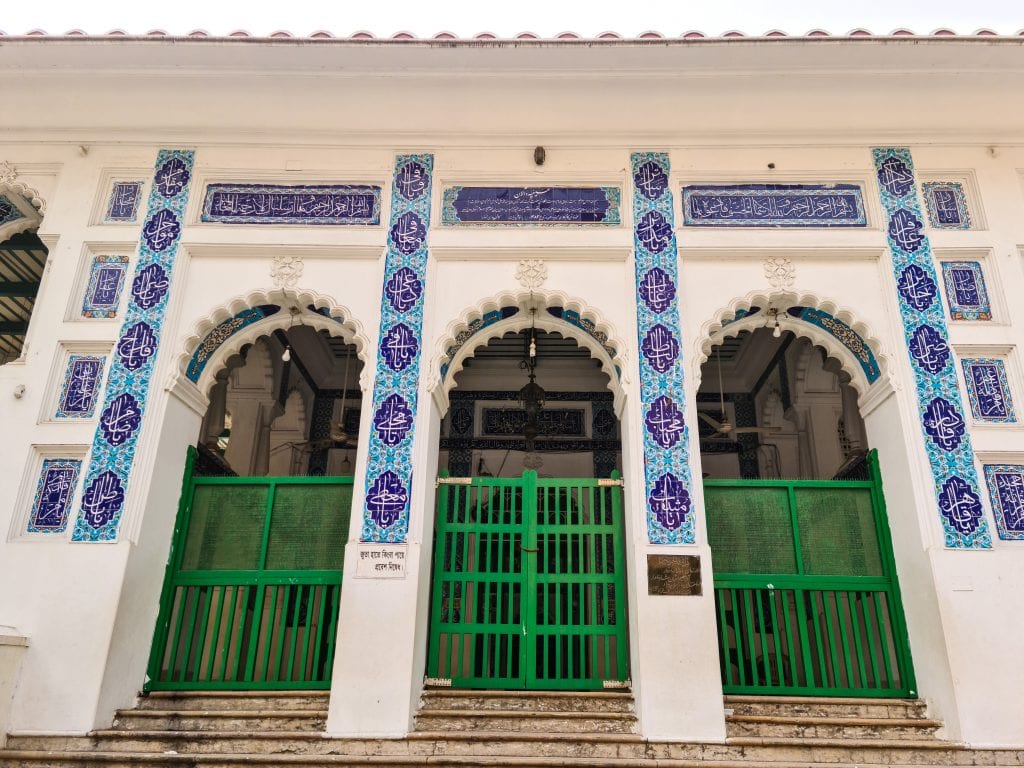
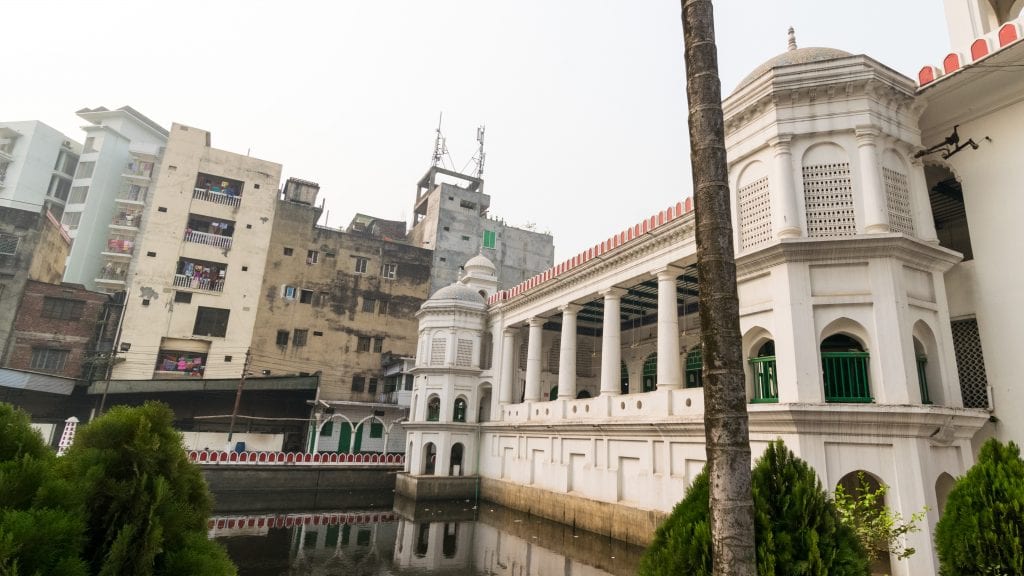
The main building blends Mughal and British architectural elements, with Arabic calligraphy in blue tiles above the entrances. A rectangular pond touches the rear of the complex, where you will occasionally hear geese — an incongruous and charming sound in the middle of Old Dhaka.
The complex transforms utterly during Muharram — the first month of the Islamic calendar. During Ashura, the 10th of Muharram, Shia processions move through Old Dhaka in an intensely atmospheric display of communal mourning and religious identity. It is one of the most remarkable public ceremonies in the city and largely unknown to outside visitors.
Entrance fee
Free
Nilkhet Book Market – The Bibliophile’s Maze
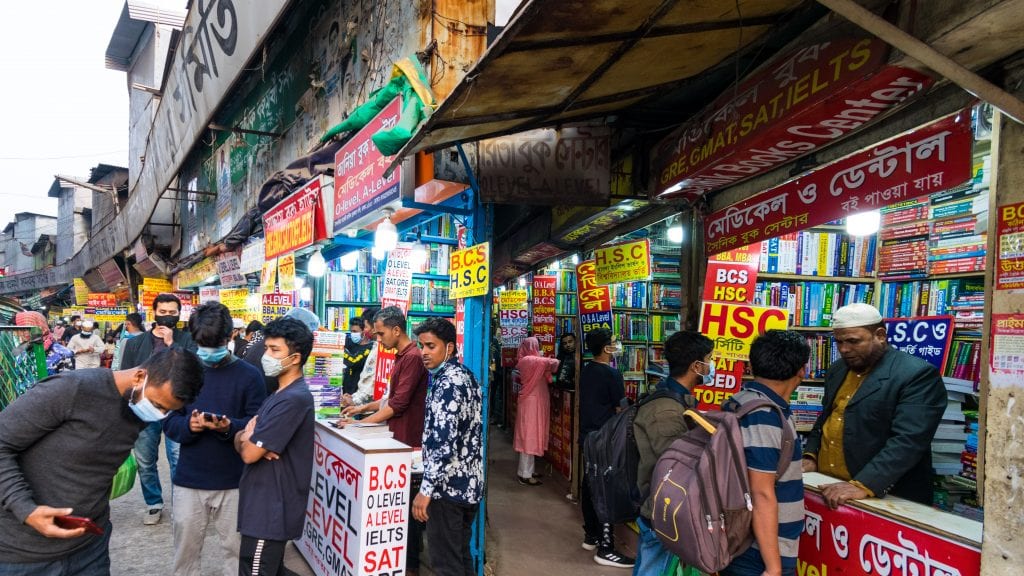
There is not an educated person in Bangladesh who has not bought a book at Nilkhet. This dense maze of small shops — with books stacked floor to ceiling, books on the pavements, books in cardboard boxes outside shops — is the intellectual marketplace of the nation.
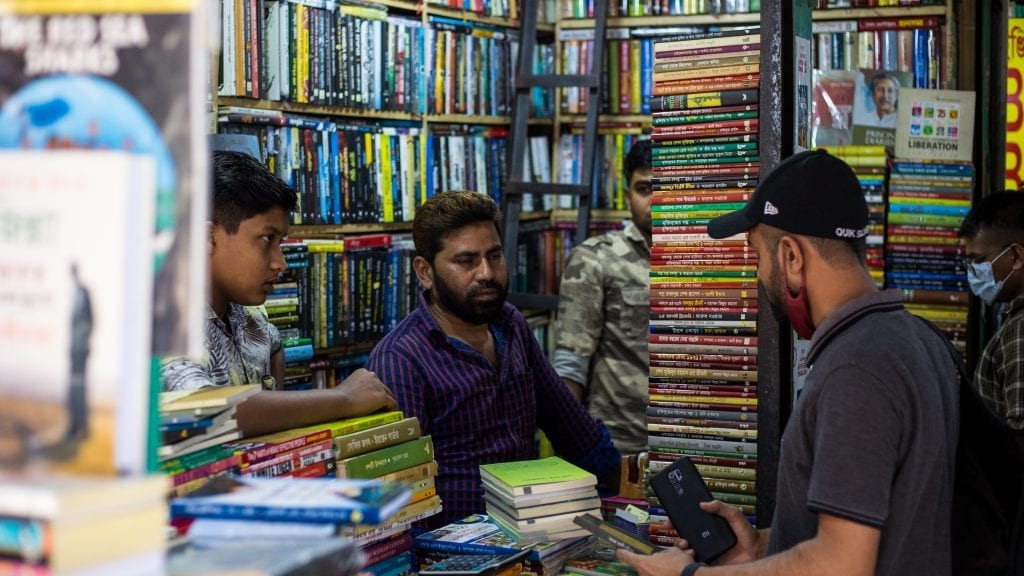
You will find university textbooks, Bengali literature, classic novels in translation, second-hand English books, academic journals, and at some stalls, books that probably should not be copied but are, because Bangladesh’s book market has worked around the absence of international publishing access.
Nilkhet is comparable in spirit to College Street in Kolkata — though Kolkata’s has deeper history and wider range. Both are essential for any traveller who cares about books.
Entrance Fee
Free
Baitur Rauf Jame Masjid – Aga Khan Award Winner
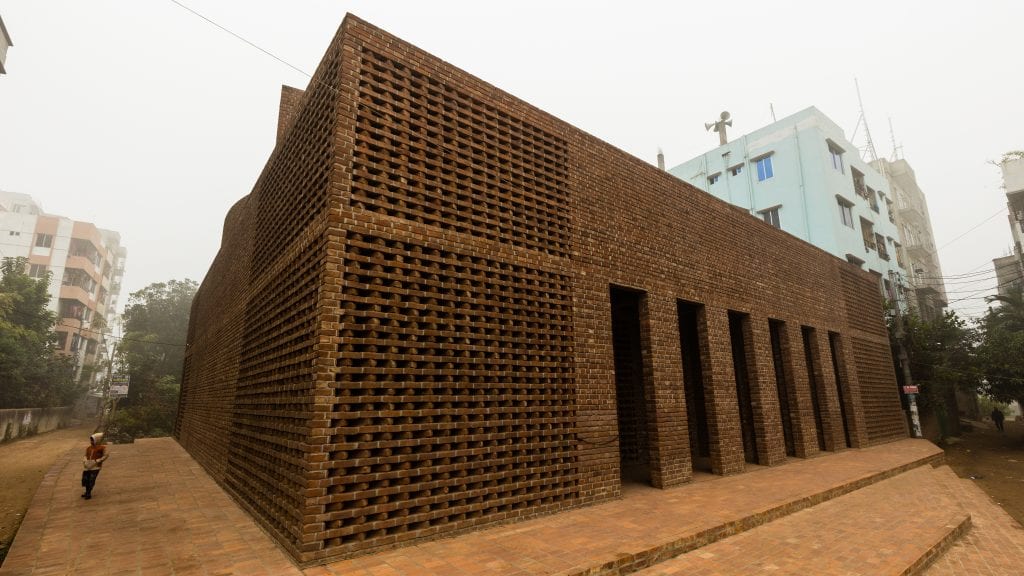
This mosque in Uttara surprised me when I first encountered it — not because of its size or grandeur, but because of its radical restraint.
Designed by architect Marina Tabassum (a Bangladeshi woman, which itself challenges every convention about mosque design in the country), Baitur Rauf won the Aga Khan Award for Architecture — one of the most prestigious prizes in world architecture. The building has no dome. No minarets. No ornament.
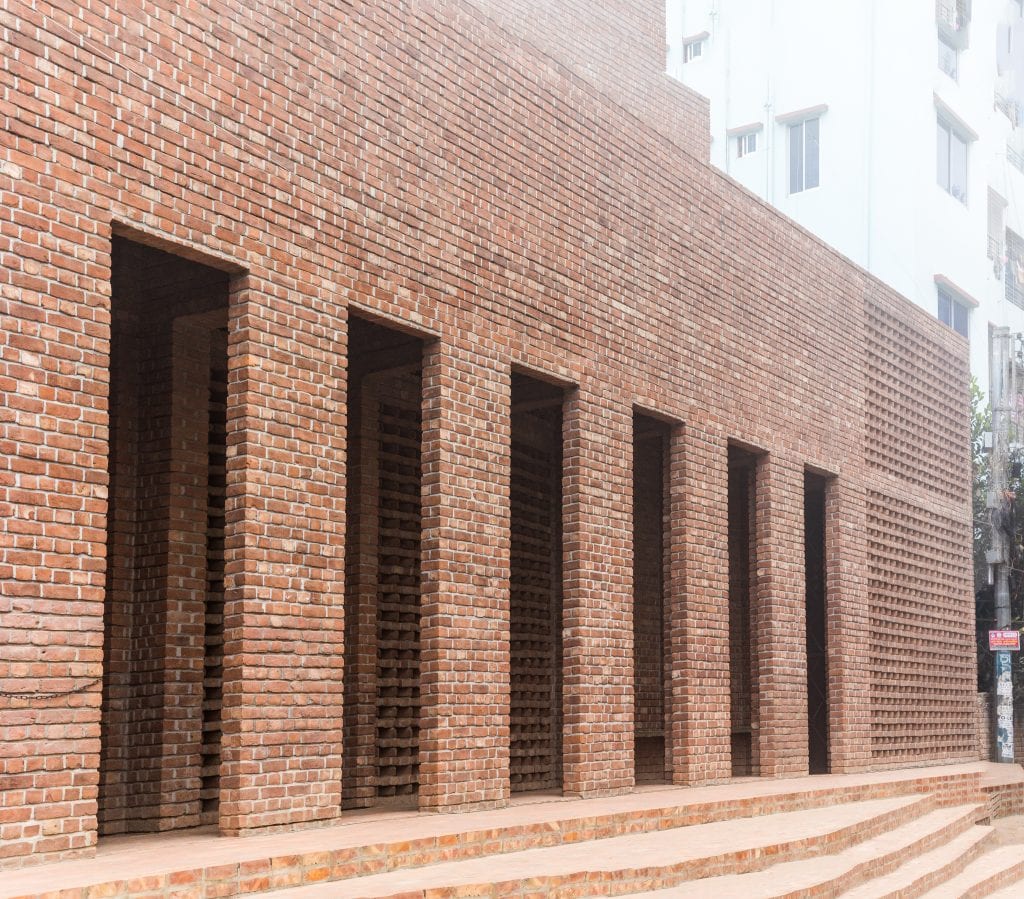
Instead, it works with light and space: cylindrical skylights bring columns of natural light into the prayer hall, so the worshipper’s experience changes from dawn to dusk. The courtyard is designed for children to play — the first mosque in Bangladesh deliberately integrated into daily community life as a whole.
It sits in a dense residential neighbourhood of Uttara and is genuinely humble in scale. That humility is the point.
Ramna Park – Breathe
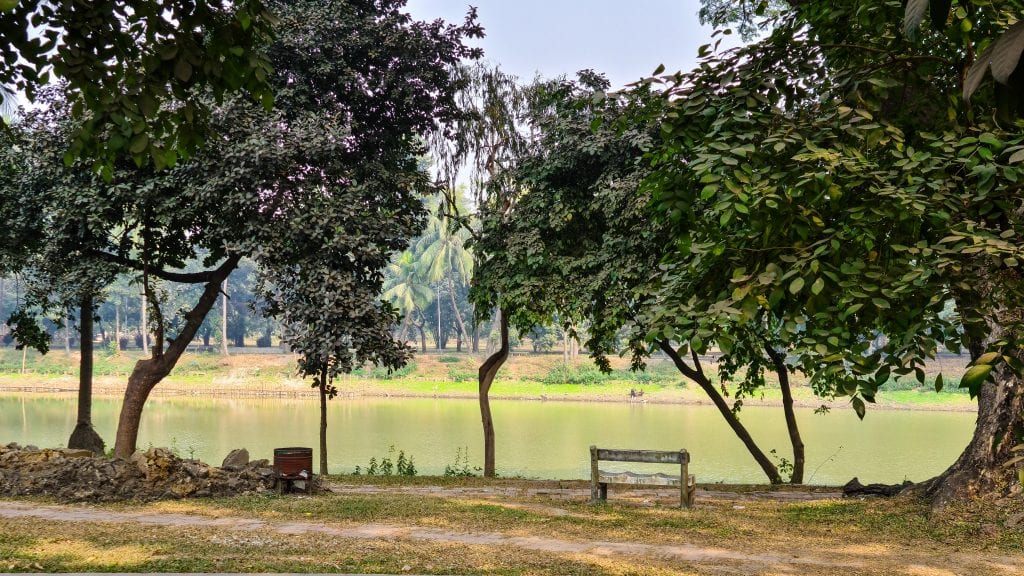
Dhaka needs green spaces the way a person needs sleep, and Ramna Park is the city’s finest. Over 70 species of trees shade the walking paths around a central lake. In the early morning — from about 6:00–9:00 AM — it fills with joggers, yoga practitioners, elderly men doing tai chi, and groups of friends walking together.
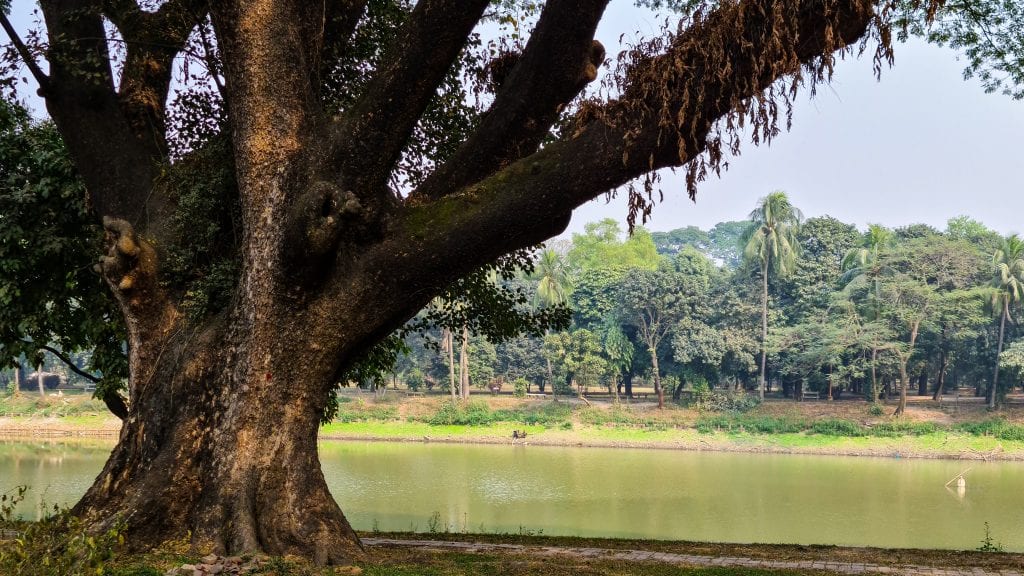
Ramna has been a park since the Mughal era, though in its current form it dates to the British period. The trees are remarkable — some are enormous, with roots like the buttresses of cathedrals.
Come here on Pohela Boishakh (Bengali New Year, 14 April): the park hosts one of the largest open-air cultural celebrations in the country, with concerts, traditional performances, and hundreds of thousands of visitors dressed in white and red.
Entrance Fee
Free
Chandrima Uddan – The Parliament’s Hidden Garden
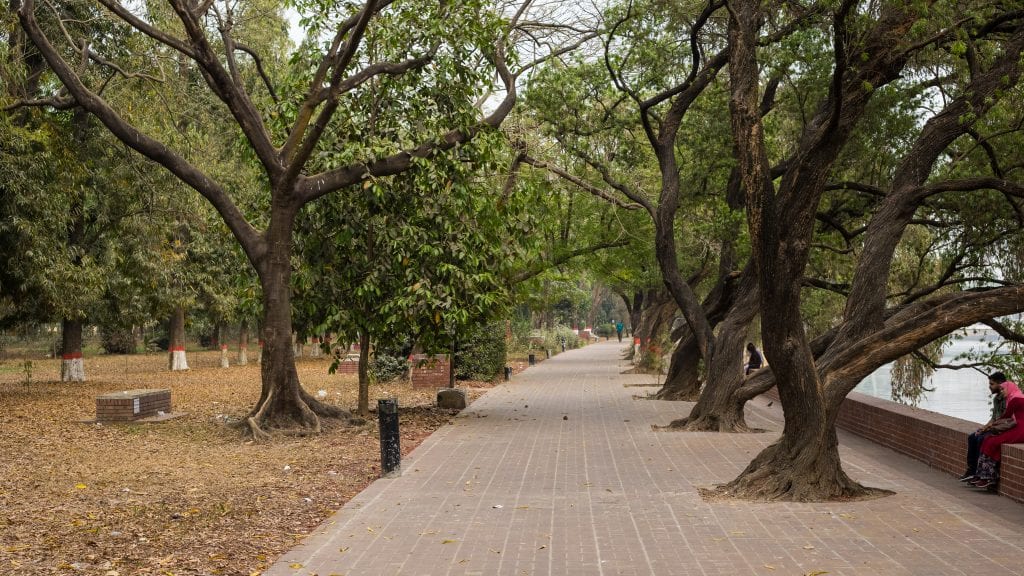
Adjacent to the National Parliament complex — and part of Louis Kahn’s original design — Chandrima Uddan is a large, peaceful garden park built around the Crescent Lake (chandrima means crescent in Bengali).
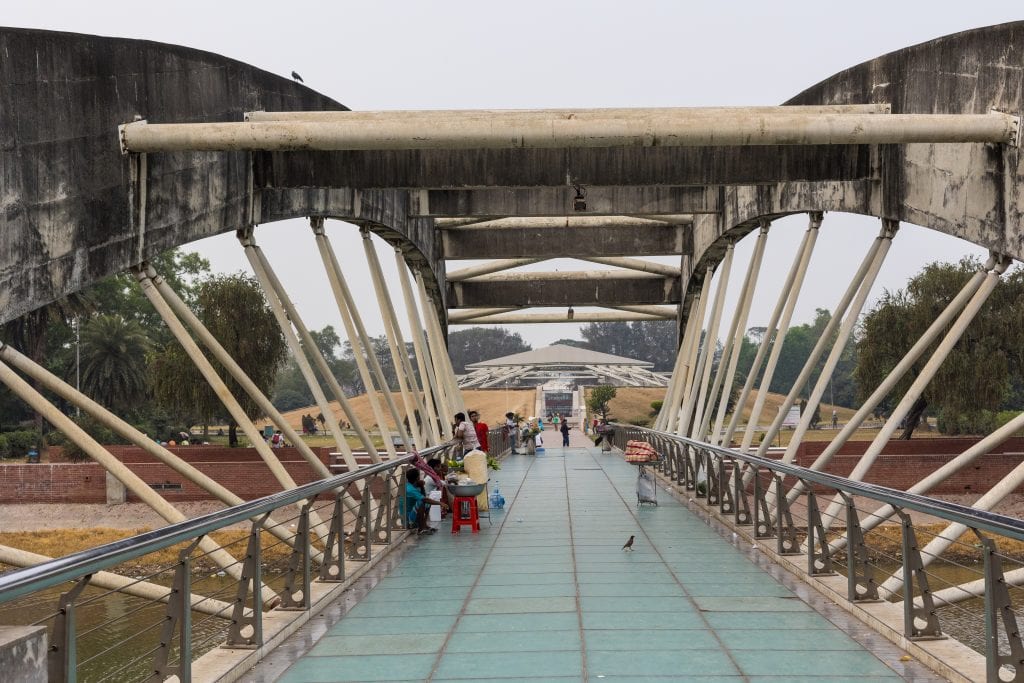
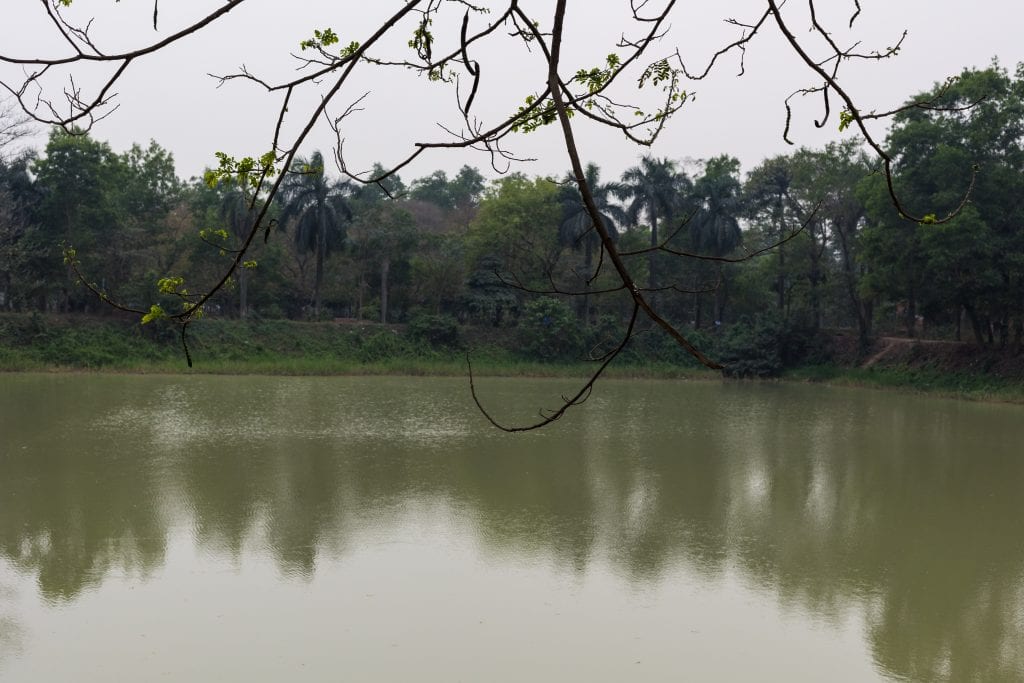
Most visitors to the parliament miss the garden entirely, which makes it all the more worth seeking out. A beautiful bridge crosses into the park; walking paths lead through dense greenery to a pond at the far end that reflects the tree canopy above it.
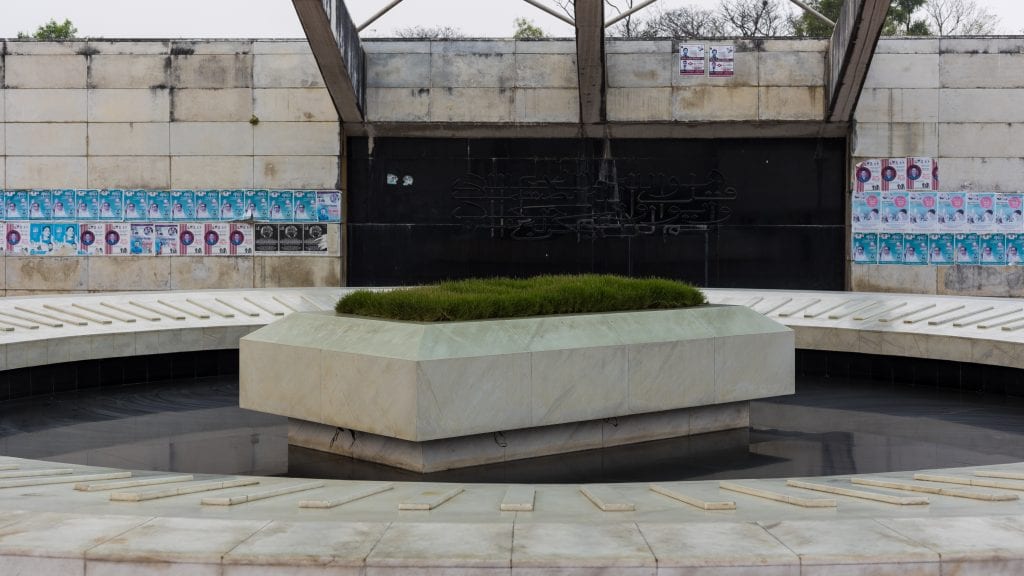
Midday is paradoxically the best time to visit — the evening brings crowds, but the midday lull gives you a rare moment of Dhaka silence. Within the park you will also find the tomb of former president Ziaur Rahman, a controversial but significant political figure whose political legacy continues to shape Bangladeshi politics.
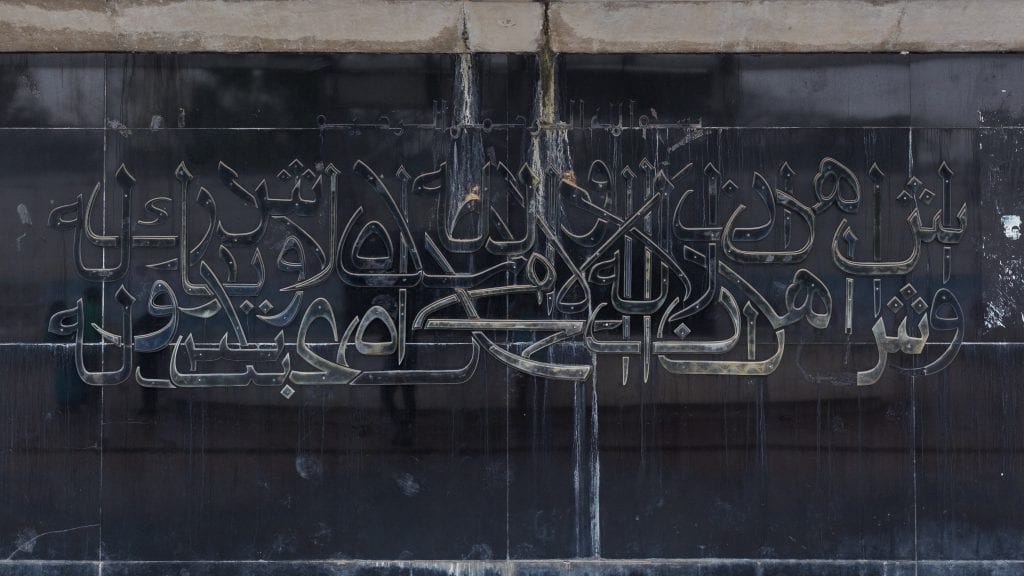
Note: No drone photography is permitted in this area due to the adjacent prime minister’s residence.
Bashundhara City – 19 Floors of Everything
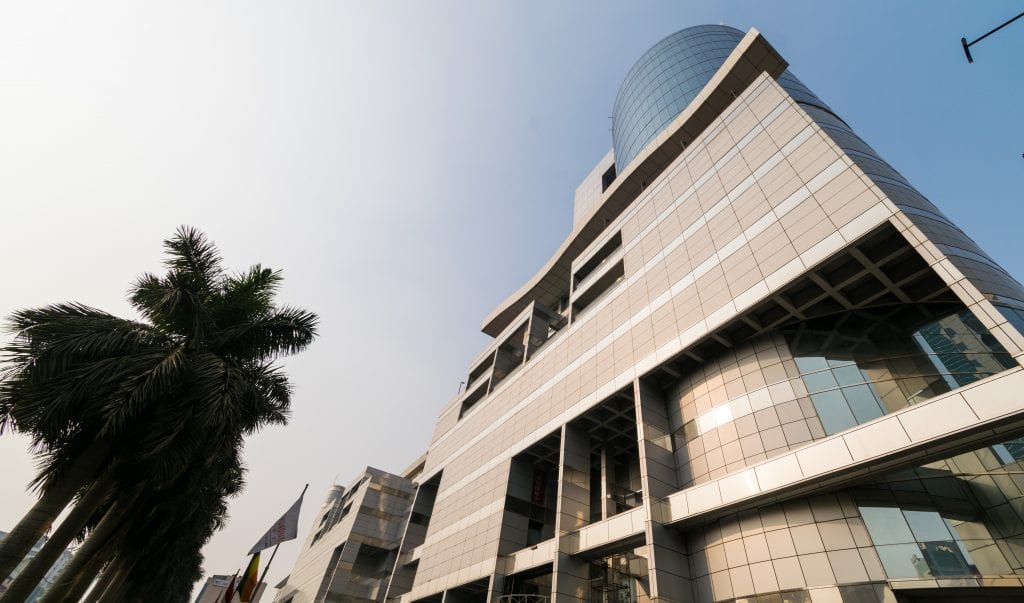
Bashundhara City is the largest operational shopping mall in Dhaka and one of the largest in South Asia — 19 floors, 2,300+ shops, a swimming pool, gymnasium, rooftop food court, and a multiplex cinema.
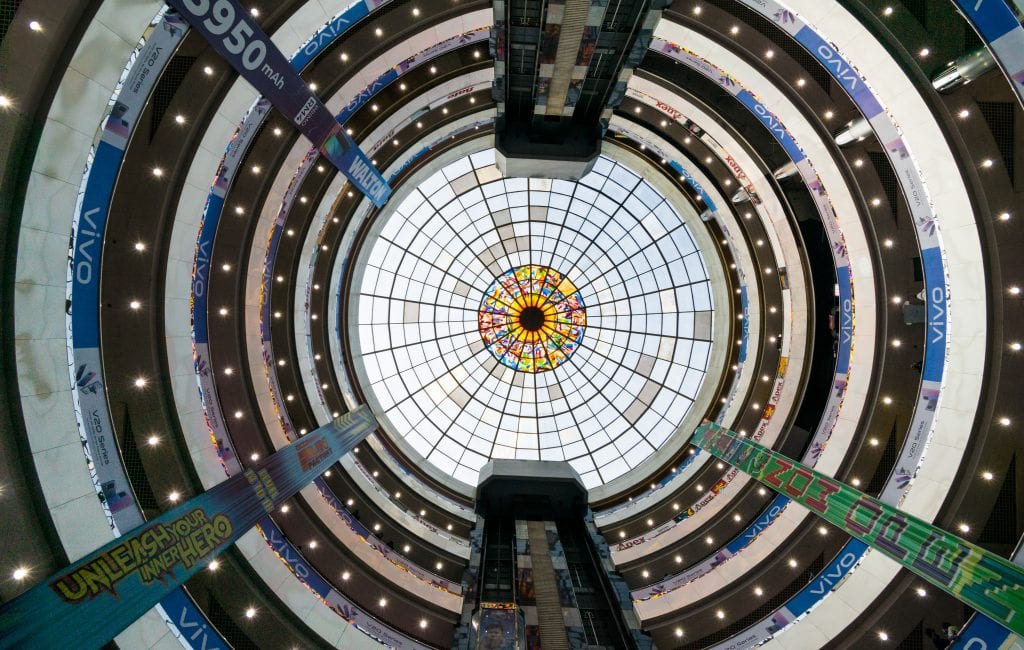
If you need to buy something in Dhaka — clothes, electronics, cameras, shoes, watches, musical instruments, currency exchange — this is the most efficient place to do it. Prices are fixed (no haggling, unlike the markets), quality is reliable, and the air conditioning alone will feel like a gift after the Dhaka heat.
The food court on the upper floors has a good selection of Bangladeshi, Indian, Chinese, and fast food options. The colourful glass dome is a popular photo spot.
Entrance Fee
Free
Swadhinata Stambha – Independence Monument
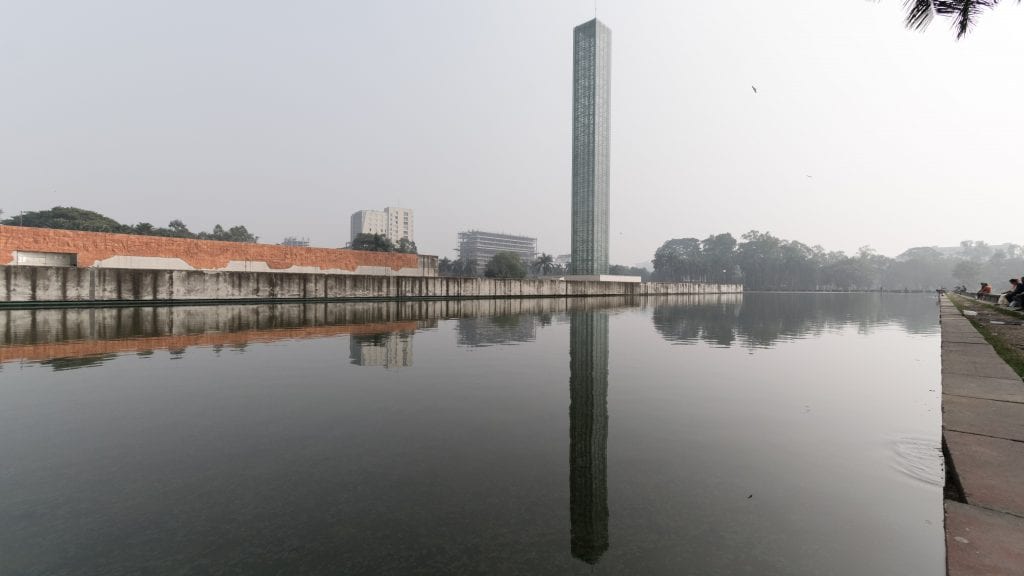
The Suhrawardy Udyan — a former racecourse that became one of the most historically loaded patches of ground in Bangladesh — is where two defining moments of the nation occurred.
On 7 March 1971, Sheikh Mujibur Rahman delivered the most consequential speech in Bangladesh’s history from this ground — a speech that effectively launched the independence movement. On 16 December 1971, the Pakistani military formally surrendered here, ending the Liberation War and creating the new nation.
The Swadhinata Stambha (Independence Monument), inaugurated in 2011, is a tall glass tower erected on this ground. An underground museum below tells the story of those two days. At night, the tower is illuminated and reflects in the surrounding pond.
Entrance Fee
Free
Shikha Chironton – The Eternal Flame
A two-minute walk from the Swadhinata Stambha, inside the same Suhrawardy Udyan, a flame has been burning continuously since 1997 — lit to honour the three million people who died in the 1971 Liberation War.
The flame was inaugurated by Prime Minister Sheikh Hasina, in the presence of Nelson Mandela and Yasser Arafat. It has not been extinguished since.
Shikha Chironton means “eternal flame.” The memorial is modest in scale but enormous in meaning.
The Four Famous Circles of Dhaka
Dhaka’s roundabouts are not just traffic management — they are civic sculpture. Each of the four most famous ones encodes something about Bangladesh’s national identity.
Shapla Chottor (Motijheel)
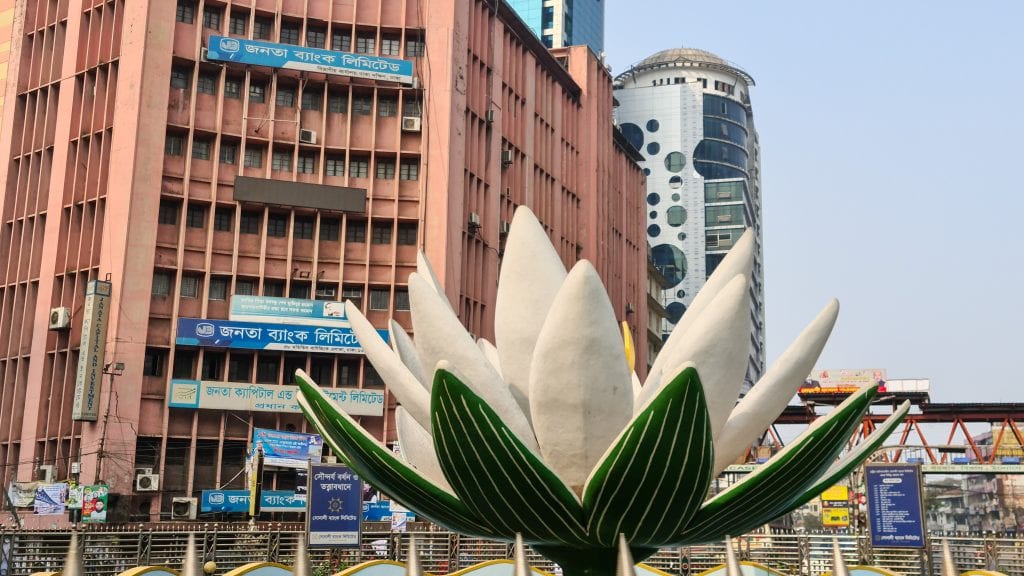
A sculpture of the Shapla — the water lily, Bangladesh’s national flower. Located in Motijheel, the financial district. White and green petals surround a yellow centre, surrounded by a fountain
Doel Chottor (Near Curzon Hall)
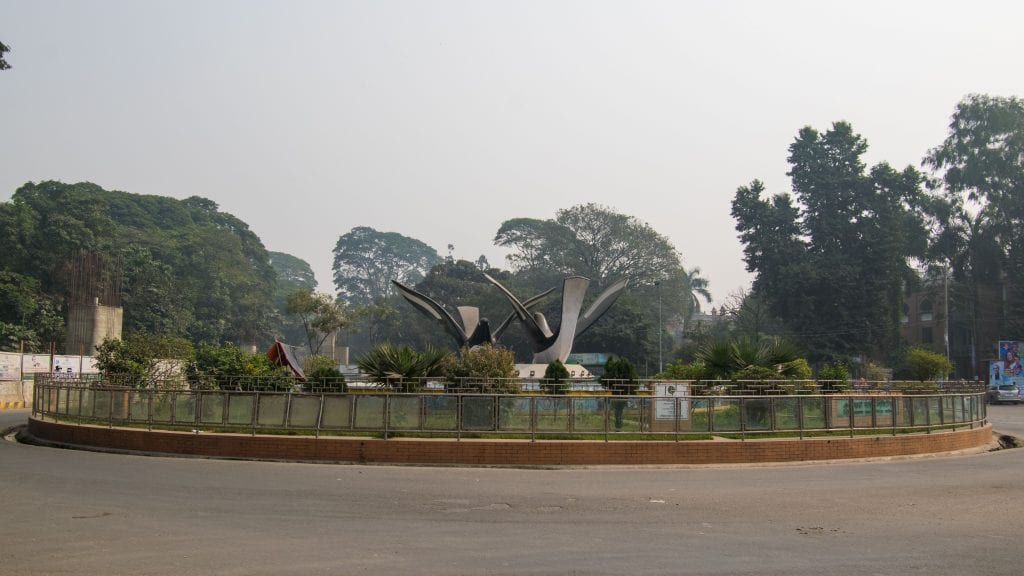
A pair of Magpie Robins — the doel, Bangladesh’s national bird — in bronze. Look for local craftspeople selling pottery and handicrafts on the surrounding footpaths.
Balaka Chottor (Near Biman Head Office)
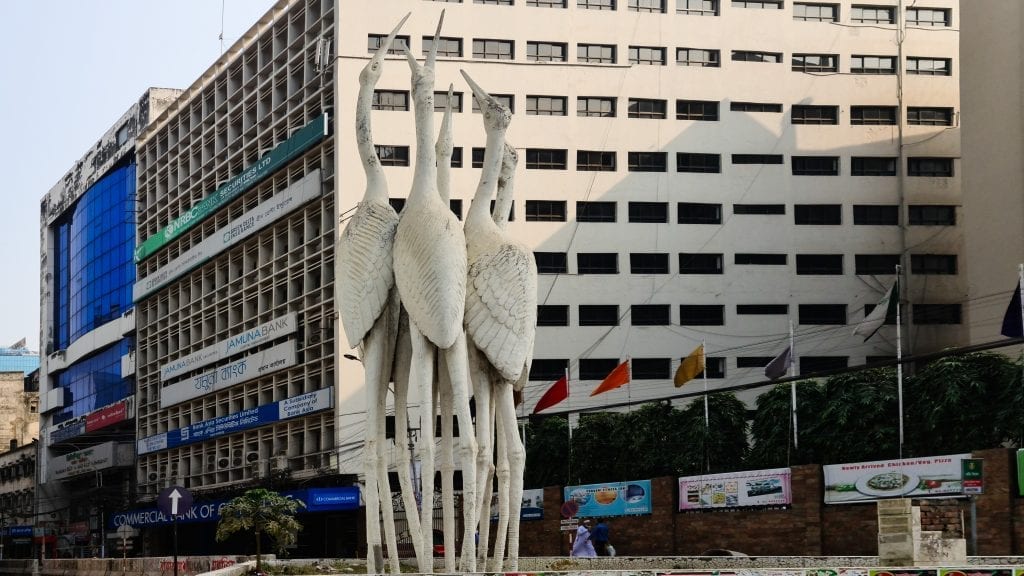
Five white storks (balaka) in flight. The stork is the symbol of Biman Bangladesh Airlines, and this roundabout sits in front of their headquarters.
SAARC Fountain (Karwan Bazar area)
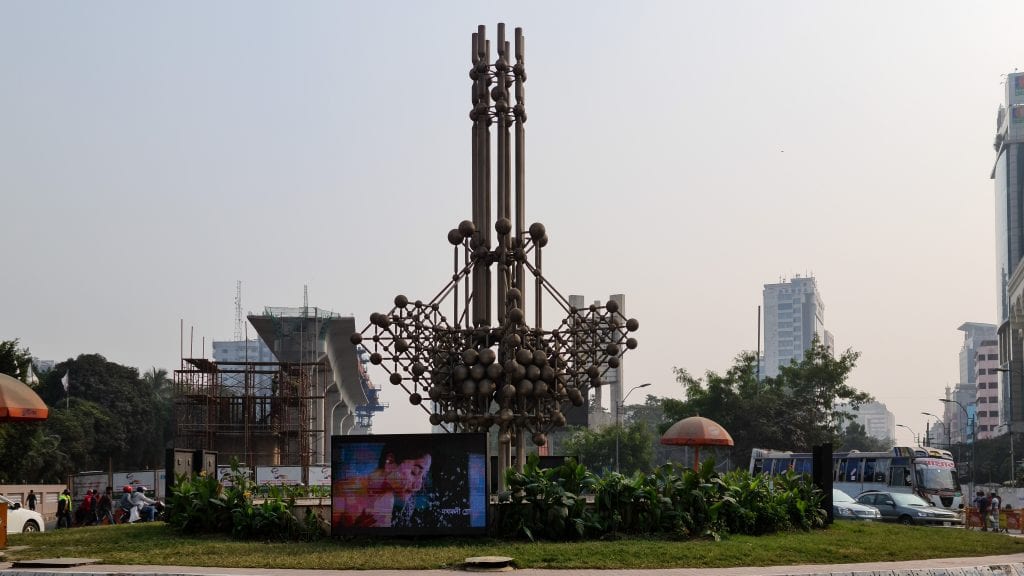
A silver fountain erected to commemorate Bangladesh’s hosting of a SAARC summit, representing the seven founding member nations of the regional bloc.
Entrance fee:
Free (all four)
Rose Garden Palace – The Hidden Mansion
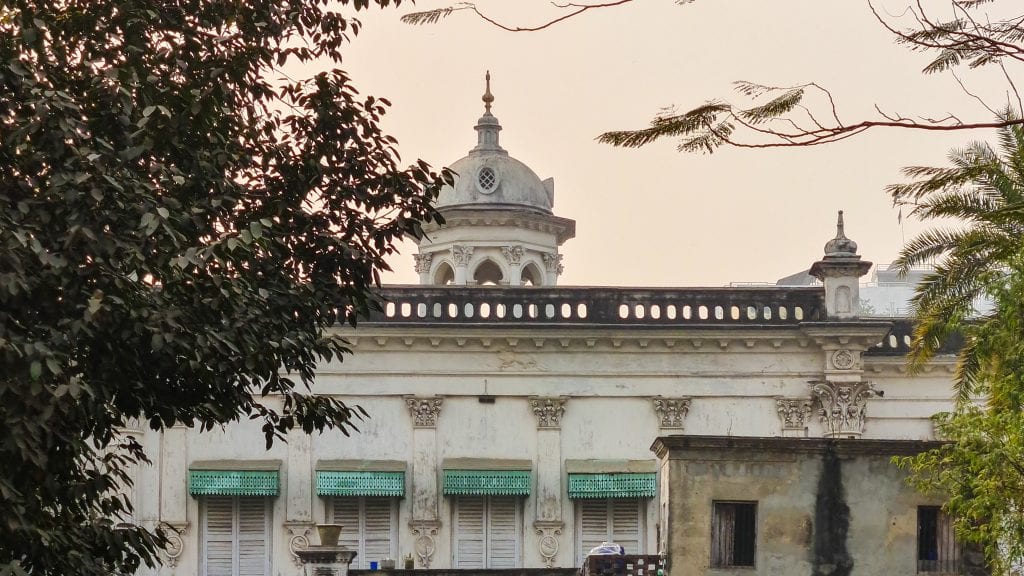
Built in the 1930s by a wealthy Dhaka landlord who cultivated different varieties of roses across its grounds, Rose Garden Palace is significant for both its architecture and its political history. In 1949, the Awami League — one of Bangladesh’s two dominant political parties and the party that led the independence movement — was founded within these walls.
The mansion was undergoing conversion into a government museum during my most recent visit. Check current access status before making the trip. Even from the outside and from the adjacent railway line, the white neoclassical building is worth seeing.
Entrance fee
Variable (check current status)
Birishiri – The Day Trip Most Visitors Miss
Technically outside Dhaka, Birishiri in Netrokona district deserves a mention for anyone spending more than three days in Bangladesh. The remote village, nestled between the Garo Hills and Meghalaya mountains and threaded through by the Someshwari River, is Bangladesh’s most unexpected beauty.
Read the full guide: Birishiri – A Pretty Remote Village in Bangladesh
Bonus: Bengal Shilpalay & Bengal Boi — Dhanmondi’s Cultural Heart
Most visitors to Dhaka spend their time among the historical monuments and the chaos of Old Dhaka — which is right and proper. But if you have an afternoon free and want to see what contemporary Dhaka looks like when it is at its most alive and thoughtful, make your way to Dhanmondi Road 27 and find Bengal Shilpalay.
The building belongs to the Bengal Foundation, one of Bangladesh’s most respected cultural organisations, and it houses two institutions that together make it one of the most interesting stops in the city.
Bengal Shilpalay is an art gallery on the upper floors — a serious, well-curated space that hosts exhibitions by some of Bangladesh’s most prominent contemporary artists. Paintings, sculptures, photography, installations — the programme rotates regularly and the quality is consistently high. Entry is free. The gallery is open from 3:00 PM to 8:00 PM (check their schedule as it varies with exhibitions). A note for photographers: video recording inside the gallery is prohibited, though the building and grounds are fair game.
Bengal Boi — boi meaning “book” in Bengali — occupies the ground floor, and this is the part that genuinely surprised me. It is not a bookshop in the functional sense of a place you enter knowing what you want and leave having bought it. It is a place you drift into and stay longer than you planned.
The collection is heavily curated — literature, art, architecture, history, music, photography, Bengali writing both classic and contemporary, translated works, children’s books, graphic novels, international publications you would not expect to find in Dhaka. There is a section donated entirely in memory of Ahmed Bhuiyan comprising Marvel and DC comics and graphic novels, available through a simple membership. The children’s area is thoughtfully stocked and designed for actual use, not display.
The ground floor has an open lawn and reading area where you can sit with a book — purchased or from the shelves — for as long as you like, entirely without pressure. Just beside the bookstore, a small canteen serves what you actually want after an hour of browsing: strong tea, singara (the Bangladeshi version of a samosa — flaky pastry, spiced potato filling, crisp from the oil), and other local snacks at prices that feel almost apologetically cheap. It is the kind of food that tastes better than it has any right to because the setting is right.
Come early enough — on a weekend morning particularly — and there is a breakfast window that most visitors never know about. A simple, good breakfast with tea, served in the calm of the lawn before the bookstore fills up. This is the version of Bengal Boi that the regulars know: the morning crowd, the unhurried plates, the city not yet fully awake outside. Worth setting an alarm for.
The first floor has a café with a balcony serving coffee and a fuller menu. Sit on the balcony with a book on a winter afternoon in Dhaka and you will understand why this place has such a devoted following among the city’s students, writers, and anyone who needs to breathe.
Bengal Boi also regularly hosts music performances, poetry readings, book launches, and film screenings — a full cultural calendar in a single building. Check their Facebook page before visiting to see what is on during your stay.
What I loved most was the ambiance — the combination of liveliness and calm that is very hard to achieve and that Bengal Boi manages without apparent effort. There are always people here: students with laptops, couples browsing shelves together, children running their fingers along book spines, older men sitting alone with something thick and serious. The energy is the best kind — purposeful and unhurried at the same time.
In a city that can feel relentlessly overwhelming, Bengal Shilpalay is a genuine exhale.
Practical details:
- Location: Bengal Shilpalay, Dhanmondi Road 27 (Old), behind Meena Bazar Shopping Mall, Dhaka
- Bengal Boi hours: Open daily (check Facebook for current hours)
- Bengal Shilpalay gallery hours: 3:00 PM – 8:00 PM (varies with exhibitions)
- Canteen: Ground floor — tea, singara, and local snacks at very low prices
- Breakfast window: Available on weekend and holiday mornings — arrive early, it is worth it
- Entry: Free for both gallery and bookstore
- Getting there: Uber or Pathao to “Bengal Shilpalay Dhanmondi” — most drivers know it
- Best time to visit: Early morning for breakfast and calm; weekday afternoons for a quieter browse; weekends for events and a livelier crowd
Festivals in Dhaka — When to Visit
Dhaka’s calendar has several festivals that transform the city. Timing your visit to coincide with one of these is strongly recommended.
Shakrain (14/15 January) — Old Dhaka’s kite festival. The sky above the old city fills with hundreds of fighting kites; rooftop parties run all afternoon. One of the most visually spectacular events in the city.
Ekushey Book Fair (entire February) — Bangladesh’s biggest book fair, held on the grounds of the Bangla Academy adjacent to the university. More than a fair — it is a month-long cultural festival with readings, launches, and hundreds of thousands of visitors.
Pohela Boishakh – Bengali New Year (14 April) — The biggest secular celebration in Bangladesh. Dhaka comes to a standstill in the best possible way: processions of people in white and red clothing, enormous cultural performances at Ramna Park and Dhaka University, traditional food stalls everywhere. Come early and wear comfortable shoes.
Durga Puja (October, date varies) — The Hindu community’s most important festival transforms Dhakeshwari Temple and Hindu neighbourhoods across the old city into glittering, illuminated celebration zones. The final day’s immersion procession is spectacular.
Eid ul-Fitr and Eid ul-Adha — The city slows (and many shops close) for two to three days, but the communal prayer gatherings in open fields and the generosity of the city during these holidays offer a different, quieter Dhaka worth experiencing.
Street Food in Dhaka – Eat Your Way Through the City
Dhaka’s street food scene is one of Asia’s great undiscovered pleasures. A few things you must not leave without trying:
- Fuchka — crisp hollow puri shells filled with spiced mashed potato and tamarind water. The definitive Dhaka street snack.
- Biryani from Old Dhaka — particularly from Haji Biriyani in Nazimuddin Road, arguably the most famous biryani in Bangladesh. Arrive early; it sells out daily.
- Bakarkhani — a thick, flaky unleavened bread unique to Old Dhaka, best eaten warm from the bakery with a cup of tea.
- Jilapi — deep-fried batter spirals soaked in sugar syrup, sold by the kilo at market stalls.
- Iftar specials during Ramadan — if you visit during Ramadan, Chawk Bazar in Old Dhaka becomes one of the most extraordinary food markets in the world after 5:00 PM.
For a deeper guide, read my piece on Street Foods of Dhaka.
Getting Around Dhaka
Dhaka’s traffic is legendarily bad — budget significantly more time than Google Maps suggests for any journey.
- Uber and Pathao are the most reliable options for air-conditioned travel. Fares are reasonable.
- CNG auto-rickshaws (the green three-wheelers) are cheaper but always negotiate the fare before getting in, or insist on the meter.
- Rickshaws are perfect for short distances in Old Dhaka where cars simply cannot go.
- Dhaka Metro Rail (MRT Line 6, opened 2022) now runs from Uttara to Motijheel, cutting travel time between north and central Dhaka dramatically. Use it.
Location of the Places to visit in Dhaka
FAQ – Places to Visit in Dhaka
Is Dhaka safe for tourists?
Yes, Dhaka is generally safe for tourists. The main concerns are petty theft in very crowded areas (keep a hand on your bag in Sadarghat and Old Dhaka markets) and the traffic, which is genuinely hazardous. Political demonstrations occasionally disrupt movement — check local news before travelling. Female solo travellers should dress conservatively and use ride-hailing apps rather than flagging vehicles on the street.
What is the best area to stay in Dhaka?
Gulshan and Banani (northern Dhaka) are safest and most comfortable for international visitors, with the best restaurant options. Dhanmondi along with Lalmatia are centrally located and more budget-friendly. Staying in Old Dhaka is atmospheric but accommodation quality is inconsistent.
How do I get a visa for Bangladesh?
Most nationalities can get a visa on arrival at Hazrat Shahjalal International Airport in Dhaka for 30 days, extendable up to 90 days. Check the Bangladesh immigration website for your specific nationality’s requirements before travelling.
Can I visit Dhaka as a day trip from Kolkata?
Yes, it’s technically possible, but, impractical — there are direct flights (45 minutes) and an overnight train (the Maitree Express). However, Dhaka rewards at least two nights.
What is the best day trip from Dhaka?
The National Monument of Bangladesh in Savar (45 minutes away) is the best half-day trip. For a full day, consider Birishiri or the Sonargaon folk art museum (30km from Dhaka).
Is Bangladesh expensive for tourists?
No — Bangladesh is one of the most affordable countries in Asia for travellers. Mid-range hotel accommodation costs USD 30–70/night; a full restaurant meal costs USD 3–10; entry fees are minimal. Budget USD 50–80/day for comfortable travel including accommodation.
Want to Explore Dhaka with a Local?
Every weekend, I take small groups to experience Dhaka the way it should be seen — through the lanes of Old Dhaka, into the buildings most tourists walk past, through the food stalls that only locals know. If you want that experience, send me a mail (fuad at awalkintheworld.com) .
And if you are looking for a place to stay — I host guests in my Airbnb in Dhaka. Two listings, in neighbourhoods I know intimately, with the kind of local knowledge that turns a good trip into a great one.
Explore More of Bangladesh
Dhaka is your starting point, not your whole story. Bangladesh has far more to offer:
- 🏔️ Sajek Valley — clouds rolling through mountain valleys in the Chittagong Hill Tracts
- 🏖️ Cox’s Bazar — the world’s longest natural sea beach (120km uninterrupted)
- 🏝️ Saint Martin’s Island — Bangladesh’s only coral island, with clear blue water
- 🏛️ National Monument of Bangladesh — the best day trip from Dhaka
- 🌿 Birishiri — the remote valley that most tourists completely miss
- 📸 Old Dhaka in Photos — a photo essay on Dhaka’s ancient heart

I never imagined Dhaka having such magnificent architecture. Or that there was so much to see and do. Your post has certainly opened my eyes to a country I would never have thought of visiting.