
Old Dhaka photos capture something no other city in Asia quite replicates…
There is a part of Dhaka that the city’s modern glass towers and ride-hailing apps have not reached — not really. You can Uber to its edge, but once you step into the lanes of Old Dhaka, you are somewhere that moves at its own ancient, chaotic, completely indifferent pace.
Puran Dhaka — Old Dhaka — is the original city. It was founded in the 16th century by the Mughal governor Islam Khan as the capital of Bengal Subah, and it has been inhabited, traded in, argued over, prayed in, and lived through ever since. More than 400 years of continuous human activity have compressed into a few square kilometres of lanes barely wide enough for two rickshaws to pass, buildings so old they lean toward their neighbours as if sharing a secret, and commerce so dense and varied that you can find anything — anything — if you know which lane to turn into.
I live in Dhaka. I have lived here my whole life. Old Dhaka still surprises me.
This is a photography guide to Puran Dhaka — the lanes, the landmarks, the river, and the light. I took all of these photos walking. That is the only way to do it.
Quick Facts: Old Dhaka for Visitors
| Local name | Puran Dhaka (পুরান ঢাকা) |
| Founded | 1608 as Mughal capital of Bengal Subah |
| Location | Southern Dhaka, along the Buriganga River |
| Best time to visit | Early morning (6:00–10:00 AM) for light and calm; avoid midday heat |
| Best day to visit | Weekday mornings; avoid Friday prayer times in mosque areas |
| Getting there | Rickshaw or CNG from central Dhaka; 20–40 minutes |
| Getting around | On foot; rickshaw for longer stretches |
| Photography peak | Golden hour morning and late afternoon |
| Key areas | Sadarghat, Chawk Bazar, Shankhari Bazar, Islampur, Farashganj |
| Safety | Generally safe; keep a hand on camera/phone in very crowded areas |
Why Old Dhaka Is One of Asia’s Great Street Photography Destinations
Old Dhaka is not pretty in the conventional travel-photography sense. The lanes are narrow and often dirty. The buildings are crumbling. The air smells of fish and diesel and something ancient you cannot quite identify. There is noise — constant, layered, percussive noise — at almost every hour.
And yet photographers from across Asia make special trips here. Because what Old Dhaka has, in a concentration you will not find in many cities anywhere on earth, is life — human life in every expression, stacked vertically in the buildings and spilling horizontally across the lanes. A man balancing four enormous textile rolls on his head navigates between a horse-drawn cart and a three-wheeled electric van. Women in brilliant saris bargain at a bangle stall while three schoolboys squeeze past on a bicycle built for one. A fishmonger sleeps on his counter. Around the corner, a century-old building advertises its services in painted letters that have been repainted so many times the original surface is unknowable.
Every frame is composed for you. Your job is just to be there with a camera and eyes open.
The Entrance: First Steps Into Puran Dhaka
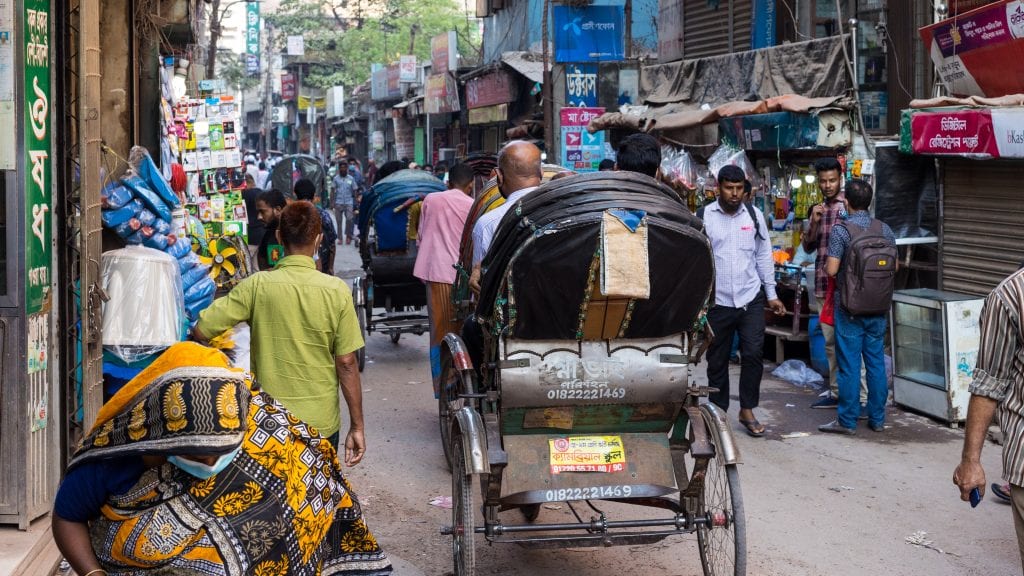
The transition from modern Dhaka to Old Dhaka does not announce itself with a gate or a sign. It happens gradually, over the course of a few streets, as the buildings get older, the roads get narrower, and the noise changes character. Then suddenly you are in it — and there is no mistaking where you are.
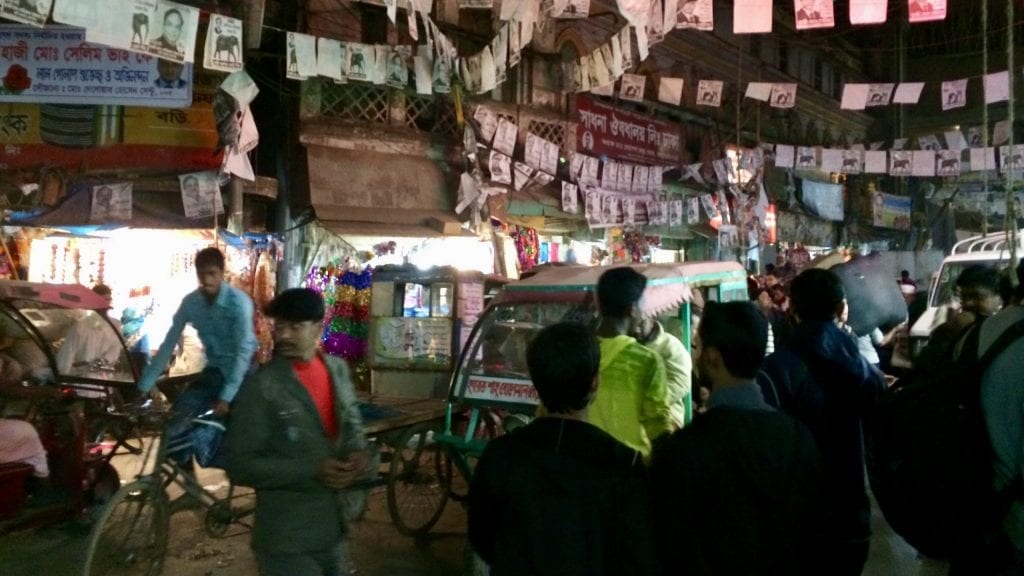
The first thing you notice is the density. Not just of people, but of things — goods stacked to the ceiling in open shopfronts, products hanging from every available hook, sacks and bundles and crates occupying every surface that is not actively being walked on. Old Dhaka is not just a residential neighbourhood; it is one of the largest informal wholesale markets in South Asia. The narrow lanes are supply chains. The buildings are warehouses. The chaos is commerce, moving at volume.
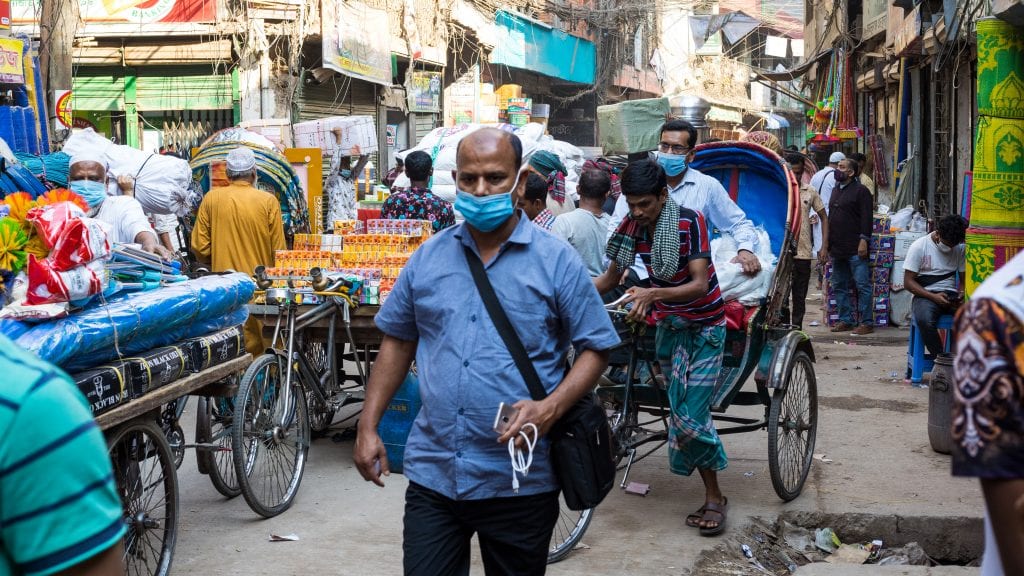
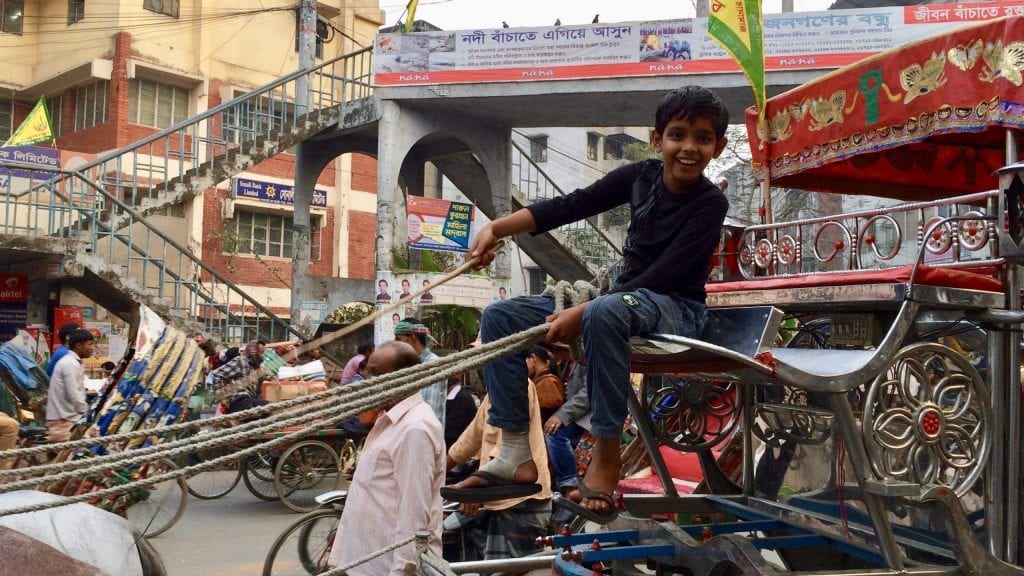
📸 Photography note: Shoot wide at the entrance to Old Dhaka to capture the full density of the scene — people, vehicles, buildings, goods, all in a single compressed frame. A 24mm or 28mm equivalent gives you everything. Then move in close with a 50mm or short telephoto for individual faces and details.
The Labour of Old Dhaka: Carrying the City
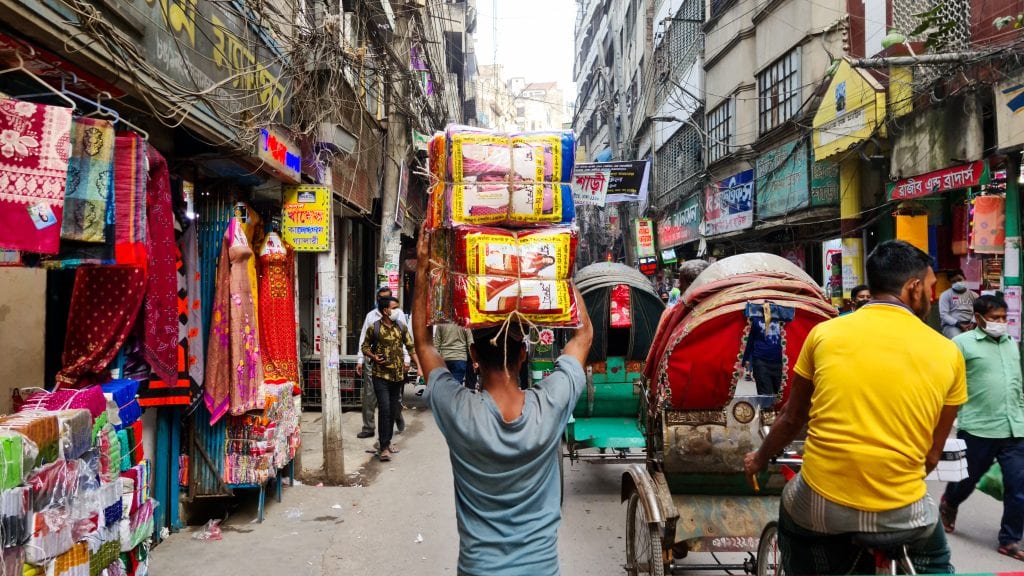
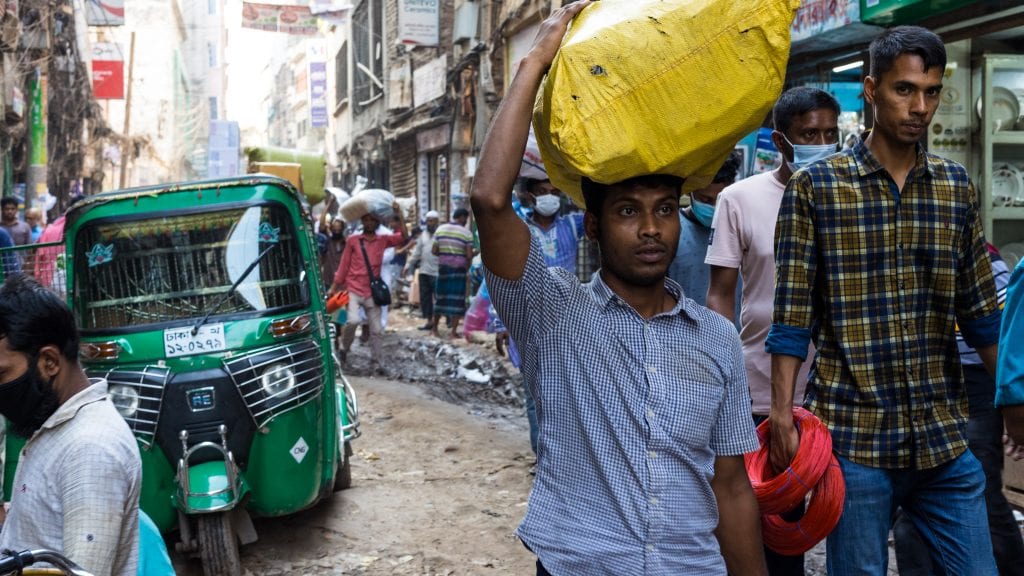
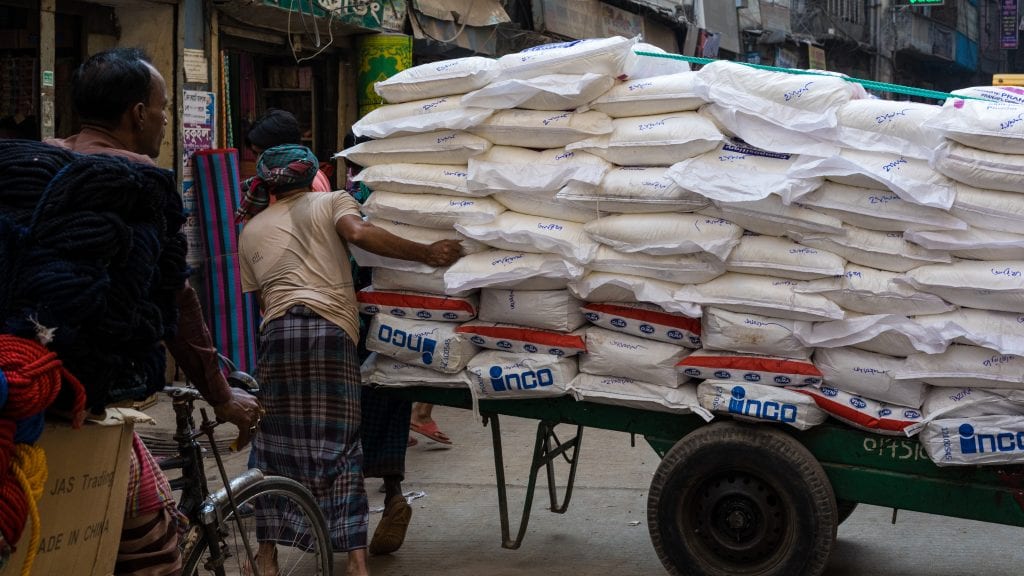
Old Dhaka’s economy runs on human muscle to a degree that is startling to visitors from cities where forklifts and delivery vans have replaced the human porter. Here, men (kuli, as they are known locally) carry extraordinary loads through streets too narrow for any mechanical vehicle — bolts of fabric five metres long, towers of cardboard boxes, sacks of rice that would require two people to lift in most places.
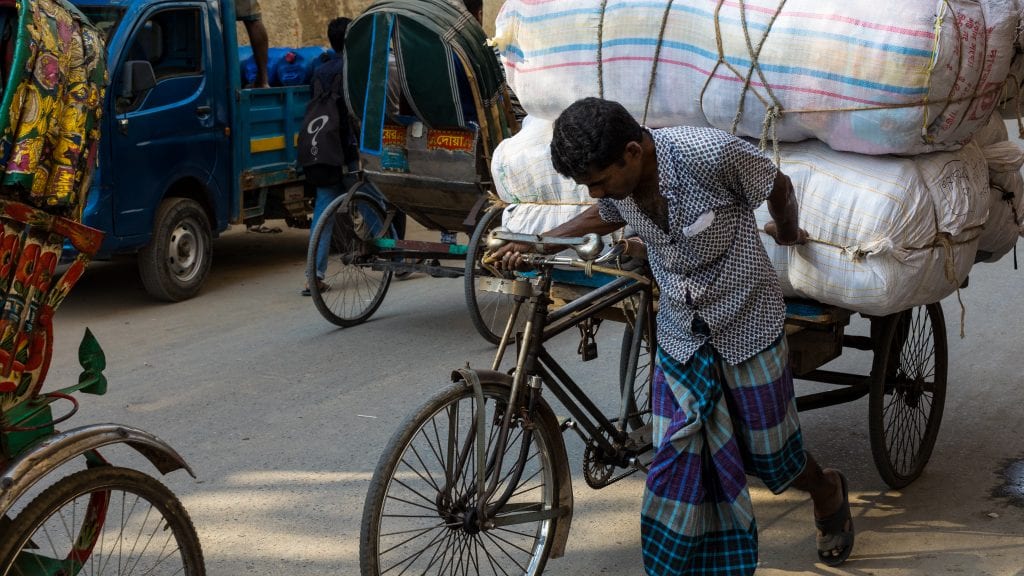
The balance required is remarkable. A single man, head slightly forward, moving at pace through a crowded lane with forty kilograms balanced at the apex of a neck you would not think capable — this is a skill developed over years of practice, passed down through families who have worked Old Dhaka’s lanes for generations.
These are not background details. These are the people who keep the city supplied. The wholesale fabric market of Islampur, the hardware lanes of Mitford Road, the plastic goods district near Chawk Bazar — all of it moves by human carrier. Photograph them with respect: ask with a gesture before pointing a camera at someone’s face, and accept a refusal graciously.
The Markets: What Old Dhaka Sells
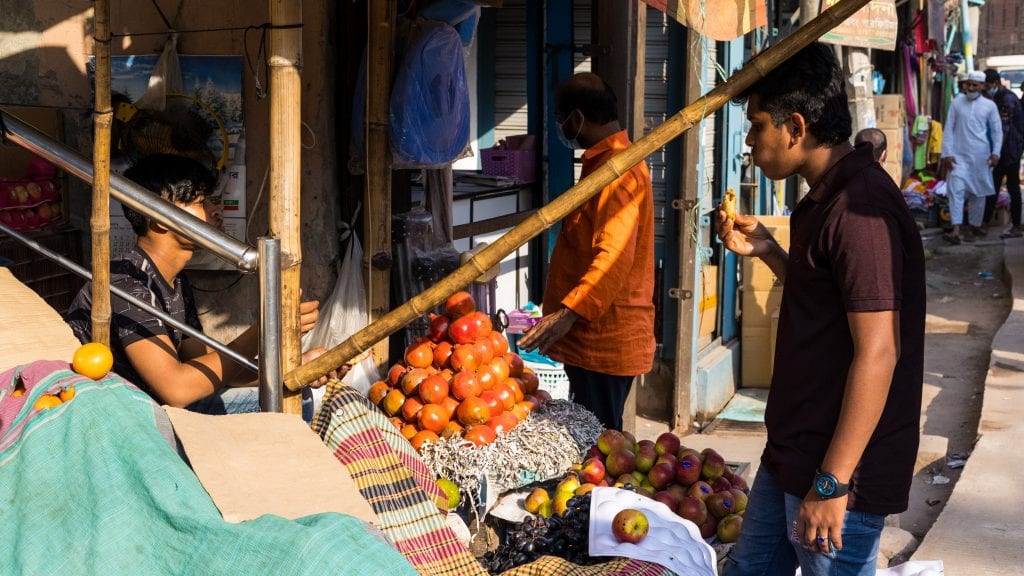
Old Dhaka’s commercial zones are organised by product in a way that reflects centuries of trade guild tradition. Entire lanes and blocks specialise in a single category of goods. Once you know this, navigation becomes a kind of treasure map.
Islampur — the largest wholesale fabric market in Bangladesh. Lane after lane of shops selling cotton, silk, jamdani, muslin, and synthetic fabrics by the bolt. The density of goods is extraordinary; so is the density of buyers. This is where the garment industry and the retail trade both come to source material.
Mitford Road area — hardware, medicines, and wholesale dry goods. The pharmacies here supply much of the city; the hardware shops stock items you have not seen since your grandfather’s workshop.
Chawk Bazar — one of the oldest markets in Dhaka, particularly famous during Ramadan, when the iftar market in the late afternoon becomes one of the most extraordinary food spectacles in the city (more on this below).
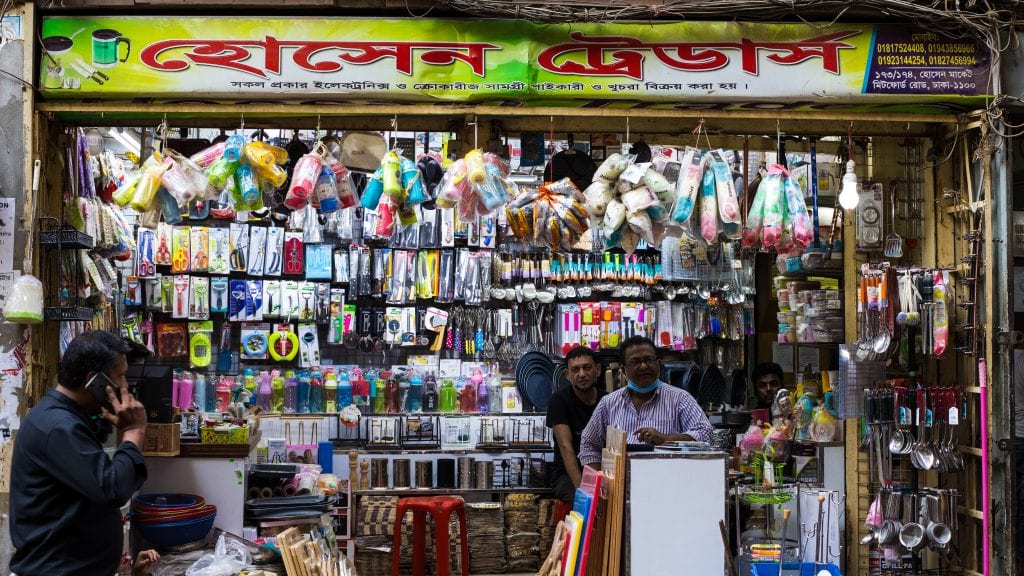
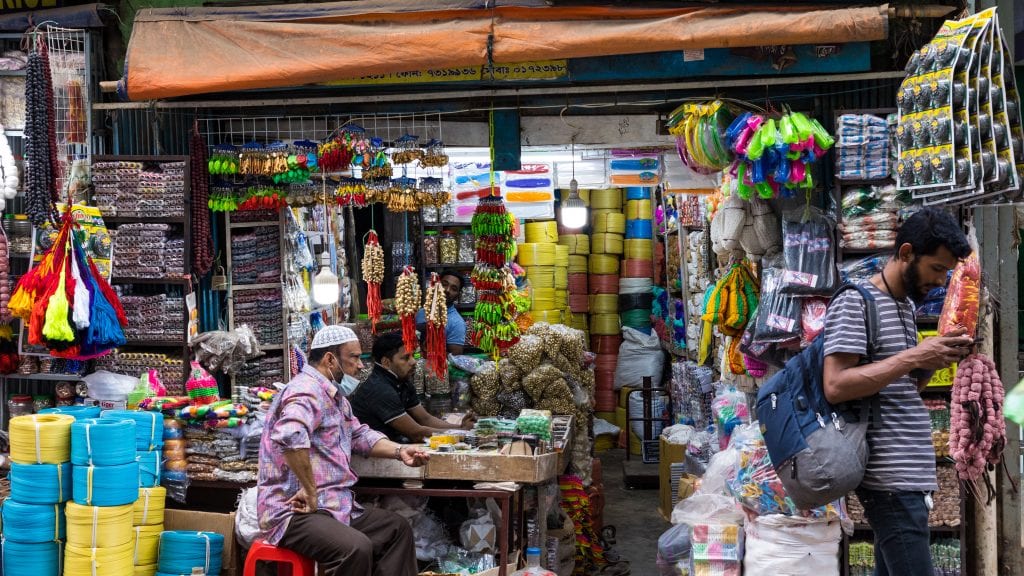
📸 Photography note: The market interiors — dark, packed, lit by single bare bulbs or slashes of light from the lane outside — reward a camera that handles high contrast well. Shoot toward the light source to silhouette the goods and the shopkeeper; expose for the highlights and let the shadows go dark. These interiors look terrible in flat light and extraordinary in dramatic light.
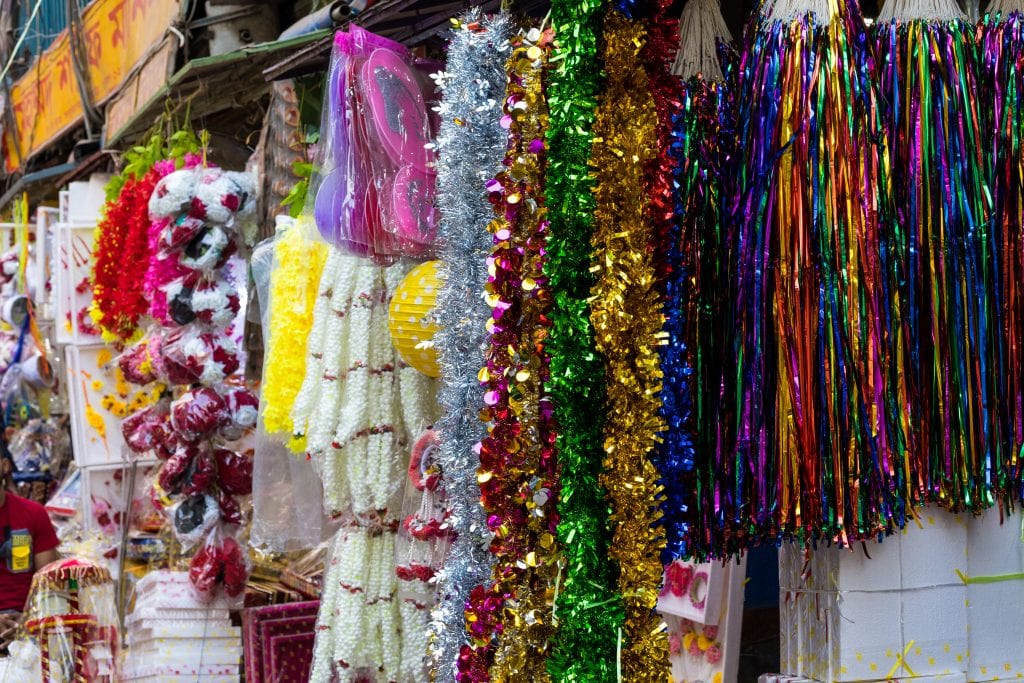
Shankhari Bazar – The Hindu Artisan Lane
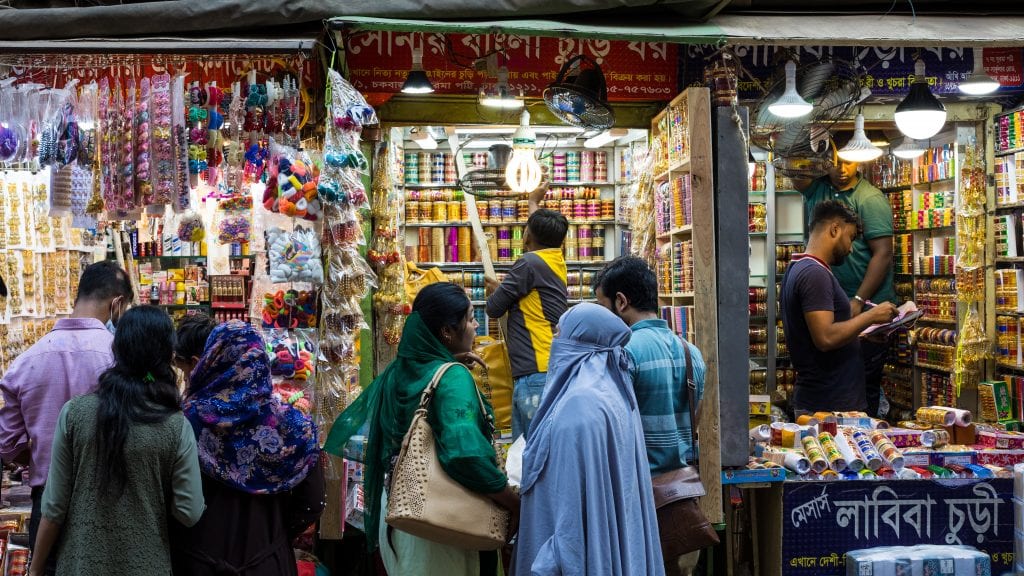
One of Old Dhaka’s most distinctive streets is Shankhari Bazar — a single lane, barely three metres wide, that has been the home and workshop of Shankhari (conch-shell artisan) families for centuries. These Hindu craftspeople, a minority within the predominantly Muslim city, produce the white conch-shell bangles (shankha) that are a central part of Hindu bridal tradition across Bangladesh and West Bengal.
The lane is visually extraordinary: the buildings are four and five storeys tall, leaning so close overhead that the sky is reduced to a narrow strip of light between the rooflines. At street level, workshops and shops open directly onto the lane, with craftspeople working at benches visible from the street — cutting, filing, polishing.
The bangle shops of Shankhari Bazar are among the most photographed spots in Old Dhaka. The stalls are a wall of white and gold, the women who browse them dressed in brilliant colours. Arrive in the morning before 10:00 AM to photograph without the densest crowds.
The Lanes: Getting Narrower and More Beautiful
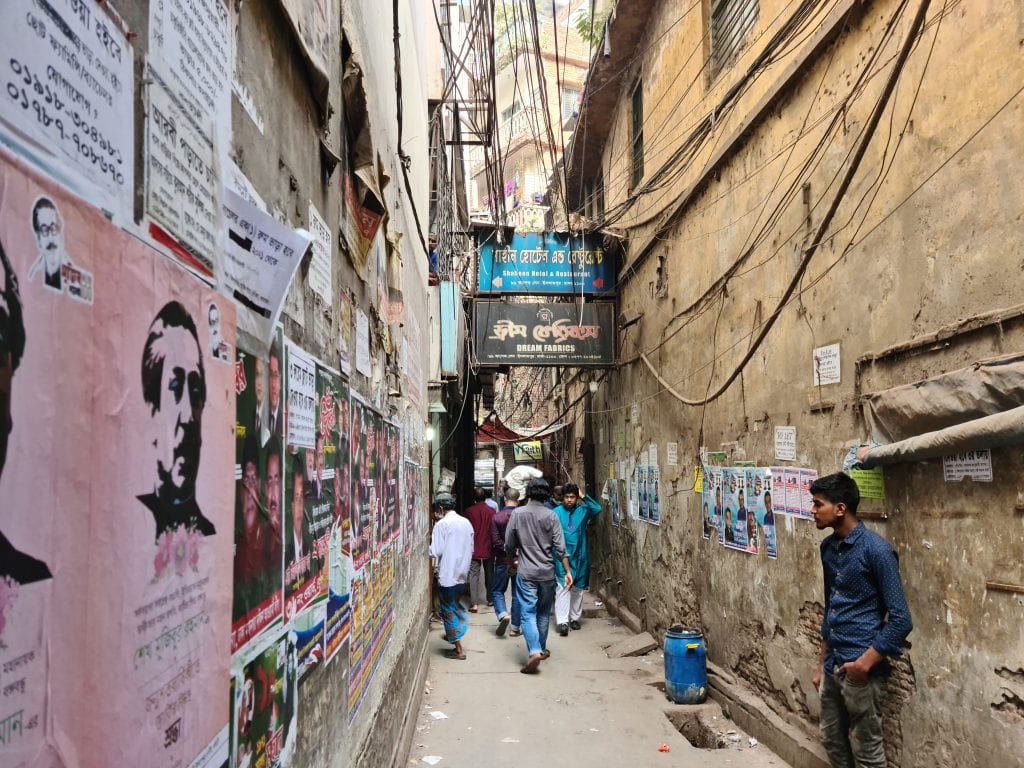
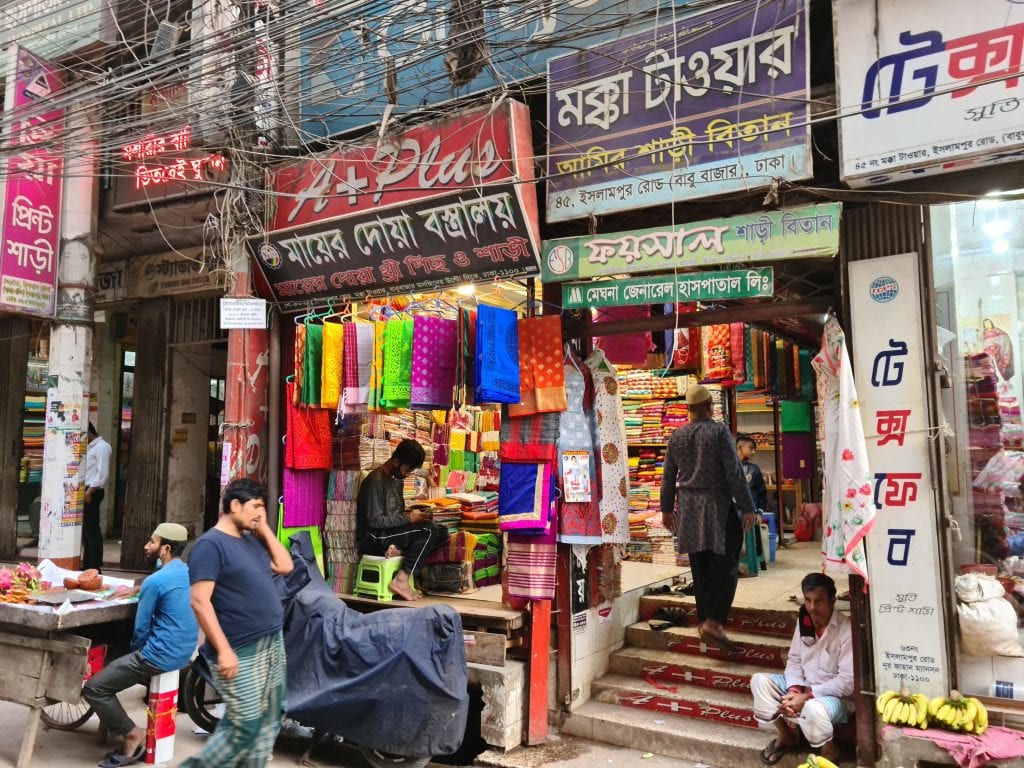
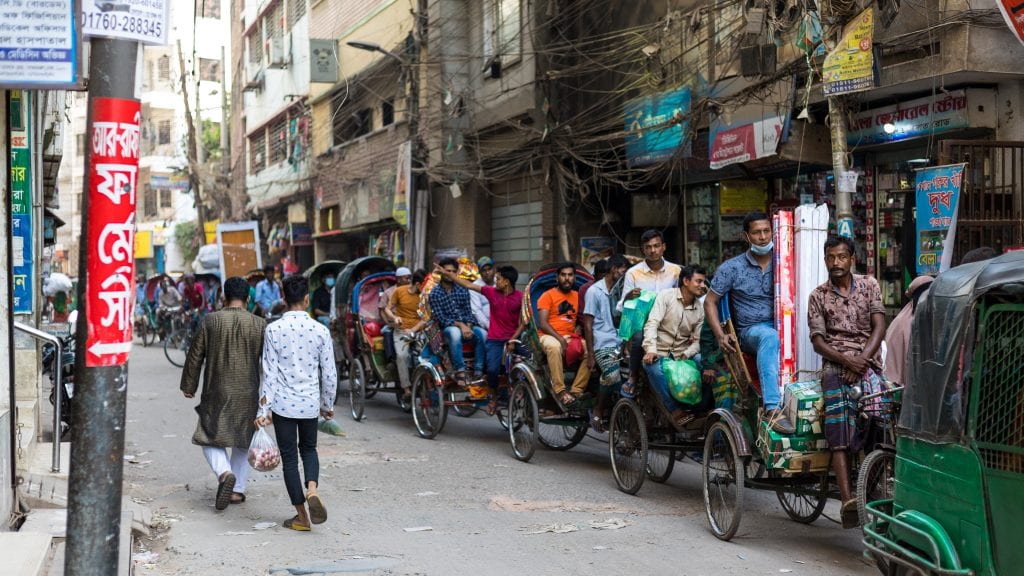
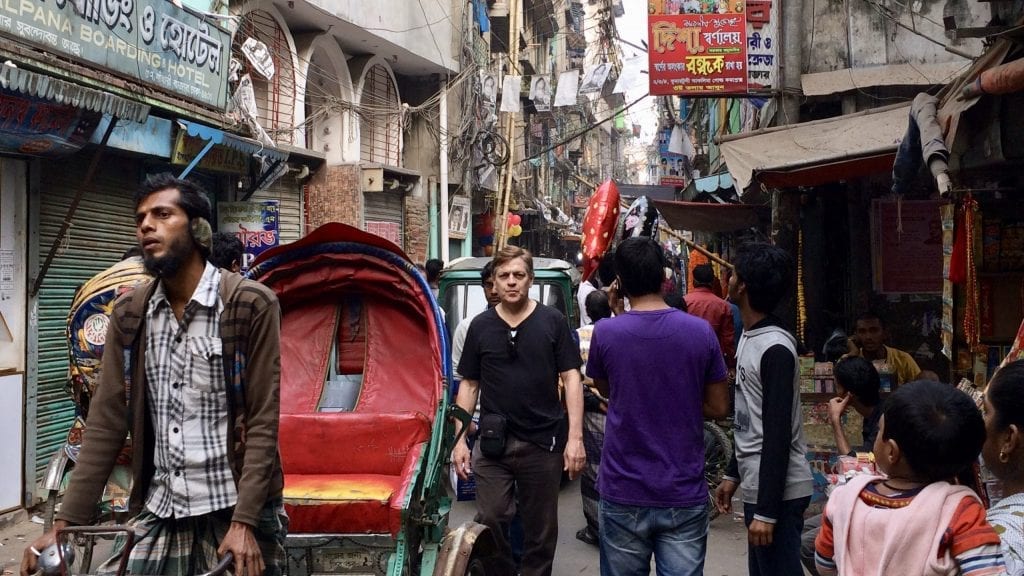
The deeper you walk into Old Dhaka, the narrower the lanes become. This is not a metaphor — it is literal geography. The main commercial arteries are perhaps four or five metres wide (still barely passable for vehicles). The residential lanes behind them are two metres. The galis (alleyways) between buildings can narrow to a single person’s width.
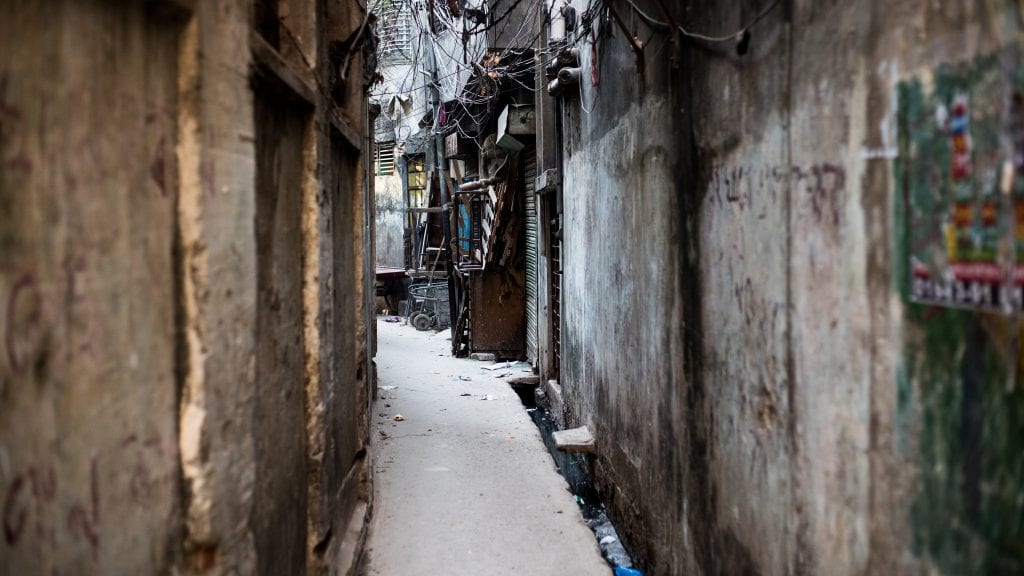
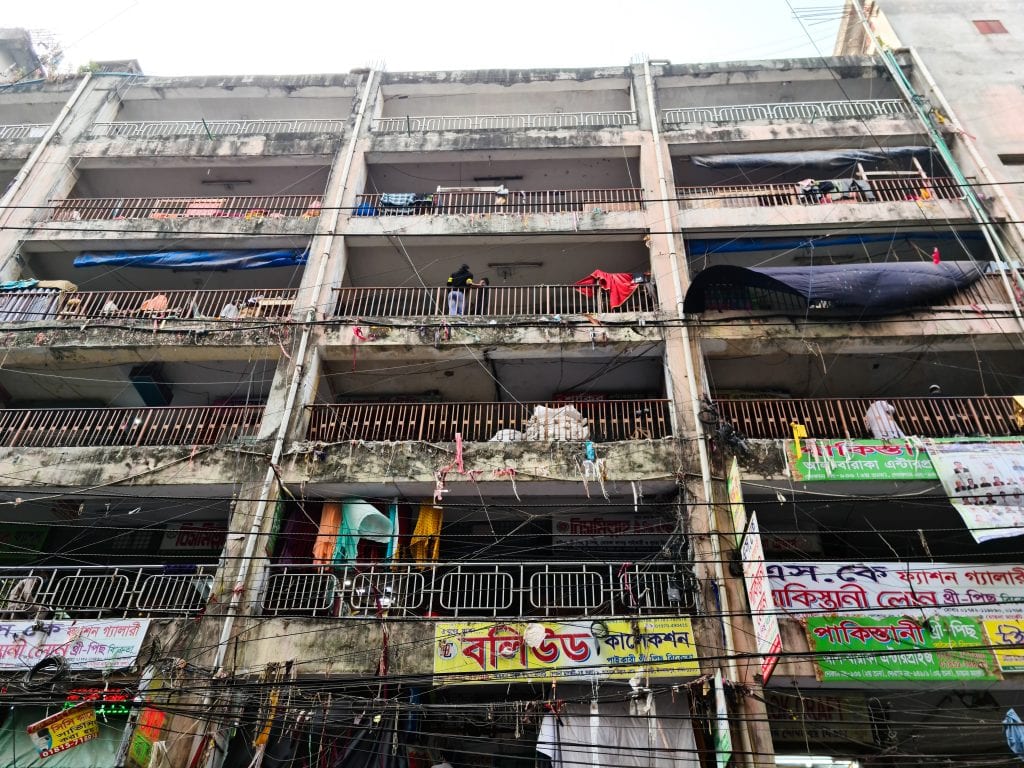
This compression is what gives Old Dhaka its visual power. Buildings five storeys high lean over lanes barely wide enough for two people to pass. Cables — electrical, cable TV, telephone, internet — form dense tangles between buildings, a spaghetti overhead that somehow supplies an entire neighbourhood. Laundry hangs between windows. A shrine occupies a niche in the wall. A tiny tea stall operates from a space the size of a wardrobe.
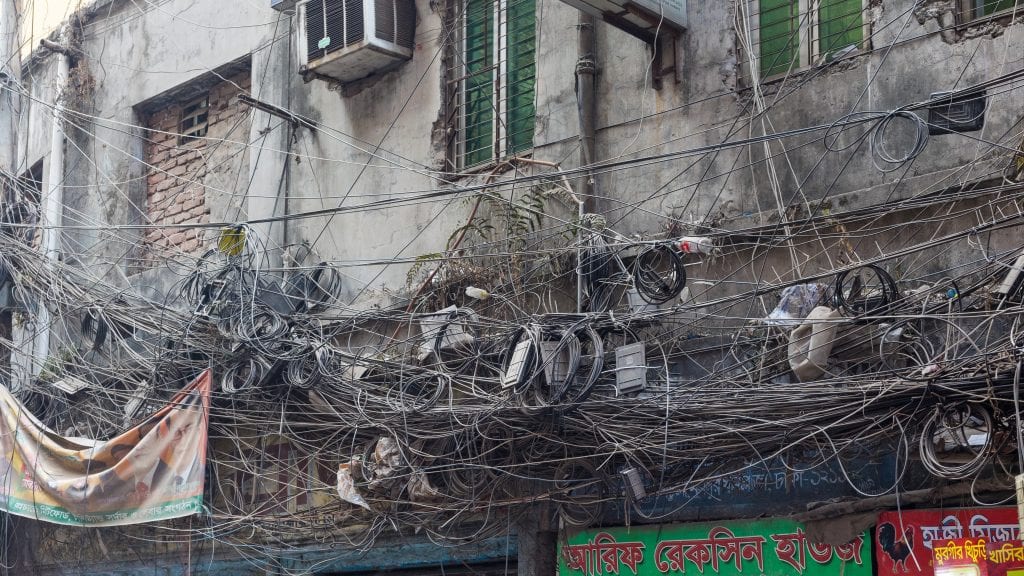
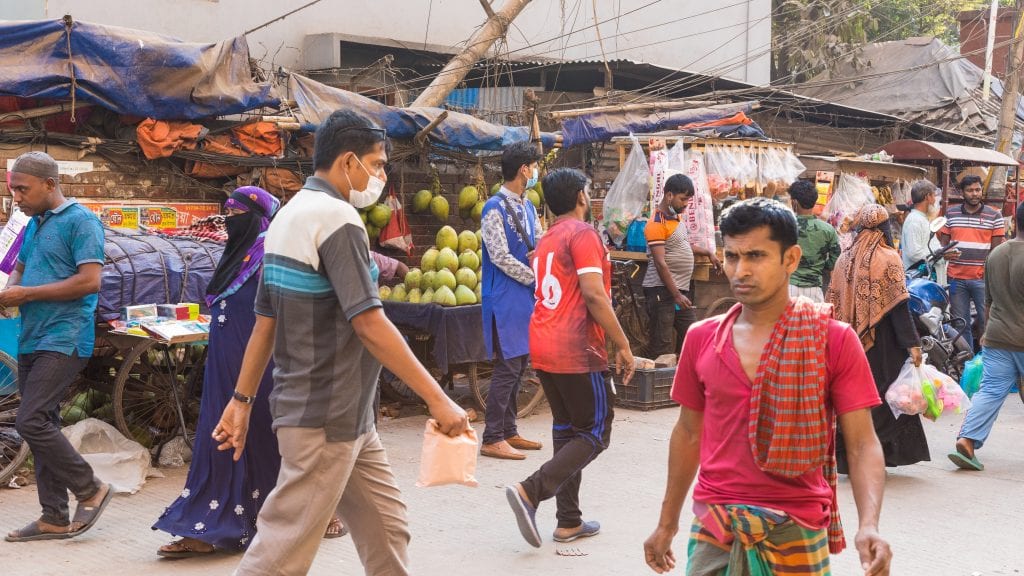
📸 Photography note: Shoot upward in the narrow lanes — the converging rooflines, the cable tangles, and the strip of sky create a powerful perspective that reads immediately as Old Dhaka on a screen or print. A wide-angle lens (16–24mm) exaggerates the compression; a standard (50mm) keeps proportions natural. Both work; choose based on the mood you want.
Old Dhaka’s Architecture: Beauty in Decay
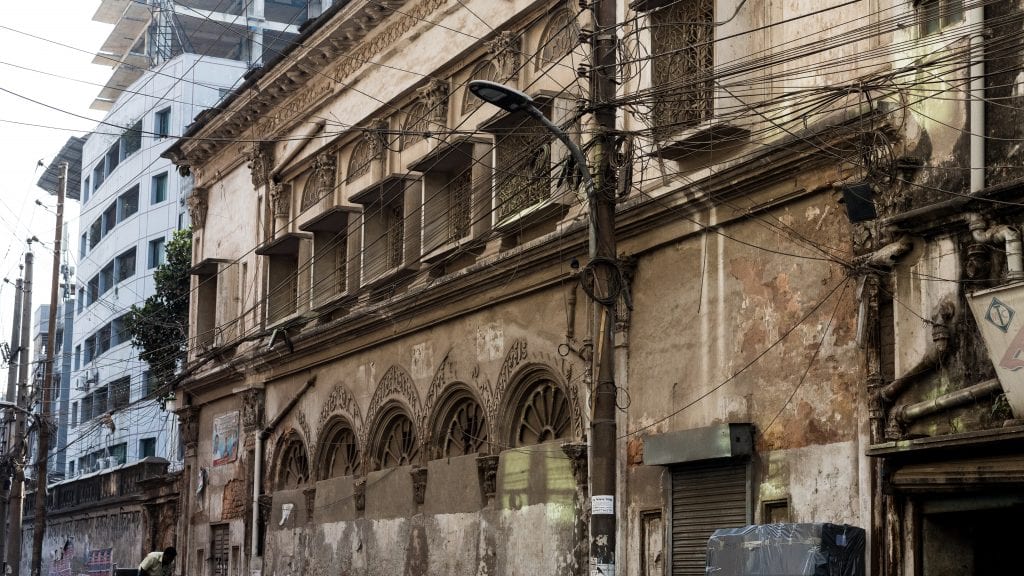
Much of Old Dhaka’s architecture dates to the 18th and 19th centuries — a period of prosperity under the Nawabs of Bengal and the British East India Company when Dhaka was a significant trading city. The buildings of that era were grand: double-storey mansions with ornate facades, arched verandas, interior courtyards, and ironwork balustrades.
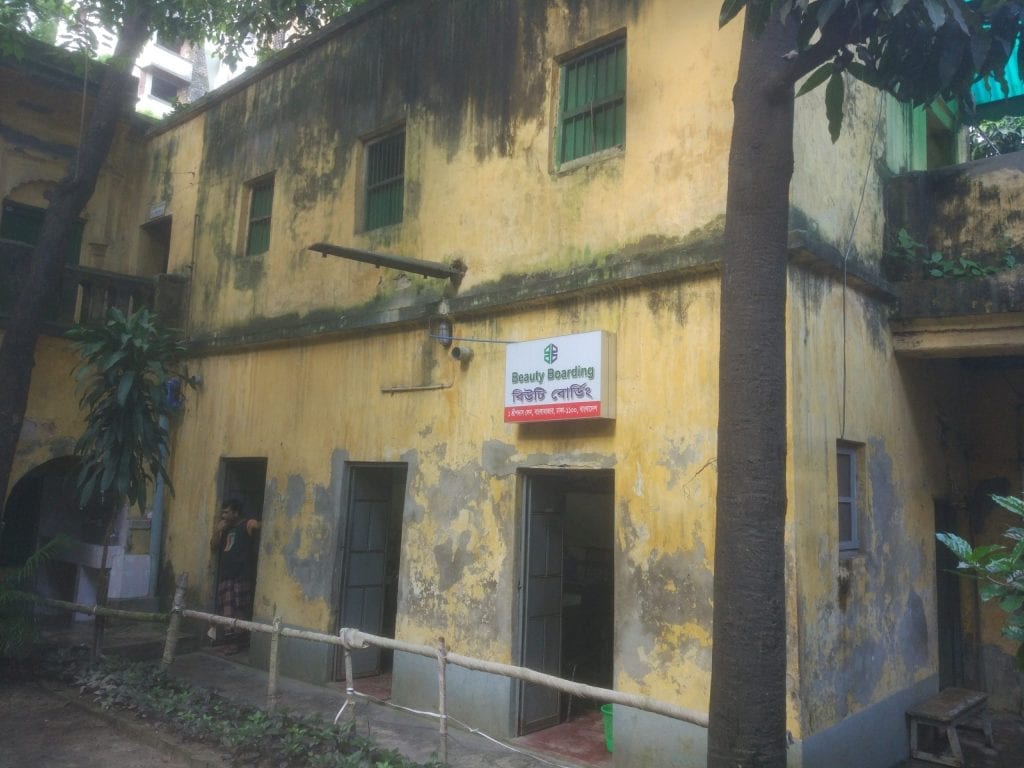
Most of those buildings are now in various states of decline. Ownership is complex (often split between dozens of heirs through generations of inheritance), maintenance is expensive, and the pressure to sell to developers is relentless. The result is a district of extraordinary architectural texture — every block contains buildings in wildly different states of survival, from fully maintained to actively crumbling, often sharing the same wall.
Chawk Bazar and the Ramadan Iftar Market
If you visit Old Dhaka during Ramadan — the Islamic month of fasting — there is one experience that you must not miss under any circumstances: the Chawk Bazar iftar market.
Every day from approximately 3:00 PM until just after sunset (the time of iftar, the breaking of the fast), Chawk Bazar transforms into one of the most spectacular food markets in Asia. Hundreds of stalls fill the lanes and the surrounding streets with food that has been prepared since the previous night: enormous pots of biryani, skewers of shami kebab, trays of jilapi (fried sugar spirals), stacks of khichuri, baskets of dates, glasses of borhani (a spiced yogurt drink), and dozens of dishes unique to Dhaka’s Ramadan tradition — some recipes unchanged for a century or more.
The chaos that accompanies Old Dhaka normally intensifies threefold in the iftar hour. Thousands of people descend on Chawk Bazar simultaneously, all buying for their household’s evening meal. The light at this hour — late afternoon sun cutting through the lanes, illuminating the steam from the biryani pots and the smoke from the kebab grills — is extraordinary.
Even outside Ramadan, Chawk Bazar is worth visiting. It is a functioning wholesale food market throughout the year, with butchers, spice traders, and snack vendors filling the lanes.
📸 Photography note: The Ramadan iftar market at Chawk Bazar is among the most rewarding street photography subjects in Bangladesh. The combination of low-angle afternoon light, dense crowds, vivid food colours, and the urgency of the scene before sunset produces compelling images almost effortlessly. Come at 3:30 PM, stay until just after the call to prayer.
The Tara Mosque (Star Mosque): Old Dhaka’s Most Beautiful Mosque
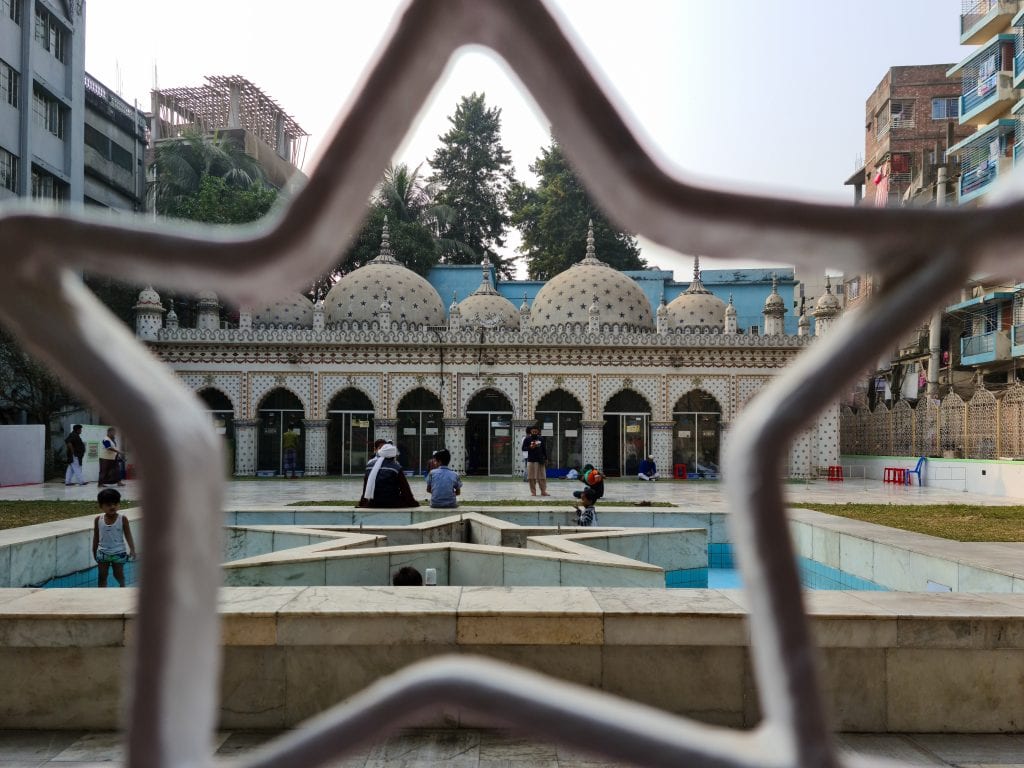
In a neighbourhood defined by commercial energy and architectural decay, the Tara Mosque (Tara Masjid — Star Mosque) is a place of unexpected, almost shocking beauty.
Built in the 19th century in Mughal style, it is covered in thousands of tiny blue mosaic stars made from pieces of Chinese porcelain — imported originally as ballast in trading vessels and repurposed by Dhaka’s craftspeople as decorative tiles. The result is a white building that glitters blue in sunlight, the stars catching the light differently at every angle.
The mosque is small and easy to miss if you don’t know it’s there. Ask any rickshaw driver in Old Dhaka for Tara Masjid and they will take you directly. Visit in the afternoon when the westward light illuminates the star-studded facade most directly, but time your visit between prayer times.
The mosque is still active — remove your shoes at the entrance, dress modestly, and if it is prayer time, wait outside respectfully until the congregation disperses.
Sadarghat and the Buriganga River
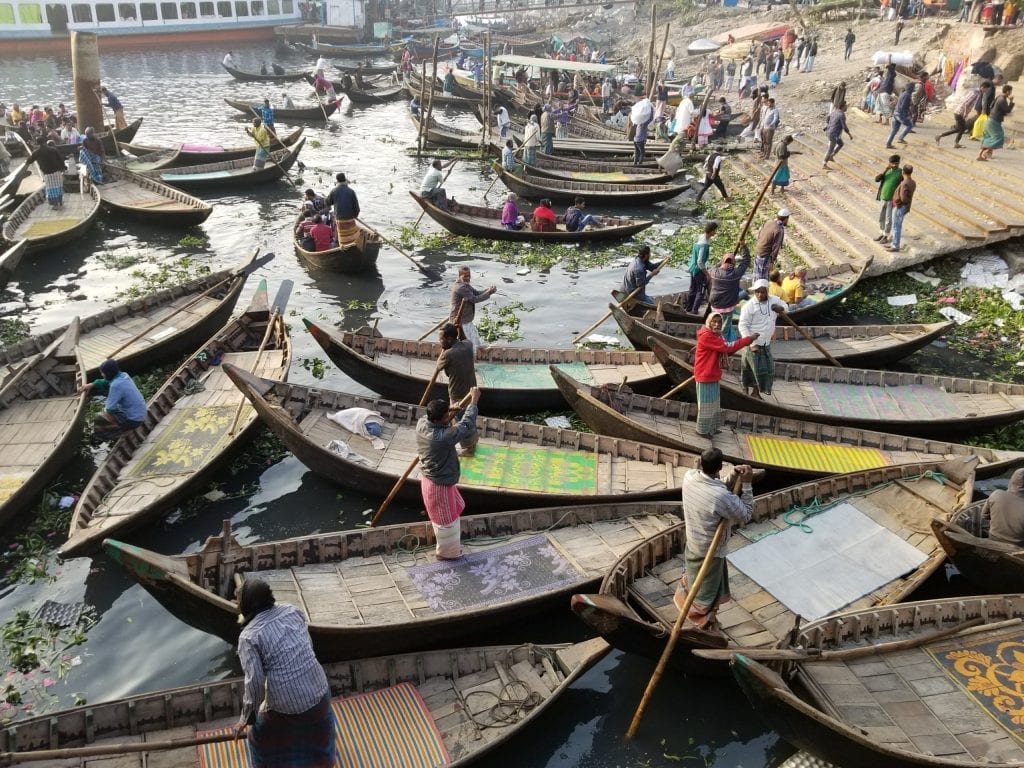
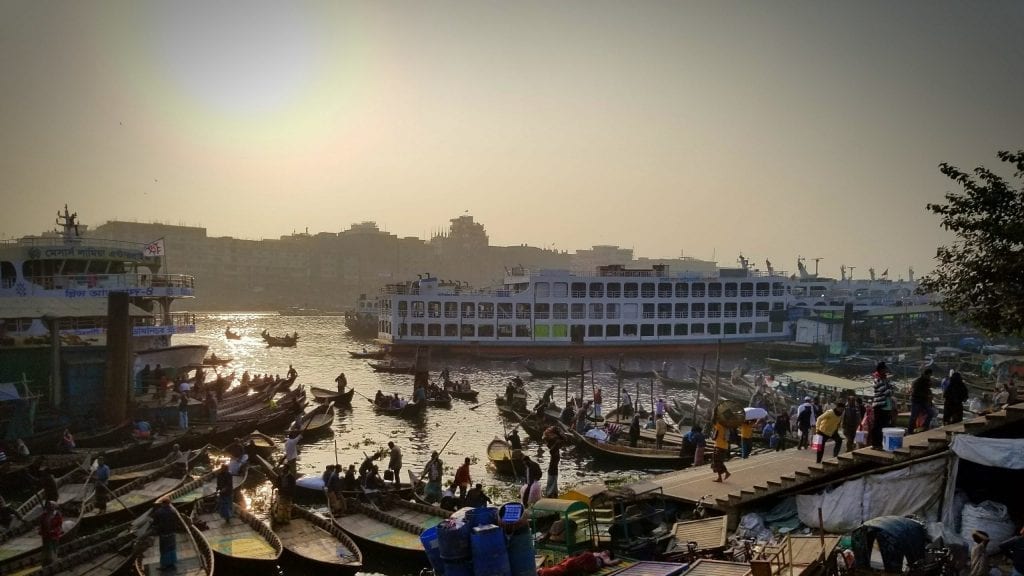
Old Dhaka’s southern edge dissolves into the Buriganga River at Sadarghat — the main river terminal of the capital and one of the most visually dramatic places in Bangladesh.
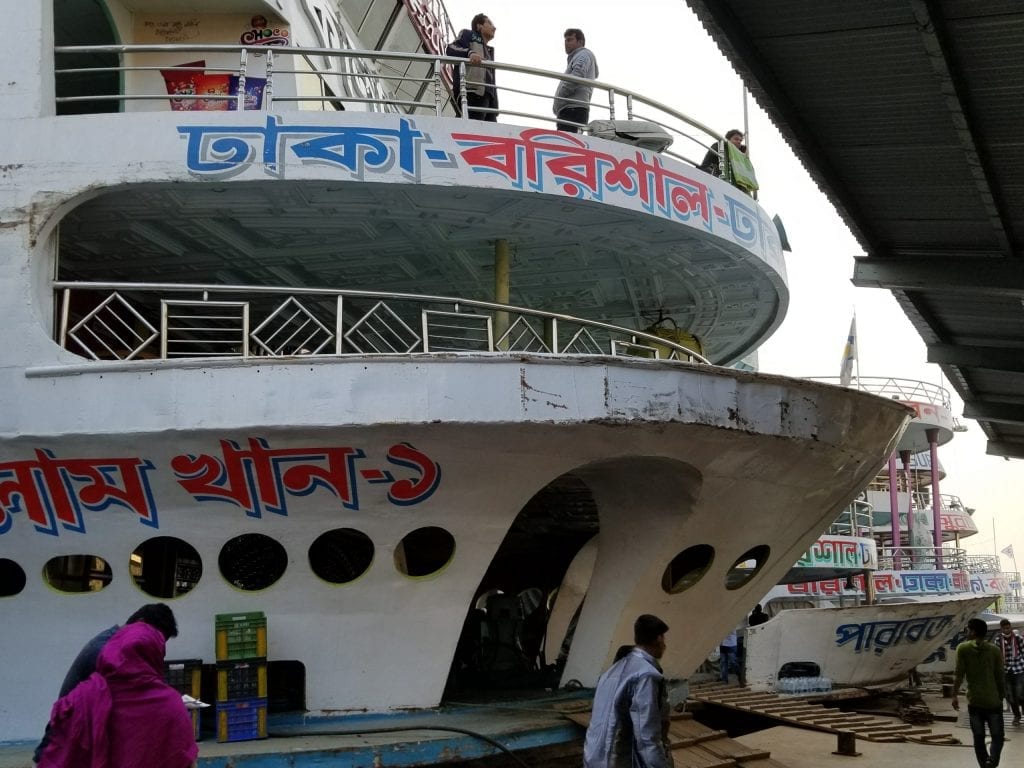
Bangladesh has more than 700 rivers. To understand a country built on water, Sadarghat is your classroom. Every night, enormous double-decker passenger launches depart from these docks for cities across the delta — Barisal, Khulna, Morrelganj, Hatia — carrying thousands of people through the river network on journeys that take eight to twelve hours. The terminal itself is an organised chaos of gangplanks, porters, food vendors, passengers in various states of departure anxiety, and the launches themselves — towering white and blue vessels that dwarf everything around them.
Take a small wooden boat (nauka) across the river for BDT 10–15. The river crossing takes five minutes and gives you a view back toward the Old Dhaka waterfront that is one of the finest panoramas in the city.
The Buriganga is, painfully, one of the most polluted rivers in the world. Industrial waste from tanneries and factories has turned the water dark and given it a distinctive smell. This does not diminish its visual power — particularly at sunset, when the last light turns even the dark water gold and the launches in the distance become silhouettes. The combination of natural beauty and industrial harm is itself a subject worth photographing honestly.
📸 Photography note: The Sadarghat sunset is best photographed from a small boat on the river, facing west. The launches in the middle distance, the waterfront buildings of Old Dhaka behind them, and the sky above — all lit by the same orange light — make a composition that is both beautiful and truthful about this complicated place.
The People of Old Dhaka: Portraits and Street Scenes
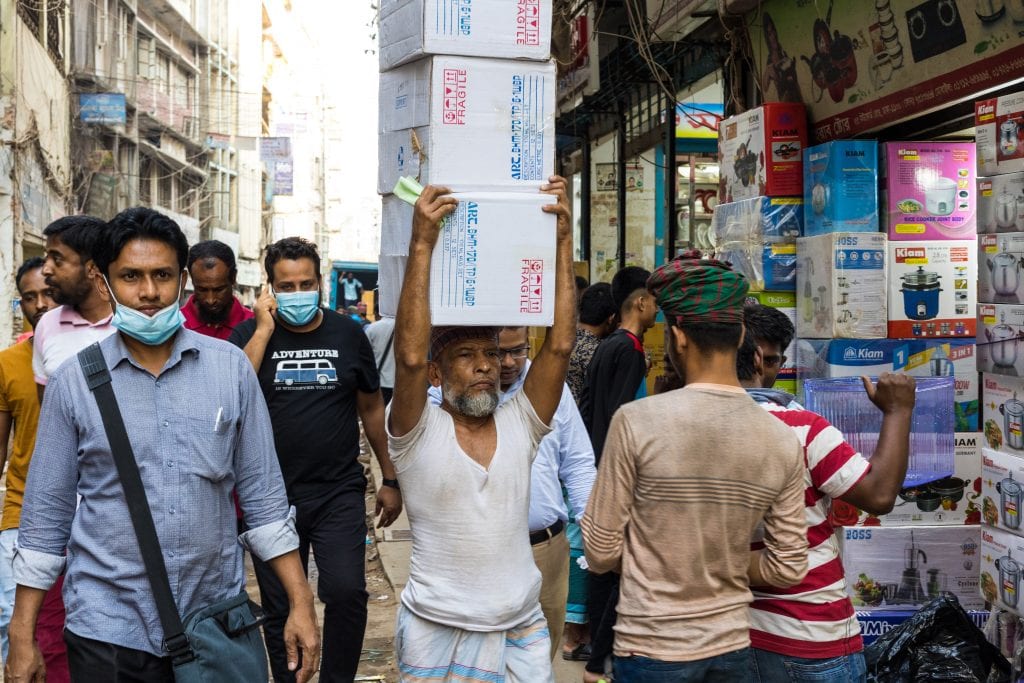
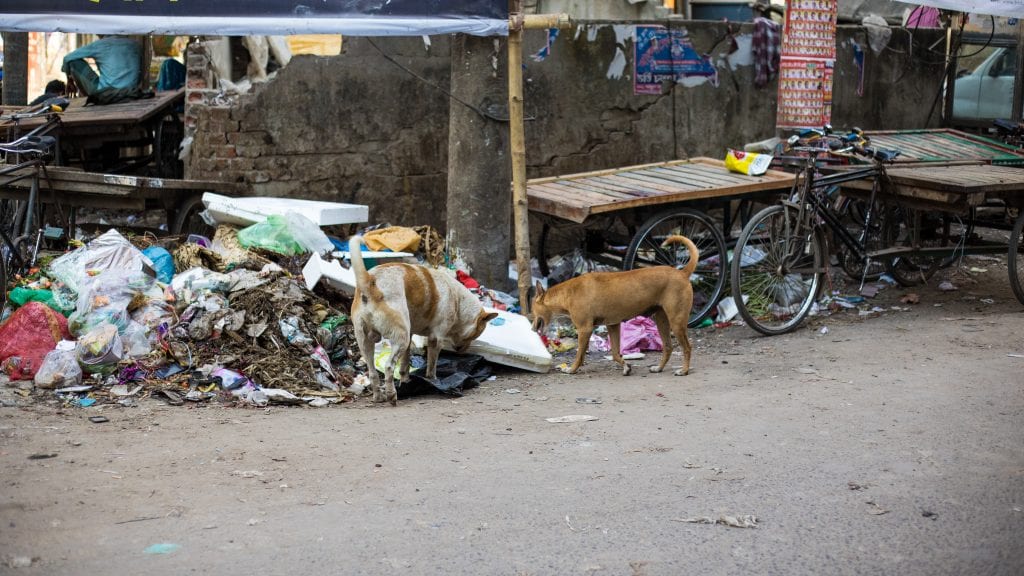
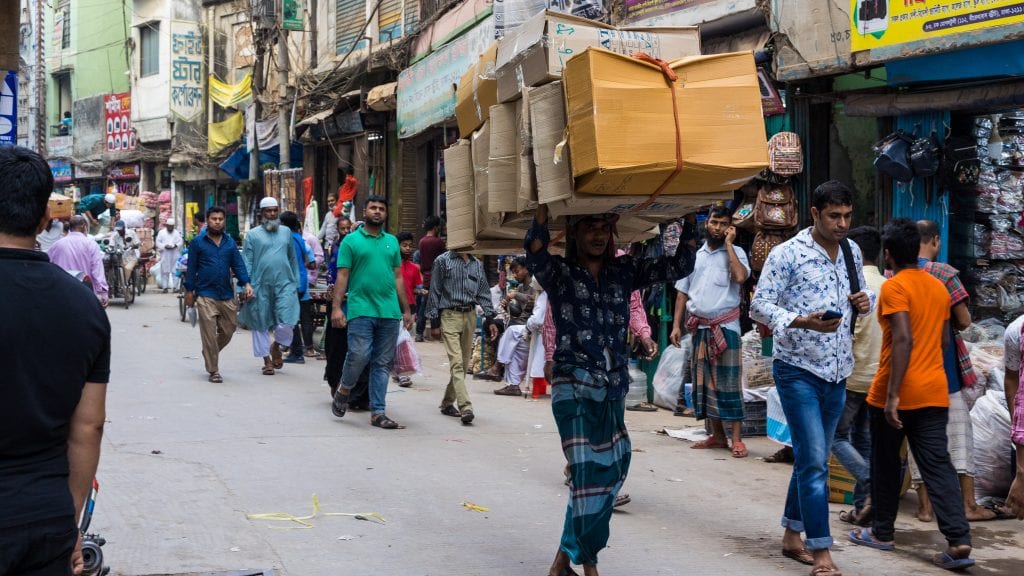
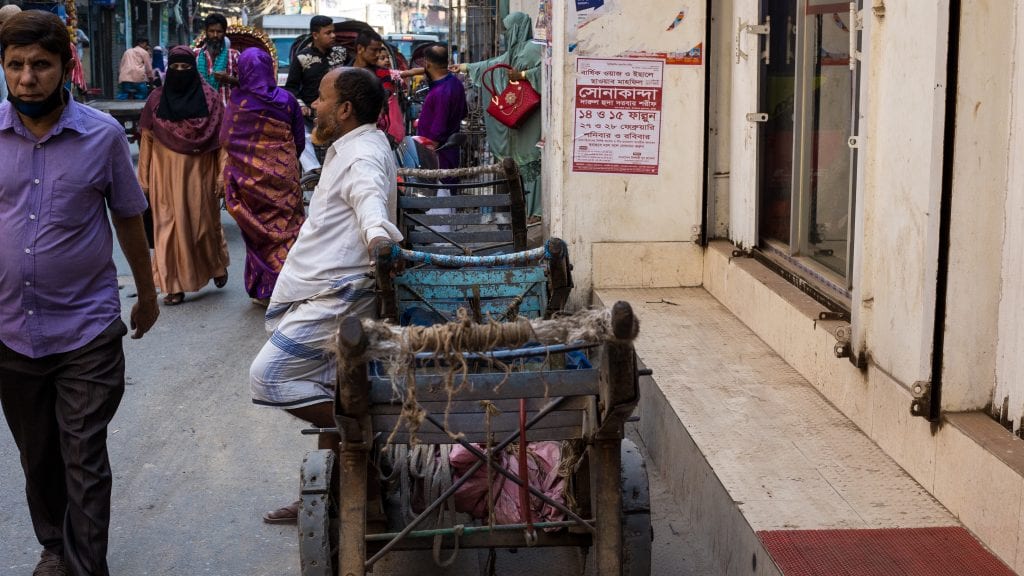
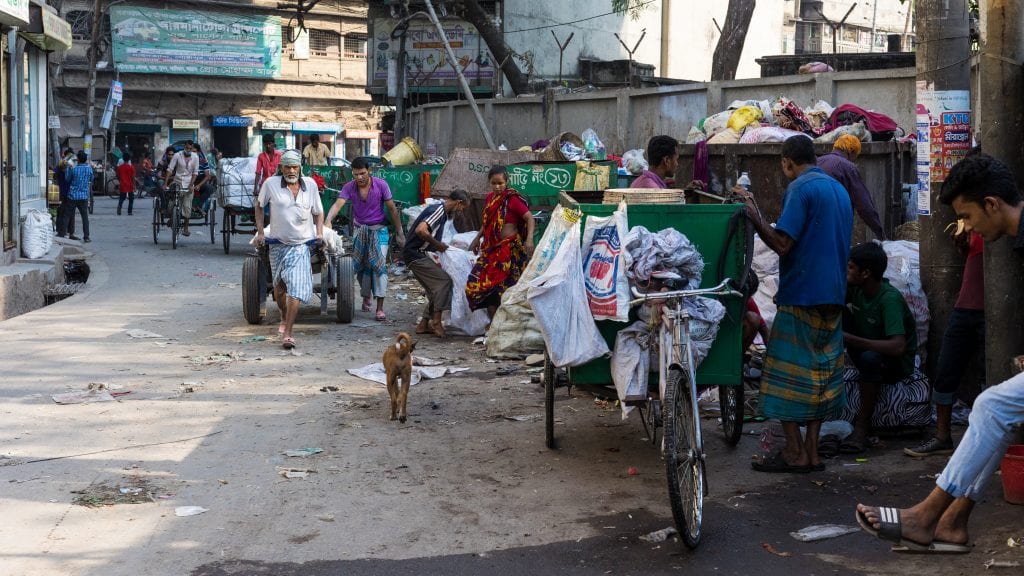
Old Dhaka’s population is estimated at over 700,000 people in an area of a few square kilometres — one of the highest population densities of any urban area anywhere on earth. The people who live and work here have adapted to this density in ways that visitors find simultaneously fascinating and humbling.
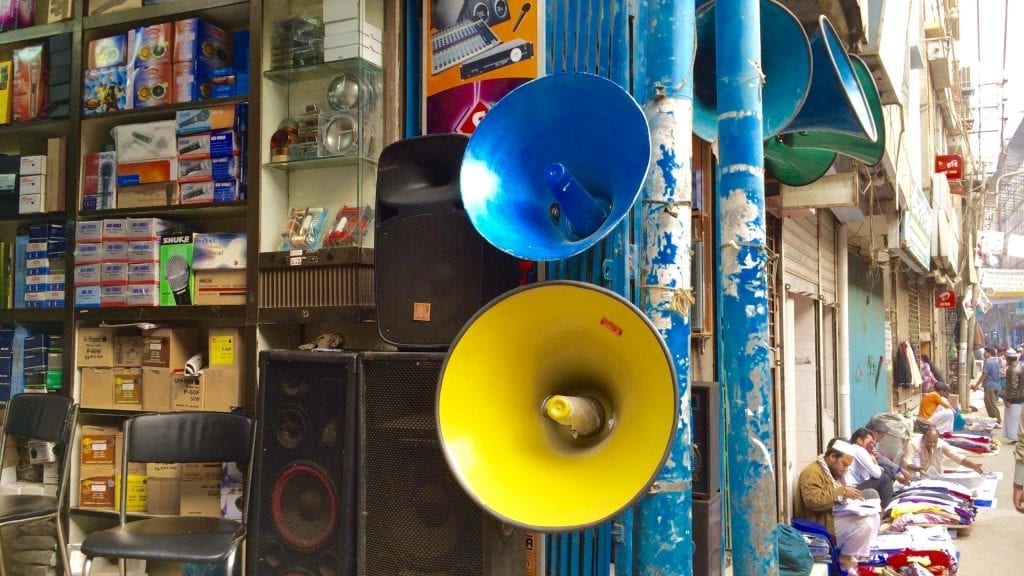
Private space is minimal; public space is shared without negotiation. People sleep on shop counters, cook on pavements, conduct business conversations in the middle of lanes, and generally live their lives at a volume and visibility that would be unthinkable in a northern European city.
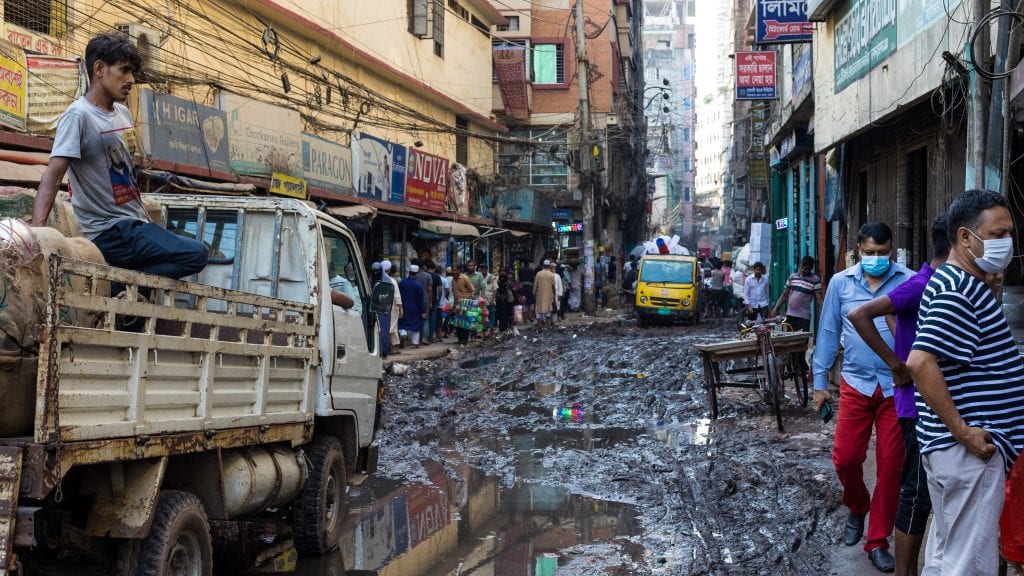
Photographing people in Old Dhaka requires a different approach than photographing landscapes or architecture. The pace is fast and the subjects are busy. A 50mm lens at eye level, moving confidently but not intrusively, tends to produce the most natural results. A smile and a nod before raising the camera often produces not just consent but a return smile that makes the portrait. A refusal — communicated through a gesture or a turned back — should be respected immediately.
Did you like these photos of Dhaka in Bangladesh?
What is your favorite city in the world for a walk?
A Walking Route Through Old Dhaka
This is the route I use when I take visitors through Old Dhaka. It covers the major areas in approximately half a day (4–5 hours), with time to photograph and wander. Start early — the light and the atmosphere are best before 11:00 AM.
Start: Sadarghat (7:00 AM) Begin at the river. Watch the morning activity at the launch terminal, take a short boat ride across the Buriganga (BDT 10–15 each way), and photograph the waterfront from the water. The morning light on the launches and the Old Dhaka skyline is outstanding.
→ Walk north along the riverfront to Ahsan Manzil (8:00 AM) The pink palace of the Nawabs of Dhaka sits directly on the Buriganga, a 10-minute walk from Sadarghat. It opens at 9:30 AM (Apr–Sep) or 10:30 AM (Oct–Mar) — if you are early, photograph the exterior and the riverfront. See the full entry in the Dhaka attractions guide.
→ Tara Mosque (8:30 AM) A 10-minute walk into the lanes from Ahsan Manzil. Ask any local for Tara Masjid. Spend 20–30 minutes photographing the exterior and the neighbourhood around it.
→ Hussaini Dalan (9:00 AM) A 5-minute walk from Tara Mosque — the Shia imambara with its rectangular pond and Mughal-British architecture. See the full Dhaka guide for context.
→ Shankhari Bazar (9:30 AM) The Hindu conch-shell artisan lane. Walk the full length — it takes about 15 minutes end-to-end. The morning light in the lane is at its best between 9:00 and 10:30 AM when the sun is low enough to light the lane without harsh overhead shadows.
→ Islampur Fabric Market (10:30 AM) Immerse yourself in one of the largest wholesale fabric districts in Bangladesh. You are not buying — you are watching. The scale of the operation, the bolts of fabric stacked to the ceiling, the negotiations happening in every doorway, is extraordinary.
→ Chawk Bazar (11:30 AM) End at Chawk Bazar for tea or a snack before heading back to modern Dhaka. If you are visiting during Ramadan, come back here at 3:30 PM for the iftar market.
Getting back: Rickshaw or CNG from anywhere in Old Dhaka to your hotel — BDT 60–150 depending on distance and whether you haggle.
Photography Gear and Practical Tips for Old Dhaka
What camera to bring: Old Dhaka rewards discretion. A large DSLR with a long white telephoto lens announces itself as professional equipment and will attract attention — some welcome, some not. A mirrorless camera with a 28mm or 35mm equivalent lens is ideal: small enough not to intimidate, capable enough to handle the dramatic contrast between dark interiors and bright lanes. A phone with a good camera is entirely adequate for beginners and results in the most natural interactions with subjects.
Settings: The light in Old Dhaka’s lanes shifts dramatically over short distances — bright sun in the open sections, deep shadow under awnings and in alleyways. Set your camera to aperture priority (f/4–f/5.6) with auto-ISO (capped at 3200) and let the camera handle exposure — you will miss shots fumbling with manual settings in fast-moving scenes.
Best light:
- 6:30–9:00 AM: Low, warm, directional light through the eastern openings of the lanes. Mist sometimes present near the river.
- 4:00–6:00 PM: Long shadows and warm light again, plus the evening market energy building.
- Midday: Harsh overhead light creates strong shadows but also graphic high-contrast scenes — workable for certain subjects, difficult for portraits.
What to wear: Comfortable, non-restrictive clothing in modest styles (covered shoulders and knees is respectful and practical). Leave valuables in your hotel; bring only what you need for the walk. A small bag worn across the body rather than on the back is easier to keep in sight in crowds.
Staying safe with your camera: Old Dhaka is generally safe, but pick-pocketing can occur in the densest crowds (particularly near Sadarghat and busy market areas). Keep camera straps short and around your neck or wrist. Do not leave equipment unattended.
Best day to go: Mid-week mornings (Sunday–Wednesday in Bangladesh, where Friday–Saturday is the weekend) for the quietest experience. Avoid Friday lunchtimes when Friday prayer brings additional crowds to mosque areas.
Where to Eat in Old Dhaka
Old Dhaka is home to some of the best and most historically important food in Bangladesh. Several dishes and restaurants here have been operating for 50, 80, or even 100+ years.
Haji Biriyani (Nazimuddin Road): The most famous biryani in Bangladesh. A single-dish restaurant that has been operating since 1939, serving a dense, fragrant beef-and-rice biryani cooked in the original style with generous fat and whole spices. They sell out daily — arrive before 1:00 PM. The line moves fast.
Nanna Biriyani: Another legendary Old Dhaka biryani house, less famous than Haji but with a devoted following among Old Dhaka residents. Open later in the evening.
Al Razzaque National Biryani House: A massive institution on Nazimuddin Road that has been feeding Old Dhaka since the 1960s. Try the kacchi biryani — raw meat layered with rice and cooked together in a sealed pot.
Street breakfast near Sadarghat: In the early morning, vendors near the river terminal set up small stalls with paratha, bhaji (fried vegetables), dal (lentil soup), and hot milk tea. A full breakfast costs under BDT 80 and is best eaten while watching the morning river activity.
Chawk Bazar snacks (all year): The bakarkhani bakeries near Chawk Bazar produce a thick, flaky, slightly sweet unleavened bread that is unique to Old Dhaka — eaten plain or with dal. Best fresh and warm from the baker before 9:00 AM.
Tip: If you are visiting with your own guide or tour, ask them specifically to take you to one of these addresses rather than a generic “local restaurant.” The food at the well-known Old Dhaka institutions is qualitatively different from anywhere else in the city.
Where to go from Dhaka?
- Day trip to the National Monument of Bangladesh
- Visit the marvellous Sajek Valley to enjoy mountains and catch some clouds
- Enjoy the sands, ocean and calmness in Saint Martin’s Island
- Take a long walk on Cox’s Bazar, the longest uninterrupted natural beach in the world

Leave a reply