
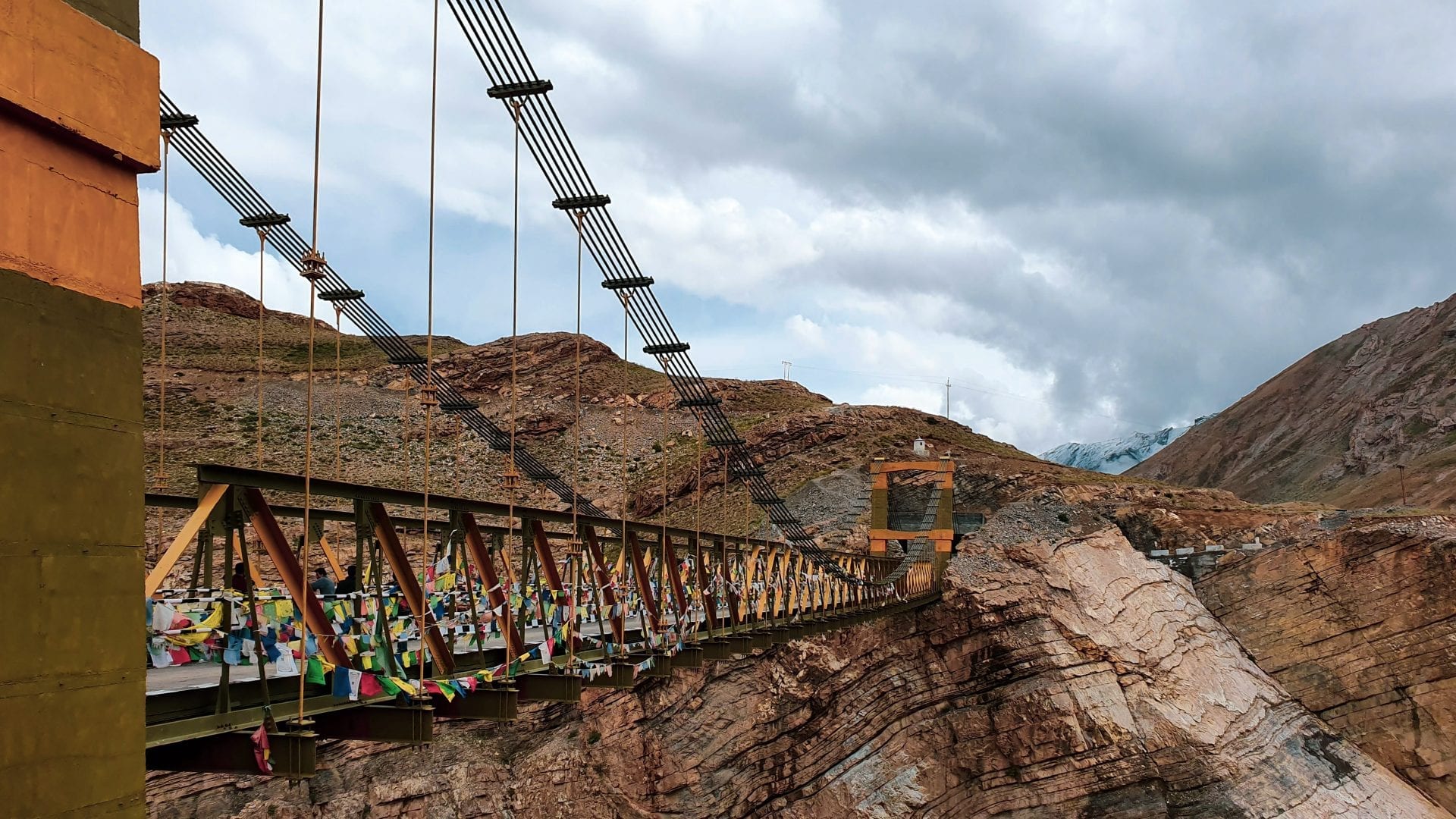
Chicham bridge connecting two villages in Spiti valley under Himachal Pradesh in India is considered as the highest suspension bridge in Asia. The writer shares his experience of visiting Chicham bridge along with some wonderful photos of the bridge and surroundings.
Imagine a remote corner of the world where a cellular network is a luxury, where the road exists but can barely be called one, and where the average elevation sits above 4,000 metres. That’s Spiti Valley, in the Himachal Pradesh cold desert near the Tibetan border. And in the middle of it hangs a yellow suspension bridge, connecting two villages at a higher elevation than almost any road bridge in Asia.
Chicham Bridge is Asia’s highest suspension bridge by elevation — its deck sits at 4,145 metres (13,596 ft) above sea level, connecting Chicham and Kibber villages in Spiti Valley. It’s about 20 km from Kaza by 4WD, free to visit, and easiest to combine with a day trip to Kibber village on the other side.
QUICK FACTS
- Elevation: 4,145 metres (13,596 ft) above sea level — this is what makes it Asia’s highest suspension bridge
- Connects: Chicham and Kibber villages, over the Samba Lamba Nallah gorge
- Height above the gorge itself: around 150 metres (~490 ft) — note: many travel sites repeat a “1,000 ft” figure, but that doesn’t hold up against bridge-engineering specialist sources, so I’m going with the better-documented number
- Length: reported between 114–136 metres depending on the source
- Built by: Border Roads Organisation (BRO), completed 2017 after roughly 15 years of construction
- Distance from Kaza: around 20 km (45 min–1 hour by 4WD)
- Entry: free
- Best months: June–September, while the Manali–Kaza road is open
The Story Behind the Bridge
Before Chicham Bridge existed, the only way to cross the gorge between Kibber and Chicham was a manually operated pulley ropeway — essentially a wooden cart hanging over a drop of roughly 150 metres. That was the reality for decades. Construction on a proper bridge took around 15 years from start to the 2017 opening, delayed by the same things that make everything in Spiti Valley difficult: brutal weather, remote logistics, and terrain that fights back against anything built on it.
The bridge was finally inaugurated in 2017, built by the Border Roads Organisation (BRO) — the Indian government body responsible for infrastructure in exactly this kind of high-altitude border terrain. Beyond the obvious safety improvement over the old ropeway, it also cut the road journey between Kibber and Losar by around 40 km, since travellers no longer need to backtrack through Kaza to continue toward Kunzum Pass and onward to Manali.
What It’s Actually Like to Stand on It
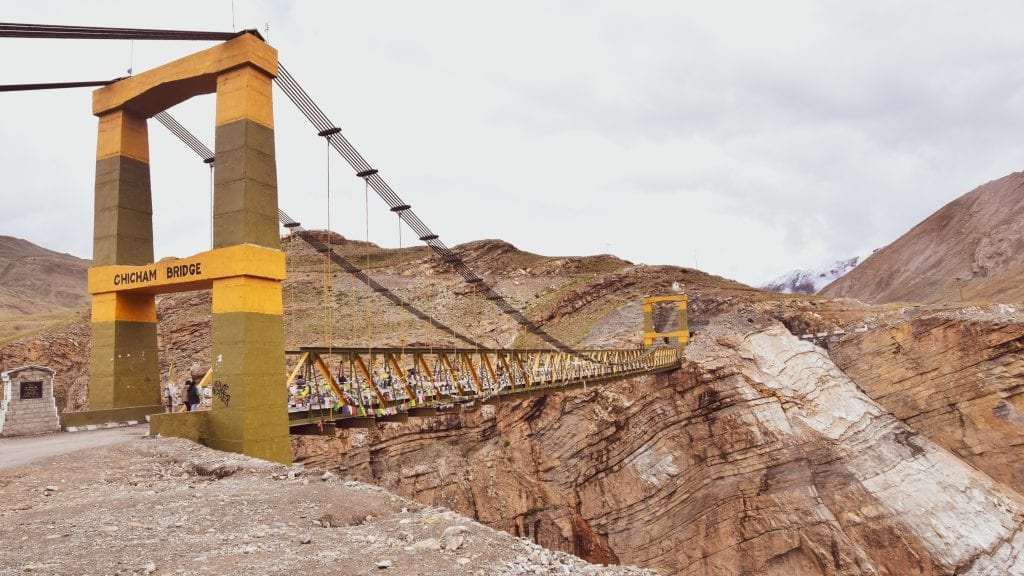
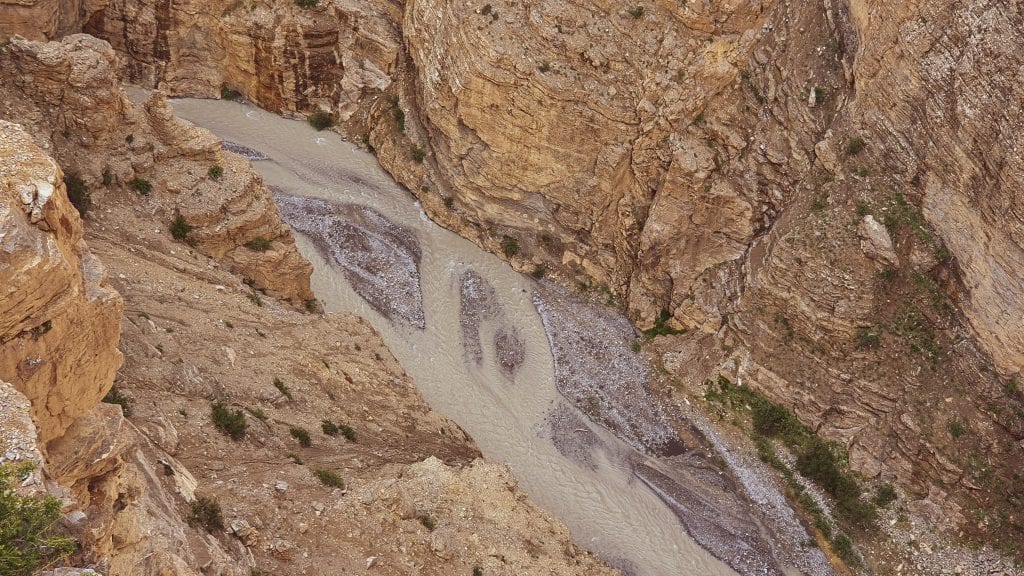
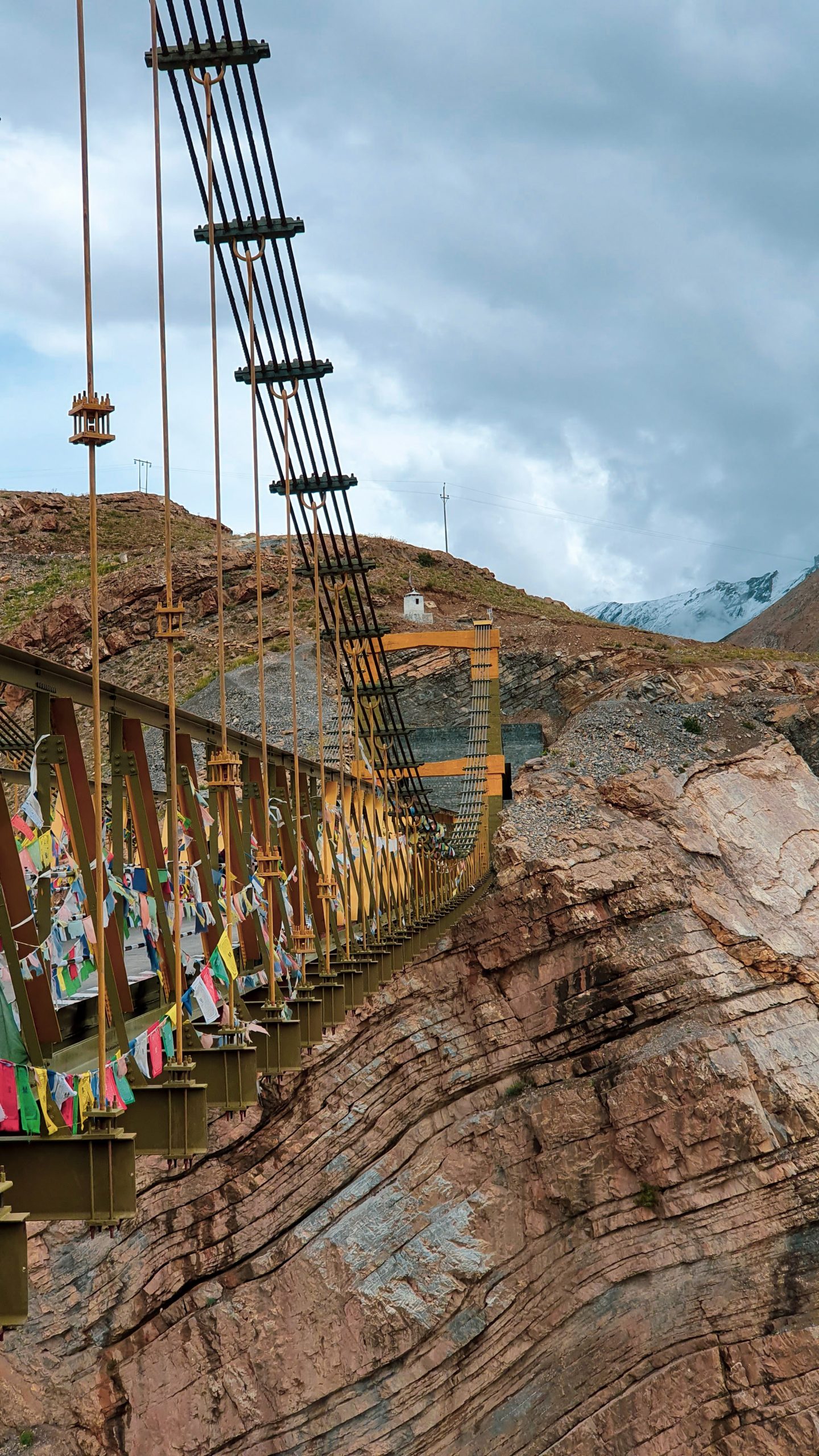
There’s a moment standing on this bridge where your head genuinely spins — not metaphorically. Looking down into a gorge roughly 150 metres deep, with the yellow steel structure the only thing between you and it, is disorienting in a way photos don’t quite capture.
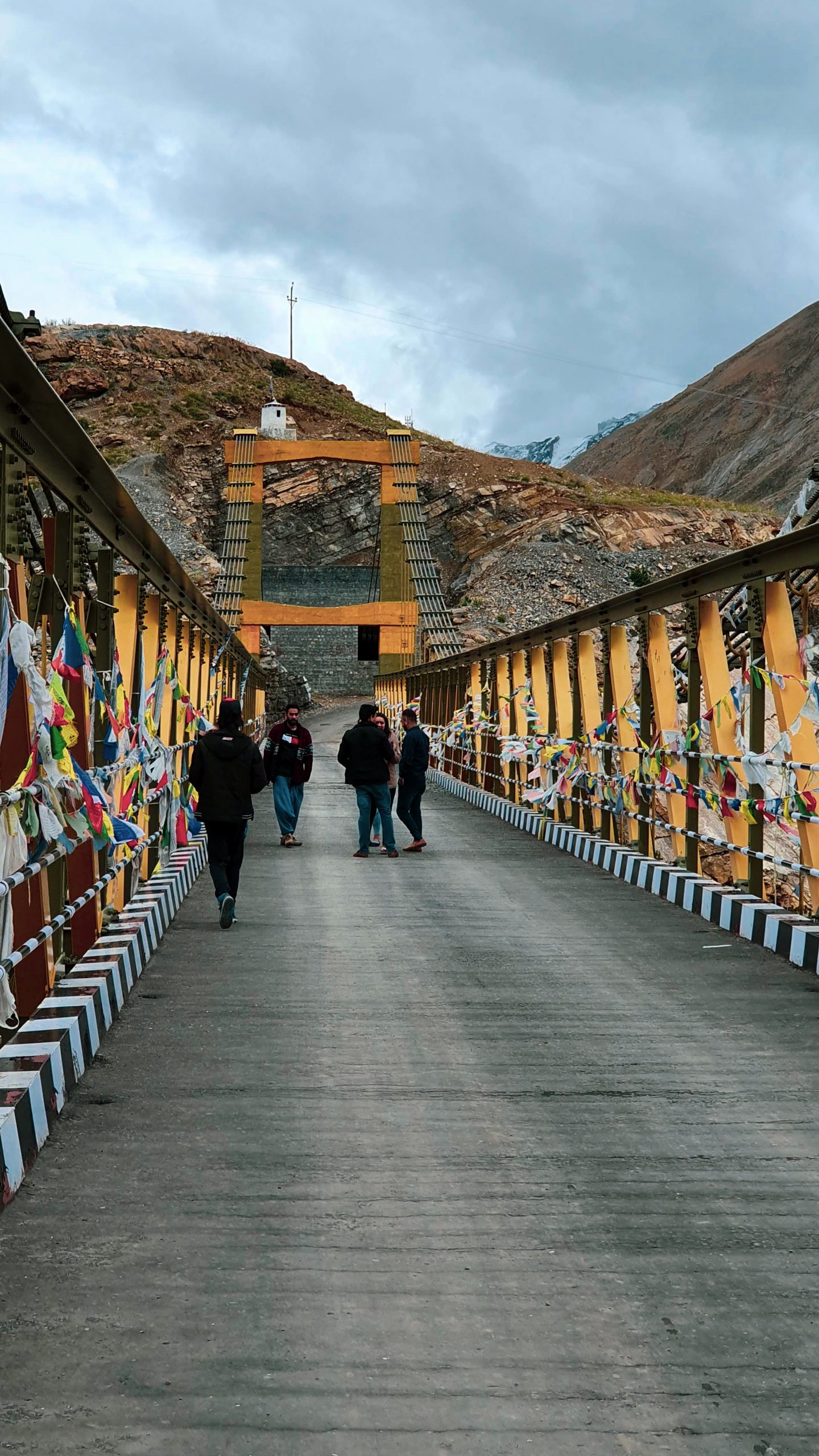
The bridge itself is wrapped in colourful Tibetan prayer flags in the traditional five colours — blue, white, red, green, and yellow — fluttering against a backdrop of bare Himalayan mountains. It’s become a genuine tourist draw in its own right over the past few years, and drivers crossing it tend to go slowly, aware that most people want a few seconds to take photos before continuing on.
Altitude and Best Time to Visit
At 4,145 metres, altitude sickness is a real consideration here, the same as everywhere else at this elevation in Spiti. Spend at least a day acclimatizing in Kaza before pushing up to the bridge, drink more water than feels necessary, and take persistent headache, dizziness, or nausea seriously rather than pushing through them.
The bridge — and the wider Kaza area — is most reliably accessible between June and September, when the Manali–Kaza road is open. Winter brings the same heavy snowfall that cuts off much of Spiti Valley for months at a time, and access becomes far less predictable.
How to Get to Chicham Bridge from Kaza
The easiest way to visit is to hire a 4WD from Kaza, the main town in Spiti Valley — roughly 20 km and 45 minutes to an hour away. Since the bridge connects directly to Kibber village, it’s easy and worthwhile to cover both in the same trip: cross the bridge, spend some time in Kibber, then head back.
You can reach Kaza itself via the beautiful road journey from Manali. While you’re in the area, Key Monastery — Spiti Valley’s largest monastery — makes another natural day-trip pairing from Kaza.
Frequently Asked Questions About Chicham Bridge
How high is Chicham Bridge?
4,145 metres (13,596 ft) above sea level, making it the highest suspension bridge in Asia by elevation.
Is Chicham Bridge really the highest bridge in Asia?
By elevation above sea level, yes — 4,145 metres is genuinely remarkable. But “highest” gets used loosely online, and it’s worth being precise: the bridge deck itself sits only around 150 metres above the gorge below, which is not exceptional by world standards (China’s Duge Bridge, for comparison, has a deck height of 565 metres above its river valley). Chicham Bridge’s real claim to fame is how high up the mountain it sits, not how far the drop beneath it is.
Is it safe to cross Chicham Bridge?
Yes. It was engineered and built by the Border Roads Organisation, the same Indian government body responsible for infrastructure across the country’s high-altitude border regions. It’s a single-lane suspension bridge, so vehicles cross one at a time and drivers go slowly, partly for safety and partly because most passengers want a few seconds to take photos.
What villages does Chicham Bridge connect?
Chicham and Kibber, two high-altitude villages in Spiti Valley, across the Samba Lamba Nallah gorge.
How do I get to Chicham Bridge from Kaza?
By 4WD, it’s about 20 km and 45 minutes to an hour. Public transport is unreliable in this area, so hiring a 4WD is the practical option for most visitors.
Is there an entry fee?
No, visiting the bridge is free.
When was Chicham Bridge built?
It was inaugurated in 2017 by the Border Roads Organisation, after roughly 15 years of construction. Before that, villagers crossed the gorge using a manually operated pulley ropeway.
What’s the best time to visit?
June through September, while the Manali–Kaza road is open and conditions are most stable.
Did you visit Asia’s highest suspension bridge as part of a wider Spiti Valley trip? If you’re planning one, the 7-day Spiti Valley itinerary from Manali covers Chicham Bridge alongside the rest of the valley’s best stops.



Leave a reply