
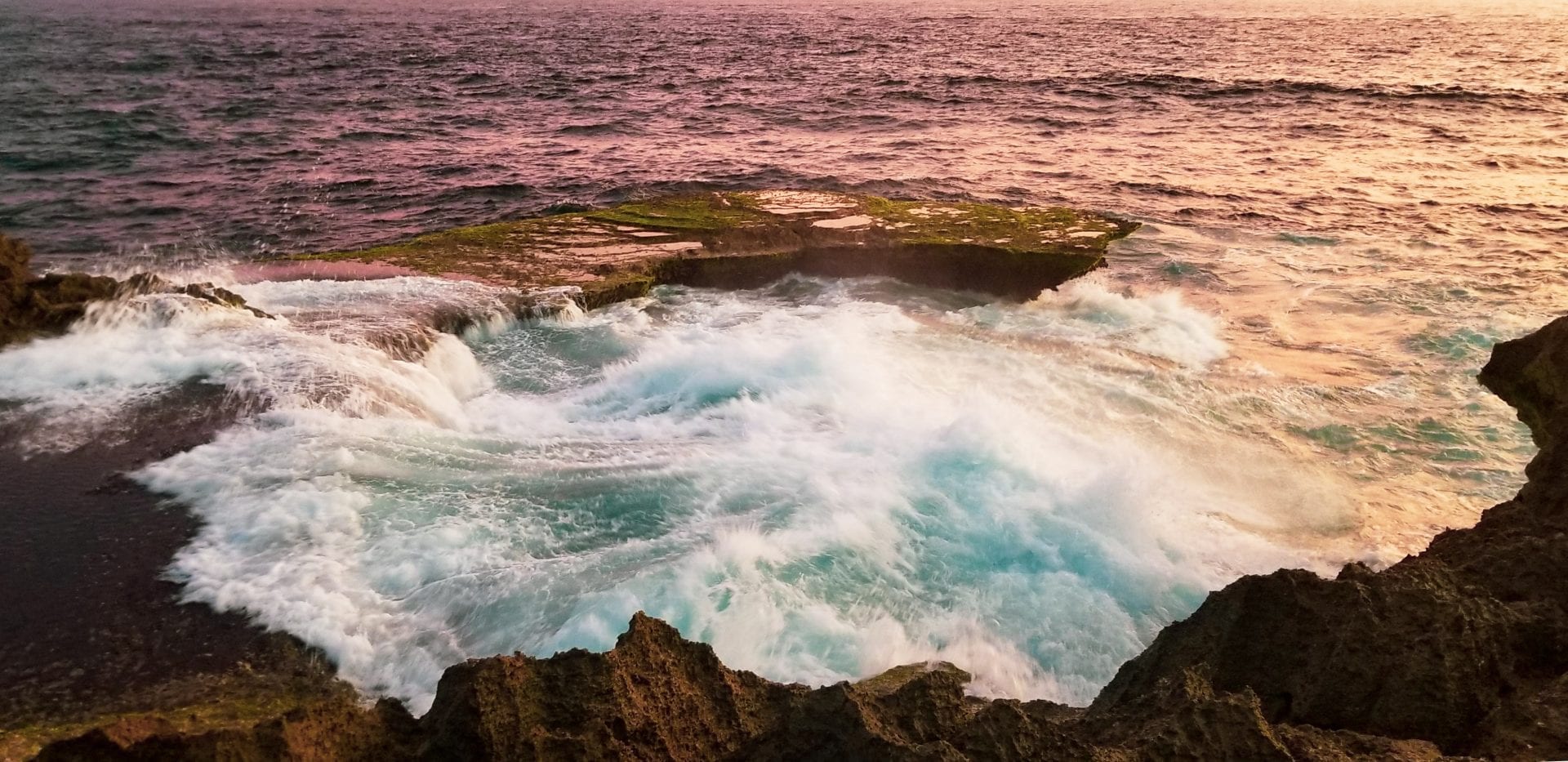
Nusa Lembongan is one of those islands that makes you wonder why you spent so long in Bali proper. Just 30 minutes by fast boat from Sanur, it sits in that rare category of places that are genuinely beautiful, genuinely relaxed, and still accessible enough that you do not need to plan an expedition to reach them.
The island is small — only 8 square kilometres — and is part of the three Nusa Islands scattered off the southeastern coast of Bali. Nusa Penida is the largest and most dramatic. Nusa Ceningan is the smallest and the most peaceful. Nusa Lembongan sits comfortably between them: bigger than Ceningan, less dramatic than Penida, and more developed than both, which makes it the easiest place to base yourself when you want to explore all three.
Uncrowded beaches, world-class surfing, snorkelling with manta rays, a coastline of crashing waves and extraordinary cliff formations, a mangrove forest you can paddle through by kayak, and a seaweed-farming community that has lived here for generations — Nusa Lembongan offers more than most visitors expect.
This is the complete guide: what to do, where to stay, where to eat, how to get there, and what to know before you arrive.
Updated April 2026.
Nusa Lembongan at a Glance
| Location | Off the southeast coast of Bali, Indonesia |
| Size | 8 square kilometres, about 8 km around the coast |
| Distance from Bali | 30 to 45 minutes by fast boat from Sanur |
| Best Time to Visit | April to October (dry season, calm seas) |
| Getting Around | Scooter rental (IDR 70,000 per day) or walking in Jungutbatu |
| Best For | Surfing, diving, snorkelling with manta rays, beaches, relaxation |
| Recommended Stay | 2 to 4 nights |
| Connected To | Nusa Ceningan via the famous Yellow Bridge |
| Arrival Port Fee | IDR 10,000 per person on arrival (have cash ready) |
| Vibe | Quieter than Bali, more developed than Nusa Penida, genuinely beautiful |
Nusa Lembongan vs Nusa Penida vs Nusa Ceningan — Which Island Should You Choose?
The three Nusa Islands are close together but very different in character. Understanding what each one offers before you choose will save you from being in the wrong place for the wrong reasons.
| Nusa Lembongan | Nusa Penida | Nusa Ceningan | |
|---|---|---|---|
| Size | Medium (8 sq km) | Large (202 sq km) | Very small |
| Vibe | Relaxed, family-friendly | Wild, adventurous, rugged | Very quiet, backpacker |
| Roads | Good and manageable | Rough and challenging | Basic |
| Best for | Surfing, beaches, Devil’s Tear, easy exploration | Dramatic cliffs, Kelingking Beach, manta rays | Seclusion, cliff jumping, budget |
| Crowds | Moderate | Heavy on west side | Very low |
| Accessibility | Easy, 30 min from Sanur | Easy, but difficult once there | Via Yellow Bridge from Lembongan |
| Best as a base? | Yes, excellent base for all three islands | Good for day trips, harder for multi-day | No, too small |
My honest recommendation: use Nusa Lembongan as your base. From here, Nusa Ceningan is a scooter ride across the Yellow Bridge, and Nusa Penida is a short boat trip. You get the comfort and infrastructure of Lembongan with easy access to the more dramatic scenery of its neighbours.
15 Best Things to Do in Nusa Lembongan
Dream Beach — The Most Photographed Beach on the Island
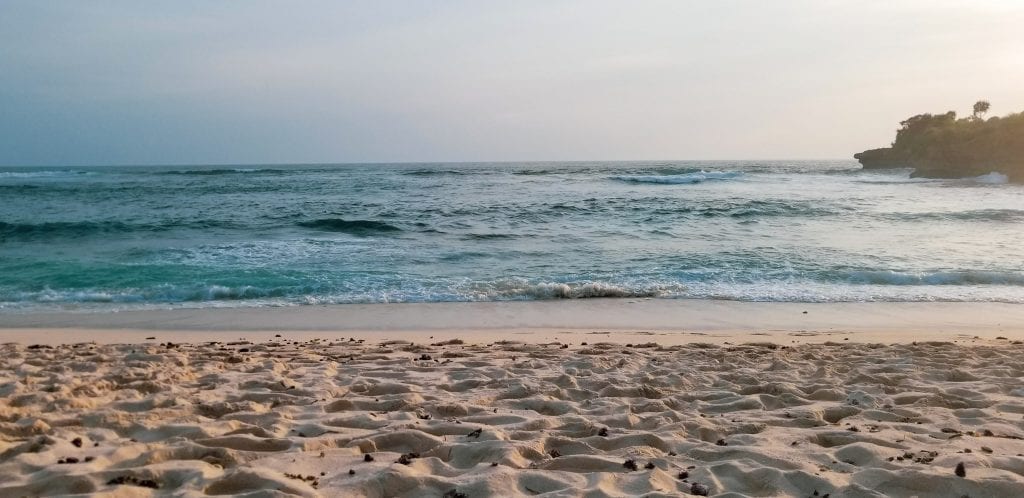
Dream Beach is the most photographed beach on Nusa Lembongan, and it earns the attention. This small pocket beach of about 150 metres is framed by limestone cliffs on both sides, with white sand and water that shifts from pale turquoise near the shore to deep blue further out. It is beautiful to look at from every angle.
The waves here are powerful. Strong currents make swimming genuinely risky at certain times of year, particularly from December to February. Do not enter the water without checking local conditions. The Dream Beach Huts resort has two split-level infinity pools overlooking the beach for IDR 50,000 (roughly USD $3), which gives you the view and the cooling water without the ocean current risk.
Arrive early in the morning or late afternoon when the light is better and the crowd is smaller. Day-trippers from Bali fill the beach between 11 AM and 3 PM. The elevated views from the cliff path above give you the best sense of just how striking this place is.
Devil’s Tear — The Most Extraordinary Spot on the Island
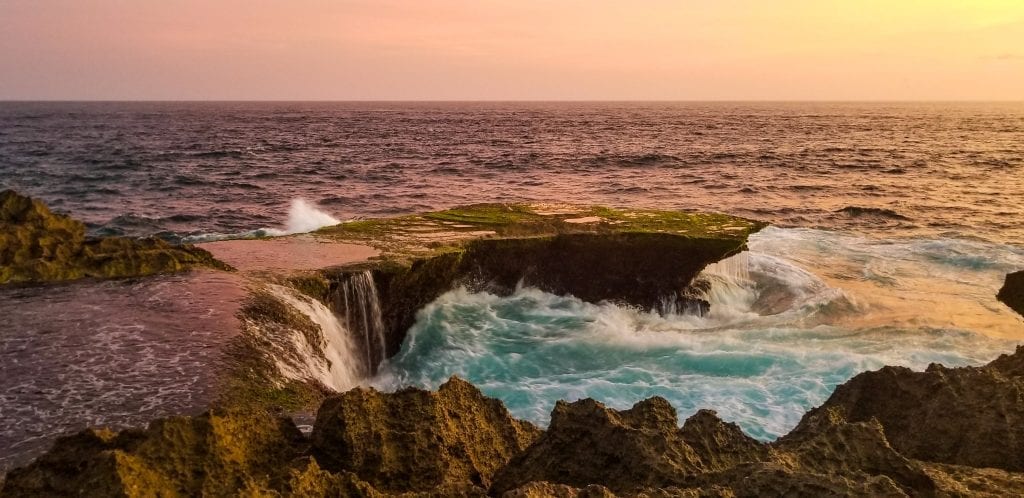
Devil’s Tear is my favourite place on the entire island, and I suspect it will become yours too.
This is an outcrop at the edge of the ocean — sharp limestone rock with moss formations worn into dramatic shapes by decades of wave action. There is nothing around it except the vastness of the Indian Ocean and the sky. The magic happens when a large swell arrives from open water and hits the rock at full force. The impact creates a thunderous boom, the water erupts upward, and the spray catches the light to form brief, brilliant rainbows before falling back to the sea.
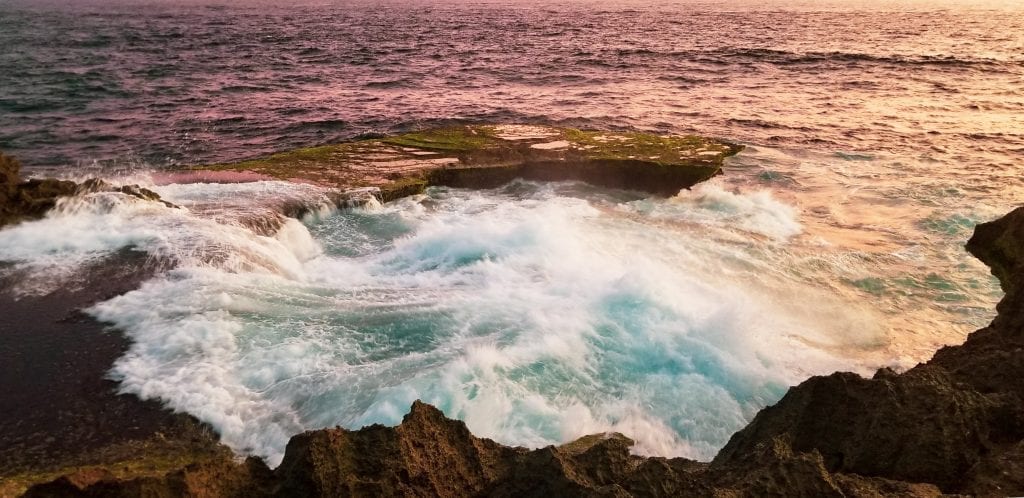
I called it an angel’s tears rather than a devil’s, because nothing that beautiful deserves a sinister name. The colours of the water, the unpredictability of the waves, the sound — I wanted to stay for hours and I very nearly did.
The best time to visit is just before sunset. The softening light creates extraordinary colours in the sky, the spray catches that light, and the whole scene becomes something you will not easily forget. Walk along the cliff path from Dream Beach and you will find it in about five minutes. Parking nearby costs IDR 25,000.
⚠️ Safety warning: The waves at Devil’s Tear are powerful and unpredictable, and the rocks are slippery. Stay well back from the edge at all times. People have been swept from the rocks here. The view is extraordinary from a safe distance and you do not need to stand at the edge to experience it. A rogue wave can arrive without warning even on calm days.
Surfing at Playgrounds, Lacerations and Shipwrecks
Nusa Lembongan has three surf breaks that are known throughout Indonesia and attract dedicated surfers during peak swell season.
Shipwrecks is the most consistent and most popular, a long right-hand reef break that works on most swells. Suitable for intermediate to advanced surfers.
Lacerations is faster and more hollow, breaking sharply over a shallow reef. The name is a hint. This is a break for experienced surfers who know how to handle reef conditions.
Playgrounds is more forgiving with multiple peaks, suitable for improving intermediates. Surf lessons for beginners are available from schools around Jungutbatu Beach and Coconut Beach.
The best season for surfing is April to September, when offshore winds and consistent south swells create ideal conditions. All three breaks require a short boat ride offshore.
Snorkelling with Manta Rays
Nusa Lembongan is one of the finest places in the world to snorkel with manta rays, and the experience never gets ordinary no matter how many times you do it. These enormous, graceful creatures have wingspans reaching up to 5 metres and move through the water with a slow, unhurried elegance that makes the ocean feel like an entirely different world.
There are two main locations. Manta Bay is the closer option, about 15 minutes by boat from Lembongan, where mantas come to feed. Sighting probability is around 60 percent and the conditions are generally manageable for all experience levels. Manta Point, off the southern coast of Nusa Penida, is a cleaning station where mantas arrive to have parasites removed. Sighting probability here is closer to 99 percent in the morning, the mantas are often larger, and the experience is more remarkable — though the boat ride is longer and the currents can be stronger.
If you have to choose between them, choose Manta Point in the morning. Book through a reputable operator rather than arranging casually at the harbour, and go as early as possible.
📌 Book: Scuba Diving Trip to Nusa Lembongan and Nusa Penida (Viator)
📌 Book: Nusa Lembongan Snorkelling Day Trip from Bali (GetYourGuide)
Scuba Diving
The underwater world around Nusa Lembongan is extraordinary. The island sits within the Coral Triangle, recognised for containing more species of coral and reef fish than almost anywhere else on earth, and the diving reflects that richness.
Head toward Jackfish Point and Blue Corner on the northern side of the island to swim alongside sharks, manta rays, sea turtles, and on the right days during July to October, the remarkable Mola Mola (ocean sunfish). Drift diving through the channel between Lembongan and Penida is an experience that experienced divers travel specifically to have. Most dive centres on the island offer fun dives for certified divers as well as PADI certification courses for beginners.
The current between Lembongan and Nusa Penida can be strong. Always check conditions with your operator before getting in the water.
Kayaking Through the Mangrove Forest
The northern coast of Nusa Lembongan is covered in a sprawling mangrove forest that most visitors drive past without stopping. This is a mistake.
Getting inside the mangroves by kayak is one of the most peaceful and genuinely unusual experiences on the island. The waterways wind through dense mangrove trees, the channels narrow as you go deeper, and the light filtering through the canopy creates an almost otherworldly quality. A kayak hire for one hour costs around IDR 100,000 (USD $6) from operators along the northern road. Gondola boat tours of the same area cost a similar amount per person.
The mangroves also serve an important ecological purpose — they act as a natural barrier protecting the island’s shoreline from erosion and provide nursery habitat for the marine life that makes the reef diving so rich. Paddling through them gives you an appreciation of the ecosystem that a view from the road cannot.
The Yellow Bridge to Nusa Ceningan
The Yellow Bridge, also called the Bridge of Love, connects Nusa Lembongan to its tiny neighbour Nusa Ceningan. The current bridge was rebuilt in 2017 after its predecessor collapsed, and it is wide enough for pedestrians and motorcycles.
Crossing it on a scooter is a memorable experience — you are suspended above a narrow channel of brilliant blue water with both islands visible on either side. The views from the bridge are worth stopping for. Once across, Nusa Ceningan is small enough to explore in a few hours and has its own cliff viewpoints, small beaches, and the famous Blue Lagoon where adventurous visitors cliff jump into the turquoise water below.
Mushroom Bay — Best Beach for Swimming
Mushroom Bay, on the southwest side of the island, is where many fast boats arrive and it is the calmest, most protected beach on Nusa Lembongan. The bay is sheltered by a headland that breaks the swell, making the water here genuinely suitable for swimming even when conditions elsewhere on the island are rough.
The snorkelling directly offshore at Mushroom Bay is accessible from the beach, though the reef is not as rich as sites reached by boat. Several restaurants and beach clubs line the bay, making it a comfortable and practical base for a morning or afternoon.
Circumnavigating the Island by Scooter
Renting a scooter and riding around the entire island takes about an hour if you do not stop — and the point is to stop constantly.
The route takes you through two very different landscapes. The north and east sides, around Jungutbatu and Mushroom Bay, are more developed with beach clubs, restaurants, and accommodation. The south and west sides are more remote, with cliff views, seaweed farms visible in the channel between islands, and local life that continues regardless of how many tourists are on the island.
Scooter rental costs around IDR 70,000 per day (USD $5). The roads are significantly quieter than mainland Bali. Take it slowly on the approach roads to Devil’s Tear and the southern cliffs, where surfaces can be rough.
⚠️ Always carry travel insurance when riding a scooter. Read about my own bike accident in the Philippines. I use WorldNomads.
Jungutbatu Village and the Morning Market
Jungutbatu is the main village and the heart of local life on Nusa Lembongan. Every morning, a market lines the street on the way toward Ceningan Island where locals buy fresh produce, fish, and supplies for the day. Walking through it gives you a sense of the island’s real character — the part that exists independently of tourism.
The large Banyan tree near the market is one of the island’s most distinctive landmarks, and holds spiritual significance in Balinese Hindu culture, believed to attract the gods and spirits of ancestors.
Seaweed Farming
The channel between Nusa Lembongan and Nusa Ceningan has been farmed for seaweed by local families for generations. The farms are visible from the road along the channel’s edge, where lines of coloured floats mark the underwater cultivation beds. The best view is from the small warungs and cafes positioned along the water.
Several cafes on the island also serve Good Karma Smoothies made with locally sourced seaweed from the Cube Project, a local initiative that processes the farming crop into health supplements. Buying one directly supports the farming families whose livelihoods depend on this industry.
Sunset at Mushroom Bay and Panorama Point
The bay at Mushroom Bay catches the late afternoon light beautifully, and several beach clubs here are specifically positioned for the sunset view. This is a different perspective from Devil’s Tear — calmer, more comfortable, better suited to the beach chair and cold drink approach to watching the sun go down.
Panorama Point on the southern side of the island offers a more dramatic clifftop view over the open ocean. It is less visited than Devil’s Tear and worth seeking out if you want a quieter sunset experience.
Stand-Up Paddleboarding
Several operators around Jungutbatu and Mushroom Bay offer stand-up paddleboard rental by the hour. Paddling along the calm northern coast in the early morning, before the wind picks up and before the day-trippers arrive, is one of the more pleasant ways to experience the island from the water without any previous experience or commitment.
Day Trip to Nusa Penida
Nusa Penida is reachable by boat from Nusa Lembongan in about 20 to 30 minutes, making it one of the most practical day trips you can do from the island. Nusa Penida is dramatically different from Lembongan — wilder, more rugged, with the famous Kelingking Beach cliff viewpoint, Broken Beach, Angel’s Billabong, and Crystal Bay among its main attractions.
Using Lembongan as your base and doing Penida as a day trip gives you the comfort of Lembongan’s better infrastructure combined with access to Penida’s more dramatic scenery. Most guesthouses and tour operators on Lembongan can arrange this.
Full guide: 25 Best Things to Do in Nusa Penida
Simply Being on a Small Island
This is harder to schedule than the others but equally worth including. Nusa Lembongan moves slowly and rewards the people who match its pace. A morning coffee at Mushroom Espresso. A long lunch at Green Garden Warung with no particular plan for the afternoon. A walk along Jungutbatu Beach as the light fades and the boats settle in the bay. An evening at Cloudland Bar watching the sky change colour.
The finest things to do on a small island are often the things that have no name.
Suggested Itinerary for Nusa Lembongan
1 Day — The Highlights
Take the first morning boat from Sanur. Arrive at Jungutbatu or Mushroom Bay by 9 AM. Head straight to Dream Beach while the light is good and the day-trippers have not yet arrived. Walk the cliff path to Devil’s Tear and spend as long as you like. Lunch at a warung in Jungutbatu. Afternoon snorkelling trip to Manta Bay or a tour of the mangrove forest. Return boat in the late afternoon.
2 Days — The Proper Experience
Day 1: Dream Beach and Devil’s Tear in the morning. Circumnavigate the island by scooter in the afternoon, crossing the Yellow Bridge to explore Nusa Ceningan. Sunset from Cloudland Bar.
Day 2: Early morning manta ray snorkelling at Manta Point (book the night before). Return for lunch at Hai Bar and Grill. Afternoon diving if certified, or stand-up paddleboarding along the north coast. Evening at Mushroom Bay.
3 Days — The Full Picture
Follow the two-day plan above, then use the third day for a boat trip to Nusa Penida. Take the first morning boat to Penida’s west side to reach Kelingking Beach before the crowds arrive. Return to Lembongan in the evening.
How to Get to Nusa Lembongan
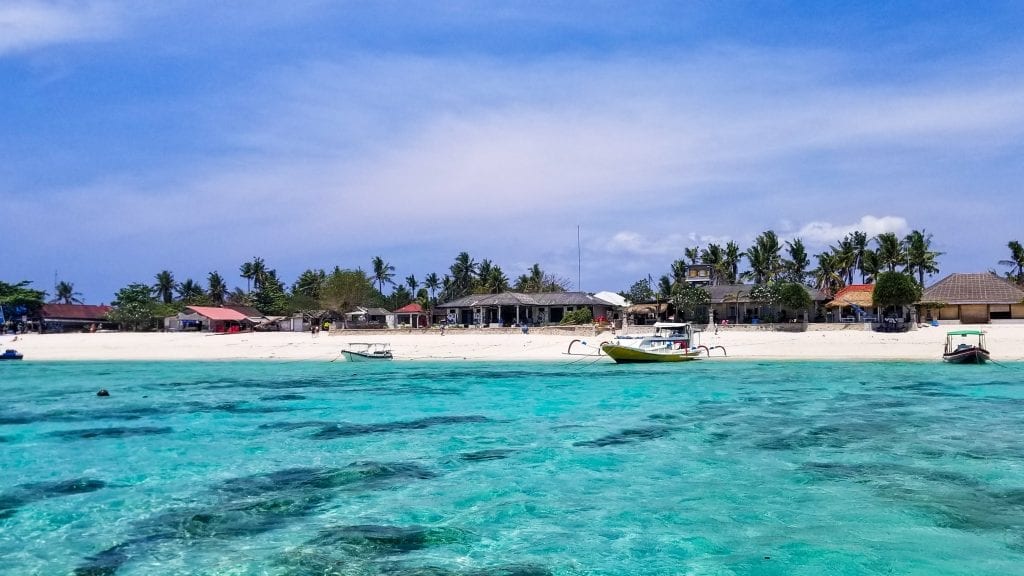
The only way to reach Nusa Lembongan is by boat. The main departure point from Bali is Sanur harbour in the southeast of the island.
Fast boats make the crossing in 30 to 45 minutes. Morning departures are strongly recommended because sea conditions are almost always calmer in the first half of the day. Multiple operators run the route daily.
Approximate ticket price: IDR 150,000 to 300,000 (USD $10 to $20) one way, depending on the operator and season. Book in advance during peak season (July and August) when boats fill up quickly.
Important: An IDR 10,000 port fee is charged per person on arrival at Nusa Lembongan. Have cash ready.
📌 Book: Bali to Nusa Lembongan Fast Boat (12GoAsia)
Getting to Sanur from different parts of Bali:
- From Bali Airport: about 15 km, 20 to 30 minutes by Grab or Bluebird taxi
- From Kuta or Seminyak: 45 minutes to 1 hour
- From Ubud: 1 to 1.5 hours by taxi to Sanur, then the boat
Which part of Lembongan will the boat arrive at? Most fast boats arrive at Jungutbatu Beach on the northeastern side, which is where most accommodation, restaurants, and activities are based. Some boats use Mushroom Bay on the southwest — confirm with your operator when booking.
How to Get Around Nusa Lembongan
Scooter rental is the best option for exploring the whole island. Rates are approximately IDR 70,000 per day (around USD $5). The roads are significantly less busy than mainland Bali.
Note that Grab and Gojek do not operate on Nusa Lembongan. Motorcycle taxis are available through your accommodation if you need transport without renting.
If you are staying in the Jungutbatu area and plan to spend most of your time there, walking is perfectly practical. The main beach, restaurants, and most activity operators are within walking distance.
Cars cannot cross the Yellow Bridge to Nusa Ceningan, so exploring Ceningan requires a scooter or walking.
Best Time to Visit Nusa Lembongan
April to October is the dry season and the best time to visit. Sea crossings are calmer, snorkelling and diving visibility is at its best, and the surf breaks fire consistently.
July to October is the window for Mola Mola (ocean sunfish) sightings at nearby Crystal Bay on Nusa Penida. If this is a priority, plan your visit within this window.
November to March is the wet season. Sea conditions can be rough, some fast boat services are delayed or cancelled, and afternoon rain is common. The island is quieter and accommodation is cheaper, which has its own appeal.
July and August are the busiest months. Book accommodation well in advance.
Best Hotels in Nusa Lembongan
🔎 Search all hotels: Agoda | Booking.com
Hai Tide Beach Resort — Best Beachfront Luxury
Directly on the beach with stunning ocean views, the Hai Tide Beach Resort is consistently among the most praised properties on the island. Excellent restaurant, pool, and beachfront positioning that makes getting up in the morning very easy.
Adiwana d’Nusa Beach Club and Resort — Best Overall Resort
A highly rated property with beach club access, pool, and well-appointed rooms in a beautiful setting. One of the finest stays on the island for those who want proper resort comfort.
📌 Book Adiwana d’Nusa on Agoda
Mahagiri Resort — Best for Pasir Beach and Views
Located at the northernmost tip of the island on Pasir Beach, Mahagiri Resort has beautiful views, a beach bar, swimming pool, and a peaceful white sand beach that is one of the quietest on the island.
Indiana Kenanga — Best Boutique Stay
A beautiful boutique property set in tropical gardens. Consistently well-reviewed for its atmosphere, service, and quality of rooms. A good choice for couples wanting something intimate and thoughtfully designed.
📌 Book Indiana Kenanga on Booking.com
Pondok Baruna — Best Mid-Range with Dive Centre
Well-located on the main beach strip with its own dive centre. The practical choice for anyone who came to Lembongan primarily for diving — good rooms, a restaurant, and a team that can organise all your underwater activities.
📌 Book Pondok Baruna on Booking.com
The Jingga Villas — Best for Private Villa Experience
Private villas with individual garden settings, consistently well-reviewed for the quality of space and privacy. A good option for those who want a self-contained experience rather than a hotel room.
📌 Book The Jingga Villas on Booking.com
The Cubang Hut’s Lembongan — Best Budget Stay
Simple, clean accommodation at budget-friendly prices in a good location. The best option for travellers who want to spend their money on experiences rather than rooms.
📌 Book The Cubang Hut’s Lembongan on Agoda
Pemedal Beach Resort — Good Value with Beach Access
Comfortable rooms with beach access, pool, and a relaxed atmosphere. Good value for the location and consistently well-reviewed.
📌 Book Pemedal Beach Resort on Agoda
Best Restaurants in Nusa Lembongan
Green Garden Warung is one of the best local eating spots on the island — honest Indonesian food at honest prices in a relaxed garden setting. One of the first places I seek out when I arrive.
Hai Bar and Grill at the Hai Tide Beach Resort is the best option for a proper meal with a proper view. Good food, good service, and a beachfront setting that earns its reputation.
Deck Cafe and Bar is a popular spot with a pleasant atmosphere and a menu covering Indonesian and international dishes. Good for lunch or a long dinner.
Cloudland Bar Lembongan is the best sunset drinking spot on the island — elevated position, good cocktails, and the kind of view that makes an evening on Nusa Lembongan feel like a very good idea.
Mushroom Espresso serves the best coffee on the island and a good breakfast menu. Start your mornings here if you are staying nearby.
Nick’s Place is a Nusa Lembongan institution — relaxed, reliable, with a menu that covers the basics well and a location on the main strip that makes it easy to find.
Hai Ri Zen offers Japanese and Asian fusion food that is surprisingly good for a small island. Worth the visit when you want something different from Indonesian and Western staples.
Kayu Lembongan and Cookies Coffee Shop and Foods are solid local options for lighter meals and snacks throughout the day.
What to Pack for Nusa Lembongan
Reef-safe sunscreen is important both for your skin and for the coral reef. Regular sunscreen contains chemicals that damage coral and is increasingly discouraged across the Nusa Islands.
Cash in Rupiah is essential. ATMs on the island are limited and occasionally run dry. Withdraw what you need in Bali before making the crossing and carry more than you think you will need.
Water shoes or reef shoes make snorkelling and walking the rockier cliff-edge paths much more comfortable.
A dry bag or waterproof phone case for the boat crossing and any water activities.
Insect repellent for the evenings, particularly near the mangroves and the garden areas of the island.
Practical Tips for Nusa Lembongan
Boat timing: Take the earliest morning boat from Sanur. Sea conditions are almost always calmer before midday, and arriving early gives you Devil’s Tear and Dream Beach before the day-trippers descend.
Port fee: An IDR 10,000 fee per person is charged on arrival at the island. Have small notes ready.
Swimming safety: Not all beaches are safe for swimming. Dream Beach has strong currents. Always check local conditions before entering the water.
Crowds: The island is busiest from 11 AM to 3 PM. The early morning and late afternoon hours are consistently the best times to visit the main attractions.
No apps: Grab and Gojek do not operate here. Arrange transport through your accommodation or hire a scooter from day one.
Estimated Daily Budget for Nusa Lembongan
| Budget Level | Accommodation | Food | Activities | Total (approx.) |
|---|---|---|---|---|
| Budget | IDR 200,000 to 400,000 | IDR 100,000 to 150,000 | IDR 100,000 | USD $25 to $45 |
| Mid-range | IDR 600,000 to 1,200,000 | IDR 200,000 to 350,000 | IDR 300,000 | USD $70 to $130 |
| Luxury | IDR 1,500,000 and above | IDR 400,000 and above | IDR 500,000 | USD $170 and above |
Note that manta ray snorkelling or scuba diving adds USD $30 to $80 per person per trip. Factor this in if it is a priority.
Frequently Asked Questions About Nusa Lembongan
How do I get to Nusa Lembongan from Bali? By fast boat from Sanur harbour. The crossing takes 30 to 45 minutes. Book in advance, take a morning departure when seas are calmest, and bring IDR 10,000 cash for the arrival port fee.
Is Nusa Lembongan worth visiting? Without question. It is one of the most rewarding short trips from Bali — beautiful beaches, world-class diving, the extraordinary Devil’s Tear, and a pace of life that makes Kuta feel like a different universe.
How many days should I spend on Nusa Lembongan? Two to three nights is ideal. One day covers the highlights if you arrive early. Two nights adds a proper manta ray trip and a crossing to Nusa Ceningan. Three nights lets you do Nusa Penida as a day trip as well.
Can I visit as a day trip from Bali? Yes, and many people do. Take the first morning boat, cover Dream Beach, Devil’s Tear, and a snorkelling trip, and return on the late afternoon boat. It is rushed but entirely doable.
Is Nusa Lembongan better than Nusa Penida? They suit different travel styles. Nusa Lembongan is more relaxed, better developed, and easier to get around. Nusa Penida is more dramatic with more iconic scenery. If you want comfort and a base for exploring all three islands, choose Lembongan. If you want the most dramatic landscape and are happy with rougher roads, choose Penida.
What is the best beach on Nusa Lembongan? Dream Beach for the most beautiful setting. Jungutbatu Beach for the longest stretch and best facilities. Pasir Beach at the northern tip for the most peaceful atmosphere. Mushroom Bay for the calmest, safest swimming.
Is it safe to swim at Dream Beach? The currents at Dream Beach can be strong and swimming is not always safe, particularly from December to February. Use the infinity pools at Dream Beach Huts if you want to enjoy the view with a safe swimming option.
What is the Yellow Bridge? The Yellow Bridge connects Nusa Lembongan to tiny Nusa Ceningan. It is wide enough for pedestrians and motorcycles and offers beautiful views over the channel between the two islands.
Explore More of the Nusa Islands and Bali
- Nusa Penida — 25 Best Things to Do
- Nusa Ceningan — The Quiet Little Island
- Bali Airport Taxi Guide
- Things to Do in Ubud
- Bingin Beach Bali
- Gili Air — The Most Beautiful Gili Island

Leave a reply