
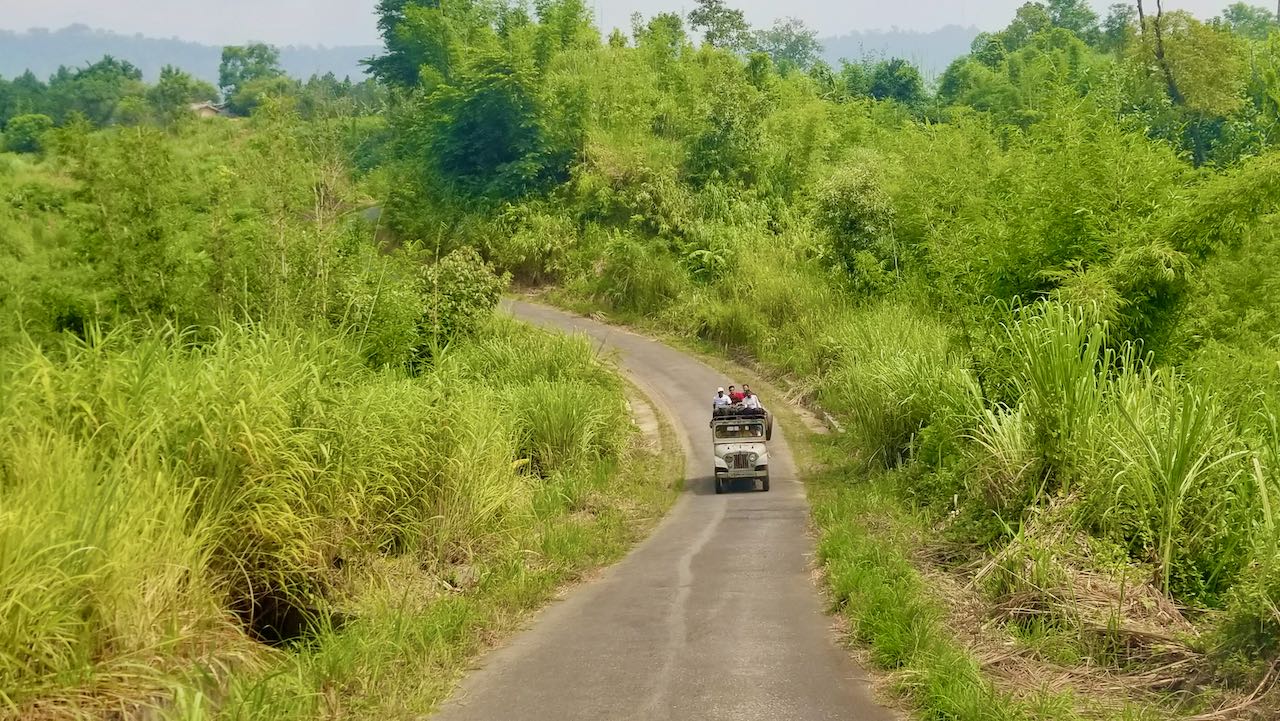
Sajek valley is located among a range of mountains to the southern part of Bangladesh. Although the height of the mountain range is nothing remarkable, it’s a beautiful place to visit and one of the most popular tourist destinations in Bangladesh. Here is your ultimate travel guide for Sajek Valley.
Most people who visit Bangladesh never see what I am about to describe to you.
They come to Dhaka, perhaps get to Cox’s Bazar, maybe push on to Saint Martin’s Island. And then they leave, having experienced Bangladesh’s coast and capital but completely missing its most visually striking landscape — the Chittagong Hill Tracts, and within them, Sajek Valley.
Sajek sits at 1,500 feet above sea level in the district of Rangamati, close to the Mizoram border of India and not far from Myanmar. It is a place of rolling green ridges, bamboo-and-thatch cottages with panoramic balconies, and clouds that don’t stay in the sky where they belong — they drift down into the valley and roll between the hills at arm’s height, so close you feel you could reach out and pull a handful from the air.
The journey to get there is genuinely adventurous: a night bus, a morning jeep up mountain roads barely wide enough for one vehicle, an army escort through the hills. None of it is difficult. All of it is memorable.
This is your complete, practical guide to Sajek Valley, written by someone who has made the journey and wants you to make it better.
Quick Facts: Sajek Valley at a Glance
| Location | Rangamati district, Chittagong Hill Tracts, SE Bangladesh |
| Altitude | ~1,500 feet (457 metres) above sea level |
| Distance from Khagrachari | 67 km (3 hours by jeep) |
| Distance from Dhaka | ~370 km total |
| Best time to visit | Year-round; monsoon (June–Sept) for clouds; Oct–Feb for clear views |
| Electricity | None from grid; generators & solar only |
| Mobile network | Robi and Teletalk only — other SIM cards won’t work |
| Foreigners permit | Required — must be obtained in advance from DC office, Rangamati |
| Army escort convoy | 10:30 AM and 3:30 PM daily from Baghaihat checkpoint |
| Currency | Bangladeshi Taka (BDT) — no ATMs in Sajek; bring all cash |
| Alcohol | Not available |
Critical Planning Information — Read This First
Sajek Valley has two logistical constraints that can derail your trip if you don’t know about them:
1. The Army Convoy Windows — Non-Negotiable Timing
The roads through the Chittagong Hill Tracts have a history of conflict between indigenous communities and the Bangladesh state that stretches back decades. For visitor safety, the army runs an escort system: all tourist vehicles travel in a convoy, guarded by military jeeps at the front and rear.
Convoys depart from Baghaihat army checkpoint (about 30 minutes from Khagrachari) at exactly two times:
- 10:30 AM (morning convoy)
- 3:30 PM (afternoon convoy)
These are your only two windows to enter Sajek each day. Miss the 10:30 AM convoy and you wait until 3:30 PM. Miss 3:30 PM and you’re staying in Khagrachari overnight.
What this means for your planning:
- To catch the 10:30 AM convoy, you must be in Khagrachari by 8:00–8:30 AM at the latest — enough time to find a jeep, negotiate, register at the checkpoint, and reach Baghaihat.
- The most efficient way to achieve this is to take an overnight bus from Dhaka, arriving in Khagrachari at dawn (6:00–7:00 AM).
- The return convoy from Sajek back to Khagrachari runs on the same schedule — plan your departure day accordingly.
Convoy registration: At the Baghaihat checkpoint, a soldier records your name, occupation, phone number, and vehicle details. The process takes under 5 minutes per person. Bangladeshi nationals only need to register at this checkpoint. Foreign nationals require a separate advance permit (see below).
2. The Foreigners’ Permit — Apply Before You Travel
Foreign nationals must obtain a permit before visiting Sajek Valley (or anywhere in the Chittagong Hill Tracts).
Apply to the Office of the Deputy Commissioner, Rangamati:
🌐 foreigner.dc-rangamati.gov.bd/useful-info
Apply at least one week before your travel date. The permit process requires your passport details, intended travel dates, and itinerary. Without this permit, foreign nationals will be turned back at the Baghaihat checkpoint. Do not skip this step.
Why Sajek Valley Is Worth the Journey
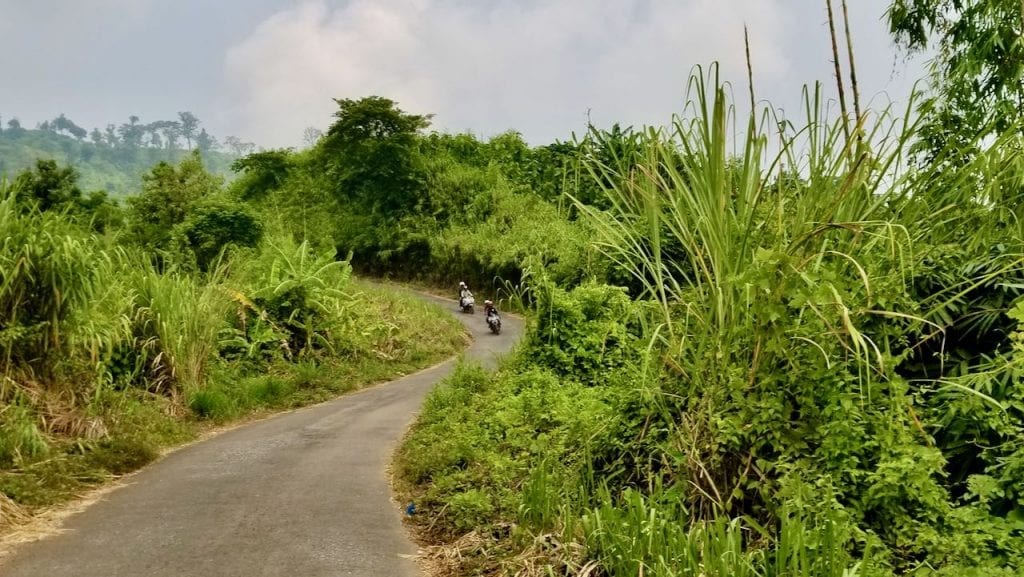
Bangladesh is, almost entirely, flat. The delta that makes up most of the country sits at sea level; the rivers are wide and slow; the horizons are low and distant. Then you reach the Chittagong Hill Tracts in the southeast, and the landscape tilts upward into something completely different.
Sajek Valley occupies a ridge in these hills, close to where Bangladesh, India’s Mizoram state, and Myanmar converge. From a good vantage point — and there are several — you can look out over hills that belong to three different countries simultaneously.
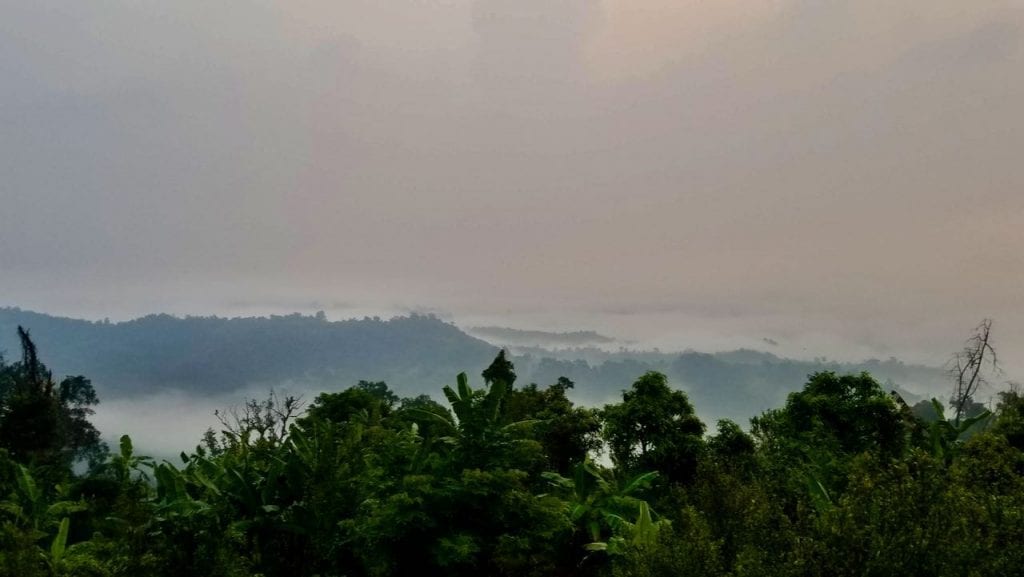
But what really defines Sajek is the clouds. At 1,500 feet, the valley sits right at the level where clouds form and drift. On the right morning — particularly in the monsoon and post-monsoon season — they don’t float above you; they move through you. You watch them roll in from the east, slip between the ridgelines, and flow down the valley below like a slow white river. It is one of the most genuinely otherworldly landscapes in South Asia, and almost nobody outside Bangladesh knows about it.
The valley is also the home of several indigenous communities — Chakma, Marma, Tripura, Lushai, and Kaibarta peoples — who have lived in these hills for centuries. Their presence shapes everything about Sajek: the architecture (bamboo-frame cottages on stilts), the food (bamboo chicken, indigenous vegetables, fresh tropical fruit), the pace, and the quiet dignity of the place.
It is a 24-hour journey from Dhaka, and it is entirely worth it.
Getting to Sajek Valley: All Routes Explained
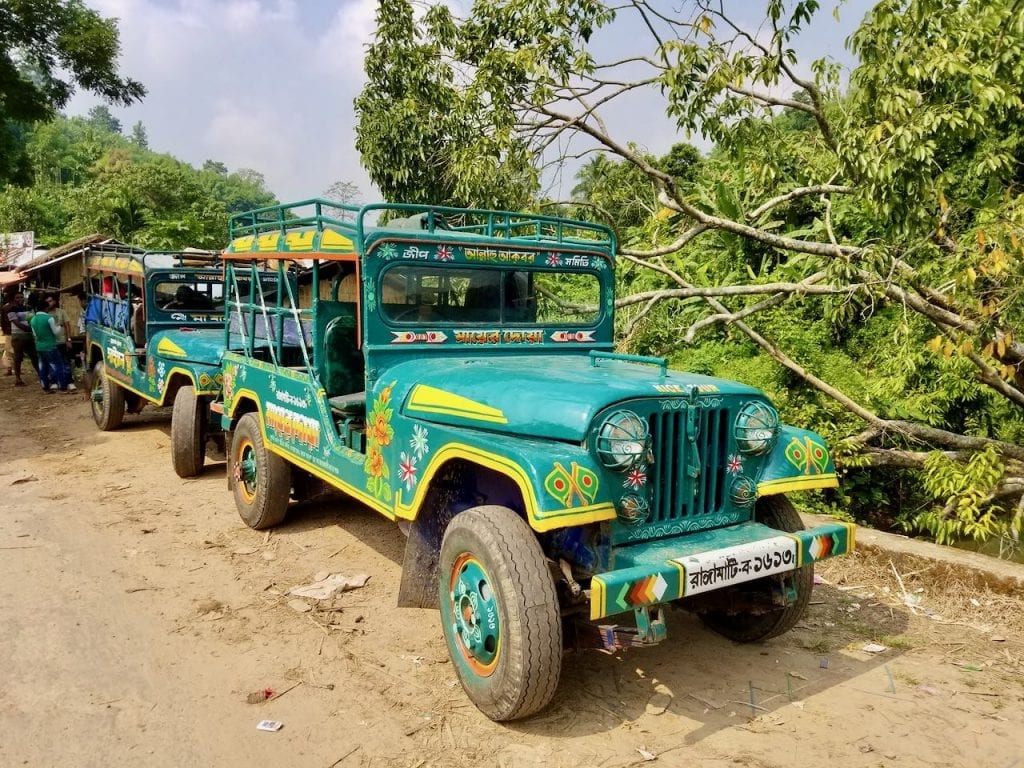
The Jeep (Chander Gari) — Understanding Your Key Transport
The vehicle that takes you from Khagrachari to Sajek is called a Chander Gari (literally “mooncar” — a local term of affection for these powerful four-wheel-drive jeeps). It is a robust machine with a frame that holds 12–15 passengers on facing bench seats inside, plus room on the roof rack for those brave enough to ride up top.
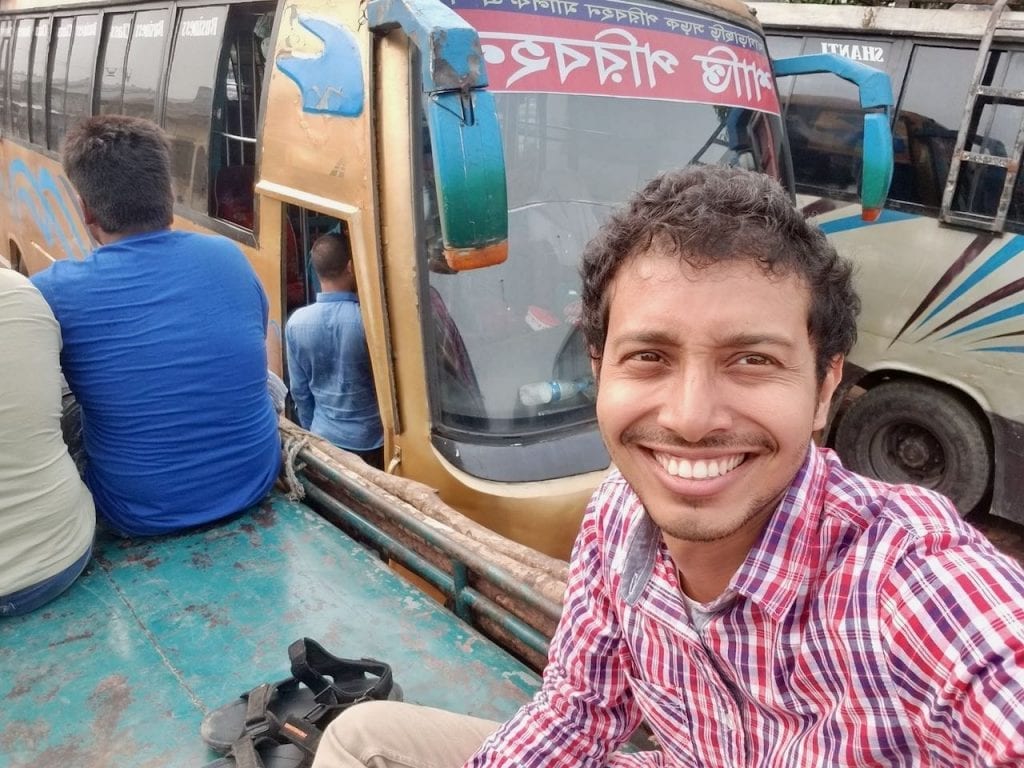
⚠️ Rooftop riding is spectacular and genuinely dangerous. The mountain roads are narrow, with sharp drops on one side and no barriers. If you go on the roof, hold on properly and stay seated — do not stand. Many travellers consider it the highlight of the journey; approach it with full awareness of the risk.
Jeep hire costs:
- Full jeep reservation (round trip): BDT 8,000–12,000 (accommodates 12–15 people)
- Per-person sharing rate: BDT 600–1,000 each way if you join an existing group
Tip from experience: If you arrive in Khagrachari solo or in a small group, look for other travellers at the jeep stand who are negotiating for the same destination. Joining an existing group cuts your cost dramatically — on my trip, sharing with a group of strangers reduced my transport cost by over 80% compared to reserving a vehicle alone. Smile, introduce yourself, ask if there’s space.
Route 1: Dhaka → Khagrachari → Sajek (Most Common)
Step 1 — Dhaka to Khagrachari by overnight bus
Multiple operators run overnight buses from Dhaka to Khagrachari. Departure time: typically 9:30–11:00 PM from Dhaka’s Sayedabad or Fakirapool bus terminals. Journey time: 7–9 hours. Arrival in Khagrachari: around 5:00–7:00 AM — perfect timing to find a jeep and catch the 10:30 AM convoy.
Bus fare: BDT 500–1,200 depending on operator and seat class (AC/non-AC) Operators: Shanti Paribahan is the best-known for this route; ask at the bus terminal for current options.
Step 2 — Khagrachari to Sajek by Chander Gari
From the jeep stand in Khagrachari, negotiate or join a group for a jeep to Sajek. Allow 30–45 minutes to find a vehicle and agree the fare. The jeep reaches Baghaihat checkpoint (10:30 AM convoy) in about 30 minutes, then continues into the hills. Total journey: approximately 3 hours from Khagrachari to Sajek (Ruilui Para).
Route 2: Dhaka → Dighinala → Sajek
The operator Shanti Paribahan runs a direct bus service from Dhaka to Dighinala, from where jeeps go to Sajek. This can be a slightly faster overall route if the Dighinala bus times align with your plans. Ask at Shanti Paribahan counters in Dhaka for the current schedule.
Route 3: Dhaka → Chittagong (by air) → Khagrachari → Sajek (Fastest)
Step 1 — Fly Dhaka to Chittagong Flight time: 45 minutes. Airlines: Biman Bangladesh, US-Bangla, NovoAir. Fare: BDT 3,000–5,000 one way. This option eliminates the overnight bus entirely — ideal if you have limited time or prefer not to spend a night on a bus.
Step 2 — Chittagong to Khagrachari by bus Buses run regularly from Chittagong’s Kadamtoli or Bahaddarhat bus terminals to Khagrachari. Journey: 3 hours. Fare: BDT 200–400.
Step 3 — Khagrachari to Sajek (same as Route 1 above)
💡 Return journey tip: On the way back, many travellers take a bus from Khagrachari to Chittagong and fly home from there, avoiding a second overnight bus. This was my own route — it is faster, more comfortable, and makes the whole trip feel more manageable.
When to Visit Sajek Valley
Unlike Bangladesh’s coastal destinations, Sajek is genuinely a year-round destination because the hill climate is moderate in all seasons. But each season offers something different:
Monsoon (June – September) — for clouds and drama This is when Sajek is at its most visually spectacular. Low clouds move through the valley at the level of the cottages, creating the “sea of clouds” effect that fills every viral photo of the place. The hills are intensely green from the rain. The waterfalls (including Hajachara Falls en route) are at their most powerful. The trade-off: some roads can be muddy and the jeep journey can be rougher; occasional days of heavy rain limit visibility.
Post-monsoon (October – November) — the sweet spot The best balance: the hills are still brilliant green, clouds are still plentiful, but the roads are drier and the sky is clearer between cloud passes. October is many experienced travellers’ preferred month.
Winter (December – February) — clear skies and cool air The hill air is genuinely cool in December and January — bring a layer. The sky is clearer, visibility is at its longest, and the views of distant ridgelines (including hills in Mizoram and Myanmar) are at their sharpest. Fewer dramatic cloud effects but more reliable sunshine.
Summer (March – May) — hotter, quieter The warmest period. Still pleasant at 1,500 feet compared to the plains below, but the landscape is dryer and less lush. The upside: fewer tourists, lower hotel rates.
📌 Weekend and holiday warning: Sajek has become enormously popular with Bangladeshi domestic tourists. During Eid holidays, university breaks, and long weekends, the valley fills up completely and accommodation must be booked weeks in advance. If possible, visit mid-week — the difference in crowd level is dramatic.
The Journey: What to Expect Along the Way
Khagrachari Town — Your Morning Stop
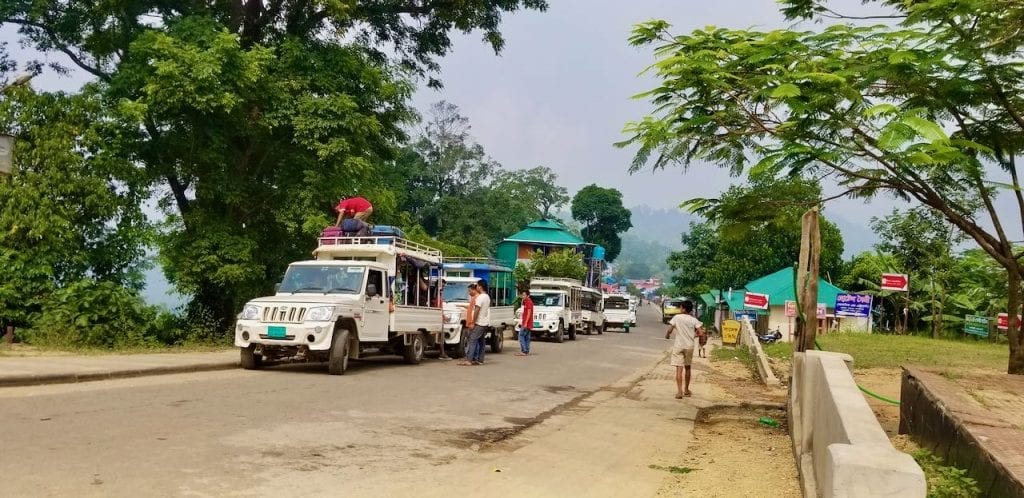
If you arrive by overnight bus, Khagrachari greets you in the early morning light — a lively district town with restaurants serving breakfast, tea stalls, and a jeep stand where your Sajek transport departs.
Your first priority: find the toilet (a genuine early-morning challenge — the bus station facilities are basic; look for a tea stall or small restaurant that will let you use theirs for a small tip). Your second: breakfast. A paratha, omelette, and strong tea from one of the roadside restaurants will cost under BDT 100 and set you up for the journey ahead.
Your third: secure your jeep. Walk to the jeep stand, find other travellers going to Sajek, negotiate a shared rate, and get moving. You want to reach Baghaihat by 10:00 AM to register comfortably before the 10:30 convoy.
Hajachara Falls — Waterfall Stop En Route
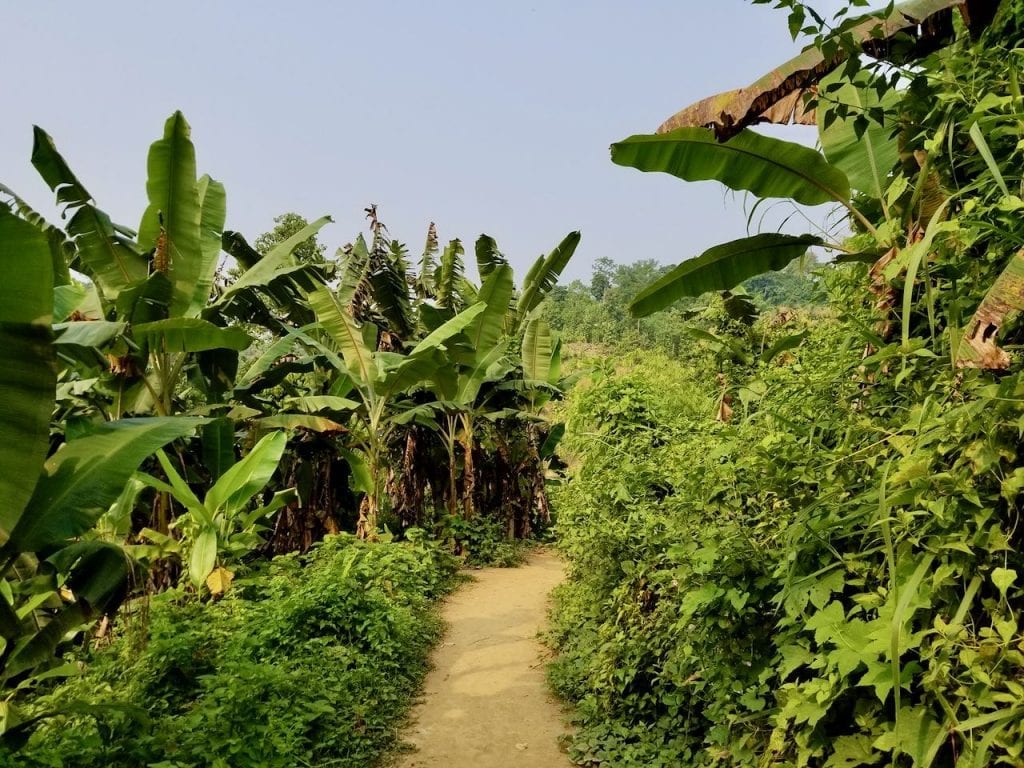
At Baghaihat checkpoint, after registering, you typically have 60–90 minutes before the 10:30 convoy moves. The jeep drivers know a short hiking trail from here to Hajachara Falls (Jhorna) — a lovely waterfall about 20–30 minutes’ walk through forest and rocky terrain.
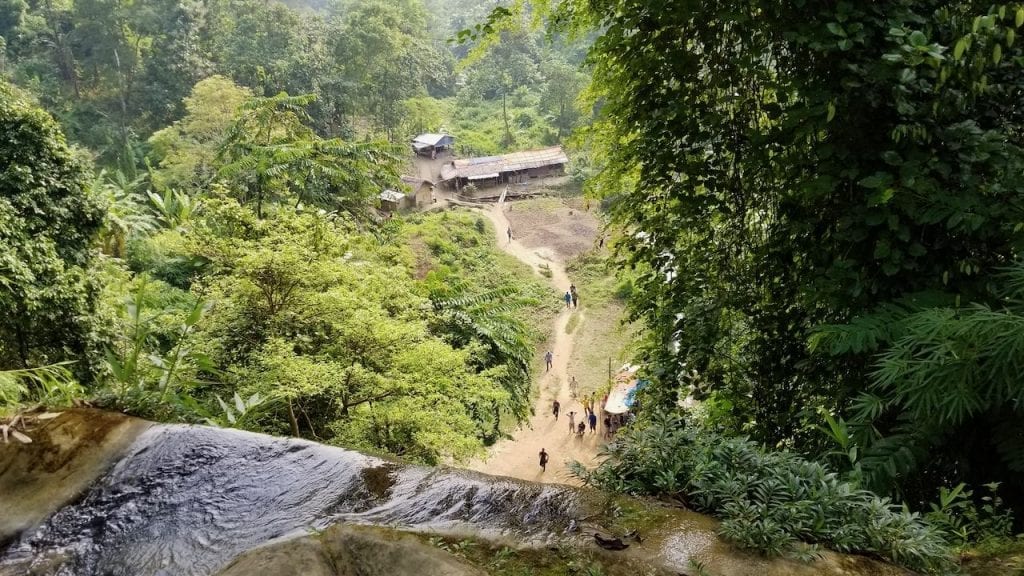
The trail itself is beautiful: narrow, shaded, and surprisingly dramatic. The falls are busiest here on weekdays — the pool at the base fills with tourists on weekends. I climbed to the top of the falls — slippery, requiring some scrambling with rope and tree root assists — for a view down that was simultaneously magnificent and terrifying. The descent back down was, frankly, worse than the ascent.
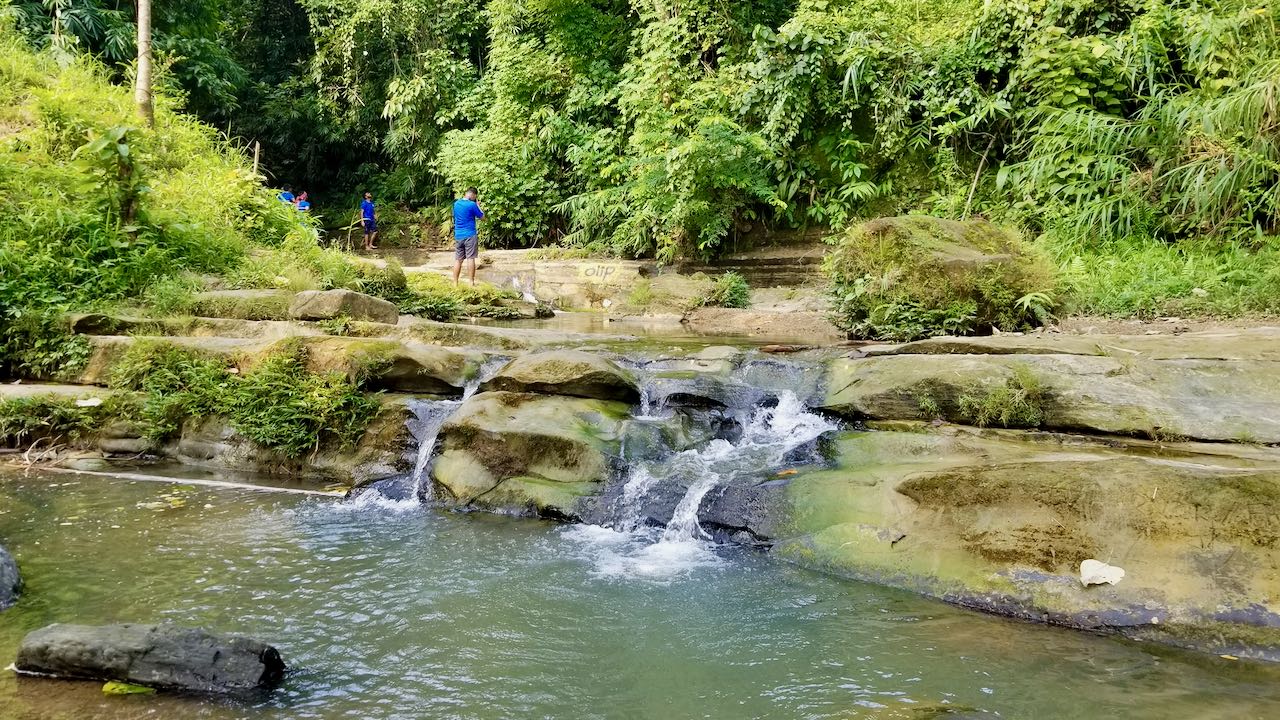
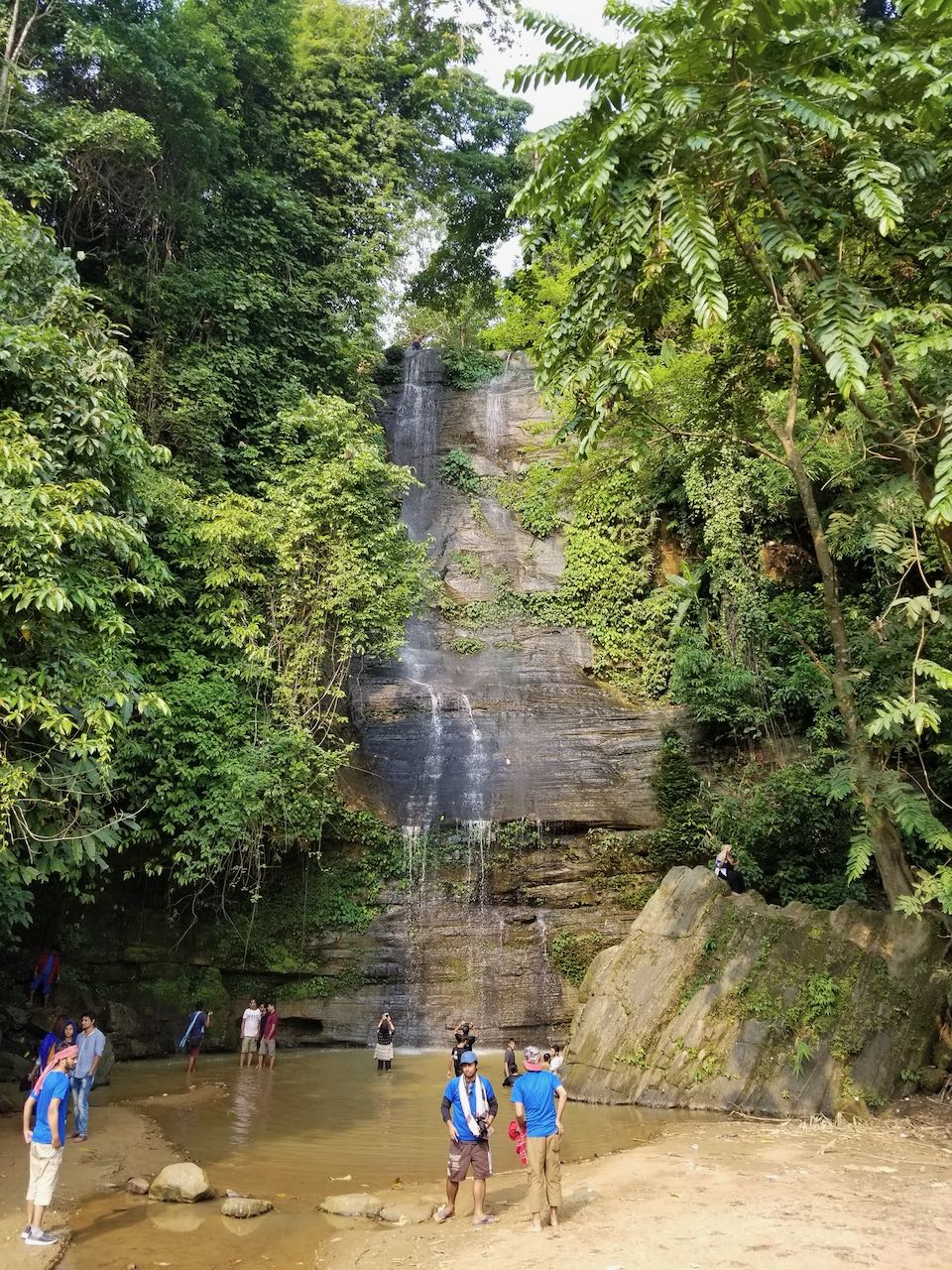
Practical: Wear shoes with grip, not sandals. The rocks near the water are slippery. Budget 90 minutes for the waterfall detour (trail both ways plus time at the falls) — which maps neatly onto your wait for the convoy.
The Mountain Road to Sajek — 3 Hours of Scenery
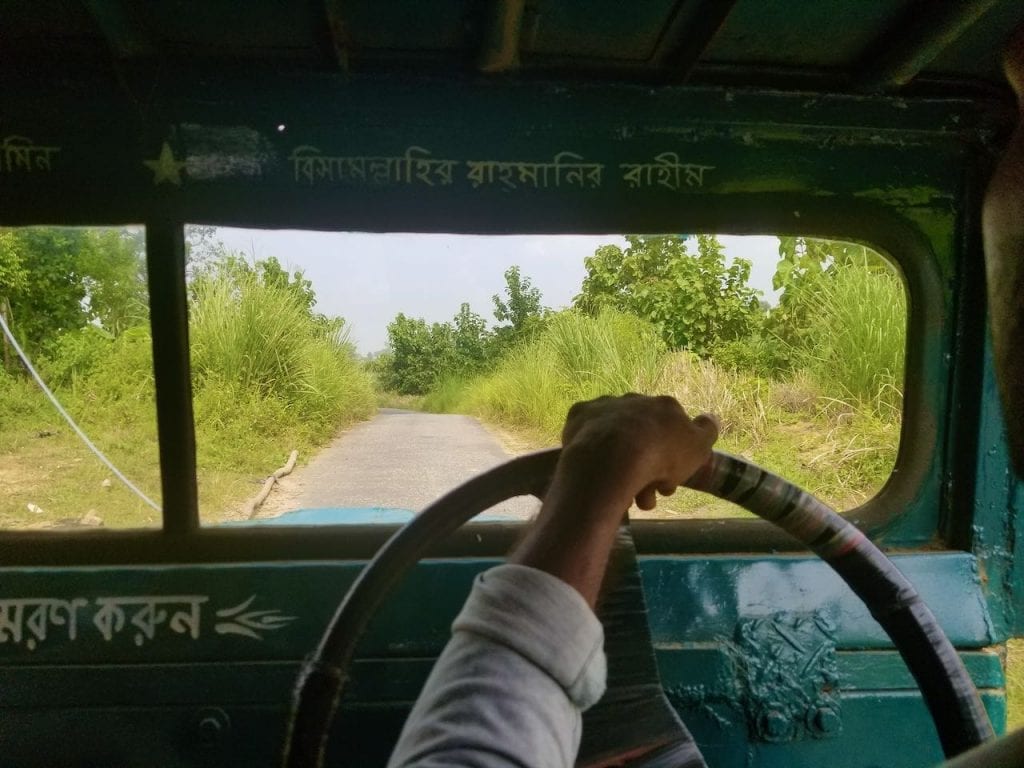
After the checkpoint, the convoy moves. For the first thirty minutes, the road is manageable — you pass villages, paddy fields, and the occasional river crossing. Then the road narrows to barely the width of the jeep, and the ascent begins in earnest.
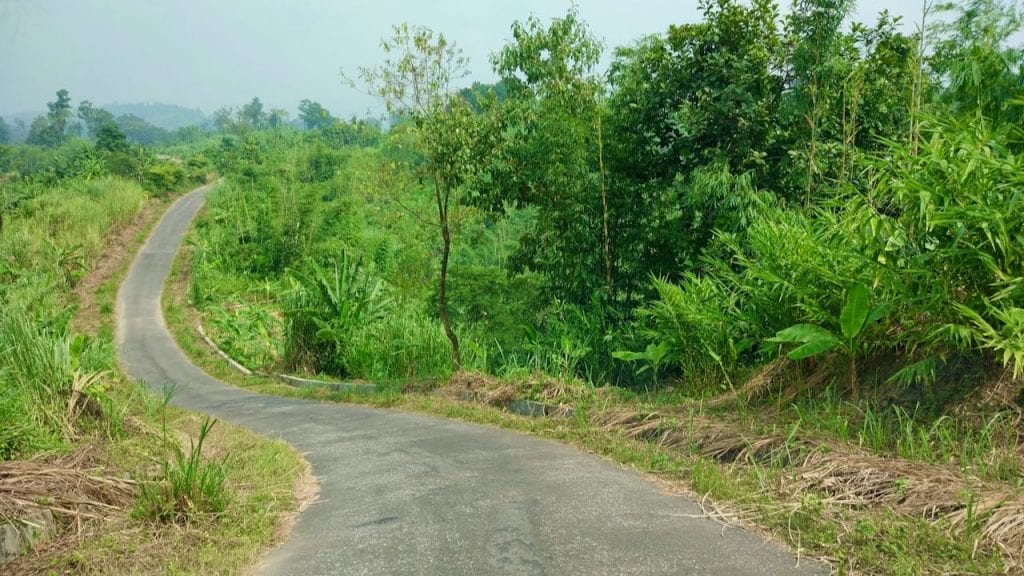
What follows is three hours of some of the most dramatic road scenery in Bangladesh. The jungle closes in, banana trees and bamboo arching overhead. The jeep swings through hairpin bends with hundred-foot drops on the outer edge and no barriers. The driver requires absolute concentration — the passengers occasionally forget this and begin singing, which is precisely when you should stop and let them drive. A mistake at the wrong corner has consequences that are not worth the song.
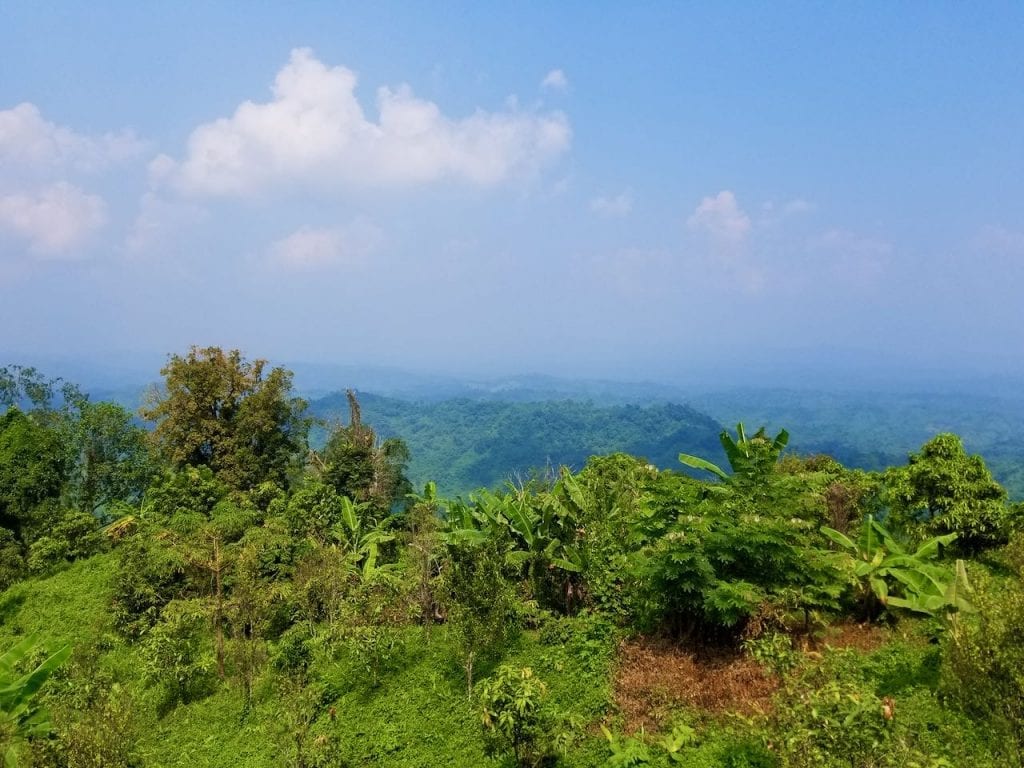
Then, suddenly, the jungle thins and the hills open up: layer after layer of green ridges receding into the haze, the valleys between them filled with cloud or shadow, the distant smudge of Mizoram hills on the horizon. Whatever mild anxiety the road produced evaporates.
You arrive at Sajek — specifically the village of Ruilui Para — having earned the view.
Things to Do in Sajek Valley
Sit on Your Balcony and Do Nothing
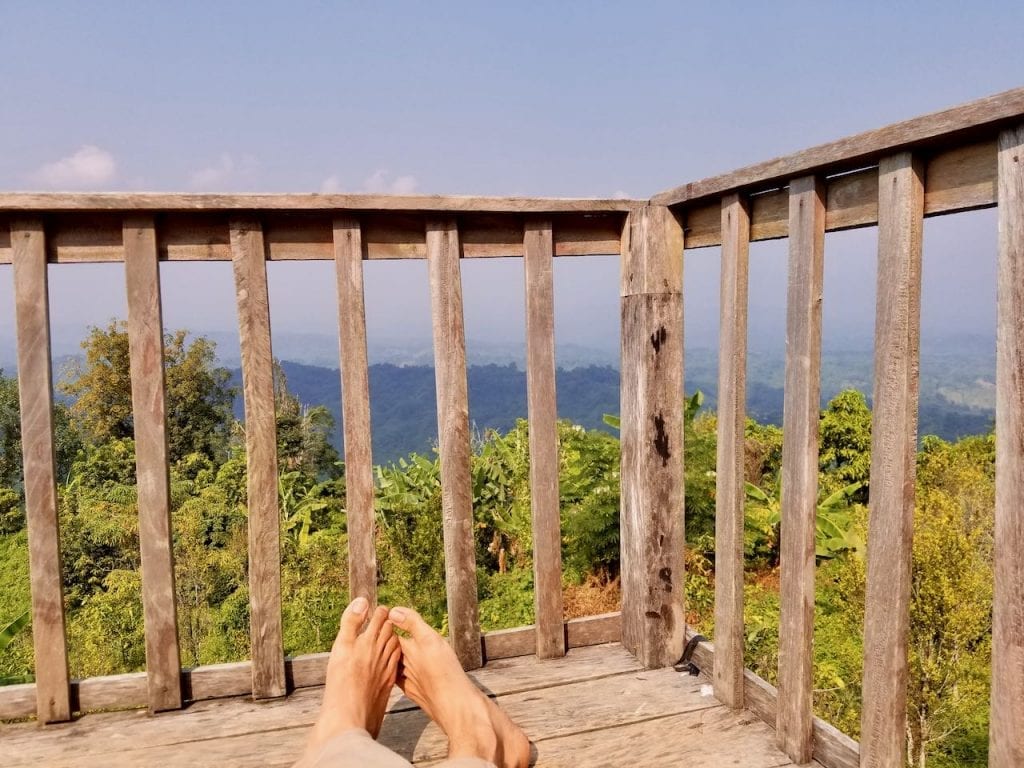
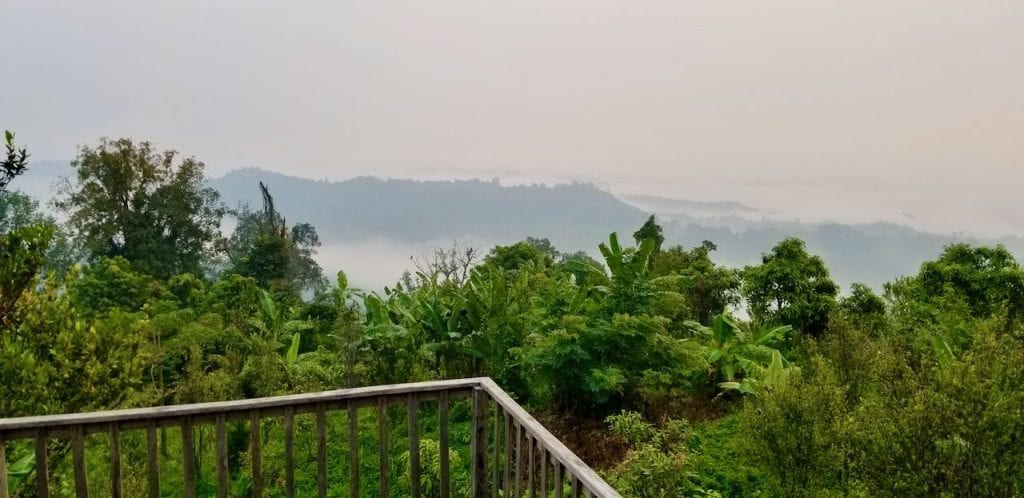
This sounds flippant. It is not. The greatest thing about a good Sajek cottage is the balcony, and the greatest thing about the balcony is the view of the Kasalong range stretching away toward three borders. When the clouds come — and in the right season they come often, unexpectedly, rolling in from nowhere and filling the valley below you — there is genuinely nothing else in Bangladesh that looks like it.
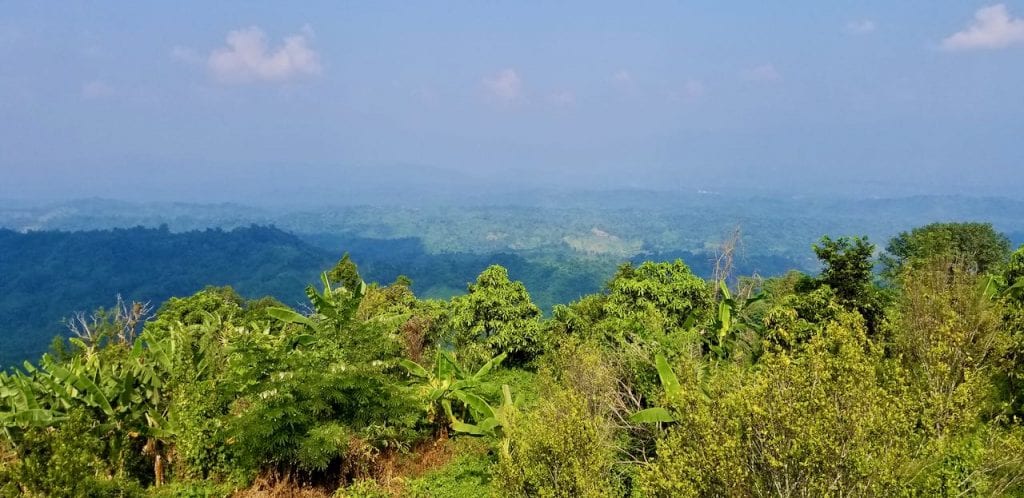
Sit there in the morning with tea. Sit there in the evening before dinner. Sit there at night and look at the stars (Sajek has almost no light pollution — the Milky Way is visible on clear nights). This is what the place is for.
Hike Konglak Hill for Sunset
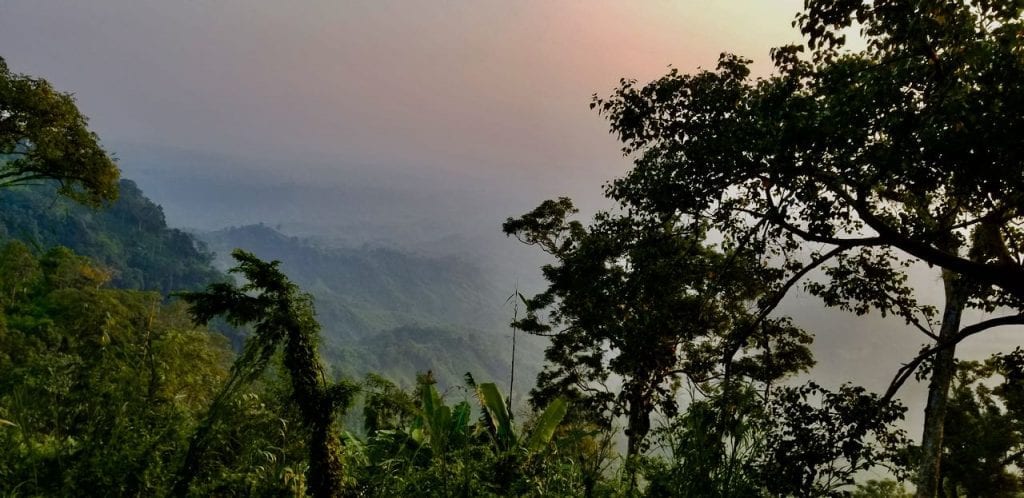
Konglak Para, a short jeep ride or 45-minute walk from Ruilui Para, is the higher of Sajek’s two main residential areas and the site of its most famous viewpoint. The hill above Konglak Para offers a 360-degree panorama across the valley, the surrounding ridges, and — on clear days — across into India.
The trail to the top is easy: 15–20 minutes of walking on a clear path, gaining perhaps 50 metres of elevation. It is not a hike in any demanding sense — more a steep walk. What you find at the top depends heavily on the season: on a clear winter afternoon, the view stretches to the horizon in every direction. On a monsoon evening, you may be standing inside a cloud.
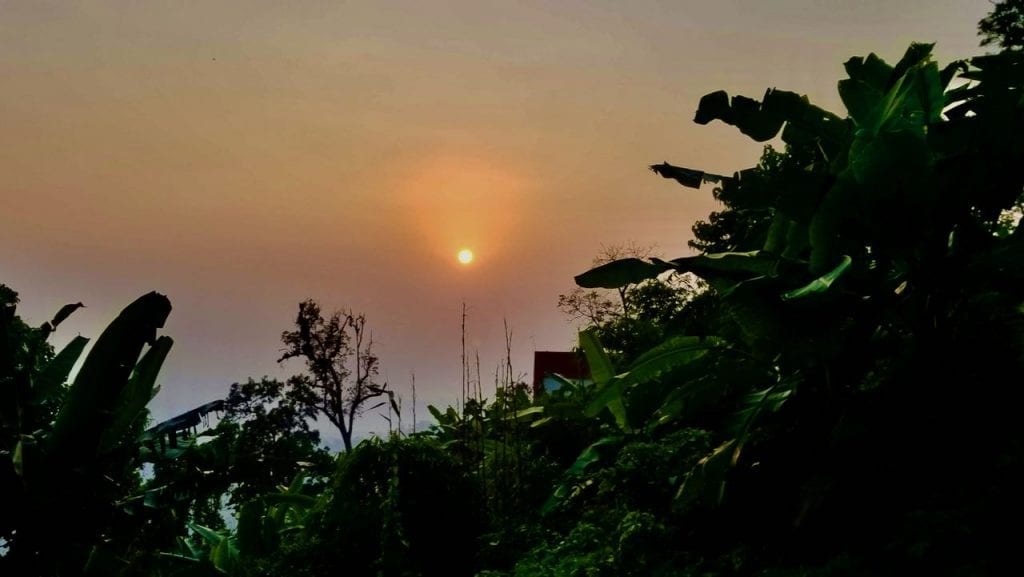
The sunset here is famous. Every visitor in the valley tends to converge on the hilltop at golden hour, which means it gets crowded — you will be sharing the view with a significant number of selfie photographers. If solitude matters to you, arrive 20 minutes earlier than the crowd or find a spot slightly off the main viewpoint.
Konglak Para itself is worth exploring beyond the viewpoint: a small indigenous settlement with bamboo houses, fruit trees, and an altogether quieter atmosphere than the more developed Ruilui Para. Stay up here for the evening if you can find accommodation.
Explore the Helipad Area
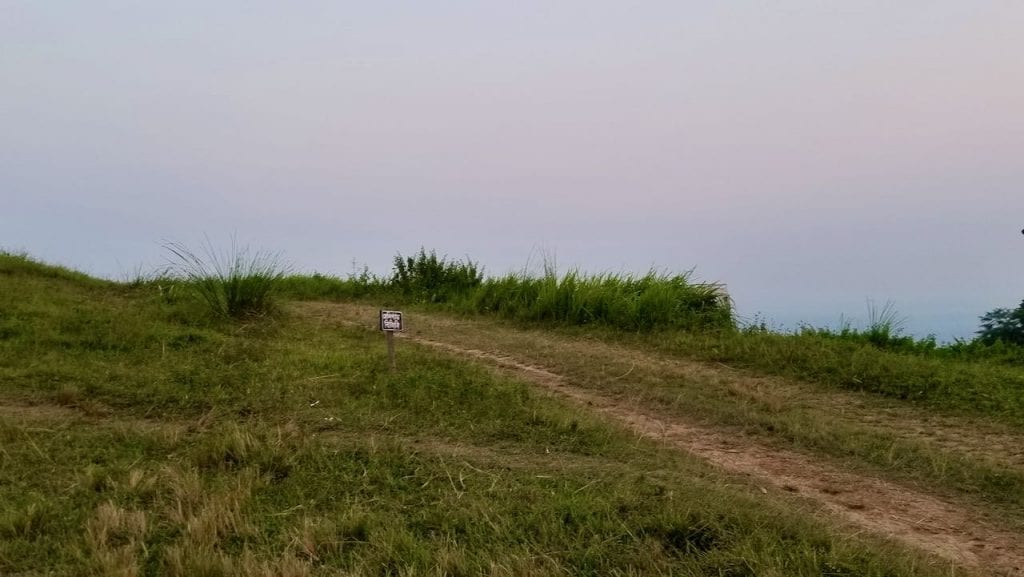
A short walk from Ruilui Para’s main street, the army helipad serves as both a logistics point and — informally — a wide open viewing area. The flat cleared ground gives an unobstructed view in multiple directions and is often used by film and drama crews for location shoots. Sajek’s dramatic landscape has attracted significant interest from Bangladeshi filmmakers.
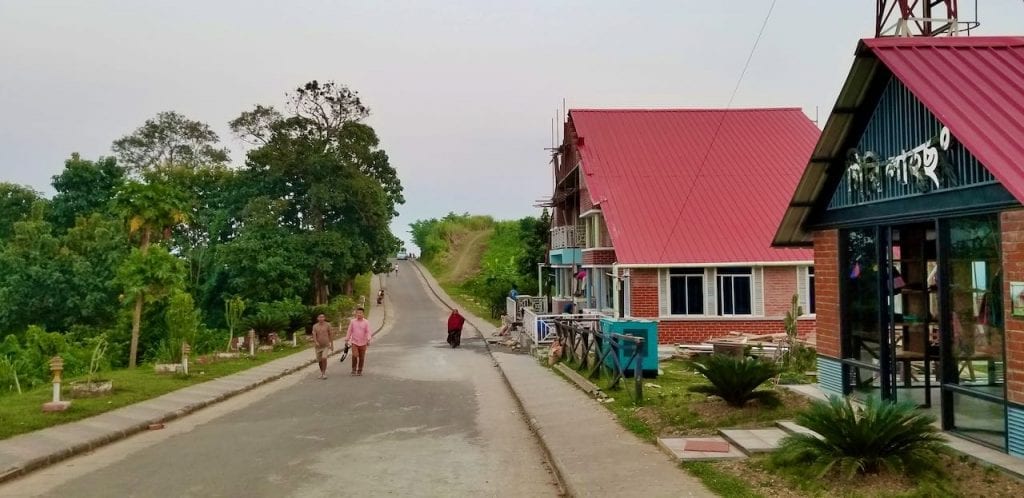
In the evening, the helipad area has a different character: quieter than the main street, with vendors selling grilled meat on sticks and small stalls serving tea. A good place to walk slowly, look at stars, and reflect on having made it to a valley most of your friends have never heard of.
Eat Bamboo Chicken — The Sajek Signature Dish
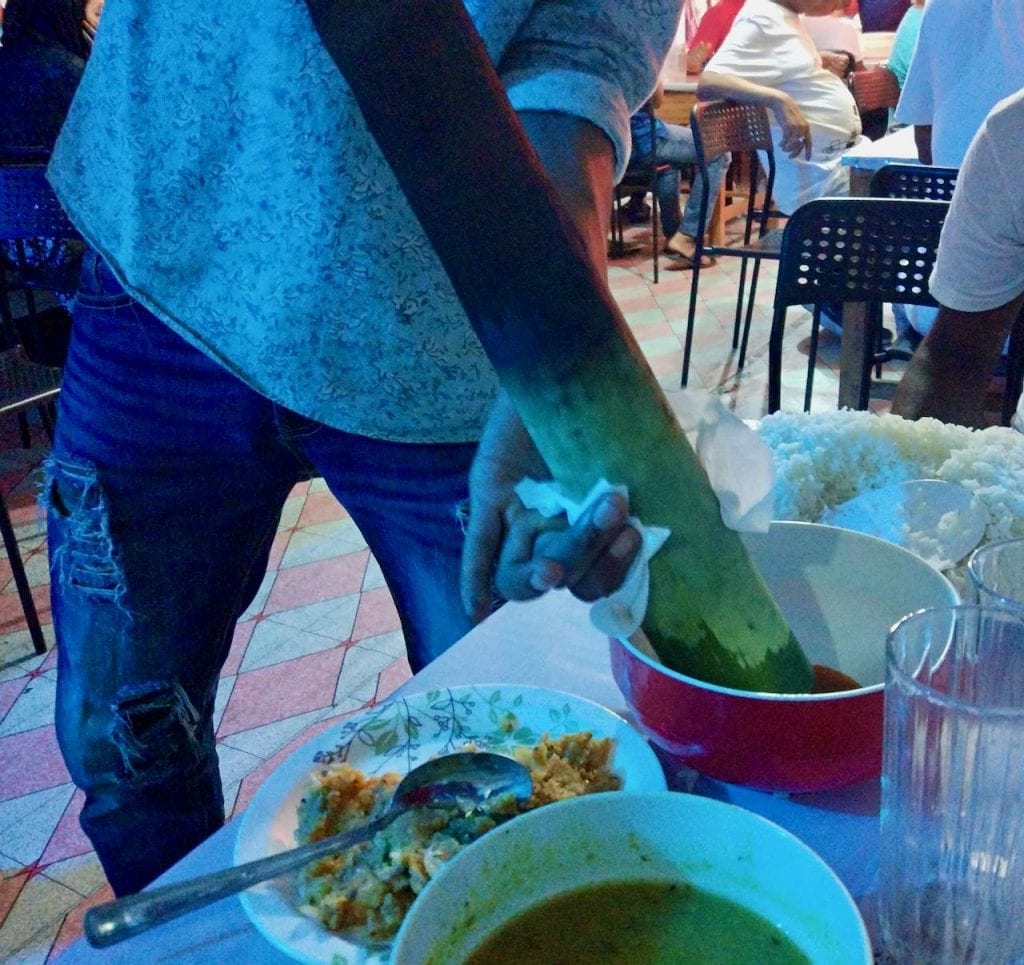
Bamboo chicken is the dish most associated with Sajek, and you should order it at least once — though whether you will love it more than a simple chicken curry is debatable.
The preparation is as distinctive as the name: a whole chicken (seasoned with local spices, salt, and sometimes turmeric) is stuffed inside a length of green bamboo, and the bamboo is cooked directly over a fire. The bamboo absorbs heat evenly and imparts a subtle, grassy flavour to the meat inside. When it is done, the cook brings the whole bamboo to your table, splits it, and extracts the chicken — a presentation that is part of the pleasure.
The chicken curry at a good Sajek restaurant may, honestly, be more immediately satisfying — the bamboo preparation can result in slightly drier meat. But bamboo chicken is Sajek’s signature, it is cooked with genuine care, and the theatre of watching it come out of the bamboo is worth the experience.
Pre-order both lunch and dinner when you arrive. Sajek’s restaurants operate on order-ahead logic — they go to the market for ingredients after you place your order, which means waiting 60–90 minutes for food is standard. If you show up hungry and expect to eat in 20 minutes, you will be disappointed. Order lunch when you arrive in the morning; order dinner before you go for the afternoon hike.
Try the Tropical Fruits
Sajek’s hill climate produces outstanding tropical fruit. The pineapples here — small, intensely sweet, sold by roadside vendors for BDT 30–60 each — are among the best in Bangladesh. Bananas and papayas are equally good and equally cheap.
Buy fruit from local indigenous vendors you encounter on the road or path. The income goes directly to the communities that have lived in these hills for generations.
Visit Ruilui Para’s Main Street in the Evening
After dark, Ruilui Para’s short main street takes on a gentle festive atmosphere: music from some of the resorts, small stalls selling snacks and tea, groups of travellers walking slowly and talking. It is not nightlife in any urban sense — the generators switch off and the valley goes dark early. But the hour between sunset and bedtime, walking the street with a cup of tea, watching the stars appear above the ridgeline, is a complete and satisfying evening.
Where to Stay in Sajek Valley
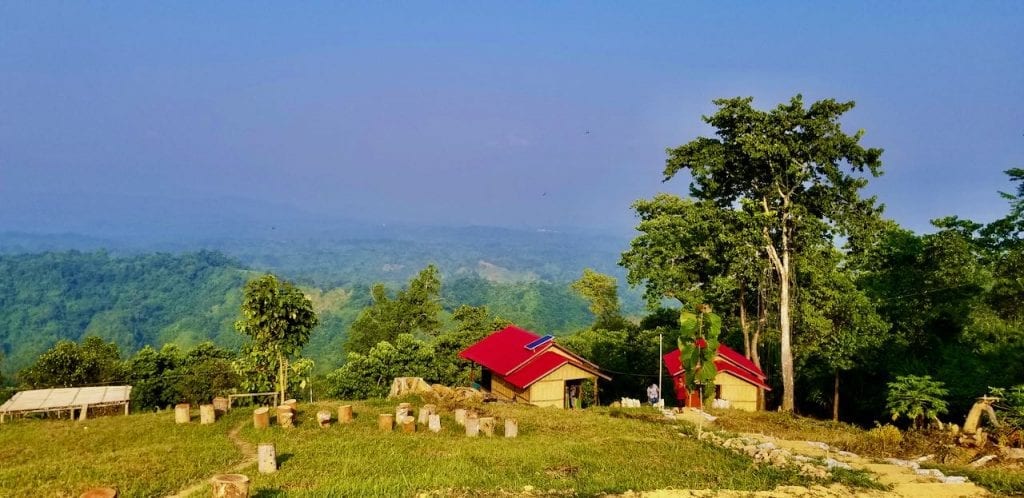
Sajek has two main areas for accommodation:
Ruilui Para — the main tourist hub; most hotels, restaurants, and shops concentrated here; convenient for everything but busier and louder during peak weekends.
Konglak Para — smaller, quieter, and higher up; fewer options but more peaceful; better for travellers who prioritise solitude and the best views over convenience.
The critical rule: Book ahead. During weekends and national holidays, Sajek fills completely. The better properties take reservations by phone only — call at least one week ahead for weekend visits, 2–3 weeks ahead for Eid and long holidays.
💡 Starting from Dhaka? Before making the journey to Sajek, consider staying at the author’s own Airbnb in Dhaka — two personally hosted properties with local knowledge about transport, routes, and the best timing for the Hill Tracts. A practical first base before the adventure begins.
Recommended Hotels in Sajek Valley
Megh Machang — One of the most popular and consistently well-reviewed resorts in Ruilui Para. Bamboo-and-wood cottages with balconies facing the hills; decent food; reliable generator hours. Book well ahead.
📞 +88 01822 168877 | 🌐 Facebook page
Sajek Resort — A solid mid-range option in Ruilui Para with a range of cottage sizes for different group sizes.
📞 +88 01865 347688
Megh Punji — Another well-reviewed property with good hill views from the balconies.
📞 +88 01815 761065 | 🌐 Facebook page
Jumghor — Popular for its authentic indigenous character — the design and food here reflect local culture more strongly than some of the more generic resort options.
📞 +880 1884 208060 | 🌐 Facebook page
What to expect from all Sajek accommodation:
- No grid electricity. All power comes from diesel generators or solar. Generator hours are typically 6:00 PM–11:00 PM or 12:00 AM; confirm when you check in.
- Limited water supply. Water is scarce in the hills. Use it sparingly — short showers, no leaving taps running.
- Bamboo-and-thatch construction on stilted frames — rooms are basic but comfortable in a characterful way. Do not expect hotel-standard soundproofing.
- Mobile signal: Robi and Teletalk SIMs only. If you use another operator, your phone will have no signal in Sajek. Buy a Robi SIM before you go if you need to stay connected.
- Cold water only in most budget cottages. Not a problem in the warm months; bring warmer expectations for December–January.
Cost Breakdown
| Item | Approximate Cost |
|---|---|
| Overnight bus Dhaka → Khagrachari | BDT 500–1,200 |
| Shared jeep Khagrachari → Sajek (one way, per person) | BDT 600–1,000 |
| Full jeep hire round trip | BDT 8,000–12,000 |
| Hotel per night (budget cottage) | BDT 500–1,200 |
| Hotel per night (mid-range with view) | BDT 1,500–3,000 |
| Bamboo chicken dinner (per person) | BDT 200–400 |
| Fresh pineapple from roadside vendor | BDT 30–60 |
| Flight Chittagong → Dhaka (return option) | BDT 3,000–5,000 |
Suggested 2-Day Sajek Valley Itinerary
Day 0 (Night) — Dhaka to Khagrachari
10:30 PM — Board overnight bus from Dhaka (Sayedabad terminal). Sleep.
Day 1 — Arrival & Afternoon Exploration
6:30 AM — Arrive in Khagrachari. Find toilet, have breakfast (paratha + omelette + tea: BDT 80–100).
7:30 AM — Negotiate a shared jeep to Sajek from the jeep stand. Agree fare and departure time.
8:30 AM — Depart Khagrachari by jeep toward Baghaihat checkpoint.
9:00 AM — Arrive at Baghaihat. Register at army checkpoint (5 minutes). Walk the trail to Hajachara Falls. Spend 45–60 minutes at the waterfall.
10:30 AM — Board the convoy. The jeep journey into the hills begins.
1:30 PM — Arrive at Ruilui Para, Sajek Valley. Check into your cottage. Pre-order lunch. 2:30 PM — Lunch (chicken curry or bamboo chicken — pre-ordered).
3:30 PM — Afternoon on your balcony watching the clouds. This is not wasted time — it is the point.
5:00 PM — Walk or take a vehicle to Konglak Para for sunset. Hike the short trail to the viewpoint. Arrive 30 minutes before sunset for a good position.
6:30 PM — Return to Ruilui Para. Walk the evening street. Buy fruit from vendors.
8:00 PM — Dinner (pre-ordered — bamboo chicken or indigenous curry). Star-gazing from the balcony until the generator switches off.
Day 2 — Morning Cloud Show & Departure
6:00 AM — Wake up. Rush to your balcony. This is the morning cloud show — the mist moves through the valley in the hour after dawn. Watch it. Photograph it. Do not miss it for sleep.
8:00 AM — Breakfast at your hotel.
9:00 AM — Walk through Konglak Para area, buy pineapples and bananas from local vendors, take a final walk along the ridge.
10:30 AM or 3:30 PM — Choose your return convoy. The 10:30 AM convoy gets you back to Khagrachari by early afternoon, with time to catch a bus to Chittagong and fly home. The 3:30 PM convoy gives you the full second day but means a later return.
Afternoon — Return to Khagrachari. Continue to Chittagong by bus (3 hours) and fly to Dhaka, or take an overnight bus directly back.
Photography Guide for Sajek Valley
Sajek rewards photographers across every level and style. Here is how to make the most of it:
The cloud-in-valley shot: This is the defining Sajek image — low cloud filling the valley below the ridge while you shoot from above. It happens most reliably in the early morning (6:00–8:00 AM) during and after monsoon season. Position yourself on a balcony or ridge with the valley below you and shoot wide. The best light is in the 30 minutes after sunrise.
The road-through-the-jungle shot: On the jeep journey from Khagrachari, the road passes through sections of dense bamboo and tropical forest where the vegetation arches overhead. Shoot from the jeep roof (if you are riding there) with a wide angle — the tunnel-like framing and motion blur create a compelling travel image. Best light: mid-morning, when patches of sunlight break through the canopy.
The indigenous village shot: Konglak Para is more photogenic for people and architecture than Ruilui Para’s resort strip. Bamboo houses on stilts, women in traditional dress, fruit sellers by the roadside — ask before photographing people (a smile and a gesture is usually enough; respect a decline graciously).
The Hajachara Falls shot: The falls are best photographed mid-morning when the sun clears the valley walls and lights the water directly. A slow shutter speed (1/15–1/30 sec, use a small tripod or brace against a rock) gives the classic silky-water effect. The rocky terrain above the falls, viewed from the pool below, makes a strong foreground-to-background composition.
The sunset from Konglak: Shoot with the setting sun to the west and the layered ridgelines receding east behind you as your background. A telephoto lens compresses the layers of hills into a dense, graphic stack. The 15 minutes after the sun drops below the horizon often produce the best colour in the sky.
📸 Gear note: A polarising filter significantly enhances jungle greens and cuts haze from distant hill views. A lightweight tripod is worth carrying for low-light balcony shots and the falls. The humidity is high in monsoon season — pack silica gel sachets in your camera bag.
Packing List for Sajek Valley
The valley’s remoteness and limited infrastructure mean that anything you forget stays forgotten. Pack specifically:
Essential:
- Cash in Taka — no ATMs in Sajek; the nearest bank is in Khagrachari. Budget BDT 3,000–5,000 per person per day comfortably covering accommodation, food, transport, and incidentals.
- Robi or Teletalk SIM — if you need mobile connectivity. Other operators have no signal. Buy in Dhaka or Khagrachari.
- Power bank (large capacity) — generator hours are limited. Charge everything during generator time and supplement with a power bank.
- Torch / headlamp — essential for navigating after the generator switches off. The valley is dark.
- Light jacket or fleece — the hill air is cool in the morning and evening even in the warm months; December–February can be genuinely cold (10–18°C at night).
- Rain jacket — even in the dry season, brief highland showers happen. In monsoon, a waterproof is non-negotiable.
- Good grip shoes — for Hajachara Falls (slippery rocks) and the Konglak trail (muddy after rain). Sandals are inadequate.
Recommended:
- Insect repellent — mosquitoes and midges are present, particularly after rain
- Water purification tablets or filter bottle — drinking water is provided by hotels but supply can be uncertain; carry backup
- Snacks for the bus and jeep — the overnight bus has one stop; the jeep journey has no food. Carry biscuits, nuts, and fruit for the 10-12 hours of travel on arrival day.
- Small day pack — for the waterfall hike and Konglak hill
The Indigenous Communities of the Chittagong Hill Tracts
Sajek Valley is the homeland of several indigenous peoples — Chakma, Marma, Tripura, Lushai (Mizo), and Kaibarta communities — who have lived in these hills for centuries and whose culture, language, food, and architecture are entirely distinct from the Bengali lowland majority.
The Chittagong Hill Tracts has a complex and painful political history — decades of conflict between the Bangladesh government and indigenous rights movements, a peace accord in 1997 that remains partially implemented, and ongoing tensions over land rights and cultural recognition. The army presence in the region (including the convoy system) is a direct product of this history.
As a visitor, travel here with awareness:
- Spend money directly with indigenous vendors when buying fruit, crafts, or food — not just at the resort restaurants.
- Ask before photographing people, particularly women and children. Many are accustomed to tourists but that does not mean consent is automatic.
- Learn a few words of greeting in Chakma or Marma if you can — the effort is always appreciated.
- Respect that you are a guest in someone else’s homeland, not just a scenic backdrop for your travel photos.
The bamboo chicken you eat, the cottage you sleep in, the clouds you photograph — these are not a theme park. They are the living culture of people whose relationship with this land runs very deep.
FAQ — Sajek Valley Travel Guide
Is Sajek Valley safe to visit?
Yes — the army convoy system exists precisely to ensure tourist safety, and it works. There have been no significant security incidents involving tourists in Sajek in recent years. The indigenous communities are welcoming of visitors. Exercise standard travel caution: secure your valuables, avoid isolated areas after dark, and respect local customs.
Can foreign nationals visit Sajek Valley?
Yes, but a prior permit is required from the Office of the Deputy Commissioner in Rangamati. Apply online at least one week before travel. You will be turned back at Baghaihat checkpoint without it. This applies to all foreign passport holders.
How many days should I spend in Sajek Valley?
Two nights (three days including travel) is the recommended minimum. One night is technically possible but the journey time means you effectively get only one afternoon and one morning. Three nights allows a completely relaxed pace — one day for arrival and settling, one full day for exploration, and one morning for the cloud show before departure.
What is the best season for the clouds in Sajek Valley?
The dramatic low-cloud effect is most reliable during and immediately after the monsoon — June through October. The best single month is September or October: the rains are easing, the hills are intensely green, and the morning cloud inversions are spectacular. December–February offers the clearest long-distance views but fewer cloud effects.
Can I visit Sajek on a budget?
Yes. Sharing a jeep with other travellers, staying in a basic cottage (BDT 500–800/night), and eating local food at the village restaurants makes Sajek one of the more affordable destination trips in Bangladesh. The overnight bus (rather than flying) saves significant money. A comfortable 2-night trip from Dhaka can be done for BDT 5,000–7,000 per person all-in if you are careful.
Is there Wi-Fi in Sajek Valley?
Some resorts offer basic Wi-Fi during generator hours, but reliability is low. Your best connectivity option is a Robi or Teletalk SIM — data speeds are slow but usually adequate for messages and basic browsing. Consider this a digital detox destination and plan accordingly.
Can I visit Sajek without joining a group?
Yes — solo travellers visit regularly. The jeep sharing system means you will naturally meet other travellers at the Khagrachari jeep stand, and the convoy means you arrive together with other groups. You are never isolated. The resort atmosphere in Ruilui Para is sociable without being pressured.
Explore More of Bangladesh
Sajek is Bangladesh’s mountain chapter. The country also has:
- 🏙️ Places to Visit in Dhaka — 30 attractions in the capital, from Mughal forts to Louis Kahn’s parliament building
- 📸 Old Dhaka in Photos — the chaotic, brilliant medieval heart of Dhaka
- 🏖️ Cox’s Bazar — 120 km of uninterrupted beach; the world’s longest
- 🏝️ Saint Martin’s Island — Bangladesh’s only coral island, with clear turquoise water
- 🏛️ National Monument of Bangladesh — the architectural memorial to three million martyrs; best day trip from Dhaka
- 🌿 Birishiri — the Garo Hills village that almost nobody outside Bangladesh has heard of
A Final Word
I have been back to my desk in Dhaka many times since that first morning in Sajek, staring at a project deadline with the memory of those clouds still in my mind. The valley does that — it lodges itself somewhere. The specific quality of the light on the hills at dawn, the way the cloud fills in below you when you least expect it, the taste of a pineapple bought from a woman by the roadside who grew it herself on this ridge.
You make the journey, and then you understand why everyone who makes it wants to go back.
Go. Take a powerbank. Pre-order your dinner. Watch the morning cloud from your balcony. The deadline will still be there when you return.
Visited Sajek Valley? Leave a comment below with your experience — and pin this guide to help other travellers find Bangladesh’s cloud valley.

Leave a reply