
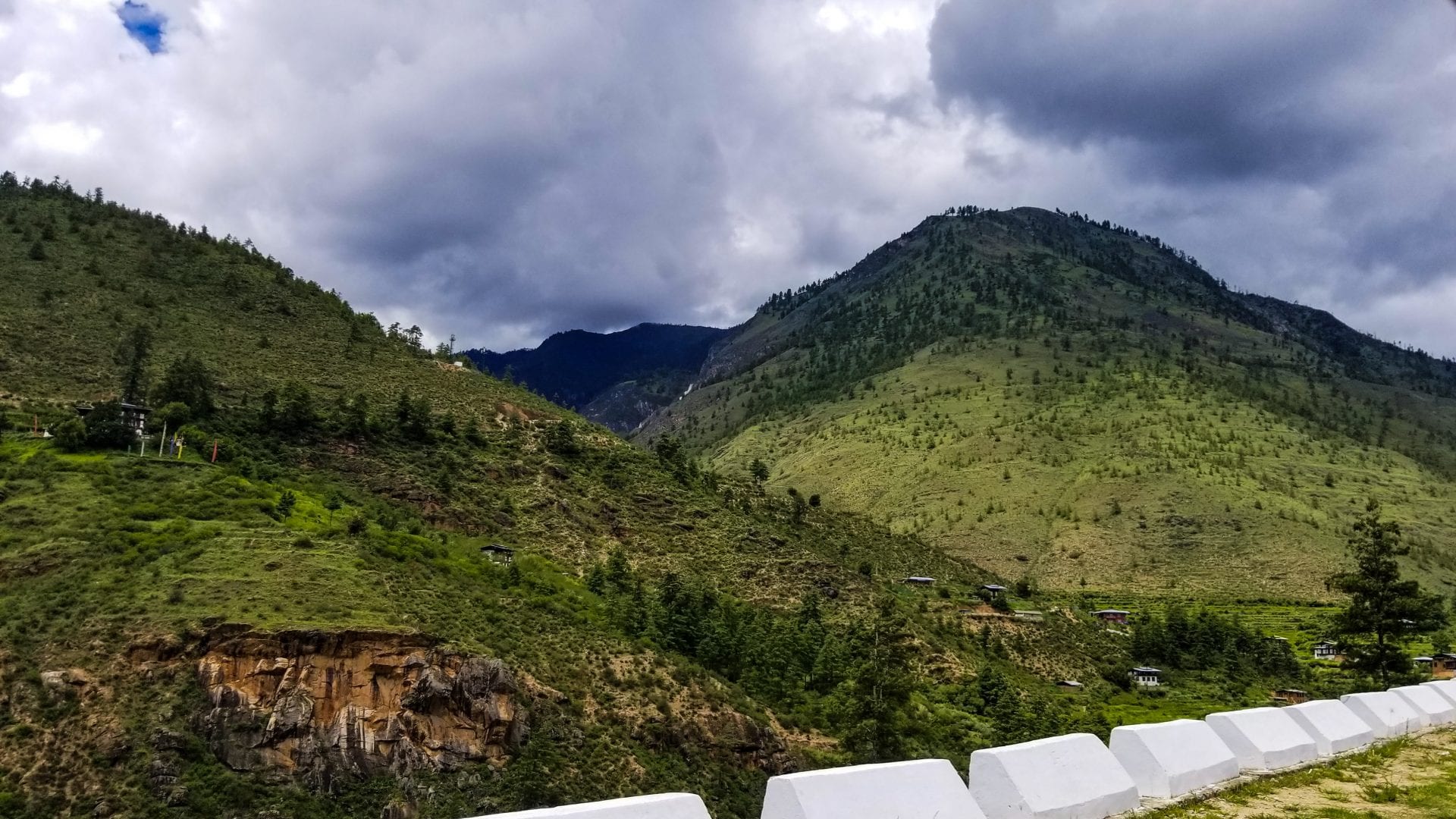
Bhutan is a small mystic country in South Asia. Not many people visit this hugely different country. Bhutan is a rare country that is carbon negative — it means they planted so many trees, they produce more oxygen than they emit carbon dioxide. Although the capital of Bhutan is in Thimphu, the international airport of Bhutan is in Paro. It takes about 90 minutes to travel the 48 kilometers between Paro Airport and Thimphu. This short road journey is taken on a smooth road and a beautiful one. This is a photo guide of the road journey between Paro Airport to Thimphu in Bhutan, along with everything practical you need to plan your own first day in the country.
Paro Airport to Thimphu at a Glance
- Distance: ~50 km (48–51 km depending on the source)
- ⏱️ Travel time: 1 to 1.5 hours under normal conditions
- 🛣️ Road: Fully paved, winding mountain highway, well maintained
- 🚕 Getting there: Taxi (negotiated fare) or a pre-arranged vehicle through your tour operator
- 🚗 Self-drive: Not permitted for most foreign tourists — a driver is required
- 🏛️ Main stop: Tachog Lhakhang iron chain bridge, ~25 minutes / 15 km from the airport
- ⛰️ Elevation: Paro ~2,235 m, Thimphu ~2,334 m
How to Get from Paro Airport to Thimphu
There are effectively three ways to make this journey, and which one you’ll use largely depends on how you’re visiting Bhutan in the first place.
Pre-arranged vehicle through your tour operator — this is how the large majority of visitors travel, since nearly all foreign tourists arrange their trip through a licensed Bhutanese operator, and the drive from Paro to Thimphu is typically included as part of that arrangement. Your driver will usually already be waiting when you land.
Taxi — readily available right outside the airport. Fares aren’t metered, so you agree on a price with the driver before you get in. Expect somewhere in the range of 800 to 1,500 Ngultrum (Ngultrum is pegged 1:1 with the Indian Rupee, and both currencies are commonly accepted), though this varies by driver and how well you negotiate. This was the option I used myself.
Bhutan Airport Shuttle Service (BASS) — a private shuttle bus running specifically between Thimphu and Paro Airport, with WiFi and air conditioning on board, picking up in Thimphu from Changlimithang near the National Stadium and dropping off directly at the airport departure hall. It’s a genuine option worth knowing about, though schedules and fares can change, so confirm current details before relying on it. General public buses beyond this specific shuttle exist but are aimed at locals rather than tourists and aren’t a practical option for most visitors.
You can’t self drive in bhutan
Foreign visitors to Bhutan are generally not permitted to rent a car and drive themselves (Indian nationals are the exception). Every rental effectively comes with a driver, and outside Paro and Thimphu you’ll typically need a licensed guide as well. Given the roads — more on that below — you’ll likely be glad of this rule regardless.
If you’d rather not coordinate the guide, permits, and hotels yourself, a handful of well-structured multi-day tours already bundle this exact leg of the trip into a wider Bhutan itinerary, with the guide, driver, SDF, and accommodation handled in one booking:
The Landing at Paro Airport
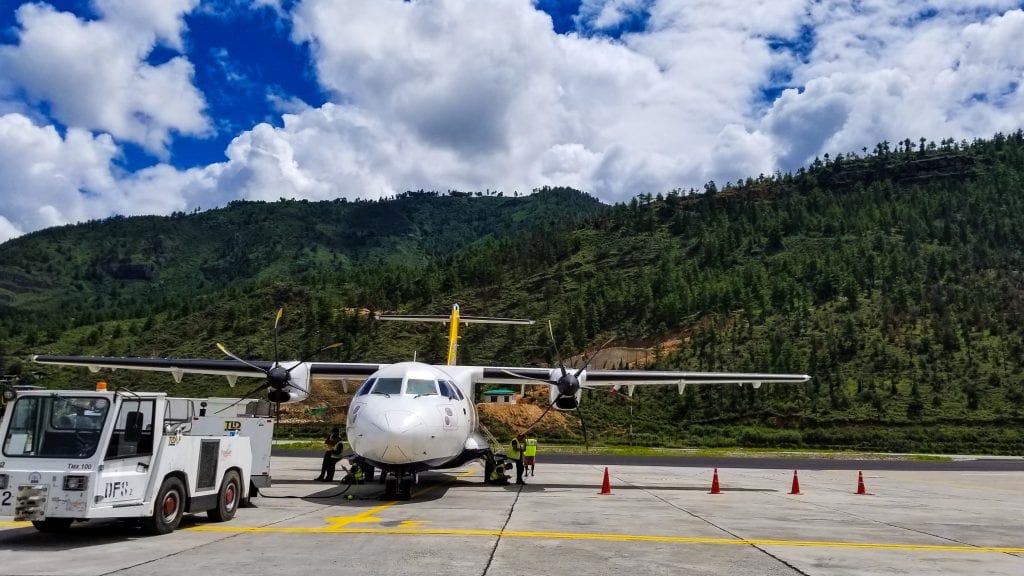
The landing at the Paro airport was memorable. It was like dancing in the sky. I was very afraid of it, however, seeing the unchanged faces of the Bhutanese on the flight, I understood that it is normal. Only a few pilots can land the plane in the Paro airport as the radar is of no use here due to the nature of the terrain of mountains.
I’ve written a complete, dedicated guide to what that landing is actually like and why it’s so famous, if you want the full story before you fly:
👉 Read the complete guide: Paro Airport Landing in Bhutan
We have got out of the plane and going to the terminal building. The white clouds were hovering over the green mountains.
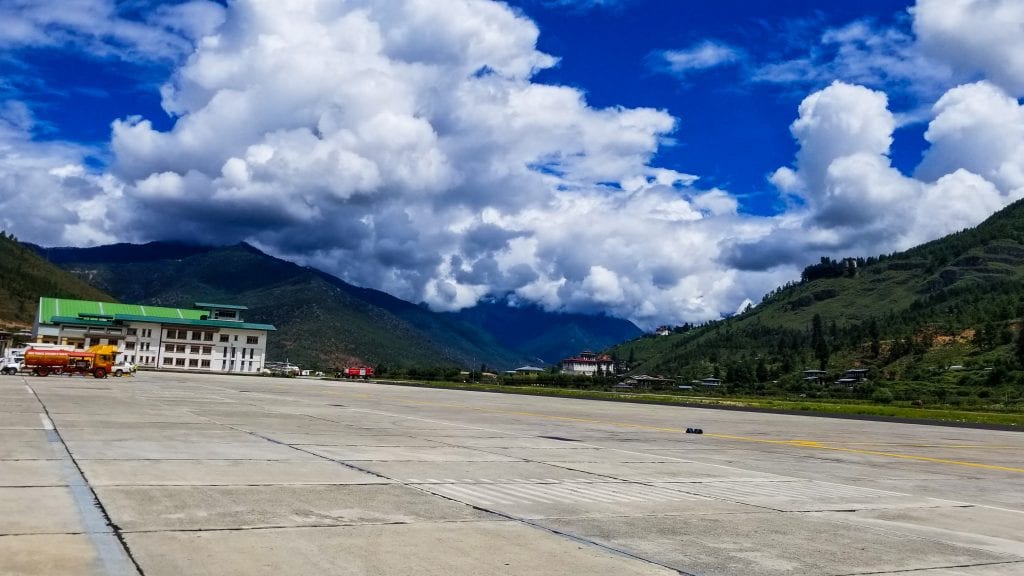
Paro airport is a small one! I saw only a few airplanes on the ground. Instead of walls like other airports, Paro airport was surrounded by green mountains. There was only one building as the terminal. You will understand instantly, how peaceful Bhutan is the moment you land there.
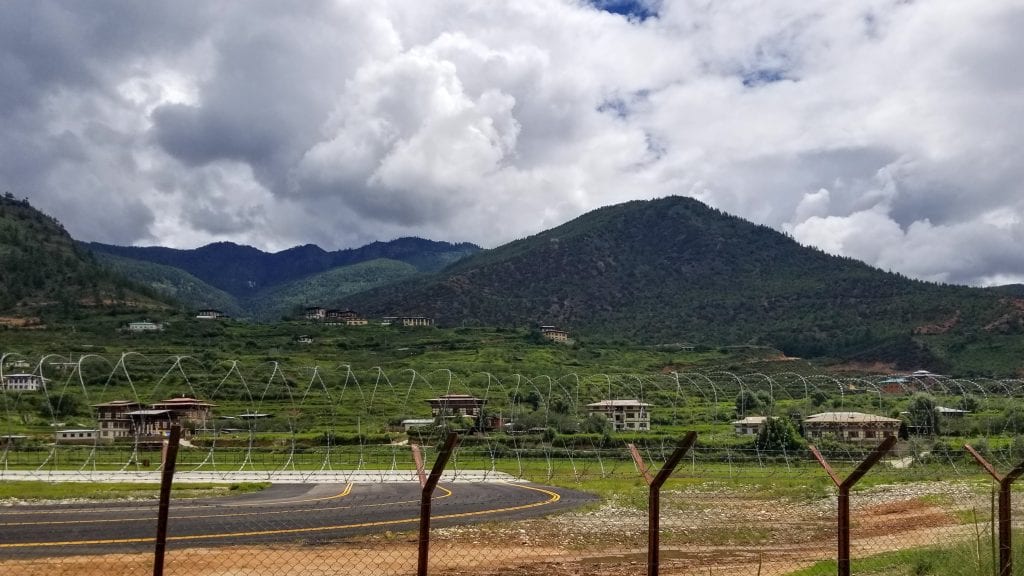
We passed the immigration — some of the friendliest people with their traditional dresses. I bought a SIM from the airport and went out. There was a bunch of taxis there, I negotiated with one of them to drop me at Thimphu. Our journey began. I could see a small fence protecting the airport. The small runway was clearly visible.
buying a sim
If setting up a local SIM at the airport counter sounds like a hassle after a long flight, an eSIM installed before you fly means you land already connected and can skip that queue entirely.
The Drive: Tachog Lhakhang and the Road to Thimphu
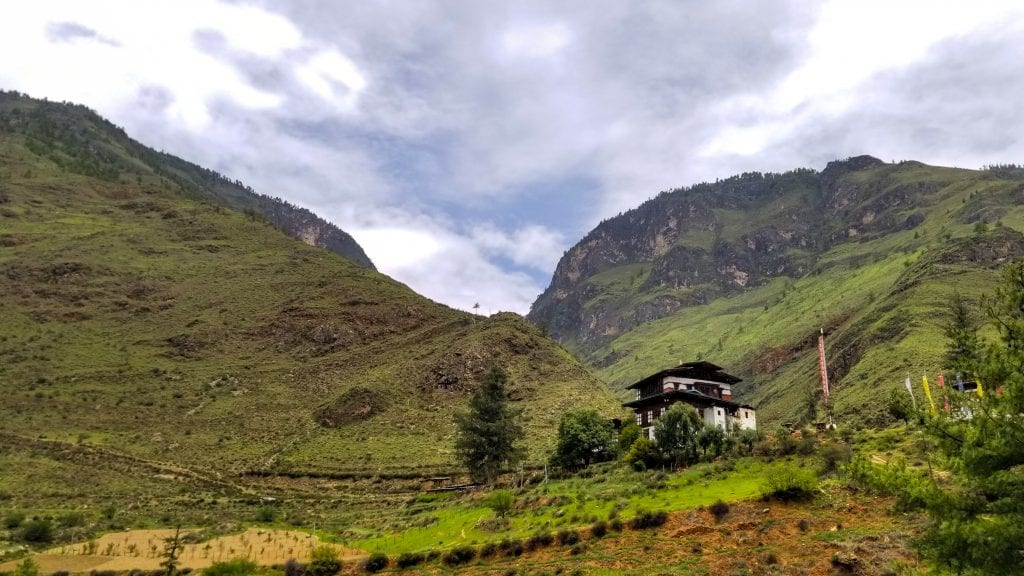
We entered the Paro-Thimphu highway. If you go towards the other direction in the same highway, you will end up in the Haa Valley — a popular valley in Bhutan. About 25 minutes of drive and 15 kilometers journey took me to the major stoppage on our way. It’s called Tachog Lhakhang (also spelled Tamchog Lhakhang) — a small private temple.
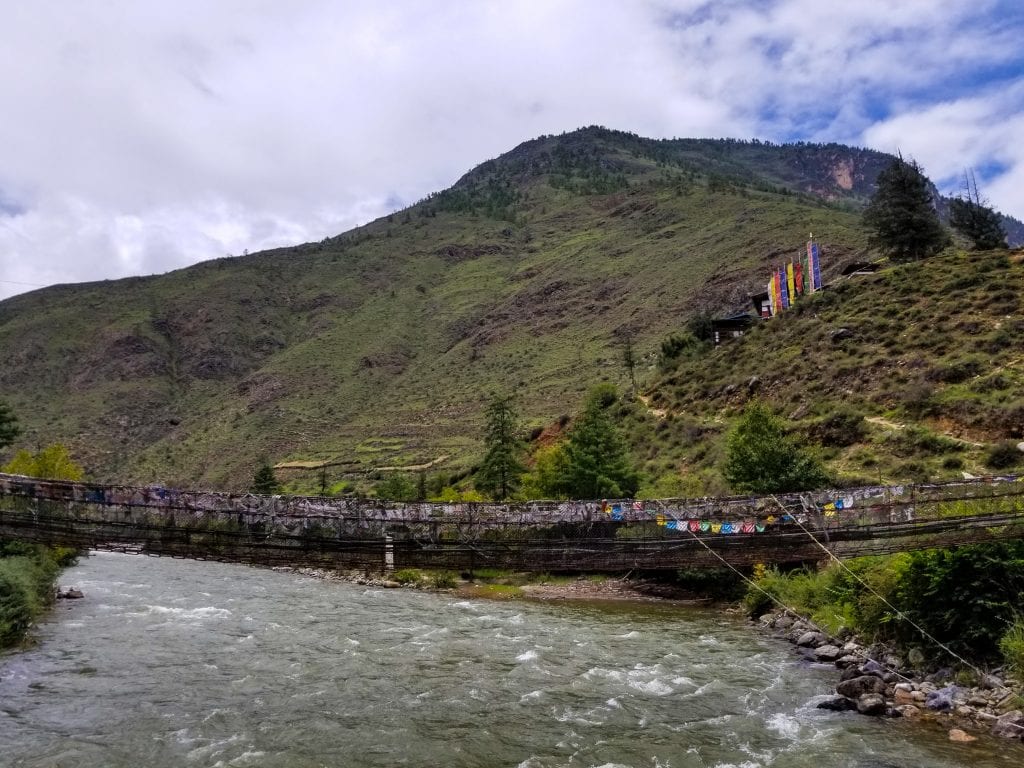
This was a 600-year-old bridge that got washed away by a flood in 1969 and was later restored. Thangtong Gyalpo, a famous engineer, designed the bridge. He did the same for countless other bridges all over Bhutan. This is a special place because, for most tourists, this is the first place visited in Bhutan! The thunderous scream of the Paro River, the greeneries, and the iconic bridge made me ecstatic.
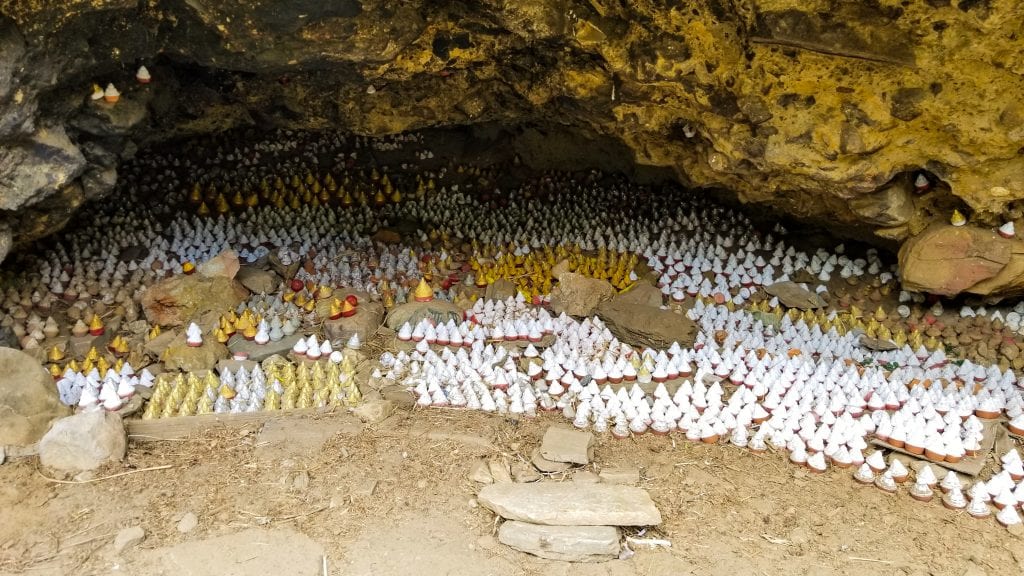
I crossed the bridge and explored the other side of the river far from the highway. You can take several short hikes in any direction, it’s soothing for the eyes! There I found some white and gold relics at the base of a mountain. I didn’t understand their purpose but looking at them, I assume they had something to do with religious prayer.
If your route takes you further along, keep an eye out for Chuzom, the point where the Paro Chhu and Thimphu Chhu rivers converge — a common roadside stop marked by a small cluster of chortens (stupas), often built in different regional architectural styles.
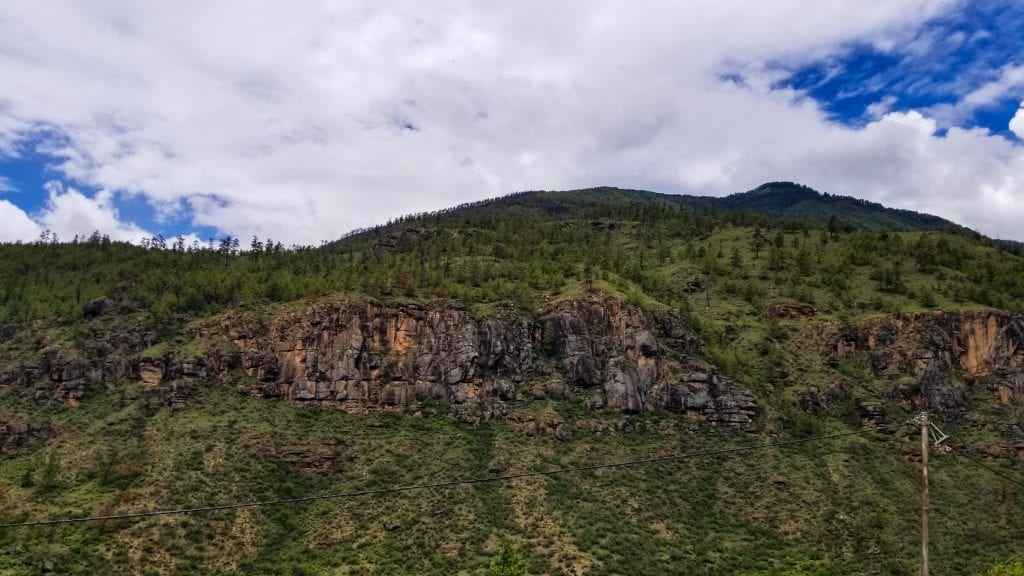
Having spent an hour or so, we resumed our journey. Although the highway was not very wide, it was in sublime condition. Considering the traffic, it was perfect! Public buses are a rarity in Bhutan beyond the dedicated airport shuttle mentioned above. You need to either arrange a car through your operator or take a taxi. Don’t think about driving here yourself — the bend of the roads is so steep, I felt nauseated at times during my journey.
motion sickness
If you’re prone to motion sickness, pack something for it. The road is smooth and well maintained, but the switchbacks are frequent enough that it caught me off guard.
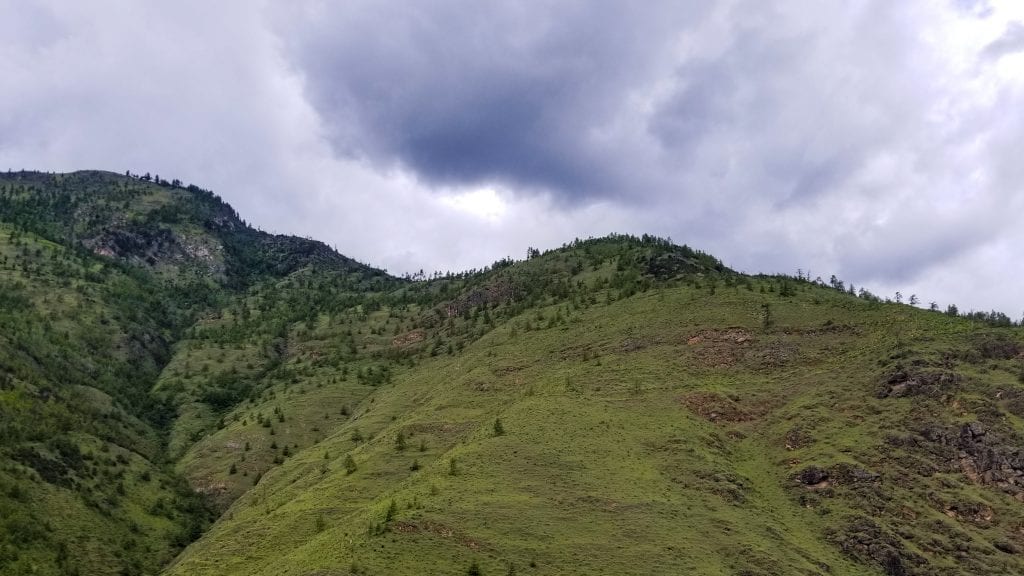
As our car was racing on the highway, I was enjoying the greeneries. Bhutan is a landlocked country, it does not have any sea. However, it is blessed with mountains everywhere. The photos taken here were during my journey in March. I was pondering about my previous journey in Bhutan which took place in December.
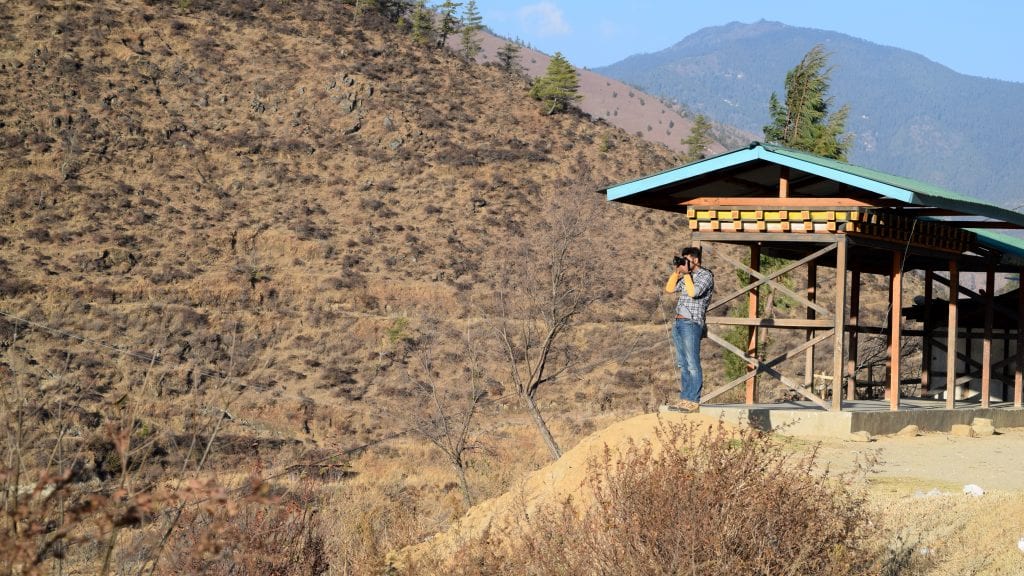
I am giving a photo from my earlier trip to Bhutan in December. The mountains were there, the sky was even brighter and sunny. However, there were no greeneries. The browns dominated everywhere along with patches of snow in some places. It seemed that I was in a different place! Depending on your preference, you may choose a favourable time for you to visit Bhutan.
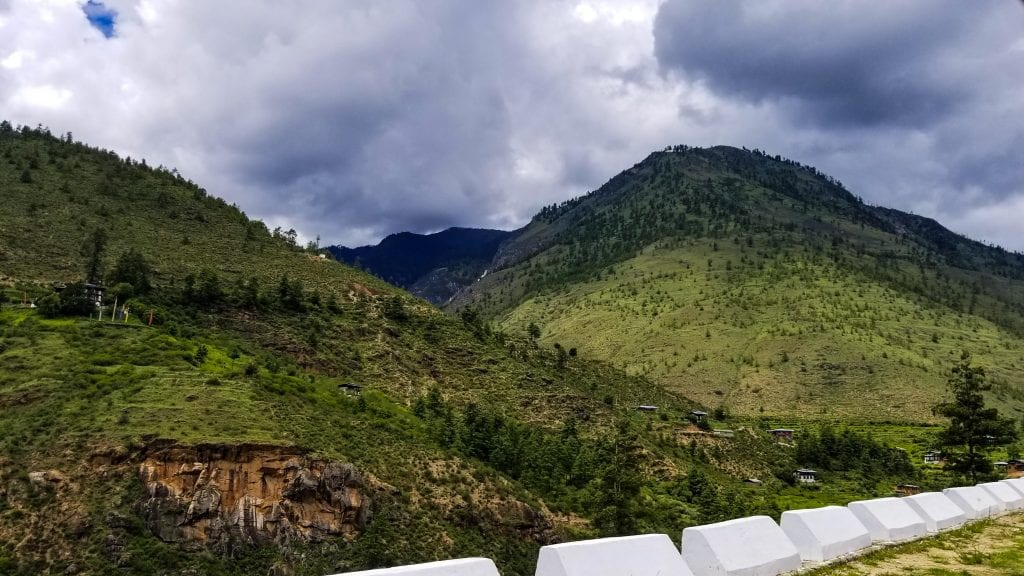
There were small protectors at the edge of the roads painted in white. If a car loses its control, it won’t be of much help. However, it gave a good directional sense. I was busy taking photos from the car which was running in full motion. I did not have to wait for taking a good photo. Every frame was precious — thanks to beautiful nature.
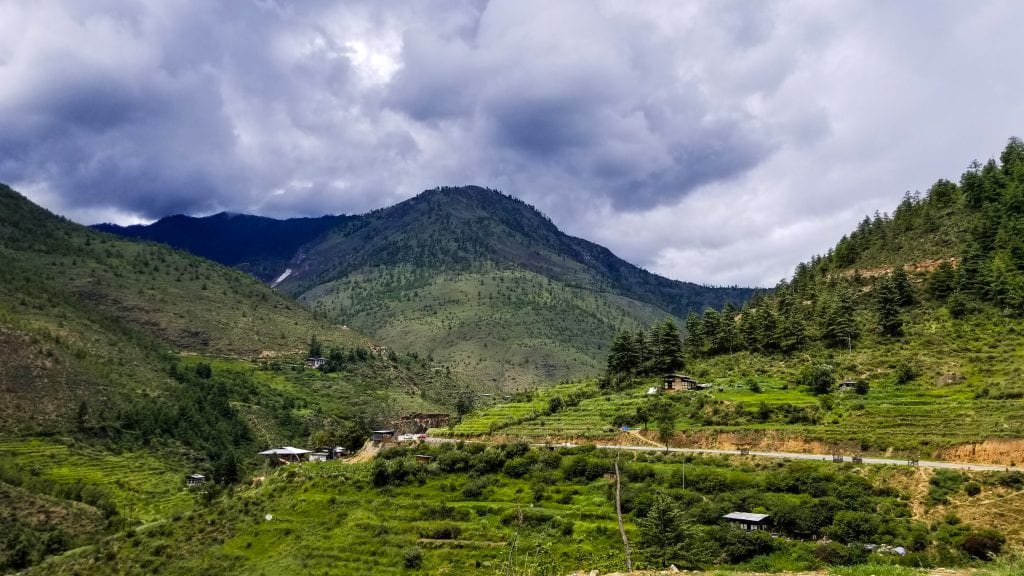
Had I been to any places in the world, I would have seen several high rises, fast food chains, and supermarkets. But, I am in Bhutan where Gross National Happiness gets more priority than Gross Domestic Product. If you look carefully, you will be able to spot one or two houses at the lap of the mountains. I felt jealous of those lucky people — this is what life should be! Surrounded by mountains — calm, quiet, and tranquil!
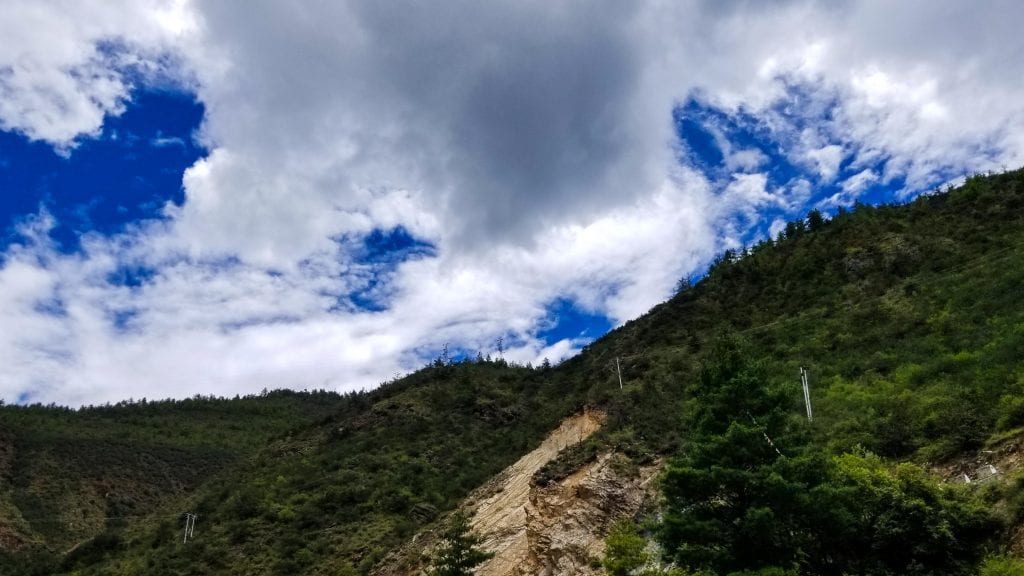
It was a pure joy to keep an eye on the sky. The blue was the blue I never saw anywhere else. The white clouds were the clouds I never saw anywhere else. They were near about perfectly soothing for the eyes — a type of clouds and skies which I would want to keep in my pocket and eat whenever I would like to.
Arriving in Thimphu
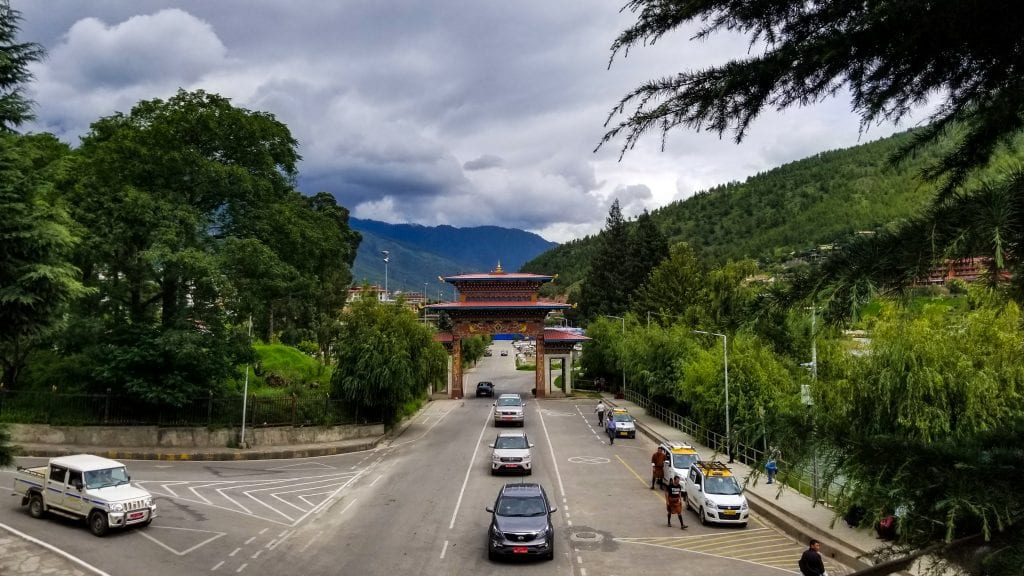
I wish the journey would have continued longer. But as I said before, it was less than 90 minutes long. We saw a traditional gate that marked the entryway to the capital of the Royal Kingdom of Bhutan. Now, I could see some touches of artificial things like marking lanes, parked cars, lampposts, and so on. And, I hated them! Look how greedy humans can be.
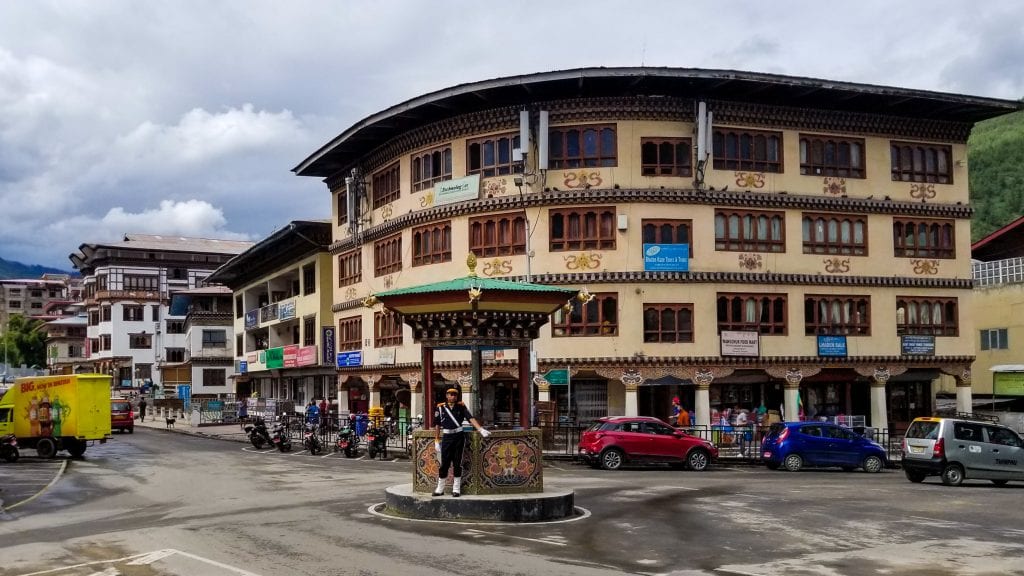
In no time, we arrived at the Thimphu city center where police were handling the traffic manually. There is no electronic traffic signal in Bhutan — there is no need to have one. The traffic is so slim and the Bhutanese people are so disciplined, they didn’t need one! This is how my journey to Bhutan started — through a mesmerizingly beautiful journey that eventually continued throughout my trip.
Should You Stay in Paro or Head Straight to Thimphu?
This is worth thinking about before you land, since it shapes your first night in the country.
| Stay in Paro First | Go Straight to Thimphu | |
|---|---|---|
| Best for | An early start on Tiger’s Nest Monastery, a gentler first night | Getting straight into the capital’s sightseeing |
| Accommodation | Fewer options, but some excellent ones | Much wider choice across every budget |
| Pace | Slower, quieter | More to see and do immediately |
| Good if | Your itinerary starts with Paro sightseeing | Your itinerary is Thimphu-heavy or time is tight |
Most tour itineraries are built around this decision already, so if you’re travelling with an operator, this will likely already be decided for you — but it’s worth raising with them if you have a preference either way.
What to Read Next
If you’re spending time in the capital, see our guide to Places to Visit in Thimphu. And if you haven’t already read about the flight itself, our Paro Airport Landing guide covers exactly what to expect on the way in.
Frequently Asked Questions
How far is Thimphu from Paro Airport?
About 50 kilometers by road, taking roughly 1 to 1.5 hours depending on traffic and stops along the way.
How much does a taxi cost from Paro Airport to Thimphu?
Fares are negotiated on the spot rather than metered, typically somewhere in the range of 800 to 1,500 Ngultrum depending on the driver and your negotiation. Agree on the price before you get in.
Is there a bus from Paro Airport to Thimphu?
A private shuttle service (Bhutan Airport Shuttle Service, or BASS) operates between Thimphu and Paro Airport with WiFi and air conditioning, but general public buses are rare and mainly used by locals. Confirm the current schedule and fare directly, since these details can change.
Can I drive myself from Paro Airport to Thimphu?
Self-drive is generally not permitted for foreign tourists in Bhutan. Almost everyone travels by taxi or with a driver arranged through their tour operator. Indian nationals are the exception.
What is the main stop along the way?
Tachog Lhakhang, a small private temple with a roughly 600-year-old iron chain bridge over the Paro River, about 25 minutes and 15 kilometers from the airport. It’s the first stop for many visitors and well worth the short detour.
Should I stay in Paro or go straight to Thimphu?
It depends on your itinerary. Staying in Paro suits those doing Tiger’s Nest Monastery early or wanting a gentler first night. Going straight to Thimphu suits those who want to start sightseeing in the capital immediately and prefer a wider choice of hotels.
Planning Your Bhutan Trip
- ✈️ Full guide: Paro Airport Landing in Bhutan
- 🏛️ Full guide: Places to Visit in Thimphu
- 📋 Confirm your visa, SDF, and transport arrangements with a licensed Bhutanese tour operator before you fly

Leave a reply