
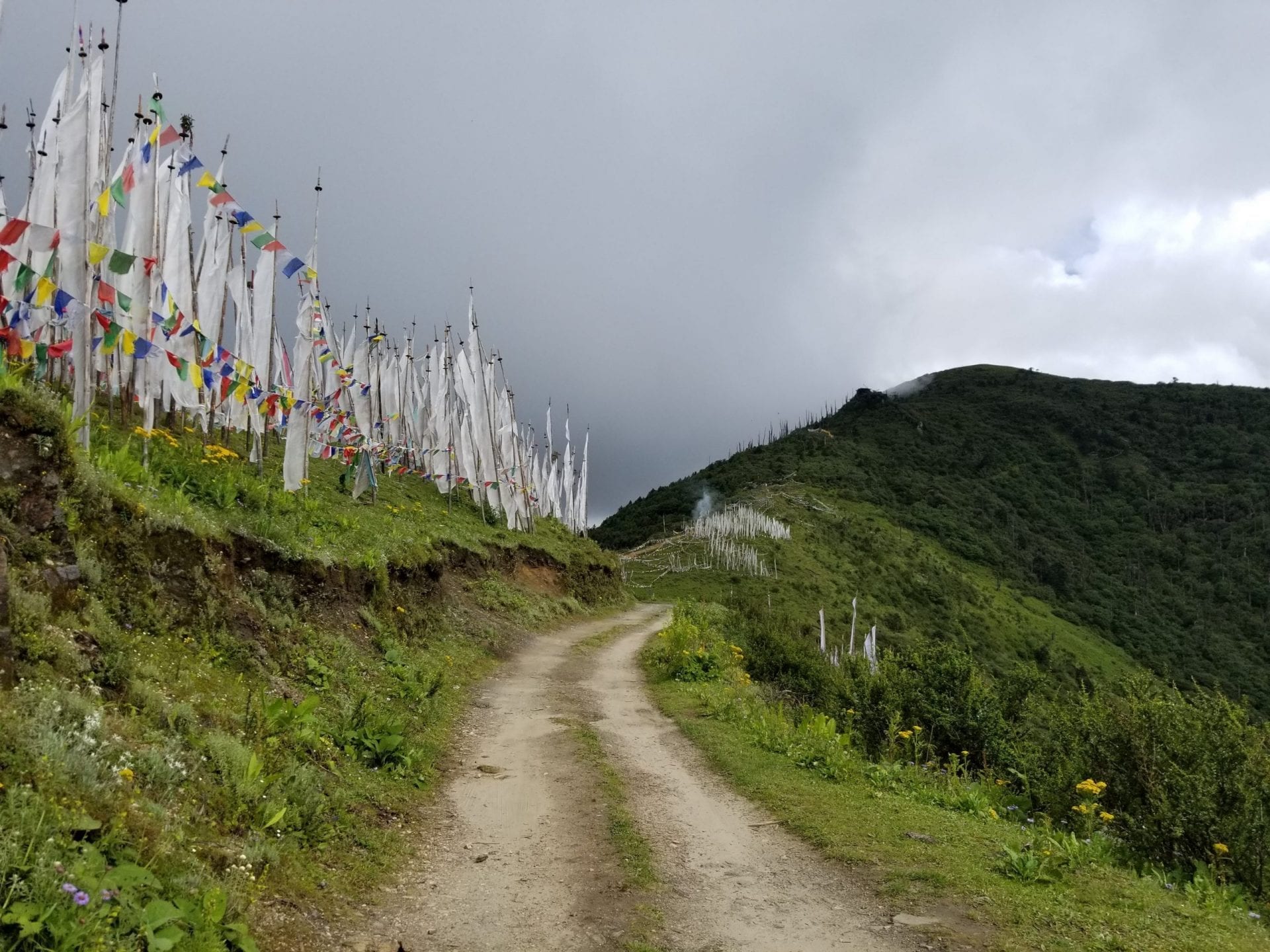
Bhutan holds a special place in my heart. I haven’t been to any places in the world which is as peaceful as Bhutan. You will feel like you are in another world as soon as your plane approaches towards Paro airport, this will continue when you lay your foot there. This is especially true if you come from a country of the Indian subcontinent. I have had the fortune of visiting Bhutan twice – once in December and once in May. I must say, I saw two contrasting kinds of landscapes and it is fascinating. You might ask me – “What is the best time to visit Bhutan?”. I am giving you the answer so that you can choose.
Best Time to Visit Bhutan at a Glance
- ☀️ High season: March–May (spring) and September–November (autumn)
- ❄️ Shoulder season: December–February (cold, clear, quiet)
- 🌧️ Low season: June–August (monsoon)
- 🎉 Major festivals: Paro Tshechu (spring), Thimphu Tshechu (autumn), Punakha Tshechu (late winter)
- 🥾 Best for trekking: Spring and autumn
- 🦢 Best for black-necked cranes: November–March, in Phobjikha Valley
- 💰 Sustainable Development Fee: $100/night for most nationalities (fixed through August 2027)
My Personal Experience: December vs May
During my multiple visits to Bhutan in two different seasons, I felt like I was in two different countries!
During my first visit to Bhutan during December, I was expecting snow. But it was not the case in Paro, Thimphu, or Punakha. The daytime was sunny; the sky was clear and brimming with sunshine. The night was chilly.
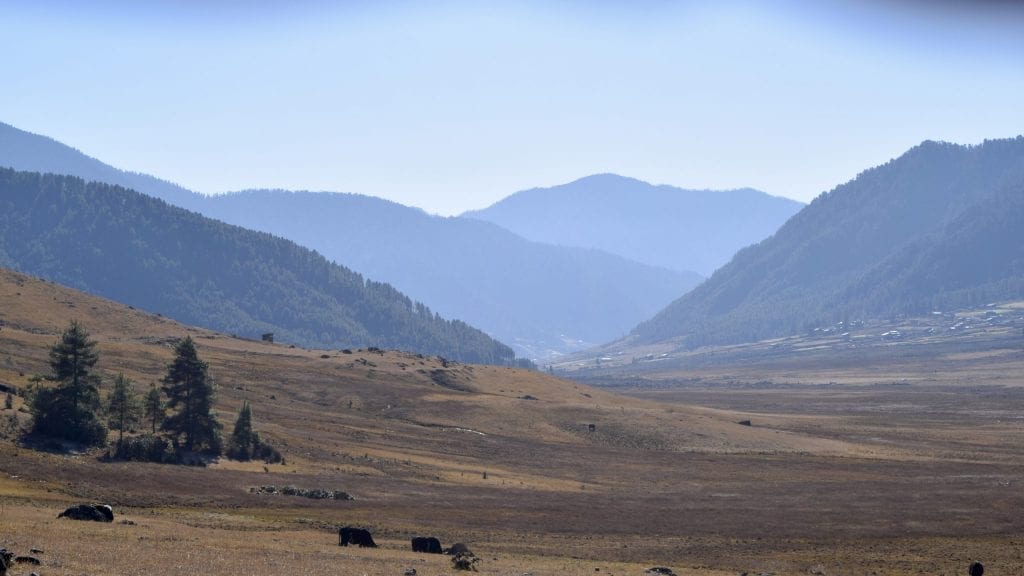
The landscape was arid and brownish and yellowish.
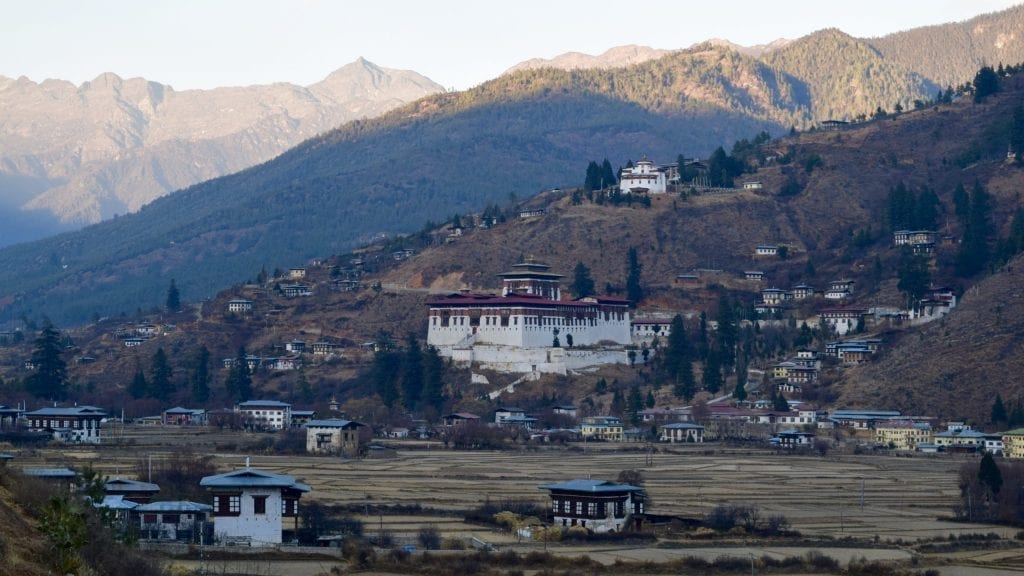
But when I went all the way to Phobjikha Valley, I saw snow on the road. Needless to say, the night was very cold there. I was able to see black-necked cranes which are a rare bird in Phobjikha during that time.
During my second visit to Bhutan in May, the sky was not bright. There were clouds all over the sky. The clouds were hovering between the mountains. It was mystic and beautiful.
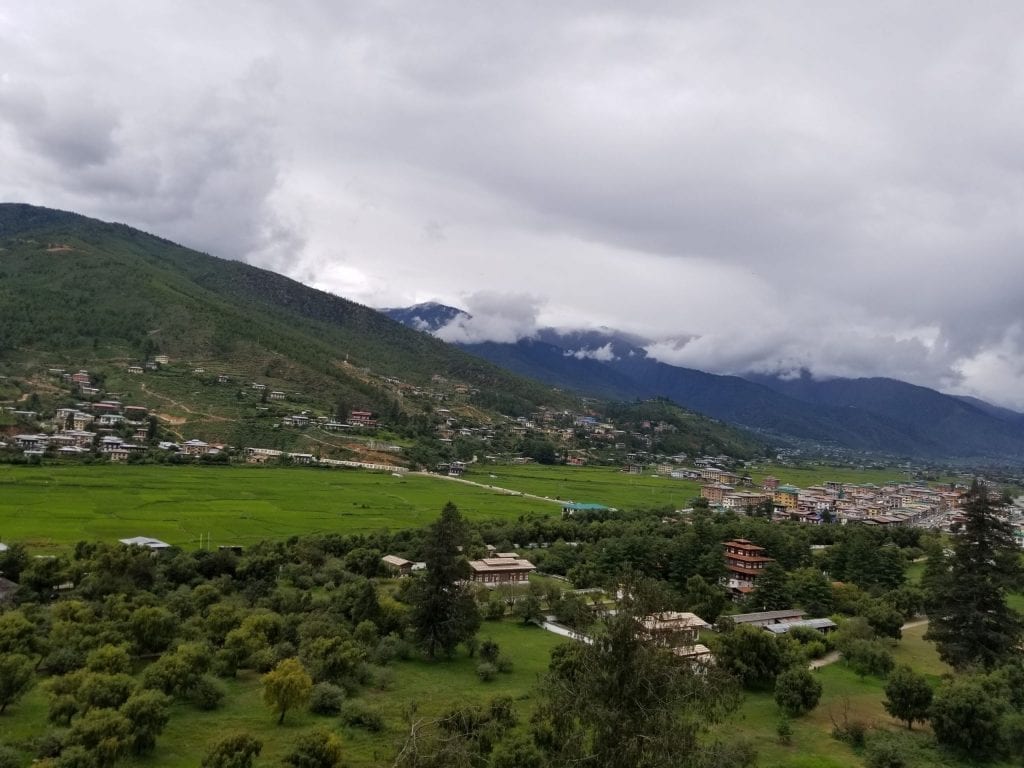
And it was green! Yes, lush green.
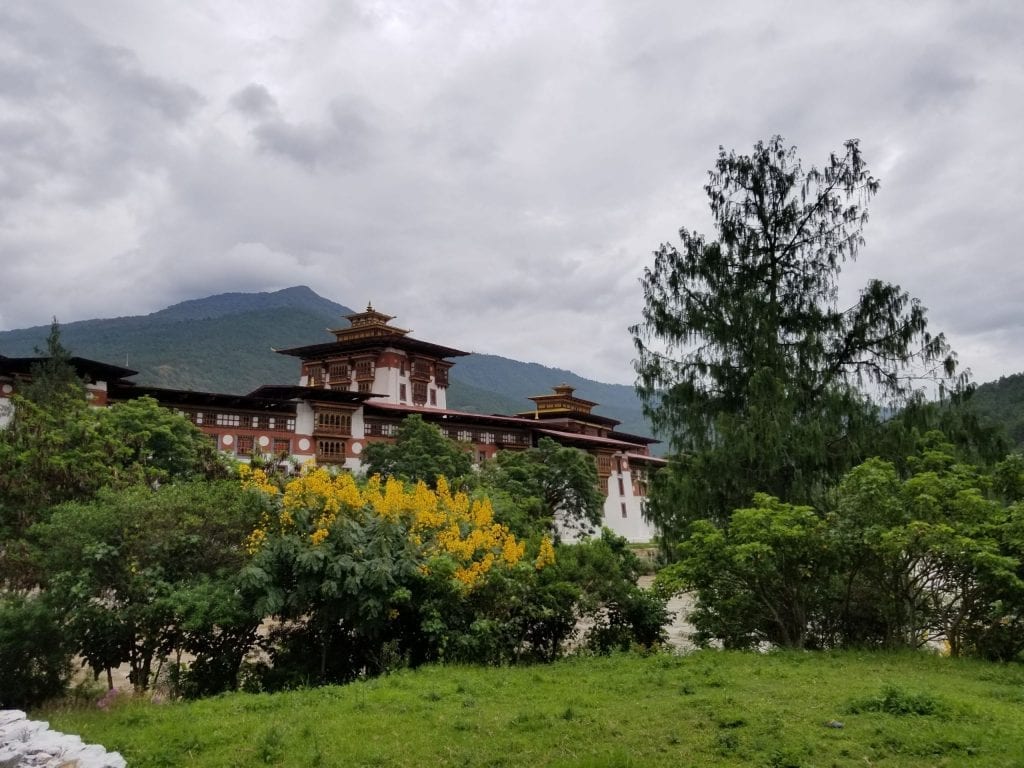
I visited in December and May researching nothing, so I did not know what to expect. It was a pleasant surprise for me both times.
Later, I found that there are three distinct seasons for visiting Bhutan, and here’s the fuller picture of what each one actually offers.
Bhutan’s Seasons in Detail
Spring (March–May) — High Season
Spring is when Bhutan puts on its best show: rhododendrons blooming across the hillsides, mild daytime temperatures, and generally clear skies for mountain views. This is also festival season — Paro Tshechu typically falls somewhere in late March or April, drawing large crowds to Rinpung Dzong for days of masked dances. Because of the combination of good weather and festivals, spring is peak season: expect the highest prices, the most fellow travellers, and hotels booking out months ahead for festival dates specifically.
Autumn (September–November) — High Season
Autumn is spring’s equal and rival for the title of best season. Skies are at their clearest after the monsoon washes the dust out of the air, making this the best window for mountain photography and for genuinely crisp, cloud-free views of the high Himalaya. Thimphu Tshechu, Bhutan’s largest and most accessible festival, falls in autumn, held in the courtyard of Tashichho Dzong. Like spring, this is peak season pricing and peak crowds.
Winter (December–February) — Shoulder Season
This was my own first visit, and it’s genuinely underrated. Days are sunny and clear, nights are properly cold, and crowds thin out considerably compared to spring and autumn. Higher valleys — Phobjikha especially — can see snow and hard frost. This is also, not coincidentally, when the black-necked cranes winter in Phobjikha, arriving from the Tibetan plateau from around November through March. Punakha Tshechu, preceded by the Punakha Drubchen, typically falls in late February.
Black-necked cranes
If you want to see the black-necked cranes in Phobjikha or attend the Black-Necked Crane Festival on November 11, winter and late autumn are non-negotiable — these birds simply aren’t there the rest of the year.
Summer / Monsoon (June–August) — Low Season
This is Bhutan’s rainy season, and the trade-off is real: trails turn muddy and slippery, mountain views cloud over more often, and trekking becomes considerably less appealing. In exchange, this is when the country is at its greenest, crowds are at their thinnest, and accommodation is easiest to book without months of advance planning.
Monsoon alert
Heavy monsoon rain can occasionally cause landslides on Bhutan’s mountain highways, which may disrupt road transfers between towns. If you’re travelling in June–August, build some flexibility into your itinerary.
Quick Reference: Bhutan by Month
| Month | Season | Highlights |
|---|---|---|
| January | Winter | Cold, clear, very quiet |
| February | Winter | Punakha Tshechu, cranes still in Phobjikha |
| March | Spring begins | Paro Tshechu often falls here, rhododendrons starting |
| April | Spring | Peak rhododendron bloom, mild and clear |
| May | Spring | Warm, occasional early-monsoon cloud, still green |
| June | Monsoon begins | Rain increasing, trails getting muddy |
| July | Monsoon | Wettest month, lush but least trek-friendly |
| August | Monsoon | Still rainy, greenest landscapes of the year |
| September | Autumn begins | Skies clearing, Thimphu Tshechu often falls here |
| October | Autumn | Clearest mountain views of the year |
| November | Autumn | Black-Necked Crane Festival, cranes arriving in Phobjikha |
| December | Winter | Sunny days, cold nights, quiet |
<!– [DESIGN: PRO TIP BOX] Gold left-border –>
On festival dates specifically
Tshechus follow the Bhutanese lunar calendar, not the Gregorian one, so exact dates shift every year and are only officially confirmed 6–12 months ahead by Bhutan’s Tourism Council. If a specific festival is central to your trip, confirm the exact dates with your licensed tour operator rather than relying on a fixed date from any single source, including this one.
What Bhutan Actually Costs, By Season
Nearly all foreign visitors pay Bhutan’s Sustainable Development Fee (SDF) — currently USD 100 per person per night for most nationalities, a rate fixed through August 2027 after being reduced from USD 200. Indian, Bangladeshi, and Maldivian nationals pay a significantly lower rate, roughly USD 15 per night. This fee doesn’t change by season, but everything else around it does:
- Peak season (spring & autumn): Highest hotel rates, least room availability, and the biggest crowds at major sites and festivals. Book months ahead if your dates include a Tshechu.
- Shoulder season (winter): Noticeably better hotel availability and often better rates, while the weather itself remains genuinely pleasant during the day.
- Low season (monsoon): The cheapest and least crowded time to visit, offset by the least reliable weather for trekking and mountain views.
Best Time to Visit Bhutan For…
Trekking: Spring and autumn, without much debate — dry trails and clear mountain views make both the Tiger’s Nest hike and longer treks considerably more enjoyable.
The Tiger’s Nest hike specifically: Same two windows apply, but if you have to choose one, autumn edges ahead for photography — the post-monsoon air gives you the clearest possible view of the monastery clinging to its cliff. Full details in my Tiger’s Nest trek guide.
Festivals: Spring for Paro Tshechu, autumn for Thimphu Tshechu, late winter for Punakha Tshechu. All three are worth building an entire trip around if the dates align.
Rhododendrons and spring colour: April is peak bloom, when hillsides across the country turn shades of pink and red. If you’re timing a spring trip around this, it pairs naturally with a visit to the Royal Botanical Park, which is at its best during exactly this window.
Budget travel: Winter offers a genuine middle ground — good weather, lower prices than peak season, and far fewer crowds, without monsoon’s unpredictability.
Photography: Autumn, for the clearest post-monsoon skies and the sharpest mountain views of the year.
Birdwatching: Winter, specifically November through March, for the black-necked cranes in Phobjikha Valley.
What to Pack, By Season
Spring & Autumn: Layers are essential — mornings and evenings are cool even when afternoons are pleasant. A light rain jacket, comfortable hiking shoes, and a warm mid-layer for higher elevations.
Winter: A proper insulated jacket, thermal layers, gloves, and a hat. Nights genuinely go below freezing in places like Phobjikha and Thimphu, even when the days are sunny.
Monsoon (Summer): A good rain jacket and waterproof footwear are non-negotiable, along with a dry bag for electronics if you’re trekking.
If you’d rather not coordinate the guide, permits, and hotels yourself, a handful of well-structured multi-day tours already bundle Punakha into a wider Bhutan itinerary, with the guide, driver, SDF, and accommodation handled in one booking:
From my personal experience, I loved Bhutan in May more — that mystical, cloud-wrapped greenness stayed with me long after I left. But having now researched what I missed by only visiting those two months, I’d genuinely consider a winter return just for the cranes, or an autumn trip timed around Thimphu Tshechu. Bhutan rewards almost any season you choose to visit it in.
What’s yours’ best and favourite time to visit Bhutan? Which is the best season to visit Bhutan according to you?
Frequently Asked Questions
What is the best month to visit Bhutan?
April and October are often singled out as the single best months — April for spring rhododendrons and mild weather, October for the clearest autumn skies. Both sit within the two broader high seasons: spring (March to May) and autumn (September to November).
Is Bhutan expensive to visit?
Yes, by design. Nearly all foreign visitors pay a Sustainable Development Fee of USD 100 per person per night (reduced from USD 200, fixed through August 2027), on top of guide, driver, and accommodation costs. Indian, Bangladeshi, and Maldivian nationals pay a significantly reduced rate.
When is monsoon season in Bhutan?
June to August. This is Bhutan’s low season, with the heaviest rain, muddy trekking trails, and reduced mountain visibility, though it’s also when accommodation is easiest to book and the landscape is at its greenest.
Can I visit Bhutan in winter?
Yes, and it’s genuinely underrated. December to February brings clear, sunny days, cold nights, and the lowest crowds of the year. Higher valleys like Phobjikha can see snow, and this is also when the black-necked cranes winter there.
What is the best time to visit Bhutan for trekking?
Spring (March to May) and autumn (September to November), when trails are driest and mountain views are clearest. Summer monsoon makes trekking trails muddy and slippery, and winter can bring ice at higher elevations.
Continue Planning Your Bhutan Trip
- Landing at the Paro Airport in Bhutan
- Paro Airport to Thimphu
- Places to Visit in Thimphu
- Places to Visit in Punakha
- Phobjikha Valley in Bhutan
- Tiger’s Nest Trek
- Royal Botanical Park in Bhutan
Booking Your Bhutan Trip
- 🗺️ 6-Day Nature and Culture Tour with Phobjikha Valley
- 🗺️ 9-Day Tour Experiencing Phobjikha Valley
- 🗺️ Scenic Bhutan Guided Multi-Day Tour with Airport Pickup
- 📋 Confirm your visa, SDF, and transport arrangements with a licensed Bhutanese tour operator before you fly

Leave a reply