
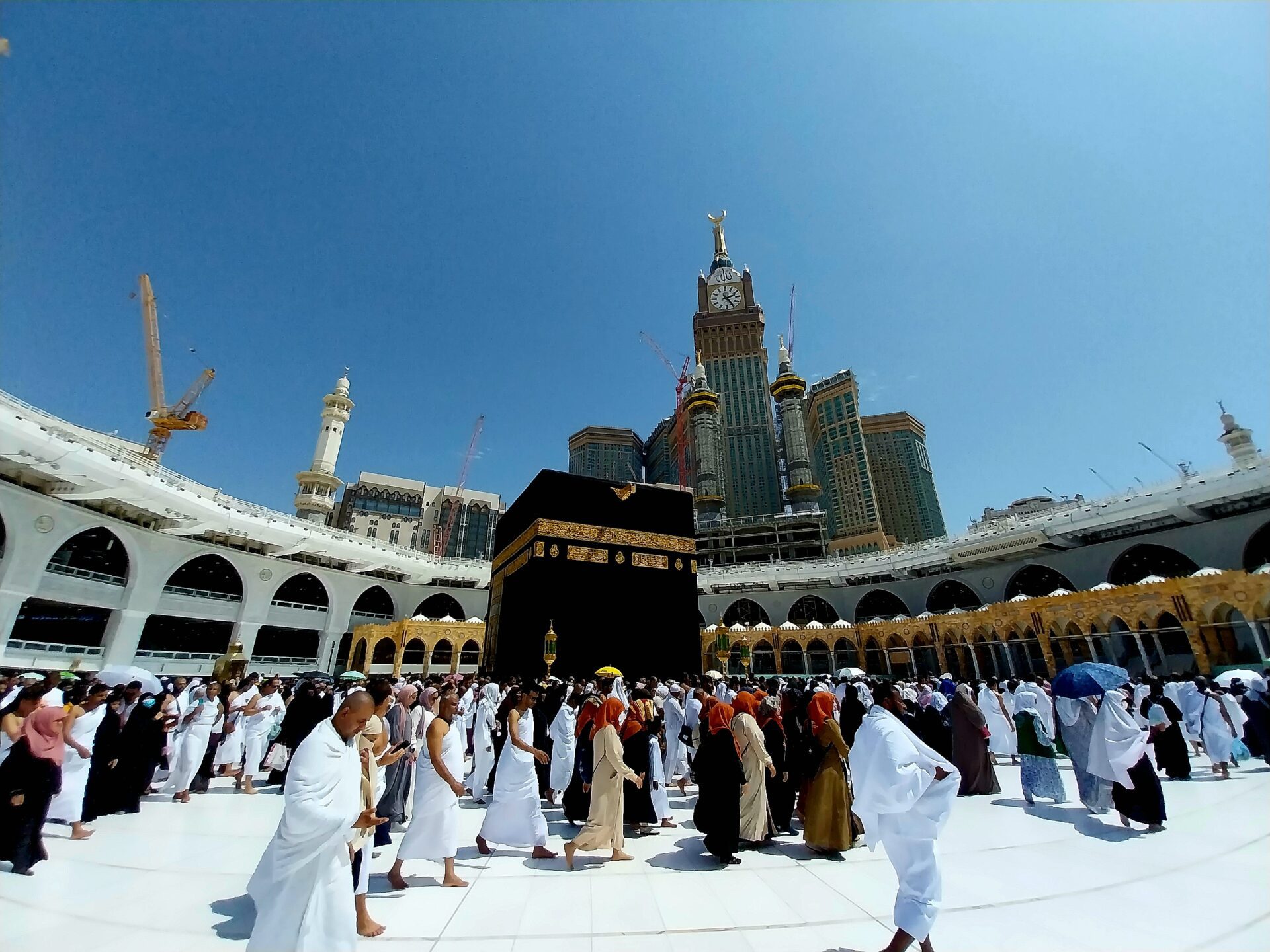
Umrah is an act of worship, a pilgrimage every Muslim dreams of completing. Traditionally, that meant going through a travel agency, paying substantial package fees, and following someone else’s schedule. Thanks to changes in Saudi Arabia’s visa policy over the past few years, that is no longer the only way.
I am a citizen of Bangladesh, and a bit more about me and why I write this blog here. I performed Umrah entirely on my own using a free Saudi transit visa obtained through a layover flight. This guide walks through exactly how I did it, updated for the current rules as of 2026, along with everything that has changed since I first wrote about this trip: a genuinely significant expansion of who can now perform Umrah independently, the platforms you are required to use, real costs, where to stay, and the answers to the questions readers have asked me most often in the comments below.
If you have ever assumed Umrah requires a travel agent and a large budget, this guide is proof that it does not.
DIY Umrah on a Transit Visa — Quick Facts
- ✈️ Airlines: Saudia or Flynas only, for the free transit/stopover visa
- ⏱️ Stay allowed: Up to 96 hours (4 days), single entry
- 📅 Visa validity: 90 days from issuance
- 💰 Visa cost: Free, plus a small processing and mandatory insurance fee
- 📱 Mandatory: Registration and Umrah appointment via the Nusuk app
- 🛂 Passport: Minimum 6 months validity remaining
- 🎫 Requirement: Confirmed onward ticket to a third destination
- 🕋 Now also eligible: Tourist e-visa, work visa, and family visit visa holders can also perform Umrah with Nusuk registration
2026 Update: Who Can Now Perform Umrah
When I first wrote this guide, the transit visa was the standout option for independent pilgrims because so few other visas allowed Umrah without going through an agency. That has changed.
As part of Saudi Arabia’s Vision 2030 push to open up religious tourism, the Ministry of Hajj and Umrah now allows Umrah to be performed on a broader range of valid visas, not only the transit visa:
- Transit / stopover visa — free with Saudia or Flynas, 96-hour stay, the option this guide focuses on
- Tourist e-visa — for travelers who want more time in the Kingdom than a layover allows
- Work visa — for those already employed in Saudi Arabia
- Family or private visit visa — for those visiting relatives or contacts in the country
Whichever visa you hold, one thing has not changed and has actually become stricter: registration through the official Nusuk platform is mandatory for everyone, regardless of visa type. Nusuk manages your Umrah appointment, and increasingly your accommodation and transport bookings too. Do not attempt Umrah without an active Nusuk registration; officials do check around the Haram complex.
On Hajj season closures
Every year, in the weeks surrounding Hajj, Makkah is closed to anyone who does not hold a specific Hajj permit, including tourist and transit visa holders. The exact dates shift with the Islamic calendar each year. If you are planning a trip close to Hajj season, check the current closure dates on the official Nusuk website before booking anything.
For a short layover, the transit visa remains the fastest, cheapest, and simplest route, which is why the rest of this guide focuses on it. If you have more time or already hold another eligible visa, the ritual steps below apply exactly the same way.
How to Get a Saudi Transit Visa on Your Own
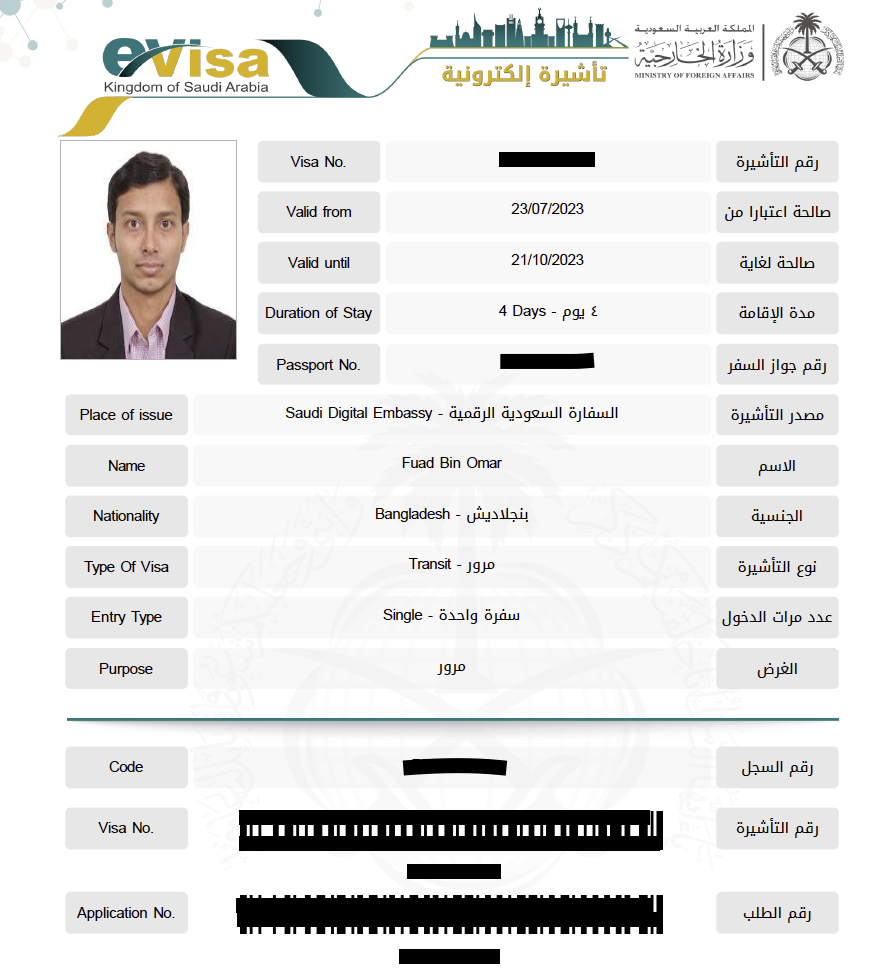
The process is available to people of every nationality and is simpler than most travel agencies would have you believe.
Book a ticket with Saudia, the national carrier, or Flynas, a Saudi budget airline. Saudi Arabia cannot be your final destination; you need a layover en route somewhere else. I booked from Dhaka to Istanbul with a layover in Jeddah. During the booking process, both airlines give you the option to apply for the transit/stopover e-visa directly. You will upload a photo and enter your details.
- Saudia: No charge for the visa itself, though the mandatory insurance still applies
- Flynas: A small processing fee, roughly SAR 10, plus insurance
The visa is typically approved within minutes and is valid for 90 days from issuance, with a 96-hour stay permit once you land. Saudia’s package includes a complimentary one-night hotel stay in Mecca, but you must book it at least two days in advance, and I found the second night’s rate at that hotel worked out more expensive than booking independently, so I skipped it. Your experience may vary.
Book directly with the airline
The free transit visa offer is tied to Saudia’s or Flynas’s own booking flow. If you book the same flight through a third-party site like a travel agent or another booking platform, the visa application step may not appear, and you could end up needing to apply separately. Book directly on saudia.com or flynas.com to guarantee the integrated visa option.
Get a data connection the moment you land
You will need internet access immediately to use the Nusuk app and show your digital permit. An eSIM installed before you fly saves you hunting for a SIM counter at the airport. Get a Saudi Arabia eSIM through Airalo before you go.
Preparation for Umrah
Now that you have your ticket and visa, here is the ritual itself, step by step, exactly as I performed it.
Before entering the state of Ihram, trim your nails and shave underarm and pubic hair. Once you begin Umrah, these are not repeatable until it concludes.
Wearing Ihram Clothes
Ihram is the required clothing for Umrah: two pieces of unstitched white cloth for men, one covering the upper body and one the lower. Sandals that do not cover the top of the foot are worn instead of closed shoes. Women are not required to wear Ihram clothing and instead wear their normal modest dress.
Where to Wear Ihram Clothes
“Miqat” refers to designated boundary points around Saudi Arabia. You must be in the state of Ihram before crossing one of these points. If you are flying in, you will cross a Miqat before landing, and Saudia will announce it as you approach. Crossing without Ihram means returning to the Miqat point to correct it. I changed into Ihram before boarding since I intended to perform Umrah the same day I arrived in Jeddah. The flight was around six hours and reasonably comfortable to wear it for.
The Intention of Making Umrah
Putting on Ihram clothing alone does not begin your Umrah; it is simply the required dress. You formally enter the state of Umrah by declaring your intention (Niyyah) after donning Ihram and before crossing the Miqat.
Labbayka Allahumma Umratan.
Here I am, O Allah, for making Umrah, so make it easy for me and accept it from me.
Recite it both aloud and silently.
Talbiyyah
After declaring your intention, recite the Talbiyyah:
Labbayek, Allahumma Labbayek. Labbayek La Sharikala Laka Labbayek. Innal hamda, wan-ni’amata, laka wal Mulk. La sharika Lak.
At Your service, Allah, at Your service. You have no partner, at your service. Truly all praise, favour and sovereignty is Yours. You have no partner.
From this point you are in the state of Ihram. Until you complete Umrah, you are not permitted to:
- Cover the head (for men) or the face (for women)
- Use perfume
- Clip nails or cut hair
- Wear stitched clothing (men)
- Wear gloves
- Have marital relations
- Hunt or kill any creature
- Fight or argue with anyone
My Flight from Dhaka to Jeddah
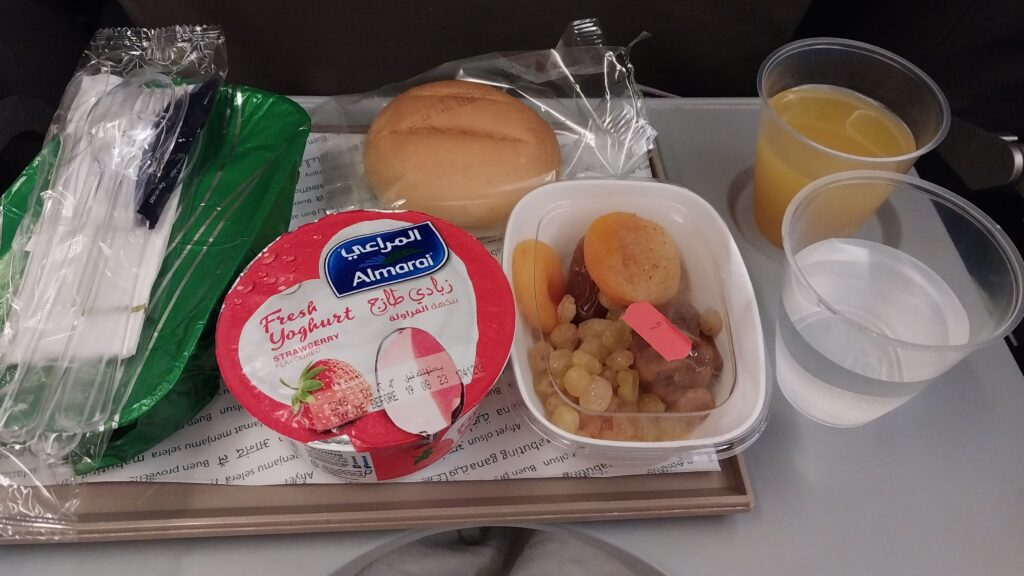
The flight itself was unremarkable at best. A large aircraft with a high load factor and, in my experience, not enough cabin crew for the number of passengers. I had to ask more than once before getting water, and the food was underwhelming for the fare paid. None of this changes the outcome, but it is worth setting expectations honestly.
Immigration at Jeddah Airport
Landing at Jeddah was smooth. We disembarked through a boarding bridge with a short walk to passport control. Immigration was straightforward: a 10 to 15 minute queue, and the visa officer asked only to see my onward ticket before waving me through.
How to Get from Jeddah Airport to Mecca
Bus
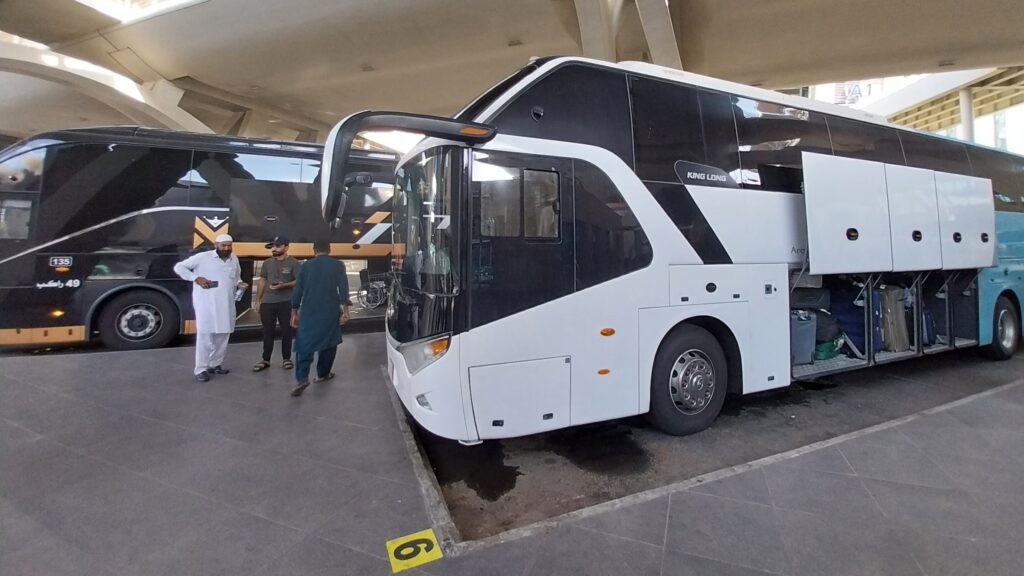
Signs direct you out of the airport toward public transport. Large buses wait outside; negotiate the fare with the operator on the spot. Expect to pay around SAR 50.
Taxi
Taxis can be booked at the airport, with the price depending on your negotiation, but aim to keep it under SAR 150. Taxis hailed just outside the terminal tend to be cheaper than booking from inside.
Train — The Haramain High-Speed Railway
The Haramain High-Speed Railway connects Jeddah Airport to Mecca in around 55 minutes, and this is genuinely the best option if you are travelling light and want a fast, reliable, comfortable journey without any negotiation. Note that the Mecca station is roughly 7 km from Haram Sharif, so you’ll need a short taxi onward from the station. The same railway connects Mecca to Madinah in about 2 hours 25 minutes, which makes it an excellent option if you plan to visit Madinah on the same trip.
🚕 Book a private airport transfer instead, if you would rather skip the negotiation entirely and go straight to your hotel
🚄 Book the Jeddah to Mecca Haramain High Speed Train
🚄 Book the Mecca to Jeddah Haramain High Speed Train
Tawaf
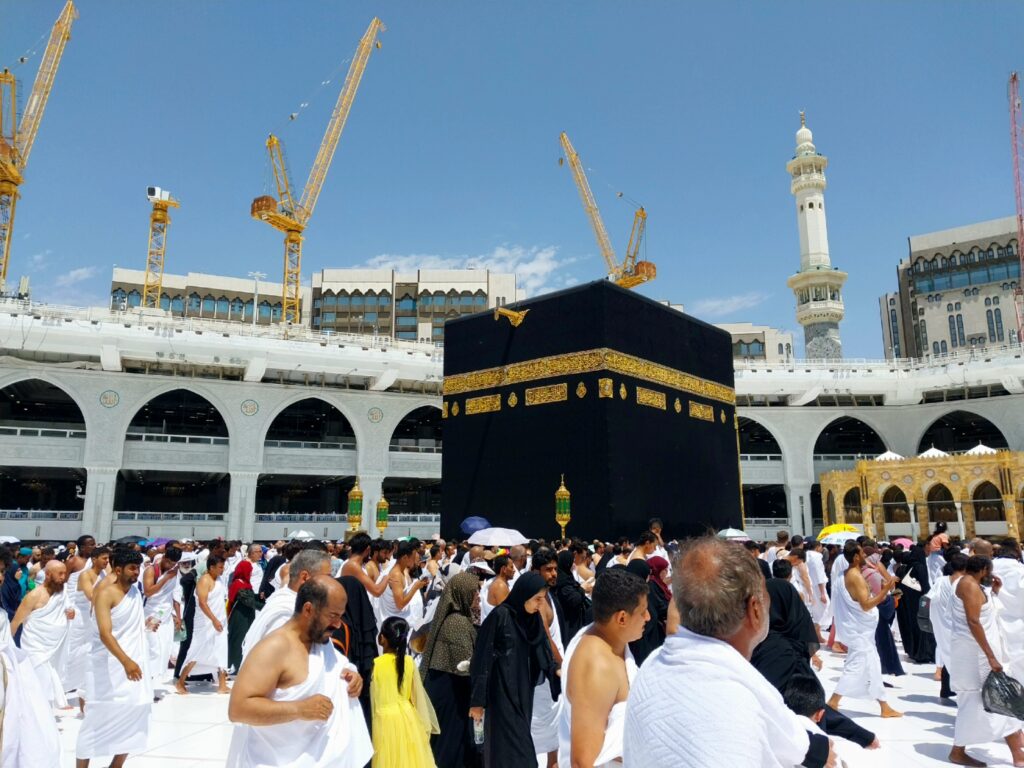
Tawaf means “going round and round.” It is the first ritual act of Umrah: circling the Kaaba seven times in an anticlockwise direction.
Check into your hotel, leave your luggage, and shower before you begin. Perform ablution (Wudu) before entering the state required for Tawaf. Women who are menstruating cannot perform Umrah until their cycle ends. When ready, head to Haram Sharif. If you book one of the hotels I recommend later in this guide, you can walk there without needing any transport at all.
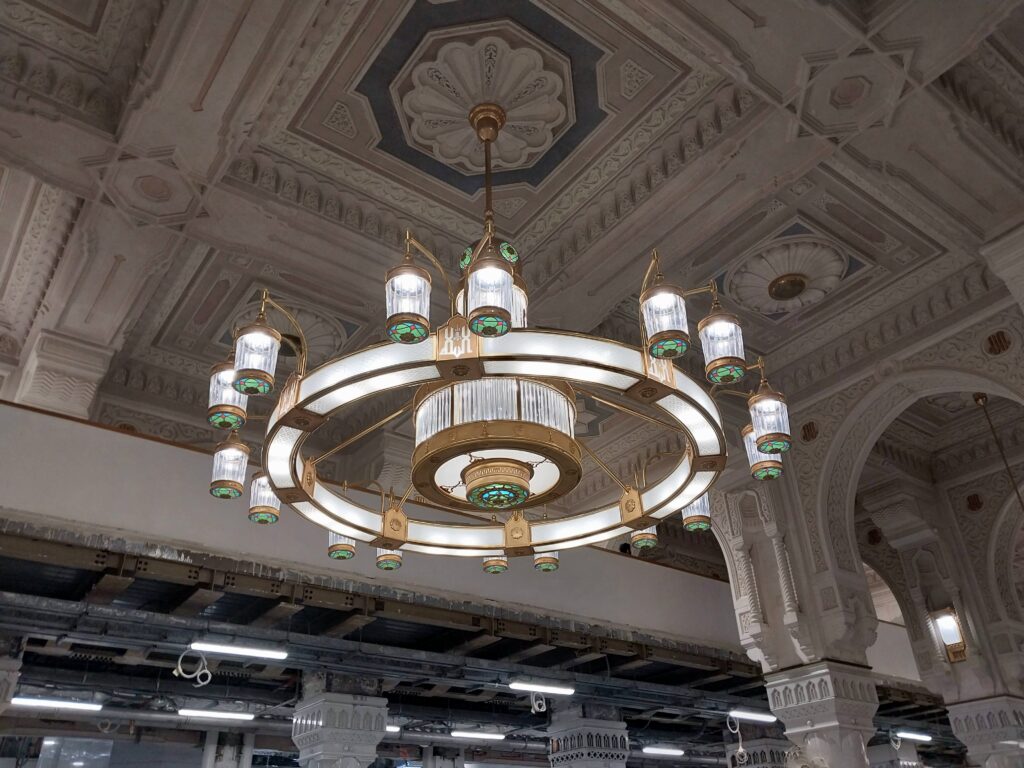
Because you are in Ihram, you are permitted onto the ground floor Tawaf area directly around the Kaaba. This matters: pilgrims on the first or second floor take considerably longer to complete Tawaf and have a harder time reaching the area for Sa’i afterward.
Tawaf begins at the Black Stone, known as Hajar al-Aswad. Men uncover the right shoulder, tucking the cloth behind the right armpit, before beginning. Point toward the stone and say:
Allahu Akbar
Allah is great
Begin walking with the Kaaba to your left. Each time you pass the Black Stone on subsequent laps, point and repeat Allahu Akbar.
Between the Yemeni Corner and the Black Stone, recite:
Rabbana Atina Fid Dunya Hasanah, wa fil akhirati hasanah, wa qina Azab an nar.
O Lord, grant us the best of this world and the best of the next, and keep us safe from the torment of hellfire.
Maqam Ibrahim Prayer
After your seventh lap, return toward the door you entered from and face the Kaaba. You will see others praying here, facing the Kaaba. Offer two rakats of prayer at this spot.
Drink Water from Zamzam
Standing after your prayer, drink a glass of Zamzam water and pour a little over your head. Zamzam stations are strategically placed and clearly marked throughout the complex, with plastic cups readily available.
Sa’i Between Safa and Marwa Hills
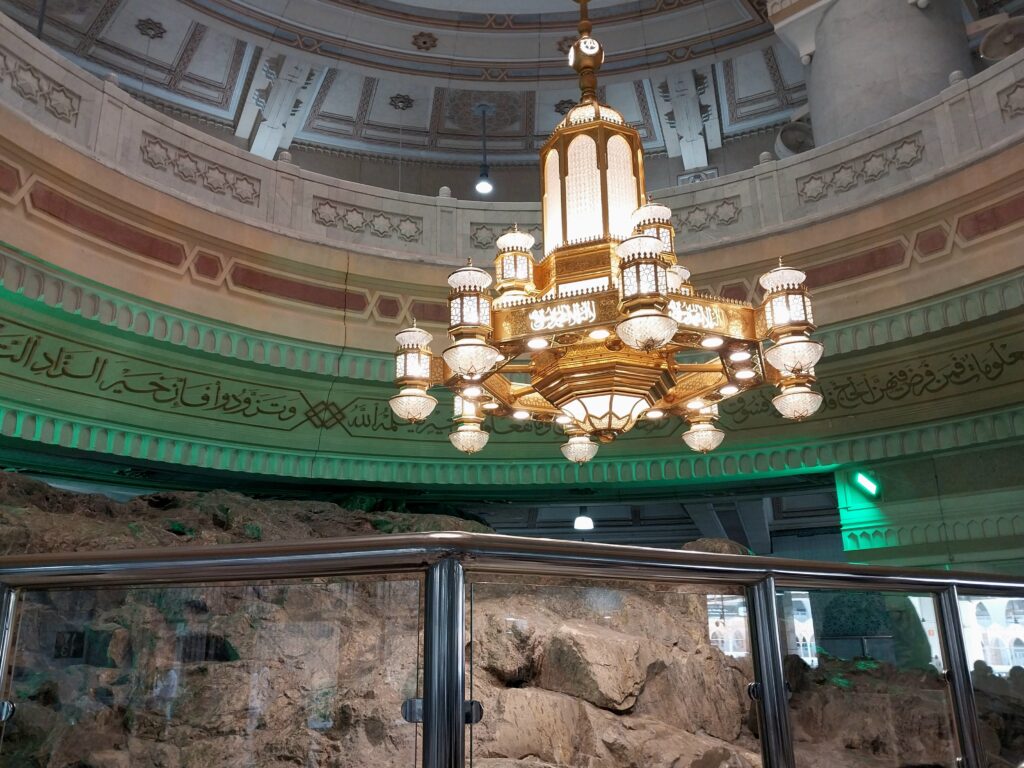
Head to Safa Mountain and walk seven times between Safa and Marwa. On your way to Safa, recite
Innas safa wa marwata min sha’a’iri llah.
Safa and Marwa are indeed among the signs of Allah.
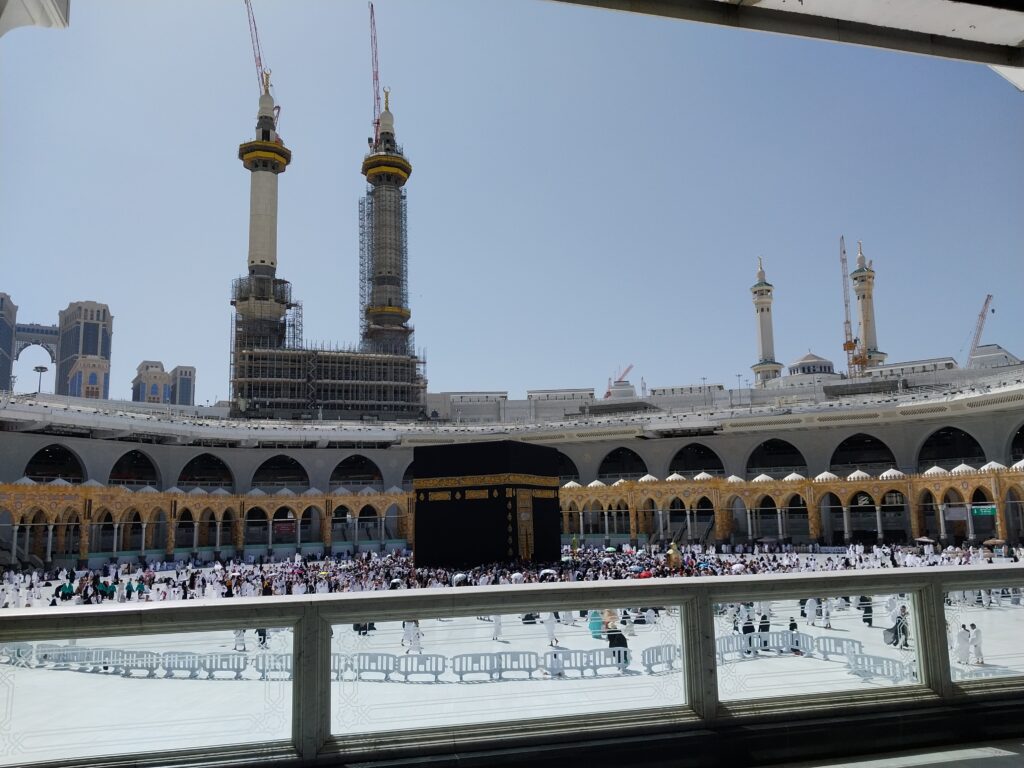
At the top of Safa, you’ll see the Kaaba. Facing it, recite:
Allahu akbar, Allahu akbar, Allahu Akbar, wa lillahi l-hamd.
Allah is the greatest, Allah is the greatest, Allah is the greatest, and all praise be to Allah.
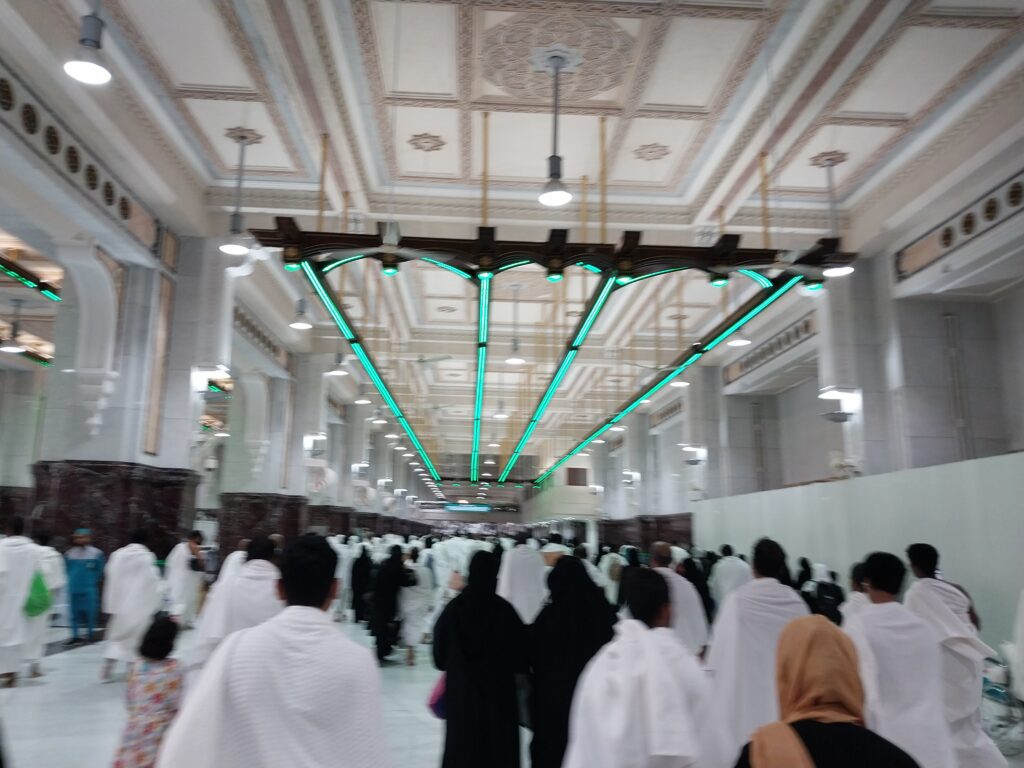
Head toward Marwah. When you pass beneath the green light marker overhead, quicken your pace to a brisk walk or light jog; once you pass beyond it, return to a normal walking pace.
Arriving at Marwa from Safa completes one lap. Returning to Safa begins the second. Repeat until you have completed seven laps in total; if done correctly, your final lap ends at Marwah. Sa’i is now complete.
Cutting Your Hair (Tahallul)
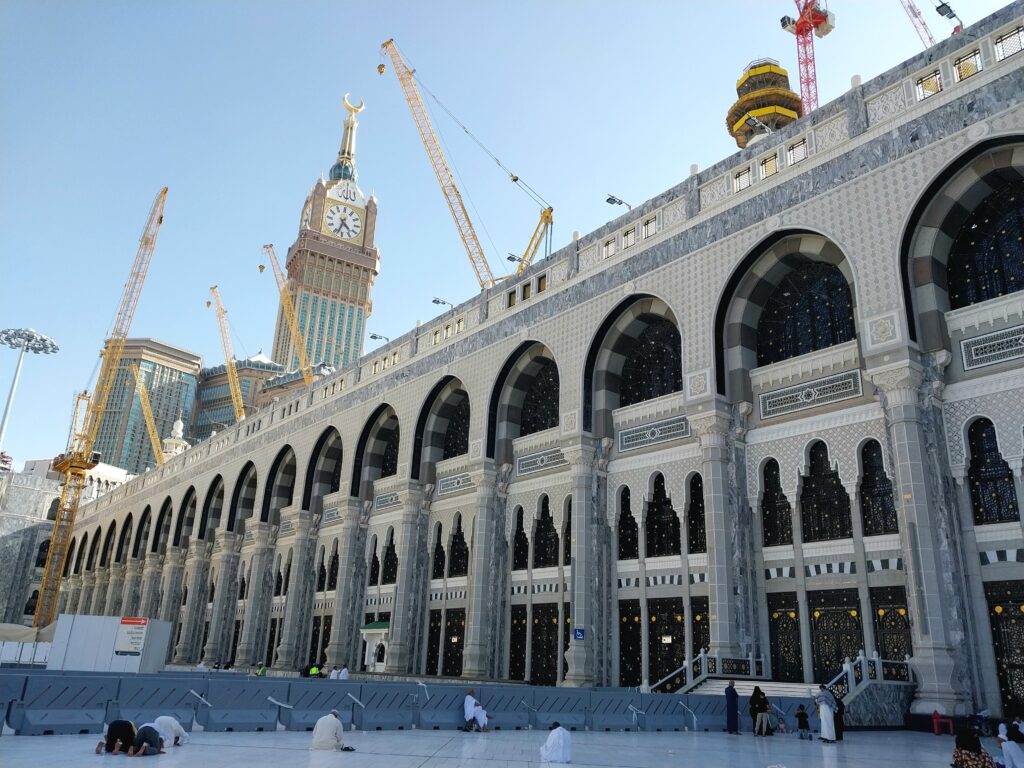
The final step is cutting your hair. Women trim roughly an inch. Men either shave completely or trim it very short. Exit near the Marwa gate, turn right, and continue walking; you’ll find salons and barbers offering this service, typically for around SAR 10. Completing this step ends your state of Ihram and concludes your Umrah.
A 96-Hour Sample Itinerary
If your entire transit visa window is 96 hours, here is a realistic way to structure it:
Day 1 — Land in Jeddah, clear immigration, take the Haramain train or a taxi to Mecca, check into your hotel, rest briefly, then perform Umrah the same evening once you feel ready.
Day 2 — Rest, pray at the Haram at your own pace, explore nearby areas of Mecca. If your visa and time allow, this is a good day to travel to Madinah by train.
Day 3 — If in Madinah, visit Masjid an-Nabawi and the surrounding historic sites. Otherwise, use this day for a second, unhurried visit to the Haram, or a half-day tour of Old Jeddah on your way back through.
Day 4 — Return to Jeddah in good time for your onward flight, factoring in traffic and airport procedures.
💡 If you want a guide for the sightseeing side of the trip without giving up the DIY approach to Umrah itself, a short guided walk through Old Jeddah’s Al Balad district is a genuinely worthwhile way to spend a few extra hours if your layover allows it: Discover Old Jeddah Al Balad or Historic Jeddah Guided Tour.
DIY Umrah vs a Travel Agency Package
| DIY on Transit Visa | Agency Package | |
|---|---|---|
| Visa cost | Free (plus small fees) | Often bundled, sometimes marked up |
| Flexibility | Full control over dates and pace | Fixed group schedule |
| Hotel choice | You choose and book directly | Often pre-assigned |
| Time required | As little as 96 hours | Usually longer, fixed itineraries |
| Guidance | Self-guided, using resources like this one | Group leader included |
| Best for | Confident independent travelers, tight layovers | First-timers wanting full support, larger family groups |
| Typical cost | Lower, especially for solo travelers | Higher, but includes logistics handled for you |
Neither approach is objectively better. If you are comfortable navigating an airport, an app, and a hotel booking on your own, DIY on a transit visa is significantly cheaper and just as spiritually complete. If you would rather have every logistic handled and are traveling with elderly family members or young children, a package may genuinely serve you better.
Estimated Cost Breakdown
Costs vary enormously by nationality, season, and how many people are traveling, so treat this as a rough planning guide rather than a quote.
| Item | Estimated Cost |
|---|---|
| Transit visa | Free + small processing/insurance fee |
| Flight with Jeddah layover | Varies widely by origin and season |
| Hotel (1–3 nights, budget to mid-range) | ~$30–150 per night depending on hotel and proximity to Haram |
| Jeddah to Mecca transport | SAR 50–150 (bus to taxi) or ~$15–20 (Haramain train) |
| Food | Modest, especially at local eateries near the Haram |
| Meningitis vaccination (if required) | Varies by country, often low-cost at travel clinics |
| eSIM/data | A few dollars for a short-stay data plan |
A frugal solo traveler can often complete the entire Umrah portion of the trip, beyond the flight itself, for a few hundred dollars. Family groups and those choosing hotels directly overlooking the Kaaba will naturally spend considerably more.
Before You Go: A Short Checklist
- Passport with at least 6 months validity remaining
- Confirmed onward ticket to a third destination
- Flight booked directly with Saudia or Flynas to trigger the transit visa option
- Meningitis (ACWY) vaccination, if required for your nationality — check with your airline or the Saudi embassy, and allow at least 10 days before travel if you need it
- Registered on the Nusuk app with your Umrah appointment booked
- Hotel booked, ideally within walking distance of Haram Sharif
- Comfortable, non-restrictive Ihram clothing packed (men) or modest clothing (women)
- A small daypack for shoes and a water bottle, since Umrah is performed barefoot
- Travel insurance covering your trip
Where to Stay in Mecca
When choosing a hotel, I prioritized places within easy walking distance of Masjid al-Haram, so I never needed a car once I arrived.
Where I Stayed and Similar Value Options
- Yasmin Al Majd — Where I stayed, and I’d choose it again. The Haram is roughly 800 metres away, there are several good fast food options nearby (wrapped chicken, wrapped fish, chicken fries), and a convenience store sits directly across the street.
- Emaar Al Khlil — Similarly fair pricing and a convenient location near Haram Sharif.
- Emar Al Manar — In the same price bracket and same general area as the two above; a solid value option.
If You Want to Spend More
- Swisshotel Makkah — A short distance out, with Kaaba views from many rooms, and consistently among the better higher-end options near the Haram.
- ZamZam Pullman Makkah Hotel — Likely the most reasonably priced hotel within the Clock Tower complex itself. Around 100 metres from the Kaaba with a genuinely good view.
More Options Across Every Budget
Beyond the five above, these are other well-known Mecca hotels worth comparing, organised roughly by budget:
Luxury
| Hotel | Why it’s worth it | Book |
|---|---|---|
| Makkah Clock Royal Tower (A Fairmont Hotel) | The most iconic address in Mecca, inside the Abraj Al Bait tower with panoramic Kaaba views | Trip.com |
| Raffles Makkah Palace | Palace-style luxury immediately adjacent to Masjid al-Haram | Booking.com |
| InterContinental Dar Al Tawhid Makkah | Elegant, calm, walking distance to the Haram | Booking.com |
| Jumeirah Jabal Omar Makkah | Spacious rooms, exceptional hospitality, well-connected Jabal Omar area | Agoda |
Mid-range
| Hotel | Why it’s worth it | Book |
|---|---|---|
| Hilton Suites Jabal Omar Makkah | Spacious suites, good for families, walking distance to the Haram | Booking.com |
| voco Makkah (IHG) | Strong value for money in an excellent location | Booking.com |
| Elaf Kinda Hotel | Steps from the King Abdulaziz Gate, praised for its location | Agoda |
| Sheraton Makkah Jabal Al Kaaba Hotel | A slightly quieter retreat within walking distance via pedestrian paths | Trip.com |
Budget
| Hotel | Why it’s worth it | Book |
|---|---|---|
| ibis Styles Hotel Makkah | Reliable, contemporary, in the Al Aziziyah district — requires a short taxi or shuttle to the Haram | Booking.com |
Booking tip
Prices and availability near the Haram swing enormously with the season, and can multiply several times over during Ramadan and peak Umrah months. Book as early as you can once your flight and Nusuk slot are confirmed, and compare prices across Agoda, Booking.com, and Trip.com using the links above, since availability and pricing differ between platforms.
Where to Stay in Madinah
If your transit visa window allows it, many independent pilgrims extend their trip to visit Masjid an-Nabawi in Madinah, roughly 2 hours 25 minutes from Mecca by Haramain train. As with Mecca, proximity to the mosque is the main factor worth paying for.
| Hotel | Why it’s worth it | Book |
|---|---|---|
| Anwar Al Madinah Mövenpick | Well-regarded, close to Masjid an-Nabawi | Booking.com |
| Pullman Zamzam Madina | Comfortable mid-to-upscale option near the mosque | Agoda |
| Dar Al Taqwa Hotel | Solid mid-range choice within easy reach of the Haram | Trip.com |
| Frontel Al Ambar Hotel | Reliable comfort at a fair price point | Agoda |
| Le Méridien Madinah | Well-known international brand, consistently comfortable | Booking.com |
Optional: Guided Tours If You Want Local Support
Nothing about this guide requires you to book a tour. But if part of your layover is dedicated to sightseeing rather than ritual, or you’d simply prefer a local guide for orientation, these are legitimate, well-reviewed options:
- Historic Jeddah Guided Tour or Discover Old Jeddah Al Balad — Jeddah’s UNESCO-listed old town, a good use of a few spare hours before or after your flight
- Makkah Essentials Tour with Optional Lunch — for those who want a knowledgeable local to walk them through the wider Haram complex and its history alongside their own Umrah
- Mecca Historical & Religious Tour from Jeddah or Jeddah: Makkah, Umrah Pilgrimage Tour — for travelers who want company and local support through the logistics without committing to a full traditional package
Frequently Asked Question about Umrah
Which airport is the closest to Mecca?
King Abdulaziz International Airport in Jeddah (JED).
How long does it take to reach Mecca from Jeddah Airport?
Around 2 hours by road, or about 55 minutes by the Haramain High-Speed Railway.
Do women need to wear Ihram during Umrah?
No. Men are required to wear the two-piece unstitched Ihram cloth; women wear their normal modest clothing instead.
Should women cover their faces while performing Umrah?
No, women keep their faces uncovered during Umrah.
Can women perform Umrah during menstruation?
No, this is not permitted; Umrah must wait until the cycle ends.
Do I need to register on the Nusuk app?
Yes, and this is now enforced more consistently than it once was. Register on Nusuk and book your Umrah appointment before you go. Officials do check at various points around the Haram, so treat it as mandatory rather than optional.
Can I now perform Umrah on a visa other than a transit visa?
Yes. As covered above, tourist e-visas, work visas, and family visit visas can now also be used for Umrah with Nusuk registration. The transit visa remains the fastest and cheapest option specifically for travelers with a layover.
Can I book my Saudia or Flynas ticket through a third-party site like Booking.com and still get the free transit visa?
The visa application is built into Saudia’s and Flynas’s own booking process, so booking directly through their websites or apps is the safest way to guarantee access to it. A third-party booking may not surface the visa option at all.
Do I need a meningitis vaccination?
The meningococcal (ACWY) vaccine is a standard requirement for pilgrims generally, though specific enforcement can vary by nationality and current regulations. Check with your airline or the nearest Saudi embassy before you travel, and get vaccinated at least 10 days ahead if it’s required for you, since it takes time to become effective.
Can I bring Zamzam water home after Umrah?
Generally yes, within your airline’s standard liquid and baggage rules, and sealed Zamzam water is sold specifically for travelers at the airport for this reason. Airline and destination-country rules do vary, so check both before you fly home.
What can I keep with me during Umrah?
Umrah is performed barefoot. Bring a small daypack to carry your shoes and a water bottle while you’re inside the Haram complex.
Do I need to bring my own water?
Most areas have refill stations, the majority Zamzam-branded, so bring an empty or refillable bottle rather than buying bottled water throughout.
How long is the Saudi transit visa valid?
It is a 90-day visa from the date of issuance, with a maximum stay of 96 hours once you enter the country.
How long does Umrah itself take to perform?
Depending on your pace and health, generally no more than 2 to 3 hours for the full ritual sequence, even walking unhurried.
Can I land at any airport in Saudi Arabia with a transit visa?
There are no airport restrictions tied to the visa itself; you can land at any international airport.
Am I allowed to travel to Saudi Arabia as a solo woman?
Yes. Anyone aged 18 or over can travel to Saudi Arabia regardless of gender, and a male guardian (mahram) is not required for Umrah.
Can I perform Tawaf without performing full Umrah?
Yes, but not from the ground floor around the Kaaba itself; you would use the first or second floor instead, which takes considerably longer and complicates reaching the area for Sa’i afterward.
I registered on Nusuk but can’t find available appointment slots, or can’t add family members to my booking. What should I do?
This is one of the more common frustrations readers have reported. Nusuk slot availability fluctuates, particularly during busy periods, so check back at different times of day rather than only once. For adding family members, ensure each person’s passport details are entered exactly as they appear on their passport, and try logging out and back in if the option to add dependents isn’t appearing. If problems persist, Nusuk’s own support channels are the most reliable place to resolve account-specific issues, since these can change with app updates.
Booking Your Umrah Trip
- ✈️ Book your flight directly on Saudia or Flynas to access the free transit visa
- 📱 Get a Saudi Arabia eSIM via Airalo for instant data on arrival
- 🚄 Jeddah to Mecca Haramain High Speed Train
- 🚄 Mecca to Jeddah Haramain High Speed Train
- 🚕 Private airport transfer
- 🏨 Yasmin Al Majd or Makkah Clock Royal Tower in Mecca
- 🏨 Anwar Al Madinah Mövenpick or Pullman Zamzam Madina in Madinah
- 🕌 Historic Jeddah guided tour
- 📝 Register your Umrah appointment on the official Nusuk platform


Assalamualaikum Fuad Omar, thank you for your article regarding Transit Visa to perform Umrah.
You mentioned that the transit visa is valid for 90 days with a single entry max 96 hours.
Can I purchase the flight ticket and apply transit visa separately due to save the seats in 6 months prior the departure date?
Or the flight tickets must be purchased together with 90 days-validity- transit visa ? if so, I only can purchase the flight tickets 3 months before my departure date? sounds odd 😊
Nusuk.sa website only shows the Umrah information (accommodation etc). What is this website serving for? the submit the application of the transit umrah visa ? or a platform that keeps our travel for umrah information (bio and passport number, hotel information etc) ?
Thank you in advance for your response.
Salam,
EM
Salam
JazakAllah for the extremely detailed and informative article. I just have a quick question regarding the booking via Saudi Airlines, do you know if the transit visa offer is ONLY valid if the ticket is booked via Saudi Airlines website or it is valid if booked Saudi Airlines tickets but via a 3rd party like Booking.com or other travel websites?
Awaiting your response,
JazakAllah
Hello Brother, Can you bring zamzam water on transit visa? How did it go for you?
Is it allowed to bring zamzam when returning after doing umrah on this transit visa?
Assalamu Aleikum,
Do you have any knowledge about vaccinations on a transit visa? In particular the meningitis vac.
Will we be allowed to perform umrah if we haven’t got one?
I have a transit visa and have registered on Nusuk. Although Nusuk says upto 9 persons may be added in the same account, I am unable to add my wife and daughter. I also am unable to get any available slots on Nusuk. Appreciate your advice on what can I do?
Masha Allah so concise brief! Thank you!