
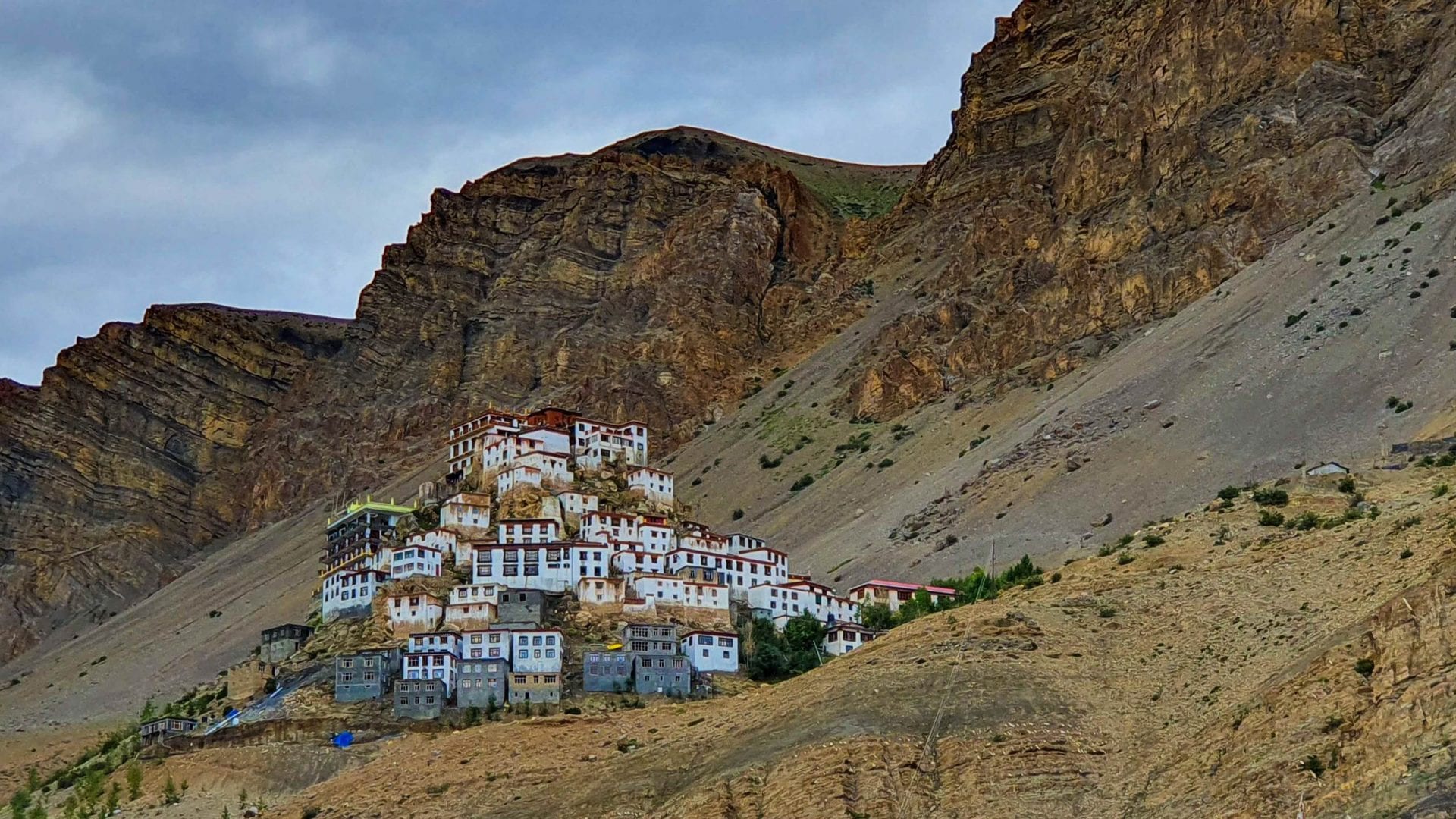
Nestled in the gorgeous mountainous backdrop of Spiti Valley in a remote corner of India lies the majestic Key Monastery. It’s just out of a fairy tale book. You have to see it to believe its existence.
When I first saw a photo of Taktsang Monastery in Bhutan, I was struck by its location and setting. Visiting Key Monastery — Key Gompa, in Tibetan — in Spiti Valley gave me a similar feeling. It sits on top of a hill at 4,166 metres, in a remote corner of Himachal Pradesh near the Tibetan border, and it is one of the most photographed sights in the whole valley.
Key Monastery is the largest monastery in Spiti Valley, perched at 4,166 metres roughly 13–14 km from Kaza. Entry is free, and the monastery even runs a basic monk-operated guesthouse for anyone who wants to stay overnight. Most visitors come between June and September, while the Manali–Kaza road is open.
QUICK FACTS
- Elevation: 4,166 metres (13,668 ft)
- Distance from Kaza: roughly 13–14 km by road (~30–40 min by 4WD), or 8 km on foot if you want to trek it
- Cost by 4WD from Kaza: around INR 1,200 (US$12) for the round trip
- Entry fee: free (donations welcome, no fixed amount)
- Typical hours: roughly 6 AM–7 PM in summer, 7 AM–5 PM in winter — worth confirming locally, as monastery hours can shift informally
- Where to stay: the monastery runs a basic guesthouse (shared bathrooms, simple meals) if you want to stay overnight; most visitors still base in Kaza for comfort
- Best months: June–September, when the Manali–Kaza road is open
- Best festival: Cham Festival, end of July — masked monk dances, free food
- Sect: Gelugpa (Tibetan Buddhist), largest monastery in Spiti Valley
A Brief History of Key Monastery
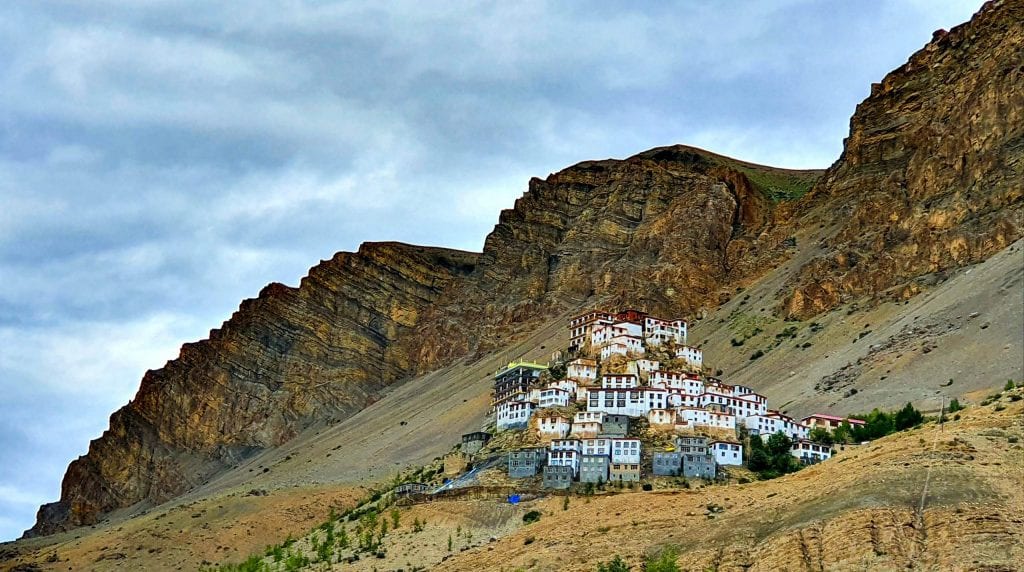
Key Monastery — you’ll also see it spelled Ki or Kee, all pronounced like the English word “key” — is a Tibetan Buddhist monastery of the Gelugpa sect, perched on its hill near the Spiti River. It’s noticeably larger than Bhutan’s Taktsang Monastery, and unlike Taktsang, you can drive directly up to it rather than hike in.
Most people in India are Hindu, but around Kaza, close to the Tibetan border, that changes — this is Buddhist country, and Key Monastery is its most important religious site in the valley. About 350 monks and students live here, training in religious study, philosophy, and traditional culture. His Holiness the Dalai Lama has visited the monastery on more than one occasion.
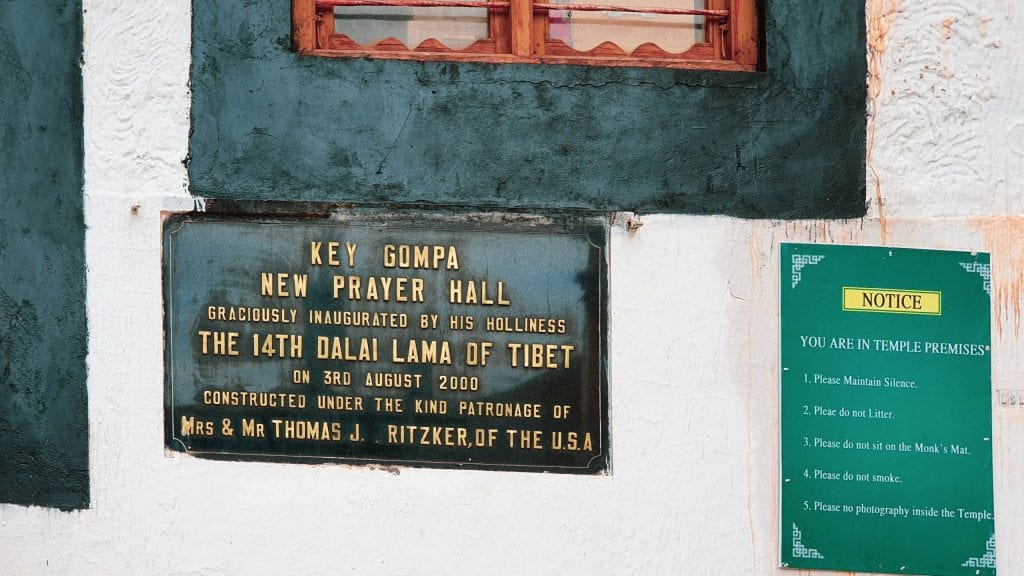
The monastery has survived more than just the elements. Over the centuries it’s been attacked by Mongol raiders, Dogra armies, and Sikh armies, and it’s weathered earthquakes and fires on top of that. What’s standing today is a genuine survivor, not a reconstruction built for tourists.
If you visit at the end of July, you’ll likely catch the Cham Festival — monks in elaborate masks perform traditional dances to Tibetan music, and the kitchens open their doors to everyone visiting, free of charge. It’s a rare chance to see the monastery function as a living community event rather than just a sightseeing stop.
Architecture of Key Monastery
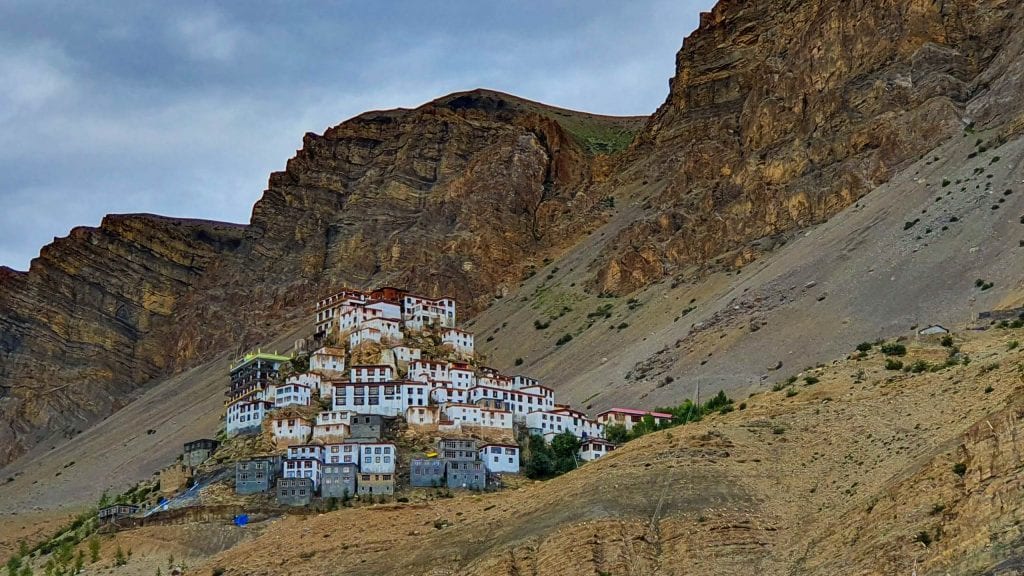
The building is three storeys, built in the Pasada style. The underground level is used mainly for storage. The ground floor holds the assembly halls and small living quarters. The first floor is where it gets genuinely interesting: a room called the Tangyur, richly painted with murals, alongside ancient books and traditional musical instruments. If you ask politely, the monks will sometimes open these rooms for visitors.
The outer walls are whitewashed, with a band of maroon near the top — a deliberate echo of the maroon robes the monks themselves wear. From a distance, the whole structure looks more like a fortress than a monastery, which makes sense given how many times it’s actually had to defend itself.
The View From the Terrace
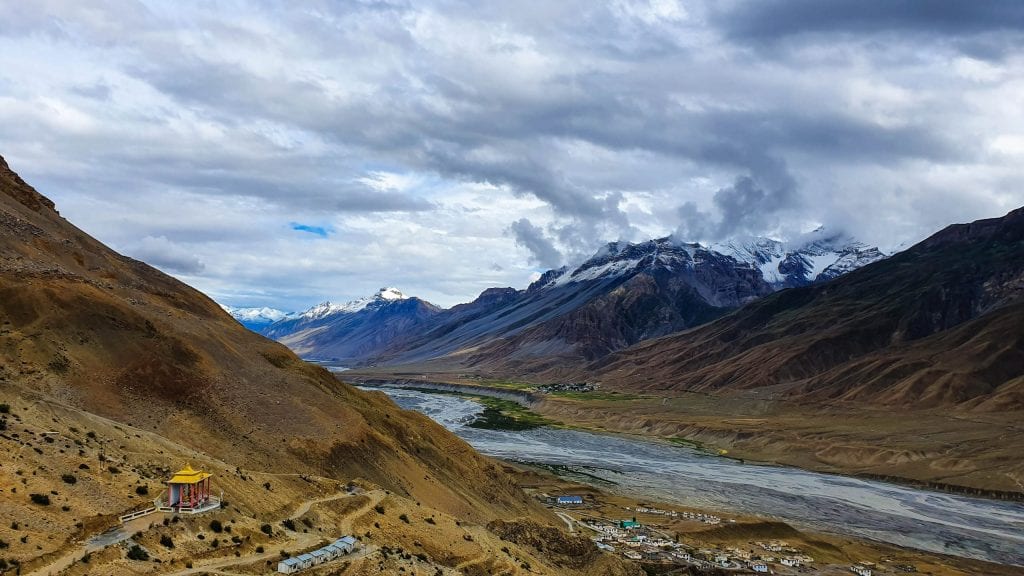
Walking through the monastery, I crossed several monks along a quiet corridor and made a point of walking softly — there’s a real sense of calm inside that feels worth respecting. The corridor opens onto a terrace with a wide view over the valley and the river below, and you can move around to see it from a few different angles.
Look closely at the terraced slopes nearby and you’ll spot cultivated crops — mostly peas and potatoes — which is unusual for this stretch of the valley. The monks who live here see this same view every day, in every season, from the summer green to the total whiteout of winter.
Altitude and Acclimatization — What to Know Before You Go
Key Monastery sits at 4,166 metres — higher than most people will have been before, and high enough that altitude matters. If you’re coming from Kaza (itself already around 3,800 metres), you’ve had some acclimatization time, but the jump up to the monastery and back in a single day, combined with a wider Spiti itinerary that keeps climbing, is exactly the kind of pattern that catches people out.
Basic precautions worth taking seriously: spend at least one full day in Kaza before pushing higher, drink more water than feels necessary, avoid alcohol the first couple of days, and take symptoms like persistent headache, dizziness, or nausea seriously rather than pushing through them. None of this is unique to Key Monastery — it applies to the whole Spiti circuit — but this is often the highest single point people visit on a day trip from Kaza, so it’s worth flagging here specifically.
Winter changes everything about this place. Temperatures drop to around -40°C, and the surrounding mountains disappear under heavy snow. The relentless snowfall can cut the wider region off from the rest of the world for more than half the year, which is part of why most visits happen between June and September.
If you’re travelling from outside India, it’s worth having travel medical insurance that actually covers high-altitude trekking before you go — not every policy does, and this is exactly the kind of trip where that distinction matters.
Trivia
if you’re inside a prayer room, don’t turn your back to it as you leave — walk backward out instead. It’s a small gesture of respect that locals and monks notice.
Where to stay?
Most people assume there’s nothing at the monastery itself — that’s not quite true. Key Monastery runs a basic guesthouse for visitors, monk-operated, with shared bathrooms and simple vegetarian meals included. It’s genuinely bare-bones, but staying overnight means waking up to morning prayers rather than driving in for a few hours — a different experience entirely from a day trip. Pricing is informal and has varied across recent visitor reports (roughly INR 250–600 per person per night depending on who you ask and when), so confirm the current rate and availability when you arrive rather than expecting a fixed rate.
For more comfort, almost everyone else bases in Kaza, 13–14 km away — see the full Kaza travel guide for hotel options across budgets.
Getting to Key Monastery from Kaza
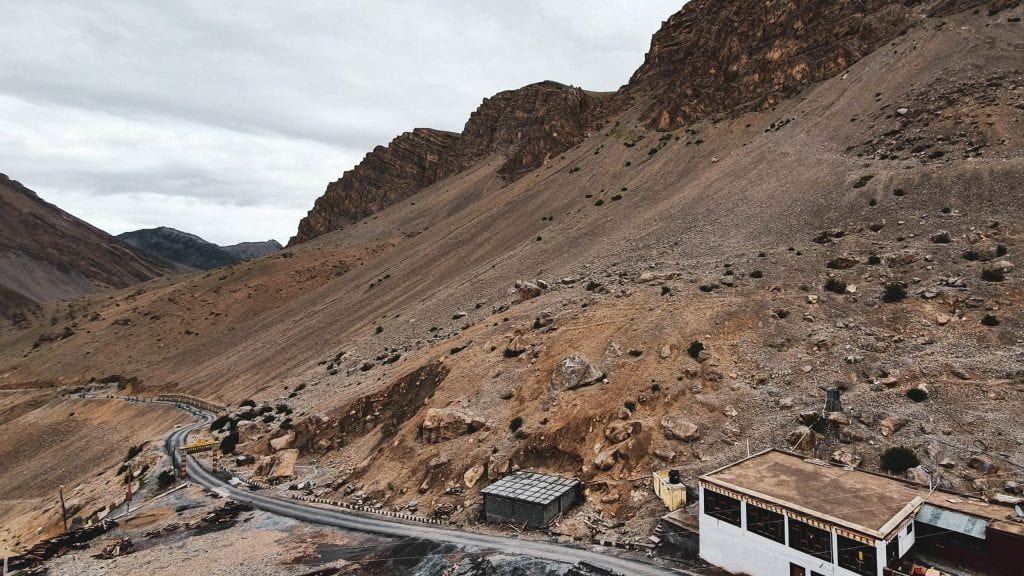
Start by getting yourself to Kaza, the main town in Spiti Valley, via the beautiful road journey from Manali. From Kaza, hire a 4WD to reach the monastery — expect to pay around INR 1,200 (roughly US$12) for the round trip. Public transport exists in theory but runs so infrequently it’s not worth planning around; ask locals for the latest timing if you want to try your luck.
If you’re up for it, the monastery is also reachable on foot from Kaza — about 8 km, and a genuinely rewarding trek if you have the time and the legs for the altitude.
Permits: domestic Indian travellers don’t need any special permit to visit Key Monastery itself. If you’re a foreign national planning the wider Spiti–Kinnaur circuit, rules around restricted-area permits near the India–Tibet border have changed over the years, so it’s worth checking current requirements before you go — the Inner Line Permit guide for Kaza covers what’s currently needed.
While you’re in the area, Chicham Bridge — the highest suspension bridge in Asia — makes an easy add-on to the same day trip from Kaza.
Frequently Asked Questions About Key Monastery
How high up is Key Monastery?
4,166 metres (13,668 ft) above sea level, on a hilltop near the Spiti River.
How do I get to Key Monastery from Kaza?
By 4WD, it’s about 13 km and 30–40 minutes, costing around INR 1,200 for the round trip. On foot, it’s roughly 8 km one way if you’d rather trek.
Can I stay at Key Monastery?
Yes — the monastery runs a basic guesthouse with shared bathrooms and simple meals, monk-operated. It’s very bare-bones, and pricing is informal, so confirm on arrival. Most visitors who want more comfort base in Kaza instead, 13–14 km away.
Is there an entry fee for Key Monastery?
No, entry is free. Donations are welcome but not expected in any fixed amount.
Do I need a permit to visit?
Domestic Indian travellers don’t need one. Foreign nationals should check current Inner Line Permit requirements for the wider Spiti–Kinnaur area, since these have changed over time.
What is the Cham Festival?
An annual monastic festival at the end of July, where monks in elaborate masks perform traditional dances accompanied by Tibetan instruments. Kitchens open to all visitors, free of charge, for the duration.
Is Key Monastery open to non-Buddhist visitors?
Yes. Visitors are welcome — just be respectful inside prayer rooms, keep noise down in the corridors, and remember to walk backward out of a prayer room rather than turning your back on it.
When is the best time to visit?
June through September, while the Manali–Kaza road is open. Winter brings temperatures down to around -40°C and heavy snowfall that can cut the region off for months at a time.
Key monastery is one of the most sought-after destinations in Spiti Valley, and honestly a little underrated outside India — it deserves a place on the list of anyone drawn to remote, high-altitude places with real history behind them. If you’re building out a longer trip, the 7-day Spiti Valley itinerary from Manali covers this alongside the rest of the valley’s best stops.

Outstanding post & photos! What a unique and out of the way destination in India to visit. Loved our travels throughout India a couple of seasons ago. Hope to return one day soon from Canada to see more of this amazing country! 🙂
Thanks for reading, and your lovely words, Robert. India is a wonderful country and has so much to offer, I would love to go there again!
I visited the monastery in Oct 2021. Reading this blog brought back the memories.