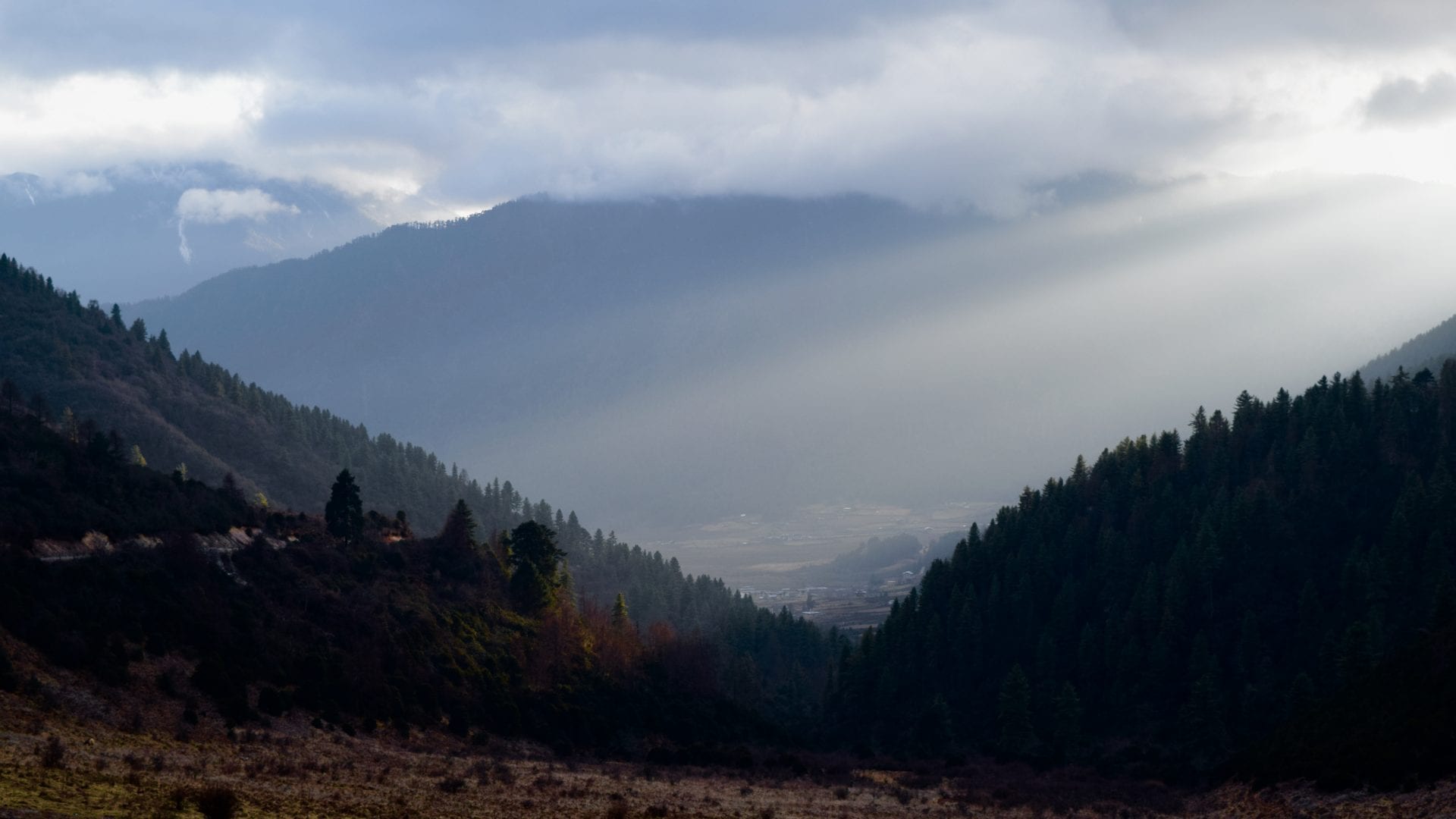
From the moment I saw the flag of Bhutan, I fell in love with the country! It looked mystical to me! I carried this mystical feeling throughout my journey in this amazing land. During your trip to Bhutan, you must visit Phobjikha valley, a remote valley which must not be missed!
UPDATED 13 NOVEMBER 2026:
I updated the black-necked crane figures with the latest count I could find, corrected the crane season and the winter move of the monks, and added a short answer, links to my other Bhutan guides and two new questions. Hotels, prices and road times can change, so check before you go.
Most of the people visiting Bhutan keep their itinerary within visiting the capital Thimphu, a day trip to Punakha, and Paro where they land. Those who love to trek go for a trek to the mesmerizing and jaw-dropping Taktshang Goemba. But, if you are ready to go beyond the most popular tourist destinations of Bhutan where everyone goes, you will be highly rewarded. Phobjikha Valley located in the middle of Bhutan is one of the places which filled my heart with joy and pleasure.
✅ SHORT ANSWER
Phobjikha Valley is a glacial valley in central Bhutan, about 134 km and four hours or more by road from Thimphu. Come from late October to February to see the black-necked cranes, and aim for 11 November for the crane festival in the courtyard of Gangtey Monastery. One day is enough for the monastery, the Gangtey Nature Trail and the crane information centre, and one night makes it relaxed.
Location
Wangdue Phodrang District
Central Bhutan, bordering Jigme Singye Wangchuck National Park
Altitude
~3,000 metres
9,840 ft
From Thimphu
~134 km
4+ hours, typically via Punakha and Pele La Pass
Recommended stay
1 night / 1 full day
Best time for cranes
Late October to March
Black-Necked Crane Festival
Every year on November 11
At Gangtey Monastery
Gangtey Monastery
Founded in 1613
The main seat of the Peling tradition in western Bhutan
Entry requirement
Licensed Bhutanese tour operator
Except Indian, Bangladeshi and Maldivian nationals
Where in Bhutan is the Phobjikha Valley?
Phobjikha Valley is 134 kilometers from Thimphu, bordering Jigme Singye Wangchuck National Park. It takes more than 4 hours to reach Phobjikha Valley from Thimphu, typically travelling via Punakha and over the Pele La Pass, a scenic drive in its own right, though a long one.
⚠️ As with the rest of Bhutan, foreign visitors need to travel with a licensed local tour operator, who arranges the vehicle and driver for the journey (Indian, Bangladeshi, and Maldivian nationals have simplified entry requirements). If you’ve already read about landing at Paro Airport or the drive from there to Thimphu, Phobjikha is usually added on as an extension once you’re already deep into a Bhutan itinerary rather than a first stop.
If you’d rather not coordinate the guide, permits, and hotels yourself, a handful of well-structured multi-day tours already bundle Phobjikha into a wider Bhutan itinerary, with the guide, driver, SDF, and accommodation handled in one booking:
This post contains affiliate links. If you book through them, I may earn a small commission at no extra cost to you.
How is Phobjikha Valley?
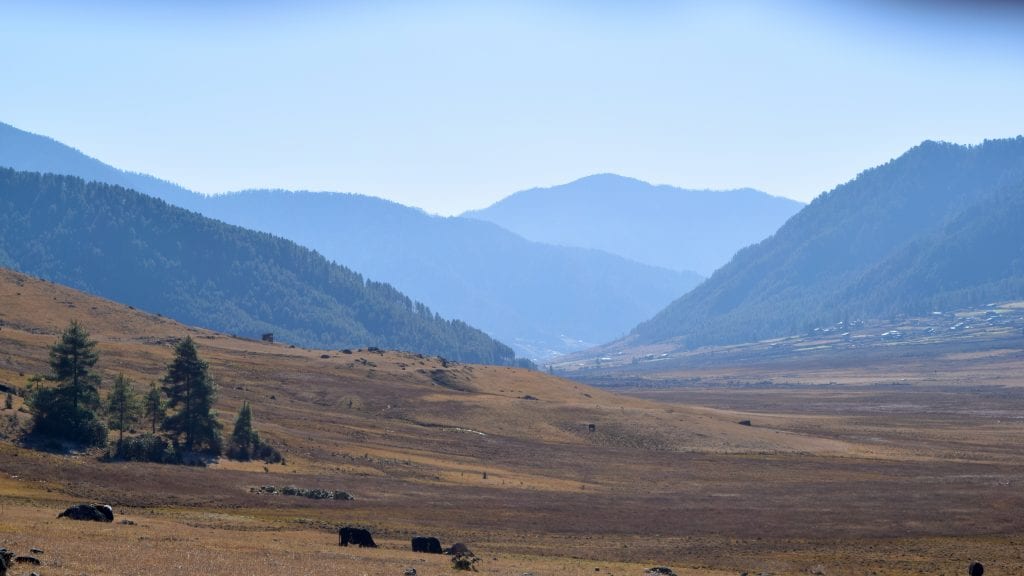
It’s a bowl-shaped valley. Due to its location, the place can become very cold, and you are supposed to see glaciers in the winter. It’s surrounded by black mountains. You won’t find many people living in the valley. The number of hotels is still very small. So, a walk in the Phobjikha valley means walking all alone in a different world!
One detail that makes this valley unusual: the power lines running through it are deliberately buried underground rather than strung overhead, specifically to protect the flight paths of the black-necked cranes that winter here. It’s a small thing you might not notice at first, but it says a lot about how seriously this valley’s conservation is taken.
Our Arrival and Nightstay in Phobjikha Valley
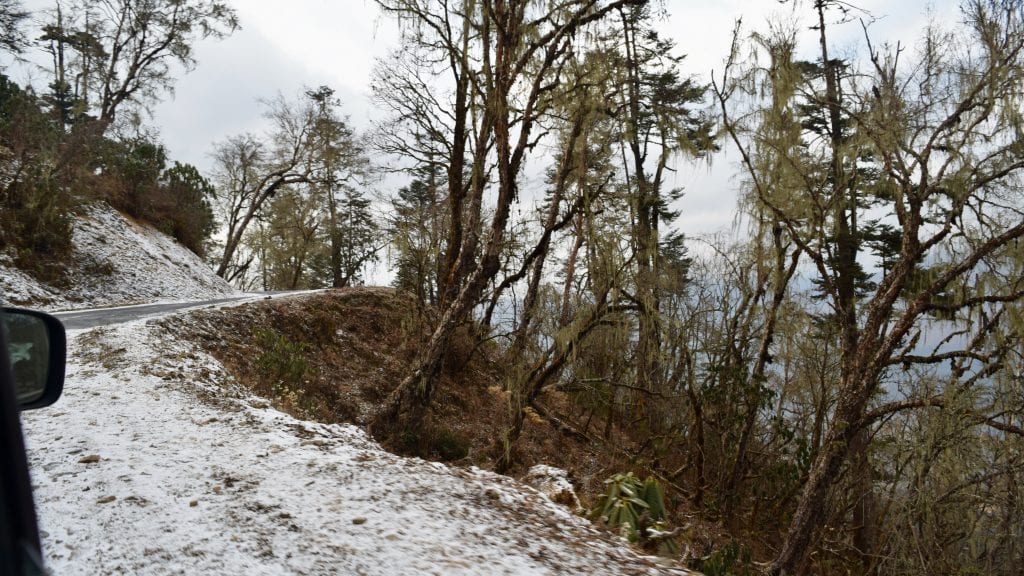
It was already evening when we entered the valley. We could see traces of snow on the street. It was the end of December, and trees lost their colors. There was a sense of tranquility in the air.
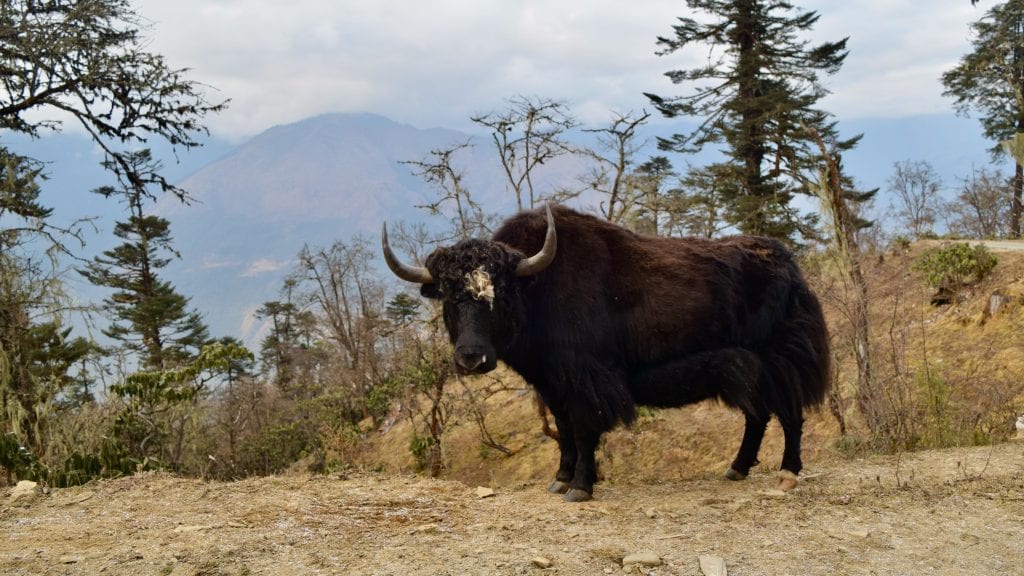
You won’t find many people in Bhutan. Its population is under a million. So, naturally, the roads were devoid of people. Suddenly, I came across a yak to it was gracefully gorgeous and looking at me! Yak can be found at high altitudes; they have thick hairs to battle the cold.
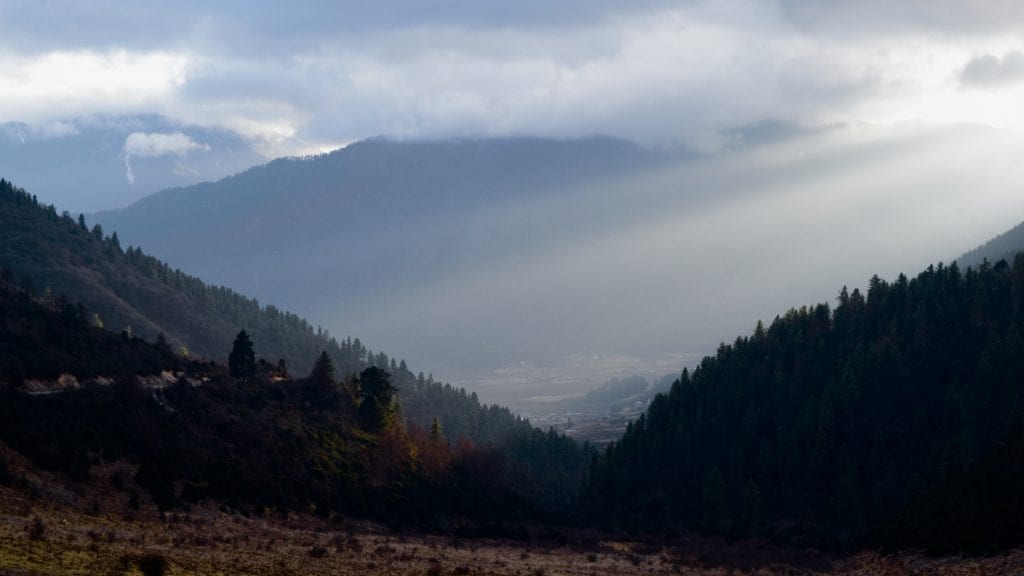
We didn’t book anything ahead for a stay before coming here. We let our drivers find one for us. In the meantime, I got out of the car and enjoyed the last rays in the valley. It was surreal and sublime. As there were layers of mountains, the ray that came out through the tree and mountains created a different aura. Although there was no trace of snow in the town, the weather was extremely chilly.
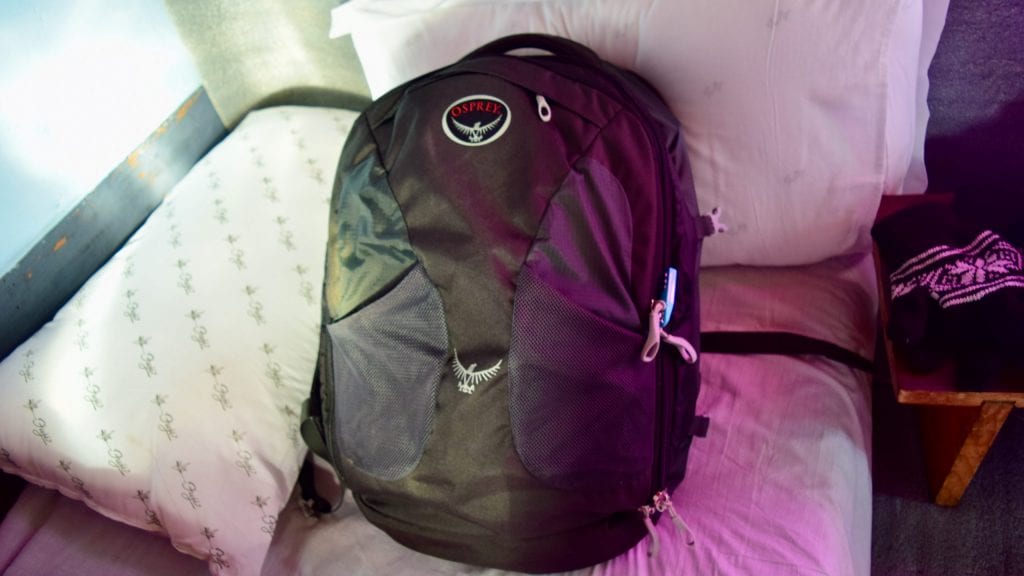
Our driver found a homestay for us. We were greeted by a woman there. It was a small family of three, including a girl. I got a small bed on the floor to sleep on. The window was sealed; however, I could feel the chilliness. After 8:00 PM, my cellphone stopped working! I learned that they turn off the electricity in the cellular tower at night. This was something new to me!
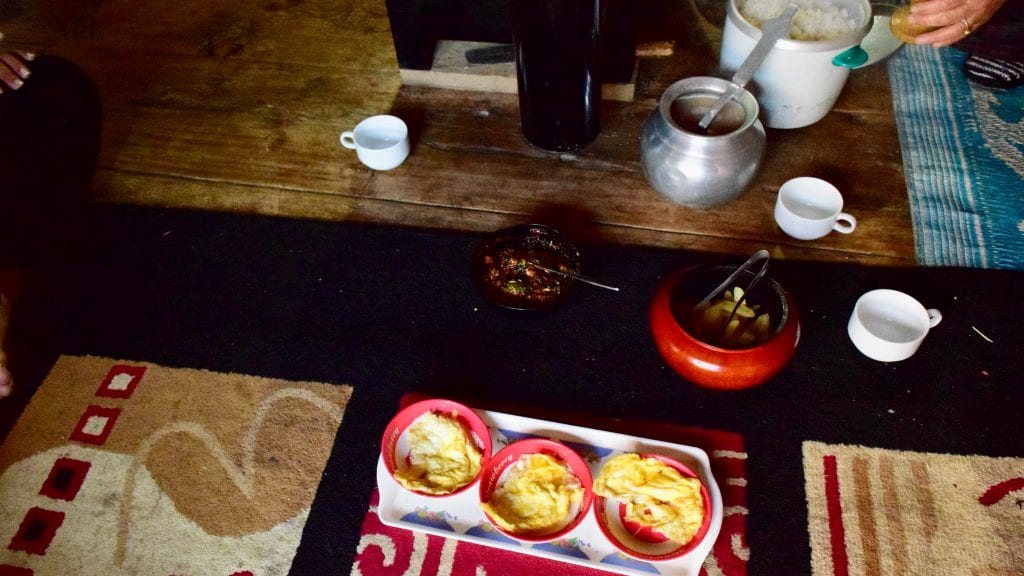
I had dinner with the family and went to bed. When I woke up in the morning, breakfast was there for us. It was sticky rice, scrambled eggs, red chilies, and a special kind of tea named souja made of butter. Although it was not good for my typical tastebud, I enjoyed the company of the family.
ACCOMMODATION
There is no town centre and very little fixed accommodation in Phobjikha, most visitors either stay in a homestay exactly like this one, or in one of a small handful of lodges scattered across the valley. Don’t expect to book something last-minute the way you might in Thimphu; let your tour operator arrange it in advance if you’d rather not leave it to chance.
A Walk in the Phobjikha Valley in Bhutan
A School, an Office, or a Monastery?
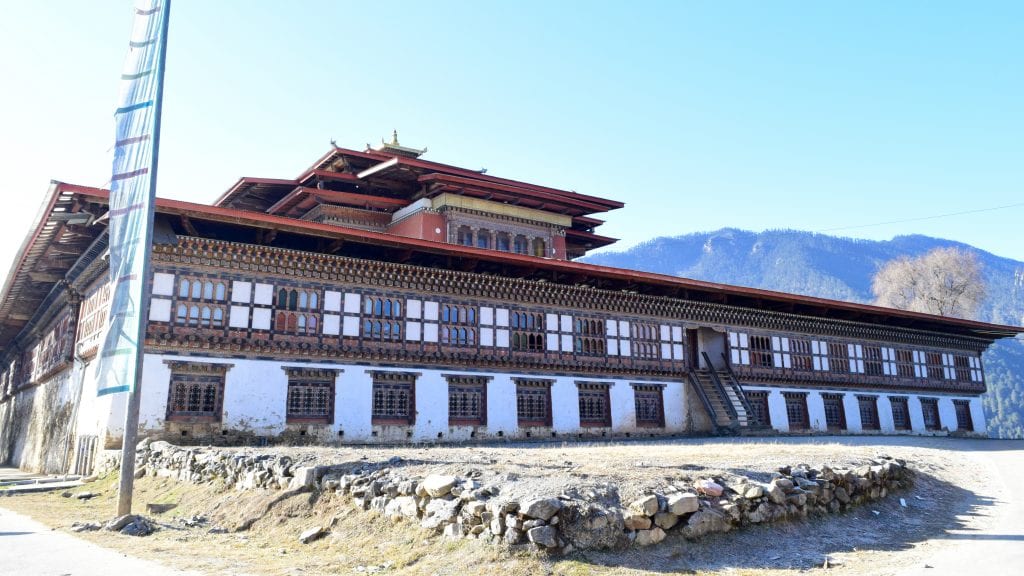
As soon as I got out of our homestay, I came across beautiful typical Bhutanese architecture to white and maroon. I asked our driver about it. He said that it might be a school. I didn’t think so; it looked more like an office building or a monastery than a school. Speaking about the monastery, a brief walk took us to the most beautiful one in the valley!
Gangtey Monastery
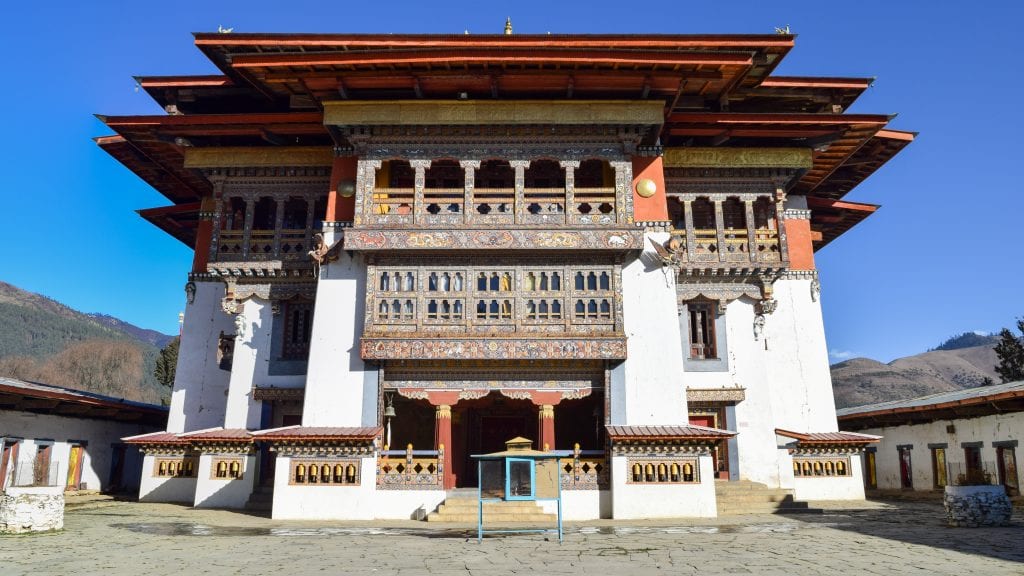
Gangtey Monastery is surrounded by the Gangten village. This is the most famous and beautiful monastery in the Phobjikha valley. It was founded in 1613 by Gyalse Pema Thinley, the grandson of the revered treasure revealer Pema Lingpa, and remains the main seat of the Peling tradition within the Nyingma school of Tibetan Buddhism, the oldest Buddhist school in the country. It’s still an active monastic community today, home to around 100 monks.
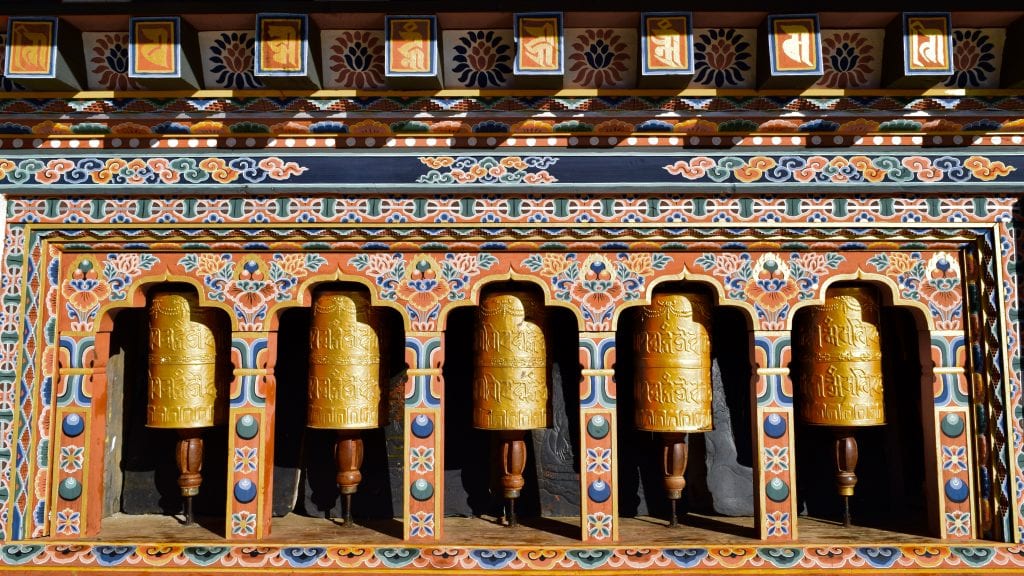
It is customary to circle the monastery three times. You will find gold-colored prayer wheels inside ornamented wooden boxes. You will see people rotating them.
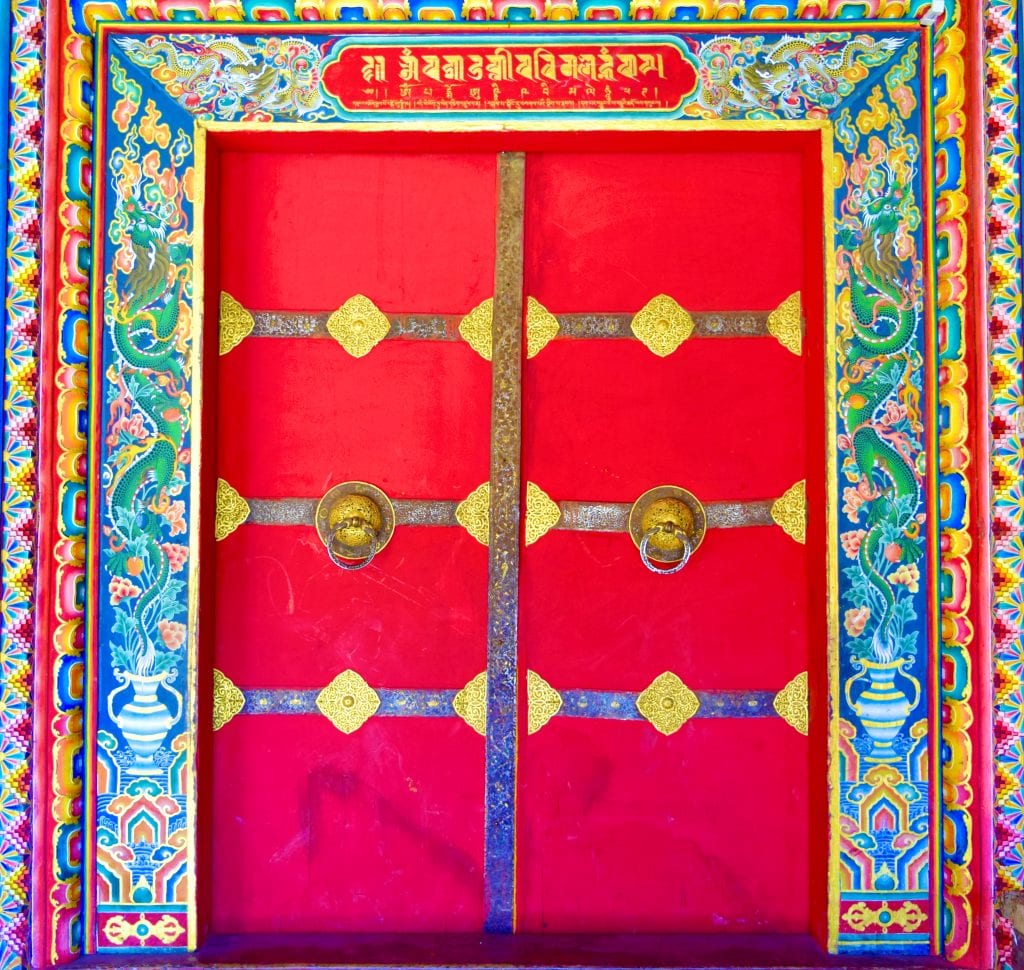
I found the most beautiful red door in Bhutan in the Gangtey Monastery. On top of the door, you will see prayers in the Tibetan language. The border of the door is painted with snakes coming out of a flower vase. The large circular knob in the middle is for knocking on the door.
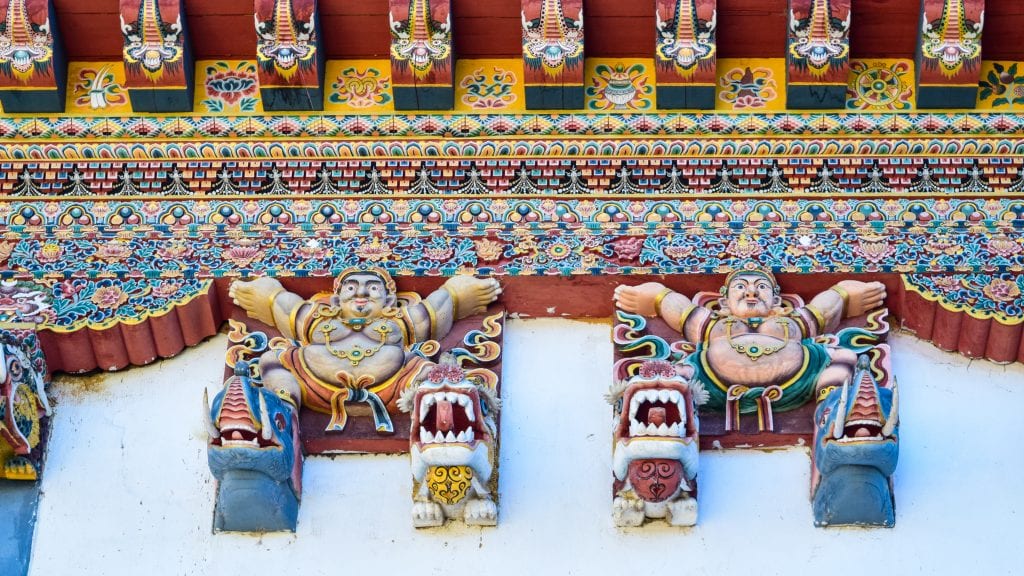
Like most of the structures in Bhutan, you will find an abundance of wood. It’s no wonder that the nearest forest supplies them. Even the stones are brought from the nearby mountains. The monastery has five beautiful temples, living quarters, meditation halls, and even a school. The monastery underwent significant restoration between 2002 and 2008 after earlier earthquake damage, with conservators carefully preserving the original detail, including adding more than 100 new hand-carved pillars in keeping with the traditional style.
Black-Necked Cranes and the Crane Festival
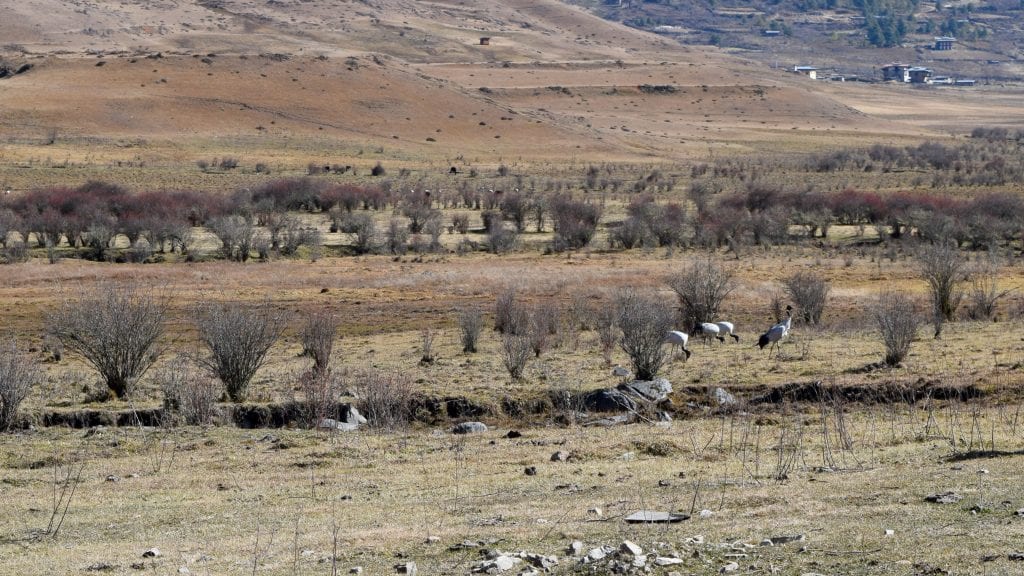
Before visiting Phobjikha Valley, wherever I tried to read something about the place, I read about the black-necked cranes. They are so popular! There is a reason for that. This crane breeds on the Tibetan Plateau and winters only in a handful of remote parts of Bhutan, India, and China. Its body is white, and its neck is black, and it’s one of the rarest crane species on Earth.
The most recent count I found, for the 2024 to 2025 winter and reported by Asia News Network, recorded 709 black-necked cranes in Bhutan, 640 of them in Phobjikha. They usually start arriving in late October and leave around mid-February. According to local belief, the cranes circle Gangtey Monastery three times upon arrival each autumn, and again three times before departing back to Tibet in spring, a gesture, the story goes, of paying respect to the sacred site below.
What surprised me researching this after my trip: some residents of the valley, including the monks of Gangtey, move to the warmer Wangdue Phodrang area in January and February, according to Wikipedia.
You will find a black-necked crane visitor center in Phobjikha Valley with tons of information about this beautiful bird. Besides, you can enjoy binoculars for observing the birds in the field; you will find them in the winter. The Black-Necked Crane Information Centre is run by the Royal Society for the Protection of Nature (RSPN), with permanent spotting scopes overlooking the valley and staff on hand to help identify birds and explain the conservation work underway.
Time your visit for the Black-Necked Crane Festival
Held every year on November 11 in the courtyard of Gangtey Monastery. It’s not a religious festival but a conservation celebration, started in 1998 by RSPN, local schoolchildren perform crane dances in hand-painted costumes, monks perform traditional mask dances adapted for the occasion, and the date conveniently coincides with the birds’ peak arrival window.
A Top View of the valley
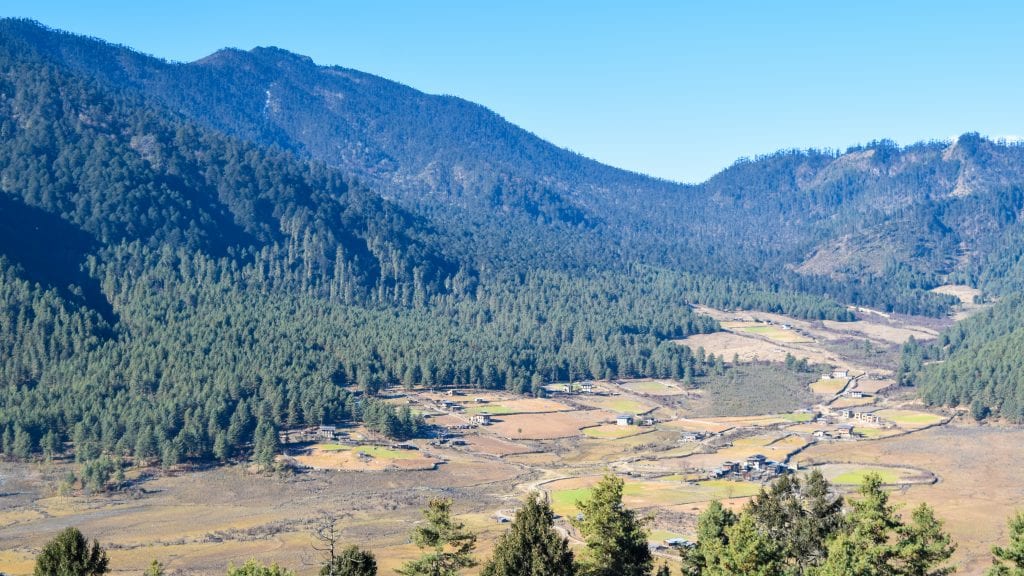
I mentioned earlier that Phobjikha is a bowl-shaped valley. So, you will get the opportunity to visit different places from where you can enjoy a panoramic view of the entire valley. This was one of my favorite things to do, as I felt like a bird enjoying everything from the top.
Getting Lost in the Valley
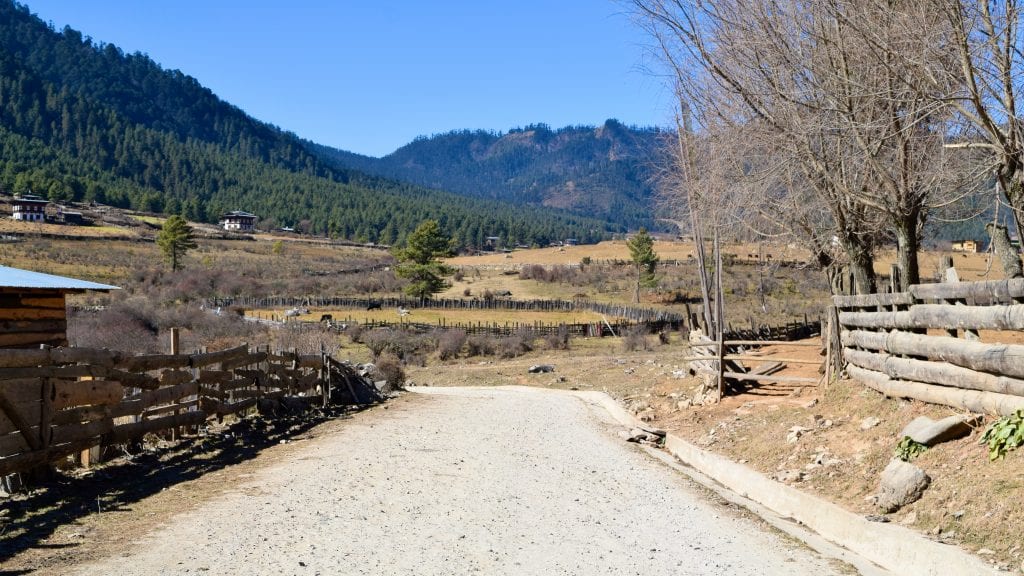
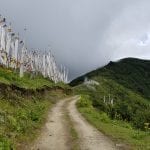
Back to the ground from the top, and you will find plenty of things to explore, too! Is there anything specific? The answer is no! You just need to pick a road and walk to the unknowns as the wind blows and time passes.
Muddy road, Pine Forest
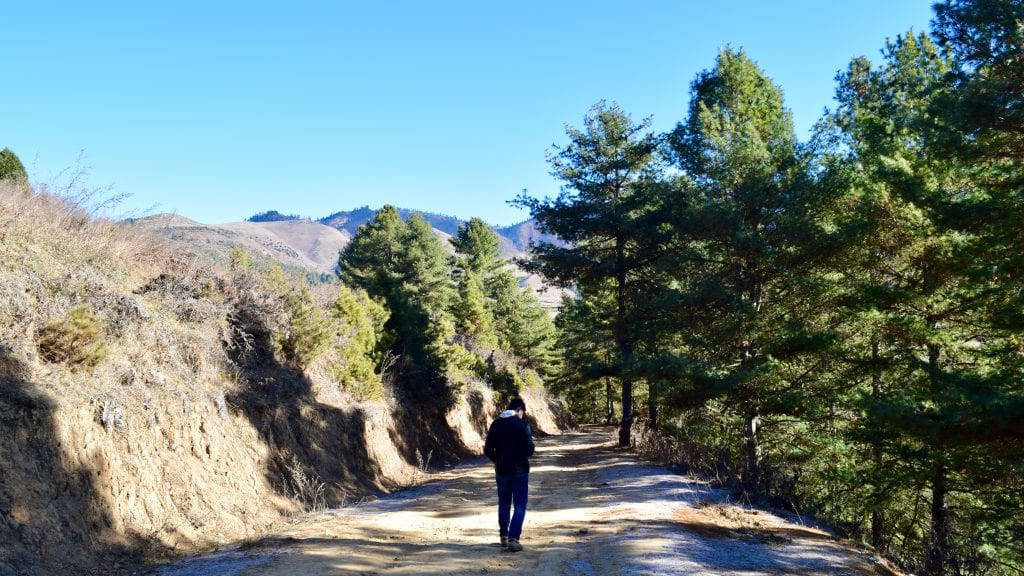
I visited Phobjikha Valley at the end of December. The sky was blue and clear, and the mountains were not as green as I would have expected; they were rather brown. While walking on the unpaved, muddy road in Phobjikha Valley, I noticed an abundance of pine trees. They were very big. If you like, you may take a walk in the forest while exploring the valley.
Exploring Local Houses
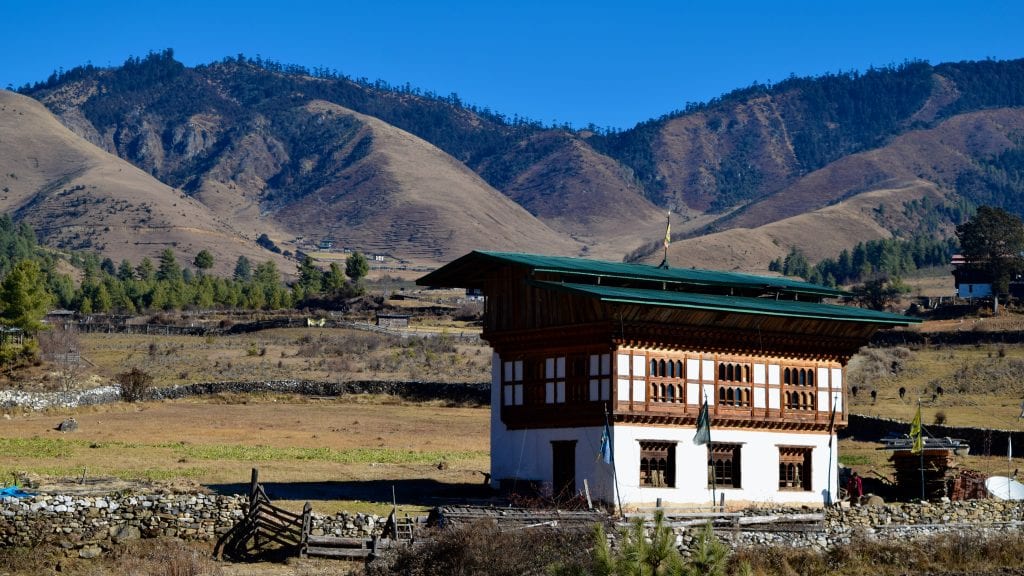
While walking on the road to Phobjikha Valley, I was wondering if anyone lives here! There were not many souls around. All of a sudden, I discovered a house, just like Christopher Columbus discovered America! It was a two-story building standing out of nowhere, surrounded by brown mountains. It had a small boundary to mark its property.
Indian bikers are everywhere!
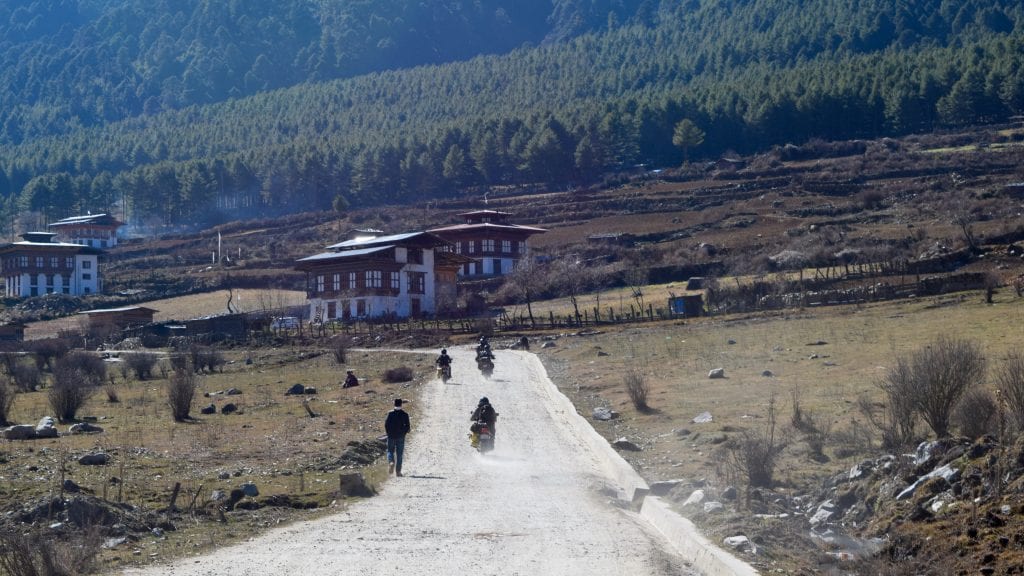
Only Indians can enter Bhutan by road. They take this opportunity with both their hands. I think I saw more Indians in Bhutan than Bhutanese. It’s not common for an Indian to come to Bhutan with their own motorbike. Although they enjoy their time to the fullest (who wouldn’t?), I didn’t like it at times as those motorbikes disturbed the silence and tranquility of the valley.
The Gangtey Nature Trail
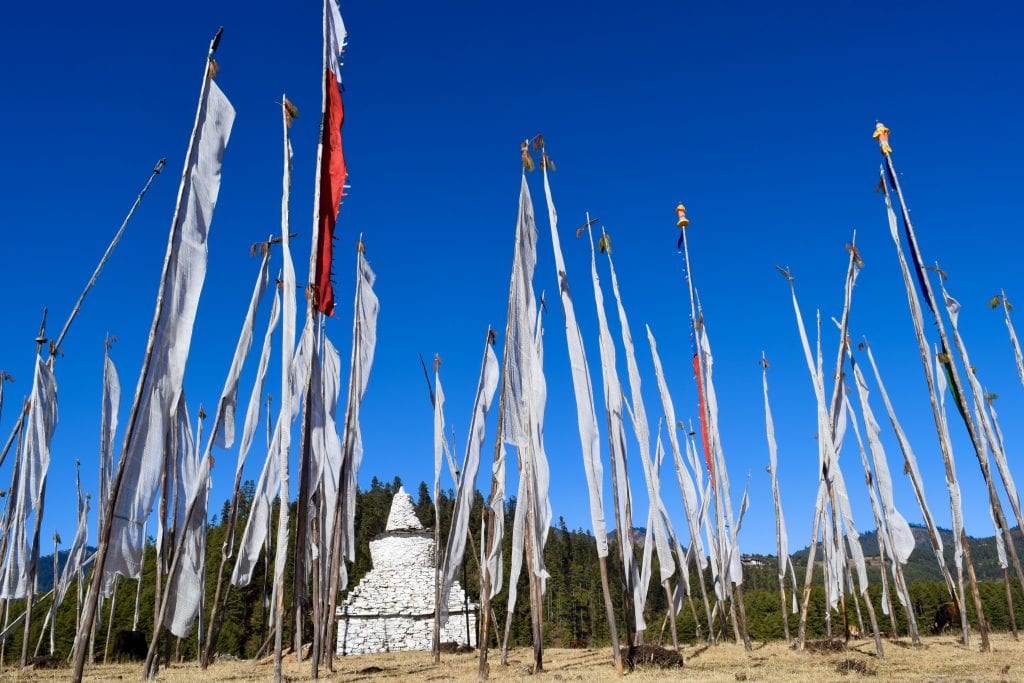
I was walking on the Gangtey Nature Trail when I first saw a white stupa surrounded by countless colorful prayer flags, literal flags raised on sticks, rather than the small chunks strung along rope you see elsewhere in Bhutan. It was amazing to stand in the middle, surrounded by waving flags, in a remote part of the world.
The trail itself is a gentle walk of around 90 minutes, starting near the Mani stone wall just north of Gangtey Monastery and ending at Khewang Lhakhang. It’s an easy, beginner-friendly route through wetland meadows, pine forest, and traditional farmhouses, and one of the best ways to see the cranes at close range if you’re visiting in winter, early morning gives you the best light and the most active birds.
Holy Cows!
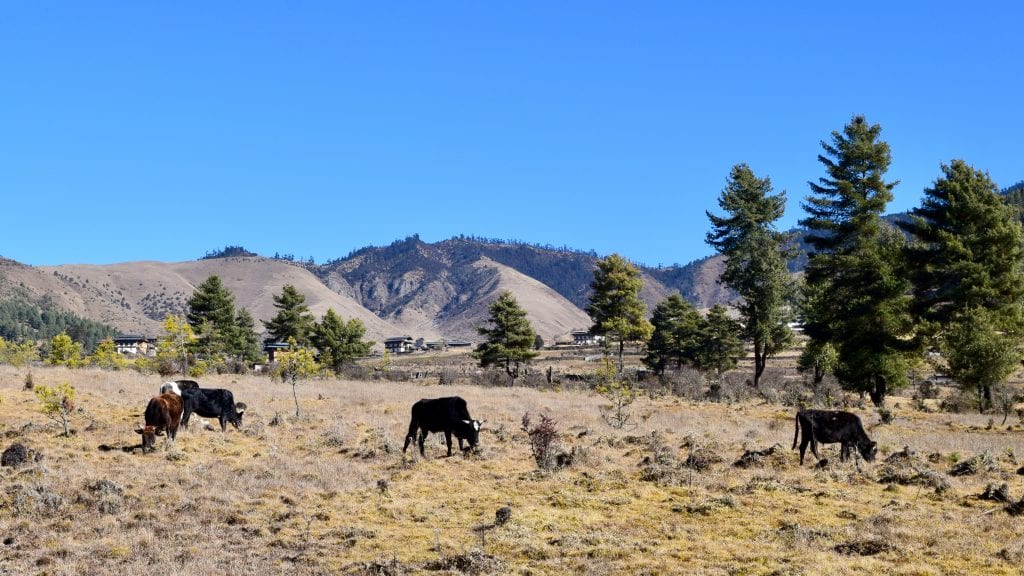
Unlike India or Nepal, where Hinduism is dominant, Bhutan is a Buddhist country. It means cows do not resemble holiness for them. However, the Bhutanese usually do not kill animals, including fish, as it is discouraged in Buddhism. Most of the meats you will consume in Bhutan are imported from India!
Refreshing Water
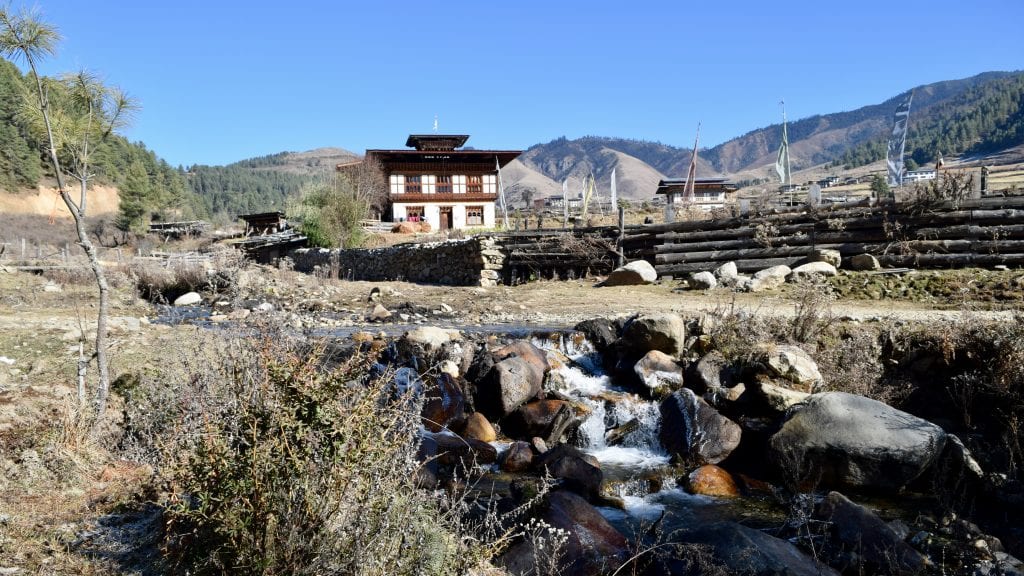
Bhutan is different compared to the many countries you are going to visit. You won’t find shops or restaurants in most of the places; Phobjikha Valley is no exception. It will be wise for you to carry snacks and water in a bag. You can refill those water bottles in many streams. Do not forget to splash them on your face too; they are refreshing!
Best Time to Visit Phobjikha Valley
Late October to February (crane season) is when the valley is at its most special, this is when the black-necked cranes are actually present, and when the Black-Necked Crane Festival takes place (11 November). It’s also, unavoidably, the coldest and starkest time to visit, I went in late December and found the mountains brown rather than green, with real winter chill in the air.
Spring and early autumn bring back the greenery I missed on my own visit, though without the cranes. If wildlife is your priority, come in winter and dress for it. If landscape photography and comfortable hiking weather matter more, consider the shoulder seasons instead.
Prepare for cold
Phobjikha sits at roughly 3,000 metres, noticeably colder than Thimphu or Punakha, and mild altitude effects are possible if you’re not acclimatised. Pack proper warm layers regardless of season, the valley is cold after dark even outside of winter, and don’t expect shops or restaurants once you’re out in the valley itself.
Where to Stay in Phobjikha Valley
Where to Stay in Phobjikha Valley
There is no real town in Phobjikha, accommodation is scattered across the valley rather than concentrated in one place, and options are limited compared to Thimphu or Paro.
Homestays, like the one I stayed in, are the most common option and arranged directly by your driver or tour operator on arrival or in advance. They’re basic but come with a level of hospitality and cultural insight you won’t get anywhere else, a home-cooked dinner, butter tea, and a family’s company for the evening.
Hotels to Book in Phobjikha Valley
Taj Gangtey Resort and Spa is the most upscale, full-service option in the valley, part of the well-known Taj hospitality group, with proper spa facilities and the kind of polish that’s rare this far off the beaten path. If you want real comfort after a day of hiking and monastery visits, this is the pick.
Gangtey Pinewood Resort sits surrounded by pine forest and open wetland, close to Gangtey Monastery. It leans toward traditional Bhutanese charm rather than luxury, simply furnished, warm, spacious rooms with big windows looking out over the valley or forest, and is particularly well suited to couples, photographers, and birdwatchers here for the crane season.
Odiyana Hotel is smaller and simpler, around 10 to 20 rooms depending on the season, but consistently praised for two things: some of the best sunrise views in the valley from an edge-of-the-U-shape position, and warm, attentive hosting (multiple reviewers specifically mention the owner, Tenzin, going out of his way for guests). A good choice if a great view matters more to you than five-star polish.
RKPO Green Resort-Gangtey is a more modest option in the valley, a fallback if the properties above are full, as with anywhere in Phobjikha, book ahead rather than expecting to arrange something on arrival.
Beyond these four, Dewachen Hotel is a small, well-regarded lodge often mentioned as the first choice among Bhutanese tour operators for Gangtey, and Gangtey Lodge, Amankora Gangtey, and Six Senses Bhutan represent the top end of what’s available, for a real splurge.
💡 Given how few beds exist in the entire valley, accommodation here should be arranged well in advance through your tour operator, especially if your visit falls anywhere near the Crane Festival in November, that week is by far the busiest of the year.
…and Phobjikha Valley is beautiful!
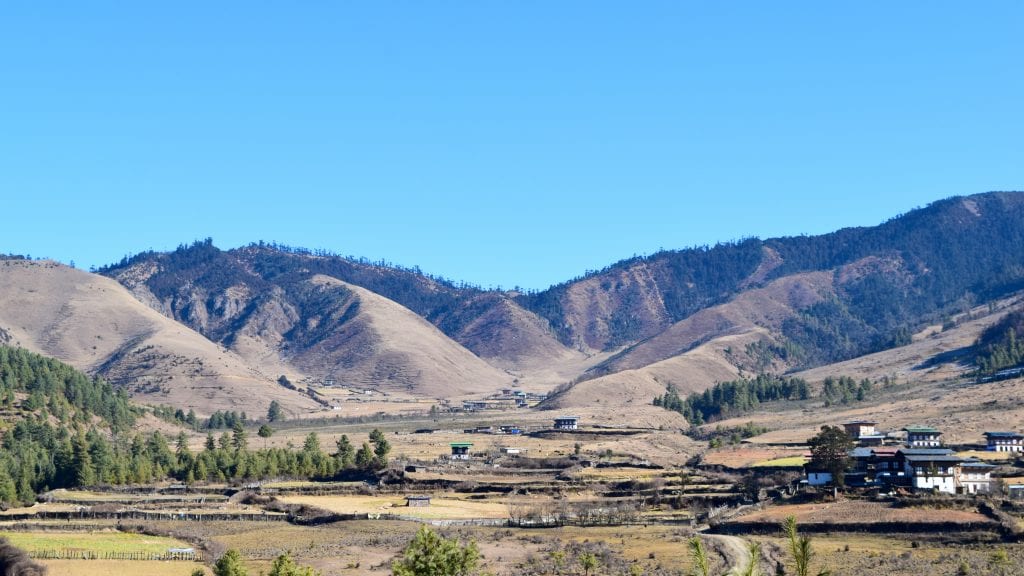
I simply loved Phobjikha Valley; it’s calm, quiet, scenic, and beautiful! As I went during the winter, I saw brown mountains, and nature was barren. I hope to visit there during the monsoon; I am pretty sure I would love the green Phobjikha Valley, too! Do not miss visiting there during your trip to Bhutan; it’s an absolute must!
Frequently Asked Questions
Is Phobjikha Valley worth visiting?
Yes, especially if you want to see a side of Bhutan beyond Paro, Thimphu, and Punakha. Phobjikha is a remote, bowl-shaped glacial valley known for Gangtey Monastery, the endangered black-necked cranes that winter there, and a level of quiet and solitude that’s hard to find anywhere else in the country.
How many days do you need in Phobjikha Valley?
One full day is enough to see Gangtey Monastery, walk the Gangtey Nature Trail, and visit the Black-Necked Crane Information Centre. Most itineraries include one overnight stay, often in a homestay or one of the valley’s small lodges.
When is the best time to see black-necked cranes in Phobjikha Valley?
The cranes arrive from the Tibetan Plateau starting in late October and stay through the winter until around mid-February. The Black-Necked Crane Festival is held every year on November 11 at Gangtey Monastery to celebrate their arrival.
How many black-necked cranes winter in Phobjikha Valley?
The most recent count I found, for the 2024 to 2025 winter and reported by Asia News Network, recorded 709 black-necked cranes in Bhutan, 640 of them in Phobjikha. Numbers change each winter, and the cranes usually arrive in late October and leave around mid-February.
What is the Gangtey Nature Trail?
It is a gentle walk of around 90 minutes that starts at the Mani stone wall just north of Gangtey Monastery and runs through the valley floor to Khewa Lhakhang.
How do you get to Phobjikha Valley?
Phobjikha Valley is about 134 km from Thimphu and takes more than 4 hours by road, typically routed through Punakha and over Pele La Pass. As with the rest of Bhutan, foreign visitors need to travel with a licensed local tour operator.
When was Gangtey Monastery built?
It was founded in 1613 by Gyalse Pema Thinley, the grandson of the revered treasure revealer Pema Lingpa, and remains the main seat of the Peling tradition within the Nyingma school of Buddhism.
Continue Your Bhutan Trip
- Landing at the Paro Airport in Bhutan
- Paro Airport to Thimphu
- Places to Visit in Thimphu
- Places to Visit in Punakha
- Tiger’s Nest Trek

Leave a reply