
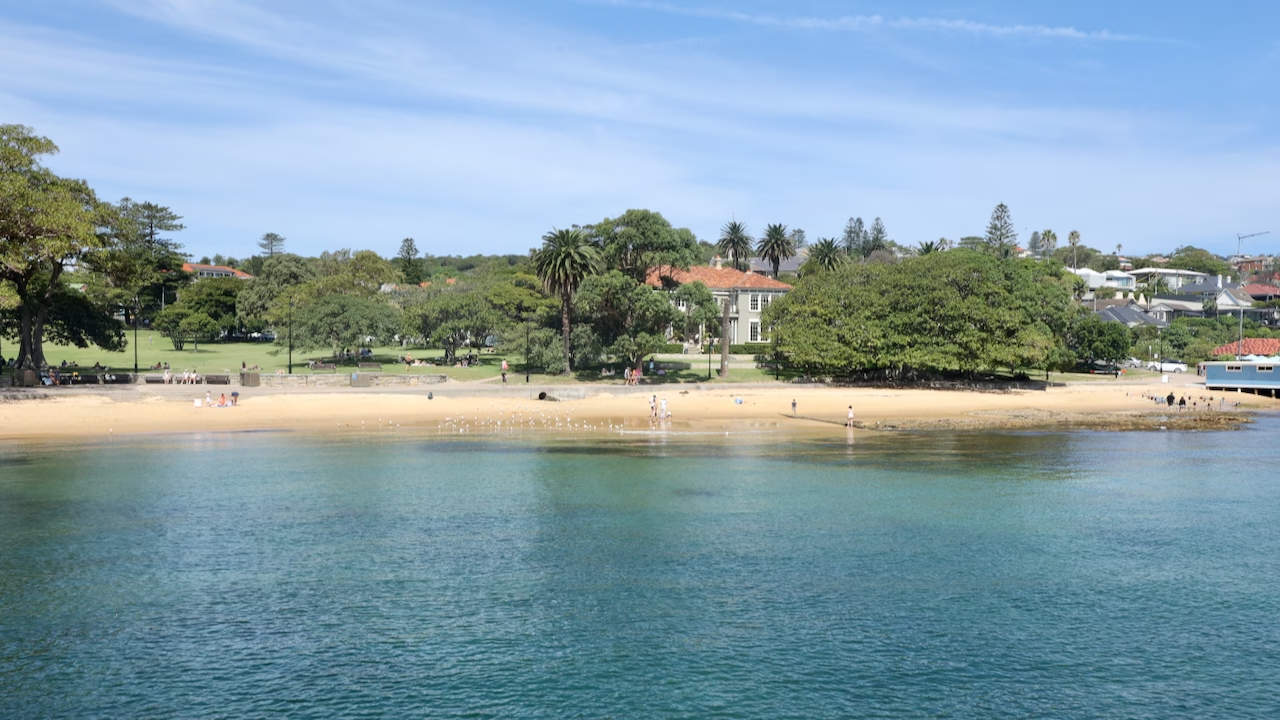
Watsons Bay sits at the very tip of South Head, the southern gatepost of Sydney Harbour. It was the easiest escape from the city I found in Sydney, and one of the simplest half-day trips you can make without a car. A ferry from Circular Quay drops you, around 25 minutes later, at a harbourside village with a calm beach, a park full of gulls, and a seafood restaurant whose family has served food on the same sand since 1885. From there, a short clifftop trail leads to a red and white lighthouse where the harbour meets the Pacific.
I went on a hot Saturday in February. I rode the F9 ferry out, walked the South Head Heritage Trail past Camp Cove and Lady Bay to Hornby Lighthouse, and was back at the wharf about an hour and a half after I stepped onto the trail. This guide covers what I did, what I’d add next time (The Gap and the Macquarie Lighthouse cliff walk), where to eat at every budget, and how to fit Watsons Bay into a Sydney trip.
Half a day
- F9 ferry from Circular Quay
- Camp Cove
- South Head Heritage Trail to Hornby Lighthouse
A full day
- Everything in the half day
- The Gap and Dunbar’s Anchor
- Macquarie Lighthouse on the cliff walk
- A long lunch at Doyle’s
Short on time? Half a day covers the main things to do in Watsons Bay.
Acknowledgement of Country
Watsons Bay is on Aboriginal land. Local histories name the Birrabirragal and Gadigal as its traditional custodians.
Why Watsons Bay Belongs in Your Sydney Itinerary
Most Sydney visitors see the harbour from Circular Quay, looking out. Watsons Bay flips that view around. From the end of the peninsula you look back up the harbour to the city skyline and the Harbour Bridge, then turn around and face the open Pacific from the same headland. Few half-day trips from central Sydney give you both so easily.
It also slots neatly into a city day. The ferry leaves from the same quay as the Opera House, so a morning on the Sydney Opera House guided tour followed by an afternoon ferry to Watsons Bay works without any backtracking.
How to Get to Watsons Bay: Ferry, Bus and Car
F9 Ferry from Circular Quay to Watsons Bay
For most visitors, the ferry is the most enjoyable way to arrive. The F9 Watsons Bay ferry leaves from Wharf 2 at Circular Quay (some services start at Barangaroo) and stops at Rose Bay before Watsons Bay. The ride takes around 25 minutes, and you pay with an Opal card or by tapping a contactless bank card. A one-way adult fare is roughly A$7 to A$9.50 depending on the distance band, and cheaper once you hit the daily cap.
Timings are the catch. At the time of writing, weekday F9 services only run all the way to Watsons Bay from mid-morning to mid-afternoon, with gaps that can stretch to an hour and a half or more. Weekends start earlier and run more often. Check the current Watsons Bay ferry timetable in the Transport NSW trip planner or app before you go, and look up your return ferry before you set off on the walk.
Outside those hours, and during weekday peaks, the F9 only runs as far as Rose Bay, with Captain Cook Cruises covering Watsons Bay. In strong winds, ferries skip Watsons Bay altogether and turn around at Rose Bay. If that happens, check the service alerts in the trip planner; buses along New South Head Road are the usual way to continue.
Captain Cook Ferry from Circular Quay or Manly
Captain Cook Cruises also runs its own Watsons Bay ferries from Circular Quay, plus a link from Manly, which is handy if you’re staying on the northern beaches. It’s a private operator that sets its own fares, so don’t tap the Sydney Ferries Opal readers on the wharf before boarding one of its boats. Check Captain Cook’s website for tickets and payment options, and for its timetable.
What You’ll See on the Ferry Ride
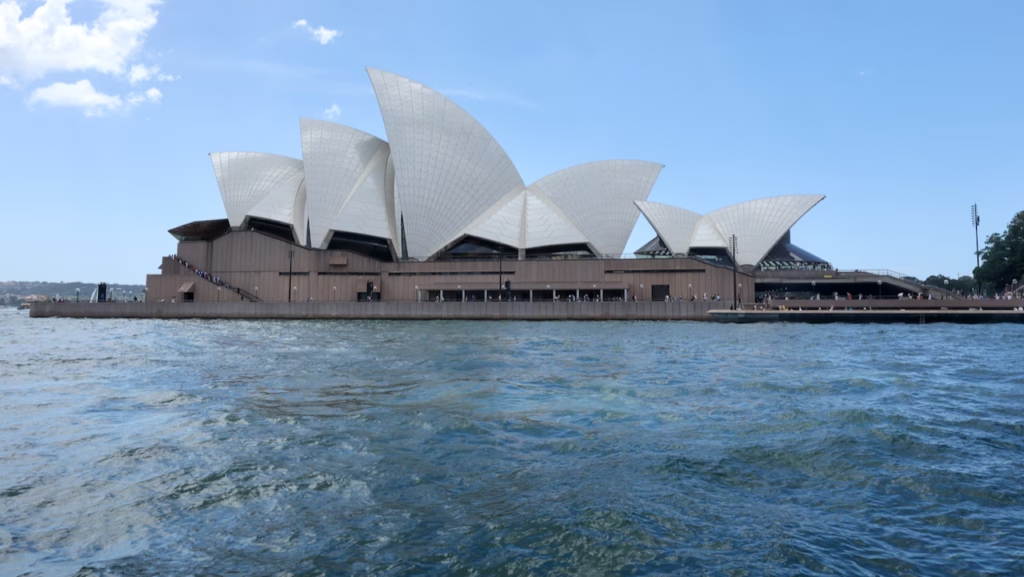
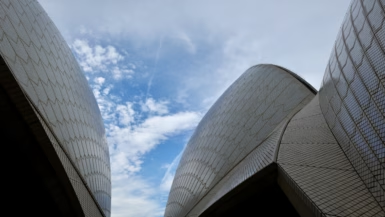
The ferry is also half the reason to go. The Opera House doesn’t disappear on this ride so much as get renegotiated, minute by minute. Close to Circular Quay it fills the frame, each shell distinct enough to count.
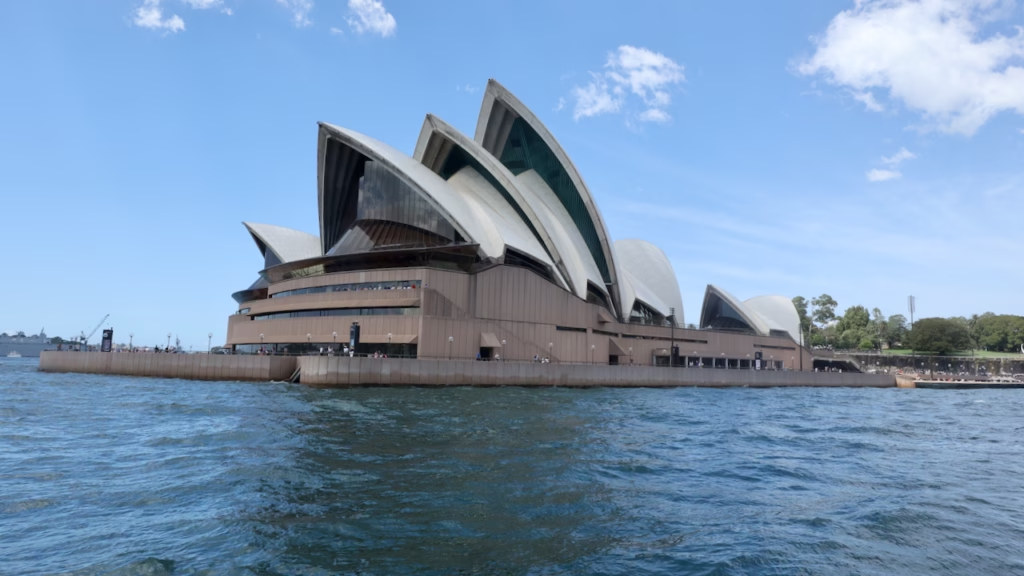
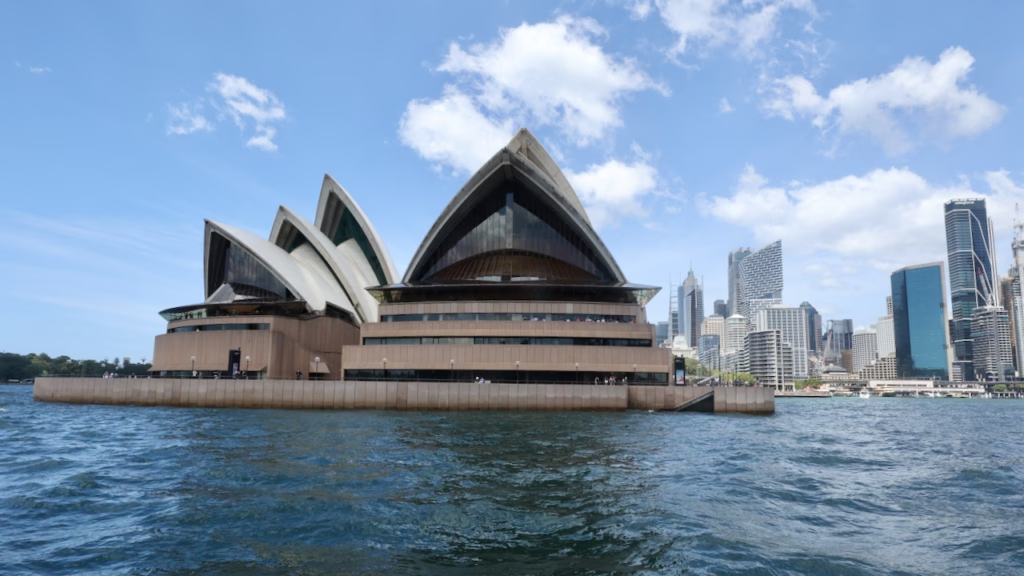
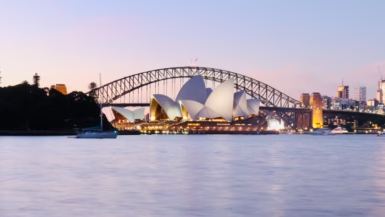
A few hundred metres on, the angle shifts just enough that the CBD towers slide into the same shot behind it, the old sails and the new skyline sharing space. As the ferry rounds Bennelong Point, Garden Island’s grey warships edge into frame on the far side.
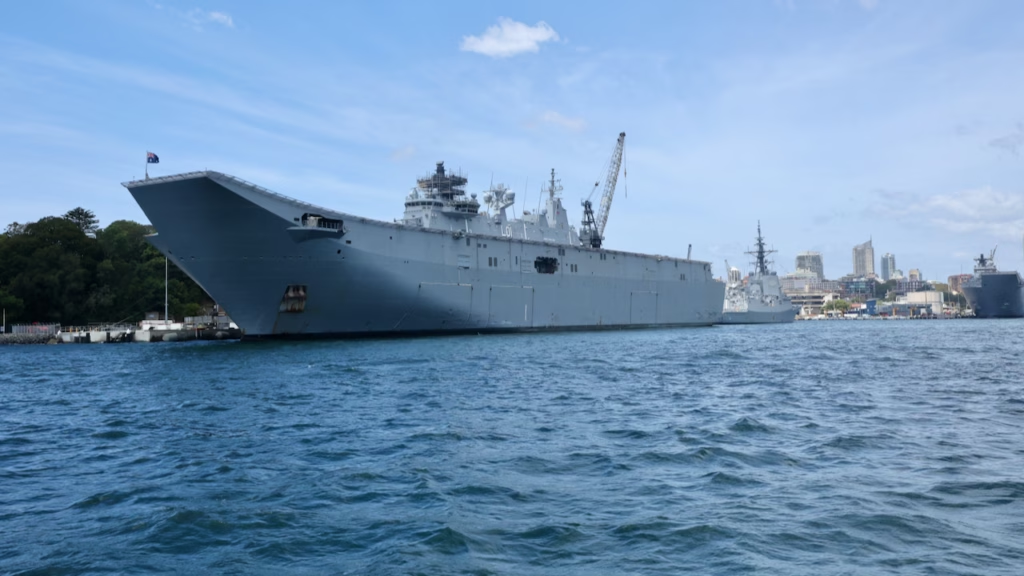
Garden Island is the Royal Australian Navy’s main east-coast base, and the ferry passes close enough to read the hull numbers. The flat-topped giant marked L01 is HMAS Adelaide, one of the Navy’s two amphibious assault ships. It’s a reminder that this is a working harbour as much as a scenic one.
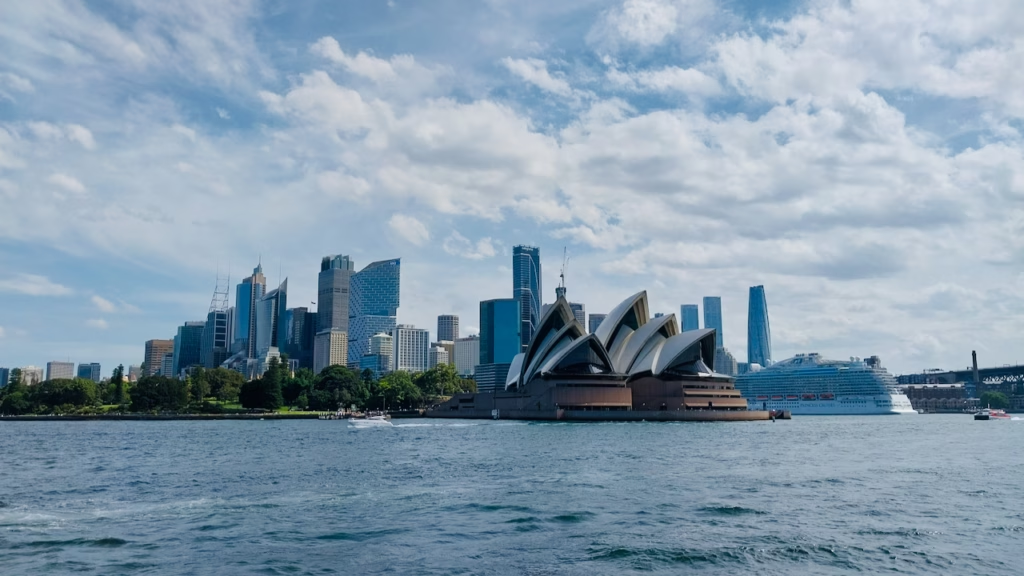
Look back towards the Quay and a cruise ship at the Overseas Passenger Terminal starts doing more work in the picture than the Opera House does.
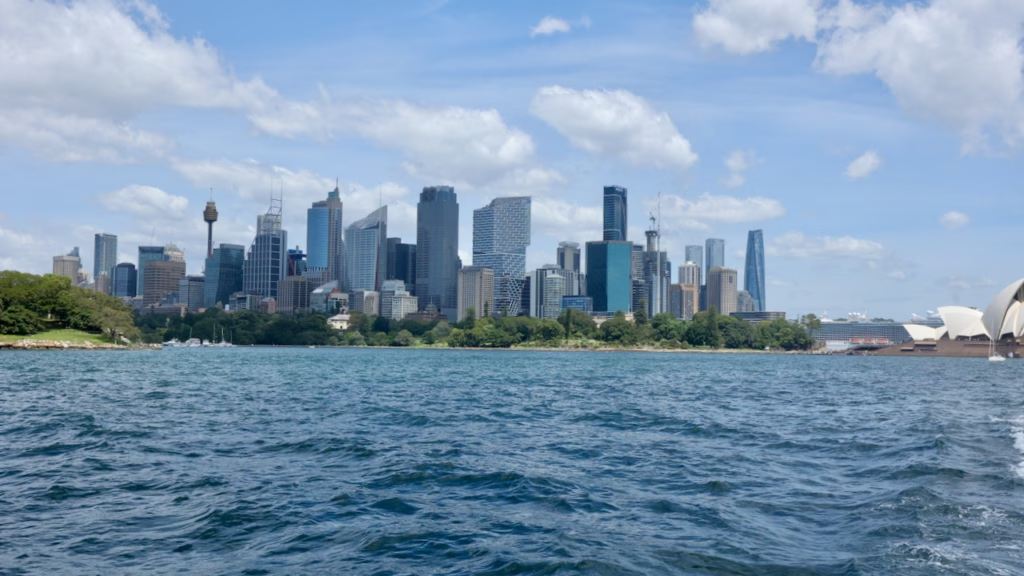
By the time the ferry is properly underway, the sails have shrunk to a white sliver at the edge of the frame. I saw more of the building leaving it behind than I ever did standing in front of it, and I’d already walked most of the Opera House and Harbour Bridge viewpoints on land.
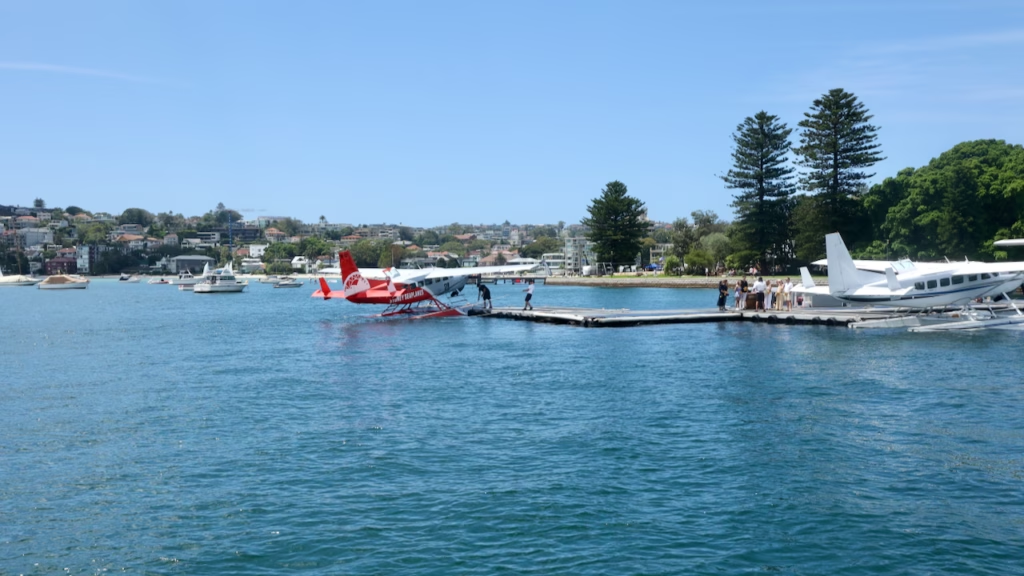
Near the end of the ride you reach Rose Bay, Sydney’s seaplane base. The ferry stops here, and I spotted the floatplanes tied up at their pontoon on the way past. If you’ve ever wondered where the scenic seaplane flights over the harbour take off from, this is it. Rose Bay was also Australia’s first international airport: from 1938, Qantas Empire flying boats left here for Southampton on a journey of about ten days, and the flying-boat base only closed in 1974.
Ferry tips
Best seat: outside deck, right-hand side heading out (Opera House, Garden Island, Rose Bay). Switch sides coming back.
Paying: no need to buy an Opal card. A contactless bank card gets the same fares and caps.
Daily cap: lower on Fridays, weekends and public holidays (A$9.65, adjusted each July). Once you hit it, the rest of the day’s travel is free.
By Bus: 324, 325 and 380 from Bondi
Buses 324 and 325 run between the city and Watsons Bay through the eastern suburbs, also stopping at Edgecliff station, so from Central you can take a T4 train to Edgecliff and change to the bus. The 324 goes along Old South Head Road with stops at Gap Park and Macquarie Lighthouse, which makes it handy if you walk the ocean-side cliffs and don’t want to walk back. It’s slower than the ferry, but it keeps running when the wind cancels the boats.
Coming from Bondi? The 380 bus runs between Bondi Junction, Bondi Beach and Watsons Bay, and takes around 20 minutes from Bondi Beach. It’s the easiest way to pair the two in one day.
By Car and Parking at Watsons Bay
The village is roughly a 25-minute drive from the city outside peak traffic, and parking is the catch. Street spaces fill fast on summer weekends. Try Cliff Street near Camp Cove, or the side streets off Old South Head Road near Gibsons Beach. Doyle’s has a car park behind the restaurant for its diners. If you’d rather not drive or deal with transport at all, see the private tour option further down.
Things to Do in Watsons Bay
Watsons Bay has two sides. The harbour side is calm, with beaches, the village and the South Head Heritage Trail out to Hornby Lighthouse. The ocean side is wild, with sheer cliffs at The Gap and the Federation Cliff Walk south to Macquarie Lighthouse. I did the harbour side. Here’s everything on both, roughly in the order you’d reach them from the wharf, with a few activity-based picks at the end.
Robertson Park and the Village Waterfront
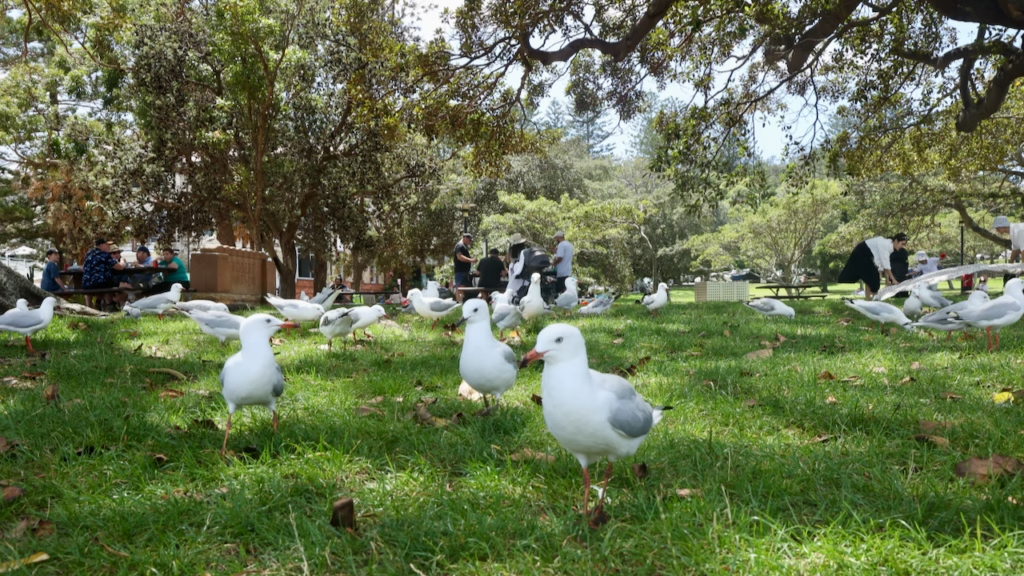
Watsons Bay is often billed as Australia’s oldest fishing village, and the pilots and fishing families who settled here in the early colony are the reason it still feels like a village rather than a suburb. Robertson Park sits right behind the wharf, a big lawn shaded by old Moreton Bay figs and Norfolk Island pines. When I walked through it was busy with picnickers and even busier with gulls. Behind the picnic lawns there’s a fenced, shaded playground, which makes the park an easy base if you’re visiting with kids. Look out for the stone memorial seat to Robert Watson, the First Fleet sailor the bay is named after.
Watson arrived with the First Fleet as quartermaster of HMS Sirius, was given land here around 1801, and settled for good after his next ship was wrecked in 1805. He was piloting ships into the harbour by 1809, was formally appointed pilot in 1811 and harbour master in 1813, and in 1818 became the first keeper of the Macquarie Lighthouse, further down this list. The 1929 memorial seat gets some of his dates wrong, so trust this paragraph over the stone.
The strip of sand in front of the park is Watsons Bay Beach, the village’s own. It’s calm, shallow and backed by the Doyle’s terrace and the Beach Club’s striped umbrellas. That same calm water makes the bay a popular spot for stand-up paddleboarding and kayaking; I didn’t paddle, but local operators run hire and lessons if you’d rather be on the water than in it.
Camp Cove: Swimming, Snorkelling and 1788 History
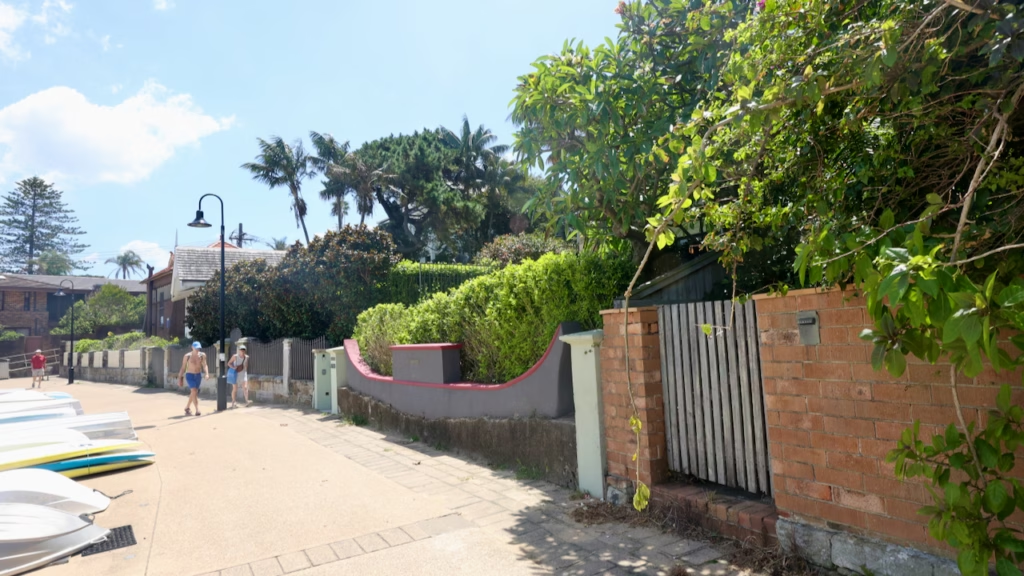
The five-minute walk north from the wharf is part of the fun. It winds through narrow lanes past boat sheds and the old fishermen’s cottages that are now some of the most expensive small houses in Sydney.
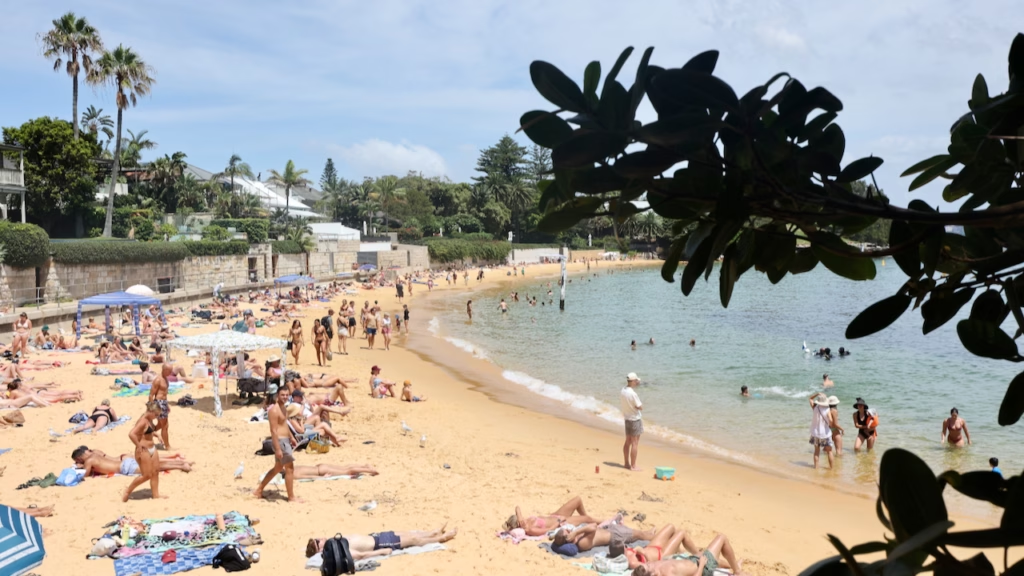
That walk brings you to Camp Cove Beach, a small, sheltered harbour beach with water calm enough for young children and clear enough for snorkelling around the rocks at either end. It has toilets, outdoor showers, drinking water, a kiosk and seasonal lifeguard patrols. Snorkellers should head for the short jetty and the rocks at the end of the beach, where you’ll often see locals with masks, or the reef towards Green Point. Woollahra Council’s marine surveys list octopus, cuttlefish, goatfish and even White’s seahorse around Camp Cove, so bring a mask. Shade, though, is scarce, and on the Saturday I visited the sand was packed edge to edge by early afternoon.
Camp Cove’s history starts long before 1788. For thousands of years, Aboriginal people fished these waters and gathered shellfish along the shore. Local histories name the Gadigal (Cadigal) and the Birrabirragal as the clans of this headland, and the Dictionary of Sydney records the name for Watsons Bay as Kutti. Shell middens and rock art still survive around the harbour’s edge.
The European chapter is much more recent. On 21 January 1788, Captain Arthur Phillip rowed in from Botany Bay to scout Port Jackson, and this beach is the probable spot where his party came ashore and camped that night before he chose Sydney Cove for the colony. A marble tablet above the southern end marks the spot. The First Fleet followed him round, anchoring in Sydney Cove on 26 January.
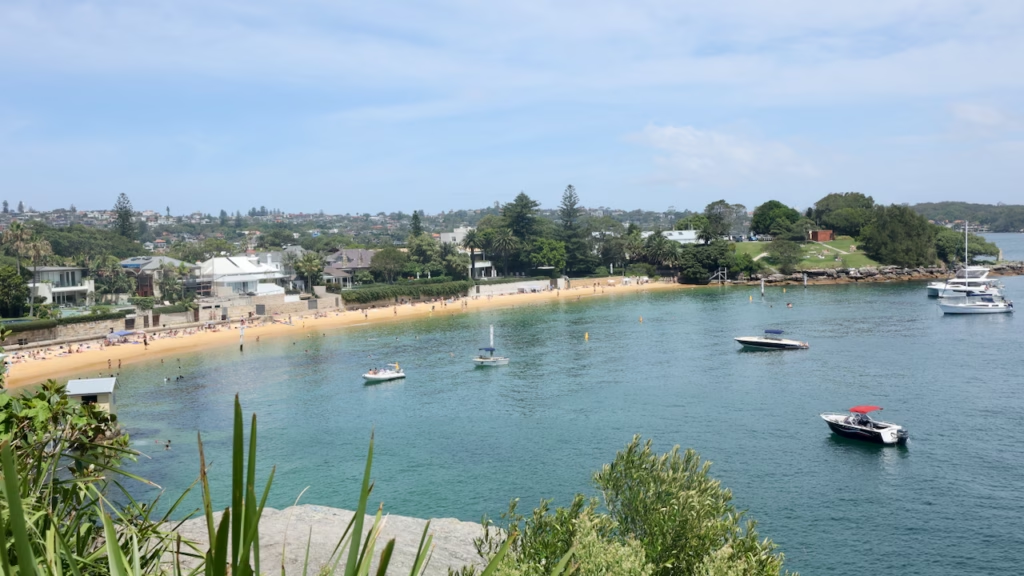
At the far end of the beach, a small jetty with a boat shed is one of the most photographed spots in Watsons Bay, especially at sunset with the city skyline behind it. For the view in my photo, climb the steps at the southern end to Green Point, a grassy headland that looks down over the whole cove. The Second World War left its mark here: an anti-submarine boom net once stretched from Green Point across the harbour, and one of the Japanese midget submarines that entered Sydney Harbour on 31 May 1942 got caught in it. The old winch house still stands on the point.
The Watsons Bay Walk: South Head Heritage Trail to Hornby Lighthouse
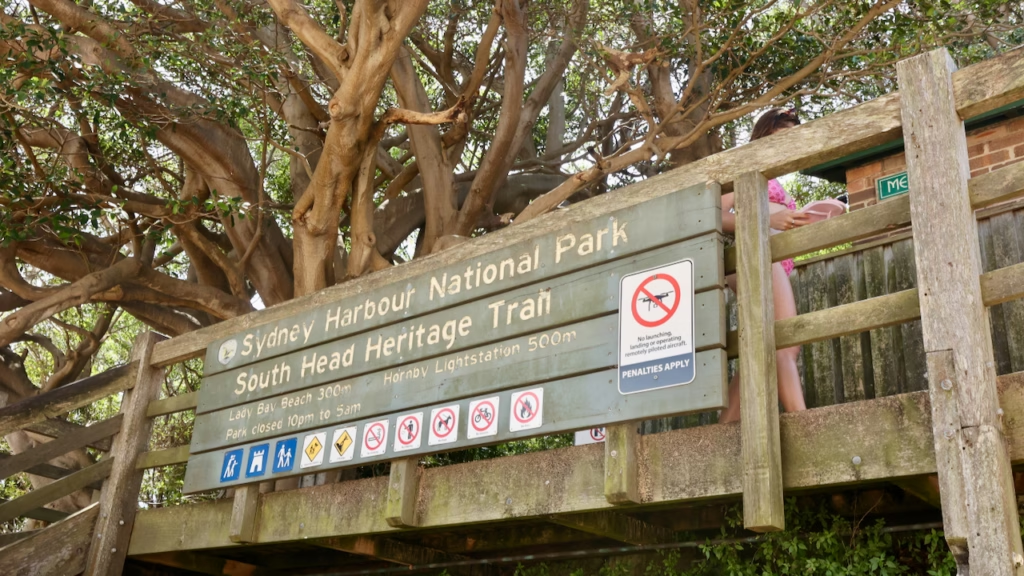
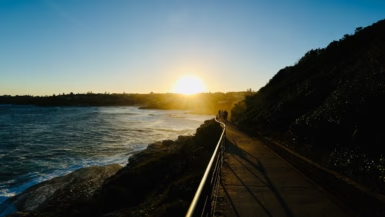
This is the highlight of Watsons Bay and the reason I’d send anyone here. The South Head Heritage Trail is a 1-kilometre loop from the northern end of Camp Cove out to Hornby Lighthouse and back, through Sydney Harbour National Park. NSW National Parks rates it Grade 3 and suggests 30 minutes to an hour. Expect paved paths, boardwalk and a fair number of steps. The entrance sign puts Lady Bay Beach at 300 metres and Hornby Lightstation at 500 metres from that point.
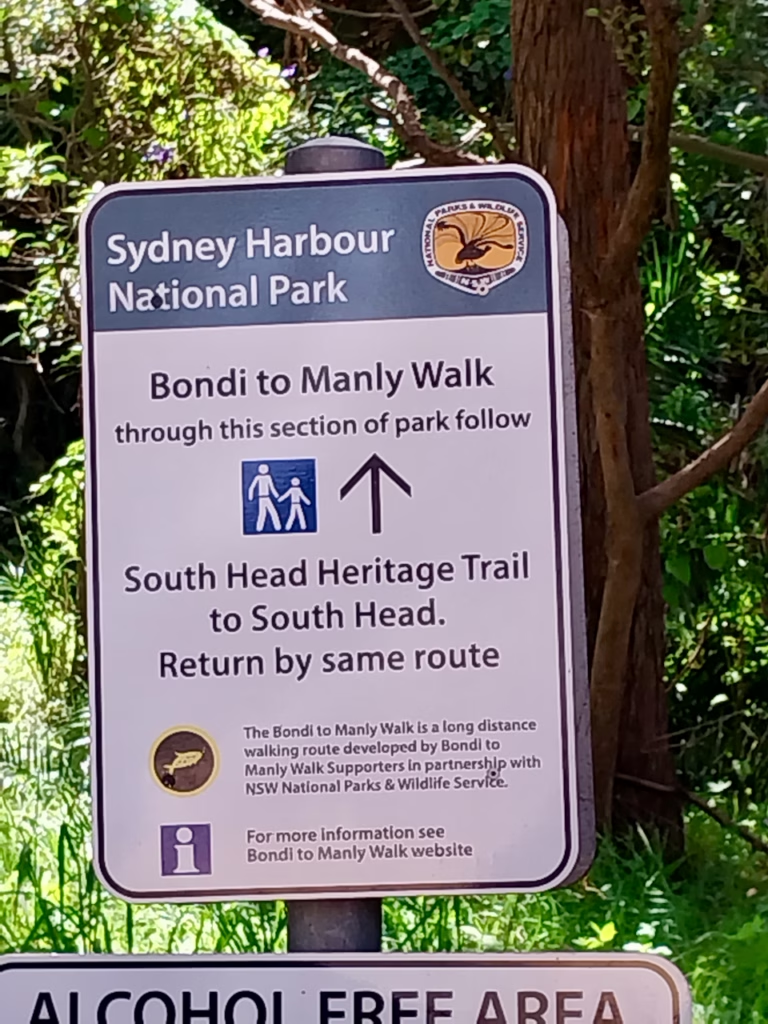
A second sign told me something I hadn’t known: this stretch is part of the 80-kilometre Bondi to Manly Walk, the multi-day route that links Sydney’s two most famous surf beaches. Part of the trail also follows an old 1870s cobblestone road past Lady Bay. South Head is a dead end, though, so you come back the way you went.
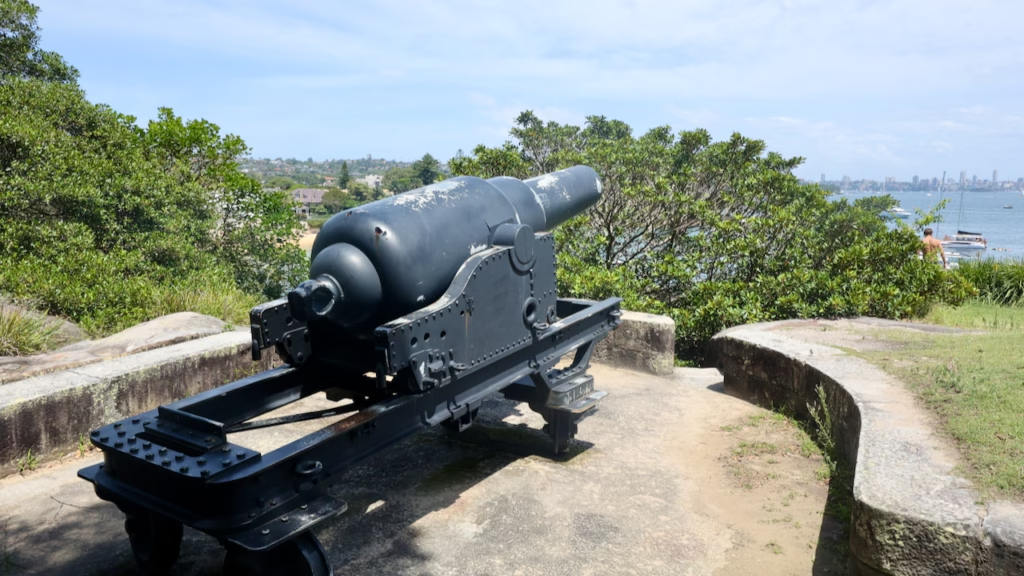
Along the way you pass the remains of the headland’s military past. South Head was fortified from the colonial era onwards against feared attacks on the harbour, and old gun emplacements still sit beside the path. That’s also why you’ll notice navy buildings around the bay: the HMAS Watson naval base, the Navy’s main training base for navigation and maritime warfare, occupies part of the headland. It takes its name from the bay, and its badge shows the Macquarie Lighthouse that Robert Watson first kept.
My timings: I photographed the Bondi to Manly sign at 1:21pm and was back at the Doyle’s wharf at 2:53pm. That hour and a half includes lingering at the lighthouse for photos and the walk from Camp Cove back to the ferry, so budget 1.5 hours if you like to stop, or the official 30 minutes to an hour if you don’t.
For the full loop people call the Watsons Bay walk, start at the wharf, follow the streets to Green Point and Camp Cove, walk the heritage trail out to Hornby, then come back past the village and climb up to The Gap before finishing in Robertson Park. It’s roughly 4 to 4.5 kilometres and takes about two hours without long stops. Arriving by bus? Do it in reverse, since The Gap is a short walk from the Old South Head Road bus stops.
The loop in order:
Watsons Bay Walk Map
Lady Bay Beach
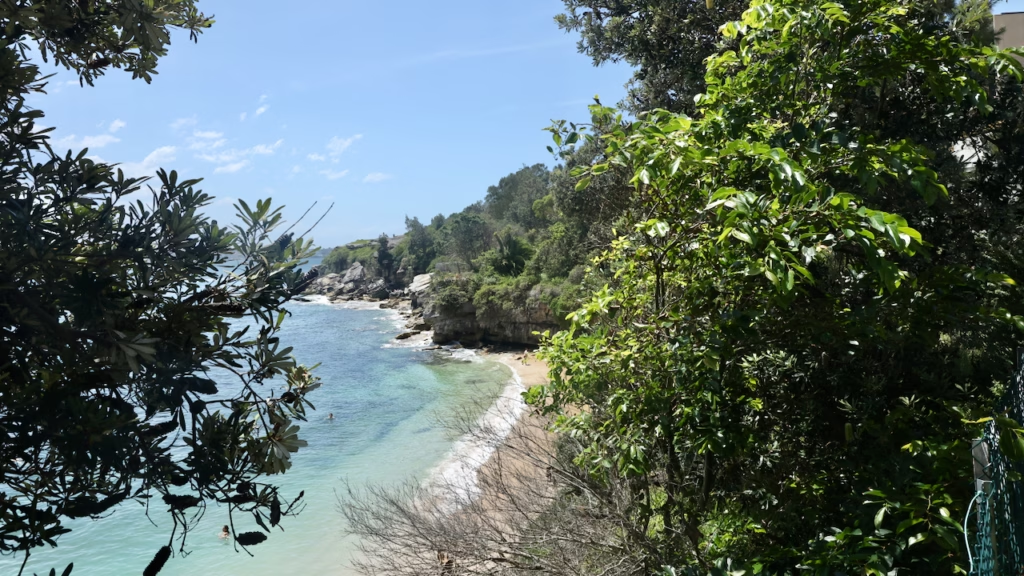
Partway along the trail, a long staircase drops down to Lady Bay Beach, a small cove between sandstone cliffs. Lady Bay became Sydney’s first officially recognised clothing-optional beach in the 1970s. Nudity is allowed on the beach itself, not on the trail above. I didn’t go down, but from the path you get a clear view over the cove, and it looked a lot wilder than its harbour location suggests.
If a clothing-optional beach isn’t for you, just keep walking. The trail stays well above the sand.
The Old Lightkeepers’ Cottages
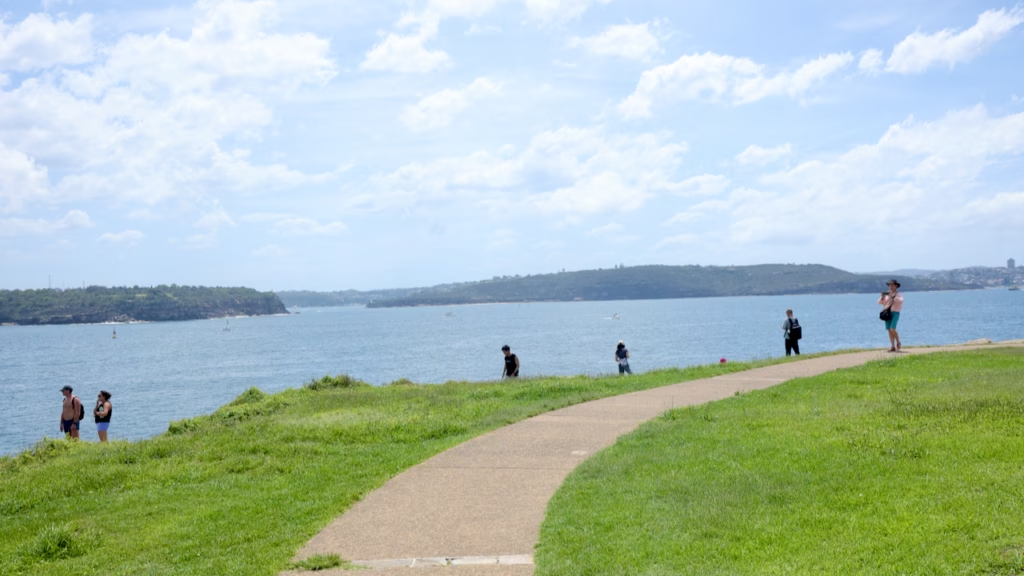
The last stretch of the trail opens out onto a wide, grassy headland, and the path runs straight across it towards the lighthouse.
Just before the lighthouse, two Georgian-style sandstone cottages sit on the lawn with timber verandahs and picket fences. They were built for the head keeper and his assistant after Hornby Lighthouse opened, from sandstone quarried on the headland. Oddly, the head keeper’s cottage is the one furthest from the light. You can’t go inside, but they make a good rest stop in the shade of the verandah trees.
The keepers’ families lived here without mains water until 1897, almost forty years after the light opened, and during the Second World War the Army took over the station and housed soldiers in the cottages. After years of neglect, the national parks service restored the buildings in the late 1970s.
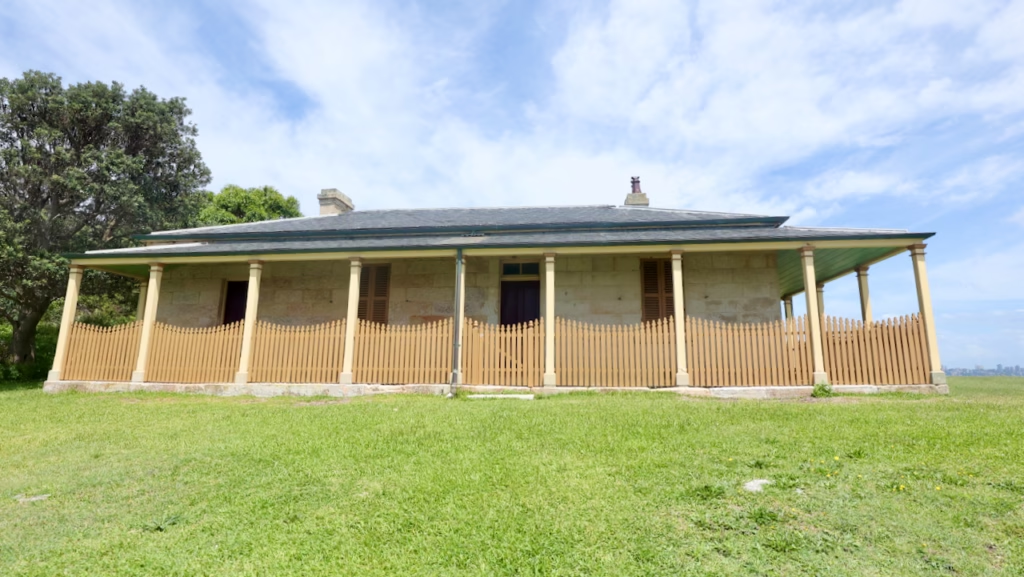
They also hold one of the best stories on the headland. According to Lighthouses of Australia, the first keeper to live here was Henry Johnson, believed to be the brother of James Johnson, the only survivor of the Dunbar wreck at The Gap. The Johnsons went on to staff lighthouses up and down the New South Wales coast for generations.
Hornby Lighthouse
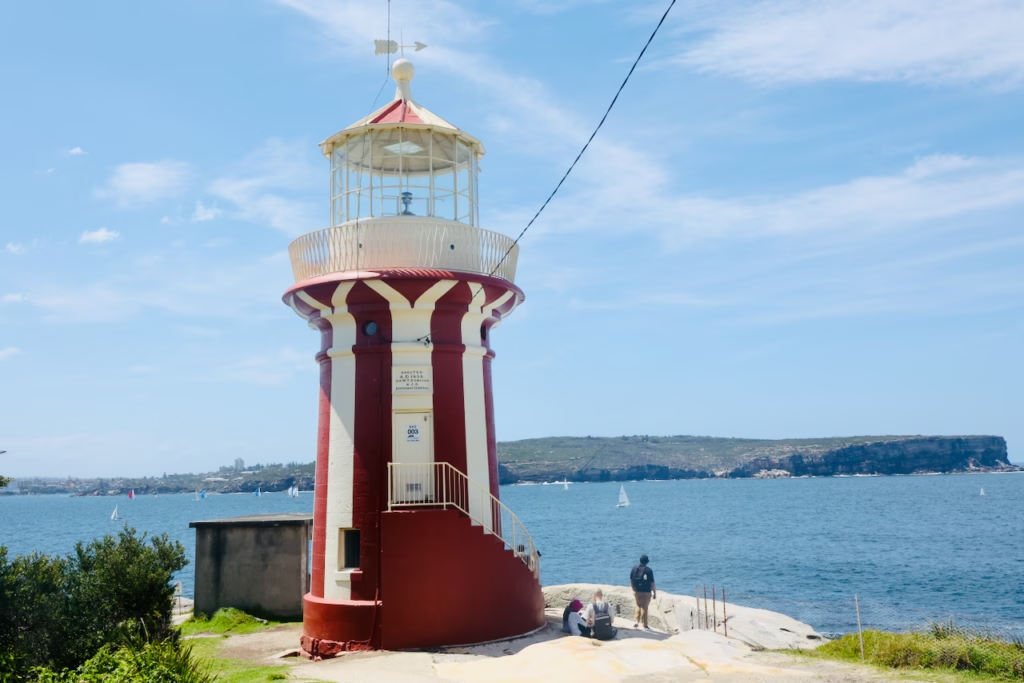
The end of the trail is also its best moment. When people talk about the Watsons Bay lighthouse, this is usually the one they mean. Hornby Lighthouse is small, only about nine metres tall, but its red and white vertical stripes make it the star of every photo taken on South Head. The plaque above the door reads “Erected A.D. 1858, Sir W.T. Denison K.C.B., Governor General”. It was named after the family of Denison’s wife.
It was built after two disasters in quick succession. In August 1857 the Dunbar mistook the gap in the cliffs for the harbour entrance in a storm and was wrecked below South Head, with 121 lives lost and a single survivor. Two months later the Catherine Adamson went down near the Heads, killing 21. Hornby became the third lighthouse built in New South Wales, and the stripes were painted so ships could tell it apart from the Macquarie Lighthouse by day. The light was automated and the keepers withdrawn in 1933, but it is still a working harbour light: a white flash every five seconds, visible roughly 26 kilometres out to sea.
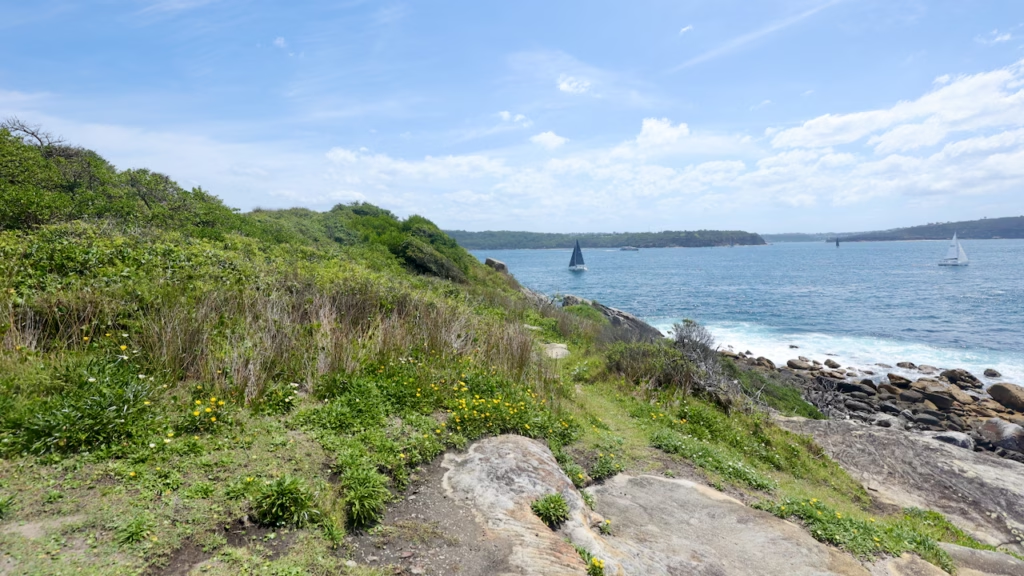
For me the view is the real reward. Straight across the entrance, North Head’s cliffs rise out of the water, yachts slip in and out between the Heads, and to the right the swell breaks white on the reef the lighthouse was built to mark. It was spectacular, and the part of the day I’d repeat first. On rough days you’ll often see rock fishers on the platforms below. Stay on the path; waves at the harbour entrance can surge well over the rocks without warning.
Whale Watching from South Head
Humpback whales pass Sydney on their migration roughly from May to November, and they’re usually busiest in June and July. Hornby Lighthouse, The Gap and the Federation Cliff Walk are all good land-based spots. Set your expectations, though: from the cliffs you’re usually watching spouts, tail slaps and the occasional breach out on the horizon, not whales close to shore. Bring binoculars. Dolphins turn up year-round.
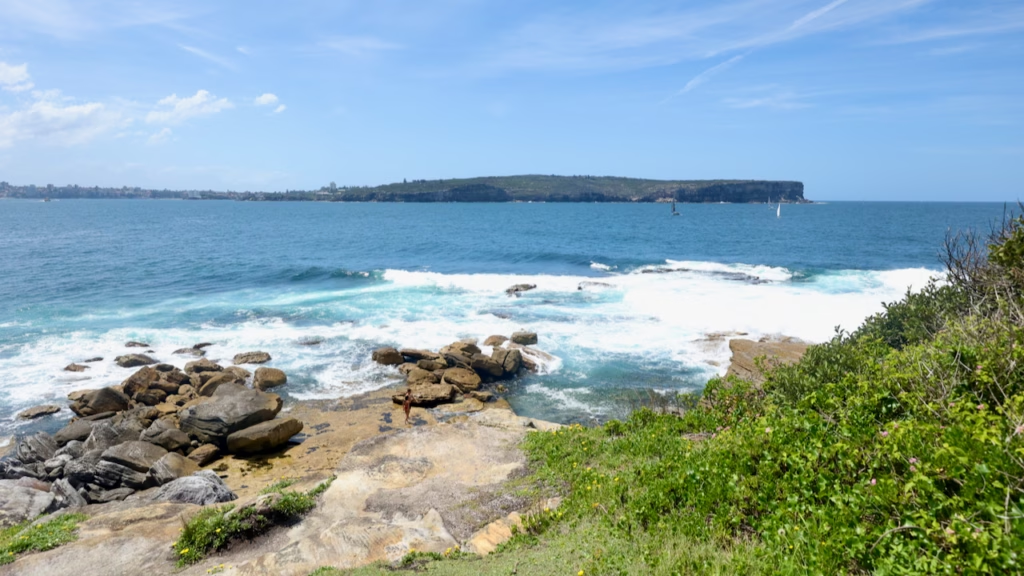
I visited in February, well outside the season, so I saw surf and sailboats rather than whales. Come in winter if whales are on your list.
The Gap and the Dunbar Anchor
That’s the calm harbour side done. The next two stops are on the peninsula’s wild ocean side, a short walk east of the wharf.
From here, the list goes beyond my own route. I walked the harbour side as far as Hornby Lighthouse and caught the ferry back mid-afternoon. The Gap, Macquarie Lighthouse, the Rose Bay walk, Gibsons Beach and the sunset spots below are researched from official and local sources, not my own visit. The Gap is the first thing I’d add next time.
The Gap is Watsons Bay’s ocean-side lookout, about 500 metres from the wharf through Gap Park. Sheer sandstone cliffs drop straight into the Pacific, and a series of staircases leads up to several fenced viewing platforms that look both out to sea and back towards the city. The Dunbar’s anchor, an Admiralty-pattern anchor about four metres long, was recovered from the wreck by local residents in 1910 and fixed to the clifftop as a memorial in 1930. If you only have an hour in Watsons Bay, this is a good place to spend it.
The one person who survived that wreck, the Irish seaman James Johnson, was thrown onto the rocks below these cliffs. He clung to a ledge for around a day and a half before he was spotted and hauled up. He later became a lighthouse keeper at Nobbys Head in Newcastle, and in 1866, when the steamer Cawarra was wrecked at the Newcastle harbour entrance, he helped rescue its only survivor.
Stay behind the fences here; swells can surge high up the rock below. If you or anyone with you needs support, Lifeline is on 13 11 14, day or night.
Macquarie Lighthouse and the Federation Cliff Walk
Carry on south from The Gap along the cliffs, on the Federation Cliff Walk, built to mark the centenary of Federation and running about 5 kilometres to Dover Heights. After roughly 1.5 kilometres you reach Macquarie Lighthouse, on the site of Australia’s first lighthouse, named for Governor Lachlan Macquarie, who commissioned it.
The original tower was designed by Francis Greenway, a convict transported for forgery. Macquarie was so pleased with the stonework that he granted Greenway conditional emancipation in 1817, and the light was lit in 1818. Greenway had warned that the local sandstone was poor, and he was right: it crumbled, so the current tower, designed by James Barnet to look like the original, replaced it in 1883. The first keeper, appointed in 1818, was Robert Watson, the bay’s namesake you met in Robertson Park.
The grounds are open to walk around; tours inside run only occasionally, so check the Harbour Trust website if you want to climb it. Signals to arriving ships have been sent from South Head since 1790, and the signal station building still stands next to the lighthouse grounds.
From here the Federation Cliff Walk continues past Diamond Bay towards Dover Heights and eventually Bondi, or you can catch the 324 back towards the city or the 380 to Bondi from Old South Head Road.
Arrive on Foot: The Rose Bay to Watsons Bay Walk
If you have a full day and like walking, get off the F9 one stop early at Rose Bay and walk the rest of the way. The route is roughly 7.5 to 8 kilometres wharf to wharf, and most people take three to four hours with swim and snack stops.
After a stretch of streets out of Rose Bay, the Hermitage Foreshore Track runs through bushland right along the water for just under two kilometres, with the Harbour Bridge and Opera House in view behind you. It passes the grounds of Strickland House and comes out at Nielsen Park, which has a netted swimming area at Shark Beach and a kiosk. From there, quiet streets lead to the white suspension bridge over Parsley Bay, and the final stretch drops down to Gibsons Beach and along the promenade into Watsons Bay. Toilets are at Rose Bay, Nielsen Park, Parsley Bay and Watsons Bay.
It’s the natural add-on if you want the ferry, the harbour beaches and the lighthouse in a single day: walk in, do the heritage trail, then ferry back to the Quay.
Gibsons Beach and Watsons Bay Baths
Walk south from the wharf along Marine Parade and you pass Watsons Bay Baths, a year-round netted harbour pool with two floating pontoons and a favourite with local kids. The council’s marine surveys found more sea life here than in any of its other netted swimming areas. The baths were also the first tidal harbour pool in Australia with deep-water wheelchair access, and the council keeps two immersible wheelchairs on site (an MLAK key is needed).
At the end of the parade is Gibsons Beach, a quieter stretch of sand backed by a small reserve and named after an early harbour pilot who lived here. When Camp Cove is packed, this is where to go. If you’re happy to walk about 20 minutes further south, Parsley Bay Reserve has an enclosed swimming area, a playground, a kiosk and the white suspension bridge from item 10.
Sunset over the City Skyline
The harbour beaches at Watsons Bay face west, so the sun sets over the harbour towards the city, and at the right time of year it drops right behind the Harbour Bridge where the arch pokes up above Bradleys Head. A drink on the Beach Club’s terrace or a spot on the Robertson Park lawn at golden hour is a fine way to end the day. For something quieter, the flat rocks near the lightkeepers’ cottages on South Head face straight up the harbour to the city. Check the last ferry before you settle in. On weekdays the last Sydney Ferries service from Watsons Bay leaves in the afternoon, so an evening return usually means a Captain Cook boat or the bus.
Guided Watsons Bay Tours
My own route covered the harbour side of the peninsula, and everything above is easy to do on your own. If you’d rather have someone else handle the planning and the stories, there are two very different ways to do it. I haven’t done either tour myself; the details below come from the operators.
The Watsons Bay Walking Tour is the one for walkers. It’s a four-hour, roughly 6-kilometre guided walk that starts and ends at Circular Quay with a ferry ride out. It covers Gibsons Beach, the backstreets of weatherboard cottages, The Gap and South Head with tales of shipwrecks and military defences, and Macquarie Lighthouse, then finishes with fish and chips by the beach. It fills in the ocean side I missed.
Sydney Shores and Suburbs is the one for a single day that covers the most ground. It’s a full-day private tour in an air-conditioned vehicle, with pickup from your hotel, the cruise port or the airport. It starts with the Opera House, the Harbour Bridge and The Rocks, stops at Rose Bay and Watsons Bay, and then heads to Bondi Beach for lunch, with an optional walk along the coastal path to Coogee. Because it’s private, you can adjust the itinerary. It suits cruise passengers on a day in port, families, and anyone who can’t manage the stairs on the trails.
Where to Eat and Drink in Watsons Bay
For a village this small, Watsons Bay covers every budget, from a paper parcel of chips on the lawn to a white-tablecloth seafood lunch. Hours and menus change with the season, so confirm on each venue’s website before you go.
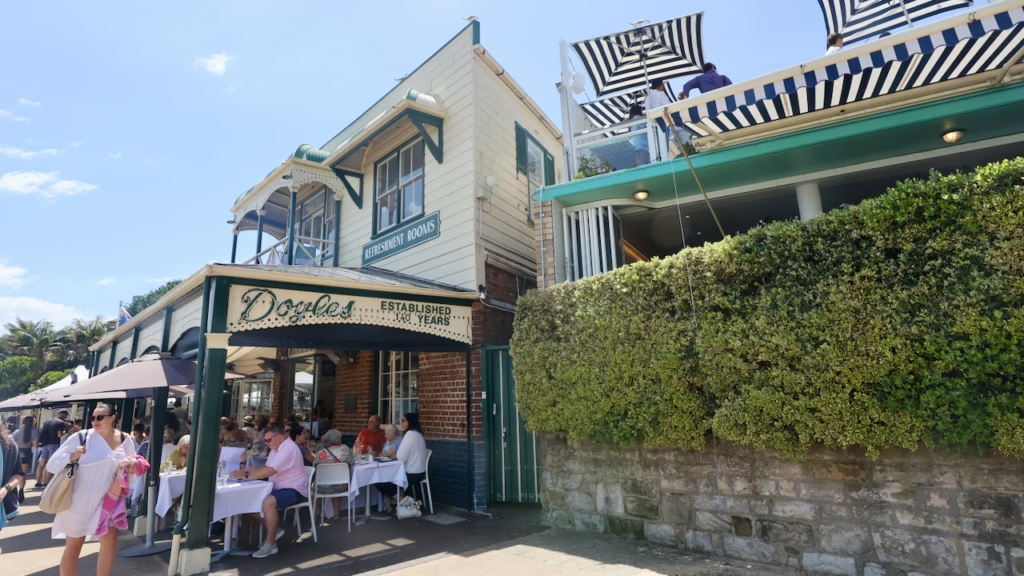
The food here comes with a family history. In 1885, local fisherman Henry Newton and his wife Hannah opened tea rooms in a weatherboard cottage on the beach. Their family rebuilt it as the Ozone Café in 1908, lost it in the Depression, and after the Second World War their granddaughter Alice and her husband Jack Doyle reopened the dining room, at first serving just fish, with scones and jam for dessert. That dining room grew into Doyles on the Beach, still run by the family today.
| Where | What it is | Budget | Good to know |
|---|---|---|---|
| Doyles on the Beach | Sit-down seafood restaurant on a site the family has traded from since 1885 | $$$ | Lunch from around noon to 3pm (4pm weekends), dinner from 5:30pm. Book for weekends. |
| Doyles Garden Bar | Casual bar beside the restaurant, order at the bar or by QR code | $$ | Live music on weekend afternoons |
| Doyles Fishermans Wharf | Takeaway fish and chips on the ferry wharf | $ | Open from mid-morning until around 5pm. Eat on the Robertson Park lawn. |
| Beach Club, Watsons Bay Boutique Hotel | Huge beer garden under striped umbrellas, seafood and share plates | $$ | Order from your table by app. Packed on sunny weekends. |
| Camp Cove kiosk | Coffee, smoothies, sandwiches | $ | Snacks rather than meals; hours vary with the season |
| Dunbar House | Heritage harbourside villa from around 1837 | $$$ | Has served breakfast, lunch and high tea, but now runs largely as an events venue. Check it’s open to the public before you plan around it. |
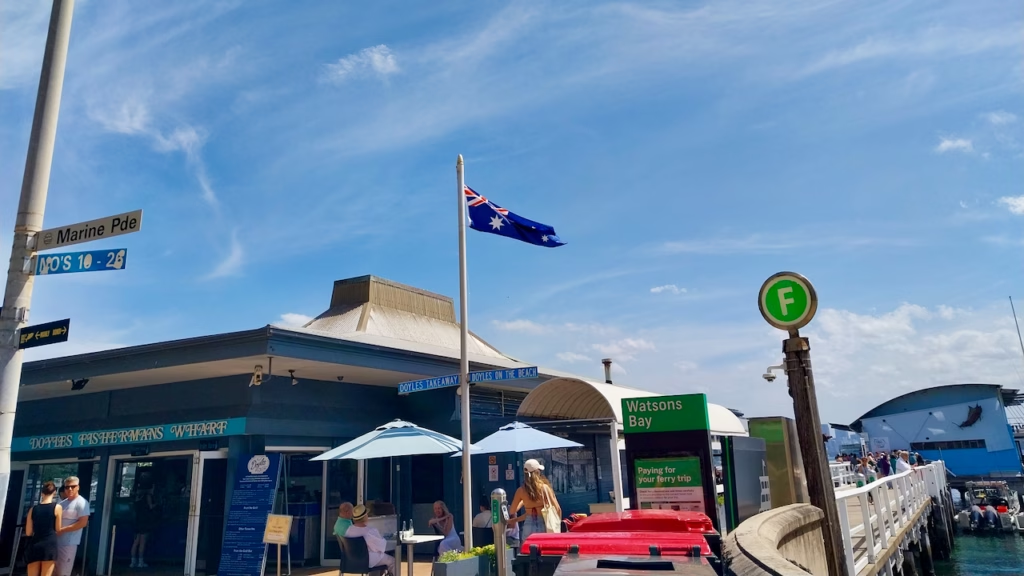
If you’re watching your budget, do what half of Sydney does: order takeaway from Doyles Fishermans Wharf and carry it to the lawn in Robertson Park or down to the beach. Just keep one hand over the box. The gulls work in teams. If you’re eating at a sit-down venue on a weekend or public holiday, check the menu for a surcharge; many Sydney restaurants add one.
A Half-Day Watsons Bay Itinerary
This plan is built on my own timings. It covers the harbour side at an easy pace and leaves you a choice for the late afternoon.
| Time | What to do |
|---|---|
| 12:00 | F9 ferry from Circular Quay Wharf 2. Outside deck, right-hand side. |
| 12:30 | Arrive, walk through Robertson Park, takeaway lunch on the lawn |
| 13:15 | Camp Cove: swim, or climb to Green Point for the view |
| 13:30 | South Head Heritage Trail: Lady Bay lookout, keepers’ cottages, Hornby Lighthouse |
| 15:00 | Back at the wharf. Choose: The Gap and Macquarie Lighthouse (1.5 to 2 hours, bus 324 back) or Gibsons Beach and a drink at the Beach Club |
| Sunset | Golden hour over the city skyline, then back to Circular Quay (on weekdays, by Captain Cook ferry or bus) |
For a full Sydney day, spend the morning around Circular Quay and the Opera House, then pick up this plan from the midday ferry. Back at the Quay after dark, the harbour lights make a good finish. To pair it with Bondi instead, spend the morning at Bondi Beach, take the 380 bus to Watsons Bay (or walk the clifftops, two to three hours), do the heritage trail in the afternoon, and head back to Circular Quay for sunset on the harbour (see the weekday ferry note above). That route costs no more than the daily fare cap.
Staying Overnight: Watsons Bay Boutique Hotel
Most people come for the afternoon, but the Watsons Bay Boutique Hotel is the one hotel in the village, with 32 rooms looking over the harbour or Robertson Park and the Beach Club downstairs. Staying means you get the beach and the trail at 7am before the ferries bring the crowds, and a sunset without watching the ferry timetable. Expect weekend noise from the beer garden below.
The only hotel in the village
Watsons Bay Boutique Hotel
Practical Tips for Visiting Watsons Bay
Before You Go
- Go on a weekday, or early at weekends. Summer weekends bring crowds to Camp Cove and fill every parking space. Weekdays are calmer, but the F9 only reaches Watsons Bay from mid-morning, so an early start there means the bus.
- Wear shoes with grip. The sandstone steps and rock platforms on South Head get slippery, so leave the thongs for the beach.
- Bring sun protection and water. Camp Cove and most of the trail have little shade, and I felt it on a February afternoon.
- Pack swimwear and a snorkel. The harbour beaches are calm, and the rocks at Camp Cove are the easiest snorkelling spot on the peninsula.
- Know the park rules. The national park section of the trail is an alcohol-free area and closes from 10pm to 5am. Dogs aren’t allowed in the national park or in Robertson Park.
- Check the wind. Strong winds can stop ferries calling at Watsons Bay. If the trip planner shows the F9 ending at Rose Bay, don’t wait on the wharf for a boat that isn’t coming: take the 324 or 325 bus, or a Captain Cook ferry if one is running.
- Toilets and water: toilets are at Camp Cove, near the wharf and at Lady Bay along the trail. You can refill water bottles in the village, and the Camp Cove kiosk sells drinks.
- Accessibility: the waterfront and Robertson Park are flat and easy, and Woollahra Council lists Camp Cove as an accessible beach. The heritage trail has stairs and uneven sections, and Lady Bay Beach is down a long staircase.
- Check for closures: before you go, look at the NSW National Parks alerts for Sydney Harbour National Park in case part of the trail is shut for works.
Should Watsons Bay Make Your Sydney List?
Watsons Bay is a surprisingly affordable half day in Sydney. Once your Opal or contactless fare hits the A$9.65 daily cap, Camp Cove, Watsons Bay Beach, Robertson Park, the heritage trail, Hornby Lighthouse and The Gap cost nothing to enjoy. The only real decision left is lunch.
Go if you want
- A harbour cruise for the price of a ferry fare
- An easy walk with a big view at the end
- Calm harbour swimming and fish and chips on the lawn
- Whales from the cliffs between May and November
Think twice if
- You only have a day in Sydney and haven’t seen Circular Quay yet
- You’re after surf beaches (head to Bondi or Manly)
- You hate crowds and can only go on a summer weekend
- You need step-free access all the way to the lighthouse
For me, the ferry ride alone justifies the trip, and Hornby Lighthouse is the view I’d go back for.
FAQ
Why is Watsons Bay called Watsons Bay?
It’s named after Robert Watson, a First Fleet quartermaster on HMS Sirius who settled here in the early 1800s. He became the colony’s harbour pilot in 1811, harbour master in 1813 and the first keeper of the Macquarie Lighthouse in 1818.
How do you get to Watsons Bay from Circular Quay?
Watsons Bay is about 11 kilometres north-east of the city centre. Take the F9 Watsons Bay ferry from Wharf 2 at Circular Quay. It stops at Rose Bay and takes around 25 minutes, though on weekdays and in strong winds some services end at Rose Bay, so check the trip planner. You can pay with an Opal card or a contactless bank card. Buses 324 and 325 also run from the city.
How much is the ferry to Watsons Bay?
The F9 costs a standard Opal ferry fare, roughly A$7 to A$9.50 one way for adults, paid by Opal or contactless card. On Fridays, weekends and public holidays, all your adult Opal travel for the day is capped at A$9.65, adjusted each July, which covers a return trip with room to spare.
Is there parking at Watsons Bay?
Yes, but it’s limited and fills fast on warm weekends. Try Cliff Street near Camp Cove or the side streets off Old South Head Road, and check the signs for time limits. Doyle’s has a car park for its diners. The ferry or bus is easier.
When is the best time to visit Watsons Bay?
Weekdays are quietest, with easier parking and calmer beaches; on weekdays the ferry only reaches Watsons Bay from mid-morning, so arrive early by bus or come at the weekend before the crowds. Summer is best for swimming, May to November for whales, and weekends get busy from late morning.
How do you get from Manly to Watsons Bay?
Captain Cook Cruises runs a ferry link between Manly and Watsons Bay. It’s a private service with its own tickets, so check its website for the current timetable and fares.
How long is the Watsons Bay walk?
The South Head Heritage Trail to Hornby Lighthouse is a 1 km loop from Camp Cove, rated 30 minutes to an hour; with photo stops and the walk back to the ferry it took me about 1.5 hours. The full Watsons Bay loop from the wharf via Camp Cove, Hornby Lighthouse and The Gap is about 4 to 4.5 km and takes around two hours. Both have steps.
Is Watsons Bay worth visiting?
Yes, if you can give it at least half a day. With only one day in Sydney, pair it with Circular Quay or Bondi rather than treating it as a standalone trip. The ferry ride gives you harbour views of the Opera House and Bridge, and the short walk to Hornby Lighthouse ends at the entrance to Sydney Harbour.
Manly or Watsons Bay: which ferry trip is better?
They suit different days. The Manly ferry is the bigger, busier ride across the harbour entrance to a surf beach and a lively town. The Watsons Bay ferry is shorter and calmer, passes the Opera House, Garden Island and Rose Bay, and drops you at a quiet village with harbour beaches and the walk to Hornby Lighthouse. If you want swell and surf, go to Manly; if you want a walk, a lighthouse and fish and chips on the lawn, go to Watsons Bay.
Can you swim at Watsons Bay?
Yes. Camp Cove, the beach in front of the village and Gibsons Beach are all calm harbour beaches. Camp Cove has seasonal lifeguard patrols.
Is Watsons Bay good for kids?
Yes. The harbour beaches are calm and shallow, there’s a fenced, shaded playground in Robertson Park, the waterfront promenade is flat and pram-friendly, and the Watsons Bay Baths near Gibsons Beach have a netted swimming area with pontoons. The heritage trail has steps, so a carrier is easier than a pram for the lighthouse stretch.
Is Watsons Bay dog friendly?
Only partly. Dogs aren’t allowed in Robertson Park at any time, in the Watsons Bay Baths enclosure, or in the national park section of the South Head Heritage Trail. Leashed dogs can walk the village streets, but check the signs as you go.
Is Lady Bay Beach a nude beach?
Yes. Lady Bay Beach is an official clothing-optional beach and has been since the 1970s. Nudity is permitted on the beach only.
Can you see whales from Watsons Bay?
Yes, from roughly May to November, usually busiest around June and July. Hornby Lighthouse and The Gap are good lookouts. Binoculars help, as most sightings are at a distance.
How much time do you need in Watsons Bay?
Half a day covers the ferry, Camp Cove and the walk to Hornby Lighthouse. Allow a full day to add The Gap, Macquarie Lighthouse and a long lunch, or to walk in from Rose Bay along the harbour.
Are there tours to Watsons Bay?
Yes. The Watsons Bay Walking Tour is a four-hour guided walk from Circular Quay that includes the ferry ride, The Gap, Macquarie Lighthouse and fish and chips. For a full day, the private Sydney Shores and Suburbs tour picks you up from your hotel and combines the city sights, Watsons Bay and Bondi Beach.
How do you get from Bondi to Watsons Bay?
Take the 380 bus from Bondi Beach, around 20 minutes, or walk the clifftop route in two to three hours along the Federation Cliff Walk past Diamond Bay and Macquarie Lighthouse. The stretch out of North Bondi is mostly residential streets, so some people start at Dover Heights. From Watsons Bay, the ferry or bus takes you back to the city.
Final Thoughts
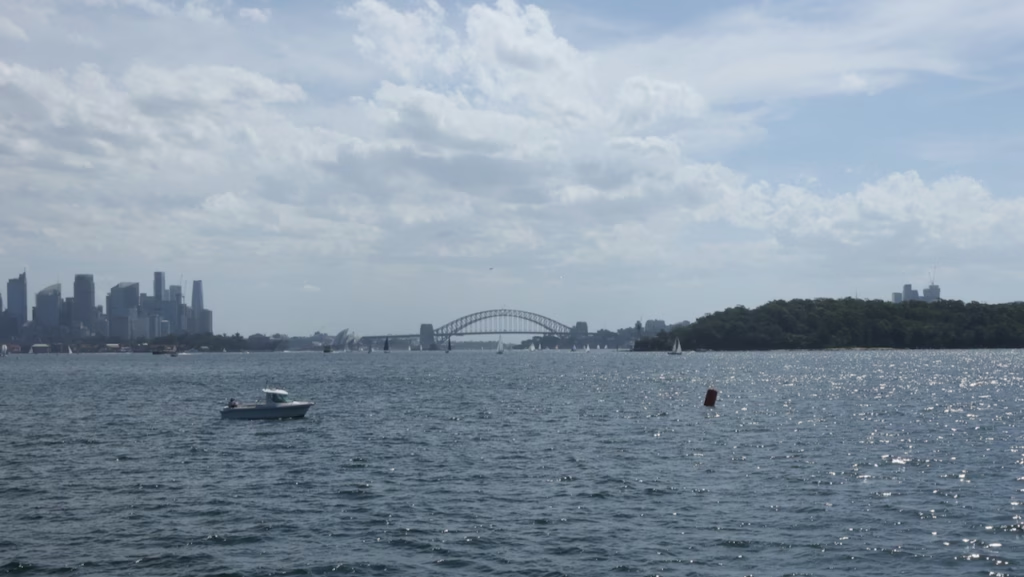
If you’re weighing up things to do in Watsons Bay, this is the half day I’d protect. It gave me a different Sydney from the one around Circular Quay: slower, saltier, and with the whole harbour laid out behind me instead of in front. Take the ferry, walk to the lighthouse, eat your chips before the gulls do, and if you’re there in winter, keep one eye on the water between the Heads.

Leave a reply