
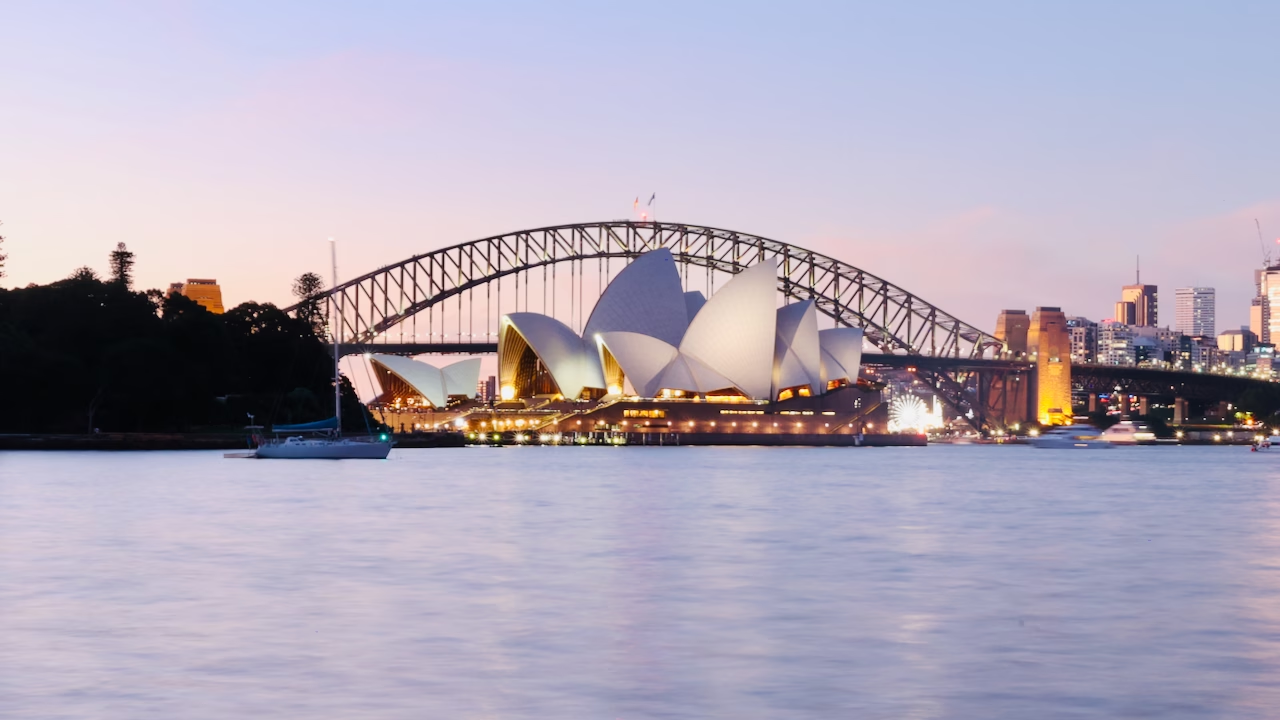
Wherever you go in Sydney, they’re there. Cross a random street, glance between two buildings, and the Sydney Opera House’s white sails and the Sydney Harbour Bridge’s grey arch are somehow back in frame, as if the whole city were built to keep circling past them. Twelve nights across two stays, and somewhere in the middle of that I stopped counting how many times I’d walked past the two of them from a new angle. Out of forty-four countries, this pairing is the most beautiful thing I’ve stood in front of. If this guide convinces you of one thing, let it be that it belongs on your list.
The trick isn’t finding one perfect spot. It’s that the Opera House and the Bridge sit at the centre of the harbour, so almost everywhere around it gives you a piece of them, free or paid, morning or midnight, each angle its own mood. That’s what’s mapped out below, mostly from having stood in each spot myself, with the handful of exceptions marked clearly rather than folded in quietly.
Sydney was one stop on a longer trip around the country, if you want the fuller month-long context this sits inside, that’s in my 1-month Australia itinerary.
| Spot | Best for | Best time | Effort | Cost |
|---|---|---|---|---|
| Mrs Macquarie’s Chair | Both landmarks, one frame | Sunset | Easy, 20 min walk | Free |
| Cahill Walk / Expressway Lookout | Elevated, uncrowded | Any time | Easy | Free |
| Circular Quay / Opera House forecourt | Close-up, first stop | Early morning | None | Free |
| Overseas Passenger Terminal | Quiet, opposite angle | Any time | Easy | Free |
| Observatory Hill | Bridge-dominant, quiet | Late afternoon | Short uphill walk | Free |
| Harbour Bridge Walk | Standing on the structure | Sunrise or twilight | Moderate, 30 min | Free |
| Sydney Harbour BridgeMuseum | Elevated, without BridgeClimb’s price | Daytime only | Stairs | ~AU$35 |
| Milsons Point / Luna Park | Low-angle, playful foreground | Sunset into night | Easy | Free |
| Dawes Point, via Hickson Road | Standing right under the bridge’s approach spans | Any time | Easy | Free |
| Blues Point Reserve / Cremorne Point | Wide, quiet, North Shore | Sunset | Moderate | Free |
| Pier One | Night shot, under the bridge | After dark | Easy | Free |
| Manly ferry | Moving, water-level | Late afternoon | None, just a fare | Ferry fare |
| BridgeClimb / helicopter | The big splurge | Whenever booked | High | AU$200+ |
One Walk, A Dozen Different Views
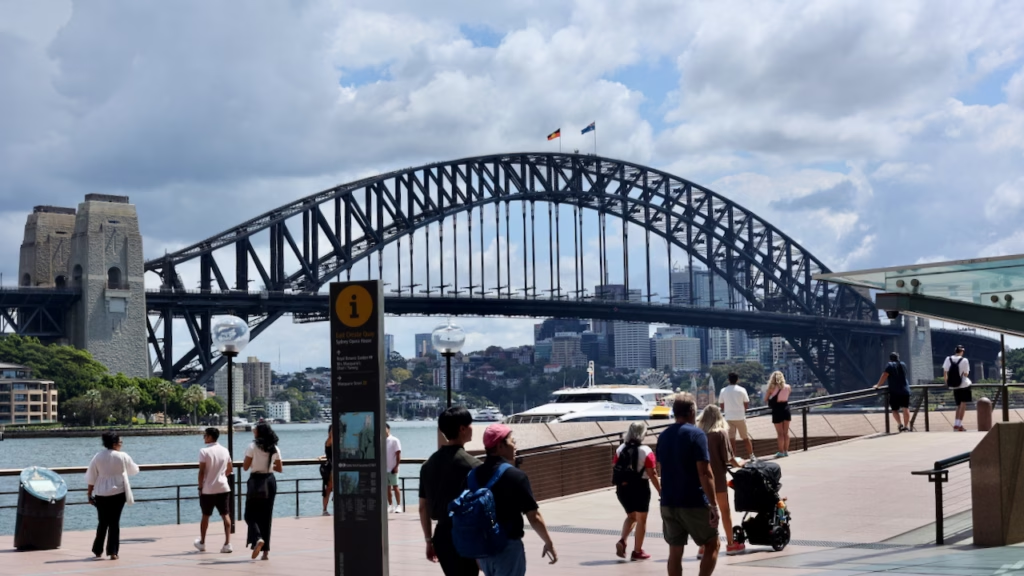
If you only take one piece of advice from this guide, take this one: don’t treat it as a list of stops to tick off. Walk. In almost any direction around the harbour foreshore, you’ll find another angle on the same two buildings, and the light, the crowd and the mood will all be different from the last spot. The closest thing to a single “best” route is the combined Cahill Walk and Harbour Bridge Walk, a roughly 3.5km one-way stretch that strings together most of the best free viewpoints in the city into one continuous walk.
Here’s how it runs, start to finish.
Royal Botanic Garden → Mrs Macquarie’s Chair
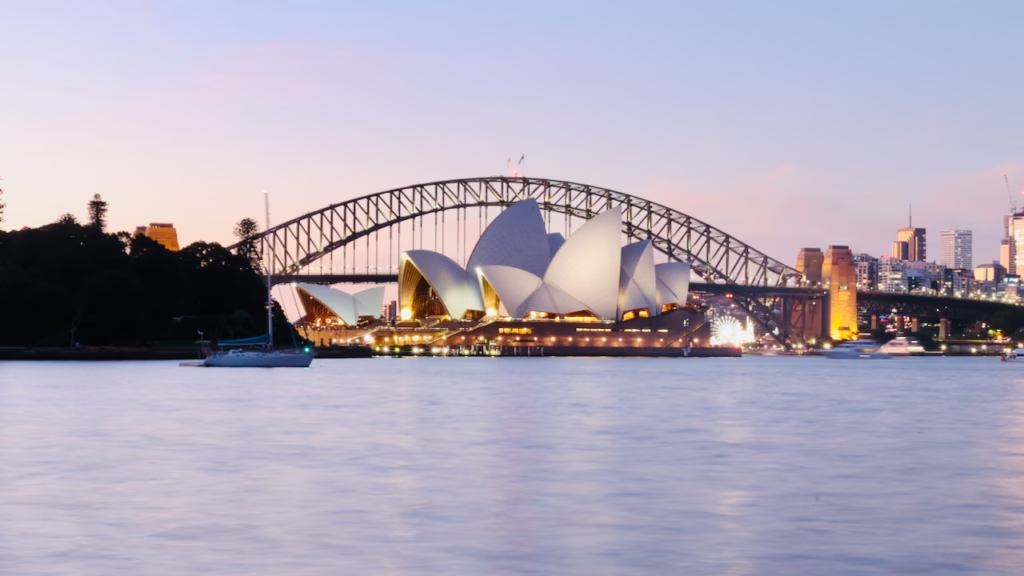
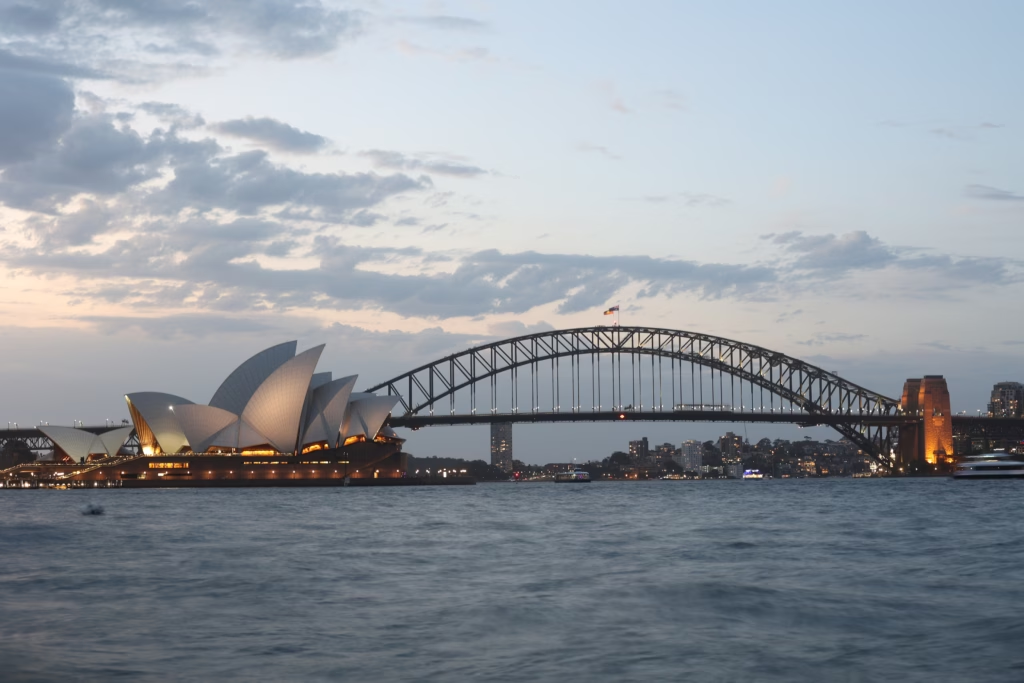
Start in the gardens and walk the foreshore path out toward the Chair, and the framing changes along the way more than you’d expect. Earlier on, inside the gardens, the Opera House sits in front with the Bridge stacked behind it, one landmark layered over the other. Keep walking to the Chair itself, a sandstone bench carved into the rock on the point, and the two landmarks spread apart instead, Opera House to the left, Bridge to the right, both landmarks in the same frame but side by side rather than overlapping. Worth knowing which shot you actually want before you stop walking.
Warning
The Garden has real gate hours, open from 7am, closing at sunset, which shifts from around 5pm in the depths of winter to as late as 8pm in midsummer, and staff genuinely lock up. If you’re timing a visit for golden hour or later, don’t linger too long on the inner paths, plan to be exiting along Mrs Macquaries Road toward the Chair itself before closing time catches you inside.
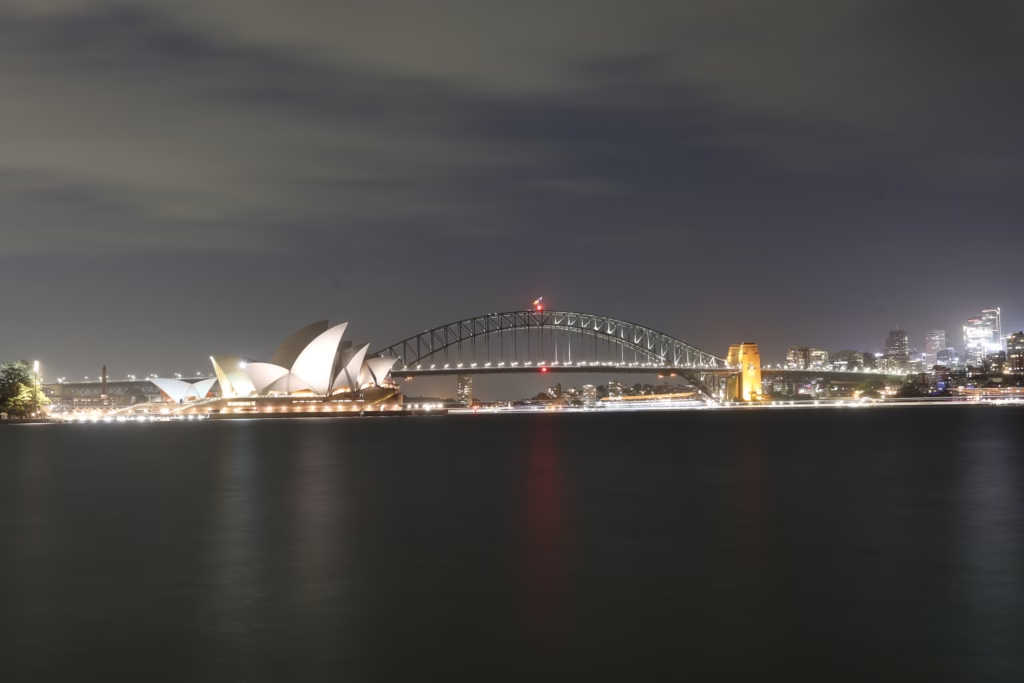
The Cahill Walk
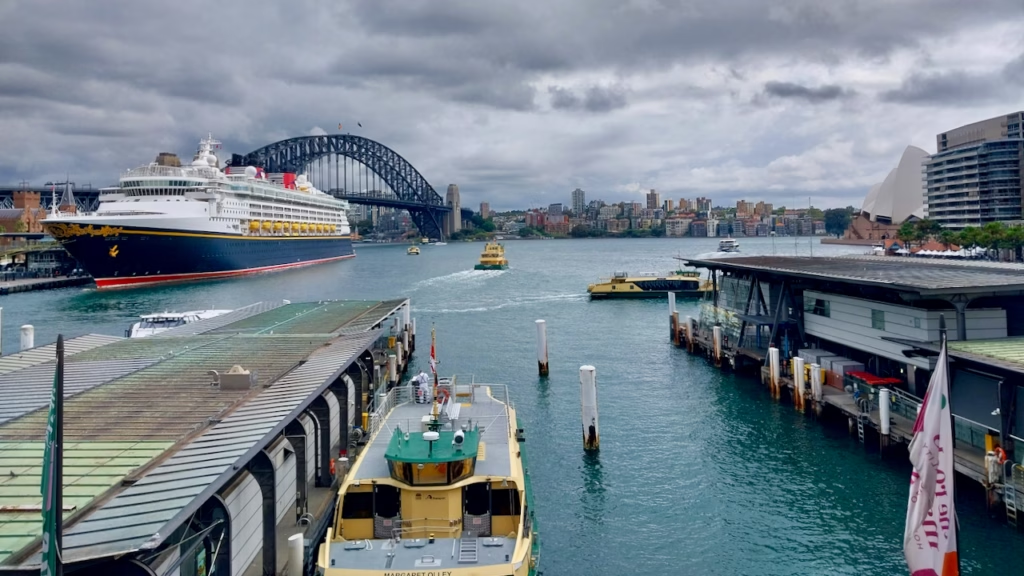
Loop back toward Macquarie Street and pick up the Cahill Walk, an elevated pedestrian path running above Circular Quay station along the Cahill Expressway. It’s one of the least-known walks in the city despite cutting through its most photographed real estate. Stop properly at the Cahill Expressway Lookout partway along rather than just passing through, it’s a sweeping view over the Quay with interpretive signage and, unusually for this list, actual shelter if the weather turns.
Circular Quay, the Opera House Forecourt, and Opera Bar
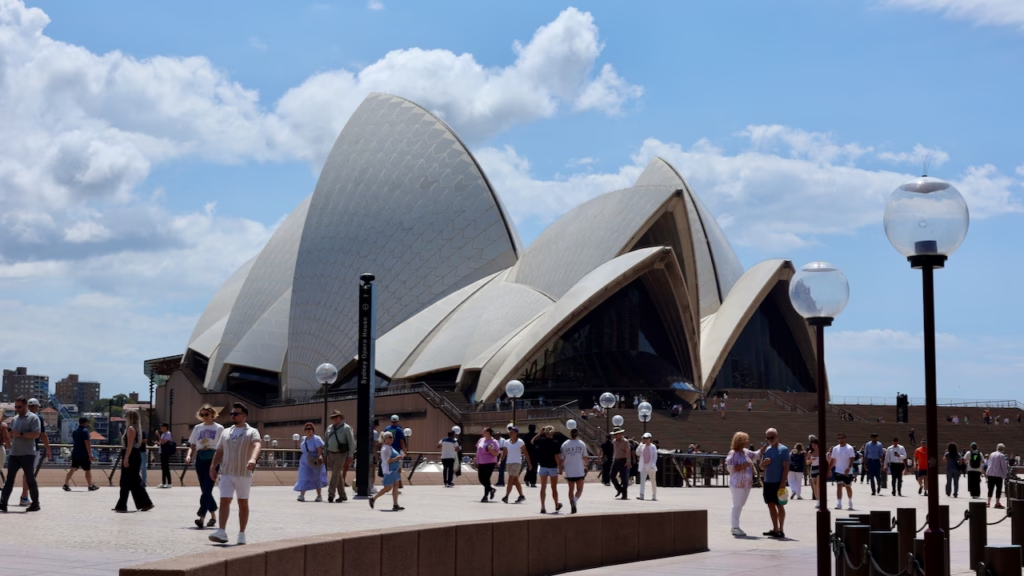
The walk drops you into Circular Quay, where every ferry route starts and where you’ll end up back regardless of what else is on your plan. Walk right up to the base of the sails, the scale up close is nothing like the photos.
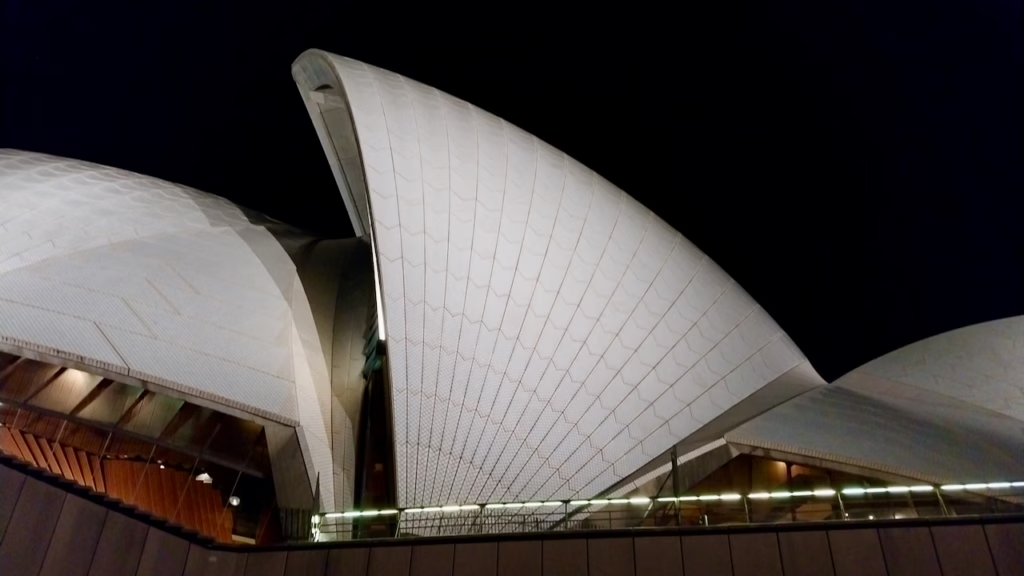
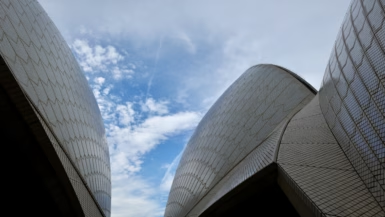
Up close, the building reads less like one structure and more like a fleet of overlapping shells, cream and white glazed tiles catching the light differently depending on the hour, each shell a slightly different height and angle from the one next to it. The actual engineering solution, worked out years after Jørn Utzon’s original sketches proved unbuildable, was that every shell could be cut from sections of the same imaginary sphere, the kind of thing that’s easier to picture by slicing an orange than by staring at blueprints. However you explain it, the shape has become shorthand for the whole country, put a single sail-like roofline in a photo and most people worldwide will read “Australia” before they read “Sydney,” a status UNESCO made official in 2007, when the building went on the World Heritage List less than 35 years after it opened, unusually young for that list. And because it sits right out on Bennelong Point with water on three sides, it doesn’t look like the same building from different angles at all. Front-on from the forecourt it’s dense and layered, several shells stacked into each other. From across the water at Mrs Macquarie’s Chair or Kirribilli it opens out into a cleaner, simpler silhouette. From directly underneath, looking up, it stops looking like sails altogether. That’s reason enough to walk around it on purpose rather than settle for whichever angle you happen to see first, this building rewards circling more than almost any other landmark I’ve photographed.
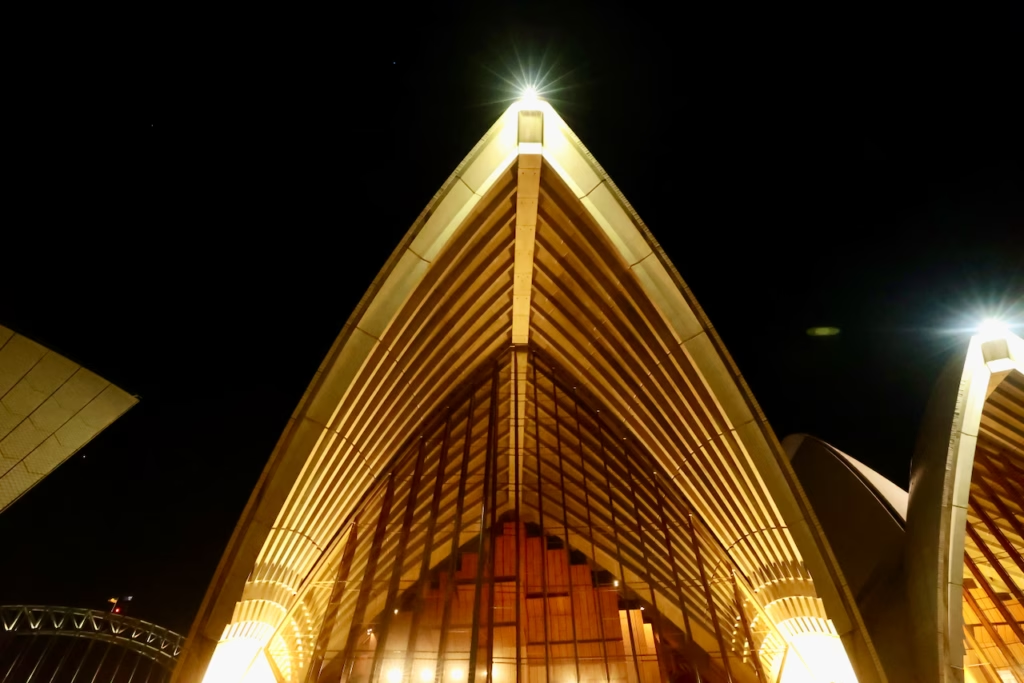
Get close enough underneath one and you’ll notice the ribbed underside looks less like a roof than the hull of a ship, an angle most visitors never think to look for.
What struck me here, more than at any other big-city landmark I’ve been to, is how the crowds don’t tip into chaos. Circular Quay is busy in a real way: ferries, tour groups, buskers, hundreds of people angling for the same photo, and it still never felt like it was one wrong move from turning into a scrum. I didn’t see much visible police presence, but everything moved in a kind of unspoken order anyway.
Nobody’s stopping you from taking photos, anywhere, of anything, the forecourt, the Bridge, the ferries, the whole scene. Almost everything here costs nothing to photograph, and nobody’s going to wave you off for trying.
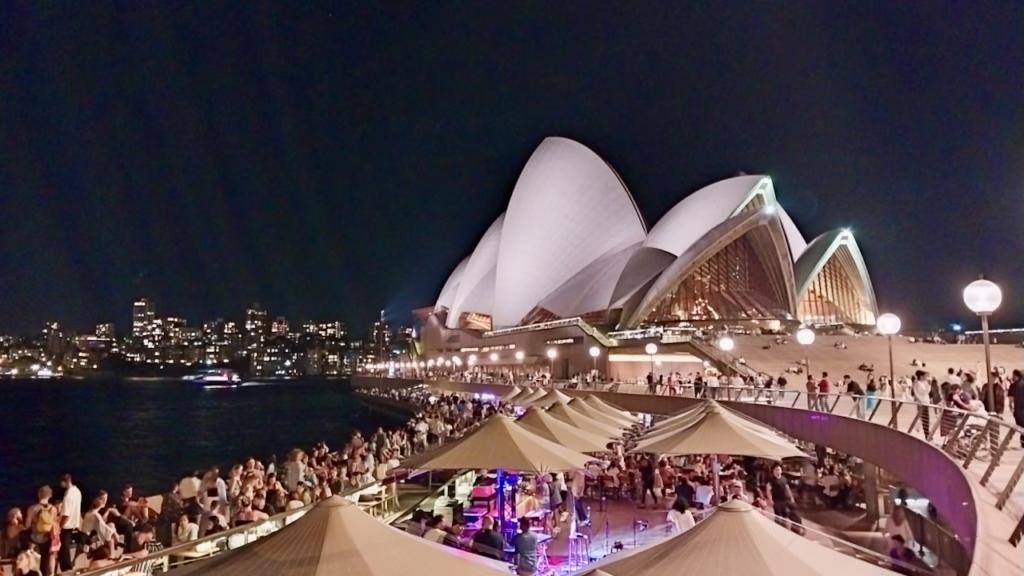
Opera Bar and the string of restaurants along the water’s edge here come alive after dark, tiered outdoor seating packed shoulder to shoulder, occasional live music drifting across the tables, with the Opera House lit up as the backdrop to the whole scene rather than something you have to go find. Time your evening around it rather than just passing through.
Overseas Passenger Terminal
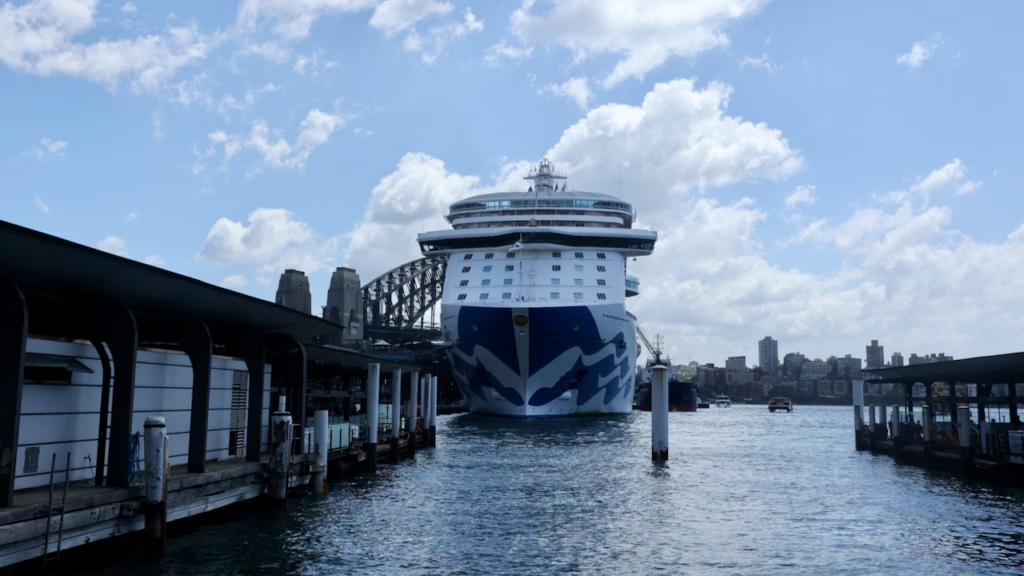
On the opposite side of Circular Quay from the forecourt crowds, next to the Park Hyatt. It’s a working cruise terminal rather than an attraction in its own right, so most visitors walk straight past, but the promenade along the front faces the Opera House directly with the Bridge close alongside, a clean angle without the forecourt crush.
The Rocks and Observatory Hill
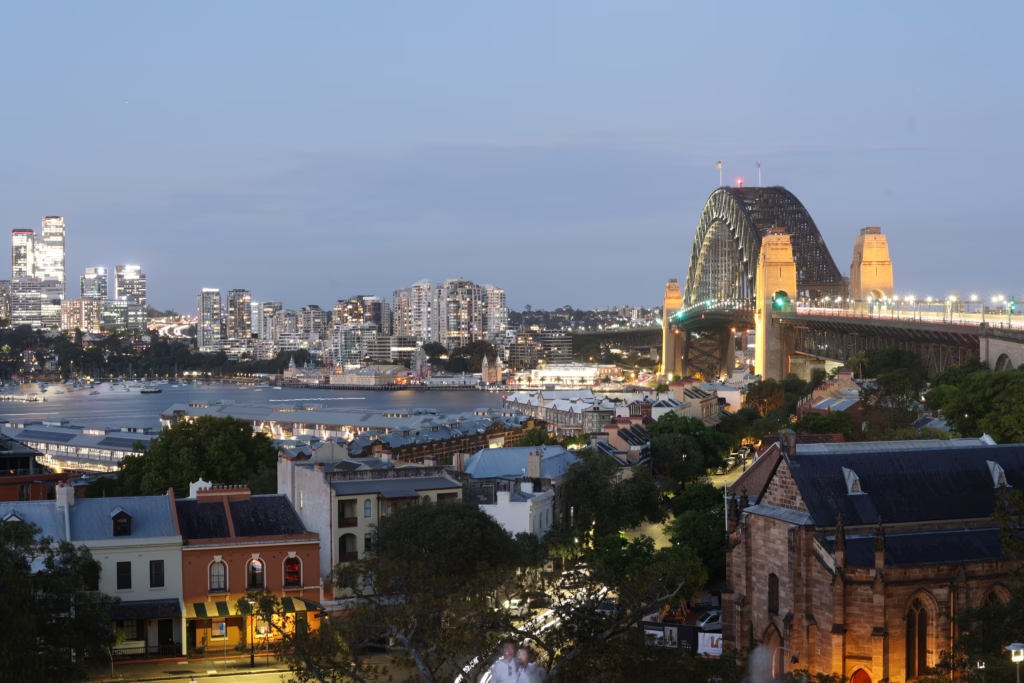
Sydney’s oldest neighbourhood, cobbled lanes, old pubs, weekend markets if the timing lines up. Observatory Hill sits above it on the site of the city’s original observatory, a short uphill detour that stays quiet even in peak season, with the Bridge dominating the frame here more than the Opera House does.
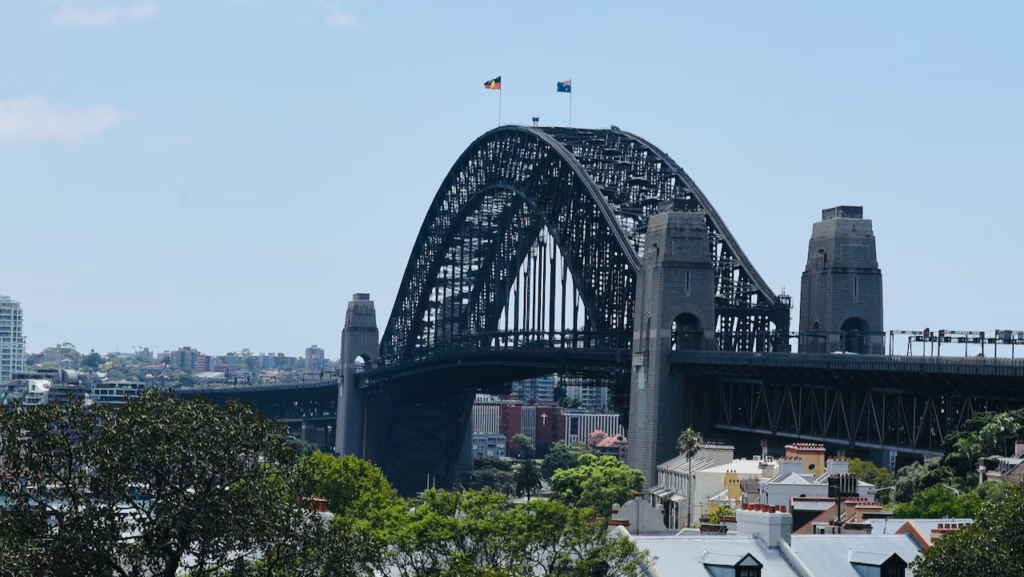
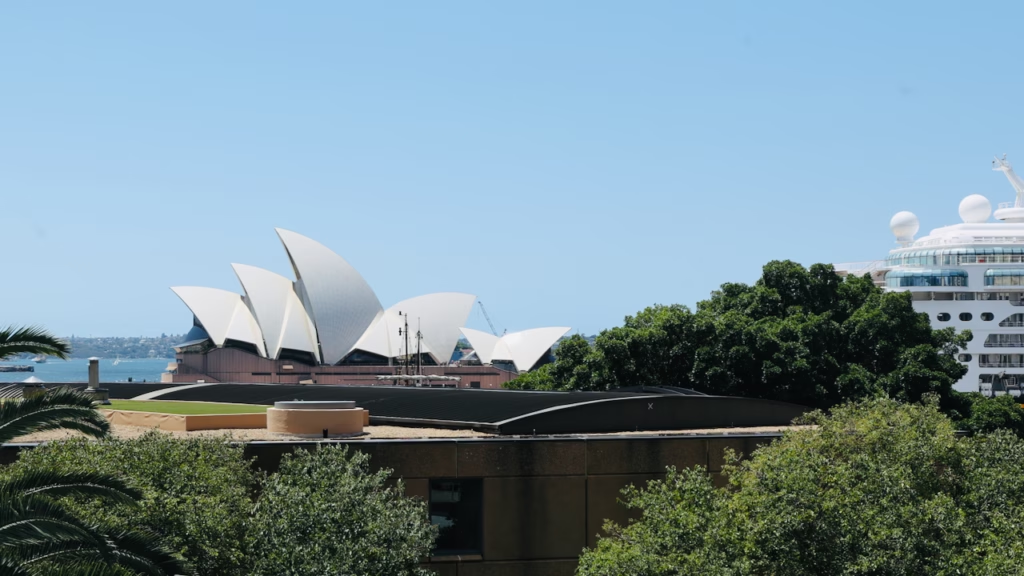
Look hard enough through the trees on a clear day, though, and you’ll catch a rare glimpse of the Opera House too, sails and all, with a cruise ship at the terminal below for scale, the exception to the rule rather than the norm up here.
Onto the Bridge Itself
The Bridge Stairs on Cumberland Street lead up to the free pedestrian walkway, running along the eastern side for about 1.1km and 30 minutes one-way. It’s the section most guides call “the” bridge walk, but really it’s just the northern half of the same continuous route from the Botanic Garden.
Milsons Point
You arrive on the North Shore right beside Luna Park’s grinning entrance, a century-old funfair sitting directly under one of the world’s most famous bridges, a strange pairing to see up close. Milsons Point train station is right here too, and it’s worth pausing at street level to watch a train cross into it, a spectacle from below you don’t get any other way.
Getting Back
Don’t retrace your steps. Catch the train from Milsons Point to Wynyard or Town Hall, or take the ferry from Milsons Point wharf back to Circular Quay for one more water-level pass at both landmarks. Walk one direction, ride the other, and you never repeat a view.
Pro tip
If you’re only walking one direction, go north to south, from Milsons Point toward the city. The Opera House and Circular Quay stay in front of you the whole way instead of behind, which makes for a far better photo sequence. Sunrise or late afternoon suits this direction best.
Further Afield: More Viewpoints Worth the Detour
Everything above sits on one continuous route. These are off it, each a dedicated trip rather than a stop along the way.
Dawes Point, via Hickson Road
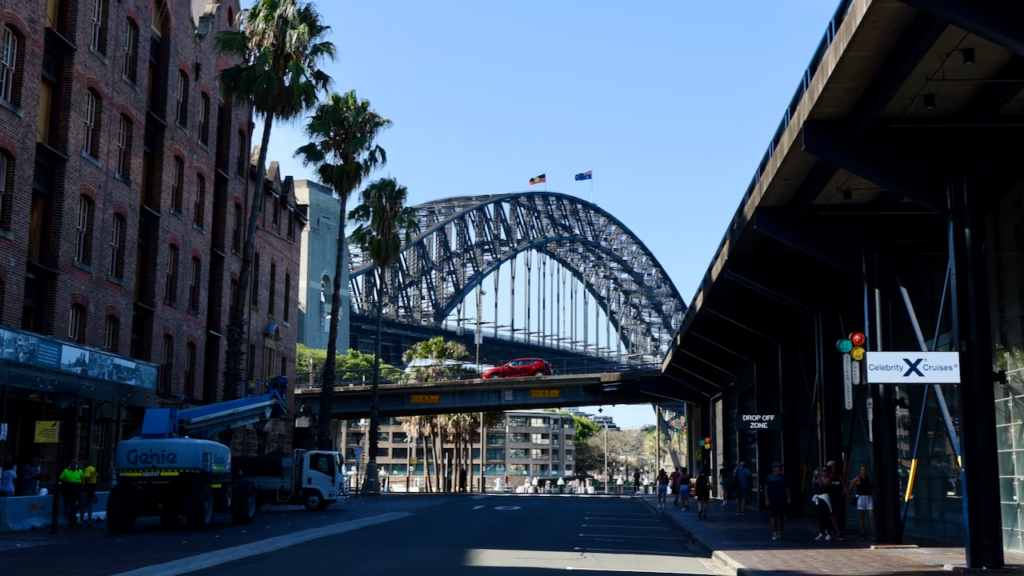
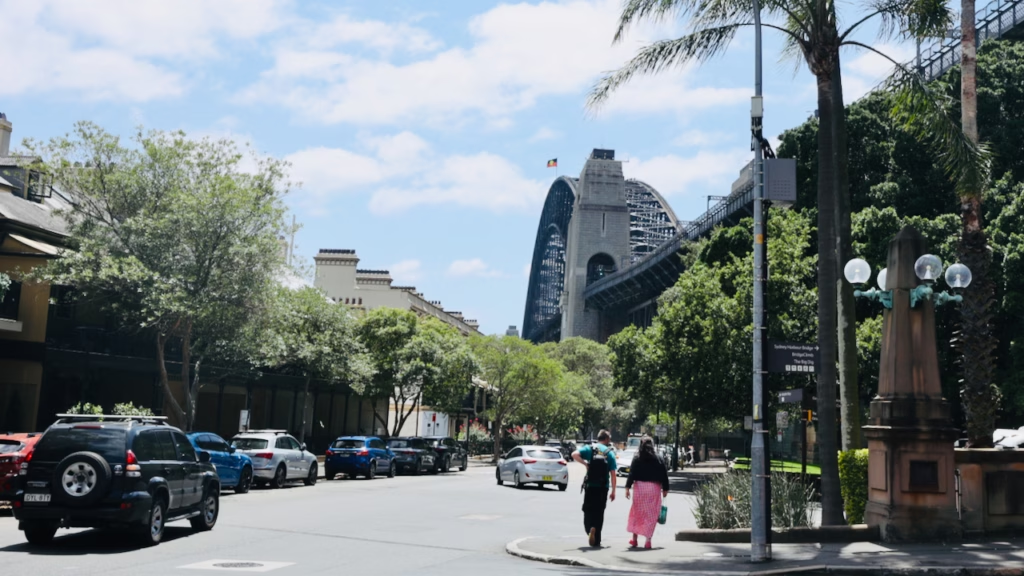
A different way into The Rocks than the Circular Quay approach, walking along Hickson Road on the harbour’s edge until the bridge’s southern approach spans are directly overhead. The street starts right by the Overseas Passenger Terminal and Campbell’s Cove, past the heritage ASN Co. Building, an 1880s warehouse and office block next to the Park Hyatt, with the Bridge already framed at the far end of the street.
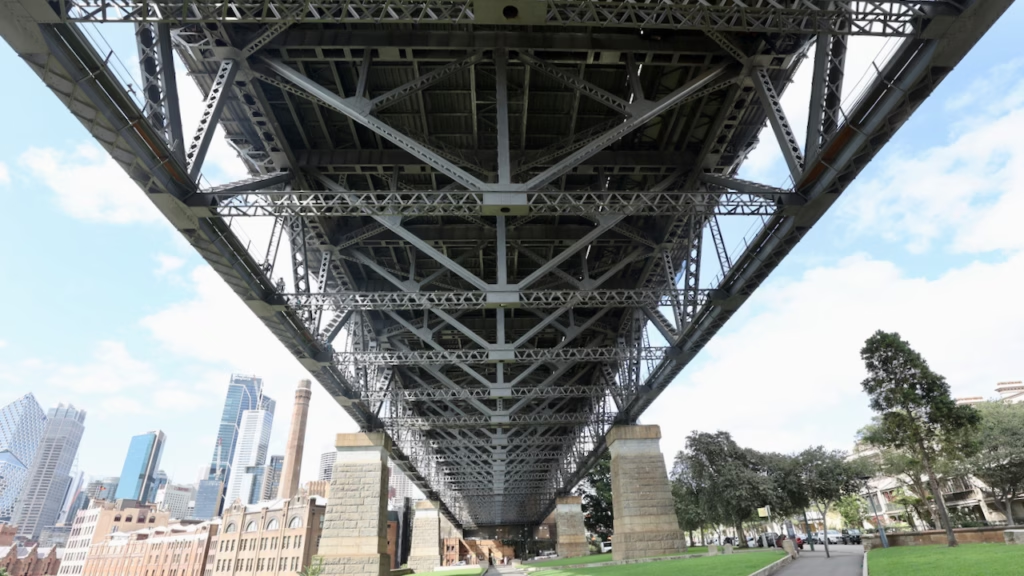
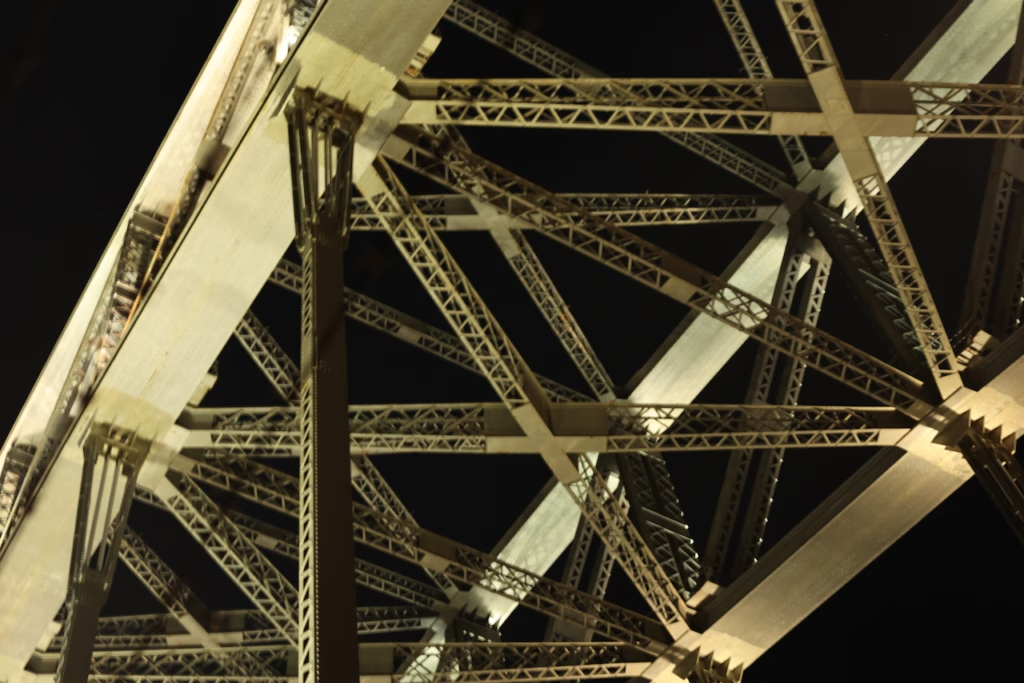
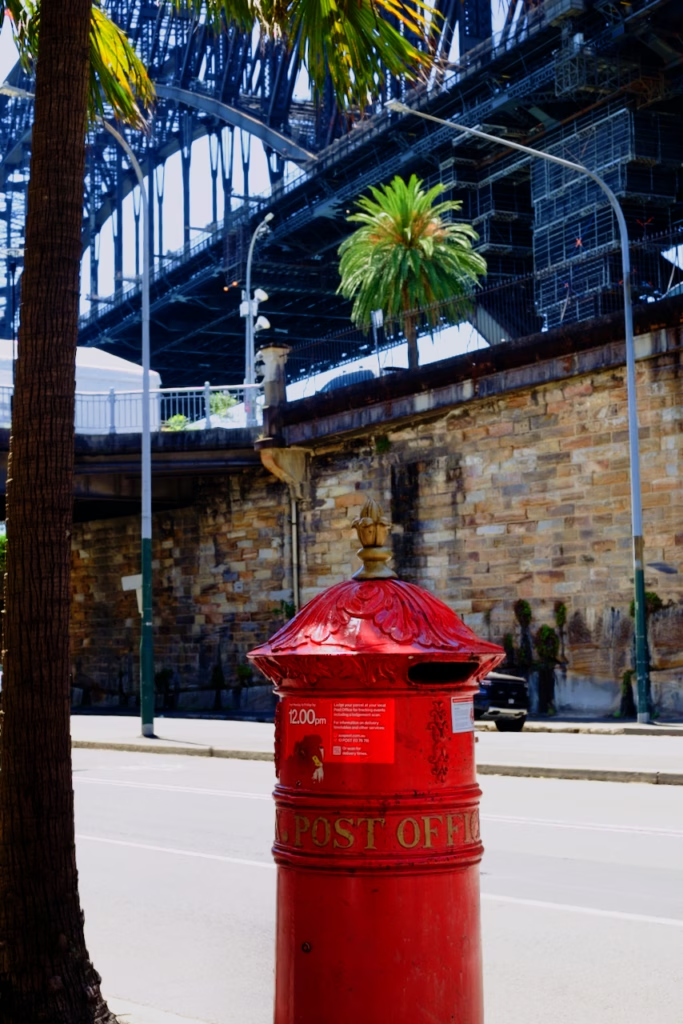
This is the heavier, older steelwork before the main arch starts, not the postcard shot but impressive in its own, heavier way, standing underneath it with sandstone piers on either side and the CBD skyline visible off past the park. A heritage red pillar postbox a little further along the same street is worth a glance too, an unexpected bit of character against all that steel.
Pull back a little further along the same stretch of foreshore and the framing opens up entirely, the Bridge’s northern pylon and Luna Park both visible across the water, day or night.
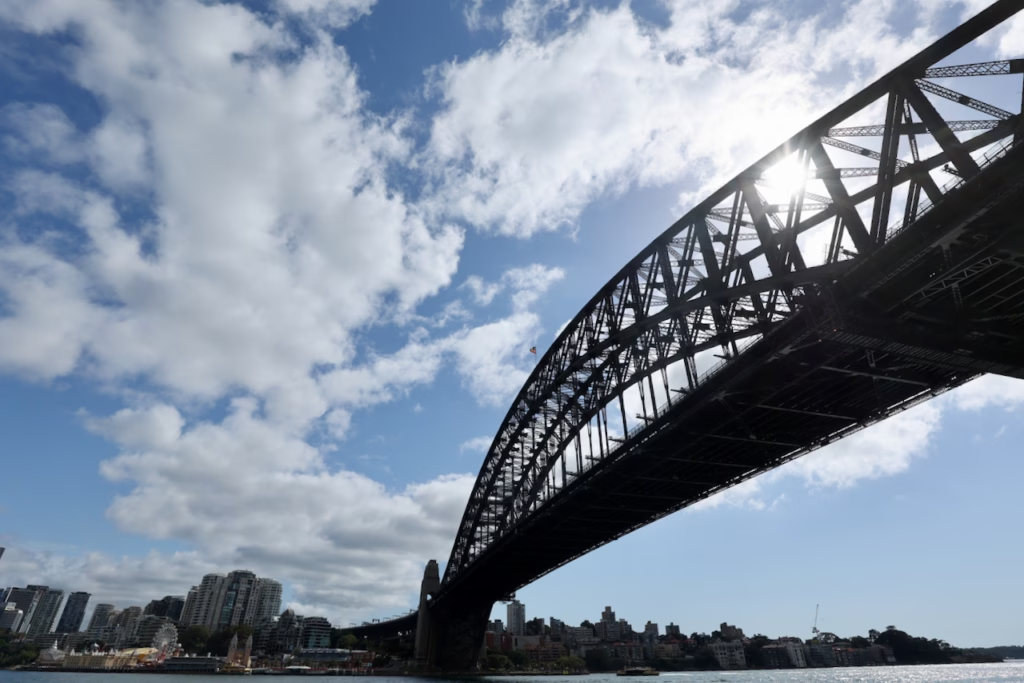
Worth continuing the walk from here up into The Rocks proper, past The Big Dig and toward Observatory Hill, rather than turning back once you’ve had the moment under the bridge.
Dr Mary Booth Lookout
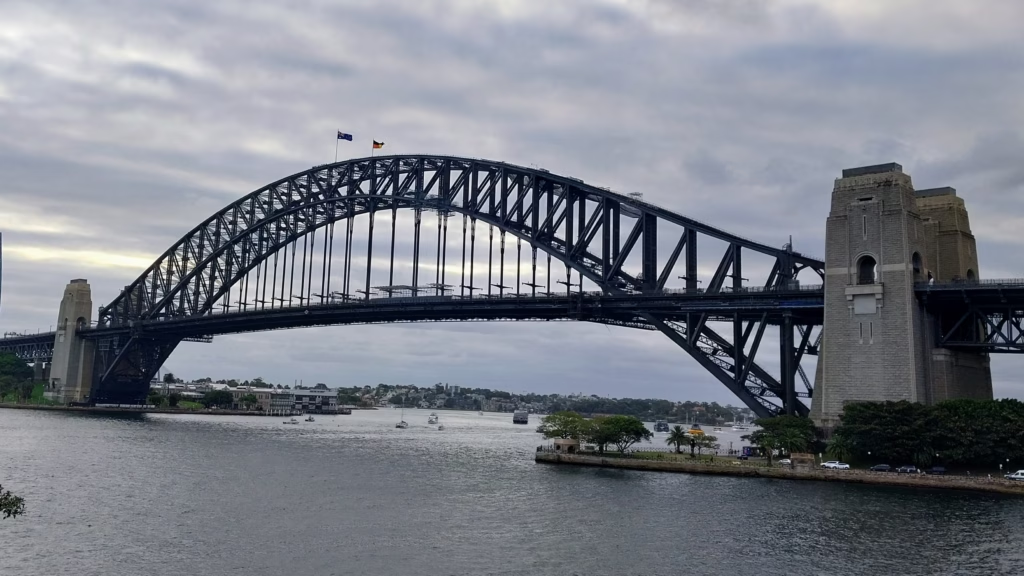
A short walk from Milsons Point, on the way toward Lavender Bay. A small reserve looking directly across at the Bridge, close enough that the arch and southern pylon fill most of the frame rather than sharing it with the skyline.
Wendy Whiteley’s Secret Garden, Lavender Bay
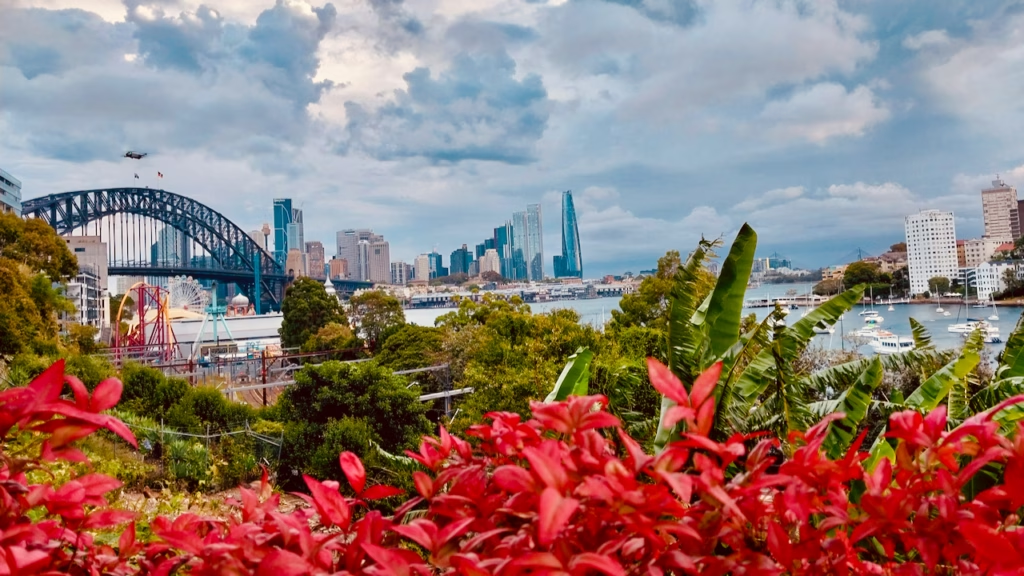
A few minutes further on from the lookout, and one of the more unexpected stops on this whole route, a genuinely lived-in garden rather than a curated viewpoint. Wendy Whiteley and her husband, the painter Brett Whiteley, made their home right here in Lavender Bay in 1970, and that exact outlook, the harbour, the ferries, the bridge, turns up again and again across his paintings. After Brett died in 1992, and again after their daughter Arkie’s death not long after, Wendy started clearing the derelict, government-owned railway land below the house, initially just to have something in her life she could actually fix. It grew into this: a dense, subtropical garden built on land she’s never owned, funded mostly by her own money, tended today by volunteers, heritage-listed since 2018, and free and open to the public every day of the year.
None of that history is signposted on the way in, it’s just banana palms, fig trees and narrow paths that suddenly open onto the water, the Bridge and Luna Park’s ferris wheel visible through the foliage rather than laid out for you the way a proper lookout would frame them. It’s a view you have to find your way to inside a garden, not one handed to you, which is the whole reason it earns a spot on this route.
Kirribilli and Jeffrey Street Wharf
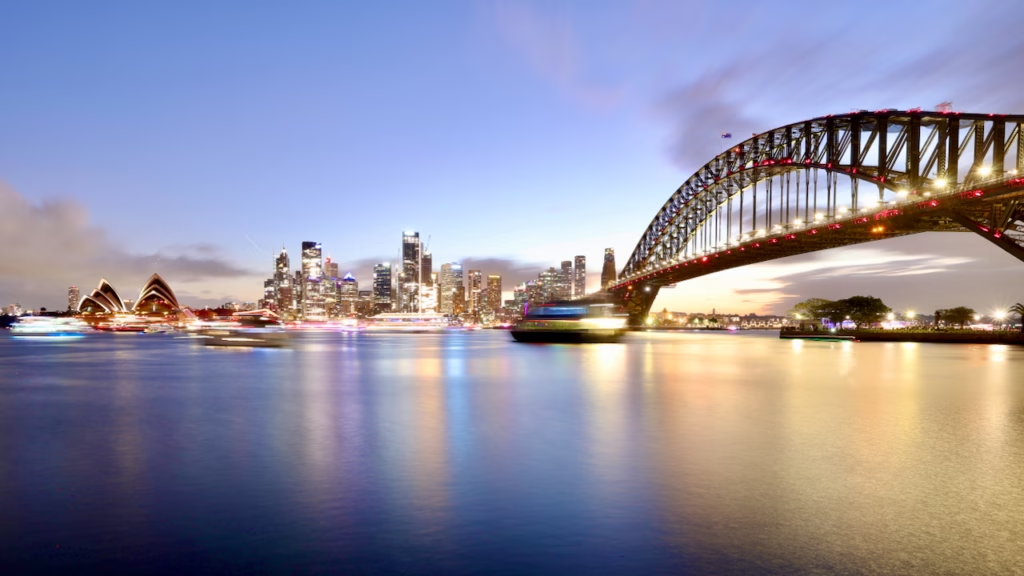
Across the bridge near the Prime Minister’s official Sydney residence, and about as quiet as water-level views get on this whole route. Jeffrey Street sits far enough east to catch the Opera House, the full CBD skyline, and the Bridge together in one wide panorama, the sign on the wharf shelter itself is the clean confirmation you’ve found the right spot, and it’s also the pick for fireworks, more on that below.
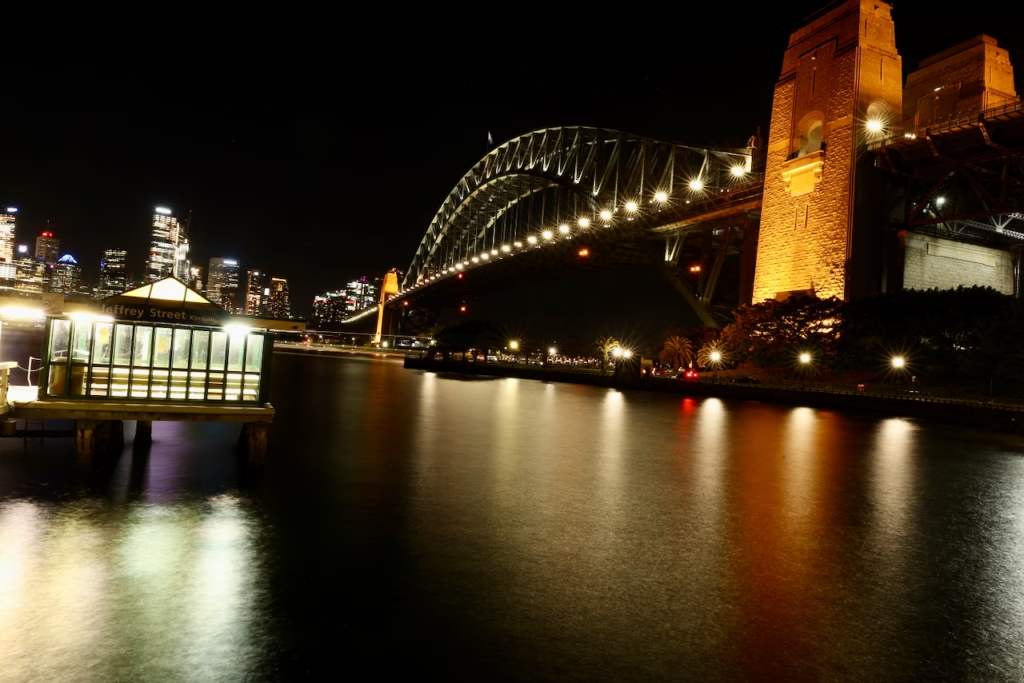
Beulah Street, a little further along the same waterfront, trades that wide panorama for something tighter and more physical: you end up almost directly beneath the Bridge’s northern pylon, close enough that the CBD skyline off to the side turns into an afterthought next to the steelwork overhead. Neither spot is better, they’re answering different questions, one wants the whole scene, the other wants to feel small next to the structure.
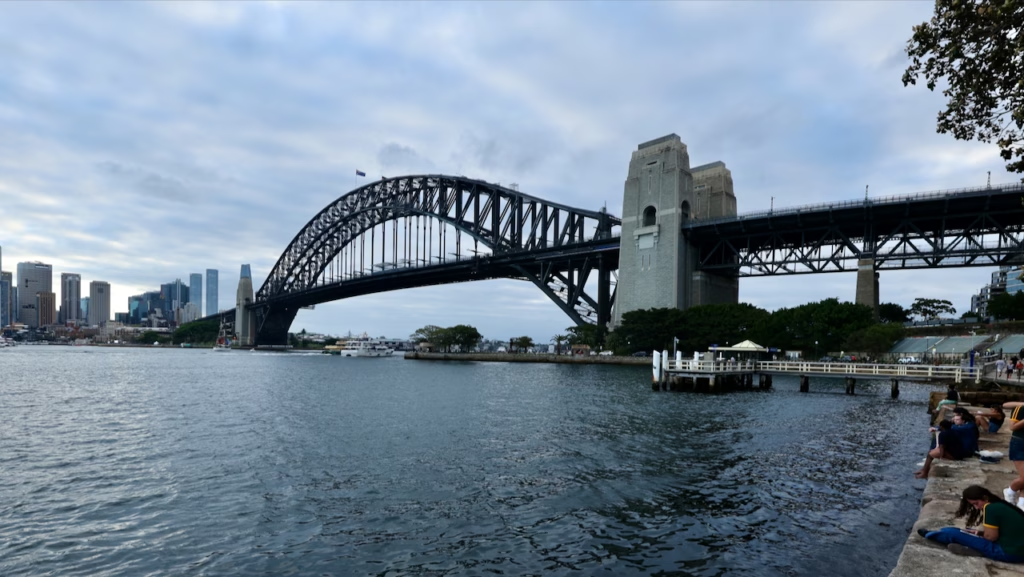
Don’t double back toward Circular Quay the way you came. Walking back gives you a second, slower pass at both landmarks from a shifting angle, and at night the Bridge’s own lighting adds something extra to the mix, more colour along the railings than the plain white you’d expect, whatever the cause. It stretches a quick wharf visit into a proper half-hour walk without adding any real distance.
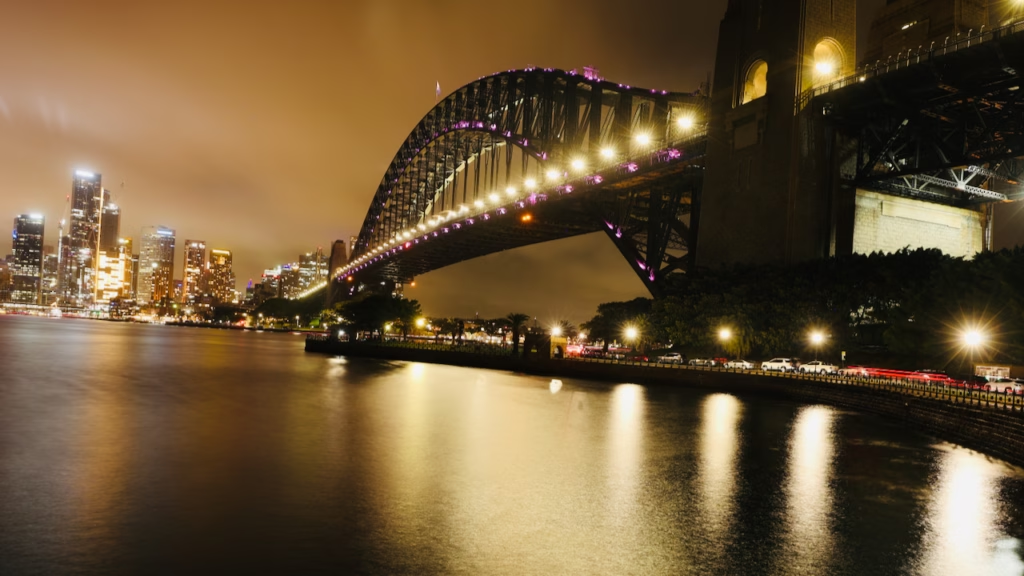
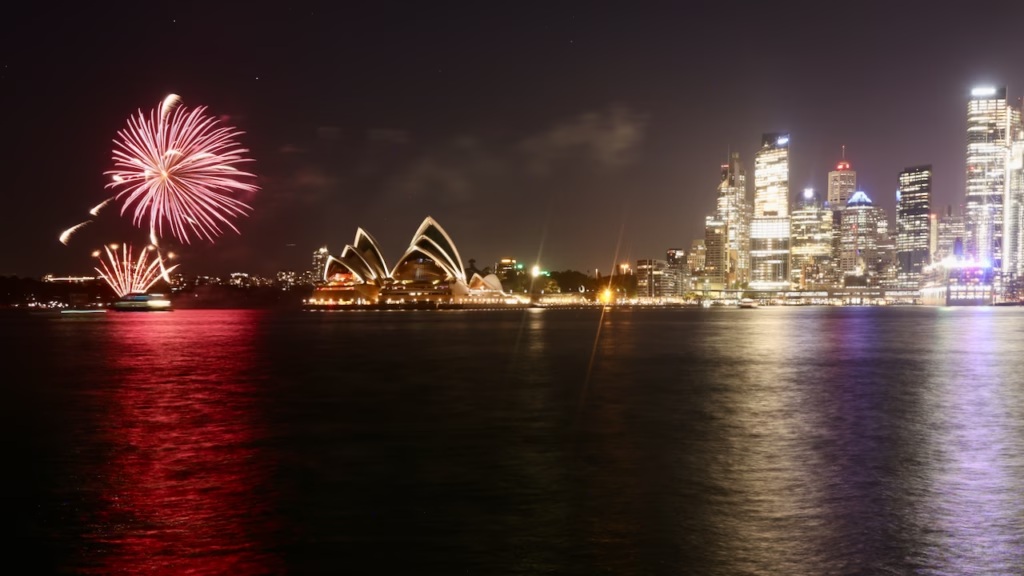
Worth knowing before you go: this stretch is quiet in a way most of the rest of this list isn’t, not just fewer tourists, but genuinely sparse streetlighting in parts and long stretches where you might have the wharf to yourself. That’s exactly what makes it good for photography, no crowds drifting through a long exposure, no competing camera flashes, nobody hurrying past your tripod.
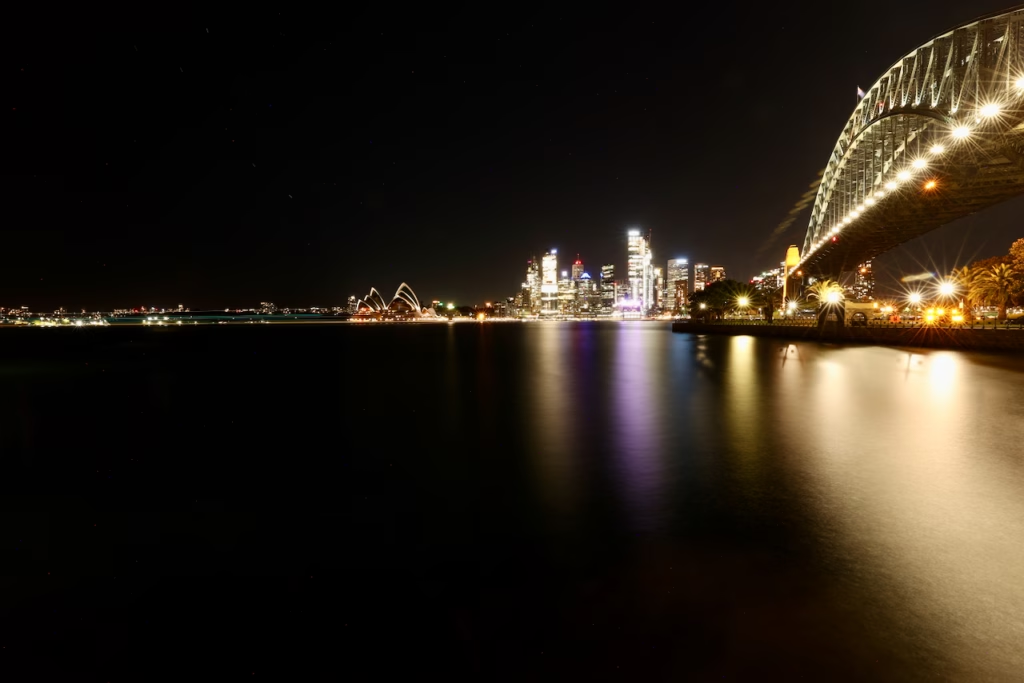
What you will find, especially in the evening, are locals fishing off the rocks and the wharf edge, an entirely normal pastime here, not anything out of the ordinary. I’ll be honest that the first time I was out there alone after dark, with the light thin and a few unfamiliar figures fishing nearby, I felt a flicker of unease, the kind that comes from being in an unfamiliar city at night rather than from anything actually happening. Nothing did happen, not even close. Sydney consistently ranks among the safest major cities in the world for visitors Forbes Advisor had it at fourth globally in one recent ranking), and the Lower North Shore, Kirribilli included, sits toward the safer end even within that. Ordinary caution applies here the way it would anywhere quiet after dark, but the quiet itself is the reason this spot works as well as it does.
Blues Point Reserve, McMahons Point Researched, not visited
A small grassy headland at the end of Blues Point Road, a few minutes from Dr Mary Booth Lookout, with a close-to-360-degree view taking in the western side of the Bridge, the Opera House, and the city skyline together. Also one of the harbour’s long-standing New Year’s Eve fireworks spots. Reachable by the McMahons Point ferry or a short walk from Milsons Point.
Cremorne Point Researched, not visited
Further out on the North Shore than anywhere else here, a short ferry ride from Circular Quay, repeatedly singled out by locals as an underrated combination view of the Opera House, the Bridge, and the CBD skyline in one frame, something the closer spots can’t quite manage. Sits on the Cremorne Point to Mosman walking track, past the historic MacCallum Pool, so it pairs naturally with a longer harbourside walk rather than a quick stop.
Pier One, Walsh Bay
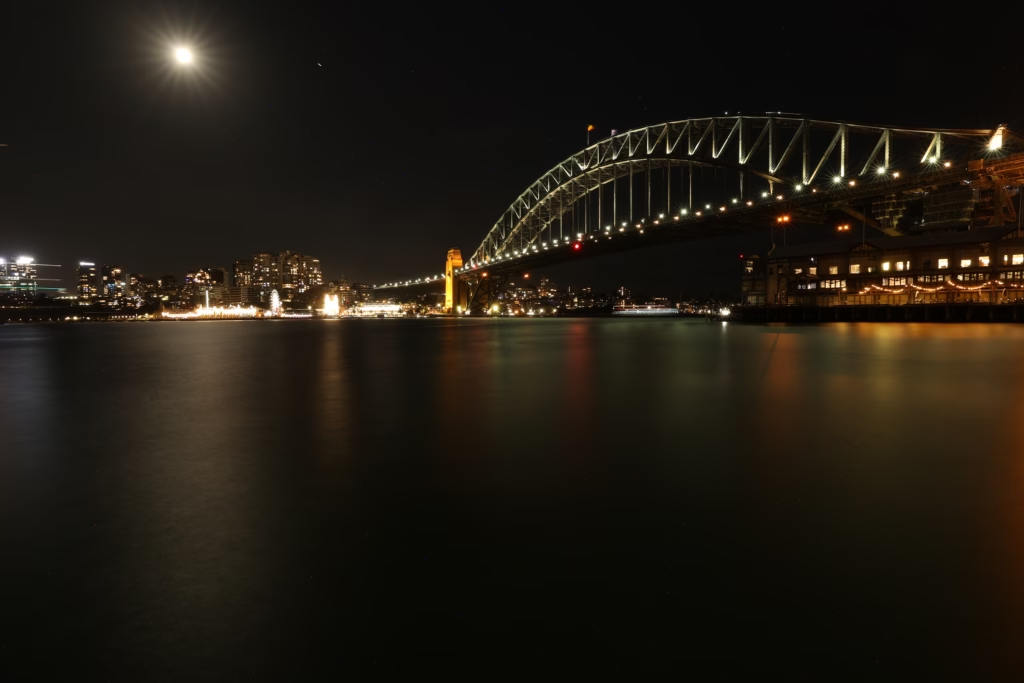
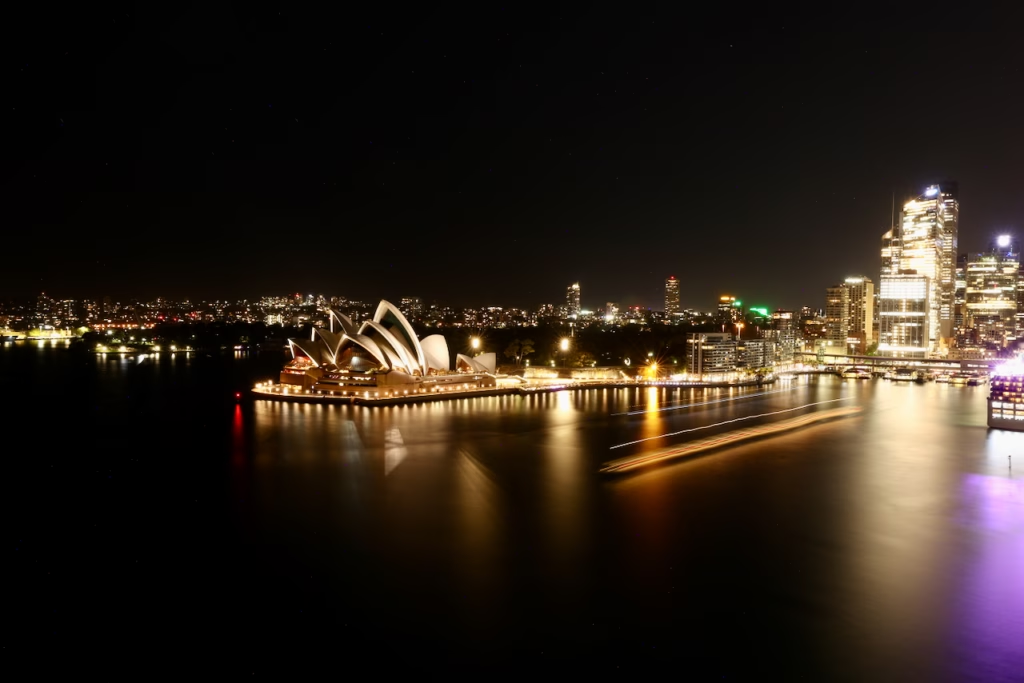
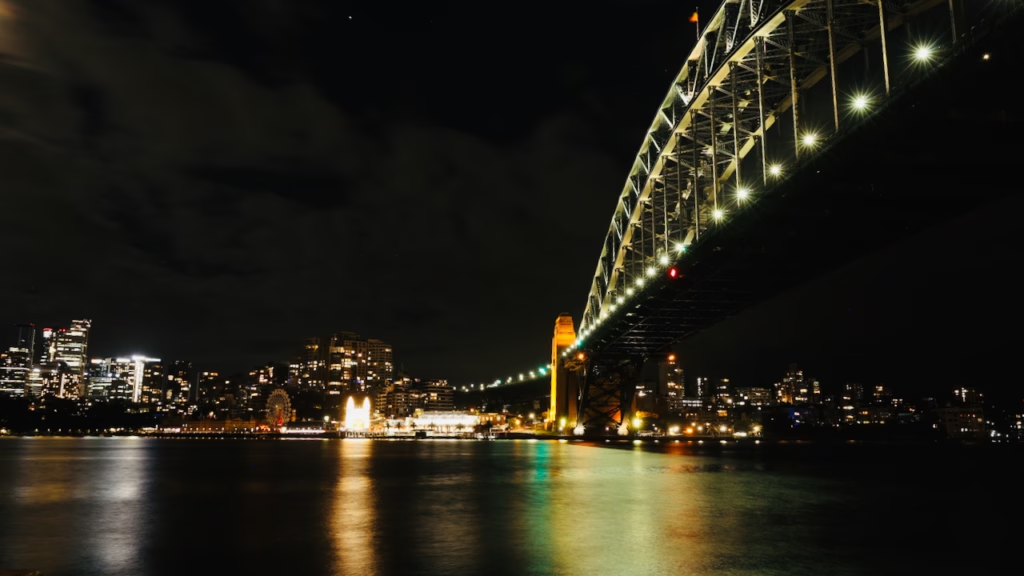
Right under the Bridge’s southern end, and the single strongest spot after dark on this whole route, the Bridge lit up seen from almost directly beneath it, the Pier One Sydney Harbour hotel’s warm string-lit pier giving the foreground a mood nowhere else here quite matches.
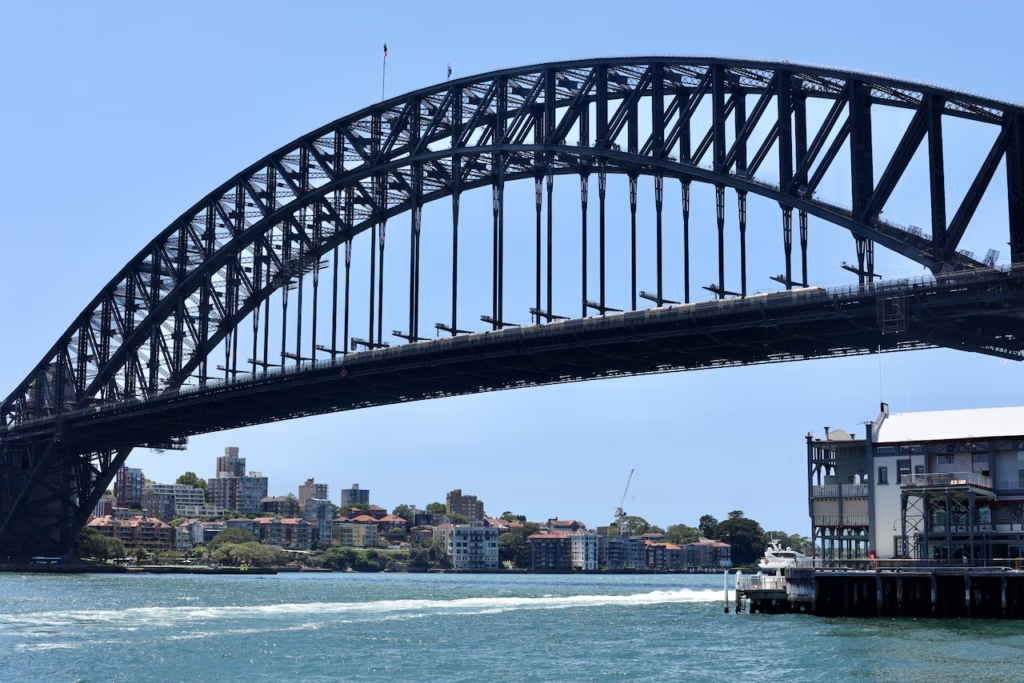
By day it’s a different scene entirely, wide open under a clear span of steel with North Sydney’s rooftops visible straight through the arch and boat wake cutting across the water below.
La Perouse Researched, not visited
The furthest option here, out at the mouth of the harbour rather than the middle of it, so the tight framing gives way to a wide, uncrowded sunset over the whole harbour instead.
Watsons Bay
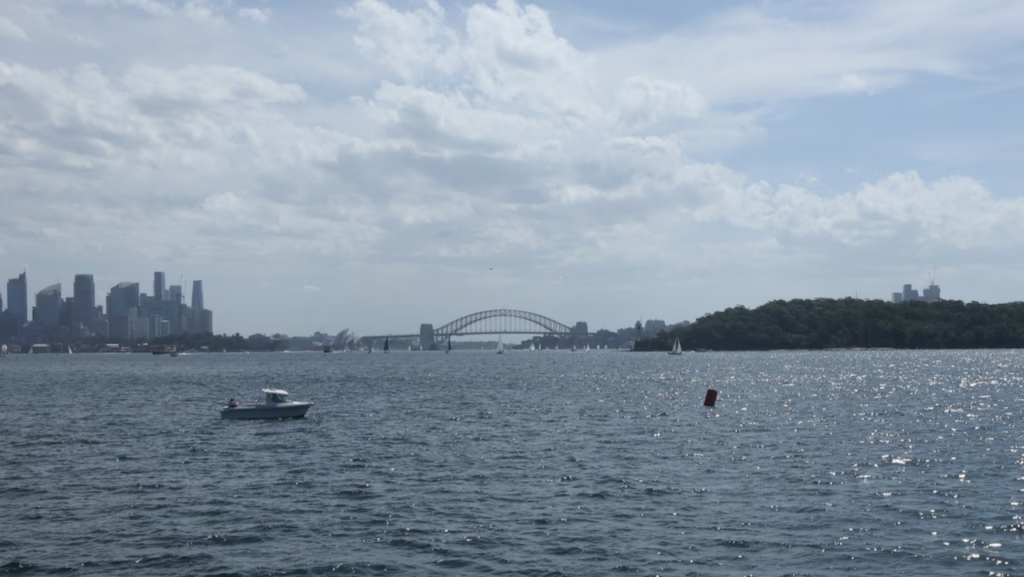
Further out again, near the harbour’s mouth on the southern side, a ferry ride rather than a walk, unlike everywhere else covered here. The Opera House and Bridge shrink to small, distant landmarks from out here, sharing the frame with sailboats and the wider harbour rather than dominating it, a different kind of view from anything closer in.
On the Water
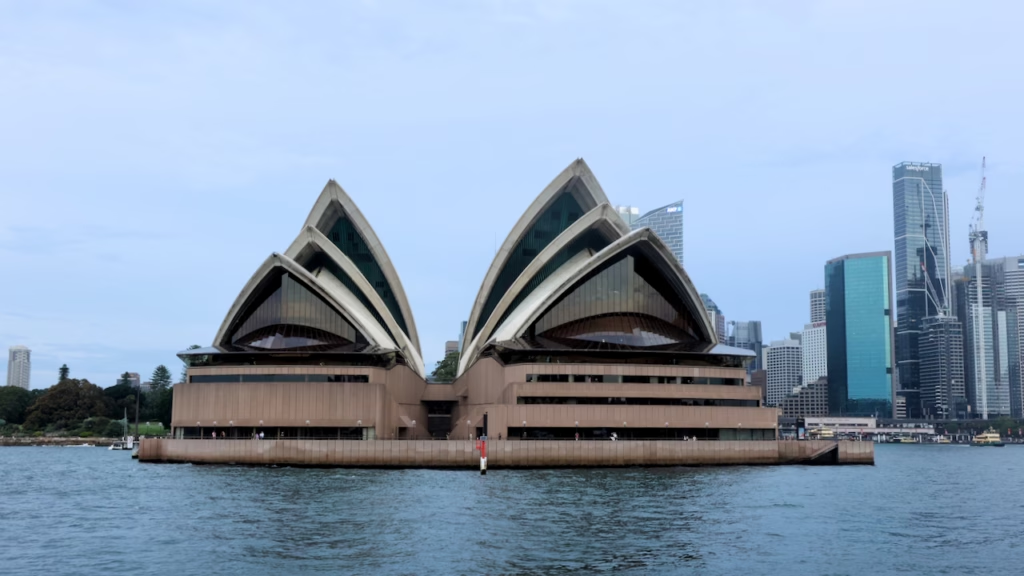
Every ferry leaving Circular Quay gives you a moving view of both landmarks, and the regular commuter routes cost a normal transit fare rather than a cruise-boat price. The Manly ferry is the classic pick, a scenic 25-minute run past the harbour’s mouth, past Luna Park and Kirribilli early on, with the Opera House and Bridge receding behind you for the whole first stretch.
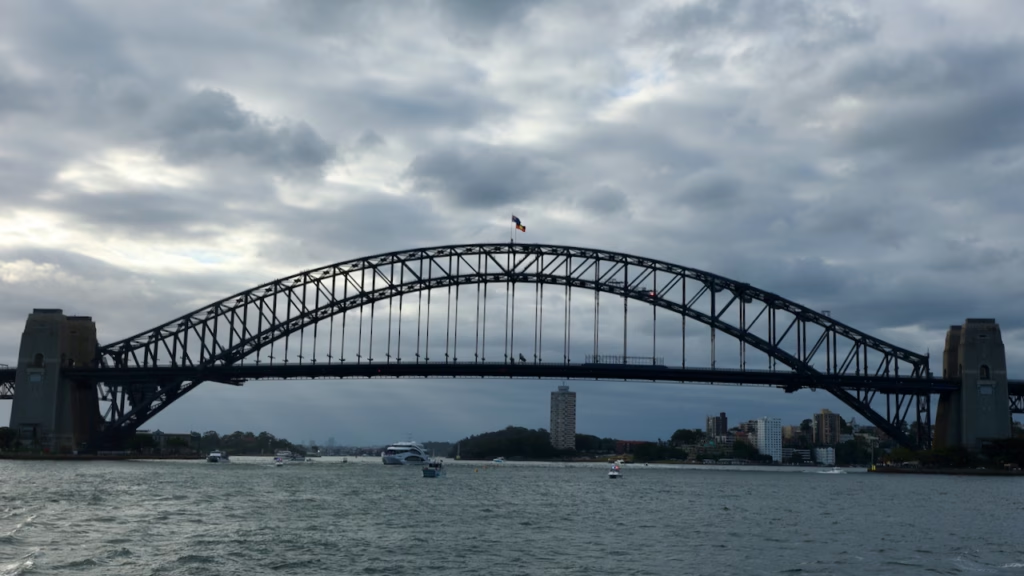
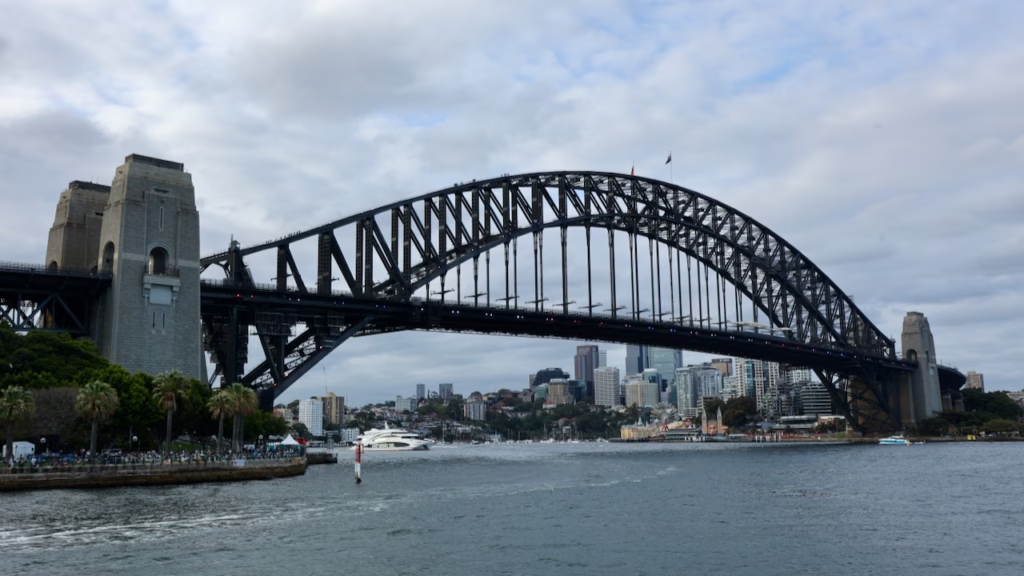
The Bridge gets its own moment from the water too, a wide, moving view from the deck of whatever ferry you’re on.
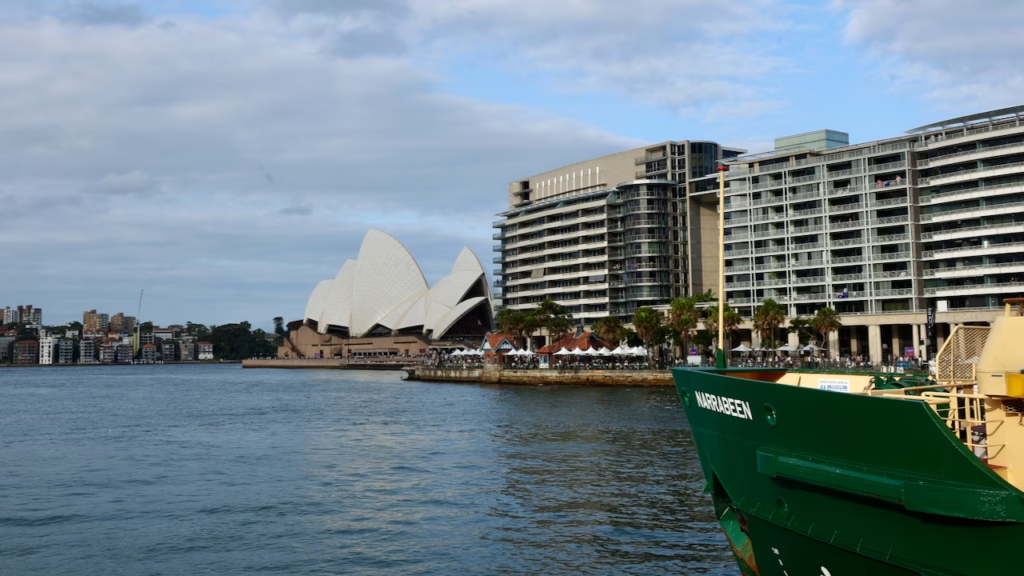
The Taronga Zoo ferry is a shorter alternative if a zoo visit’s on the plan too, with the bonus of views back to the city from the zoo grounds once you’re there, and whichever route you take, keep an eye on the harbour itself, ferries passing each other, apartment blocks sliding by, Luna Park receding into the distance.
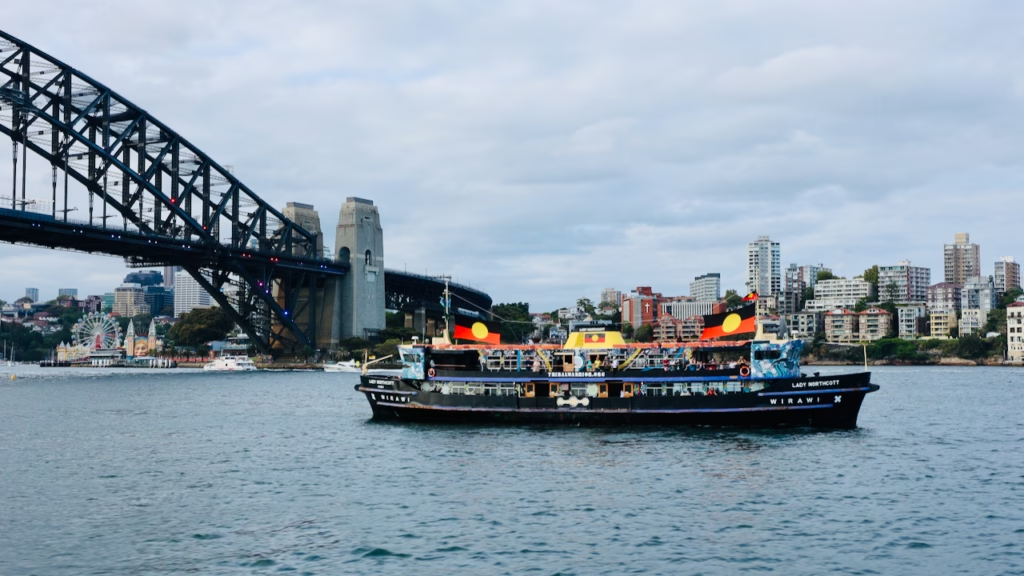
Keep an eye out for the harbour’s other traffic too, not everything on the water is a commuter ferry or a tour boat. I passed the Wirawi, a black-hulled vessel decorated in Aboriginal artwork, cruising near the Bridge one afternoon. She was built in 1974 as the Lady Northcott, a regular Sydney Ferries vessel, retired from commuter service in 2017, then donated in 2021 to Tribal Warrior, Australia’s largest Aboriginal maritime charity, who restored her and brought her back to the harbour under her own power in 2022. Renamed Wirawi, Dharug for “woman,” in a ceremony in January 2023, she now runs cultural cruises on the harbour, including for Vivid Sydney and New Year’s Eve. Worth a second look if you spot her rather than assuming she’s just another tour boat.
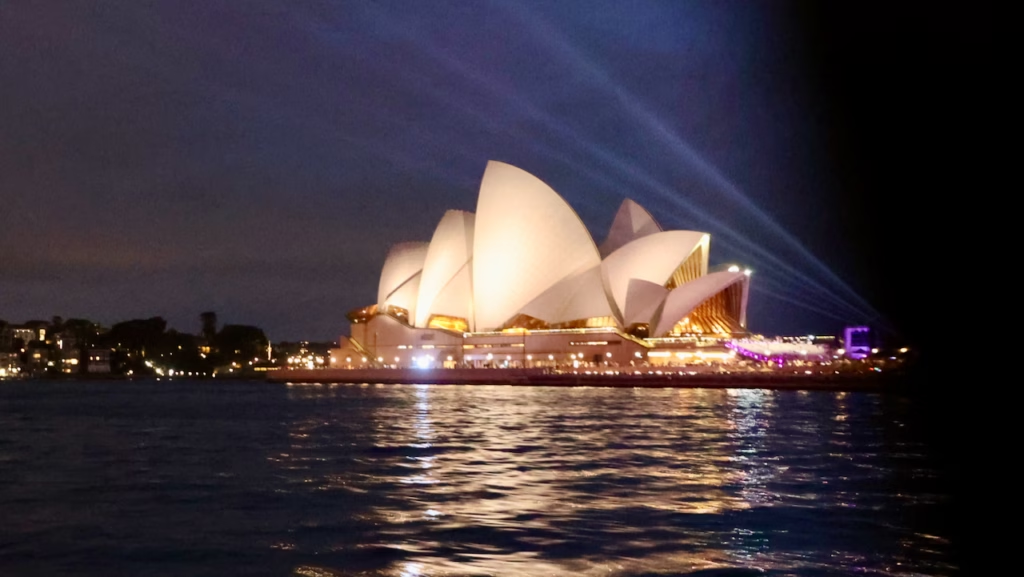
The same ride after dark feels like a completely separate trip, worth doing once even if you’ve already done it in daylight. On a ferry from Circular Quay toward Luna Park Wharf, the Opera House is the first thing to catch the light as you pull away, lit gold against a dark skyline rather than competing with a bright sky and a hundred other reflections the way it does at midday.
A few minutes on, the ferry passes close enough to the Bridge’s southern pylon to lose the wider harbour context altogether, just the floodlit sandstone and the steel overhead, lit warm amber rather than the cooler daylight tones you’d get from the walkway above.
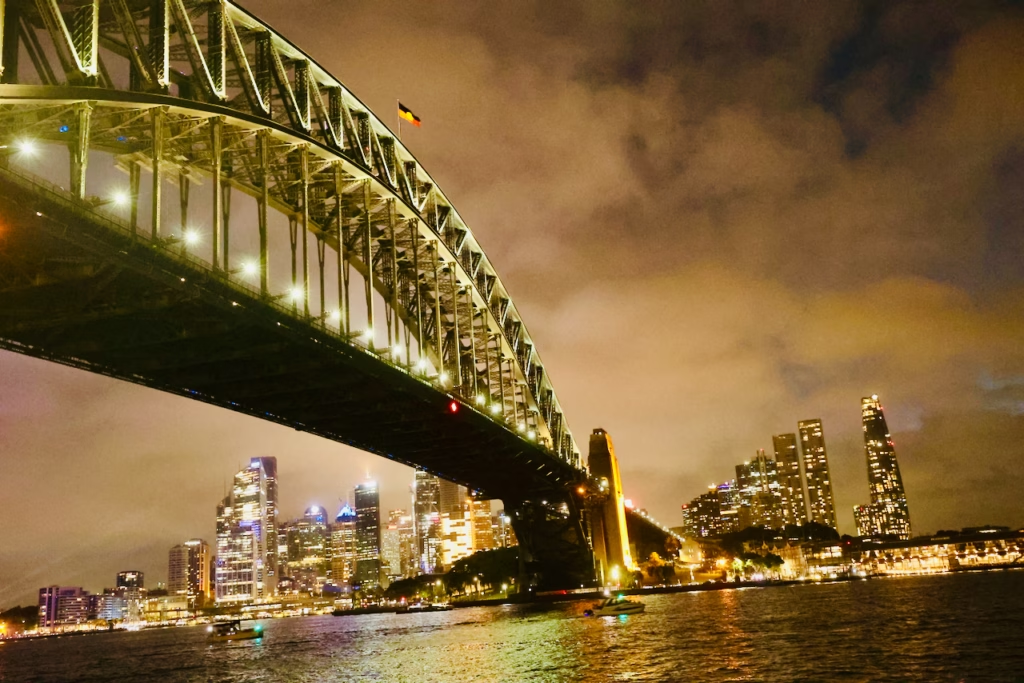
By the time Luna Park and Milsons Point Wharf are close, the whole arch fills the frame from underneath, the CBD skyline and North Sydney’s towers both visible through the steelwork on either side. It’s a much more intimate view than the postcard-wide daytime shots, less about seeing both landmarks in one frame and more about how close the water actually puts you to them.
Paid Experiences Worth Knowing About
Inside the Opera House
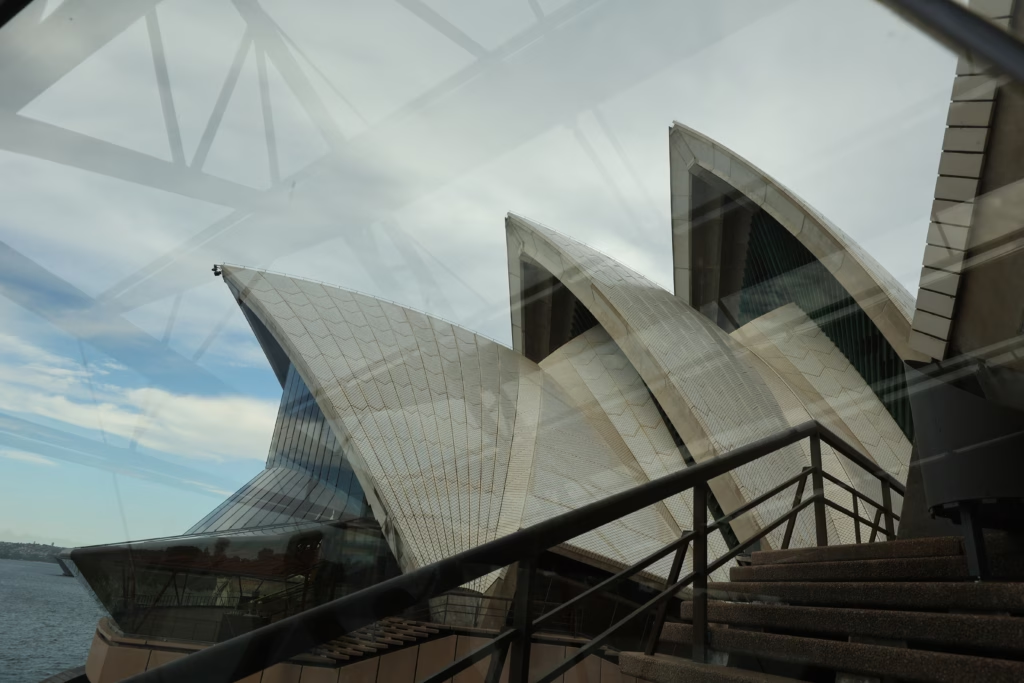
Everywhere covered so far looks at the building from outside. The one-hour guided tour is the one way to actually get inside it, through spaces you don’t see from the forecourt or even from a show ticket, the construction saga, the acoustics, the architecture that took Jørn Utzon’s design from a competition sketch to the most recognisable building in the country.
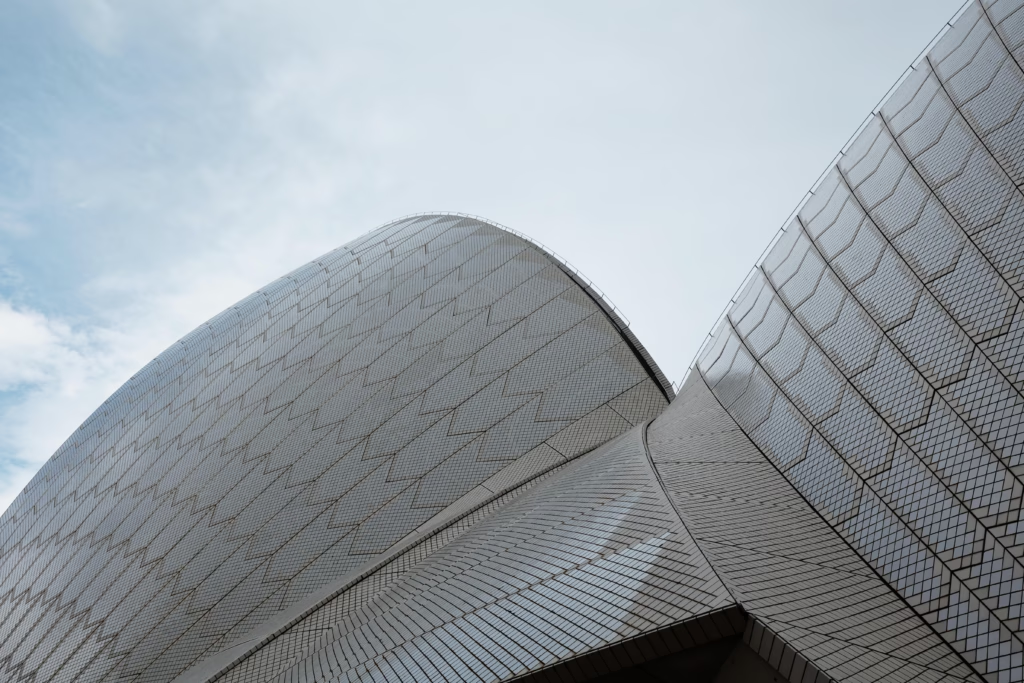
I did this tour myself, and it’s worth it mainly for how little of that story is visible from the outside.
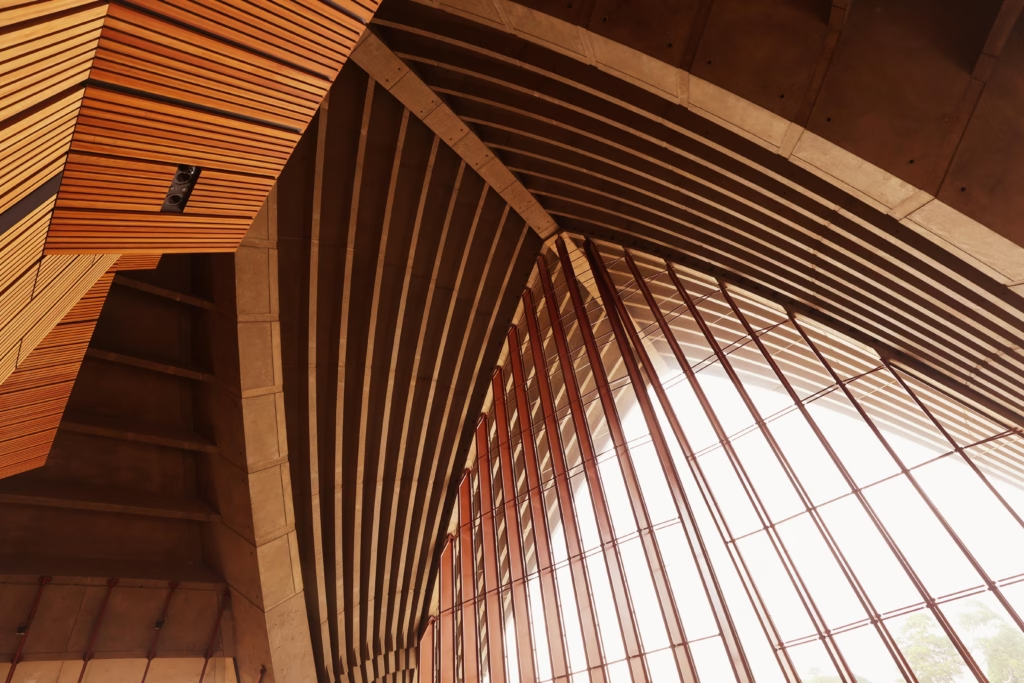
Book ahead
Sydney Opera House Guided Tour with Entrance Ticket
Up on the Bridge — the BridgeMuseum vs BridgeClimb
Two very different ways to get above the harbour.
Name note
The Sydney Harbour BridgeMuseum is the same South-East Pylon viewpoint most guides still call Pylon Lookout, it closed for a major redevelopment in early 2026 and reopened under its new name on 27 May, with interactive exhibits added alongside the same viewing platform at the top (branded SkyHouse). Same spot, same view, new name and a new price to go with it.
Sydney Harbour BridgeMuseum
- From around AU$35, walk-in, no booking required
- Panoramic harbour views close to the summit climbers’
- Camera allowed, unlike BridgeClimb
- Open 9am–6.30pm daily, so check current hours before planning a sunset visit
BridgeClimb
- From AU$209 (Sampler) up to AU$429 (Dawn)
- Classic Day climb from ~AU$299, Twilight from ~AU$399
- The full summit-of-the-arch experience
- Not done first-hand, see note below
I haven’t done BridgeClimb myself, so take that column as researched rather than tested. The BridgeMuseum gets you a very similar elevation and view for a fraction of the price, minus the summit walk and the bragging rights.
Book ahead, especially for twilight
Sydney Harbour Bridge Guided Daytime Summit Climb
Scenic Helicopter Flight
The most expensive thing on offer here, and the only one that puts you directly overhead of both landmarks at once rather than looking across at them.
The splurge option
Sydney Harbour Scenic Helicopter Flight
Where to Splurge on the View
Park Hyatt Sydney sits in The Rocks, close enough to the water that its harbourside rooms and terraces look almost directly across at the Opera House with the Bridge close on the other side, one of the best hotel views I’ve seen anywhere. A stay isn’t required either, The Bar and The Dining Room are open for a drink or meal with the same outlook.
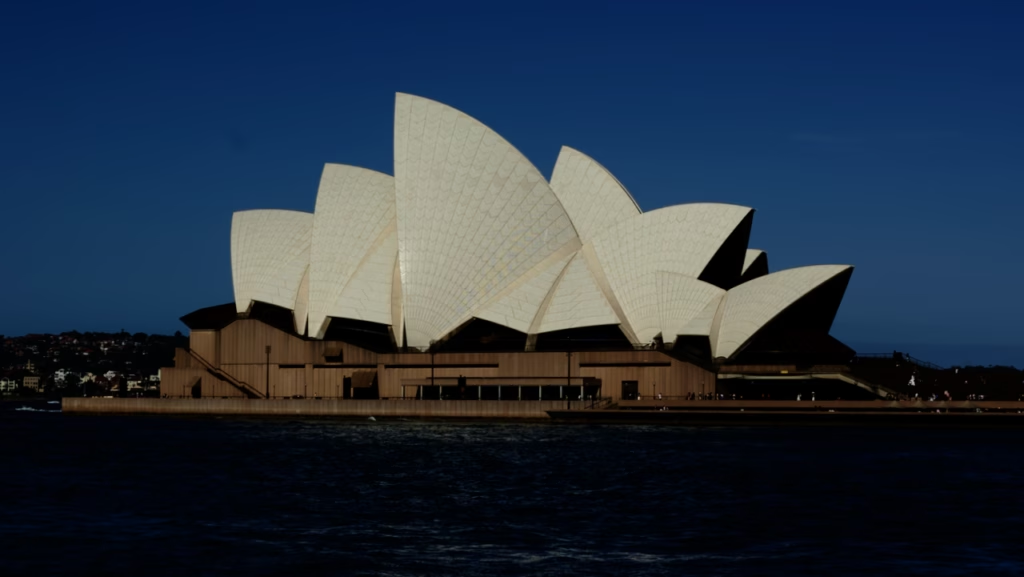
The rooftop pool is guests-and-spa-only, but the promenade along Circular Quay West in front of the hotel is a quiet way to take in both landmarks from a different angle than the Quay itself.
Blu Bar on 36 at the Shangri-La, in The Rocks Researched, not visited, does the same idea from higher up rather than water level: the hotel’s 36th floor, a genuinely panoramic sweep across both landmarks and the wider harbour, open to walk-ins. More of a night, cocktails-and-skyline pick than Park Hyatt’s daytime water-level view.Fireworks Over the Harbour
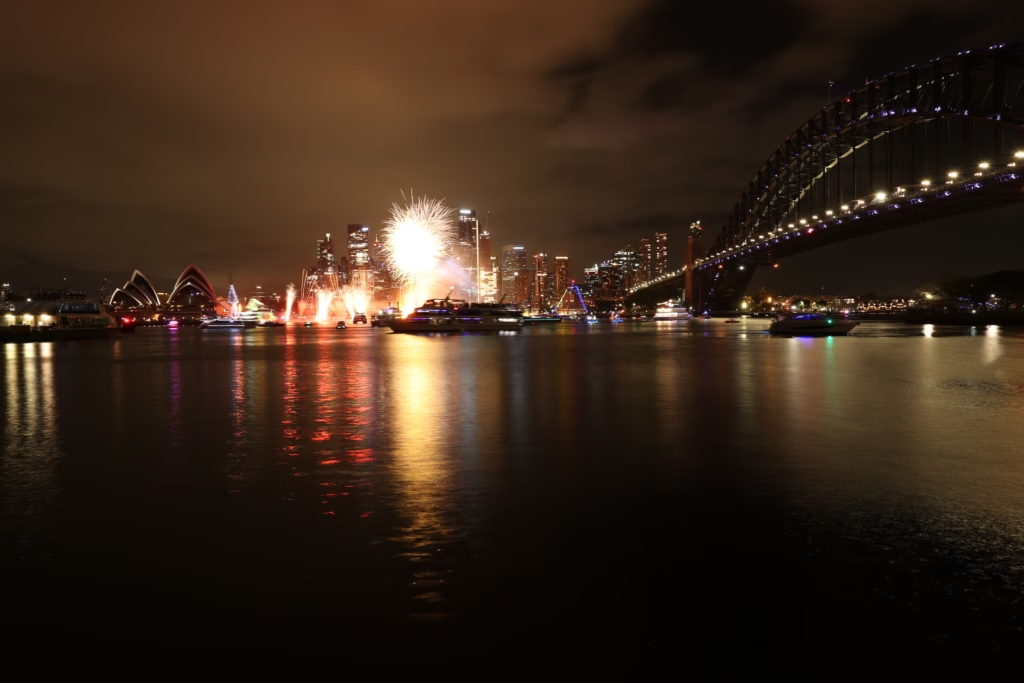
Sydney puts on fireworks more often than most visitors realise, not just on New Year’s Eve. The two big ones are New Year’s Eve itself, with a 9pm family display and the main midnight show, and Australia Day on 26 January, with fireworks around 9–9.30pm after a full day of harbour events. Both use the Bridge as the main visual anchor, lighting and pyrotechnic effects across the arch alongside the fireworks proper.
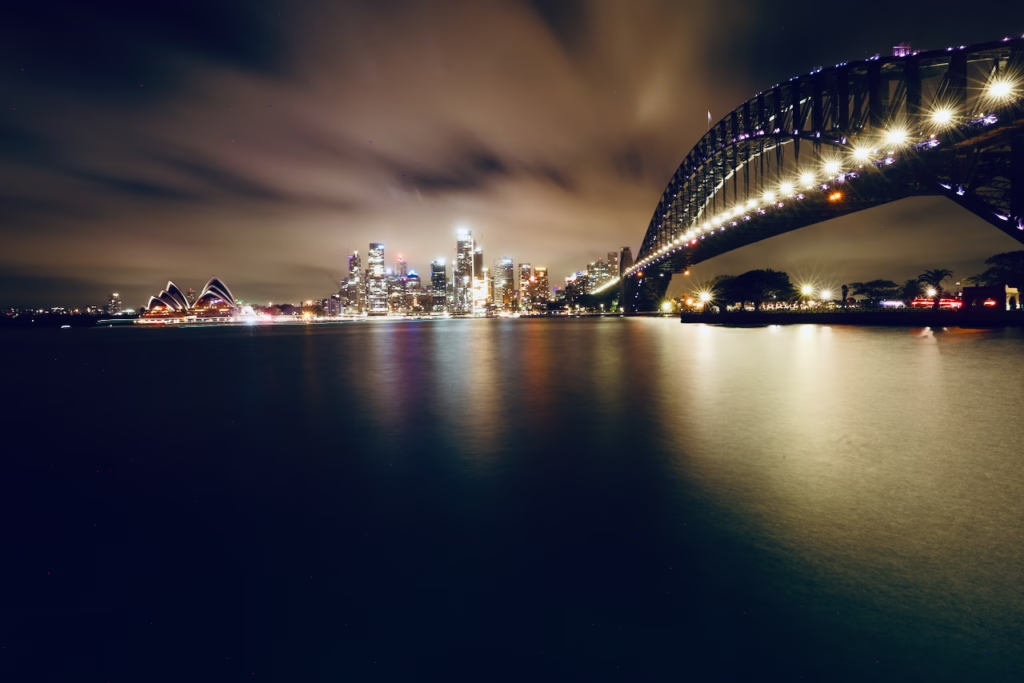
The obvious spots, the Opera House forecourt, Circular Quay, Mrs Macquarie’s Chair, get seriously crowded on these nights, often requiring hours of holding a spot in advance. My pick instead is Jeffrey Street Wharf and the surrounding Kirribilli foreshore: a little less of the CBD’s tight close-up framing, in exchange for a wide, uncrowded view straight across at the Bridge and the fireworks together.
Blues Point Reserve, just around the headland, is the well-known backup if Jeffrey Street is already packed by the time you get there, and on a different night I caught a bigger cluster of decorated boats gathered on the water ahead of another display, a reminder that no two fireworks nights on this harbour look quite the same. Jeffrey Street is a fraction of the CBD’s crowd, not empty, so treat it the same way: arrive with a few hours to spare on NYE specifically, bring something to sit on and enough food and water to cover the wait, and expect the walk out afterward to take longer than the walk in.
Warning
Ferries stop running early on New Year’s Eve and other major fireworks nights, and roads and some train stations close too. If you’re heading to Kirribilli, arrive well before the transport disruptions start and plan to walk back rather than rely on public transport getting you home.
Vivid Sydney and Year-Round Night Lighting
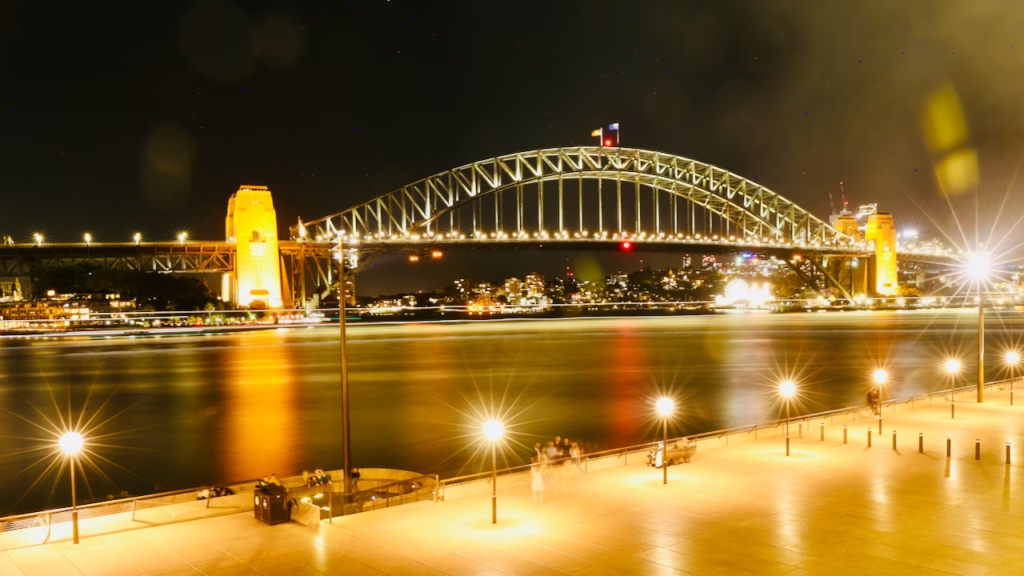
Vivid Sydney is the one real exception to “wander and every angle works.” An annual light festival, usually three weeks from late May into June (2026 ran 22 May to 13 June), it wraps both landmarks in large-scale projections nightly. The Opera House’s sails become a canvas for a different projection each year, the Bridge lights up alongside it, and a free 6.5km light walk connects Circular Quay, The Rocks, Barangaroo and Darling Harbour, most of it at no cost. The catch: every viewpoint in this guide gets substantially busier for the duration, so lean harder than usual on the less-crowded picks, the Cahill Walkway and Blues Point Reserve especially.
Outside of Vivid, the Opera House’s eastern sails still run a smaller free nightly show most of the year, called Badu Gili, a handful of six-minute screenings from sunset, best seen from the Monumental Steps. It’s a quiet, small thing rather than a festival takeover, worth checking the Opera House’s own site for current times if you want to plan a night visit around it specifically.
Day vs Night: How the Same View Changes
This is the part that surprised me most: the same two buildings, seen from the same spot, look different depending on the hour, and different again once the sun’s fully down.
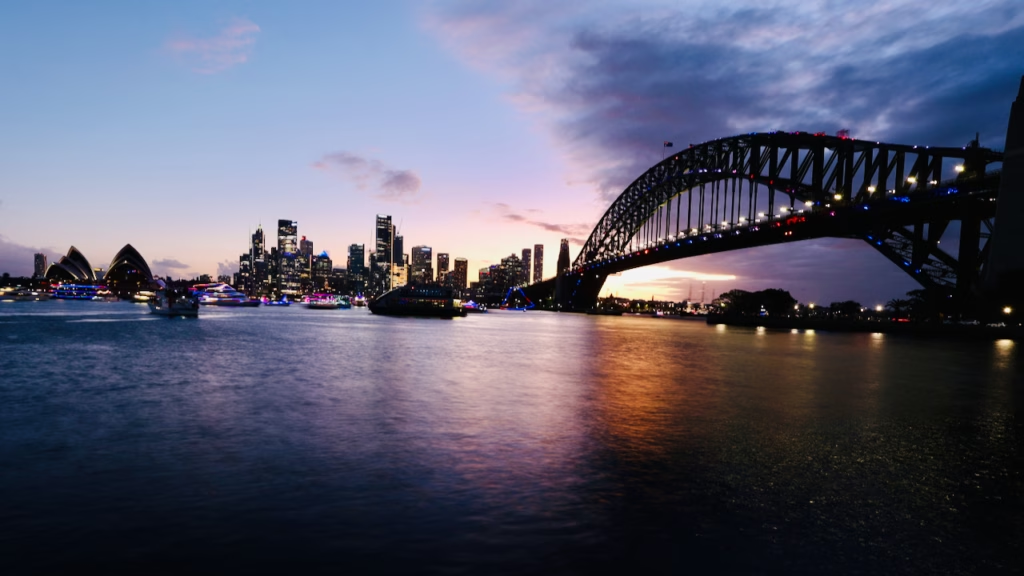
Morning light is soft and puts the Opera House’s sails in warm relief. Midday is the harshest light of the day for photos, but it’s when the harbour feels busiest and most alive, ferries crossing constantly. Late afternoon into sunset, especially from Mrs Macquarie’s Chair or La Perouse, is when the whole harbour turns gold. After dark, once the sails and the Bridge are both lit, the character shifts again, quieter, more dramatic, best from Pier One or the Rocks side of the Bridge.
I fell for both buildings honestly, watching them change across a single day, more than once over twelve nights.
Practical Information
Getting Around
An Opal card, or just a contactless bank card or phone (they work identically at every reader), covers trains, ferries and buses everywhere in this guide. As of 2026 the adult daily cap runs around AU$19.30 Monday to Thursday and AU$9.65 Friday through Sunday and public holidays, so a full day bouncing between ferries and trains costs less than it sounds like it should. Sydney Airport’s station adds a separate access fee on top; nothing else on this list does.
Accessibility
The Harbour Bridge walkway and the Cahill Walk are both step-free with lift access at the main entry points (Cumberland Street and Circular Quay), so the whole south-to-north route above is wheelchair and pram-friendly if you use the lifts rather than the stairs. Milsons Point station is step-free too. Mrs Macquarie’s Chair and the Botanic Garden paths are flat and paved. The Cahill Expressway Lookout, Pier One, and most of the North Shore spots (Blues Point Reserve, Kirribilli, Cremorne Point) are all reachable on foot without stairs, though the climb from ferry wharves up to street level at Milsons Point and McMahons Point involves a hill either way.
Food and Rest Stops
Circular Quay and The Rocks have the highest concentration of cafes anywhere in this guide, easy to fold into the walk without a detour. Milsons Point and Kirribilli both have a handful of good options a couple of minutes off the bridge walkway. North of Kirribilli, Cremorne Point included, is quieter on the food front, so carry water and a snack rather than counting on finding somewhere.
Weather and Timing
Sunset swings a lot across the year here, around 8pm in December and January, closer to 5pm in June and July, so check the actual time for your dates rather than assuming, especially if you’re timing a walk around it. Rain doesn’t have to end the day: the Opera House guided tour is entirely indoors, and the Cahill Expressway Lookout is the one spot on this whole route with actual shelter. Wind is the bigger factor on the Bridge Walk itself, exposed the whole way with nothing to break it, worth a jacket even on a warm day.
Suggested Routes
One Morning, Sunrise, Fast (About 90 Minutes)
Mrs Macquarie’s Chair for first light, straight through the Botanic Garden and Cahill Walk to Circular Quay while the light’s still soft, coffee in The Rocks to finish.
One Evening, Start to Finish (About Two Hours)
The full walk above, run in reverse for sunset: Mrs Macquarie’s Chair, back through the Cahill Walk to Circular Quay as the light fades, into The Rocks and up onto the Bridge for the shift into full dark, finishing at Pier One for the night shot. Four completely different moods from the same two buildings, on foot, for free.
A Full Day, Both Sides of the Harbour
Morning at Mrs Macquarie’s Chair and Circular Quay, the Opera House tour once the crowds thin, across the bridge after lunch to Luna Park and Milsons Point, then loop to Blues Point Reserve or push on to Cremorne Point if the afternoon allows. Ferry back to Circular Quay for sunset on the south side, Pier One after dark. This is roughly how more than one of my twelve nights actually went, just spread across a single day instead of compressed into one.
The Opera House Circuit (Circular Quay ↔ Kirribilli)
If the goal is specifically to see the Opera House from real, different angles in one outing rather than picking a single spot, this is the same walk from earlier extended one stop further, out to Kirribilli, which is what actually completes the set: the close-up at the forecourt, the side-by-side from the Chair, and then the wide panorama looking back at all of it from across the water. Start at either end, Circular Quay station on the city side, or Milsons Point station on the Kirribilli side (there’s no station in Kirribilli itself, Milsons Point is the nearest one and about a ten-minute walk from Jeffrey Street Wharf).
Doing the whole loop there and back is a real few hours on foot, more if you stop properly at each spot rather than just passing through. If that’s more than you want in one go, walk it in one direction only and come back by ferry or train instead of retracing your steps: the ferry from Kirribilli Wharf back to Circular Quay takes about six minutes, and Milsons Point station gets you back into the city just as fast by train. Either way you get one more moving view of the Opera House from the water or the bridge on the way back, so you’re never really repeating the same shot twice.
Quick facts
Opera House opened
October 1973
Architect
Jørn Utzon
UNESCO listing
Since 2007
Roof tiles
Just over 1 million, 14 shells
Harbour Bridge opened
1932
Local nickname
“The Coathanger”
Pedestrian walkway
Eastern side; cyclists west, trains centre
Cahill Walk + Bridge Walk
One continuous route, usually treated as two
NYE foreshore crowd
City of Sydney’s estimate, ~1.1 million in person
Frequently Asked Questions
Is it free to see the Sydney Opera House and Harbour Bridge?
Yes, almost entirely. Every viewpoint here except the Sydney Harbour BridgeMuseum, BridgeClimb, and the paid cruises and flights is completely free, including walking across the bridge itself.
Where can you get the Sydney Opera House and Harbour Bridge in one photo?
Mrs Macquarie’s Chair in the Royal Botanic Garden is the classic answer, the one spot that fits both landmarks into a single frame without a zoom lens. Cremorne Point and Blues Point Reserve, both across the harbour on the North Shore, are the two next-best options for the same combination from further away.
What is the Cahill Walk?
An elevated pedestrian path above Circular Quay train station connecting the Royal Botanic Garden to the start of the Harbour Bridge Walk. Despite running through some of Sydney’s most photographed real estate, it’s genuinely under-visited compared to the bridge walk itself.
Can you walk across the Sydney Harbour Bridge for free?
Yes. The pedestrian walkway on the eastern side is free and open 24 hours, no ticket or booking required.
Where can I get close to the Sydney Harbour Bridge without paying for BridgeClimb?
Dawes Point, reached along Hickson Road from Circular Quay West. You end up standing directly beneath the bridge’s southern approach spans, close enough that the steelwork fills the sky overhead, and it’s free.
Where can I watch Sydney Harbour fireworks away from the crowds?
Jeffrey Street Wharf in Kirribilli and the surrounding foreshore.
Is the Sydney Opera House tour worth it?
Yes, if you want to understand the building rather than just photograph it. The one-hour guided tour gets you into interior spaces you can’t see from outside.
Can you take photos at the Sydney Opera House?
Yes. Personal photography anywhere on site, inside and out, needs no permission. Only commercial shoots require written approval from the Opera House Trust in advance.
Is BridgeClimb worth the price?
I haven’t done it myself, so this one’s a researched answer rather than a tested one. The Sydney Harbour BridgeMuseum (formerly Pylon Lookout) offers a comparable elevation at a fraction of the cost.
What happened to the Pylon Lookout?
It closed for redevelopment in early 2026 and reopened on 27 May 2026 as the Sydney Harbour BridgeMuseum, same South-East Pylon, same viewing platform at the top, now paired with interactive exhibits on the way up rather than the older static displays. If you’ve seen “Pylon Lookout” mentioned elsewhere, including earlier in this guide’s own history, it’s the same spot under its current name.
Can you see the Opera House and Harbour Bridge from the Manly ferry?
Yes, and it’s one of the best-value ways to see both, since it’s a regular commuter ferry rather than a paid cruise.
What’s the best time of day to photograph the Opera House and Harbour Bridge?
Late afternoon into sunset from Mrs Macquarie’s Chair or La Perouse, then after dark from Pier One or the Rocks side of the bridge.
When is Vivid Sydney, and is it worth visiting for the Opera House and Bridge?
Usually late May into June (2026 ran 22 May to 13 June). Both landmarks are lit nightly and most of it is free, but every viewpoint gets busier.
What time does the Opera House light up at night?
Outside of Vivid, the sails run a smaller free nightly show called Badu Gili, best seen from the Monumental Steps.
What’s a good walking route to see the Sydney Opera House from different angles?
A loop between Circular Quay and Kirribilli covers the widest range in one outing: the Opera House forecourt for the close-up, Mrs Macquarie’s Chair for the side-by-side view, then across the Harbour Bridge walkway to Kirribilli’s Jeffrey Street Wharf for a wide panorama looking back. Start from either Circular Quay or Milsons Point station, and if the full loop is too much, walk it one way and return by ferry or train.
One Last Thing
Twelve nights in, and I still hadn’t run out of angles. That’s the real point of this guide: not one perfect photo spot, but a harbour that keeps handing you a new one, whether you’re standing under the steel at Dawes Point, watching a train cross into Milsons Point, or sitting on a bench you found by accident as the light changes. Same two buildings, told a dozen different ways, and none of them get old.
If you only do one thing from everything above, walk the Cahill Walk into the Bridge Walk, start to finish, once. Let the view change on you as you go, free the whole way. Everything else here is worth chasing down eventually, but that one walk is the whole trip in miniature.
I’ve been to forty-four countries now, and I still think about this harbour more than almost anywhere else. Put it on the list.

Leave a reply