
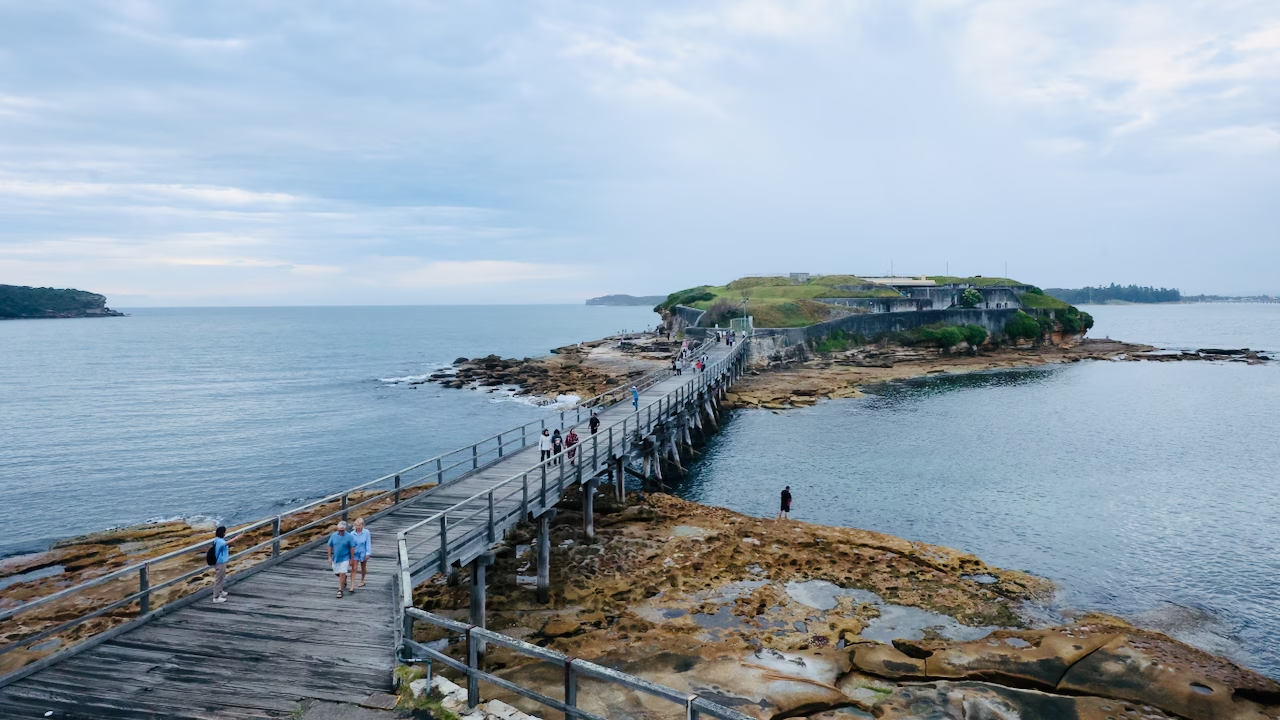
Of all the things to do in La Perouse, the sunset is the one I’d plan a trip around, even though the sea soaked me and my camera while I waited for it. I went on a Sunday evening in January 2026, 45 minutes to an hour by public transport from the city centre. I found a grassy headland above a calm, wide stretch of Botany Bay, a small timber bridge running out to a stone fort, and flat rock shelves at the water’s edge where the waves broke without warning. I stayed until well after dark and took the bus back to the city.
This guide starts with what I did that evening, then covers the daytime things I didn’t get to, which I’ve marked clearly as researched.
In short: the best things to do in La Perouse are watching the sunset over Botany Bay from the headland, seeing the 1887 timber bridge to Bare Island, exploring the sandstone rock shelves, swimming or fishing at Congwong Beach, visiting the free La Perouse Museum and walking to Henry Head in Kamay Botany Bay National Park. One big change since my visit: Bare Island and its bridge are closed until the restoration works finish, scheduled for late July 2027. La Perouse is about 17 km from the city centre, and two to three hours is enough for a sunset visit.
La Perouse is Aboriginal land, and its Aboriginal community has kept its connection to this headland and the sea around it for generations. I acknowledge the Traditional Custodians of the land and waters of Botany Bay.
Getting there
L3 light rail to Kingsford, then bus 390X
About 45 to 60 minutes from the city centre
Best time
The hour before sunset
Around 8 pm in midsummer, before 5 pm in June
Cost
Free
No park entry fee in the La Perouse area
Time needed
2 to 3 hours for sunset
Half a day if you add the museum and a walk
Bare Island
Closed for bridge works
Due to finish late July 2027; no fort tours meanwhile
Where Is La Perouse?
La Perouse sits on the northern headland at the mouth of Botany Bay, in Sydney’s south-east, about 17 km from Circular Quay. It’s a small suburb with a big history. It’s named after the French navigator Jean-François de Lapérouse, whose two ships, La Boussole and L’Astrolabe, sailed into Botany Bay in late January 1788, just days after the First Fleet, and stayed for six weeks. When they left in March, it was the last time any European saw them. Both ships were wrecked on the reefs of Vanikoro, in what is now the Solomon Islands, and their fate stayed a mystery for almost 40 years.
The headland’s Aboriginal history runs much deeper. La Perouse was a camping and gathering place long before 1788, and later an Aboriginal reserve and mission. Its community refused repeated government attempts to move it in the 19th and 20th centuries, and in 2023 the NSW Government declared the former reserve and mission an Aboriginal Place, noting that fishing, shellwork and gathering bush tucker still continue here.
The headland is also part of Kamay Botany Bay National Park (Kamay is the Aboriginal name for Botany Bay), whose walking tracks start a few steps from the bus stop.
What makes it different from the beaches further north, like Bondi, is the direction it faces. Most of Sydney’s ocean beaches look east, towards the sunrise, and the sun sets behind the suburbs. From La Perouse you look west across a sheltered bay, so the water is calmer and the sun goes down over it.
Things to Do in La Perouse: What I Did at Sunset
1. Watch the La Perouse Sunset From the Headland
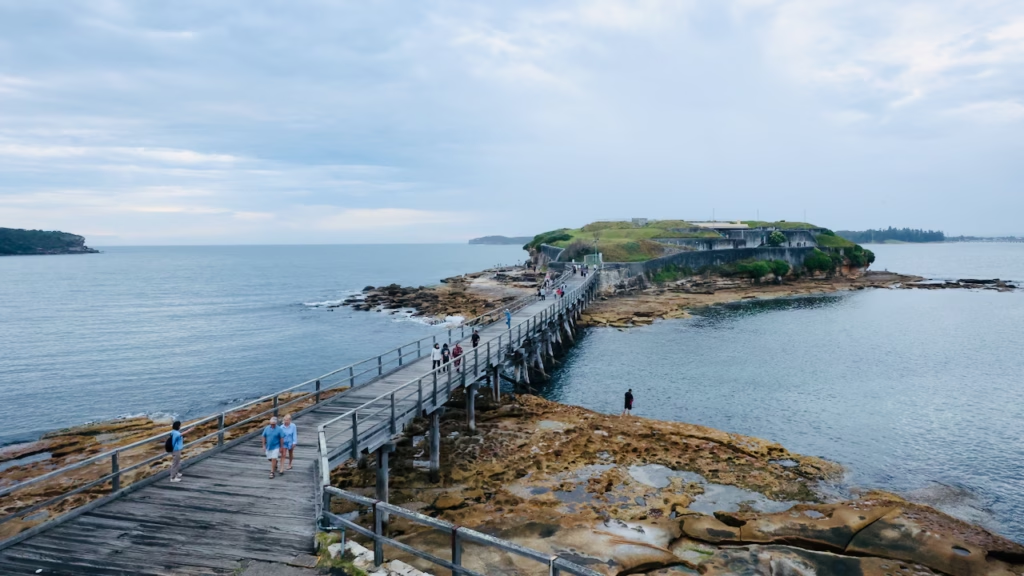
The grassy headland above the bridge is the place to be. It’s raised a little above the water, so nothing gets in the way of the view: the bay stretches out flat and wide in front of you, with Bare Island and its fort just below.
The best tip I can pass on comes from the locals. People drove in, took folding chairs out of their cars and set them up on the grass facing the water, then just sat there watching the light change. If you’re coming by bus, a picnic blanket does the same job. NSW National Parks suggests the same idea: a picnic dinner on La Perouse Point as the sun sets, looking over Botany Bay to Kurnell. The rock shelves below the headland are the other place to watch from, as long as you stay back from the waves (more on that below).
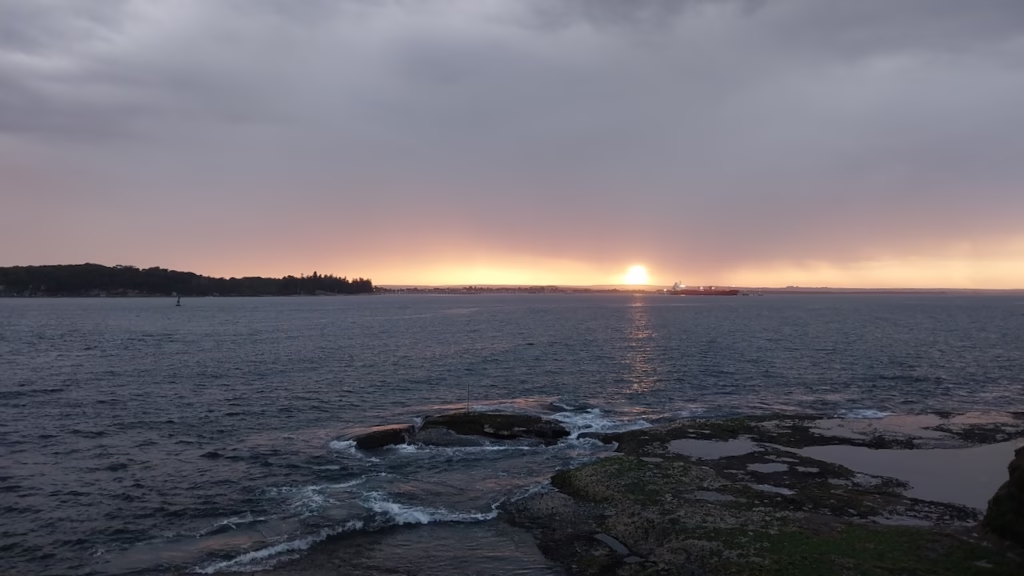
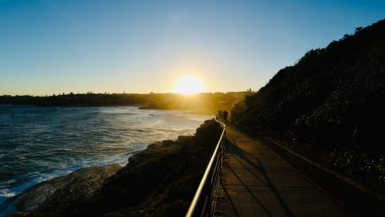
There were enough people around that it felt lively, but never so many that it felt crowded, and the place stayed calm. My evening was a mostly cloudy one, and for a while I thought the sunset was ruined. Then, just before 8 pm, the cloud lifted along the horizon and the sun dropped into a thin band of orange over the far shore of the bay.
After the sun went down, the glow stayed in the sky for a while longer behind the walls of the fort.
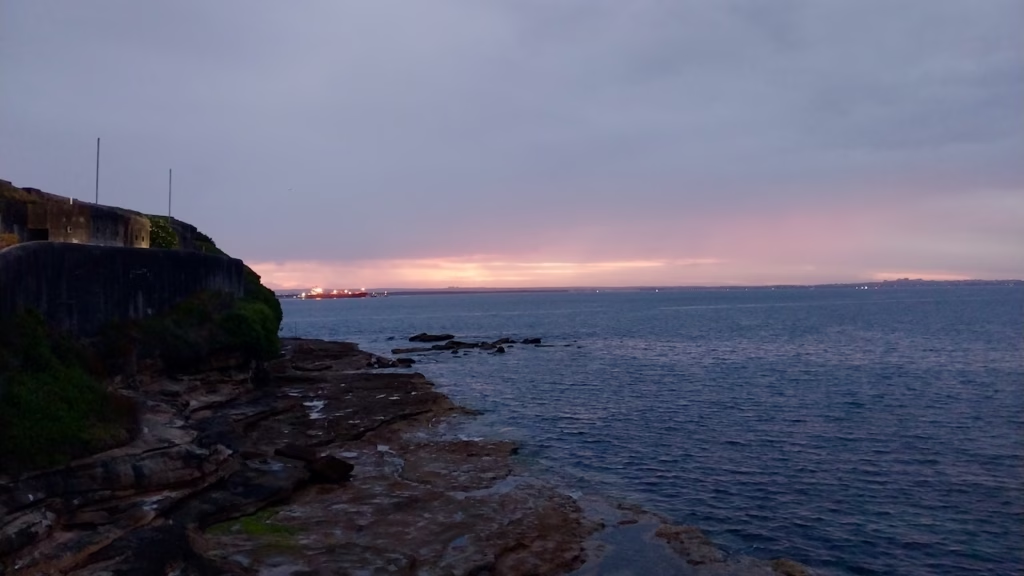
Sunset times shift a lot through the year, so plan your bus around them:
2. See the Bridge to Bare Island
The small timber bridge to Bare Island is the picture everyone comes for. It was built in 1887, runs about 110 metres across the water and is the only link between the island and the headland. On my visit it was busy, with people walking out and back and stopping for photos, and I walked across too. The fort was shut by the time I got there in the evening, so I went right up to it and turned back.
This has changed since my visit. Bare Island has been closed to visitors since 24 August 2026 while the bridge is restored, and NSW National Parks has scheduled the work to finish in late July 2027. The closed area covers the whole precinct: the access road down to the bridge, the bridge itself, the rock shelf around it and the fort. There may also be temporary limits on going in the water under the bridge. The guided fort tours have stopped and will restart once the bridge reopens. You can still see the bridge, the island and the fort from the headland, but expect fencing and construction crews, and follow the signs on site. Check the official Bare Island bridge repairs page before you go.
When the island reopens, the guided tour is the only way to see inside the fort, which has an unusual history. It was built in the 1880s, when Sydney feared a raid by Russian warships, and once its military days were over it became Australia’s first war veterans’ home, from 1912 until 1963.
Bare Island at a glance
3. Explore the Rock Shelves and Sandstone Formations
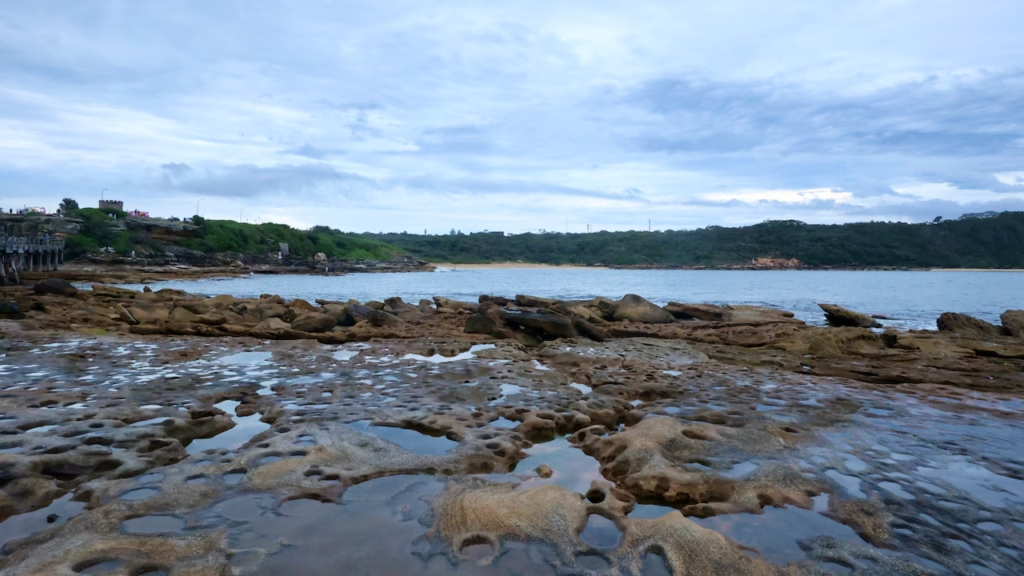
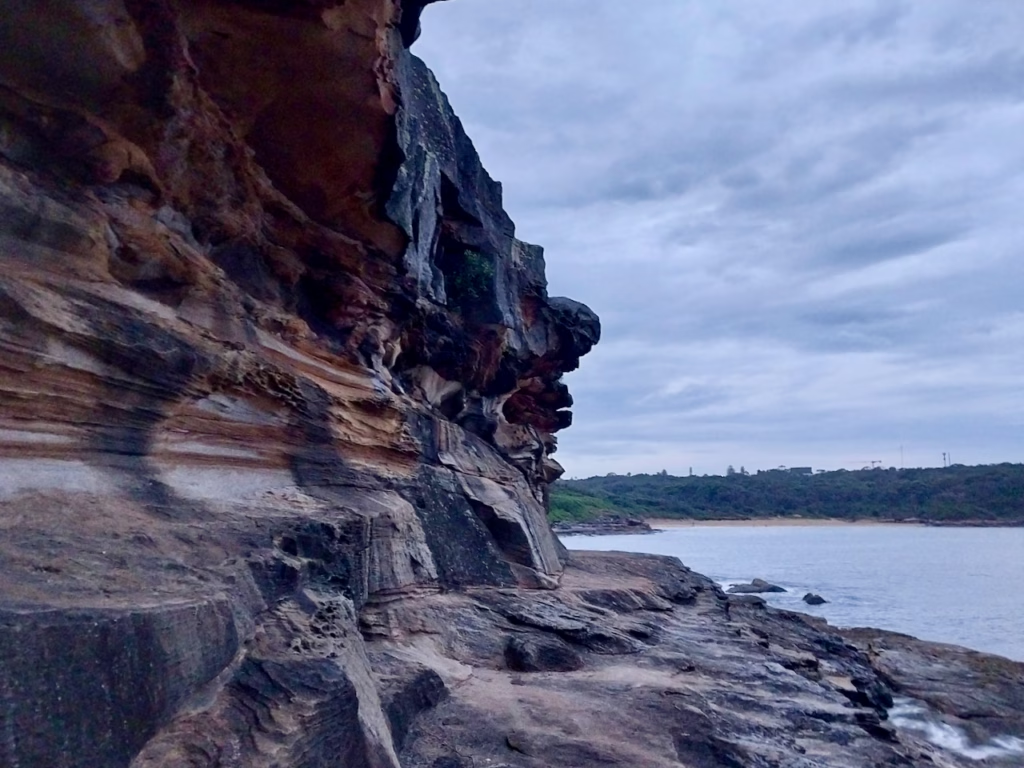
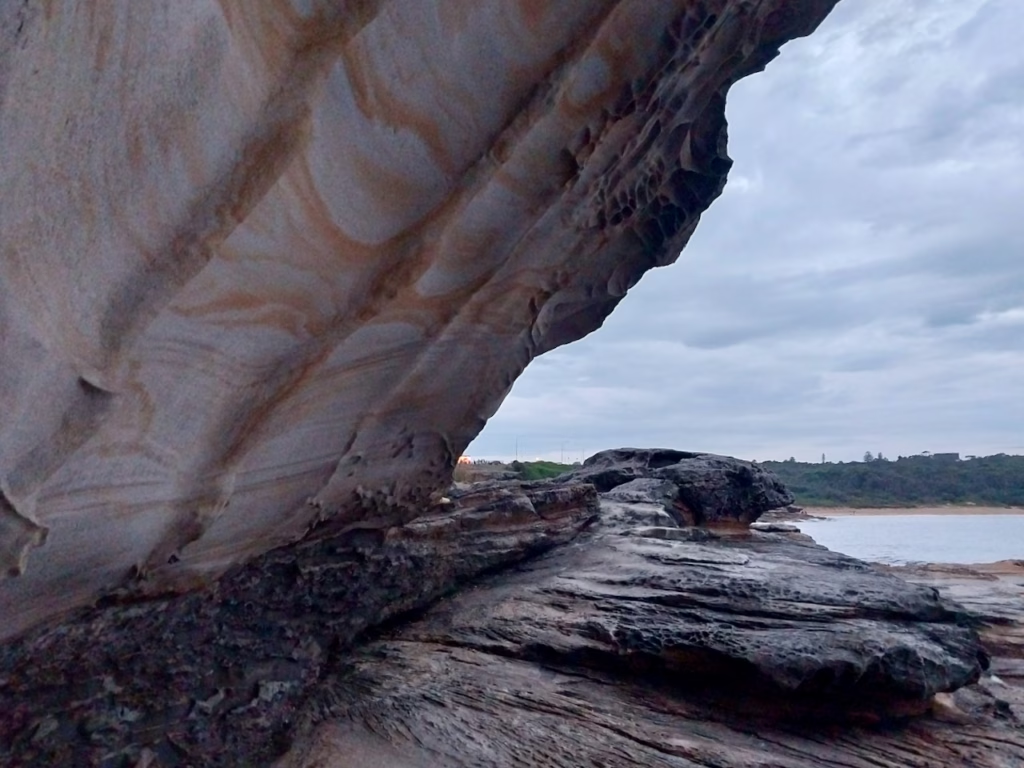
Below the headland, the shore breaks up into flat shelves of sandstone, pitted with rock pools. I spent a good part of the evening walking on them. Take it slowly: they were slippery, especially anywhere damp or green with weed. But the rock itself kept stopping me. In places it’s been worn into honeycomb patterns and overhangs, with stripes of orange, cream and grey running through it.
While the bridge works are on, the rock shelf around the bridge is inside the closed area, so explore the shelves further along the headland and stay outside the fencing.
4. Watch the Waves, From a Safe Distance
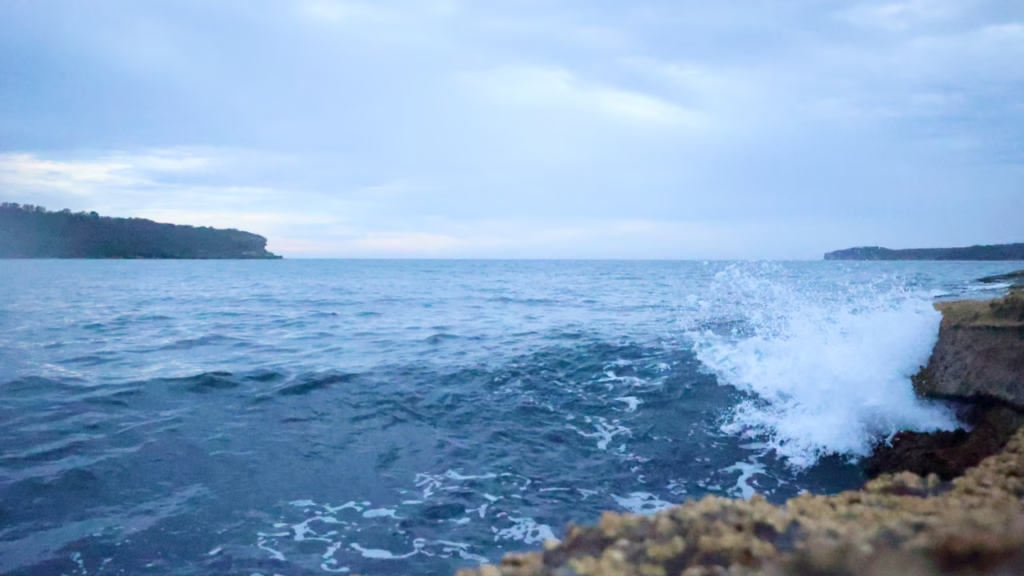
On the more exposed side of the headland, the waves were crashing into the rock shelves. I didn’t bring my tripod, so I balanced my camera on a rock to take some long-exposure shots of the water. It worked for a few frames. Then, with no warning, one wave came in bigger than the rest and broke right over the rock, soaking me and the camera.
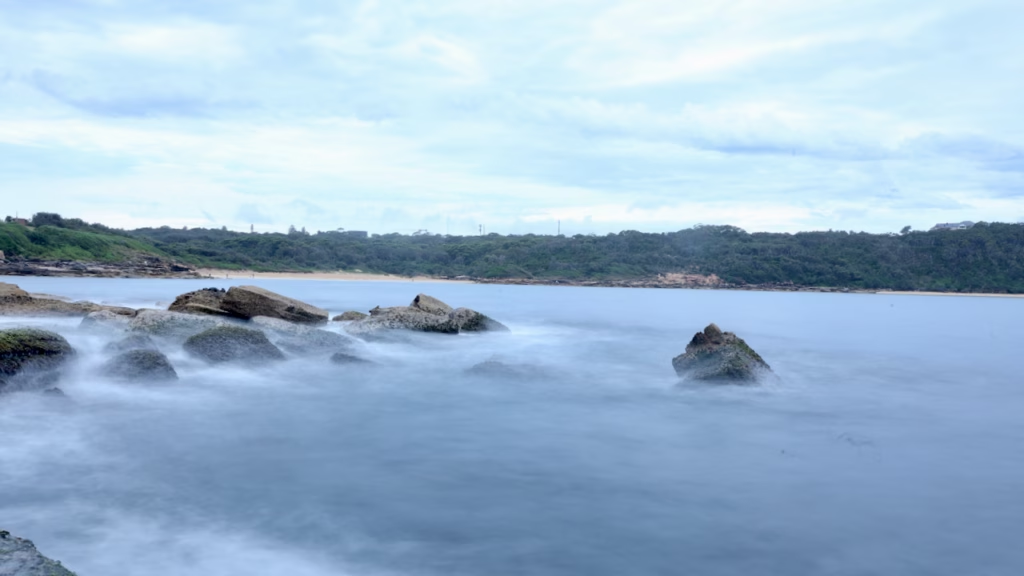
It was a harmless lesson for me, but the rock shelves here are no place to take risks. Several people were fishing from the rocks that evening. NSW National Parks says rock fishers must wear a life jacket, the cliffs are unfenced, and mobile reception is limited, so download the Emergency Plus app before you go.
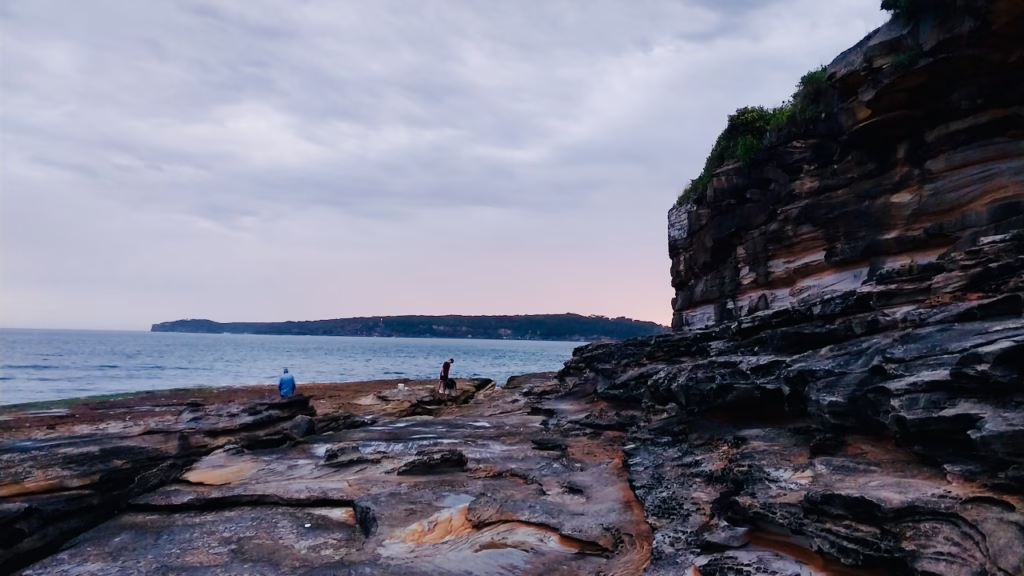
If you’re taking photos on the rocks: stay well back from the wet edge, watch the sea for a few minutes before you put your camera down, and keep your camera strap on. Waves come in sets, and the biggest one comes without warning. If the rock around you is wet, the sea has been there recently.
5. Walk Down to Congwong Beach
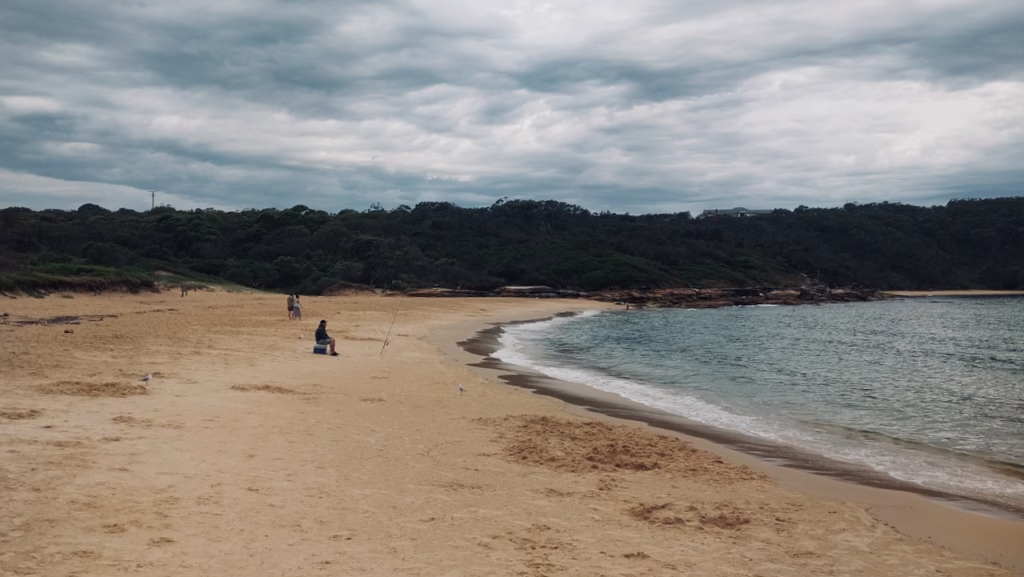
Right next to the headland, a short track from Cann Park leads down to Congwong Beach. It’s not big, but it’s a pretty, sheltered curve of golden sand backed by bush, and when I was there several people were fishing from the beach.
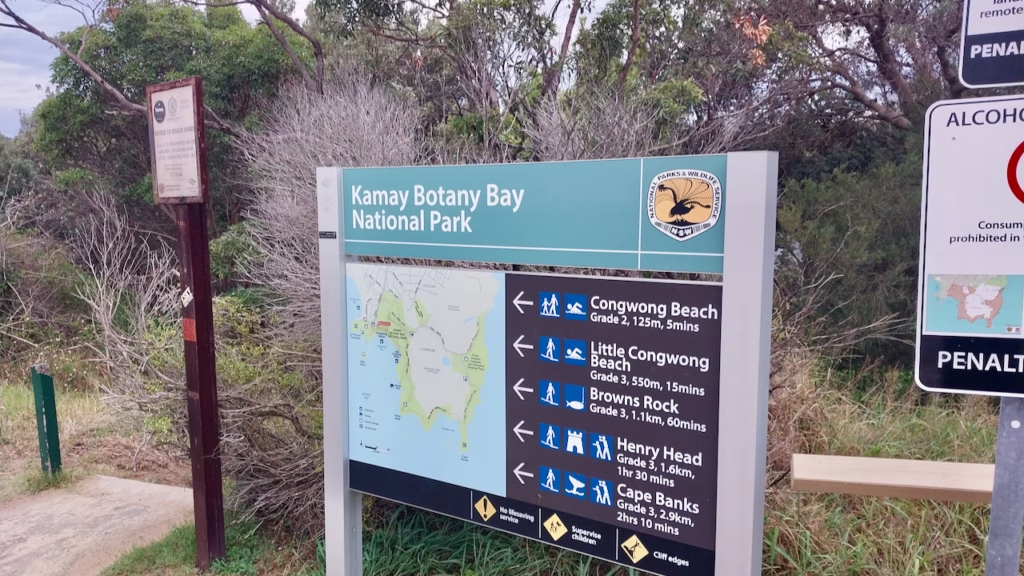
At the top of the track, a National Parks sign gives the walking times: Congwong Beach is 125 metres and about five minutes away, and Little Congwong Beach 550 metres (15 minutes), with the longer tracks to Browns Rock, Henry Head and Cape Banks carrying on from the same spot. The same sign warns that there’s no lifesaving service, the cliff edges are unfenced and children need supervising.
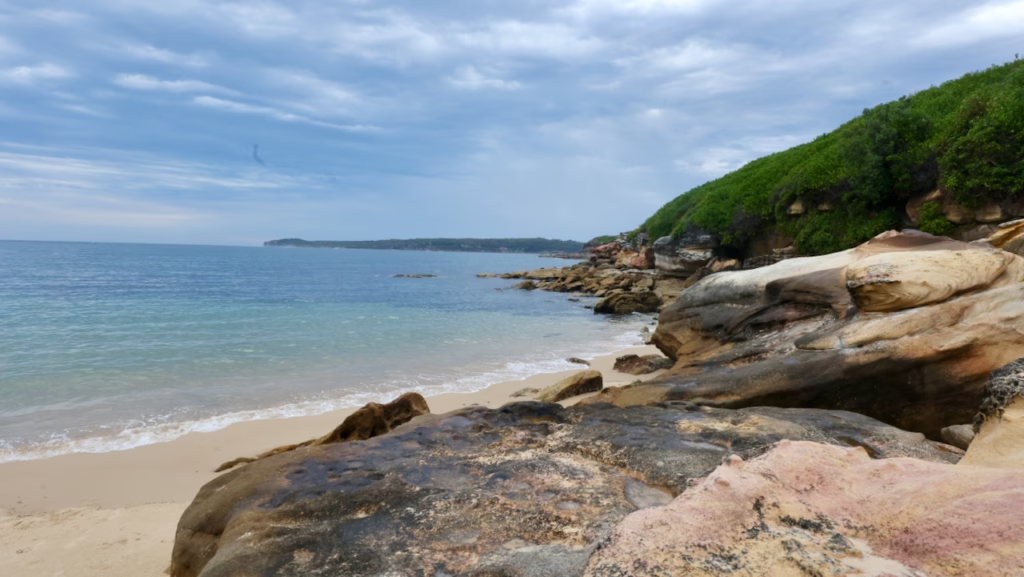
Congwong isn’t patrolled by lifeguards, and National Parks warns it can have strong rip currents, so only swim if you’re confident, and avoid the water for a day after heavy rain. There are no bins on the beach, and alcohol, glass and pets (other than assistance animals) aren’t allowed.
6. Stay for the Lights After Dark
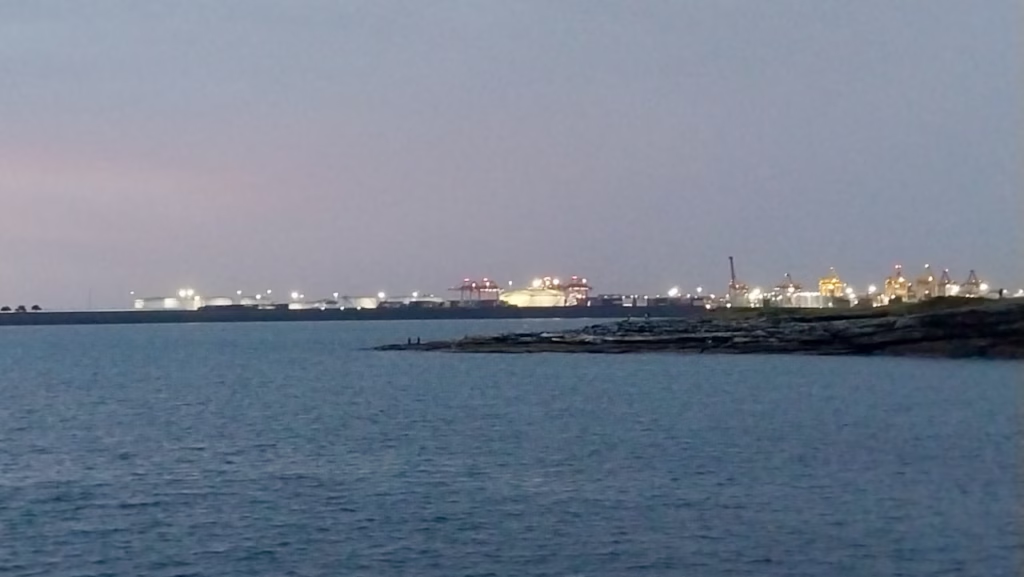
Once the colour has gone from the sky, look across the bay towards Port Botany. The container terminal lights up, cranes and all, and it makes a surprisingly good last view of the evening before you head for the bus.
More Things to Do in La Perouse in the Daytime
I visited in the evening, so I didn’t do these myself. The details below come from NSW National Parks, Randwick City Council and the NSW State Heritage Inventory, checked in October 2026.
7. Visit the La Perouse Museum
The museum is in the old Cable Station, built in 1881–82 to house the operators of the undersea telegraph cable to New Zealand. Inside, it tells the story of Lapérouse’s expedition, which reached Botany Bay in late January 1788, including a complete Atlas of the Voyage of La Perouse, alongside the history of the local Aboriginal community. It now puts First Nations art and knowledge at the centre too, with free exhibitions by Aboriginal artists.
The museum’s own website lists it as open Wednesday to Sunday, 10 am to 4 pm (closed Christmas Day and New Year’s Day), with free entry. Some older listings show shorter weekday hours, so go by the museum’s site. The upstairs rooms are reached by a narrow staircase, and the council suggests calling ahead to use the rear ramp to the ground floor.
8. See the Macquarie Watchtower and the Lapérouse Monument
The small sandstone tower on the headland dates from about 1820 to 1822, when soldiers were posted here to watch the bay for smugglers. The NSW State Heritage Inventory describes it as the oldest building in Botany Bay. Nearby stand a 19th-century monument to Lapérouse and the grave of Père Receveur, a Franciscan priest and naturalist on the expedition. He was wounded in a fight in Samoa on the voyage and died here on 17 February 1788. Together with the museum, these sit within a few minutes’ walk of each other, so the headland doubles as a small open-air history trail.
9. Walk the Henry Head Walking Track
The Henry Head walking track starts near the museum at Cann Park and runs along the coast to the Endeavour Lighthouse, passing Second World War battlements and views over Congwong Beach and the bay. National Parks lists it as 4 km return and grade 3, taking about 45 minutes to 1 hour 15 minutes. From May to November, look out for migrating humpback whales.
10. Continue to Cape Banks and the SS Minmi Shipwreck
For a longer walk, the Cape Banks track carries on past Henry Head: 7 km return, about three hours. It passes Cruwee Cove, with its clear water, and the rusting remains of the SS Minmi, a coal ship wrecked on Cape Banks on 13 May 1937. National Parks warns the rocks are slippery and the cove can be impassable at high tide or in big swells.
11. Find Little Congwong Beach
This smaller, more secluded beach is about 15 minutes’ walk past Congwong. It’s unpatrolled too.
12. Snorkel or Dive Off the Headland
National Parks lists the water around the La Perouse headland and Bare Island as the area’s best snorkelling and diving spots, best in summer. Tourism Australia describes soft corals, sponge gardens and nudibranchs here, with pygmy seahorses for divers who look closely. Check whether the Bare Island closure affects access before you go.
13. Swim at Frenchmans Beach
On the other side of the headland, Frenchmans Beach faces calm water and has cafes and takeaway food shops nearby on Anzac Parade. Close by is the new La Perouse wharf, built as part of the Kamay Wharves project, which you can walk out on for views back over the bay. A ferry crossed from here to Kurnell from the 1890s until 1974, when a storm wrecked the old wharves, but despite the new ones there’s no regular ferry service yet.
14. Time Your Visit for the Blak Markets
These Aboriginal art, craft and food markets started on Bare Island and are now held outside the La Perouse Museum instead, on selected Sundays rather than every week. Check the dates on the Blak Markets website before you plan around them.
Come for sunset
- The best light over the bay
- Calm, relaxed crowd on the headland
- Two to three hours is enough
- Port lights after dark
Come in the daytime
- Museum open Wednesday to Sunday
- Time for Henry Head or Cape Banks
- Swimming and snorkelling
- Blak Markets on selected Sundays
For the best of both, arrive by early afternoon: the museum closes at 4 pm, and the Henry Head walk takes up to about an hour and a quarter. Then settle on the headland for sunset.
How to Get to La Perouse by Public Transport
I didn’t plan a route. I opened Google Maps in the city centre, followed it to La Perouse, and the trip took between 45 minutes and an hour. Coming back after dark was just as easy: the buses leave from the terminus on Anzac Parade, right by the headland.
These are the main options now:
- L3 light rail and bus 390X: take the L3 light rail (Kingsford line) from Circular Quay, Wynyard or Central to Juniors Kingsford, then bus 390X to the end of the line at Anzac Parade, La Perouse.
- Bus 390X from Bondi Junction: the same bus starts at Bondi Junction Station, so it’s handy if you’re staying in the Eastern Suburbs.
- Bus 394X: an express bus between the city (Museum Station, Hyde Park and Martin Place) and La Perouse. It runs on weekdays only, so on weekends use the 390X.
Many older guides still mention the L94 and 394 buses from Circular Quay, but both were withdrawn in 2021. Routes and timetables change, so check the Transport for NSW Trip Planner for your travel date, especially for the ride back after dark.
If you’re driving, follow Anzac Parade to the end.
Practical Tips for Visiting La Perouse
The national park area is open 7 am to 8:30 pm from November to March, and 7 am to 7:30 pm from April to October. In midsummer the sun sets only about 20 minutes before closing, so don’t start a long walk at sunset.
The park’s entry gate is closed to vehicles from 7 pm to 5 am all year. If you’re coming by car for sunset, park on Anzac Parade, not inside the gate. Parking fills up on summer weekends.
There’s a toilet block on Anzac Parade near the start of the Congwong Beach track, and toilets at the museum.
A small strip of cafes and takeaway food shops sits on Anzac Parade near the bus terminus. Pack your own if you want a picnic on the headland.
A jacket (it gets windy once the sun goes down), shoes with grip for the rocks, a chair or blanket, and a dry bag or waterproof cover for your camera.
No drones (the park is close to Sydney Airport), no alcohol or glass on Congwong Beach, and no pets other than assistance animals.
The headland, the Bare Island bridge, Congwong Beach and the bus terminus on Anzac Parade are all within a few minutes’ walk of each other.
If you like your Sydney views with fewer crowds, La Perouse pairs well with Watsons Bay on the other side of the harbour, and it makes a quieter change from the Opera House and Harbour Bridge viewpoints in the city. You’ll find more ideas in my Sydney and NSW guides.
My Verdict
La Perouse is my pick for a calm Sydney sunset, and it suits anyone who likes open coastal views, a bit of history and an outing that costs nothing but a bus fare. Even on a cloudy evening, it was beautiful. Just don’t plan around Bare Island until it reopens: for now, the bridge and fort are something to look at, not walk to. Come in the late afternoon (or by early afternoon if you want the museum too), find a spot on the grass, keep your distance from the waves, and stay until the port lights come on.
Frequently Asked Questions
Is La Perouse worth visiting?
Yes, especially for sunset. It’s free, easy to reach by public transport, and gives you a wide, calm view over Botany Bay that’s very different from Sydney’s eastern beaches. Just don’t plan on crossing to Bare Island until the bridge reopens.
What is La Perouse known for?
La Perouse is known for Bare Island and its 1880s fort, the timber bridge out to the island, sunsets over Botany Bay, and its history: Lapérouse’s French expedition camped here in 1788, and it’s home to one of Sydney’s longest-standing Aboriginal communities.
Is Bare Island open?
No. The Bare Island precinct, including the bridge, the rock shelf around it and the fort, has been closed since 24 August 2026 while the 1887 bridge is restored. The work is scheduled to finish in late July 2027, and fort tours will restart once the bridge reopens.
How do I get to La Perouse from Sydney by public transport?
Take the L3 light rail to Juniors Kingsford, then bus 390X to Anzac Parade, La Perouse. Bus 390X also runs from Bondi Junction, and on weekdays the 394X express runs direct from the city. Allow 45 to 60 minutes from the city centre.
Is La Perouse good for sunset?
Yes. From the headland you look west across Botany Bay, so the sun sets over the water rather than behind buildings. Arrive about an hour before sunset and stay for the afterglow.
What time is sunset at La Perouse?
It changes a lot through the year: around 8 pm in December and January (8:10 pm at the latest in early January), and before 5 pm in June.
Can you swim at La Perouse?
Yes, at Congwong Beach and Frenchmans Beach. Congwong isn’t patrolled by lifeguards and can have strong rip currents, so check Beachsafe for current conditions and patrols, and avoid swimming for a day after heavy rain.
How long do you need in La Perouse?
Two to three hours is enough for the sunset, the headland and Congwong Beach. Allow half a day if you add the museum or the Henry Head walk.
Is there an entry fee for Kamay Botany Bay National Park at La Perouse?
No. There’s no park entry fee in the La Perouse area. Fees apply only on the Kurnell side of the park, and for Bare Island tours when they run.
Is the La Perouse Museum free?
Yes. The museum’s website lists free entry, Wednesday to Sunday, 10 am to 4 pm. It’s closed on Mondays and Tuesdays, and on Christmas Day and New Year’s Day.
Can you fly a drone at La Perouse?
No. Recreational drones aren’t allowed in the park because it’s within 5.5 km of an airfield.

Leave a reply