
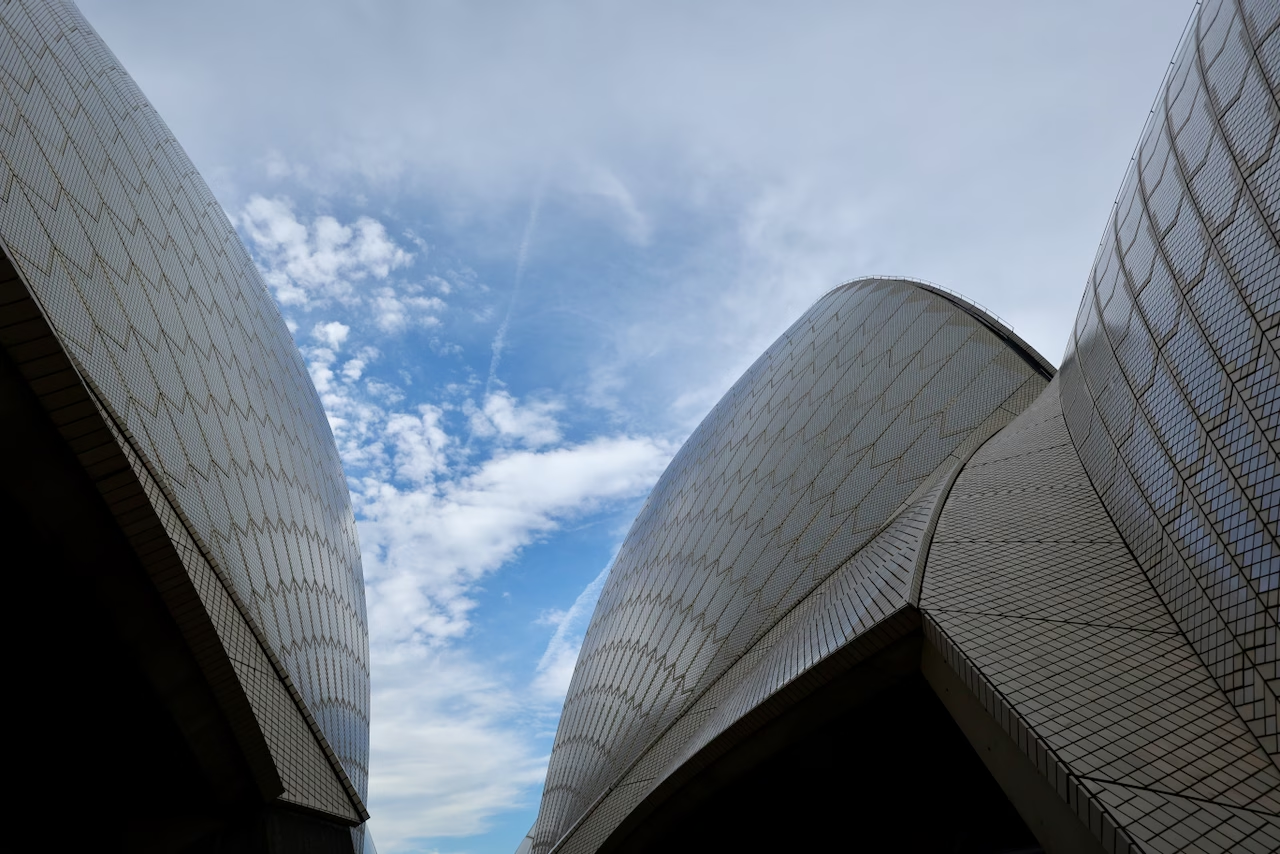
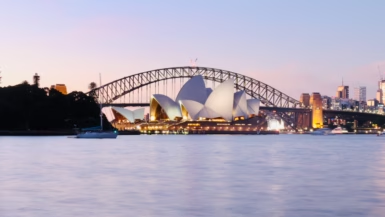
Sydney hands you the Opera House for free from a dozen different angles. I wrote a whole guide to the best Sydney Opera House viewpoints around the harbour, and every one of those views is real and worth doing. But none of them are the thing itself. You can photograph those sails from Mrs Macquarie’s Chair at sunset for the rest of your life and still never know what the concrete actually feels like overhead — or that the building holds a room its own architect redesigned decades later without ever coming back to see it finished.
Seeing the Opera House from outside is the easy part. Going inside, on a proper Sydney Opera House tour, is the once-in-a-lifetime part. And it’s the part most visitors skip.
Quick verdict
Yes, it’s worth it. The one-hour standard tour (~AU$48 adult) gets you interior angles you can’t get any other way, plus the Utzon history — a great story in its own right. Book ahead, wear proper shoes for the stairs, and pair it with a show if your dates allow.
Worth it for: first-time visitors, architecture and design fans, anyone who wants to understand the building rather than just photograph it.
Maybe skip the standard route if: you use a wheelchair or walker (book the Mobility Access Tour instead), you’re travelling with a toddler who won’t manage an hour on their feet, or you already have a show ticket for that night, you’ll see a hall in actual use, which beats an empty walk-through anyway.
I did the standard guided tour, and this is my honest Sydney Opera House tour review: it beat my expectations walking in, which doesn’t happen often with a building this photographed. Below is everything from that tour, plus what I’d add on a return visit — the backstage breakfast tour, watching an actual show, and where to eat once you’re inside.
Some links below are affiliate links. We earn a small commission at no extra cost to you — it keeps the guides free.
The Sydney Opera House Guided Tour: What to Expect
This is the standard tour, and the one I did. Tours depart multiple times daily from the Welcome Centre on the Lower Concourse and run about an hour. The route usually takes you through the foyers and past the major halls, though which specific venues you see can shift with rehearsals and performance schedules. This is a working performing arts centre, not a museum on a fixed circuit — don’t book expecting a guaranteed look at any one specific hall.
Expect a real walk. The route covers around 2.5km with roughly 300 stairs, up and down. There’s no lift on the tour route itself, and nowhere to sit along the way — worth knowing if you’re planning this straight after a full morning on your feet elsewhere. Tours run in seven languages (English, French, German, Spanish, Japanese, Korean and Mandarin), and groups top out at 35 people. Photography is generally allowed throughout, subject to your guide’s instructions and the handful of marked no-photo spots.
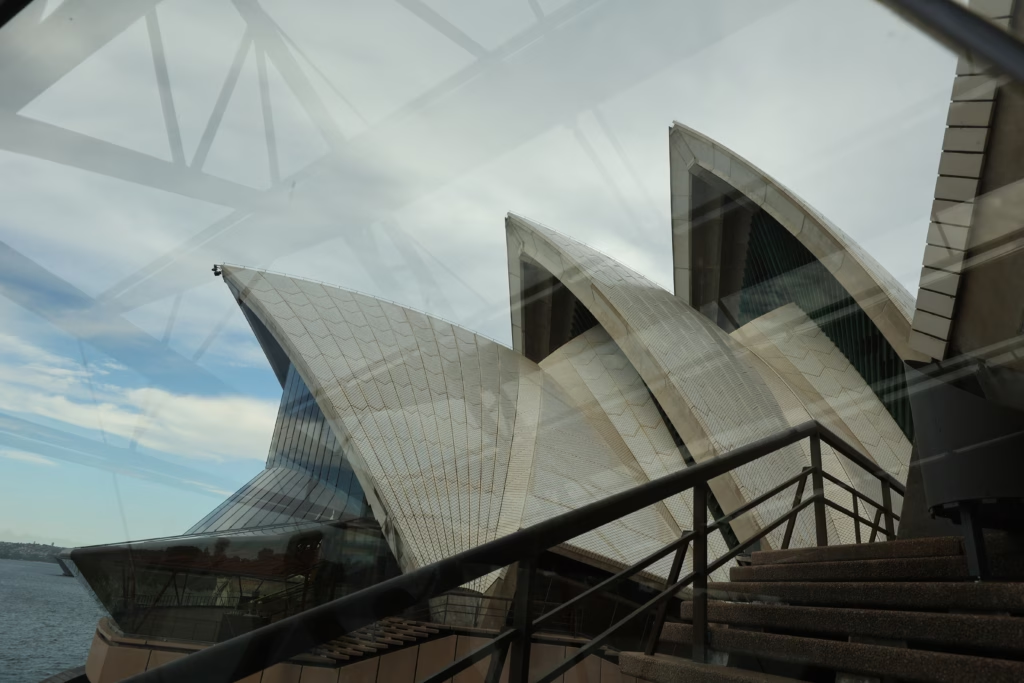
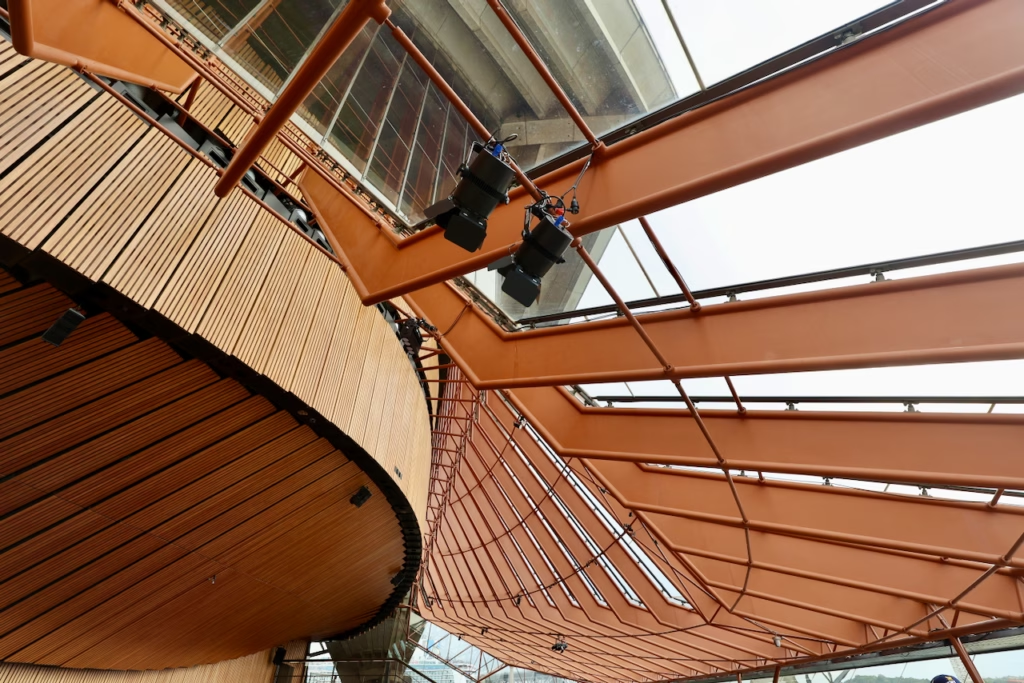
The best moment for me was standing inside one of the glass-walled colonnades. The shells were visible right through the glass from a few metres away, the building’s own steel structure reflected over the top of them. You cannot get this angle from outside — not at any distance, not at any time of day.
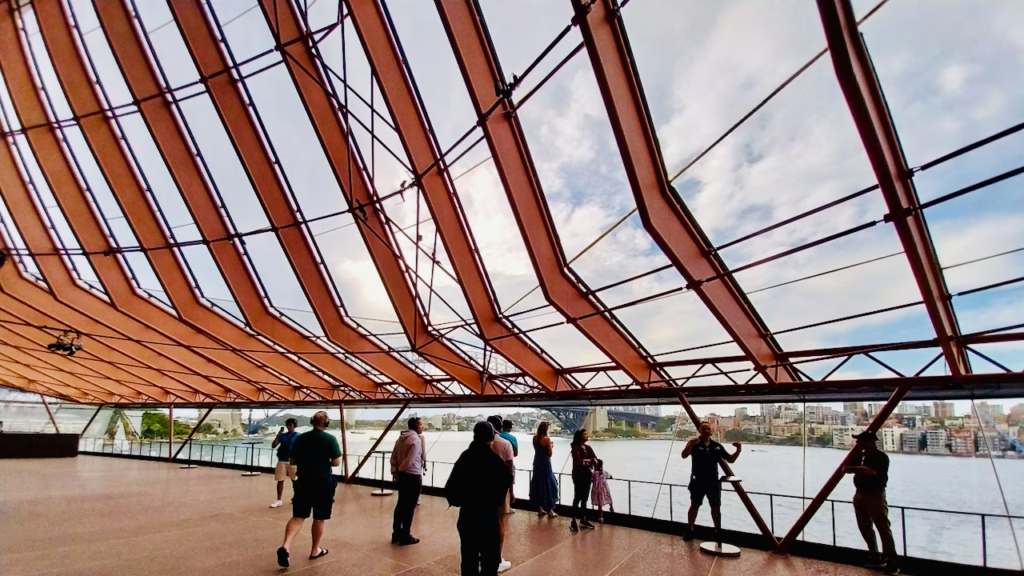
Our guide stopped the group here for a while, with the harbour and the Bridge behind us through the glass the whole time. That’s its own kind of view — one you don’t get standing in the forecourt looking up.
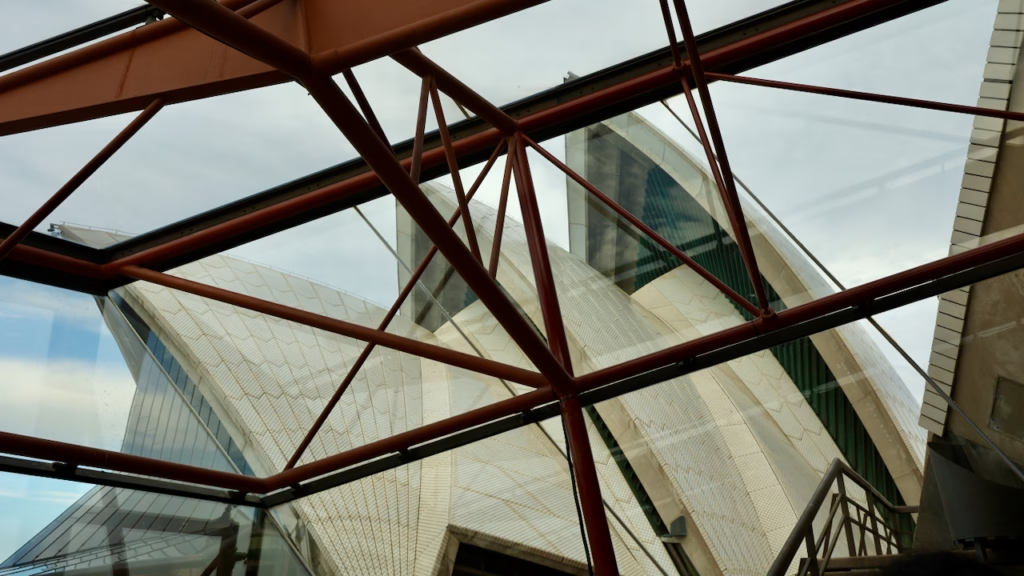
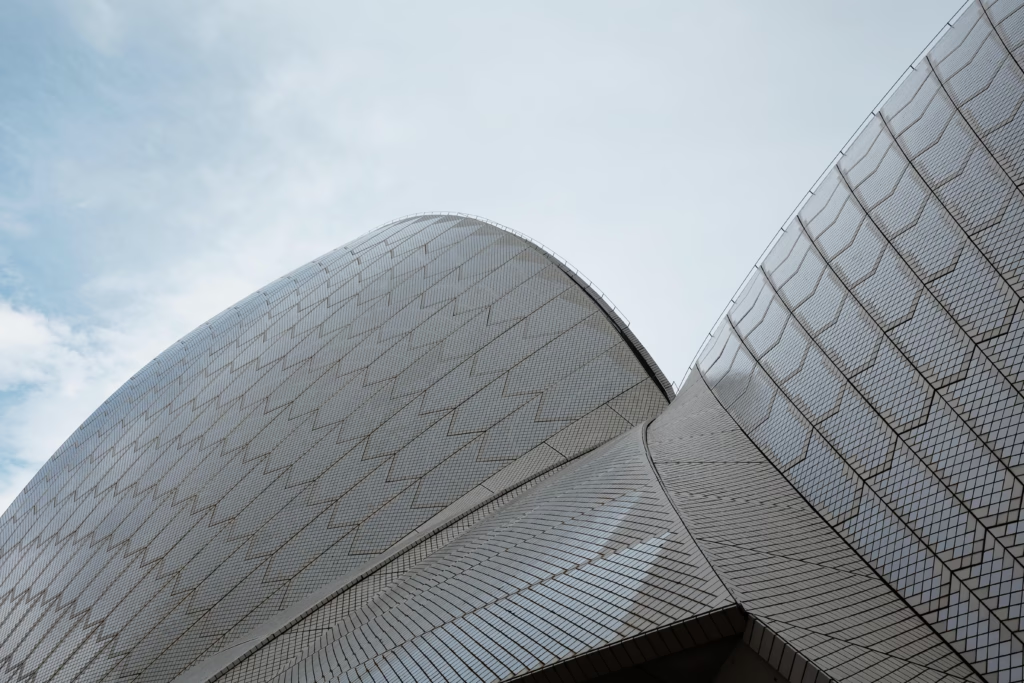
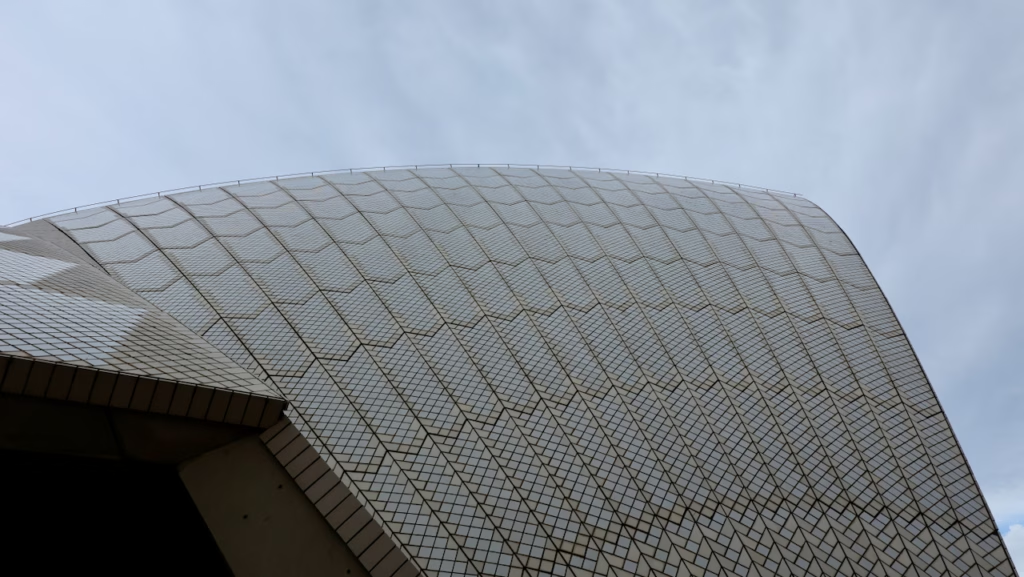
Get close enough to the shells from certain interior vantage points and the tile pattern stops being decoration. It becomes the whole picture — herringbone ceramic tiles catching whatever light’s available.
What the Sydney Opera House Tour Costs
Here’s how the two official tours compare — this is the same information scattered across the Opera House’s own site, pulled into one place. Prices checked September 2026; confirm the current figure when you book, since these do shift.
| Standard Guided Tour | Backstage Tour & Breakfast | |
|---|---|---|
| Price (adult) | ~AU$48 (concession ~AU$38, child ~AU$28) | ~AU$199 |
| Duration | About 1 hour | About 2 hours 15 minutes |
| Departs | Welcome Centre, multiple times daily | Stage Door, from ~6:45am |
| Minimum age | All ages | 10, accompanied 10–15 |
| Route | Foyers, major halls and the Utzon Room, usually — exact venues vary with the performance schedule | Rehearsal spaces, orchestra pit, dressing rooms, Green Room breakfast |
| Fitness | ~2.5km walking, ~300 stairs | Similar walking and stairs, in a working backstage environment |
Book through the link above to lock in your slot. Book ahead: standard tours can sell out during the Australian summer months (December to February), and the backstage tour’s limited early slots go even faster.
Other Official Tours Worth Knowing About
The standard and backstage tours cover most people, but the Opera House runs a few more worth knowing exist:
- Architectural Tour — about 1 hour 15, English only, departs the Welcome Centre. Goes deeper into design and engineering than the standard route has time for, a good pick if the Utzon history in this post is exactly what you came for.
- Mobility Access Tour — step-free version of the standard route, departs Stage Door. The one the Opera House itself recommends if you use a wheelchair or walker, since the standard tour isn’t built for either.
- Draw the House — a slower-paced tour built around stopping to sketch the building, open to all skill levels.
- Tour & Dine — bundles the standard tour with a meal at Bennelong, Midden, or one of the casual options, worth it if you’d rather not book dining separately.
Book ahead
Sydney Opera House Guided Tour with Entrance Ticket
The Engineering, Up Close
The part of the tour that actually changed how I see the building was the interior structure. The shells aren’t a roof so much as a skin stretched over a frame of exposed concrete ribs, and standing underneath them from the inside is a completely different scale from photographing them from Mrs Macquarie’s Chair.
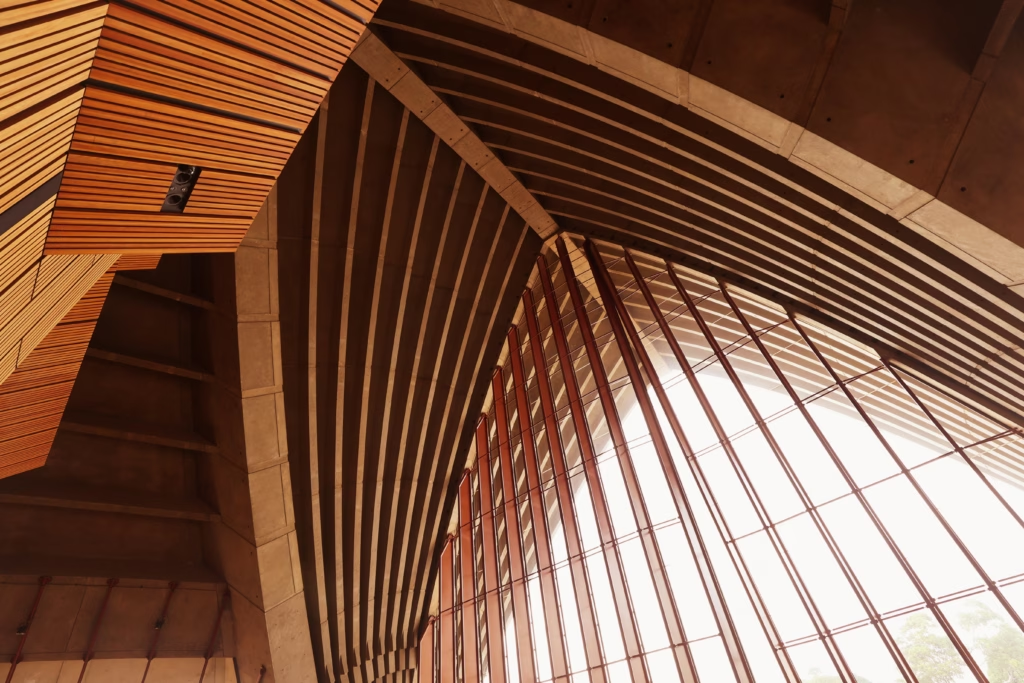
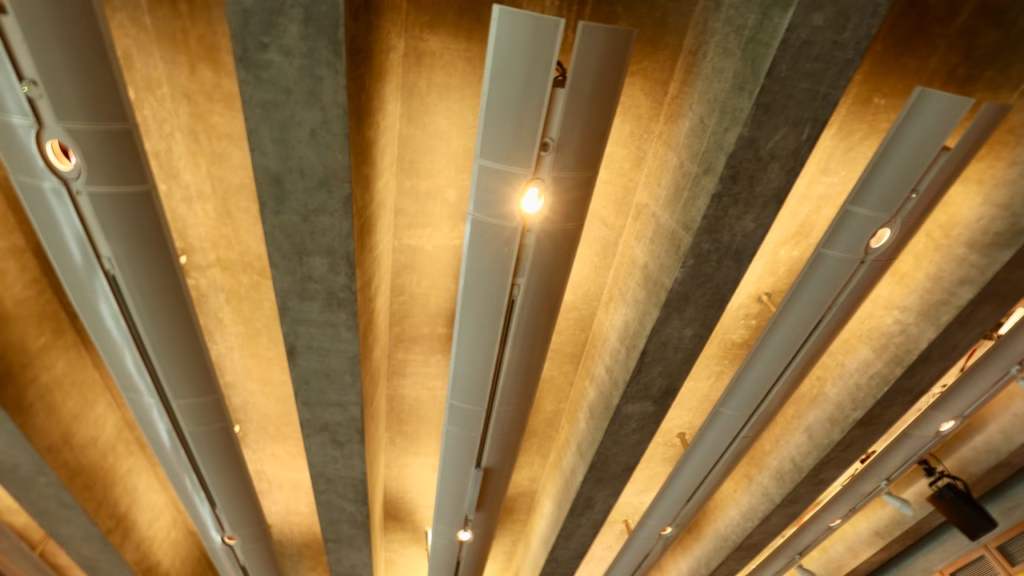
Even the technical details are built into the architecture rather than bolted on afterward. Lighting and audio fittings sit flush inside the timber panelling instead of hanging off it.
Sydney Opera House History: The Story Nobody Tells You From the Forecourt
Before the tour, this is a building you admire. After it, it’s a building you understand. The story behind it is easily one of the best in modern architecture — dramatic enough that our guide spent a good third of the hour on it, and nobody in the group seemed to mind.
Bennelong Point held a fort from 1817, then a tram depot from 1902. Sydney needed a bigger venue for the performing arts, so in 1955 the state government launched an international design competition. Entries came in from 32 countries — 233 of them. A Danish architect named Jørn Utzon, who’d just turned 38, sent in entry number 218, one of the last to arrive. Nobody expected it to win. It won.
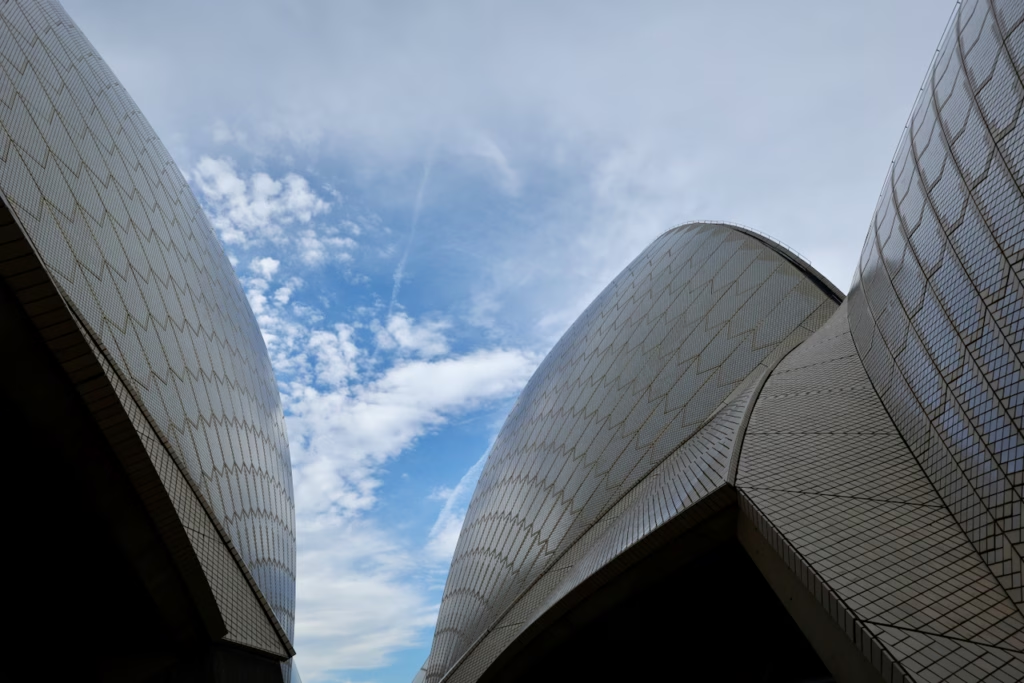
What Utzon had drawn wasn’t buildable with the engineering of the time. Everyone knew it, including him. It took years of work with the engineering firm Ove Arup to solve it. The eventual answer: every shell could be cut from sections of a single sphere — easier to picture by slicing an orange than by reading the maths, the same solution I’ve written about in the viewpoints guide. Utzon was stubborn about getting it right rather than getting it done, and that instinct is exactly what makes the building what it is. It’s also, eventually, what ended his involvement in it.
A change of state government in 1965 handed control of payments to a new Minister for Public Works, Davis Hughes, and the two men were at odds almost immediately — over cost, schedule, and creative control. The breaking point was mundane: a dispute over which supplier should make the plywood prototypes for the interiors. Hughes refused the request and held back a fee payment Utzon needed to pay his own staff.
On 28 February 1966, Utzon resigned, writing to Hughes that “you have forced me to leave the job.” Two months later, on 28 April, he and his family flew out of Sydney, slipping past the press with minutes to spare. On the way home to Europe they stopped at the Yucatán — to see the Mayan temples that had partly inspired the shells in the first place.
What our guide didn’t mention
Utzon’s resignation wasn’t a quiet departure. Three days later, on 3 March 1966, architect Harry Seidler and author Patrick White led roughly 1,000 people marching on the NSW Parliament demanding he be reinstated, and a separate petition gathered 3,000 signatures. He told his own staff he expected to be invited back within two years. He never was.
The building opened in October 1973. Utzon watched it from Denmark. He’d told people he expected to return once the dust settled. He never did — not even once, not even after it opened, not even to see it finished. Another architect, Peter Hall, took over the interiors, working from a brief that had changed substantially from Utzon’s original vision.
The Utzon Room at the Sydney Opera House
This is the room that made the history lesson feel real rather than just a good story. It was originally the Reception Hall, and it’s the one part of the building’s interior that Jørn Utzon actually got to design — decades after everything else.
In 2000, NSW Premier Bob Carr invited Utzon, by then 82, back as a design consultant for the building’s first major renewal, giving him final say on all design principles. Utzon redesigned the old Reception Hall entirely from his studio in Denmark, directing the work by phone and through drawings. It reopened in 2004 as the Utzon Room — the only interior space in the whole building that’s genuinely his.
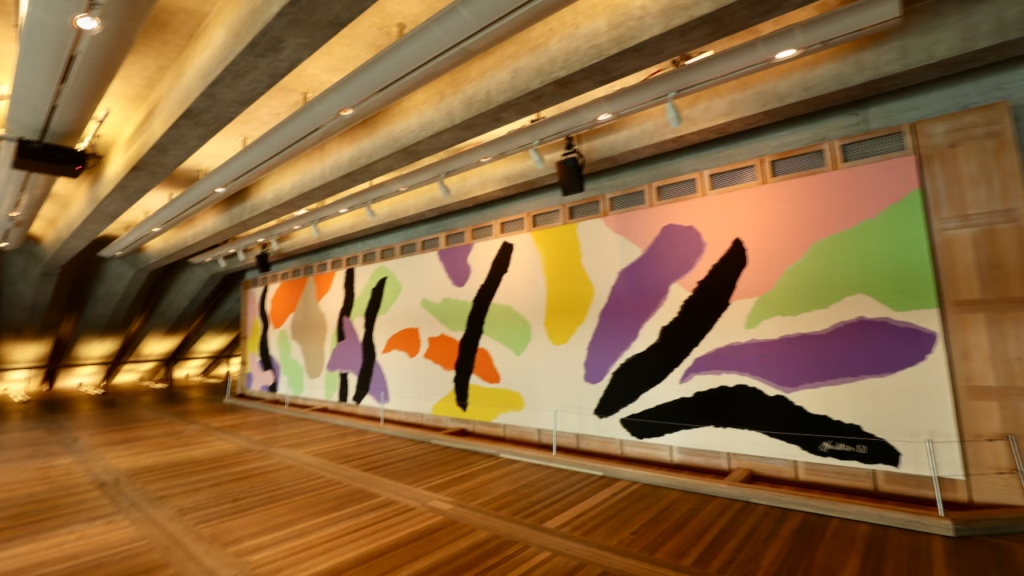
The tapestry on the west wall is his too — titled Homage to Carl Philipp Emanuel Bach, woven specifically to help absorb sound in the room as well as to look right in it. The room faces east to west: harbour views on one side, the tapestry as a backdrop on the other.
He died in 2008 without ever seeing it. Our guide told us that part standing right there in the room, which is about as good as a tour moment gets — the fact you already know from earlier in this guide suddenly has a physical place attached to it.
Sydney Opera House Acoustics: The Real Story
Our guide told us the halls were designed so they’d never need an amplified sound system. That isn’t quite how it turned out — and the real version is a better story anyway.
Utzon’s own acoustic vision for the interiors was never built. He’d already left by the time that stage of construction started, and Peter Hall’s team designed the Concert Hall’s interior and acoustics after him. The results were debated by musicians and critics for decades. A sound reinforcement system has actually been part of the building since a contract awarded in 1960, and a major renewal completed in recent years was designed specifically to address long-standing acoustic complaints — new draping, a new sound system, better clarity for amplified performances.
It’s a smaller, sadder footnote to the same resignation story rather than a separate fun fact. One more piece of the building Utzon didn’t get to finish the way he wanted.
The good news is it eventually got fixed — just not by him. A $150 million renewal, the final and largest project in the Opera House’s decade-long renewal program, closed the Concert Hall for two years and reopened it in 2022, ahead of the building’s 50th anniversary. The old acrylic “doughnut” reflectors came out, replaced by 18 petal-shaped fibreglass reflectors positioned specifically to send sound back to the musicians and out to the audience. The stage was rebuilt with new automated risers, and the renewal added wheelchair access to the Northern Foyer for the first time. Worth knowing if acoustics are part of why you’re going: the hall you’d hear today is a different instrument entirely from the one built after Utzon left.
Sydney Opera House Tour vs. the Alternatives
Sydney makes you choose between several big-ticket experiences, so here’s the honest comparison.
The free version. The forecourt, the Monumental Steps, and the public foyers cost nothing to enter, day or night. What a $0 visit won’t give you: the Concert Hall, the Joan Sutherland Theatre, the Utzon Room, or the story that makes the rest of the building make sense.
The Harbour Bridge Climb. If you can only pay for one big-ticket experience in Sydney, here’s the difference: the Climb is about the view, and the Opera House tour is about the building. Photographers chasing the skyline should pick the Climb. Anyone who cares about architecture, engineering, or a remarkable story should pick this.
A harbour cruise. A cruise circles both icons from the water. If the budget is tight, the free harbourside walk covers most of the same views at no cost, put the money you save toward the tour instead.
See options
Sydney Harbour Cruise
Sydney Opera House Backstage Tour and Breakfast
If the standard tour is the building’s public face, this is the one that gets you into the parts even most tour-goers never see. I haven’t done this one myself — this section is researched rather than tested — but the details are consistent across enough real reviews that I’m comfortable recommending it.
You meet at Stage Door, early — 6:45am on most bookings — and go in through the same entrance performers use. Groups are capped at 12, smaller than the standard tour’s 35, so it stays properly intimate. The tour runs about 2 hours 15 minutes, longer and slower than the standard walk-through. It takes you through rehearsal spaces, past the orchestra pit, and into dressing rooms and corridors that are actually off-limits on the standard route, then finishes with breakfast in the Green Room — the space reserved for cast and crew, not visitors. Pricing runs around AU$199 per adult, and children aged 10 to 15 can join if accompanied by an adult, under-10s aren’t permitted for safety reasons. Enclosed, flat, rubber-soled shoes are required, no exceptions. Expect real walking on this one too, similar territory to the standard tour’s stairs. Photography rules are mixed rather than an outright ban: most of the tour allows cameras, with a handful of specific areas marked as no-photo zones.
Warning
Latecomers aren’t admitted to this one. With a 6:45am meeting time, build in real buffer, especially if you’re coming from anywhere outside the CBD.
Book ahead — early morning slots Researched, not visited
Sydney Opera House VIP Backstage Tour and Breakfast
Sydney Opera House Shows: The One Thing a Tour Can’t Replicate
Everything above gets you inside the building. A show gets you inside what the building is actually for. The Opera House runs over 2,000 performances a year across its venues — opera, ballet, orchestral music, theatre, contemporary music, comedy, dance — and sitting inside one of those halls while it’s doing the job it was built for is a different experience entirely from walking through it empty on a tour.
I’d treat this as the one unmissable item on this whole list if your dates allow it. Check what’s actually on before you land: the program changes constantly, and the good seats for anything major go early.
There’s no official tour-and-show package, so book each separately. The good news is that a performance ticket gets you into that venue’s foyers ahead of time too, 90 minutes pre-show for the Concert Hall and Joan Sutherland Theatre, two hours for Western Foyer venues, so the two experiences complement each other rather than overlap.
See what’s on
Sydney Opera House Shows and Performances
Or here
Sydney Opera House Shows and Performances
Sydney Opera House Restaurants: Where to Eat Inside
You don’t need a show ticket or a tour booking to eat here. All of these are open to anyone walking in, and there’s a real range — from a once-in-a-lifetime splurge down to a coffee and a pastry.
Bennelong Researched, not visited
Bennelong occupies one of the smaller shells on its own, the dining room built around the same dramatic concrete ribs you’ll see on the tour, harbour views included. Rob Cockerill took over as executive chef in 2026, after more than a decade working alongside Peter Gilmore, who built the restaurant’s reputation before stepping back to Tasmania. The produce-led, distinctly Australian menu has carried one running signature through the change: a pavlova modelled on the building itself, meringue shards standing in for the sails. Bookings are essential, through bennelong.com.au. If you’re pairing it with a show, the restaurant recommends arriving at least 1 hour 45 minutes before curtain. Smart casual is the recommended dress — not strictly enforced, but this isn’t the room to show up underdressed in.
Midden by Mark Olive Researched, not visited
On the Opera House promenade, alfresco, harbour views — and built around Indigenous Australian ingredients and storytelling rather than the more generic “modern Australian” framing most fine dining in this city reaches for. Worth choosing over Bennelong specifically if that’s the kind of meal you want. It’s not a lesser version of the same idea.
Opera Bar
The casual, lively option: tiered outdoor seating right at the water’s edge below the forecourt, drinks and share plates, occasional live music. Packed most evenings — and worth it anyway. I’ve walked past this many times during the day, and it’s the one place on this list I can speak to directly, even without a formal sit-down meal there.
Winnie’s Researched, not visited
The newest addition, opened August 2026 on the Lower Concourse right next to Opera Bar. All-day, from coffee and pastries in the morning through to sunset drinks and seafood-driven share plates, named for Winifred Atwell, the first woman to ever perform at the Opera House, back in 1964 during construction. Open 7.30am to late, seven days, walk-ins welcome, no reservations needed, which makes it the easiest option on this list to just turn up to.
House Canteen Researched, not visited
Lower Concourse level, all-day, casual, historically the cheapest real meal inside the building: sushi, dumplings, coffee. Dining venues here have shifted more than once this year, and Winnie’s opening nearby may have changed what’s on offer, check current listings before you go.
Pro tip
If you’re combining a meal with a show, book the restaurant well before the performance rather than after. Pre-theatre seatings fill first, and most of these venues won’t hold a table if you’re running late from elsewhere in the city.
Practical Information
More Than One Venue
It’s easy to think of this as one building with one interior. It isn’t. There are multiple theatres and halls inside, each with its own scale and character — colour-coded in places to tell them apart on the way through.
Circular Quay is the stop for every approach — train, ferry, or the walk from The Rocks. My full guide to the harbour walk and every free vantage point is worth reading alongside this one if you’re planning a full day around the building rather than just the tour.
Best Time to Take the Tour
For the tour itself, morning departures get the clearest light through the glass colonnades and the quietest groups, worth choosing if photography inside is the priority. That’s a separate question from the best time to photograph the building from outside afterward: late afternoon into sunset is when the harbour turns gold, so an afternoon tour sets you up well for a walk over to Mrs Macquarie’s Chair right after, it’s covered in the viewpoints guide, an easy walk from the forecourt. In peak season (December to February), book at least a week ahead. In shoulder season (March to May, September to November), a day or two usually suffices.
How to Book, Step by Step
- Pick your tour. The standard guided tour for the building itself; the backstage tour if the performers’ world appeals and the 10+ age limit and 6:45am start work for you.
- Book direct or via a reseller — see the cost section above for the difference.
- Pick your time slot — see Best Time to Take the Tour above.
- Arrive 15 minutes early for the bag check — see What to Bring below for what that involves.
Accessibility
Worth being direct about this one: the standard guided tour route has no lift access and involves around 300 stairs, with nowhere to sit down along the way. It’s genuinely not suitable for wheelchairs or walkers, and the Opera House says so itself.
Warning
If you use a wheelchair or walker, book the Mobility Access Tour instead — a step-free version of the same route, departing from Stage Door. The standard route isn’t built for either, and there’s no workaround on the day.
The building’s public foyers, outside of the tour itself, are lift-accessible. Think twice about the backstage tour for the same reason: real stairs, real walking, and a working backstage environment rather than a polished visitor route.
Prams and strollers aren’t practical on the tour either — they need to be cloaked rather than brought along, which is worth knowing before you plan a day here with a baby in tow. If you’re travelling with slightly older kids, the Opera House runs a separate Junior Discovery Tour built for them instead of the standard route.
What to Bring, and What to Leave Behind
Bags larger than A4 need to be cloaked before the tour starts, and cloaking space is seriously limited — so travel light if you can. Arrive 15 minutes early at the Welcome Centre on the Lower Concourse to allow time for the bag check. Cameras are welcome throughout the tour; video filming isn’t, and your guide will flag the handful of spots where even photos aren’t allowed. On footwear: skip anything with a heel or a slippery sole, this isn’t a tour you want to do in sandals that don’t grip.
There’s no actual dress code anywhere in the building, for the tour or for a show — I want to be clear about that rather than overstate it. Smart casual is the norm for evening performances and fine dining, and jeans with a decent top are completely fine, but nobody’s checking. By day, the whole place is far more casual than the architecture makes it look.
Quick facts
Standard tour price (adult)
~AU$48
Design competition entries
233, from 32 countries
Utzon’s entry number
218
Utzon resigned
28 February 1966
Utzon left Australia
28 April 1966
Building opened
October 1973
Utzon Room reopened
2004, designed remotely from Denmark
Utzon died
2008, never having returned
Standard tour length
About 1 hour
Backstage tour meeting point
Stage Door, early morning
Frequently Asked Questions
Is it worth going inside the Sydney Opera House, or is the outside enough?
The outside is properly spectacular, but going inside is a different experience entirely — standing under the shells rather than photographing them from across the harbour. If you only do one thing here, make it the tour.
How long is the Sydney Opera House guided tour, and how much does it cost?
About one hour. Adult tickets run around AU$48 (concession ~AU$38, child ~AU$28, family packages available). The route usually covers the foyers and major halls, though exact venues vary with the performance schedule, with roughly 300 stairs and no lift along the way.
Can you visit the Sydney Opera House for free?
Yes. The forecourt, the Monumental Steps, and the public foyers are free to enter, day or night, no ticket needed. You only pay for the guided tours, performances, and dining. The free version gets you close to the building; the tour gets you into its halls and tells you why it matters.
What is the Utzon Room?
The only interior space in the Sydney Opera House designed by the building’s original architect, Jørn Utzon. He redesigned it remotely from Denmark in the early 2000s, decades after resigning from the project, and it reopened in 2004. He never saw it in person.
Why did Jørn Utzon leave the Sydney Opera House project?
A dispute with the NSW Minister for Public Works over cost, schedule, and a specific disagreement over interior plywood suppliers led Utzon to resign on 28 February 1966. He left Australia two months later and never returned — not even after the building opened in 1973.
What is the Sydney Opera House Backstage Tour and Breakfast?
An early-morning tour, about 2 hours 15 minutes, through areas closed to the public — rehearsal spaces, the orchestra pit, dressing rooms — finishing with breakfast in the Green Room. Around AU$199 per adult, children 10 and up can join with an adult.
Is the Sydney Opera House tour wheelchair accessible?
No, not the standard tour, it has around 300 stairs and no lift on the route. If you use a wheelchair or walker, book the Mobility Access Tour instead, a step-free version of the same experience departing from Stage Door.
What’s the difference between the standard tour and the backstage tour?
The standard tour covers the public-facing foyers and halls and takes about an hour. The backstage tour goes further, into rehearsal spaces, the orchestra pit and dressing rooms, runs about 2 hours 15 minutes, costs roughly four times as much, and ends with breakfast in the Green Room rather than just a walk-through.
Can you take photos inside the Sydney Opera House?
Yes, throughout the guided tour, and cameras are welcome everywhere else in the building too. Video filming isn’t permitted on the tour, and your guide will flag the few spots where even still photos aren’t allowed.
What should you wear to the Sydney Opera House?
There’s no dress code for the tour or for shows — jeans with a decent top are completely fine, and nobody’s checking. The one thing that matters is footwear: the tour route covers around 300 stairs, so skip heels and slippery soles.
Is the Sydney Opera House tour good for kids?
The standard tour works for older children who can manage 300 stairs and an hour on their feet. For younger ones, the Opera House runs a separate Junior Discovery Tour built for kids. Prams and strollers can’t come on the standard route — they need to be cloaked before the tour starts. The backstage tour allows children from age 10, accompanied by an adult.
Can you eat at the Sydney Opera House without a show ticket?
Yes. Every restaurant and cafe inside is open to the public regardless of whether you have a show ticket or tour booking — from Bennelong at the high end down to Winnie’s or House Canteen for something quick and casual.
Should I see a show at the Sydney Opera House?
If your dates allow it, yes — more than any tour. Sitting inside one of the halls while it’s actually being used is a different experience from walking through it empty, and the building hosts over 2,000 performances a year across opera, ballet, music, and theatre.
One Last Thing
I’ve photographed this building from more angles than I can count, and the tour is still the single thing that changed how I think about it. Standing under the shells rather than looking up at them from across the water is a completely different relationship with the same structure, and the Utzon story turns the whole building into something you understand rather than just something you admire.
If you’re only doing one thing here, book the Sydney Opera House tour and do it properly. If you can stretch to two, add a show — sitting inside one of these halls while it’s doing its actual job is worth more than anything a tour can show you.
Pair the two if you’ve got the time. Do the tour, then walk the same route I mapped out in the viewpoints guide afterward — Mrs Macquarie’s Chair or the Cahill Walk both work well straight after. You’ll have just stood underneath the building, and an hour later you’re seeing it from across the water, knowing exactly what’s inside it.
And if Sydney’s just one stop on a longer trip, this whole day fits neatly into the Sydney leg of my 1-month Australia itinerary, worth a look if you’re still filling in the rest of the map.

Leave a reply