
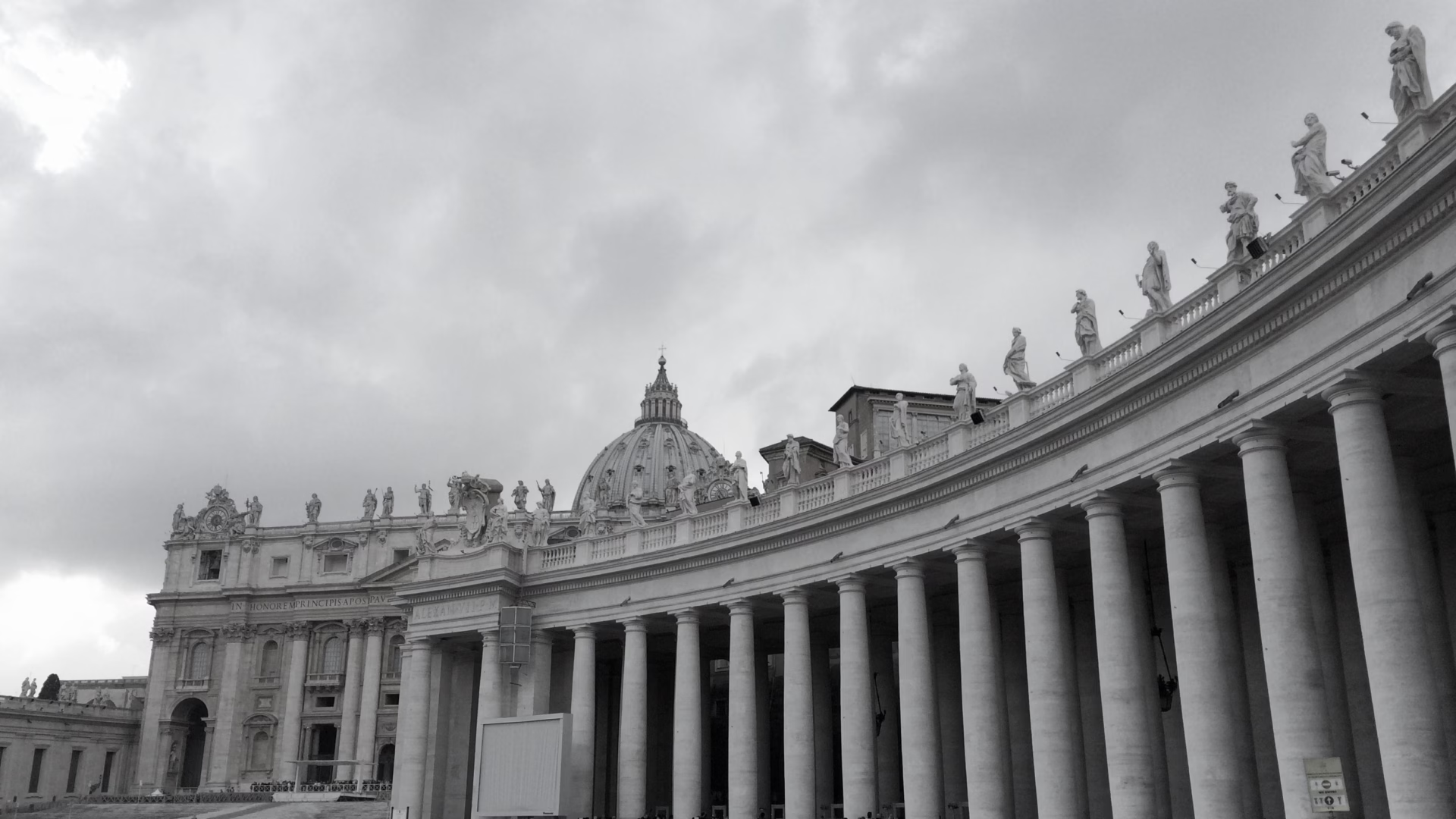
Visiting the Vatican for the first time comes down to three sites: the Vatican Museums with the Sistine Chapel (€20 at the door or €25 online in 2026), St Peter’s Square, and St Peter’s Basilica, which is free. Book the Museums ahead, cover your shoulders and knees, and allow a full day. I visited as a Muslim from Bangladesh with no religious connection to the place, and this guide covers the route I took, what each part is like and the practical details I wish I had known.
Museums ticket
€20, or €25 online
Includes the Sistine Chapel; book ahead
St Peter’s Basilica
Free entry
Dome climb from €10; security queue
Dress code
Shoulders and knees covered
Enforced for everyone at the door
Time needed
A full day
Museums 3 to 4 hours, Basilica an hour or more
Best time
Weekday mornings
Avoid Wednesday mornings and Sundays
I am a Muslim from Bangladesh, and the Vatican is not my faith’s holy site. I had no particular religious connection to the place. I was visiting because it is one of the most significant sites on earth, because the art inside is among the greatest ever made, and because Vatican City is, technically, its own country.
I collect countries. I am not ashamed of this.
What I did not expect was how much the place would affect me. The Vatican Museums turned out to be overwhelming in the best possible sense. The Sistine Chapel (which you cannot photograph, so you will have to take my word for it) was amazing, and I loved it. And St Peter’s Basilica, which I walked into with no particular expectations, turned out to be one of the most extraordinary buildings I have ever stood inside.
This is my account of what visiting the Vatican for the first time is actually like.
Can Muslims Visit the Vatican?
Yes. Muslims, like visitors of any faith or none, can visit Vatican City, the Vatican Museums, the Sistine Chapel and St Peter’s Basilica. Nobody asks about your religion, and you do not have to take part in anything religious. I visited as a Muslim from Bangladesh, went through the same security checks and followed the same dress code as everyone else: shoulders and knees covered, which will feel familiar if you have visited a mosque.
How to Get to Vatican City from Rome
Vatican City sits on the west bank of the Tiber, about a 30-minute walk from the historic centre or a short metro ride. Take Line A to Ottaviano; from there it is roughly a 10-minute walk either to St Peter’s Square or to the Museums entrance on Viale Vaticano, through a neighbourhood of trattorias and souvenir shops. They are separate entrances, so head for whichever comes first in your plan.
From the Colosseum, allow 30 to 40 minutes by metro, changing from Line B to Line A at Termini. From Spagna, by the Spanish Steps, take Line A towards Battistini for three stops to Ottaviano; from Barberini, near the Trevi Fountain, it is four.
This post contains affiliate links. If you book through them, I may earn a small commission at no extra cost to you.
Alternatively, the Rome Big Bus Hop-on Hop-off Tour stops near the Vatican and is an option if you are combining it with other major sites: it takes the metro logistics out of a heavy sightseeing day.
How to Visit Vatican City: The Best Route
The sequence that made the most sense, and the one I followed, was:
This is the standard order when you book through the Museums. You enter from the Museums side on Viale Vaticano, a 10-minute walk north of St Peter’s Square, move through the galleries and the Raphael Rooms, and reach the Sistine Chapel. Authorised guided groups can then use a passage from the Sistine Chapel straight into St Peter’s Basilica. Independent visitors cannot normally use it: you leave by the main Museums exit and walk around the Vatican walls to St Peter’s Square, roughly 10 to 15 minutes.
It works well. The Museums build up to the Sistine Chapel as a crescendo, and the Square and Basilica feel like a natural exhale after the intensity of everything that came before.
Visiting the Vatican Museums

The Vatican Museums are not one museum. They are a labyrinth: a sequence of galleries, corridors, courtyards and halls that took centuries to accumulate and would take days to see properly. Most visitors see a fraction and still come away with more than they can process.
I booked my entry ticket in advance, and I would treat that as essential rather than optional. The queue for walk-in tickets wraps around the outside walls of the Vatican and can take two to three hours. On the day I visited, the line stretched the entire length of Viale Vaticano, easily two hours of waiting in the open sun. Book online and you enter through a separate, much faster lane: about ten minutes instead of a morning.
If you prefer a guided visit, and for a first time there is a strong argument for one given how much context the rooms need, the combined tour covers the Museums, the Sistine Chapel and the Basilica in one session with skip-the-line entry:
The first thing that struck me inside the Museums was the sheer density. Every surface, ceiling, wall and floor, is decorated. There is no breathing space, no blank wall, no corridor that has been left plain. After ten minutes, you start to understand why people describe the Vatican as overwhelming.

The galleries move through Egyptian antiquities, Greek and Roman sculpture, tapestries, maps, and then, for most visitors, the Raphael Rooms, which are the highlight before the Sistine Chapel.
The Raphael Rooms

The Raphael Rooms, four rooms painted by Raphael and his workshop in the early 16th century, are where the Vatican Museums reach their first peak. The Stanza della Segnatura contains the School of Athens, a vast fresco of Plato, Aristotle and the great thinkers of antiquity gathered in an imagined classical hall, painted between 1509 and 1511 and widely considered one of the defining works of the Renaissance.
I am not an art historian. I did not know most of what I was looking at. But the Raphael Rooms do not require knowledge, only eyes. The ceilings alone are extraordinary.

The Sala di Costantino, the largest of the four rooms, contains a huge depiction of the Battle of the Milvian Bridge, where Constantine defeated his rival Maxentius in 312 AD. The victory secured Constantine’s position as emperor and marked a turning point in Christianity’s rise within the Roman Empire. Standing in front of it, knowing what that moment set in motion, is one of those rare instances where history feels close.
The Sistine Chapel
I cannot show you photographs of the Sistine Chapel. Photography is strictly forbidden inside, and the guards enforce it, regularly and firmly. This is one place where you simply have to go.
What I can tell you is this: it is smaller than you expect from the photographs. And Michelangelo’s ceiling is more detailed, more emotionally forceful, and more technically astonishing than any reproduction prepared me for. I stood with my head tilted back for a long time. Everyone around me did the same.
The Creation of Adam is in the centre. The Last Judgement covers the entire altar wall. The room is full of people and yet somehow, for a moment, you feel alone with it.
It is not my faith. But I understood, standing in that room, why this building mattered so much to so many people for so long.
After I came home, I read Angels & Demons by Dan Brown, which is set largely in the Vatican and Rome. The novel moves through places you will have just walked or can easily reach: St Peter’s Square, the Vatican’s corridors, Castel Sant’Angelo across the river and the churches and piazzas on the book’s trail. Reading it after visiting made every scene feel immediate in a way it cannot before you have been there. If you have not read it, read it after your visit. It adds a second layer to everything you saw.
Practical Sistine Chapel tips:
- No photography, and the rule is enforced
- Silence is requested, and the guards remind people regularly
- It fills up quickly, so enter the Museums as early as you can
- You cannot linger indefinitely: the flow of visitors keeps moving
- On your own, you leave by the main Museums exit before walking round to the Basilica, and anything left in the Museums cloakroom has to be collected from the Museums entrance
St Peter’s Square

Arriving in St Peter’s Square after the Museums is one of the better surprises a first-time visitor can have. After hours in packed galleries, you are suddenly standing in open air with one of the world’s great public spaces spreading out in front of you.
The square is enormous. The numbers are almost comical: it holds up to 300,000 people for major events. On a regular day, it simply feels vast and open, with the colonnade curving around you like arms.

The colonnade was designed by Gian Lorenzo Bernini in the 17th century: 284 columns arranged in a sweeping ellipse, topped by 140 statues of saints. Bernini described it as the arms of the Church reaching out to embrace the faithful. Whether or not you share that faith, the architecture works. It is designed to make you feel held.

At the centre stands an Egyptian obelisk, brought to Rome by Caligula and moved to its current position in 1586. It predates Christianity, the Basilica and almost everything around it by centuries. Standing next to it and thinking about how many people have stood in roughly this same spot, looking at roughly this same stone, is the kind of thought that makes travel repay the effort.
The Swiss Guard

You will see the Swiss Guard at various points around the Vatican: at doorways, at the entrance to the Basilica and at restricted areas. They wear a blue, red and yellow striped uniform in a Renaissance style (the version worn today dates from 1914), and they carry halberds.
They look theatrical, but they are a functioning military force, the world’s oldest and smallest. Recruits must be Swiss men, practising Catholics, single, aged 19 to 30, at least 1.74 metres tall and trained in the Swiss army. They are not decorative.
I photographed one through a doorway at night, with the yellow lanterns stretching away behind him. It is one of my favourite shots from the entire trip.
St Peter’s Basilica

Entry to St Peter’s Basilica is free, which surprises many visitors who have just paid for Museums tickets. You join the queue in the Square, go through a security check, and your shoulders and knees must be covered; if you are not dressed appropriately, you will not get in. Free does not mean fast: the security queue can be long, so arrive early. The official booking site also sells a €7 timed entry with a digital audio guide, but it is optional.
Designed by Carlo Maderno and completed in 1612, the broad facade is imposing rather than beautiful, and plain compared with the Baroque richness inside. The Latin inscription running across the top dedicates the building to the Apostle Peter. You read it without being able to translate it and still understand what it says.

Inside, your first impression is of scale. St Peter’s is one of the largest churches in the world, about 187 metres long, with the dome rising around 136 metres above the floor. None of these numbers prepare you. The building is simply, unexpectedly, larger than you thought it would be.

At the centre stands Bernini’s baldachin, a bronze canopy 29 metres tall over the tomb of St Peter. It took about eleven years to build. Under Pope Urban VIII, bronze was stripped from the Pantheon’s portico for his projects, and the episode inspired a satirical line associated with Pasquino, Rome’s “talking statue”: quod non fecerunt barbari, fecerunt Barberini, “what the barbarians did not do, the Barberini did.” Urban VIII, who commissioned the baldachin, was from the Barberini family.
The dome above it was designed by Michelangelo, his last great work, and completed after his death by Giacomo della Porta. Looking straight up into it, with the Latin inscription band running around the drum and the light filtering through the sixteen windows, is one of those moments that makes you stop moving entirely.

Scattered throughout the Basilica are papal tombs, chapels, and monuments spanning nearly two thousand years. The Latin inscriptions are everywhere: carved into marble, inlaid in gold, embedded in mosaic. You do not need to read Latin to feel their weight. The building speaks in a register that does not require translation.
Vatican Tickets, Prices and Opening Hours
Tickets and opening hours: A Vatican Museums ticket, which includes the Sistine Chapel, costs €20 at the ticket office or €25 when booked online through the official site (€10 or €15 reduced). Book well ahead: weeks in peak season, days in shoulder season. The Museums open Monday to Saturday, 8am to 8pm, with last entry at 6pm. They are closed on Sundays except the last Sunday of the month, when entry is free from 9am to 2pm (last entry 12.30pm); the queues on those days are huge, so with limited time a pre-booked weekday is the better choice. Check the official calendar for holiday closures.
Security and bags: Both the Museums and the Basilica have airport-style security. Large bags and suitcases are not allowed; the Museums have a free cloakroom, but the Basilica has none, so travel light.
⚠️ DRESS CODE
Shoulders and knees covered, for everyone, at both the Museums and the Basilica. In summer, carry a scarf or light layer: they will turn you away at the door without one.
What to skip if time is short: With only half a day, go straight to the Vatican Museums and the Sistine Chapel. The Basilica can be visited separately, since it opens longer and is free. The dome climb, which I did not do, costs €10 on foot (551 steps) or €15 with the lift to the terrace (then 320 steps) at the kiosk, or €17 and €22 booked online. Even with the lift, the last stretch is narrow and steep, so it is not for anyone with mobility problems or claustrophobia. The views over Rome are the reward, but it is not essential for a first visit.
Wednesday crowds: Avoid Wednesday mornings if you can. The Papal Audience usually takes place in St Peter’s Square, the Basilica can stay closed to ordinary visitors until it ends, and the whole area is busier. If you want both the Museums and the Basilica in one day, check the audience schedule first.
How many hours: Allow a full day. The Vatican Museums alone can take 3 to 4 hours if you keep moving. The Basilica needs at least an hour to feel like you have seen it. Add travel time, queues and the Square, and a full day is not an exaggeration.
Entrances: From Ottaviano metro, walk south down Via Ottaviano to St Peter’s Square, or west along Viale Giulio Cesare and south down Via Leone IV to the Museums entrance on Viale Vaticano. They are different entrances, so do not confuse them.
Where to Stay Near the Vatican
The Prati neighbourhood, directly across from the Vatican, is the most convenient base: quiet, residential, full of good restaurants and cafes, and an easy walk to both the Museums entrance and St Peter’s Square.
Recommended hotels near the Vatican:
- Hotel dei Consoli: Boutique hotel in Prati, comfortable rooms, well located for the Museums
- Residenza Paolo VI: Directly on Via della Conciliazione, overlooks St Peter’s Square; book a room with a view
- NH Collection Roma Palazzo Cinquecento: Near Termini, further away but good value, with easy metro access to Ottaviano
- Hotel Bramante: Small historic hotel immediately next to the Vatican walls; one of the closest hotels to the site
- Generator Rome: Budget option for solo travellers, well-connected by metro
Search for the best rates:
Where to Eat Near the Vatican
The streets immediately around the Vatican, especially Via della Conciliazione, are tourist-trap territory. Walk two streets back into Prati for significantly better food at lower prices.
Recommendations:
- Pizzarium Bonci (Via della Meloria): Rome’s most famous pizza al taglio, just ten minutes from the Museums and a good reason for the short detour.
- Sciascia Caffè (Via Fabio Massimo): A historic coffee bar in Prati; they have been making the same espresso recipe since 1919.
- Osteria dell’Angelo (Via G. Bettolo): Classic Roman trattoria, cacio e pepe and carbonara done properly, reasonable prices.
- Mercato Trionfale: Covered market a short walk from the Vatican, good for a cheap lunch among locals.
Is Vatican City a Separate Country?
Yes: Vatican City is the world’s smallest sovereign state by both area and population, about 44 hectares with around 800 residents. It has its own postal service, radio station, newspaper and bank. Citizenship is limited and generally tied to an official role there, so its citizens are mostly clergy, diplomats and Swiss Guards. It even has its own football team and an internal league, which is a remarkable thing for a state covering less than half a square kilometre.
For country collectors, it counts. There is no border control, so you will not get a passport stamp; collectors usually send a postcard from the Vatican post office instead, since the Vatican issues its own stamps and postmark.
More From My Italy Trip
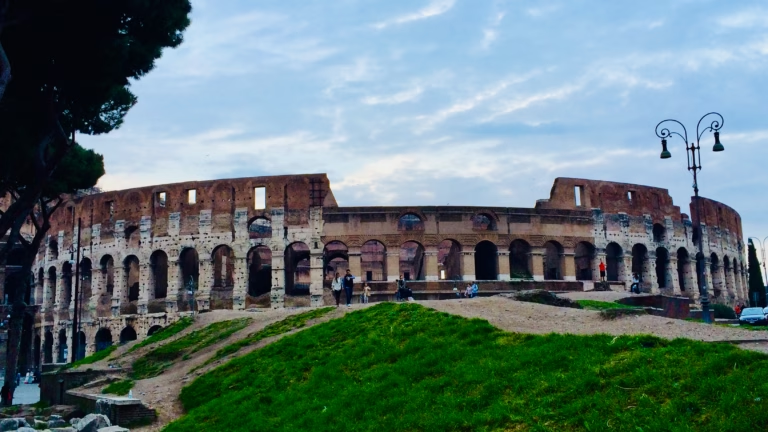
The Vatican sits inside Rome, and Rome deserves far more than a day. I spent two full days walking the ancient city before adding the Vatican, and it was still not enough. My Rome in March guide covers the Colosseum, the Roman Forum, the Palatine Hill, Testaccio and the rest of the ancient city.
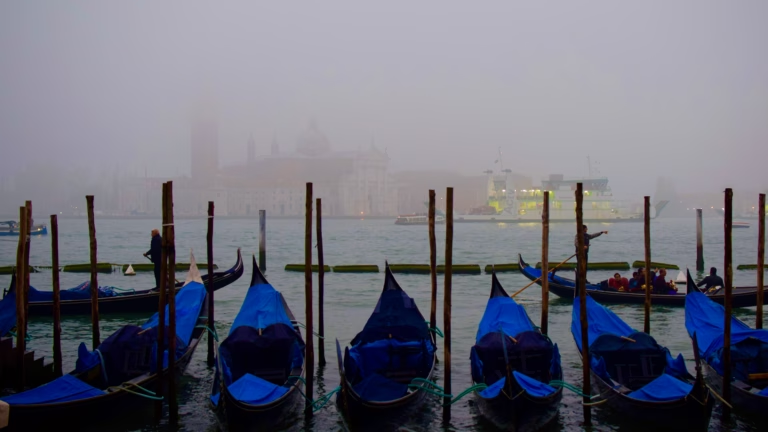
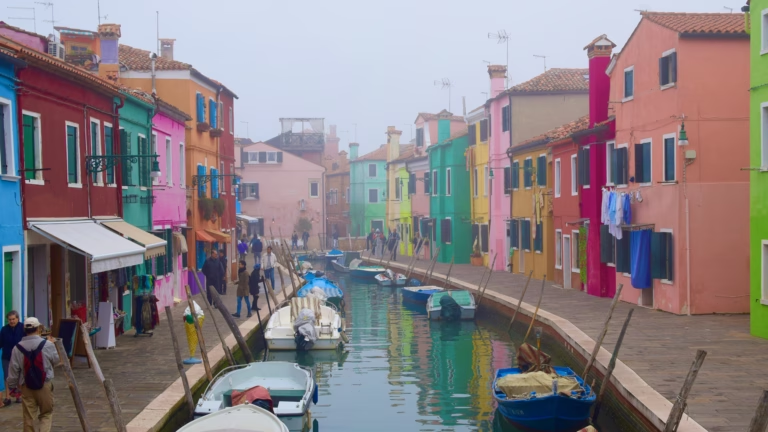
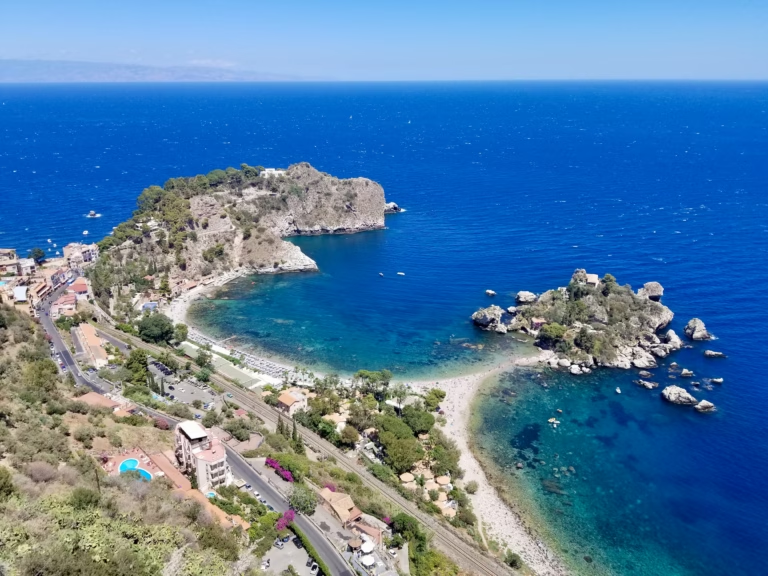
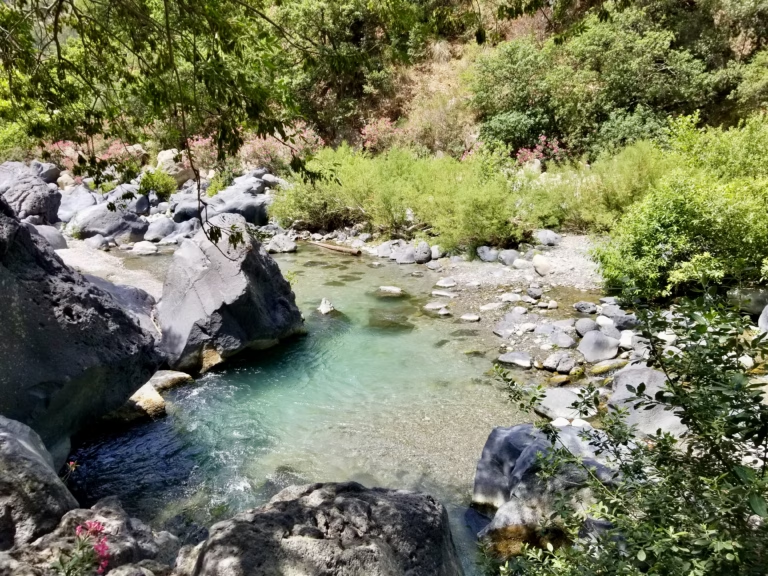
If you are continuing north after Rome, Venice is about four hours by high-speed train. From Venice, the day trip to Burano, the island of colour, makes a perfect contrast to everything ancient and marble-white you have been looking at. In Sicily, I spent three days in Taormina and a day at the Alcantara Gorges.
FAQ: Visiting the Vatican for the First Time
Can a Muslim visit Vatican City?
Yes. Vatican City is open to visitors of every faith and none, and there is no religious test at the door. The same dress code applies to everyone. I visited as a Muslim from Bangladesh and found it one of the most extraordinary cultural experiences of my travels.
Do I need to book Vatican tickets in advance?
Yes. Walk-in queues at the Vatican Museums can be two to three hours long, even outside peak season. Book online at least a few days ahead, and weeks ahead in summer.
How much does it cost to visit the Vatican?
A Vatican Museums ticket, including the Sistine Chapel, costs €20 at the ticket office or €25 online in 2026 (€10 or €15 reduced). St Peter’s Basilica is free. The dome climb costs €10 on foot or €15 with the lift at the kiosk, or €17 and €22 online.
Is the Sistine Chapel included in the Vatican Museums ticket?
Yes. The Sistine Chapel is at the end of the Vatican Museums route, and one ticket covers both.
Is St Peter’s Basilica free?
Yes. You queue in St Peter’s Square and go through security; there is also an optional €7 timed entry with an audio guide. The Museums ticket does not include the Basilica, and the two have separate entrances.
What should I wear to the Vatican?
Shoulders and knees covered, for everyone. Bring a scarf or light layer in summer. The rule is enforced at both the Museums and the Basilica.
Is photography allowed in the Sistine Chapel?
No. Photography is strictly forbidden, and the guards enforce it. Elsewhere in the Vatican Museums and the Basilica you can take photos.
How long does a visit to the Vatican take?
Plan a full day. The Museums alone take 3 to 4 hours at a reasonable pace, and the Basilica needs at least an hour. With the Square, travel and queues, a comfortable visit is 6 to 8 hours.
Can I climb the dome of St Peter’s?
Yes, with a separate ticket: €10 for all 551 steps or €15 with the lift to the terrace, which still leaves 320 steps, or €17 and €22 booked online. The last stretch is narrow and steep. The views over Rome are excellent. I did not climb it on this visit.
What is the best time to visit the Vatican?
Weekday mornings, with a pre-booked ticket for the 8am opening. Avoid Wednesday mornings (the Papal Audience) and Sundays, when the Museums are closed. The free last Sunday of the month has shorter hours and very long queues.
Does Vatican City count as a separate country?
Yes. Vatican City is a sovereign state recognised internationally, with its own government, postal service and the Swiss Guard. It uses the euro. For country collectors, it counts.
Is the Vatican Worth Visiting?
I went to the Vatican because it was there, because it was significant, because it added a country to my list. I left having understood something I had not expected to, that even from the outside, even without shared faith, places built with this much intention and this much accumulated meaning have a way of getting through.
The Sistine Chapel was the moment I did not expect. Standing in that room, looking at what one person made on a ceiling five centuries ago, it does not matter what you believe or where you are from. Some things simply work.
Book your tickets before you go. Arrive early. And allow yourself more time than you think you need.

Leave a reply