
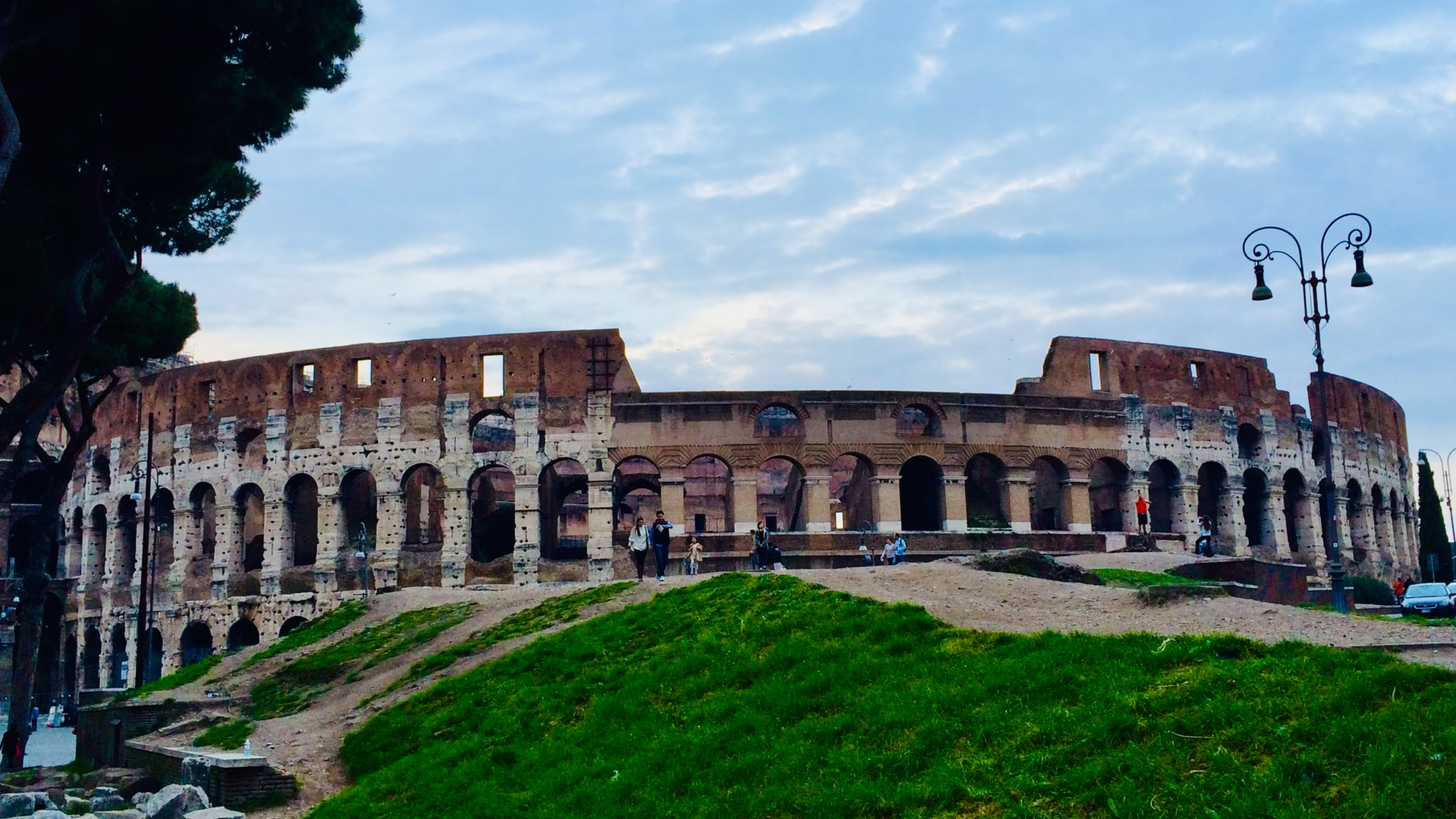
Rome in March is mild but changeable, with daytime highs of about 14 to 17°C, cooler nights of around 5 to 8°C, a fair chance of showers, and far fewer crowds than in summer. The grass around the Forum and Palatine Hill turns green and fills with spring flowers, and the evenings stretch out once the clocks go forward at the end of the month. I spent two days walking ancient Rome and the Centro Storico in March, and this guide covers the weather, crowds and Easter dates, current prices for the Colosseum, Pantheon and Trevi Fountain, my two-day walking route, and where to stay and eat.
Weather
Mild and changeable
Highs 14 to 17°C, nights 5 to 8°C
Crowds
Moderate
Much busier around Easter
Colosseum
From €18
Timed ticket in your name; book ahead
Getting around
Mostly on foot
Metro €1.50 a ride
Time needed
Two days
Plus a separate day for the Vatican
I had been looking at photographs of the Colosseum since I was a child. In school textbooks, on television, in the film Gladiator, that image of the great oval amphitheatre was so familiar it had almost become abstract. Just a symbol. A logo for Ancient Rome.
Then I stood inside it.
The goosebumps were immediate and embarrassing. I am not someone who gets emotional at tourist attractions. But standing on the arena floor of the Colosseum, looking up at three levels of arches curving away in every direction, imagining 50,000 people filling those tiers, imagining the roar, the heat, the dust, the blood, something shifted. This was not a photograph. This was the actual place.
I visited Rome over two days in March. I lost my camera to a pickpocket at a metro station entrance (more on that later, because it is useful information). I photographed everything that followed on my iPhone. And I walked more of ancient Rome in 48 hours than I have walked anywhere in a similar timeframe.
This is my account of those two days: what I saw, what surprised me, what I wish I had known, and why March turned out to be the right time to come.
Why Visit Rome in March?
March sits in the sweet spot that most visitors miss entirely. Summer in Rome is brutal: queues of two hours for the Colosseum, temperatures above 35°C, tourist restaurants with plastic menus on every corner. Spring and autumn are when Romans themselves enjoy their city.
In March specifically:
The crowds are manageable. Not absent (Rome is never empty), but the cruise ship crowds haven’t arrived, school holidays haven’t started, and the Colosseum queue is a fraction of what it becomes in June.
The light is extraordinary. March means dramatic skies: sun, cloud, and occasional rain alternating throughout the day. The wet cobblestones reflect the light. The ruins glow differently under storm clouds than they do in flat summer sun.
The wildflowers are out. This is something almost no travel guide mentions. By mid-March, the grass around Palatine Hill and the Roman Forum is bright green and scattered with yellow dandelions. The contrast between ancient stone and spring flowers is beautiful, and completely free.
It is cheaper. Hotels, flights, and tours all cost less in March than in peak season.
Check the event dates. In 2027, Holy Week starts on Palm Sunday, 21 March, with Good Friday on 26 March, Easter Sunday on 28 March and Easter Monday on 29 March, so the last week of the month brings big crowds at the Vatican and changed hours at some sites. The 2027 Rome Marathon is scheduled for Sunday 14 March, with road closures and bus diversions around the Colosseum and the centre that morning.
Rome Weather in March
Expect daytime highs of about 14°C at the start of March, rising to around 17°C by the end, with nights of roughly 5 to 8°C. Showers are common, so bring layers, as it can be cold in the shade, and a light waterproof. I had sunshine and rain on the same day, sometimes within an hour of each other.
Early March is the coolest part of the month, with the shortest evenings and the earliest closing times at the ancient sites. By late March the afternoons are warmer, the flowers are out, and the clocks go forward on the last Sunday, pushing sunset from about 6pm to after 7.30pm and extending opening hours, though in 2027 that week is also Holy Week.
Getting to Rome
By plane: Rome’s main airport is Fiumicino (Leonardo da Vinci, FCO). The fastest way into the city is the Leonardo Express, a non-stop train to Roma Termini that takes 32 minutes, costs €14 and runs every 15 minutes. Avoid the unofficial drivers who approach you in arrivals: use the official white taxi rank outside, where there is a fixed €55 fare to anywhere inside the Aurelian Walls, or pre-book a transfer.
By train: If you’re travelling within Italy, the high-speed network is excellent. Rome’s main station is Roma Termini. Trains from Florence take about 1.5 hours, from Naples about 1 hour 10 minutes, from Venice just under 4 hours.
This post contains affiliate links. If you book through them, I may earn a small commission at no extra cost to you.
Booking in advance almost always secures a cheaper fare. I use Omio to compare routes and prices across operators, and Rail Europe for booking directly; both cover Italian high-speed trains and international connections.
Getting Around Rome

Rome has a metro, buses and trams, but in practice you’ll spend most of your time walking. The historic centre and the ancient sites are all within a fairly compact area, and walking between them is faster and more interesting than any public transport option.
The metro: Lines A and B cross at Termini, and Line B stops at Colosseo, right outside the Colosseum. Line C now reaches it too: its Colosseo station opened in December 2025, with archaeological finds on display inside. A single BIT ticket costs €1.50 and is valid for 100 minutes after validation, covering one metro journey and any buses and trams in that time. You can buy a paper ticket or tap a contactless card at the gates.
Things to Do in Rome in March
- Walk the Colosseum, Forum and Palatine Hill while the grass is green and full of spring flowers (Day 1 below)
- Start in Testaccio with the local market and a coffee, then walk to the Circus Maximus
- Watch the rain fall through the Pantheon’s oculus on a wet day
- See the Trevi Fountain at night, when the crowds thin and the floodlights come on
- Eat Roman artichokes, in season in March: carciofi alla romana, or carciofi alla giudia in the Jewish Ghetto
- Catch sunset from Capitoline Hill or the Vittoriano rooftop
- Take a day trip to Tivoli, Pompeii or Florence
Before I say anything else about the metro: watch your belongings. I lost my camera, not on the train itself, but at the entrance to a metro station, in the moment of distraction when I was going through the barrier. My bag was open, I was fumbling with my ticket, and it was gone. I didn’t even feel it happen.
The specific circumstances matter: it happened during the day, not late at night. It happened at the barrier, not on a crowded train. The moment of maximum vulnerability is when you’re distracted: buying a ticket, going through a gate, reading a map. That is when your attention is split and a skilled thief takes half a second.
What I wish I had done: kept my camera in a front bag or zipped inside jacket pocket, not in a side bag. Used a crossbody strap rather than a shoulder bag. The loss was painful but the experience was instructive, and I am sharing it because it will happen to someone else if they don’t read this.
After losing the camera: I had my iPhone. Rome continued. The photos survived.
Day 1: Ancient Rome on Foot
The Route at a Glance
Here is the full Day 1 itinerary as a walking route. Including the walking inside the archaeological sites, expect about 7 to 8 km, in one geographic arc with no backtracking. Mercato di Testaccio is closed on Sundays; if it is shut, have a coffee in Testaccio and carry on to the Circus Maximus.
- Testaccio Market: Metro Line B to Piramide, then a 5-minute walk; allow 30 to 45 minutes
- Circus Maximus: a 15 to 20-minute walk north-east via Via Marmorata; 20 minutes
- Colosseum: about 15 minutes on foot via Via dei Cerchi and Via di San Gregorio; 2 hours
- Temple of Venus and Rome and Basilica of Maxentius: beside the Arch of Titus, inside the same ticketed area; 20 minutes
- Roman Forum: walk in from the Colosseum end; 1.5 to 2 hours
- Palatine Hill: inside the same area; 1 hour
- Capitoline Hill and Piazza del Campidoglio: about 10 minutes from the Forum; 30 minutes
- Altare della Patria: a 5-minute walk from Campidoglio; 20 minutes
- Piazza Navona (evening): a 20-minute walk north-west, or bus 40 or 64
Getting started: From most central hotels, take Metro Line B to Piramide station. Testaccio is a 5-minute walk from the exit, which saves you a long walk from the centre and drops you in one of Rome’s most local neighbourhoods before the tourist day begins. If you’re staying in Testaccio or Trastevere already, just walk.
Note on the Colosseum ticket: The combined ticket covers the Colosseum, the Roman Forum, Palatine Hill, the Basilica of Maxentius and the Temple of Venus and Rome, so stops 3 to 6 above all use the same ticket. Buy it online before you go.
Testaccio: Start Where the Tourists Don’t
Most visitors to Rome begin their day at the Colosseum. I began mine in Testaccio, the neighbourhood immediately to the southwest, built around Rome’s old slaughterhouse (now a market and arts space), and one of the most authentically Roman parts of the city.
Testaccio has no major ancient sites. What it has is Romans. The morning market, Mercato Testaccio, is where locals shop for vegetables, cheese, meat, and prepared food. There are very few tourists, prices are fair, and the coffee at a corner bar costs what coffee should cost.
I had my gelato here: chocolate, in a waffle cone, from a neighbourhood shop rather than a tourist gelateria. It cost about half what the same thing would have cost at the Trevi Fountain. This is the first lesson of Testaccio: everything is cheaper when you are not surrounded by other tourists.

If you want a guided introduction to Rome’s food, or an easier way to cover ground across both days, these are good options:
Circus Maximus
Walking east from Testaccio brings you to the Circus Maximus, the largest chariot racing stadium in ancient Rome; ancient accounts put its capacity at up to 250,000 spectators. Today it is a long green public park with a running track, used by Romans for morning jogs.
Most visitors see only the grass. Walk to the curved eastern end and you find the surviving brick substructures, arched vaults that once held up the seating, which give a real sense of the scale and engineering of the original stadium.

It is free to walk through, and often overlooked, which is precisely why it deserves your time: you will likely have it almost to yourself.
→ From Circus Maximus to the Colosseum: Walk east along Via dei Cerchi beside the old racing track, with Palatine Hill rising on your left, then turn up Via di San Gregorio and the Colosseum appears ahead of you. It is about 15 minutes on foot and mostly flat.
The Colosseum

There is nothing I can write about the Colosseum that will prepare you for it. I have tried to describe the goosebumps, the sense of scale, the Gladiator thoughts, and all of it sounds insufficient when typed on a screen.
What I can tell you is practical.
Book your ticket online before you go. I cannot stress this enough. The queue for same-day tickets in March was already substantial, and tickets are now timed and issued in your name, so bring matching ID. Official tickets are released 30 days ahead. In 2026 the standard 24-hour ticket for the Colosseum, Roman Forum and Palatine Hill costs €18 (it does not include the arena floor), and the Full Experience ticket, which adds the arena and the underground and is valid for two days, costs €24. EU citizens aged 18 to 25 pay €2 and under-18s go free.
March opening hours: the Colosseum opens at 8.30am and closes at 5pm from 1 to 15 March, 5.30pm from 16 March to the last Saturday of the month, and 7.15pm from the last Sunday of March, after the clock change. Last entry is an hour before closing.
Book on the official Colosseum website or through a reputable operator. These are the two options I would choose between:
The combined ticket is essential: the Roman Forum and Palatine Hill are adjacent and included, and together they form a coherent half-day experience that ends naturally at Capitoline Hill.
Inside the Colosseum:

The interior is larger than photographs suggest. Walking in through the tunnel and emerging onto the arena level, you understand immediately why 50,000 people could fit here: the tiers curve away and upward in every direction, and the hypogeum (the underground passage network where gladiators and animals waited before fights) is exposed beneath the partly reconstructed arena floor.

I thought about Gladiator. I thought about what it would have smelled like with 50,000 people and caged lions in the same building. I thought about the fact that this structure was built without cranes, without power tools, and without computers, and that it has been standing for nearly 2,000 years.
I also filmed a short video inside; you can watch it here:
Photography tip: The best interior shots come from the upper tiers looking down: you see the arena floor, the hypogeum, and the opposite curved wall all in one frame. Go early (at opening time) for fewer people in shot, or embrace the crowds as part of the story of the place.
→ From the Colosseum into the Forum: Exit the Colosseum and walk a couple of minutes west to the Arch of Titus and the Via Sacra entrance to the Forum. The Temple of Venus and Rome is right beside you and the Basilica of Maxentius just beyond, both covered by your ticket. Explore these first (most visitors rush past them), then continue into the Forum proper.
The Roman Forum and Palatine Hill
The combined ticket gets you into both the Roman Forum and Palatine Hill, and the two sites flow naturally into each other. I spent the majority of my first day here; you could easily spend a full day and not exhaust it.
The Roman Forum is best understood as what it was: the political, religious, and commercial heart of the Roman world for a thousand years. What you see now are the remains (columns, arches, temple foundations, basilica walls), but the density of history in this relatively small area is unlike anywhere I have been.

The street performer was the most unexpected moment. Near the entrance to the Forum, a man in full saffron robes appeared to be levitating, the classic Indian street magic trick, but executed with complete seriousness against a backdrop of 2,000-year-old ruins and orange construction netting. Only in Rome.
Key things to look for inside the Roman Forum:
The Temple of Castor and Pollux: three Corinthian columns rising from a massive ancient platform, surrounded by spring green grass in March. One of the most photogenic single fragments in the Forum.

The Temple of Antoninus and Faustina is remarkable because the temple was turned into a church, San Lorenzo in Miranda, in the Middle Ages, and given a baroque facade in 1602. You can see both layers at once: the massive ancient columns with the Latin dedication (“Divo Antonino et Divae Faustinae”) at the top, and the church door between them.

The Basilica Aemilia ruins, column drums laid out on the grass, which most visitors walk straight past. At blue hour, as the Forum lights begin to glow, this is one of the most atmospheric corners of the entire site.

The Arch of Septimius Severus, best seen at night, when the floodlighting makes the Latin inscription and carved relief panels visible in a way daylight doesn’t achieve.

Palatine Hill is included in the combined ticket, and the climb pays off. According to Roman tradition, this is where Romulus founded the city; later it became the most exclusive address in Rome, covered by the emperors’ palaces. It also has the best views of the Forum.
The Farnese Gardens on the hill’s summit are a 16th-century pleasure garden built over earlier palace ruins; the ornate gateway is one of the most photographed but least-known architectural details in the area.

In March, the hill is covered in wildflowers and the panoramic views include the Vittoriano monument, the Capitoline Hill, the Forum, and on clear days the dome of St Peter’s in the distance.


→ From Palatine Hill to Capitoline Hill: Come down from Palatine Hill through the western end of the Forum, leave at the Capitoline end and climb up to Piazza del Campidoglio, about 10 minutes. The grand approach from the city side is Michelangelo’s Cordonata, a gently sloping ramp (not stairs) designed so that dignitaries could ride horses up to the piazza.
The Basilica of Maxentius and the Temple of Venus and Rome
These two structures sit at the Colosseum end of the Forum, often missed because visitors are either heading toward the Colosseum or leaving it.
The Basilica of Maxentius has three enormous barrel-vaulted arches still standing from a basilica begun by Maxentius and finished by Constantine. Renaissance architects, Michelangelo among them, studied these vaults.

The Temple of Venus and Rome is thought to have been the largest temple in ancient Rome, and its surviving apse still shows a coffered half-dome that Renaissance architects admired for centuries.

Capitoline Hill and Piazza Campidoglio
The natural conclusion to a day in the Forum and Palatine is climbing Capitoline Hill (Campidoglio), designed by Michelangelo, home to the Capitoline Museums, and offering the best free viewpoint over the Roman Forum.
The climb up the Cordonata ramp brings you to Piazza Campidoglio, a perfectly proportioned Renaissance piazza with the bronze equestrian statue of Marcus Aurelius at its centre (a copy; the original is in the museum). From the terrace behind the museums, you look directly down into the Forum in a way no other viewpoint replicates.
The Capitoline Museums deserve a separate visit if you have time. They house some of the finest ancient sculpture in the world, including the original Marcus Aurelius statue and the bronze She-Wolf (Lupa Capitolina). Book skip-the-line tickets online to avoid queuing.
→ From Capitoline Hill to the Altare della Patria: Walk down the front of the hill toward Piazza Venezia; the Altare della Patria is directly in front of you, a 5-minute walk. You cannot miss it.
The Altare della Patria (Vittoriano)
Walking from Campidoglio toward Piazza Venezia brings you to the Altare della Patria, the enormous white marble monument to Victor Emmanuel II, inaugurated in 1911, which Romans sometimes call the “wedding cake” or “typewriter” for its extravagant white bulk among the city’s terracotta.
At night, it is transformed.

Entry to the monument and its lower terraces is free. A paid glass lift (around €15 to €18) takes you to the rooftop terrace, which has one of the best panoramic views in Rome.
→ End of Day 1, walking to the evening: By now you may have had enough walking, and Piazza Navona can easily wait for Day 2. If you still have energy, it is about 20 minutes on foot north-west from Piazza Venezia, through the back streets behind the Pantheon: narrow alleys, local restaurants opening for dinner, the smell of Roman cooking drifting out of open kitchen windows. Buses 40 and 64 also run from Piazza Venezia into the Centro Storico.
Day 2: Centro Storico
The Route at a Glance
Day 2 covers less ground but packs in three of Rome’s most famous non-ancient sites, over about 3 to 4 km: a lighter day, which your legs will appreciate.
- Piazza Navona: walk from your hotel, or bus 40 or 64 to Corso Vittorio Emanuele; evening or morning
- Pantheon: a 5-minute walk east; 45 minutes to an hour
- Trevi Fountain: a 10-minute walk north-east; 20 to 30 minutes
- Spanish Steps (optional): a 10-minute walk north; 20 minutes (sitting on the steps is banned)
Getting started: Day 2 needs no metro, as everything is walkable from the Centro Storico. If you’re staying near the ancient sites, take bus 40 or 64 to Corso Vittorio Emanuele and walk from there.
Piazza Navona at Night

My second evening began at Piazza Navona, the elongated baroque piazza built over the ancient Stadium of Domitian. The three fountains are all by Bernini or his school, with the Fountain of the Four Rivers at the centre being the most dramatic.
In March, the square is lively without being unmanageable. Street artists, couples, families, students: the Italian evening passeggiata at its most characteristic.
→ From Piazza Navona to the Pantheon: Cross Corso del Rinascimento and follow Via Giustiniani east into Piazza della Rotonda, about 5 minutes. The back streets here have some of Rome’s best-hidden coffee bars and bakeries, so if you are doing this in the morning, stop for a coffee before the Pantheon.
The Pantheon
The Pantheon is simultaneously one of the most visited buildings in Rome and one of the most underrated. Visitors stream past the exterior every day without grasping what they’re looking at: a concrete temple rebuilt under the emperor Hadrian around 125 AD and in continuous use ever since, first as a temple and later as a church, with an unreinforced concrete dome that remained the world’s largest for 1,300 years.
The oculus, the 9-metre opening at the top of the dome, is the only source of light inside. On rainy days (and March provides these), raindrops fall through the oculus onto the ancient marble floor and drain away through holes the Romans built into it. They still work.

Entry costs €7 (up from €5 on 1 July 2026), and it is open 9am to 7pm, last entry 6.30pm. Buy the official ticket on the Musei Italiani website or app, or at the machines and ticket office outside. There is no priority entry, so don’t pay extra for a supposed skip-the-line ticket: visitors go in in order of arrival. An audio guide does help, and this Pantheon ticket with an interactive app adds commentary as you explore, useful given how much history is packed into a single room.
→ From the Pantheon to the Trevi Fountain: Walk northeast from the Pantheon for about 10 minutes; Via del Seminario leads you toward Via delle Muratte and directly to the Trevi Fountain. This stretch of the Centro Storico is one of Rome’s densest for gelato shops, coffee bars, and souvenir stalls. Resist the tourist gelato and save your appetite for dinner in a trattoria.
The Trevi Fountain

The Trevi Fountain is one of Rome’s most famous and most visited landmarks. In summer, the piazza around it is so crowded you cannot get close. In March, it is busy but navigable.
🎟️ TREVI FOUNTAIN TICKET
Since 2 February 2026, tourists and other non-residents pay €2 to go down to the basin, the area right by the water. The general window is 9am to 10pm, though hours can differ on Mondays and Fridays and during maintenance, so check the official Trevi Fountain website. Buy online or at the entrance (card only). The view from the piazza above stays free, and Rome residents and under-5s don’t pay.
The tradition of throwing a coin over your left shoulder with your right hand supposedly guarantees your return to Rome. The coins collected, more than a million euros a year, go to the charity Caritas.
Go at night. During the day, the light is flat and the crowds are dense. At night, the floodlighting transforms the baroque facade: Neptune and his sea horses glow against the dark, and the sound of the falling water is audible in a way it isn’t during the daytime crowd noise.
Photography tip for the Trevi: Get close rather than trying for a wide shot. The composition of Neptune, the sea horses, and the allegorical figures is strongest when you fill the frame with it rather than trying to include the surrounding buildings. A slightly lower angle emphasises the scale of Neptune’s figure.
The Spanish Steps
From the Trevi Fountain it is about 10 minutes north to the Spanish Steps, 135 steps linking Piazza di Spagna with the church of Trinità dei Monti at the top. The view down over the square and the boat-shaped Barcaccia fountain is lovely in spring. You can climb them and enjoy the view from the top, but sitting on the steps is banned and can get you a fine. Allow 20 to 30 minutes.
Where to Stay in Rome
Rome’s historic centre is large and walkable, and where you stay determines how much time you spend on transport versus walking to things. I researched the hotels below rather than staying in each one.
Budget
The Beehive (near Termini) One of Rome’s best-known hostels: clean, socially active, run by an American couple who’ve been here for decades. Good for solo travellers who want to meet people. Note that the Termini area is convenient but not the most characterful neighbourhood. Best for: Solo travellers, budget-conscious visitors
Vatican Clodio Suites (Prati, near Vatican) A well-reviewed guest house in the quiet, residential Prati neighbourhood, 1.4km from the Vatican Museums and 1.2km from Ottaviano metro. Soundproofed rooms, garden views, shared kitchen, free WiFi. A solid budget pick if you want a peaceful base close to the Vatican. Best for: Vatican-focused visitors, budget travellers who want a quiet neighbourhood
Mid Range
Hotel Santa Maria (Trastevere) A charming hotel in a converted 16th-century cloister in Trastevere, the most atmospheric neighbourhood in Rome. Rooms open onto a courtyard with orange trees. Walking distance to many of the main sights. Best for: First-time visitors who want character and location
Albergo del Senato (Pantheon area) A mid-range hotel directly facing the Pantheon; the rooftop terrace view is extraordinary. Walk to Piazza Navona, Trevi Fountain, and the ancient sites. Location justifies the price. Best for: Those who want to be in the heart of the Centro Storico
Mamaco Roma (Prati, near Vatican) A design-forward boutique guesthouse in Prati with only six individually decorated rooms: think high wooden beams, marble bathrooms, and Jacuzzi tubs. Self check-in via virtual keys, complimentary drinks, and a balcony with city views. A distinctive mid-range option for couples or design-conscious travellers who don’t need hotel-lobby amenities. Best for: Couples, design-conscious travellers, those visiting the Vatican
Upper Range
Portrait Roma (Spanish Steps area) A boutique property from the Salvatore Ferragamo family, near the Spanish Steps. Design-led, highly personal service, excellent position in one of Rome’s most elegant streets. Best for: Design-conscious travellers, special occasions
Hotel Eden (Via Ludovisi, near Villa Borghese) A Dorchester Collection property, one of Rome’s finest five-star hotels, with a Michelin star for its rooftop restaurant La Terrazza, which serves contemporary Italian cuisine with sweeping views over Rome’s rooftops. 98 rooms and suites, spa, and the kind of service you’d expect from one of the world’s leading hotel groups. A special address. Best for: Splurge stays, special occasions, fine dining enthusiasts
Splurge
Hotel de Russie (near Piazza del Popolo) One of Rome’s grandest hotels, a Rocco Forte property with a legendary terraced garden, spa, and one of the most beautiful secret gardens in the city. Picasso and Cocteau were regulars. Expensive, and there is nothing quite like it in Rome. Best for: Bucket-list stays, honeymoons
Hotel Hassler Roma (top of the Spanish Steps) The most coveted address in Rome, perched at the summit of the Spanish Steps and in the same Swiss family’s hands since 1893. 82 rooms and suites, a legendary Michelin-starred panoramic restaurant (Imàgo, on the 6th floor with city views), and a terrace bar that is one of the finest places to have a drink in Rome whether or not you’re staying. Best for: The ultimate Rome experience, discerning travellers for whom only the best will do
Neighbourhood guide:
- Centro Storico (Pantheon, Navona): most convenient, most expensive
- Trastevere: most atmospheric, slightly further from ancient sites
- Monti: between the Colosseum and Centro Storico, increasingly popular, good value
- Prati (near Vatican): quiet, residential, good value, and covered in my Vatican post
- Spanish Steps / Via Veneto: elegant, central, upper-range hotels
- Avoid Termini unless your budget requires it: convenient, but less atmospheric and busier at night
Where to Eat in Rome
The rule: Never eat anywhere with a photograph menu, a man standing outside to flag you in, or a location directly adjacent to a major tourist site. Walk two streets away from any monument and prices drop dramatically.
Roman classics to eat:
Cacio e pepe: Rome’s signature pasta dish. Pasta, pecorino romano cheese, and black pepper. Nothing else. When it’s made properly, it is one of the best things you will eat in Italy. Order it at a trattoria away from the tourist circuit.
Supplì: Rome’s street food answer to arancini: fried rice balls with a tomato and mozzarella centre. Get them from a friggitoria (fry shop) rather than a restaurant. In Trastevere, Supplì Roma on Via di San Francesco a Ripa is the benchmark.
Carciofi: March is artichoke season in Rome. Try carciofi alla romana, braised with mint and garlic, or carciofi alla giudia, deep-fried whole, in the old Jewish Ghetto.
Pizza al taglio: pizza by the cut, sold by weight. The Roman way to eat standing up. Find a forno (bakery) that makes it fresh and buy a slice of whatever looks best. Avoid the tourist-facing ones with dried-out slices under hot lamps.
Restaurants to know about (picked from research):
Da Enzo al 29 (Trastevere) A small, family-run trattoria in Trastevere consistently praised as one of the best traditional Roman restaurants in the city. Book ahead: it fills up. Order: Cacio e pepe, coda alla vaccinara (oxtail stew)
Roscioli (Campo de’ Fiori area) Part deli, part restaurant, entirely excellent. The wine list is exceptional and the Roman classics are done with care. Book well in advance. Order: Carbonara, whatever cheese the counter suggests
Flavio al Velavevodetto (Testaccio) Built into the side of Monte Testaccio (the ancient hill of broken amphora), this is one of the best places in Rome to eat traditional Roman food in the neighbourhood that invented it. Order: Rigatoni alla pajata if you’re adventurous, cacio e pepe if you’re not
Supplì Roma (Trastevere) The benchmark for Rome’s beloved fried rice balls. Queue, order, eat standing up, repeat. Order: Supplì al telefono (the classic version with the stretchy mozzarella filling)
Fine Dining & Michelin-Starred Rome
Rome’s fine dining scene is often overlooked in favour of its trattoria tradition, but the city has serious starred restaurants, led by La Pergola with three stars. If you have one special-occasion meal, the three below are the ones to know about. I picked them from research and the Michelin Guide.
Il Pagliaccio (Via dei Banchi Vecchi, historic centre, 2 Michelin stars) One of Rome’s three two-starred restaurants, alongside Acquolina and Enoteca La Torre, tucked into a quiet street a short walk from Campo de’ Fiori. Chef Anthony Genovese, born in France to a Calabrian family and trained across Europe and Asia, has run Il Pagliaccio since 2003 and earned his second star in 2009. The dining room is intimate, the atmosphere theatrical, and the cooking unlike anything else in the city: Italian tradition with Asian precision and French technique. Book several weeks ahead.
Aroma (Palazzo Manfredi, Via Labicana, 1 Michelin star) The most dramatically positioned restaurant in Rome: a rooftop terrace atop Palazzo Manfredi, directly overlooking the Colosseum, with the Vittoriano visible in the distance. Chef Giuseppe Di Iorio’s cooking, Roman-born and classically grounded, with sustainable fish and regional ingredients, deserves its star as much as its view. The terrace is covered in winter, so it is open year-round. Book well in advance. If you’re visiting in March and want to eat with a Colosseum view, this is the one.
Pipero Roma (Corso Vittorio Emanuele, 1 Michelin star) Named after its charismatic owner Alessandro Pipero, who personally welcomes every guest and has been a beloved figure on Rome’s food scene for decades. Chef Ciro Scamardella leads the kitchen with creative, seasonal meat and fish dishes influenced by his native Campania. The wine list is exceptional. The atmosphere is warm and elegant rather than stiff, less intimidating than a first Michelin experience might suggest. A good choice for those new to fine dining in Rome.
Day Trips from Rome
Rome is a superb base for day trips. Two to consider during a March visit:
Rome Safety: What I Wish I Had Read Before Going
Rome is a safe city by any reasonable measure. Violent crime against tourists is extremely rare. What is not rare is petty theft, specifically pickpocketing and bag snatching in crowded tourist areas and on public transport.
I was one of those statistics.
Where it’s most likely to happen:
- Metro stations and trains (especially Line A between Termini and the Vatican)
- The area immediately around the Colosseum
- Crowded tourist sites (Trevi Fountain, Spanish Steps, Piazza Navona)
- Any crowded bus
⚠️ THE MOMENT OF MAXIMUM RISK
Distraction: buying a ticket, going through a barrier, reading a map, taking a photo. At that moment part of your attention is elsewhere, and a skilled thief needs only a second.
Practical prevention:
Carry valuables in a crossbody bag worn in front, with secure zips and a strap that cannot easily be pulled away. Never put a camera, phone or wallet in an outer pocket or a bag that hangs behind you. Be especially alert at ticket barriers: this is where I lost my camera.
If you carry a camera, use a wrist strap in addition to a neck strap. Consider a lockable camera bag. Keep valuables in your hotel safe when not needed.
Don’t carry more cash than you need for the day. Cards are accepted almost everywhere in Rome.
If something is stolen, report it at a Polizia di Stato or Carabinieri station; you’ll need the report for any insurance claim. The process is bureaucratic but manageable.
The experience cost me a camera. It taught me more about vigilance than ten years of uneventful travel had. Hopefully reading this costs you nothing.
Practical Tips for Rome in March
Best time to visit Rome: March to May and September to October are the sweet spots: comfortable temperatures, manageable crowds, lower prices. March specifically offers spring wildflowers around the ancient sites that make the photography distinctive. July and August are brutally hot and extremely crowded. December to February is quiet and cold but the sites are peaceful.
How many days do you need: Two days covers the ancient sites and the Centro Storico at a reasonable pace, without rushing. Three days allows you to add Trastevere, the Borghese Gallery, and a slower evening pace. The Vatican needs a separate day; I’ve written a complete guide to visiting the Vatican for the first time.
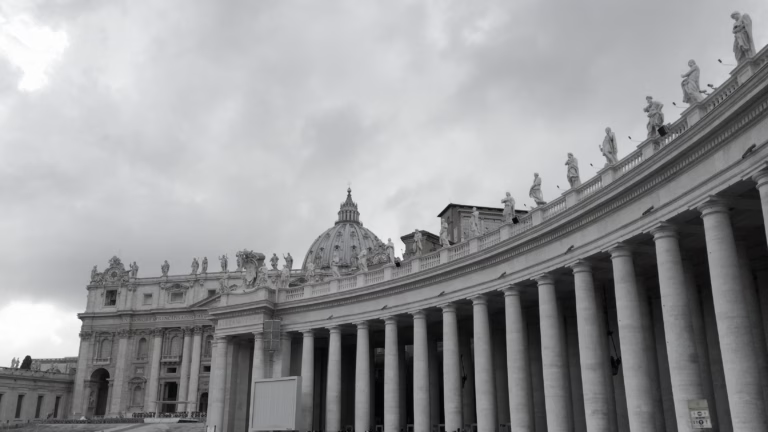
What to pack for March: Layers, as it can be warm in sunshine and cold in shade. A light waterproof jacket. Comfortable walking shoes (cobblestones all day). Sunglasses for the occasional March sunshine.
Transport: Metro for the Colosseum (Line B or C, Colosseo stop) and Vatican area (Line A, Ottaviano stop). Buses for everything else. Walk wherever possible: Rome’s centre is compact and walking reveals far more than any bus.
Getting from Fiumicino Airport: The Leonardo Express to Termini takes 32 minutes, runs every 15 minutes and costs €14. Buy tickets at the airport station or online. The official taxi fare to anywhere inside the Aurelian Walls is a fixed €55. Do not accept offers from unofficial drivers in arrivals.
Day Trips and the Rest of My Italy Trip
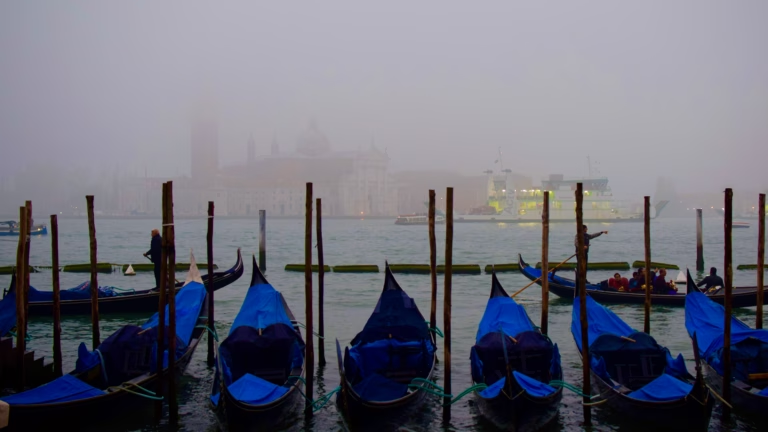
Rome is an excellent base for day trips: Tivoli for Hadrian’s Villa and Villa d’Este, Naples (about 1 to 1.5 hours by high-speed train, with Pompeii a further train ride away), or Florence (about 1.5 hours). If you’re continuing north, Venice is just under 4 hours by train; I’ve written a full guide to Venice in November which covers the vaporetto, the fog, and why the off-season is the right season.
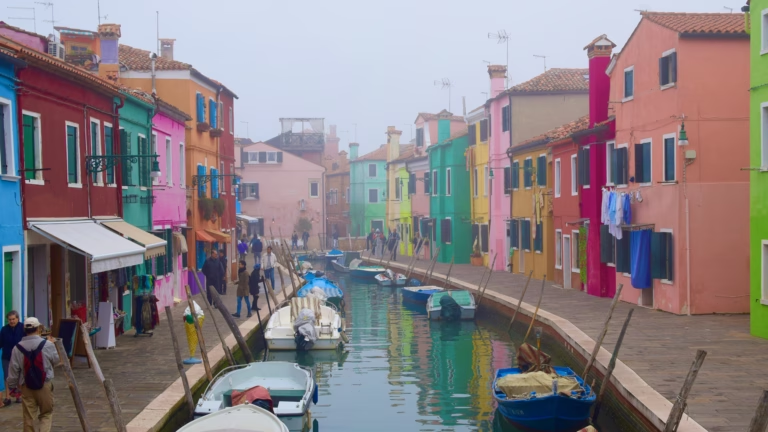
If you enjoyed the ancient history of Rome, the step from Rome to a day trip to Burano from Venice makes a natural contrast: from 2,000-year-old ruins to an island painted every colour of the rainbow.
FAQ: Rome in March
Is Rome worth visiting in March?
Yes. The crowds are far smaller than in summer, the grass around the ancient sites is green and full of spring flowers, the light is dramatic, and hotels and flights cost less. Expect some showers, and check the event dates: in 2027 Easter Sunday is 28 March and the Rome Marathon is on 14 March.
What is the weather like in Rome in March?
Mild but changeable. Daytime highs rise from about 14°C to 17°C through the month, nights are around 5 to 8°C, and showers are common. Sunset moves from about 6pm to after 7.30pm once the clocks go forward on the last Sunday of March.
Is Rome crowded in March?
Moderately. It is much quieter than summer, but busier at weekends and in Holy Week, which in 2027 runs from 21 to 28 March. Book the Colosseum and the Vatican ahead in any case.
How many days do you need in Rome?
Two days covers the main ancient sites (Colosseum, Forum, Palatine) and the Centro Storico (Pantheon, Trevi Fountain, Piazza Navona). Three days is more comfortable, and the Vatican needs a separate day.
How much is a Colosseum ticket?
In 2026 the standard 24-hour ticket covering the Colosseum, Roman Forum and Palatine Hill costs €18, and the Full Experience ticket with the arena floor and underground costs €24. EU citizens aged 18 to 25 pay €2 and under-18s go free. Tickets are timed and in your name.
Do I need to book Colosseum tickets in advance?
Yes. Official tickets are released 30 days ahead and timed slots sell out; the ticket office only sells whatever same-day slots are left. Bring ID that matches the name on the ticket. In March the Colosseum closes at 5pm until the 15th, 5.30pm until the last Saturday, then 7.15pm after the clock change.
How much does the Pantheon cost?
Entry costs €7 since 1 July 2026, up from €5. It is open 9am to 7pm. There is no skip-the-line option: visitors go in in order of arrival, so buy the official ticket rather than a priority one.
Do you have to pay to see the Trevi Fountain?
Only to go down to the basin by the water: since February 2026 that costs €2 between 9am and 10pm. The view from the piazza above is free.
How do I get from Fiumicino Airport to central Rome?
The Leonardo Express train to Termini takes 32 minutes, runs every 15 minutes and costs €14. Official taxis charge a fixed €55 to anywhere inside the Aurelian Walls.
Is Rome safe for tourists?
Yes. Violent crime is rare, but pickpocketing is common in tourist areas and on the metro. Wear a crossbody bag in front, keep valuables zipped away, and be most careful at metro barriers and in crowds.
What should I eat in Rome in March?
Cacio e pepe, carbonara, supplì (fried rice balls), pizza al taglio, and artichokes, which are in season in March: carciofi alla romana (braised) or carciofi alla giudia (deep-fried). Eat a couple of streets away from the main sights for better food at lower prices.
What is the best neighbourhood to stay in Rome?
Monti (between the Colosseum and the Centro Storico) or Trastevere for atmosphere, the Centro Storico for convenience. Avoid the area right around Termini unless your budget needs it.
Is the Altare della Patria free?
Yes, the monument and its lower terraces are free. A paid glass lift (around €15 to €18) takes you to the rooftop terrace, which has one of the best views in Rome.
Is Rome Worth Visiting in March?
Every time I see a photograph of the Colosseum now, it is no longer abstract. I know what it feels like to stand on that arena floor. I know what the light looks like through those arches in March. I know the sound the wind makes in the hypogeum.
The camera is gone. The photographs survived. And the Colosseum gave me goosebumps, which is not something I was expecting from a building I had been looking at for thirty years.
Come in March. Walk from Testaccio to the Forum to Palatine Hill to Capitoline Hill. Eat cacio e pepe two streets away from the tourist circuit. Go to the Trevi Fountain at night. Keep your bag in front.
Rome will do the rest.


Leave a reply