
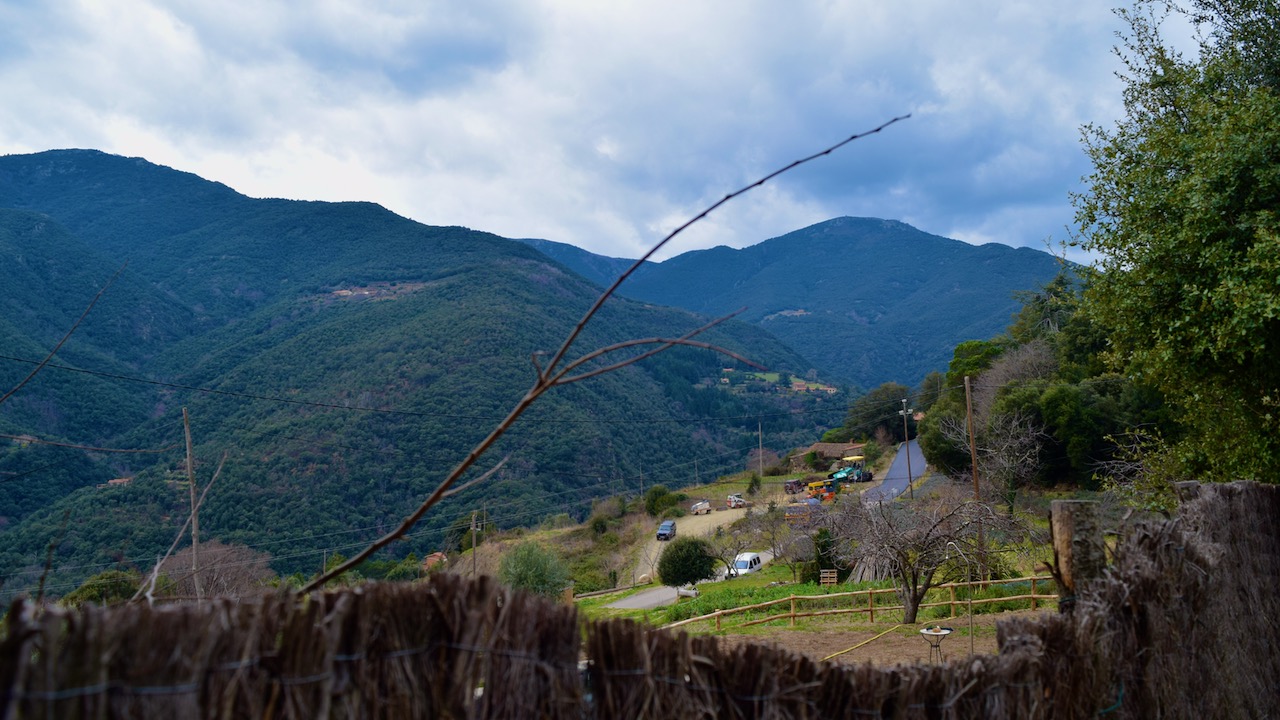
Montseny Natural Park is about 60 km north-east of Barcelona and easy to reach without a car: the R2 Nord train, then the weekend Bus Parc. Signposted hikes, the Turó de l’Home, and my quiet February walk around Montseny village.
Montseny Natural Park is about 60 km north-east of Barcelona, and you can do it as a day trip without a car: take the R2 Nord train to Sant Celoni or Santa Maria de Palautordera (about an hour), then, at weekends, a Bus Parc bus into the park (the bus ticket costs €2.65 for the whole day). I went by public transport with a colleague at the end of February and spent the day walking the empty lanes and forest paths around Montseny village.
Distance
About 60 km
North-east of Barcelona
Getting there
Train + Bus Parc
R2 Nord, then a park bus at weekends
Park bus
€2.65 all day
Cash only; free under 12
Highest peak
Turó de l’Home
1,706 metres
Best time
October and November
Beech forest colours; spring is good too
Most visitors to Barcelona get sent to Montserrat. My host in Barcelona, who had lived in the city all her life, sent us to Montseny instead. Nobody goes there, she said, and that’s why it’s perfect. She was right.
What Is Montseny?
The Parc Natural i Reserva de la Biosfera del Montseny covers about 31,000 hectares across 18 municipalities in three Catalan districts: Vallès Oriental, Osona and La Selva. UNESCO made Montseny a biosphere reserve in 1978, and extended the reserve in 2014. Its highest summits are the Turó de l’Home (1,706 m), Les Agudes (1,703 m) and Matagalls (1,697 m), and the slopes change from holm oak and chestnut low down to beech and fir forest higher up.
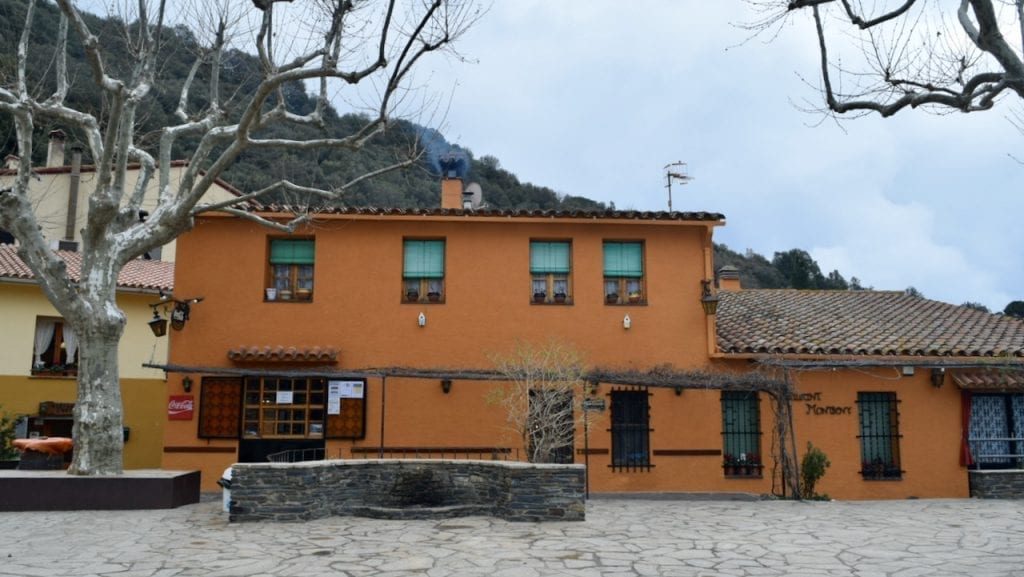
Montseny is also the name of a small village of stone houses inside the park, at just over 500 metres, which is where I spent my day. And don’t confuse it with Montserrat, the monastery mountain west of Barcelona: Montseny is greener, quieter and far less visited.
How to Get to Montseny from Barcelona Without a Car
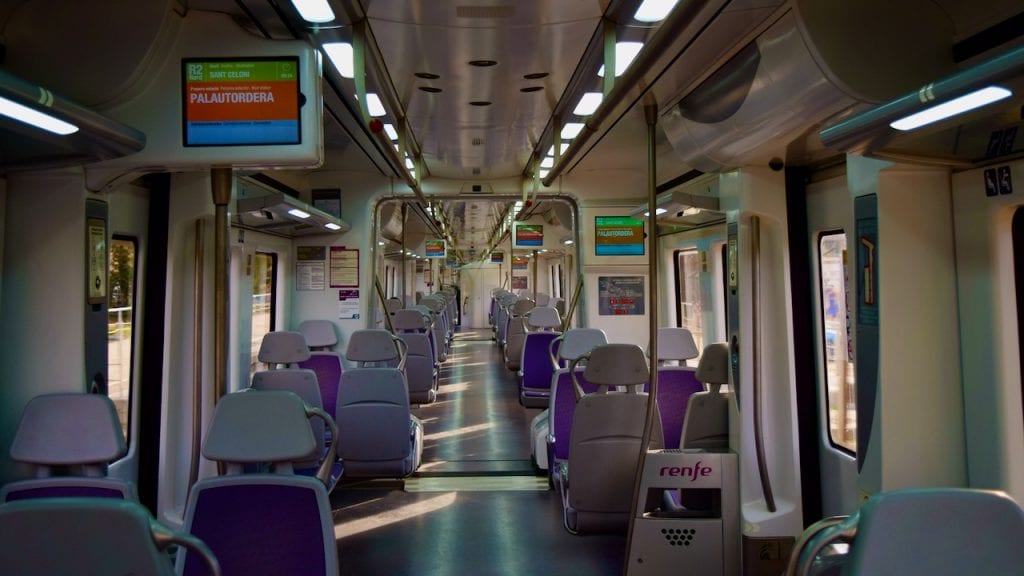
It’s a two-part trip: a Rodalies train out of Barcelona, then a bus up into the park. The buses are the part to plan around, because most of them only run at weekends.
Step 1: The Train
Take the R2 Nord (towards Maçanet-Massanes) from Barcelona Sants, Passeig de Gràcia or El Clot-Aragó. Get off at Santa Maria de Palautordera for Montseny village, or at Sant Celoni for Santa Fe and Fontmartina. Either way the ride takes 45 minutes to an hour, depending on the train. Check the Rodalies timetable before you go.
Step 2 at Weekends: The Bus Parc
On Saturdays, Sundays and public holidays all year (except Christmas Day and New Year’s Day), the Diputació de Barcelona runs park buses, operated by Sagalés, from the train stations into the park:
- Line 576: Santa Maria de Palautordera station to Montseny village.
- Line 573: Sant Celoni station to Santa Fe del Montseny, about an hour, with departures roughly every two hours through the day.
- Line 572: Sant Celoni station to Fontmartina, the start of the Turó de l’Home climb. Autumn weekends only; in 2026 it runs from 10 October to 8 December.
A Bus Parc ticket costs €2.65 and is valid all day on the park buses (it doesn’t include the train), so you can hop on and off. Pay the driver in cash, because the bus doesn’t take cards. Children under 12 ride free, and integrated ATM tickets such as the T-casual are also accepted, with the train-to-bus transfer included. Timetables change with the season, so check the Sagalés website or app before you go.
On Weekdays
Weekdays are harder. Sagalés line 567 runs from Sant Celoni to Montseny village on working days only, with few departures, so check the timetable first. Otherwise, take a taxi from Sant Celoni or the Palautordera area.
⚠️ DON’T MISS THE LAST BUS
Mobile signal is patchy on the trails, and the last bus back down to the station leaves in the early evening. Note the time before you set off, and allow extra time in winter, when it gets dark early.
A Guided Tour from Barcelona
If you’d rather not juggle trains and bus times, or want to reach the high trails on a weekday, a guided tour with transport from Barcelona is the simplest option.
This post contains affiliate links. If you book through them, I may earn a small commission at no extra cost to you.
Montseny Natural Park Hikes: Walks from the Bus Parc Stops
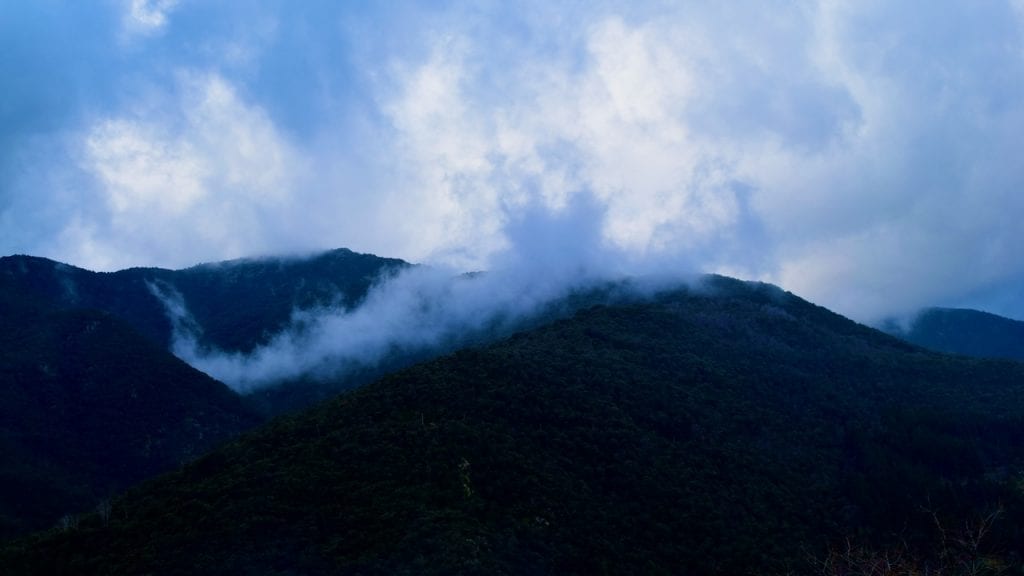
The park authority has signposted walks starting from most Bus Parc stops, so you can plan a hike around the bus timetable. These are some of the routes it lists; I haven’t walked them all myself, so check the route details on the park website before you go.
From Montseny Village
- GR-5 to Sant Martí de Montseny: 4.1 km along the long-distance GR path.
- GR-5 to Fontmartina: 5.6 km, climbing towards the forest area below the Turó de l’Home.
- The lanes around the village: stone-walled tracks, farmland, small streams and forest paths. This is the kind of walking I did, with no fixed route.
From Santa Fe del Montseny
- Round the Santa Fe reservoir: an easy 2.6 km loop, and especially beautiful when the beech forest turns in autumn.
- La Font del Frare: a 1 km adapted route, suitable for wheelchairs and pushchairs.
- SL-C 86 El Roc Perer: 4.6 km.
- L’Empedrat de Morou: 5.8 km.
- PR-C 208 to the Turó de l’Home and Les Agudes: about 11.6 km to the park’s highest summits, a demanding walk of around five hours.
From Fontmartina
- GR-5.2 to the Turó de l’Home: 4.4 km one way to the 1,706 m summit, a steady climb. On a clear day the view reaches the Pyrenees and the Mediterranean.
- Fontmartina forest trail: 4.8 km.
- El Sot de l’Infern: 3 km.
💡 DOWNLOAD THE MAP FIRST
Download an offline map before you leave Barcelona. The paths are well marked, but mobile signal comes and goes in the valleys, and in winter the summits can have ice or snow.
My Walk Around Montseny Village
I went at the end of February with a colleague, by train and bus, and spent the day on the lanes and forest paths around Montseny village rather than heading for a summit. The village was almost empty and cold. We took some food from one of its restaurants, where the server tried to point us towards a walking route. I understood part of his Spanish and remembered the main instruction, turn right at the big tree, and off we went.
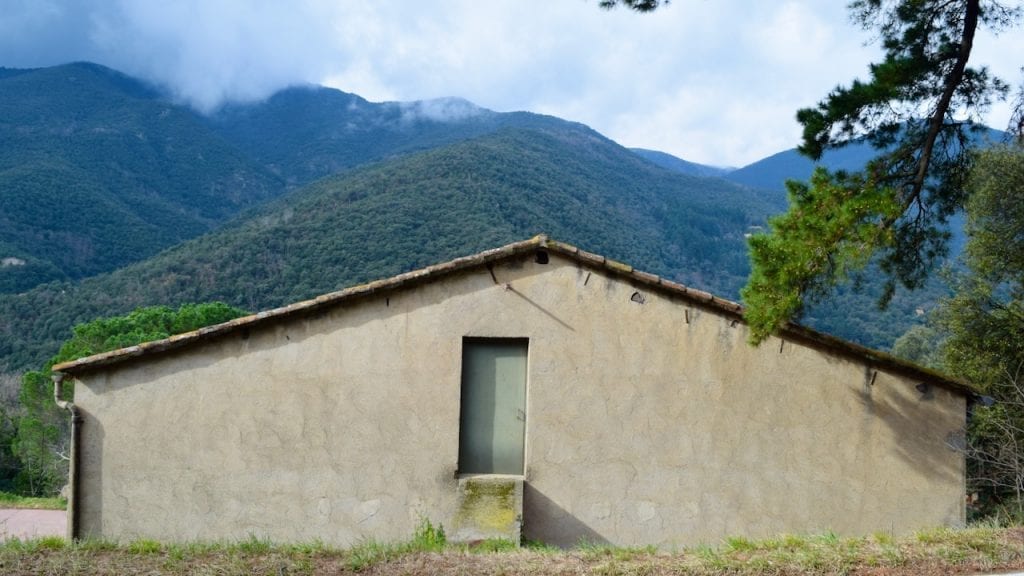
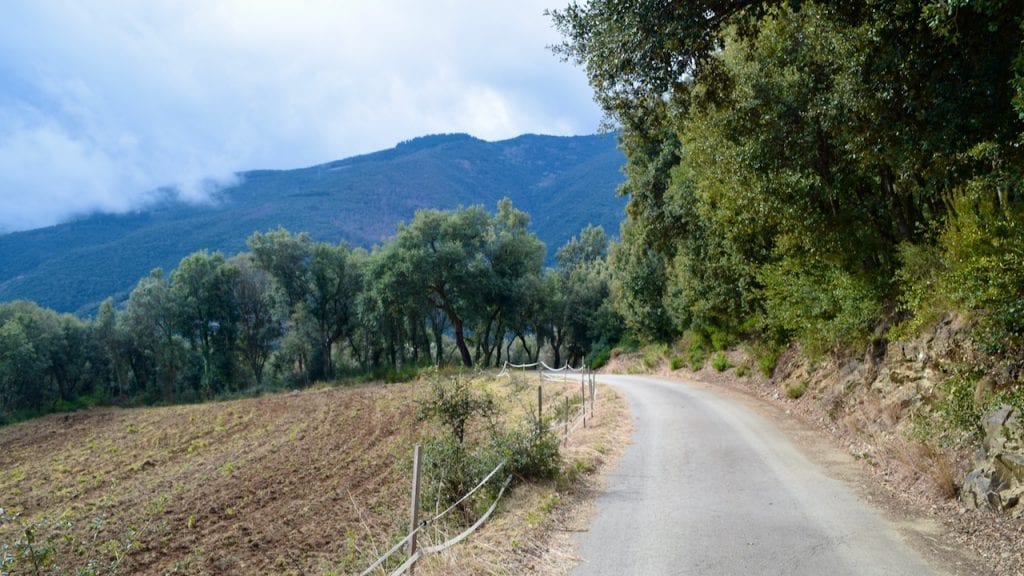
After a while, we found a narrow lane to follow. We passed small houses, flowers, trees and crop fields, keeping the mountain to our right.
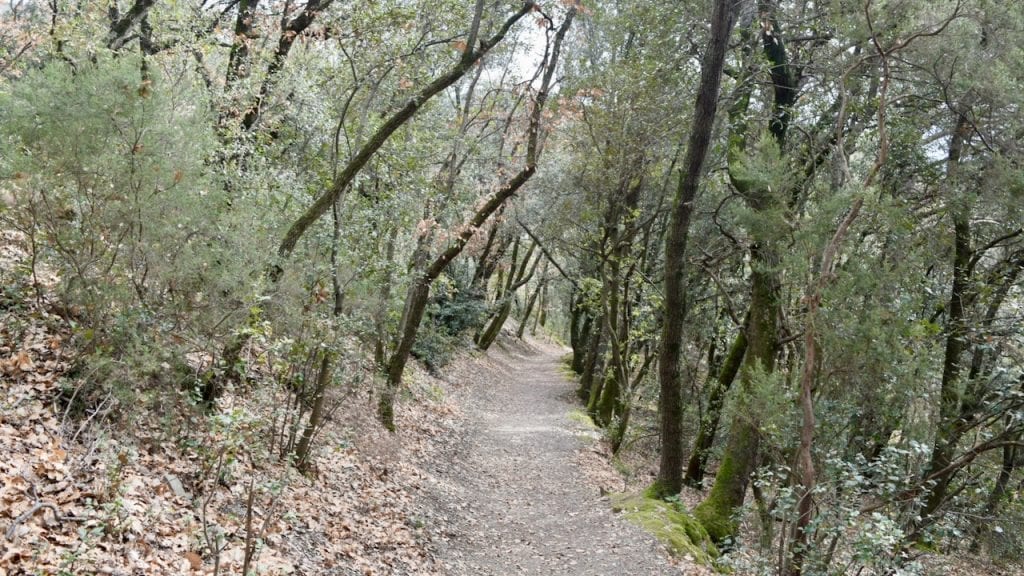
Further on, a real narrow trail headed off into the unknown. Dead leaves covered the ground.
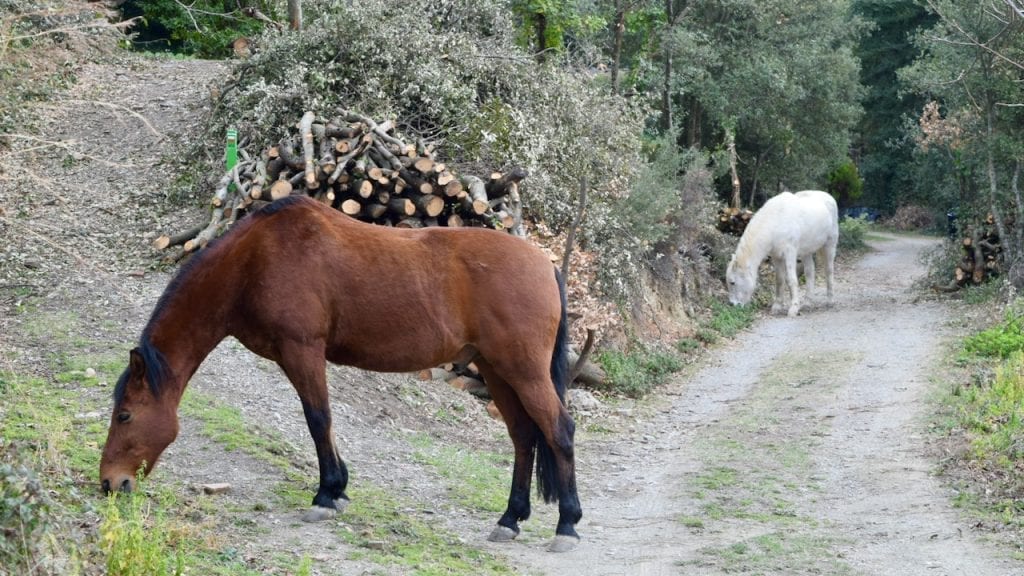
It was the end of February. The fallen leaves and the lack of green said winter was nearly over. The trail was empty and we were the only hikers. That’s not entirely true: we met some friends on the way, a pair of beautiful horses.
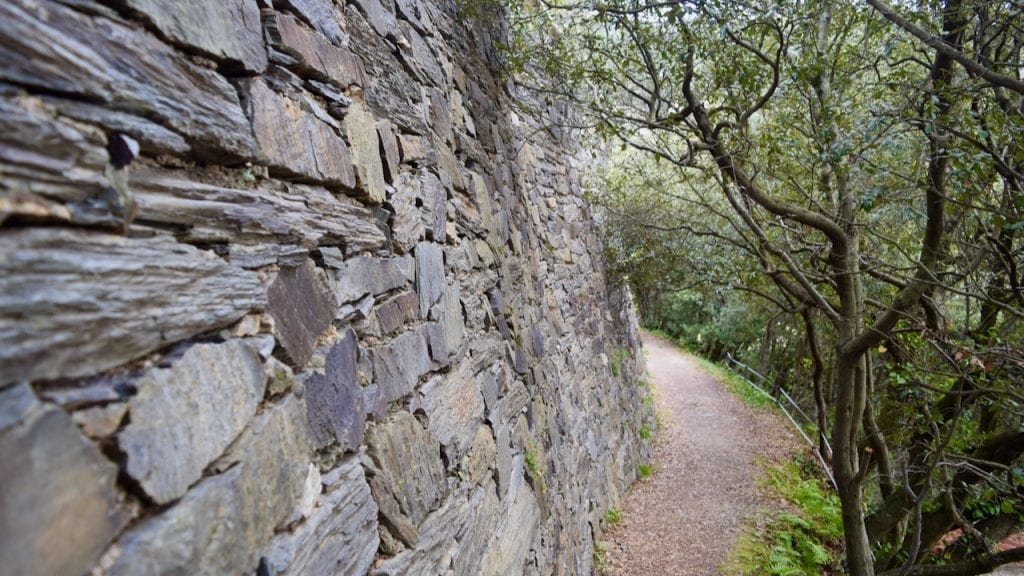
I could see logs piled by the track. Would they be used as firewood later? In places the path became very narrow, with a stone wall on one side.
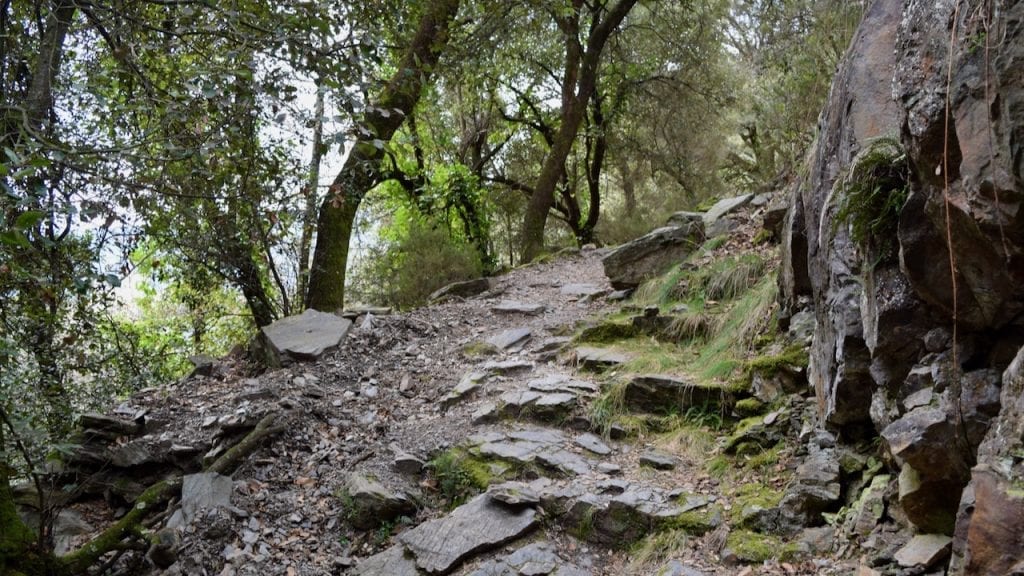
The stony path made me wonder whether we were on the right track. We were relying on the map on our phones, it was getting darker, and we weren’t sure where the path would end.
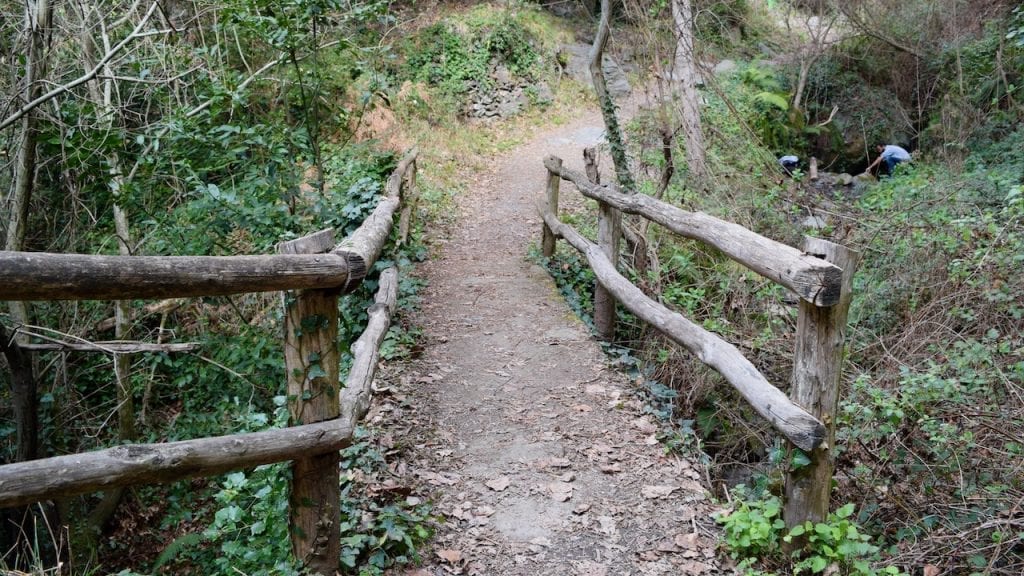
I saw some small wooden bridges connecting the paths, and a few springs of natural water, though they were very feeble. It would have been a different story in the wet season.
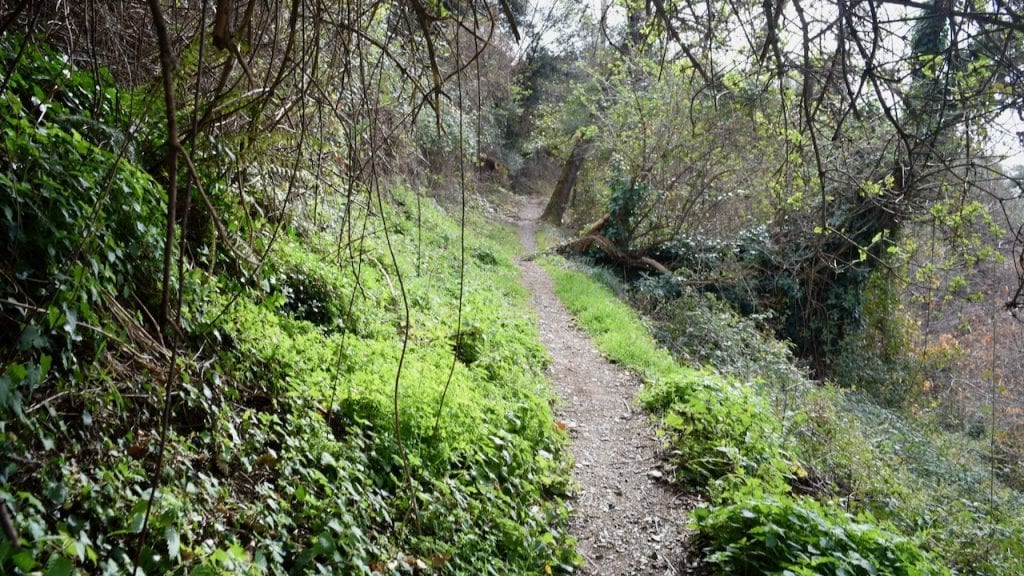
What I loved most about the walk was the wildness and the serenity. The trees and their roots were as wild as they come.
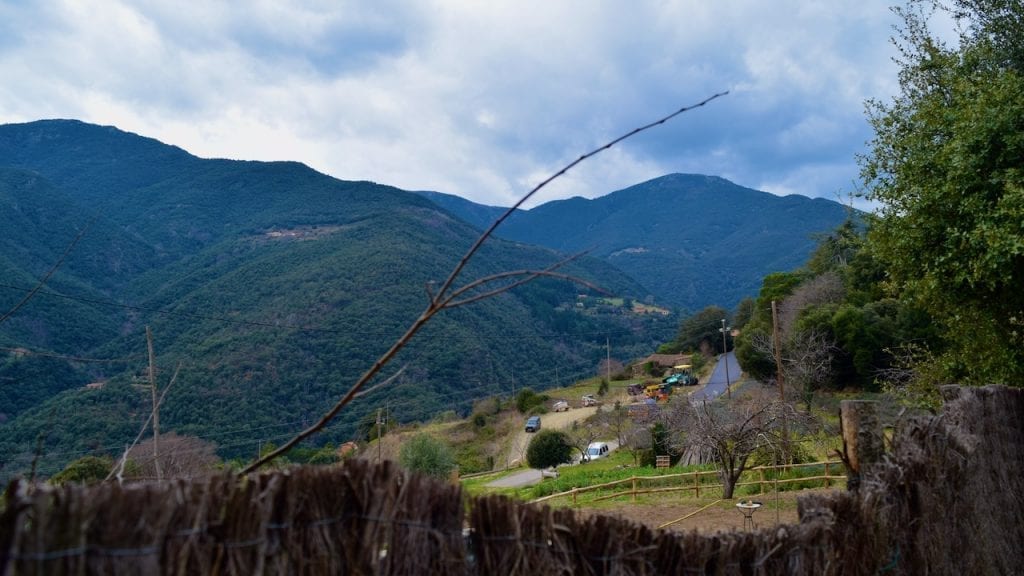
The path kept changing its shape, colours and smells, but one thing stayed constant: the green mountains around us.
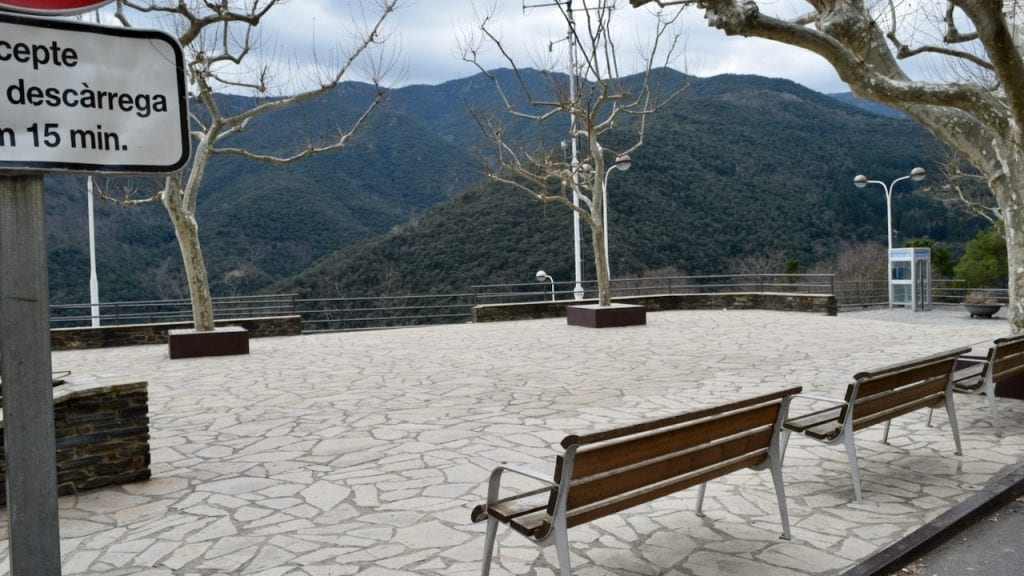
After several hours of walking, we decided to stop as night was approaching. I felt envious of the people who live here. Who wouldn’t want to sit on a chair every morning in a pretty hill village and look at the mountains?
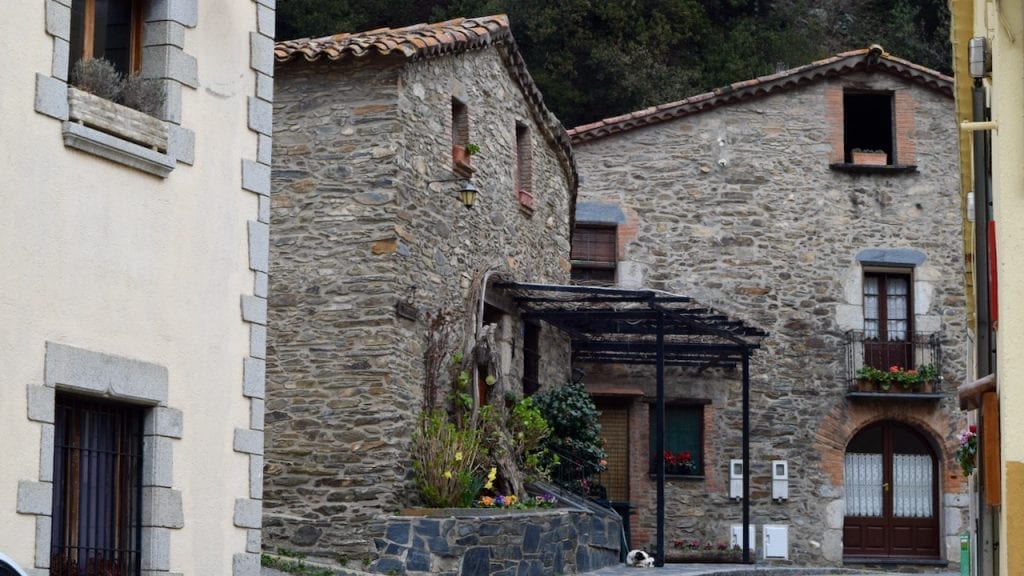
Before heading back to the train station, we explored the village. I loved the old houses, and the whole place was eerily quiet.
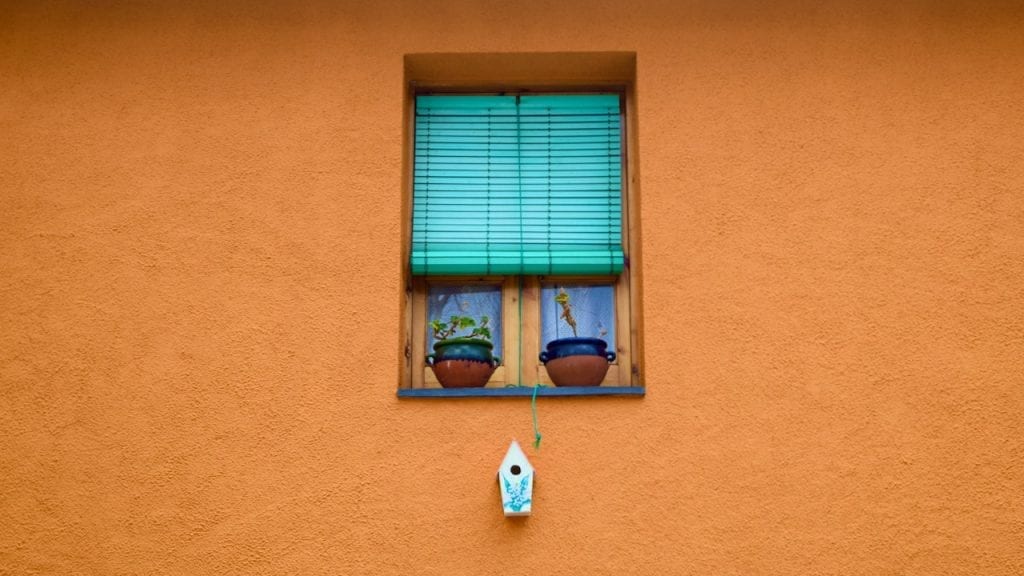
I almost thought nobody lived there! I didn’t see a single face in the streets or at the windows.
I went for a walk in nature away from busy Barcelona, and that is what I got, and more than I expected. Montseny turned out to be a fantastic day trip from Barcelona.
What to Eat in Montseny
The village has only a few restaurants, and they mostly serve Catalan mountain food: game such as wild boar and rabbit, wild mushrooms in autumn, slow-cooked stews and grilled meat with local vegetables. Look for a menú del día (set lunch) on weekdays.
- Carn d’olla: a slow-cooked meat and vegetable stew
- Esqueixada de bacallà: salt cod salad with tomato and peppers
- Pa amb tomàquet: bread rubbed with tomato and olive oil, found everywhere in Catalonia
- Wild mushroom dishes, especially in autumn
Opening days in a village this small can be irregular, especially in winter and on weekdays, so check before you go or bring a picnic.
Best Time to Visit Montseny
- Autumn (October and November): the most popular season, with the beech forest around Santa Fe turning gold and red, mushrooms and chestnuts, and extra Bus Parc services. Weekends get busy.
- Spring (March to May): fresh green forest, wildflowers and flowing streams, with some rain.
- Summer (June to September): cooler than Barcelona and good for shady forest walks, though the lower slopes can still be hot.
- Winter (December to February): quiet and cold, with possible snow and ice on the summits. My visit was at the end of February, and I had the trails almost to myself.
What to Pack for Montseny
- Walking shoes or boots: trail shoes are fine for the easy walks; wear boots for the summits.
- Layers: it is cooler than Barcelona, and the weather on the tops changes quickly.
- Food and water: there are few shops, and restaurants may be closed.
- An offline map: mobile signal is patchy on the trails.
- Cash: the Bus Parc only takes cash.
Where to Stay Near Montseny
Most people visit Montseny as a day trip from Barcelona. If you’d like to stay overnight and have the mountains to yourself early in the morning, there are rural houses (cases rurals) in and around Montseny village, and Sant Celoni has small hotels close to the station. Otherwise, stay in Barcelona and catch an early train.
👉 Search Barcelona Hotels on Booking.com →
Practical Tips
- Go at a weekend if you’re relying on public transport, when the Bus Parc runs.
- Catch an early train (around 8am) to get the most daylight, especially in winter.
- Check the last bus back before you start walking.
- Tell someone your route if you’re hiking alone on the longer trails.
- Respect the park: stay on marked paths, take your rubbish home and don’t feed the wild boar.
💡 COLLSEROLA IS CLOSED
Collserola, Barcelona’s own hill park, has been closed since March 2026 because of African swine fever in wild boar, along with natural areas in several towns around it. Montseny is outside the restricted zone as of November 2026, which is one more reason to head there for a day in nature, but check the park’s notices before you go.
More Day Trips from Barcelona
Montseny was one of two nature day trips I took from Barcelona. The other was a train ride north along the coast, hopping between small beach towns by the Mediterranean: completely different, relaxed and sunny.
- 🏖️ Best beaches near Barcelona by train: the Maresme beach towns, Sitges and more
- 🏛️ Things to do in Barcelona: Gaudí, the Gothic Quarter and the city’s best sights
- ⛪ Inside the Sagrada Familia: what Gaudí’s basilica looks like inside
Frequently Asked Questions
How do I get from Barcelona to Montseny?
Take the R2 Nord train from Sants or Passeig de Gràcia to Santa Maria de Palautordera or Sant Celoni, about an hour. At weekends and on public holidays, Bus Parc buses run from those stations to Montseny village (line 576), Santa Fe (573) and, in autumn, Fontmartina (572). The bus costs €2.65 for the whole day, cash only.
Can you visit Montseny without a car?
Yes, especially at weekends, when the Bus Parc links the train stations with the park. On weekdays there is only a limited bus from Sant Celoni to Montseny village, so a taxi or a guided tour is easier.
Is there a bus to Montseny village?
Yes. At weekends and on holidays, Bus Parc line 576 runs from Santa Maria de Palautordera station to the village. On weekdays, Sagalés line 567 runs from Sant Celoni with few departures.
How long is the hike to the Turó de l’Home?
The signposted GR-5.2 from Fontmartina to the 1,706 m summit is 4.4 km each way, a steady climb. From Santa Fe, the PR-C 208 to the Turó de l’Home and Les Agudes is about 11.6 km and takes around five hours.
Is Montseny better than Montserrat?
They’re very different. Montserrat has dramatic rock pinnacles and a famous monastery, but it’s busy. Montseny is greener and quieter, with forest walks and small villages. Choose Montserrat for the monastery and views, Montseny for nature and solitude.
What is the best time to visit Montseny?
October and November, for the beech forest colours and extra park buses. Spring is lovely too. Winter is quiet and cold, with possible snow on the summits.
Is Montseny open, given the swine fever restrictions?
Yes. As of November 2026, the African swine fever closures cover Collserola and natural areas in towns around it, not Montseny. Check the park’s notices before you go, as the restricted zone can change.
Is Montseny suitable for children?
Yes. The short walks around Santa Fe, including the 1 km adapted Font del Frare route and the 2.6 km reservoir loop, suit families. Children under 12 ride the Bus Parc free.
Is Montseny worth visiting?
If you like nature and quiet walking, yes. It is an easy escape from Barcelona by train and bus, and on my February visit I had the trails almost to myself.


Leave a reply