The 15 best things to do in Barcelona, most of them from my own visit: the Sagrada Família, Park Güell, Gaudí’s houses, the Gothic Quarter, Montjuïc and more, with 2026 prices and tips.
The best things to do in Barcelona are Gaudí’s buildings (the Sagrada Família, Park Güell, Casa Batlló and La Pedrera), the lanes of the Gothic Quarter, the beach at Barceloneta, Montjuïc and its Magic Fountain, and Camp Nou for football fans. These are the 15 I’d put first, most of them from my own visit, with 2026 prices, opening details and tips so you can plan three or four days in the city.
Time needed
3 to 4 days
Plus a day for a trip out of the city
Book first
Sagrada Família
From €26; timed slots sell out
Getting around
Metro and walking
T-casual: €13 for 10 journeys
Tourist tax
About €6 to €12
Per person per night since April 2026
Best months
April to June
And September to October
Barcelona overwhelmed me in the best way. Antoni Gaudí’s buildings turn up all over the city once you start looking. With the old town, the sea and the mountains behind it, it’s easy to see why it’s one of Europe’s most visited cities.
This post contains affiliate links. If you book through them, I may earn a small commission at no extra cost to you.
1. Sagrada Família: Gaudí’s Basilica, Now the World’s Tallest Church
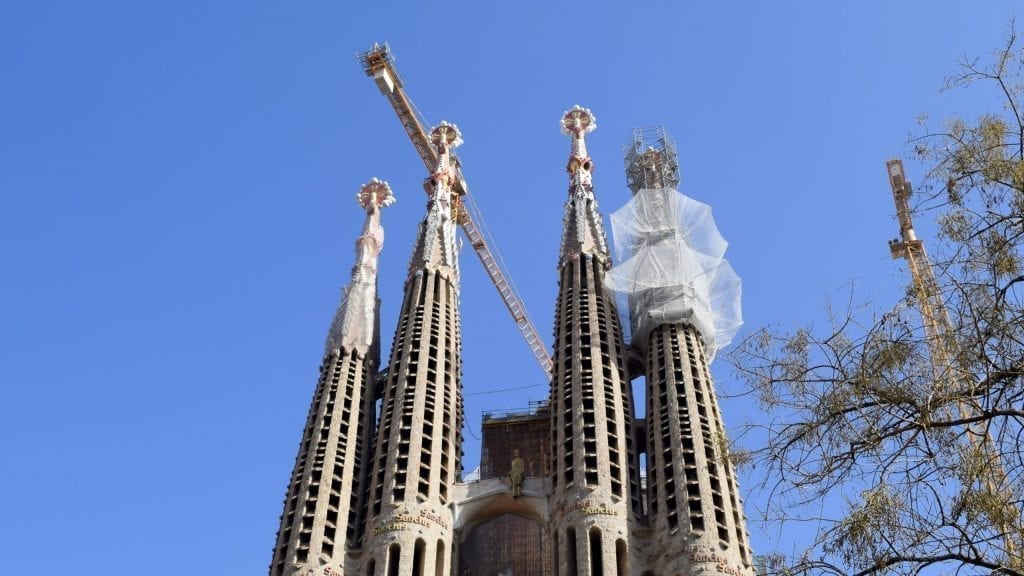
If Barcelona has one icon, it’s the Sagrada Família. Gaudí took over the project in 1883 and worked on it until his death in 1926, knowing he would never see it finished. In February 2026 the central Tower of Jesus Christ was completed at 172.5 metres, making it the tallest church in the world, and it was blessed on 10 June 2026, the centenary of Gaudí’s death. Work on the Glory façade continues, and there is no official completion date for the whole basilica.
From outside, the spires look like dripping candle wax and the façades are crowded with sculpture. But go inside: that is where the building comes alive, with columns that branch like trees and stained glass that floods the nave with blue, green, red and gold. I wrote a separate post about what the Sagrada Família looks like inside.
- Tickets (2026): €26 with the audio guide app, €30 with a guide, €36 with a tower (Nativity or Passion), €40 with a guide and a tower. Under-11s are free but still need a ticket. The new central tower isn’t open to visitors.
- Hours: 9am to 6pm from November to February, to 7pm in March and October and to 8pm from April to September. Sundays open at 10.30am, and Saturdays close earlier.
- Metro: Sagrada Família (L2 and L5).
- Tip: book timed tickets well in advance on the official website or a trusted reseller, and aim for a morning or late-afternoon slot when the light through the windows is strongest.
👉 Book Sagrada Família tickets →
2. Park Güell: Gaudí’s Hillside Park with a View
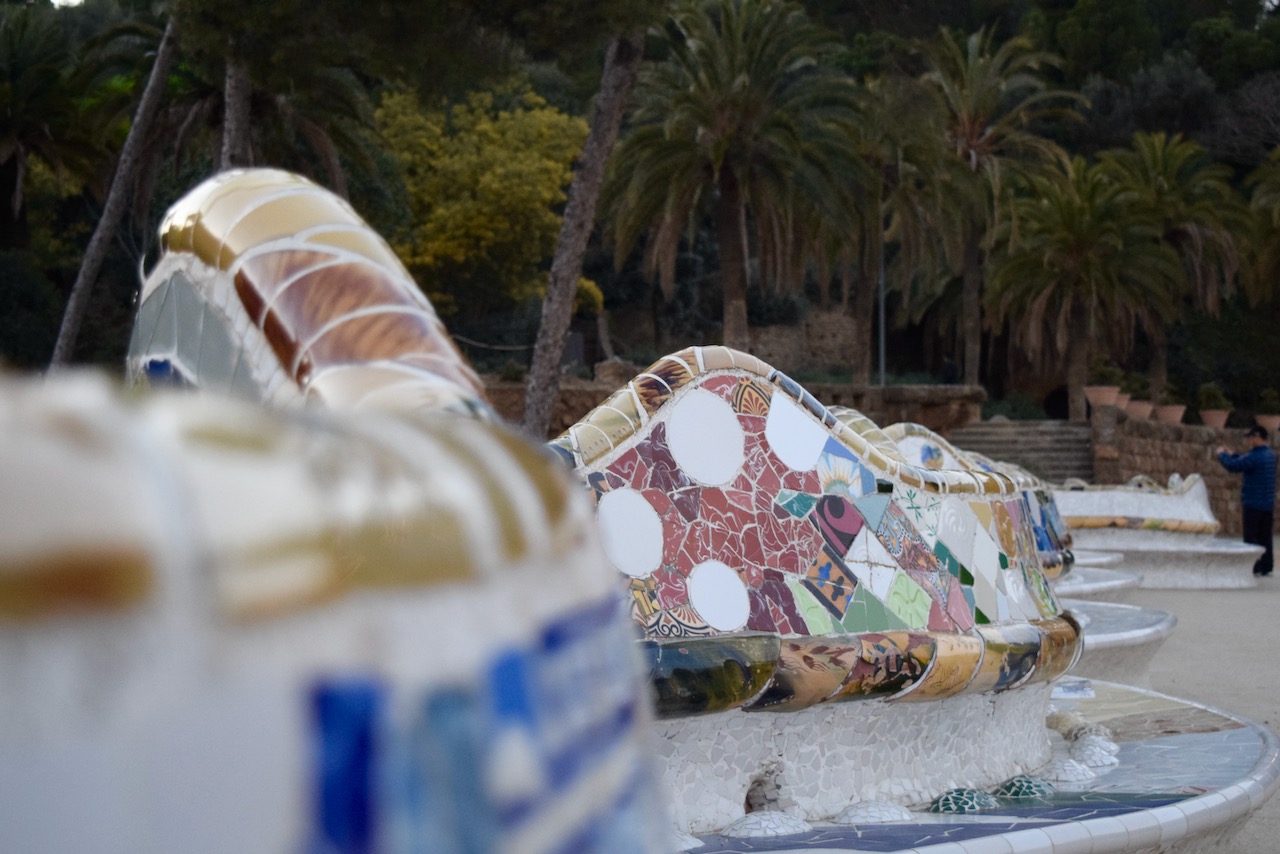
Where the Sagrada Família is Gaudí at his most spiritual, Park Güell is Gaudí at play. On the slopes of Carmel Hill, this UNESCO World Heritage Site is part park and part open-air gallery: the mosaic dragon on the main stairs, the forest of columns in the Hypostyle Room, and the long serpentine bench on the terrace, which looks over the city to the sea.
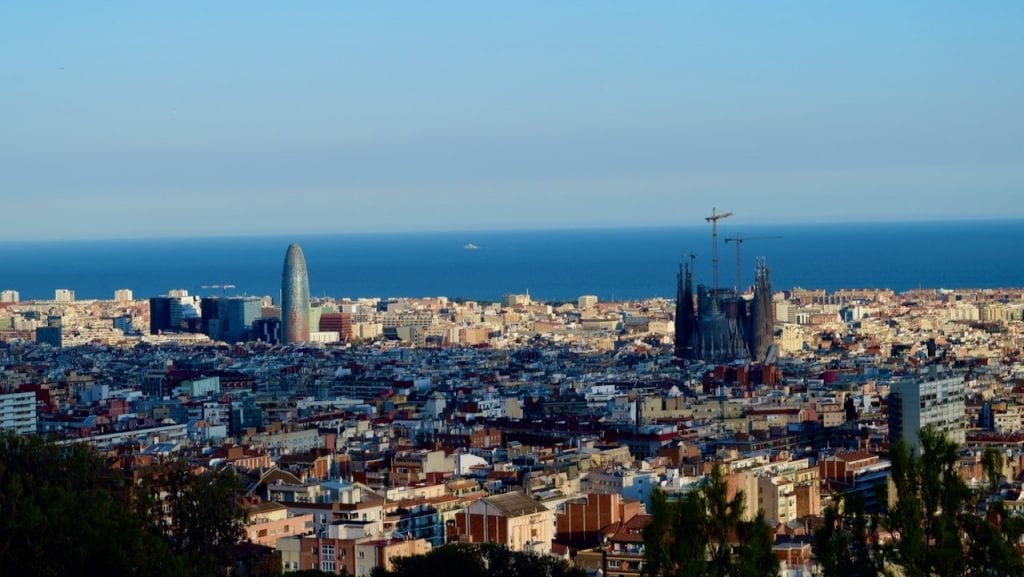
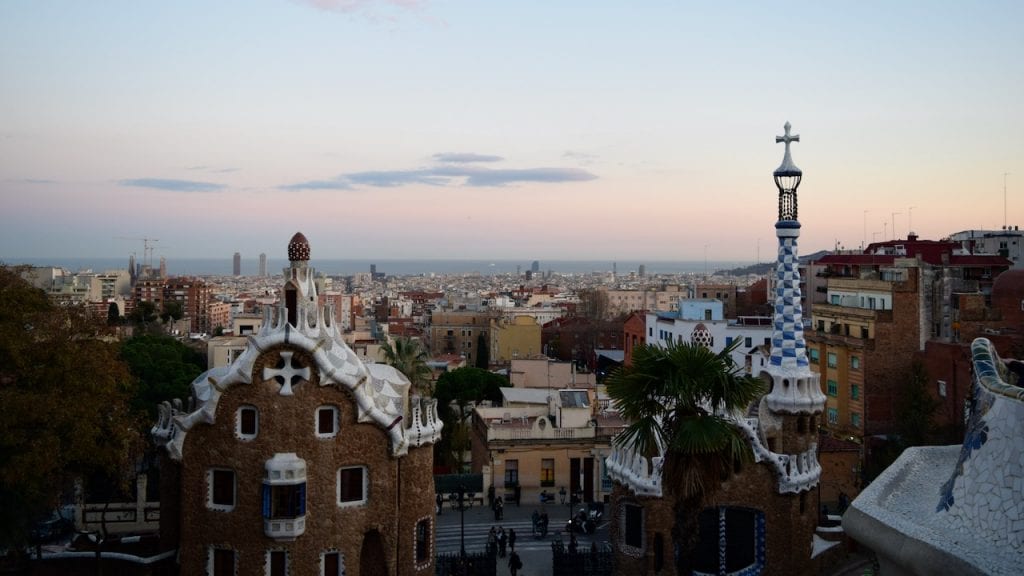
Only the Monumental Zone needs a ticket. The rest of the park, with its pine woods, stone viaducts and viewpoints, is free.
- Tickets (2026): €18 for the Monumental Zone; €13.50 for ages 7 to 12 and over-65s; under-7s free but still need a ticket. Entry is by timed slot, so book ahead.
- Getting there: metro to Lesseps or Vallcarca (L3), then a 15 to 20-minute uphill walk, or a local bus closer to the gates.
- Tip: take an early slot for fewer people, or late afternoon for the light over the city.
3. Casa Batlló: The House of Bones on Passeig de Gràcia
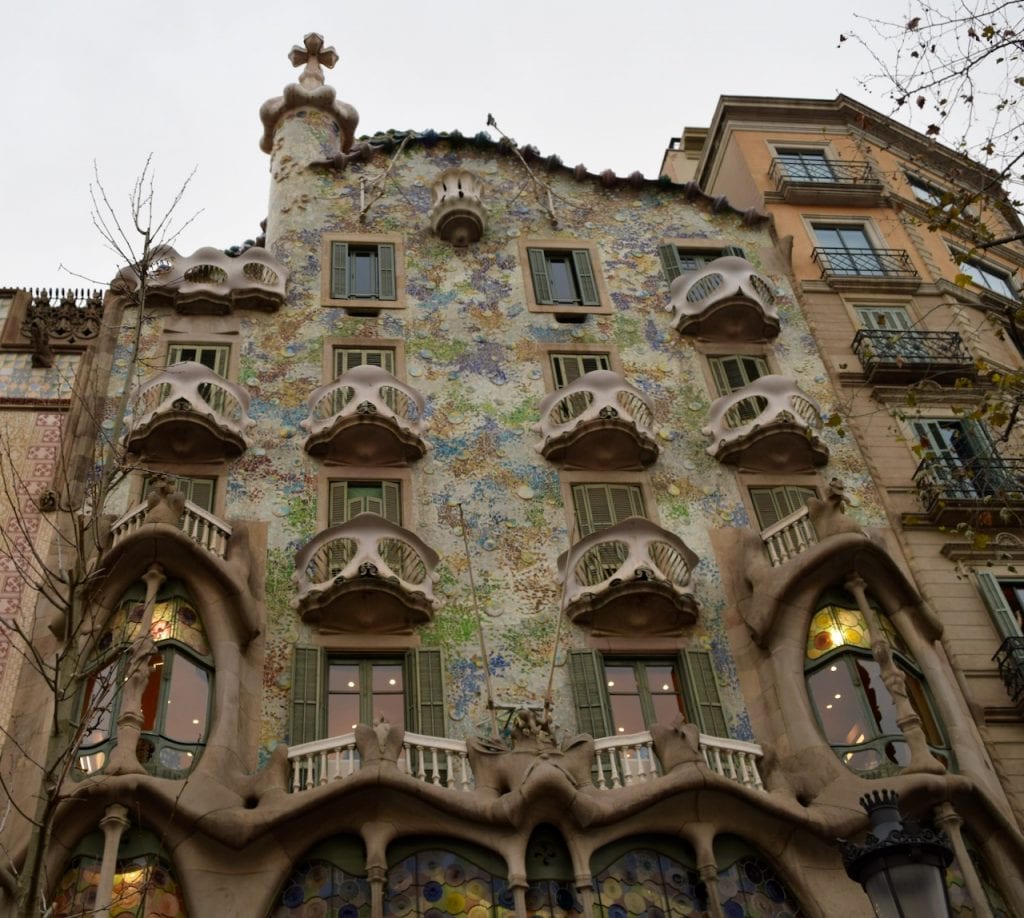
Passeig de Gràcia is Barcelona’s grandest shopping avenue, and its showpiece is Casa Batlló, which Gaudí remodelled for the Batlló family between 1904 and 1906. The façade shimmers with blue-green tiles, the balconies look like skulls and bones (locals call it the House of Bones), and the roof is shaped like the back of a dragon. Inside, the light well is lined with tiles that shade from deep blue at the top to pale at the bottom, so the light looks even.
- Tickets (2026): from about €29 online for the standard visit. Prices change by date and time, and the box office can cost €4 to €15 more, so book online. Under-12s are free.
- Address: Passeig de Gràcia 43. Metro: Passeig de Gràcia (L2, L3 and L4).
- Free option: the façade is magnificent from the street.
4. Casa Milà (La Pedrera): The Rooftop of Stone Warriors
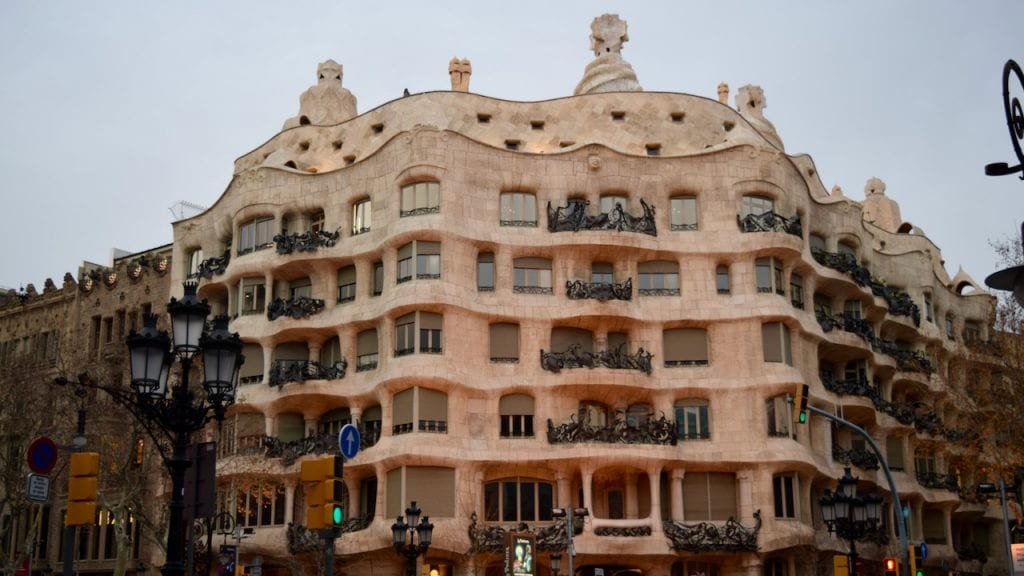
A few minutes’ walk up Passeig de Gràcia, Casa Milà is known as La Pedrera, “the stone quarry”, for its rippling limestone façade. Built between 1906 and 1912, it was the last private building Gaudí designed, and it’s a UNESCO World Heritage Site. The rooftop is the highlight: chimneys like helmeted warriors and views over the Eixample. Inside are a period apartment and an exhibition on Gaudí in the brick-arched attic.
- Tickets (2026): the Essential ticket, covering the courtyards, apartment, attic and rooftop, is €29; the night visit is from €39.50. Under-12s are free.
- Address: Passeig de Gràcia 92. Metro: Diagonal (L3 and L5).
👉 Book Casa Milà (La Pedrera) tickets →
Gaudí left many more buildings in and around Barcelona. If you get the bug, add Palau Güell off La Rambla, Casa Vicens in Gràcia and the façade of Casa Calvet near Plaça de Catalunya.
5. Plaça de Catalunya, La Rambla and the Gothic Quarter
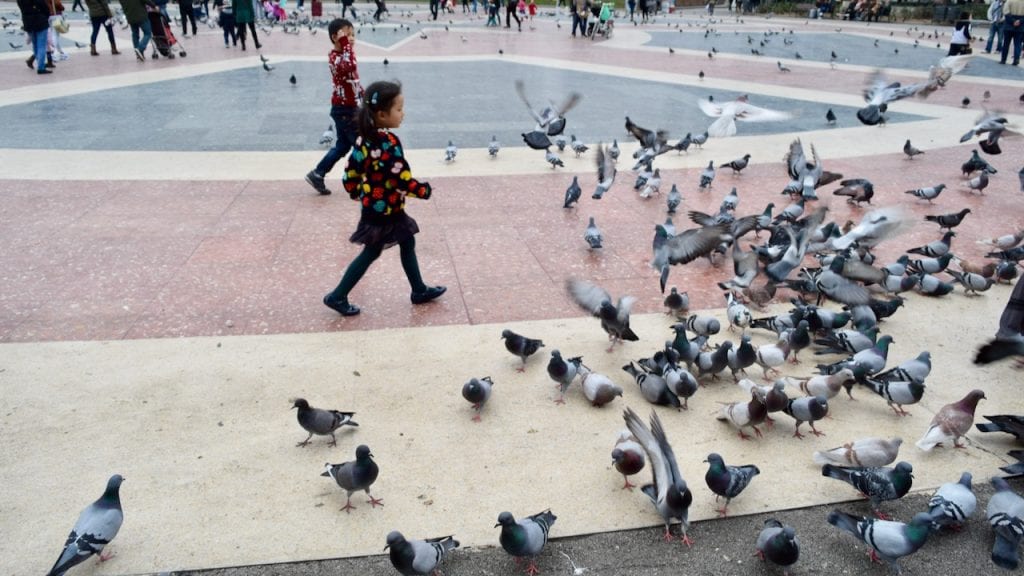
Start at Plaça de Catalunya, the big central square between the old town and the Eixample, with fountains, statues and a lot of pigeons. On any afternoon you’ll find people resting in the sun, children chasing birds and buskers playing, and the Aerobus from the airport stops here.
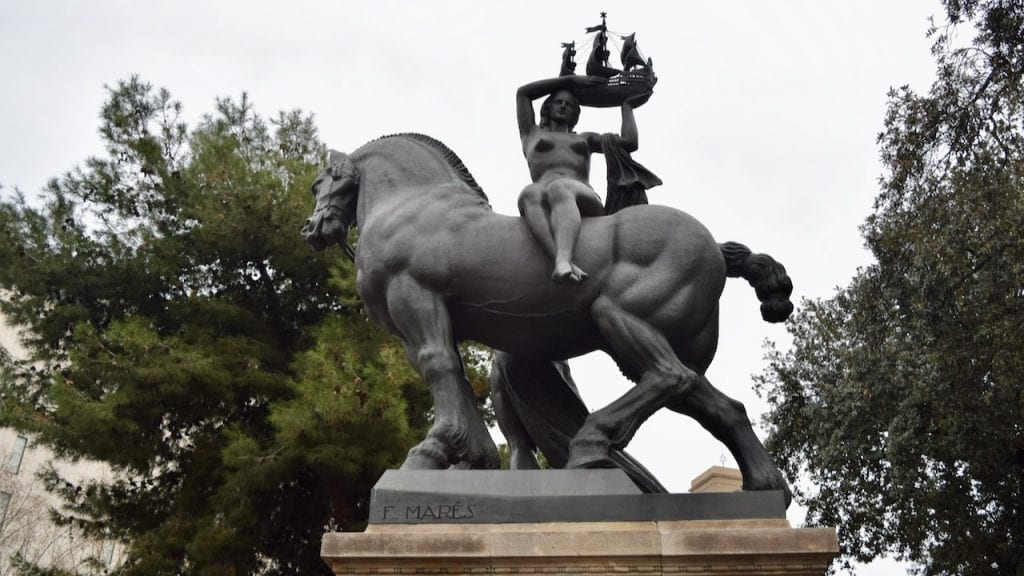
From the square, La Rambla runs for about 1.2 km down to the sea. It’s touristy, but walk it once: flower stalls, street performers and the entrance to La Boqueria, the city’s most famous food market.
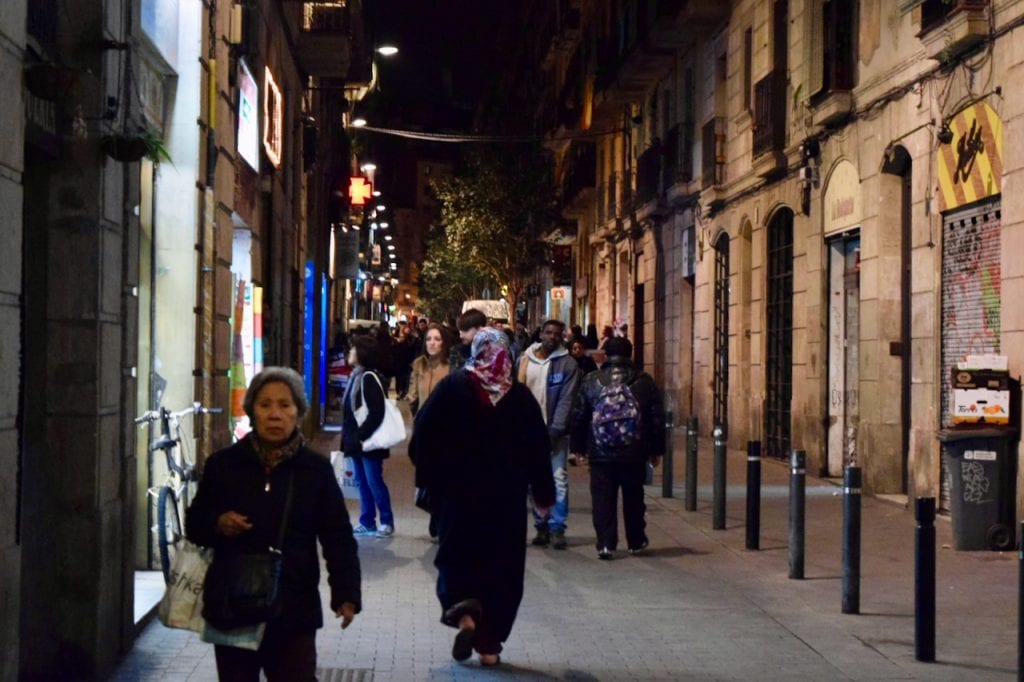
The real treat is just off it, in the Gothic Quarter (Barri Gòtic), the oldest part of the city, built over the Roman town of Barcino. Narrow lanes open onto small squares, and you’ll find Barcelona Cathedral, the remains of a Roman temple and El Call, the old Jewish quarter. Put the map away for an hour and wander.
- Entry: free to explore. Barcelona Cathedral is free for worship at set times; the cultural visit, which includes the roof, costs about €16.
- Metro: Catalunya (L1 and L3) for the square, Liceu (L3) or Jaume I (L4) for the Gothic Quarter.
👉 Book a Gothic Quarter walking tour →
⚠️ WATCH YOUR POCKETS
Pickpocketing is common on La Rambla, in the Gothic Quarter, on the metro and on the beach. Keep your bag in front of you, your phone out of back pockets, and never leave things unattended on the sand.
6. Sant Pau: Barcelona’s Art Nouveau Hospital
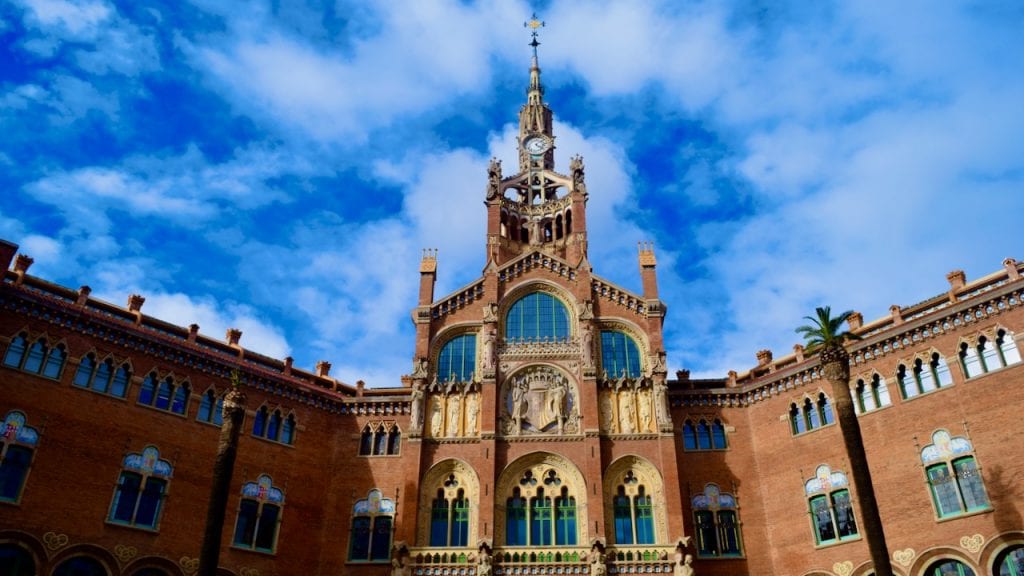
Most visitors rush between the Sagrada Família and Passeig de Gràcia without knowing that one of the city’s finest buildings is a short walk away. The Recinte Modernista de Sant Pau, the old Hospital de la Santa Creu i Sant Pau, was designed by Lluís Domènech i Montaner and built in the early 20th century as a garden city for the sick. Its pavilions are covered in mosaics, sculpture and glazed tiles and linked by underground tunnels. It was a working hospital for about a century and is now a UNESCO World Heritage Site, often described as the largest Art Nouveau complex in the world.
- Tickets (2026): €18 self-guided (€17 after 2pm), €21 guided; under-12s free. Open daily from 9.30am, until 6.30pm from April to October and 5pm from November to March.
- Address: Carrer de Sant Antoni Maria Claret 167. Metro: Sant Pau | Dos de Maig (L5) or Guinardó | Hospital de Sant Pau (L4).
- Tip: walk here from the Sagrada Família along Avinguda de Gaudí for a Modernisme half-day.
7. Barceloneta Beach: Where the City Meets the Sea
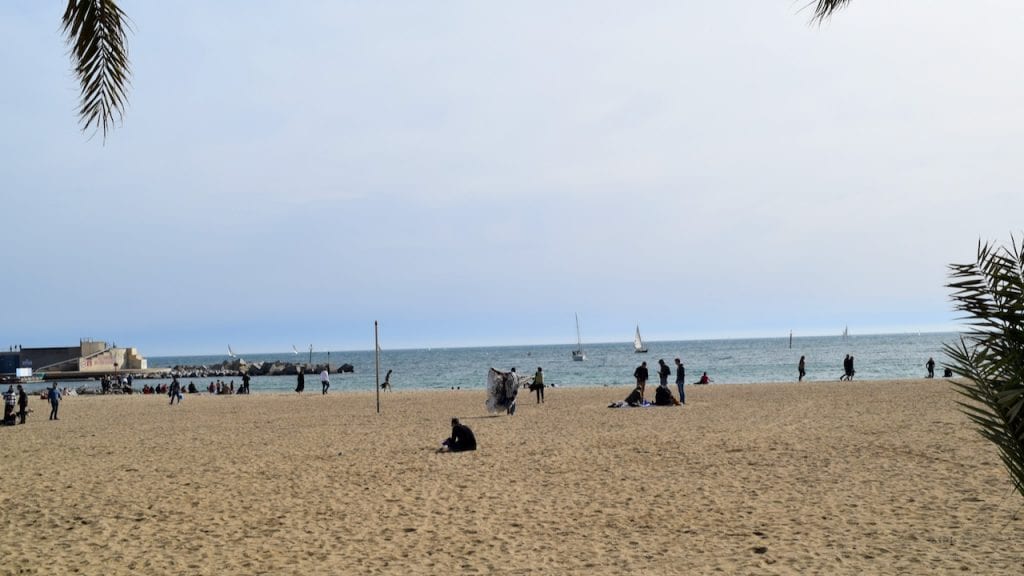
Few big European cities have proper beaches. Barcelona has a string of them, and Barceloneta is the liveliest, about 20 minutes’ walk from the Gothic Quarter, with a long promenade of beach bars (chiringuitos) and seafood restaurants. For more space, walk north-east along the promenade to Nova Icària, Bogatell and Mar Bella.
- Metro: Barceloneta or Ciutadella-Vila Olímpica (L4).
- Entry: free.
- Quieter beaches: take the train to the beach towns along the coast; see my guide to the best beaches near Barcelona by train.
👉 Find hotels near Barceloneta beach on Booking.com →
8. Montjuïc, the Venetian Towers and the Magic Fountain
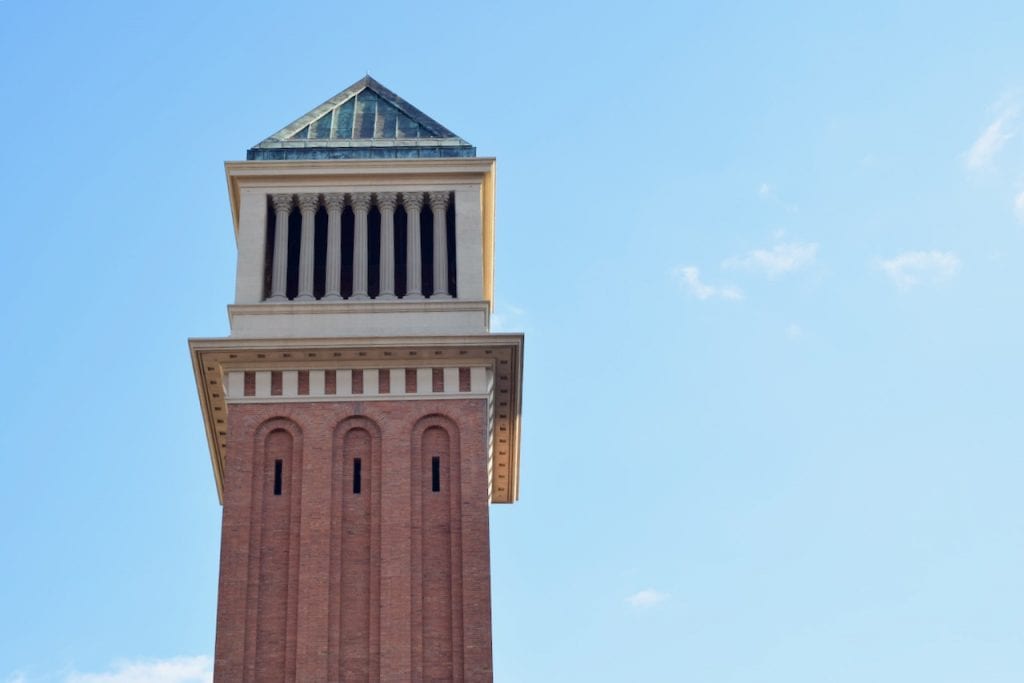
Two 47-metre Venetian towers, built for the 1929 International Exhibition, stand at Plaça d’Espanya and frame the avenue up to Montjuïc and the Palau Nacional, home of the National Art Museum of Catalonia (MNAC). At the foot of the steps is the Magic Fountain, also from 1929, which puts on free evening shows of water, light and music. It was switched off for almost three years during the drought and has been running again since autumn 2025.
- Magic Fountain: free. There are no shows from 1 to 15 November (annual maintenance); from mid-November to March they run on Thursday, Friday and Saturday evenings, and on more nights from spring to autumn. Check the city council’s schedule on the day.
- Metro: Espanya (L1 and L3).
9. Camp Nou: A Pilgrimage for Football Fans
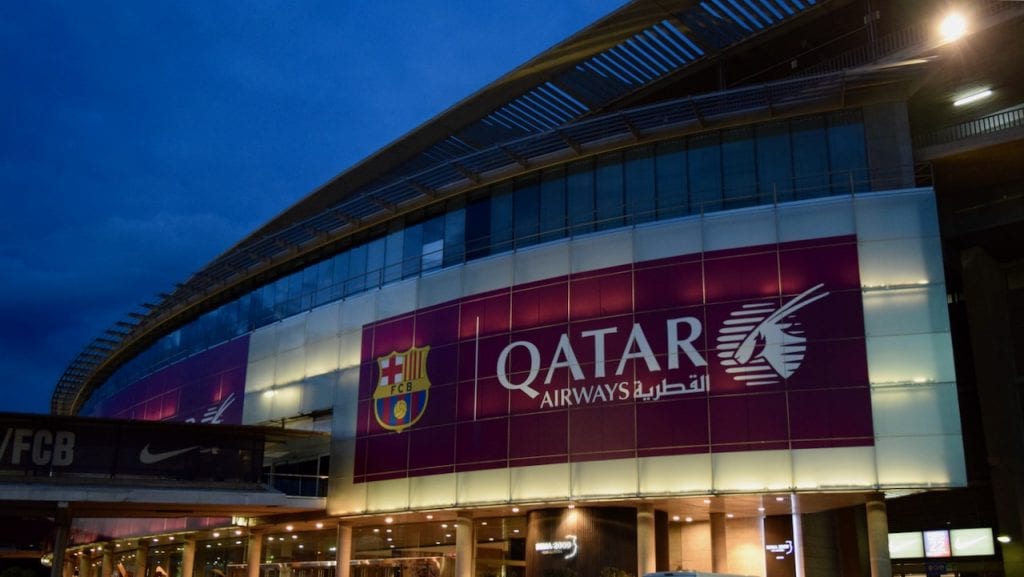
Even if you’re not a football fan, Camp Nou has a pull. FC Barcelona have played here since 1957, and after a rebuild that began in 2023 the team returned in November 2025. While the works continue, the stadium holds about 62,650 people; when it’s finished it will seat around 105,000, the most in Europe.
- Tours (2026): the museum-based Barça Immersive Tour costs from about €28, and the guided Spotify Camp Nou Experience, with the museum and a panoramic view from the stands, from €69. Parts of the stadium are still a building site.
- Metro: Palau Reial or Les Corts (L3), or Collblanc (L5).
- Tip: if you can, see a match. Check the fixture list, as tours change on match days.
10. Arc de Triomf and Passeig de Lluís Companys
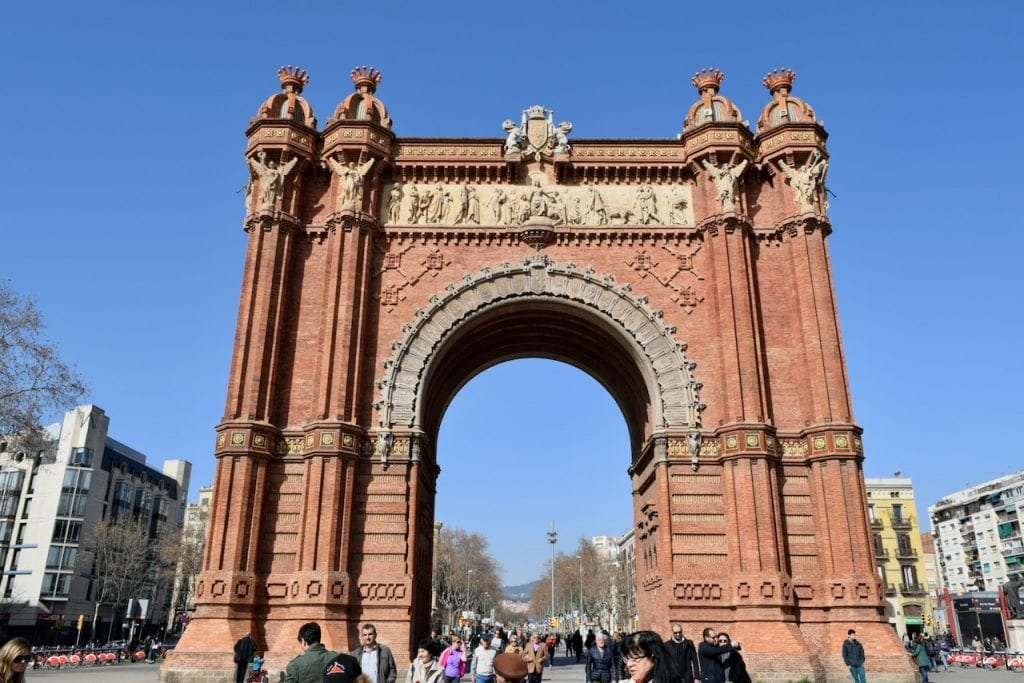
Barcelona’s red-brick Arc de Triomf was built as the gateway to the 1888 Universal Exhibition. It leads onto Passeig de Lluís Companys, a wide promenade lined with ornate lamp posts that runs down to the Parc de la Ciutadella, with its monumental Cascada fountain and boating lake. Street performers, cyclists and families keep it busy all day.
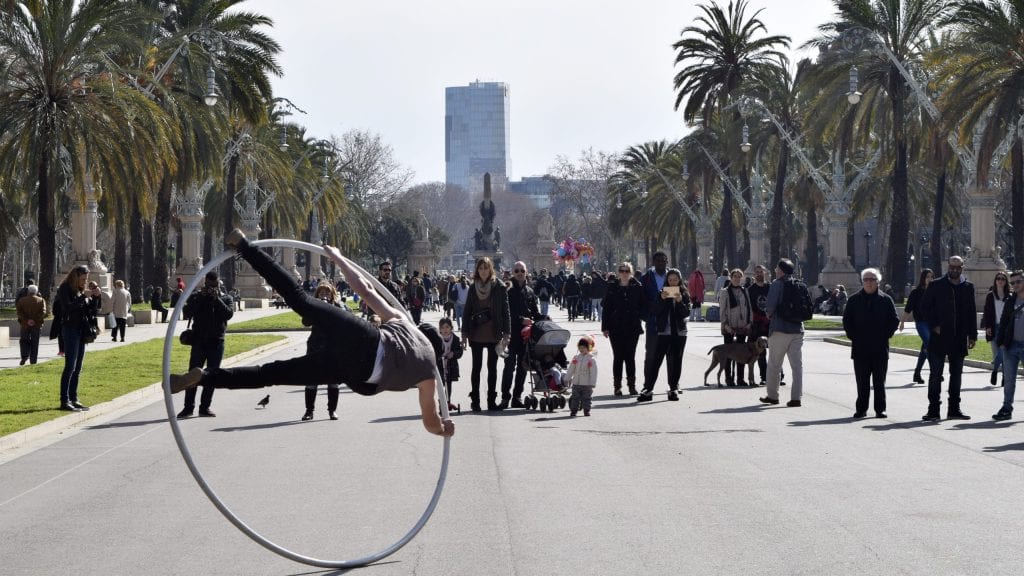
- Metro: Arc de Triomf (L1). Entry: free.
11. Walk the Eixample’s Grid
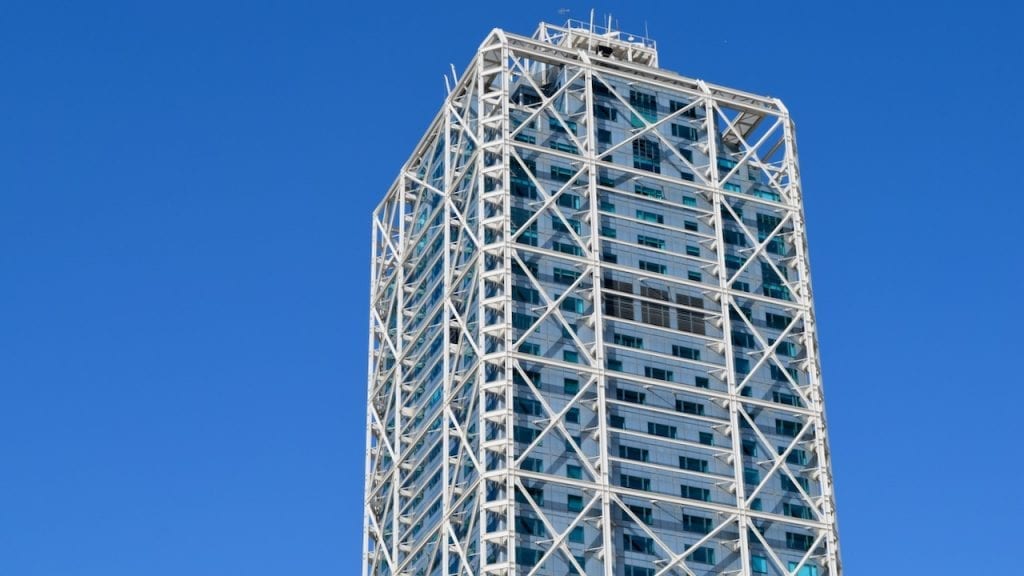
The Eixample (“extension”) was planned by Ildefons Cerdà in the 1850s: a grid of blocks with cut-off corners that let in light and make room at the crossroads. From above, from the roof of La Pedrera for example, it looks like a pattern stretching to the hills. At street level it’s full of Modernista façades, shops and cafés. Walk Passeig de Gràcia and look for the block between Carrer del Consell de Cent and Carrer d’Aragó, nicknamed the Illa de la Discòrdia, where Casa Batlló stands next to Casa Amatller and Casa Lleó Morera, three architects’ rival takes on Modernisme.
12. Torre Glòries and the Els Encants Flea Market
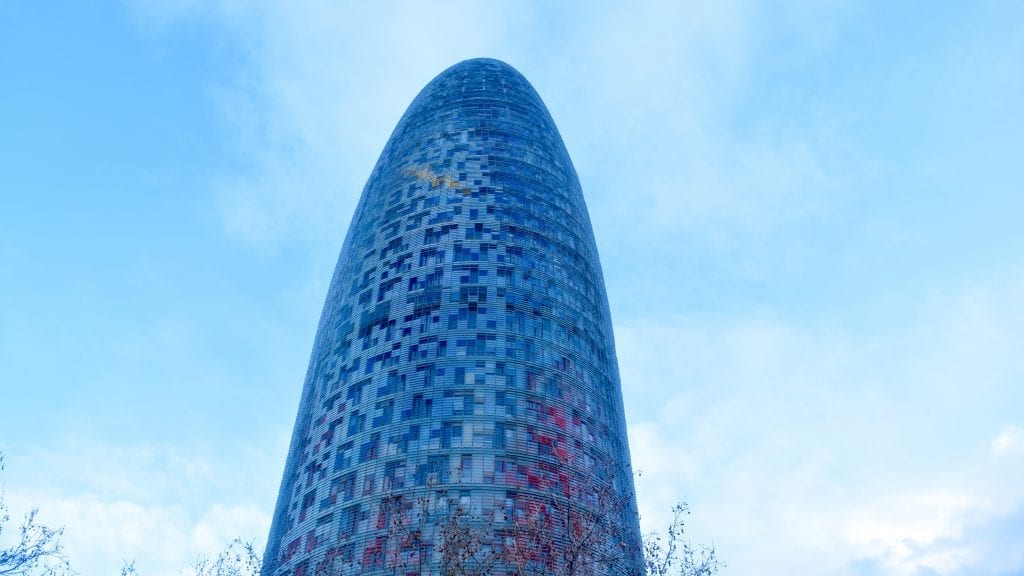
Barcelona’s skyline is mostly historic, but Torre Glòries, the former Torre Agbar, breaks the pattern. Designed by Jean Nouvel and opened in 2005, its 38-storey, bullet-shaped tower is covered in thousands of glass panels and lights up at night. There is a paid viewpoint, the Mirador Torre Glòries, on the 30th floor (tickets from about €18), with an art installation called Cloud Cities that you can climb into.
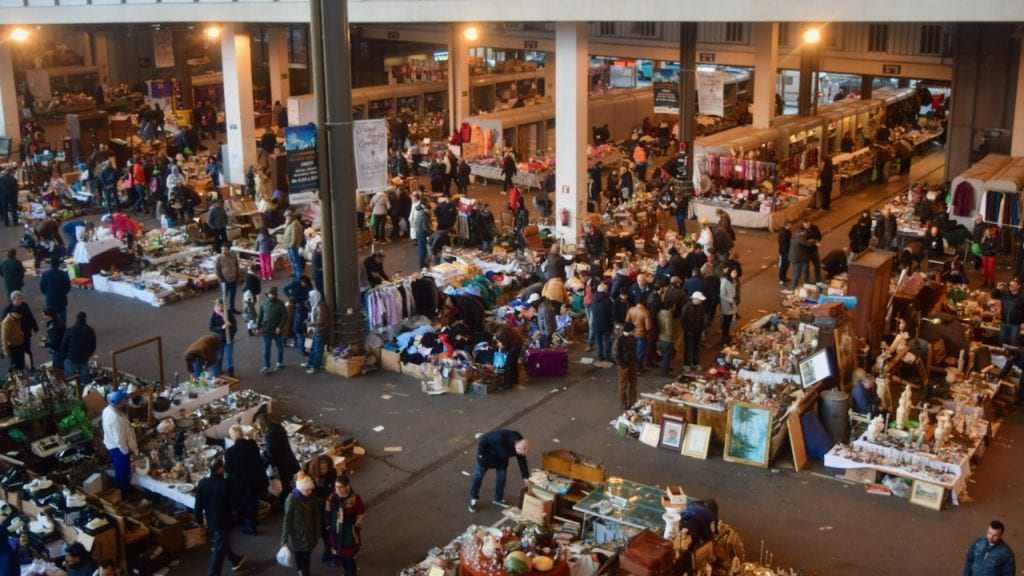
Right next to the tower, under a huge mirrored canopy, is Els Encants, one of Europe’s oldest flea markets. Second-hand clothes, records, furniture, porcelain, tools and plain oddities fill the stalls. Even if you buy nothing, it’s a glimpse of everyday Barcelona far from the boutiques of Passeig de Gràcia.
- Metro: Glòries (L1).
- Els Encants: Monday, Wednesday, Friday and Saturday, 9am to 8pm; free entry.
13. Palau de la Música Catalana
I didn’t go inside this one, so this is from research. The Palau de la Música Catalana, near the old town, is a concert hall designed by Lluís Domènech i Montaner, the architect of Sant Pau, and finished in 1908. Its auditorium is lit by a huge stained-glass skylight, and the hall and Sant Pau are a UNESCO World Heritage Site together. You can see it on a guided tour, or better, at a concert.
- Metro: Urquinaona (L1 and L4).
- Tip: book a concert ticket rather than a tour if you can; the hall is at its best with music.
14. The Picasso Museum and El Born
Another one I missed, so this is from research too. The Museu Picasso on Carrer de Montcada, in the El Born neighbourhood next to the Gothic Quarter, opened in 1963 in a row of medieval palaces and is strongest on Picasso’s early years, from his student work to the Blue Period. Around it, El Born is one of the liveliest parts of old Barcelona, with the Gothic church of Santa Maria del Mar, small bars and independent shops.
- Metro: Jaume I (L4).
- Tip: it’s closed on Mondays; buy timed tickets online and check the website for free-entry times.
15. Take a Day Trip out of the City
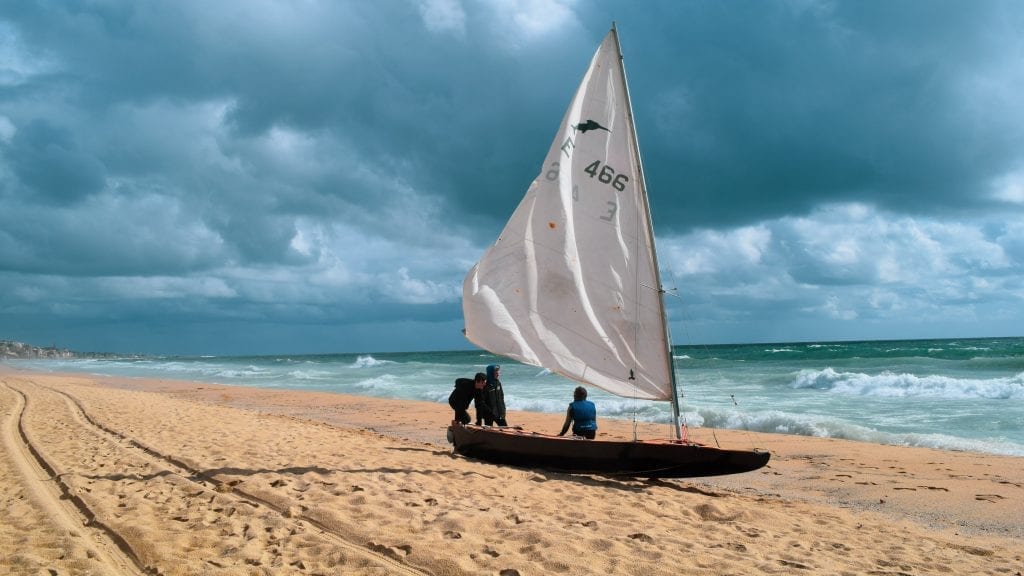
Barcelona is a great base for day trips, and I took two of them:
- 🏔️ Montseny Natural Park: forest walks and a quiet stone village, reached by train and the weekend park bus. I went in late February and had the trails almost to myself.
- 🏖️ The beach towns of the Maresme coast: a train that runs right beside the sea, with stops at small towns such as Montgat and El Masnou.
- ⛰️ Montserrat: the mountain monastery west of the city, the most popular day trip of all.
👉 Book a private Montseny hiking tour from Barcelona →
More Things to Do in Barcelona If You Have Time
I didn’t get to these either, but they’re on many visitors’ lists:
- The Bunkers del Carmel: old anti-aircraft gun sites on a hill with a 360-degree view of the city.
- Tibidabo: the highest hill, with a church and an old amusement park at the top.
- Gràcia: a neighbourhood of small squares, bars and Gaudí’s Casa Vicens.
Practical Tips for Visiting Barcelona
When to Go
April to June and September to October are the best months: warm, with fewer crowds and lower prices than summer. July and August are hot, busy and expensive, but they’re the beach months. Winter is mild and quiet.
Getting Around
- Metro: the quickest way between sights. A single ticket costs €2.90, and the T-casual gives you 10 journeys in zone 1 for €13 (2026), valid on the metro, buses, trams and local trains, but not at the airport metro stations.
- Walking: the Gothic Quarter, El Born, Barceloneta and Passeig de Gràcia are all close enough to walk between.
- Bus: handy for Park Güell and Montjuïc.
The Tourist Tax
Since 1 April 2026, Barcelona’s tourist tax has roughly doubled. Depending on where you stay, you’ll pay about €6 to €12 per person per night, for up to seven nights, on top of the room rate.
Where to Stay
Stay around Passeig de Gràcia and the Eixample for the Gaudí houses, the Gothic Quarter or El Born to be in the old town, or Barceloneta to be by the sea.
Barcelona Attractions Map
Frequently Asked Questions
What are the must-see things in Barcelona?
The Sagrada Família, Park Güell, Casa Batlló and La Pedrera on Passeig de Gràcia, the Gothic Quarter and La Rambla, Barceloneta beach, Montjuïc and the Magic Fountain, the Sant Pau complex and, for football fans, Camp Nou.
How many days do you need in Barcelona?
Three to four days covers the main sights without rushing. Add a day for a trip out of the city, such as Montserrat, Montseny or the beach towns along the coast.
Is the Sagrada Família finished?
Not entirely. The central Tower of Jesus Christ was completed in February 2026 at 172.5 metres, making it the world’s tallest church, and blessed on 10 June 2026. Work on the Glory façade continues, and there is no official date for the whole basilica.
Do you need to book Barcelona attractions in advance?
Yes for the Sagrada Família, Park Güell, Casa Batlló and La Pedrera, which all use timed tickets and sell out in busy periods. Online tickets are usually cheaper than the box office.
Is Park Güell free?
Only partly. The wooded outer park is free, but the Monumental Zone with the mosaic dragon, the Hypostyle Room and the serpentine bench costs €18 in 2026 and needs a timed ticket.
Can you visit Camp Nou in 2026?
Yes. FC Barcelona returned in November 2025, and the museum-based Immersive Tour and a guided tour into the stands are running, although parts of the stadium are still being rebuilt.
Is the Magic Fountain working?
Yes. After being switched off for almost three years during the drought, it has run again since autumn 2025. From mid-November to March the shows are on Thursday, Friday and Saturday evenings, with more nights the rest of the year and a maintenance break from 1 to 15 November. Check the schedule on the day.
How much is the tourist tax in Barcelona?
Since 1 April 2026 it’s about €6 to €12 per person per night, depending on the type of accommodation, charged for up to seven nights.
Is Barcelona safe for tourists?
Generally yes, but pickpocketing is common on La Rambla, in the Gothic Quarter, on the metro and on the beach. Keep bags in front of you and don’t leave anything unattended.

Leave a reply