
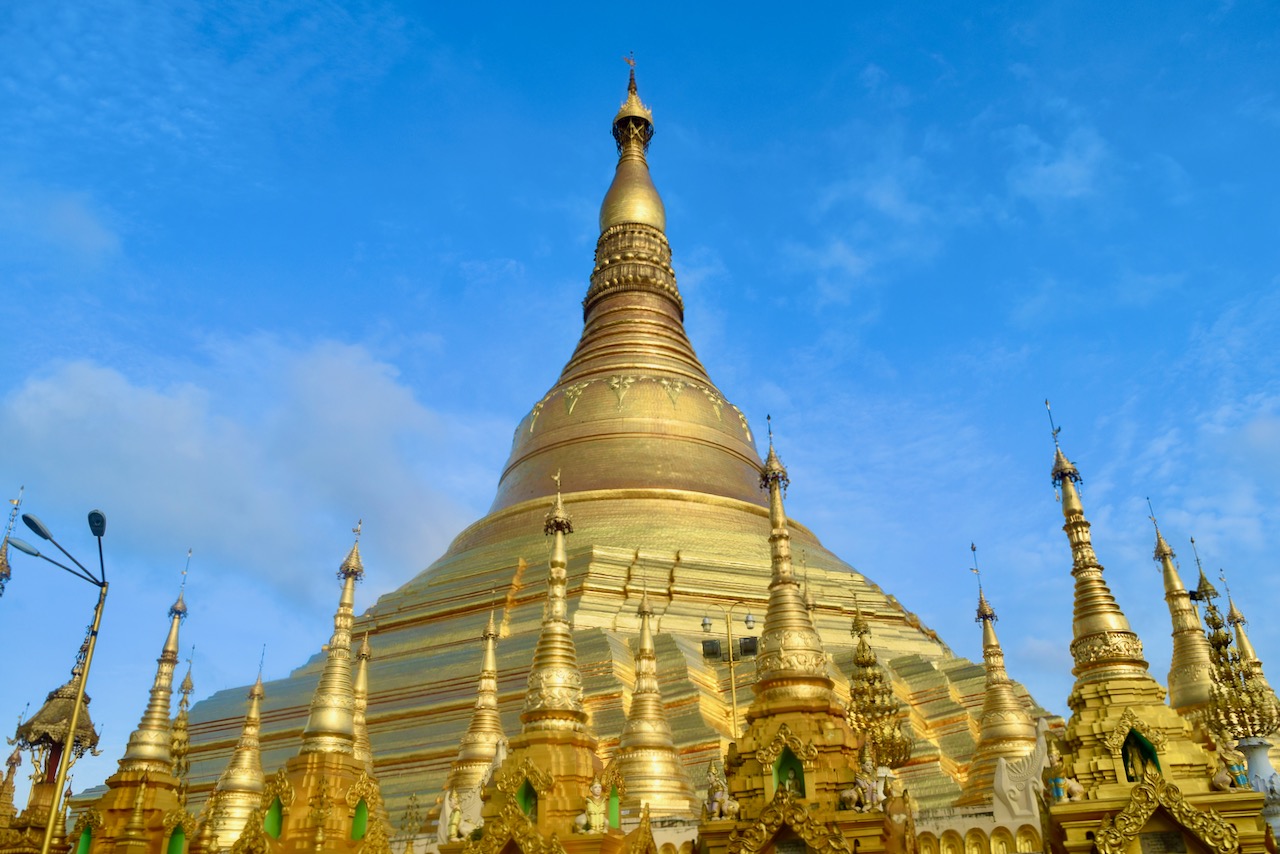
Shwedagon Pagoda is a gilded Stupa in Yangon, Myanmar. This fascinating pagoda is a sacred place for the Buddhist. This pagoda has so much gold, you will feel like being inside a world of gold when you will visit the Shwedagon Pagoda. No wonder, this is a UNESCO World Heritage Site.
I had exactly five hours in Yangon. My flight landed at 3pm; my overnight bus to Bagan left at 8pm. Not enough time to see a city — but just enough for one thing. I took a taxi straight from the airport to the base of Singuttara Hill, climbed the covered stairway, and stepped into a world I was completely unprepared for.
The Shwedagon Pagoda is the most sacred Buddhist site in Myanmar, and one of the most extraordinary religious monuments on earth. A golden stupa 98 metres tall, covered in real gold leaf, ringed by dozens of smaller shrines, standing above Yangon like a beacon you can see from almost anywhere in the city. I have visited temples across Southeast Asia. Nothing I had seen prepared me for this.
When I walked out two hours later, I was certain of one thing: this pagoda alone is worth a trip to Yangon.
This guide covers everything you need to plan your visit — entrance fee, opening hours, dress code, what to see inside, how to get there, and the photographs I took on that five-hour stopover.
Shwedagon Pagoda — Quick Facts
📍 Location: Singuttara Hill, Yangon, Myanmar
🕐 Opening hours: 4:00am – 10:00pm daily
💰 Entrance fee: 10,000 MMK (~USD $7–8) for foreigners · Free for locals
👗 Dress code: Shoulders and knees covered · Shoes removed at entrance
⏱️ Recommended time: 2–3 hours minimum
☀️ Best time to visit: Early morning (before 8am) or at sunset
🌍 UNESCO status: On the Tentative World Heritage List
What is Shwedagon Pagoda?
The Shwedagon Pagoda — formally known as Shwedagon Zedi Daw, also called the Great Dagon Pagoda or the Golden Pagoda — is a Buddhist stupa in Yangon, Myanmar (formerly Rangoon, Burma). It is the most revered religious site in the country and one of the most significant Buddhist monuments in the world.
The dominant structure is an enormous bell-shaped stupa built entirely of solid brick, then covered with gold leaf donated by centuries of devotees — from ordinary worshippers to kings and queens. It stands 98 metres tall (approximately the height of a 30-storey building) on Singuttara Hill, which itself sits 51 metres above the surrounding city. The combined height from sea level is around 170 metres, and the pagoda dominates the Yangon skyline from nearly every direction.
The entire complex covers 114 acres. The central stupa is surrounded by 64 smaller stupas, scores of pavilions, shrines, temples, and statues. It is not a museum — it is a living, active place of worship visited daily by thousands of devout Buddhists from across Myanmar and the world.
The Entrance — Your First Impression
The Shwedagon Pagoda has four entrances, one on each side of Singuttara Hill, each accessible by a covered stairway. The southern entrance is the main and most commonly used by visitors. I entered here, and the sense of occasion begins immediately — long before you reach the top.
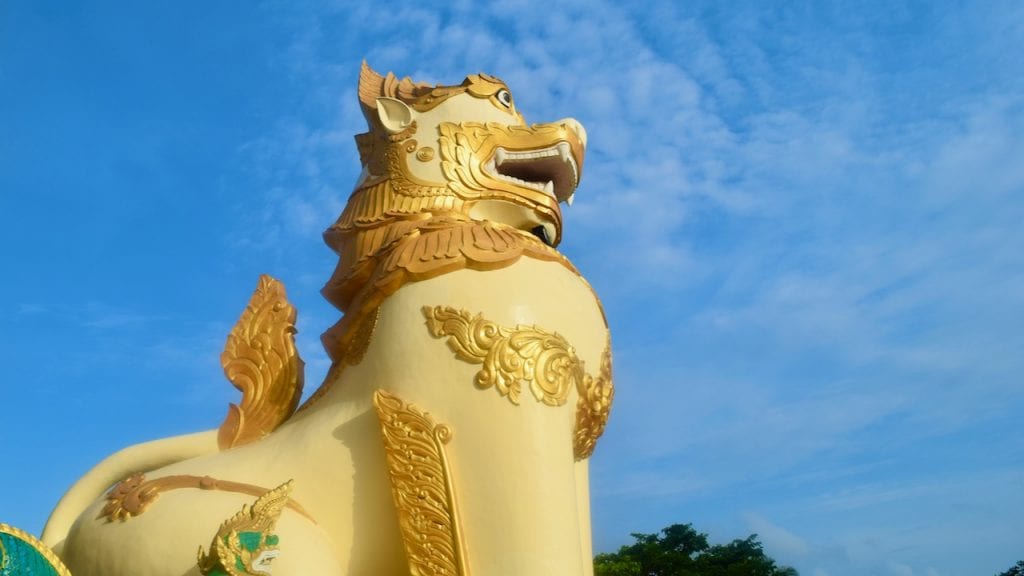
Flanking the entrance gates are a pair of Chinthe — mythological lion-dragon guardian statues that protect sacred Buddhist sites across Myanmar. They are enormous, elaborately gilded, and imposing. Even standing outside the gate, the golden colour is already dominant, the intricacy of the carvings already demanding attention.
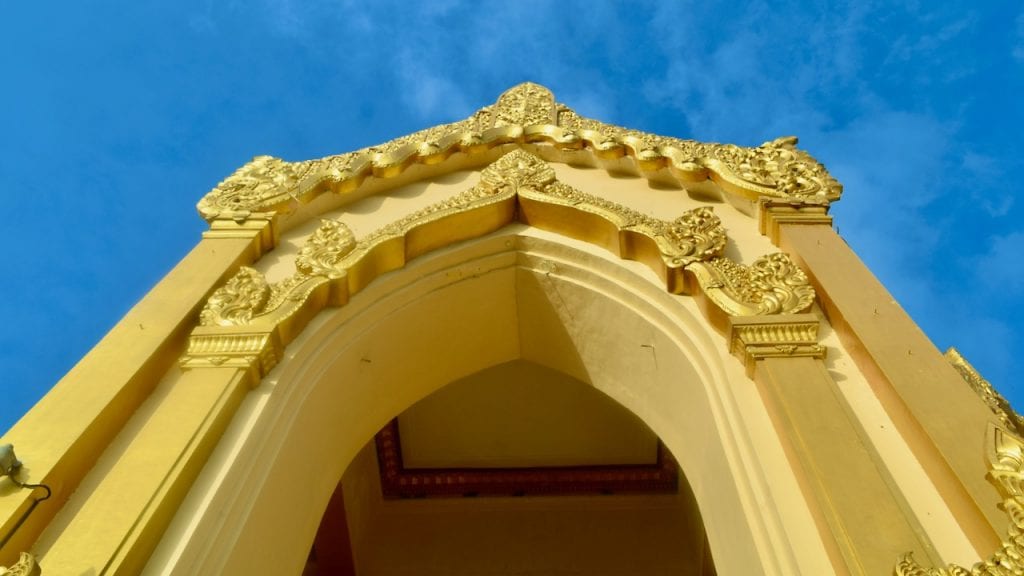
Remove your shoes at the base of the stairs and leave them at the shoe-keeping stall (a small charge applies, and it’s worth it — you’ll be walking on marble for the next two hours). The stairway up is covered and lined with vendors selling flowers, incense, prayer flags, and small Buddha figurines for offerings. It has the feeling of a processional — the ordinary world falling away behind you with each step.
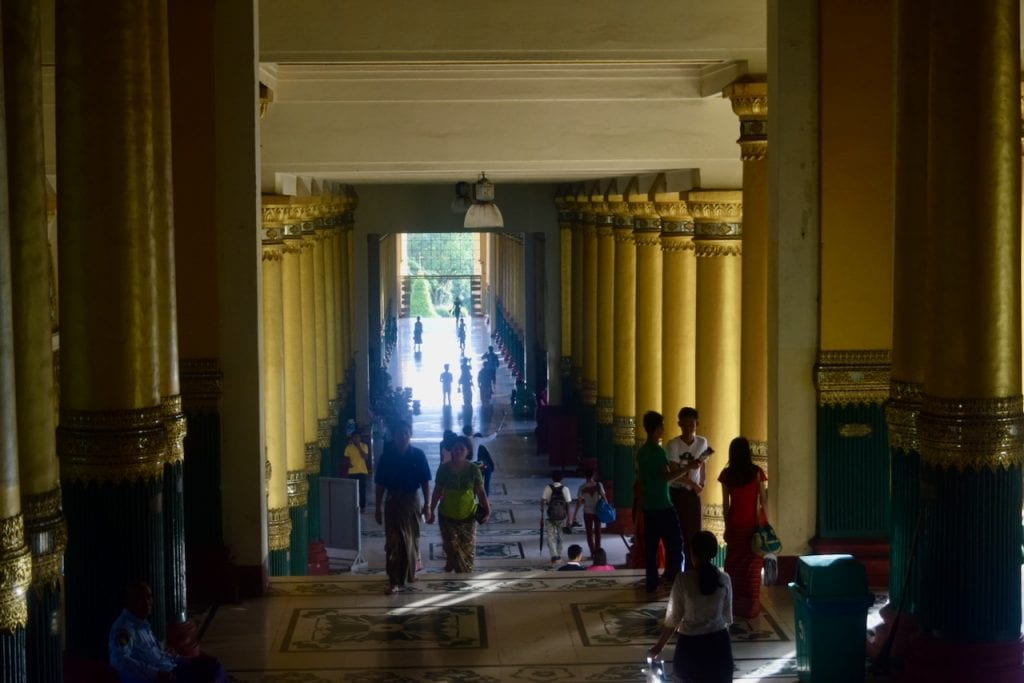
The covered passage is flanked by golden columns and filled with a mix of local worshippers, monks, and occasional tourists. The noise of Yangon’s streets fades. By the time you reach the top, you are ready for what comes next — though “ready” is a relative term.
💡 Practical tip: Wear comfortable socks. The marble platform is beautiful but hard underfoot, and you’ll be on it for at least two hours. In the midday heat, marble in direct sun can become uncomfortably hot — early morning visits are better for this reason too.
Inside the Pagoda — What You’ll See
Nothing about the approach prepares you for the moment you step onto the main platform and the full stupa comes into view. It is massive. It is gold. It is, genuinely, unlike anything else.
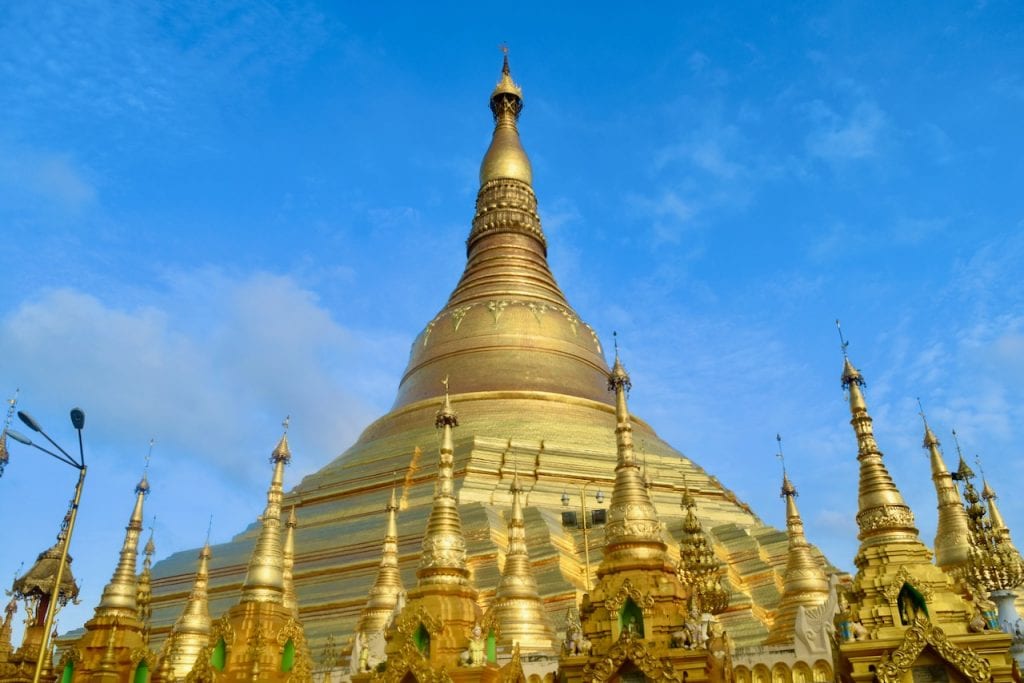
The main stupa rises 98 metres in a graceful, tapered curve — wider at the base, narrowing to the gilded crown. Every surface is covered in gold leaf, applied by generations of donors. The topmost section, the hti (umbrella), is encrusted with diamonds, rubies, sapphires, topaz, and other gems. There are over 5,000 diamonds at the very top alone. On a sunny afternoon, the stupa is almost too bright to look at directly.
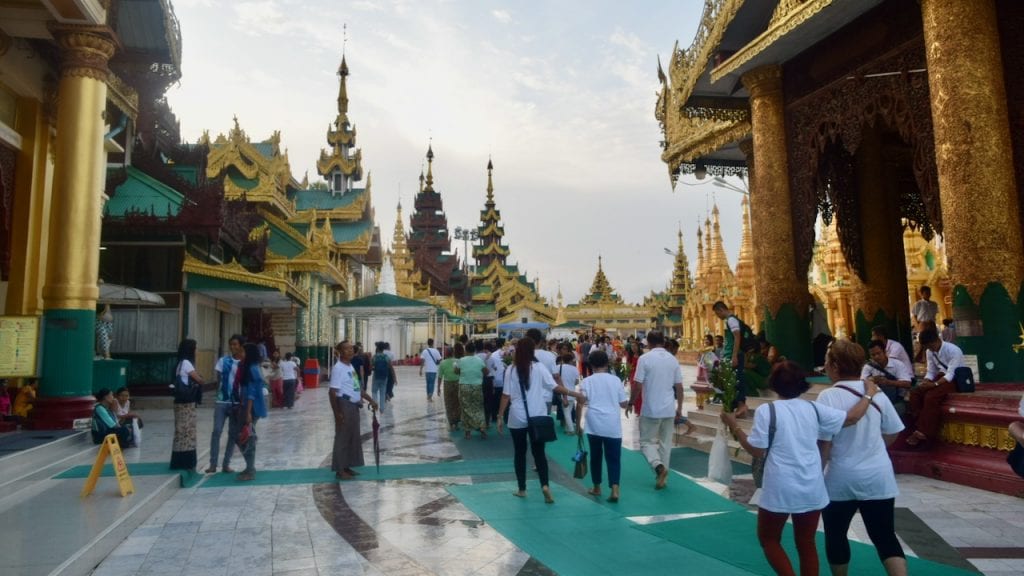
Around the base of the main stupa runs a wide circular marble platform. This is where you walk — barefoot, clockwise, as Buddhist tradition requires. The circumnavigation takes around 20–30 minutes at a gentle pace and reveals the complex in full: the 64 surrounding stupas, the prayer pavilions, the Buddha statues in their alcoves, the devotees at prayer.
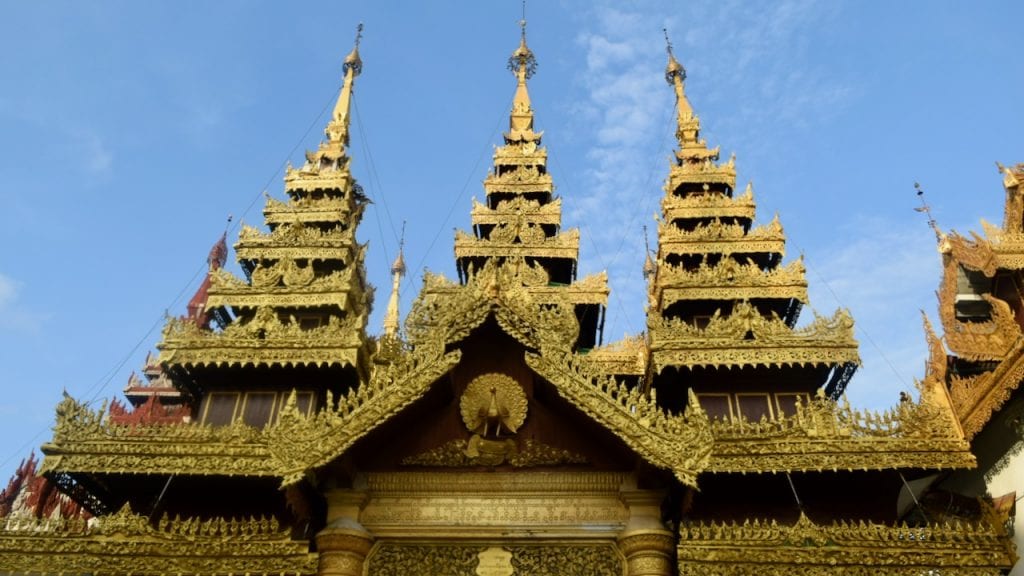
The Prayer Pavilions and Smaller Temples
As you walk the circular platform keeping the main stupa to your right, you’ll pass dozens of smaller complexes on your left. These are working temples where devotees make offerings — flowers, incense, water, food. The interiors are dim and fragrant. Each contains one or more Buddha statues, many dressed in silk robes donated by worshippers.
Some of these smaller shrines are strikingly beautiful in their own right — the gilding, the lacquerwork, the coloured glass mosaic tilework that covers every surface. Take your time. The details reward close attention.
The Reclining Buddha
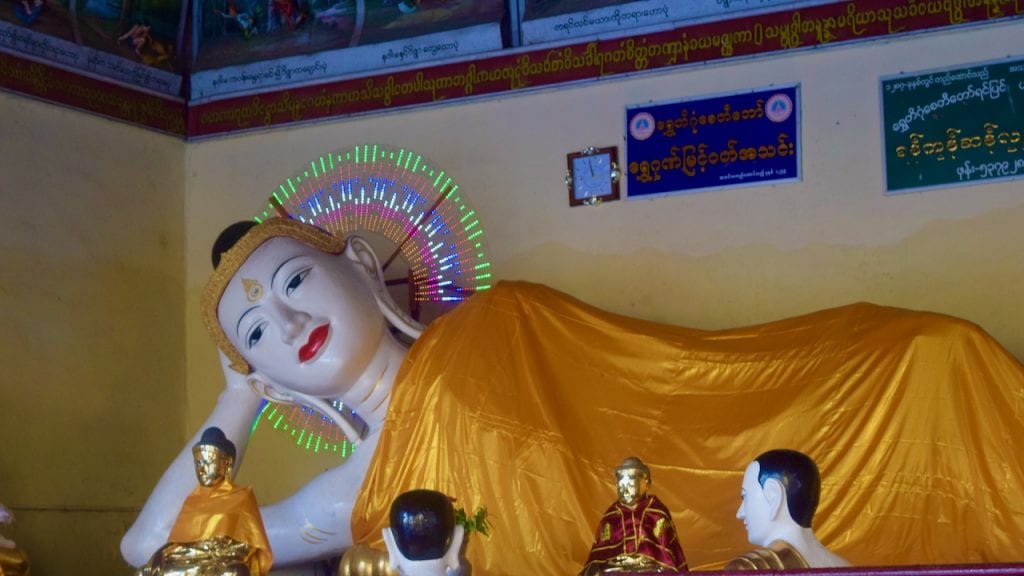
One of the most striking individual sculptures inside the complex is the large reclining Buddha in one of the main pavilions. The reclining posture — the Buddha lying on his right side, head resting on his hand — represents the moment of parinirvana, the Buddha’s final passing into nirvana. These figures are typically far larger than seated or standing Buddhas, and this one is no exception. The scale is imposing; the serenity of the expression is extraordinary.
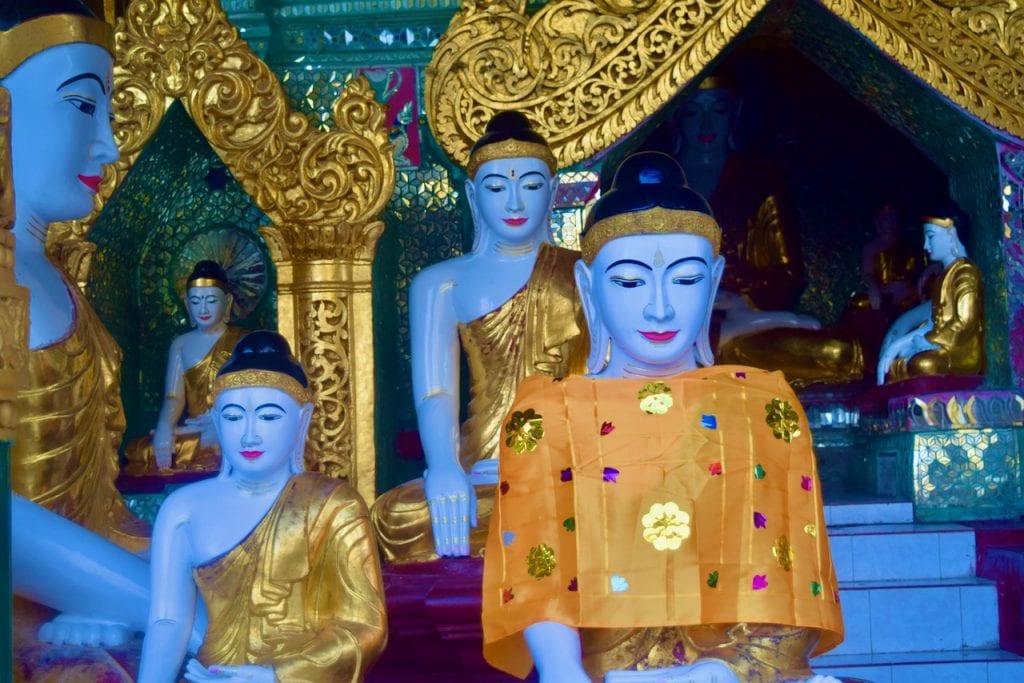
You will see a unique statue in distinct places. Take this as an example. Here, you can see all of them sitting there and none in a sleeping posture. Some of them have clothes made of silk. I later learned that those statues denote atypical days of the week. There are eight temples containing eight types of Buddhas – one for each day and two for Wednesday.
The Monks at Prayer
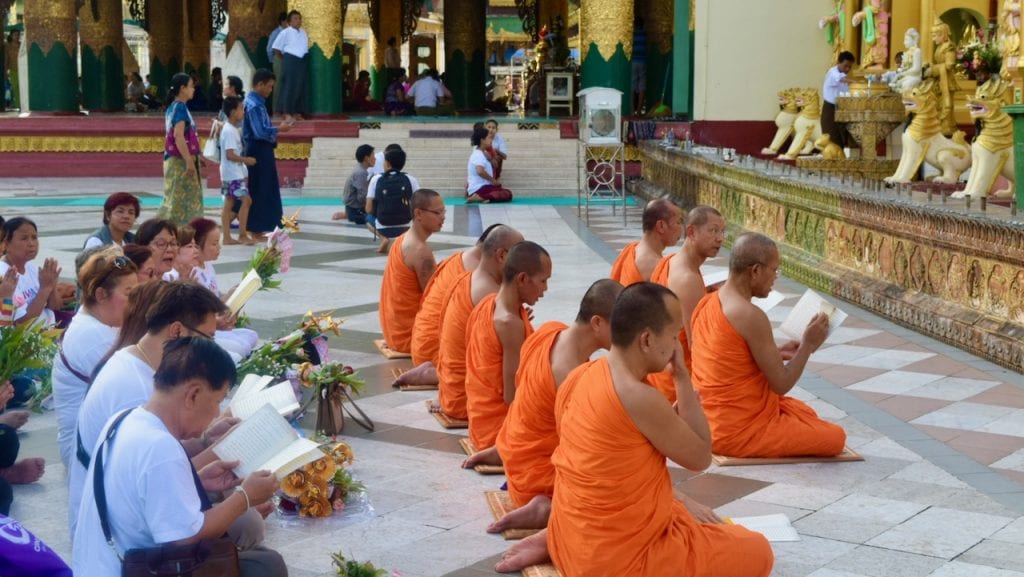
Throughout my visit, groups of monks in saffron robes were offering prayers at various points around the complex — reading from texts, chanting, making offerings. This is not performance or tourism; it is simply daily monastic life, and the Shwedagon is a natural centre of it. If you visit during one of the scheduled prayer sessions (typically in the morning and evening), you may see large groups assembled together — a sight that adds an entirely different dimension to the visit.
The Stories on the Walls
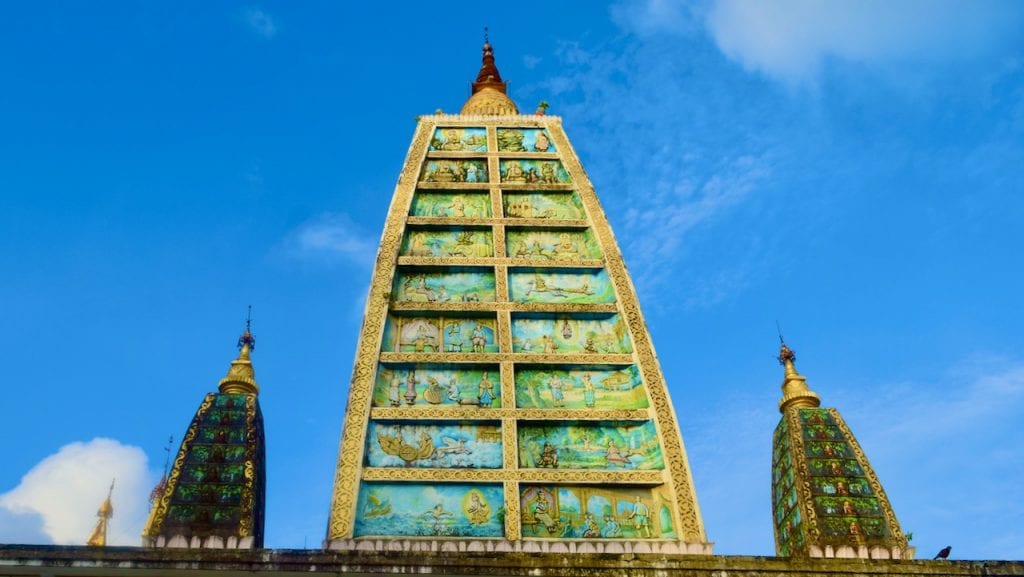
Like the hieroglyphics in Egypt, they wrote some histories of the temple on different structures. I tried to understand it with the utmost sincerity and could find nothing. Maybe some other time?
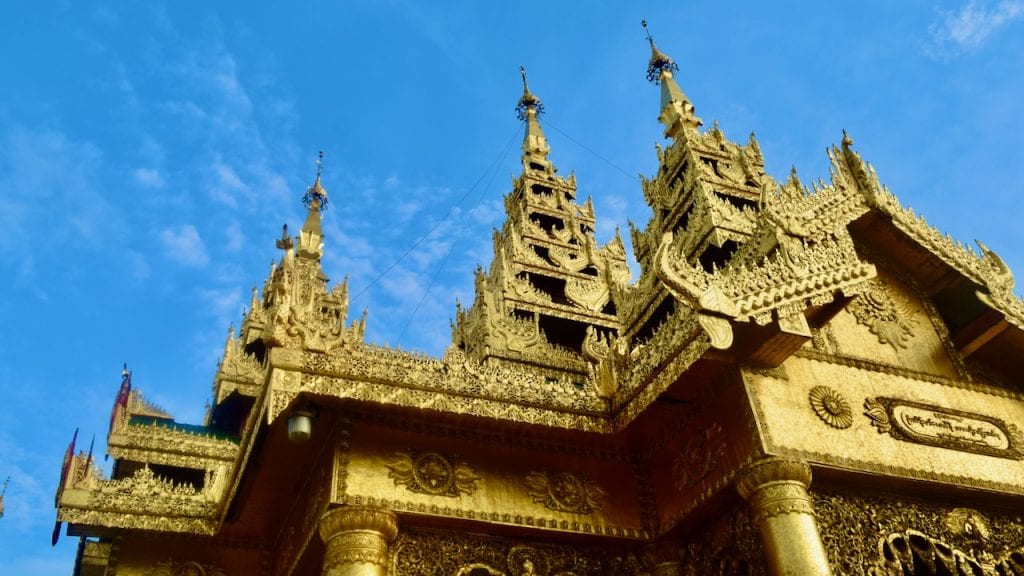
Another interesting aspect of the temple was to unveil unique aspects of it from fresh angles. When you will start thinking you have seen most of them, a turn will surprise you with a beautiful architectural design.
The Bell and the Hidden Messages
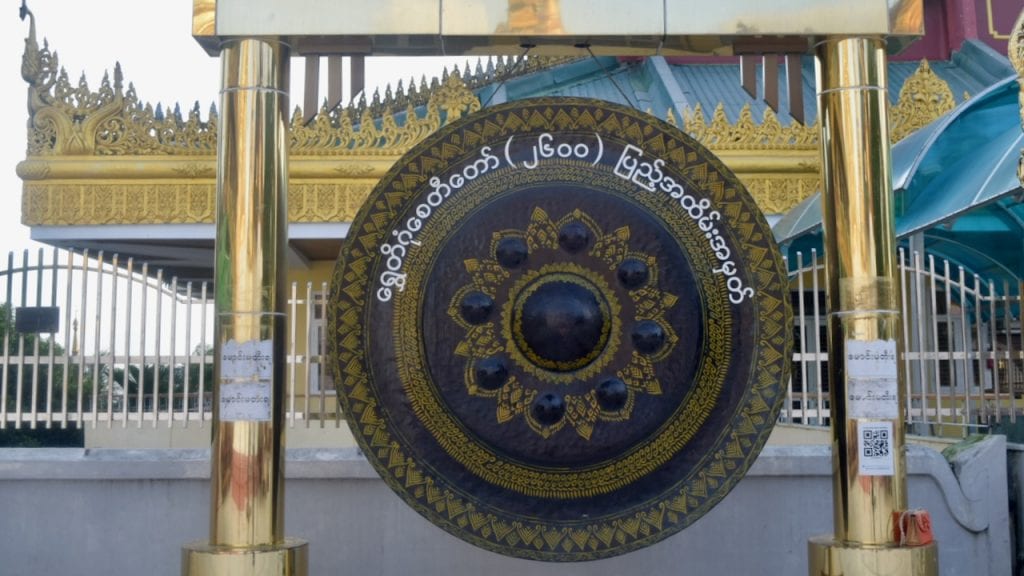
Sadly, I could not read the message written in the Burmese language above and could not risk ringing this giant bell! Like the hidden message there, this piece of the pagoda is a hidden gem. Although it is a national treasure of Myanmar, few people in the world know about it.
I still carry the image of this pagoda after so many years. I saw many visitors in the temple of Chiang Mai in Thailand, or in some other temples. Comparing to that, I saw only a few tourists in the Shwedagon Pagoda.
This is undoubtedly the most beautiful pagoda I have ever visited in my life. Who knows, maybe this is the most beautiful in the entire world? This alone should bring you to Yangon in Myanmar. Besides, there are many other fantastic places to visit in Yangon and you should not miss them either.
How Much Gold is in Shwedagon Pagoda?
This is one of the most frequently asked questions about the Shwedagon, and the numbers are remarkable. Current estimates suggest approximately 27 metric tonnes of gold leaf covers the exterior of the main stupa and the surrounding smaller structures. This figure is approximate and growing — donations of gold leaf continue daily.
To put that in context: 27 metric tonnes of gold is more than the official gold reserve of many countries. Myanmar’s own national gold reserve is smaller than the amount of gold on this one pagoda.
The topmost section of the stupa — the hti or ceremonial umbrella — is even more extraordinary:
- Over 5,000 diamonds, including a 76-carat diamond at the very top
- Over 2,000 rubies, sapphires, and other precious stones
- Hundreds of gold and silver bells that chime in the wind
- A solid gold orb at the summit
None of this is visible from the ground with the naked eye — but knowing it’s there changes how you look at the spire.
Practical Information — Everything You Need to Visit
Entrance Fee
- 💰 Foreign visitors: 10,000 Myanmar Kyats (~USD $7–8)
- 🆓 Myanmar citizens: Free
- Payment is accepted at the ticket booth near the main (southern) entrance stairway
Opening Hours
- 🕐 Open daily: 4:00am – 10:00pm
- The pagoda is accessible to visitors at all hours within this window
- Prayer sessions typically occur in the early morning and evening — worth timing your visit around if possible
Best Time to Visit
- ☀️ Early morning (before 8am) — fewest crowds, the golden stupa catching the early light, and the morning prayer rituals in progress. The most peaceful and photogenic time of day.
- 🌅 Sunset (5–7pm) — the stupa glows amber in the evening light and the pagoda becomes lively with evening worshippers. The most atmospheric time of day.
- 🌞 Avoid midday — the marble platform becomes intensely hot, crowds are largest, and the light is harsh for photography.
Dress Code
- 👗 Shoulders must be covered (no sleeveless tops or singlets)
- 👖 Knees must be covered (no shorts)
- 👣 Shoes and socks must be removed at the entrance — bare feet on the marble platform
- Sarongs are available to borrow at the entrance if your clothing doesn’t meet the requirements
- This applies equally to all visitors regardless of gender
How to Get There
- 🚕 Taxi from Yangon airport: ~30–45 minutes, USD $8–12. I went directly from the airport and the taxi driver knew exactly where to go.
- 📱 Grab: The ride-hailing app works well in Yangon and is usually cheaper and more reliable than hailing a street taxi. Highly recommended.
- 🚌 Local bus: Buses run to the pagoda from downtown Yangon but routes can be complicated for first-time visitors. Grab is easier.
- 📍 Main entrance: The southern entrance on Shwedagon Pagoda Road is the easiest to reach and most commonly used by visitors.
Photography
- 📷 Photography is permitted throughout the pagoda complex — no restrictions
- 🙏 Be respectful when photographing worshippers and monks — ask permission if you want close portraits, and never photograph someone mid-prayer without their awareness
- 📵 Flash photography inside the smaller shrines is discouraged
How Long to Spend
- ⏱️ Minimum: 1.5 hours for a quick circuit of the main platform
- ⏱️ Recommended: 2.5–3 hours to explore the smaller shrines and pavilions properly
- ⏱️ If you love it: Half a day. I had two hours on a five-hour stopover and wished I had more.
The Legend of the Eight Hairs
The founding legend of Shwedagon is one of the great stories of Southeast Asian Buddhism, and worth knowing before you visit — it changes how you look at the stupa above you.
Two merchant brothers from the Yangon region — Tapussa and Bhallika — were travelling through northern India when they encountered a man sitting beneath a tree. The man was Gautama Buddha, recently enlightened, accepting his first meal after 49 days of fasting. The brothers offered him rice cakes and honey. In gratitude, the Buddha reached up and pulled eight hairs from his head, pressing them into the brothers’ hands and asking them to be enshrined so that people could make offerings to them.
The brothers returned to Burma. They presented the hairs to the king, who declared a great ceremony. When the hairs were removed from their golden casket, extraordinary things were said to have occurred: the hairs emitted light, blind people could see, deaf people could hear, the earth trembled, and jewels rained from the sky. The king ordered a pagoda built on the hill where four previous Buddhas had already deposited relics — making the site holy even before the hairs arrived.
That pagoda is what became, over 2,600 years of renovations and additions, what you see today.
The Trivia Worth Knowing
- By law, no building in Yangon may be constructed taller than the Shwedagon Pagoda
- The pagoda has survived every major earthquake to hit Yangon — including a devastating tremor in 1930 that damaged much of the city
- During the British colonial period, British troops used the pagoda complex as a military garrison — an act of desecration that remains a sensitive historical memory in Myanmar
- The gold reserve of Myanmar’s central bank is officially smaller than the estimated gold on the pagoda
- In 1988, pro-democracy protesters used the pagoda’s platform as a rally point — it has been a site of political as well as spiritual significance throughout Myanmar’s modern history
- The stupa is re-gilded regularly, with gold leaf donated by worshippers — a single sheet costs less than a dollar, making it accessible even to modest donors
Is Shwedagon Pagoda Worth Visiting?
I had five hours in Yangon. I spent two of them at the Shwedagon Pagoda, and those were the two hours that made the trip.
I have visited Buddhist temples across Thailand, Cambodia, Sri Lanka, and Nepal. The Shwedagon is not just the most beautiful pagoda I have ever seen — it is the most beautiful single religious structure of any kind I have visited. The scale, the craftsmanship, the quantity of gold, the living devotion of the worshippers, the weight of the history — it combines all of these things into something that is, honestly, difficult to describe adequately in words.
What makes the Shwedagon different from other great temples is not just what it looks like. It’s that it doesn’t feel like a monument. It feels like a living place — full of people who are genuinely there for reasons that have nothing to do with tourism. The monks at prayer, the families making offerings at the planetary posts, the old women circling the stupa at dawn with flowers in their hands — you are watching something real, continuous, and ancient. That is rare.
If you are planning any time in Myanmar, the Shwedagon Pagoda alone is reason enough to put Yangon on your itinerary. Even five hours is enough. Go.
Planning Your Yangon Visit
The Shwedagon Pagoda is the unmissable anchor of any Yangon itinerary — but there is plenty more to see in the city around it. From Yangon, most visitors travel onward to Bagan — Myanmar’s ancient plain of over 3,000 pagodas, which offers an entirely different but equally extraordinary experience. If the Shwedagon showed me the height of Buddhist devotion concentrated in a single structure, Bagan showed me what a civilization of that devotion looks like spread across an entire landscape.
Book your transport between Yangon and Bagan in advance — overnight buses and flights both operate the route.
Important Facts about Shwedagon Pagoda
How old is the Shwedagon Pagoda in Myanmar?
Although there is no historical evidence, Burmese people believe this pagoda to be 2500 years old.
What is the official name of Shwedagon Pagoda?
The official name of this pagoda is Shwedagon Zedi Daw. This is also known as Great Dagon Pagoda and the Golden Pagoda.
Is there any UNESCO World Heritage site in Yangon, Myanmar?
Yes, Shwedagon Pagoda in Yangon is a UNESCO World Heritage Site.
When is the best time for visiting Shwedagon Pagoda?
If you want to avoid the crowd, go there early. If you like the lively environment, go in the evening.
What is the height of Shwedagon Pagoda?
It’s 105 meters or 345 foot.
When was Shwedagon Pagoda built?
It’s assumed that, the Shwedagon Pagoda was built between 6th and 10th centuries AD. Hence it is more than 2600 years old.

We didn’t even know about this place! Looks amazing. So, do you think going to Myanmar in general is worth it?
I loved Myanmar. It’s like part of Thailand without crowds. You should definitely plan for it someday.