
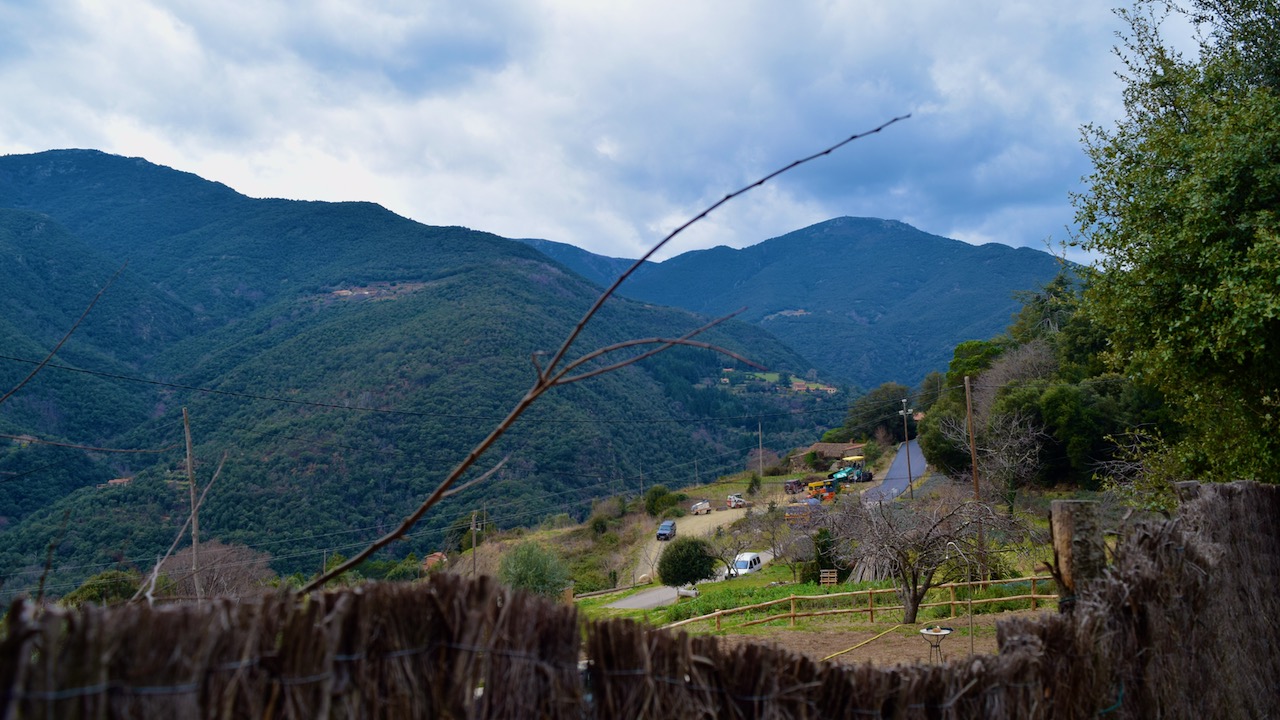
Montseny is a biosphere reserve about 55km north of Barcelona, reachable by train and bus in roughly 1.5–2 hours. It offers outstanding hiking through misty mountain forests, medieval stone villages, and an atmosphere of deep quiet that feels a world away from the city. This is one of Barcelona’s best-kept secrets as a day trip destination.
There is a particular kind of quiet you only find in mountains — not silence exactly, but an absence of urgency. The train from Barcelona had been carrying me for nearly an hour, through suburbs and farmland and patches of forest, and when I stepped off at Sant Celoni and eventually found my way to the village of Montseny, that quiet hit me immediately.
The streets were empty. Clouds were rolling slowly over green ridgelines. It was February and cold enough that the coffee I bought from the only open restaurant was the best I’d ever tasted.
Most Barcelona visitors are sent to Montserrat. My Airbnb host — a lifelong Barcelonan — sent me here instead. “Nobody goes there,” she said. “That’s why it’s perfect.”
She was absolutely right.
What Is Montseny?
Montseny Natural Park (Parc Natural del Montseny) is a protected biosphere reserve in the comarca of Osona and La Selva, roughly 55 kilometres north of Barcelona. It covers approximately 30,000 hectares of mixed forest — oak, beech, pine, and chestnut — across a mountain massif that peaks at the Turó de l’Home at 1,706 metres.
UNESCO recognised Montseny as a Biosphere Reserve in 1978, making it one of Catalonia’s most ecologically significant natural areas. The park contains several small villages, dozens of hiking trails of varying difficulty, and an atmosphere of genuine wildness that surprises first-time visitors given its proximity to a major European city.
The village of Montseny itself (the municipality, not just the park) is a tiny stone hamlet sitting at around 500 metres elevation — a cluster of traditional Catalan farmhouses, a small church, one or two restaurants, and views across layers of forested ridgeline.
How to Get to Montseny from Barcelona by Train
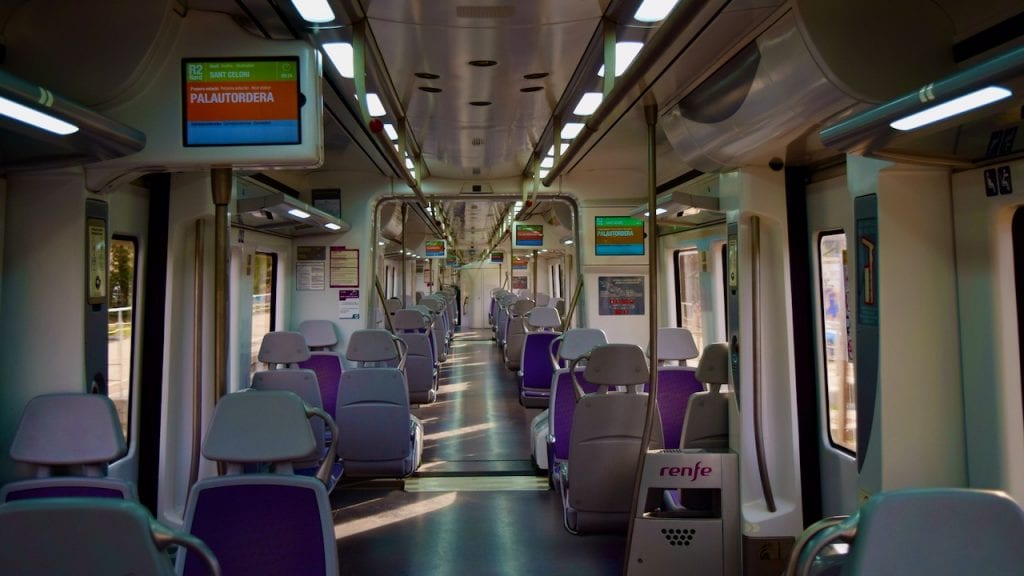
Step 1: Train from Barcelona to Sant Celoni
Take the Rodalies R2 or R2 Nord line from Barcelona Sants or Barcelona Passeig de Gràcia to Sant Celoni. Journey time: approximately 50–55 minutes. Trains run roughly every 30–60 minutes depending on the time of day.
Train fare: Covered by the T-Casual 10-trip card or a single zone ticket (~€5 each way). Check Rodalies de Catalunya for current timetables.
Step 2: Bus from Sant Celoni to Montseny Village
From Sant Celoni station, take the local bus to the village of Montseny. This bus runs on a limited schedule, typically a few departures in the morning and a few returns in the afternoon. Check the timetable before you go — the bus connections are the trickiest part of this journey, and missing the last bus back to Sant Celoni means a long wait or an expensive taxi.
Bus journey time: Approximately 30–40 minutes depending on route.
Alternatively: Hire a taxi from Sant Celoni station to Montseny village (~€15–20 one way). This gives you much more flexibility on timing.
The Private Tour Option (Recommended for Ease)
If logistics feel overwhelming, a private guided tour from Barcelona is the easiest option — and often not much more expensive than the combined transport costs when you factor in your time. The major advantage is door-to-door transport and a guide who knows the best trails.
👉 Book a Private Montseny Hiking Tour from Barcelona →
👉 Browse Montseny Day Tours from Barcelona on GetYourGuide →
👉 Find Montseny Hiking Tours on Klook →
What to Do in Montseny: Hiking Routes
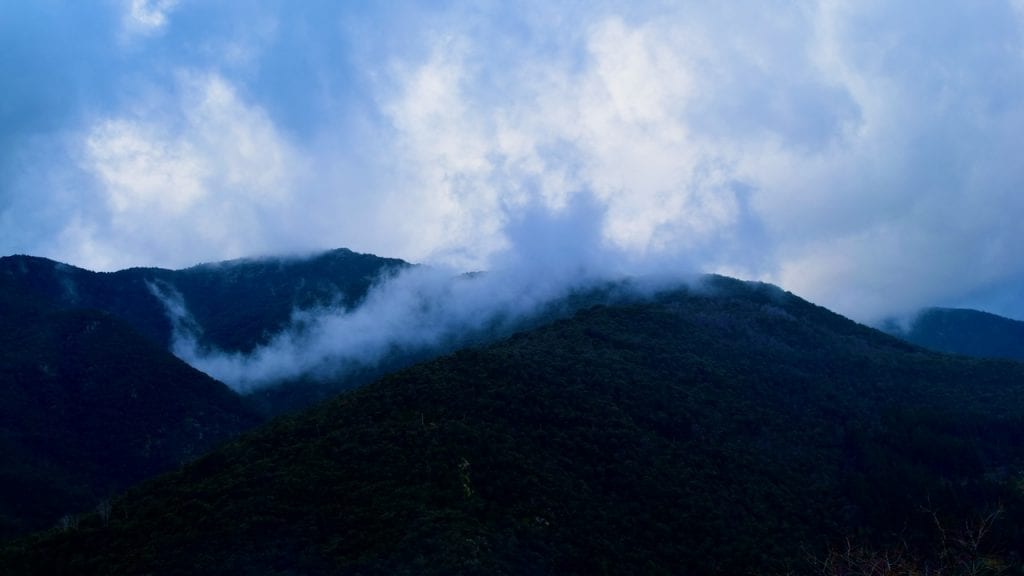
Montseny’s network of hiking trails covers everything from gentle 1–2 hour walks through farmland to full-day ascents to the high peaks. Here are the main options:
Village Walk & Lower Trails (Easy, 1–3 hours)
If you arrive in Montseny village, you can explore the immediate surroundings without any significant climbing. Marked paths wind through:
- Stone-walled farmland and chestnut groves
- Small stone bridges over seasonal streams
- Open meadows with views back toward the village
This is what I did on my visit — a loosely-planned wander following a route the restaurant server tried to explain to me in mixed Spanish and English. Despite (or because of) the navigation uncertainty, it produced some of the most memorable hours of my Spain trip.
The trail changes character every 15 minutes or so: from open road to narrow stone-walled lane, from farm track to wild forest path littered with dead leaves. You might pass horses in a field, a moss-covered spring, a small wooden bridge that looks like it belongs in a fairy tale.
Montseny Village to Sant Marçal Circuit (Moderate, 4–5 hours)
This is the most popular day hike among those who drive to Montseny. It follows a circular route from the village up through beech forests to the ermita (hermitage) of Sant Marçal, with excellent views over the massif.
The trail is well-marked and manageable for most reasonably fit walkers. You’ll pass through classic Montseny landscape: dense forest, open mountain meadows, rocky ridgelines with panoramic views.
Distance: ~12km circular
Elevation gain: ~400m
Difficulty: Moderate
Best season: Spring and autumn for the best foliage and temperatures
Turó de l’Home Summit (Challenging, Full Day)
For serious hikers, the ascent of Turó de l’Home (1,706m) — the highest point of Montseny — is a full-day undertaking typically starting from the Fontmartina area. The views from the top extend across much of Catalonia, and on clear days you can see the Pyrenees to the north and the Mediterranean to the south.
Note: This route requires either a car to reach the starting point or a combination of bus routes. Not practical as a pure train-and-bus day trip from Barcelona unless you join a guided tour.
What I Found on My Visit
I arrived on a late February morning to find the village almost completely empty. The mountains were wrapped in low cloud, the kind that softens the light and makes everything look slightly dreamlike. It was cold — cold enough that the hot coffee I bought from the only open restaurant was the best hot coffee I’ve ever had.
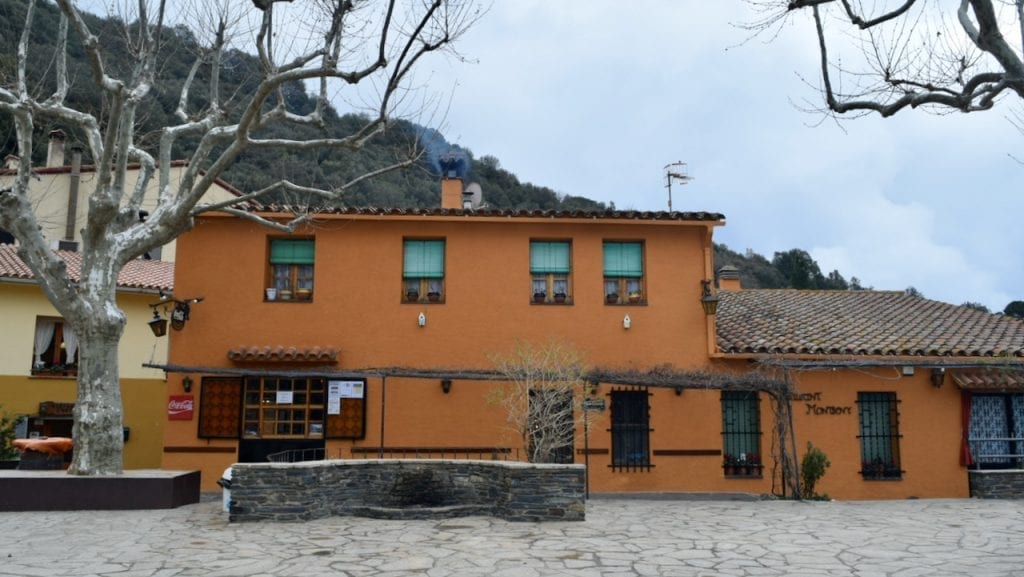
The server tried to point me toward hiking routes. I caught about 60% of his Spanish and memorised the main gesture (turn right at the large tree) and set off.
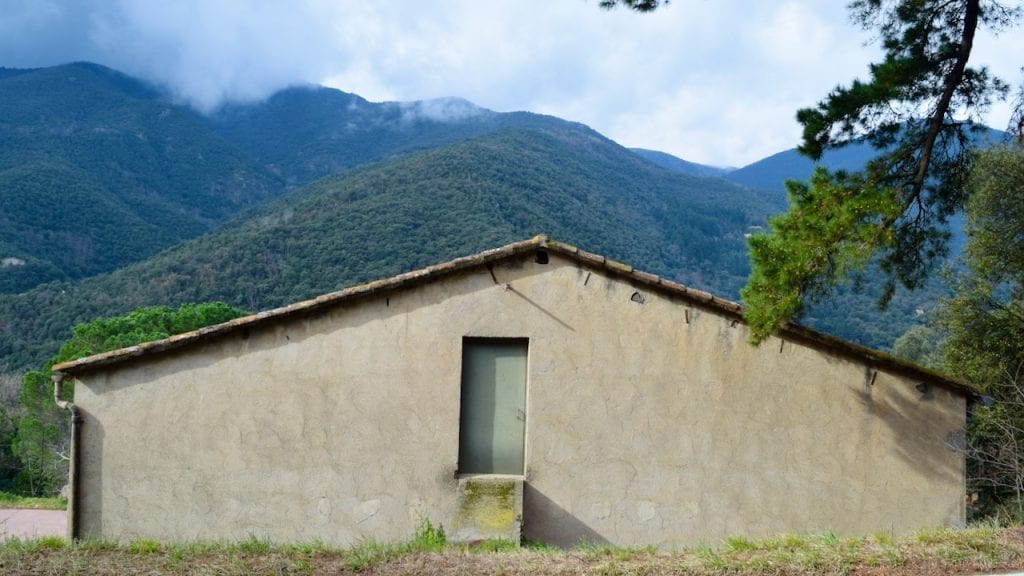
What followed was one of those rare, uncommitted travel days where you go slowly, look at everything, and return with more memories than you could have planned for. I walked narrow paths between stone walls draped in moss. I watched two horses in a field ignore me completely. I found a feeble spring of natural water and imagined what it would look like in monsoon season — a proper rushing cascade, probably. I walked through sections of forest where the trees grew wild and ancient over a carpet of red-brown leaves.
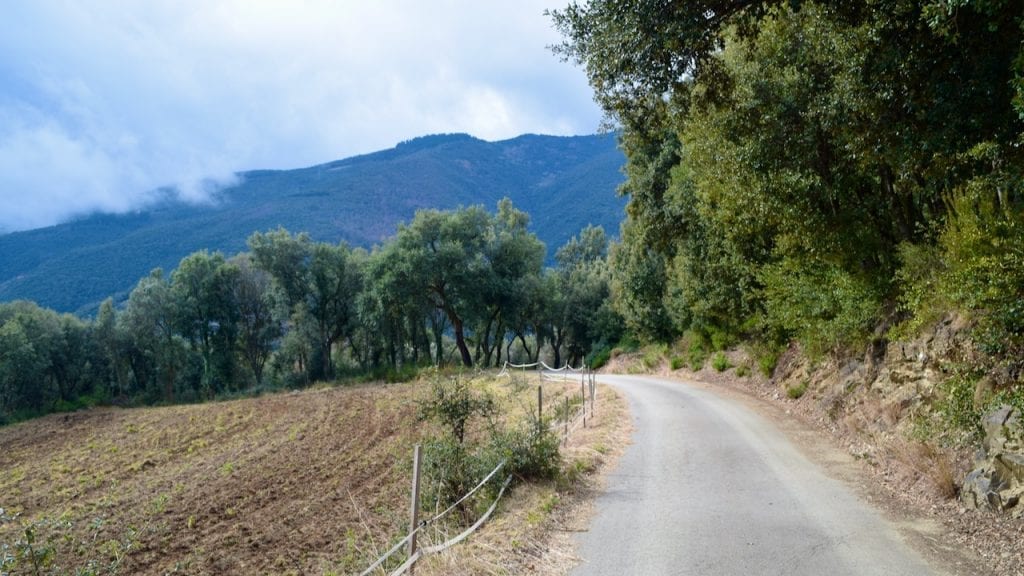
After a while, we found a narrow street to follow. We crossed small houses, flowers, and trees, and crop fields keeping the mountain to our right.
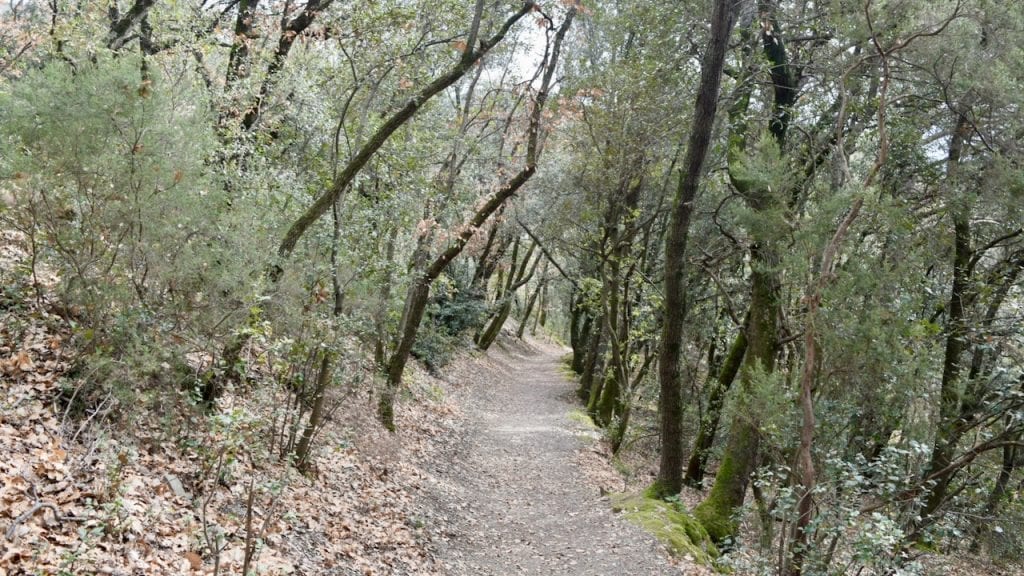
Further exploration took me to a real narrow trail which was heading for unknowns. There were dead leaves all around on the ground.
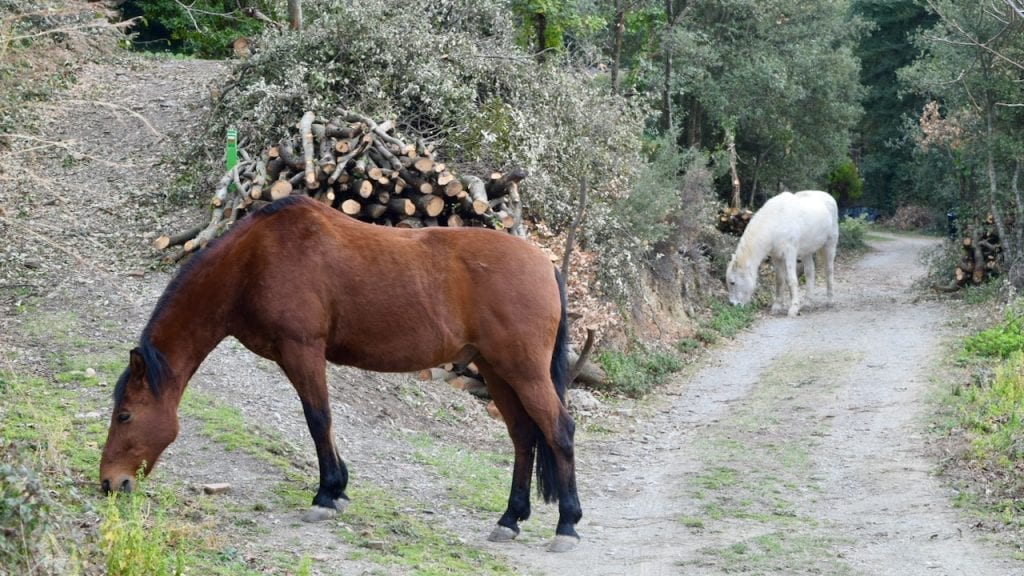
It was the end of February. The leaves and lack of greeneries announcing the end of winter. The trail was empty, and we were the only hikers. Oh, that’s not entirely true. We met some friends on the road, those were some beautiful horses.
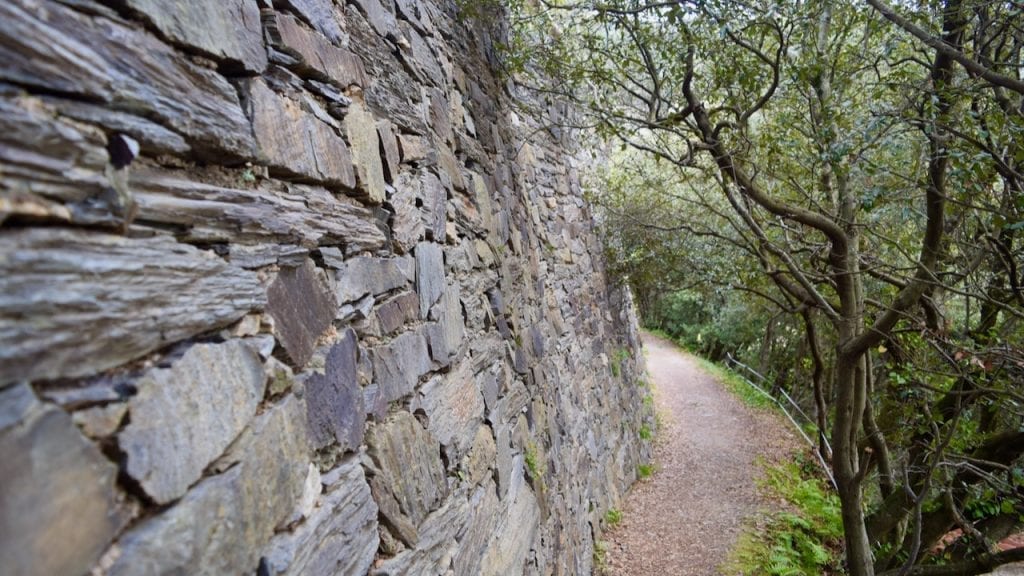
I could see logs on the street. Will they be used as fire logs later? In some places, the road became very narrow with walls made of stones on one side.
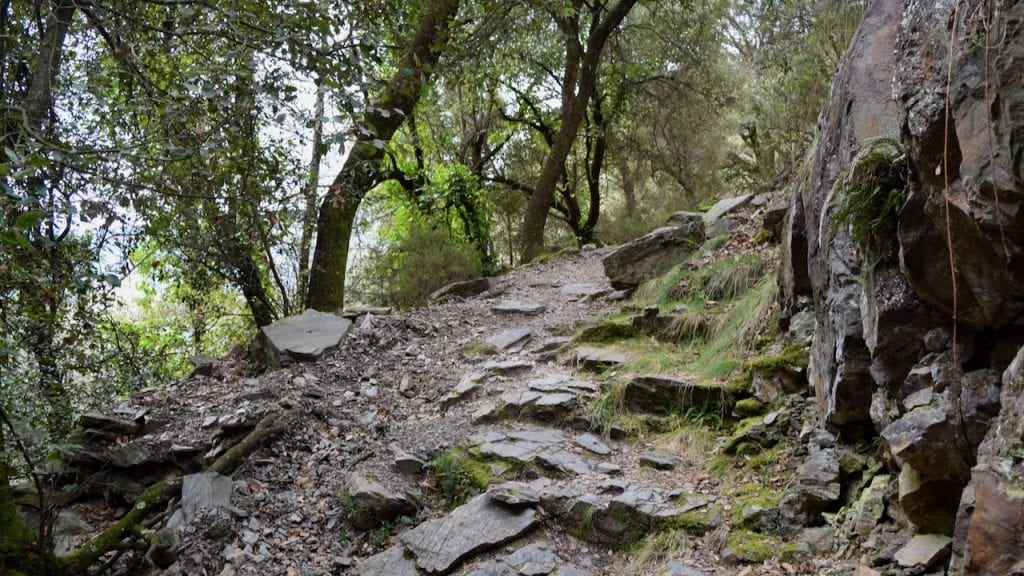
The path made of stones made me think if we were on the right track. We were relying on the map on our mobile. It was getting darker, and we were not sure where the path would end.
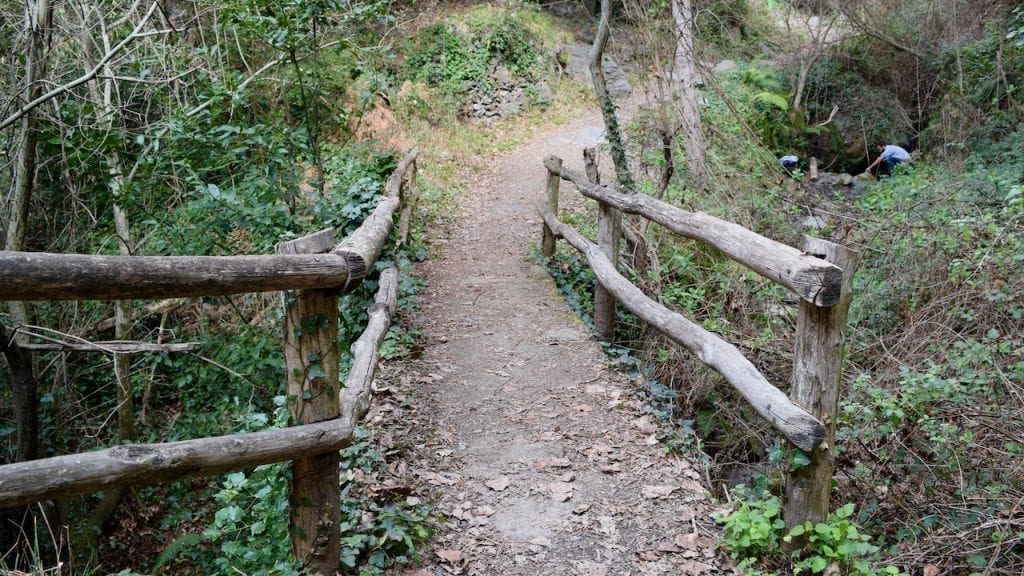
Interestingly, I saw some small bridges made of woods connecting roads. I found some source of natural water in the form of spring, but those were very feeble. It would have been a different story had we been there during monsoon.
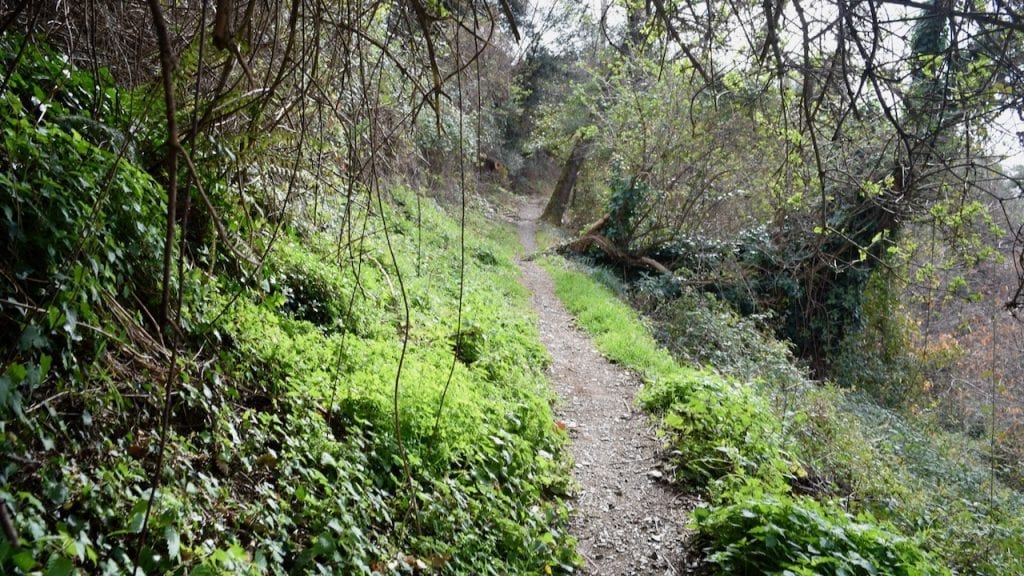
What I loved about the hike were the wilderness and serenity. The trees and roots were as wild as possible.
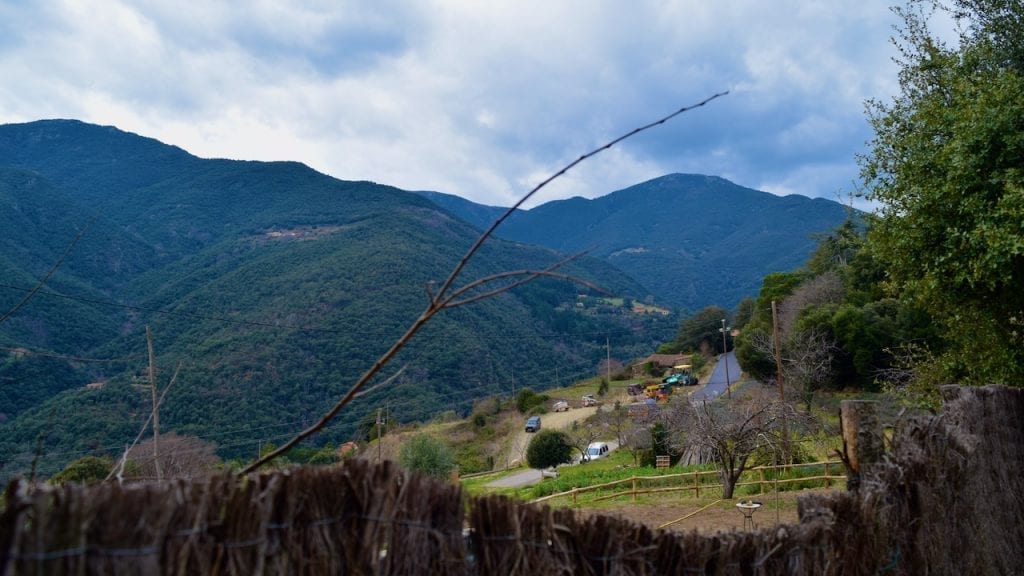
Although the hiking route changed its shape, colors, and smells, one thing remained constant – the green lash mountain.
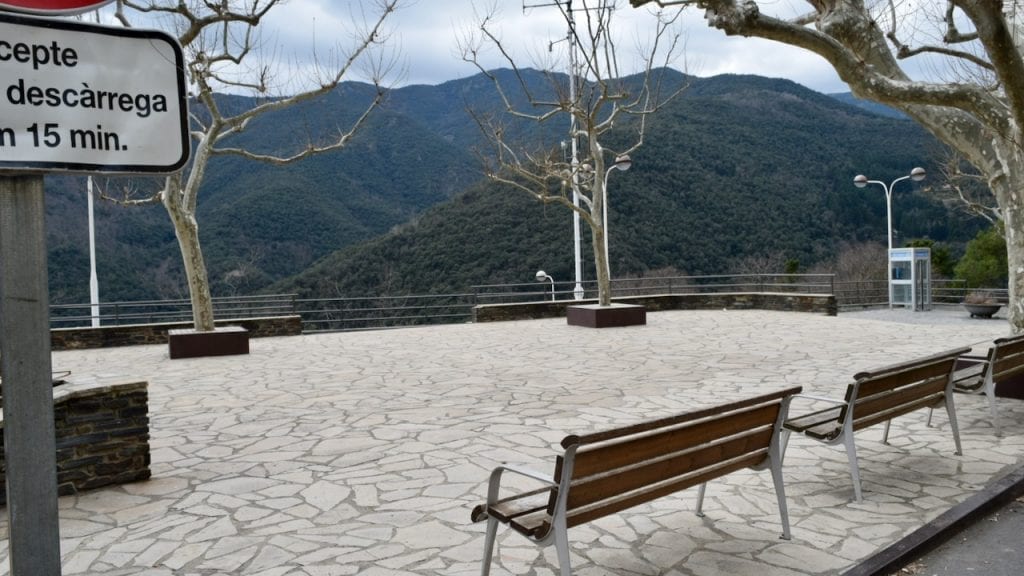
After several hours of hiking, we thought it better to end it as the night was approaching. I felt envious of the inhabitants of the town. Who does not want to live in such a pretty hill station and sit in the chair every morning to see the mountains?
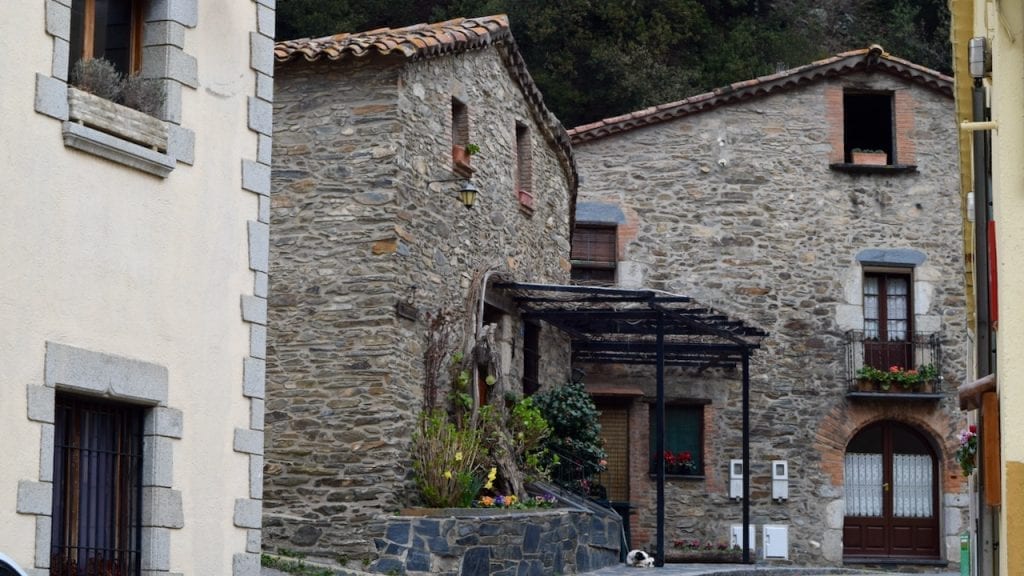
Before getting back to the train station, we explored the city. I loved the beautiful structures of the houses. The whole town was eerily quiet.
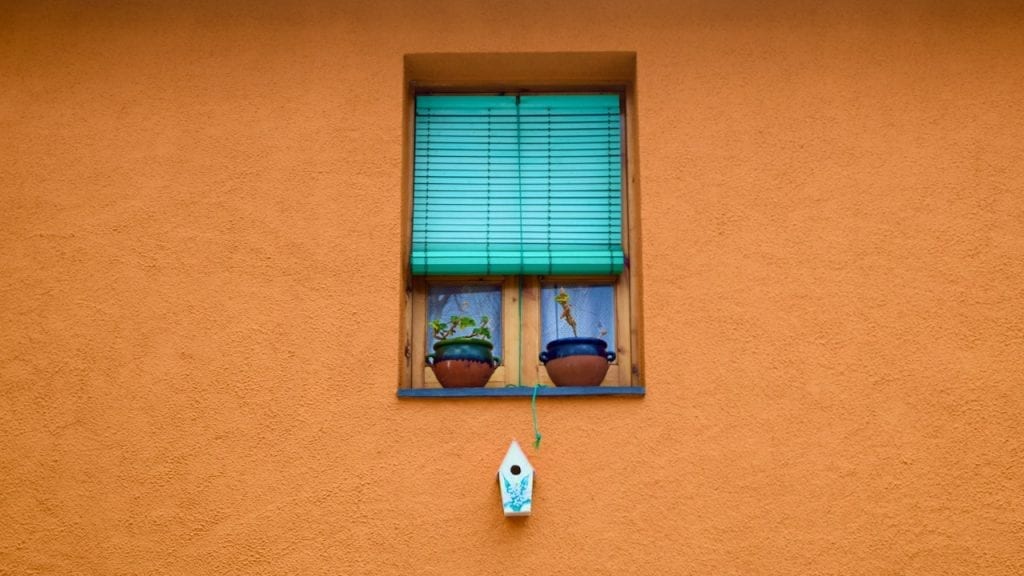
Then again, I thought nobody lived there! I didn’t see any face on the street or in the house.
I went there hiking, and I am glad I did it. Montseny turned out to be a fantastic day trip from Barcelona. I thought about enjoying the scenery and had some natural experiences away from bustling Barcelona. I got what I looked for. In fact, I got more than I expected.
Book Private Tour Montseny Hiking from Barcelona
What to Eat in Montseny
The village of Montseny has a small number of restaurants, most serving traditional Catalan mountain cuisine. This is hearty, honest food: game meats (wild boar, rabbit, venison), mushroom dishes (particularly in autumn, when foraging is at its peak), slow-cooked stews, and roast meats with local vegetables.
Typical dishes to try:
- Carn d’olla — slow-cooked meat and vegetable stew
- Esqueixada de bacallà — salt cod salad with tomatoes and peppers
- Pa amb tomàquet — Catalan bread rubbed with tomato and drizzled with olive oil (everywhere in Catalonia, and never gets old)
- Wild mushroom dishes (particularly in autumn)
Most restaurants in the village offer a menú del día at lunchtime, a filling two- or three-course set menu for €12–18. Don’t miss lunch here; the quality-to-price ratio is excellent.
Tip: Call ahead or check Google Maps to confirm which restaurants are open if visiting in winter or on a weekday — opening hours in very small villages can be inconsistent.
Best Time to Visit Montseny
| Season | What to Expect |
|---|---|
| Spring (Mar–May) | Wildflowers in bloom; fresh green forest; occasional rain; excellent hiking |
| Summer (Jun–Aug) | Warm but not as hot as the city; good for swimming in the occasional stream; some weekend crowds |
| Autumn (Sep–Nov) | Best season for foliage colours and mushroom foraging; atmospheric mist on the peaks |
| Winter (Dec–Feb) | Very quiet and sometimes cold; possible snow at higher elevations; uniquely peaceful |
My visit was in late February — technically winter — and while cold, it was deeply atmospheric and essentially crowd-free. I’d recommend it to anyone who enjoys having a landscape entirely to themselves.
What to Pack for Montseny
- Comfortable hiking shoes (trail runners are fine for easy routes; boots for longer hikes)
- Layers — the village sits at ~500m and mountain weather changes quickly; bring a mid-layer and wind/rain jacket
- Snacks and water — the village has limited shops; bring enough food for the trail
- A download of the trail map — mobile signal can be patchy on the trails
- Cash — the village operates mostly on cash
- Camera — the light in this landscape is extraordinary
Where to Stay Near Montseny
Most visitors do Montseny as a day trip from Barcelona. But if you want to stay overnight and have the mountains to yourself in the early morning:
In Montseny village: A handful of rural houses (cases rurals) can be rented, some quite charming.
In Sant Celoni: A more practical overnight option with better transport links; several small hotels.
In Barcelona (recommended base): Stay in the city and take the early train to maximise your day.
👉 Search Barcelona Hotels on Booking.com →
Practical Tips Summary
- Check bus timetables before you go — the Sant Celoni to Montseny bus has limited departures
- Depart Barcelona early (aim for the 8–9am train) to maximise daylight, especially in winter
- Download offline maps (Maps.me or AllTrails works well for Montseny)
- Tell someone your route if hiking alone, especially on longer trails
- The return train from Sant Celoni to Barcelona runs until late evening, so you have flexibility on return time
More Day Trips from Barcelona
Montseny is one of two nature day trips I took from Barcelona. The other was a coastal train journey north along the Costa del Maresme, hopping between small beach towns along the Mediterranean. Completely different vibe — relaxed, sunny, and sea-scented.
👉 Read: Best Beach Towns Near Barcelona — A Day Trip Along the Coast →
👉 Read: 15 Best Things to Do in Barcelona →
FAQ: Montseny Day Trip from Barcelona
Is Montseny better than Montserrat?
They offer very different experiences. Montserrat has dramatic rock formations and a famous monastery, but gets very crowded. Montseny is quieter, greener, and more suited to hikers who want a genuine nature experience without the crowds. If you can only do one, consider what you value more: iconic scenery and a famous monastery, or wild forests and solitude.
Can you do Montseny without a car?
Yes, but it requires planning — train to Sant Celoni, then bus or taxi to the village. Alternatively, join a guided tour from Barcelona with transport included.
Is Montseny suitable for children?
The easier village-level walks are very family-friendly. Children who enjoy being outdoors and can walk 3–5km comfortably will enjoy it. The longer summit trails are for older children and adults.
Is Montseny worth it?
If you love nature, hiking, or simply escaping the city for a day — absolutely. It was one of my most memorable days in all of Spain.

Leave a reply