
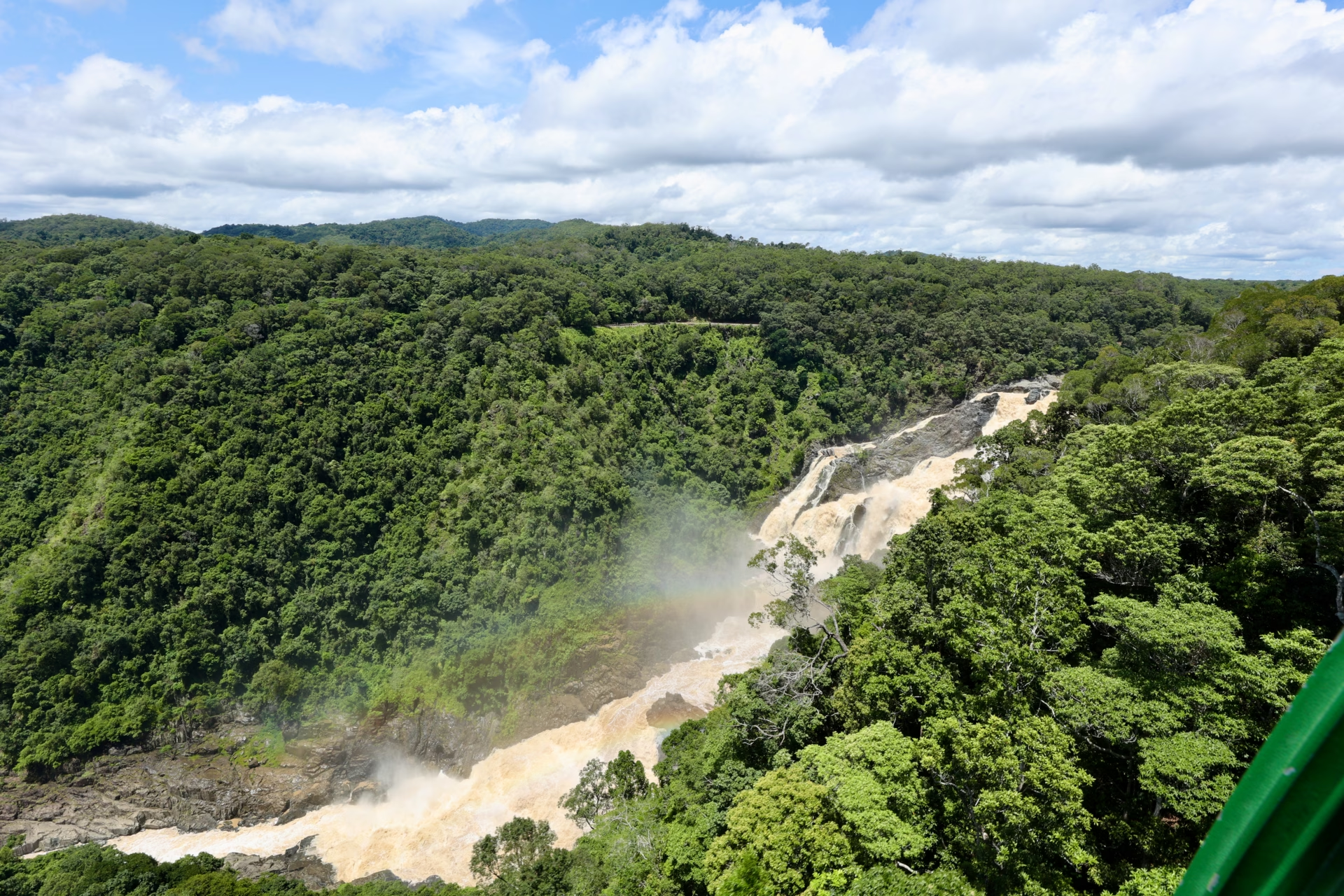
There’s a particular kind of decision fatigue that hits the moment you start researching Kuranda from Cairns. Cable car or train? Which one first? Do you need a car? I went through all of it before landing on the combination that turned out to be exactly right: Skyrail up, a wander through Kuranda village in between, and the Kuranda Scenic Railway back down.
Skyrail Rainforest Cableway is a 7.5-kilometre gondola line gliding over the Wet Tropics rainforest between Smithfield, on the northern edge of Cairns, and the village of Kuranda. The Kuranda Scenic Railway is the other half of the loop, a heritage train that has been climbing the same mountain since 1891, threading through hand-carved tunnels and crossing timber bridges on its way back down to the coast.
Book the Skyrail, Kuranda and Rail Tour with hotel transfers via GetYourGuide.
Short answer: do both, in that order, and set aside a full day for it. I went on 18 January 2026, a proper wet-season day, which turns out to matter more than you would think.
Quick facts before you book
- How long to allow: A full day. Mine ran from 9:40am pickup to a mid-afternoon return.
- What’s included in the combo ticket: One-way Skyrail, one-way Heritage Class train, return hotel transfers from Cairns City.
- Seat assignment: Not guaranteed at booking. Skyrail is queue-based; train seats aren’t allocated until closer to departure.
- Where the day starts and ends: Skyrail departs from Smithfield, on the northern outskirts of Cairns. The train terminates at Cairns Central, a flat 10-minute walk from the Esplanade.
Before you book
A 2026 upgrade is underway. Skyrail is partway through an $85 million infrastructure upgrade, replacing the cableway and all gondolas. It didn’t affect my January visit, but it’s worth knowing if you’re reading this later in the year: Skyrail is fully closed from 20 July to 18 August 2026, then runs a modified Kuranda-to-Barron-Falls-only loop, Wednesday to Sunday, from 19 August to 25 October 2026, no full Smithfield-to-Kuranda line during that window. The glass-floor Diamond View gondola upgrade is also being retired for good, its last day of operation is 19 July 2026. None of this should put you off, Skyrail’s own site has the current closure calendar, but it’s worth a quick check before you lock in dates if you’re travelling mid-2026.
Skyrail: Gliding Over the Canopy
My hotel pickup bus arrived at 9:40am for a 10:30am Skyrail departure from Smithfield.
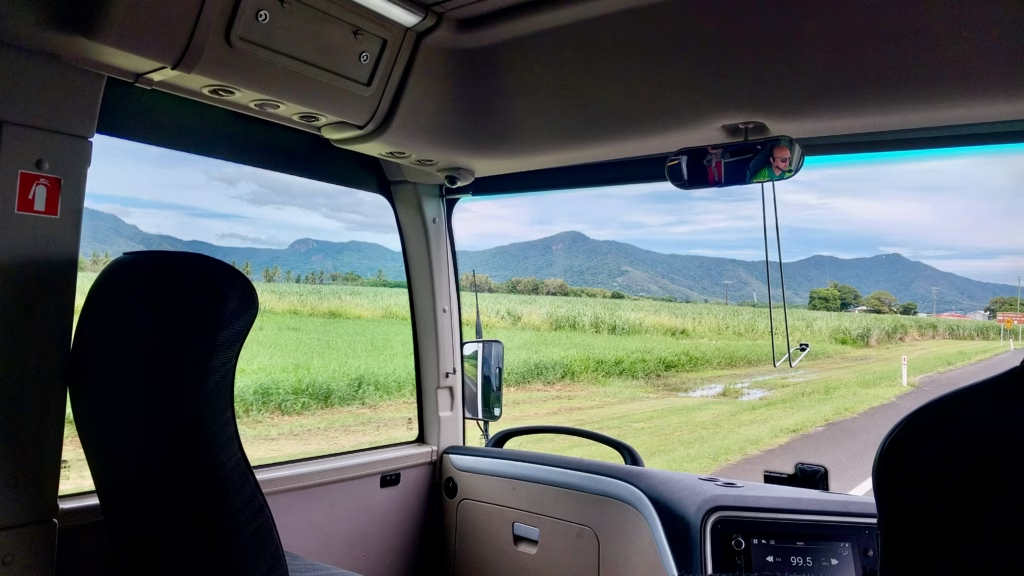
The drive out runs through open cane country before the terrain starts climbing, flat green fields giving way to the same mountains you’ll be gliding over an hour later. By 10:30am I was queuing at the Smithfield terminal. The base station has a small souvenir shop with an attached cafeteria and toilets, so there’s no need to rush the moment you arrive.
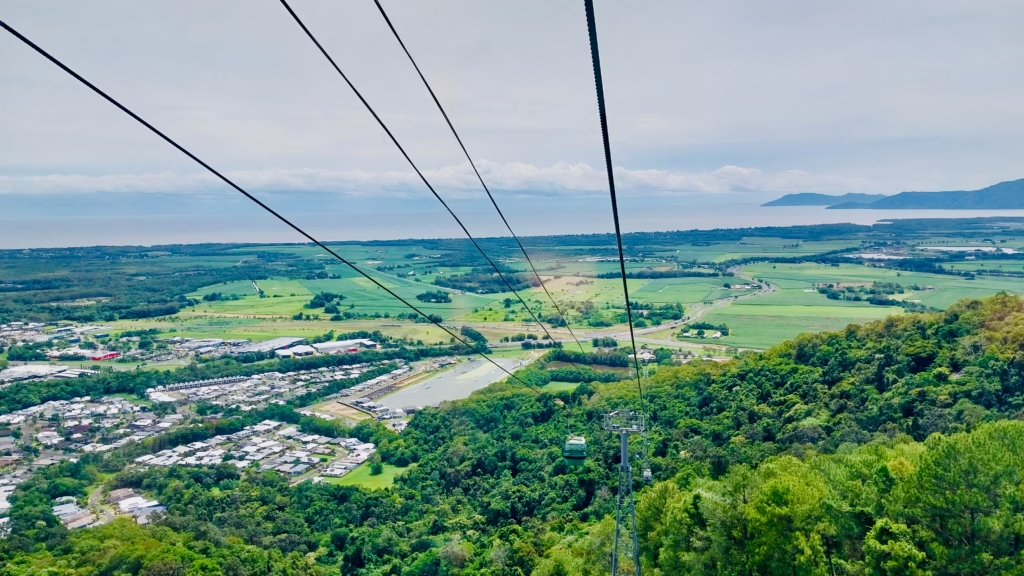
Boarding isn’t assigned by seat number, you queue and take the next available gondola, one of over a hundred standard cabins running the line continuously. Once the doors close, the cable pulls you up and out over the rainforest canopy almost immediately.
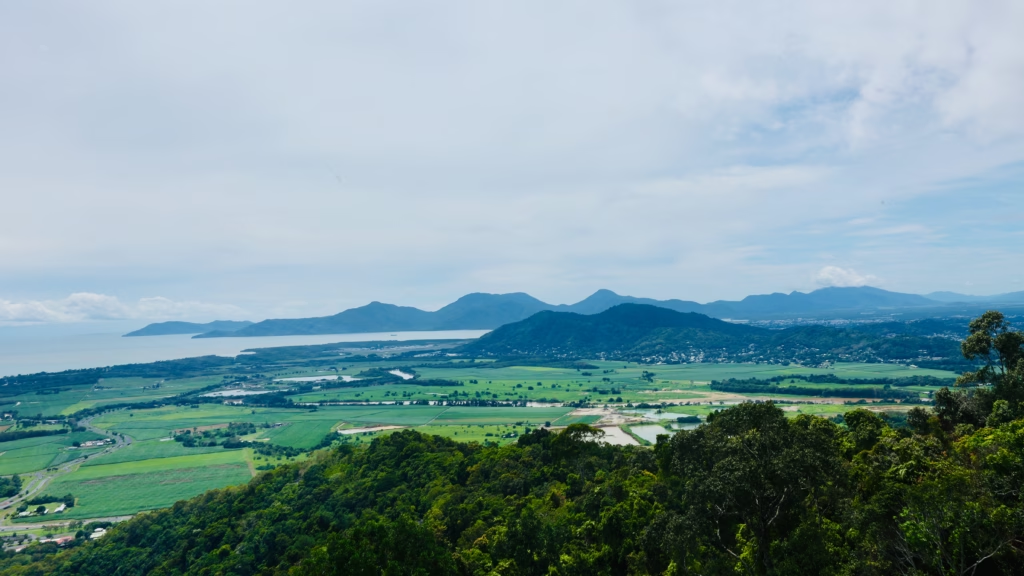
The coastal view doesn’t last the whole ride, though. A little further along, the cabin swings away from the coast entirely, and the view turns to nothing but forest in every direction.
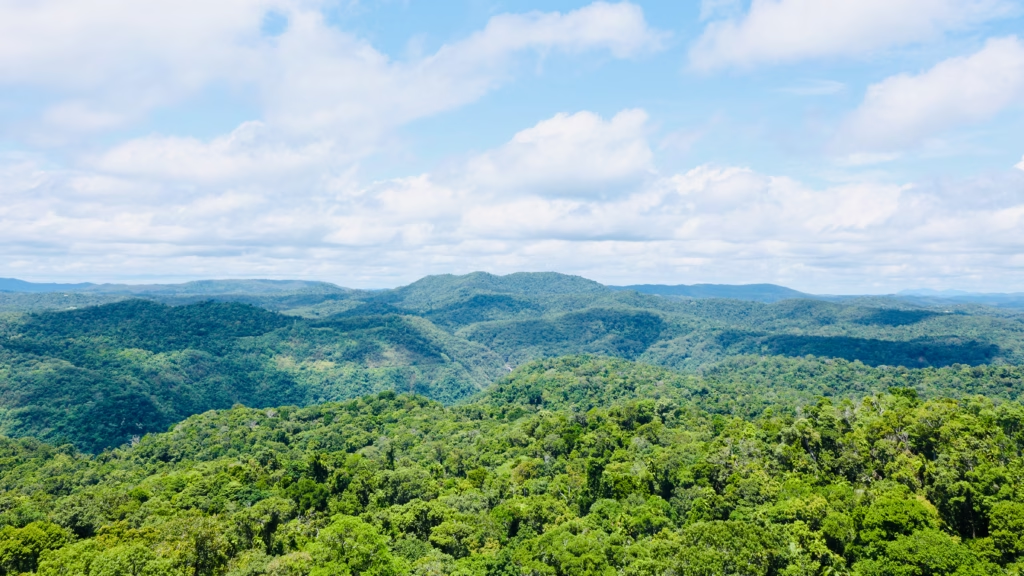
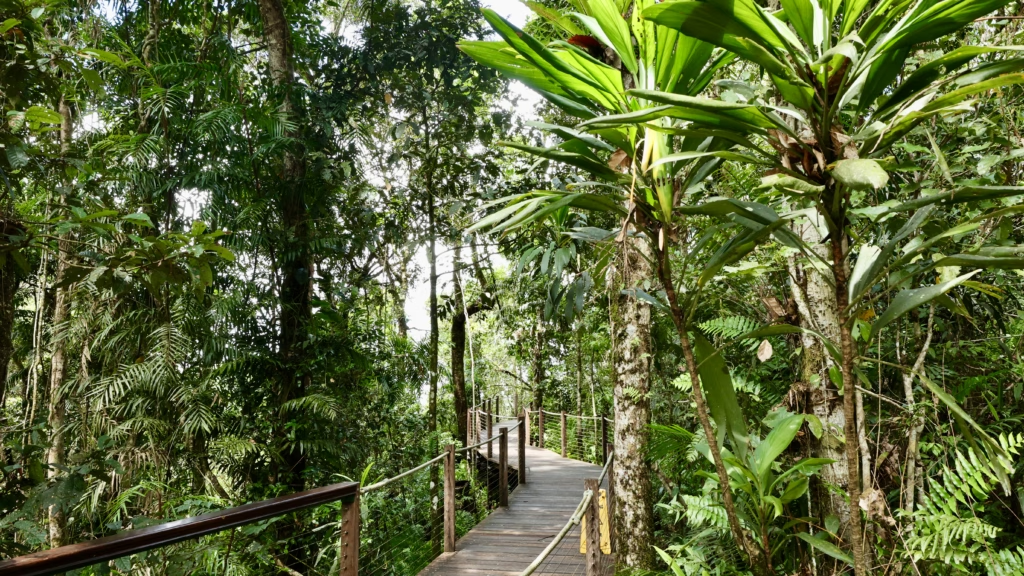
Red Peak Station, the first of two stops on the way up, sits 545 metres above sea level. This is where the free ranger-guided walk happens, a loop along a boardwalk through rainforest that’s been standing, in some form, for around 130 million years.
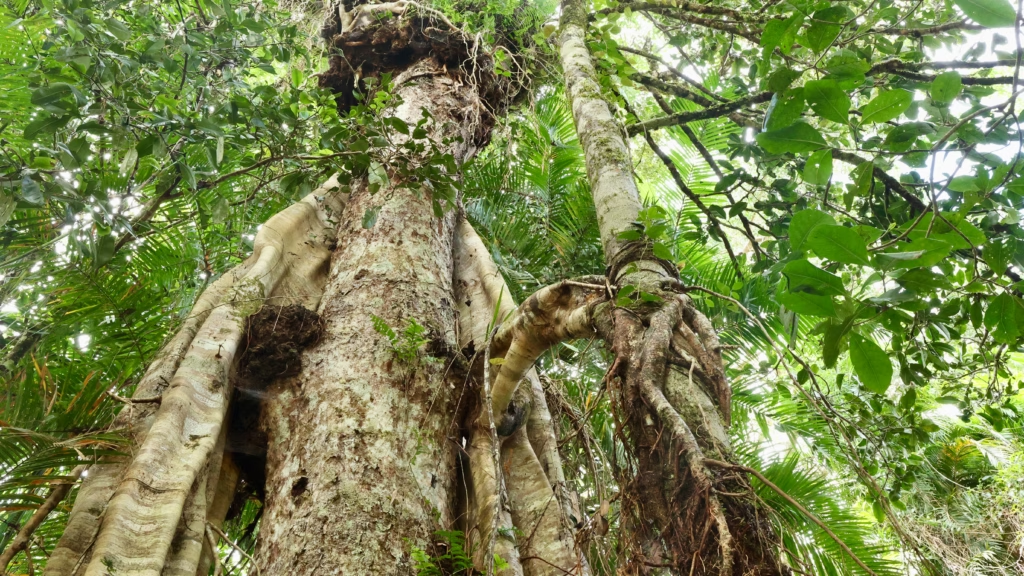
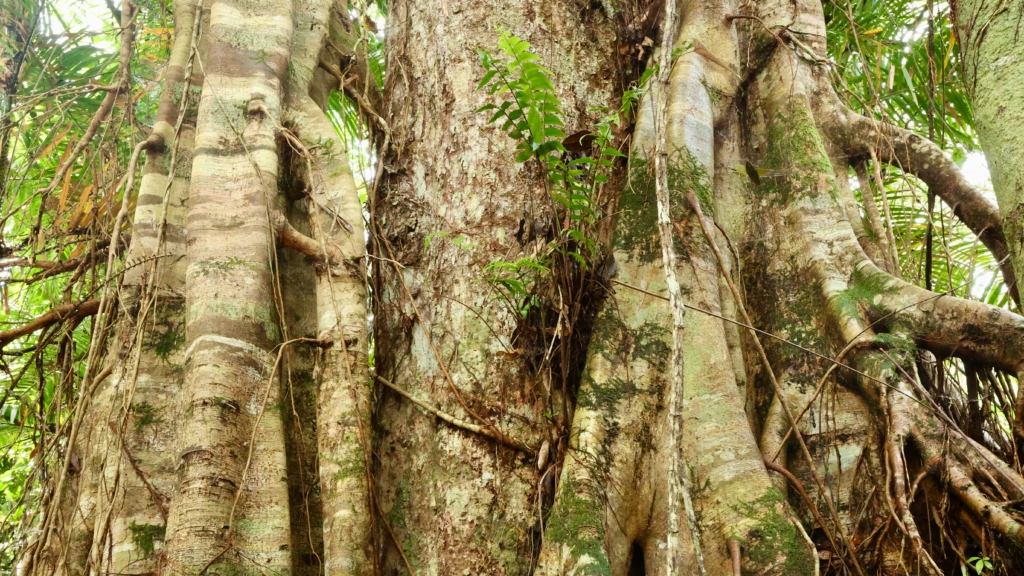
One of the interpretive signs along the walk explains why some of the veteran trees here look the way they do.
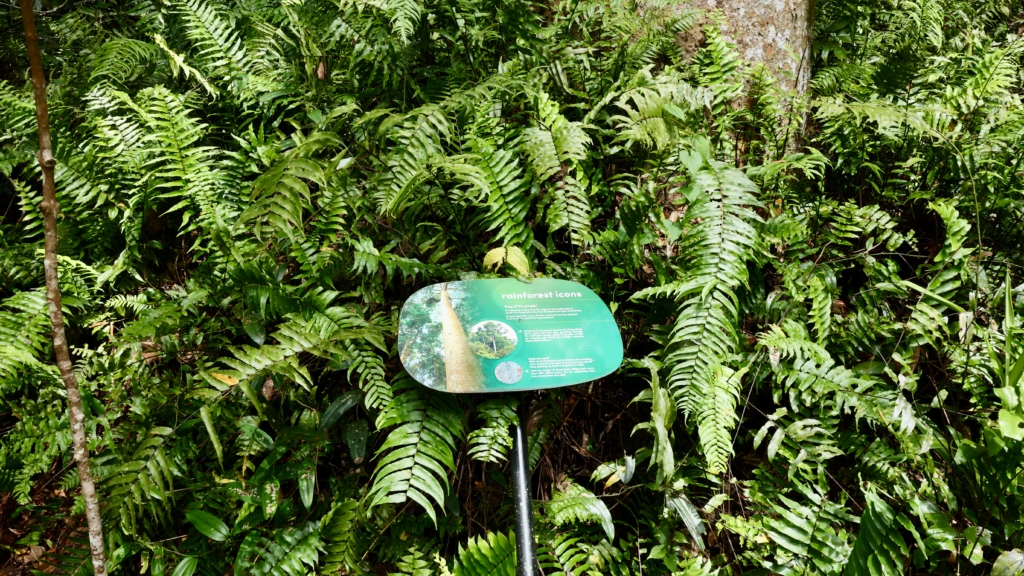
According to the signage, the Kauri is an emergent species, growing tall and fast specifically to punch through the surrounding canopy and claim sunlight the trees below can’t reach. Its bark is smooth and self-shedding, stopping vines from climbing and competing for that light. Not every trunk on the walk uses that strategy.
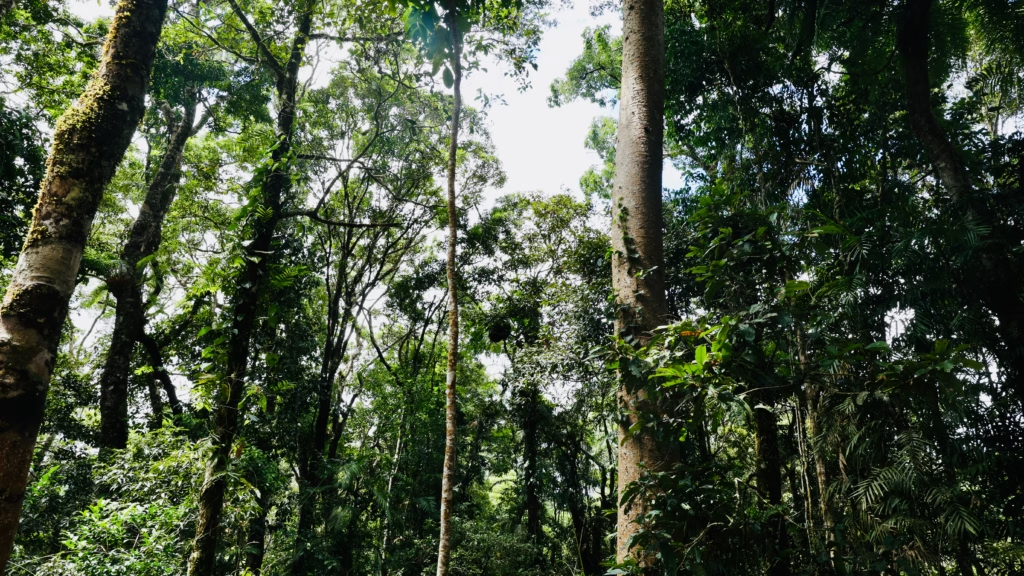
Near the far end of the boardwalk, the trees briefly step back and let the wider landscape through.
Back in the cabin and on toward Barron Falls Station, the ride keeps giving.
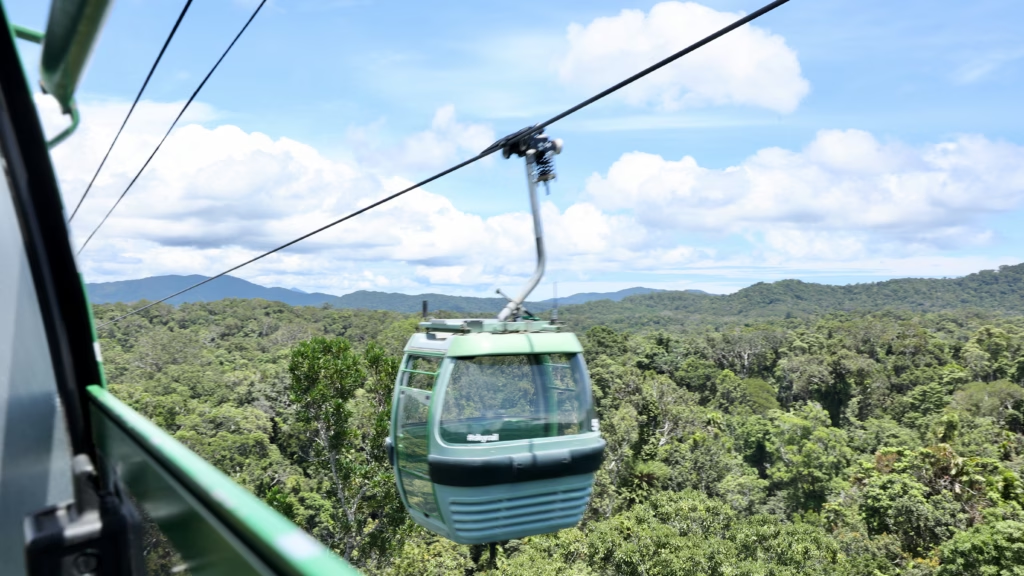
It’s easy to forget, cocooned inside your own cabin, that dozens of others are making the same trip alongside you at any moment, over a hundred cabins running this line continuously, all day, every day except Christmas.
Worth knowing
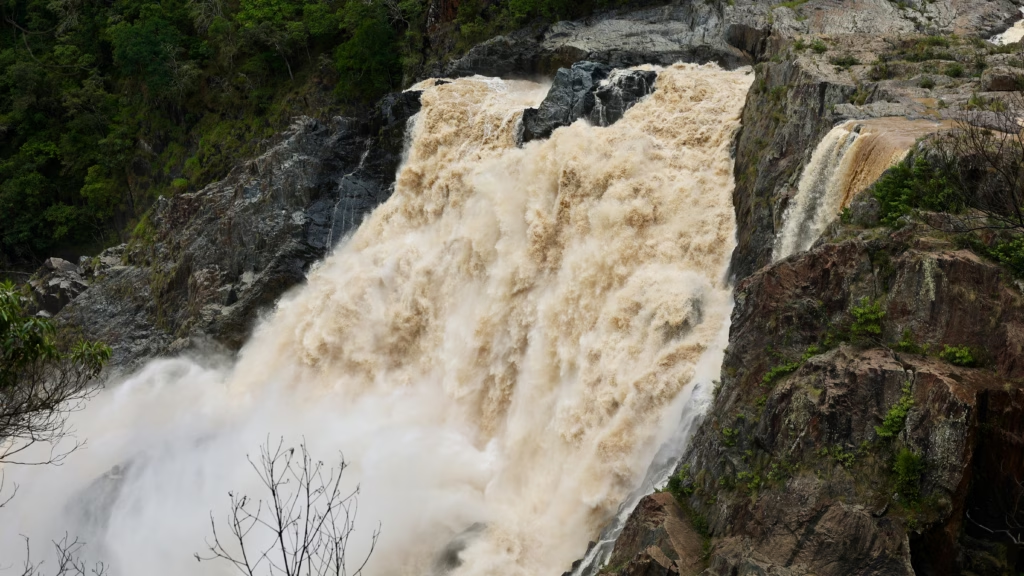
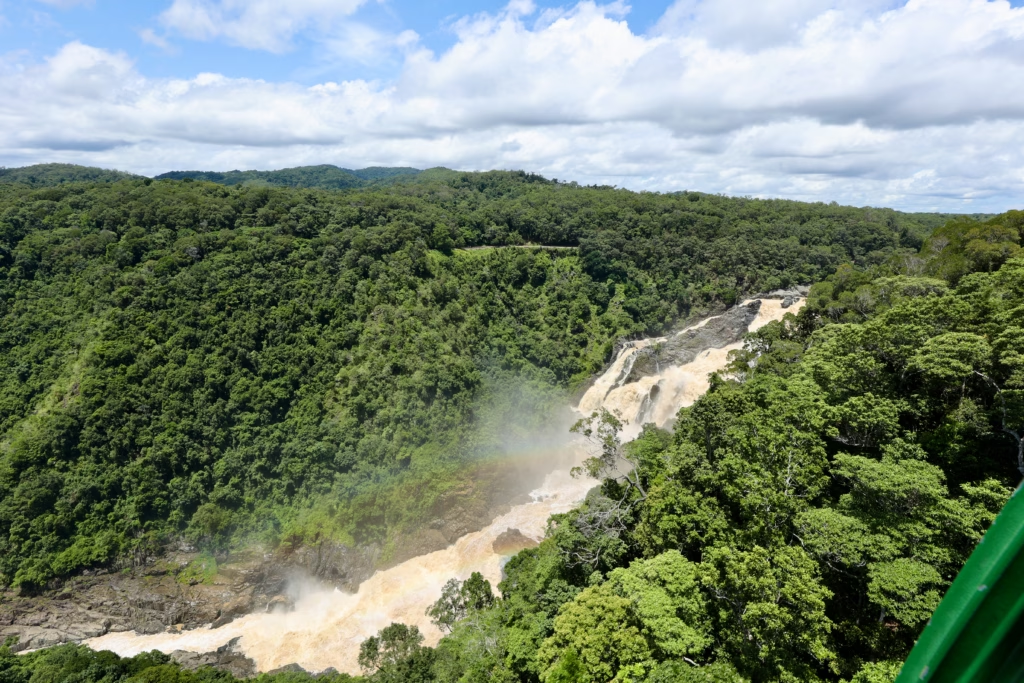
Most guides will tell you Barron Falls runs at a fraction of its force most of the year, since this hydro station diverts the bulk of the water. That’s true outside the wet season. I visited in January, deep in North Queensland’s wet season, and what I actually saw had nothing “diverted” about it, right down to a rainbow sitting in the spray that only shows up when there’s this much water moving and this much sun cutting through the mist at once.
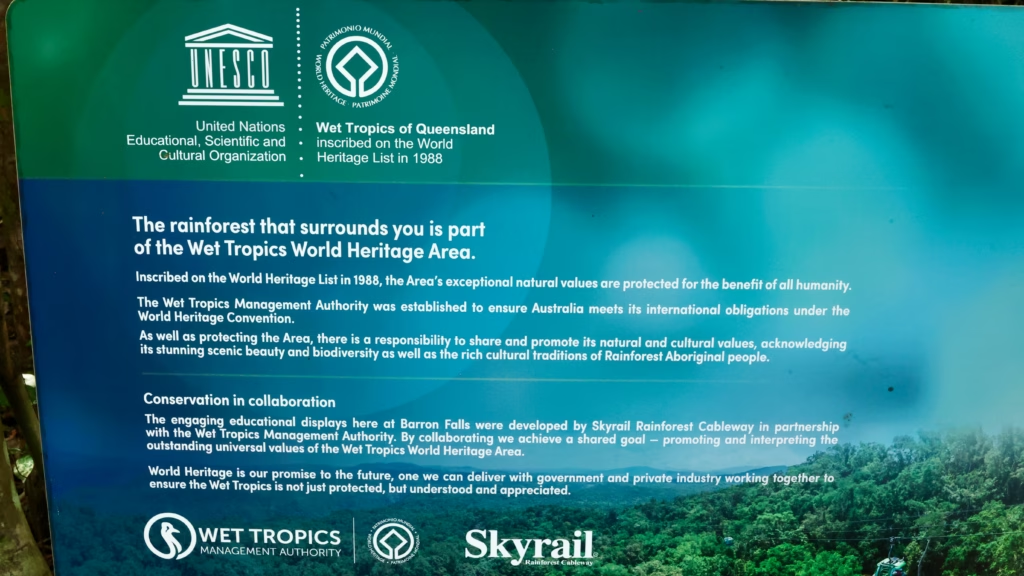
Barron Falls Station is where the “gorgeous waterfall” moment happens, and it comes with its own interpretive display first.
The lookout itself gives you a few different angles on the same drop, and on a full wet-season day, each one is worth stopping for rather than snapping one photo and moving on.
Stand there long enough and the light does something the postcard version never shows.
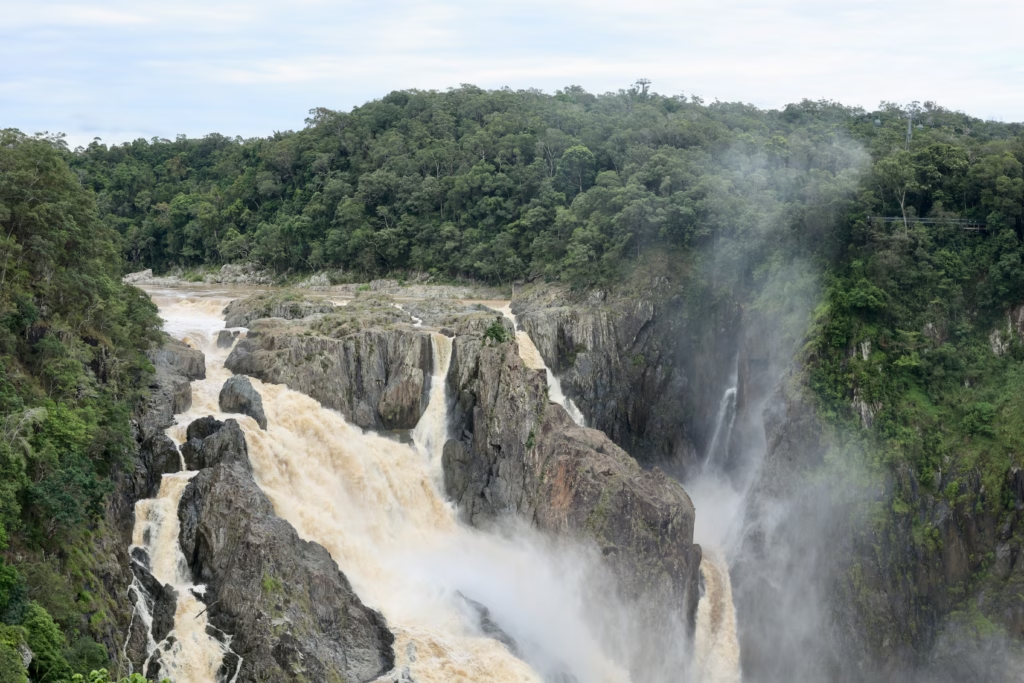
Step along the boardwalk a little further and the whole width of the falls opens up, several separate channels pouring over the same rock face rather than one single drop.
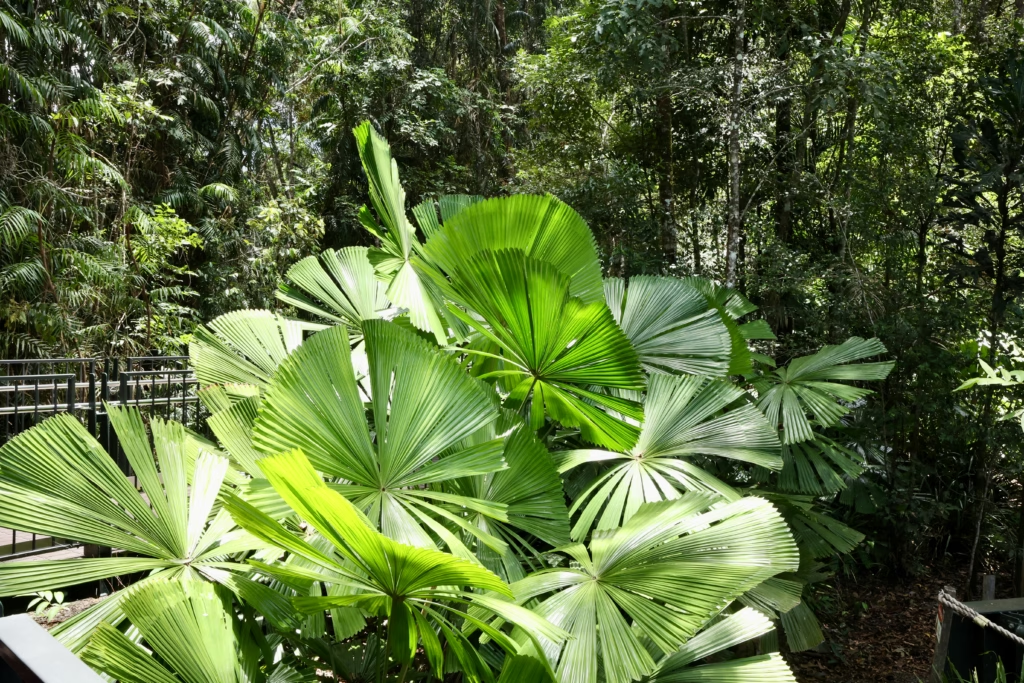
The boardwalk around the station is worth slowing down for too, not just the lookout itself.
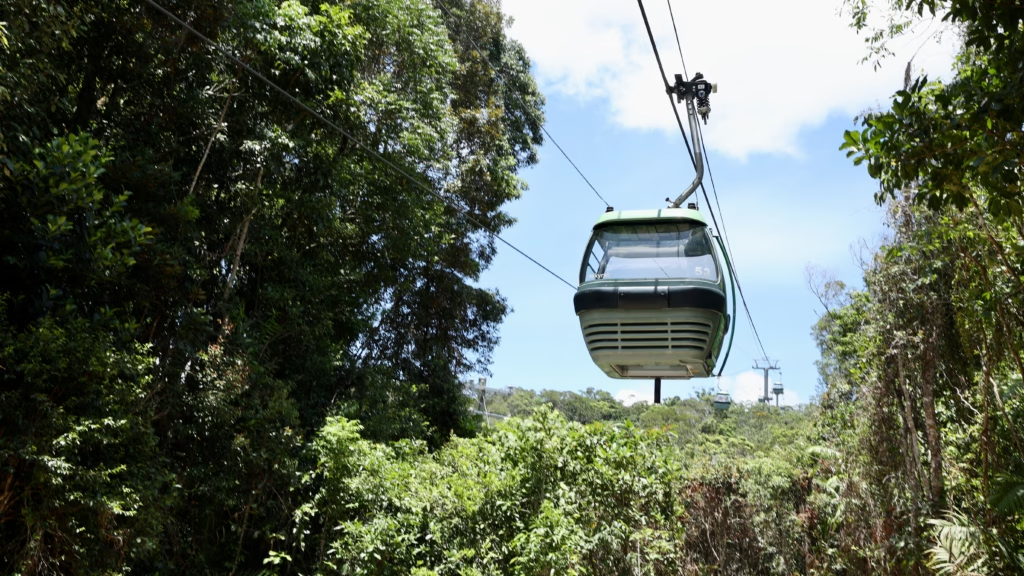
One moment I hadn’t expected: watching your own cabin approach the station from below before you reboard.
Back in the cabin, it’s a short final stretch into Kuranda, and the ride keeps giving right up to the terminal.
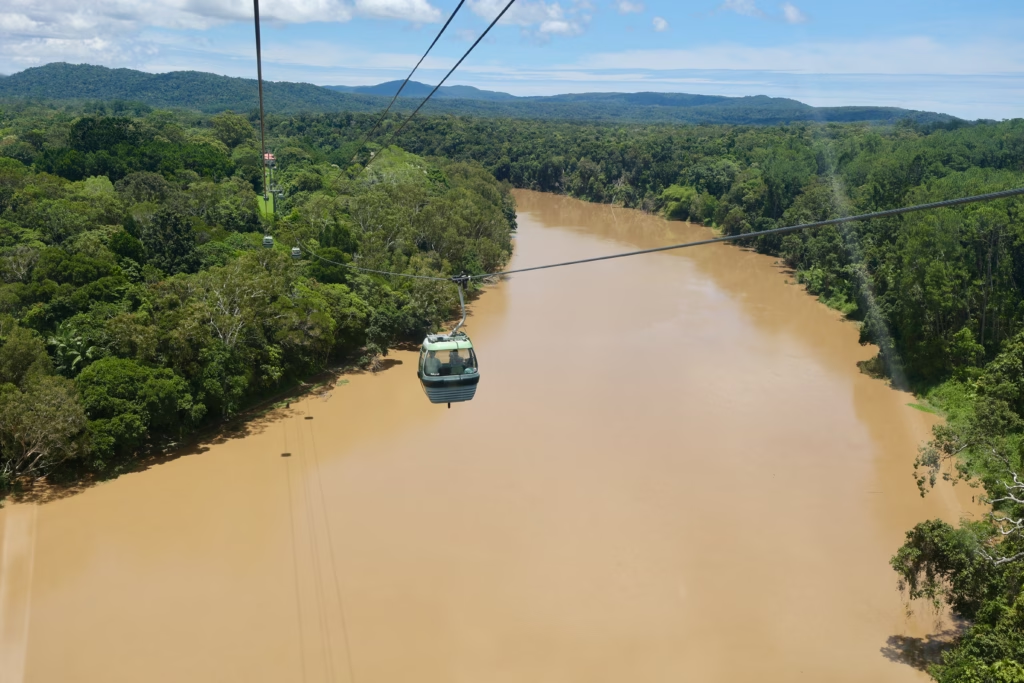
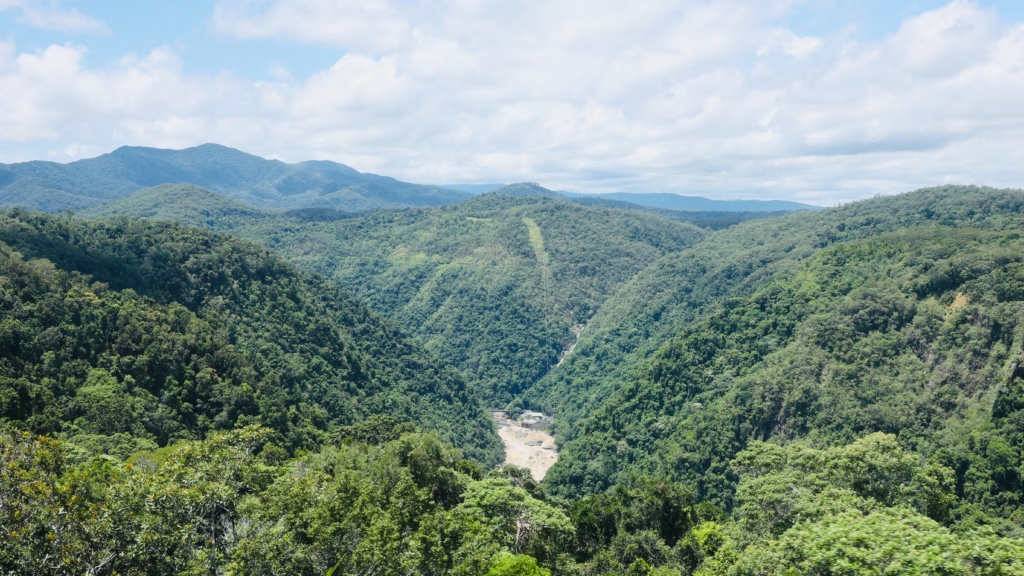
This is the same river that feeds Barron Falls further downstream, and seeing it this wide and this heavily silted from above gives a better sense of how much water was actually moving through the gorge that day. Not long after the river crossing, the forest starts giving way to the edges of the village itself.
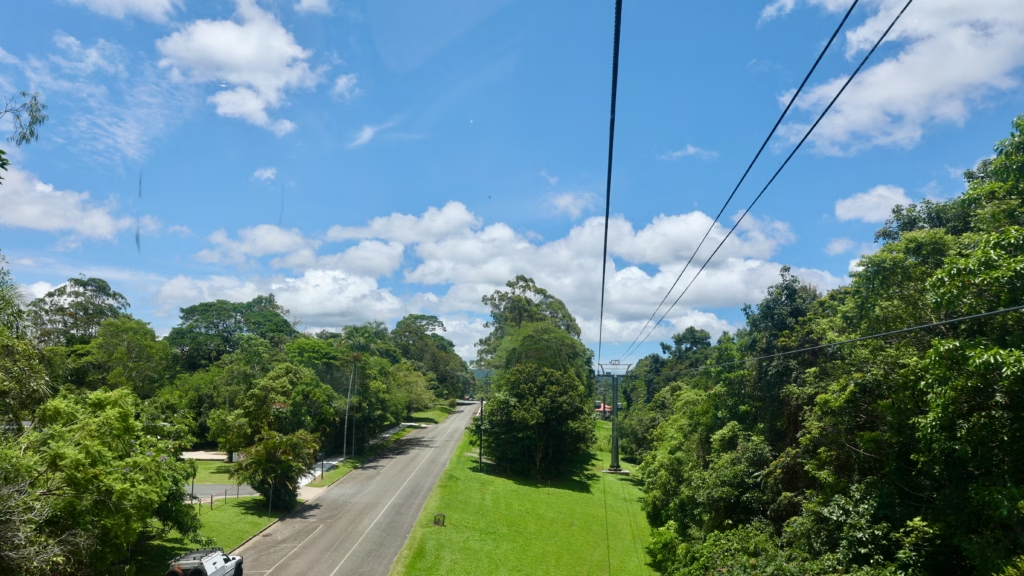
It’s a strange transition after nearly half an hour of unbroken canopy, rooftops, a parked car, a plain suburban street, and then the terminal building appearing in the trees ahead.
Kuranda Village: A Working Church Hiding Among the Souvenir Stalls
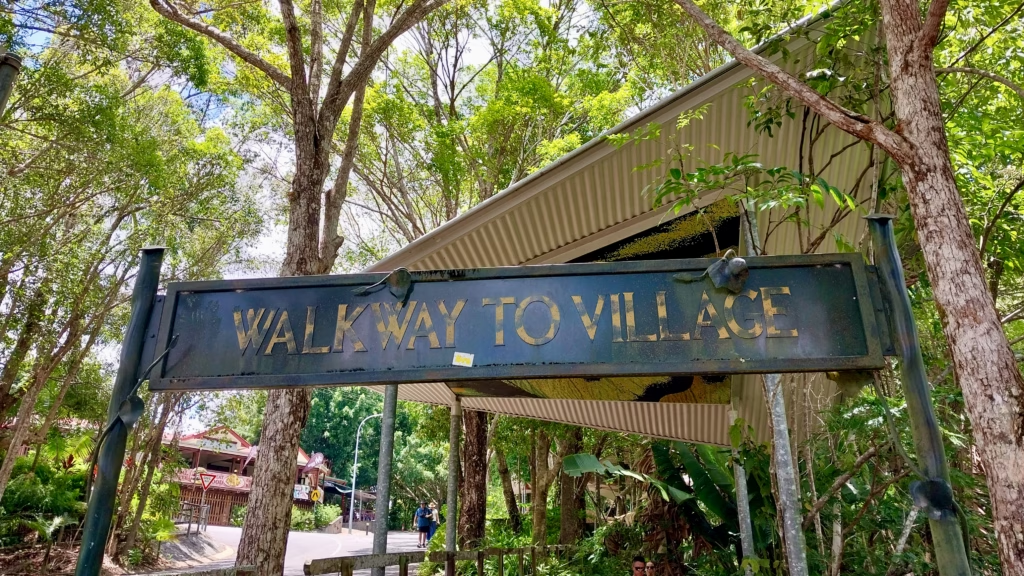
From the Kuranda terminal, it’s a walk through the village to reach Kuranda Koala Gardens, past a run of covered market stalls that make it easy to lose half an hour without meaning to.
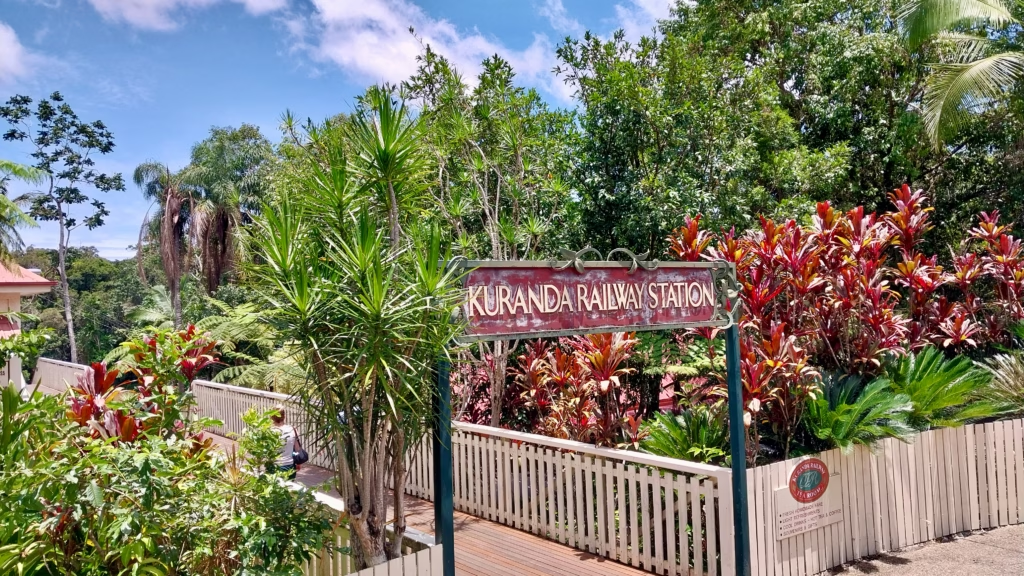
Stepping off Skyrail, the railway station itself sits close enough that you walk past its entrance before you’ve even started exploring, a small preview of where the day will end, hours later, on the way back down.
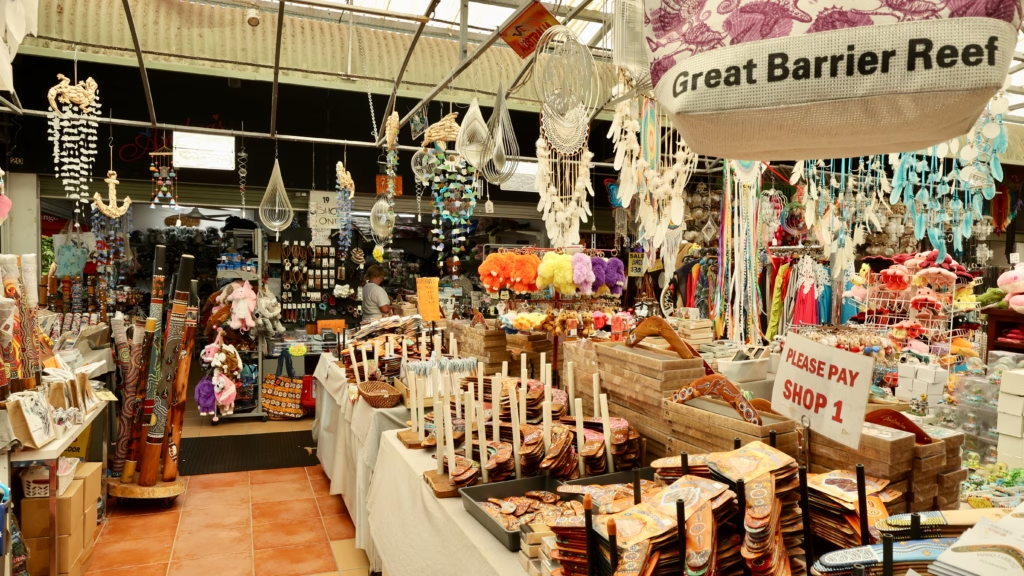
A few doors along, the same theme continues with a different specialist.
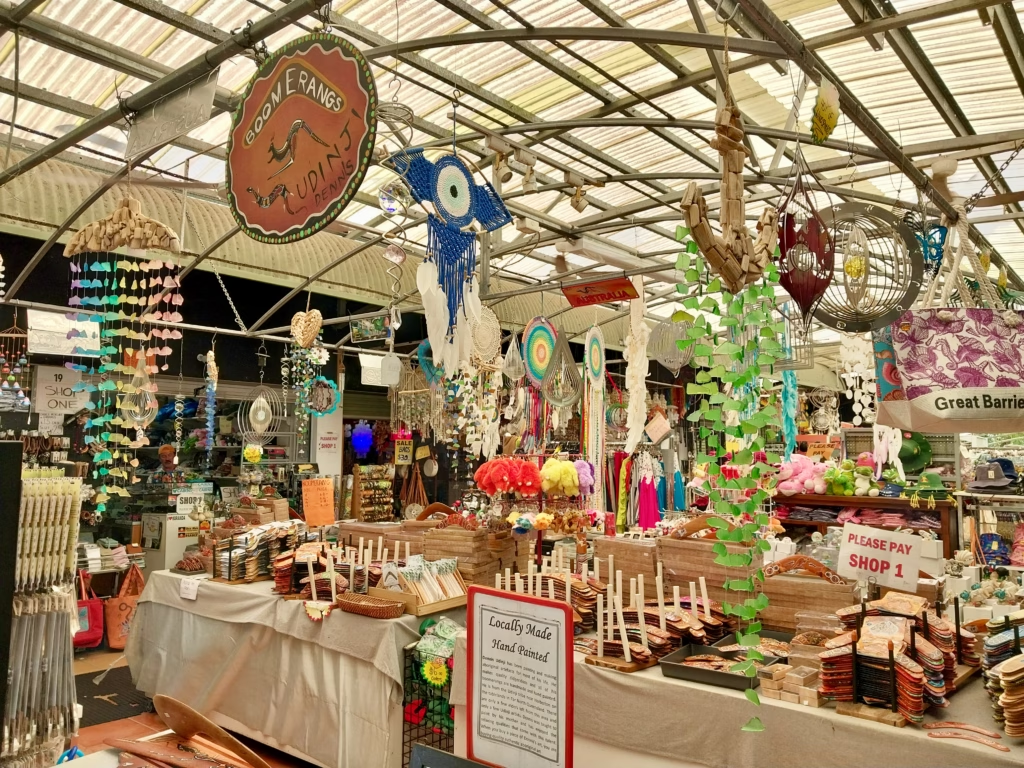
The stalls lean heavily on Aboriginal art and craft alongside the usual souvenir staples, hand-painted boomerangs stacked by the dozen, carved and dot-painted didgeridoos propped upright near the entrance. It’s the kind of shop where “just having a look” turns into fifteen minutes without much effort.
One stop most visitors walk straight past: St Saviour’s Anglican Church, a small timber building on Coondoo Street dating to 1913.
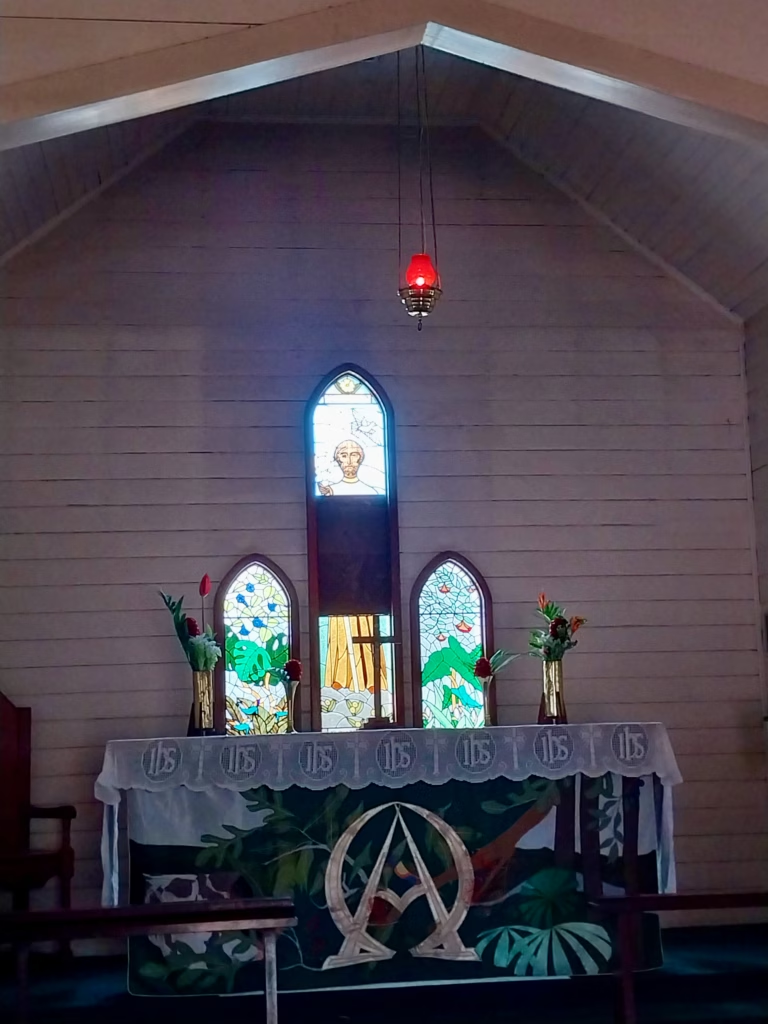
It’s unusually open to anyone who wants a few quiet minutes, and the stained glass alone is worth the detour, tropical foliage and birds rendered in glass rather than the traditional scenes you’d expect, a small, specifically local touch inside an otherwise plain timber building.
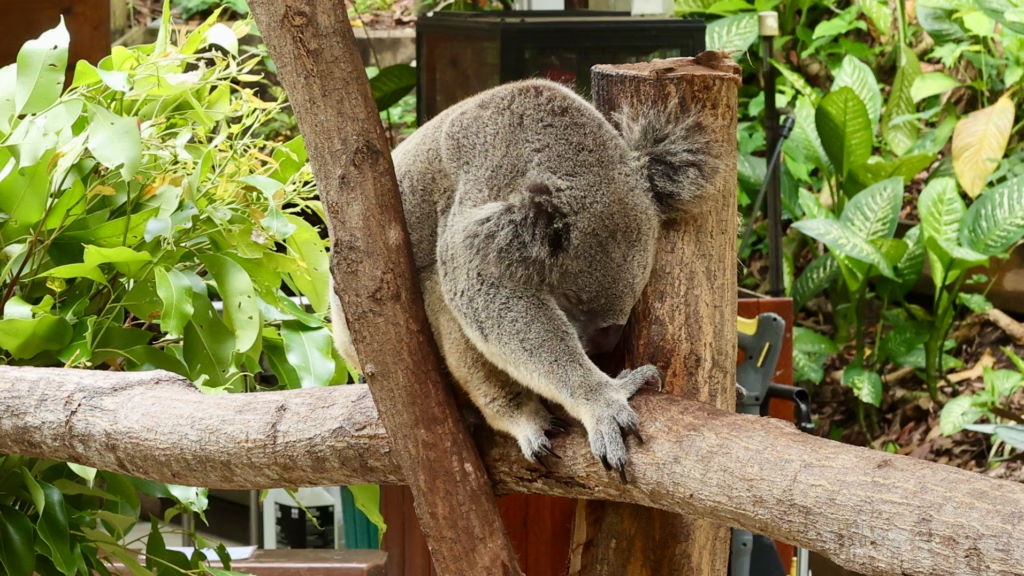
Kuranda Koala Gardens is further along the markets, and I came away with enough photos and enough to say about it that it earned its own separate write-up rather than a paragraph here.
Read the full Kuranda Koala Gardens guide, including whether you actually get to hold the koala.
The Train Back: A Proper Railway, Not a Toy One
If Puffing Billy in Victoria felt like a narrow-gauge steam train having a lovely day out (I’ve written about that one separately), the Kuranda Scenic Railway felt like the real thing. It’s a full-sized heritage train, and standing on the platform, I could easily imagine locals using it as an actual commuter service.
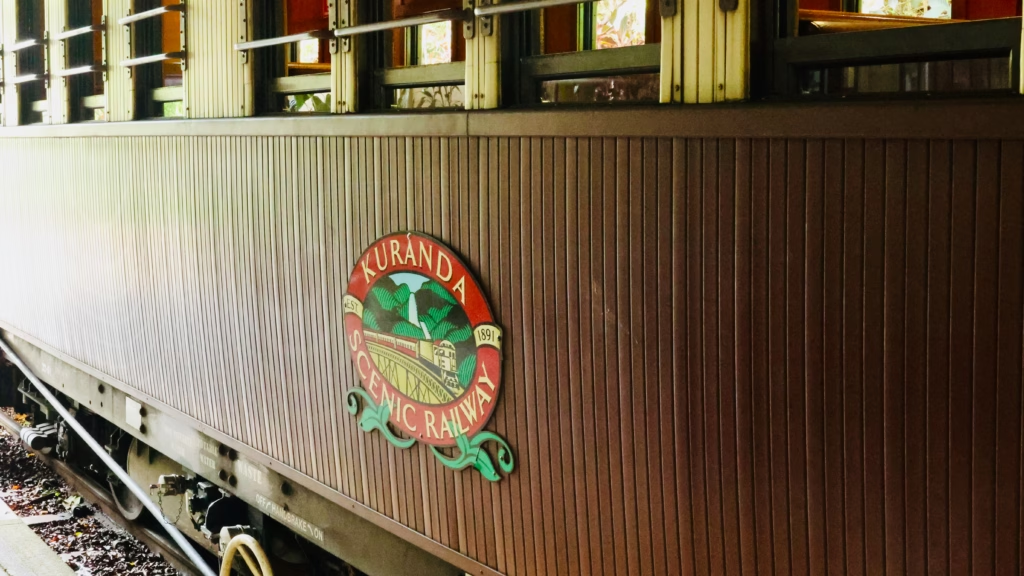
Built by hand between 1886 and 1891, cut through some of the steepest terrain in Far North Queensland, workers carved 15 tunnels and built 55 bridges directly through the mountain without the machinery a project like this would use today. Both the State Library of Queensland’s own archival record and the railway’s operator put the toll at 32 lives lost during construction.
Kuranda Railway Station itself is worth a few minutes before you board, timber platform buildings and tropical gardens right up against the tracks.
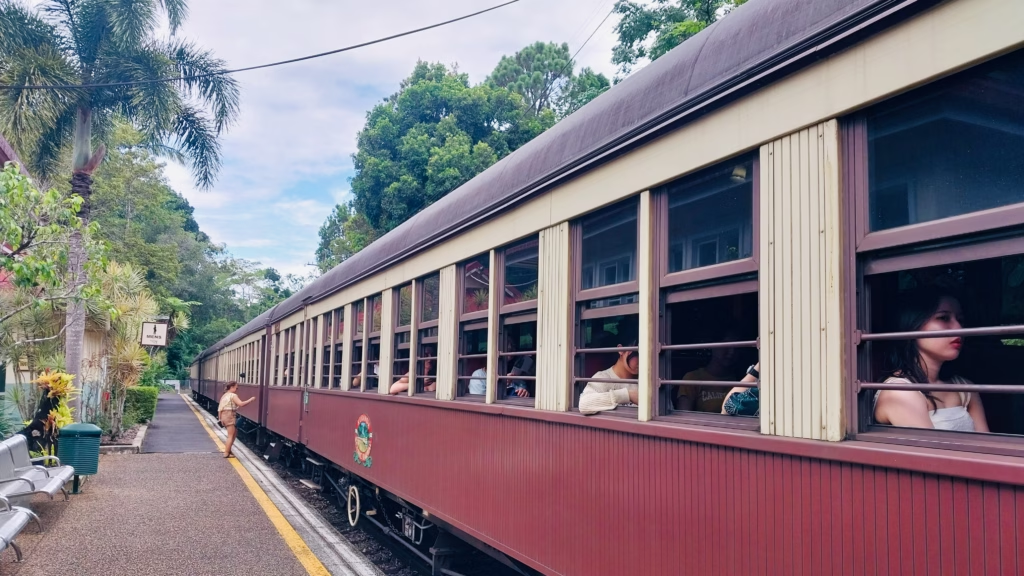
My train departed Kuranda at 3:30pm, and the journey down runs close to two hours. The carriages are timber-lined heritage stock, some more than a century old, and mine came with onboard commentary covering the history of the line and the Djabugay Bama, the traditional custodians of the land it passes through.
If you’d rather travel in a bit more comfort, Gold Class is available on the 9:30am and 9:55am departures toward Kuranda, and the 3:30pm return, the same service I was on, for $57 per person one-way, lounge seating, refreshments, and a dedicated host.
The ride down has three moments that everyone on board reaches for their phone for.
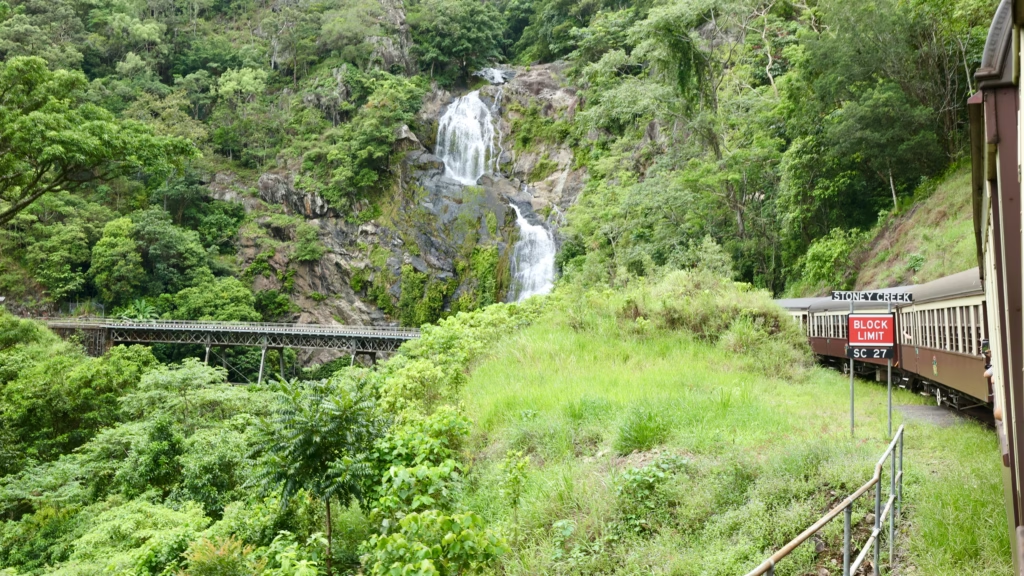
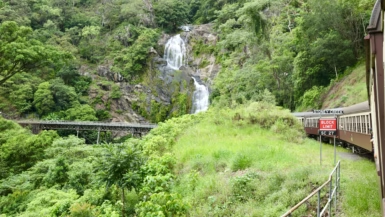
First, Stoney Creek Falls, where the train crosses a curved lattice bridge close enough to the cascade that you can feel the spray on a wet day.
Second, a fixed ten-minute stop at Barron Falls Station, giving the train’s own angle on the same waterfall Skyrail showed a few hours earlier, this time from a platform rather than a gondola.
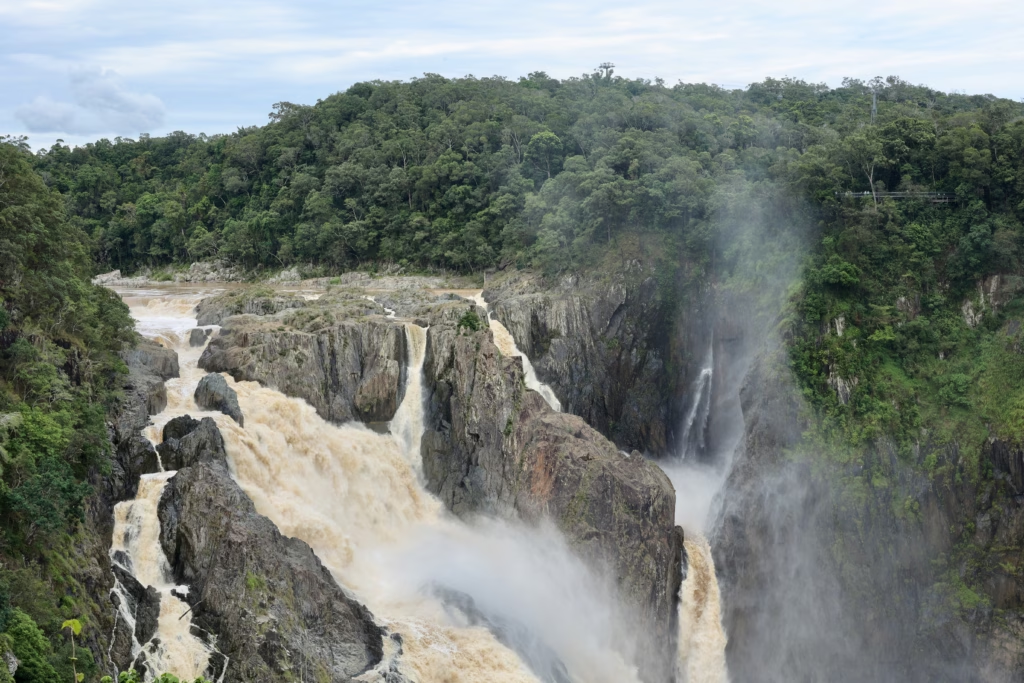
Skyrail’s lookout puts you across the gorge looking into it, side-on and distant. The train stop puts you almost level with the drop itself, close enough that ten minutes barely feels like enough once you’re jostling for a spot at the rail.
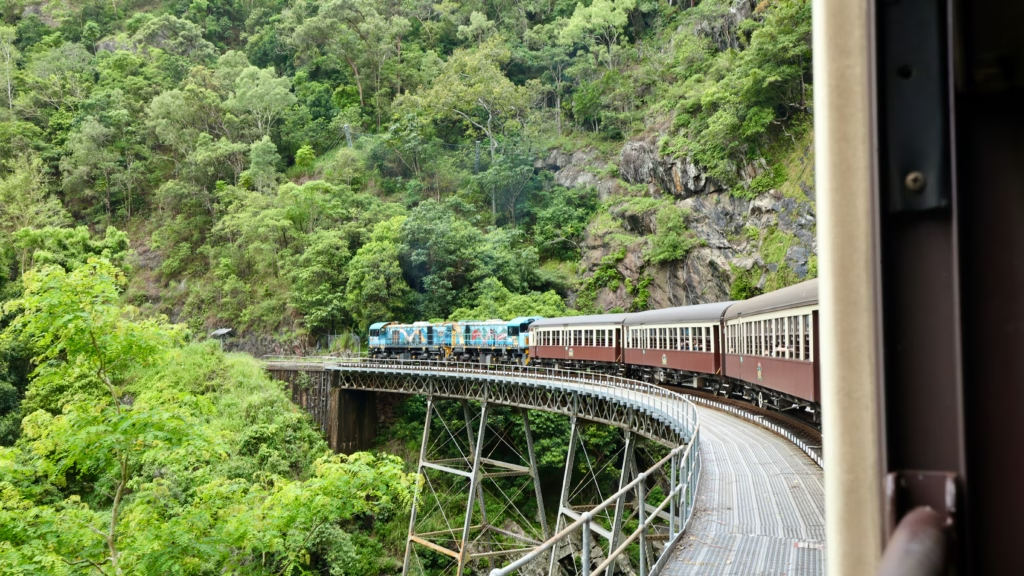
Third, the Jungara Loop, a full 180-degree bend where the train curves slowly enough to photograph your own carriages arcing around ahead of you.
Between the falls and the loop, there are 15 hand-carved tunnels along the line, and at some point they stop being a statistic in a history panel and start being something you’re actually rattling through.
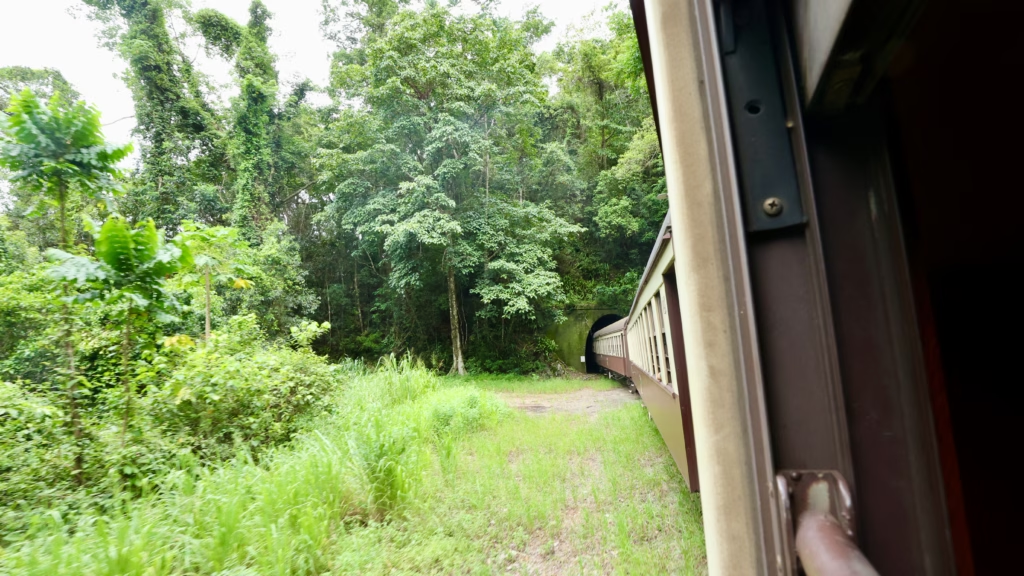
One last curve gives a final good look at the whole train moving as one piece before the terrain starts to change.
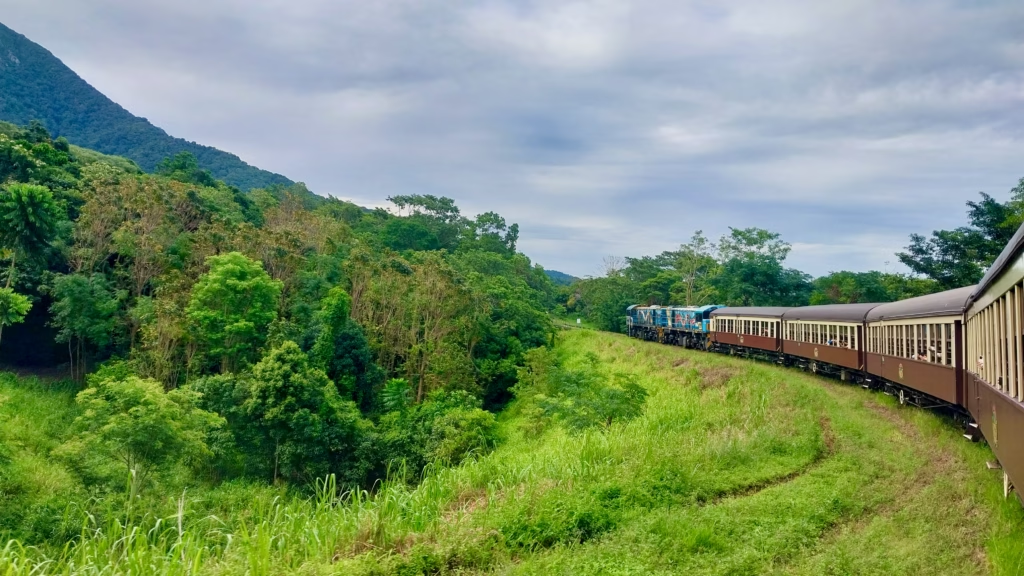
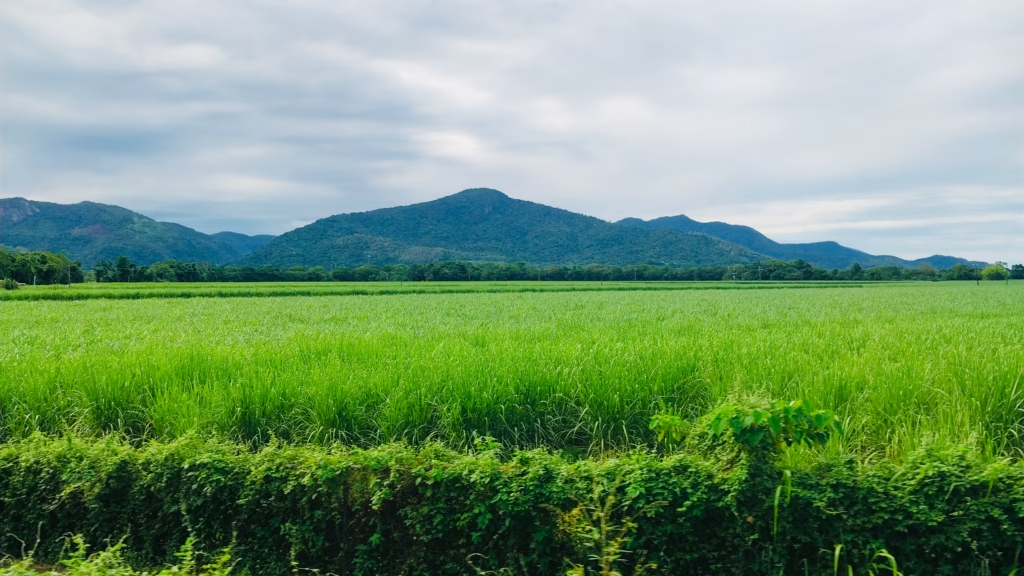
Past that last of the curves, the landscape changes fast. Dense rainforest gives way to open country, and within minutes you’re back among the cane fields that mark the run into Cairns.
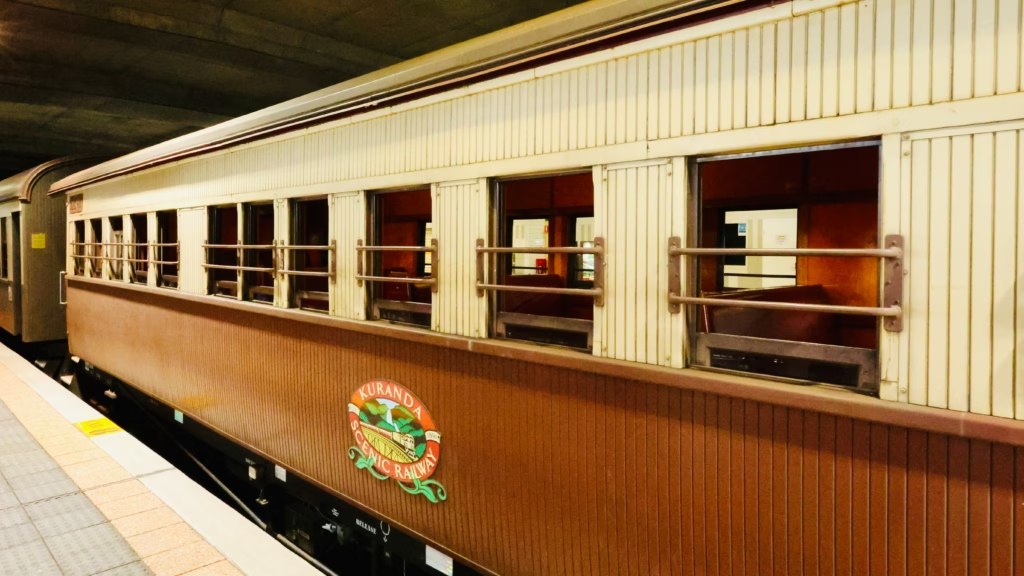
From there, it’s a flat, easy walk of about a kilometre through the CBD back to the Esplanade end of town, maybe ten minutes, past cafes and shopfronts the whole way.
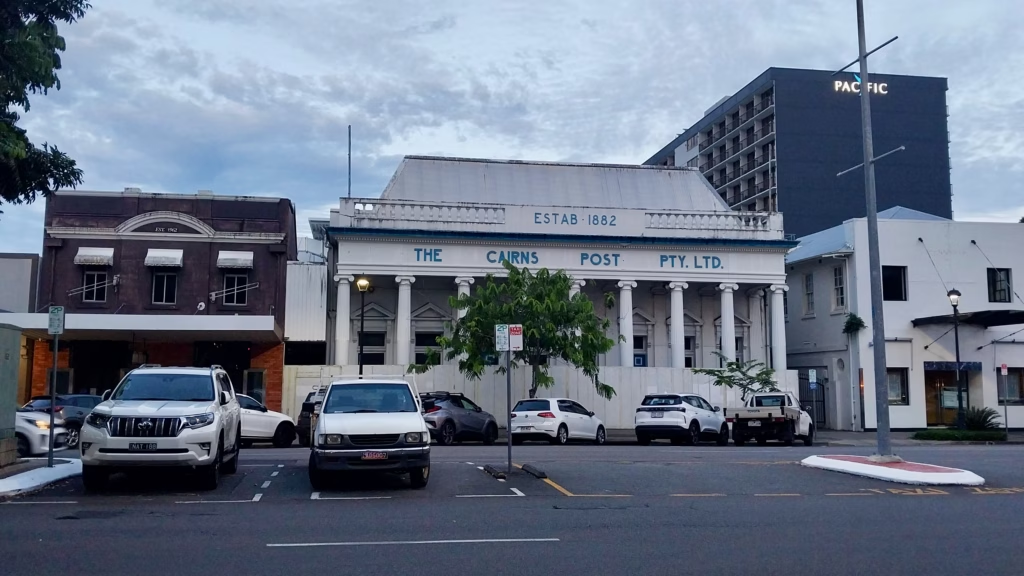
By the time I reached the Esplanade end of town, the streets had gone quiet in that particular way Cairns does at the end of the day — the same city I’d flown into from Melbourne a few days earlier, and written up separately — and the whole loop, hotel pickup to Skyrail to Kuranda to the train home, was done.
Skyrail Up, Train Down, or the Other Way Round?
Most guides land on “there’s no wrong choice.” I’d go a step further, because there’s a real, practical reason to pick one order over the other.
Skyrail up, train down (what I did): The train terminates at Cairns Central, a short walk from the CBD. After alighting, I simply walked into town and had my evening free, no transfer needed.
Train up, Skyrail down (the reverse): Scenically it works just as well, but it finishes at Skyrail’s Smithfield terminal, on the northern outskirts of Cairns. Unless you’re self-driving, you’ll need a shuttle back into the city from there.
Neither order is wrong. But if you’d rather walk straight into your evening without arranging a transfer afterwards, mine has the edge.
How the Day Works, Step by Step
- Book online in advance. I used the combined Skyrail, Kuranda and Rail Tour with hotel transfers, one booking covers pickup, both one-way tickets, and drop-off.
- Confirm your hotel pickup time the night before. Mine collected me at 9:40am for a 10:30am Skyrail departure.
- Arrive at Smithfield with time to browse the souvenir shop, cafeteria, and toilets before queuing.
- Queue for your gondola. Cabins depart continuously, no assigned seat number.
- Stop at Red Peak for the ranger walk. Free, brief, and the only guided moment of the day.
- Continue to Barron Falls Station for the lookout before rejoining the gondola into Kuranda.
- Walk into the village, past the markets and St Saviour’s Church, then on to Kuranda Koala Gardens if you’re doing it.
- Get to Kuranda Railway Station early to explore the platform before boarding.
- Watch for Stoney Creek Falls, the tunnels, and the Jungara Loop on the way down.
- Arrive at Cairns Central and walk into the CBD, roughly ten minutes, to finish the day.
Other Ways to Do It
If you’d rather not book Skyrail and the train separately, or want a different combination:
FAQ
Can you do Skyrail and the Kuranda Scenic Railway on the same day?
Yes, this is the standard way most visitors experience Kuranda, either as a combined ticket or booked separately.
Which order is better, Skyrail up or train up?
Skyrail up and train down is the more convenient order, since the train finishes at Cairns Central, walkable into town. The reverse means arranging a shuttle back from Skyrail’s Smithfield terminal.
Does Barron Falls actually run low most of the year?
Outside the wet season, yes, a hydro station upstream diverts most of the water. During the wet season (roughly December to April), it can run in full, thundering flood, as it did on my visit.
How old is the Kuranda Scenic Railway?
Built between 1886 and 1891, making it well over 130 years old.
Is there anything worth seeing in Kuranda village beyond the markets?
Yes, St Saviour’s Anglican Church on Coondoo Street, built in 1913, is open to visitors and easy to miss among the souvenir stalls.
Is Skyrail affected by the 2026 upgrade?
Yes, in stages. It’s fully closed 20 July to 18 August 2026, then running a modified Kuranda-to-Barron-Falls loop, Wednesday to Sunday, until 25 October 2026. Check Skyrail’s own site for the current calendar before booking travel in that window.
Would I Do It Again?
Yes, without hesitation. What stays with me isn’t really the falls, or the tunnels, or even the rainbow sitting in the spray, it’s how much a single day can hold when you stop trying to optimise it and just let the order of things do the work for you. Skyrail up, a wander through a village that turned out to have more in it than markets, and a proper old train home. Nothing about the day felt rushed, and nothing about it felt wasted either.
If you take one thing from this whole write-up, let it be this: don’t overthink the “which order” question the way I did before I went. Book Skyrail up, train down, and spend the time you’d have spent deliberating actually looking out the window instead.
PS: Read the Kuranda Koala Gardens write-up next, for the koala patting photo, the wombats, and the bird park right next door. And if you’re planning both Queensland and Victoria, Puffing Billy is worth comparing against this one, same idea, completely different feel.
And if you did this the way I did, the next day was Millaa Millaa Falls and the Atherton Tablelands, a full day of waterfalls and a very different, much wetter kind of rainforest day.
This was one day inside a longer run through the region, see the full 7-day Cairns itinerary for how it all fits together.


Leave a reply