
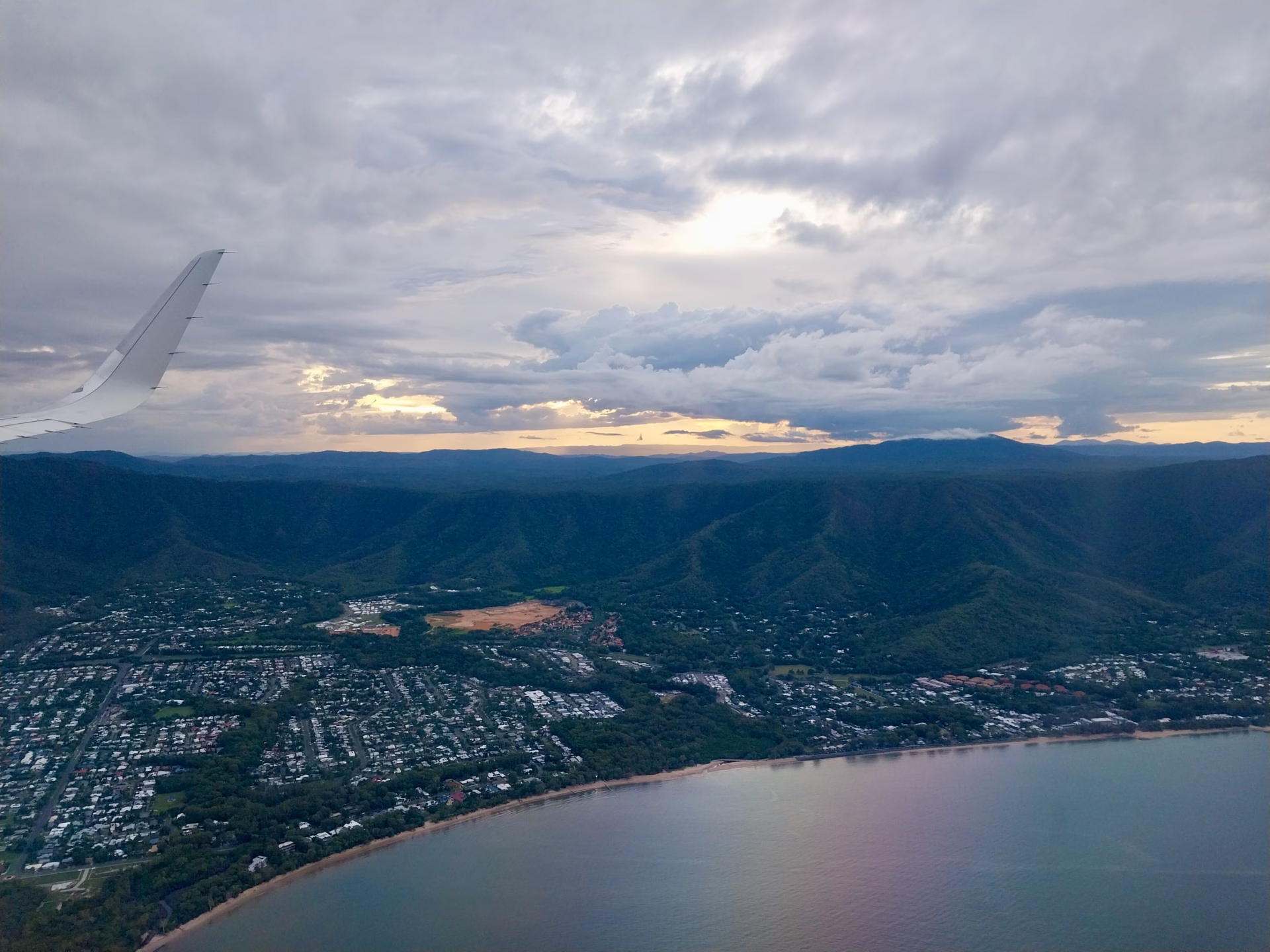
Cairns isn’t really the destination – it’s the gateway. I flew this route in January 2026 while making my way around Australia. Five days in Melbourne, then a straight shot north into the tropics: you leave laneways and coffee culture in the cool south and land in Far North Queensland’s heat and rainforest a few hours later. This is where you base yourself for the Great Barrier Reef, and the rainforest and waterfalls of the Atherton Tablelands are a day trip away in the other direction. If you’re planning the same route, here’s what the flight and the arrival actually involve.
Quick Facts
- Flight time: ~3 hours 20 minutes
- Distance: ~2,325km
- Direct airlines: Jetstar, Qantas, Virgin Australia
- Time difference: +1 hour in Queensland during Victoria’s daylight saving period (Oct-Apr)
- Airport to city: ~10 minutes, AU$21 by Uber or AU$25-35 by taxi
The flight from Melbourne
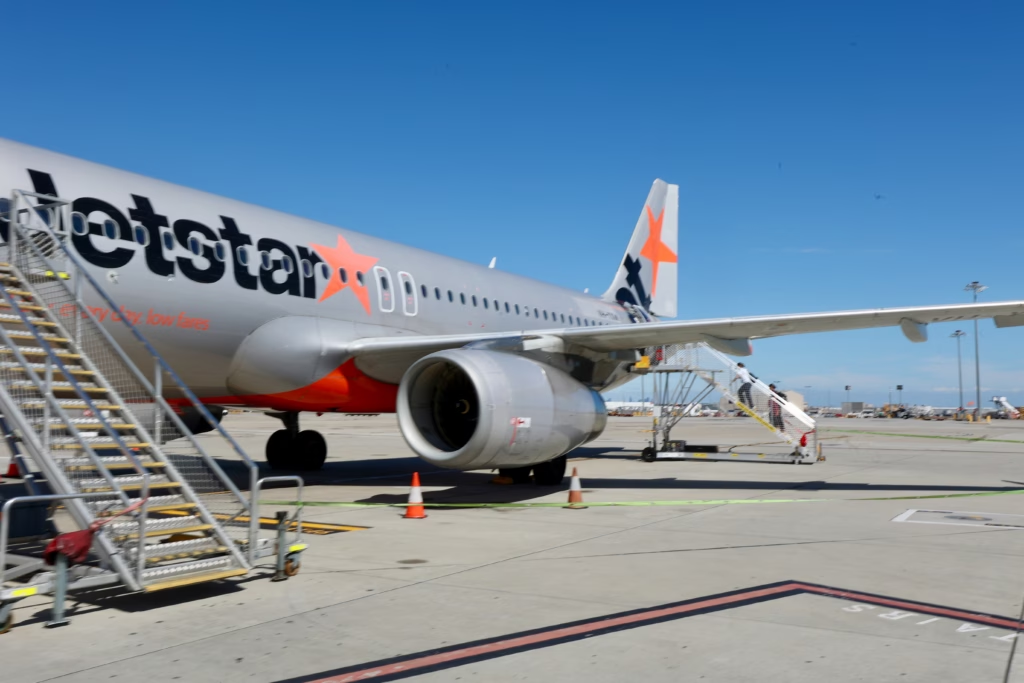
I flew Jetstar JQ942, departing Melbourne at 4:25pm on a Saturday and landing in Cairns at 6:45pm – 18:45 local time. On the clock that’s 2 hours 20 minutes, though the actual flight time is closer to 3 hours 20 minutes: Queensland doesn’t observe daylight saving, so flying during Victoria’s daylight saving period (roughly early October to early April) gains you an hour, as it did for me. Outside those months, Melbourne and Cairns share the same clock.
My ticket came to AU$135 without checked luggage.
I flew carry-on only, and learned the hard way that Jetstar weighs cabin bags at the gate. Mine came in over the 7kg limit, and the fee to sort it out on the spot was noticeably higher than what you’d pay pre-booking a checked bag online. Jetstar ran this route reliably and on schedule otherwise, so it’s not a reason to avoid the airline – just know the gate-weighing habit before you book. If there’s any chance your carry-on is borderline, weigh it before you leave home or add checked luggage during booking – gate prices are not the place to find out.
Which airline for your baggage
Jetstar fares often look cheaper upfront, but they’re the airline most likely to weigh your cabin bag at the gate and charge you if it’s over. Virgin Australia tends to run a bit pricier but is generally more relaxed about cabin bag weight. If you’re travelling with a backpack or carry-on that’s realistically over 7kg, it can be worth paying more for a Virgin fare rather than risking a Jetstar gate fee that wipes out the saving.
Update if you’re booking for 2027: Jetstar has announced it’s scrapping the 7kg weight limit entirely from 2 February 2027, moving to a size-based system instead. Every fare will include one free underseat bag (up to 40x30x20cm); anything bigger going in the overhead locker will need a paid “Priority Carry-on” add-on. If your travel dates fall after that, the gate-weighing stress described above won’t apply to you – though budget for the overhead bag fee if you need one.
Which airlines fly Melbourne to Cairns?
Three carriers cover this route: Jetstar, Qantas, and Virgin Australia, running roughly 50 combined weekly departures between them (this shifts with the season, so treat it as a ballpark). It’s one of the more frequent domestic routes in the country, so if you’re flexible on timing there’s usually a reasonable fare somewhere in the week.
| Jetstar | Virgin Australia | Qantas | |
|---|---|---|---|
| Fare positioning | Budget | Mid-range | Premium |
| Cabin bag policy | Weighed at the gate until 2 Feb 2027, then size-based with paid overhead-locker add-on | Generally relaxed on weight | Generally relaxed on weight |
| Free checked bag | No (add-on) | Yes, on most fares | Yes, on most fares |
| In-flight WiFi | Not standard – rollout so far covers international and select long domestic routes | Available on select aircraft | Available on select aircraft |
| Best for | Tightest budget, travelling light | Flexible baggage without the premium price | Status/loyalty perks, full-service comfort |
Fares shift constantly, so I’ve left exact prices out of this table – check current fares directly with each airline or through a comparison search rather than relying on a number that’ll be out of date by the time you read this.
Search Melbourne to Cairns fares:
If you’re not coming from Melbourne, Cairns is well connected regardless: direct domestic flights run from Brisbane, the Gold Coast, Sydney, Perth, and Darwin, alongside international connections to Auckland, Tokyo, Denpasar (Bali), Singapore, and Port Moresby. Worth knowing if Brisbane is part of your plans too: despite sharing a state with Cairns, it’s not exactly next door – the two cities sit about 1,386km apart as the crow flies, roughly a 2.5-hour flight, or close to 25 hours by the Spirit of Queensland train. Queensland is an enormous state, and Cairns sits right at its northern end.
Which side to sit on
Given the length of this flight (nearly double the short domestic hops you get down south, like Sydney to Launceston), it’s worth requesting a window seat if you can. More flight time means more of the country to watch go by, especially as the landscape shifts from grazing land to the reef-fringed coast on descent.
What the flight looks like from the window
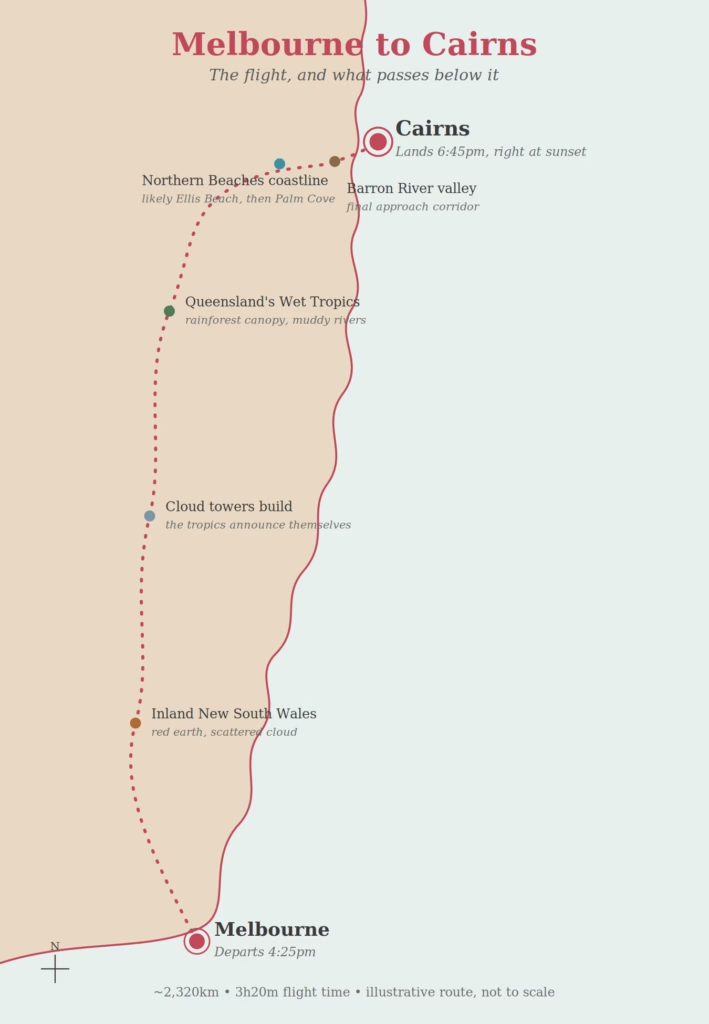
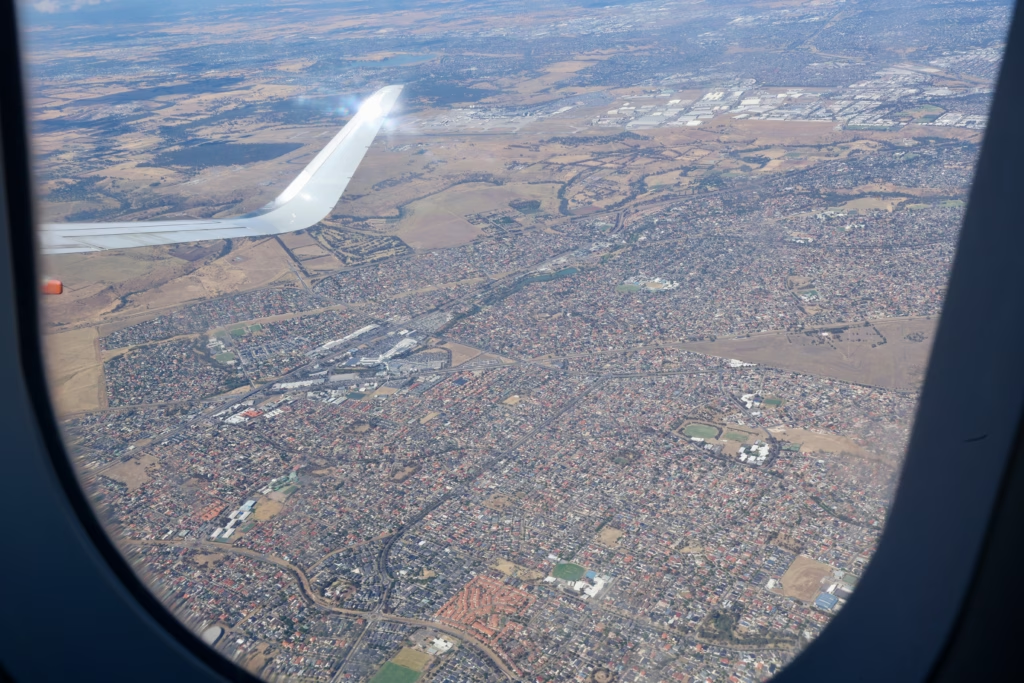
The view tells its own story on this route. Cairns Airport’s preferred runway means aircraft usually approach from the north, tracking down the coast before turning into the Barron Valley to land – when that’s the case, the coastal and valley views described below fall on the left side of the plane. It can flip if the wind calls for the opposite runway, so treat it as a good bet rather than a guarantee, and take whichever window seat you can get regardless.
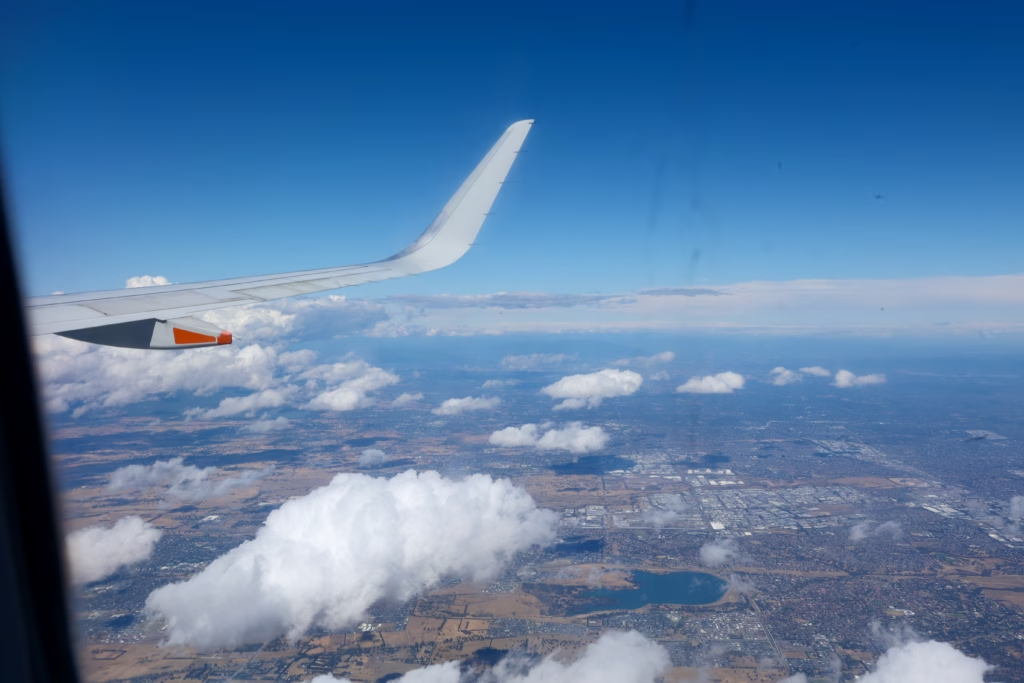
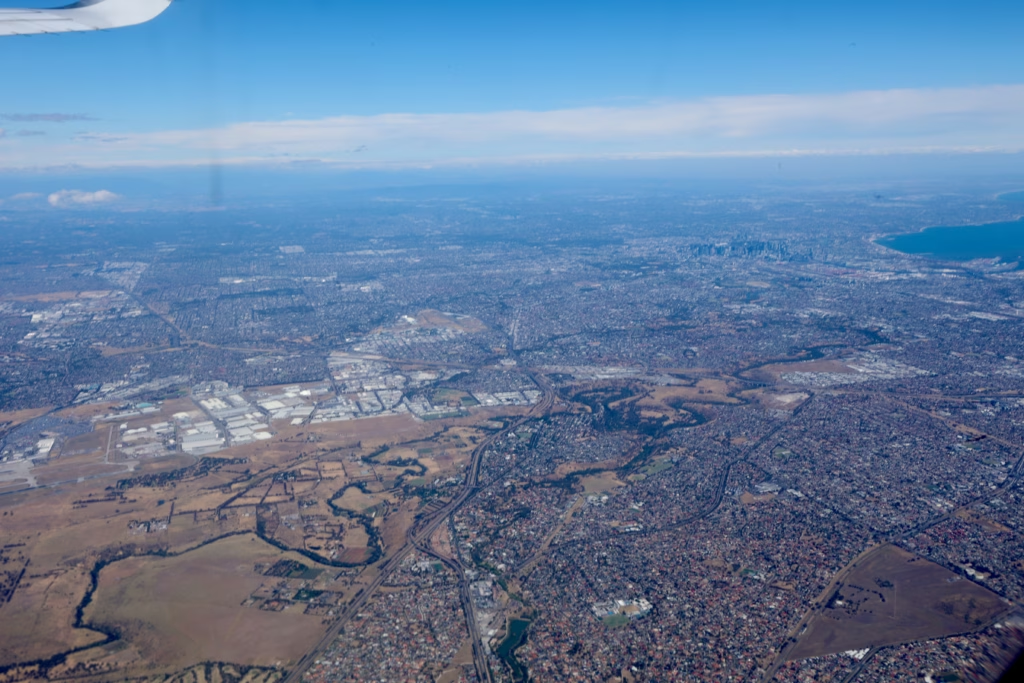
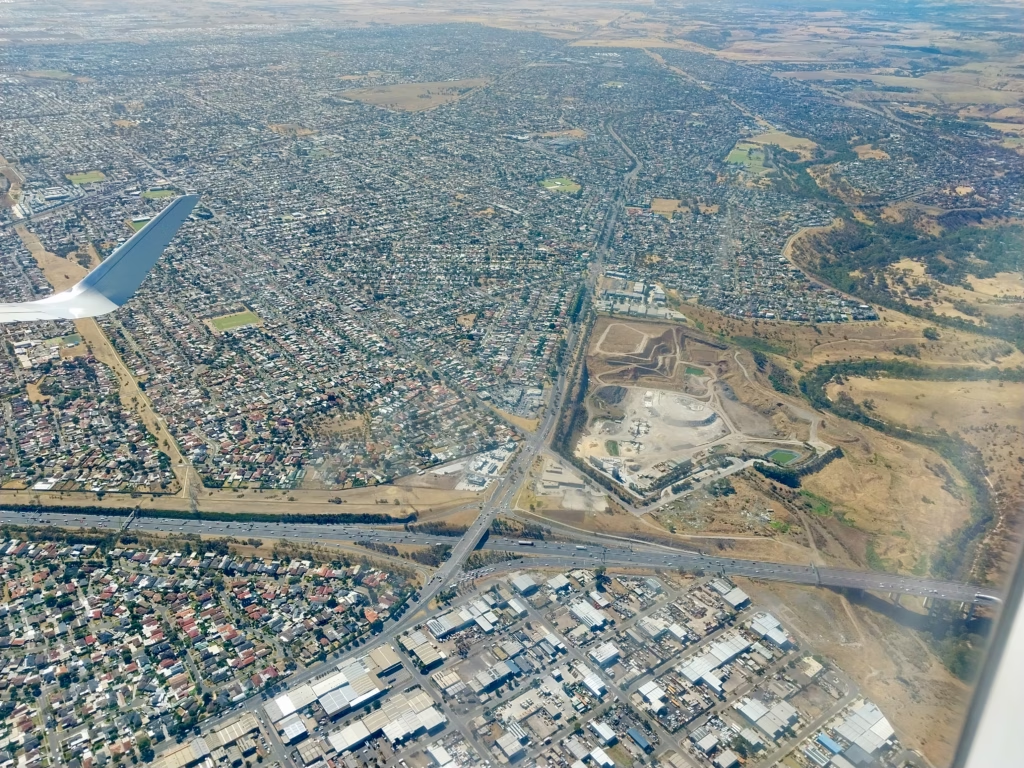
Leaving Melbourne, it’s dry paddocks and grid-pattern suburbs stretching to the horizon – the driest, most built-up scenery of the whole flight. The city doesn’t let go all at once either; freeways and industrial estates keep showing up well after the suburbs thin out.
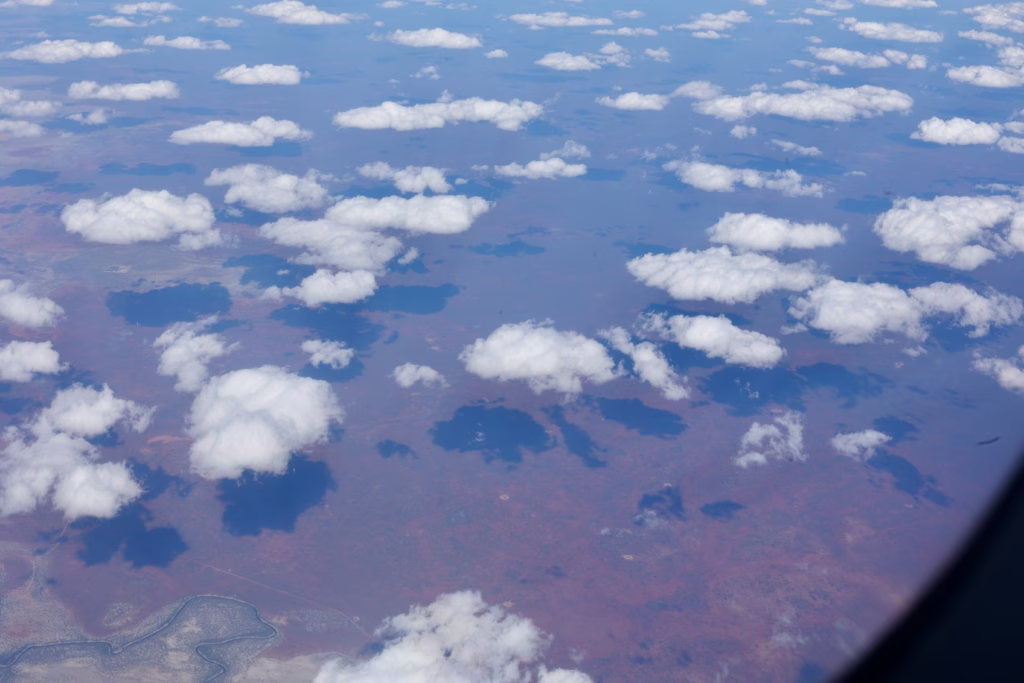
Somewhere over inland New South Wales the ground turns red and empty, broken up by scattered cumulus.
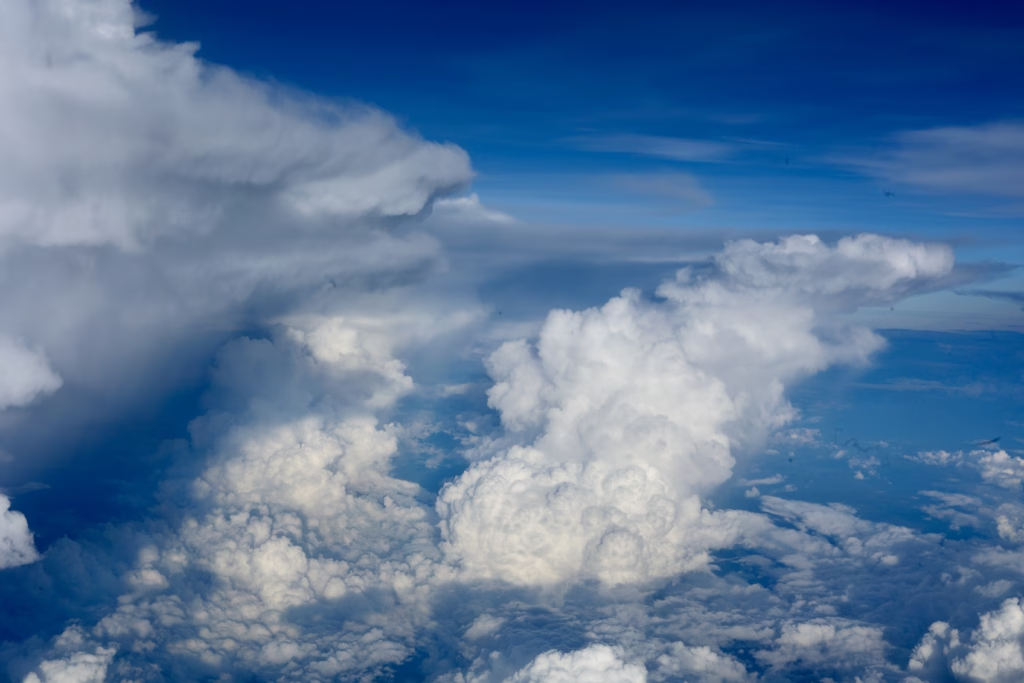
Further north, those scattered clouds start stacking into something bigger.
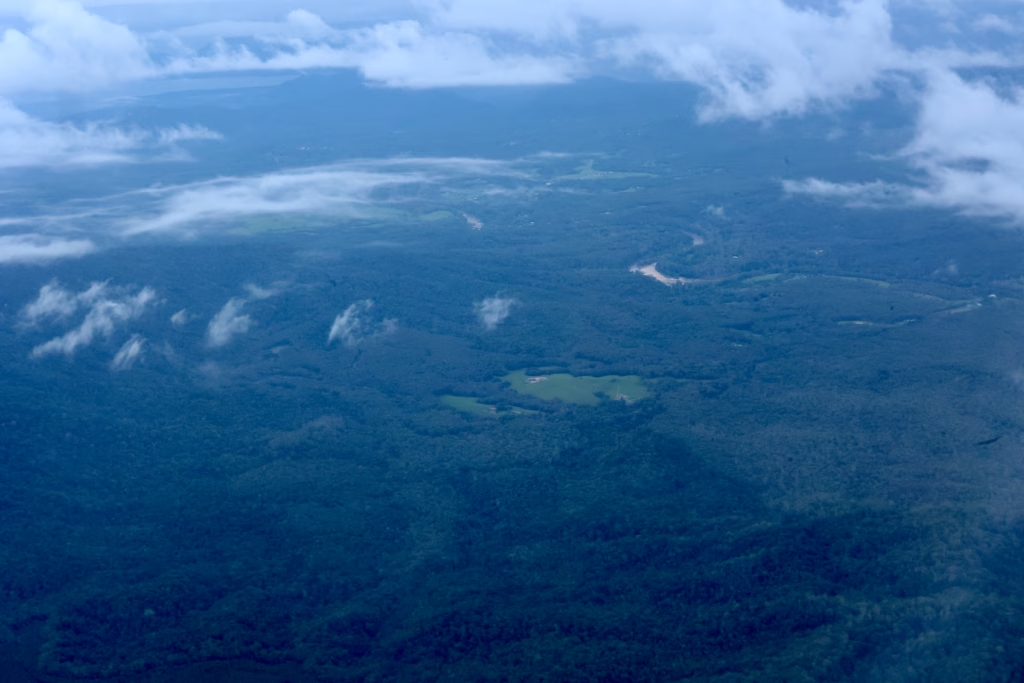
Then, somewhere past the halfway point, the ground turns green almost all at once. Rainforest canopy replaces paddocks, rivers run wide and muddy through the trees, and the cloud cover thickens into the kind of buildup you only see in the tropics.
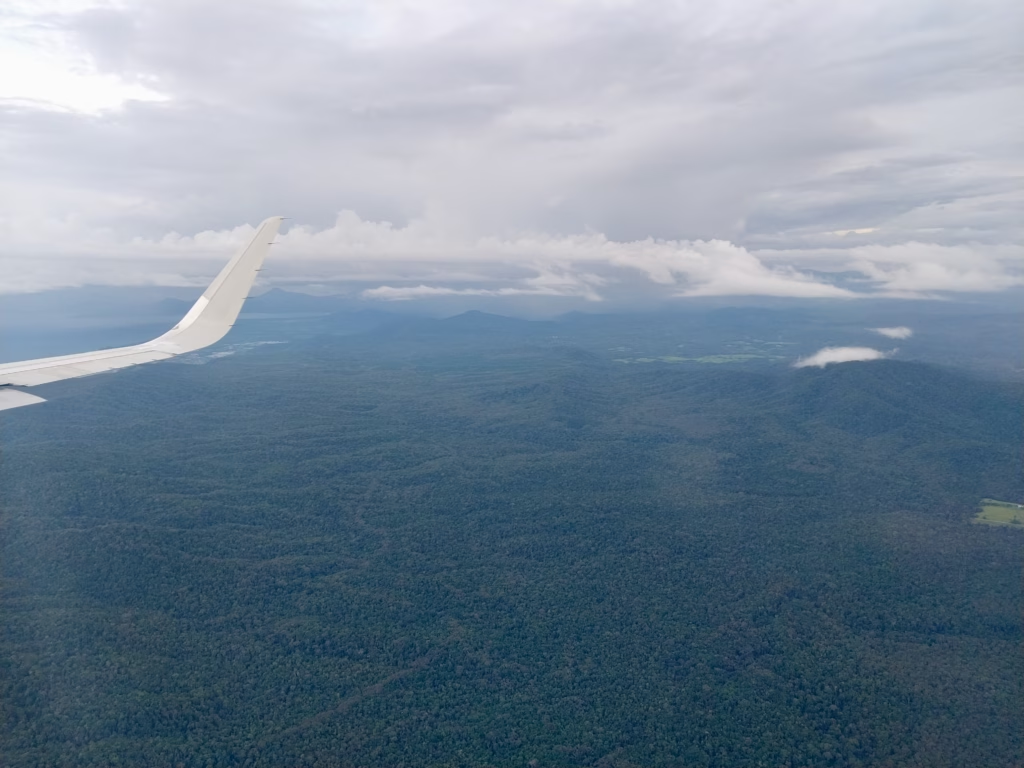
The coast doesn’t announce itself all at once. From altitude it’s just a hazy line on the horizon at first, barely distinguishable from the clouds around it.
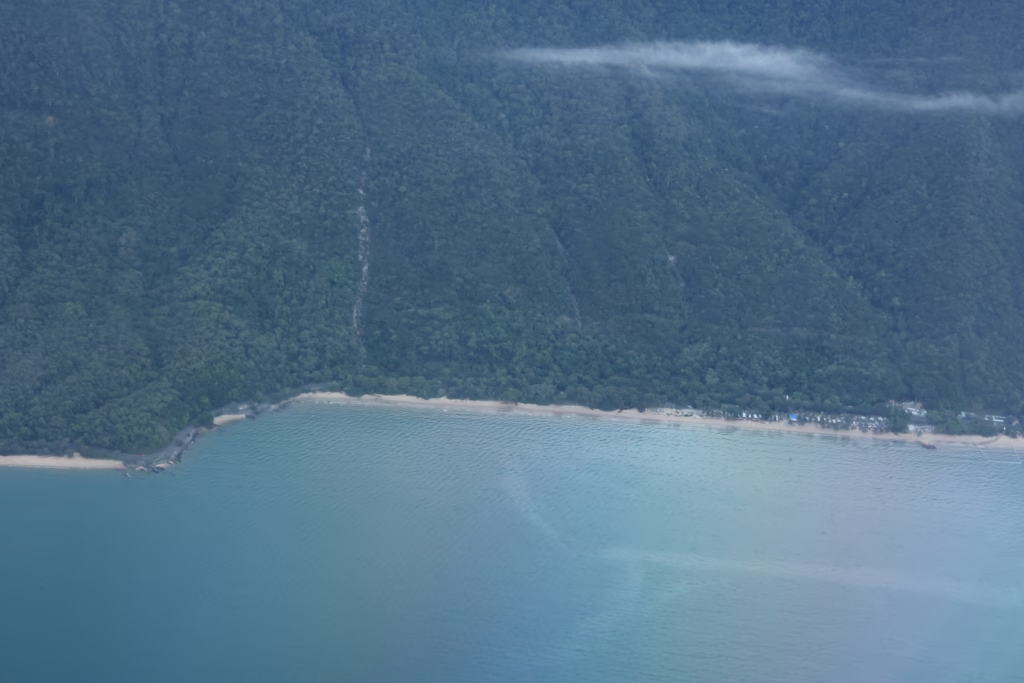
The coast itself shows up in pieces. First a stretch of beach with a scatter of low buildings and forested hills running right down to the sand – this one might be Ellis Beach or somewhere close to it along the Captain Cook Highway, though again I’m reading it from the landmarks rather than a confirmed GPS pin.
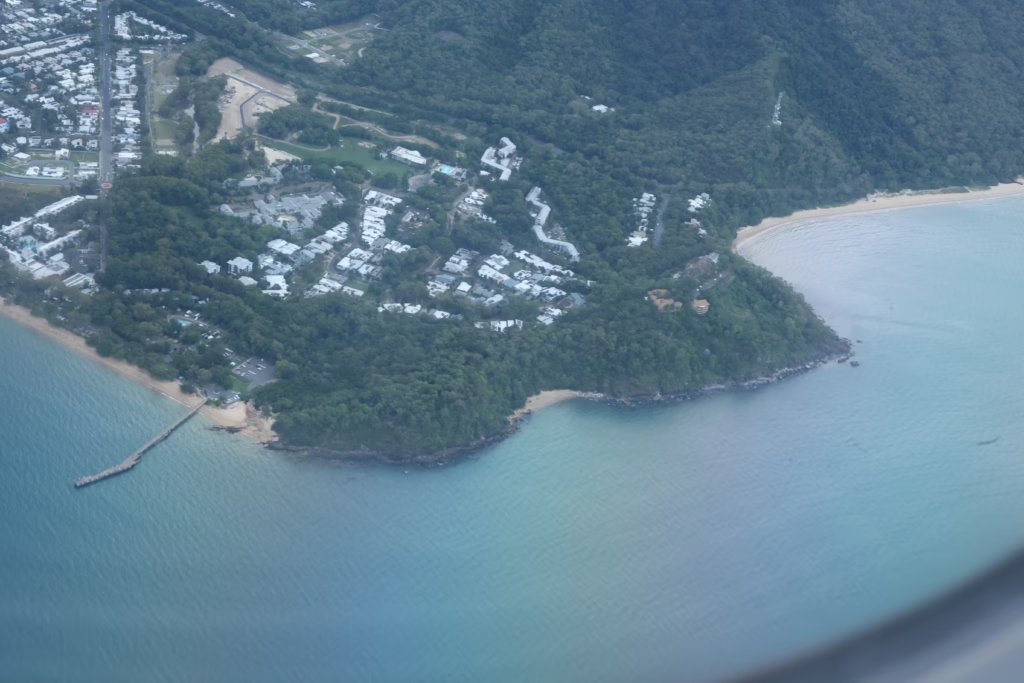
A few minutes later, the plane runs low along a more developed stretch of coastline. This next shot is Palm Cove, recognisable by its long jetty reaching out into the bay – I confirmed this later by actually visiting.
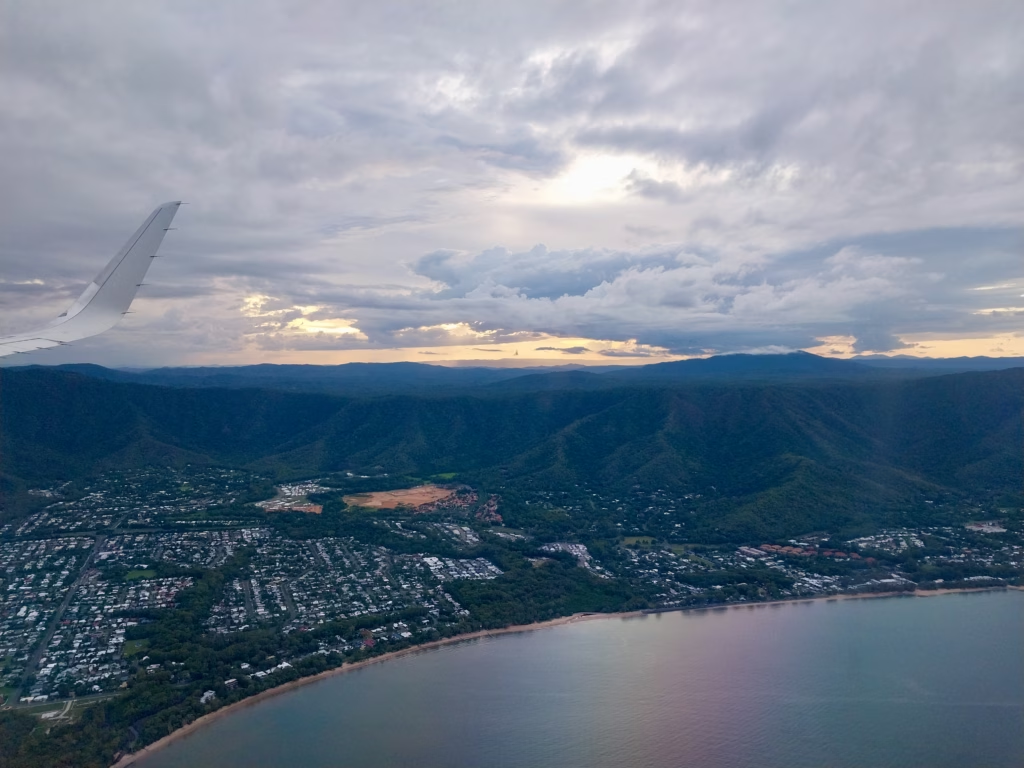
The flight landed right at sunset, and the last few minutes in the air turned into the best light of the whole trip. The plane continues south along the coast past more beach towns before banking inland.
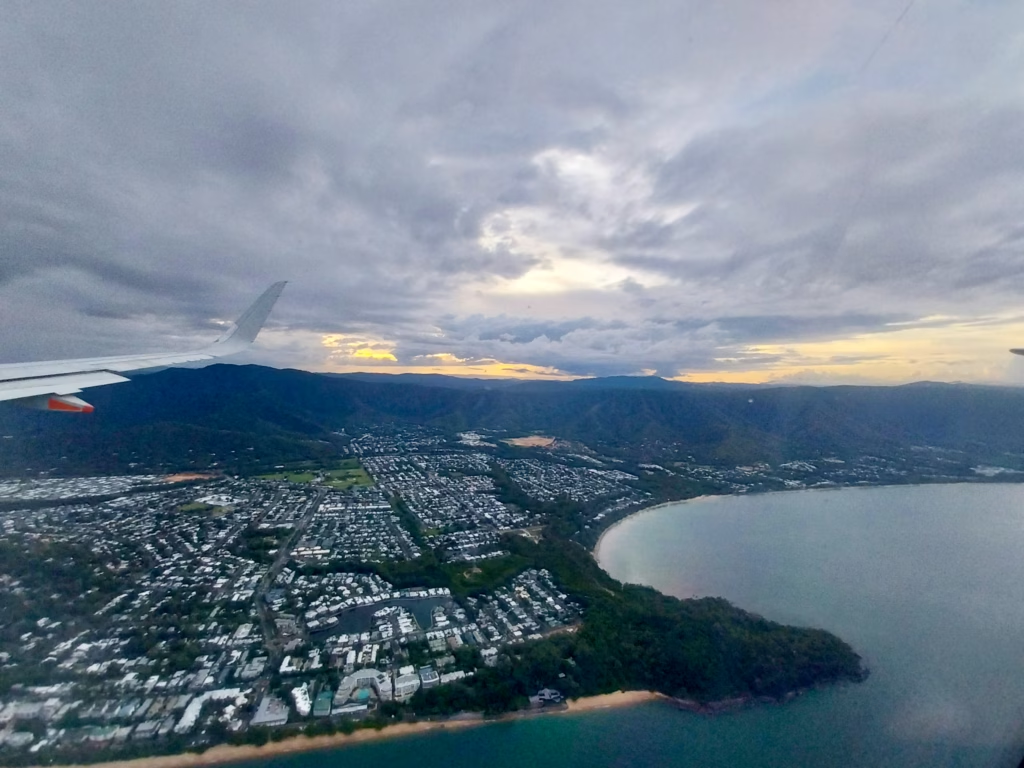
Seconds later, a headland and marina slide past below – likely Yorkeys Knob, going by the position along the coast, though I’m reading this one from the geography rather than a confirmed landmark too.
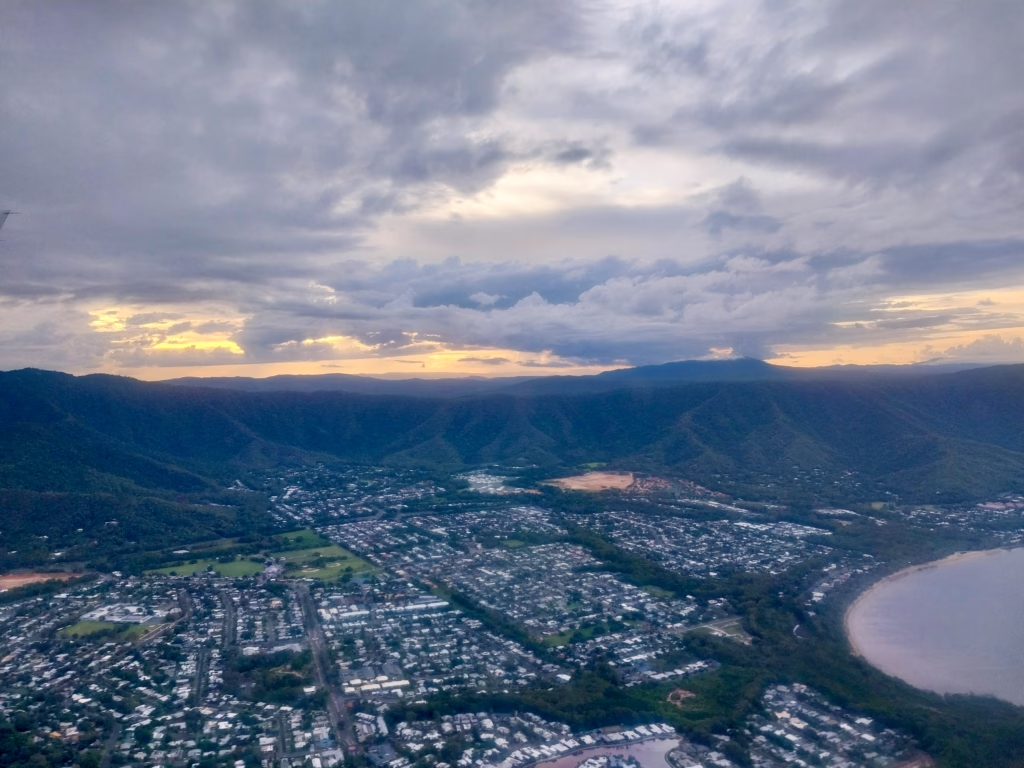
From there it drops into the Barron River valley for the final approach – mountains close on both sides, a township tucked into the gorge below, and the sky doing its best work of the day behind it.

By the time Cairns itself comes into view, the ranges behind the city are catching the last of the colour as the plane drops toward the runway.
Cairns Airport: what to expect
Cairns Airport is compact by Australian standards, though not as tiny as some regional airports – the domestic terminal has multiple gates and you’re through to baggage claim quickly. Flights from Melbourne, along with the rest of the domestic network, land at T2; T1 next door handles international arrivals. The walk from arrivals out to the taxi rank or rideshare zone is short and clearly signed – nothing like the longer hikes you get at Melbourne or Sydney. The terminal has a distinctly tropical feel from the moment you land: open-air sections, humidity that hits you before you’re even off the plane, and signage pointing straight toward reef tours and Skyrail transfers.
Getting from Cairns Airport to the city
The airport sits close to the city centre – a short trip in, whichever option you choose.
Uber
I took an Uber straight from arrivals to my hotel – about 10 minutes and AU$21. Ride-hailing pickup points are clearly signed outside the terminal, and it’s the easiest option if you’re arriving in the early evening as I was.
One thing worth flagging if you’re staying somewhere small: my hotel’s front desk had already closed by the time I arrived, even though it was only 7:45pm. They’d left check-in instructions in advance and we collected our key from a lockbox. If you’re checking into a smaller, family-run place on an evening flight, confirm their after-hours process before you land rather than assuming reception will be open.
Taxi
Taxis are available outside both terminals if you’d rather skip the app and go straight to a rank. Expect somewhere around AU$25-35 to the city centre, plus a small airport access fee added to the meter (roughly AU$2.50 from the domestic terminal). It’s a 10-15 minute ride either way.
Public bus
Worth knowing before you count on this option: there’s currently no direct public bus route that actually stops at the airport terminal. What exists today is a private shuttle, Sun Palm Transport’s “Airport Connect,” which runs from the arrivals area to a stop on Sheridan Street – from there you’d transfer onto the regular Kinetic (formerly Sunbus) network to reach the city or Northern Beaches. It works, but it’s a two-step journey with luggage, not a one-bus trip.
Not live yet
The Queensland government has confirmed a new direct service, Route 100, linking the airport straight to the CBD via Lake Street for just 50 cents under the state’s permanent low-fare policy, running 4am-10:30pm every 30 minutes. It’s the first direct public transport connection the airport will have had. It hadn’t launched as of when this post was written, so check current timetables before counting on it.
For now, Uber or taxi remains the practical choice for most arrivals, especially with luggage.
Rental car
If your plans extend beyond Cairns itself – Port Douglas, the Atherton Tablelands, or the Daintree are all easier with your own car – it’s worth picking up a rental at the airport rather than arranging one later. All the major providers have counters in the arrivals area, and comparing prices across them upfront tends to save more than booking with whichever desk you walk past first. I’ve used DiscoverCars to compare rates before – it pulls quotes from multiple local and international companies in one search.
Where I stayed in Cairns
I stayed at Queens Court in Cairns North for five nights in January, which put me within easy reach of the Esplanade, the Reef Fleet Terminal, and the tour pickup points for Skyrail and the Atherton Tablelands. It’s a plain, family-run motel rather than anything flashy, but the location did a lot of the work for the rest of the trip.
Sheridan Street itself turned out to be a good vantage point for something I didn’t expect: Cairns barely feels like Australia at all once you’re actually walking around it. I’ve written up what the city centre is really like separately, since it deserves more than a side note here.
Where this fits in a longer Australia trip
This flight was one leg of a wider route across the country: Sydney to Launceston, Launceston to Hobart, Hobart to Melbourne, Melbourne to Cairns, and finally back to Sydney to fly home. If you’re stringing together a similar multi-city itinerary, Cairns works well as the last major stop before the final leg home – going from Melbourne straight to the reef and rainforest is the biggest contrast in the whole trip, and it means you end on the most visually dramatic stretch rather than working backwards from it.
Before you fly
- Pre-book any checked luggage online rather than risking the gate fee – it’s significantly cheaper
- Weigh your carry-on before you leave home if you’re flying Jetstar before 2 February 2027 and cutting it close to 7kg – after that date, it’s about bag dimensions instead
- Have your Uber app ready with payment set up before you land
- Remember the one-hour gain crossing into Queensland if you’re timing onward plans for the same evening
- If you’re staying somewhere small, check their after-hours arrival process in advance – not every property has 24-hour reception
- Pack a change of shirt or a light layer in your carry-on – after 3+ hours in a dry cabin, stepping into Far North Queensland’s heat and humidity is a genuine shock
- If you’re flying in wet season (roughly December to March), expect higher humidity and a chance of tropical downpours or turbulence on the approach; the dry season (May-October) is more reliably clear
Final thoughts
Of every leg on this route, Melbourne to Cairns was the one that felt like arriving somewhere completely different rather than just a new city.
The temperature, the humidity, the light, even the pace of the airport itself – all of it shifts the moment you land. If you’re planning the same jump, build in a bit of buffer on your first evening: between the longer flight time, the timezone gain, and the after-hours check-in I ran into, it’s not a leg to schedule too tightly against whatever comes next.
Continue the Queensland leg
Once you’re in Cairns, here’s where I went next:
- Cairns City Centre: Why It Didn’t Feel Like Australia to Me – what the city itself is actually like, before the day trips
- Skyrail and Kuranda Scenic Railway – the classic Cairns day trip
- Kuranda Koala Gardens – an easy add-on to the Skyrail trip
- Millaa Millaa Falls and the Atherton Tablelands – a full day of waterfalls
- Where to Stay in Cairns – the full area-by-area breakdown
- Best Hotels in Cairns – 20 picks across every budget
Frequently Asked Questions
How long is the flight from Melbourne to Cairns?
Around 3 hours 20 minutes in the air, covering roughly 2,325km. Jetstar, Qantas, and Virgin Australia all fly the route, with roughly 50 combined weekly departures between them.
Is there a time difference between Melbourne and Cairns?
Yes. Queensland does not observe daylight saving, so during the daylight saving months in Victoria you effectively gain an hour flying north, even though Queensland and Victoria share the same standard time zone for the rest of the year.
How do I get from Cairns Airport to the city?
Uber and taxi are both available right outside the terminal, and are the practical choice for most arrivals. There’s no direct public bus at the airport terminal itself yet – the current workaround is a private shuttle to a bus stop on Sheridan Street, then a transfer onto the regular Kinetic network. That changes once Route 100 launches (confirmed for by the end of 2026), which will run directly between the airport and the CBD for a flat 50 cents.
What should I know about Jetstar’s carry-on rules before flying this route?
As of now, Jetstar enforces its 7kg cabin bag limit at the gate, and the fee for going over is considerably higher than pre-booking checked luggage online. That changes from 2 February 2027, when Jetstar moves to a size-based system: one free underseat bag included, with a paid “Priority Carry-on” needed for anything going in the overhead locker. If you’re flying before that date, weigh your bag before you leave home; after it, focus on dimensions instead.
Which cities fly direct to Cairns?
Domestically, Cairns has direct flights from Brisbane, the Gold Coast, Sydney, Melbourne, Perth, and Darwin. Internationally, there are direct connections to Auckland, Tokyo, Denpasar (Bali), Singapore, and Port Moresby.
Is Brisbane close to Cairns?
Not really, despite being in the same state. The two cities are about 1,386km apart in a straight line – a 2.5-hour flight, or roughly 25 hours by train. Queensland is one of the largest states in Australia, and Cairns sits right at its far northern end.
Does Cairns Airport have luggage storage?
Yes. There’s a staffed baggage storage room plus 24/7 self-service lockers (cash only) near the T2 domestic car park office, useful if you land early and want to head straight into Cairns before check-in. Lockers are priced by size: small runs AU$6 for up to 3 hours or AU$10 for up to 24 hours, medium is AU$8/$12, and large is AU$10/$14.
Which airport and terminal does Jetstar use in Melbourne?
Jetstar departs from Terminal 4 at Melbourne Airport, alongside most other budget domestic carriers. Qantas uses Terminal 1 and Virgin Australia uses Terminal 3, so if you’re comparing airlines for this route, double-check which terminal you need before you head to the airport.
Are meals included on this route?
It depends on the airline. Jetstar is buy-on-board only, with free water on request. Virgin Australia includes tea, coffee, and water, but charges for everything else. Qantas is the only one of the three that includes complimentary food in economy, though what you get varies by time of day – anything from a light snack to a hot meal on a flight this length.
Is one day in Cairns enough before heading to the Great Barrier Reef?
You can do it, but I wouldn’t recommend cutting it that fine. Reef boats typically leave early (around 7-8am), so a same-day arrival gives you almost no buffer if your flight runs late. One night in Cairns before your reef trip is a safer bet.


Leave a reply