
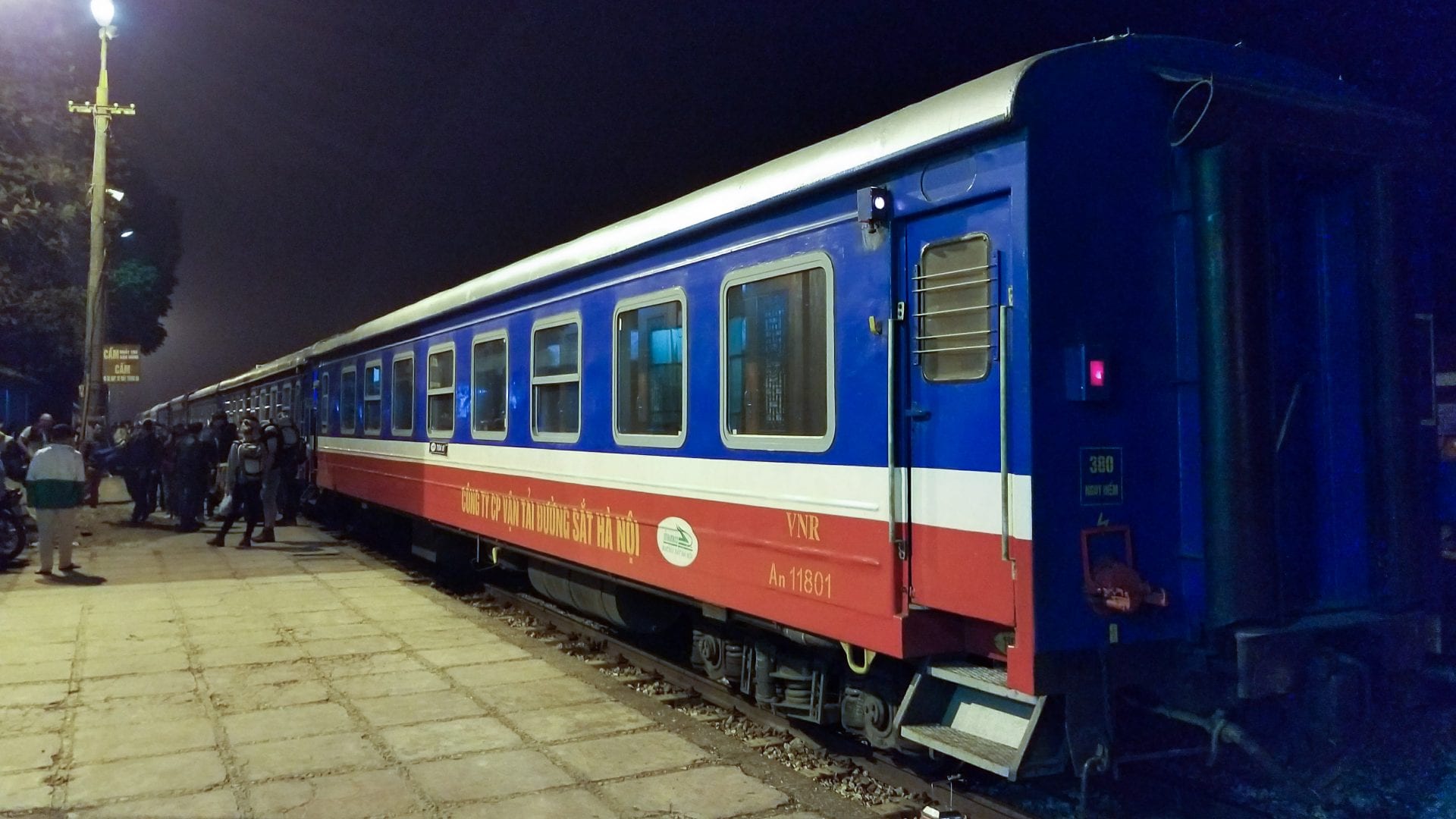
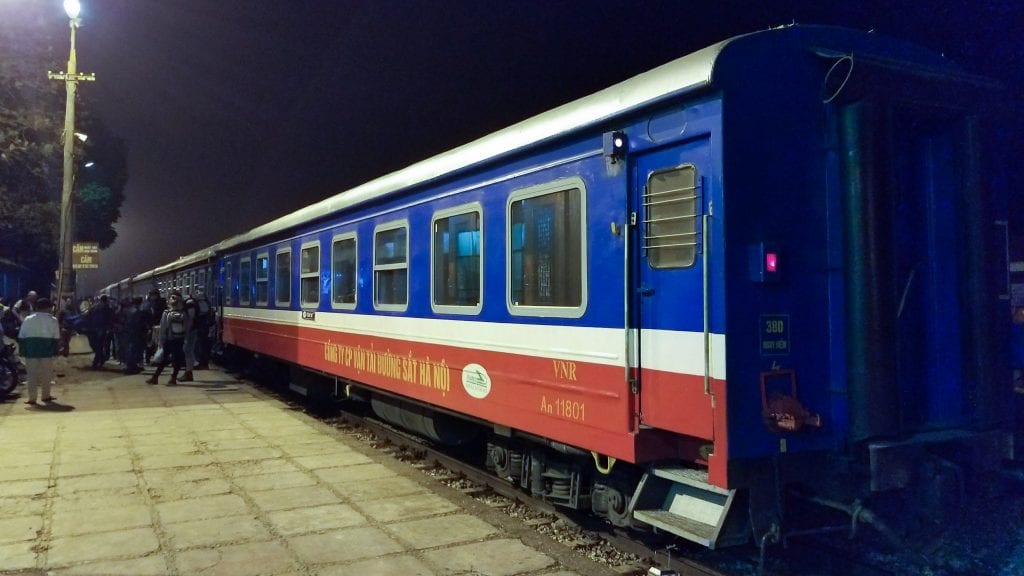
I almost missed Sapa entirely. I had one night in Hanoi, a vague idea that the mountains in the north were worth seeing, and a friend who said, without much explanation, just take the night train. So I did. In 2022 I boarded the SP1 at Hanoi station just before 10 PM, fell asleep somewhere in the Vietnamese countryside, and woke up at dawn to mist pouring over mountain ridges I hadn’t known existed the day before.
Sapa is a small town in northwestern Vietnam, sitting at over 1,500 metres near the Chinese border. People come for the terraced rice fields, the ethnic minority villages and the trek up Mount Fansipan, the highest peak in Indochina. Today most travellers reach it by bus or limousine van, which is faster and drops you in town. The overnight train is slower, but it is the more memorable way to arrive, and it is the one I took. This guide covers both: which to choose, which train and class to book, and what happens when you reach Lao Cai at 5:30 AM with Sapa still an hour away.
QUICK FACTS
- Distance: Hanoi to Lao Cai is ~296 km by rail; Lao Cai to Sapa is 38 km by road
- Total journey time: ~9–10 hours (8 hrs train + 1 hr road transfer)
- Train departure times: ~21:35 (SP1) and ~22:00 (SP3) nightly
- Best sleeper class: 4-berth soft sleeper
- Nearest station to Sapa: Lao Cai (not Sapa itself)
- Book tickets: 12GoAsia (train + bus) or Klook — sleeper train
Train or Bus? Which is Better for Hanoi to Sapa?
Before you book the train, know that it is no longer the default. Since the Noi Bai to Lao Cai expressway opened, sleeper buses and limousine vans have become the faster and more popular way up, and they drop you in Sapa town itself.
| Overnight Train | Sleeper Bus | Limousine Van | |
|---|---|---|---|
| Journey time | About 9 to 10 hours total | About 5.5 to 6 hours | About 5.5 to 6 hours |
| Cost (budget) | From about $16 (soft sleeper berth) | From about $11 | From about $18 |
| Drops you at | Lao Cai station, 38 km from Sapa | Sapa town | Sapa town |
| Extra transfer | Yes, bus or taxi from Lao Cai | No | No |
| Sleeping | Flat bed in a cabin | Reclined berth, narrow | Reclining seat |
| Best for | The classic experience | Budget and speed | Speed with comfort |
| Book on | 12GoAsia / Klook | 12GoAsia / Klook | Klook |
Take the train if you want the classic overnight journey, you sleep better lying flat, or you get motion sickness on long road trips.
Take a sleeper bus if you are on a tight budget or short on time. It is the cheapest option and gets you to Sapa town in about six hours.
Take a limousine van if you want speed and comfort. Small groups, reclining seats, and many operators collect you from your hotel in Hanoi’s Old Quarter.
I took the train, so most of this guide is about it. If you can, take the train up to Sapa and the bus or van back to Hanoi.
How to Buy a Train Ticket from Hanoi to Sapa
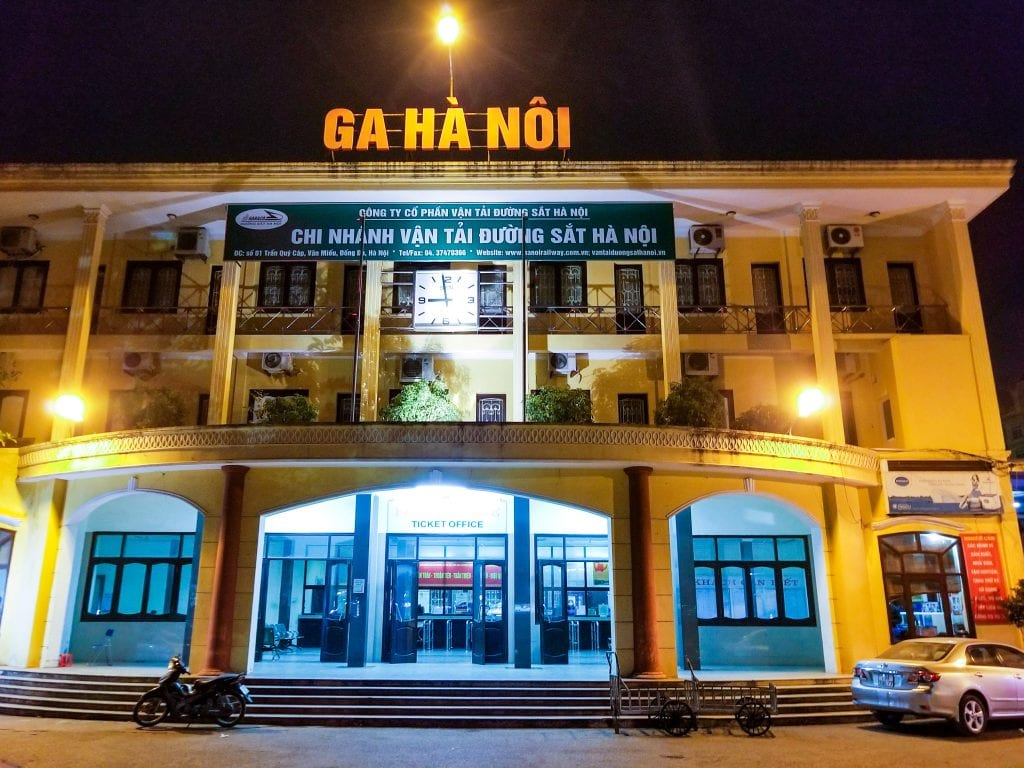
I bought my ticket from 12GoAsia — a trusted booking platform for Southeast Asia — using my international credit card. The transaction went smoothly and they sent a confirmation email instantly. I collected the physical ticket from their collection point right beside the railway station.
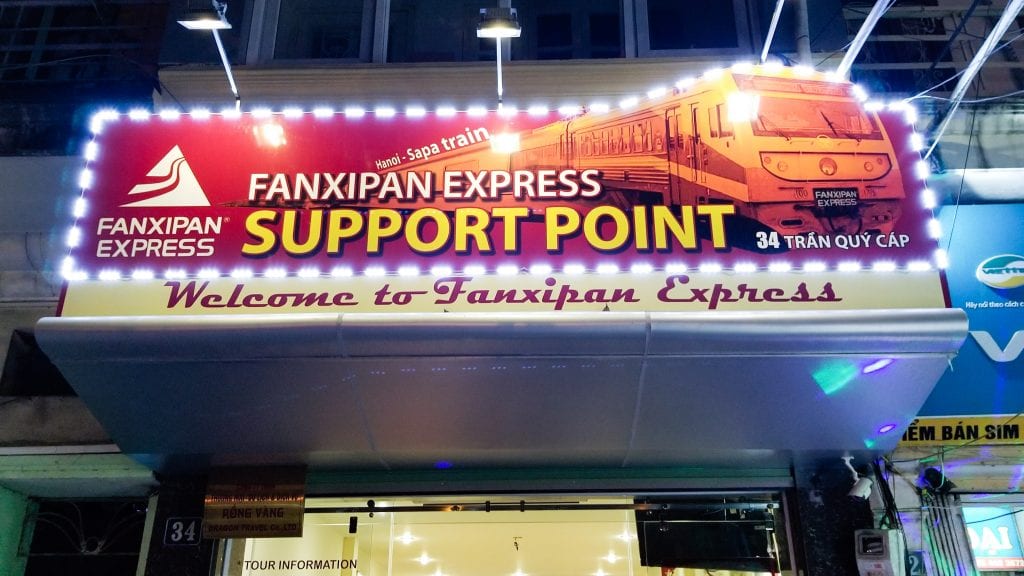
You can also book directly via Klook’s Hanoi to Sapa sleeper train ticket — both platforms accept international cards and show live seat availability across all operators and classes.
Why book online rather than at the station?
- No queue at the station ticket counter
- You can compare all classes and operators at once
- Guaranteed ticket, especially important for 1st-class berths during peak season
- Mobile tickets are now accepted — no need to print
Train Schedule: Hanoi to Lao Cai (2026)
The trains to Sapa depart from Hanoi Railway Station (Ga Hà Nội). Note that Sapa has no train station — the train terminates at Lao Cai, 38 km away. You then take a bus or taxi for the final hour up to Sapa town.
| Train | Departs Hanoi | Arrives Lao Cai | Type |
|---|---|---|---|
| SP1 | ~21:35 | ~05:30 | Overnight, recommended |
| SP3 | ~22:00 | ~06:00 | Overnight, recommended |
Schedules Change
Always verify current times on 12GoAsia before booking.
SP1 and SP3 are the trains to choose. Both are overnight, daily, with very few stops. They carry both the standard Vietnam Railways carriages and a range of private luxury carriages attached to the same train.
Ticket Classes and Prices (2026)
Prices vary by class and by which carriage operator you choose. Here is a current guide:
| Class | Price range (approx.) | What you get |
|---|---|---|
| Hard seat | From ~$6 | Basic upright seat, cheapest option |
| Soft seat | From ~$8 | Padded seat, slightly more comfortable |
| Hard sleeper (6-berth) | From ~$12 | Basic bunk, open carriage |
| Soft sleeper (4-berth) | From ~$16–25 | Best value — private cabin, clean bedding |
| Luxury private operator (4-berth) | ~$35–60 | Better finishing, wooden interiors, snacks included |
| Luxury 2-berth cabin | ~$65–150/cabin | Most private, best for couples |
My recommendation: 4-berth soft sleeper. This is the sweet spot between price and comfort. You get a proper bed, clean white sheets, a pillow, blanket, reading light and a charging port — all in a lockable cabin shared with 3 other passengers.
4-berth vs 6-berth — what’s the difference? The 6-berth hard sleeper is cheaper but the cabin is open — no door, more noise, and the top bunks are very tight. The 4-berth soft sleeper has a closing door, better mattresses, and more headroom on each bunk. If you are tall, go straight for a 4-berth and book a lower bunk when selecting your seat — upper bunks have less clearance and can feel cramped for anyone over 180 cm.
Is the night train to Sapa worth it? For most travellers, yes — especially if you take it at least one way. You save a night’s accommodation cost, arrive in Sapa at dawn when the town is quiet and the mist is still rolling over the valley, and the journey itself is comfortable enough to sleep through. The sleeper bus is faster and cheaper, but the train feels like more of an experience. If you only do it one way, take the train going up to Sapa and the bus on the return.
Which Train Operator Should You Choose?
When you search for tickets, you will see different brand names — Pumpkin Express, Fanxipan Express, Orient Express, Sapaly, Chapa, Livitrans, King Express, Victoria Express and more. This can be confusing.
Here is what’s actually happening: there is one train, run by Vietnam Railways, on one track. Private companies lease individual carriages attached to that same train and brand them with their own name. The schedule and arrival time are the same — only the cabin interior and service level differ.
The standard Vietnam Railways soft sleeper is perfectly comfortable. The private operators offer slightly nicer finishing, some include snacks, and a few have wooden interiors that look more polished. For most travellers, the difference is small. I travelled on the SP1 in a standard 4-berth and had a good night’s sleep.
The standard Vietnam Railways soft sleeper is perfectly comfortable. The private operators add nicer finishing, wooden interiors and usually a snack tray. For most travellers, the difference is small. My cabin on the SP1 was a deluxe private-operator 4-berth, and I slept well.
The one perk worth paying for: the Chapa Express lounge. Chapa Express runs four-berth deluxe and two-berth VIP cabins on the nightly SP3, which leaves Hanoi around 22:00 and reaches Lao Cai around 06:00. Its passengers can use the Chapa Lounge at Lao Cai station, with showers, food and drinks. That solves a real problem on this route. The train arrives around dawn, but most Sapa hotels won’t check you in before 2 PM, and without somewhere to wash and eat you spend the morning carrying your bag around a cold, half-awake town.
No WiFi on board. The train has no onboard WiFi on any class or operator. Download your maps, playlists, and anything else you need before boarding. If you are on a foreign SIM, consider picking up a Vietnam eSIM via Yesim before you travel — data coverage is decent through the lowlands but drops in the mountains approaching Lao Cai.
Prone to motion sickness? Both routes finish on the same winding road from the Lao Cai area up to Sapa, about an hour of hairpin bends. The difference is everything before it. On the train you spend the long stretch lying flat on rails. On the bus you spend around five hours on the road before the climb even starts. If long road journeys make you queasy, the train is the easier choice.
The Sleeper Compartment: What to Expect
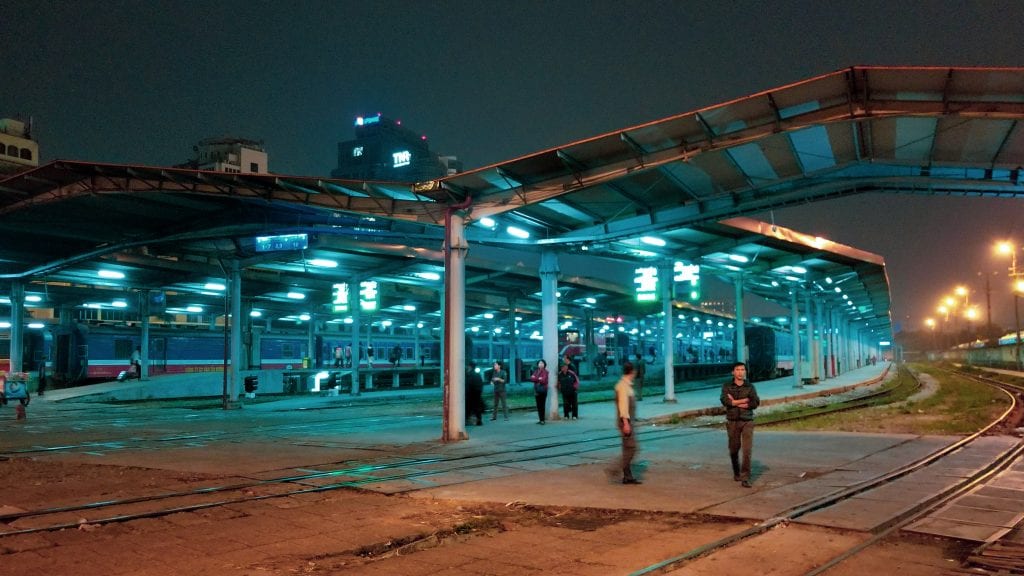
Hanoi railway station was established in 1902. It has 5 platforms serving 7 active routes. At night it has a certain quiet intensity to it — a mix of local families, backpackers, and groups waiting under the sheds. I found a lot of foreigners waiting near the platforms for the Sapa train. A large electronic board shows platforms and train numbers. It is simple to find your way.

I followed the carriage number on my ticket, walked through a narrow passage, and found my cabin. My train was SP1. The window was sealed — it makes sense as the carriage is air-conditioned. There was a small painting in the wooden cabin.
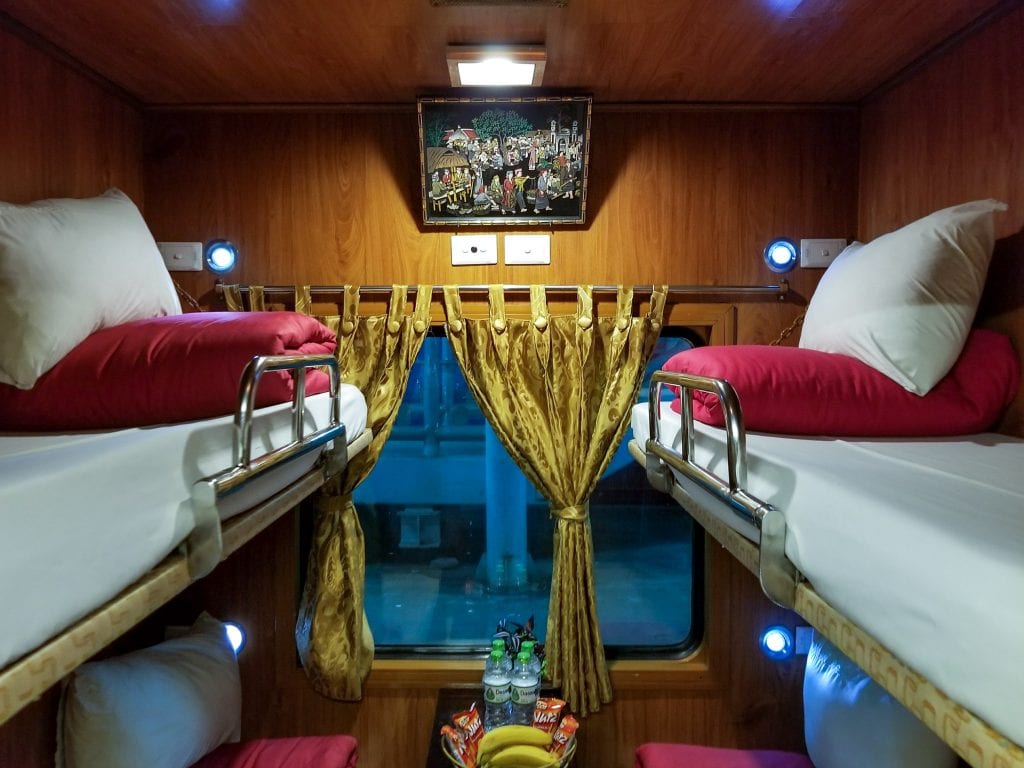
Four berths, two on each side, stacked like shelves. The sheets were white and properly laundered — not the slightly grey affairs you sometimes find on overnight trains in Southeast Asia. Each berth had its own reading light clipped to the wall and a charging port at arm’s reach. Someone had left a small tray with a banana, a packet of cookies, and a bottle of water. I cannot tell you if that is standard or if I got lucky, but it set the tone nicely. I had the upper bunk — slightly more claustrophobic, but I prefer the privacy of the wall. The train pulled out on time, I read for about twenty minutes, and then I was gone.
Pack for the Overnight Ride
Bring earplugs. The train rattles in a pleasant, rhythmic way — most people find it soothing — but light sleepers will appreciate the extra help. Also keep a warm layer in your carry-on if you are travelling in winter, as the Lao Cai platform at 5:30 AM is cold.
Arriving at Lao Cai Station
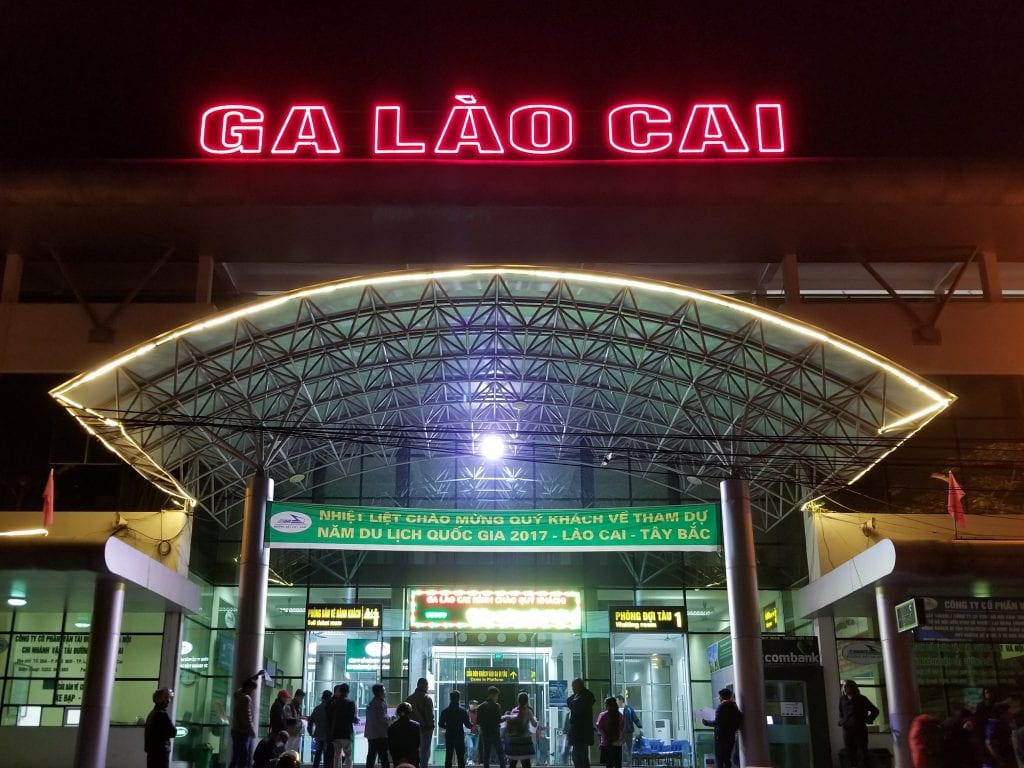
I was woken up by a combination of the train announcement and a gentle knock from the train staff. The carriages were creaking as the train made its way through the hills of northern Vietnam. We pulled into Lao Cai at around 5:30 AM. It was early morning, still dark outside, and the mountains were completely invisible in the mist.
Eight hours on the train felt surprisingly short. I wanted more sleep.
From Lao Cai Station to Sapa Town
The train stops at Lao Cai, which is 38 kilometres from Sapa. You cannot skip this transfer — it is not included in your train ticket.
Your options from Lao Cai to Sapa:
- Shared minibus — the most common option, roughly $3–5, takes about 1 hour. Minibuses wait outside the station and fill up quickly as passengers arrive.
- Private taxi — roughly $15–25 for the whole car. Be prepared to negotiate — taxi drivers at Lao Cai station at 5:30 AM can be persistent and will quote inflated prices to groggy, fresh-off-the-train travellers. Having a price agreed in advance makes a big difference.
- Limousine shared van — the most comfortable budget-friendly option: a small fixed-price van going directly to Sapa with no haggling. Best for solo travellers or pairs who want comfort without paying for a full private car. Book via Klook.
- Private dedicated transfer — your own car, driver holding a sign with your name, goes the moment you are ready. Best for families, groups, or anyone with a lot of luggage. Book via 12GoAsia
I came out of the station and joined a loose group of other travellers doing the same calculation — minibus or taxi, negotiate or just get in. We found a minibus at the kerb, waited ten minutes for it to fill, and then we were climbing.
The road to Sapa is an hour of hairpin bends through cloud. At one point I looked out the window and realised I could not see the valley at all — just white. Then the mist thinned and there was a drop of what looked like a thousand metres to the rice terraces below. I arrived in Sapa town at around 7:00 AM. The streets were quiet, the guesthouses were just turning their lights on, and the mountains were hiding behind cloud in a way that made them feel more dramatic, not less.
It is a two-phase journey and it asks something of you — an early night, a slightly broken sleep, a cold platform, a mountain road. But the arrival feels like you have earned it in a way that no bus or flight ever does.
Hanoi to Sapa by Bus or Limousine Van
I didn’t take the bus on this route, so this section is based on current operator information rather than my own trip.
Sleeper buses are the cheapest way up, from around $11. You lie in a reclined berth for roughly six hours on the CT05 expressway, usually with one rest stop. The berths are short, so tall travellers will find them cramped. Most companies run both daytime and overnight departures.
Limousine vans cost a little more, from around $18, and carry small groups in reclining seats. They take about the same time but feel calmer than a full-size bus.
Where they leave from: many operators pick up from hotels or their own offices in Hanoi’s Old Quarter, so you don’t need to travel out to a bus station. Check the pickup point when you book.
Where they drop you: in Sapa town, usually at the operator’s office, a short walk or taxi ride from most hotels. No Lao Cai transfer needed.
Book ahead for weekends, Vietnamese public holidays and the September to November peak season, when the best departures sell out.
Compare times and prices on 12GoAsia, or book a sleeper bus or limousine van on Klook.
Frequently Asked Questions
Is the overnight train from Hanoi to Sapa worth it?
Yes, if you want the experience and you sleep well on trains. It saves a night’s accommodation and gets you to Sapa at dawn. If speed or price matters most, the bus or limousine van is the better choice.
Is it better to take the train or the bus from Hanoi to Sapa?
The bus or limousine van is faster, about 5.5 to 6 hours, and drops you in Sapa town. The train takes about 9 to 10 hours including the Lao Cai transfer, but you sleep lying flat in a cabin. Many travellers take the train up and the bus back.
How long does the train from Hanoi to Sapa take?
bout eight hours from Hanoi Railway Station to Lao Cai, then roughly an hour by road up to Sapa. The SP1 and SP3 both leave Hanoi between about 21:35 and 22:00 and arrive in Lao Cai between about 05:30 and 06:00.
What is the best sleeper class for the Hanoi to Sapa train?
The 4-berth soft sleeper. You get a proper bed, clean sheets, a reading light and a charging port in a lockable cabin. The 6-berth hard sleeper is cheaper, but it has no door and the top bunks are tight. Tall travellers should book a lower bunk.
Which train operator should I choose?
Names like Chapa, Sapaly, Livitrans and Pumpkin Express are private carriages attached to the same Vietnam Railways train, so the timetable is identical. Only the cabin finish and extras differ. Chapa Express stands out for its lounge with showers at Lao Cai station.
Is there WiFi on the train?
No, on any class or operator. Download maps and anything else you need before boarding. Mobile data works through the lowlands but gets patchy in the mountains near Lao Cai.
How do I get from Lao Cai station to Sapa town?
Lao Cai is 38 km from Sapa, and the transfer isn’t included in your train ticket. A shared minibus costs about $3 to $5 and takes an hour. A taxi is about $15 to $25 for the car, so agree the price first. A pre-booked limousine van or private transfer avoids haggling at 5:30 AM.
What to Do Once You Arrive in Sapa?
Sapa rewards slow exploration. The rice terraces around Muong Hoa Valley are best seen on foot, walking through the villages of Ta Van and Lao Chai with a local guide who can explain what you are actually looking at. Cat Cat village is closest to town and easy to do alone. Silver Waterfall is worth the tuk-tuk ride.
For everything — treks, guesthouses, day trips and restaurants — read my complete guide: Things to Do in Sapa.
Two things I would book before you even board the train in Hanoi:
The Fansipan Cable Car sells out, especially on weekends and during Vietnamese holidays. Fansipan is the highest peak in Indochina and the cable car takes you to 3,143 metres in about 20 minutes. Standing on top of a cloud is the kind of experience that does not get old. Book your Fansipan cable car via Klook — it is cheaper in advance and you avoid the queue entirely.
If you want to combine the overnight train with a structured trekking experience and accommodation in one booking, GetYourGuide’s 2-day Sapa trekking package by overnight train is the cleanest way to do it. Everything is confirmed before you leave Hanoi.
And if you love train journeys, you might also enjoy my guide to the train from Colombo to Ella in Sri Lanka — a very different landscape, but the same slow-travel magic.
Liked this guide? Pin it for later!



Leave a reply