
One day in Athens on foot: the Acropolis, Ancient Agora, Plaka, Olympian Zeus and Panathenaic Stadium in a sensible order, with 2026 tickets and hours.
Only one day in Athens! You have to be kidding me! That is what everyone told me when I shared my one-day itinerary in Athens with my friends. Athens is one of the most historic cities in the world, along with Rome, and in the fifth century BC it was one of the leading cultural and political centres of the ancient Greek world. So it is not ideal to explore it in a day. But if you do not have much time, you can still see the best of it.
I visited Athens in November 2016 and saw most of the sights in this guide in one day. The Acropolis Museum, lunch in Plaka and Syntagma Square are researched additions. Here they are in the order I would do them now, with 2026 ticket prices and opening hours.
Time needed
One full day
Start at 8am, finish in the early evening
Getting around
Mostly on foot
Metro stops at Acropoli, Monastiraki and Syntagma
Acropolis
€30, timed entry
Book a slot online; the old combined ticket is gone
Other sites
€10 to €20 each
Agora €20, Olympian Zeus €20, Library €10, Stadium €12
Winter hours
Acropolis closes at 5pm
The stadium closes at 5pm too, Olympian Zeus earlier
One Day in Athens Itinerary at a Glance
- Morning: the Acropolis, with the Propylaea, the Temple of Athena Nike, the Parthenon and the Erechtheion
- Late morning: the Ancient Agora, the Temple of Hephaestus and the Stoa of Attalos
- Lunch and early afternoon: Monastiraki and Plaka, then Hadrian’s Library
- Afternoon: the Temple of Olympian Zeus and the Panathenaic Stadium
- Late afternoon: Syntagma Square for the changing of the guard, then the Academy of Athens, the National Library and a walk through the streets
Walking times between the stops are roughly 10 minutes from the Acropolis to the Agora, a few minutes on to Hadrian’s Library, 15 to 20 minutes to the Temple of Olympian Zeus, 10 to 15 minutes to the Panathenaic Stadium and about 20 minutes on to Syntagma Square. Not everything fits. If you want the Acropolis Museum, drop the Temple of Olympian Zeus.
💡 BEAT THE HEAT AND THE QUEUE
Book the first Acropolis slot of the day. From June to September the middle of the day is very hot, the marble is slippery and the site can close for part of the day in extreme heat. Take water and shoes with a good grip.
Map for One Day in Athens
The Acropolis: The Place to Start Your One Day in Athens
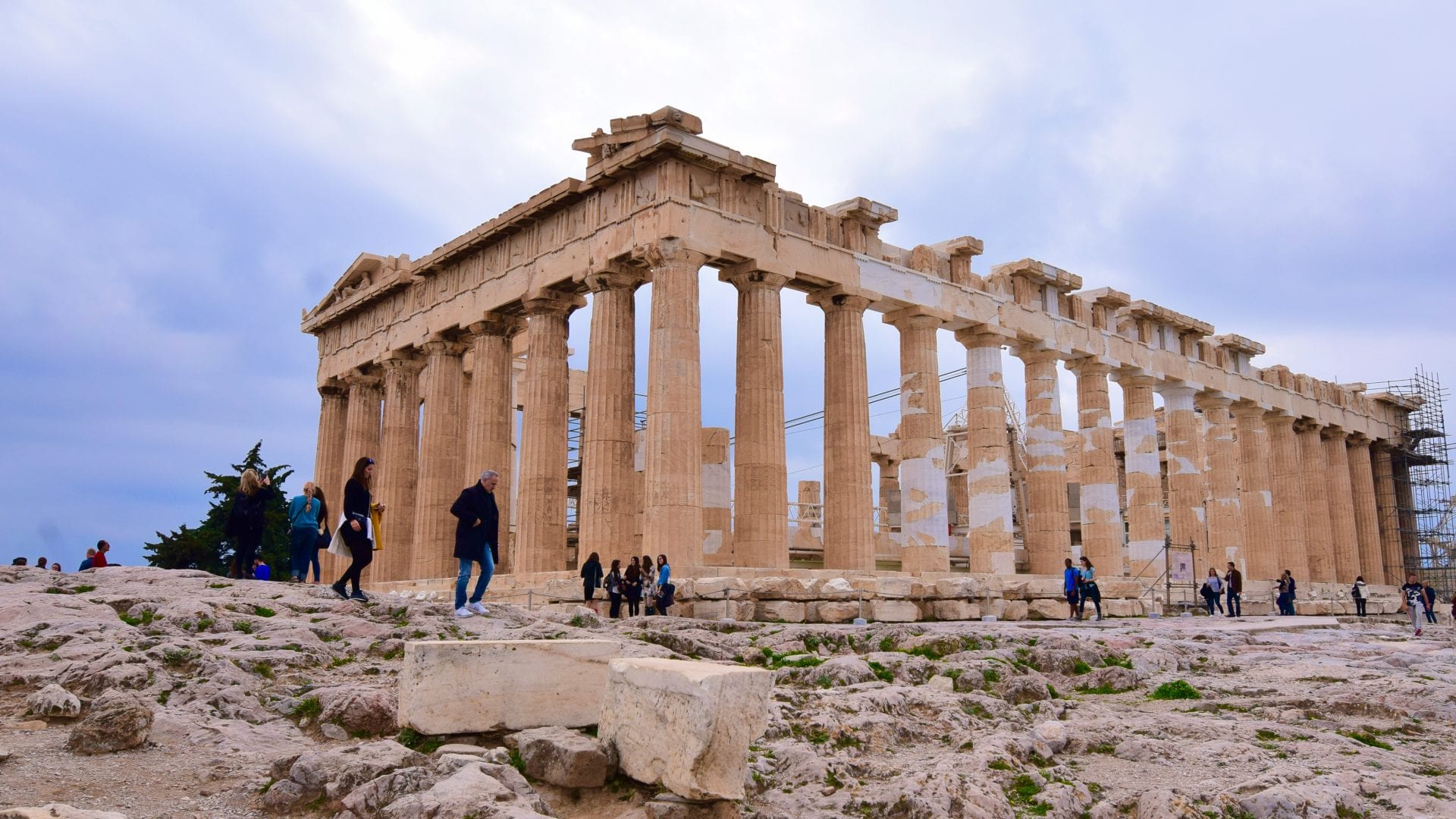
If you want to visit only one place in Athens, make it the Acropolis. You will find some of the most famous ruins in the world there. Sitting among them, you can go back thousands of years and imagine how a civilisation took shape on the very ground you are standing on. The Acropolis is a UNESCO World Heritage Site. You enter through the Propylaea, the monumental gateway, and the small Temple of Athena Nike stands beside it before you reach the Parthenon.
Entry is by timed slot, so book online. A standard adult ticket costs €30 in 2026 (€15 reduced) and covers the hill and its slopes. In winter, from 1 November to 31 March, the site is open 8am to 5pm, and in summer it stays open later, up to 8pm at its longest. Allow at least 90 minutes on the rock.
⚠️ THE COMBINED TICKET IS GONE
When I visited, one ticket covered the Acropolis and six other sites. Greece stopped selling that combined ticket in April 2025, so every site now has its own ticket. In 2026 the Acropolis is €30, the Ancient Agora €20, the Temple of Olympian Zeus €20 and Hadrian’s Library €10. The Acropolis and the Agora are the two I would pay for first.
Parthenon
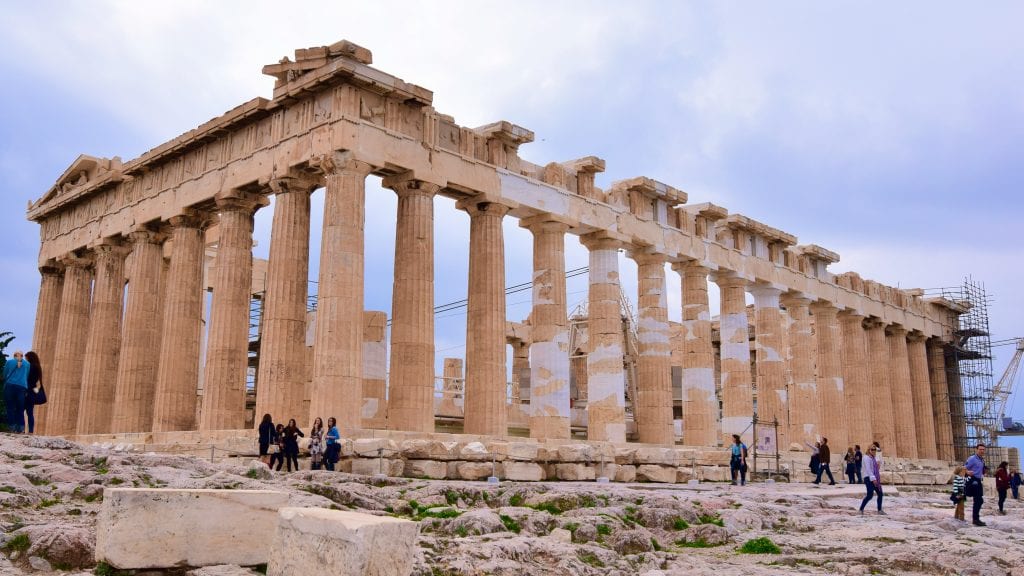
The Parthenon was built between 447 and 438 BC for Athena, the goddess of wisdom, and housed the great gold and ivory statue of Athena Parthenos. Today you see a partly ruined temple under restoration, and scaffolding is common. You cannot go inside.
Erechtheion
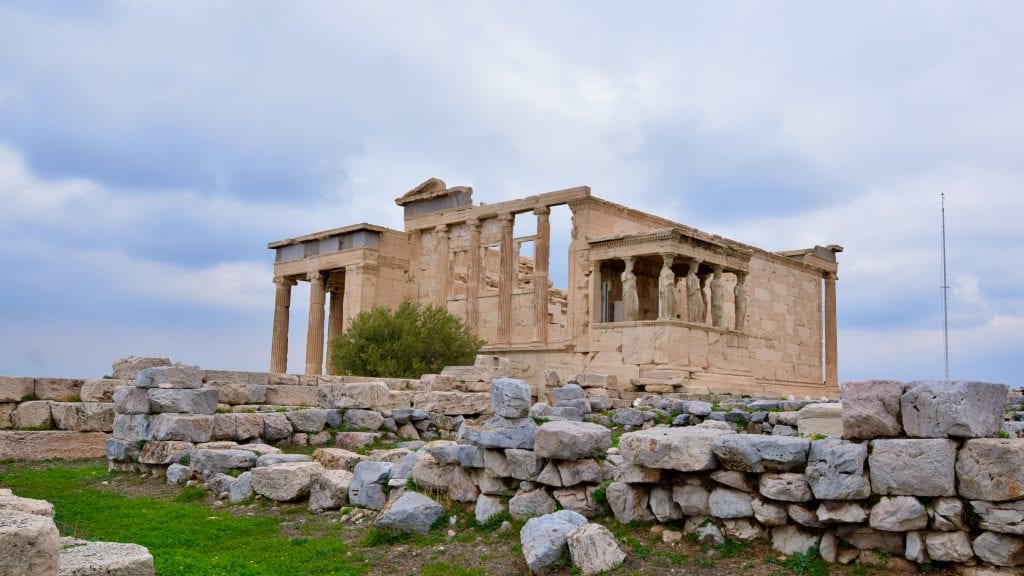
A short walk from the Parthenon, on the north side of the hill, the Erechtheion is another temple in the complex. It was built between about 421 and 406 BC and named after the legendary king Erechtheus, whom Homer mentions in the Iliad. Its best-known feature is the Porch of the Caryatids, where six female figures stand in place of columns. The ones on the porch are replicas: five of the originals are in the Acropolis Museum and one is in the British Museum.
The Odeon of Herodes Atticus
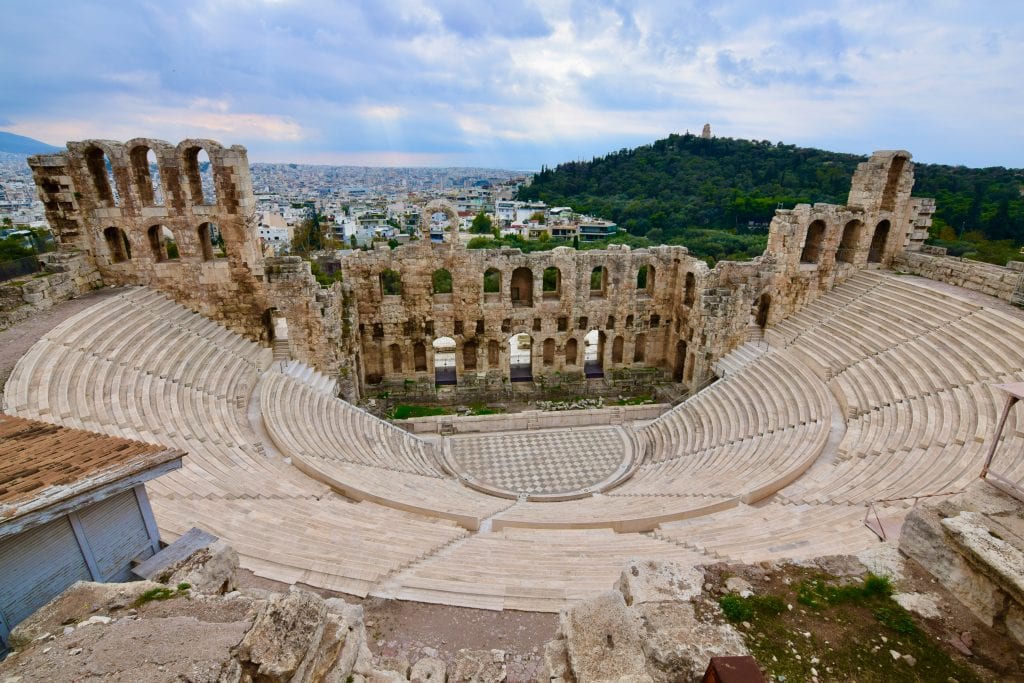
Having seen two ancient temples, look down to the stone Roman theatre on the south slope. Herodes Atticus built the Odeon in AD 161, so it is about 1,900 years old. It was restored in the 1950s and hosted concerts for decades, with artists such as Frank Sinatra, Sting and Yanni. It has now closed for a major restoration expected to last at least three years, so there are no performances for now, but you can still see it from the slope.
Panoramic view of Athens from the Acropolis
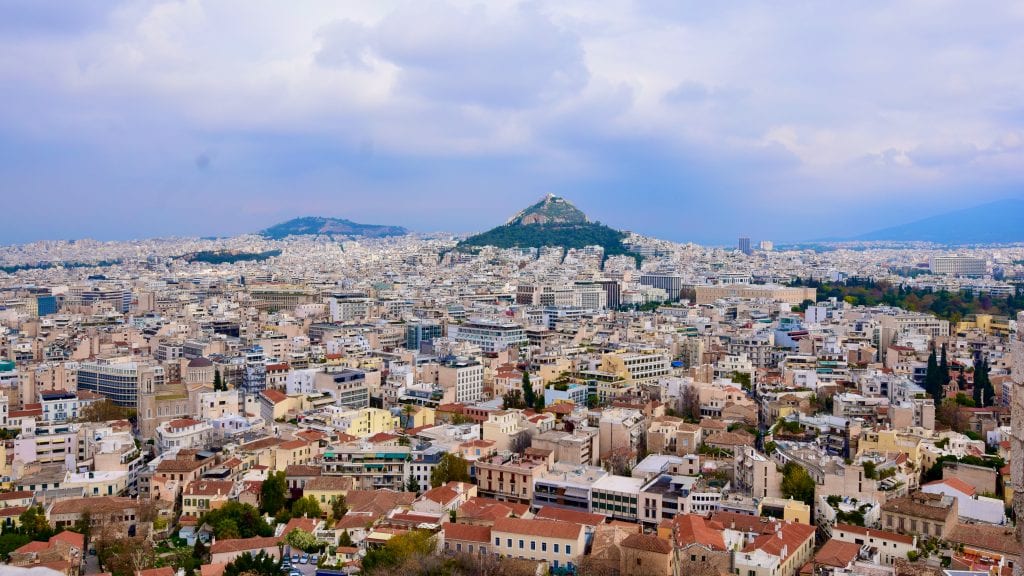
The word Acropolis means the highest point of the city in Greek, so it is no wonder it stands on a hill. From the top you not only see the ancient ruins but also get a panoramic view of Athens, and you realise how crowded the city has become over time.
The Acropolis Museum
I did not go inside the Acropolis Museum, so this part is researched from official and local sources. Check opening hours before you go.
The Acropolis Museum stands at the foot of the hill, about five minutes’ walk from the Acropolis, and it holds the finds from the site, including the original Caryatids. Entry is €20 (€10 reduced) in 2026 and it is a separate ticket from the Acropolis. In winter, from 1 November to 31 March, it is open 9am to 5pm Monday to Thursday, 9am to 10pm on Friday and 9am to 8pm at the weekend, with last entry 30 minutes before closing. Summer hours are longer on most days, so check the official site for your date. It takes 90 minutes to two hours, so on a single day choose between the museum and the Temple of Olympian Zeus. I would pick the museum, because it holds the original sculptures from the hill, while Olympian Zeus is a short outdoor stop.
Ancient Agora of Athens
In ancient Greece, the agora was an open space used for the gathering of citizens as a meeting space. Once upon a time, people from all over Athens used to gather in the ancient agora of Athens to discuss politics, listen to wise men and enjoy performances. You can view it as both a political, cultural, and business hub of Ancient Athens.
The Ancient Agora costs €20 in 2026, and the ticket includes the museum in the Stoa of Attalos. Allow an hour or two.
Temple of Hephaestus
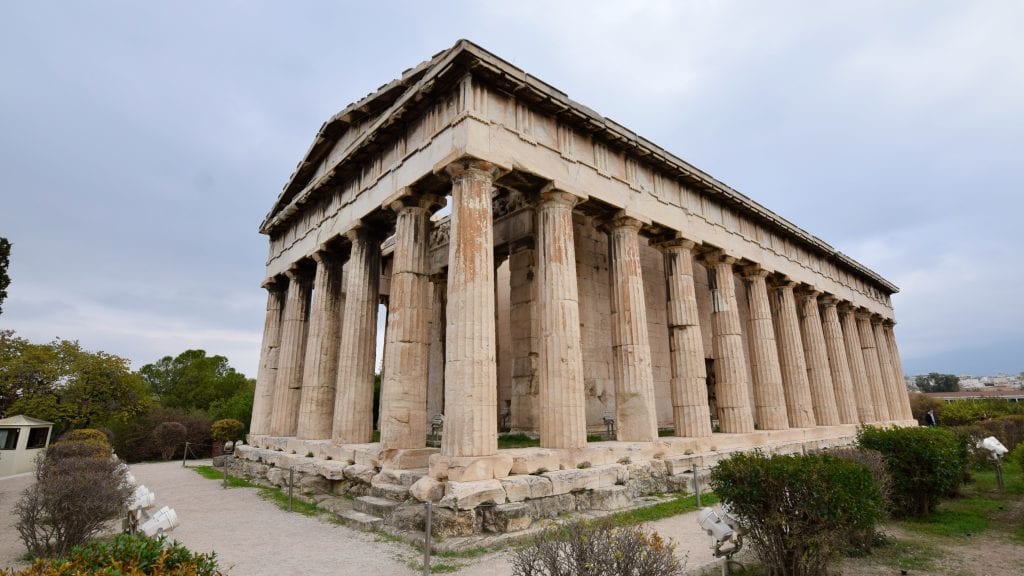
The Temple of Hephaestus is located inside the Ancient Agora of Athens. Hephaestus was the Greek god of metalworking and craftsmanship. Unlike most other temples in Athens, the temple of Hephaestus is in good shape. It’s made of marble and a marvellous example of ancient Greek architecture. To me, this was one of the best places to visit during my one-day exploration of Athens.
Stoa of Attalos
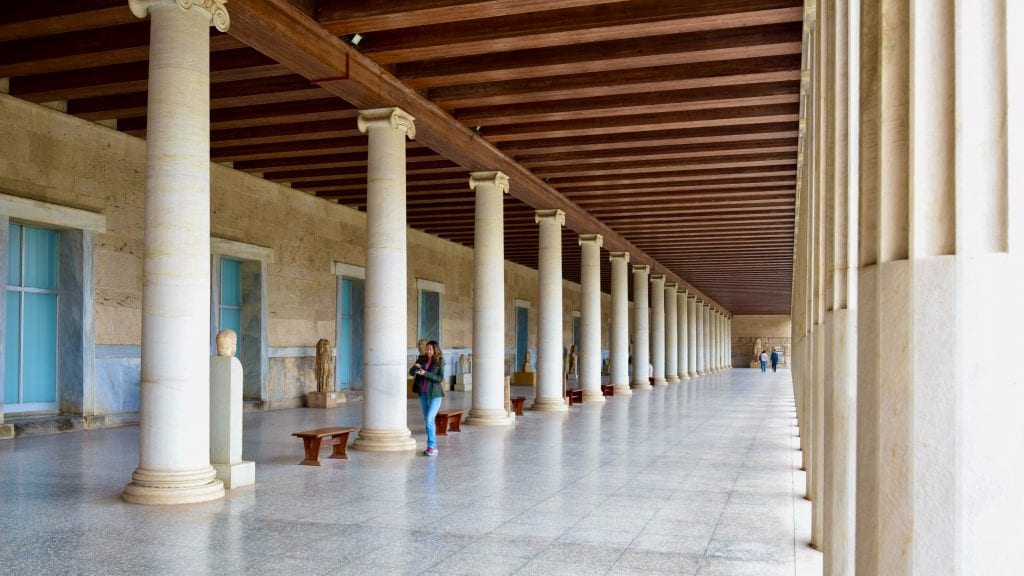
The Stoa of Attalos is on the same site. The original building is about 2,200 years old, and the American School of Classical Studies reconstructed it in the 1950s. It now works as the Museum of the Ancient Agora and hosts the valuable objects found in the Agora. For me, a walk along its corridor was fascinating, as it gave me a sense of time travel. A high wooden ceiling, gigantic columns, empty space and quiet: I loved this place!
Hadrian’s Library
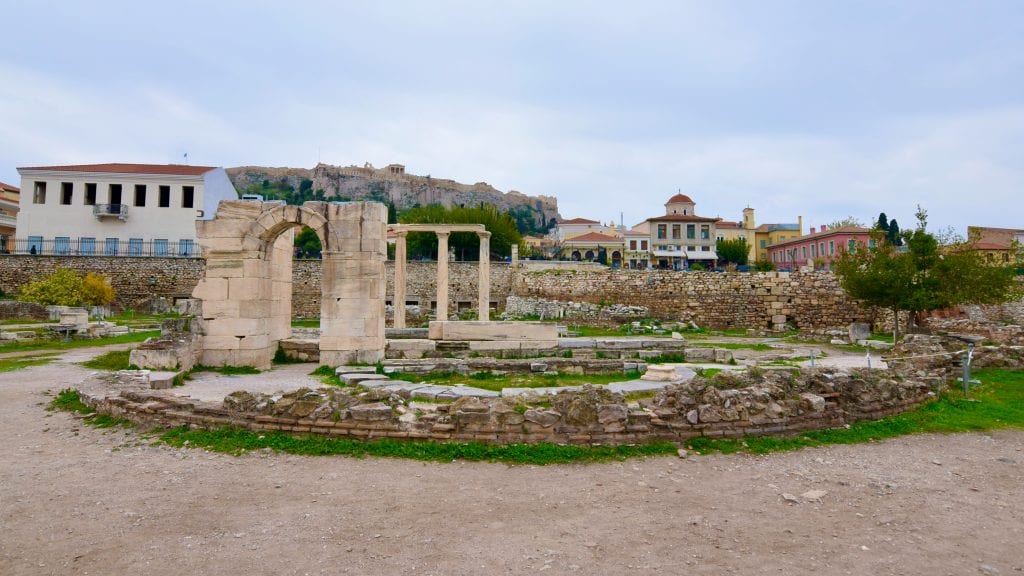
A few minutes’ walk from the Agora, near Monastiraki Square, are the ruins of Hadrian’s Library. If you expect to find books, you will be disappointed, because only walls and columns remain. The Roman emperor Hadrian built the complex in AD 132, with a library, lecture rooms, a pool, gardens and walking paths, and the Heruli destroyed much of it in AD 267. Entry is €10 in 2026 and the site needs little time.
Lunch in Monastiraki and Plaka
This part is researched from local sources, not from a meal of mine. Check opening hours before you go.
Hadrian’s Library sits beside Monastiraki Square, so this is the natural place to stop for lunch. A gyros or souvlaki from a stand near the square keeps lunch quick, and a sit-down taverna in the old neighbourhood of Plaka, on the slopes below the Acropolis, is the slower option. Plaka’s narrow streets are pleasant to wander even if you only pass through.
Temple of Olympian Zeus
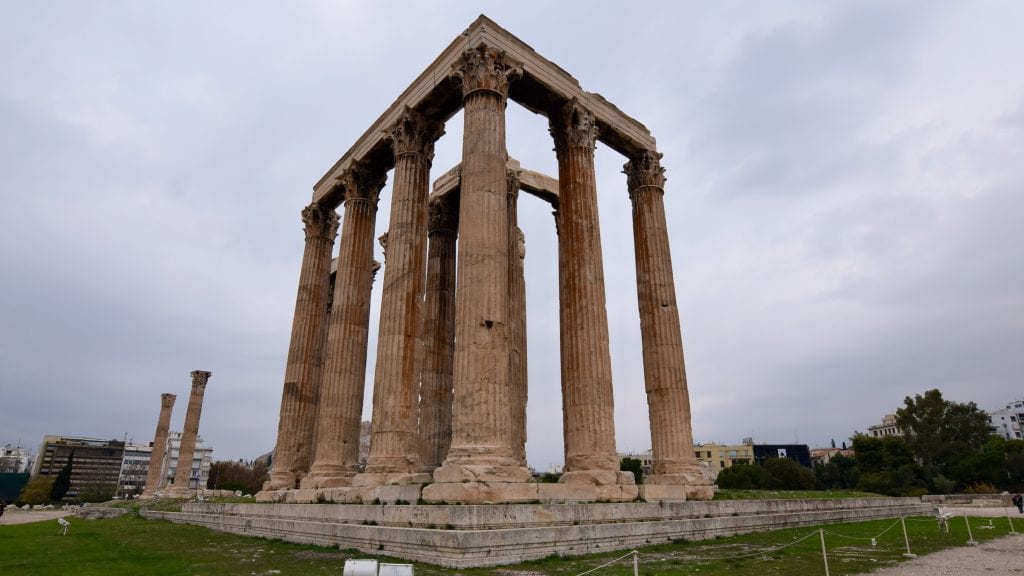
The Temple of Olympian Zeus was the largest temple in Greece. Work began in the sixth century BC and the Roman emperor Hadrian finished it around AD 131. Only 15 of the original 104 Corinthian columns still stand, each about 17 metres high, and Hadrian’s Arch stands nearby. I did not find the ruins very appealing, but they sit in the middle of the city and the columns photograph well. Entry is €20 in 2026 and it is a separate ticket from the Acropolis.
Panathenaic Stadium
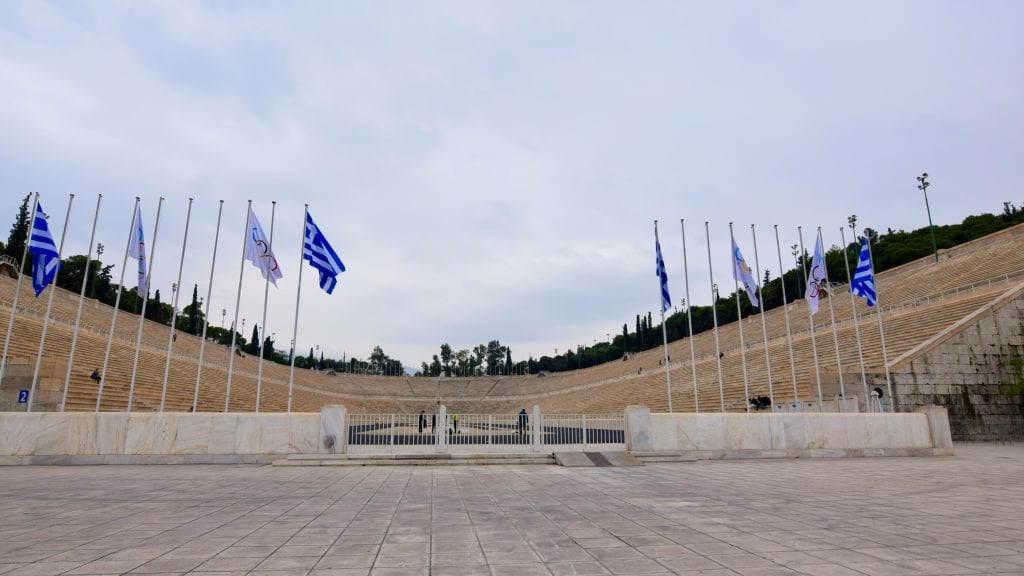
In Greece, everything is ancient, and so is the Panathenaic Stadium. A stadium stood here in the fourth century BC for the Panathenaic Games, a festival held every four years in honour of the goddess Athena. Herodes Atticus rebuilt it in marble in the second century AD, and it was restored for the first modern Olympic Games in 1896. In 2004 it hosted the archery competition and the finish of the marathon. Entry costs €12 in 2026 (€6 reduced) and the Ministry of Culture tickets do not cover it. It closes at 5pm in winter and 7pm from March to October.
Syntagma Square and the Changing of the Guard
I did not visit Syntagma Square on my day, so this part is researched.
Syntagma Square is the centre of modern Athens, in front of the Greek Parliament. The Presidential Guard, the Evzones, guard the Tomb of the Unknown Soldier day and night and change every hour on the hour. A much bigger ceremony with a military band takes place every Sunday at 11am. If your day is a Sunday, plan to be there before 11am, because the crowds build early.
Academy of Athens
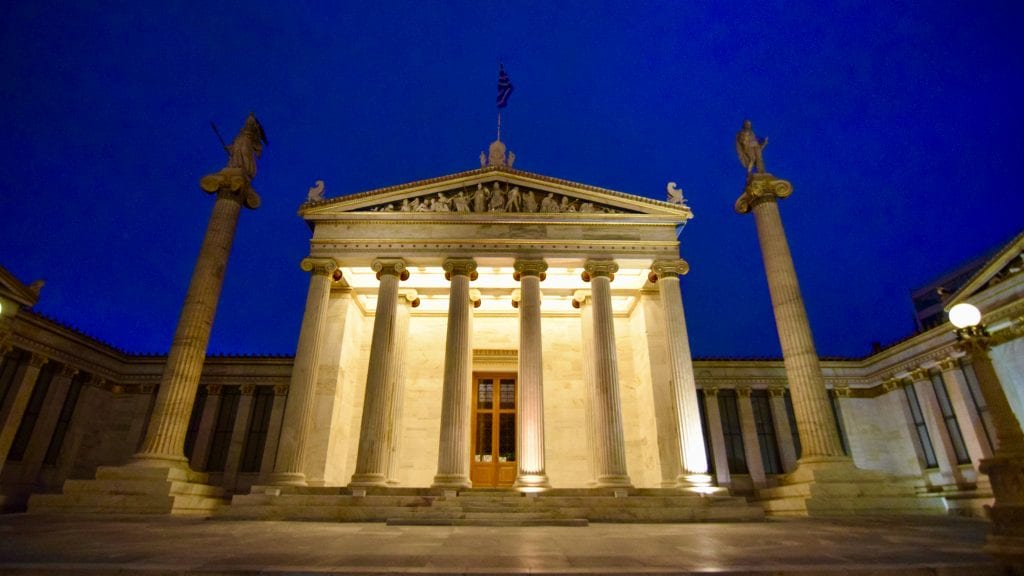
Now that you are in front of the Academy of Athens, look at your surroundings. Two similar majestic buildings stand nearby: the National Library of Greece and the National and Kapodistrian University of Athens. Together they are known as the Athens Trilogy, and the Danish architects Theophil and Christian Hansen designed them in the 19th century. The Academy is the national academy of Greece, a research institution. I went there to appreciate the architecture, and I am glad I did.
National Library of Greece
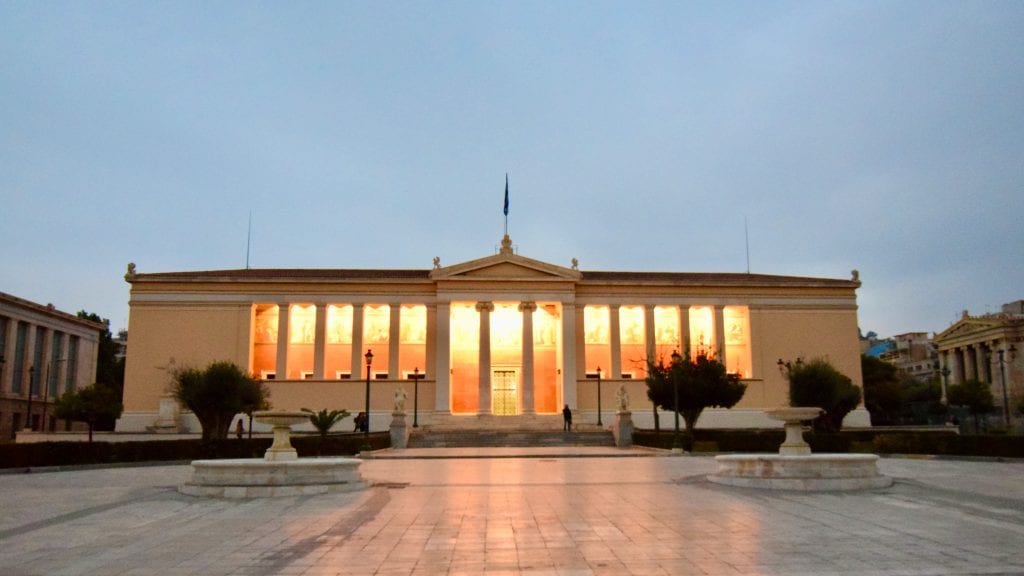
The historic Vallianeio building of the National Library of Greece stands right beside the Academy of Athens. The library moved to the Stavros Niarchos Foundation Cultural Center in 2018, so the old building is now mainly one to admire from the outside, and the newspaper collection is kept inside. Check whether it is open before you plan to go in.
A Walk Through Central Athens
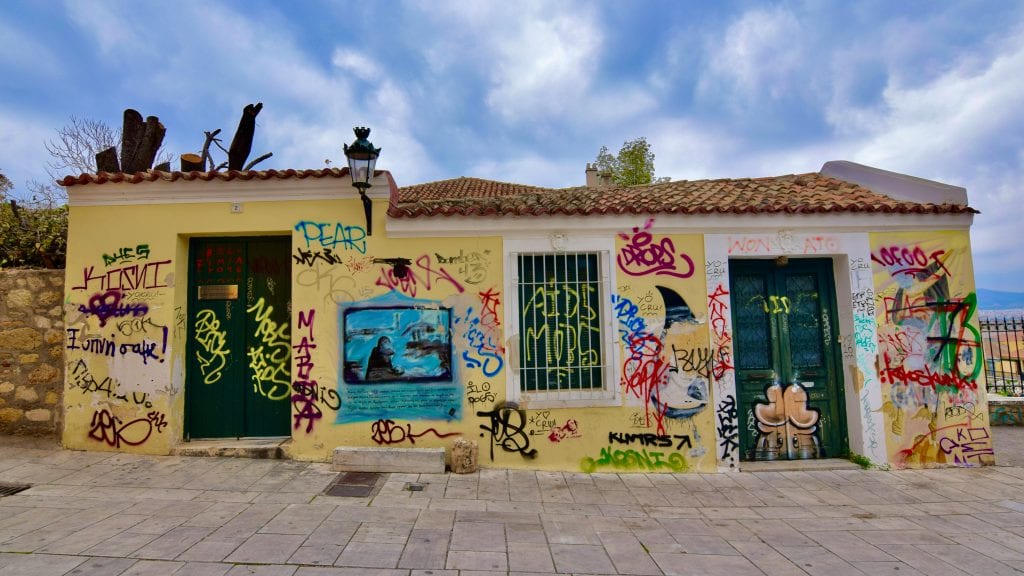
I got tired of seeing ancient ruins, and my brain could not process any more. So I decided to take a walk in the streets of Athens, and I am glad I did. I found interesting alleys, beautiful architecture and colourful buildings. It was a contrast to see a glimpse of Greece from 2,000 years ago next to the modern city. I am sure that 2,000 years from now someone will walk on the same streets and savour the old establishments with fresh eyes. That is the beauty of travelling!
Practical Tips for One Day in Athens
- Start at 8am. The Acropolis opens at 8am and the first slots are the coolest and the quietest.
- Use the metro for the long stretches. Acropoli is on line 2, Monastiraki on lines 1 and 3 and Syntagma on lines 2 and 3.
- Check closing times in winter. The Acropolis and the Panathenaic Stadium close at 5pm from November to March, and the Temple of Olympian Zeus closes at 3pm.
- Carry water and sun protection from June to September, and wear shoes with a good grip on the marble.
Best Hotels in Athens
These hotels are researched picks. Rates, availability and facilities change, so check current prices and recent reviews before you book.
- MET34 Athens (Luxurious)
- NLH Fix (Neighborhood Lifestyle Hotels) (Mid range)
- Marble House (Budget)
- AD Athens Luxury Rooms and Suites (Mid range)
- Pella-Inn Hostel (Budget)
One Day in Athens: FAQ
Is one day in Athens enough?
Not really, but it is enough for the highlights. Start at 8am at the Acropolis, then walk to the Ancient Agora and a few more sites within walking distance, and you will see the best of the ancient city.
Where should you start a one-day Athens itinerary?
At the Acropolis at 8am, before the heat and the crowds, with a timed ticket booked in advance. The Ancient Agora is a short walk down the hill, so the rest of the day follows on foot.
What should you see in Athens in one day?
The Acropolis with the Parthenon, the Ancient Agora, Hadrian’s Library, the Temple of Olympian Zeus and the Panathenaic Stadium, then the Academy of Athens and a walk through the old streets. If you want the Acropolis Museum, drop the Temple of Olympian Zeus.
How much does the Acropolis cost in 2026?
A standard adult ticket is €30 and a reduced ticket €15. It covers the hill and its slopes, and entry is by timed slot.
Is there still a combined ticket for the Athens archaeological sites?
No. Greece stopped selling the €30 combined ticket in April 2025. Each site now has its own ticket: in 2026 the Ancient Agora is €20, the Temple of Olympian Zeus €20 and Hadrian’s Library €10.
Do you need to book the Acropolis in advance?
Yes. Entry is by timed slot for every visitor, and the busy morning slots sell out in the high season, so book online on the official ticket site, hhticket.gr, or through a tour partner.
How long do you need at the Acropolis?
At least 90 minutes on the hill, plus time for the queue and security. The Acropolis Museum takes another 90 minutes to two hours.
Is the Acropolis Museum included in the Acropolis ticket?
No. It is a separate ticket, €20 in 2026 (€10 reduced).
Can you walk between the sights in Athens?
Yes. The Acropolis, the Ancient Agora, Hadrian’s Library and the Temple of Olympian Zeus are all within walking distance of each other. The Panathenaic Stadium and the Academy of Athens are further, so use the metro if you are tired.
What is the best time to visit Athens?
Spring and autumn, when it is warm but not too hot. June to September is very hot in the middle of the day, and in winter the main sites close earlier, at around 5pm.
More from Greece


Leave a reply