
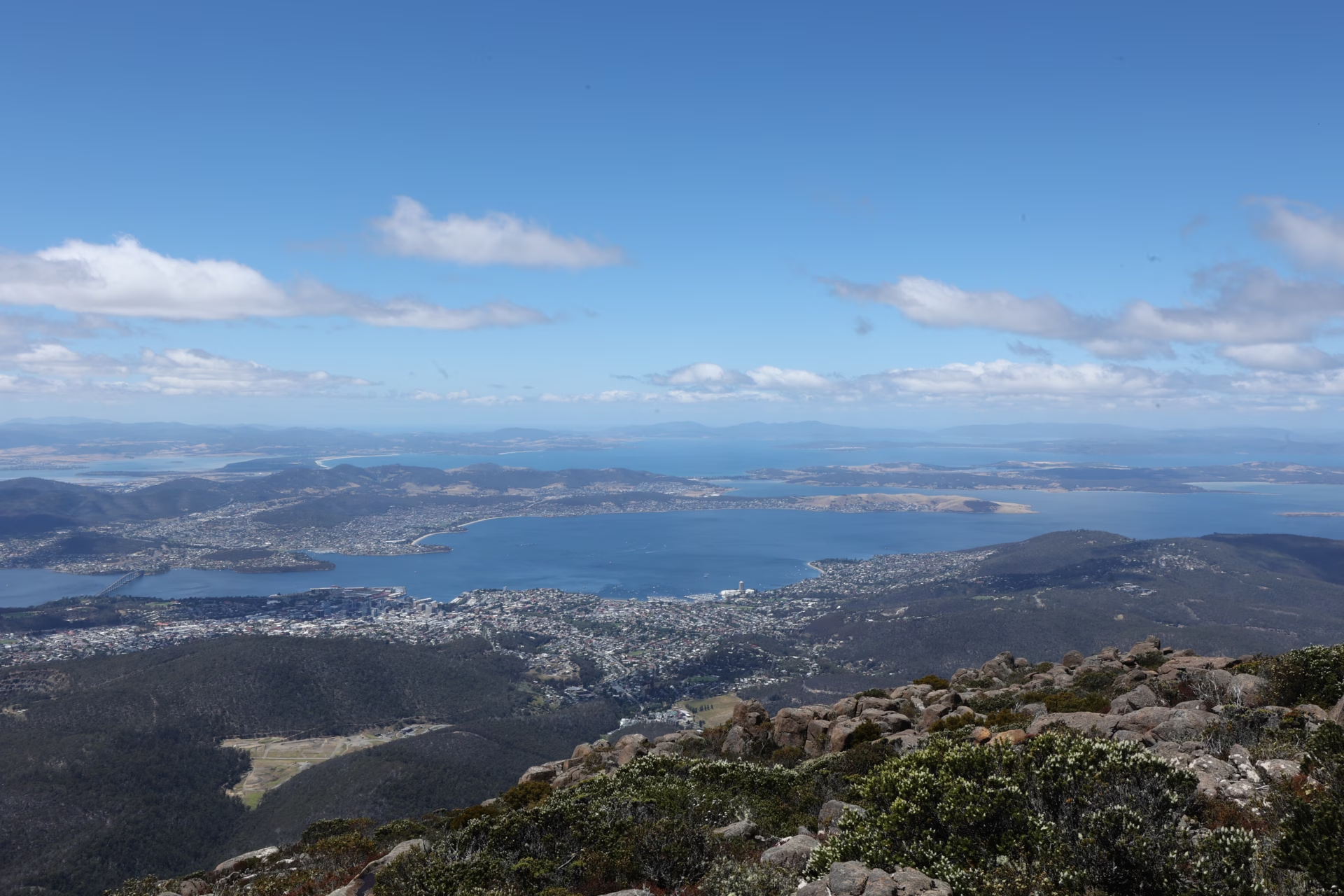
You can see it from almost everywhere in Hobart. That great grey-blue wall of rock rising behind the city, often with its top lost in cloud. kunanyi / Mount Wellington is the backdrop to the whole town, and the first thing most visitors decide is that they have to get up there.
I am Fuad, and across forty-four countries I have stood on a lot of lookouts. The summit of kunanyi is one of the great ones. I went up on 11 January, the day after my Bruny Island trip, and got something Hobart does not guarantee even in midsummer: a clear blue sky and a view that ran for what felt like a hundred kilometres. It was also bitterly cold and wind-blown at the top, in shorts-weather January. Both of those things are the point of this post.
Here is exactly what the summit is like, how to get up there, and what nobody quite tells you before you go.
kunanyi / Mount Wellington at a Glance
kunanyi / Mount Wellington: quick facts
- Height: 1,270 metres above sea level, directly above Hobart
- Distance from city: About 21 km, roughly 30 minutes by road to the summit
- How to get there: Explorer Bus shuttle, guided tour, drive yourself, or hike
- Explorer Bus fare (2026): Adult $50, concession $45, child (6-16) $30, infants free; all-day pass
- Temperature: Around 10°C colder than Hobart, even in summer
- Time needed at summit: About 30 minutes is enough for the lookouts; longer if you walk
- The name: Officially kunanyi / Mount Wellington, using the palawa kani Aboriginal name
What the Summit Is Really Like
Let me start at the top, because that is what you came for.
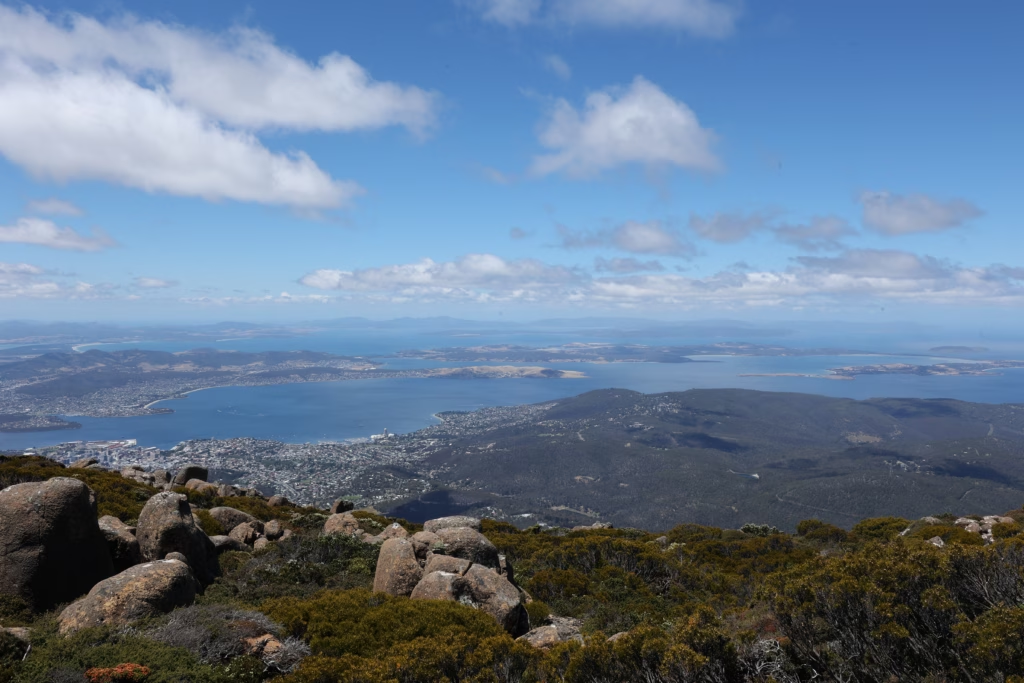
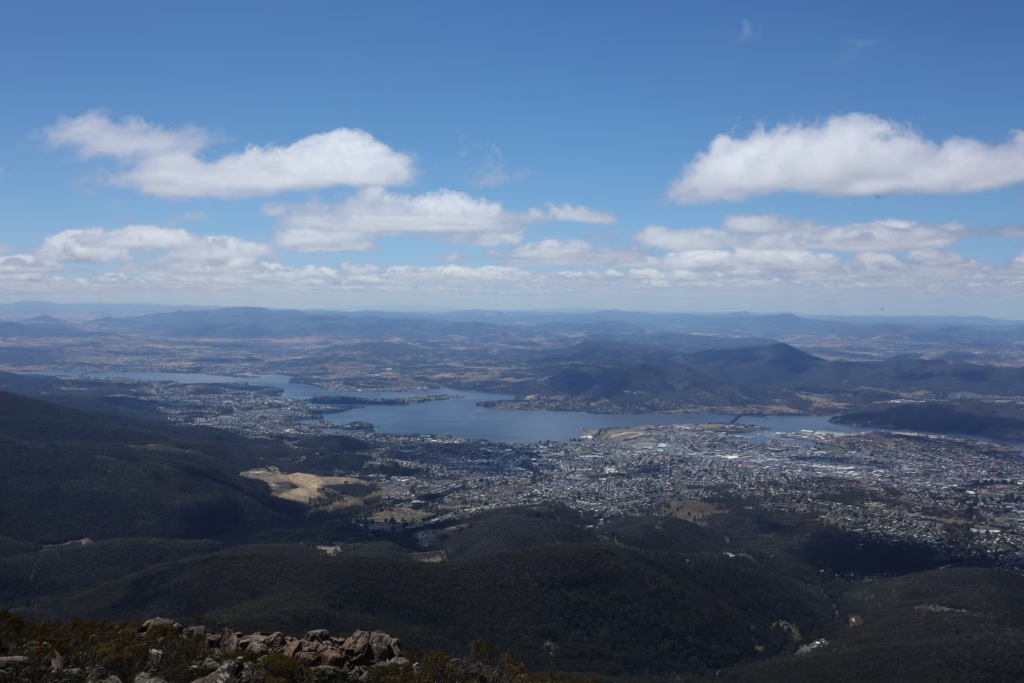
The summit of kunanyi sits at 1,270 metres, and the view is enormous. On a clear day like mine, you look straight down onto Hobart’s grid, the wide blue sweep of the River Derwent, the Tasman Bridge stitching the two shores together, and a tangle of bays, headlands and hills rolling away in every direction. Beyond the city you can see all the way to the open sea, and on the clearest days out toward Bruny Island and the Tasman Peninsula.
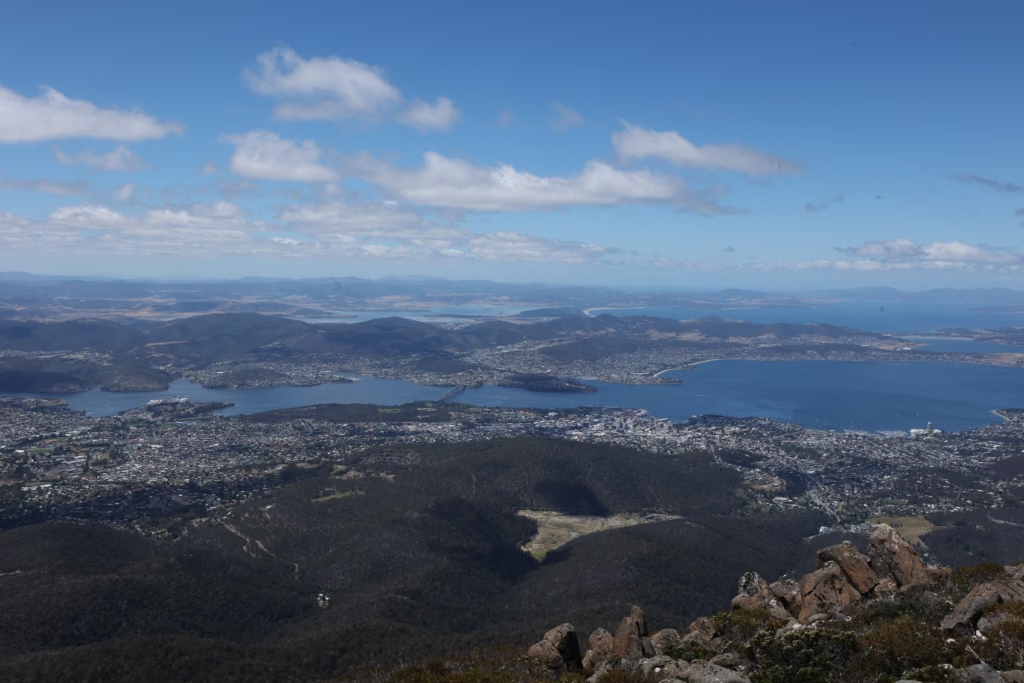
What surprised me most was the foreground. You expect the city view, but the summit itself is a strange and beautiful alpine world of its own: tumbled grey dolerite boulders, low wind-flattened scrub, tiny hardy wildflowers clinging on between the rocks. It feels nothing like the temperate city twenty minutes below.
And then there is the cold. This is the thing I cannot stress enough. I went up in January, the height of a Tasmanian summer, dressed for a warm day in the city, and the summit was freezing. The wind cuts straight through you, and the temperature is about 10°C colder than down in Hobart. People step off the bus in t-shirts and immediately regret it.
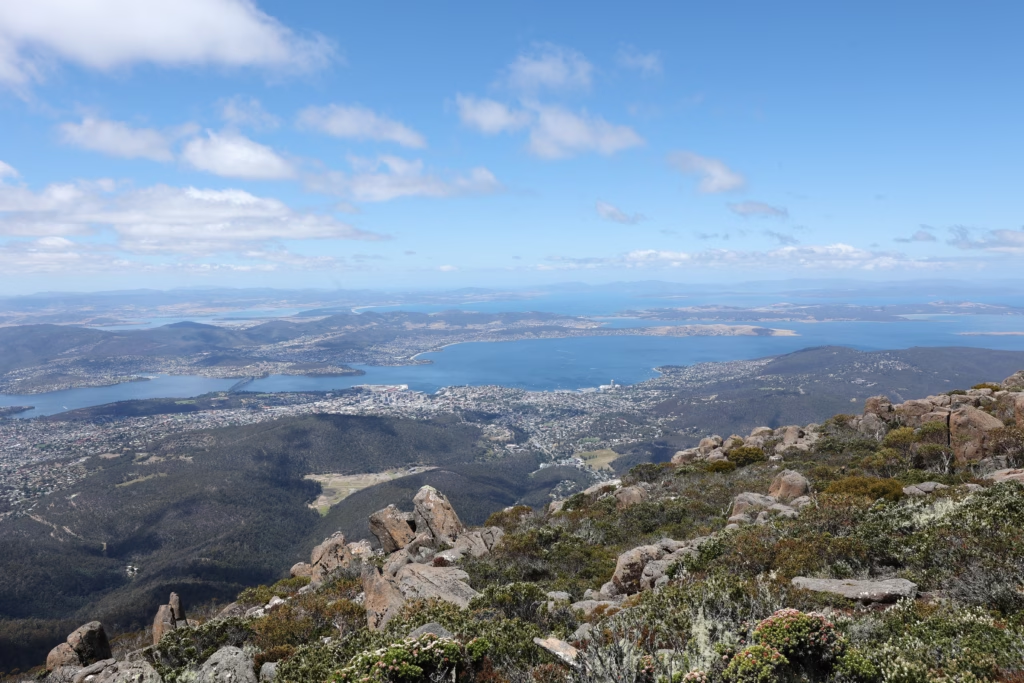
That is exactly what the glass observation shelter at the top is for. When the wind got too much, I ducked inside the glass-walled shelter, which lets you take in the panorama in relative comfort. The views are a little better out in the open air on the boardwalk, but on a cold, blowy day the shelter is a genuine relief, and worth knowing about before you go.
Mount Wellington Weather and Snow
If there is one thing people search for before heading up kunanyi, it is the weather, and for good reason. The mountain makes its own conditions, and they bear little resemblance to what you left in the city.
The summit sits around 10°C colder than Hobart, and the wind chill takes it lower still. Even on my clear January day, in the middle of summer, it was cold enough that I was glad of a jacket and grateful for the shelter. Cloud can cap the pinnacle while the city below sits in full sun, so a bright morning in Hobart is no guarantee of a view up top.
Snow is part of the appeal for many visitors. kunanyi gets dustings of snow even outside the depths of winter, and when it falls, locals and tourists alike head up to play in it, which is a rare treat at this latitude. If you are chasing snow, check the mountain forecast and go on the day, because it rarely lasts long.
Always check two things before you commit your morning: the summit weather forecast (a search for “kunanyi Mount Wellington weather” brings up elevation-specific forecasts for 1,270 m, which differ sharply from the city forecast) and the Pinnacle Road status on the City of Hobart website. The upper road closes at short notice for snow, ice or dangerous winds. This is also the single best argument for taking the Explorer Bus, which I will come to: it is the only operator allowed up to the summit when the road is shut to private cars.
How to Get to the Summit
There are four ways up: the Explorer Bus, a guided tour, your own car, or your own two feet. Here is the quick comparison, then the honest detail on each, including the one I took.
| Way up | Cost (2026) | Best for | Driving needed |
|---|---|---|---|
| Explorer Bus | From $50 adult | Most visitors, non-drivers, snow days | No |
| Guided tour | From around $55 adult | Context, small groups, combined sights | No |
| Self-drive | Car hire plus fuel | Flexibility, sunrise and sunset timing | Yes, winding road |
| Hike | Free | Fit, well-prepared walkers | No |
Short on time? Here is what I would book
If you do not have a car, or you simply want the easiest path to the top, take the Explorer Bus. It runs from the waterfront, the driver commentary is worth having, the pass lasts all day so you can hop off and walk if you like, and crucially it can reach the summit on snow days when private cars are turned back. For most visitors on a Hobart break, it is the obvious choice. If you want context and a few extra stops, pick a guided tour instead; if you want to chase sunrise or sunset, you will need your own car.
Option 1: The Explorer Bus (what I did)
I took the kunanyi / Mount Wellington Explorer Bus, and for a visitor without a car it is the obvious choice. The bus departs from the waterfront, outside Brooke Street Pier (the same building as the MONA ferry terminal, at 12 Franklin Wharf), which is easy to find and right in the middle of the tourist area.
You pre-book a pass, the bus comes, and a driver-guide takes you up Pinnacle Road with live commentary along the way, pointing out the city, the suburbs and the mountain’s history as you climb. Mine was full, every seat taken, so book ahead in summer rather than turning up and hoping. The pass is valid all day and technically hop-on, hop-off, so you can get off at stops like Fern Tree or The Springs to walk. Most visitors, like me, ride straight to the top, spend about 30 minutes at the summit, and take the bus back down. Allow a couple of hours for the whole return trip.
A few honest pointers on the bus. Current fares are $50 adult, $45 concession and $30 for children. The commentary is good and the driver knows the mountain inside out, so you learn a lot along the way. And there is one detail that makes the Explorer Bus more than just convenient: it is the only operator with exclusive access to the summit when Pinnacle Road is closed to private cars due to snow. On a marginal-weather day, the bus may get up when your hire car legally cannot.
Check times and book the kunanyi / Mount Wellington Explorer Bus →
Pre-booking is essential in summer, since the buses fill up, and securing your seat ahead means you are not left waiting at the waterfront.
Option 2: A guided tour
If you want more than a shuttle, several guided tours fold the mountain into a fuller day with commentary, small groups and other stops. These suit people who want context and company rather than just transport, or who want to combine the summit with other sights in one trip.
A few worth comparing:
- Mount Wellington guided tour from Hobart — a simple guided run up the mountain
- Mount Wellington afternoon small-group tour — smaller group, afternoon timing
- Mount Wellington morning walking tour — for those who want to walk part of the mountain with a guide
- Mount Wellington and Hobart sightseeing combo — pairs the summit with a city sightseeing loop
- Mount Wellington, Mt Field, Bonorong and Richmond day trip — a big full-day loop taking in waterfalls, wildlife and a historic town
- Mount Wellington and Richmond Village shuttle — combines the summit with the historic village of Richmond
Option 3: Driving yourself
If you have a hire car, you can drive all the way to the summit car park up Pinnacle Road. It is about 21 km and 30 minutes from the city. The road is sealed the whole way, but it is narrow, steep and full of tight bends, and it climbs through changing weather as you go. Drive it slowly and use the lower gears on the way down.
The big catch for self-drivers is weather. The upper road is sometimes closed at short notice for snow or high winds, and when it shuts to private vehicles, your trip up is simply off, unless you switch to the Explorer Bus. Check the road status before you commit your morning to it.
Compare hire cars on DiscoverCars →
Option 4: Hiking
For the fit and well-prepared, you can walk up the mountain on a network of trails from Fern Tree and elsewhere. It is a serious half-day-plus effort with real elevation, and the weather can turn on you, so it is only for those properly equipped. Most visitors on a city break will be far happier riding up and saving their legs for the boardwalk at the top. <!– WARNING BOX: Group block class “warning-box”, heading “warning-title”, body –>
Dress for winter, whatever the season
The single biggest mistake people make on kunanyi is dressing for the city they left twenty minutes ago. The summit runs about 10°C colder than Hobart, the wind is fierce, and you can get sun, cloud, rain and even snow in a single visit. Carry a warm, windproof layer no matter how warm it looks at sea level, and check the summit forecast and Pinnacle Road status before you head up. I went in January and was very glad of a jacket.
Beyond the Summit: The Springs, Organ Pipes and Walks
The pinnacle gets all the attention, but the mountain has more to offer if you have time, and several stops are reachable on the Explorer Bus hop-off points or by car on the way up.
The Springs is a sheltered picnic and barbecue area partway up, with a cafe and access to a number of walking tracks. It makes a good base if you want to stretch your legs without committing to a full summit hike. From around here you can reach the Sphinx Rock lookout, an easy walk that rewards you with views without much effort, and the track toward the Organ Pipes, the dramatic columns of dolerite that form the mountain’s most striking rock feature. The Chalet, a basic shelter with an open fire and picnic tables, sits nearby too.
None of this is essential to a first visit; the summit alone is worth the trip. But if kunanyi has caught you and you want more than 30 minutes at the top, the all-day Explorer Bus pass or your own car lets you hop off and explore these spots at your own pace.
Sunrise and Sunset on kunanyi
If you have the flexibility, sunrise and sunset are the most spectacular times to be on the mountain. The low light turns the Derwent gold, the city lights begin to twinkle below, and on a clear evening the whole scene is unforgettable. Photographers in particular should aim for golden hour.
The catch is logistics. The Explorer Bus runs daytime services, so catching sunrise or sunset at the summit realistically means driving yourself or joining a dedicated tour that times its trip for it. If you have a hire car and the weather is clear, an evening drive up for sunset is one of the best free things you can do in Hobart. Just remember the road is narrow and unlit, so take the descent slowly in the dark.
When to Go and What to Bring
Go early, and go on the clearest day you have
kunanyi makes its own weather, and the summit is often capped in cloud while the city below sits in sunshine. If you have a few days in Hobart, watch the mountain and go up on the clearest morning you get, rather than locking it to a fixed day. Mornings tend to be calmer and clearer than afternoons. Bring a windproof jacket, sunglasses, sturdy shoes for the boardwalk and rocks, and your camera. There is very little food or water at the top, so carry your own.
Is kunanyi / Mount Wellington Worth It?
Without question, yes. It is the single best thing you can do to understand Hobart, because from up there the whole shape of the city, the river and the land finally makes sense. On a clear day it is one of the most spectacular city panoramas anywhere, and even on a cloudy day the strange alpine summit is worth the trip. It is a must on any Hobart or Tasmania itinerary, and with the Explorer Bus it is easy to do without a car.
Pair it with the rest of your Tasmanian trip and it slots in perfectly: I did it the day after my Bruny Island day trip, and on the clearest days you can actually see Bruny from the summit.
kunanyi / Mount Wellington FAQ
How do you get to Mount Wellington from Hobart?
You can take the kunanyi / Mount Wellington Explorer Bus shuttle from Brooke Street Pier on the waterfront, join a guided tour, drive yourself up Pinnacle Road (about 21 km and 30 minutes), or hike up on the mountain trails. The bus is the easiest option for visitors without a car.
How much does the Mount Wellington Explorer Bus cost?
In 2026, the all-day Explorer Pass is $50 for adults, $45 concession and $30 for children aged 6 to 16, with infants free. Pre-booking is essential, especially in summer.
How cold is the summit of Mount Wellington?
The summit is about 10°C colder than Hobart, and the wind makes it feel colder still. Even in summer you should bring a warm, windproof jacket. I went in January and needed one.
How long do you need at the summit?
About 30 minutes is enough to take in the main lookouts and the observation shelter. If you want to walk the summit trails or hop off lower down the mountain, allow longer; the bus pass is valid all day.
Can you drive up Mount Wellington?
Yes, Pinnacle Road is sealed all the way to the summit, about a 30-minute drive from the city. The road is narrow and winding, and the upper section can close at short notice for snow or high winds, so check the road status before you go.
Is Mount Wellington worth visiting?
Absolutely. The view over Hobart, the Derwent and southern Tasmania is one of the best city panoramas in the country, and the alpine summit is a world away from the city below. It is a must-do on any Hobart trip.
What is the Aboriginal name for Mount Wellington?
The mountain is officially known as kunanyi / Mount Wellington. “kunanyi” is the name from palawa kani, the revived language of Tasmanian Aboriginal people, and is written with a lower-case k.
Does it snow on Mount Wellington?
Yes. kunanyi gets snow in winter and dustings at other times of year, and when it snows the mountain becomes a popular spot for locals and visitors to play in it. Snow rarely lasts long, so check the forecast and go on the day. Snow can also close the upper road to private cars.
Is Mount Wellington worth visiting in winter?
Yes, winter is one of the most atmospheric times to go, with a real chance of snow at the summit. The trade-off is that the upper road closes more often in winter conditions, so the Explorer Bus, which can access the summit when the road is shut to cars, is the safer bet.
Can you walk up Mount Wellington?
Yes, but it is a serious undertaking. Trails climb from Fern Tree and other points, and reaching the summit on foot is roughly a half-day effort with significant elevation gain. Come properly equipped for fast-changing weather. Most visitors ride or drive up and save shorter walks for around The Springs.
How long is the drive up Mount Wellington?
About 30 minutes from central Hobart to the summit, covering roughly 21 km up Pinnacle Road. The road is sealed but narrow and winding, so it can feel longer than the distance suggests.
Are there toilets and food at the summit?
There are toilets and a glass observation shelter at the summit, but very little in the way of food or drink, so bring your own. There is a cafe lower down at The Springs.
Can you see the sunrise or sunset from Mount Wellington?
Yes, and they are spectacular on a clear day. The Explorer Bus runs daytime hours, so for sunrise or sunset you will generally need your own car or a dedicated tour timed for it.
Final Thoughts
Of everything I did around Hobart, kunanyi gave me the view I still picture when I think of the city. A clear blue sky, the Derwent spread out far below, the wind trying to push me back toward the shelter, and the strange rocky summit underfoot. Go up on your clearest day, take a warm jacket even in summer, and let the mountain show you how Hobart fits together.
Putting together the rest of your trip? 3 Days in Hobart shows exactly where a morning like this fits alongside everything else in the city, and 7 Days in Tasmania covers the full route if Launceston is part of your plans too.
Do not miss the Bruny Island day trip just south of the city. If the mountain is under cloud when you visit, the best sunset spots in Hobart on the eastern shore are a solid backup, and the Hobart to Freycinet day trip is worth the early start if you have a spare day. Heading north as well? Our guides to things to do in Launceston, the Cataract Gorge, a Cradle Mountain day trip and historic Ross Village will help you plan.

Leave a reply