

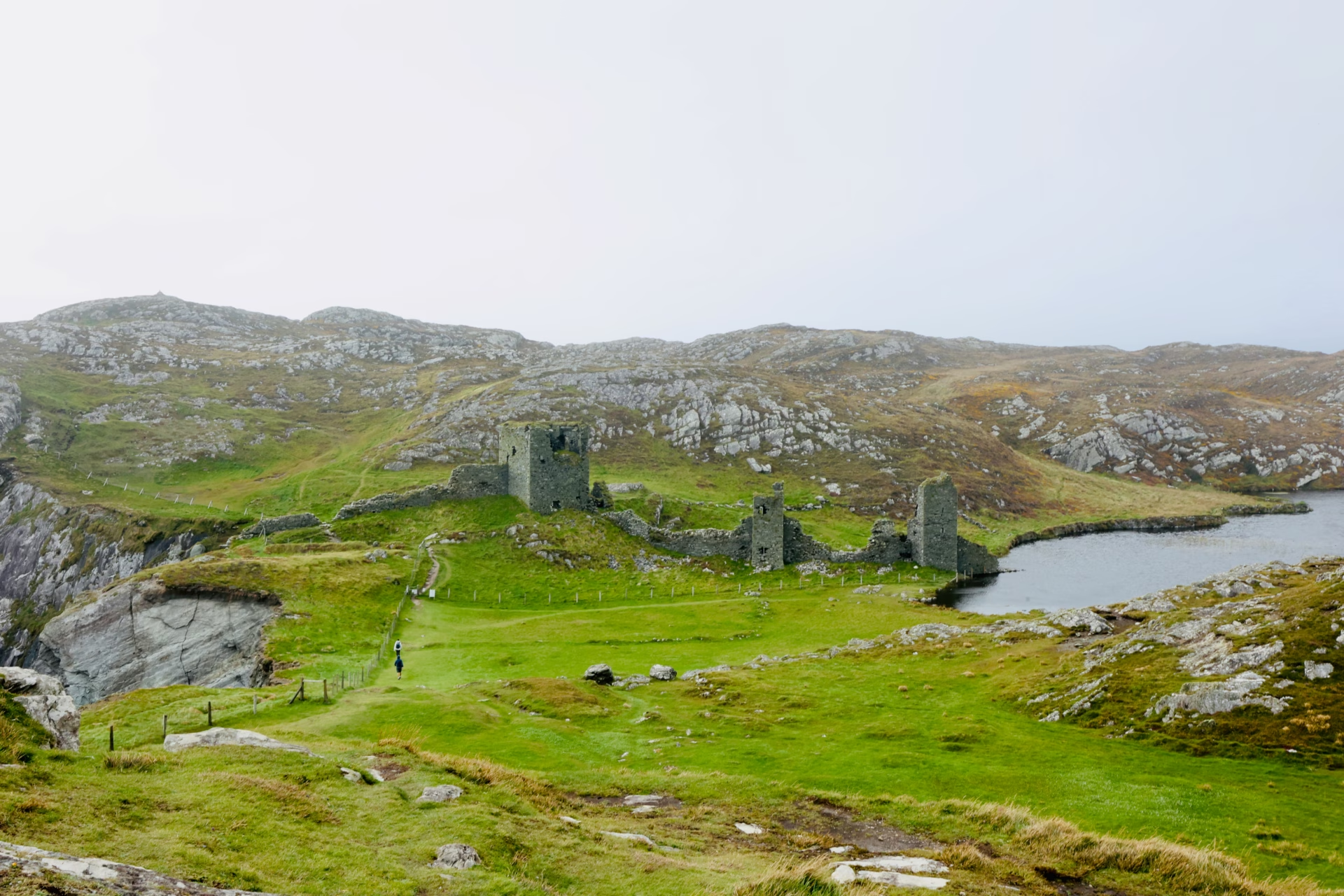
A Mizen Peninsula day trip from Cork is one of the best ways to experience West Cork, taking in dramatic Atlantic cliffs, a medieval castle ruin, a hidden beach, Ireland’s true southernmost point, and the famous Mizen Head bridge, all in a single day. This guide lays out the full route from Cork city, with five stops in the order that makes geographical sense, practical details for each, and links through to a dedicated guide for every location. Here’s how to do it properly.
One Peninsula, One Day, Five Reasons to Go
The Mizen Peninsula is West Cork’s best-kept secret, and West Cork is Ireland’s.
It’s a long, narrow finger of land pointing south and west into the Atlantic, about 2.5 hours from Cork city. At its tip sits Mizen Head, the most south-westerly point of Ireland. Along the way there’s a medieval castle ruin above a clifftop lake, a hidden beach with a remarkable wireless-telegraph history, the actual southernmost point of the country (not where most people assume), and some of the most dramatic cliff scenery in Ireland.
You can fit all of it into a single day if you start early and don’t dawdle at each stop. Or you can take two days and do it at a gentler pace, based in Bantry or Schull.
This guide walks the whole day trip: every stop, in order, with the practical details for each, and a link through to the dedicated guide for every location.
Before You Go: A Few Things Worth Knowing
You’ll need a car. Public transport doesn’t reach the tip of the Mizen Peninsula, and if you’re not driving, the West Cork to Mizen Head Full Day Tour from Cork covers the main stops with a local guide; book ahead in summer.
A word on the roads. They’re narrow, though not alarmingly so, and West Cork’s lanes ask for a different pace than the motorway. Hedgerows close in on both sides of the smaller roads, gates open straight onto the tarmac, and the passing places only work if drivers cooperate. The Irish road-wave, one finger lifted off the wheel, is your main tool here. Use it generously.
Start early, too. Leaving Cork by 8:30 or 9am gives you a full day, and it matters: the Mizen Head car park fills up in peak summer, and Three Castle Head’s little farm car park is often full by late morning on a good day. And bring layers; the wind out here is real and persistent, even in August.
The Route: Cork to Bantry Bay to the Tip of the Peninsula
The peninsula runs east to west. The sensible approach from Cork is via the N71 through Bantry, then south-west on the R591 and R592. Taking the stops in the order below follows the geography naturally and saves you doubling back. Reckon on roughly 200km of driving in total and allow 10 to 12 hours for the full day.
Stop 1: Seskin, the Wild Atlantic View Over Bantry Bay
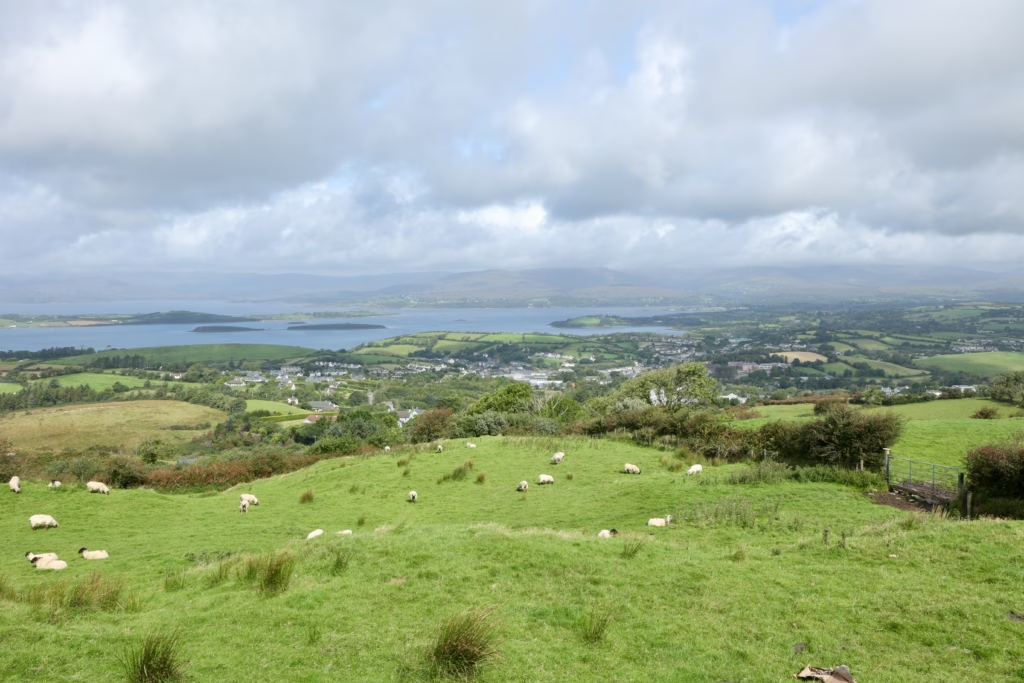
The first reason to stop comes before you even reach the peninsula proper: the Seskin viewpoint above Bantry Bay.
The road from Cork climbs over high ground above Bantry town, and from here the bay runs inland for more than 30 kilometres, scattered with islands and ringed by mountains. Sheep graze the hillside in the foreground, and when the clouds part the light turns the water silver and the fields that impossible Irish green. It’s a 20-minute stop, costs nothing, and sets the mood for the whole day.
👉 Full guide: Seskin — Bantry Bay, The Wild Atlantic View
Stop 2: Schull, a Village Worth a Coffee Stop
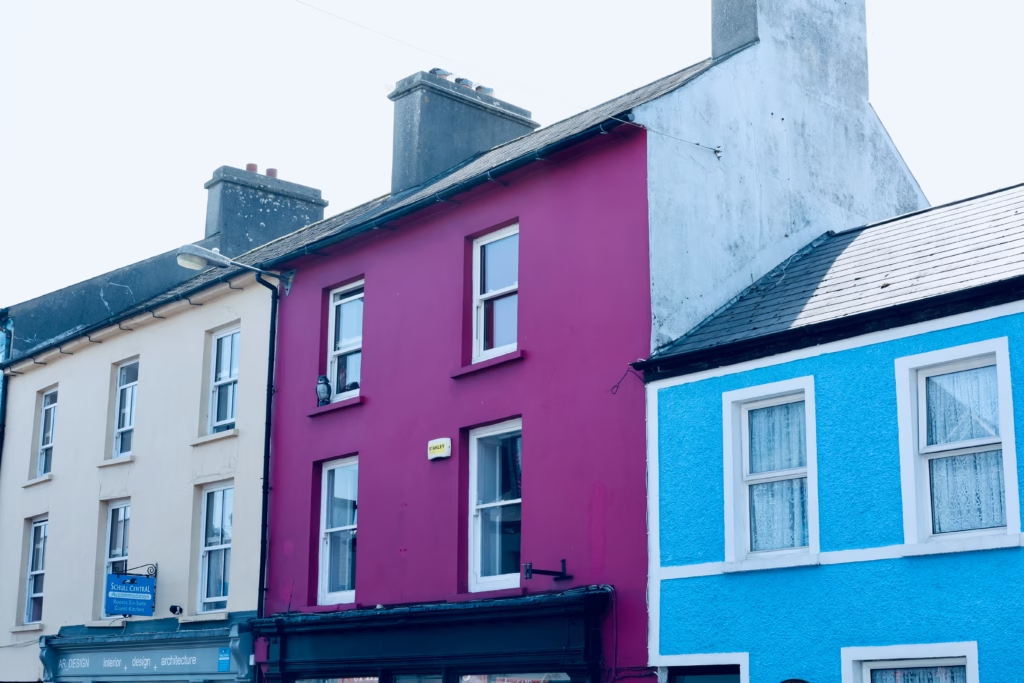
Between Bantry Bay and the start of the peninsula proper, the town of Schull sits on a natural harbour and earns a quick stop.
Painted shopfronts, a sailing harbour, good coffee, and an arts scene that turns out far more than a village this size should. Schull even has the only planetarium in the Republic outside Dublin, which tells you something about the kind of place it is. Stop for a coffee and a pastry on the main street; you’ll be back on the road before it gets busy.
Stop 3: Galley Cove Beach and Brow Head
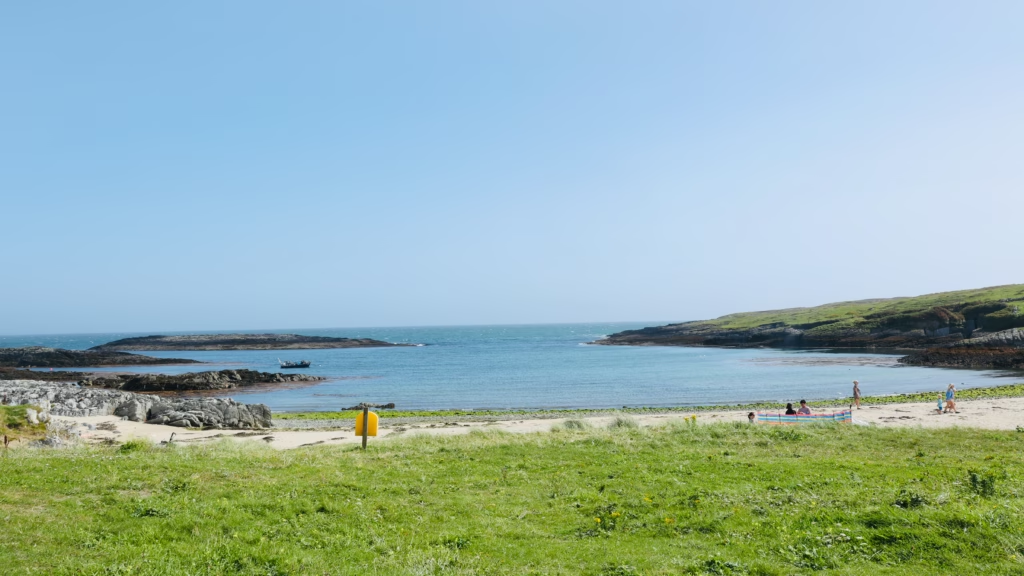
Near Crookhaven, two stops sit within walking distance of each other and pair up perfectly.
Galley Cove Beach is a sheltered sandy cove facing east, tucked out of the Atlantic wind, with strikingly clear water and almost no crowds even in August. It sits inside a Special Area of Conservation, and the water clarity shows it. It makes an ideal 30-minute breather before the harder walking of the afternoon.
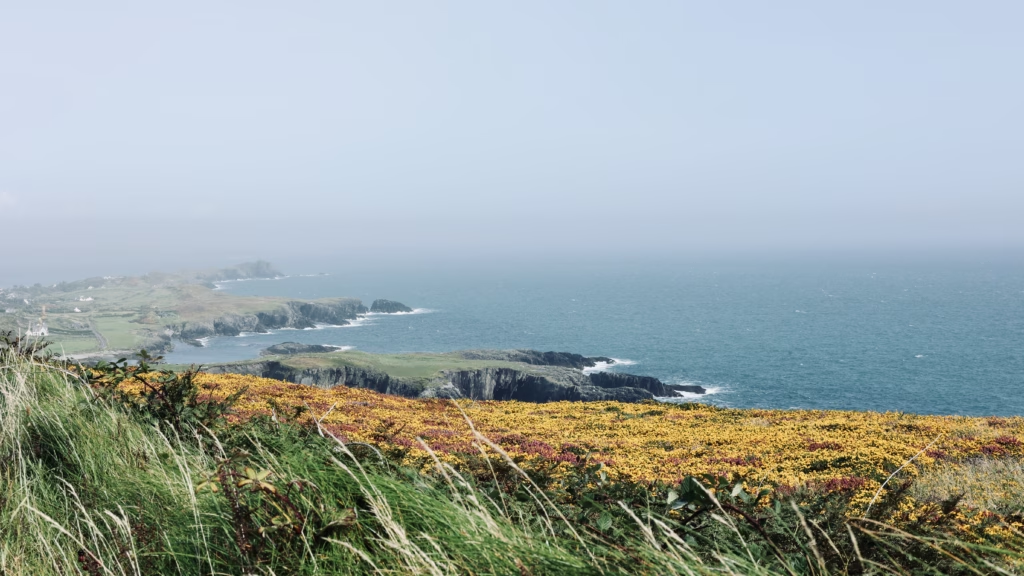
Above the beach, on Brow Head, sits the actual southernmost point of mainland Ireland, beating Mizen Head by about nine metres of latitude, a fact almost nobody who visits Mizen Head knows. The walk up takes 20 to 30 minutes and pays off with superb cliff views, a ruined Napoleonic signal tower, and the quiet satisfaction of standing somewhere genuinely significant that the tourist machinery hasn’t reached.
👉 Full guide: Galley Cove Beach West Cork
👉 Full guide: Brow Head — Ireland’s True Southernmost Point
Stop 4: Three Castle Head and Dunlough Castle
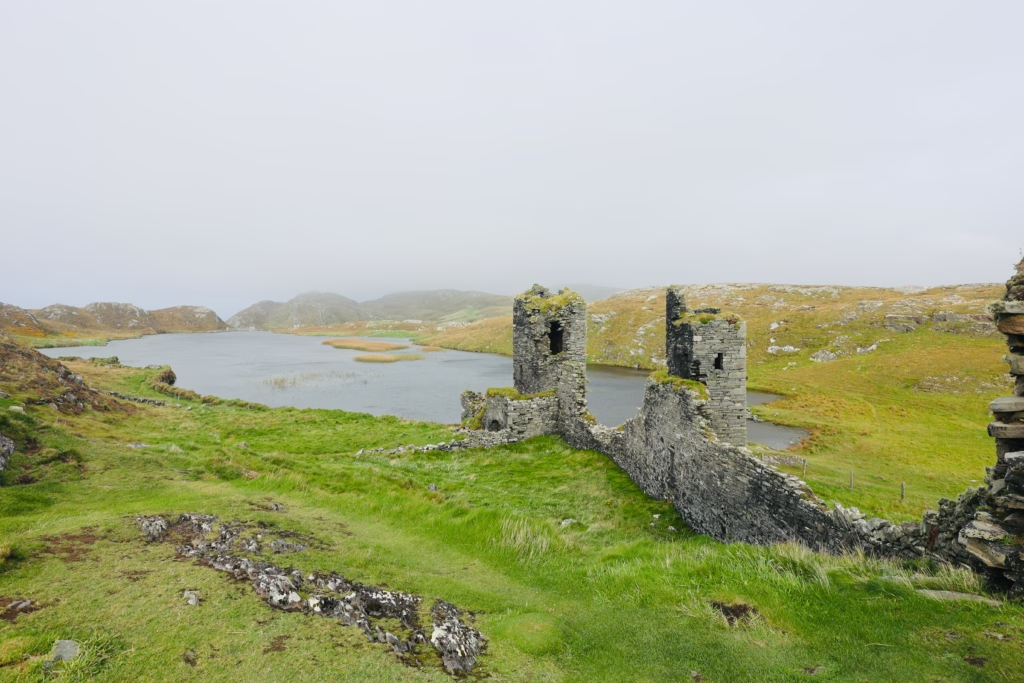
This is the stop most itineraries skip, and the one most likely to end up as your favourite memory of the day.
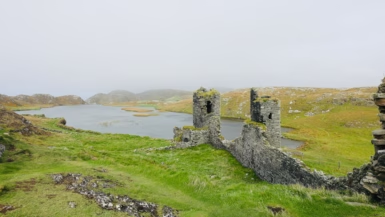
Three Castle Head is a headland at the western tip of the peninsula, reachable only on foot, about 3km there and back from the car park, 1.5 to 2 hours all in. At the end of the walk stands Dunlough Castle, built in 1207, perched above a dark clifftop lake with nothing around it but moorland and Atlantic cliffs.
The walk is rough, the ground uncertain underfoot, the gorse thick and the path unmarked. And the castle, when it rises on the skyline, makes every step worth it.
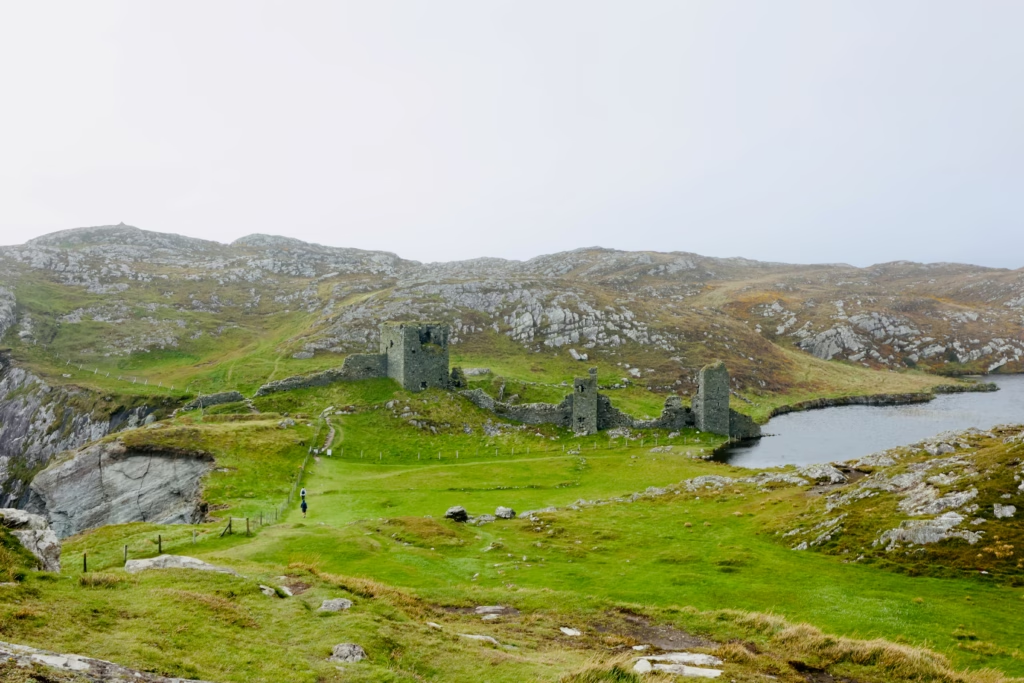
It’s only when you climb above it that the full scale of the place lands, the ruins, the lake and the green approach field all reading at once with a lone walker for size.
Parking is €3 per person on an honesty box. No drones, no dogs, no commercial photography. The walk itself is free.
👉 Full guide: Three Castle Head / Dunlough Castle
Stop 5: Mizen Head Signal Station
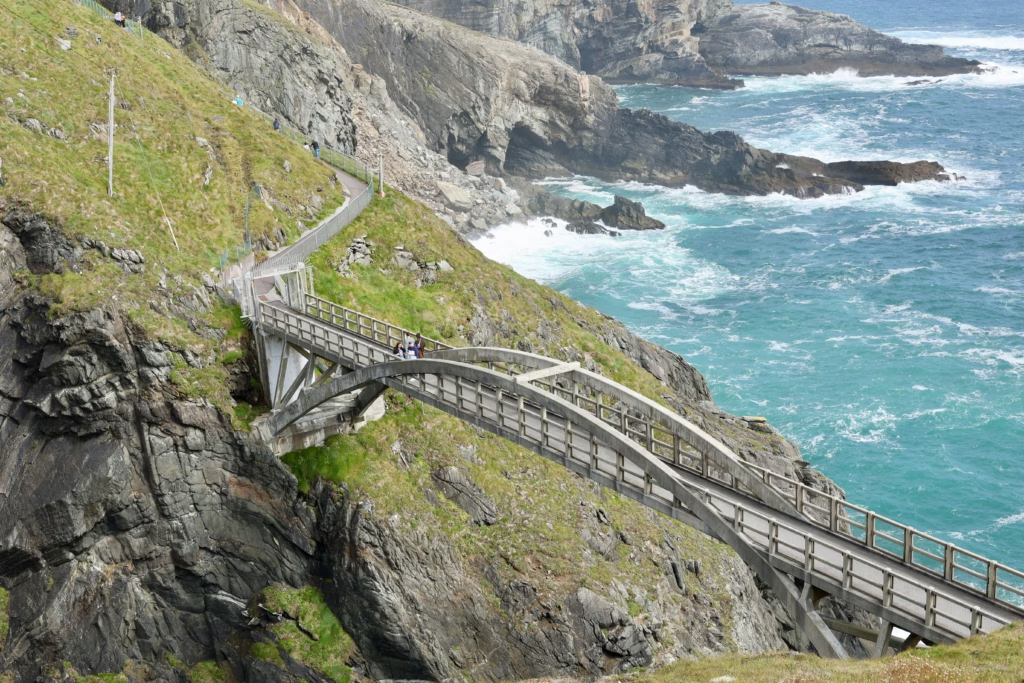
The famous one. The bridge, the gorge, the signal station at the end of the world.
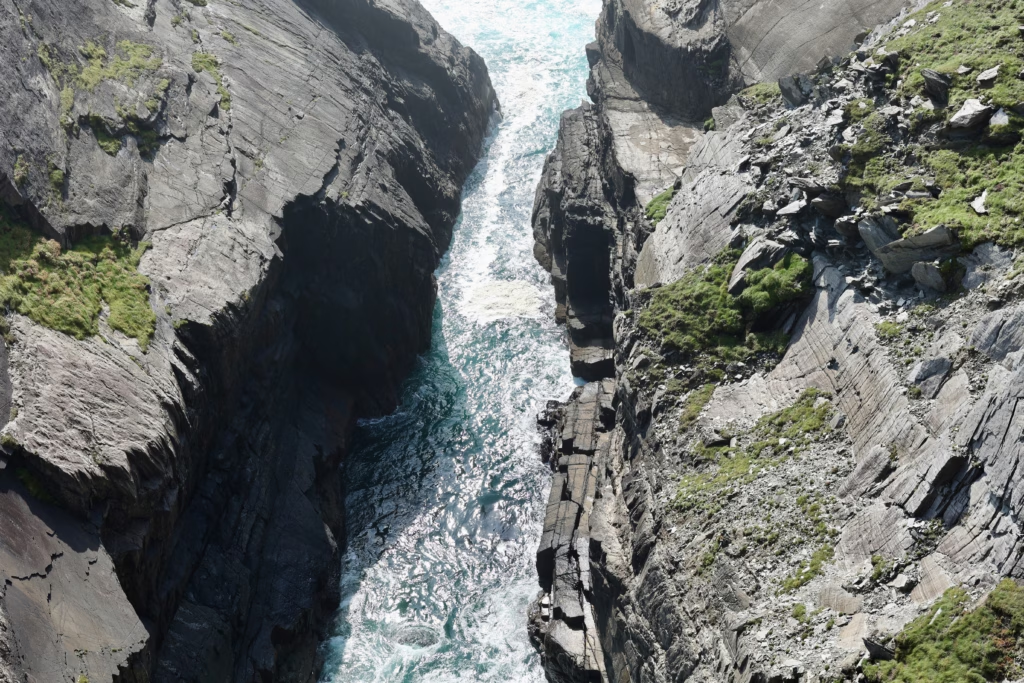
Mizen Head is the most south-westerly point of mainland Ireland, and crossing the 1910 reinforced-concrete bridge above the churning gorge is one of the real highlights of any West Cork trip. Below you, the sea drives through a narrow gap between vertical cliff faces with a sound you feel in your chest. The bridge is perfectly safe. The rest of you will beg to differ.
See the bridge in motion below — and yes, you really do feel the drop:
The signal station on the far side is a proper little museum: old radio equipment, keepers’ logbooks, wax recreations of their daily life, and the coordinates of where you’re standing painted on the wall (N51°27’01.3″, W9°49’08.7″). The cliff walk on that side adds extraordinary geology, folded rock strata, sea stacks and natural arches. Stand on the bridge and look straight down, and you’ll understand why people remember this place.
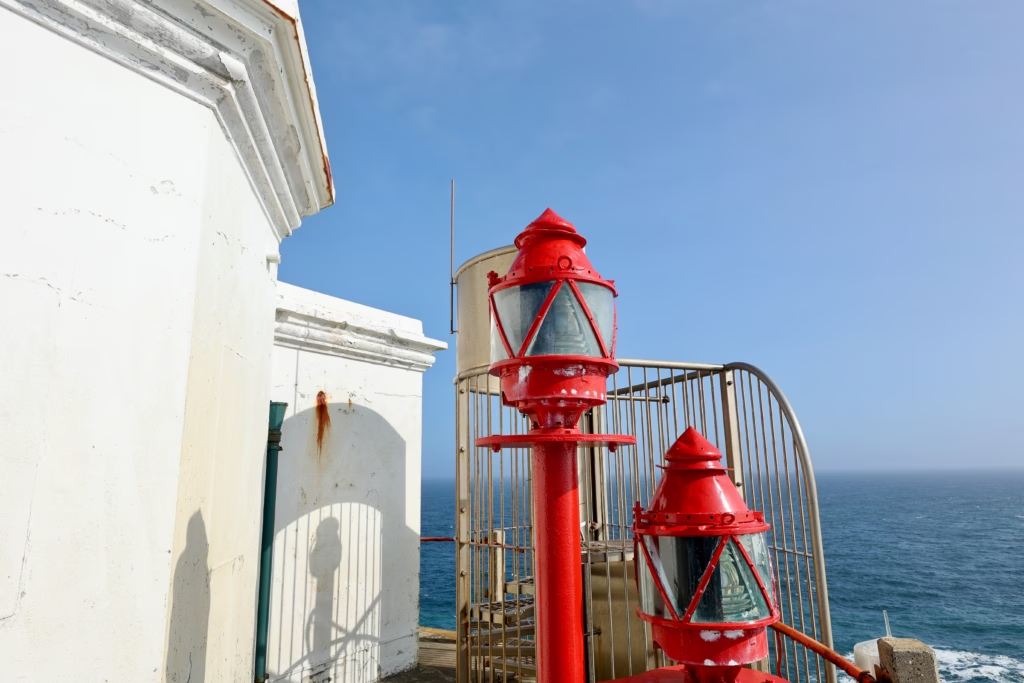
Don’t leave without spotting one of the headland’s odder pleasures, the bright navigation lanterns by the station.
Entry is €7.50 for adults, and you’ll want 1.5 to 2 hours here.
👉 Full guide: Mizen Head Bridge and Signal Station
Mizen Peninsula Day Trip: Practical Summary
| Details | |
|---|---|
| Distance from Cork | ~130km / 2 hrs 15 min each way |
| Best time to visit | May–September |
| Do you need a car? | Yes. Guided tours available for non-drivers. |
| Full day duration | 10–12 hours including driving |
| What to bring | Layers, waterproof jacket, walking boots, cash (honesty boxes) |
| Where to eat | Schull, Goleen village, or Crookhaven pub |
| Where to stay | Bantry town or Schull, both excellent bases |
Car Hire for the Mizen Peninsula
The Mizen Peninsula is a car trip, with no real way around it. For international visitors, hiring from Cork Airport or Cork city is the most straightforward option, and it gives you the freedom to stop whenever something looks worth stopping for, which on this route is often.
I’d suggest Discover Cars for comparing rates across the rental companies at Cork Airport, since it searches several suppliers at once and tends to beat booking direct. Book well ahead for summer; West Cork is popular and the smaller cars go quickly. One practical tip: get something with a small footprint. The lanes out here are narrow enough that a compact or small SUV is noticeably easier to handle than anything bigger.
Tours from Cork (Without a Car)
If you’re based in Cork city and would rather not drive, guided day tours are a practical alternative, especially for the Mizen Head stretch, where the narrow peninsula roads genuinely benefit from a driver who knows them.
For the peninsula itself, the West Cork to Mizen Head Full Day Tour leaves from Cork city and covers the highlights in one guided day; it’s the most direct option if Mizen Head is your priority.
Already done West Cork? Cork also makes an excellent base for two of Ireland’s other great scenic drives. The Ring of Kerry Guided Day Trip from Cork takes in the famous Kerry coastline, best done guided to dodge the summer coach traffic, while the Full-Day Guided Tour to Dingle Peninsula from Cork reaches one of the country’s most beautiful and culturally distinct peninsulas, with Irish spoken as a first language in many villages along the way.
Also Worth Reading
If you’re spending more time around Cork, don’t miss the Blarney Castle post: the famous stone-kissing, the castle gardens, and some tips for visiting without the worst of the crowds.
👉 Kissing the Blarney Stone — our guide to visiting Blarney Castle
Planning a West Cork road trip? Drop a comment below, I’m happy to answer questions about the route, the timing, or any of the stops.
Found this guide useful? Share it or save it to Pinterest, and check the individual guides for each stop for the full story.
Every guide on A Walk in the World is written to help you have the best possible trip. I only recommend hotels, tours, and experiences I'd genuinely choose myself, and I don't accept payments or sponsorships from operators in exchange for positive coverage. Some of the booking links on this site are affiliate links, which means I may earn a small commission if you book through them, at no extra cost to you. Thanks for trusting my guides and supporting the blog!

Leave a reply