
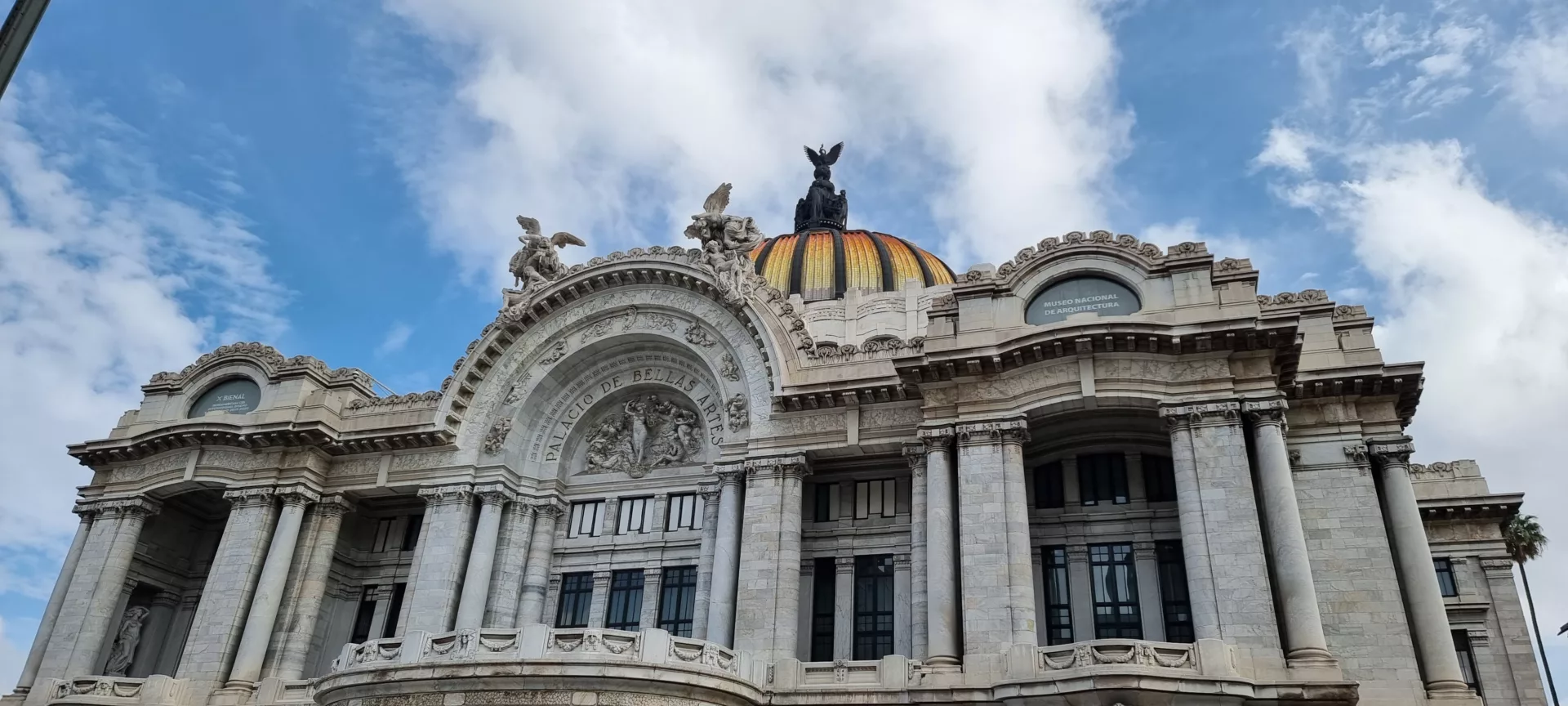
One day in Mexico City’s Centro Histórico: the Zócalo, the Rivera murals in the Palacio Nacional, Templo Mayor, Calle Madero, Bellas Artes, tacos al pastor and the view from Torre Latinoamericana.
With one day in Mexico City, spend it in the Centro Histórico. It is compact enough to walk, and it packs in the city’s best sights: the Zócalo and the Metropolitan Cathedral, Diego Rivera’s murals in the Palacio Nacional, the Aztec ruins of Templo Mayor, Calle Madero, the Palacio de Bellas Artes and the Alameda, and the view from Torre Latinoamericana, with El Ángel on Paseo de la Reforma if you have energy left. I walked much of this route in September 2021; here is my Mexico City one day itinerary, updated with 2026 opening hours and prices.
Base
Centro Histórico
Almost everything here is walkable
Core walk
Zócalo to Bellas Artes
About 1.5 km along Calle Madero
Closed Mondays
Templo Mayor, Bellas Artes
And the Palacio Nacional murals
Best time
November to April
Dry season; storms June to early October
Altitude
About 2,240 m
Take it slowly on day one
Morning: The Zócalo and the Metropolitan Cathedral
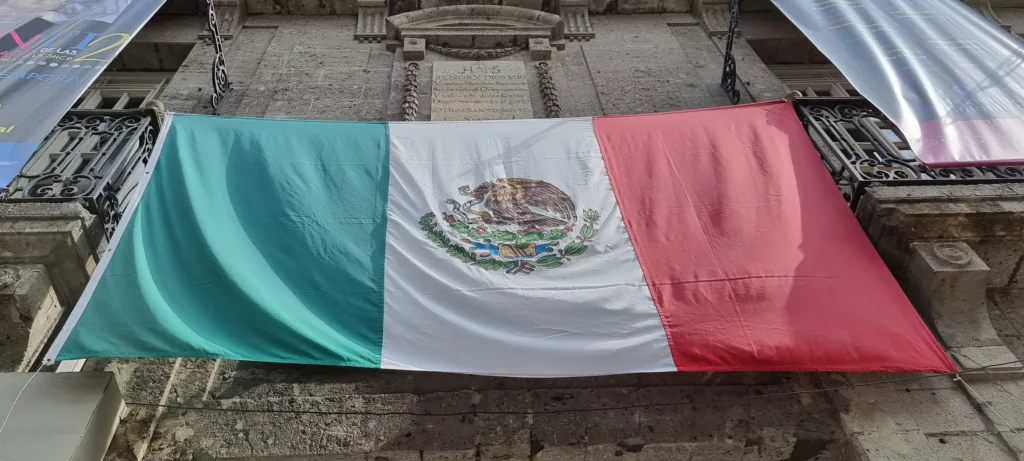
Start in the Zócalo, officially the Plaza de la Constitución and one of the largest city squares in the world. The Aztec city of Tenochtitlan had its ceremonial centre here, and the Spanish built their capital on top of it. On the north side stands the Catedral Metropolitana, the largest cathedral in the Americas, built over almost three centuries, which is why its styles shift from Renaissance to Baroque to Neoclassical.
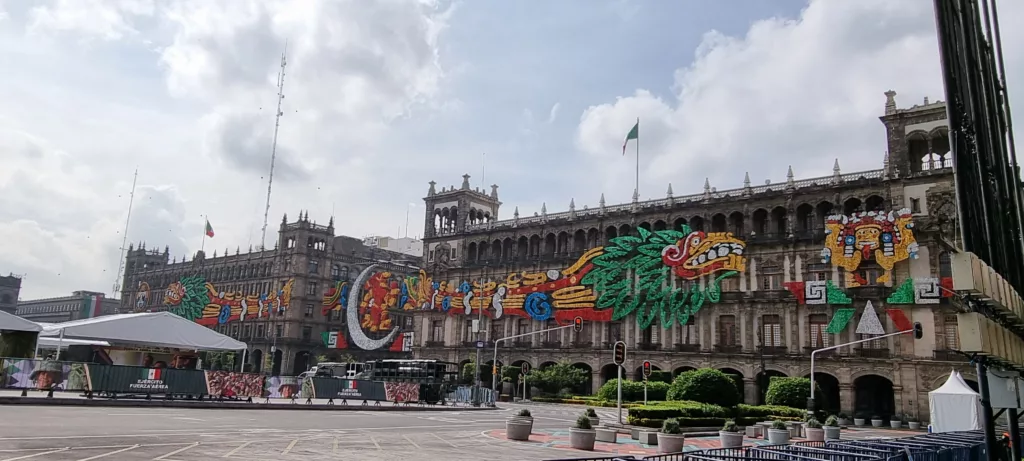
The Historic Centre of Mexico City is a UNESCO World Heritage Site, and you feel it here: Aztec ruins, colonial palaces and government buildings all within a few hundred metres.
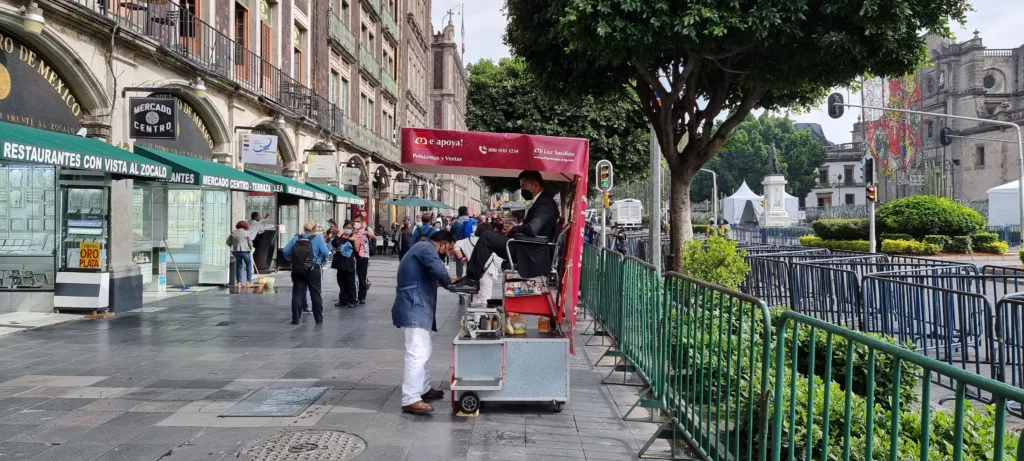
In the morning, vendors set up with flowers, maps and breakfast tamales, and the smell of fresh tortillas drifts across the square. There is a hushed energy before the crowds arrive.
The Diego Rivera Murals in the Palacio Nacional
The Palacio Nacional fills the east side of the Zócalo. Inside, Diego Rivera’s murals tell the history of Mexico, from the Aztecs to the Revolution: the great staircase mural, The Epic of the Mexican People, was painted between 1929 and 1935, and the corridor murals upstairs between 1942 and 1951. Entry is free, Tuesday to Sunday from 9am to 5pm. Visitors register on the Moneda Street side, at the Museo de Arte de la Secretaría de Hacienda, and bring photo ID. As it is a working seat of government, access can change at short notice for official events, so check before you build your day around it.
Templo Mayor: The Aztec Great Temple
Behind the cathedral lie the ruins of Templo Mayor, the Great Temple of Tenochtitlan, with twin shrines to Huitzilopochtli, god of war, and Tlaloc, god of rain. It lay buried under colonial Mexico City until 21 February 1978, when electricity workers uncovered a huge carved stone of the moon goddess Coyolxauhqui, and the excavation that followed revealed layer upon layer of rebuilt temples.
A walkway leads through the excavated site, and the museum alongside holds sculptures, offerings and ritual objects found there. It is open Tuesday to Sunday, 9am to 5pm, and closed on Mondays; INAH lists entry at MXN 210 for foreign visitors. To get more out of it, join a Templo Mayor guided tour; the guides bring the stones to life with the stories behind them.
💡 GO EARLY
Templo Mayor and the Palacio Nacional both get busy by late morning. Be at one of them when it opens, then walk west along Calle Madero as the street comes to life. Avoid Mondays, when Templo Mayor, the Palacio Nacional and the Bellas Artes museum are all closed.
If ancient civilisations are your thing, this pairs well with the other side of Mexico’s past: my day trip to Chichen Itza from Playa del Carmen and the Maya world.
Calle Madero and the Palacio de Iturbide
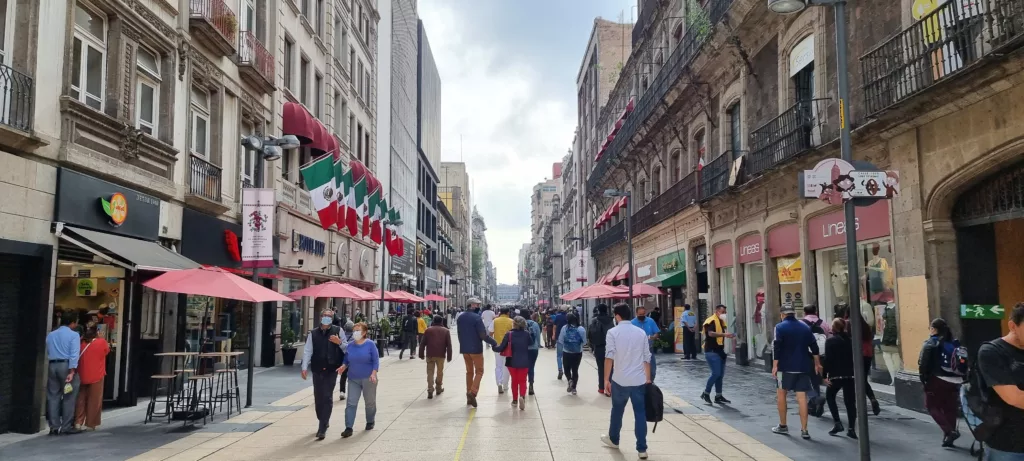
From the Zócalo, I walked west along Calle Madero, a pedestrian street that is always busy: colonial façades, rows of flags, cafés and shops, and music floating out of doorways. It’s one of the best places in the centre to shop, snack and soak up the atmosphere, with modern boutiques in centuries-old buildings.
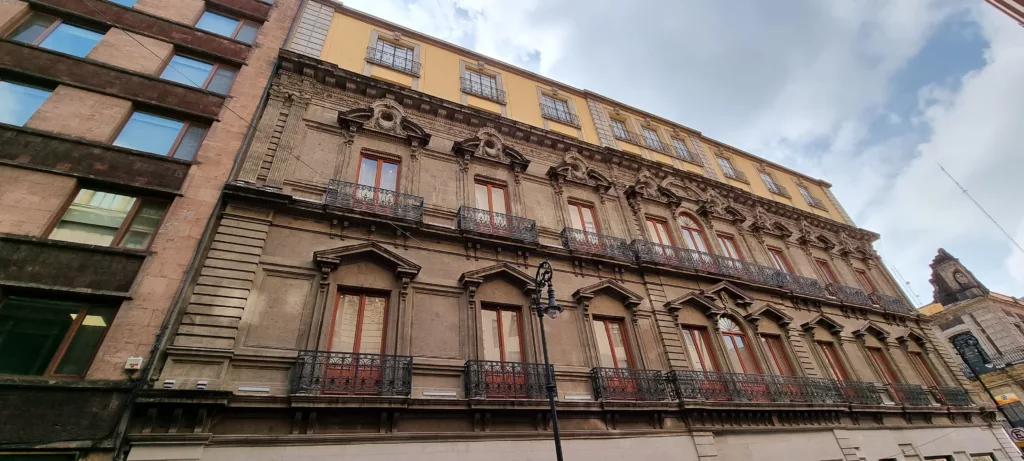
Halfway along, I stopped to admire the Palacio de Iturbide, a baroque mansion with carved stonework and iron balconies. Agustín de Iturbide lived here in the years around 1822, when he was crowned emperor of Mexico. Today it is the Palacio de Cultura Banamex, with free exhibitions open daily, a quiet contrast to the shoppers and street performers outside.
Street Food: Tacos al Pastor

No day in Mexico City is complete without street food. In the historic centre I had tacos al pastor: marinated pork shaved from a vertical spit, topped with pineapple, onion, coriander and salsa. The dish came to Mexico with Lebanese immigrants and their shawarma, and Mexico City made it its own.
Want to go deeper? A guided street food tour in Mexico City takes you to stalls you would never find alone. Other things to try:
- Aguas frescas: fresh fruit drinks, from hibiscus to tamarind.
- Tlacoyos: thick oval blue-corn tortillas stuffed with beans or cheese.
- Churros: crisp and sugary, best dipped in hot chocolate.
Palacio de Bellas Artes and the Alameda Central
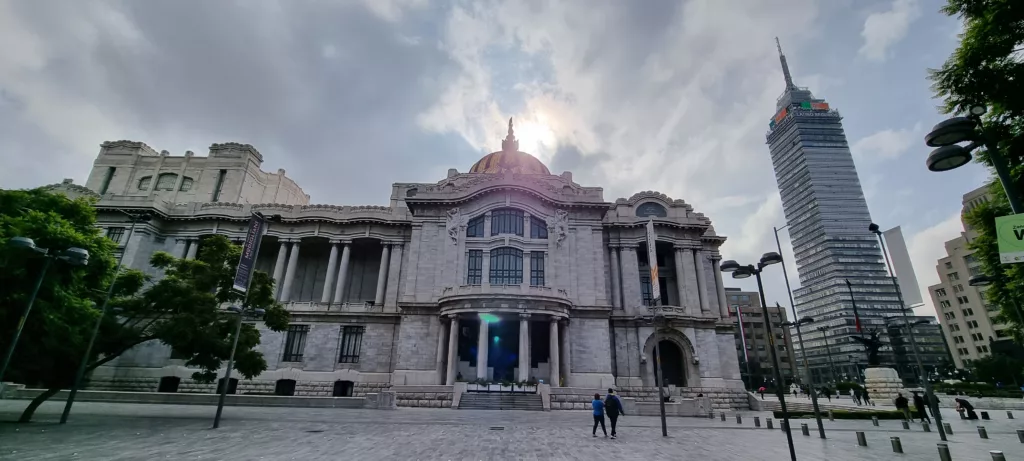
At the western end of Madero rises the Palacio de Bellas Artes, Mexico’s grandest cultural building, with a white marble exterior and orange and yellow tiled domes. Inside are murals by Rivera, Siqueiros, Orozco, Tamayo and other Mexican masters. The museum is open Tuesday to Sunday, 10am to 6pm, for about MXN 90; the outside costs nothing and is spectacular.
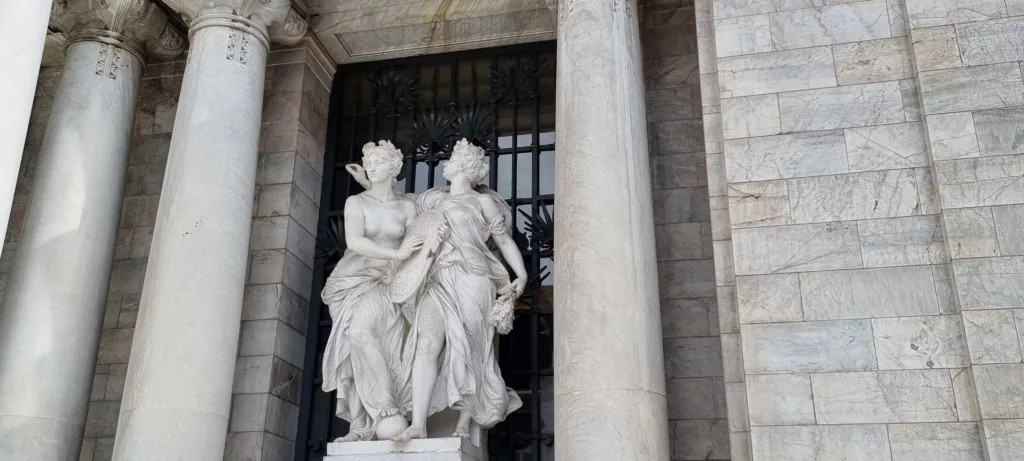
Around the entrance are marble sculptures of muses and classical figures. One pair stands beneath the columns, two women in flowing robes, one holding a tambourine and the other a garland, as if welcoming you into a world of music and dance.
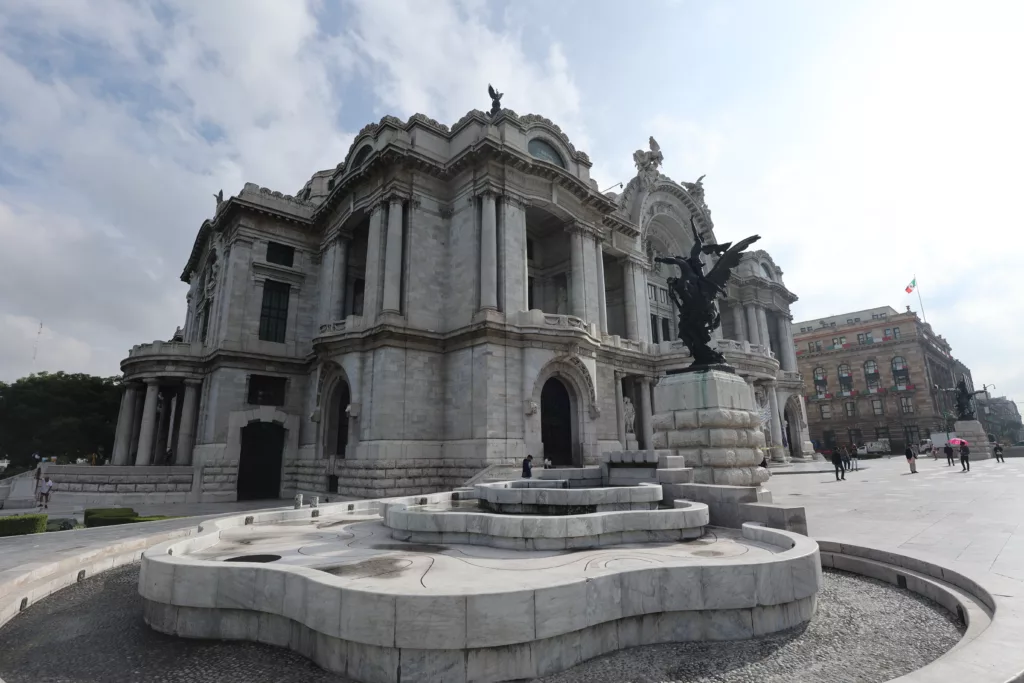
As I circled the palace, I was struck by the sheer scale of the marble. The plaza around it is a meeting place for travellers and locals alike, framed by fountains and winged statues.
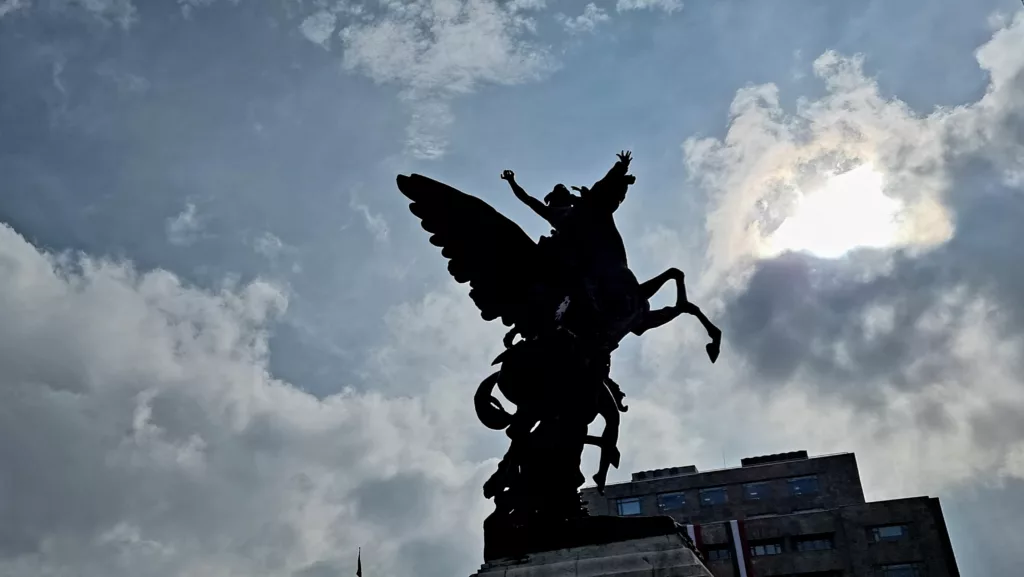
Facing the palace are sculptures of Pegasus, the winged horse, one of four around the building. Against a stormy sky, their dark silhouettes look ready to take off.
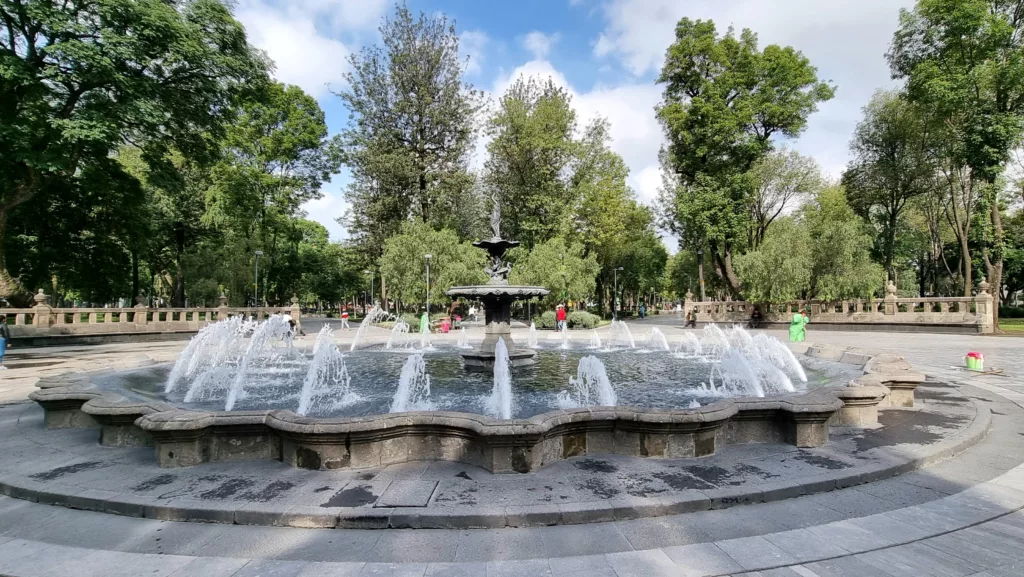
Next door is the Alameda Central, a park of fountains and old trees laid out in 1592 and often called the oldest public park in the Americas. Sit on a bench and people-watch for a while.
Torre Latinoamericana: The City from Above
Across the road from Bellas Artes, Torre Latinoamericana was once the tallest building in Latin America and famously survived the 1985 earthquake. Its viewing floors at the top (37 and 42 to 44) are open daily from 9am to 10pm, and an adult ticket costs MXN 220. It is the classic place to end the day, with the city spread out to the horizon and the Bellas Artes domes right below. Several rooftop cafés and bars around the Alameda offer a cheaper view with a coffee.
El Ángel: The Independence Monument

If you still have energy, take the Metro or an Uber about 3 km west to Paseo de la Reforma and the Monumento a la Independencia, better known as El Ángel. The golden winged figure stands on a tall column above statues of the heroes of the War of Independence, and it is where people gather to celebrate, from football wins to national days. It glows at golden hour. On most Sunday mornings, from 8am to 2pm, Reforma closes to cars for the city’s Muévete en Bici programme and fills with cyclists and walkers.
Practical Tips for Mexico City
Where to Stay
For a one-day visit, stay in or near the Centro Histórico so you can walk to everything; Roma and Condesa are leafier and better for longer stays. Compare hotels on Booking.com or hotels and hostels on Agoda.
Getting Around
- On foot: the Zócalo to Bellas Artes is an easy 20 minute walk.
- Metro: cheap, fast and extensive, but very crowded at rush hour; watch your pockets.
- Uber and DiDi: reliable and good value, especially at night.
Safety
- The historic centre is busy and generally safe by day; stick to lit, busy streets at night.
- Carry small notes and coins for street vendors.
- Keep your phone and wallet in a front pocket or cross-body bag in crowds and on the Metro.
Best Time to Visit
November to April is the dry season, with sunny days and cool evenings, though April and May are the hottest months. From June to early October, the rainy season brings short, heavy storms most afternoons; I visited in September, so plan indoor sights for later in the day. The city sits at about 2,240 metres, so drink plenty of water and take it easy on your first day.
Frequently Asked Questions
Can you see Mexico City in one day?
You can see the highlights of the historic centre in one day: the Zócalo, the cathedral, the Palacio Nacional murals, Templo Mayor, Calle Madero, Bellas Artes and the view from Torre Latinoamericana. The wider city, from Chapultepec to Coyoacán and Teotihuacan, needs several more days.
What are the best things to do in Mexico City in one day?
Walk the Centro Histórico: the Zócalo and cathedral, the Rivera murals in the Palacio Nacional, Templo Mayor, Calle Madero, Bellas Artes and the Alameda, then the view from Torre Latinoamericana. The main sights are within about 1.5 km of each other.
Can I do this itinerary on a Monday?
Only partly. Templo Mayor, the Palacio Nacional and the Bellas Artes museum are closed on Mondays, so do it Tuesday to Sunday if you can.
Is Templo Mayor open on Mondays?
No. Templo Mayor is open Tuesday to Sunday, 9am to 5pm, and closed on Mondays.
Is the Palacio Nacional free?
Yes. Visits to see the Diego Rivera murals are free, Tuesday to Sunday, with registration on the Moneda Street side and photo ID. Access can change at short notice for government events.
When is the best time to visit Mexico City?
November to April, in the dry season. From June to early October expect afternoon storms.
More from Mexico
- 🛕 Chichen Itza day trip from Playa del Carmen: the Maya pyramid, a cooperative stop and a cenote
A Final Word
To walk through Mexico City’s centre is to cross centuries in a few steps. You hear it in the street music, smell it in the tamales and see it in the murals. A day is short, but it leaves a taste you won’t forget, like the heat of chilli lingering on your lips.
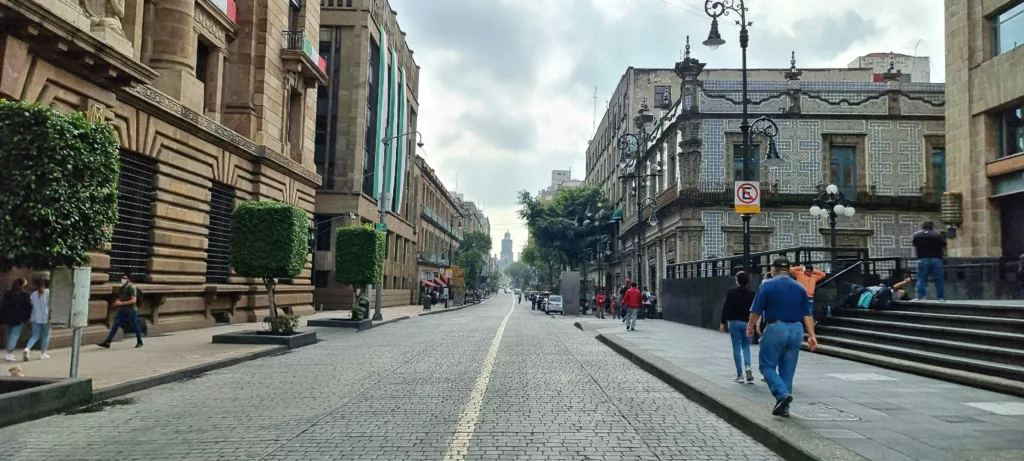
So take that walk, let the city tell its stories, and leave a little piece of your heart in its warm, beating rhythm.

Leave a reply