
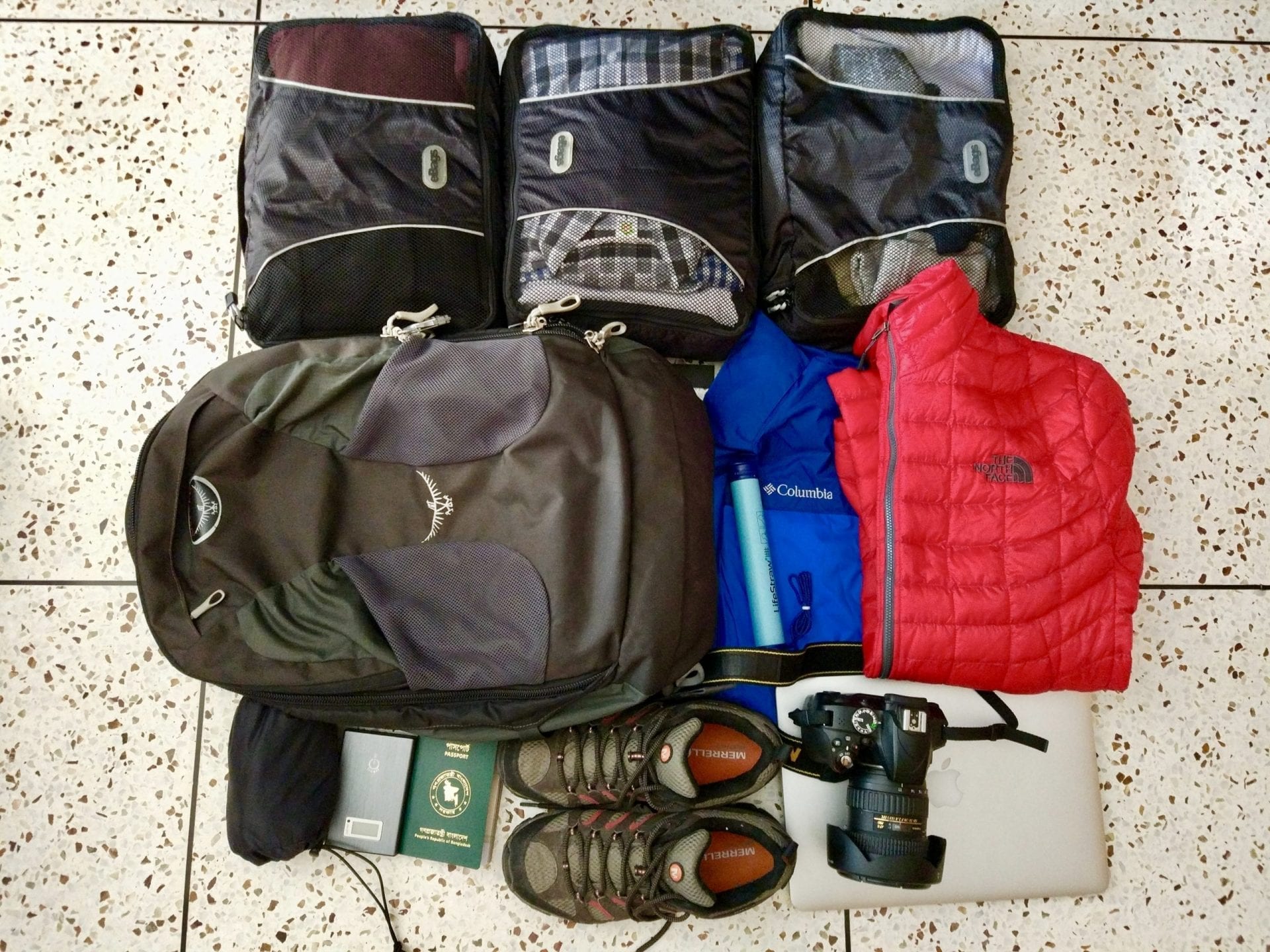
Here is what I packed for Annapurna Base Camp, with 2026 additions for sleeping bags, trekking poles, sun protection, cash and bag weight limits.
When you will be out in Nepal for Annapurna Base Camp Trek or ABC Trek, a good or bad packing list can make or break your trek, especially if you are backpacking without a guide.
UPDATED 14 NOVEMBER 2026:
This is the list I used for my own trek, with the gear links I chose at the time. I added a 2026 check for things my list missed, such as a sleeping bag, trekking poles, sun protection and cash, based on operator guides. Permits and the guide rule have also changed, so read my trek cost post before you go.
✅ SHORT ANSWER
Pack in layers (base layer, shirt, fleece, down jacket and a rain shell), grippy waterproof shoes, a sleeping bag rated to about -10°C or a rental, a water filter, a power bank, sun protection, Nepali rupees and passport photos for the permits. Keep the bag light: operators set porter bag limits of about 10 to 15 kg.
Base camp altitude
4,130 m
Days can be sunny, nights drop below freezing
Sleeping bag
Rated to about -10°C
Rent in Kathmandu or Pokhara, roughly US$30 for the trek (one 2026 operator guide)
Boots and poles
Grip first, poles second
Long stone staircases. Poles rent in Pokhara for a few US dollars a day
Sun
SPF 50+
Cap or hat and lip balm. UV is stronger at altitude, even on cloudy days
Water
2 litres plus a filter
Use a filter or tablets. Tap water is not safe to drink
Cash
Nepali rupees
No ATMs on the trail, so withdraw in Pokhara
Power
Power bank
Tea houses charge a small fee and sockets are shared
Bag weight
About 10 to 15 kg
Porter bag limit set by the operator, so check yours
ABC Trekking Backpack
One of the most important questions will be in determining a suitable bag for the trek. I took the Osprey Farpoint 40 with me and was happy with it. I also used these Packing Cubes for organizing my stuff.
ABC Trek Packing List For Warmth
This is the most important question. You have to keep your body warm. It can be freezing at night at high altitude. However, while you will trek during the day, if the sun is out, you won’t feel cold. So, layering and choosing different types of clothing at different times is important.
First, wear an inner or neck T-shirt . This will be your first layer of protection. After that, wear a full sleeve shirt. On top of it, wear a fleece. You need to wear a Down Sweater Jacket in the outermost layer. If you don’t feel cold, you can take out the last one followed by the previous one.
In the bottom, with underpants, you can wear a Fleece Sweatpants. On top of it, Jeans or Trouser should be good.
You will still feel cold in the head and neck. A beanie for the head and Scarf for the neck will be necessary. A pair of hand gloves are the last thing you will need.
Drinking
You can refill your water bottle from springs and you will get plenty of them during your trek. I took a Thermos Intak 24 Ounce Hydration Bottle with me.
If you can’t trust the purity of the water, you can take a water purifying tablet with you. However, I cannot stand their smell and taste. I found a great alternate. This LifeStraw Water Filter purifies the water with no help from a battery, solar, or anything. You just need to put it inside your bottle and drink the water. It was cool!
Walking
You don’t need a super sophisticated trekking boot for this trek. You need one with a good grip. Better if it has some waterproofing facilities. You can try Merrell Men’s Moab 2 Waterproof Hiking Shoe.
I used Merrell Men’s Moab Gore-Tex Waterproof Hiking Shoe for my trip, and it was good, too. Not heavy, have a good grip.
You need to take several pairs of socks with you. I suggest taking 3 pairs with you. You can take more if you can carry. These socks are good for hiking and provide cushioning to your heel.
Go Digital
If you have a smartphone with you, you must download the Maps.me in your phone and preload the map in that region. You won’t have internet connectivity for most of the time. But this map will work. I downloaded both Google Maps and Maps.me. The Maps.me worked like a charm and was a lifesaver.
You need to charge your phone to take your photos and navigate through the maps. As electricity is scarce in the region, bring a Power Bank with you.
You can use your mobile phone to capture photos. However, if you want to use a DSLR camera without breaking your bank, you can choose Nikon 3300. I like this camera because it is lightweight compared to other DSLRs. Remember that this is an entry-level DSLR and if you want sublime output, increase your budget. Recently, I upgraded to Canon EOS R, a full-frame mirrorless camera, and I absolutely love it!
The camera I mentioned above comes with a basic lens. If you want to take photos of a bigger region, you need a wide-angle camera lens. This 10-20mm wide-angle lens can be used with the Nikon 3300 and will give you an option to shot the landscape better.
If you are taking the camera I mentioned above, bring two pairs of batteries with you, fully charged.
The nights can be longer as the trek for the day will be completed by 5:00 PM every day. You won’t have much to do other than to sleep. While sleeping is an impressive thing, you can take a Kindle with you to read books.
Laptop
You need to carry a lightweight laptop with a longer battery life. The nights are long in the Himalayas, so, you can use a laptop for watching a film, or taking a look at the photos you captured. My suggestion would be to buy a Dell XPS 13.
Rain Protection
What if it rains? You won’t get any shade apart from the trees. You need to protect your bag and yourself in that case.
I suggest a Backpack Rain Cover to protect your bag, a Waterproof Rain Pant to wear on top of your pant, and a Rain Jacket to protect your top.
Reading
I am a big fan of Lonely Planet. It’s not because they give me information, they work as an inspiration and starting point of my journey. You should buy a copy of Lonely Planet Trekking in the Nepal Himalaya. It will not only provide you information about this trek but many other treks in Nepal. One thing to mention: if you go for the trek, don’t take the entire book, just photocopy the pages you need. It will save the weight of your bag.
Lifesaver
Annapurna Trek is not dangerous. However, there are so many things that can go wrong. The weather can turn bad, you can twist your ankles, you can suffer from altitude sickness, you can slip on those slippery stones you will cross. So, if things go wrong, you can be in trouble.
Not every insurance company covers injury during trekking and helps in the evacuation process. World Nomads cover this insurance, you can get in touch with them.
Photos
It might sound weird, but you need to bring passport-sized photos with you to apply for different permits in Nepal.
Wellbeing
Microfiber towel, Mini toothpaste, Toothbrush, Soap: these will save space in your bag and come in handy.
Flip Flops
It would be great to have a pair of flip flops in your bag. They will come handy when your day will be ended and you are gonna relax in the home lodge as well as going to the toilet.
Drone
If you wanna take some aerial shot of the mountains, take a drone with you. DJI Mini 2 is highly suggested because it is lightweight. With only 242 grams, you can afford to carry it with you.
What I Would Add in 2026
My list above covers clothing, water, electronics and rain gear. Operator guides in 2026 add a few things I did not write about, and they are worth packing:
- Sleeping bag: a bag rated to about -10°C, or a rental from Kathmandu or Pokhara. A liner adds warmth.
- Trekking poles: the descent is a long stone staircase. Poles can be rented in Pokhara.
- Sun protection: SPF 50+ sunscreen, SPF lip balm and a cap or wide-brim hat.
- Cash: enough Nepali rupees for rooms, meals, charging, hot showers and tips, because there are no ATMs on the trail.
- First aid: painkillers, electrolytes, anti-diarrhoea tablets, plasters and strapping tape.
- Altitude medication: ask your doctor about Diamox before you travel. I cannot advise on doses.
⚠️ Rules have changed since my trek. Since April 2023, foreign trekkers on listed routes, including Poon Hill to Annapurna Base Camp, are meant to trek with a licensed guide, although enforcement on Annapurna trails is reported to be inconsistent. If you plan to trek independently as I did, confirm the current rule when you collect your permit, and see my trek cost post for permit fees.
Summary of the packing list for ABC trek
- Osprey Farpoint 40: 1
- Packing Cubes: 3
- Thermos Intak 24 Ounce Hydration Bottle: 1
- LifeStraw Water Filter: 1
- Merrell Men’s Moab 2 Waterproof Hiking Shoe: 1
- Socks are good for hiking: 3 to 4 pairs
- Inner or neck T-shirt: 4
- Boxer Brief: 4
- Full sleeve shirt: 3
- Full Pant: 1
- Fleece: 1
- Down Sweater Jacket: 1
- Fleece Sweatpant: 1
- A beanie for the head: 1
- Scarf: 1
- Hand gloves: 1
- Maps.me in your cellphone
- Power Bank: 1
- Waterproof Backpack Rain Cover: 1
- Waterproof Rain Pant: 1
- Rain Jacket: 1
- Nikon 3300 camera: 1
- 10-20mm wide-angle lens: 1
- Battery for Camera
- Kindle with you to read books: 1
- Lightweight Laptop, Dell XPS 13: 1
- Passport-sized photos: 8
- Insurance with Trekking Coverage
- Microfibre towel: 1
- Mini toothpaste: 1
- Toothbrush: 1
- Soap: 1
- A lightweight drone, DJI Mini 2: 1
- Sleeping bag rated to about -10°C (or rent one): 1
- Trekking poles (or rent a pair): 1 pair
- Sunscreen SPF 50+, lip balm and a cap: 1 each
- Nepali rupees in cash
- Basic first aid kit: 1
Frequently Asked Questions About the ABC Trek Packing List
What should I pack for the Annapurna Base Camp trek?
Pack in layers (base layer, shirt, fleece, down jacket and rain shell), grippy waterproof shoes, a warm sleeping bag or a rental, a water filter, a power bank, sun protection, Nepali rupees and passport photos for the permits.
Do I need to bring a sleeping bag to ABC?
Nights at base camp drop below freezing, so you need a warm one. Operator guides suggest a bag rated to about -10°C, and you can rent one in Kathmandu or Pokhara for roughly US$30 for the trek.
Can I rent trekking gear in Pokhara or Kathmandu?
Yes. Sleeping bags, down jackets and trekking poles can be rented or bought in both places, and poles rent for a few US dollars a day in Pokhara.
How heavy should my bag be for the ABC trek?
If a porter carries your main bag, operators set limits of about 10 to 15 kg, so check with yours. If you carry it yourself, keep it as light as you can.
Are there ATMs on the Annapurna Base Camp trail?
No. Withdraw enough Nepali rupees in Pokhara for rooms, meals, charging, hot showers and tips.
Is it safe to drink the water on the ABC trek?
Treat tap and spring water with a filter such as a LifeStraw or with purification tablets. Filtered water is also sold at tea houses.
Liked the ABC Trek Packing List? Pin it!
Further Reading
Disclaimer: This post may contain affiliate links.

Leave a reply