
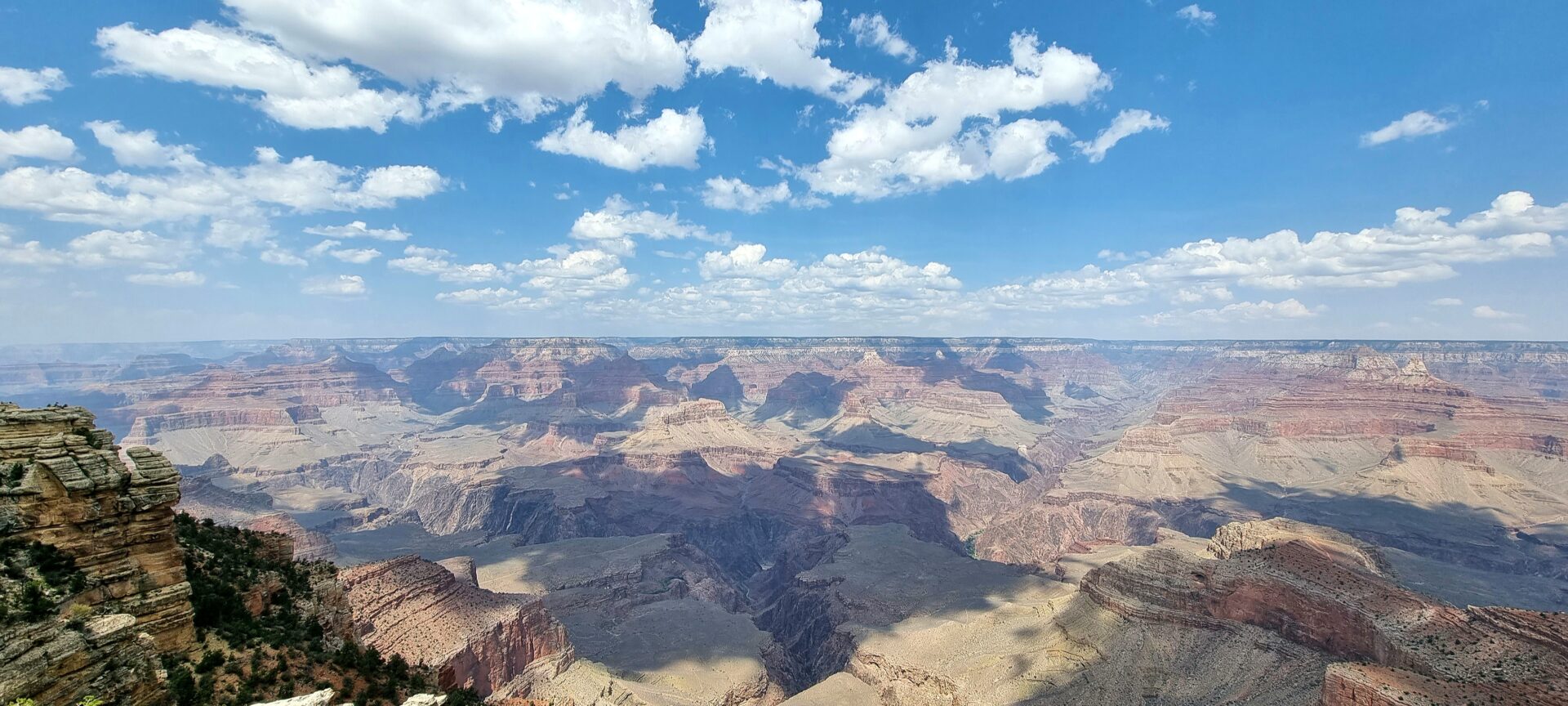
Most Grand Canyon guides assume you have a car. Rental, gas, parking, it all adds up fast. But here’s something those guides don’t tell you: the South Rim of the Grand Canyon has one of the best free shuttle systems of any National Park in the United States. You genuinely don’t need a car, and in many ways, going without one makes the experience better.
I did this trip myself, flying into Phoenix, taking a Greyhound to Flagstaff, then a shuttle to the South Rim. No rental. No parking stress. Just the canyon, the trails, and more time to actually look at one of the most extraordinary places on earth.
This is the itinerary I wish I’d had before I went.
Quick overview: This is a 3-day Grand Canyon itinerary without a car, starting and ending at Phoenix Sky Harbor Airport. The base is Flagstaff on Day 1, then Mather Campground at the South Rim for Days 2–3.
One honest caveat: the free shuttle doesn’t cover Desert View Drive on the eastern rim, you’d need a paid tour for that. Everything else on the South Rim? Completely car-free.
Car-Free Transport: How It All Works
Before diving into the day-by-day itinerary, here’s the complete picture of how you get from Phoenix to the Grand Canyon South Rim without a car:
- Phoenix → Flagstaff: Greyhound bus (~2.5 hours, ~$25–$45). Departs from the Greyhound Terminal at 2115 E Buckeye Rd, Phoenix. Flagstaff bus station is centrally located. Book at greyhound.com.
- Flagstaff → Grand Canyon South Rim: Groome Transportation shuttle (~1.5 hours, ~$35 one way / ~$65 round trip). This is the key link. Groome runs daily scheduled departures from the Flagstaff Amtrak station. Book in advance at groometransportation.com — seats sell out.
- Getting around the South Rim: The Grand Canyon’s free shuttle system covers all major viewpoints on the South Rim. Three colour-coded routes (Village, Kaibab Rim, Hermit Rest) run from early morning until after dark. No booking required.
- Return: Groome shuttle back to Flagstaff, then Greyhound to Phoenix.
That’s it. The whole system is more reliable and stress-free than driving, and the shuttle ride from Flagstaff to the South Rim passes through pine forests and high desert that you’d miss if you were focused on the road.
Day 1: Phoenix to Flagstaff — Your Gateway to the Canyon
Morning: Arrive at Phoenix Sky Harbor
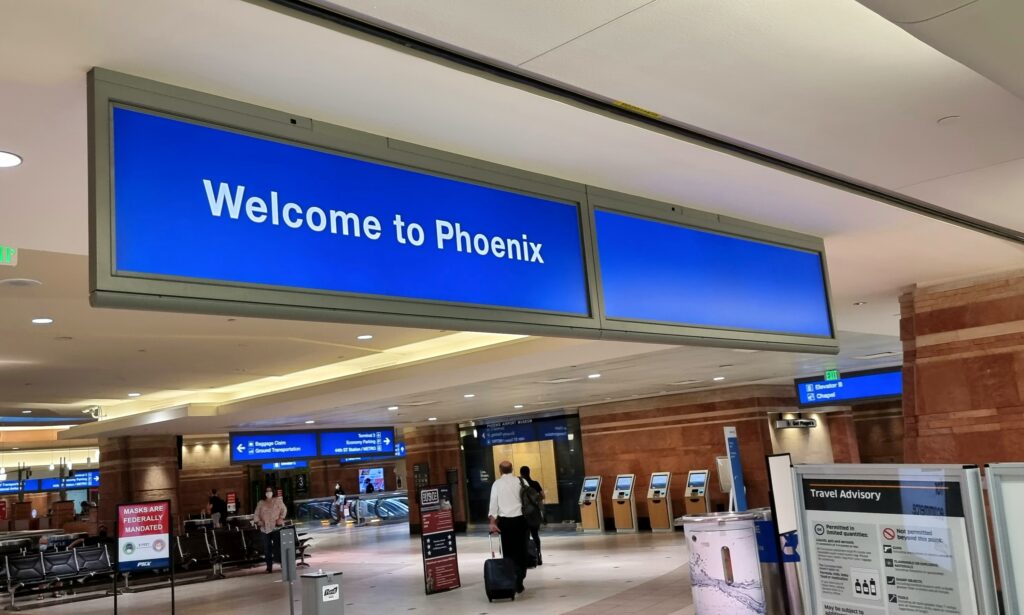
Touch down at Phoenix Sky Harbor International Airport, one of the busiest airports in the American Southwest. The airport is modern, well-connected, and has a free train (the PHX Sky Train) linking the terminals to the rental car center and light rail.
From Sky Harbor, take the Valley Metro Light Rail ($2 per ride) or a rideshare to the Greyhound Terminal. The journey takes 20–35 minutes depending on traffic.
| Detail | Info |
|---|---|
| Airport to Greyhound | Valley Metro Light Rail (~$2) or Uber/Lyft (~$15–$20) |
| Greyhound Terminal | 2115 E Buckeye Rd, Phoenix, AZ 85034 |
Midday: Greyhound Phoenix to Flagstaff
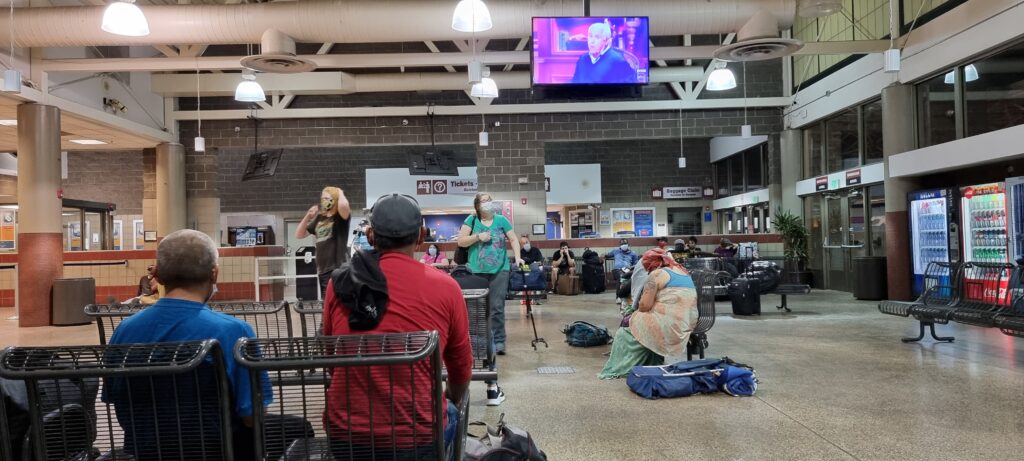
The Greyhound bus from Phoenix to Flagstaff takes roughly 2.5–3 hours and costs $25–$45 depending on how far in advance you book. The route heads north on I-17, climbing from the Sonoran Desert at 1,000 feet elevation up to the Colorado Plateau at over 7,000 feet. You’ll watch the landscape transform — saguaro cactus giving way to juniper scrub, then tall ponderosa pines as you enter Flagstaff.
Check into your accommodation and rest up. For budget travellers, Motel 6 Flagstaff is reliable, clean, and very affordable (~$60–$80/night). There are also several good hostels in the downtown area.
| Detail | Info |
|---|---|
| Route | Phoenix Greyhound Terminal → Flagstaff Amtrak Station |
| Duration | 2.5–3 hours |
| Cost | ~$25–$45 (book at greyhound.com) |
| Frequency | Multiple departures daily |
| Tip | Book the earliest possible departure to maximise your afternoon in Flagstaff |
Afternoon: Exploring Flagstaff
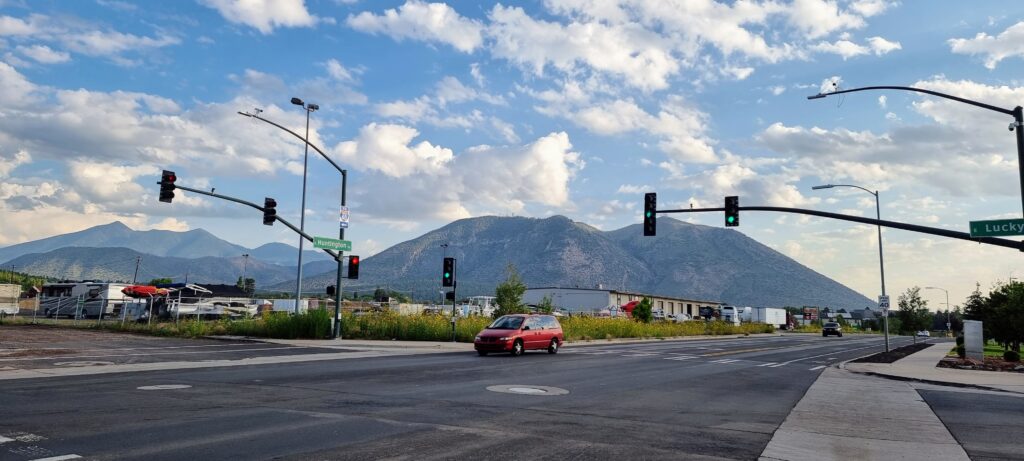
Flagstaff is a genuinely wonderful town that most Grand Canyon visitors treat purely as a stopover. That’s a mistake. Sitting at 7,000 feet elevation in the shadow of the San Francisco Peaks — a dormant volcanic range — the city has a distinct personality: outdoorsy, creative, and culturally rich.
If you’re interested in history and archaeology: Visit the Museum of Northern Arizona (3101 N Fort Valley Rd; open daily 10am–5pm; ~$15 adults). It houses an outstanding collection covering the geology, archaeology, and Native American cultures of the Colorado Plateau — essential context for understanding what you’re about to see at the Grand Canyon. The exhibits on the Ancestral Puebloan people, who lived and built in this region for over a thousand years, are particularly compelling.
If food is your priority: Flagstaff’s downtown — centred on Heritage Square and Route 66 — has an excellent restaurant scene. Try Beaver Street Brewery for craft beer and wood-fired pizza, or Pizzicletta for some of the finest Neapolitan-style pizza in Arizona. Both are within easy walking distance of the Amtrak station.
Evening: Flagstaff Downtown
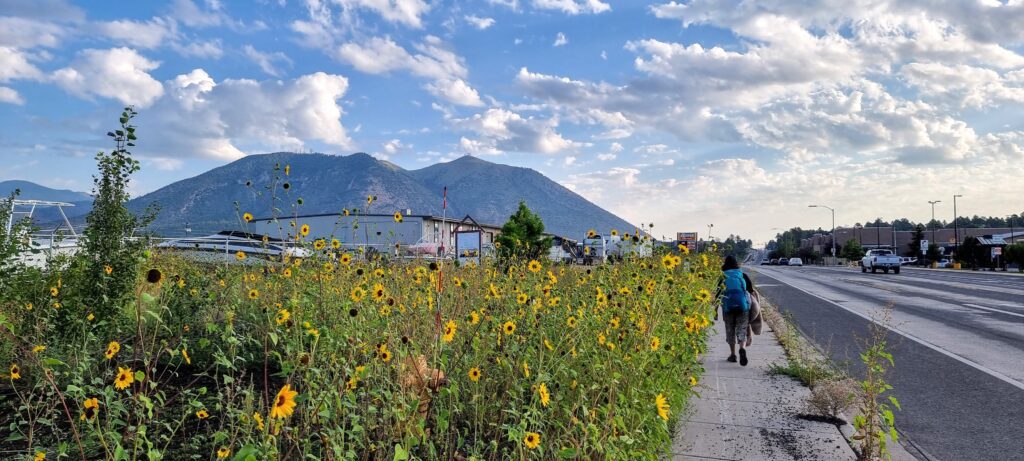
After dinner, stroll through Flagstaff’s historic downtown. The Route 66 section preserves original neon signs and period architecture — genuinely atmospheric at dusk. Independent bookshops, craft breweries, and live music venues line the streets. If you’re visiting between June and August, check whether the Flagstaff Festival of Science or Flagstaff Fourth is running — the city puts on a surprising number of events.
Get to bed early. Tomorrow is a big day.
Day 2: Into the Grand Canyon — A Car-Free Odyssey on the South Rim
Morning: Groome Shuttle to the South Rim
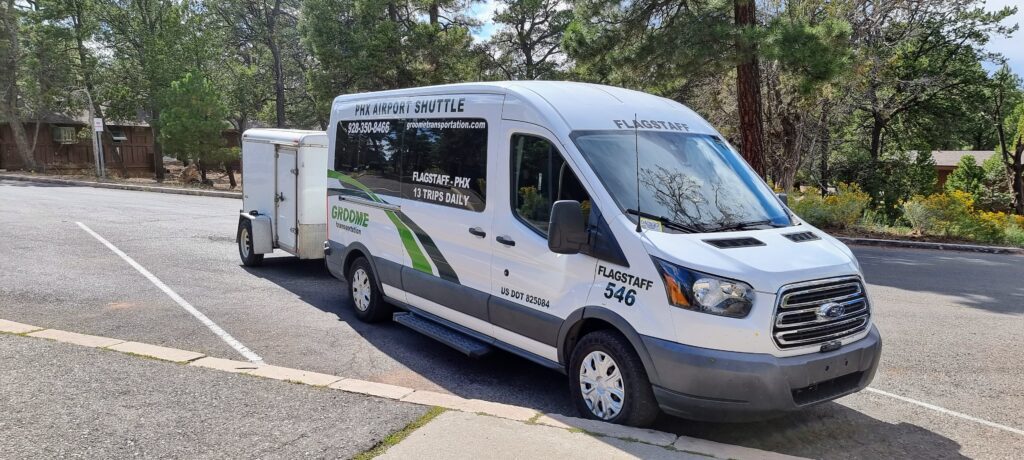
Leave the car behind and take the Groome Transportation shuttle from Flagstaff Amtrak Station directly to the Grand Canyon South Rim. The journey takes approximately 1.5 hours and costs around $35 one way / $65 round trip. Book your round-trip ticket in advance at groometransportation.com — morning departures to the canyon fill up, especially in summer.
As you leave Flagstaff heading north, the landscape opens dramatically. The pine forests thin, the road straightens, and the sky gets bigger. When the shuttle pulls into the South Rim Village, you’ll feel the anticipation — everyone on the bus gets quiet.
The National Park entrance fee is $35 per vehicle — but as a walk-in visitor arriving by shuttle, you pay the pedestrian rate of $20 per person. If you plan to visit multiple National Parks, the America the Beautiful annual pass ($80) covers entry to all of them for 12 months and pays for itself quickly.
| Detail | Info |
|---|---|
| Shuttle operator | Groome Transportation |
| Pickup point | Flagstaff Amtrak Station, 1 E Route 66, Flagstaff |
| Duration | ~1.5 hours |
| Cost (one way) | ~$35 per person |
| Cost (round trip) | ~$65 per person |
| Booking | groometransportation.com (book in advance — fills up) |
| Park entry (pedestrian) | $20 per person |
| America the Beautiful Pass | $80/year — covers all National Parks |
Midday: Check into Mather Campground
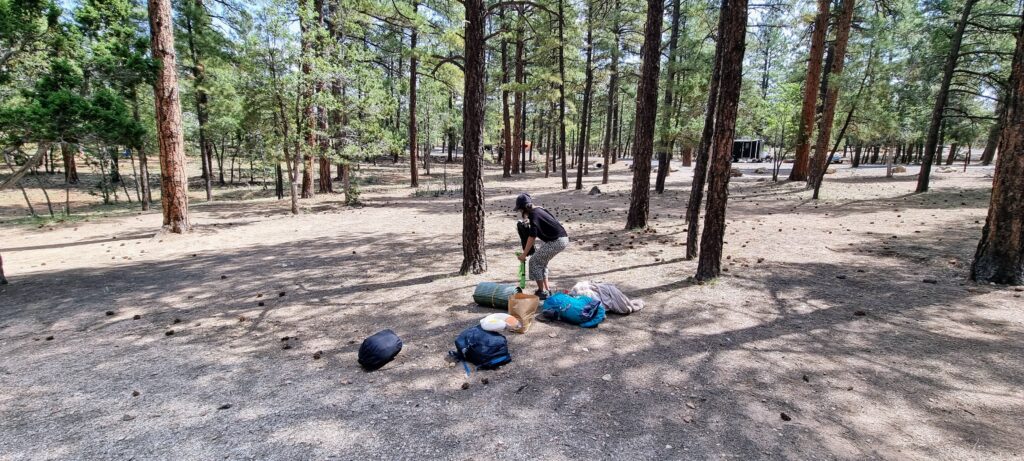
Mather Campground is the main campground on the South Rim, and it’s excellent. Sites are set among ponderosa pines with access to showers, flush toilets, and a coin laundry. At roughly $18–$25 per night, it’s the most affordable accommodation option at the canyon — and arguably the best, because waking up 200 metres from the rim is an experience no hotel can replicate.
Book your campsite well in advance at recreation.gov, particularly for visits between May and September. Same-day availability is rare in peak season.
After dropping your gear, join one of the free ranger-led programs offered by the National Park Service. These run multiple times daily and cover the canyon’s geology, ecology, and Indigenous history. They’re run by genuinely knowledgeable rangers who love this place, worth an hour of your time even if you consider yourself well-read on the subject.
| Detail | Info |
|---|---|
| Campground | Mather Campground, Grand Canyon Village |
| Cost per night | ~$18–$25 |
| Facilities | Flush toilets, showers, coin laundry, dump station |
| Booking | recreation.gov (book months ahead for May–Sep) |
| Ranger programs | Free; check the schedule at the Visitor Center on arrival |
Afternoon: The Free Shuttle System and South Rim Viewpoints
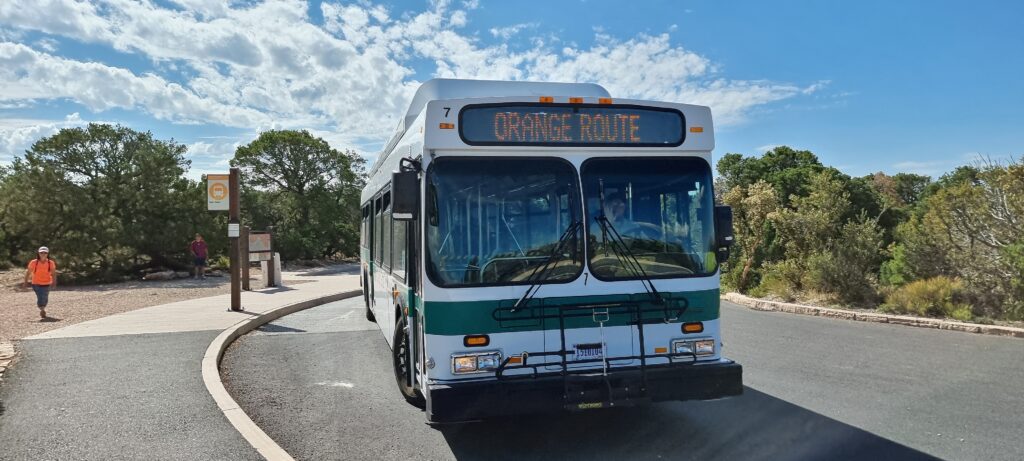
The South Rim’s free shuttle system is the backbone of the car-free experience. Three routes cover all major viewpoints:
- Village Route (Blue): Connects the Visitor Center, Mather Point, Yavapai Point, and Grand Canyon Village. Runs every 10–15 minutes.
- Kaibab Rim Route (Orange): Covers the eastern viewpoints: Yaki Point, South Kaibab Trailhead, Pipe Creek Vista. Runs every 10–15 minutes.
- Hermit Rest Route (Red): Accesses the western viewpoints — Trailview, Maricopa, Powell, Hopi, Mohave, and Pima Points. Runs every 15–20 minutes. Private vehicles are not permitted on this road, so the shuttle is the only way to reach these viewpoints.
Start at Mather Point — the first viewpoint most visitors see and, for good reason, one of the most spectacular. The canyon opens before you like a wound in the earth: 10 miles wide, 277 miles long, and over a mile deep. The layers of rock — each stripe a different geological era — are almost incomprehensibly old. The oldest visible layer at the bottom is nearly two billion years old.
From Mather Point, take the shuttle to Yavapai Point, where the Yavapai Geology Museum provides detailed explanations of the rock formations visible from the overlook. It’s one of the best free geology exhibits I’ve encountered anywhere.
In the afternoon, take the Hermit Rest Route to access the western viewpoints. Hopi Point is widely considered the best viewpoint on the South Rim for breadth of view — on clear days you can see over 75 miles in each direction.
Afternoon (Optional): Walk the Rim Trail
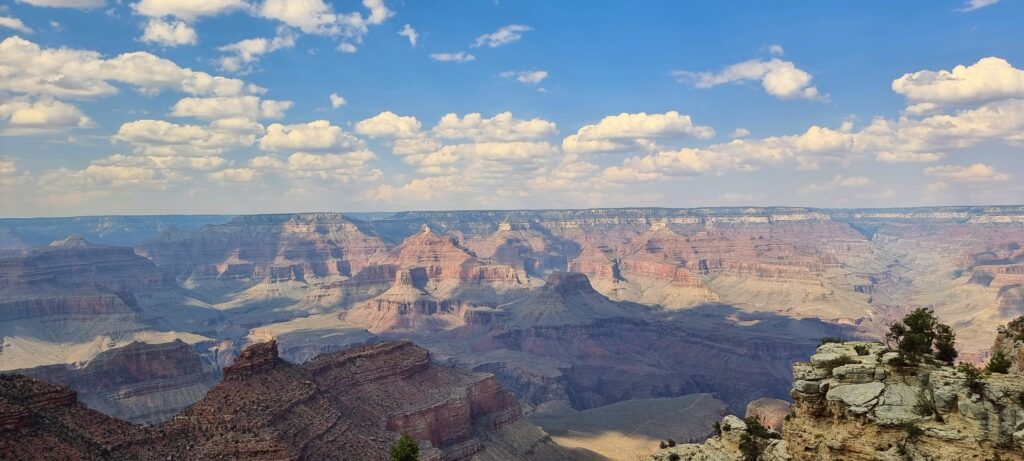
The Rim Trail follows the canyon edge for 13 miles between South Kaibab Trailhead and Hermits Rest. It’s mostly paved, flat, and accessible — the easiest hiking at the Grand Canyon. Even walking a 30-minute section between two shuttle stops dramatically changes your relationship with the canyon. You stop and look. You notice the colour shift in the rock. You peer over the edge at the Colorado River glinting 4,000 feet below.
The trail connects all the major South Rim viewpoints, so you can combine walking with shuttle rides in any combination.
Evening: Sunset at Mather Point or Hopi Point
Sunset Symphony: A Grand Finale
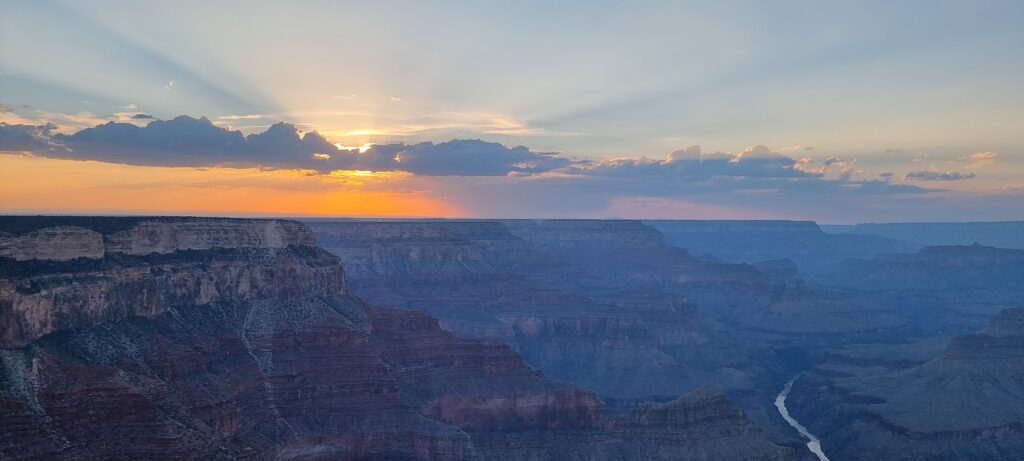
Arrive at your chosen viewpoint at least 45 minutes before sunset. As the sun descends, it strikes the canyon walls at an increasingly shallow angle, and the colours escalate — pale gold shifting to deep amber, then red, then a rich purple that settles into the canyon like smoke. It happens slowly, then all at once, and then the light is gone.
Hopi Point (accessible by Hermit Rest shuttle) is the best sunset viewpoint on the South Rim. It fills up — arrive early and find your spot.
Night: Stargazing
After sunset, don’t go straight back to camp. The Grand Canyon is an International Dark Sky Park, meaning it has some of the least light-polluted skies in the continental United States. On a clear night, the Milky Way is visible to the naked eye — a dense river of stars stretching across the entire sky. If you’ve never seen this before, it’s genuinely life-changing.
The National Park Service runs free ranger-led astronomy programs on many evenings. Check the schedule at the Visitor Center. Alternatively, simply walk a short distance from the campground’s lights and look up.
Day 3: Sunrise, Hiking, and Farewell
Early Morning: Sunrise at Mather Point
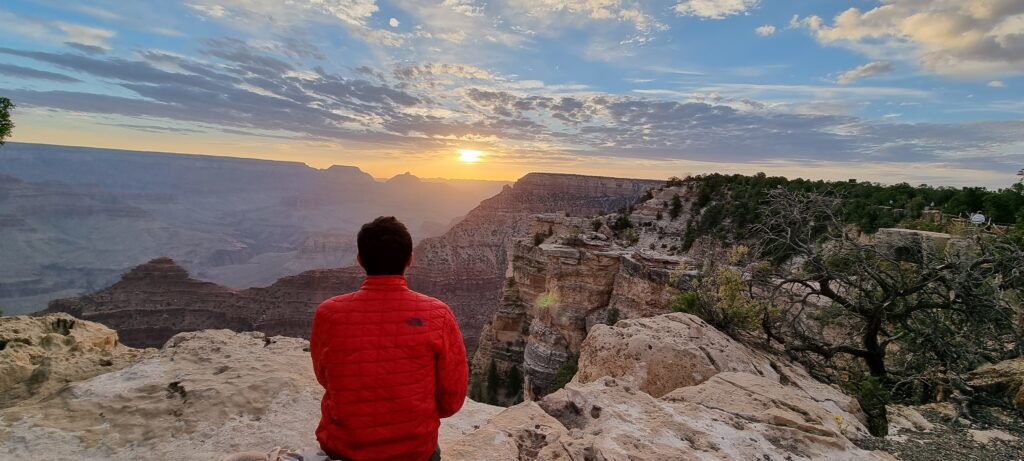
Set your alarm. Sunrise at the Grand Canyon is worth getting out of a warm sleeping bag for. The first shuttle to Mather Point departs very early — check the current schedule at the Visitor Center the previous evening. Arrive at the overlook before first light, find a spot, and wait.
As dawn breaks, the topmost canyon walls catch the light first — a pale pink line that slowly widens and deepens as the sun climbs. By the time full light hits the canyon floor, the colour transformation is complete: the same rock you saw in purple shadow the night before now blazes in vivid ochre and rust. It lasts perhaps 20 minutes in its most intense form. Every second is worth it.
Morning: The South Kaibab Trail
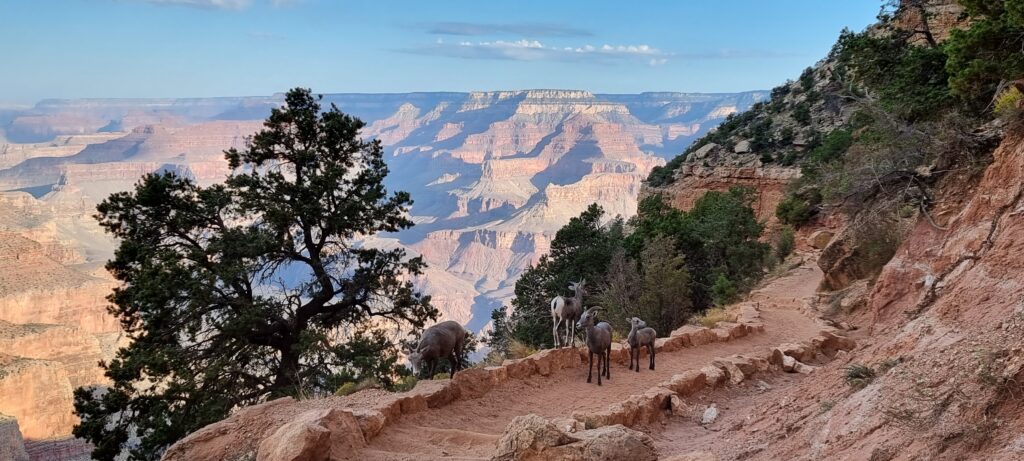
After sunrise, take the Kaibab Rim shuttle to the South Kaibab Trailhead and descend into the canyon. The South Kaibab Trail is one of the most spectacular hiking experiences in North America — a series of steep switchbacks cut directly into the canyon wall, with unobstructed panoramic views at every turn.
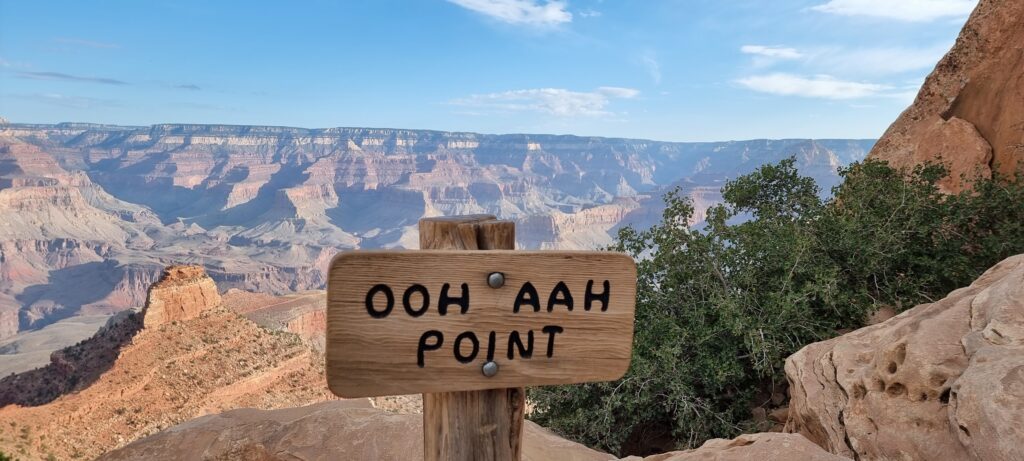
For a 3-hour morning hike: Descend to Ooh Aah Point (1.8 miles round trip, ~1.5 hours) or Cedar Ridge (3 miles round trip, ~2.5–3 hours). Both are achievable before your shuttle home and reward you with views that the rim simply cannot match.
Afternoon: Return to Flagstaff and Phoenix
After your morning hike, head back to Grand Canyon Village, return your camping gear, and catch your pre-booked Groome shuttle back to Flagstaff. From Flagstaff, connect back to Phoenix by Greyhound.
The drive or in this case, the shuttle ride, south from the canyon back towards Phoenix is its own kind of decompression. The canyon doesn’t leave you immediately; it stays in your mind for days.
Full Cost Breakdown: Grand Canyon Without a Car
One of the great advantages of this car-free itinerary is the cost. Here’s a realistic budget for two nights / three days:
| Expense | Estimated Cost (per person) |
|---|---|
| Phoenix → Flagstaff (Greyhound, return) | ~$50–$90 |
| Flagstaff → South Rim (Groome, return) | ~$65 |
| Grand Canyon entrance fee (pedestrian) | $20 (or free with America the Beautiful Pass) |
| Mather Campground (2 nights) | ~$36–$50 |
| Accommodation in Flagstaff (1 night) | ~$60–$80 (Motel 6 or similar) |
| Food (3 days, budget) | ~$60–$90 |
| South Rim free shuttle system | $0 |
| Total (approx.) | ~$290–$395 per person |
Compare that to a car rental (~$150–$200 for 3 days), gas (~$30–$50), and parking fees (~$35 vehicle entry). The car-free option is genuinely competitive on cost — and removes all the logistical friction.
The General Store: You Won’t Run Out of Supplies

A common concern for car-free visitors: what if I’ve forgotten something essential? The answer is: the General Store at Yavapai Lodge (located in Grand Canyon Village, a short walk from Mather Campground) stocks an impressive range of supplies — food, snacks, sunscreen, rain gear, hiking poles, camp stoves, and even lightweight clothing.
Prices are higher than in town (as you’d expect for an in-park store), so stock up on the basics in Flagstaff before you go. But if you’ve forgotten your sunscreen or need an extra water bottle, you’re not stranded.
| Detail | Info |
|---|---|
| Location | Grand Canyon Village, next to Yavapai Lodge |
| Hours | 7am–9pm daily (hours vary seasonally) |
| What’s available | Food, drinks, camping supplies, clothing, hiking gear, souvenirs |
Insider Tips from Someone Who Actually Did This Trip
Generic advice about sunscreen and hydration is everywhere. Here are the things I actually wish someone had told me:
- Book the Groome shuttle before you book the campground. Shuttle seats on popular morning departures sell out faster than campsites. Lock in your transport first.
- The South Kaibab Trailhead shuttle (Kaibab/Orange route) doesn’t run to the campground — it stops at the Visitor Center. Factor in a 10-minute walk between the two.
- Arrive at sunset viewpoints 45 minutes early, not 15. Hopi Point in particular fills up very quickly in the hour before sunset. Come early, claim a rock, and wait. The waiting is part of the experience.
- Mather Campground Loop A has the best sites for stargazing — slightly more open sky than the heavily treed loops further in.
- The General Store accepts cards — you don’t need to carry cash inside the park.
- Layer up for the morning shuttle. Even in summer, the South Rim sits at 7,000 feet elevation and early mornings can be cold (40–50°F / 4–10°C).
- The rim is quietest between 7am and 9am. If you want the canyon largely to yourself, that’s your window.
- Don’t try to rush this trip. The canyon rewards stillness. Sit at an overlook for 30 minutes and watch the light move across the rock. That’s the experience.
Frequently Asked Questions — Grand Canyon Without a Car
Can you visit the Grand Canyon without renting a car?
Yes, absolutely. The Groome Transportation shuttle connects Flagstaff to the Grand Canyon South Rim daily, and once you’re at the rim, the National Park’s free shuttle system covers all major viewpoints. A car is not necessary and, for first-time visitors, arguably not even preferable, you see more when you’re not navigating.
How do I get from Phoenix to the Grand Canyon without a car?
Take the Greyhound bus from Phoenix to Flagstaff (~$25–$45, ~2.5 hours), then the Groome Transportation shuttle from Flagstaff to the South Rim (~$35 one way, ~1.5 hours). The full journey takes about 4–5 hours from Phoenix airport to standing at the rim.
How much does it cost to visit the Grand Canyon without a car?
Budget approximately $290–$395 per person for a 3-day trip including transport from Phoenix, two nights at Mather Campground, one night in Flagstaff, park entry, and food. This is competitive with — or cheaper than — renting a car when you factor in rental fees, gas, and the per-vehicle park entry fee.
Where should I stay at the Grand Canyon without a car?
Mather Campground is the best car-free option, it’s within the park, walkable from the rim, and well-serviced. For indoor accommodation, Yavapai Lodge and Bright Angel Lodge are both in Grand Canyon Village and accessible without a car. Book months in advance for summer visits.
Is the Grand Canyon worth visiting for 3 days?
Three days is the ideal length for a first South Rim visit without feeling rushed. Day 1 gets you oriented; Day 2 lets you explore viewpoints and the rim trail at leisure; Day 3 gives you time for a proper hike into the canyon. Any shorter and you’ll leave wishing you had more time. Any longer and you might want to explore the North Rim or book an inner-canyon camping permit.
What is the best time of year to visit the Grand Canyon?
Spring (March–May) and autumn (September–November) offer the best combination of comfortable temperatures, manageable crowds, and good trail conditions. Summer is the busiest period and canyon temperatures at lower elevations can exceed 110°F, strenuous hiking is dangerous during midday hours. Winter brings snow to the rim (beautiful and dramatic) and much thinner crowds, but some services are reduced.
All photos in this post were taken by the author on location. If this guide helped you plan a car-free Grand Canyon trip, share it — there are a lot of travellers who assume they need a car and don’t.

Leave a reply