
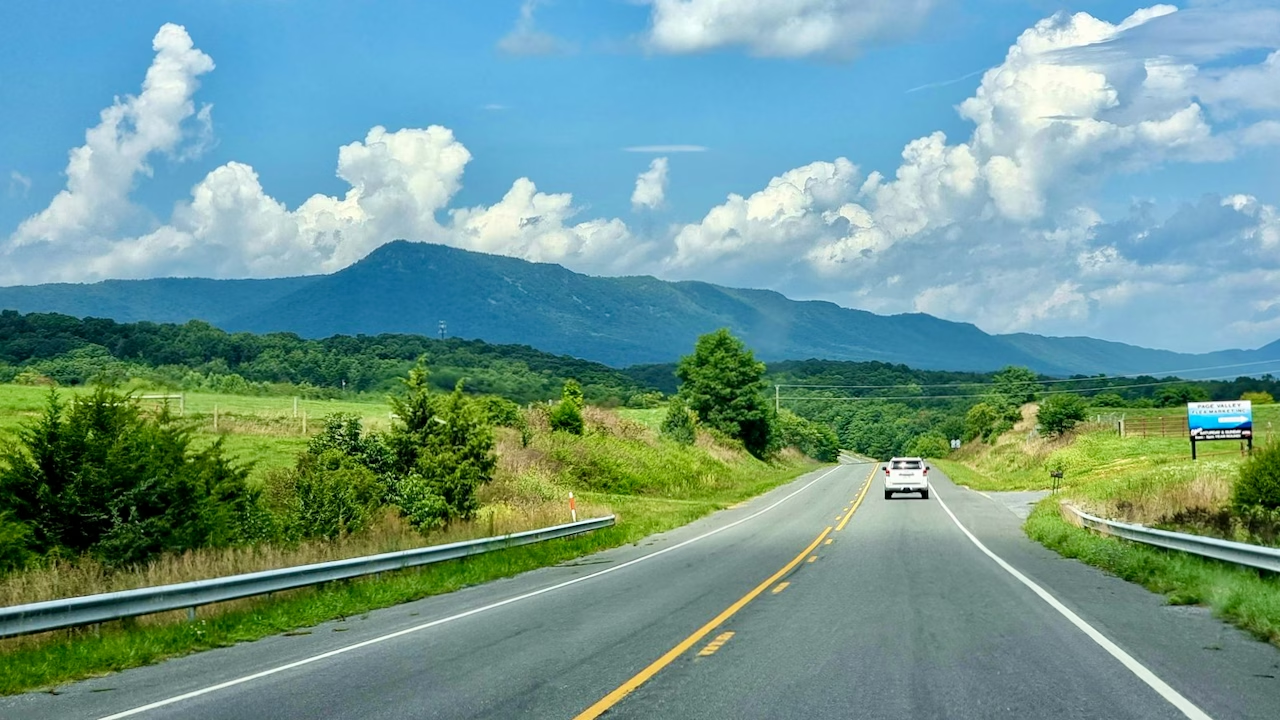
This Virginia road trip itinerary starts and ends in Washington DC and covers the Shenandoah Valley, Charlottesville, Richmond and the colonial towns around Williamsburg. It works as a 3, 5 or 7 day drive, with Virginia Beach as an optional extra, and every leg has a checked drive time and cost.
I haven’t driven the whole loop in a single trip. Some years ago, in August, I spent three days in Virginia, staying with family in Hopewell on the James River, and visited Colonial Williamsburg, Luray Caverns, Skyline Drive and, on the last day, the National Mall. Those parts come from my own photos and notes. The rest I researched and checked on official sites and Google Maps in November, and each stop says which is which.
In short: Driving from Washington DC to Williamsburg via Luray, Charlottesville and Richmond is about 278 miles and 5 hours 20 minutes. The 2 hour 34 minute drive back to DC makes the full loop about 431 miles and 8 hours, before Skyline Drive. Seven days is relaxed, five is balanced and three is a quick introduction. Go west first for the mountains, then south and east to the colonial towns, or carry on to Virginia Beach instead of returning. Shenandoah National Park costs $30 per car for seven days, and the Blue Ridge Parkway is free. Spring and October are the best times to go.
This post contains affiliate links. If you book through them, I may earn a small commission at no extra cost to you.
Route
About 431 miles
About 8 hours of driving for the full loop from DC, plus Skyline Drive
Time
3, 5 or 7 days
The 7-day plan includes a day in DC; add a day for Virginia Beach
Main fees
$30 per car
Shenandoah, valid 7 days. Monticello house tour $42, Colonial Williamsburg $37.50
Best months
Spring and October
Skyline Drive colour usually peaks in mid to late October
Without a car
Partly possible
Amtrak serves Richmond, Williamsburg and Charlottesville; Shenandoah needs a car or a tour
Choose Your Virginia Road Trip Route from DC: 3, 5 or 7 Days
All three plans use the same spine, so you can start with one and stretch it later. The days below do not count the drive to and from your airport. Reagan National (DCA) has its own Metro station, which suits the car-free DC day, and Dulles (IAD) is on the west side of the city, which is handy if you collect a car on arrival.
3 days: the fast loop
- Day 1: Skyline Drive and Luray Caverns
- Day 2: Luray to Monticello by road, then Richmond and on to Williamsburg
- Day 3: Colonial Williamsburg, then 2 h 34 min back to DC
- Day 2 has about 3 h 35 min of driving, so Richmond is only a quick lunch stop, or skip it
5 days: the balanced loop
- Day 1: Skyline Drive (north) and Luray Caverns
- Day 2: Skyline Drive (south), then Monticello
- Day 3: Richmond, then Williamsburg
- Day 4: Colonial Williamsburg and Jamestown or Yorktown
- Day 5: Drive back to DC
7 days: the relaxed loop
- Day 1: Washington DC, with Mount Vernon as an option
- Days 2 and 3: Shenandoah, Luray, Charlottesville
- Day 4: Richmond, with a night there
- Days 5 and 6: Williamsburg, Jamestown, Yorktown
- Day 7: Back to DC, or on to Virginia Beach
The day-by-day section below follows the 7-day plan. For five days, drop the DC day and the Richmond night and merge the two Williamsburg days. For three, skip the southern half of Skyline Drive as well.
The order matters. Going west first puts the mountains early. You then drive south and east in one smooth line, with no backtracking. You can run the loop in reverse if you want a short last drive before a flight: DC to Front Royal is 1 hour 22 minutes, against 2 hours 34 minutes from Williamsburg back to DC.
Virginia Road Trip Map and Drive Times
This map shows the main route by road: Washington DC, Luray Caverns, Monticello, Richmond and Colonial Williamsburg. Skyline Drive replaces the direct Luray to Charlottesville road on Day 3.
The road trip by car: Washington DC, Luray Caverns, Monticello, Richmond and Colonial Williamsburg. Open this route in Google Maps to follow it on your phone.
These are the drive times between the main stops, taken from Google Maps in November for a car in usual traffic.
Drive times between the main stops
Skyline Drive takes longer than the map suggests: it is 105 miles with a top speed limit of 35 mph, so driving it without a single stop takes about three hours. Give it half a day, or a full day with a couple of short walks.
Virginia Road Trip Itinerary: The 7-Day Plan, Day by Day
Day 1: Washington DC, With Mount Vernon as an Option
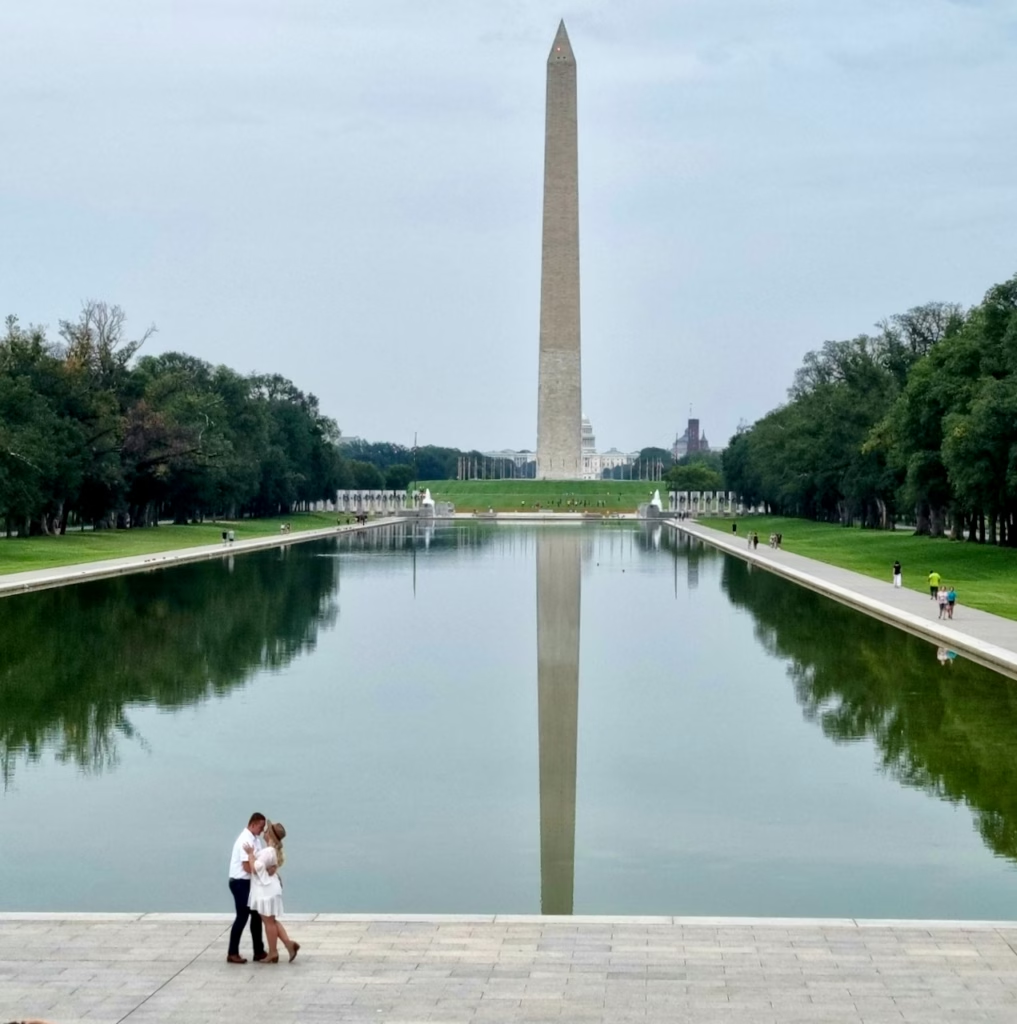
Start with a day on foot in the capital, and collect your car on the morning of Day 2. The National Mall is flat, free and the best single walk in the city. I did it in one afternoon, from the Capitol to the Lincoln Memorial, and it is all in my National Mall walking tour, with a map and plans for 2 hours, half a day or a full day.
If you have already seen the Mall, spend the morning at Mount Vernon instead.
Researched, checked in November: I haven’t been to Mount Vernon. George Washington’s estate is about 15 miles south of central DC, a drive of 35 to 40 minutes along the George Washington Memorial Parkway. Admission is about $30 for adults and $16 for ages 6 to 11, and under 6 is free. Mansion visits are timed. Waits on busy days can pass two hours. Parking is free. Check the current price and book a time slot on the official site.
Day 2: Shenandoah National Park (Skyline Drive) and Luray Caverns
Pick up the car and head west on I-66. The Front Royal entrance to Shenandoah National Park is 1 hour 22 minutes from DC. The $30 per-car fee at the gate is valid for seven days, so it covers tomorrow too. Drive the northern 31.5 miles of Skyline Drive in the morning and leave at Thornton Gap, about 15 minutes from Luray.
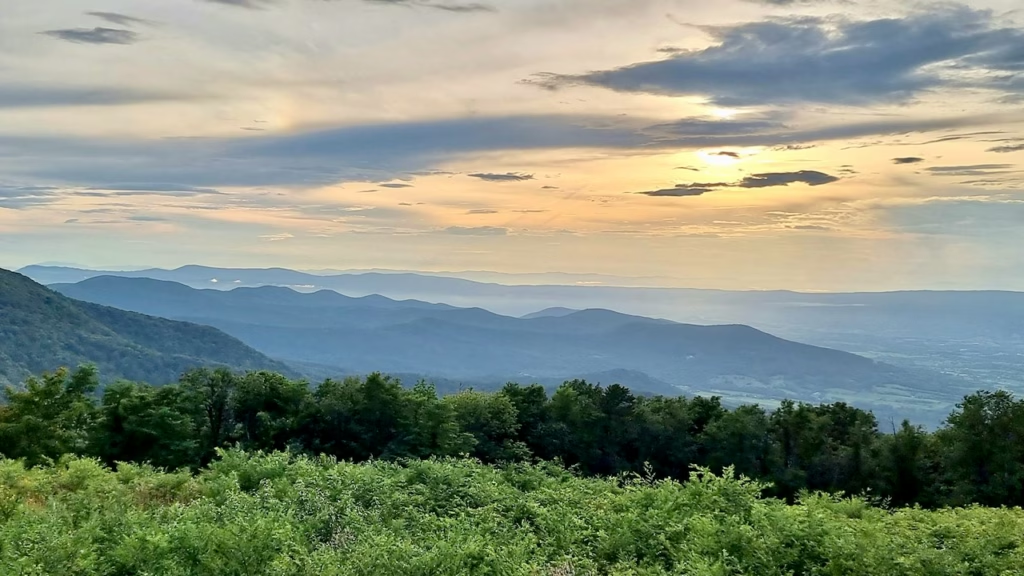
This is the opposite of what I did. I visited the caverns first and reached the Front Royal sign at 3:51 pm, which meant the Drive was a late-afternoon drive that finished at Spitler Knoll Overlook just after 7 pm. The light was beautiful, but you get far more daylight and more overlooks if you do the Drive first. My full route and stops are in my Shenandoah National Park day trip.
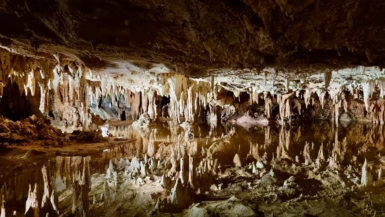
In the afternoon, go underground. Luray Caverns is a self-guided walk of a little over an hour on a paved, lit path, and it stays at 54°F (12°C) all year. Adult tickets are $36, seniors $34 and children aged 6 to 12 $18, and no reservation is needed. When I went in late August it was fairly crowded, which is normal for a popular place. Allow two to three hours if you also want the car museum and the grounds.
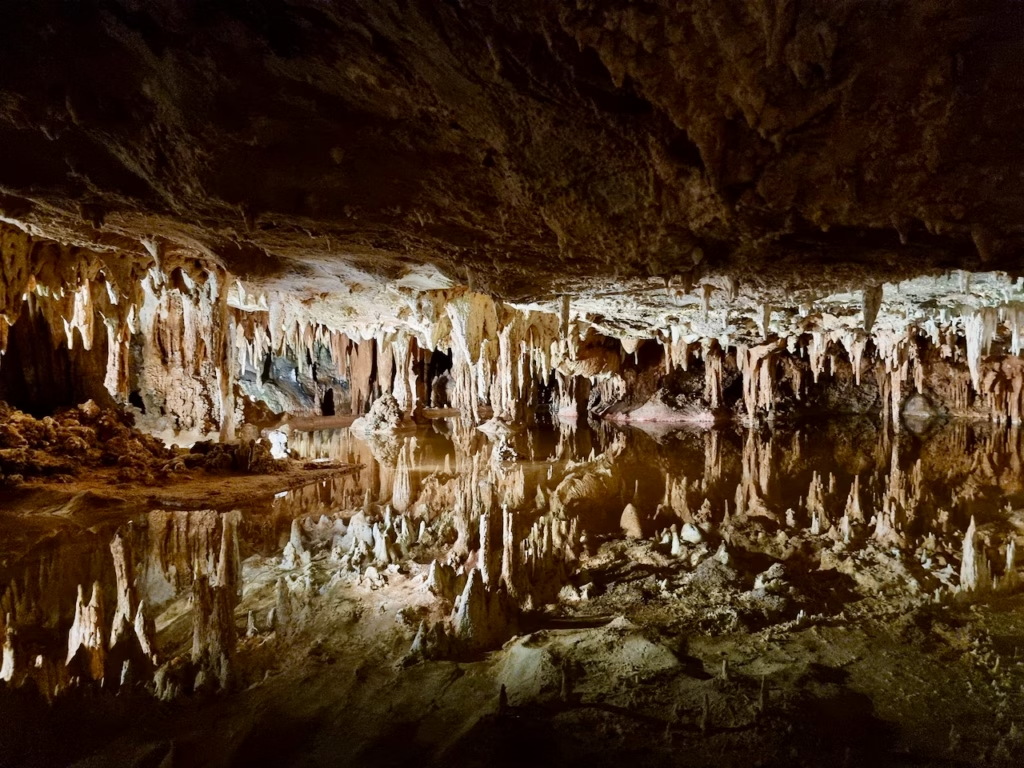
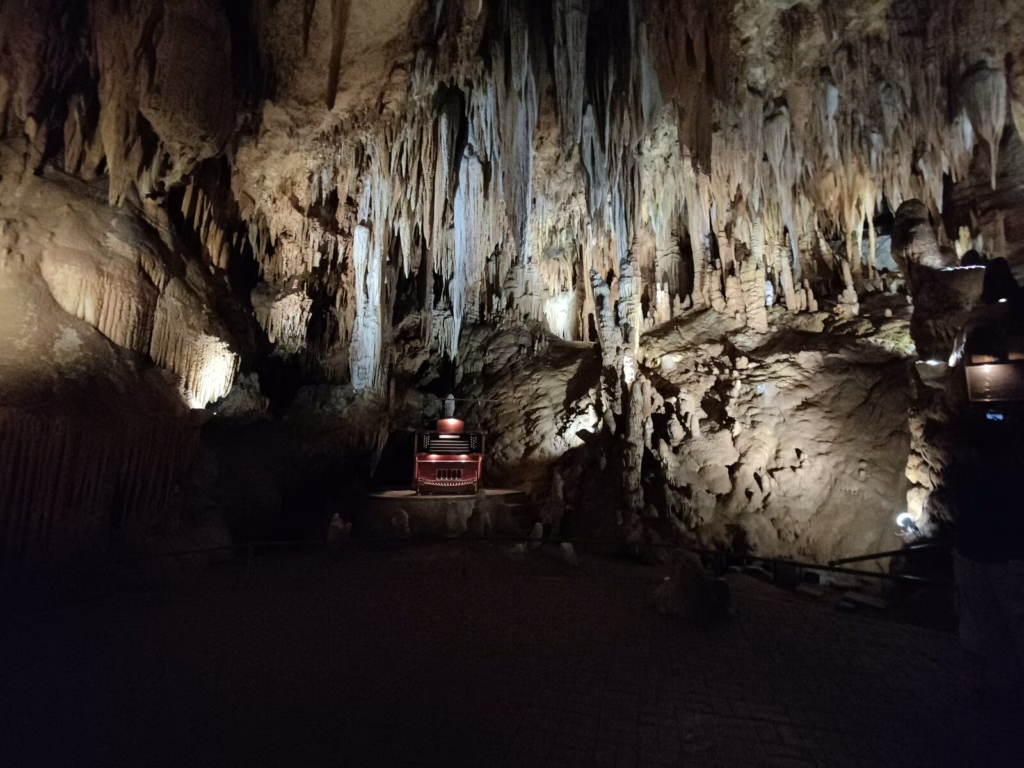
Stay the night in or near Luray. Opening hours change with the season, from 9 am to 7 pm in summer to 9 am to 4 pm on winter weekdays, so check the official hours before you plan the day around them.
Day 3: Skyline Drive South, Charlottesville and Monticello
I have only driven the northern part of Skyline Drive, so the southern half is researched from the National Park Service. Re-enter at Thornton Gap with the same pass and drive south for the 73 miles to Rockfish Gap, the southern entrance. Good short stops on the way include Dark Hollow Falls (mile 50.7), Big Meadows (mile 51) and the Blackrock Summit walk (mile 84.4). The Drive is slow by design, so leave early.
Charlottesville is the natural place to sleep. Monticello and Jefferson’s University of Virginia are both UNESCO World Heritage sites, and the pedestrian Downtown Mall has restaurants and cafés for the evening.
At Rockfish Gap you leave the park, and the Blue Ridge Parkway begins right there. If you do not want to extend the trip, take I-64 east instead: Monticello is 35 minutes and 28 miles from the gate.
Researched, checked in November: I haven’t been inside Monticello. Thomas Jefferson’s home uses timed entry, so book ahead. The Highlights Tour of the house (about 45 minutes) costs $42 for adults, $13 for ages 12 to 18 and $4 for ages 5 to 11. A Grounds ticket without the house is $22 for adults. Arrive at the Visitor Center 30 minutes before your slot and allow at least three hours in total. Hours change through the year, and on the day I checked it was open from 10 am to 4:30 pm.
If Day 3 feels too full: skip the southern half of Skyline Drive and drive from Luray to Charlottesville on the road (1 hour 32 minutes). You get Monticello in the morning and an easier evening in town. It is the better plan in winter, when parts of the Drive can close in snow and ice.
Day 4: Richmond
Researched, not visited
Richmond is the day many routes skip. On the five-day plan it shrinks to a lunch stop. It is the capital of Virginia and an easy 1 hour 10 minute drive from Charlottesville. I only passed through it, on the way to Luray, and saw Main Street Station from the road, so everything else here is researched.
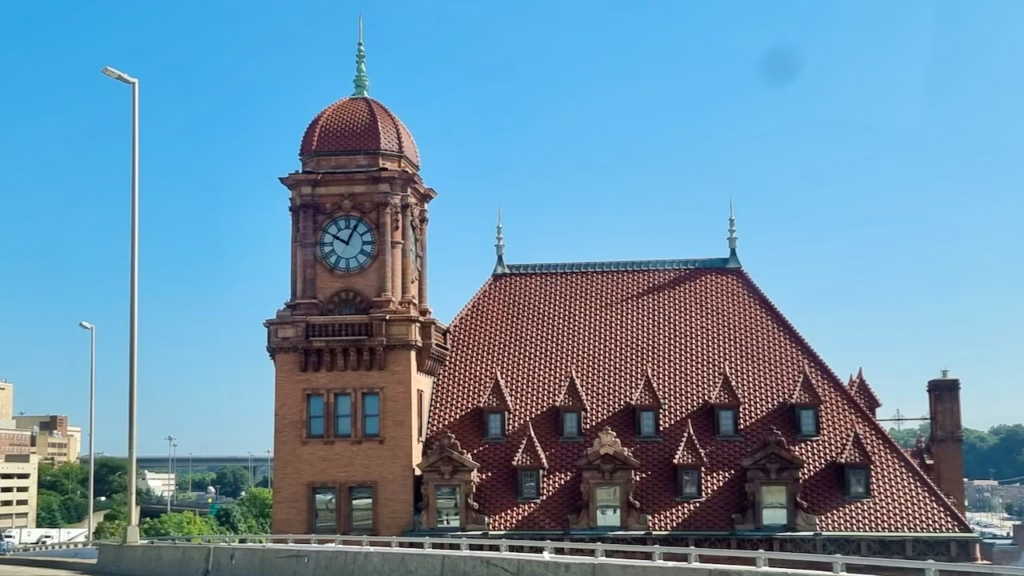
The Virginia Museum of Fine Arts is free for general admission and open every day of the year, which makes it an easy half-day. Belle Isle, an island in the James River reached by a pedestrian bridge, is a free outdoor stop, and the Virginia State Capitol is free to visit (check its opening hours).
Day 5: Williamsburg
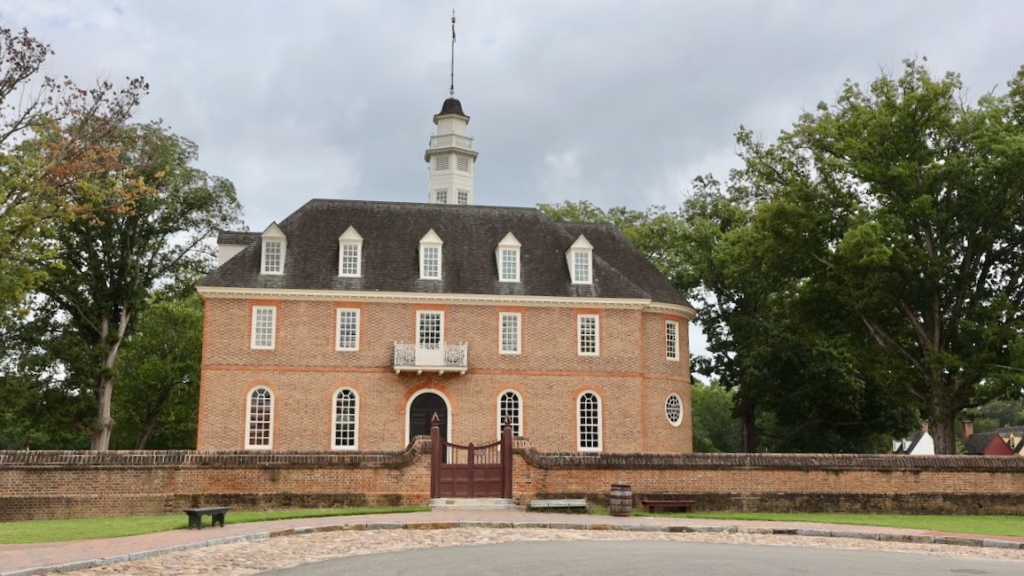
Colonial Williamsburg is the part of the trip I know best. I walked its streets for free in August, from the Visitor Center along Duke of Gloucester Street, which runs for about a mile to the Capitol. On the way I stopped at Berkeley Plantation, on the James River.
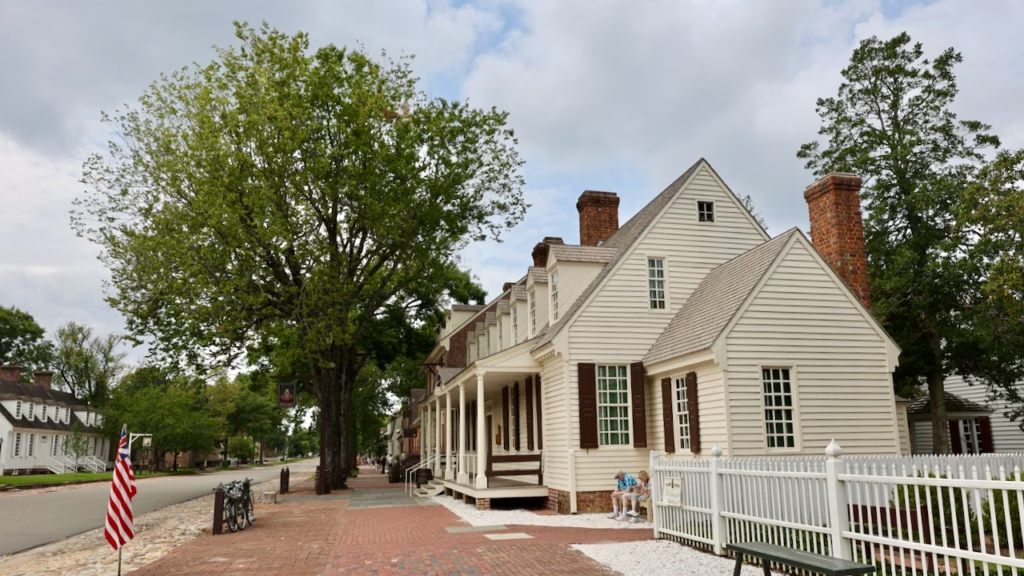
You do not need a ticket to walk the streets. A ticket, $37.50 for an adult for a single day, covers the guided buildings, the trade shops and the staged programmes. Parking at the Visitor Center is $10 a day, and the free Route 15 bus runs around the Historic Area. If you want the walking route, the ticket advice and a one-day plan, they are all in my Colonial Williamsburg itinerary.
Day 6: Jamestown and Yorktown, the Historic Triangle
Williamsburg, Jamestown and Yorktown together are known as the Historic Triangle, and the Colonial Parkway, a 23-mile scenic road, links all three. Jamestown was the first permanent English settlement in America, and Yorktown was the scene of the decisive battle of the American Revolution in 1781. I did not go to either, so these details come from the official museum sites.
Researched, checked in November: Jamestown Settlement and the American Revolution Museum at Yorktown each charge $20 for adults and $10 for children, or $34 and $17 for a combination ticket. Both are open from 9 am to 5 pm. There is also a Four-Site ticket that covers both museums plus Historic Jamestowne and Yorktown Battlefield, which lasts five days. Parts of the Colonial Parkway have had intermittent lane closures for restoration work, so check the National Park Service before you rely on it.
Day 7: Back to DC, or on to Virginia Beach
Back to Washington DC
- 2 h 34 min, 153 miles by I-95 north
- Return the car to the same DC branch to avoid a one-way fee
- Leave before the afternoon traffic
- Or take the Amtrak Northeast Regional from Williamsburg
On to Virginia Beach
- 1 h 9 min, 59 miles from Williamsburg
- Beach, boardwalk and a different pace
- Adds a day, or two if you also visit Norfolk
- Check the one-way fee if you drop the car there
Most people end in DC because their flight leaves from there. Choose Virginia Beach if you have a day to spare and want the sea.
Virginia Road Trip From Richmond or Charlottesville: Skip the DC Start
You do not have to start this Virginia road trip in Washington DC. If you fly into Richmond or Charlottesville, you can join the itinerary from either city and skip the DC day. Richmond is the easier start if you have a choice. Here is how I would arrange the stops for each. Both routes end in Washington DC, which suits a one-way flight home. If you would rather fly home from your starting airport, you can drive back from Luray instead.
Researched, checked in November: I haven’t driven these two variations myself, so the routes below are my suggestions. The drive times use the legs checked earlier in this post, plus the airport and Monticello directions I checked online. They are estimates and change with traffic.
Starting in Richmond
To start this Virginia road trip from Richmond, fly into Richmond International Airport (RIC). It is about 49 minutes from Williamsburg, so do the colonial towns first. Spend your first days in Williamsburg, Jamestown and Yorktown, then drive back west to spend a day in Richmond. After that, head west to Charlottesville and Monticello, and finish with Skyline Drive and Luray.
On Skyline Drive, enter at Rockfish Gap and head north. It is the same 105-mile road and the same $30 pass, so nothing else changes. Leave at Thornton Gap for Luray Caverns, then drive 1.5 to 2 hours to Washington DC for your flight home. To drive the remaining 31 miles as well, go back to Thornton Gap after Luray, continue north to Front Royal and leave the park there. If you would rather return the car where you collected it, Luray is farther from Richmond than from Washington DC, so allow about 2.5 hours for the drive back to Richmond.
Starting in Charlottesville
To start this Virginia road trip from Charlottesville, fly into Charlottesville-Albemarle Airport (CHO), about 8 miles north of the city. Begin with Monticello, then drive east to Richmond, Williamsburg, Jamestown and Yorktown, and come back west for Skyline Drive and Luray. Choose this start if your best flight lands in Charlottesville or you want Monticello first.
Richmond is the easier start if you can choose. From Richmond you only drive east to Williamsburg and come back west on the same road. From Charlottesville you add a long drive of about 2.5 hours from Williamsburg west to Rockfish Gap, past the city where you started. Richmond and Charlottesville are regional airports, so most visitors from overseas connect through a larger US airport. Either way, check the rental company’s one-way drop-off fee if you collect your car in Richmond or Charlottesville and return it in Washington DC.
Add-Ons: Blue Ridge Parkway and Virginia Beach
Researched, not visited
Two extensions fit the route well. The Blue Ridge Parkway starts at Rockfish Gap, where Skyline Drive ends. It runs 469 miles in total, about 217 of them in Virginia, and it is free. It was built for slow driving, at 45 mph or less. Add a day if you want a section of it, such as the drive from Rockfish Gap towards Humpback Rocks, then turn back.
Virginia Beach and Norfolk make a different ending. Virginia Beach has the Oceanfront boardwalk and the beach, First Landing State Park is nearby for woodland walks, and Norfolk has its waterfront and the battleship museum. They are an hour or more beyond Williamsburg, so they suit a seven-day trip with a spare day, not a three-day one.
Best Time for a Virginia Road Trip
Spring and October are the easiest months. Fall colour on Skyline Drive usually peaks in mid to late October, a little later at lower elevations, and weekends then are busy. Summer is hot and humid in the east, but the mountains are cooler, and the caverns stay at 54°F (12°C) all year. In winter some parts of Skyline Drive can close in snow and ice, and Luray Caverns has shorter hours.
Visiting in October? Book Monticello and your hotels early, and plan Skyline Drive for a weekday if you can. Weekends are the busiest days of the foliage season.
Virginia Road Trip Without a Car
A car makes this trip easy, and I’d rent one for the full loop. Collect the car after your DC day, so you do not pay for parking in the city, and return it to the same office in DC. If your licence is not in English, check the rental company’s rules on an International Driving Permit.
Without a car you can still see part of Virginia. Amtrak runs from Washington to Richmond, Williamsburg, Newport News and Norfolk on the Northeast Regional, and Charlottesville is on the Virginia services. The difficult part is Shenandoah: I found no public transport along Skyline Drive, so the national park is the part to do on a guided tour from DC.
What a Virginia Road Trip Costs: Passes and Entry Fees
Most of the big costs are fees, hotels and fuel. These are the entry prices for adults, and children usually cost less.
Entry fees on the route
Do you need the America the Beautiful pass? For a Virginia-only trip, probably not. The pass costs $80 for US residents and $250 for non-residents from 1 January, while Shenandoah is $30 per car. It only saves you money if you are visiting several national parks in the same year.
Where to Stay on a Virginia Road Trip
Use four bases, one for each part of the route, and book the Charlottesville and Williamsburg nights first in busy months.
Where to base yourself
Guided Tours and Day Trips for Your Virginia Trip
If you have little time, or do not want to drive, these tours cover the big stops from Washington DC.
Practical Tips for a Virginia Road Trip
Fill up before you enter Skyline Drive and check your phone signal. Coverage in the mountains can be patchy, so download the offline map before you go.
The Shenandoah entrance stations are cashless, so bring a card.
Google Maps shows tolls on the I-66 Express Lanes out of DC. The toll-free route takes about seven minutes longer to Front Royal.
Book timed entry for Monticello and the Mount Vernon mansion before you leave. Luray Caverns and Skyline Drive need no reservation.
Skyline Drive and the Colonial Parkway are slow roads. Plan to be off the mountain before dark.
The mountains can be cool and wet when the valley is warm. I had puddles on Skyline Drive in late August, so pack a light rain jacket.
Frequently Asked Questions
How many days do you need for a Virginia road trip?
Five days is a good balance, covering Shenandoah, Charlottesville, Richmond and Williamsburg without rushing. Three days is possible but involves a lot of driving, and seven days adds a day in DC and a night in Richmond. If you also want Virginia Beach, add one more day.
What is the best Virginia road trip route from Washington DC?
Drive west to Shenandoah National Park and Luray, south to Charlottesville, east to Richmond and Williamsburg, then north to DC. The full loop is about 431 miles and 8 hours of driving between the main stops, plus time on Skyline Drive, and it avoids backtracking.
Can you start a Virginia road trip in Richmond or Charlottesville instead of Washington DC?
Yes. From Richmond, do Williamsburg, Jamestown and Yorktown first, then Richmond, Charlottesville and Monticello, Skyline Drive and Luray. From Charlottesville, start with Monticello and loop east to the colonial towns before returning west. Richmond is the easier start. If you finish in Washington DC, check the rental company’s one-way drop-off fee.
How far is Williamsburg from Washington DC?
It is 153 miles and about 2 hours 34 minutes by car on I-95 north, according to Google Maps in November. Amtrak’s Northeast Regional also stops at Williamsburg.
When is the best time for a Virginia road trip?
Spring and October give the best mix of mild weather and open roads. Skyline Drive foliage usually peaks in mid to late October, but weekends are busy. Summer is hot and humid in the east, and winter can close parts of Skyline Drive.
Can you do a Virginia road trip without a car?
Partly. Amtrak serves Richmond, Williamsburg, Newport News, Norfolk and Charlottesville, so you can see the eastern half by train. Shenandoah National Park is the hard part, and a guided tour from DC is the simplest way to see Skyline Drive without a car.
Do you need the America the Beautiful pass in Virginia?
Usually not. Shenandoah costs $30 per car for seven days, while the America the Beautiful pass costs $80 for US residents and $250 for non-residents from 1 January. The pass only makes sense if you visit several national parks in the same year.
How long does it take to drive Skyline Drive?
Skyline Drive is 105 miles long with a top speed limit of 35 mph, so it takes about three hours without stops. Most people take half a day to a full day. The northern 31.5 miles from Front Royal to Thornton Gap is a good half-day section.
Is Luray Caverns inside Shenandoah National Park?
No. Luray Caverns is a separate private attraction, about 15 minutes from the Thornton Gap entrance, and it has its own ticket. Adult tickets are $36, and the Shenandoah park fee is separate.
Can you drive the Blue Ridge Parkway on this trip?
Yes, as an extension. The Parkway begins at Rockfish Gap where Skyline Drive ends, and the Virginia section is about 217 miles of free, slow driving. Add a day for a short section, then return to Charlottesville.
Where should you stay on a Virginia road trip?
Use four bases: Luray, Charlottesville, Richmond and Williamsburg. They match the drive times, and each one is close to the next day’s first stop.


Leave a reply