
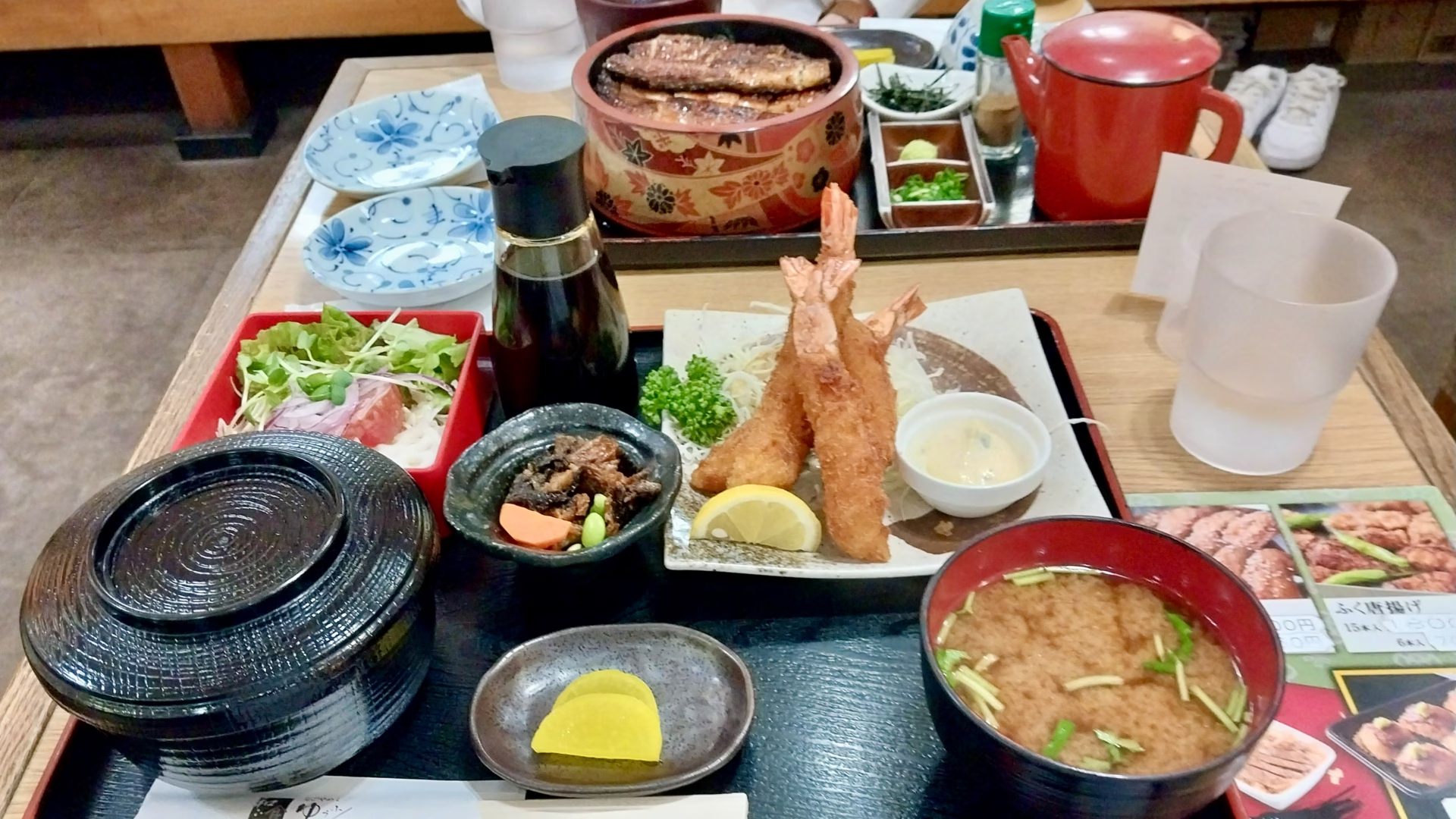
I put together 13 places to eat Nagoya meshi, from hitsumabushi and misokatsu to tebasaki and two Michelin-starred splurges, with quick picks if you only have a stopover.
Nagoya’s food culture has a name: Nagoya meshi. It’s bold, built on rich red hatcho miso, and it doesn’t apologise for any of it. This is a city that serves pork cutlets under miso sauce instead of the usual tonkatsu sauce, and treats deep-fried chicken wings as a food group. If you’re wondering where to actually eat it, here are thirteen places that keep coming up, across cuisines and price points.
UPDATED 14 NOVEMBER 2026:
I put this list together from published sources and the restaurants’ own information rather than a single trip, so check opening hours, prices and queues before you go. I have added a short answer, a fuller FAQ and links to my Nagoya itinerary and hotel guides.
✅ SHORT ANSWER
The best places to eat Nagoya meshi are Maruya Honten or Atsuta Horaiken for hitsumabushi, Yabaton for misokatsu, Sekai no Yamachan or Furaibo for tebasaki, Yamamotoya Souhonke for misonikomi udon and Misen for Taiwan ramen. With only a few hours, the Esca and Meichika restaurant floors under Nagoya Station cover several of them. Budget roughly ¥1,500 to ¥2,500 for misokatsu or tebasaki.
Quick orientation
A handful to orient you, with the full list below
By dish
Hitsumabushi (eel)
Maruya Honten: fastest, inside the station
Atsuta Horaiken: the original, since 1873
Tebasaki (chicken wings)
Sekai no Yamachan: peppery, famous nationally
Furaibo: the original inventor, sweeter
Miso specialities
Yabaton: misokatsu, the pork cutlet
Yamamotoya Souhonke: misonikomi udon
Noodles & grill
Misen: Taiwan ramen, invented in Nagoya
Miya Kishimen · Torigin Honten (yakitori)
Covers the core Nagoya meshi dishes. Komeda’s, the market and the two splurges are below
This post contains affiliate links. If you book through them, I may earn a small commission at no extra cost to you.
💡 TIP: Want a guide instead of figuring it out yourself?
Two good options, depending on what you’re after: the Nagoya Osu Kannon Half-Day Street Food Tour covers a wider spread of Osu’s street food in one outing, while the Nagoya Hitsumabushi Local Food Tour with a licensed guide goes deep on the one dish, with someone to walk you through the eating ritual properly rather than winging it from a blog post.
Maruya Honten (Nagoya Station branch)
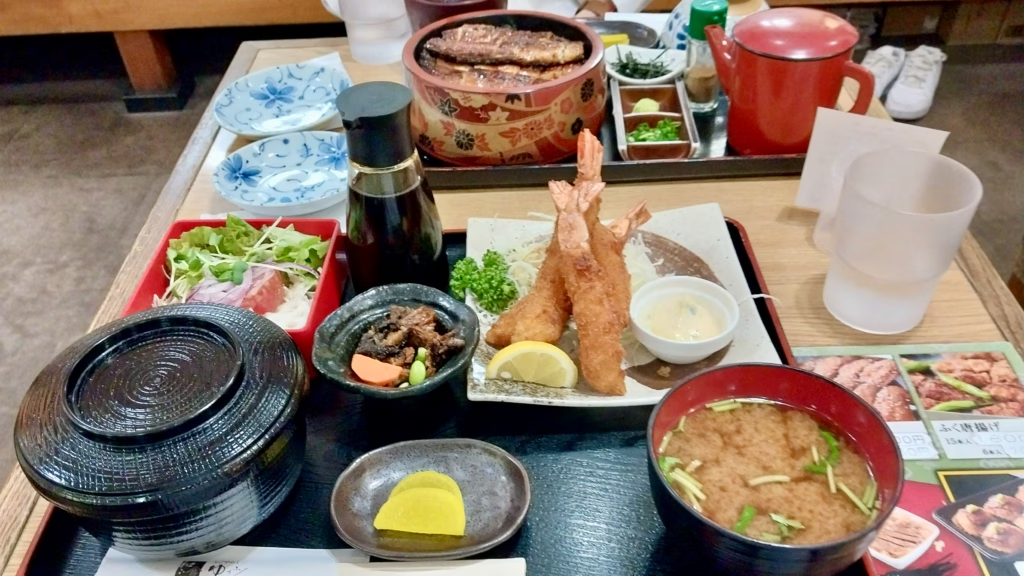
The most convenient hitsumabushi in the city, useful on a tight stopover. Eel grilled over charcoal until the skin crisps, eaten in three stages: plain, with condiments, then doused in dashi as ochazuke. Expect a wait at lunch.
Atsuta Horaiken
Widely credited as the birthplace of hitsumabushi, dating to 1873. The main branch draws long queues, but it’s the dish in something close to its original form, and everything else in the city is compared against it.
Maruya Honten is for you if…
- Time is tight, or you’re on a stopover
- You want it fast, right by the platforms
Atsuta Horaiken is for you if…
- You’ve got room in the day for a queue
- You want the dish in its original setting
Which hitsumabushi should you choose?
If time is tight, Maruya Honten inside the station is the easy call. If you’ve got a bit more room in the day and want the dish in its original setting, make the trip to Atsuta Horaiken instead, though expect a longer wait.
Yabaton (Yaba-cho Honten)
The misokatsu here is the reason for the trip. Recognisable by its pig mascot, the name most associated with the dish. A deep-fried pork cutlet finished with a rich, slightly sweet red miso sauce instead of standard tonkatsu sauce. Comes with a mountain of shredded cabbage.
Sekai no Yamachan
Twice-fried tebasaki without batter, the name that made Nagoya’s chicken wing famous nationally. Founder opened in 1981 and went hard on the pepper, a deliberate contrast to the sweeter style that came before. Loud, beer-focused izakaya.
Furaibo
The restaurant that actually invented tebasaki, in 1963, when the kitchen ran out of the half-chicken dish they normally served and brushed the same sauce onto wings instead. Sweeter and less pepper-forward than Yamachan’s, using only the wingette.
Sekai no Yamachan is for you if…
- You want the punchier, peppery version
- You want the nationally famous name
Furaibo is for you if…
- You want the original, historically “correct” recipe
- You prefer sweeter over peppery
Misen (Imaike main branch)
The Taiwan ramen here was invented right on this spot, despite the name, by the restaurant’s Taiwanese owner in the 1970s. A soy-based broth loaded with minced pork, garlic, chives, and a heavy hand of red chilli. Fiery by Japanese standards, and a point of local pride precisely because so few visitors know it’s a Nagoya invention.
Yamamotoya Souhonke
The misonikomi udon is the draw here: thick, additive-free noodles boiled directly in a red miso broth inside a clay pot, served bubbling. Heavier and more savoury than standard udon soup, one of the dishes that best represents Nagoya treating miso as a main ingredient rather than a seasoning.
Miya Kishimen
Kishimen is what to order: Aichi’s own noodle, flat and wide rather than round, with a different chew to standard udon. Eating it inside Atsuta Shrine’s grounds, one of the country’s most important Shinto shrines, makes it a two-for-one stop if you’re already there for Atsuta Horaiken.
Torigin Honten
The yakitori is the reason to come. A long-running, well-regarded specialist in the heart of Sakae, good for an evening meal if you’re in Nagoya longer than a day and want something other than Nagoya meshi specifically.
Komeda’s Coffee
Come for the morning service (coffee plus free toast, egg and salad) before 11am, or the Shiro-Noir (a warm Danish topped with soft-serve) outside morning hours. Nagoya’s morning service kissaten culture is closely tied to the city, and Komeda’s is the easiest chain to find.
Yanagibashi Central Market
Whatever’s freshest that morning is the move here. A working wholesale seafood market with breakfast stalls open to the public, best visited around 9am once the professional trading rush has cleared but stalls are still fully stocked. Less polished than the rest of this list, more of a local-life experience than a sit-down meal.
ℹ️ INFO: The last two are a different kind of meal Everything above is casual Nagoya meshi. The final two entries are proper splurges: book ahead, dress reasonably, and expect a very different bill.
Reminiscence
The one for
Nagoya’s more refined side
Order this
The tasting menu
The city’s best-known name in modern French cooking. Chef Masaki Kuzuhara trained at two three-starred restaurants before opening his own, building his tasting menus around local Aichi ingredients, including his own take on eel, a nod to the city’s hitsumabushi tradition. Book well ahead; tables go fast.
Sushi Shunbi Nishikawa
The one for
sushi that could only be made here
Order this
The omakase course: the kuruma prawns, served two ways, are what people come back for
Eight counter seats. Chef Shinji Nishikawa builds his omakase around Mikawa Bay and Ise Bay seafood rather than importing from Tokyo’s Toyosu market: “sushi that can only be made in Nagoya, not the flavours you’d get in Tokyo.” Reservations are hard to get; book well ahead.
Nagoya Restaurants FAQ
What is Nagoya meshi?
The collective name for Nagoya’s local specialities, built heavily around aged red hatcho miso: hitsumabushi (eel), misokatsu (miso pork cutlet), tebasaki (fried chicken wings), misonikomi udon and kishimen among them.
Where should you eat in Nagoya?
Start with Maruya Honten or Atsuta Horaiken for hitsumabushi, Yabaton for misokatsu, Sekai no Yamachan or Furaibo for tebasaki, Yamamotoya Souhonke for misonikomi udon and Misen for Taiwan ramen. Komeda’s Coffee is the easy choice for breakfast.
Where is the most convenient place to try Nagoya meshi if I only have a few hours?
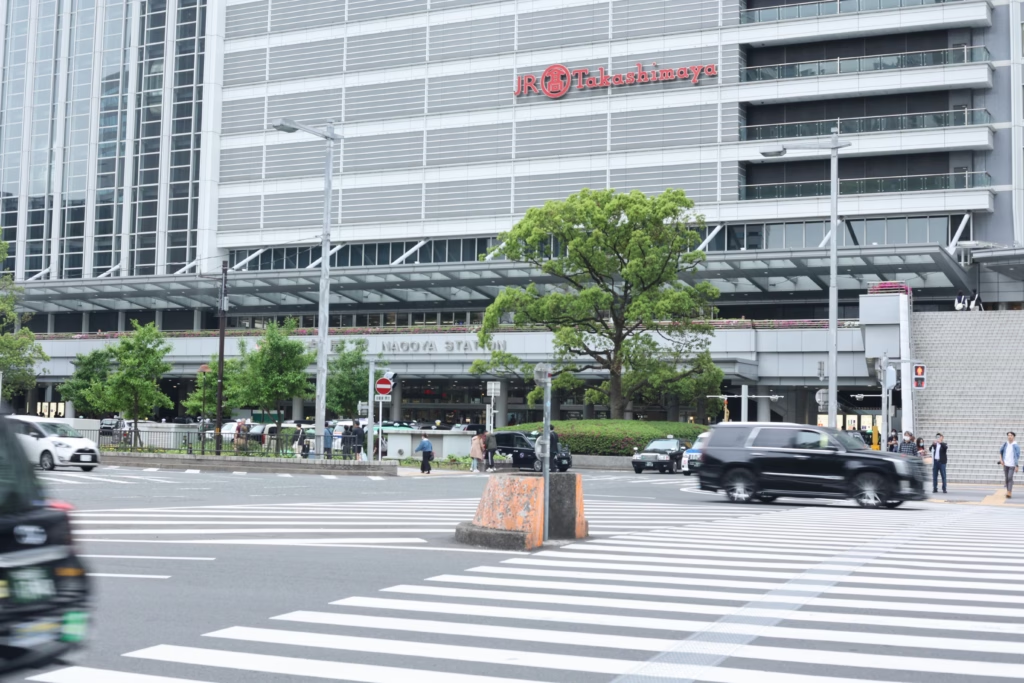
The Esca and Meichika underground restaurant floors directly beneath Nagoya Station have branches of several of the big names, including Yabaton, Yamachan and multiple kishimen and hitsumabushi restaurants, all within a few minutes’ walk of the platforms. Maruya Honten is also inside the station.
What is the best hitsumabushi in Nagoya?
Atsuta Horaiken is widely credited as the birthplace of the dish, dating to 1873, and suits you if you have time for a queue. Maruya Honten inside Nagoya Station is the quick option for a tight stopover.
Where can you eat at JR Nagoya Station?
Maruya Honten is on the Taiko-dori gourmet street near the Shinkansen gates, and the Esca and Meichika underground floors have branches of Yabaton, Yamachan and Furaibo. The JR Takashimaya tower above the station also has its own restaurant floors, which this guide does not cover.
How do you plan a Nagoya itinerary around local food?
Start with Komeda’s morning service or the Yanagibashi Central Market, eat hitsumabushi for lunch, and save misokatsu or tebasaki for the evening. My one day in Nagoya itinerary shows how much fits into a day.
Is Nagoya food expensive?
Not particularly. Budget roughly ¥1,500 to ¥2,500 for misokatsu or tebasaki, and ¥3,000 to ¥5,000 for a proper hitsumabushi set, based on the figures I found when writing. Fine dining like Reminiscence runs considerably higher and needs booking well in advance.
Does Nagoya have Michelin-starred restaurants?
Yes. Reminiscence (French) and Sushi Shunbi Nishikawa both appeared with two stars in the Michelin Guide Aichi Gifu Mie 2019 selection, and ratings change, so check the current guide. Beyond that, treat “best fine dining in Nagoya” lists with some caution: several other restaurants get repeated across different sources with inconsistent details attached, and I have only included what I could independently confirm.
Final thoughts
Most cities hand you a food scene shaped by trends and imports. Nagoya didn’t bother. Every dish on this list exists because someone here decided the usual way wasn’t good enough: a different sauce for the cutlet, a different way to eat the eel, wings that needed more pepper than anyone else thought reasonable. That stubbornness is the whole appeal. If you’ve only got one meal in the city, make it hitsumabushi. If you’ve got more than that, work down the list in order, as it’s built to take you from the fastest, most convenient options through to the ones worth planning an evening around. And if you’re squeezing this into a single stopover, my one day in Nagoya itinerary shows exactly how much of it fits into a day, and if you are staying overnight, my guide on where to stay in Nagoya covers the best areas and hotels.
Researched and compiled in 2026, and updated 14 November 2026. If you’ve eaten at any of these yourself, let me know and I’ll fold your first-hand notes in.




Leave a reply